








Connect with us
DAPA Banner
DAPA Coin
DAPA
COIN PAYMENT ASSET
PRIVACY · BLOCKDAG · HOMOMORPHIC ENCRYPTION · RUST
ElGamal Encrypted MINE DAPA
🚫 GENESIS SOLD OUT
DAPAPAY COMING

Tech

Amazon will stop accepting new customers for Mechanical Turk

Published

on

These may be the last days of Amazon’s Mechanical Turk.

An announcement on the Mechanical Turk website says that on July 30, 2026, the crowdsourcing service will close to new customers. Amazon Web Services says the decision was made after “careful consideration,” adding, “Existing customers can continue to use the service as normal. AWS continues to invest in security and availability improvements for Mechanical Turk, but we do not plan to introduce new features.”

In other words, Amazon isn’t completely pulling the plug, but the service is very much on life support.

First launched in 2005, Mechanical Turk was a marketplace where people were paid tiny amounts to perform simple tasks that resisted full automation — things like completing CAPTCHA challenges or identifying the basic sentiment in a sentence.

Advertisement

In its heyday, the service was at the center of debates around the ethics of crowdsourced labor, and it even played a small role in the early stages of the Facebook-Cambridge Analytica scandal. 

Beginning in 2018, Amazon also began billing it as a way for companies to annotate data to train neural networks as part of its SageMaker AI service.

Less overtly, Mechanical Turk has also been described as the hidden enabler for companies taking a fake-it-till-you-make-it approach to AI, where products marketed as Ai are actually being performed by the Mechanical Turk workforce — all the more fitting since the original Mechanical Turk was itself a hoax, with a hidden human chess player pretending to be a chess-playing machine

Over time, the relationship between Mechanical Turk and AI models grew even more complicated. In a snake-eating-its-own-tail irony, a 2023 analysis found that between 33% and 46% of workers on the platform were using large language models to complete their tasks, raising questions about the reliability of data annotated on the platform and also about whether humans needed to be in the loop at all.

Advertisement

This week, after Amazon’s decision became public, one Reddit user suggested the platform died “years ago,” with workers and researchers abandoning it due to bots and fraud. The user predicted, “Someone at Amazon is going to decide keeping the Mturk servers running is a waste of time and resources and pull the plug entirely.”

When you purchase through links in our articles, we may earn a small commission. This doesn’t affect our editorial independence.

Source link

Advertisement
Continue Reading
Click to comment

You must be logged in to post a comment Login

Leave a Reply

Tech

Big Companies That Invest Heavily in AI Also Hire More People, Report Suggests

Published

on

“Companies spending heavily on AI are growing headcount faster, even in the entry-level roles that many fear are doomed,” writes TechCrunch. That’s the conclusion of new report tracking AI spending from Ramp’s corporate card/bill pay data as well as Revelio Labs’ workforce records from 21,599 U.S. firms:


According to the report, “high-intensity adopters” — firms that spend on average $30 per employee per month on AI in the first three months — saw headcount increase 10.2%. Headcount also rose across functions, including engineering, sales, administration, customer service, finance, marketing, and scientist roles. The strongest job growth among high-intensity adopters was in the information sector, which includes software, internet, media, and tech-adjacent firms.

Despite these positive signals, the data isn’t as rosy as it seems. It skews heavily toward tech-forward, knowledge-work firms — ones that might have VC-backing and are growing fast anyway, making it difficult to say whether AI is contributing to the hiring or just showing up at companies that are expanding anyway. “This paper does not show that AI universally creates jobs,” the paper’s authors admit, “but it does counter claims that AI will lead to broad job losses.”

It also counters claims that AI is killing all junior jobs. Recent research from Goldman Sachs found that AI has already erased about 16,000 net jobs per month over the past year, with Gen Z and entry-level workers taking the brunt of the burden. But in tech-forward firms, the report finds that entry-level headcount actually rose by 12%… “For software and technology firms, AI can make core output cheaper or faster to produce: writing code, debugging, building internal tools, producing technical documentation, and supporting product development,” the report reads. “Lower production costs in these workflows can raise the return to expanding the whole firm, not just the engineering team.”

Advertisement

But companies that buy subscriptions and run pilots, yet did not go on to make sustained investments, don’t tend to see any gains in headcount, per the report. That sets up the potential for a widening gap between firms that have the resources — like capital, technical staff, founder networks, and management bandwidth — to turn AI adoption into actual business gains and those that are stuck experimenting with subscriptions. In other words, this report suggests that firms that already have the resources are the ones that will see the largest gains.
CNBC argues another AI “narrative” was challenged this week: that open source can’t make money. “The assumption was that giving your model away for free meant no business. That’s breaking too, as open-model companies start posting real revenue and enterprises move from renting AI to running their own.”

Source link

Continue Reading

Tech

Sony Says It Will Still Make Physical Discs After 2028, As Long As The Game Came Out Before Then

Published

on

Anything released after 2028 will still be digital-only.

Sony’s move to abandon physical game discs may have elicited the “Everyone disliked that” response from the gaming world, but there’s a small consolation for game developers. As reported by Game File, Sony shared a private message to PlayStation developers and publishers that said they “will still be able to place re-orders for existing PlayStation disc games.”

Sony’s post on the PlayStation blog mentioned that its discontinuation of physical game discs would have “no impact on games that already released, or will be releasing, prior to January 2028 in disc format,” but this latest report makes clear that publishers can still continue ordering physical versions of their PlayStation games so long as it’s released before the cut-off date. According to Game File, Sony said that its ordering process for discs will change, but didn’t yet detail how. However, this is expected considering Sony has reportedly already invested millions of dollars into repurposing its disc factory in Salzburg, Austria to manufacture optical microlenses instead.

Game File also reported that Sony said in its message to publishers that it will “provide publishers with the opportunity to release new games at retail using digital codes,” but similarly didn’t reveal details yet. While that does address the concern of gamers being limited to purchasing games through Sony’s online store ecosystem, the overall loss of physical discs is still expected to have major implications for the industry.

Advertisement

Source link

Advertisement
Continue Reading

Tech

Stats, iPhones, and AI devices are still a threat

Published

on

In this week’s “Sunday Reboot,” scientists somehow say iPhones lowered birthrates, and Musk’s AI prototype story shows that specialist hardware is coming, even if we don’t necessarily want it.

Sunday Reboot is a weekly column covering some of the lighter stories within the Apple reality distortion field from the past seven days. All to get the next week underway with a good first step.

iPhones up, birthrate down, “research” questionable

The iPhone is a mere 19 years old this week, first going on sale on June 29, 2007. It’s old enough to drink in the UK, if not quite in the United States.

Before it flies across the Atlantic to buy a brew from a bar in Basingstoke, some pesky scientists have tried to spoil the party.

Advertisement

Raised on July 1, a working paper from the National Bureau of Economic Research proposes “Is the iPhone Birth Control?” If we follow Betteridge’s law of headlines, the answer is “No.”

The paper proclaims “National-survey evidence on time use and sexual behavior is consistent with the iPhone reducing in-person interactions, increasing pornography use, and reducing sexual frequency” in the United States

Five firstgeneration iPhones standing side by side on a black background, each displaying different screens such as maps, web browser, home screen, music, and phone call, with text Say hello to iPhone

Apple launched the iPhone in 2007. Scientists say it was too hot for the U.S. Birth Rate – image credit: Apple

Hearing that for the first time, you’d nod and agree with it. That song from the puppet musical “Avenue Q” is right, and so is the abstract.

Advertisement

However, AppleInsider William Gallagher looked into the report and realized that there are some catches to this assumption.

First, that it’s not really a phenomena associated with just the iPhone. I recall there were many different other devices on the market at the time that were capable of being used in illicit ways.

However, the writers decided to focus on data of AT&T users between 2005 and 2011. That’s two years before the iPhone and the years when it was exclusive to AT&T.

Except it doesn’t really take into account the fact that AT&T also sold many other early smartphones too. Blackberries, the HTC-based AT&T Tilt, the Nokia N75, and others were all buyable from the carrier, not just iPhones.

Advertisement

Even the report writers acknowledge this, saying they don’t claim the iPhone was the sole cause of the post-2007 decline.” Indeed, they say the estimates imply that the modern smartphone played a “sizable role” in the decline of US births.

But, before the puritan complainers can get a word in about how smartphones are evil, and demand retribution from the House of Jobs, the report goes on to work against the implied statement.

Line graph titled Search interest in porn, showing Google Trends index rising from 2004, peaking around 2013 near 100, then gradually declining and stabilizing between 40 and 60 by 2024

A graph used as proof the iPhone affected the U.S. birth rate. Except it doesn’t… – Image credit: National Bureau of Economic Research

Searches for “porn” shot up in 2014, but have gone down to almost 2009 levels again by 2024. Almost as if society had the novelty of trying to access specialist content wherever they want, then the novelty wore off.

Advertisement

It’s an odd report that tries to prove a point, but works against itself in many ways, and with too many asterisks to really be taken seriously.

In which case, was it really a clickbait way to try and secure some grant funding during some downtime? Or maybe some scientists placed bets that they could get it published.

Maybe it was an excuse to get to look at adult material while working without needing to face an investigation from HR.

Either way, Betteridge’s law is maintained once again.

Advertisement

Don’t stop believing in AI devices

People working in the tech editorial space, such as this very publication, are all too familiar with the notion of prototypes being shown to others. Especially if it’s for a future product in a category where there’s no real dominant option.

Cue a story about one of the Elon Musk companies supposedly sharing a prototype with investors for an AI device. SpaceX’s xAI apparently did that, though Musk has since called the claim “utterly false.”

Your mileage may vary on whether or not to blame the extremely rich man, but he did threaten to go all Futurama Bender on the iPhone in 2022. As someone in charge of tech companies with massive resources capable of doing just that, there was every chance that Musk would do it.

He didn’t, but the opportunity was there.

Advertisement

What the modern-day report provides in detail is minimal. It was shown to investors and was thinner than an iPhone.

While Musk’s insistence that it’s not happening puts a downer on things, it does, however, mean that there’s still an appetite for something to happen in that area.

Three small square wearable camera devices, one white in front and two black behind, each with rounded corners and a horizontal pill-shaped lens area featuring a yellow accent on the left

The Humane AI pin failed. Won’t stop others from doing the same thing – Image Credit: Humane

After the Humane AI pin’s crash and burn and the Rabbit R1’s lack of popularity with consumers, companies should be treading carefully. Those were two high-profile AI device failures, and no-one wants to pay for the third.

Advertisement

Rumors and patents certainly point to Apple continuing down the path of a more AI-focused future. Sure, there’s the questionable pendant, and the ever-present smart glasses, but it’s also looking at non-standalone items too.

We have had rumors insisting that the AirPods will get cameras, providing an environmental view for Apple Intelligence running on an iPhone.

The key bit here is that it’s all feeding back to an iPhone. Something that is obviously a device that has a lot of AI prowess, and could do the same job as Humane’s pin if you push it.

The only difference is that AirPods with cameras, or smart glasses with cameras, would enable that sort of functionality without needing to touch the iPhone at all.

Advertisement

The AirPods don’t have to be “smart” in their own right. They only have to pass along data to the iPhone as the actual “brain” of the operation.

You don’t really need a dedicated device, just a way to interface with what already exists.

So, with the hardware side “solved,” there’s the actual AI bit to cover. Again, Apple Intelligence on the iPhone comes to the rescue, but there is another way.

Humane was painful, particularly since you had to pay a $24 per month subscription for the AI bit. We may not have liked paying a subscription for questionable AI back in 2023, but in 2026, we’re intimately aware of how much people are spending on access to ChatGPT and Claude.

Advertisement

Weirdly, it only took a few years and society is perfectly fine with one of the biggest stumbling blocks that Humane ran into.

It’s not hard to imagine OpenAI releasing hardware that taps into ChatGPT’s paid services. You don’t even have to imagine, as your friendly LLM can tell you about the hardware work with Jony Ive.

Humane flopped so OpenAI and others can walk, run, or be a patronizing yes-man that really wants to explain your assumptions back at you with a more academic style.

Musk may deny the existence of an xAI hardware prototype now, but it would be astounding if one wasn’t being actively developed.

Advertisement

Putting Grok access on a device like that isn’t hard to imagine. For Musk, with an eye staring at his finance teams, it seems like a natural progression of the form, and he gets his own iPhone rival to boot.

Just hope that we don’t get headlines in 20 years time about Musk’s prototype lowering the birth rate again.

Last week’s Sunday Reboot talked about Apple TV and its fear of gameshows. That, and a reminder that it is also bad at making gameshows.

Advertisement

Source link

Continue Reading

Tech

Does It Apply Automatically At Checkout?

Published

on


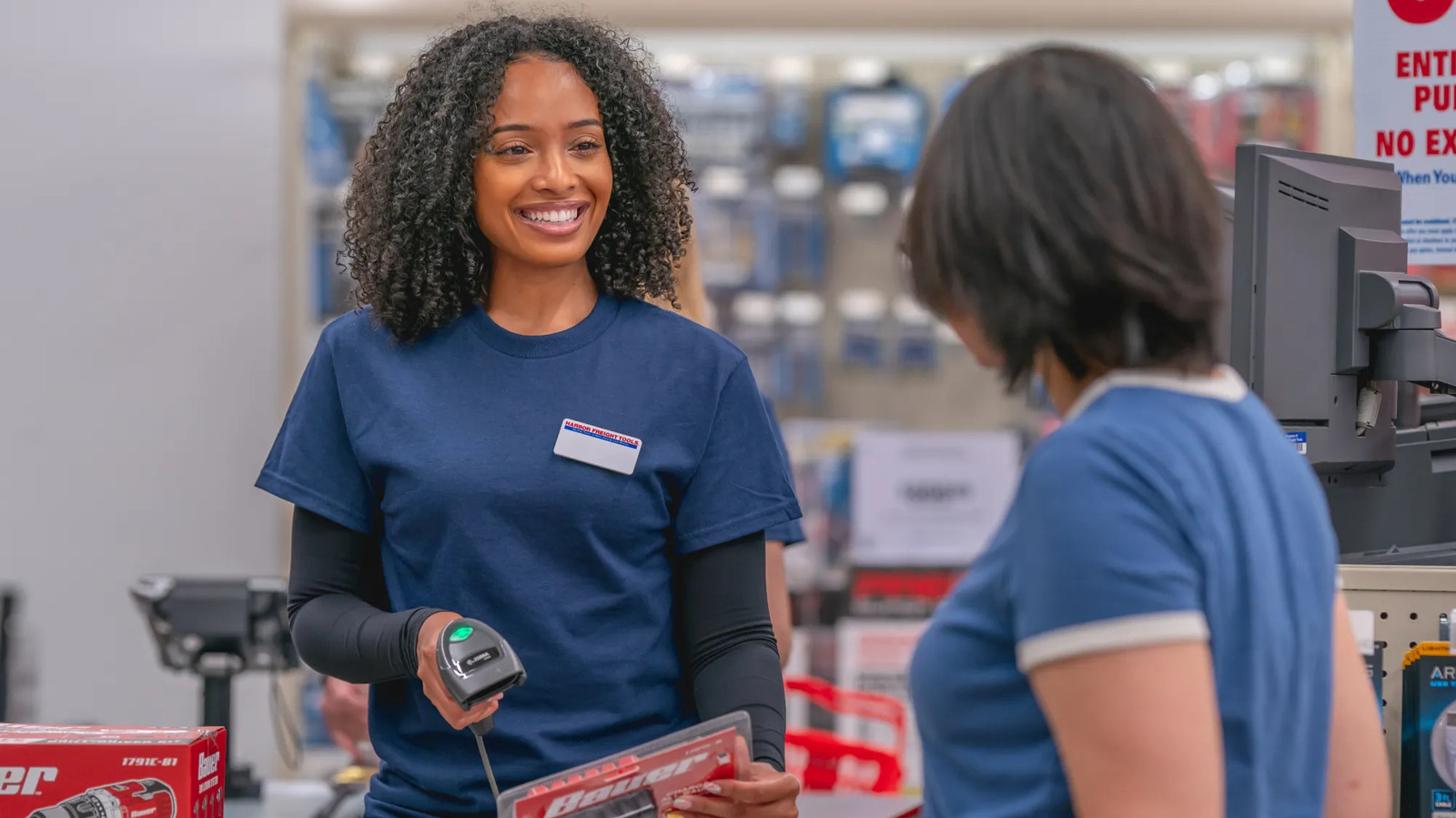
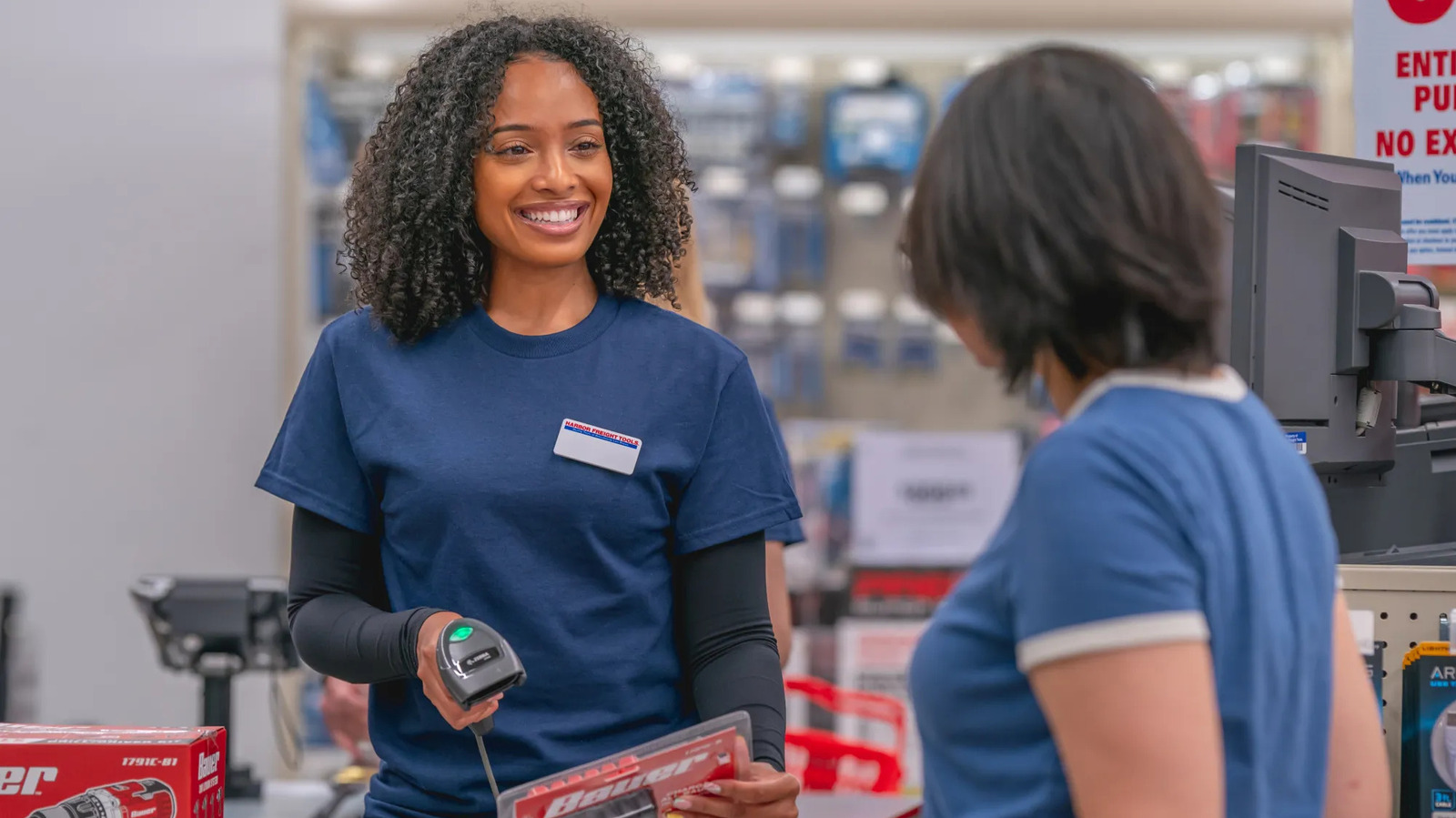
Even without any additional discounts, Harbor Freight is already a great option for budget-conscious shoppers, with dozens of brands on its shelves that cater to everyone from novice DIYers to demanding professionals. Shop carefully though, and there are even more ways to save money as a Harbor Freight customer. One of the easiest ways is to sign up for the retailer’s Inside Track Club membership program, which offers additional discounts on sale items as well as promotional prices that are unique to members of the scheme.

According to Harbor Freight, members who were signed up to its program saved a combined $250 million in 2025. As an individual shopper, the amount you save will vary considerably based on the number of discounted items you buy, but we’ve previously estimated that shoppers who go only a few times a year should still save enough that their membership pays off.

Advertisement

Claiming those additional savings is an easy process too. If you shop online, your membership is attached to your Harbor Freight account, so you’ll automatically have any Inside Track Club savings added to your cart when you checkout. If you’re shopping in-store, you’ll need to provide either your phone number or email address at checkout. You’ll then have any additional savings applied straight to your bill, without needing to worry about coupons or membership cards.

Advertisement

How much does Inside Track Club membership cost?

Pricing and promotional deals surrounding Harbor Freight’s Inside Track Club membership can vary, but as of July 2026, a single year’s membership for both new and renewing members costs $29.99. Anyone who signs up for two years of membership will pay even less annually, with Harbor Freight offering 50% off the second year’s price. That means a two-year membership can be bought for as little as $44.99.

Shoppers can sign up for a membership either in-store or online. There is one caveat though: You shouldn’t try to sign up online if you’re already standing in a store, since Harbor Freight says that the details of new online members can take up to 3 hours to sync with the servers it uses in-store. If you purchase an online membership while you’re walking to the checkout counter, your details most likely won’t be recognized.

If you find you’re no longer using your Inside Track Club membership, you can cancel at any time. Anyone who cancels their membership within 90 days of initially signing up will receive their membership fee back in full. With such an easy registration process and a 90-day refund guarantee, avid Harbor Freight shoppers have little to lose and potentially a lot to gain by signing up. If you’re looking for other cash-saving tips, we’ve put together a roundup of the most common mistakes Harbor Freight customers make so you don’t miss out on any hidden promotions.

Advertisement


Source link

Advertisement
Continue Reading

Tech

Senior Member Solves Product Lifecycle Challenges

Published

on

What do an instinct to fix things and the 1999 global panic over whether computers would survive the date change to 2000, known as the Y2K bug, have in common? Both helped shape IEEE Senior Member Ajay Prasad’s career.

Prasad is an industry process director at Dassault Systèmes in Detroit. His focus is global oversight of industry process experts specializing in Enovia, a product lifecycle management (PLM) solution and one of the company’s flagship products.

Ajay Prasad

Employer

Advertisement

Dassault Systèmes in Detroit

Title

Industry process director

Member grade

Advertisement

Senior member

Alma maters

Bangalore University, in Bengaluru, India; and the University of Birmingham, England

As a child growing up in Bangalore, India, his curiosity to build real-world solutions was ignited by his father, a mechanical engineer. Prasad’s father often fixed things around the house, including cars and bicycles. His ability to take something broken and return it to working order laid the groundwork for his son’s career in engineering.

Advertisement

Prasad was in his final year of undergraduate studies when the Y2K panic hit its peak.

“Nobody knew what would happen when the year turned to 2000,” he says, “and it was almost projected like the end of the world was coming.”

The phenomenon left him with the desire to fix computer problems, but he wasn’t sure how he would go about it, as he had no background in computer science.

As it turned out, computer systems didn’t crash when the 1900s ended. The world did not end on Jan. 1, 2000, and neither did his interest in how computers worked.

Advertisement

The consulting pivot that changed his career

Prasad graduated in 2000 with a bachelor’s degree in industrial engineering and management from the RV College of Engineering, in Bengaluru. It was at a time when tech companies were heavily recruiting engineers, regardless of their specialization.

“They were mainly looking for problem-solving skills,” Prasad says.

His parents expected him to immediately enroll in a master’s degree program, he says, but a job offer from Tata Consultancy Services in Bengaluru to work as an assistant systems engineer trainee changed that plan.

“My dad was actually out of town for work when the job offer came in,” he says. “I knew he wanted me to stay in school, but honestly, I was done studying for a while. I wanted to get some work experience.”

Advertisement

He accepted the offer, then broke the news to his father. His parents were supportive of his decision, but his dad offered one piece of advice: Keep the idea of an advanced degree in the back of his mind.

Several months of working on mainframes helped him understand algorithms and how to code to achieve outcomes, he says, and the more he learned about computer systems, the more he wanted to pursue a computer science career. With a solid engineering foundation, he says, he knew the pivot made sense. But he also wanted the academic credentials to back up his tech skills.

Heeding his father’s advice, he paused his career at Tata and enrolled in the master’s degree program in computer science at the University of Birmingham in England. At the time, it was one of the few schools offering the program to students who had no undergraduate computer science degree. When he graduated in 2002, he briefly considered pursuing a Ph.D., but he returned to India and a new role at Tata.

Building a global perspective

As a systems engineer, he worked on the MatrixOne platform, a PLM software solution that helped manufacturers oversee products from design to launch. He spent a lot of time customizing the MatrixOne software to meet customer needs. The experience gave him insights into the pain points that different users of the platform faced, such as managing complex product data across large teams and keeping track of complicated supply chains.

Advertisement

In 2004 Tata transferred him to Minneapolis, where he continued working on the MatrixOne platform.

During that time, Dassault acquired MatrixOne and folded it into its existing Enovia product line. He remained involved with the product until he left Tata in 2008. To scratch an entrepreneurial itch, he became a consultant for the product, helping customize the platform for U.S. clients.

The move also forced him to make a decision: He needed to choose between settling in the United States or returning to India. Inclement weather made up his mind, he says.

“I was heading to my next project across the country, and it was winter,” he says. “During the entire drive, I was trying, unsuccessfully, to outrun a massive snowstorm. I was young, and it was an adventure, but it helped clarify where I wanted to be at that point in my life.”

Advertisement

He returned to India in 2010, armed with a more global perspective and expertise with Enovia. As he looked for a job, he focused on a role with the company that owned the platform he’d worked on for years.

“Dassault Systèmes has continuously pioneered new technologies and concepts and set benchmarks in the PLM space,” he says. “When an opportunity opened up there for me, I jumped at it.”

Instead of a programming role, though, he was hired as an Enovia technical sales specialist, working in Dassault’s Bengaluru location. It was an eye-opening experience, he says.

“It put me on the other side of the table: trying to sell software to customers,” he says. “This was the opposite of my experience customizing software after the sale was complete.”

Advertisement

The role of technical sales

The position involved both presale and postsale duties. Technical salespeople bring subject-matter expertise that bridges the gap between a product’s functionality and the customer’s needs. The role works directly with the sales team to craft a presentation that showcases the value of the software as a solution.

On the postsale side, technical sales professionals work with service teams to customize software solutions to ensure customer goals are met. If needed functionality doesn’t exist, they work with the R&D group to create it. They also offer suggestions to customers on how to improve their processes.

When Prasad stepped into his new role, a senior colleague described technical sales as an “exam syndrome” because customers are judging you and your presentation against competitors. The analogy didn’t land well with him.

Recalling all his years of formal education, he had a different perspective: “I wanted to think of it more as an opportunity to fully understand a customer’s problem, then solve it better than anybody else could.

Advertisement

“Every customer has unique pain points. When I can offer solutions that deliver value, they’ll buy the software.”

It’s his belief that the position is best served by professionals with both engineering and computer science backgrounds. He advocates that engineering students consider adding computer science to their studies, and he draws on his own educational experiences to support the position.

Combining engineering and computer science

Dassault recognized the value in his approach. In 2015 he was hand-picked to be part of the company’s new Worldwide Enovia Center of Excellence team in Auburn Hills, Mich. As an industry process expert, he was able to put his Enovia expertise into action.

He’s now a senior leader managing a global technical sales team. One of his objectives, he says, is advocating to engineers that technical sales is a viable career move.

Advertisement

“The moment an engineer hears the word sales, they tend to stop listening,” he says. “They don’t want to be a salesperson in the traditional sense.”

That’s too narrow a view, he says, adding: “I think everyone is a salesperson to some degree.”

If engineers looked at technical sales differently, they’d see an exciting opportunity, he contends.

“In this role, they have the ability to not only develop solutions but also explore the why behind the need for a solution at all,” he says.

Advertisement

“As engineers, sometimes we are so focused on engineering concepts and principles that we get bogged down in the details and don’t focus on what the problem really is,” he says. “I learned with technology that even before you try and create a solution, you need to understand the logic of the problem first.”

From problems to patents

His approach has delivered measurable results. He holds one patent and has a second under consideration. His combination of engineering and computer science expertise played a crucial role in each, he says.

His first patent, granted in 2023 by the U.S. Patent and Trademark Office, was for his solution to improve product benchmarking for clients with large-scale data management issues. It replaces traditional spreadsheets with powerful databases and a user-friendly interface, ensuring information is up to date, accessible, and shareable.

“I think that being part of the IEEE community is a huge value for folks in the engineering space. It’s a great way to collaborate and to understand what’s happening, especially in your local ecosystem.”

Advertisement

His second patent, pending with the USPTO, is designed to help customers manage large projects that involve a high volume of engineering design tasks. Instead of relying on ambiguous communication between engineers and project managers, his solution would draw data from the work management system and update the project management dashboard automatically. It would replace guesswork with real-time data.

Prasad has authored the peer-reviewed technical paper “Transforming Product Development With a Platform-Based Approach to Product Lifecycle Management,” which was published by SAE International. His writings on the use of data tracking and AI in product lifecycle management have appeared on Engineering.com and in Wavelengths, a monthly publication from the IEEE Southeastern Michigan Section.

In February, Dassault marked Prasad’s success by promoting him to worldwide Enovia industry process director. The title reflects a career built on the belief that engineering and computer science are stronger together, and that technical sales is where the combination delivers its greatest value, he says.

The value of IEEE

Prasad first encountered IEEE at a student branch meeting he attended at Bangalore University in 2000, shortly before graduation. The meeting featured engineers from industry discussing the work they did—which sparked his interest in joining, he says. But with his first job waiting for him, the timing wasn’t right to become active with the organization.

Advertisement

It took nearly 25 years, he says, before he felt he had enough spare time and professional experience to contribute actively and meaningfully to IEEE. He joined the Southeastern Michigan Section in 2024, was quickly elevated to senior member, and then took on a leadership role.

He was nominated to be conference chair for this year’s Innovative Applications of AI in Industry event. Together with a team of eight, he led the planning and execution of the in-person conference, the first time it was held since the COVID-19 pandemic shelved it.

The event explored how AI is permeating practically every aspect of our lives. Speakers came from Amazon, Torc Robotics, academia, and health care.

The event was a success, he says, and he hopes to parlay its momentum into a multiday conference in the coming years.

Advertisement

As a representative from the section, he served as a technical judge at this year’s Robofest, a competition held in May for students in Grades 4 through 12. Since the annual event’s inception, more than 40,000 students from 35 countries have participated. He says his involvement helps him understand how students use robotics to solve problems.

“I think that being part of the IEEE community is a huge value for folks in the engineering space,” he says. “It’s a great way to collaborate and to understand what’s happening, especially in your local ecosystem. There’s always something going on in terms of a conference or a talk where you can listen, gain knowledge, and network. It’s also an invaluable opportunity to discover where you can add value at IEEE.”

From Your Site Articles

Related Articles Around the Web

Advertisement

Source link

Continue Reading

Tech

Microsoft and Amazon Commit Billions to New AI Implementation Units for Businesses

Published

on

Microsoft is investing $2.5 billion in a new group “assisting clients with AI implementations,” reports CNBC:

[Microsoft] said Thursday that 6,000 employees will be embedded with clients, in a practice that’s become known as forward deployed engineering [or FDE]… The announcement comes two days after cloud rival Amazon said it was putting $1 billion behind an FDE initiative to support fast-paced AI engagements. Leading AI labs Anthropic and OpenAI both established FDE groups in May, partnering with private equity firms, banks and consulting firms.

Alongside its technology peers, Microsoft has sunk tens of billions of dollars into building data centers that run generative AI models. Microsoft has also released a variety of AI services, with mixed results. The Microsoft 365 Copilot AI assistant has yet to gain anything approaching ubiquity in the business world, and the GitHub Copilot coding agent has ceded market share to newer players. Microsoft’s stock has slumped 21% this year, by far the worst performance among the mega-cap tech companies. One concern on Wall Street is that AI models that quickly compose code might threaten mature software companies…

Advertisement

Microsoft has for years provided support and implementation services to customers. The company generated about $2.1 billion in revenue from enterprise and partner services in the March quarter, up 2.5% from a year earlier.

Source link

Continue Reading

Tech

5 Handy Milwaukee Packout Products That Can Keep Your Tool Collection Organized

Published

on


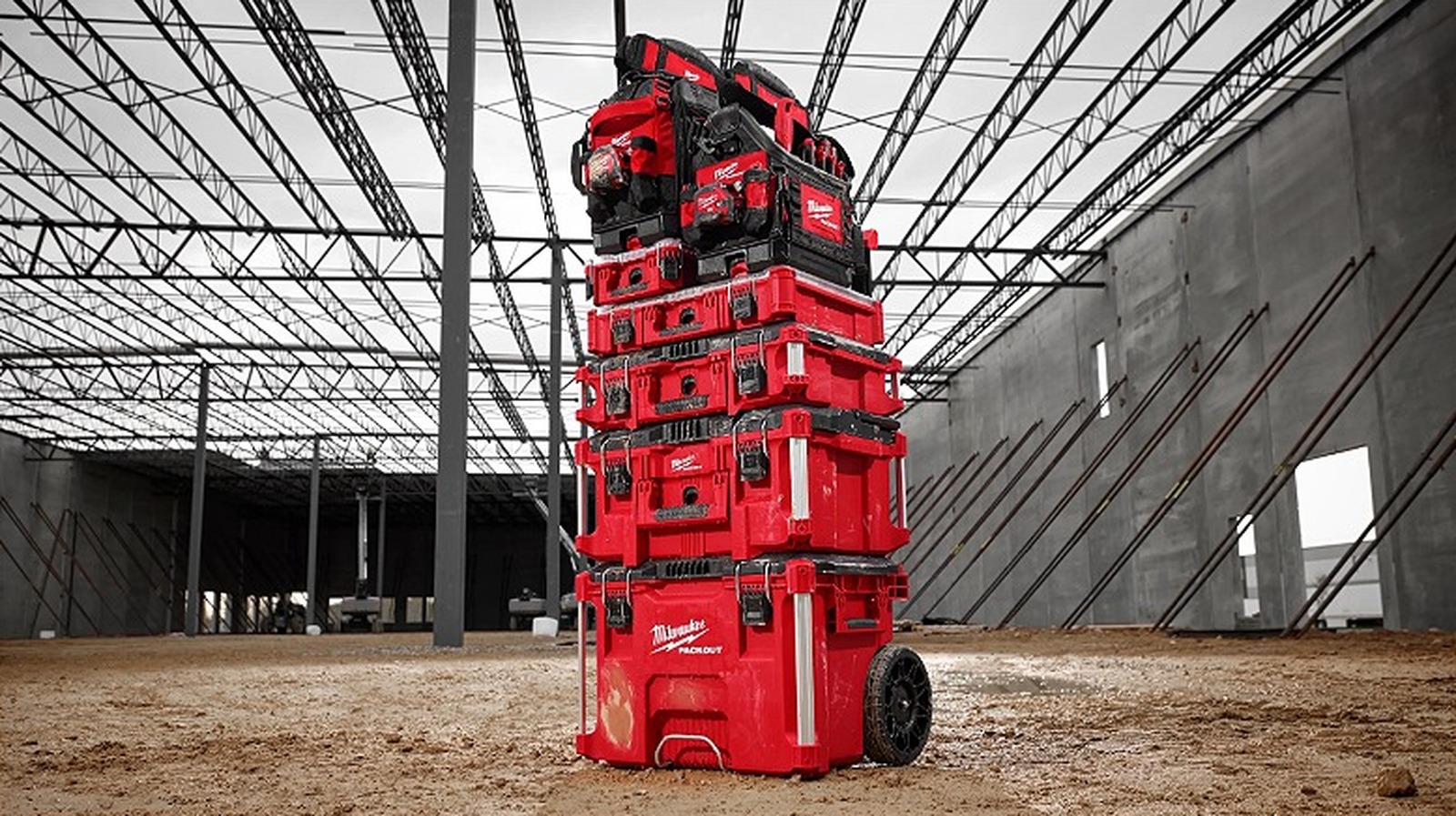
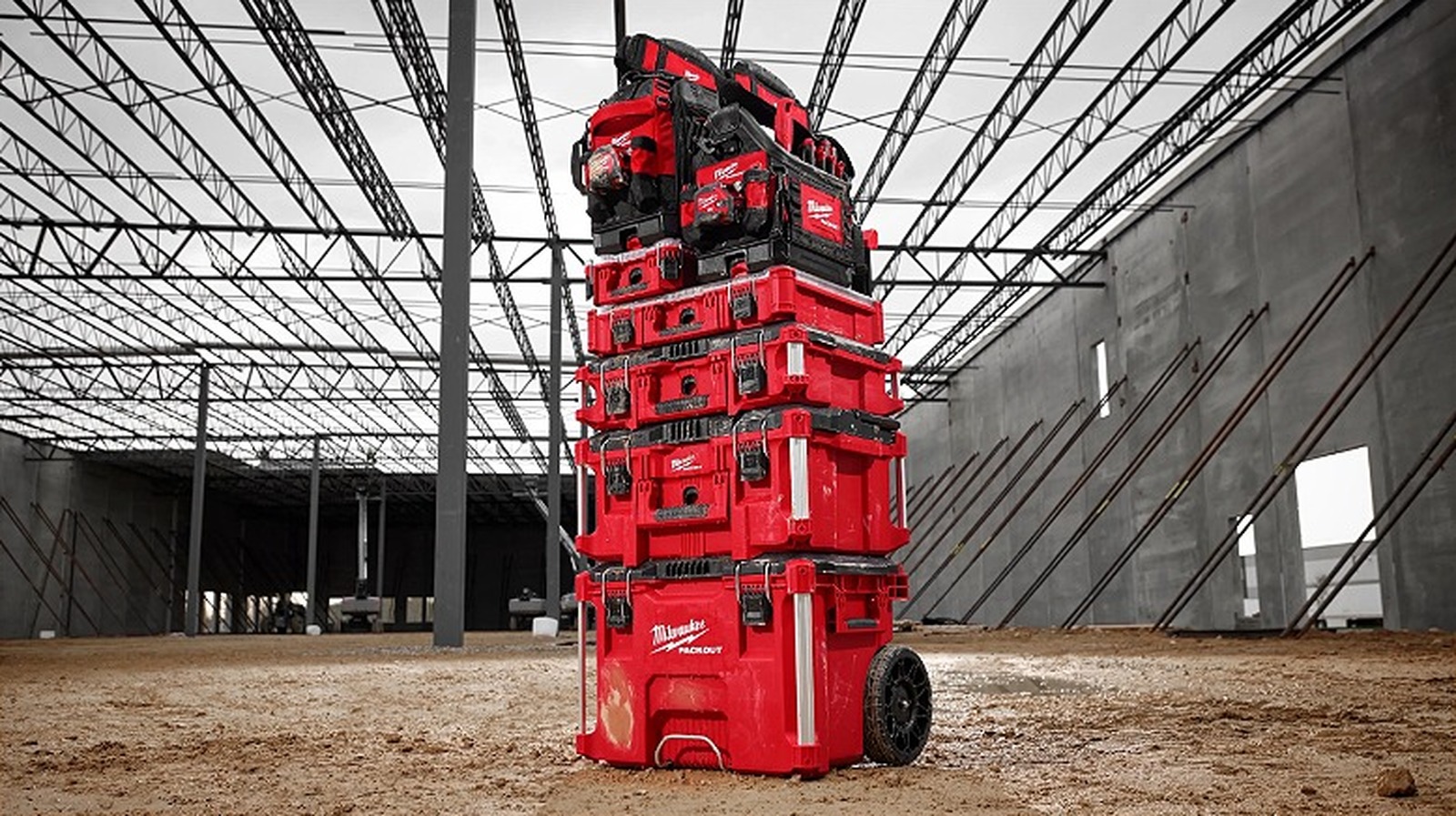
Milwaukee, one of the major tool brands offering a range of hand and power tools, is a go-to name for professionals and hobbyists alike when they want to build or upgrade their tool collection. The same brand offers a Packout collection, which is basically a range of interstackable toolboxes, organizers, and accessories that feature locking cleats on the bottom and slots on the top to bring you a full-fledged modular storage solution. These toolboxes and rolling tool chests also allow for efficient transportation of tools from one place to another via trucks and other transit vehicles.

While the Milwaukee Packout collection offers a wide variety of storage options, some can really keep your tools organized. Hence, we compiled a list of Milwaukee Packout tools you can use to maintain a tidy workspace by keeping them in their dedicated spaces. Most of these products are made of high-quality polymer to add durability and can be stacked with other toolboxes and chests in the range for better usage.

Advertisement

Packout Rack Kit

The Milwaukee Packout Rack Kit is an open-drawer-style standing rack with a durable steel body that holds all types of tools without damage. You can also install this rack inside transit vans, enclosed trailers, and more for when you want to transport bulky tools from one place to another. Each drawer can be set to a desired height, allowing you to adjust the space in each compartment to suit your requirements. 

Advertisement

You can use the rack to store multiple toolboxes and organizers from the Packout collection, serving as a haven for all your jobsite tools. All of these are easy to access by sliding the drawers out, rather than unstacking several toolboxes to grab the required tool. Being a great product for transporters and those with full-fledged automotive workspaces, this Packout Rack Kit includes four drawers, one upper rack, one lower rack, and a rack frame, allowing adjustments to leg height. 

Advertisement

Packout Rolling Tool Chest

Offering a 250-pound holding capacity, the Packout Rolling Tool Chest is made with impact-resistant polymers, along with an industrial-grade extension handle for durability. There are two nine-inch all-terrain wheels on the back, making it easy to transport to the job site while keeping all your work tools in one place. Plus, it can withstand rough outdoor conditions thanks to its water- and debris-resistant design. 

There’s an interior storage tray for keeping the smaller tools, like pliers, screwdrivers, and more, while the deeper compartment below can organize the bulkier power tools like impact drivers and saws. Everything stays securely inside the chest once you lock this organizer via metal-reinforced locking points, which won’t open even during transit. Moreover, there’s a locking lid support for the top lid so it stays firmly in place while you search for the desired tool inside the box. 

For neater organization of your tools in the garage or workshop, you can stack other toolboxes on top of this tool chest since it is compatible with the range to create an ultimate Packout setup.

Advertisement

Packout Tilt Bin Organizer

With the Packout Tilt Bin Organizer, you can say goodbye to the hassle of sorting through a mess of screws, nuts, and bolts to find the right part for the job. The organizer comes with two large and eight small bins where you can store all the small parts and accessories with proper labels for careful organization. Each bin can be removed from its compartment for easy access and can hold about 40 pounds of material. The bins lock in place via security bars so they stay in place even during transport. Plus, the impact-resistant polymer body ensures minimal vibration and movement inside the bins for absolute security.

You can either stack this tilt bin on top of other Packout toolboxes or hang it in your space using the handle on top of the design, which also enables smooth handling, by the way. The large bins also have dividers in case you wish to use them for two separate types of accessories. Consequently, it is one of the most useful Milwaukee Packout storage options available.

Advertisement

Packout XL Tool Box

If you are someone whose job includes working outdoors, for instance, a construction worker or an on-site automotive professional, the Packout XL Tool Box can be your go-to storage solution. Being the biggest toolbox in the line, this Milwaukee Packout toolbox will keep all your large and bulky tools in place, like circular saws and rotary hammers, in a deep chest built with a 100-pound holding capacity. Besides, there’s an organizational tray for storing small parts and accessories. The reason it can survive harsh jobsite conditions is the inclusion of an IP65 weather rating, which keeps the toolbox and its contents safe against rain and other weather elements.

Advertisement

Moreover, the impact-resistant polymer body paired with metal-reinforced corners can tolerate shocks and vibrations that occur during transit. You can secure the tools by locking the toolbox with heavy-duty latches and metal-reinforced locking points. The top handle allows for easy movement, and you can also stack other boxes on top.

Advertisement

Packout Structured Tote

The Packout Structured Tote features 39 pockets and can withstand a combined weight of 50 pounds while maintaining its structured shape, thanks to tear-resistant ballistic material in its construction. There’s an impact-resistant molded base that allows the tote to connect seamlessly with other products in the modular collection through locking cleats. Moreover, the all-metal hardwire also helps store larger hand and power tools in the half-open front pocket. Here, you can store the most commonly used tools to keep them within reach.

For comfortable carrying, the tote comes with a padded shoulder strap that goes easy against your shoulders, while the high-quality handle makes it easy to lift. Consequently, the tote can be best used by electricians and plumbers who need their tools visible and well-organized when working away from the shop, for instance, at a customer’s home.

Advertisement


Source link

Continue Reading

Tech

In a volatile world, a consistent sustainability policy is critical

Published

on

Sustainability demands progress on several fronts at once. For example, societies must reduce factory energy use, roll out EVs, and ensure that communications equipment can operate off-grid to extend educational opportunities to children in remote areas.

China-based telecoms giant ZTE pursues all of these. CDP, a non-profit that runs an environmental disclosure system, has included the company on its CDP A list for the last three years.

ZTE’s progress against ambitious goals for carbon emissions reduction and digital inclusion is detailed in its 2025 Sustainability Report.

ZTE’s Chief International Ecosystem Representative, CHEN Zhiping, says ZTE has always viewed sustainability as an essential part of its DNA rather than a temporary initiative, with the company reporting on its progress for the last 18 years. Even so, they add, the business has had to adjust its strategy “to keep pace with the evolving global landscape.”

Advertisement

The report shows how ESG runs through the corporation from board level down to the individual teams responsible for executing the strategy, and outward into the supplier and customer ecosystem. It takes a double materiality assessment approach to sustainability, weighing each topic on both its financial impact to the company and its broader social and environmental consequences.

ZTE’s Digital Green Path strategy underpins these efforts across four dimensions that target science-based sustainability goals: corporate operations, supply chain, digital infrastructure, and industry empowerment.

On the technology side, the telco’s Connectivity + Computing strategy ties AI and ICT together. It says that AI transformation depends on infrastructure that spans both connectivity and compute, and must do so as sustainably as possible.

That premise feeds into ZTE’s All in AI, AI in All strategy, which envisages AI transforming both industrial and consumer technology.

Advertisement

As CHEN Zhiping claims, “ZTE deploys AI aggressively to cut emissions and improve resource efficiency, while simultaneously reducing AI’s own footprint through energy-efficient design, green infrastructure, supplier engagement and governance, and beyond.”

That approach is essential, as AI itself poses a serious sustainability challenge. The buildout is already absorbing huge and rising amounts of energy. The International Energy Agency reported this year that electricity consumption from datacenters is set to double by 2030, with “power use from those focused on AI … poised to triple.”

AI risk and opportunity

ZTE’s own transition risk analysis acknowledges that the expansion of AI datacenters “poses serious challenges for most operators in achieving carbon neutrality by 2030.”

That makes power management and longer-term sustainability central to product design. An integrated approach to power efficiency across compute and communications infrastructure lets datacenter operators and telcos alike extract more value from their investments and meet their own ESG obligations.

Advertisement

At the same time, says CHEN Zhiping, “AI is a powerful enabler of sustainability – helping industries forecast renewable energy supply, optimized energy consumption, monitor emissions, and improve efficiency across the value chain.”

ZTE is bolstering this with a dedicated carbon-reduction program for its computing products, alongside work to refine AI algorithms and computing-networking products.

In 2025, the Sustainability Report shows, the corporation installed the first batch of immersion liquid-cooled datacenters in China, for China Telecom Intelligent Cloud Base Huailai Park. The installation will deliver in a PUE of 1.15 and save more than 1.1 million kWh of electricity per year. This site is expected to be a model for other datacenter developments in the country.

When it comes to its networking products, it said a combination of improved battery designs, dynamic energy saving technologies, and network search optimization for communication modules, means its latest flagship mobile phones achieved an approximately 30% improvement in overall battery life compared with the previous generation of flagships.

Advertisement

While ZTE’s sustainability strategy focuses on measurable science-based targets, it does not ignore the human dimension. The Sustainability Report shows that ZTE treats digital inclusion as inseparable from its engineering focus on green outcomes.

Wireless and communications technologies widen inclusion in their own right, particularly by extending educational opportunities into remote rural areas.

There’s plenty to play for. CHEN Zhiping points out that more than a quarter of the world remains unconnected, but raw connectivity alone isn’t enough. ZTE asks whether a solution is affordable, stable, and accessible, which means weighing how quickly and easily technology can be deployed and, increasingly, whether it can run off-grid on sustainable power.

In practice, that includes developing local telco talent in Vietnam through university collaborations and supporting schools in the country. More immediately, ZTE deployed communications hubs and emergency supplies in Myanmar after the country experienced a 7.9 magnitude earthquake.

Advertisement

Those human-focused efforts also deliver measurable outcomes. In 2025, with its registered volunteers surpassing 20,000, ZTE implemented 89 public welfare projects across 15 countries and regions, which directly benefited more than 100,000 people.

Supply side solutions

Sustainability depends on ecosystems, and businesses sit inside them. ZTE puts considerable effort into helping its suppliers improve their sustainability.

“We set clear ESG requirements for suppliers via contractual clauses and regular audits,” says CHEN Zhiping. The corporation also provides training and guidance on carbon accounting and emission reduction.

In 2025, ZTE completed ESG audits for 270 suppliers, while more than 450 supplier representatives attended ESG training sessions.

Advertisement

The results are measurable. The latest Sustainability Report shows that in 2025, ZTE’s electricity purchases fell 16.3 percent against 2021, for cost savings of almost CNY100 million. Overall energy efficiency, measured in tons of coal per CNY100 million of revenue, improved 28.39 percent. Operating carbon emissions fell 46 percent, with a compound annual reduction rate of 14.3 percent.

Reductions on this scale require attention to every part of the business. At the Shanghai R&D center, ZTE upgraded the chiller plant, swapped legacy chillers for high-efficiency magnetic levitation models, and installed matching cooling towers and pumps. The work boosted the plant’s energy efficiency ratio and delivered an overall energy saving rate of 46 percent. More broadly, carbon assessments on more than 240 products gave it full coverage across product categories.

At the other end of the scale, ZTE’s green factory approach cut energy consumption per unit of output by 22.1 percent across its five manufacturing bases. Green logistics means its Chinese warehouses rely on 100 percent electric forklifts, proof of delivery is 100 percent electronic in China, and 20 percent of domestic last-mile delivery uses “new energy” vehicles.

Other strategies are more prosaic, such as powering down R&D environments during idle periods. And “extreme energy-saving measures” during short holidays saved a cumulative 820,000 kWh in 2025.

Advertisement

The targets ahead are demanding. They include cutting scope one emissions (directly owned and controlled) and scope two emissions (indirect emissions from purchased energy) to under half their 2021 levels by 2030. ZTE also promises a matching reduction in scope three emissions (all other indirect emissions that it does not directly control) without raising the total. By 2050, it aims to reduce total emissions, including operations and the value chain, by 90 percent against 2021, with the remainder offset or removed.

So far, ZTE has cut scope one and two emissions by 46 percent. In 2025, absolute emissions across the full lifecycle of terminal products fell by 3.05 percent.

Every business will face sustainability challenges over the coming years. As CHEN Zhiping explains, ZTE intends to use advanced technologies, including AI, to accelerate the green transformation, build and upgrade digital infrastructure, and promote digital inclusion.

But one company can only do so much. To meet the global challenge, ZTE says collective action will be needed, spanning government, business and other stakeholders.

Advertisement

When it comes to AI, “Key priorities include establishing unified global standards to measure AI’s resource and carbon footprints, rolling out strict AI governance and ethical guardrails,” says she.

And there will have to be a broader scaling up of renewable energy and low-carbon tech for computing systems, and maturing circular models for AI hardware. ZTE’s sustainability strategy may have turned 18. But the hard work is just beginning.

Sponsored by ZTE.

Source link

Advertisement
Continue Reading

Tech

OXS Storm A2 review: a basic but impressive sounding budget gaming headset

Published

on

Why you can trust TechRadar


We spend hours testing every product or service we review, so you can be sure you’re buying the best. Find out more about how we test.

OXS Storm A2: Two-minute review

The OXS Storm A2 is a wireless gaming headset with support for multiple platforms, including the PS5, Nintendo Switch 2, PC, and mobile.

It has a basic design that verges on anodyne, especially in its dark grey colorway. The X-shaped indents on the sides of the drivers do little to add interest, instead making it look dated.

Advertisement

Source link

Advertisement
Continue Reading

Tech

How the U.S. Engineered Its Sovereignty

Published

on

In 1839, J.M.W. Turner painted The Fighting Temeraire. The old warship, once a hero of the Battle of Trafalgar in 1805, glides like a ghost across the canvas, towed by a small steam tug belching smoke on its final voyage to the ship-breakers. The image shows a clear moment of change: sail giving way to steam, and with it, a major shift in power. The ship relied on timber, rope, canvas, and Britain’s seafaring towns. The tug depended on coal mines and iron foundries that supplied machine shops in the Midlands. Turner showed the tension of this time, when new technology changed who held power.

By Turner’s time, the United States had already defeated Britain’s navy in two wars—one for liberty on land, another for freedom of the seas. The 13 colonies used new technology in creative ways to win their freedom, and by keeping up with innovation, they managed to defend their freedom. Now, as the U.S. celebrates its 250th anniversary, we can ask: What does it really mean for a country to be independent?

We tend to focus on how nations and individuals defend freedom but rarely turn that focus to the tools and systems that sustain freedom. Declaring independence is only the beginning: Independence must still be engineered.

Forging freedom

Long before the first shots were fired at Lexington and Concord in 1775, Britain had drawn the lines of conflict through technology. The Wool Act of 1699 choked colonial textile exports. The Hat Act of 1732 crushed local hat-making. The Iron Act of 1750 forbade finished iron goods. Each statute tightened the knot: Colonial capability existed only at Britain’s discretion. The Boston Tea Party may have been a loud response, but resistance also took subtler, more empowering forms. At a 1769 Virginia ball, more than a hundred women arrived in homespun gowns. Every thread was defiance.

Advertisement

When war came, everyday tradespeople pivoted to the fight. Farmers turned plowshares into gun barrels, while clockmakers turned their precision skills to making firing mechanisms. By 1777, two weapons production models had emerged—centralized sites like the Springfield Armory that could produce high-quality guns in large quantities, and household workshops that were more agile and could meet local needs. In parallel, the new nation developed an equally important source of supplies and support: France sent gunpowder and loans and eventually opened a second naval front in 1781, which proved as decisive as any weapon.

After the war, the young republic pursued industrial strength with the same resolve it had shown in battle. In 1789, Samuel Slater arrived from England with textile-spinning technology that he’d memorized, sowing the seeds of U.S. manufacturing, whose early growth rested on domestic cotton, slave labor, and copied techniques. By 1816, gun manufacturer Simeon North’s milling machines were producing interchangeable metal parts, allowing the armed forces to cannibalize parts. In 1822, Thomas Blanchard’s copying lathe automated the shaping of gunstocks. In the 1830s, the federal government imposed tariffs that shielded infant industries, fulfilling Alexander Hamilton’s vision for industrial policy: Build capacity first, then compete.

At the 1851 Great Exhibition in London, American revolvers and reapers with swappable parts stunned international observers. By the 1860s, land-grant colleges were spreading technical education across the nation. Engineering moved into the mainstream, from niche to national necessity, driving broad, though uneven, prosperity. As the Industrial Revolution bloomed, the early U.S. focus on industrial capacity via farms, factories, and formidable wealth positioned the country to compete with the most advanced industrial powers in the world.

The right and responsibility to repair

For nearly two centuries, that ethos endured, with government-guided infrastructure and markets deciding the details. But around the U.S. bicentennial, in 1976, a conviction took hold across party lines. Finance began to outrank fabrication, and Wall Street prioritized futures contracts over companies owning the factories that made up their supply chains. Domestic factories closed or moved offshore, and companies turned to just-in-time manufacturing and shipping, ostensibly as a way to save on costs. Shipbuilding felt this shift as much as any industry. Shipyards closed, and suppliers of specialized castings and components disappeared along with them, as did skilled technical workers who retired without replacement. Now the U.S. Navy struggles to build submarines fast enough to replace its aging fleet.

Advertisement

Other changes took hold, among them the idea that the company that builds your tractor or medical equipment could prevent you from fixing it yourself. Invasive “terms of service” prevented customers from reaching for a wrench, instead allowing companies to keep reaching into customers’ pockets. These changes are symptoms of both structural and infrastructural fragility. When we lose the ability to understand and sustain the systems we rely on, we lose control—bit by bit.

No nation can build everything alone, of course. From hand-forged muskets to finely printed microchips, the sovereignty etched into our tools demands a prudent calculus: what to make at home, what and with whom to trade. Engineering is how a nation keeps its independence alive. Independence requires both the courage to innovate and the stewardship to maintain what has been built. The American Revolution was itself an act of engineering—daring in vision and deliberate in pairing anvil and alliance. Generations later, can a nation that cannot see its own dependencies, build and maintain its critical tools, or repair what breaks still call itself free?

Turner’s Snow Storm—Steam-Boat off a Harbour’s Mouth, completed three years after The Fighting Temeraire, captures this part of the story. Sea and sky dissolve into a churning vortex around the ship. Turner claimed he had himself lashed to the ship’s mast for four hours so that he could paint the sensation of standing inside a system too vast and tangled to comprehend. A nation that loses sight of what it depends on stands there too: lashed to nothing except the churn.

Advertisement

From Your Site Articles

Related Articles Around the Web

Source link

Advertisement
Continue Reading

Trending

Copyright © 2025