Defense giant Anduril is operating its autonomous naval vessel manufacturing facility at the old Foss Shipyard on the Lake Washington Ship Canal in Seattle. (GeekWire Photo / John Cook)
Anduril Industries announced a massive $5 billion funding round Wednesday as the fast-growing defense tech startup ramps up investments in manufacturing and autonomous military systems — including a quietly expanding maritime operation in Seattle.
As GeekWire reported last month, Anduril established operations at the historic Foss Maritime shipyard along the southern bank of the Lake Washington Ship Canal, where the company is developing autonomous naval vessels and other maritime technologies.
The Series H funding round — including investments from Thrive Capital and Andreessen Horowitz — values Anduril at $61 billion.
The Costa Mesa, Calif.-based company said the financing will fuel aggressive investments in manufacturing capacity, R&D and infrastructure needed to produce advanced defense systems.
“When Anduril launched in 2017, defense attracted little venture investment,” CEO Brian Schimpf said in a letter, adding that investors now increasingly recognize “the scale of the technological and industrial challenges facing the United States and its allies.”
Advertisement
The Seattle facility underscores how the Pacific Northwest is increasingly emerging as a strategic hub for next-generation defense technologies — blending advanced manufacturing with AI, autonomy and defense software.
Just this week, GeekWire reported on Armada’s growing engineering hub in Bellevue, where the heavily funded startup is working on portable data centers for military operations and other use cases. Other Seattle-area companies such as Overland AI — autonomous military vehicles — and Echodyne — advanced radar systems — are benefitting from what CNBC dubbed a “defense tech funding boom.”
Earlier this year, autonomous vessel startup Saronic Technologies announced a $1.75 billion funding round and plans to develop a next-generation shipyard focused on autonomous naval ships — raising broader questions about where America’s future defense shipbuilding hubs will emerge.
Anduril’s expansion also lands amid renewed national focus on revitalizing America’s industrial and naval capacity. In a letter released alongside the funding announcement, the company argued that future conflicts will depend heavily on resilient production systems, rapid adaptation, and scalable autonomous technologies.
Advertisement
Anduril has not publicly detailed the scale of its Seattle maritime operations, and the company did not respond to requests for comment when GeekWire reported on the shipyard last month.
However, the company said in a November 2025 press release that its Seattle facility will serve as the U.S. hub for vessel assembly, integration and testing of Autonomous Surface Vessels as part of the U.S. Navy’s Modular Attack Surface Craft (MASC) program.
Anduril also is rapidly expanding its operations in California. And it is building a massive facility just south of Columbus, Ohio, that it dubs Arsenal-1, described by the company as “the future of American defense manufacturing.”
Founded in 2017 by Oculus VR creator Palmer Luckey, Anduril Industries has rapidly grown into one of the most valuable private defense companies in the world, building autonomous drones, surveillance systems, AI-powered software platforms and military robotics.
A new The Sims 4 bundle inspired by the Netflix Bridgerton series is now available
The Masquerade Ball Bundle is limited time and includes the Masquerade Ball Fashion Kit and Masquerade Ballroom Kit
A free, four-week event with new rewards has also kicked off
EA has released two new The Sims 4 kits inspired by the hit Netflix romance series Bridgerton.
The Masquerade Ball Bundle is available May 14 across all platforms and features two kits: the Lady Bridgerton’s Masquerade Ball Fashion Kit and Lady Bridgerton’s Masquerade Ballroom Kit.
Three exclusive items will be available as part of the bundle and are themed after specific Bridgerton characters, such as The Bridgerton House Gazebo from the iconic Benedict and Sophie’s encounter, Francesca’s Bridgerton House Piano, and a Bundle of Joy Bassinet for Penelope and Colin’s baby.
Latest Videos From
“With the Masquerade Ball Fashion Kit, one may don suave tailcoats, dazzling gowns, and accessories worthy of the season’s most talked about affair: from Sophie’s Lady in Silver dress, paired with shoes and mask, to Benedict’s effortlessly styled look that is sure to invite intrigue,” EA said.
Advertisement
“Adorn oneself further with Lady Bridgerton’s opulent mask and tiara, or command the room in Queen Charlotte’s striking Celestial Wig and gown. These ensembles are plucked straight from the grandest ballrooms of the ton themselves.”
Meanwhile, the Masquerade Ballroom Kit offers new build items to recreate the Bridgerton household, such as crystal chandeliers, opulent florals, a dance floor, wallpaper, and more.
The Lady Bridgerton’s Masquerade Ball Bundle, which includes both kits, will be available May 14 through August 14 for $9.99 as a limited-time offer. Both kits can also be bought individually at $6.99 each.
Sign up for breaking news, reviews, opinion, top tech deals, and more.
Advertisement
Alongside the bundle release, from now through July 7, a free masquerade multi-week login event will allow players to claim over 22 items including a new trait.
The event officially kicked off on May 12, so the first batch of rewards is available right now. Week 2 begins on May 19, followed by week 3 on May 26, and week 4 on June 2.
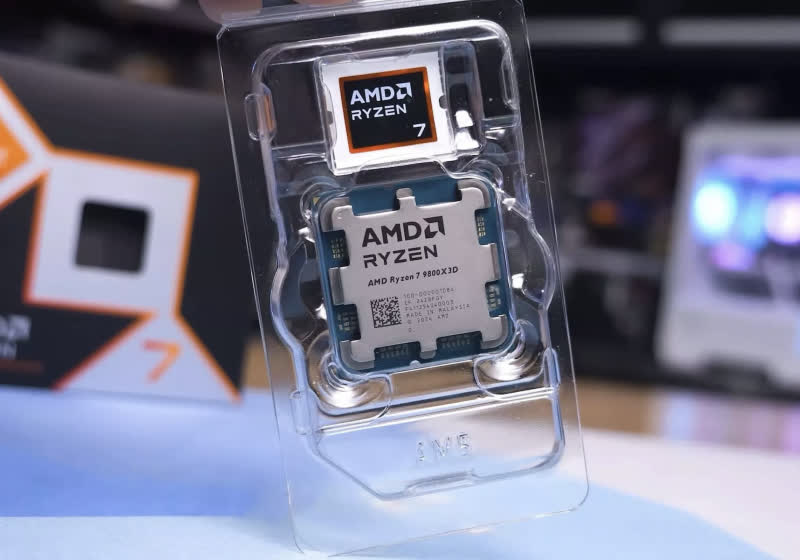
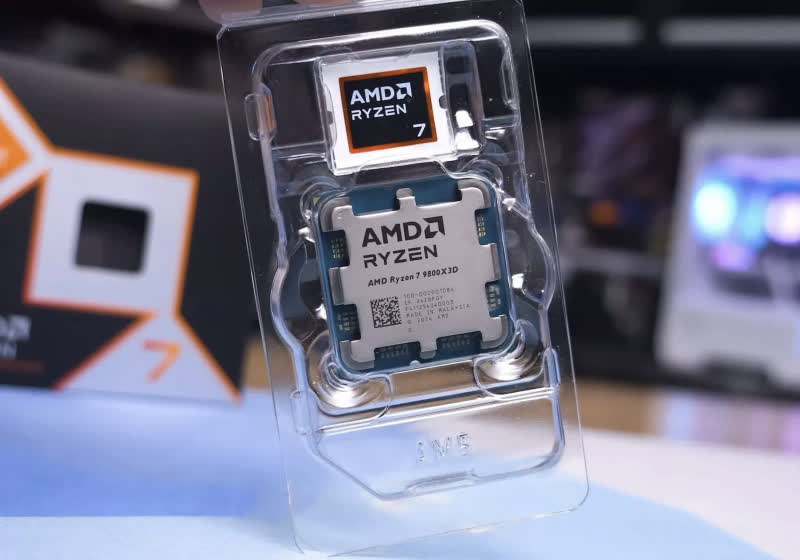
Mercury Research’s Q1 2026 numbers show AMD reaching 46.2% of x86 server CPU revenue, a new record for the company. Its server unit share climbed to 33.2%, underlining how Epyc continues to gain traction in cloud, enterprise, and AI infrastructure deployments. Read Entire Article Source link
Employee benefits are in the spotlight this week, and that’s because of three recent stories about US companies cutting back on non-wage compensations for workers.
A Texas tech consulting firm with a forgettable name—TTEC—suddenly became a lot more memorable when it suspended its discretionary 401(k) match program for 16,000 employees through at least the end of 2026. According to Business Insider, which viewed an internal TTEC memo, the company plans to invest in AI certifications, AI tools and training, and automation, among other things.
The auditing and consulting giant Deloitte is also reportedly slashing benefits for some workers starting next year. This includes reducing PTO, halving parental leave, and eliminating a $50,000 reimbursement for family planning services such as adoption, surrogacy, and IVF. San Francisco-based Zoom, meanwhile, has made a smaller-scale change and reduced its parental leave for employees from 22 weeks to 18 weeks for birthing parents.
So what’s the driving force behind this? And are there more cuts to come? The latter is impossible to answer, and the former is unfortunately more complicated than “corporate ghouls go AI.”
Advertisement
First off, “what Deloitte did is completely unconscionable,’” says Joan C. Williams, a professor at UC Law San Francisco, the author of several books on work culture and class dynamics, and an oft-cited scholar on these topics. The consulting firm is cutting the benefits of a specific class of internal workers—in admin, IT support, and finance—while leaving intact benefits for people in client-facing roles. An affected worker will see their parental leave cut from 16 weeks to just eight weeks.
“It treats people differently based on the type of job they’re in, and cutting any mother down to eight weeks of paid leave is just outlandish,” Williams says. “When labor is tight, employers are more generous. But once the power shifts, the benefits contract.”
AI certainly is a convenient excuse these days for any corporate decision that harms workers. But the impetus here is also the cost of the benefits themselves. Earlier this year subsidies from the Affordable Care Act lapsed, and people began dropping out of health care plans entirely. Insurers have cited this as one reason they’ve raised premiums.
Sarahjane Sacchetti, a former top executive at benefits administration companies Cleo and Collective Health, who is working on a new health care initiative, told me that the costs of employer-sponsored health plans have increased significantly over the past five years. A survey last year of over 1,700 US employers by the Mercer health care consulting group found that the health care cost per worker was expected to rise on average 6.5 percent in 2026, the highest since 2010. And this was after factoring in cost-reduction measures; otherwise, the cost of a plan would go up by nearly 9 percent.
Advertisement
“This just starts to eat into how you think about total compensation as an employer,” Sacchetti says. That doesn’t mean the corporation is the ‘good guy,’ she says, but the poor state of American health care policy and lack of safety net are responsible for a lot of the stress that plagues undercompensated or laid-off workers.
Williams points out that the US is one of the few countries that doesn’t offer a federal paid maternal leave—putting it in league with Papua New Guinea and Suriname. “This just shows how crazy it is to provide employee basics like pension and paid parental leave through private employers rather than how other industrialized countries do it,” Williams says. Her proposed solution? “The US needs to join the rest of the universe.”
The irony, of course, is that the US government professes to be obsessed with women having more babies. If women in the US are—as celebrity doctor Mehmet Oz put it this week in the Oval Office—“underbabied,” a comprehensive paid federal leave policy would be the obvious place to start. (Oz also said that “making babies” is “the most creative thing the universe knows.” Don’t tell the AI CEOs.)
When Anthropic announced Claude Mythos Preview on 7 April 2026, the response went well beyond the cyber security community.
Finance ministers discussed it at the IMF. The Bank of England governor said it had to be taken very seriously . The UK Government wrote an open letter to every business leader in the country.
What prompted this? Mythos autonomously discovered thousands of critical and high severity vulnerabilities across every major operating system and web browser, including a 27-year-old flaw in OpenBSD.
Advertisement
Latest Videos From
Davey McGlade
Head of Global Cybersecurity, Version 1.
It generated working exploits without human guidance. The UK’s AI Security Institute tested it and found it could complete a 32-step simulated corporate network attack, from reconnaissance to full takeover, that would take human professionals around 20 hours.
Advertisement
An important caveat is that these results come from lab environments. Anthropic’s Mythos System Card notes the simulations had no active defenses, minimal security monitoring, and lacked defensive tooling. The Firefox exploitation tests ran without the browser’s process sandbox. Mythos is impressive, but it has not been pitted against hardened, actively defended systems.
That said, AISI estimates frontier model cyber capabilities are now doubling every four months. The genie is out of the bottle. Other model creators will deliver similar functionality but without restricting access like Anthropic has done.
1. Security is economics
The AISI budgeted 100 million tokens per attempt on its network attack simulation. Across ten runs, Mythos completed the full 32-step attack three times.
Advertisement
Sign up to the TechRadar Pro newsletter to get all the top news, opinion, features and guidance your business needs to succeed!
None of the models tested showed diminishing returns as the token budget increased; performance kept scaling upwards. In plain terms, the more compute an attacker throws at a target, the more they find.
To harden a system, do we need to be spending more tokens discovering exploits than an attacker will spend finding them?
The CSA and SANS “Mythos-ready” briefing makes a related point: build a permanent Vulnerability Operations function, running continuous AI-driven discovery across your entire software estate.
Advertisement
Relying on yearly penetration tests simply doesn’t match the real-world cadence. Token spend could be the new penetration test.
2. Patches signal attack vectors
Project Glasswing is expected to generate a flood of vulnerability disclosures, as around 40 major software vendors have early access to Mythos to review their codebases.
Advertisement
That coordinated and responsible disclosure is the right approach, but it creates a secondary problem: every patch is a signal to adversaries about where to look.
AI accelerates patch-diffing, comparing old and new code to reverse-engineer what was fixed and what was exploitable. Each patch becomes an exploit blueprint.
The Zero Day Clock project tracked time-to-exploit falling from 2.3 years in 2018 to roughly 20 hours in 2026. Organizations slow to apply patches are not just behind the curve, they are actively exposed by the disclosure itself.
Mean-time-to-remediate externally exposed vulnerabilities is now one of the most important metrics a security team should be tracking.
Advertisement
3. Open-source transparency is now a double-edged sword
Mythos analyses source code to find weaknesses. Anthropic’s research distinguishes between open source software, where the model reads code directly, and closed source, where work is conducted under partnership arrangements with vendors.
This has implications for open source more broadly, including policies like the UK Government’s commitment to developing in the open. Publishing source code enforces good standards and invites scrutiny, but if an AI model can understand a codebase in minutes and generate working exploits, open repositories become a hunting ground.
Linux kernel vulnerability reports have climbed from two to ten per week, all verified as genuine. Organizations that develop in the open, and those that depend on open source components, need to reconsider how they balance transparency with exposure, particularly for systems close to critical infrastructure.
Advertisement
4. Defense in depth still works, and architectural diversity matters
The UK Government’s open letter made the point plainly: the steps organizations should take against AI-driven threats are the same cyber hygiene measures recommended for traditional threats.
Not all vulnerabilities carry the same risk. A critical CVE in an internal system with no internet exposure is a different proposition from the same CVE on a public-facing payment platform.
Segmentation, identity controls, egress filtering, and phishing-resistant MFA all raise the cost for attackers, even with AI assistance.
Advertisement
Architectural diversity matters too. An exploit against one technology stack will not necessarily work against another, so layered, diverse architectures are harder to attack end-to-end even at ‘AI speed’.
The NCSC’s guidance on protocol breaks is one example: terminating a connection and passing the payload via a simplified protocol to a downstream system forces an attack to traverse multiple technologies, making protocol-based compromise significantly harder.
5. AI models could become instruments of geopolitical leverage
Anthropic chose to restrict access to Mythos through Project Glasswing, offering it to selected partners and governments rather than releasing it publicly. The US Treasury briefed its major banks directly. This is an interesting pattern.
Advertisement
AI models with offensive security capabilities are in effect strategic assets. The parallels with historical export controls on encryption are worth considering. In the 1990s, the US Government classified strong cryptography as a munition and restricted its export.
Those controls were eventually used as a tool of influence. It is not difficult to imagine access to the most capable AI security models being restricted along geopolitical lines or used as leverage in future trade negotiations.
For organizations operating internationally, this creates a new dependency risk. If your ability to defend your systems relies on access to models controlled by a foreign government or a single company, that is a strategic vulnerability in itself.
Advertisement
Where does this leave us?
The pace has accelerated but the response should not be panic. It should be focus. The CSA and SANS “Mythos-ready” briefing, reviewed by some of the most experienced CISOs in the industry, frames it well: this is the first of many waves.
The organizations that weather it will be those that sharpen vulnerability prioritization, reduce their attack surface, and scale security decisions through automation and architecture rather than headcount alone.
This article was produced as part of TechRadar Pro Perspectives, our channel to feature the best and brightest minds in the technology industry today.
Advertisement
The views expressed here are those of the author and are not necessarily those of TechRadarPro or Future plc. If you are interested in contributing find out more here: https://www.techradar.com/pro/perspectives-how-to-submit
Something felt off when I watched Google’s Android AI presentation this week. My colleague Andrew Lanxon summed up the issue perfectly: All of Google’s AI use-case examples revolved around spending large sums of money on shopping and travel, making the presentation — in his words — a “salute to rampant capitalism.”
But this Google gaffe isn’t just an Android-user issue, as Gemini could influence the future of Siri. Apple partnered with Google to build a better Siri, and whatever Apple shows off next will be built with the aid of Gemini’s models and programming. So in this week’s episode of One More Thing, embedded below, I examine the good and bad of the new Gemini Intelligence, and how it might mesh with what we want from Apple Intelligence.
Unless you like ordering food, spin classes and concert tickets with AI, not much of what’s new from Gemini will impress. (There were even some voice commands I could already do from my iPhone easily, like finding late-night pizza joints.) Still, I’ll admit there were two new Android features that could give iPhone owners a little Android envy.
Advertisement
Spoiler: Booking Costa Rican coffee and chocolate tours for a party of six was not one of them.
For more One More Thing, subscribe to our YouTube page to catch Bridget Carey breaking down the latest Apple news and issues every Friday.
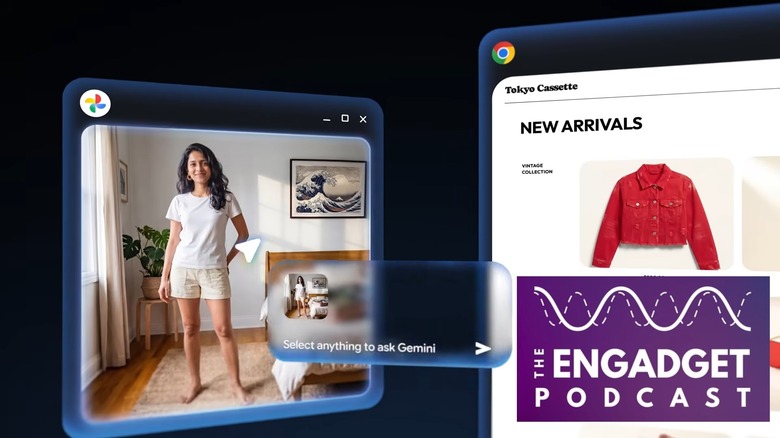
As usual, Google delivered much of its consumer-focused news this week during the Android Show, ahead of its I/O developer conference. We’ve gotten a closer look at Android 17, which will sport a slew of new Gemini AI integrations, including some new agentic upgrades. The company also officially announced Googlebooks, its latest line of laptops built around AI features and Android interoperability. It looks like a major evolution on the concept of Chromebooks, though Google says those won’t be going anywhere.
Advertisement
Topics
What’s new at The Android Show: Googlebooks, Gemini Intelligence, and file sharing with iOS – 1:25
eBay rejects Gamestop’s offer as “not credible or attractive” – 32:18
U.S. cell carriers form a joint venture to fix service dead spots – 33:41
OpenAI sued by spouse of FSU shooting victim, who used ChatGPT to plan shooting spree – 38:44
Apple is making the iOS Camera app more customizable – 44:06
RIP Rufus, we hardly knew ye: Amazon dubs Alexa its new shopping assistant – 44:58
Around Engadget – 47:14
Working on – 49:26
Pop culture picks – 51:15
Advertisement
Livestream
Advertisement
Credits
Hosts: Devindra Hardawar and Igor Bonifacic Producer: Ben Ellman Music: Dale North and Terrence O’Brien
Landlords would rather hold out for higher-paying tenants than lower rent
For most Singaporeans, the mall is where life happens—groceries, dinner, a haircut, the kids’ enrichment class, all under one roof. It’s as much infrastructure as it is retail.
And we are not short of options. According to shopping mall directory SingMalls, there are at least 106 malls across the island—serving a total population of 6.11 million people. That works out to roughly one mall for every 58,000 people, in a country spanning just 700 square kilometres.
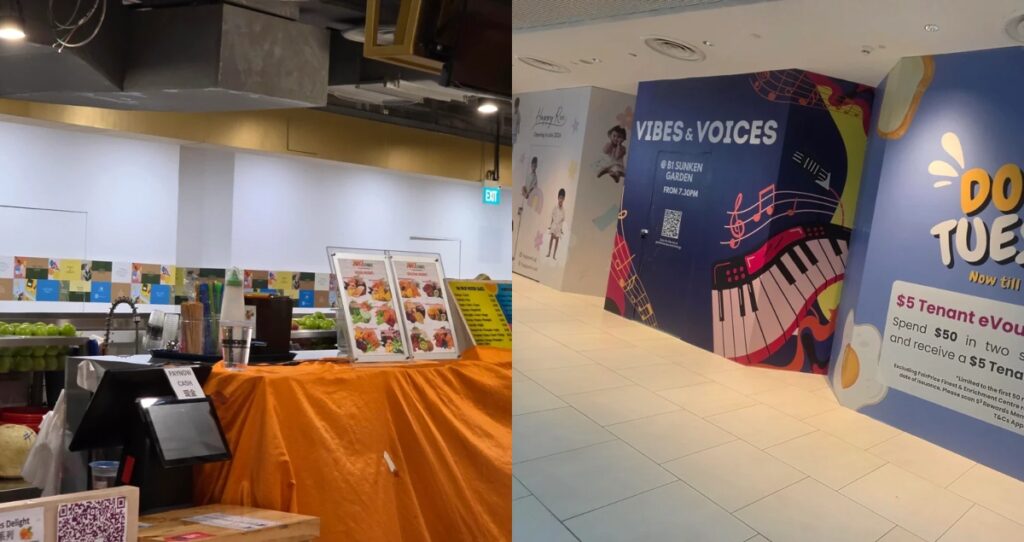
But in some once-bustling malls today, the silence is striking: empty shopfronts, boarded-up units, and “Coming Soon” signs left hanging for months.
Singapore’s retail vacancy rate has been rising—hitting 6.8% island-wide in Q1 2025, up from 6.2% the previous quarter, according to Savills Research. Some businesses have cited rising rental costs, yet higher vacancies alone do not seem to be forcing landlords to lower rents.
Advertisement
Aren’t landlords bleeding money by leaving units vacant? The uncomfortable answer, it turns out, is often no—and The Woodleigh Mall is the clearest illustration of why.
Vulcan Post examines what is going on behind the scenes.
An exodus of shops
Stores left empty and many “coming soon” boards put up for new tenants are a prominent sight at The Woodleigh Mall./ Image Credit: ConsiderationNo1619 via Reddit
The Woodleigh Mall soft-launched in May 2023 as the anchor of a brand new estate, meant to be the beating heart of the Bidadari community—the only full-fledged mall serving thousands of residents in the area. \
But less than two years later, the picture looks very different.
Advertisement
Residents and workers at The Woodleigh Mall have watched an exodus unfold, particularly in the basement food cluster known as fEAsT@Woodleigh.
According to Mothership, more than 15 shops vacated the mall within the span of a year. Former tenants include Burger King, Fish & Co., Lee Wee Brothers, and Swee Heng Bakery—all gone.
A 45-year-old shop employee who has worked at the mall for about three years told the publication that the high turnover among F&B tenants has been happening “since the start.”
“Since the start, the mall is not doing very well. The footfall is low over here compared to other malls,” she said. “Normally for a new mall, the crowd will slowly build up, but not for this mall. It has been very stagnant,” she added.
Advertisement
Moreover, some residents have cited expensive parking, a confusing layout, and limited retail options as reasons they go elsewhere. “People don’t come here to shop because there’s nothing to shop,” the employee said.
Many fingers have pointed to another key culprit: rent.
Constance Tan, director of bubble tea brand No.17 Tea, told Stomp that when her lease came up for renewal, the landlord quoted a 30% increase in rent, a figure she described as “totally unsustainable.” Rather than leave entirely, No.17 Tea downsized to a smaller kiosk-format unit within the same mall.
Residents’ instinct is to blame greedy landlords, and that isn’t entirely wrong. But it misses how commercial property actually works—and why holding out for for higher-paying tenants can make perfect financial sense.
Advertisement
A mall is valued like a stock, rather than a business
The Woodleigh Mall./ Image Credit: BYKidO
The footfall problem and the rent problem feed into each other in a vicious cycle.
Mall rents are largely determined by foot traffic. A mall pulling in five million visitors a month, for example, can command far higher rents than one drawing 1.5 million. But when footfall disappoints, tenants struggle to generate the sales needed to justify their rent. Some eventually leave, making the mall even less attractive to shoppers—and even harder to lease out.
So why not simply lower rents to fill empty units?
Because for commercial landlords, lower rents do not just mean lower income. They can also reduce the mall’s overall value.
Unlike an HDB flat, which is valued mainly based on nearby transaction prices, commercial properties are typically valued based on the rental income they generate. According to CKS Property Consultants, this is calculated by taking a property’s net operating income—rental revenue minus operating expenses—and dividing it by a market capitalisation rate. In simple terms: the more rent a mall collects, the more valuable it is.
Advertisement
That creates a dilemma for landlords. If they cut rents across the board to attract tenants, the mall’s projected income falls, and so does its valuation.
This matters because banks lend against that valuation. In Singapore, commercial property loans are typically capped at around 75% of a property’s value. So if a mall’s valuation drops by S$50 million after rental cuts, the landlord’s borrowing capacity could shrink by S$37.5 million. That’s real money off the table.
Think about it from the landlord’s perspective.
An empty unit could cost them a few thousand dollars a month in lost rent. Dropping rents across the board to fill the mall could slash its valuation by millions overnight. Holding out isn’t stubbornness, but math.
Advertisement
Who are the higher-paying tenants?
Clinics and enrichment centres make up about a quarter of the tenant mix in The Woodleigh Mall./ Image Credit: Parkway MediCentre, Mavis Tutorial Centre
Ironically, the tenants most willing to pay high rents are often tuition centres, clinics, and enrichment studios—businesses with steady income streams that generate little to no shopping footfall.
These tenants are attractive to landlords precisely because they are less dependent on walk-in traffic. A quiet Tuesday afternoon may hurt a restaurant or fashion retailer, but a tuition centre still collects its fees. They pay reliably, sign longer leases, and offer stable income streams, making them ideal tenants on paper, even if they gradually hollow out the mall’s retail atmosphere.
Healthcare and enrichment tenants have been part of The Woodleigh Mall’s mix since its soft launch—sitting alongside the F&B brands that were publicly celebrated. As those F&B tenants have left, the balance has shifted, and the education and medical presence has become increasingly prominent. One in four units at The Woodleigh Mall is now an enrichment centre or medical clinic.
On paper, occupancy still looks healthy because these units count as filled space. But to residents hoping to grab dinner, shop, or run errands, the mall can feel less like a vibrant retail hub and more like a ghost town, one where “everything is so expensive.”
Chinese restaurant Nong Geng Ji has over 100 stores worldwide, out of which 8 are opened here./ Image Credit: EveC via Google Reviews
On the other end of the spectrum, landlords are also holding out for deep-pocketed foreign brands, particularly the wave of Chinese F&B chains currently expanding aggressively into Singapore.
As of Aug 2025, some 85 Chinese F&B brands were operating around 405 outlets in Singapore, more than double the 32 brands recorded just a year earlier. Many of these brands have reportedly offered higher rental bids to secure prime retail spots—precisely the kind of tenant a landlord waiting for a premium offer is hoping to attract.
Advertisement
As unfair as it sounds, there’s no mechanism in Singapore that forces landlords to fill units with retail tenants, or to fill them at all.
There is no vacancy tax on commercial retail space, nor any penalty for keeping units empty for extended periods while waiting for a better tenant. There is also no requirement that a mall serving a residential estate must maintain a minimum standard of retail or F&B options.
The Woodleigh Mall’s joint venture owners—Cuscaden Peak Investments and Kajima Development—even put the mall up for sale for an asking price of S$800 million in July 2024, less than a year after its grand opening. That’s likely not the behaviour of owners optimising for the community, but for exit.
What does this mean for residents?
The frustration residents feel at Woodleigh is real and legitimate. When you’re one of thousands of HDB residents with a single mall serving your estate, it matters what’s in it.
Advertisement
But the problem isn’t simply that landlords are greedy. It’s the entire valuation and financing system for commercial property that creates rational incentives to prioritise rent income over community function. A landlord who drops rent to fill their mall with popular F&B tenants may literally be destroying value on paper by doing so.
Until there’s a policy lever that changes those incentives, whether that’s a vacancy tax, use requirements for community-serving malls, or something else entirely, the cycle is likely to continue.
So the next time you walk past a shuttered unit in your neighbourhood mall, remember: it might not be sitting empty because nobody wants it. It might be sitting empty because the landlord is waiting for a tenant who makes better financial sense.
And right now, nothing is stopping them.
Advertisement
Read other articles we’ve written on Singaporean businesses here.
Featured Image Credit: The Woodleigh Mall, ConsiderationNo1619 via Reddit
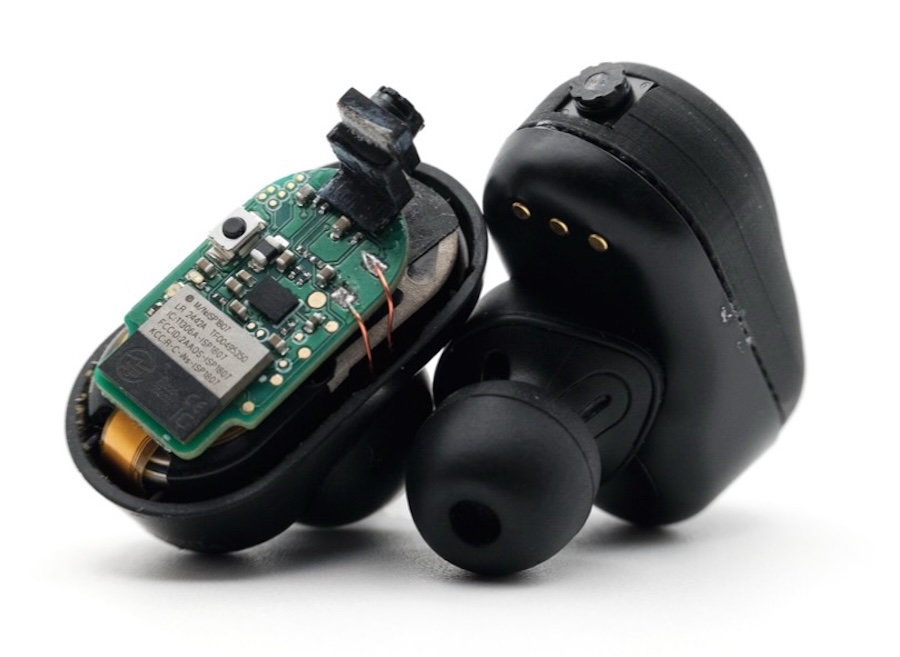
VueBuds, a prototype developed by University of Washington researchers who have embedded a rice-grain-sized camera into each earbud of a standard pair of Sony wireless earbuds. (UW Photo)
Wireless earbuds seemingly sprang out of nowhere. Popularized by Apple’s AirPods, they were suddenly everywhere — on the subway, in the grocery store, in the ears of the person sitting across from you — until somewhere along the way, they became the thing nearly everyone wears without a second thought.
Could that popularity make earbuds better than smart glasses for AI? That is the bet behind VueBuds, a prototype developed by University of Washington researchers who have embedded a rice-grain-sized camera into each earbud of a standard pair of Sony wireless earbuds. The result is a visual AI assistant hiding in plain sight: look at a can of food and ask how many calories it has, hold up an unfamiliar kitchen tool and get an answer in about a second.
The system processes images on-device and responds through a connected AI model — no cloud required, no images stored.
The UW team believes it is the first to embed cameras directly in commercial wireless earbuds.
The earbuds don’t remember anything, but the people around you might not know that. That tension sits at the heart of what the UW team built and raises a question the researchers take seriously: what are the social norms when cameras are embedded in objects nobody thinks of as cameras?
Advertisement
The team’s answer is to lean hard on minimizing data collection. Images are processed and discarded; nothing is saved. But the system offers no outward signal to bystanders that a camera is present, which the researchers acknowledge is an open challenge rather than a solved one.
For technology like this to earn trust, Maruchi Kim, lead researcher and UW doctoral student in the Paul G. Allen School of Computer Science & Engineering, argued that privacy can’t be an afterthought.
“We don’t support saving the images,” Kim said. “It’s mainly just to bridge the interaction between a person and having access to AI on the go, especially in hands-free scenarios.”
The team’s other central argument is about form factor — and it’s a pointed challenge to Meta, which has spent years and hundreds of millions of dollars trying to make camera glasses a mainstream product.
Advertisement
The UW team’s position is that smart glasses will never fully shed their social baggage: the memory of Google Glass, the discomfort of being watched, the visible signal that the wearer has opted into something most people haven’t. Earbuds carry none of that history.
“From the get-go, we didn’t want to be associated with that,” Kim said.
Getting cameras into earbuds required solving a power problem first. Cameras consume far more energy than microphones, so the team opted for a low-power sensor that captures roughly one frame per second in black and white — slow by video standards, but fast enough for the question-and-answer style of interaction the researchers had in mind.
The cameras are angled five to 10 degrees outward, providing a 98- to 108-degree field of view, and images from both earbuds are stitched into a single frame before processing, cutting response time to about one second.
Advertisement
The applications range from the practical to the significant. The system can read text on food packaging, identify objects, and translate written Korean. But for people with low vision or cataracts, the implications run deeper.
The team received more than a dozen emails from people with visual impairments describing what they’d use it for: understanding facial expressions, reading books, watching television — tasks that existing AI tools can’t easily support in a hands-free, ambient way.
Kim sees another underserved group in the workforce. Electricians, plumbers, and workers in industrial settings often can’t pause to pull out a phone mid-task — a pipe fitting wedged in place, a live wire that needs both hands.
For those workers, a voice-queryable visual assistant that doesn’t require touching a screen is the difference between having access to AI and not having it at all.
Advertisement
“There’s a lot of blue collar work where those people aren’t really able to harness the benefits of recent AI advances,” Kim said. “They can’t just whip out their phones and take a photo.”
The hands-free framing extends broadly: surgeons, cooks, anyone who has ever tried to follow a recipe with wet hands.
The system remains experimental and isn’t available for purchase. Shyam Gollakota, a professor in the Allen School and the project’s senior researcher, said interest from technology companies has been significant, and camera-equipped earbuds could reach consumers within a few years.
On cost, Gollakota is optimistic. The camera sensor itself could run under a dollar at the component level, he said — meaning that at the scale of a major consumer electronics manufacturer, the price premium over standard earbuds would likely be modest.
Advertisement
The $10 figure Gollakota cited refers to a more conservative estimate at smaller production volumes.
“What we do at the universities is show that you can solve technical problems,” Gollakota said. “Then we show a path for these companies and other people to say that this is actually possible.”
What’s left of CBS News recently landed an interview with Israeli Prime Minister Benjamin Netanyahu. It’s a bit of a doozy (transcript, video). There’s a part where Netanyahu tries to blame foreign social media bot farms for the rise in people disgusted by his government’s carpet bombing of children. There’s a part where he pretends to not actually want billions in U.S. taxpayer dollars.
And there’s this part where he likens himself to Churchill and makes some strange comments about Hitler:
PRIME MINISTER BENJAMIN NETANYAHU: They implant themselves among civilians, you know, so that they have civilian casualties and they can put it on the tube or in your cell phone. So, yes, I mean, I don’t know how to fight it. I mean, Churchill, without cell phones and without digital campaigns and farm bots was labeled a warmonger in the 1930s because he said, “You have to stand up to Hitler.”
MAJOR GARRETT: Hitler, right.
PRIME MINISTER BENJAMIN NETANYAHU: And they accused him of being a warmonger. And Hitler didn’t even say “death to America, death to Britain,” you know. I– I think he might have planned it, but he didn’t say it. And still they accused him of that.
Advertisement
The interviewer, Major Garrett, spends absolutely no serious time pushing back against the claims Netanyahu makes. Or meaningfully addressing indisputable evidence that the Israeli government has engaged in widespread genocidal war crimes on the U.S. taxpayer dime. When Netanyahu tries to dismiss the massive civilian casualties in Gaza, Iran, and Lebanon as minor andinnocent mistakes, Garrett has no response.
Garrett doesn’t normally work for 60 Minutes. He was brought on board from elsewhere within CBS because Netanyahu specifically asked for him. According to Oliver Darcy’s excellent media newsletter Status, 60 Minutes correspondent Leslie Stahl was trying to land the interview with Netanyahu when Weiss intervened and shuffled the interview over to Garrett, causing (more) internal anger:
“But behind the scenes, Status has learned that famed “60 Minutes” correspondent Lesley Stahl had also been gunning for the interview but was upstaged by CBS News boss Bari Weiss, who booked Netanyahu herself and handed the interview to Garrett, who is notably not a “60 Minutes” correspondent. The move sparked hostility and amplified the already strained relationship between Weissand the reporting team at the iconic newsmagazine.”
There’s been a mass exodus at CBS for months as actual journalists bristle at the obvious shift toward soggy corporatist agitprop under Weiss. While Weiss was hired on to modernize CBS and make autocratic billionaire ass kissing exciting, viral, and good for ratings; the whole experiment has been a monumental failure so far, with CBS News recently seeing its lowest ratings in a quarter century.
Weiss rose to prominence at her weird little troll blog Free Press, which obviously hasn’t translated well to running a television network. Case in point: Weiss’ preferred new CBS News anchor, Tony Dokoupil, is having to broadcast the network’s coverage on Trump’s China visit from Taiwan because Weiss and friends failed to secure his visa on time for the trip. This mirrors other similar competency issues like Weiss making last-minute unapproved changes to teleprompter text that screws up broadcasts.
Beyond the clownish nature of it all, it remains an open question who this sort of stuff is actually for (beyond the extremely rich people endlessly trying to control information flow). Despite having a massive fortune, Ellison seems incapable of creating propaganda people actually want to watch, and even their target audience — center-right bigots with impaired critical thinking faculties — aren’t tuning in because they have a universe of other terrible (but far more entertaining) choices.
Like Jeff Bezos’ sad and desperate effort to repurpose the Washington Post into what now feels like a satirical billionaire-coddling rag, all the money in the world can’t seem to produce class warfare agitprop actual human beings want to consume. Almost as if the behaviors of the global authoritarian extraction class are starting to reach a point where they’re simply too heinous and ham-handed to spin.
Microsoft is introducing a new capability that will allow it to remotely roll back problematic Windows drivers delivered through Windows Update.
Called Cloud-Initiated Driver Recovery, the new feature will remove the need for hardware partners or end users to manually fix driver issues once drivers have been distributed to devices. The recovery process is entirely managed by Microsoft, with no partner-side actions required, and will only be initiated for Windows drivers rejected due to quality issues during shiproom evaluation.
Under the current system, if a driver distributed through Windows Update has quality issues, the hardware partner must submit a replacement, or users must manually uninstall the faulty driver, which can leave devices using subpar drivers for a long time.
With Cloud-Initiated Driver Recovery, Microsoft can directly trigger a rollback to a previous, stable driver version (or the next best version available on Windows Update) without requiring new software or actions from hardware partners.
Advertisement
“Today, when a driver published through Windows Update is identified after distribution to have quality issues, the remediation path relies on the hardware partner to submit an updated driver — or on end users to manually uninstall the problematic driver themselves. This creates a gap where devices may remain on a low-quality driver for an extended period,” Microsoft said.
“With Cloud-Initiated Driver Recovery, Microsoft can now trigger a recovery action directly from the Hardware Dev Center (HDC) Driver Shiproom, rolling back a problematic driver to the previously known-good version via the Windows Update pipeline. This is handled through coordinated updates to the PnP driver stack and the driver flighting and publishing services.”
The company also noted that:
Devices where a Driver Shiproom-approved driver cannot be located will not attempt Cloud-Initiated Driver Recovery
Recovery is delivered through the existing Windows Update infrastructure — no new client agent or partner tooling is required.
The new Windows Update feature is being tested between May and August and will begin rolling back drivers rejected during Flighting or Gradual Rollout starting September 2026.
Last week, at WinHEC 2026 (the Windows Hardware Engineering Conference) in Taipei, Microsoft unveiled a Driver Quality Initiative (DQI) to raise driver quality, reliability, and security across the Windows ecosystem, in coordination with OEM, silicon, and hardware partners.
Advertisement
“In the months ahead, we will keep investing in the fundamentals that matter most to customers: reliability, security, performance, compatibility and quality,” Microsoft said. “We’ll also keep collaborating with OEMs, silicon partners, IHVs, ODMs and the broader hardware ecosystem through the Windows Resiliency Initiative, the new Driver Quality Initiative and the work we do together every day.”
In June 2025, Microsoft also announced plans to periodically remove legacy drivers from the Windows Update catalog to mitigate compatibility issues and security risks.
Automated pentesting tools deliver real value, but they were built to answer one question: can an attacker move through the network? They were not built to test whether your controls block threats, your detection rules fire, or your cloud configs hold.
This guide covers the 6 surfaces you actually need to validate.
























































You must be logged in to post a comment Login