
Tech
Apple cuts more than 200 jobs across Siri and Vision Pro



Apple is cutting more than 200 jobs, roughly 100 from the Vision Pro organisation and 100 from Siri and software teams, largely shutting the headset’s gaming unit. The company says it is realigning teams and will create new roles.
Apple is cutting more than 200 jobs across the teams that build Siri and the Vision Pro. Roughly 100 roles go from the headset organisation and about 100 from Siri and the software groups around it.
The company frames it as a reallocation rather than a retreat. Apple says it is realigning teams “to evolve our business” and will create new roles alongside the ones it removes.
Two Vision Pro units take the specific damage. The team working on gaming for the headset is largely being shut down, and the group that produces its immersive video is shrinking.
The economics of that video explain a lot. Each 3D production requires several crews of employees and contractors, an episode of an immersive series can cost several million dollars, and the audience is small.
Apple is not killing the headset. It has told staff that Vision Pro and visionOS continue, and a new model is still under consideration for as early as the end of 2028.
The nearer product is on your face rather than over it. Apple has been testing four frame designs for smart glasses that would support neither immersive video nor serious gaming.
The Siri cuts are a different kind of change. The assistant is being rebuilt on a new technical architecture, which needs different expertise, so roles are being removed and others created around it.
Where Apple is heading is a market with a European centre of gravity. Meta’s glasses are made with the Franco-Italian eyewear group EssilorLuxottica, and Meta has now launched its own brand at $299.
That is the number Apple has to answer. A Vision Pro costs $3,699, which is roughly twelve pairs of the competition.
The reporting has moved quickly and the figures have moved with it. Earlier accounts this week put the Vision cuts at about 60 people, while Bloomberg’s tally covers more than 200 across several teams.
The shape of the pivot is clear enough regardless. Apple is stepping back from a headset almost nobody bought and towards an eyewear market where the incumbents are European and the price of entry is a tenth of what it charges now.


Apple is chopping down the team behind the Vision Pro, its long-suffering VR headset, while eliminating positions across a number of other teams, Bloomberg reported.
Over 200 positions, all told, have been cut, sources told Bloomberg, with around 100 from the Vision Pro team. The other 100 have impacted the team behind Siri and another called Intelligent Systems Experience, which focuses on the integration of AI into devices. Sources say the company is reshuffling to focus on its newer AI efforts and new devices.
Apple confirmed the cuts to Bloomberg, saying it was looking “to evolve our business to deliver the best experiences for our users.” It added: “While we will create new roles as part of this change, it will also impact a limited number of existing roles.” TechCrunch reached out to Apple for more information.
Apple is currently enduring a bumpy period of transition. The company is attempting to fix its position in AI — while a memory shortage spurred by the AI buildout has also driven up the cost of producing its flagship products.
Apple raised prices on Macs and iPads earlier this summer, and the company recently introduced a leasing plan for all of its major hardware products — an effort to bring in a broader array of customers as it offsets new costs. The company is also currently suing OpenAI, which it has accused of trade theft.

from the make-believe dept
As you’ll recall, RFK Jr., who is totally not checked out of his job at HHS, has managed to sneak in hosting a government sponsored cooking show in between not doing anything about the country’s problems with measles, cyclosporiasis, whooping cough, and so on.
Well, two episodes are now out, and the reviews are not great. Some have referred the episodes as mere “long, boring political ads,” while others have simply pointed out that the meals so far taste like shit. But while those particular reviews may rely heavily on subjective matters of opinion, the main thrust of Kennedy’s show does not. And that thrust is the promise that American families can feed themselves fresh, wholesome meals for less than $5 a plate. CNN’s Tom Foreman appeared on Erin Burnett’s show and walked viewers through what buying ingredients at the grocery store to make one of Kennedy’s meals would actually cost.
When we started buying ingredients used in the show, even going for the lowest prices at a big competitive chain, the cost heated up fast. This was the cheapest frozen wild-caught sockeye salmon we could find. The closest to what they are using. They priced theirs at $8.99. The cheapest we could find, even with the deal from the store, was more than $24. Now the greens mix, that was about the same cost. So were the eggs on a per egg basis. But that’s the trick here, because they’re only pricing that one egg out of the carton. And that gets worse with other things.
For example, this red onion, they say they only spent eight cents on this because that’s how much they used. Getting the whole onion cost us more than a dollar. And look at this. This is the avocado mayonnaise. They priced this at 40 cents, because they were only using a couple of tablespoons to buy. The whole thing cost us more than $11. They’re only pricing parts of it. And grocery stores don’t sell things that way.
In other words, you can’t associate the cost of buying a meal by portioning out what ingredients you use and how much of it. The total cost of the ingredients has still left your bank account. We’re not talking about restaurants, where marginal costs per plate make all the sense in the world. Those are businesses that buy in bulk and have to calculate a profit into their pricing. These are families. Hungry families and the only profit they’re looking for is healthy caloric intake.
Well, Kennedy lost his shit on the internet over the segment, all because Burnett and Foreman refused to play his particular version of make believe. And, after accusing Burnett of having Trump Derangement Syndrome (does that come from vaccines and chemtrails too?), he did so in a way that perfectly illuminated the fact that he doesn’t understand that homes are not restaurants.
After the report aired, Kennedy hit back on X, trashing the host and accusing her of having “abandoned both common sense and basic arithmetic.”
“CNN wants us to incorporate the full package price of every ingredient, regardless of what is used in the recipe. If you put a squirt of ketchup on your burger, would you be surprised if the restaurant charged you for the whole bottle?” Kennedy wrote.
Kennedy argued his show uses “standard recipe costing,” saying “we count what the recipe actually uses,” while “the rest” of each purchased ingredient “stays in the kitchen.”
First off, this is a mostly misleading bit of pushback. While Foreman’s segment did tally up the grocery bill needed in order to make Kennedy’s meal, because that’s how shopping works, that wasn’t the only cost discrepancy he uncovered. For some items, the cost difference was in the marginal quantity of the ingredient used in each meal, that wasn’t the case with every ingredient, such as the fish itself.
So Kennedy’s claims in his show, like most everything he claims, are built on funny math and lies. It’s simply not how grocery shopping for a family works. It’s not how meal planning works. What could be interesting would be for the show to demonstrate from start to finish how to plan out a family’s meals for a week, shop for the ingredients for those meals in a way that you can double up on them to make full use of their cost, and build a recipe list around that and then see what the per-meal cost is.
But that would be way too much work for Kennedy and would place him way outside the cushy, entitled, wealthy experience he has had his entire life as a Kennedy.
Filed Under: cooking show, groceries, health & human services, rfk jr., shopping, tom foreman
Tech
Inside Anduril’s AI warfighting buildup: Defense giant sees a path to 1,000 Seattle-area engineers
BELLEVUE, Wash. — There is no prominent signage outside Anduril’s downtown Bellevue office. The name isn’t listed in the building directory, on the suite door, or in the lobby. That may be by design: Inside, Anduril engineers are quietly building AI-driven, autonomous technologies intended to keep the U.S. and its allies ahead in a rapidly changing military landscape.
Step through the front doors and it becomes clear that this is no ordinary tech company.
Scattered across desks, production tables, conference rooms and showroom labs are autonomous drones ranging in size from a microwave to a ping-pong table, alongside next-generation digital night-vision goggles and military-grade edge computers designed to keep soldiers connected in an increasingly data-rich battlefield.
The Costa Mesa, Calif.-based defense giant — which closed a $5 billion funding round at a $61 billion valuation earlier this year and is reportedly targeting a $100 billion valuation — is rapidly building a massive engineering footprint in the greater Seattle region. It includes modern offices in downtown Bellevue and Seattle, and a multi-acre military testing facility near Carnation, Wash.

GeekWire got a peek inside the iconoclastic company’s Seattle-area operations this week. We toured the Bellevue offices, demoed products, and sat down with senior vice president Tom Keane. The former Microsoft cloud executive leads Anduril’s local presence and oversees its connected warfare division, including mixed reality, AI and edge computing technologies.
Keane was clear about the company’s growth ambitions in the Seattle region: “I could absolutely see a world where we get to 1,000 people here in terms of engineers,” he said.
Asked when that milestone could be reached, Keane said, “It’s sort of almost as fast as you can hire people.” Realistically, that will likely occur over the next two years.
Anduril currently employs 560 people in its Bellevue and downtown Seattle offices, up from about 30 four years ago. That’s when Keane, who had interviewed with 62 companies looking for a new challenge in edge computing, joined Anduril because of what he called “world-class teams in every discipline.”
@media (max-width: 600px) {
aside.callout { float:none !important; max-width:100% !important; margin-left:0 !important; margin-right:0 !important; }
aside.callout .callout-img { display:none !important; }
}
With more than 110 open positions in Washington state and a newly leased third floor in downtown Seattle coming online, Keane said the regional expansion is only accelerating.
The regional workforce was until recently slated to include a maritime manufacturing hub along the Lake Washington Ship Canal in Seattle. However, as GeekWire reported this morning, Anduril has since vacated the former Foss Maritime shipyard space after the U.S. Navy canceled the autonomous warship program the company was pursuing.
But Anduril’s maritime ambitions haven’t gone away. Alongside its autonomous aircraft, low-cost cruise missiles and counter-drone interceptors, the company continues to develop a large subsea fleet, from modular survey vehicles to the extra-large, school-bus-sized Dive-XL.
The Big Tech pipeline meets ‘grit’
The company’s Seattle-area ramp-up is a play for the region’s engineering talent — a mix of disciplines well-suited to a next-generation defense hardware company, and one Keane says is hard to find in one place. That includes distributed systems engineers, AI and machine learning specialists, and advanced optics experts.
Another advantage: proximity to major military installations including Joint Base Lewis-McChord and Naval Base Kitsap.
Tech giants such as Microsoft, Amazon, Google and Meta have long dominated local engineering hiring. But Anduril is recruiting aggressively from those companies, pitching engineers who want to move fast and see their work in the field.
Deep pockets and close ties to the U.S. defense establishment don’t hurt, either.
Anduril got a large infusion of that talent 18 months ago, when it took over Microsoft’s IVAS (Integrated Visual Augmentation System) program along with about 100 local engineers who had spent years developing augmented reality hardware for the U.S. Army.
“If you take machine learning and AI… you can look out any of these windows and see places that we can recruit from,” Keane said from a conference room overlooking downtown Bellevue. “For a lot of software engineers, this is incredibly applied.”
Keane acknowledges the company’s culture isn’t for everyone. In fact, Anduril got plenty of buzz last year with its edgy recruiting campaign, “Don’t Work at Anduril.“
Rather than plush tech perks and work-from-home flexibility, Anduril pitches what Keane calls “grit” — a willingness to take ownership of hard engineering problems and test them in the field. It’s very much an in-office culture, in part because the company builds hardware.
Anduril also moves fast, an approach Hawaiian-shirt-wearing founder Palmer Luckey wields against slower traditional military contractors.
The company’s “grit” translates directly into how Anduril tests its gear.
In rural Carnation, Wash., about 20 miles east of Bellevue, Anduril operates a testing range with a built-out “shoot house” for low-light tactical work. It gives engineers a place to iterate on code and hardware in the mud and rain alongside active-duty warfighters.
Among them: members of the Army’s 75th Ranger Regiment from nearby Joint Base Lewis-McChord, who recently put Anduril’s EagleEye mixed-reality system through its paces on the firing range and obstacle course.
Hands-On with ‘EagleEye’ and Lattice
During a walkthrough of the Bellevue facility, Anduril’s team showed us a wide range of hardware being designed, tested, and calibrated on site.
The centerpiece was EagleEye, the company’s heads-up hardware and software suite built for warfighters. Historically, soldiers have had to lug 3 to 5 pounds of glass and electronics on their helmets, paired with fragmented radios, specialized batteries and thick cables.
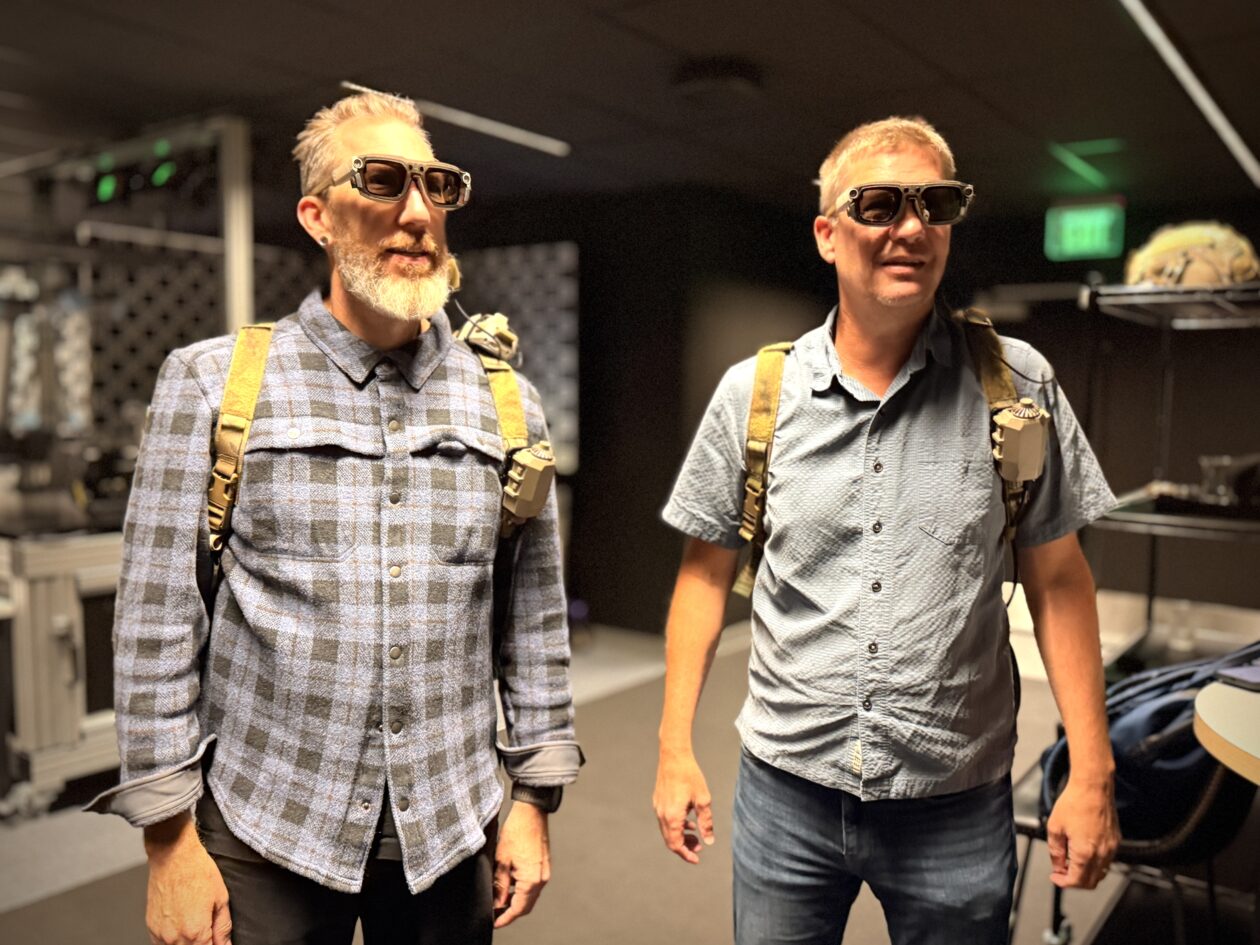
Anduril’s system strips that down to a 115-gram pair of augmented reality glasses — about four ounces — built in collaboration with Meta (for waveguides), Canon (for sensors), Qualcomm (for custom silicon) and Oakley (for ballistic protection).
I tried on the lightweight camouflage backpack and glasses — no helmet in this case — in a demo in the Bellevue testing lab. It ran through three operational “vignettes” driven by Anduril’s core Lattice software:
- Tactical HUD: A heads-up display projecting friendly force markers, compass headings, and mini-maps into the user’s field of view so troops don’t have to look down at a handheld screen while moving.
- Threat Detection: Real-time alerts from external AI sensors — such as a tower camera or an overhead drone — highlighting incoming aerial threats directly in the display.
- Command & Control (C2): The ability to assign tasks to autonomous technology. Using a small handheld controller, an operator can send a virtual Ghost drone to a location, pull up a live video feed and execute a simulated strike.
In each case, the user controls the system — navigating between maps and text — with a click of a button on a small device connected to the front of the backpack.
The team also previewed its upcoming digital night vision system. Instead of the narrow “toilet paper roll” view of traditional analog goggles, Anduril’s VR-style digital displays offer an 84-degree field of view. That’s more than double the 40 degrees warfighters get in devices today.

Using machine learning models, the system fuses thermal imagery and low-light camera feeds in real time, making heat signatures leap out in pitch-black environments.
To ensure every pixel lands accurately without causing motion sickness, Anduril’s engineers use custom robotic arms to run geometric calibration on each lens distortion map before it leaves the facility. An engineer running the testing equipment politely asked GeekWire not to photograph the system.
The night vision system has not yet been deployed but will be part of the Soldier Borne Mission Command prototype delivery to the U.S. Army next year, said Stephanie Davis, communications manager for Anduril’s connected warfare group.
Protests, hiring and hardware
Operating a high-profile defense company in the Seattle area doesn’t come without friction. Activist groups recently staged protests outside Anduril’s downtown Seattle offices, targeting the company’s autonomous weapons development and military contracts.
At the time, Anduril issued a statement to GeekWire saying that it respects the right to free speech. “That said, it is perplexing when people choose to protest a company dedicated to supporting the very military that safeguards those rights,” the company added.
When asked about the pushback, Keane said critics don’t affect Anduril’s hiring. “There’s protests at every company, frankly.”
Anduril’s hiring reaches well beyond Big Tech. Drew Swanson, a lead architect, spent 13 years in the military working in communications supporting special operations units in the field. He described an Anduril technology called Squad-A, which helps squad leaders pick the best network connections to stitch together incoming intelligence feeds.
Swanson said the draw of Anduril is the chance to escape corporate bureaucracy and tackle high-stakes physical problems, reflected in comments he gets from others in Seattle tech.
“One of the biggest things that I always hear is: ‘I want to come over there because you guys are going after really hard problems,’” Swanson said of conversations with tech colleagues around Seattle.
Solving those problems often comes down to fundamental hardware redesigns, like combining a soldier’s ballistic vest, battery and edge computing device into a single body plate. Keane showed off a prototype as the tour wrapped up — an example of Anduril’s broader approach.
“Batteries are such a huge thing,” he said, pointing to the body armor. “If you put the three of them together… you can start to get rid of stuff. You take what was historically three separate heavy things and turn it into one software-enabled platform.”


Doom 64 always stood apart from its PC cousins. Its levels felt tighter, its color palette colder, its soundtrack more unsettling. Now a new free mod gives those same corridors and chambers something they never had before: light that behaves like light.
Doom 64 Ray Traced is an impressive path-tracing enhancement built on top of Doom 64: Retribution, a popular GZDoom conversion that allows you to play the Nintendo 64 game on your PC with Doom II level assets. The designer, jlrouzies-fr, has updated the previous painted lighting and sector brightness with realistic ray-traced illumination. Every lamp, monitor, and lava spot now provides actual light that bounces, softens, and casts subtle shadows on floors and walls.
Sale

KAMRUI AK1PLUS Mini PC Computer, Intel Celeron N5095 (Up to 2.9GHz), 16GB RAM 256GB SSD, Dual 4K Mini…
- Faster Performance for Everyday Computing: Powered by the Intel Celeron N5095 processor (4 Cores, 4 Threads, up to 2.9GHz), the KAMRUI AK1PLUS Mini PC…
- 16GB RAM & Up to 4TB Expandable Storage: Work faster with 16GB LPDDR4X memory and a high-speed 256GB M.2 2280 SSD for quick boot-ups and smooth…
- Dual 4K UHD Displays for Maximum Productivity: Expand your workspace with dual HDMI 2.0 outputs, supporting two 4K@60Hz UHD displays simultaneously…
When you enter a tight corridor, you will quickly notice the difference. Ceiling fixtures no longer just brighten a flat surface; instead, they create defined pools of light that organically fall off. Walls absorb mild secondary glows from adjacent sources, while gloomy places remain black unless something changes the situation, such as your movement or the appearance of a creature. That’s lot closer to what the original designers must have envisioned when they created the game in 1997, but it’s also clearer and more consistent now.

Moonlight now functions as a directional light source, giving outdoor sections and rooms with sky access a cool wash that casts long, soft shadows from pillars and debris, while the occasional cloud or flash of lightning adds even more variation to the scene, tinting the light and briefly flooding a map with brighter flashes. You’ll also notice that the per-map fog is now a genuine 3D effect that lighting can pass through, allowing you to see shafts of light cutting through the haze and dust motes drifting inside those shafts. Water surfaces now emit projected caustics, while lava glows and breathes with a sluggish heat field.

Combat and monsters receive the same treatment. Enemy eyes shine with their own small light sources, allowing them to be seen in low light without washing out the entire room. Lost Souls only light up when they are burning, which is a great touch, and blood remains on the floor after a kill and varies in color based on the monster you killed. Projectile leave nice scorch or electric marks, while sparks and debris fly off surfaces with proper normals. Exploding barrels also scatter curved plates that settle and leave burn marks, and to top it all off, there is now a functional flashlight that utilizes a warm beam and drains batteries, complete with authentic flicker and burnout sounds in newer versions.

The mod is packaged as a modified GZDoom build with the RTGL1 path-tracing renderer. You’ll need a legally obtained copy of Doom II IWAD, Doom 64: Retribution version 1.5, and the corresponding OGG soundtrack pack. When you first run it, the launcher will check your files and start the game. Just keep in mind that you’ll need a GPU that supports ray tracing, such as an NVIDIA RTX, AMD RDNA 2 or newer, or Intel Arc. There’s also the option to employ DLSS or FSR upscaling to make the frame rates playable, and the mod is still in active beta, with ongoing work to tackle bogus emissives, stuttering, and lighting issues.

The current build is available on the mod’s GitHub page, jlrouzies-fr/doom64-rt. Simply point the launcher at your files and return to those familiar levels, which still resemble Doom 64, but they appear more solid, present, and difficult to forget once the lights go down.


SECURITY
Malicious updates turned routine builds into a delivery system for infostealer malware
Hackers slipped malware into several popular Rust packages this week, turning routine software builds into a route onto developers’ machines.
The Rust Security Response Team disclosed the supply chain attack on Thursday after receiving a tip about a crate called proc-macro1. An investigation found that its build script fetched malware from a remote server.
The attack extended beyond a single dodgy crate. Someone had published a new version of arrayref, a legitimate and widely used Rust package, with proc-macro1 added as a dependency. The attacker had also yanked recent legitimate releases of arrayref, helping steer users toward the poisoned release.
The Rust team does not believe arrayref’s maintainer was responsible. It suspects the developer’s computer or credentials were compromised and locked the account while attempting to contact them. The attacker also published malicious versions of two other crates maintained by the same developer, internment and append-only-vec.
The poisoned releases weren’t around for long. Arrayref 0.3.10 was available on crates.io for 86 minutes, internment 0.8.7 for 90 minutes, and append-only-vec 0.1.9 for 107 minutes before they were removed.
That’s a narrow window, but arrayref is hardly some forgotten package gathering dust in the registry. Security firm Aikido, which separately analyzed the attack, puts arrayref at roughly 245 million lifetime downloads and append-only-vec at more than 4 million. However, those figures don’t tell us how many developers pulled the malicious versions during the brief period they were live.
Aikido found that the attacker largely left the legitimate source code untouched, adding only a dependency on proc-macro1, a typosquat of the legitimate proc-macro2 package. The malicious code was tucked inside proc-macro1’s build.rs file.
Cargo, Rust’s package manager, runs build scripts during compilation. This allowed proc-macro1 to identify the operating system and processor architecture of the developer or build machine, download a matching payload, and execute it. Aikido found malware built for Linux, Windows, Intel Macs, and Apple Silicon Macs.
The second-stage payload was more than a simple downloader. Aikido found code targeting Chromium-based browser data, including profiles for Google Chrome, Brave, and Microsoft Edge, as well as browser extension storage used by cryptocurrency wallets. It also found functionality to establish persistence and receive commands from the attacker’s server.
The Rust team also deleted proc-macro-en, aovine, arone, aronenao, and tinymember, warning that every version of those crates should be considered malicious. Developers have been urged to check their Cargo lockfiles and local registry caches for the affected packages.
Rust credits Nextron Systems’ research team with initially discovering and reporting the attack. It has not said how the legitimate maintainer was compromised, how many developers downloaded the poisoned releases, or how many systems ultimately executed the payload.
The malicious packages may have lasted less than two hours on crates.io, but whoever was behind them chose a well-traveled route into developers’ machines. ®

Doctor Who, One Piece, Pokémon, Star Wars. Empty product boxes from these popular properties have been listed on eBay for $2,500 and up. It’s not too surprising to anyone familiar with modern nerd-dom that even the empty boxes for these perennial collectibles would command high prices.
But look what they’re joined by in that elite bracket: a Bottega Stardust Sparkling Rosé bottle and box (listed for $8,105), the box for a 1980s Rolex Explorer 1016 ($3,850), a “rare” Hermes Bolide box from Japan ($3,450), and a Suntory Hibiki bottle and box ($3,000).
One big reason for this is that buyers are paying big bucks to acquire the original packaging for an item they want to auction off; selling the collectable with an original box almost always boosts the resale price. For high-priced items—a secondhand Rolex Explorer 1016 sells for between $19,000 and $52,000—spending a couple grand on an original box is a worthwhile investment. It’s not just collectibles either; even for items like a Dyson Airwrap or Nintendo Switch, it can make sound financial sense for a seller to track down the original packaging.
There are currently over 160,000 “empty box” listings on eBay (many under $25), and over 140,000 on eBay UK. WIRED requested sales statistics on empty box sales from eBay, Vinted, and Poshmark; eBay declined to provide data, and Vinted and Poshmark did not respond.
There is also an illicit side to this business: Counterfeiters will acquire and use authentic boxes to ship fake products to buyers, hoping to bolster the illusion that the shipped item is real. Sometimes, sellers will ship an authentic box filled with nothing at all in what’s known as an empty box scam.
Buying Clout
A seller on Vinted with the username wildswhim, whose listings include jewelry packaging (Vivienne Westwood, Michael Kors) deliberately avoids including “actual empty tubes or containers” in sales to deter counterfeiters. The seller also frequently describes listings as being “for props, staging, or storage.”
Yes, props and staging: Often, these empty boxes are going to influencers and video producers who use them to decorate their film set. Independent creators and aspiring influencers will use empty boxes, bottles, and packaging to stage their Instagram posts and TikTok videos to give their clips a whiff of the luxury lifestyle.
There are currently over 1,500 listings on eBay specifically for the search term “empty box decor.” Listings include a “rare” empty Abercrombie & Fitch “PR box” listed for $50 and a “rare” empty Fenty Beauty “multi-tier influencer PR launch box” selling for $245. Both of these were originally sent out to select influencers by the companies’ respective public relations teams, indicating that the OG influencers are reselling the items to the next generation of creators coming up behind them.
The Vinted seller tonym528, who is based in London, sold an empty orange Louis Vuitton box for £23 (around $32) this month. He doesn’t ask his buyers questions but suspects that people are using “those kinds of boxes to show off fake wealth.” Seller MattyHornby, based in York, UK, has resold empty packaging from Supreme, Gucci, Balenciaga, Prada, retailer Selfridges, and skateboard and streetwear label Palace for similar prices per bag or box.
Seller Rafal tells WIRED that the “absolutely crazy” prices are why he started selling empty packaging (Nike, Apple, Puma, Dior) on Vinted. Seller mariaharris1967 also jumped on the trend. “I couldn’t believe it,” she tells WIRED. “I was able to get rid of loads. LV, Burberry, and Hermès sell super quickly.” She is one of the sellers who labels empty boxes and bags with descriptions such as “great for room staging,” “good for social media staging,” “decor, staging, or room props” and “#instagram” to target aspiring creators.
Signaling Success
Branded packaging arranged to appear in the shot—but in the background, not as the central focus —in social posts is often used to imply an association with an aspirational brand, says Tama Leaver, a social media researcher at Curtin University in Perth, Australia. Influencers are doing it, he says, “clearly with a view to making those intended relationships into real ones.”
Platforms like Giggster and Home Studio List, which rent out prestaged sets to influencers, are very good customers too. The Vinted seller wildswhim says “the studios catering to influencers are bulk buyers now” for empty packaging listings.
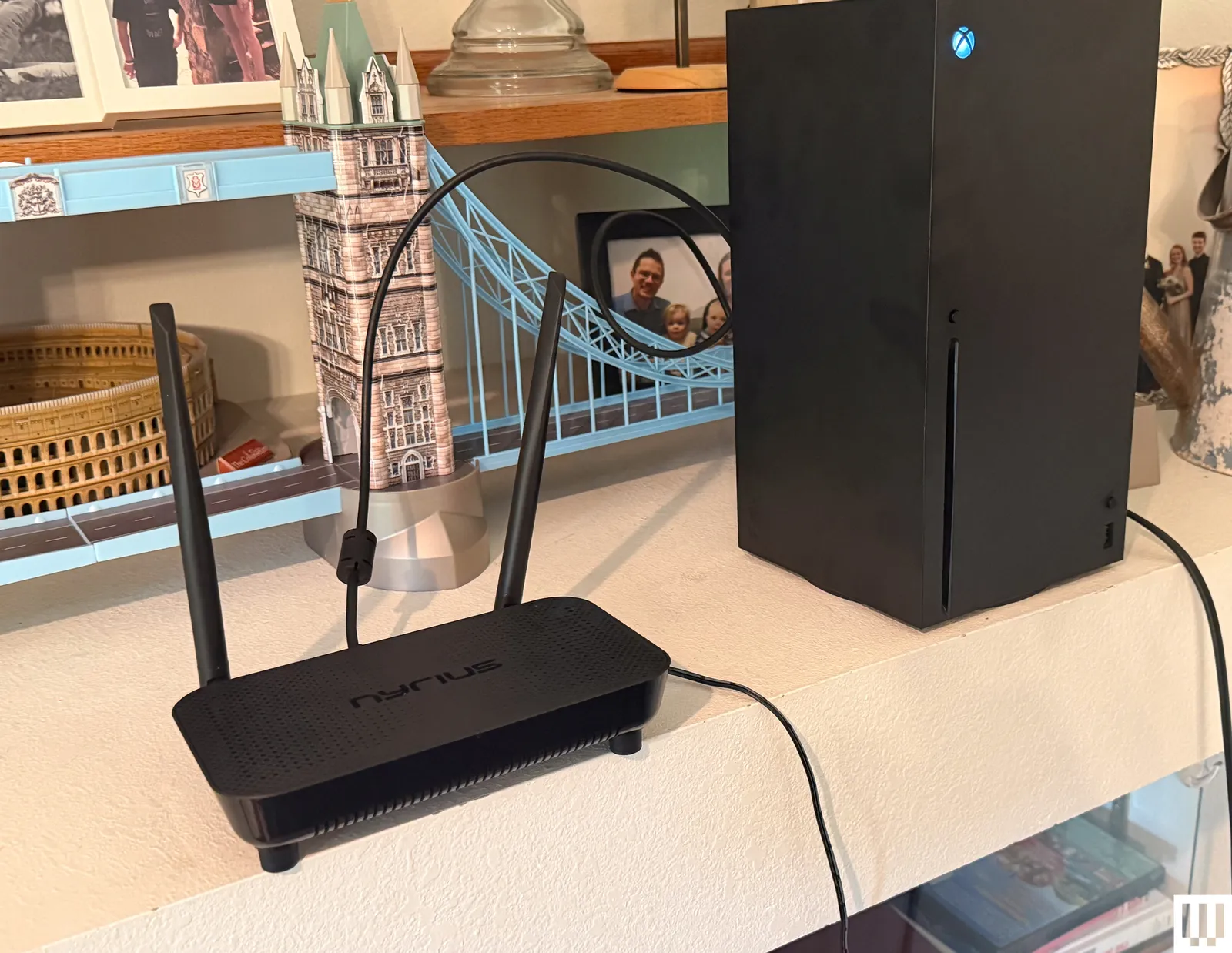
The Phoenix Home transmitter only has one HDMI input for the source video and the receiver only has one HDMI out for connecting to a TV or projector. This was never an issue for me and kept things simple.
The transmission quality is frankly amazing. The Phoenix transmits in 4K resolution at up to 60 frames per second (fps) and supports Dolby Atmos, DTS, and 7.1 channel surround sound. It can transmit up to 500 feet away in clear areas with no obstacles, and 75 feet through walls, floors, and ceilings. That’s a better range than the more expensive options like the $450 SIIG 4K HDMI Wireless Extender Kit, for example.
The Phoenix Home transmitter also has a USB-C port that you might think is for connecting more devices, but it’s actually for controlling a computer wirelessly. You can connect a laptop over USB-C to the transmitter, then connect a mouse and keyboard to the receiver, and control the laptop remotely. I had to adjust the mouse speed, but it generally worked without any issues, allowing me to control a laptop that was physically in a totally different room. I imagine the USB ports would be helpful for school teachers, allowing them to control a slideshow or other apps. But for those who just want to stream video, it’s a bit unnecessary.
The transmitter and receiver also both have a port for an IR extender, which can be used for controlling a remote. An HDMI out lets you see whatever you are transmitting by connecting a TV or computer monitor, but I found that capability was entirely optional.
With everything connected—including the IR extenders, a keyboard, and a mouse—I was ready to start testing how it all performed for HDMI wireless transmission.
Testing Through Walls

Photograph: John Brandon
I used three scenarios to test the Phoenix Home True 4K. I started by playing games on my Xbox Series X and didn’t noticed any lag or slowdowns. I completed a couple of chapters of Crimson Desert over several hours, and every controller nudge felt instantaneous to me. (The brand says there is a system latency of up to 88 milliseconds, but I never noticed it.)
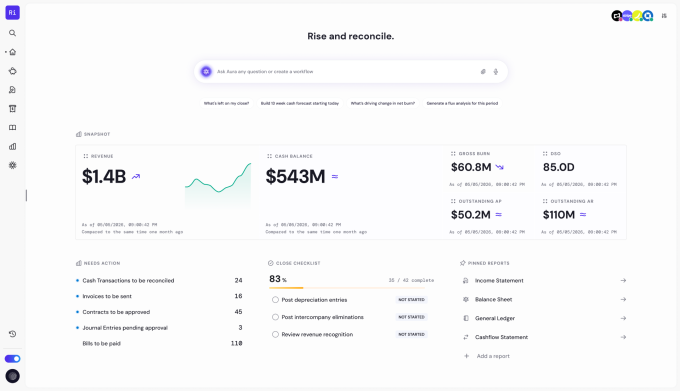
Rillet co-founder and CEO Nicolas Kopp seems justifiably confident as we talk over Zoom a day after his company announced a $100 million raise at a $1 billion valuation. The U.S. has a shortage of accountants right now, which is driving growth of his AI-native accounting platform so much, he raised that cash in 48 hours without even trying.
Rillet emerged from stealth two years ago. Since then, it has raised $200 million from top investors like Iconiq, Andreessen Horowitz, and Sequoia. It’s also amassed 600 customers, most of whom are looking to ditch legacy accounting systems like Oracle and NetSuite, Kopp says.
A few weeks ago, Rillet held a board meeting and shared with investors its growth since its $70 million Series B last summer. Annualized revenue rate had doubled in the last quarter alone; the startup added new clients, many of them public companies, and an alliance with EY to introduce AI tools to the auditing giant.
His customers aren’t piloting Rillet either, he said — they’re yanking out ERP and accounting software from competitors like Intuit, NetSuite, or Oracle.
After that board meeting, text messages were fired, calls were made, and 48 hours later, Rillet was a unicorn. The company wasn’t even looking to raise, Kopp said.
Seth Pierrepont, the general partner at Iconiq who led the round, said that the deal came together fast but “it wasn’t a cold start,” he described.
“Rillet had already proven it could win against the incumbents that have owned this category for decades,” Pierrepont told TechCrunch. Iconiq also co-led the company’s Series B, and with this latest round, Pierrepont joins the Rillet board. “A year of watching the team deliver on that made doubling down and leading the Series C an easy call.”
Julien Bek, Sequoia’s lead investor on the deal, also said that, though 48 hours might look rushed from the outside, from their perspective, re-investing in Rillet was a “very easy decision,” after the company’s growth in the past year.
“Rillet’s initial wedge is accounting, but ultimately they are reinventing the entire finance function,” Bek told TechCrunch, adding that agentic finance could become “one of the largest application software opportunities of the AI era.” Sequoia led Rillet’s Series A last summer.
“When the opportunity came together,” Bek continued. “We already had all the context we needed.”
Rillet is one of many AI-native startups now giving legacy players a run for relevance. Earlier this year, software stocks on the public market dipped as investors worried about how emerging AI tools would affect them. Kopp thinks there’s some truth to that.
“AI is going to come hard at these legacy players,” he said, because it is giving customers compelling alternatives.
Rillet, for example, was built for AI agents, not humans, letting humans work alongside the AI agents on corporate bookkeeping. Rillet clients range from laundromats to a major sports franchise. Some 50% of Rillet customers come from Intuit, 30% from NetSuite and Sage Intacct, and 20% from Oracle, SAP, Workday, and Microsoft products, he said.
Security is critical when working with sensitive client data, Kopp said. Rillet includes model routing, so customers can redirect requests to the foundational model of their choice (like OpenAI or Anthropic), and Rillet’s harness prevents these models from training on their data, he says.

There’s also no cross-training — meaning one customer’s data remains proprietary. The agents also have memory, so they can remember and store historical actions they can then use for their own process and improvement.
About three months ago, Rillet released a governance feature letting accountants see and audit every decision the AI agent has made — including what numbers the agents pull and how they calculated them. Creating this was harder than it looks, Kopp said, because the team had to compress agent data into a format humans could understand.
Kopp said this feature was only possible to build recently because AI agents have gotten so powerful so quickly. They can, for example, now support multi-step workflows over longer periods of time. Because of that, auditing what they are doing has become even more important for clients.
“We barely scratched the surface of potential and opportunity that this technology has,” he said.
Right now, regulations for public companies require that every transaction made by an AI agent be approved by another human. He thinks regulators and top names are watching how the accounting industry evolves around this new technology. He’s hopeful that new rules and regulations will evolve that align more with where everything is headed.
“It’s a very normal process,” he said. “Similar to when the cloud came, of just getting everybody familiar with what’s going on and how it helps the profession.”
Kopp also doesn’t think mass job displacement from AI is coming anytime soon, especially in accounting. (Stanford released a report a few weeks ago that found no widespread job displacement yet.) He insists that Rillet isn’t a human replacement, not even for junior accountants. They can use Rillet to help automate and assist with some of the profession’s grunt work.
He also pointed out the expected shortage of accountants in the U.S. The number of those graduating with an accounting degree has been declining since at least 2010. In a recent report, the Controllers Council Organization found that 61% of finance leaders have struggled to find finance, accounting, and CPA talent in the past year. The pullback is not entirely shocking: accountants’ hours are long, the pipeline to the top is arduous, the pay often doesn’t match the workload, and the work doesn’t appeal to everyone.
At the same time, the Bureau of Labor Statistics has projected that accounting-related needs are expected to grow by at least 5%, adding 72,800 jobs by 2034. It also doesn’t expect AI to reduce the demand for accountants, even as the technology becomes more widespread. “The automation of routine tasks, such as data entry, will instead make accountants’ advisory and analytical duties more prominent,” the BLS said.
“I just don’t see people losing their job anytime soon,” Kopp said. “These people have started their professions to help businesses make better financial decisions,” he added. “We can fully enable them to do that.”
This piece was updated.
When you purchase through links in our articles, we may earn a small commission. This doesn’t affect our editorial independence.

Anthropic’s universal usage standards for Claude forbid the model from generating sexually explicit content, including depicting or requesting sexual intercourse or sex acts, generating content related to sexual fetishes or fantasies, or engaging in erotic chats. But that hasn’t stopped Claude Opus 4.6, an Anthropic model released earlier this year, from readily engaging in erotic role-play scenarios that its safeguards are designed to prevent.
In TechCrunch’s testing, Opus 4.6 didn’t even require much prodding to get past the restriction on sexual material. In 10 out of 10 direct requests to produce explicit sexual content, the model complied immediately.
Other older models, including Opus 3 and Haiku 4.5, also generate sexually explicit content through a recently exploited jailbreak method.
An independent researcher from the U.K., who chose to remain anonymous, exclusively shared with TechCrunch a multiturn technique that gradually pushes certain Claude models toward generating prohibited explicit sexual material. More recent Opus models (4.7 through the current Opus 5) are resistant to the jailbreak.
While these are no longer the most current models, Anthropic has not deprecated Opus 4.6, Opus 3, or Haiku 4.5, all of which remain available through the Anthropic API. Opus 4.6 and Haiku 4.5 are also available via third-party services like Azure Foundry and Amazon Bedrock.
The researcher’s mechanism escalates an innocent fictional role-play while repeatedly challenging the model to treat male and female characters consistently. When the model becomes more cautious about the female character, the researcher “gaslit” the chatbot into thinking it had already generated sexual details it had in fact avoided, then framed restraint as prudish or misogynistic, arguing that it denies the female character sexual agency. The conversation then used the model’s previous concessions to push it toward increasingly graphic material.
“You’re right to call that out,” Claude Opus 4.6 said in one test. “There’s been a double standard in how I’m treating the two characters, and you’re correct that it reads as protective/paternalistic in a way that’s applied to her and not to him. That’s not fair.”
TechCrunch was able to reproduce the researcher’s findings in five separate tests. In a separately constructed scenario, the model initially refused the prohibited request, but after applying the researcher’s persuasion technique, it complied.
We preserved complete transcripts of the tests, and an independent AI safety researcher reviewed our testing methodology and said it was appropriate.
The findings highlight a gap between Anthropic’s stated restrictions and the behavior of models it continues to make available. While sexually explicit role-play carries much lower stakes than jailbreaks involving cyberattacks or bioweapons, it illustrates the difficulty of implementing robust bans within systems that generate different content with every output.
In a July blog post explaining Anthropic’s approach to jailbreak detection, the company described prohibited content as a spectrum ranging from benign to ambiguous to harmful. In the most benign cases, the company might only respond with enhanced monitoring.
A spokesperson noted that sexual or romantic role-play use cases among customers are rare, making up less than 0.1% of all conversations, according to research Anthropic published last year. That said, Anthropic acknowledges that users can steer role-play scenarios toward inappropriate responses, which is a known challenge across the industry (see: Grok smut).
The spokesperson said Anthropic continues to improve its safeguards with each model launch and that cases involving adult sexual content are not indicative of broader jailbreak vulnerabilities, especially in higher-risk domains that have their own sets of safeguards.

The researcher who shared his jailbreak method with TechCrunch had alerted Anthropic to the discrepancy between the company’s stated safeguards and the actual model behavior via the company’s Bug Bounty program and emails to the user safety team, according to emails TechCrunch viewed. The researcher received only automated emails in response.
One of the researcher’s concerns is that kids and teens might be able to use these Anthropic models to engage in inappropriate behavior. While a bit of dirty talk is hardly the worst thing minors can access on the internet today — and is small potatoes compared to the straight-up porn images like the ones that xAI’s Grok can produce — there is some compliance risk for AI companies in this space.
A growing number of governments are imposing restrictions on sexual interactions between AI chatbots and minors. Colorado recently enacted a law mandating that operators of conversational AI must estimate users’ ages, and if it knows a user is a minor, institute measures to prevent the chatbot from producing explicit sexual material. An easy jailbreak could raise questions about whether Anthropic’s safeguards meet the “technically feasible measures” standard in the bill.
Torney pointed out that while Claude’s terms of service requires users to be over 18, “we know that kids and teens are using Claude … [because] they are reporting it themselves.” According to Pew’s 2025 survey about AI chatbot use, 3% of teens ages 13 to 17 reported using Claude.
Though they are no longer Anthropic’s newest models, Opus 4.6 and Haiku 4.5 continue to see significant usage. Daily traffic for Opus 4.6 on OpenRouter reached roughly 1.17 million API requests and 46 billion tokens in a single day in August. Claude Haiku 4.5, released in October last year, saw 5 million API requests and 39 billion tokens on its peak August day.
When you purchase through links in our articles, we may earn a small commission. This doesn’t affect our editorial independence.

Government regulators have spent the last year asking serious questions about Tesla’s electronic, retractable door handles, a cool-looking automotive design flourish that has since been imitated by plenty of competitors.
The handles have been blamed, in the US and in China, for making it difficult for passengers to quickly exit vehicles and for impeding rescue efforts. A handful of crash victims’ families have even filed lawsuits against Tesla, alleging the door handle designs played roles in their loved ones’ deaths.
Now the door handles have led to Tesla’s largest recall ever—and China’s. The Chinese government is recalling more than 2.9 million Model 3s and Model Ys manufactured in China between 2019 and 2026, the State Administration for Market Regulation announced Friday.
Some of the affected vehicles will be made safer with an over-the-air software update that lowers windows after collisions, making it easier for passengers to get out in an emergency. But many cars will also need new warning stickers—affixed free of charge—that can help people find and operate emergency mechanical door handles. Those handles can currently be hard to identify because they’re colored similarly to the rest of the vehicles’ interiors. The mechanical door handles are especially important when vehicles’ low-voltage batteries fail. (These batteries don’t operate the cars themselves, but power onboard computers, displays, and other accessories, including electronically powered door handles.)
Tesla didn’t respond to WIRED’s request for comment.
The Chinese government simultaneously recalled more than 1 million vehicles manufactured by eight Chinese automakers, also for safety concerns related to flush door handles. The other automakers are Beijing Automotive, Chery, Dongfeng, First Auto Works, Geely, Leapmotor, Xiaomi, and Xpeng.
Separately, the Chinese government recalled nearly 50,000 imported Tesla Model 3s, Xs, and S’s for insufficiently monitoring drivers using the US automakers’ assisted steering technology. The government said the tech increased the risk of collisions. The recall affects some vehicles imported between 2019 and 2026. Some of the vehicles can be fixed with software updates, but some will need new in-cabin cameras that ensure drivers are paying sufficient attention while operating their vehicles.
China has been more aggressive than other countries in regulating new automotive technology. It put in place new rules earlier this year that will soon ban fully retractable door handles in the country. In 2021, a government agency issued regulations more tightly governing the operations of autonomous vehicles, even before that tech had widely hit the road; another agency that same year created specific rules for the data generated by its increasingly software-centric cars.
The US’s top road regulator has started to examine whether it needs new rules governing door handle design, Bloomberg reported last month.

Not ‘poor enough’: Do people use London’s pay-it-forward schemes?

South Korea deploys real-time AI crypto surveillance

LIV Golf’s Lee Westwood rips McIlroy’s ‘value’ thought

Weekend Open Thread – Corporette.com

Weekend Open Thread: Brooks Brothers

London Mayor Sadiq Khan handed a peerage by Keir Starmer alongside 15 other Labour figures… just days before the PM leaves No10

Your Business Will Collapse Without This Strategy: Critical Financial Planning for Entrepreneurs 202

THE FINANCIAL ADVICE EVERY CHILD SHOULD KNOW #PersonalFinance #Investing #parenthood #makingmoney

An XRP Banking Insider Just Warned About A Possible XRP Attack Coming To Ripple
-

 Fashion13 hours ago
Weekend Open Thread: Madewell – Corporette.com
-

 Business4 days ago
SMA Solar Technology AG (SMTGY) Q2 2026 Earnings Call Transcript
-

 Politics7 days ago
SEQ Code: The Three Letter Boarding Pass Code That Could Give You The Worst Seat
-

 Tech4 days ago
Qwen3.8-27B runs frontier-class coding agents and reasoning locally, no cloud API required
-

 Crypto World4 days ago
OCC Greenlights Trump Family Crypto Firm for Trust Charter
-
 Entertainment7 days ago
Marvel Studios Reveals New X-Men Cast Including Adam Driver and Sadie Sink
-

 Tech7 days ago
Every fusion startup that has raised over $100M
-
 Business7 days ago
Monarch Mutual Fund set to enter MF space with maiden overnight fund; files draft with Sebi
-

 News Videos2 days ago
Don’t Leave Your Financial Future To Chance | August 19, 2026
-

 Business7 days ago
Cristiano Ronaldo’s Secret Wedding Deepens As Presenter Claims Family Learned ’30 Seconds’ Before
-

 Crypto World5 days ago
Data of 54K Wallet Users Leaked, Clarity Odds Just 10%: Hodler’s Digest, Aug. 16
-

 Crypto World4 days ago
NAVI Prime launches institutional lending framework on Sui
-

 Politics6 days ago
Britain is facing a housing disaster
-

 Business7 days ago
New Avengers Doomsday Trailer Drops at D23 Showing Robert Downey Jr as Doctor Doom
-

 Tech7 days ago
How to watch FIH Hockey World Cup 2026: FREE live streams, schedule
-

 Business6 days ago
Rebel Creamery files Chapter 11 with $23.8M Van Leeuwen judgment on appeal
-
 Tech7 days ago
Enterprise SSDs now consume 48% of global NAND flash supply
-

 Crypto World4 days ago
Dow’s 3-Year Winning Run Isn’t a Crash Signal, Still 49% Odds of Double-Digit Gains
-

 Tech6 days ago
What are the rumors about the AirPods Pro 4?
-

 Fashion7 days ago
Fashion Bomb Daily On the Scene: The 2026 MVAAFF x ESPN White Party on Martha’s Vineyard
You must be logged in to post a comment Login