iOS 26.6 beta 1 introduces a new alert related to the Contacts app and makes Apple Maps more secure.
Apple still isn’t done with iOS 26, as the first developer beta of iOS 26.6 adds a new contact-related alert, better protection for Apple Maps users, and more.
While we’re all looking forward to the reveal of iOS 27 at WWDC, the iOS 26 software cycle isn’t over just yet. Following the public release of iOS 26.5, Apple has now deployed iOS 26.6 developer beta 1.
Tuesday’s software update increases the build number to 23G5028e, up from the 23F77 build number of iOS 26.5. Though the iOS 26.6 beta is a relatively light release feature-wise, it does include two significant changes: an Apple Maps security upgrade and a new Contacts feature.
Advertisement
Both are welcome enhancements. However, these are most likely the last features Apple plans to add to iOS 26. The operating system will only receive security updates once the iOS 26.6 beta cycle is complete.
With Tuesday’s developer beta, Apple included a new alert to notify users when they’ve reached the maximum number of blocked contacts. This means once an iPhone or iPad user has 20,000 blocked contacts, they won’t be able to block any more.
“You’ve reached the maximum number of blocked contacts. To block additional callers, remove a blocked contact in Settings,” explains a new alert dubbed “Blocked Contacts Limit Reached.”
To remove blocked contacts, users must navigate to Settings > Apps > Phone > Blocked Contacts. The Contacts and Phone apps on iOS also alert users to duplicate contacts, giving iPhone users the option to remove redundant information.
Advertisement
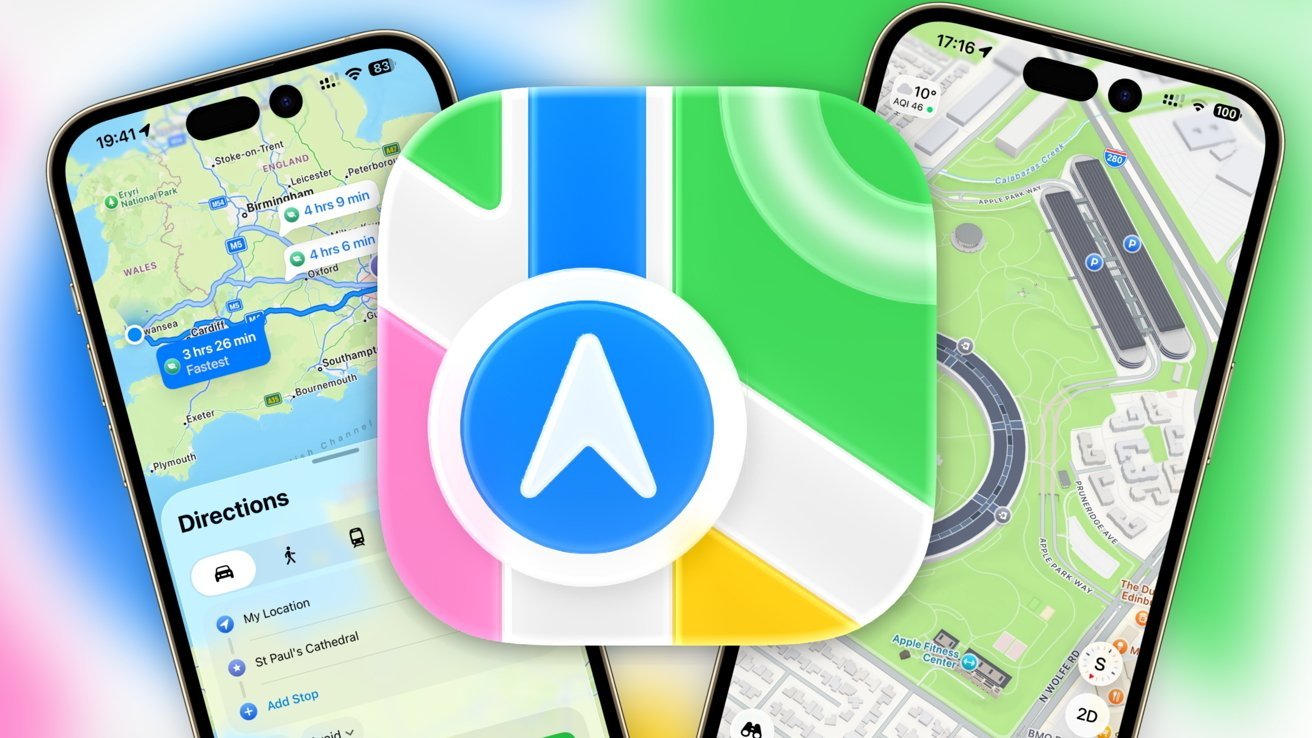
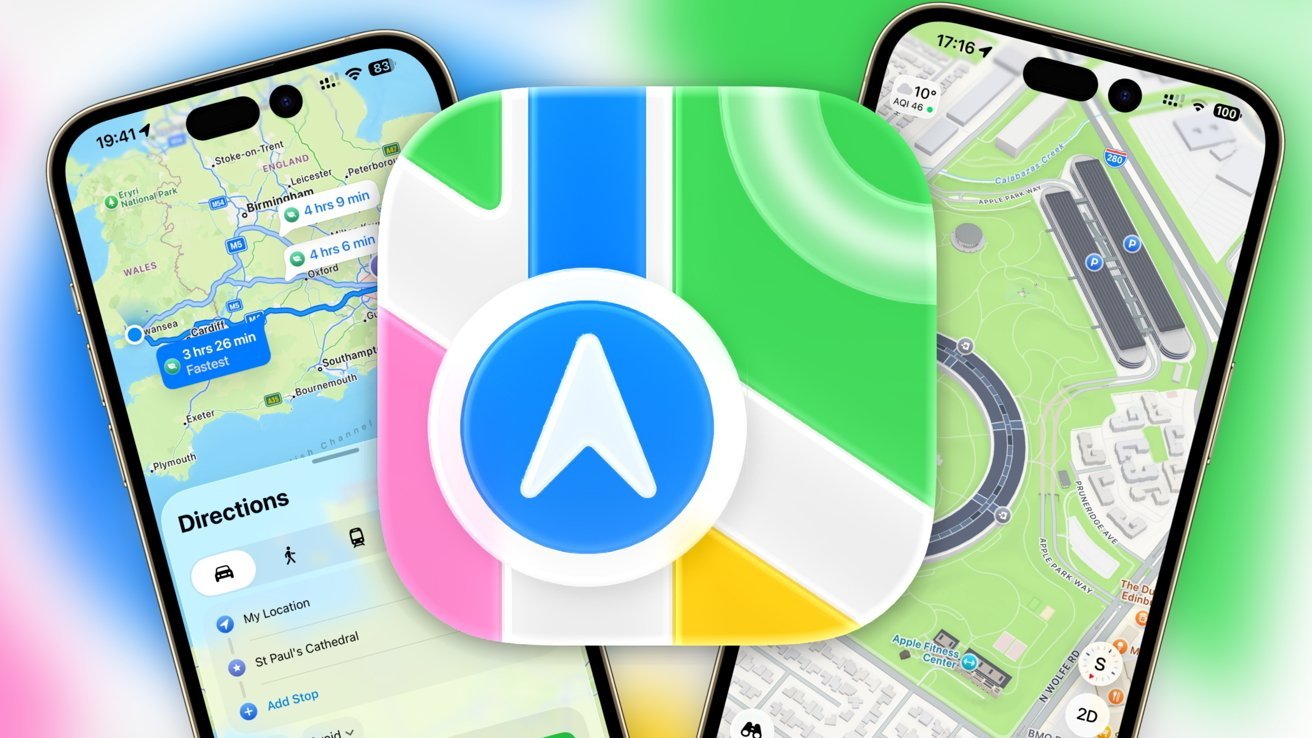
Apple Maps Blastdoor
With iOS 14, Apple introduced a new sandbox system for iMessage, known as Blastdoor. The framework offers protection against zero-click exploits, keeping conversations and their details private.
iOS 26.6 includes a new Apple Maps Blastdoor framework.
The first developer beta of iOS 26.6 seemingly offers similar protections for the Apple Maps app. A comparison of iOS 26.5 with iOS 26.6 beta 1 reveals that the latter has a new “Maps Blastdoor” framework.
While there are few details about the framework itself, it’s more than likely a security measure, given the existing Blastdoor sandbox system. Apple’s website explains that Blastdoor for iMessage “isolates, parses, transcodes, and validates untrusted data arriving in Messages, IDS, and other vectors to help prevent attacks.”
Advertisement
This is accomplished through “sandbox restrictions and memory-safe validation of output, which creates a significant obstacle for attackers to overcome before reaching other parts of the operating system,” says the Blastdoor description. We can expect similar features with the Maps Blastdoor framework.
iOS 27, meanwhile, is set to deliver more significant changes. The update will enter developer testing during WWDC 2026, which begins with a keynote video on June 8. Expected upgrades include a revamped Siri, improved support for third-party AI, and stability improvements.
Bluetooth speakers have improved at a breakneck pace in recent years, with features like rugged weatherproofing, stereo pairing, longer battery life, and high-resolution wireless audio moving from premium luxuries to standard expectations. The best part? You no longer need to spend big to get them. Today’s best budget Bluetooth speakers deliver many of the same practical upgrades found in the best Bluetooth speakers you can buy, making great sound, durability, and everyday convenience far more affordable than they used to be.
That doesn’t mean all speakers are created equal, of course. As usual, sound quality is the great divider. What’s the point of saving big on a feature-packed speaker if you never want to listen to it? That’s why I tested every model for our Best Budget Bluetooth speakers list so vigorously, including long-term listening across dozens of models, to ensure the right pick for any scenario or environment. Wherever you go and whatever you’re into, you’ll find the right speaker at the right price below, without sacrificing features or performance.
Best Budget Portable Bluetooth Speakers of 2026
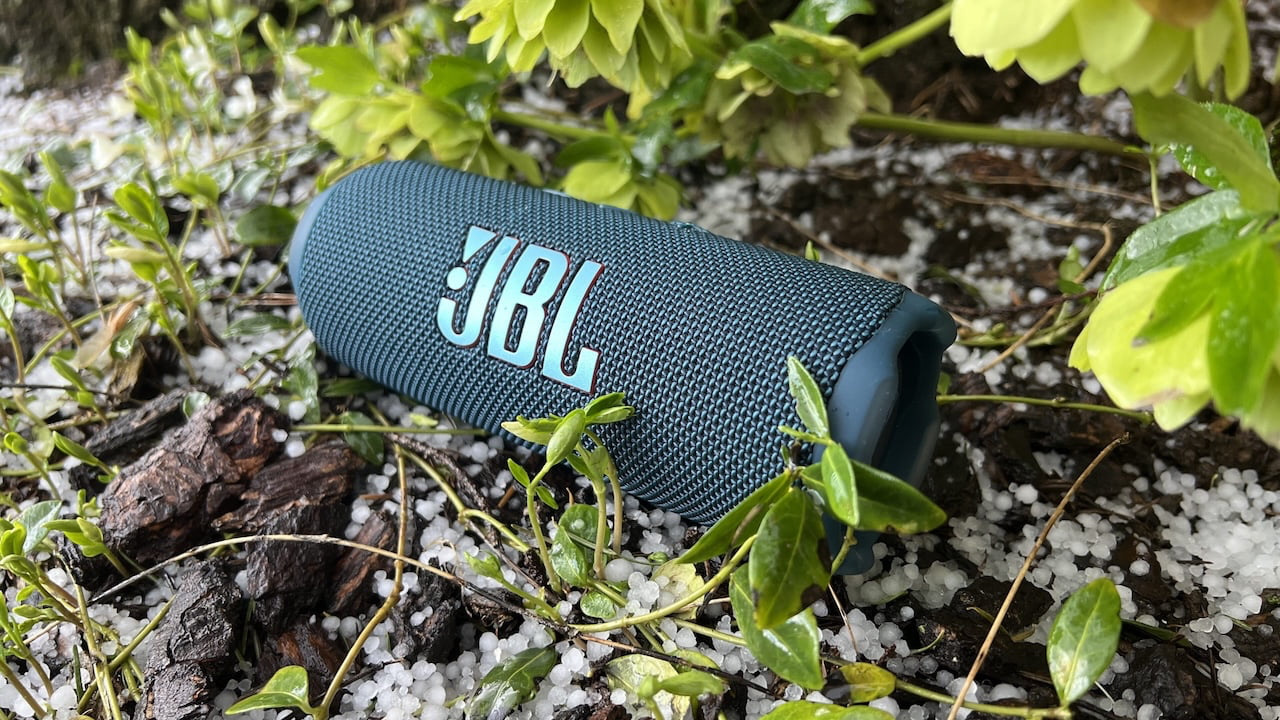
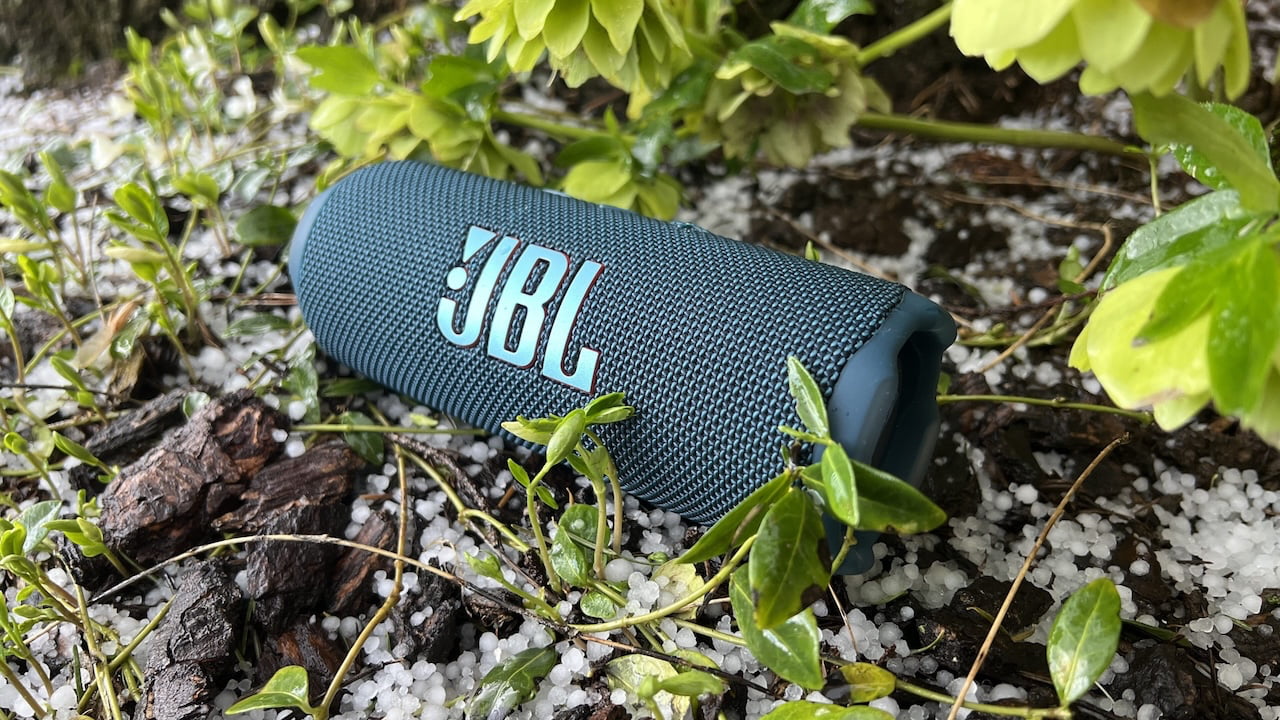
Best Overall: JBL Flip 7 ($150)
JBL’s Flip speaker series has long offered one of the best blends of sound quality, features, value, and sheer indestructibility you can buy, and the Flip 7 is another upgrade to the formula. At just over seven inches wide, it’s supremely portable, yet its 3-inch by 1.75-inch racetrack driver and 0.6-inch tweeter combine with efficient passive radiators on the sides for clear, punchy, and well-balanced sound across the frequency range. JBL has made subtle but effective refinements with each generation, resulting in better instrumental detail and improved clarity on the attack, with minimal distortion, especially with rock and pop.
The Flip 7 doesn’t mess around when it comes to features, offering stereo pairing with a second Flip 7, a companion app for EQ and other settings, up to 14 hours of battery life, or 16 hours with its bass-reducing Playtime Boost, and a drop-resistant design that I’ve thoroughly tested both on purpose and by accident. Upgraded IP67 weatherproofing keeps out dust and water, allowing for a quick dunk with no ill effects, while a quick-release strap and included carabiner provide versatile playback options.
Also new for the Flip 7 is Auracast, which allows it to sync with other Auracast devices and as many of JBL’s latest speakers, like the Charge 6 and Clip 5, as you can handle, though it no longer supports JBL’s Party Mode for connecting with older models. That point aside, the Flip 7’s slick mix of performance, usability, and a price that often falls to $100 or less makes it an easy choice as my favorite budget speaker around.
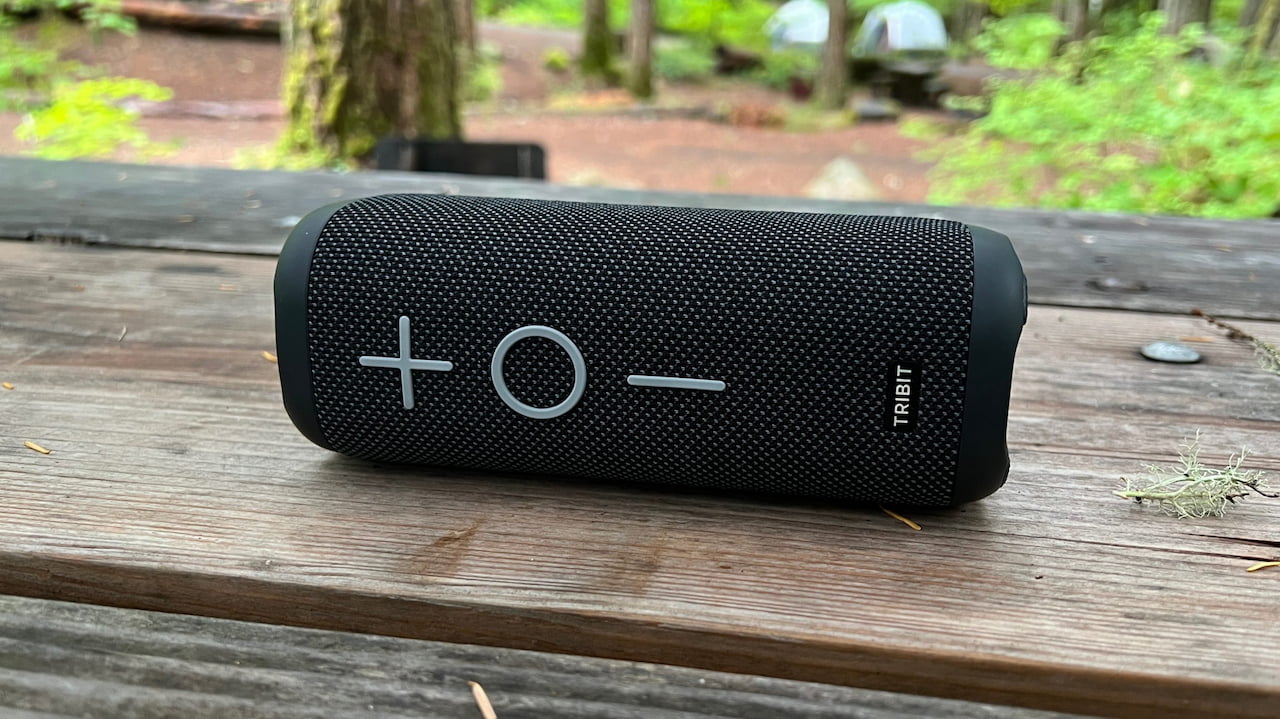
Tribit’s Stormbox 2 is the best-sounding portable speaker I’ve tested for the money. The budget brand, which seemed to come out of nowhere, has shown a knack for punching above its weight with multiple models, and the second coming of its baseline Stormbox stands tall with top tubular contenders like the JBL Flip, Ultimate Ears Boom, and others. You’ll find clean treble and impressive midrange gravitas from its multidirectional soundstage, and tapping the bass key ups the ante for a weighty yet controlled lower register. Apart from its tendency to distort more quickly at peak volume than pricier models, there are few reasons to pay more.
The Stormbox 2’s design borrows from the best, including a familiar tubular frame capped by dual passive radiators, grippy acoustic wrapping, and oversized playback keys for simplified control. The Tribit app provides convenient EQ and other controls, while battery life of up to 24 hours bests most speakers in its class. The speaker’s IPX7 weatherproof rating means it has no stated dust protection, so it’s not the best option for the beach, and its build quality feels a little cheap. Otherwise, it’s hard to find much to complain about in a speaker that sounds this good for $80 or less.
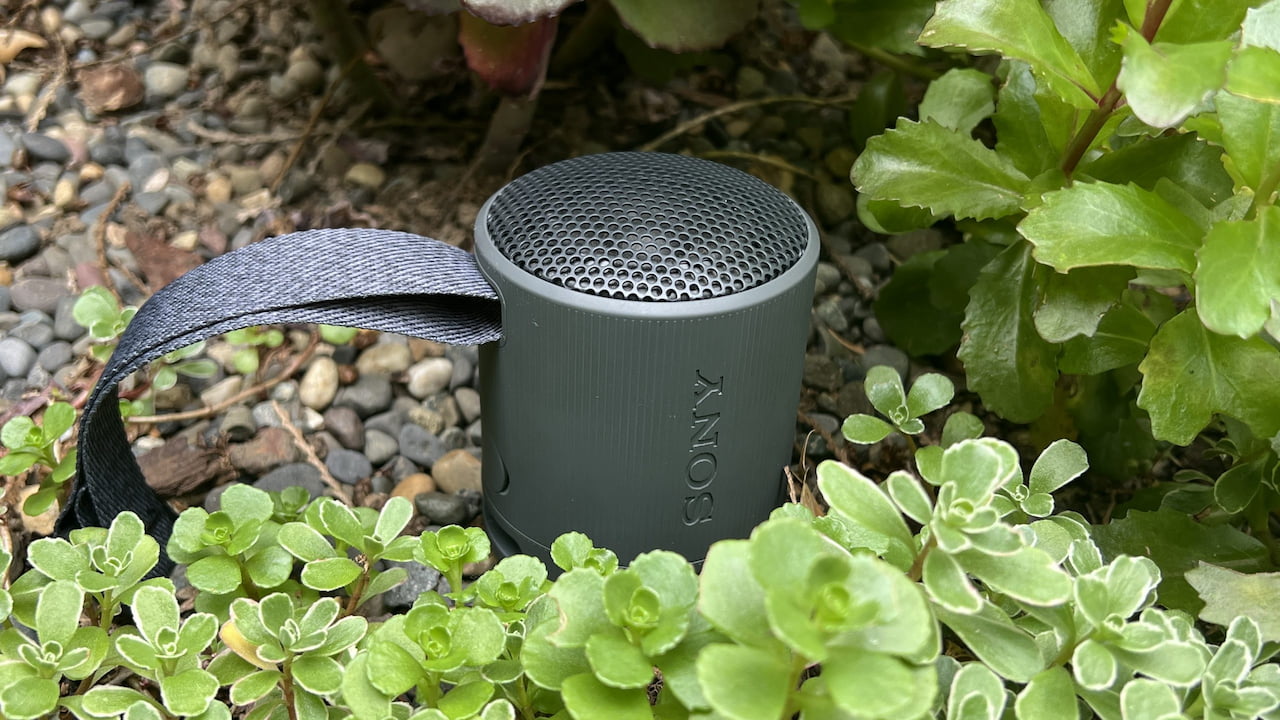
Sony’s mighty mini SRS-XB100 is among the most affordable and compact speakers in my Bluetooth arsenal, and I couldn’t imagine living without it. Smaller than a soda can and weighing just over half a pound, the XB100 sounds much bigger than its size suggests. The secret is in Sony’s efficient design, which includes a wide-dispersion driver up top that delivers balanced midrange and treble to fill out small rooms, along with a base-mounted passive radiator to help distribute decent upper bass from surfaces like tables and countertops.
The XB100 has a handy spread of features, including a built-in microphone for calls, IP67 dust and water resistance, one-touch Android connection, and stereo pairing with a second model. But the main reason I keep coming back to this speaker is its packability-to-performance ratio. From Honolulu to the Oregon Caves, I’ve taken this speaker everywhere, even using it on a recent family trip to San Diego as both our hotel soundtrack and the baby’s white noise machine. If you’re after a satisfying mini speaker that goes wherever you do, the XB100 delivers.
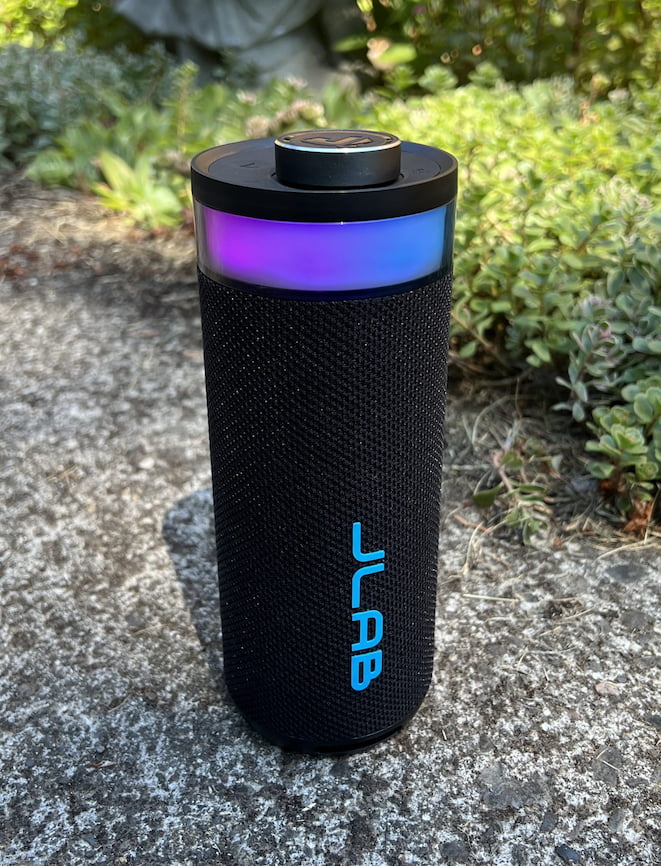
JLab’s Go Party doesn’t sound amazing. Its topside light show reminds me of a rainbow version of Kmart’s blue light specials, and its ribbon-like handle feels decidedly budget. So why is this speaker on our list? Because its list price of less than a large pizza at my favorite takeout place makes it an insane deal for everything you’re getting.
While the audio can be inconsistent and fuzzy, choosing EQ3 in the JLab app provides solid balance and punch that’s particularly suited for pop and rock. The app makes it easy to shut down the lights, which extends battery life for up to 16 hours of playtime. Features like audio syncing with other JLab speakers and solid IP56 dust and water resistance help make up for the fact that there’s no charger in the box, and the handy volume dial up top is easier to use than any other speaker on our list. This is a budget model in every sense, but at $35 or less, it’s hardly a dent in your weekly budget.
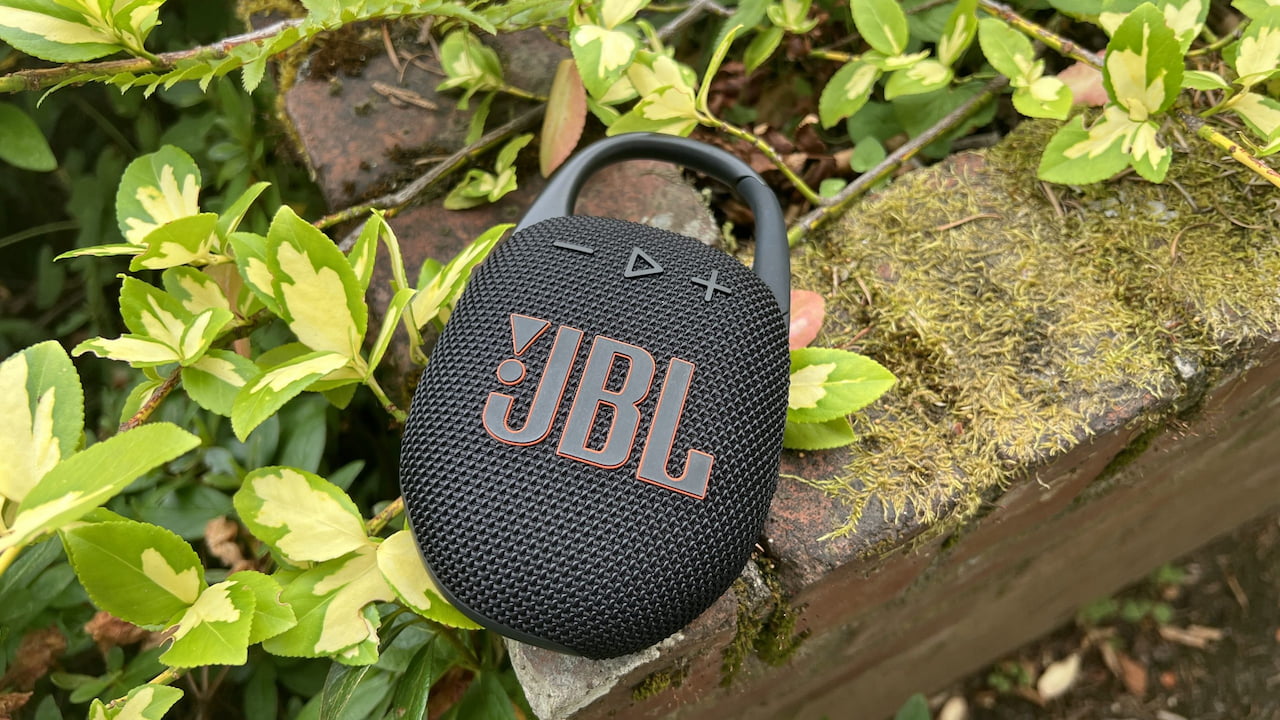
I used to think most shower speakers were essentially the same, but the Clip 5 bests every budget hanger I’ve tried, including previous Clip models. With uncommonly full bass matched by a warm and detailed upper register, this speaker rises above bathtime fun to provide a solid soundtrack for hotel rooms, camping outings, and other adventures. Its treble could use more sparkle, but you’re still getting plenty of instrumental detail and depth, and when you lay it flat, a diffused rubber backside offers enhanced bass response without table rumble. Its slim design, at less than two inches thick, makes it easy to pack, while intuitive rubberized keys on the front and sides make it simple to control on the fly.
The Clip 5’s carabiner clip is sturdier than those on other models I’ve tested, providing a secure way to attach it in multiple scenarios, from your shower caddy to tree branches and backpacks. An IP67 dust and water resistance rating means it’s equally secure in wet or rugged environments, and you’ll get a decent, but not amazing, 12 hours of playback time at midrange volume. JBL’s app offers EQ and other settings, and Auracast connection lets you sync with an infinite number of newer JBL models, like the Flip 7. You can certainly find cheaper clip-ons, but if you want great sound for your hang, literally, this is the top option around.
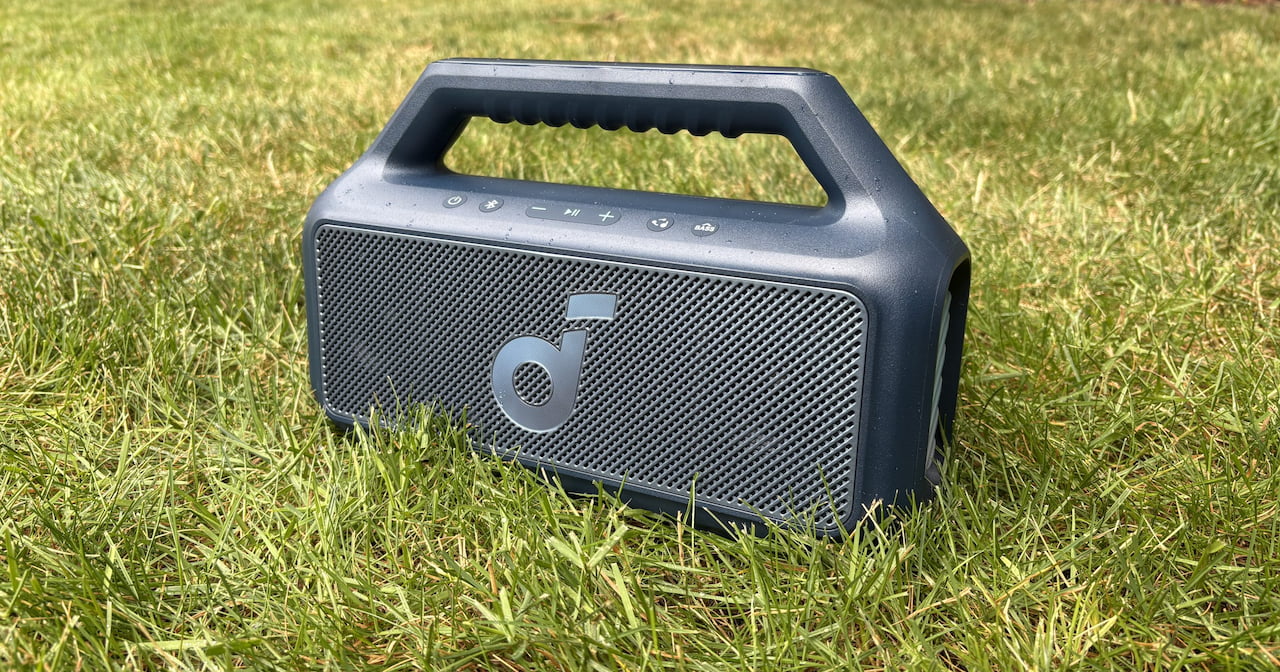
Soundcore’s Boom 2 mini boombox doesn’t offer the most articulate or cohesive sound for your money, but what it lacks in finesse, it makes up for with sheer gravitas. With up to 80 watts of power pushing a center woofer flanked by dual tweeters, this foot-long speaker gets loud enough to fill a midsize room or ramp up larger outdoor get-togethers. It also pulls more bass from your catalog than any other speaker on our list, especially with its “BassUp 2.0” button engaged, where the sound is at its best. Bass aside, you’ll get solid clarity up top, with surprisingly zippy transient response for rapid-fire percussion and a forward, if sometimes slightly hard-edged, push to midrange instruments like guitar, vocals, and piano.
There are some distinctive design traits here, including an easy-grip handle, a buoyant bottom that keeps the speaker afloat on water, and trendy LED grids on each side, customizable in the app with a rainbow of colors. Like the Tribit Stormbox 2, the Boom 2 offers solid IPX7 water resistance but no stated sand protection. Other features include adjustable EQ, phone charging via its protected USB-C port, an onboard mic for calls, and battery life of up to 24 hours per charge, though that takes a hit when you engage the bass boost and/or light show. This is a fun little budget boombox that isn’t designed for critical listening but provides plenty of power at a nice price, especially on sale.
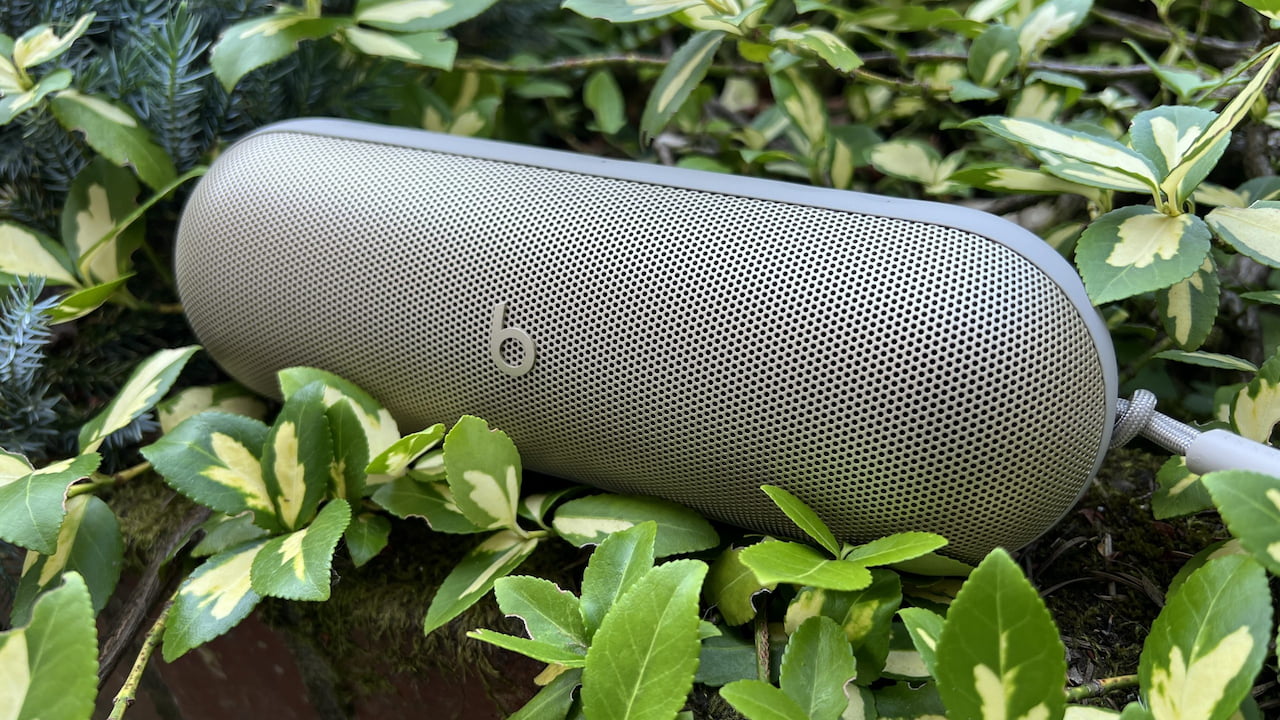
The original Beats Pill never won me over with its muddy, bass-forward sound signature, but following Apple’s acquisition in 2014, the Beats sound has undergone a major transformation while still keeping the hallmarks that made it a hit. That’s utterly evident in the Pill’s second coming, which keeps the brand’s signature brash and vivacious “smile” curve of accentuated treble and bass while providing clear-cut detail and rich instrumental textures for a fun sonic ride. This speaker gets loud, with a low register that rumbles through floors, picnic tables, and other surfaces to spawn mobile dance parties wherever you take it.
While the metallic front screen isn’t as drop-friendly as armored rivals like the Flip 7, as evidenced by the dents I gave it during a ride down the stairs, you’ll get stout IP67 dust and water resistance, features like a built-in speakerphone, high-resolution audio support and device charging over USB-C, and even Find My support with iPhones. Up to 24 hours of battery life keeps you grooving off the grid, and Class 1 Bluetooth provides around 130 feet of range, counted with careful footsteps on my front walk. Without EQ, thanks, Apple, the forward treble is a little overexposed on some tracks, but the Pill’s elegant looks, big sound, and long list of features make it a great buy, especially now that it’s often available for around $100.
Bluetooth speakers have gotten incredibly good at increasingly lower prices. You no longer need to choose between value, quality, and durability; you can get it all in one model. But you’ll still want to choose from well-reviewed options from established brands that put sound and features first.
If you’re only going to pick one speaker, I always point folks to my favorite all-rounder, the JBL Flip 7, first, but there are plenty of reasons to grab something else on our list. At these prices, it’s even worth considering at least one backup, like the micro-sized Sony SRS-XB100, the shower-friendly Clip 5, or a super-cheap model like the JLab Go Party, to throw in your trunk for adventures. The budget Bluetooth category has never been better, so it’s a great time to save big on sound without sacrificing convenience.
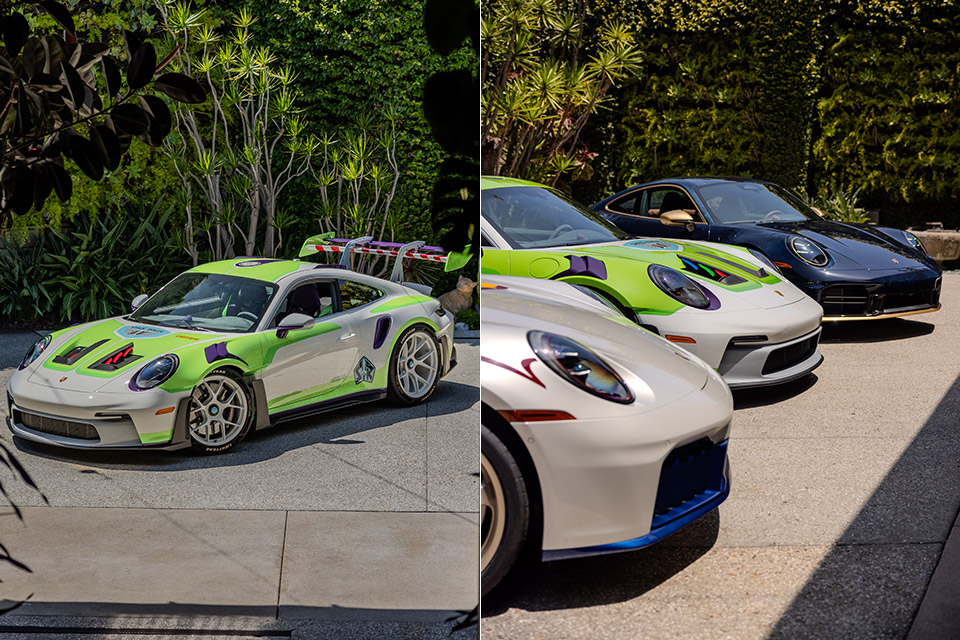
Right on the red carpet at the Toy Story 5 world premiere in Los Angeles, Porsche presented three fully functional one-of-a-kind 911s. Each emerged from the Sonderwunsch special wishes program as a rolling embodiment of a main character from the upcoming film. Porsche worked closely with Pixar designers Bob Pauley and Jay Ward to translate the characters into metal, paint, and leather. This project follows their earlier collaboration on a Sally-themed 911 from the Cars movies.
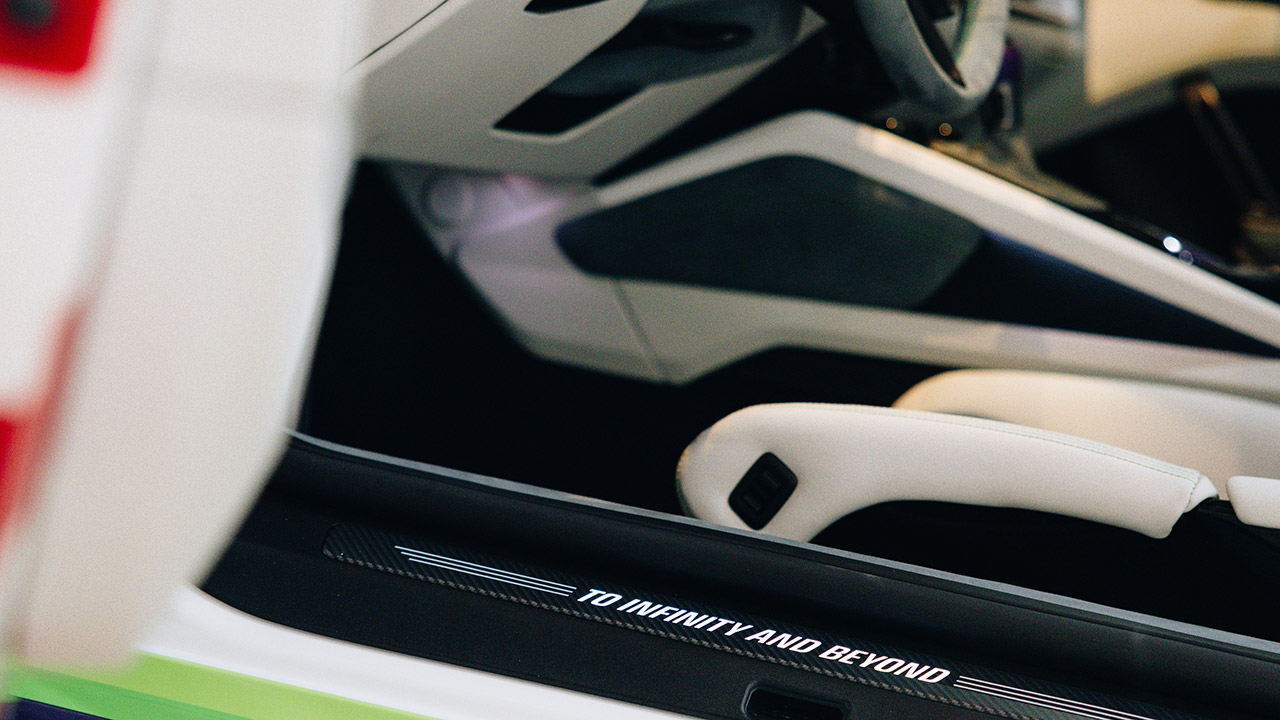
Porsche picked a 911 GT3 RS with the Weissach package for the Buzz Lightyear vehicle, which was one of the model year’s final specimens and most likely a one-of-a-kind sendoff. The exterior is painted in a brilliant white, but that isn’t the only thing that stands out. Green Yellow and Lizard Green accents occur on the front lid, roof, fenders, door bottoms, and wing endplates, paying reference to the space ranger uniform. The rear wing is almost as fantastic, as it even looks like Buzz’s pop-out wings, with a few white stripes and Fire Red trim on the lower section, as well as sporty Light Sport Grey struts. The wheels have customized centercaps with the Space Ranger logo on a splash of white magnesium, and the custom Goodyear tires have Lightyear written in the sidewall language, along with a few Easter eggs that elegantly tie back into the link.
ANIMATE YOUR MEMORIES – Adults, ages 18 and up, can recreate playful Luxo Jr., the iconic lamp character from Disney Pixar’s 1986 animated short…
LEGO IDEAS EXCLUSIVE – A fan-designed set created by the LEGO community, voted for by passionate fans and produced by the LEGO Group
FULLY POSEABLE MOVIE ICON – An intricate, articulated design helps builders recreate Luxo Jr.’s unique bouncing, hopping, and rotating movements
Inside, Pebble Grey leather and Arctic Grey Race-Tex dominate the cabin, but there’s also green stitching and Lizard Green seat belts, which are a nice touch. Violeta leather covers the top seat sections. Bob Pauley created a unique Buzz Lightyear graphic for the dash, as well as a one-of-a-kind inscription that defines this vehicle. The options list covers all of the basic factory features, including a front-axle lift, carbon ceramic brakes with black calipers, and an extended-range fuel tank.
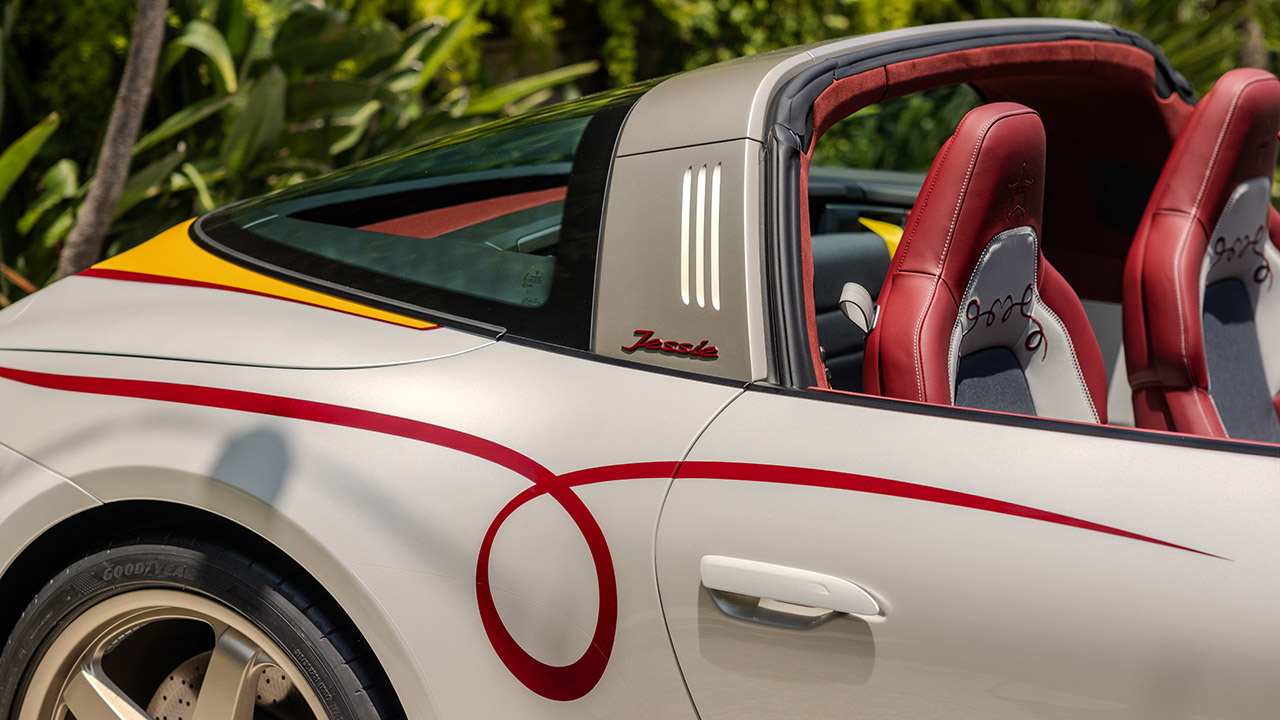
Jessie served as the inspiration for Porsche’s second Toy Story 5 vehicle, a 532-hp 911 Targa 4 GTS. They created a new paint color, Jessie White Metallic, which is a pearl white designed specifically to match her western shirt buttons. The bottom sections, front and back fascias, and rockers have been painted 944 Cobalt Blue Metallic to match her clothes. The hood and rear deck lid are painted Atacama Yellow with GTS Red pinstriping along the length of the sides, which is a nice touch. Even the side mirrors get a dose of GTS Red. The red Targa top with light beige piping resembles Jessie’s cowboy hat. The customary writing appears on the rollbar, but it has been replaced with the word “Jessie” in the Porsche typeface, while special gold wheels complete the exterior design.
Inside, they’ve mixed some appealing trim hues, including Dark Night Blue, Bordeaux Red, and Pebble Grey leather. That’s not all; the seat and door panel centers are upholstered in a specially designed denim-look fabric created for both the Jessie and Woody vehicles. The floor mats, with their trendy black-and-white cowhide design, complete the look. The door sill guards light up with “YEE HAW!” writing, and one headrest bears a sheriff symbol, while the center armrest bears a Woody’s Roundup WR emblem. The premium package, night vision aid, PDCC, and heated GT sport steering wheel are all factory extras.
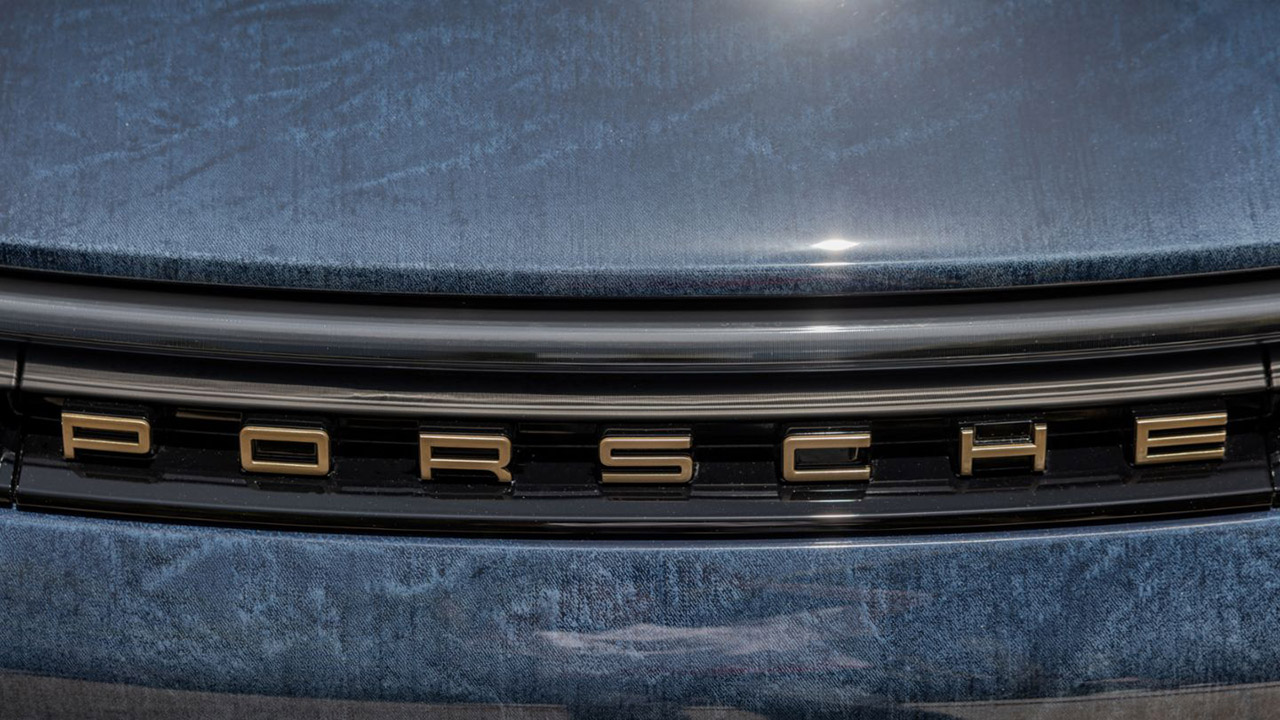
The Woody car features a 911 Carrera T in a one-of-a-kind Dark Sea Blue finish, which Porsche achieved by essentially squishing denim fabric into the paint to create tremendous texture and an old, faded blue jeans impression. The lower trim and rocker panels on the front of the car are Coffee Black, while the front spoiler lip is Aurum, a fancy gold tint. Then there’s the Fire Red pattern that runs around the bottom of the doors, with the “Woody” logo standing out very well. A pair of custom black and gold wheels completes the design and provides some extra oomph.
For the first time, Porsche has used brown vintage leather that has been wrapped all over to offer that timeless, been-around-for-years look. The decor is Dark Night Blue leather with Cognac stitching, and the seats feature small Speed Yellow accents and door panel emblems with a red checkered pattern straight out of a toybox, reminiscent of Woody’s clothing. Oh, and you’ll get the same denim as the front seat centers. The drivers also get floor mats in the same cowhide style as the Jessie car, which is a nice touch. The door sills light up in honor of Woody’s motto, “Ride Like the Wind.” Factory options include an expanded fuel tank, sports exhaust, sports front, front lift, rear seats, Burmester audio system, and memory seats.
Porsche’s Sonderwunsch crew gave each of the three cars their entire attention (with help from Disney and Pixar, no less) to produce these hand-crafted bespoke beauties, which are crammed with all sorts of delightful subtle references for any Toy Story fans who know where to look. How cool is it that all revenues from their sale will support Big Brothers Big Sisters of America, the American Red Cross, and the Starlight Children’s Foundation? Toy Story 5 will hit theaters on June 19, following its global premiere on June 9, 2026.
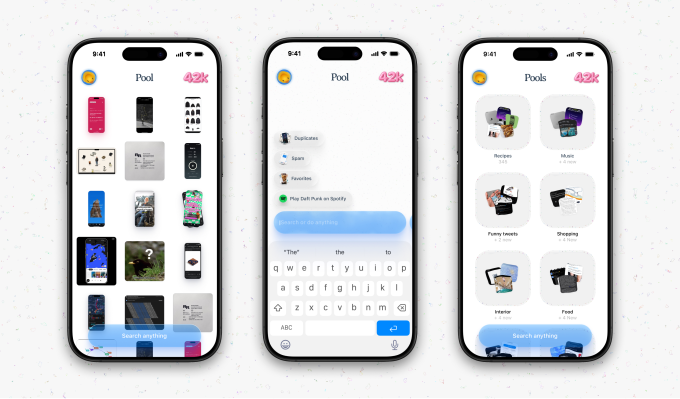
For years, your phone’s Camera Roll has served dual purposes. In addition to helping you revisit special moments, it has also served as an archive for all sorts of things you find online, like recipes, fashion inspiration, travel ideas, interesting quotes, funny tweets, product recommendations, and more. Today, a new app called Pool is arriving to help you finally make sense of this digital clutter.
Image Credits:Pool
To get started with Pool, you simply give it permission to access your photos, which are moved into categories it calls “pools.” The pools created in the app are entirely dependent on the products, places, or things that you’ve saved over time, making them specific to you.
The app is one of many reinventing bookmarking in the AI era. Startups like mymind, Fabric, and Raindrop help users organize links, images, or other saved content, but Pool focuses specifically on screenshots and then uses AI to help users rediscover and act on things they intended to revisit later.
Image Credits:Pool
Once imported, Pool is able to track down the original link associated with a given screenshot. For instance, if the screenshot was of a product you were thinking of buying, it would link to the retailer’s website. If it were a recipe you saw on Instagram, it could pull up the ingredients and instructions the creator had shared. And so on.
The idea, explained Pool co-founder Maxime Junique, came about because both he and his co-founder Piet Terheyden had faced the same problem: they would screenshot things they wanted to remember, but then could never find them again.
“It sounds pretty obvious, right now, when we say it, but it’s something that we do so naturally — you don’t notice it, necessarily,” said Junique. The founders, who met years ago in a co-working space, asked their friends about the issue. The friends agreed that they would often screenshot and forget things, too, like design ideas or other types of inspiration.
Advertisement
Image Credits:Pool
The app was actually the first product to emerge from Spinoff Studio, the founders’ product and design studio, around three years ago. The first version was built in Lisbon over a couple of weeks while the founders lived out of a van, cranking out the landing page, website, and initial build. But they soon realized they needed to build some products that made money first, so they pivoted to B2B SaaS and shelved Pool.
The studio went on to build other products, including the CRM software Waitless, which was acquired last year.
What brought Pool back to life was the maturation of AI. Suddenly, its core idea of making sense of personal, largely unstructured datasets seemed feasible.
“We were like, it seems like a perfect time to go after this idea,” Junique told TechCrunch. “And it also seemed to us like it’s a super untapped, unexplored data set for AI. Everyone goes after emails, bank transactions, chat logs — all of those productivity-first datasets. Who is going after this really, deeply emotional data set we all own?”
Image Credits:Pool
Pool’s app also treats your screenshots like memories, meaning some of them are more relevant at the moment, while others disappear over time.
For example, if you screenshot the barcode to an event ticket, it could disappear later on after the event has taken place. Meanwhile, if you screenshot a flyer on Instagram about an upcoming event, Pool’s AI agents can help you find where to buy the tickets and link to the ticketing site.
Advertisement
To find things in Pool, you can search or ask its built-in AI assistant for help.
Image Credits:Pool
Next up, the founders plan to take this concept into a second, separate app that will operate as a personal assistant of sorts. Pool’s mascot — the little rubber duck you press and drag across the screen to enter Pool at launch — will become part of the brand for this agentic AI app they’re planning.
The founders were in Lisbon when we chatted — no longer in a van! — but headed to San Francisco in late May to meet with investors. The startup previously raised a pre-seed round of just over $2 million from General Catalyst, Kima Ventures, Paris-based Source Ventures, and other angels, including Winston Du, Julian Blessin, and Thomas Ricouard.
Dutton Ranch star claims they ‘didn’t see any disruption’ on set following Chad Feehan’s exit from Yellowstone spinoff fueled by Taylor Sheridan clash rumors
In April 2026 — a month before Dutton Ranch made its Paramount+ debut — it was reported that showrunner Chad Feehan had exited the series following alleged “behind-the-scenes friction with series stars Cole Hauser and Kelly Reilly, as well as ‘other key players’ such as Taylor Sheridan.”
Puck News added, “Feehan finished the first season but has been told he won’t return for the second, per three sources. (I think the feeling was mutual and Feehan likely would have bailed anyway.)
“This was less of a pure creative issue, I’m told — the scripts were good, and after some work on the cut, Paramount is confident in the show — and more about how Feehan ran the production. Sheridan, producer David Glasser, and the stars weren’t happy, so Feehan’s out, and Sheridan and Glasser will likely elevate another season 1 writer to the showrunner gig.”
Advertisement
Latest Videos From
Hauser cryptically denied any friction exclusively to TechRadar, explaining before the show’s premiere, “Taylor’s got his hands all over this show. That’s the only way he knows how to do things.
“Look, you’re gonna go through your ups and downs, through this business, and it’s about adapting. That’s what we did.”
Five episodes of the Yellowstone spinoff down and another star has come to Hauser’s aide, claiming that there was “no disruption” while stars were on set.
Advertisement
‘As actors, we’re there to complete the task’
Dutton Ranch | Official Trailer | Paramount+ – YouTube
“Not at all,” Berto Colón, who plays Miguel on Dutton Ranch, confirms when I ask if he felt as though the Chad Feehan rumors had any truth to them.
Sign up for breaking news, reviews, opinion, top tech deals, and more.
“I met Chad a bunch of times, but I don’t know what the deal is. That’s something that’s above my pay grade. As actors, we’re there to make sure that we complete a task and to make sure we complete it as truthfully as possible.
He continues, “The ongoings that happen behind the scenes is something that I’m not involved with, but as far as energy and what we did, everyone who came on board, tuned into what the story needed to be like.”
“I didn’t see any disruption of that process. I just love everyone there. I love what that they’re about.”
Advertisement
As Dutton Ranch season 2 hasn’t been confirmed as of writing, we’re yet to see which new showrunner would step into Feehan’s shoes. Rumors suggest a lead writer would be picked from the job, but if you’ve followed my week-on-week coverage, you’ll know that I’m advocating for Sheridan to resume the position himself (he’s currently an executive producer).
As for a renewal, Colón says “There needs to be a continuation to this. I don’t have any actual carnal knowledge of that, I just know that the numbers speak for themselves. If any show deserves a few more seasons, it’s this one.”
Dutton Ranch will continue airing its first nine episodes until July 3.
Coram AI has raised $35m to turn the security cameras already bolted to walls into something closer to an autonomous detective.
The Series B is co-led by the new investor Ansa Capital and Battery Ventures, with UP Partners, 8VC and Mosaic Ventures joining. It takes the San Francisco company’s total funding to $66m.
Coram’s pitch is that physical security is stuck in the past. When something goes wrong, staff spend hours scrubbing through footage, access logs and alarms to piece together what happened.
Its answer is software it calls ‘Deep Investigation’, an AI agent you query in plain language. It searches months of video, entry records and visitor data across hundreds of cameras and sites, then hands back a report. Work that took hours, the company says, now takes minutes.
Advertisement
Founded four years ago by Ashesh Jain and Peter Ondruska, Coram now runs at more than 1,500 locations, from schools to factories.
Coram leans hard on privacy. Its boxes run AI models on local NVIDIA chips at the edge, it says, so sensitive video never has to leave the building for the cloud. It also works with any existing IP camera, avoiding a costly rip-and-replace.
But the same platform sells facial recognition, licence-plate reading, ‘tailgating’ detection and live gun detection, and it is being pointed at schools, churches and workplaces.
One customer, a Dallas megachurch, watches over 30,000 worshippers across eight campuses. A high school swapped old cameras for real-time weapon detection. The efficiency is real; so is the reach.
That trade-off, safety bought with more monitoring, is not new to AI security. But autonomous agents sharpen it. A system that can investigate on its own, across every camera and door, is also a system that is always watching, and now draws its own conclusions.
Advertisement
The ‘operating system’ land grab
Coram is part of a wave of startups trying to become the ‘operating system’ for a single industry by wrapping AI agents around it. Its bet is that every building will eventually run hundreds of agents in the background.
The money is chasing a real gap. ‘Physical security is one of the largest industries yet to be transformed by modern AI,’ said Allan Jean-Baptiste of Ansa Capital, and the incumbents largely sell cameras and dashboards, not autonomy, even as firms pour record sums into AI elsewhere.
For now, the headline numbers, ’10x more effective’, ‘hundreds of agents per space’, are Coram’s projections, not proof. But with $66m in the bank and 1,500 sites live, it has the runway to test whether the building of the future really does watch itself.
Playing chess can be challenging, fun, and at times frustrating. Garry Kasparov called the game “mental torture.” With virtually limitless possibilities, chess offers unparalleled depth, and you could easily fill a library with books on how to play it. The internet has opened up a wealth of potential competitors, and smart chess boards enable you to play anyone online or off, not to mention dabble in a variety of chess programs.
I’ve been testing smart chess boards for the past month or so, with the help of my chess-mad eldest, and these are my top picks.
The Smart Chess Boards I Recommend Most
Chessnut
Pro Electronic Chessboard
Advertisement
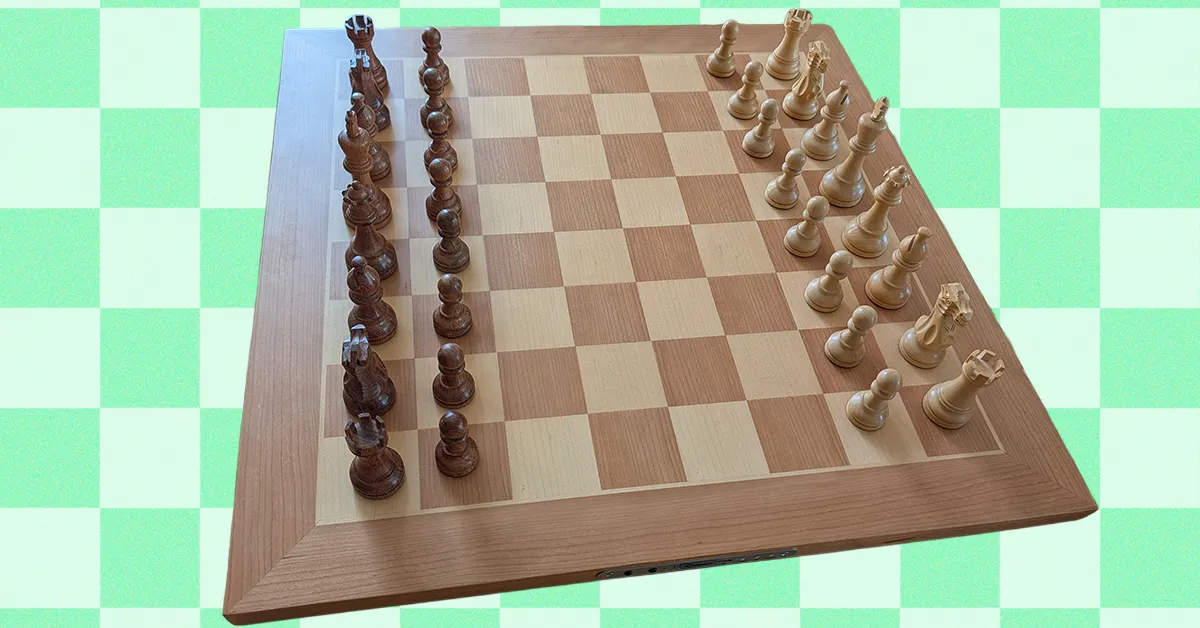
For my opening gambit, I’m recommending the Chessnut Pro. With a classic wooden design, the Chessnut Pro feels like a regular board, but there are smarts hidden within. The beechwood pieces are beautifully weighted, an important but often underestimated feature. They feel great in hand, and the set includes a pair of extra Queens. This is a full tournament-size board (55 cm or 21.7 inches), so you’ll need space for it.
The board is very nicely made, with subtle red LEDs hidden in the corner of each square that light up to show moves. I love that it looks like a regular board when you’re not playing online. There are discreet controls on one side with a USB-C port and Bluetooth connectivity to hook it up to your computer, laptop, or smartphone. There’s no need to press down with each move, as every piece has a sensor chip inside that’s automatically detected.
We used the Chessconnect Chrome browser extension to play matches on Chess.com and Lichess.org, and it was quick and easy to get up and running. The official Chessnut app features AI opponents, but they’re a little weak and lack variety. It isn’t great, but you don’t have to use it, and you can link up to different online services with a bit of tinkering (check out Graham’s Programs for some better options). Online play was occasionally a little glitchy. Sometimes there’s a slight lag, and we had to click to reconnect for every game. Battery life is quite good (we got seven to eight hours), though it takes a while to recharge (best to leave it overnight).
If you understandably don’t want to spend that much, the Chessnut Air ($250) is a far more affordable option. It’s also wooden but much smaller (33 cm or 13 inches), with lighter pieces and visible LEDs. The Air+ ($400) is the same size but with superior weighted wooden pieces and subtle LEDs on the board. Functionally, both give you much the same experience as the Pro.
“Don’t lock into long-term contracts; keep your architectures flexible,” the firm advised. “In fact, OpenAI could become AI’s BlackBerry FIFO (First In, First Out). The company that defines a category is often the one most painfully displaced by it.”
Advertisement
The caution comes as OpenAI takes its first formal step toward a public listing. Alongside its confidential SEC filing, the company published a roadmap built around three ambitions: AI systems that can accelerate research, AI that boosts economic growth, and eventually a personal AGI assistant for everyone. Forrester was more interested in a fourth question: what happens if OpenAI doesn’t stay on top?
The firm argues that OpenAI faces what it calls a “trifecta” of challenges: persuade consumers to use its agents instead of rivals’, convince enterprises to build around its technology, and stay ahead in the race toward AGI.
The enterprise battle may prove the most lucrative. “Whoever automates the dull, expensive middle of a company’s operations first becomes the system of record everyone else has to rip out — and almost no one does,” Forrester said.
In other words, the first company to get AI agents woven into day-to-day business processes stands a decent chance of becoming yet another piece of software that everyone complains about, but nobody can remove.
Advertisement
However, Forrester’s advice is that, rather than standardizing on a single provider, enterprises should “anchor to the capability you need — not the brand that got there first — and keep your switching costs low.”
The warning also comes as OpenAI reportedly weighs cutting prices to fend off growing competition from rivals, including Anthropic. If the AI market is heading for a price war, enterprises may want to think twice before chaining themselves to a single supplier.
Forrester also notes that a public listing could provide customers with something they currently lack: visibility into OpenAI’s finances. Once public, the company would be required to disclose far more information about the cost of training and operating its models, giving enterprise buyers a clearer picture of the economics behind the AI systems they increasingly depend on.
For now, OpenAI remains the company that helped define the generative AI era. Whether it becomes the next Google, the next Microsoft, or AI’s answer to BlackBerry is a question investors will soon be paying very close attention to. ®
Sega made a splash during this year’s Summer Game Fest opening showcase, revealing that a digitally resurrected Tupac will feature in the forthcoming Stranger Than Heaven. Snoop Dogg even took the stage to talk about working with the rapper’s estate. While my hands-on with the game wasn’t a full dive into the world of Stranger Than Heaven, exploring one of the five cities and eras, it was an extensive demo showcasing the fighting system. It demands that kind of focus, as it’s an entirely new system compared to RGG Studio’s decades-long Yakuza series.
Attack inputs are categorized into left and right sides, RB and RT control your right hand and leg, LB and LT for your left side. During my time with the demo, the trigger buttons led to slower, harder-hitting blows. Each can be held to charge up an attack, while combining LT and RT leads to grapple moves If you time them right. Releasing a charged attack at the ideal moment seemed to be crucial, too.
Several new combat dynamics come from this new system. Each side is blocked separately, meaning you can block (or parry) an attack while readying a counter with the other side. Grab moves feel practically like a street brawl, tackling enemies through furniture or even tumbling down steps, together. Pin them to the floor and you can then rain blows down on your opponent.
Advertisement
Unlike most of the Yakuza titles, weapons appear to be a more core aspect to fights. Protagonist Daigo will be able to eventually upgrade the knives, mallets and other equipment he finds.
Sega has teased that, over a journey spanning 50 years, special weapons could range from “masterworks of old” to brand-new inventions. Well, new in the ’60s. Some weapons will even come with their own special attacks, usually involving a downed enemy.
Sega set up three different demos to feel out the combat system. First, a relatively easy fight against a group of thugs that focused on fighting a group and using your opponent’s weapons against them. This was followed by a more challenging fight against another gang led by a towering heavy that hit much harder.
Sega
Fortunately, you start the fight with a heavy crowbar that was unusually heavy and slow to swing. This fight was where you could really feel a difference to the mostly button-mashing dynamics of Kiryu et al. I’m not sure if I prefer it?
Stranger Than Heaven‘s system seems to demand more from the player (which isn’t necessarily a bad thing) and the final fight was a big example of that. Facing off against a tattooed topless guy chilling in Osaka with his katana demanded some Souls-like levels of timing and dumb luck. I eventually managed to beat him because of the latter.
Advertisement
The enemy would heal himself if left alone and would occasionally kneel down, goading the player to approach him before unleashing a swift slice. Perfectly timed parries (or dodges) were crucial, enabling powerful counterattacks, as were follow-up attacks when he was downed. During this fight, my character was equipped with a short knife and could use both weapon attacks with his left hand and punch and kick with his right hand. It seemed that each weapon creates a different range of attacks.
I’ll admit, I missed the ability to ram a mafia underling into a microwave or other ridiculous contextual moves. Hopefully, some showpiece moves will appear in the full game — Sega has teased fights on moving vehicles, which is at least a start.
This was a demo focused on combat, so I’m intrigued to see how the rest of the game shapes up. Hopefully, STH holds on to some of the ridiculous humor of Like a Dragon and Yakuza. It was a welcome shift in tone from all the melodrama and violence.
Stranger Than Heaven is scheduled to launch on January 15, 2027 on PS5, Steam and Xbox Series S/X.
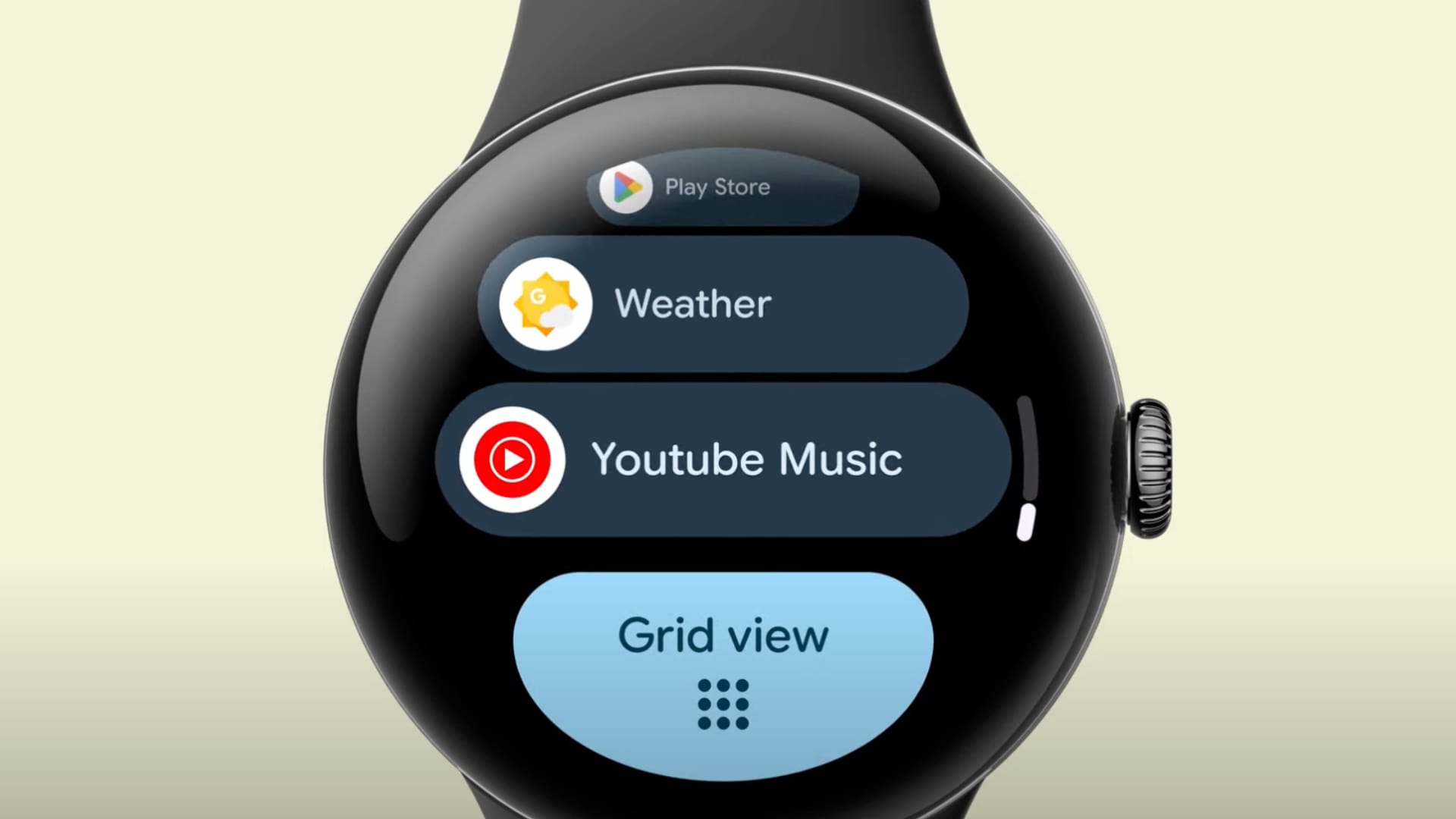
The pages also mention a June 9 release date. Although that looks more like a placeholder than anything concrete. The update hasn’t started rolling out yet. Google hasn’t made any official announcement, which suggests things are still in the final stages behind the scenes.
Still, the inclusion of Wear OS 7 across multiple Pixel Watch models is a fairly strong hint that the rollout window is approaching. Carriers don’t usually update support documentation this far in advance. It suggests they’ve already received at least some form of release candidate or internal schedule from Google.
Advertisement
Wear OS 7 itself was announced at Google I/O 2026 last month. It brings a fairly wide set of improvements aimed at making Pixel Watches feel faster and more useful day to day. One of the key focuses is battery optimisation. Additionally, there’s a broader UI refresh that introduces new Widgets and Live Updates designed to surface information more dynamically on the wrist.
Advertisement
Perhaps the more notable addition is support for Gemini Intelligence on select smartwatches. That effectively ties Google’s newer AI features into Wear OS in a more visible way. It brings more contextual assistance and on-device intelligence into everyday watch interactions.
If the Verizon listings are accurate, the Pixel Watch lineup could be among the first to receive the update. This would align with Google’s usual approach of prioritising its own hardware first before wider rollout.
Advertisement
For now, nothing is officially confirmed. However, the timing of the support page updates strongly suggests Wear OS 7 is in the final stretch before launch.
Indeed, the idea of data centers in orbit has gone from science fiction to a serious spending category. Elon Musk’s SpaceX has acquiredxAI (also Musk’s) and is planning a constellation of space-based data centers. Google, not to be outdone, announced Project Suncatcher in partnership with Planet, planning to launch two satellites equipped with GoogleTensor Processing Unit (TPU) AI chips by early 2027. Startup Starcloud has already filed a proposal with the Federal Communications Commission for an 88,000-satellite constellation for orbital data centers. As Starcloud’s filing suggests, these companies are all proposing fleets of satellites numbering in the thousands, each housing a rack or multiple racks of AI-grade GPUs, interconnected with each other through free-space optical links and communicating back to Earth via microwave links, either directly or through other satellites.
Proponents tout the many wonders of computing in space: abundant solar energy, free cooling, and freedom from Earth-based disturbances like earthquakes, floods, and protesters. But a sober look at the physics of space-based computing paints a much more nuanced picture.
Free cooling is perhaps the biggest misconception. Space is cold, but it also has no atmosphere. That means the best heat-removal mechanisms, conduction and convection, are off the table. The only option is radiation. To prevent a chip from overheating in space, a large, costly surface area is required to dissipate the energy and then radiate it.
Advertisement
Solar energy is abundant, but collecting it with functional solar panels that maintain perfect alignment toward the sun is a complex task requiring extensive attitude control systems. On top of that, ionizing radiation in space from cosmic rays and other sources poses a unique challenge, degrading the solar panels, the radiative coolers, and the chips themselves. Because regular maintenance in space is difficult, redundancy has to be built in at launch, and cost estimates have to account for efficiency degradation over time.
At ABI Research, where I work as an aerospace analyst, we did a rough total-cost-of-ownership comparison between a data center on Earth and one in space. It showed that the cost to launch and run a GPU in space for a year is at least an order of magnitude higher than the same feat in a terrestrial data center. Our model was simple, assuming an Nvidia H100 server rack launched with the requisite-size solar panel and radiator on a spacecraft akin to Starcloud’s pilot launch. We assumed SpaceX’s Starship was used at a highly optimistic launch cost per kilogram of US $44, and a terrestrial energy cost of $0.20 per kilowatt hour. This is a simple back-of-the-envelope calculation, but it does signal something real.
From our perspective, the cost of delivery and space hardening of the payload makes general-purpose space-based data centers difficult to justify economically today, despite the fact that data-center builders in many regions are scrambling for electric power. However, there are niche applications where the much higher costs of computing in space could be justified. Examples include preprocessing data from Earth-observation satellites, real-time detection and tracking of hypersonic missiles, and active collision avoidance in the increasingly crowded low Earth orbit. Even for these, though, contending with fundamental physics will still be a demanding challenge. And a technologically compelling one, too.
The Cooling Challenge in Space
Cooling is where physics separates the science from the fiction. The governing equation for radiative cooling, the only type of cooling available in space, is known as the Stefan-Boltzmann Law. It states that the amount of power you can radiate is proportional to the area of the radiator times its temperature to the fourth power. For a space systems architect, the implications of this law are brutal. In orbit, the only variable we can control is area. This restriction creates a geometric penalty, or a “physics tax,” for cooling in space: The more power you need to reject, the bigger the area of the radiator you need to bring along from Earth.
Advertisement
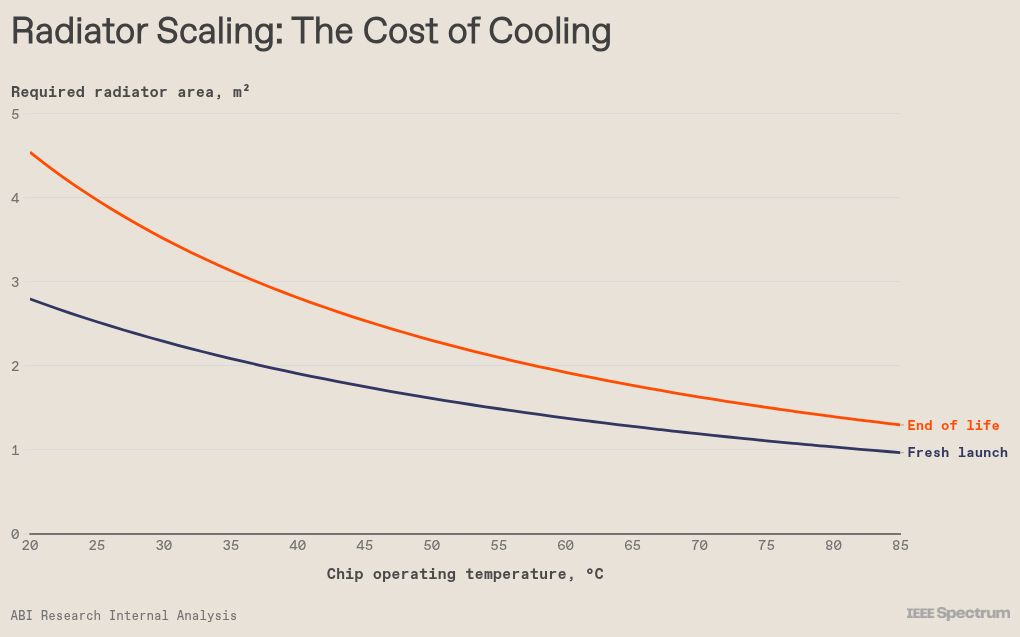
The only cooling method available in space is radiation, and the radiator area required is derived using the Stephan-Boltzmann law. For a single chip drawing 700 watts, like Nvidia’s popular H100 GPU, the area required to keep it at 20 °C is just under 3 square meters, and it goes down to 1 square meter for an operating temperature of 85 °C. However, as the radiator surface is exposed to ionizing radiation, its emissivity decreases, and after 5 years in space the required area increases by about 40 percent.
To understand how big this baseline area is in practice, I used the Stefan-Boltzmann law to model the heat-rejection area needed to keep a single chip that draws 700 watts of power—such as the H100 GPU chip, an AI stalwart—at a constant 60 °C, usually considered the sweet spot for GPU longevity and stability. I further assumed that the radiator is perfectly facing deep space, at a chilly background temperature of 3 kelvins. By this calculation, a single chip would require 1.4 square meters of radiator surface.
To put this into perspective, consider that a common AI rack can hold approximately 32 GPUs (four H100 server boards). With CPUs, memory, and networking equipment, this rack would draw around 40 kilowatts of power. This single rack includes 2.5 terabytes of memory—enough capacity to serve over 20,000 concurrent users or run 16 simultaneous instances of Llama 3, an open-source AI model. But to cool this thermal load in a vacuum, that single rack would require an 80-square-meter radiator, roughly the size of a pickleball court. For an aggregate 100-megawatt data center, you’d need at least 2,500 of those radiators.
And that’s the best-case scenario. Additional problems are hidden in the low Earth orbit environment itself. Space exposes radiators and their coatings to a chemically hostile brew of ultraviolet light and atomic oxygen, quite the opposite of a clean-room environment. Over a LEO satellite’s typical 5-year lifespan, these elements degrade the radiator’s surface properties and lower its ability to shed heat.
Including this degradation in the model reveals that as the radiator degrades from a “fresh” state to an “end-of-life” state, the physics demands a further penalty. To maintain that same 60 °C operating temperature for the GPU chips, the required surface area jumps from about 1.4 square meters per chip to nearly 2.0 square meters. In other words, the physics tax rises by 40 percent. Therefore, you must launch at least 40 percent more radiator mass, endure higher atmospheric drag, and sacrifice valuable launch volume just to survive the degradation of the thermal coating. This increase adds significantly to the launch cost and further erodes the economics of a space-based data center.
Advertisement
The Silicon Challenge in Space
Solving the heat problem is only part of the battle. The other significant challenge in low Earth orbit is ionizing radiation, which affects the computing hardware itself. Today’s satellites typically use radiation-hardenedprocessors, which are very reliable but also much more expensive, and they perform poorly compared to commercial off-the-shelf processors.
A standard rad-hard chip doesn’t have the processing power to run a modern large language model (LLM). As a result, satellite operators aspiring to launch a data center have no choice but to make a risky compromise: to use hardware meant for terrestrial use. In order to achieve the necessary compute density, orbital data centers must use the same Nvidia H100s or Google TPUs found in terrestrial server farms. The problem is that these chips are “soft” targets in space. High-energy particles can flip bits in memory or cause “latch-ups” in logic that fry the circuit.
One possible option is to shield the computers from radiation with thick, absorbent panels. However, the shielding would add significantly to the already heavy satellites. The other option is to compensate for the radiation damage with redundancy. Indeed, edge computing architects are moving toward software-defined resilience, where instead of one perfectly hardened computer, operators fly a cluster of imperfect, commercial ones whose total cost could be as low as one-tenth to one-hundredth that of the rad-hard model.
This redundant approach is used in many spacecraft, including Artemis II, which recently carried astronauts around the moon, as well as SpaceX’s flight computers and the Hewlett Packard Enterprise edge servers for the International Space Station. By running three (or more) instances of the same calculation on three different nodes and comparing the answers, the system can detect a corrupted processor. If a node fails, the “orchestrator” reboots it while the others continue the mission. While this ensures resiliency, it also means that some fraction of the compute capacity is dedicated to redundancy, further increasing the costs.
Advertisement
The Energy Challenge in Space
An often-touted advantage of space-based data centers is the seemingly unlimited supply of free, clean energy from the sun. Solar energy in orbit is indeed abundant, at 1,361 watts per square meter. Of course, capturing that free energy is made possible only by the very costly launching of large solar panels into orbit. And those solar panels also degrade over time due to radiation exposure, typically losing 1 to 3 percent efficiency per year.
Let’s say a solar array collects 1 MW of power to run an AI cluster. The laws of physics demand that the satellite must eventually radiate 1 MW of waste heat. Because the square area needed to generate the solar power—around 400 W/m2—and to reject the heat—around 450 W/m2—are nearly equivalent, every square meter of power generation now demands approximately another square meter of cooling. The radiator needs to be a structural equal, not merely a passive coating on a surface used for something else.
As Elon Musk recently noted in Davos, the most efficient radiator is one that never sees the sun. By orienting the spacecraft so the solar panels face the sun and the radiators face the deep vacuum of space, efficiency skyrockets for both. But there’s a catch: Maintaining this perfect three-way alignment—panels to sun, radiator to the void, antennas to Earth—requires complex, high-torque attitude control systems. So this configuration means more payload and more computing power. Plus, these control systems are complex components with many failure modes, which is not optimal in a situation where maintenance is difficult.
The Killer Apps for Computing in Space
Given all these challenges of deploying massive radiators for satellites in the hostile environment of space, why build data centers in space at all?
Advertisement
While training or inference on LLMs in space doesn’t seem economical today, there are other, very compelling applications for computing in space. Here are two: solving the downlink bottleneck from Earth-observation satellites and enabling collision-preventing maneuvers in the increasingly crowded low Earth orbit.
The latest Earth-observation satellites, equipped with hyperspectral and synthetic aperture radar sensors, are used for a range of important reconnaissance missions, such as battlefield intelligence, tracking the global shadow fleet of ships carrying contraband, and assessing earthquakes or infrastructure failures down to the millimeter. These systems can generate hundreds of terabytes of raw data per day that must be transmitted to Earth. However, the radio-frequency “pipes” used to downlink the data are congested, and the ground infrastructure cannot absorb the sheer volume of raw data.
Another immediate, mission-critical application for in-space computation is protecting the orbital environment. With over 17,000 satellites in orbit, the overwhelming majority of which are in low Earth orbit, avoiding collisions between these satellites is crucial. As NASA astrophysicist Donald Kessler pointed out back in 1978, a single space collision could cause a cascading effect that renders the entirety of LEO unusable.
According to SpaceX’s recent annual report, the Starlink constellation executes a collision avoidance maneuver every 2 minutes on average. Each maneuver already relies on onboard AI systems but still requires most of the processing to happen on the ground.
SpaceX’s Starlink system currently has over 10,000 satellites in low Earth orbit, each depicted here as a colored dot.
Satellitemap.space
Advertisement
As low Earth orbit gets increasingly populated, collision avoidance will have to break the traditional ground-loop model. In the megaconstellation era of space, the OODA (observe, orient, decide, act) loop must happen onboard, thereby reducing the analysis turnaround from minutes to milliseconds.
The problem is that the flight computers standard on satellites are not built for this level of processing. The complex probability models required for maneuvering cannot currently be implemented by onboard computers in conjunction with their navigation systems. Clearly, more powerful computers are needed.
This is the true economic justification for moving compute to space: to move insight generation there. By placing high-performance computing adjacent to the sensors, we can process terabytes of data in orbit and downlink only the relevant data in real time, and we can do the computations necessary to avoid satellite collisions in real time.
The Future of Computing in Space
So, assuming that some form of computing is inevitable in low Earth orbit in the foreseeable future, how will the heat be handled? The industry is currently experimenting with two main classes of solutions to cope with the Stefan-Boltzmann law.
Advertisement
One creative option is to use origami-inspired radiators, the kind used for the James Webb telescope. Companies are developing flexible, high-conductivity composite radiators that fold into a tight cube for launch and unfurl into enormous yet lightweight thermal wings in orbit.
Another possibility is to use liquid-droplet radiators. This concept proposes removing the rigid radiator structure completely and instead spraying a stream of coolant oil directly into the vacuum of space. The fluid travels through an open loop, exposed to the near-absolute zero of the void, maximizing radiative surface area before being caught by a collector and pumped back into the ship. It sounds like science fiction, but as the heat loads climb into the megawatts, liquid-droplet cooling may be the only way to cheat the mass limits of this exponential reality.
Our rough total-cost-of-ownership model uses optimistic versions of current numbers, such as launch cost, chip cost, and power use. A critic might point out that future technology will improve, both in efficiency, purpose-built designs, and costs.
Sure, the technology is bound to improve. But the critical factor isn’t just launch cost; it’s the computing power per unit mass and electric-power economics. Radiators and solar arrays can consume 65 to 70 percent of total satellite mass, and space-grade photovoltaics run orders of magnitude more expensive than terrestrial equivalents.
Current space-grade solar panels rely on germanium substrates, whose supply is concentrated in China. It will be extremely difficult to scale up availability of these substrates. A transition to radiation-tolerant perovskite solar panels or a similar alternative could change the economics significantly, but that possibility is five years away or more. The technology will get cheaper, but the bottlenecks of power and thermal architecture will remain.
Recognizing the thermal reality of cooling in space forces us to shift how we view satellite operations. We are moving away from the “launch and forget” era toward an era of “autonomous logistics.” As our thermal model demonstrated, the harsh environment of space steadily attacks the hardware. UV radiation degrades thermal coatings; cosmic rays degrade silicon. In a traditional satellite model, when the radiator degrades or the memory fails, the satellite becomes space junk. For a multimillion-dollar data center, that disposal model is potentially ruinous.
To make the economics of orbital computation work, the infrastructure must be serviceable and the rockets to launch them reusable. The orbital domain will require automated servicing vehicles capable of swapping out degraded radiator panels and upgrading fried servers. In these ways, the future of the orbital data centers is dependent on the innovations of an emergent in-space economy.
Advertisement
There’s a good argument to be made that the need for space-based computation is less of a hype cycle and more of an enabler for the new space economy. Look no further than SpaceX’s recent regulatory filings proposing a constellation of up to a million satellites in low Earth orbit. At such a scale, routing all raw data back to Earth is physically impossible; the network itself must become the data center.
However, the winners in this sector will be determined by the systems architects who most cleverly accommodate the thermodynamics and the companies with sufficient vertical integration to take on the massive costs of operating data centers in orbit. Ultimately, the physics tax is universal. Whether managing heat rejection in the vacuum of low Earth orbit or managing power density in a hyperscale facility in Northern Virginia, the constraint is never the silicon. It’s the thermodynamics.



















 Chris Philpot




































You must be logged in to post a comment Login