Connect with us
DAPA Banner

Tech

Apple's latest Background Security Improvement targets a WebKit flaw

Published

on

A Background Security Improvement in iOS 26.3.1 fixes a WebKit issue in Safari that could break one of the web’s most important safety rules.

Safari web browser app icon showing a blue circular compass with white tick marks and a red and white needle, centered on a white rounded square against a blue gradient background
Apple has fixed a WebKit bug for Safari and other browsers

Apple released a Background Security Improvement on March 17 for iOS 26.3.1, iPadOS 26.3.1, macOS 26.3.1, and macOS 26.3.2. The update fixes a WebKit flaw that could let a malicious website bypass a key browser security rule.

The company said the issue was caused by a cross-origin problem in the Navigation API and assigned it CVE-2026-20643. Apple addressed the flaw by improving input validation to stop harmful web content from breaking the browser’s protections.
Continue Reading on AppleInsider | Discuss on our Forums

Source link

Continue Reading
Click to comment

You must be logged in to post a comment Login

Leave a Reply

Tech

This wild iPhone 17 Pro case features a touchscreen for 48MP selfies

Published

on

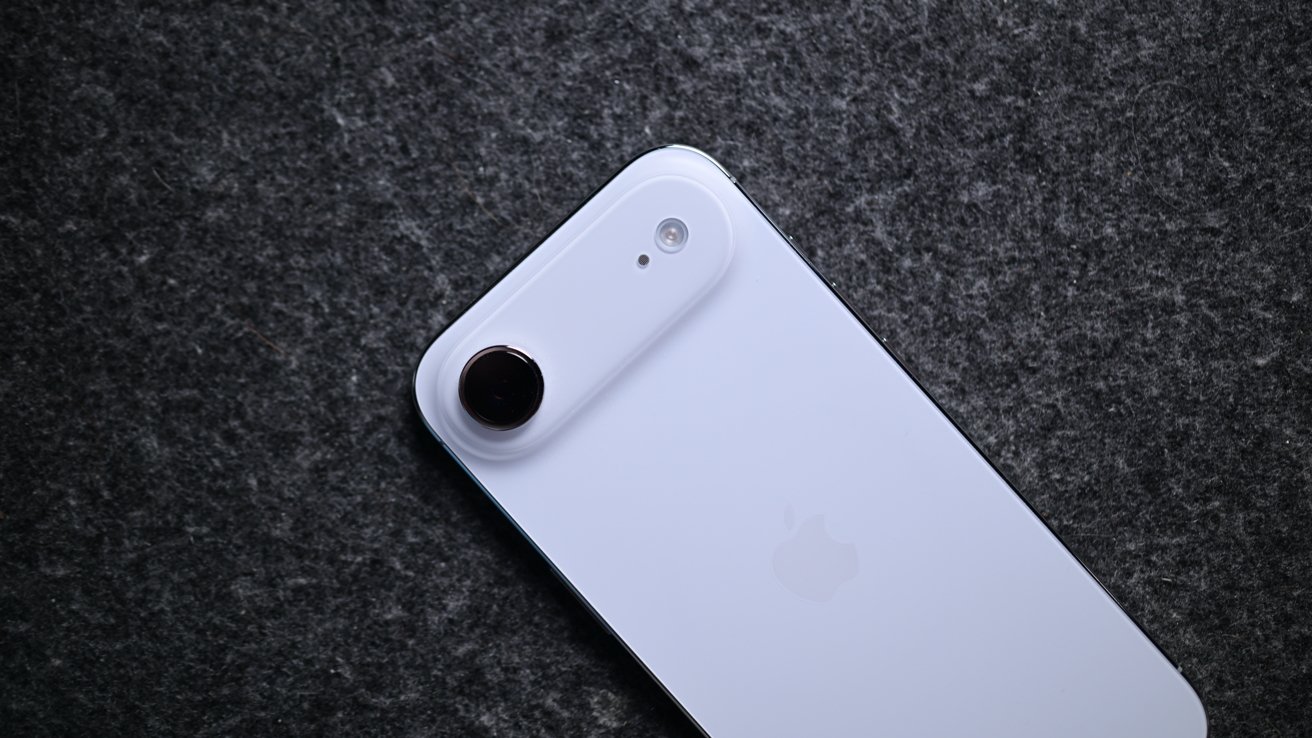
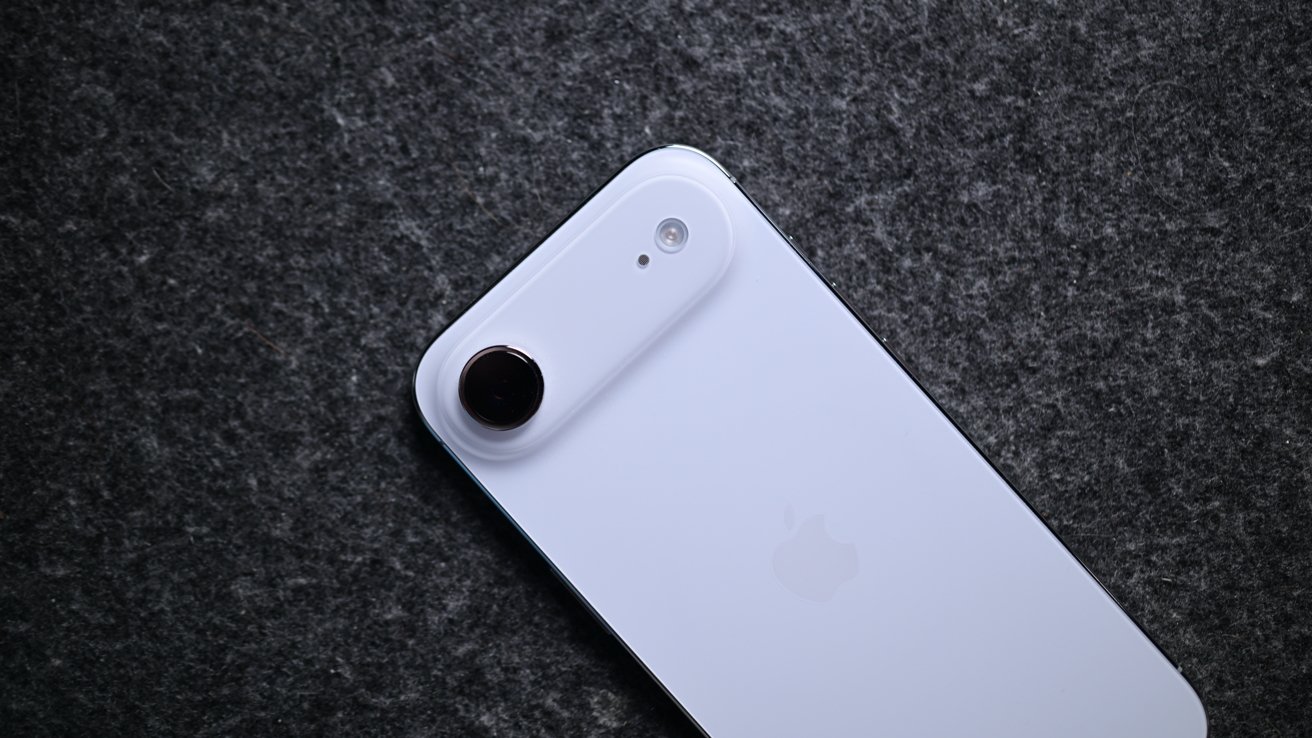
The new Center Stage selfie camera is one of the best features of Apple’s iPhone 17 series — but why settle for 18MP snaps when 48MP selfies are possible?

That’s the question posed by Kickstarter case brand Dockcase, whose latest offering, the Selfix case, adds a touchscreen to the back of your iPhone 17 Pro for seamless, main camera-quality selfies.

Advertisement

Source link

Continue Reading

Tech

Gamers React With Overwhelming Disgust To DLSS 5’s Generative AI Glow-Ups

Published

on

Kyle Orland writes via Ars Technica: Since deep-learning super-sampling (DLSS) launched on 2018’s RTX 2080 cards, gamers have been generally bullish on the technology as a way to effectively use machine-learning upscaling techniques to increase resolutions or juice frame rates in games. With yesterday’s tease of the upcoming DLSS 5, though, Nvidia has crossed a line from mere upscaling into complete lighting and texture overhauls influenced by “generative AI.” The result is a bland, uncanny gloss that has received an instant and overwhelmingly negative reaction from large swaths of gamers and the industry at large.

While previous DLSS releases rendered upscaled frames or created entirely new ones to smooth out gaps, Nvidia calls DLSS 5 — which it plans to launch in Autumn — “a real-time neural rendering model” that can “deliver a new level of photoreal computer graphics previously only achieved in Hollywood visual effects.” Nvidia CEO Jensen Huang said explicitly that the technology melds “generative AI” with “handcrafted rendering” for “a dramatic leap in visual realism while preserving the control artists need for creative expression.”

Unlike existing generative video models, which Nvidia notes are “difficult to precisely control and often lack predictability,” DLSS 5 uses a game’s internal color and motion vectors “to infuse the scene with photoreal lighting and materials that are anchored to source 3D content and consistent from frame to frame.” That underlying game data helps the system “understand complex scene semantics such as characters, hair, fabric and translucent skin, along with environmental lighting conditions like front-lit, back-lit or overcast,” the company says. Nvidia’s announcement video and detailed Digital Foundry breakdown can be found at their respective links.

“Reactions have compared the effect to air-brushed pornography, ‘yassified, looks-maxed freaks,’ or those uncanny, unavoidable Evony ads,” writes Orland. “Others have noted how DLSS 5 seems to mangle the intended art direction by dampening shadows in favor of a homogenized look.”

Advertisement

Thomas Was Alone developer Mike Bithell said the technology seems designed “for when you absolutely, positively, don’t want any art direction in your gaming experience.”

Gunfire Games Senior Concept Artist Jeff Talbot added that “in every shot the art direction was taken away for the senseless addition of ‘details.’ Each DLSS 5 shot looked worse and had less character than the original. This is just a garbage AI Filter.”

DLSS 5’s “AI dogshit is actually depressing,” said New Blood Interactive founder and CEO Dave Oshry, adding that future generations “won’t even know this looks ‘bad’ or ‘wrong’ because to them it’ll be normal.”

Source link

Advertisement
Continue Reading

Tech

Mistral bets on ‘build-your-own AI’ as it takes on OpenAI, Anthropic in the enterprise

Published

on

Most enterprise AI projects fail not because companies lack the technology, but because the models they’re using don’t understand their business. The models are often trained on the internet, rather than decades of internal documents, workflows, and institutional knowledge. 

That gap is where Mistral, the French AI startup, sees opportunity. On Tuesday, the company announced Mistral Forge, a platform that lets enterprises build custom models trained on their own data. Mistral announced the platform at Nvidia GTC, Nvidia’s annual technology conference, which this year is focused heavily on AI and agentic models for enterprise.

It’s a pointed move for Mistral, a company that has built its business on corporate clients while rivals OpenAI and Anthropic have soared ahead in terms of consumer adoption. CEO Arthur Mensch says Mistral’s laser focus on the enterprise is working: the company is on track to surpass $1 billion in annual recurring revenue this year.

A big part of doubling down on enterprise is giving companies more control over their data and their AI systems, Mistral says. 

Advertisement

“What Forge does is it lets enterprises and governments customize AI models for their specific needs,” Elisa Salamanca, Mistral’s head of product, told TechCrunch. 

Several companies in the enterprise AI space already claim to offer similar capabilities, but most focus on fine-tuning existing models or layering proprietary data on top through techniques like retrieval augmented generation (RAG). These approaches don’t fundamentally retrain models; instead, they adapt or query them at runtime using company data.

Mistral, by contrast, says it is enabling companies to train models from scratch. In theory, this could address some of the limitations of more common approaches — for example, better handling of non-English or highly domain-specific data, and greater control over model behavior. It could also allow companies to train agentic systems using reinforcement learning and reduce reliance on third-party model providers, avoiding risks like model changes or deprecation. 

Techcrunch event

Advertisement

San Francisco, CA
|
October 13-15, 2026

Forge customers can build their custom models using Mistral’s wide library of open-weight AI models, which includes small models such as the recently introduced Mistral Small 4. According to Mistral co-founder and chief technologist, Timothée Lacroix, Forge can help unlock more value out of its existing models. 

Advertisement

“The trade-offs that we make when we build smaller models is that they just cannot be as good on every topic as their larger counterparts, and so the ability to customize them lets us pick what we emphasize and what we drop,” Lacroix said. 

Mistral advises on which models and infrastructure to use, but both decisions stay with the customer, Lacroix said. And for teams that need more than guidance, Forge comes with Mistral’s team of forward-deployed engineers who embed directly with customers to surface the right data and adapt to their needs — a model borrowed from the likes of IBM and Palantir. 

“As a product, Forge already comes with all the tooling and infrastructure so you can generate synthetic data pipelines,” Salamanca said. “But understanding how to build the right evals and making sure that you have the right amount of data is something that enterprises usually don’t have the right expertise for, and that’s what the FDEs bring to the table.” 

Mistral has already made Forge available to partners including Ericsson, the European Space Agency, Italian consulting company Reply, and Singapore’s DSO and HTX. Early adopters also include ASML, the Dutch chipmaker that led Mistral’s Series C round last September at a €11.7 billion valuation (approximately $13.8 billion at the time).

Advertisement

These partnerships are emblematic of what Mistral expects Forge’s main use cases to be. According to Mistral’s chief revenue officer Marjorie Janiewicz, these include governments who need to tailor models for their language and culture; financial players with high compliance requirements; manufacturers with customization needs; and tech companies that need to tune models to their code base.

Source link

Continue Reading

Tech

Kit Becomes Firefox’s First Mascot and Ready Companion

Published

on

Mozilla New Mascot Kit Firefox
Kit, Firefox’s first mascot, has just made his debut, thanks to Mozilla, who combined fox and red panda features with some searing flame elements to create a one-of-a-kind creature that sticks out. Kit’s tail constantly seems like it’s on the move, even when he’s just relaxing, since his body language, posture, and eyes all appear to be working together to nail the mood.


Illustrator Marco Palmieri created the final design, starting with some pencil drawings to get a feel for the ideas and ensure they were strong before going on to other tools. Design agency JKR then stepped in and collaborated with Mozilla to take the project to the next level by delving into what makes Firefox tick, including the logo colors and the fox itself.


Apple 2026 MacBook Neo 13-inch Laptop with A18 Pro chip: Built for AI and Apple Intelligence, Liquid…
  • HELLO, MACBOOK NEO — Ready for whatever your day brings, MacBook Neo flies through everyday tasks and apps. Choose from four stunning colors in a…
  • THE MOST COLORFUL MACBOOK LINEUP EVER — Choose from Silver, Blush, Citrus, or Indigo — each with a color-coordinated keyboard to complete the…
  • POWER FOR EVERYDAY TASKS — Ready the moment you open it, MacBook Neo with the A18 Pro chip delivers the performance and AI capabilities you need to…

According to Amy Bebbington of Mozilla, Kit is the browser’s BFF for the internet era, as it serves as a gentle reminder to users that Firefox has their back. This comes at a time when the web is undergoing significant changes and people are becoming increasingly concerned about what is happening with their data and trust. Firefox is responding by not disclosing users’ personal information and allowing them to opt in or out of artificial intelligence.

Mozilla New Mascot Kit
Kit is also present in quiet moments, such as when you first log in, try something new, or do something nice while browsing, and you can even use him as a wallpaper for new browser tabs under the customization menu. You may also see him on the official website, social media, and during meetups. Overall, these subtle touches make the sign-in process feel like reconnecting with an old friend. Kit is quite understated, but he provides just the right amount of personality to remind you that the browser is only there to help (not get in the way).

Advertisement

Source link

Continue Reading

Tech

Anker’s Upcoming Liberty 5 Pro Max Buds Will Have an AI Voice Recorder in Their Charging Case

Published

on

Anker earbuds and headphones may not have the premium status of Apple, Bose and Sony, but the brand’s value-priced products have a loyal following. Anker aficionados have been waiting for the company to release the Pro version of its $100 Soundcore Liberty 5 earbuds

According to NotebookCheck, via leaker AnkerInsider, whose X account appears suspended, the release is near. Two versions of Anker’s new flagship earbuds are due to arrive in the coming months: The Liberty 5 Pro and Liberty 5 Pro Max. Both will feature a new AI chip called the Anker Thus to power the buds.

Read more: Best wireless earbuds of 2026

Advertisement

The new models don’t look anything like the current Liberty 5 buds, which have a traditional stem design. Both new Pro models will feature upgraded noise canceling (Anker’s new Adaptive ANC 4.0), Bluetooth 6.1, an IP55 dust- and water-resistant rating, Dolby Atmos spatial audio, Bluetooth multipoint and an AI-powered audio upscaling feature.

While both the Liberty 5 Pro and Liberty Pro Max have a touchscreen built into their cases, the Max’s case also doubles as a voice recorder with built-in microphones. The recorder will reportedly be able to recognize your voice thanks to voiceprint recognition.

anker chip with Thus writing

Anker has apparently developed its own AI chip for its flagship earbuds.

Advertisement

Screenshot by David Carnoy/CNET

The upcoming buds are expected to be officially announced in late May, with the Liberty 5 Pro to be priced at $170, and the Liberty 5 Pro Max retailing for $230 (the Max already have a shell of listing on Best Buy that notes the voice recorder). Both have a battery life of around 6.5 hours with noise cancellation turned on.

AI voice recorders have been proliferating in recent months (you might have seen an ad for one on Facebook or Instagram). Anker is shipping its Soundcore Work coin-sized wearable Al note take/voice recorder for $129 with a $39-off coupon code. Presumably, some of the same technology found in the wearable recorder will make its way over to the Liberty 5 Pro Max.

The Liberty 5 Pro Max won’t be the first pair of earbuds to have a microphone in their case. Nothing’s Ear (3) flagship earbuds have a Super Mic in their case, which had me talking to my hand when making calls. It’s a clear sign that as earbud performance plateaus, brands are getting creative with extra features to help their products stand out from the pack. 

Talking to the Nothing Ear (3) case while making a call in the streets of New York. More earbuds cases appear set to have built-in microphones.

David Carnoy/CNET

Source link

Advertisement
Continue Reading

Tech

Australian tea brand T2 Tea to shutter all Singapore stores

Published

on

The closures come nine years after the brand opened its first outlet here

Australian premium tea retailer T2 Tea is set to close all three of its outlets and exit Singapore, according to a report from The Business Times.

Its stores at 313@Somerset, Suntec City, and VivoCity are currently running clearance sales with discounts of up to 30%.

When the publication visited the Suntec City branch yesterday (Mar 16), most of its stock had been cleared from the shelves. The store is expected to cease operations on March 25.

Despite the closures, customers can still purchase products via T2 Tea’s online store.

Advertisement

T2 Tea closed all of its UK outlets in 2023

T2 Tea was founded in 1996 in Melbourne, with retail stores in Australia, New Zealand and Singapore. As of June 2025, it reportedly had 62 stores across these markets.

A T2 Tea store at Melbourne Central./ Image Credit: Ian via Google Reviews

In 2013, it was acquired by Unilever, and later sold to private equity group CVC Capital Partners for about S$6.6 billion in 2021.

T2 Tea entered Singapore in 2017 with a flagship outlet at 313@Somerset, marking its first expansion into Asia. The store offered more than 100 tea blends, ranging from classic options like English Breakfast to signature creations such as Melbourne Breakfast. It also launched a Singapore-exclusive blend inspired by kaya toast.

In recent years, however, the company has faced challenges.

In 2023, it exited the UK market, closing all stores and its online platform there, citing “unprecedented changes” at the time. It had said it would refocus on markets closer to home, including New Zealand and Singapore.

Advertisement

Vulcan Post has reached out to T2 Tea for more information.

  • Read other articles we’ve written on Singaporean businesses here.

Featured Image Credit: Gemma Chin via Google Reviews/ T2 Tea Singapore via Instagram

Advertisement

Source link

Continue Reading

Tech

Part Three trailer introduces Robert Pattinson’s villainous new character

Published

on

It’s only been two years since Dune: Part Two but we already have a trailer for the third installment. The appropriately-named Dune: Part Three is an adaptation of Frank Herbert’s Dune Messiah book from 1969.

Just like the book, the latest film takes place a number of years after Dune: Part Two. “If the first movie was contemplation, a boy exploring a new world, and the second one is a war movie, this one is a thriller,” . “It is action-packed and tense. More muscular.”

Despite the time jump, most primary actors are returning. This includes Timothée Chalamet, Zendaya and Javier Bardem. Anya Taylor-Joy, who briefly appeared in the second film, is also coming back. The same goes for Jason Momoa, despite his Duncan Idaho character dying in the first film. Book readers will likely understand what that means.

The trailer also highlights the antagonist Scytale, as portrayed by Robert Pattinson. He should be a more nuanced villain than Baron Harkonnen, though that’s not exactly a high bar.

Advertisement

The release date is coming up fast. Dune: Part Three hits theaters on December 18. That’s this year. Villeneuve had intended to take a break after making the second one to focus on a smaller and more personal film, but said that he kept “waking in the middle of the night” with potential images from the third installment.

Source link

Continue Reading

Tech

Startup proposes USB drives as a modern replacement for DVDs and Blu-rays

Published

on


Video StoreAge is a new company focused on creating physical releases of indie films. The startup aims to take a more authorial approach to distribution, using a patented encrypted USB drive to share its curated titles. Its ultimate goal is to disrupt algorithm-driven distribution in favor of communities and grassroots…
Read Entire Article
Source link

Continue Reading

Tech

NVIDIA’s NemoClaw Gives Personal AI Agents the Safety Companies Need

Published

on

NVIDIA NemoClaw OpenClaw AI Agents
OpenClaw took the tech industry by surprise earlier this year when an Austrian engineer created the first version in roughly an hour. This small project swept through the community like wildfire as the most open-source endeavor on record, allowing anyone to set up a personal AI agent to operate directly on their own PC and accomplish tasks like organizing files or pounding out code without sending any data off to who knows where. At GTC, NVIDIA introduced NemoClaw, a software add-on for OpenClaw that can be installed with a single command. This new layer includes the security features and privacy controls that transform these agents from fun little experiments to useful business solutions.


NemoClaw is simple to integrate into your existing setup since it introduces OpenShell, a runtime that isolates each agent in its own small bubble. Then you can create rules in plain text files that specify which folders the agent may browse, which networks it can connect to, and which external services it can access. Everything else, and we mean everything, is off limits, and every step they make leaves a clear paper trail for you to follow.


Plaud Note Pro AI Voice Recorder, Transcribe & Summarize with AI, App Control, Note Taker for Meetings…
  • AI-POWERED TRANSCRIPTION & MULTI-DIMENSIONAL SUMMARIES: Plaud Note Pro is your professional voice transcriber, delivering high-accuracy transcription…
  • ENHANCED CONTEXT WITH MULTIMODAL INPUT: Capture audio, type notes, add images, and press to highlight key moments for richer context. During…
  • CHAT WITH YOUR RECORDINGS USING “ASK Plaud”: Unlock deeper insights with this interactive AI. Ask questions, extract key points, draft emails, and get…

NVIDIA is marrying this with some of their own open models known as Nemotron, which run locally on whatever hardware is available. You’re talking everything from RTX-powered laptops to entire workstations and dedicated AI systems. When you need a little more horsepower, you can utilize a privacy router to connect to more powerful cloud models while keeping all of your sensitive information in-house. The end result is a framework that allows your agents to work in a mix of local and remote resources while maintaining tight boundaries.


Companies are already putting these components to use in real-world situations. Cisco runs agents that detect security flaws, verify databases, map affected devices, and create a thorough remediation plan, all of which must be checked against the rules in real time. Box uses the same framework to handle invoices and contracts, using abilities that work well with existing access levels. NVIDIA has also partnered with Salesforce, CrowdStrike, and a few more large brands to achieve the same level of control across all of their technologies. OpenClaw agents run 24 hours a day, seven days a week on personal computers, professional workstations, and servers without interfering with anything else. If you have dedicated hardware, you can keep them up and running for hours, if not days, while they work.

Advertisement

NVIDIA NemoClaw OpenClaw AI Agents
It is currently available as an early preview through official sources, such as on Github. Users can begin testing right away, although NVIDIA says some rough edges must be ironed out before they are formally put into production. Developers have complete access to the toolkit, which includes sample models, runtimes, and guidance for creating their own agents. Jensen Huang referred to OpenClaw as the operating system for personal AI, indicating a trend toward software that can be instructed to do things. Peter Steinberger, the original creator of OpenClaw, sees this combination as a method for users to design and run their own secure assistants.

Source link

Continue Reading

Tech

Polymer Blend Capacitor Packs Four Times More Energy

Published

on

As electronics demand higher energy density, one component has proved challenging to shrink: the capacitor. Making a smaller capacitor usually requires thinning the dielectric layer or electrode surface area, which has often resulted in a reduction of power. A new polymer material could help change that.

In a study published 18 February in Nature, a Pennsylvania State University-led team reported a capacitor crafted from a polymer blend that can operate at temperatures up to 250 °C while storing roughly four times as much energy as conventional polymer capacitors. Today’s advanced polymer capacitors typically function only up to about 100 °C, meaning engineers often rely on bulky cooling systems in high-power electronics. The research team has filed a patent for the polymer capacitors and plans to bring them to market.

Capacitors deliver rapid bursts of energy and stabilize voltage in circuits, making them essential in applications ranging from electric vehicles and aerospace electronics to power-grid infrastructure and AI data centers. Yet while transistors have steadily shrunk with advances in semiconductor manufacturing, passive components such as capacitors and inductors have not scaled at the same pace.

“Capacitors can account for 30 to 40 percent of the volume in some power electronics systems,” says Qiming Zhang, an electrical engineering researcher at Penn State and study author, explaining why it’s important to make smaller capacitors.

Advertisement

A plastics blend more powerful than its parts

The research team combined two commercially available engineered plastics: polyetherimide (PEI), originally developed by General Electric and widely used in industrial equipment, and PBPDA, known for strong heat resistance and electrical insulation. When processed together under controlled conditions, the polymers self-assemble into nanoscale structures that form thin dielectric films inside capacitors. Those structures help suppress electrical leakage while allowing the material to polarize strongly in an electric field, allowing greater energy storage.

The resulting material exhibits an unusually high dielectric constant—a measure of how much electrical energy a material can store. Most polymer dielectrics have values around four, but the blended polymer dielectric in the new work had a value of 13.5.

“If you look at the literature up to now, no one has reached this level of dielectric constant in this type of polymer system,” Zhang says. “Putting two commonly used polymers together and seeing this kind of performance was a surprise to many people.”

Because the material can remain operational even at elevated temperatures—such as those from extreme environmental heat or hot spots in densely built components—capacitors built from this polymer could potentially store the same amount of energy in a smaller package.

Advertisement

“With this material, you can make the same device using about [one-fourth as much] material,” Zhang says. “Because the polymers themselves are inexpensive, the cost does not increase. At the same time, the component can become smaller and lighter.”

How the polymer mix improves capacitors

The researchers’ finding is “a big advancement,” says Alamgir Karim, a polymer research director at the University of Houston who was not involved in the Penn State development. “Normally when you mix polymers, you don’t expect the dielectric constant to increase.”

Karim says the effect likely arises from nanoscale interfaces created when the polymers partially separate. “At about a 50–50 mixture, the polymers don’t fully mix and instead create a very large interfacial area,” he says. “Those interfaces may be where the unusual electrical behavior comes from.”

If the material can be produced at scale, it could help address a key bottleneck in high-power electronics. Higher-temperature capacitors could reduce cooling requirements and allow engineers to pack more power into smaller systems—an advantage for aerospace platforms, electric vehicles, the electric grid, and other high-temperature environments.

Advertisement

But translating the concept from laboratory methods to commercial manufacturing may present challenges, says Zongliang Xie, a postdoctoral researcher at the Lawrence Berkeley National Laboratory. The Penn State team is now producing small dielectric films, but industrial capacitor manufacturing typically requires continuous rolls of material that can extend for kilometers.

“Industry generally prefers extrusion-based processing because it’s easier and cheaper to control,” Xie says. “Scaling to produce great lengths of film while maintaining the same structure and performance could complicate matters. There’s potential, but it’s also challenging.”

Still, researchers say the discovery demonstrates that new performance limits may still be unlocked using familiar materials. “Developing the material is only the first step,” Zhang says. “But it shows people that this barrier can be broken.”

From Your Site Articles

Advertisement

Related Articles Around the Web

Source link

Continue Reading

Trending

Copyright © 2025