






Connect with us

Tech

Apple’s latest layoffs extend past just Vision Pro development teams

Published

on

A day after we broke the news of about 60 layoffs across the Apple Vision project, there are reportedly more in the Siri team too.

Citing people familiar with the matter, the same as we did, Mark Gurman from Bloomberg has exposed more layoffs inside Apple. This time, beyond the Apple Vision team, Apple is also laying off staff on its Siri team.

All told, including Apple Vision Immersive Video, Apple Vision gaming, and Siri, there are about 200 layoffs in total.

“While we will create new roles as part of this change, it will also impact a limited number of existing roles,” Apple said to Bloomberg. “We are grateful to these team members for their contributions, and we are committed to supporting them throughout their transition, including opportunities to apply for other roles at Apple.”

Advertisement

As we’ve said, and Gurman reiterates, Apple isn’t abandoning visionOS, Immersive Video, or gaming. Apple has reportedly told employees that the visionOS operating system isn’t going away, and the layoffs are “to evolve our business to deliver the best experiences for our users.”

The layoffs in the gaming-adjacent developers on the Apple Vision team are most likely because of a general lack of interest in gaming on the platform. While third-party efforts like iVRY are excellent, they still require an external Windows PC to work.

Immersive Video team layoffs are mostly a cost-cutting measure. The report repeats that every episode of an immersive video costs millions of dollars to film. Given the limited uptake of the platform to date, that’s been a bit of a financial strain.

Instead, Apple will make fewer videos like the impressive Submerged in-house. At the same time, it will encourage other companies to make the content instead.

Advertisement

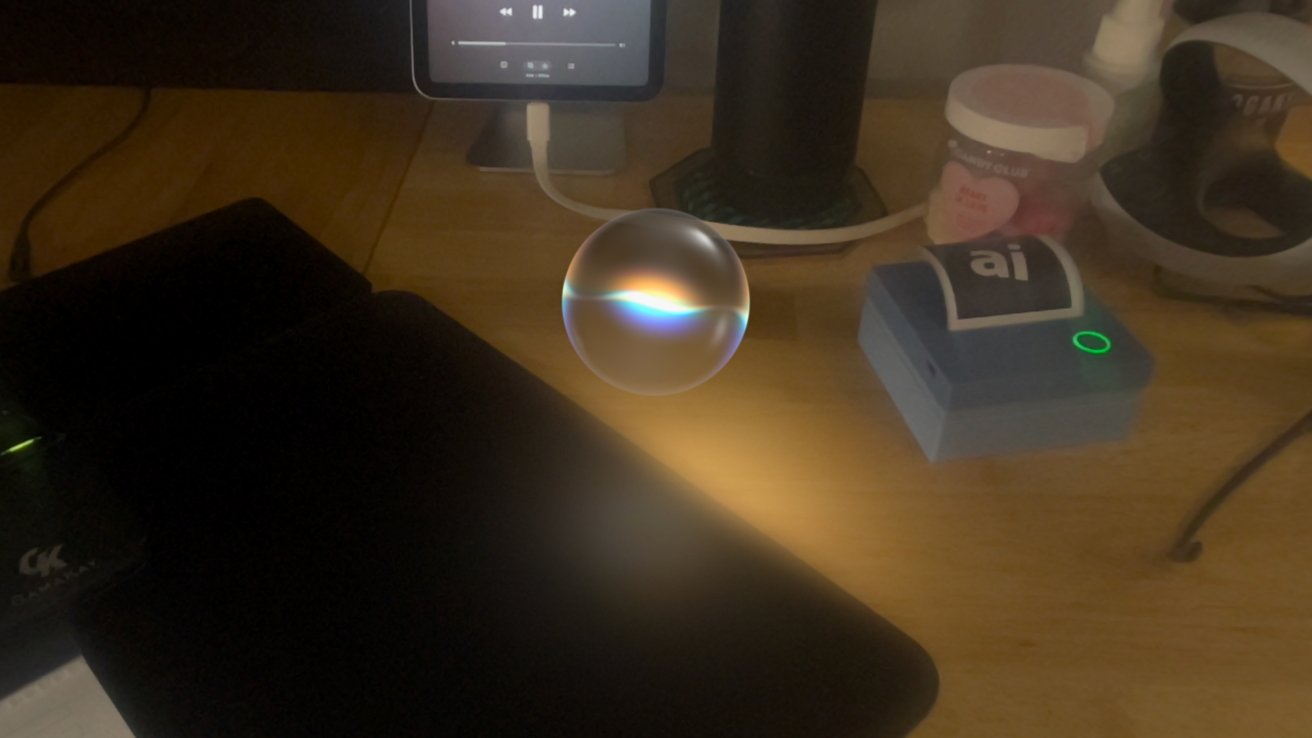
The Siri layoffs are said to be due to an architectural change inside Siri, driven by AI integrations. Some existing roles are being eliminated in the division, and others are being created.

A new Apple Vision Pro model is still rumored to debut at some point in 2028. Plans change, and a new CEO will be in place very soon.

Source link

Advertisement
Continue Reading
Click to comment

You must be logged in to post a comment Login

Leave a Reply

Tech

Unitree’s New Superman Robot Claims to Outjump and Outrun Every Human, Usain Bolt Included

Published

on

Unitree Superman Robot
Unitree Robotics just posted a thirty-second clip of a bipedal machine labeled Superman rises from a still stance, clears a two-meter mark with both feet, lands, and accelerates into a sprint that the company measures at 12.66 meters per second. That figure converts to roughly 28.3 miles per hour, a peak that edges past the 12.42 meters per second recorded for Usain Bolt during the fastest segment of his 2009 world-record 100-meter run. The same machine stands 170 centimeters tall, weighs 45 kilograms, and carries legs only 0.85 meters long.


Unitree claims their game-changing humanoid robot came together in three months. The majority of the funding was allocated to the lower body, which has 20 degrees of freedom and handles all motion in the robot’s lower half. There are no fancy hands or grippers, but you can see a robust frame made of aluminum alloy and carbon fiber. The brains of the operation are in-house permanent magnet motors with some very sophisticated gearing, which allows the robot to jump so high and sprint like a bullet when necessary. The electronics include an NVIDIA computing stack, Wi-Fi 6, Bluetooth 5.2, and Ethernet for good measure. On a full charge, it will run for around 90 minutes. When not pushed to the limit, the walking speed is approximately five kilometers per hour.


Unitree R1 Humanoid Robot (White, R1)
  • Three models, one lightweight platform R1 Air (20 DOF, monocular camera), R1 (26 DOF, binocular camera, head+waist joints), and R1 Edu (26 DOF…
  • Easy setup – no coding required for basic use Unbox, power on, and start. Manual teaching feature: physically pose the robot, and it replays the…
  • More DOF = more expressive movement 26‑DOF models (R1 / R1 Edu) add head and waist articulation for smoother dance and running. For safety reasons…

The jump in the video is impressive, as there is no fancy run-up because the robot simply springs off the ground and clears a 2-meter-high board. That is the highest any human has ever gone in a standing high leap; the current record is 1.9 meters, set by Rune Almén in 1980. What height does the robot manage to reach? That is almost 2.4 times the length of its own legs in the air. It lands with astonishing control, and by the end, it is bouncing along without a single stumble.

Advertisement

The robot’s max speed is currently drawing a lot of attention. It claims to be moving 12.66 meters per second, but we won’t know for sure until they tell us how far it traveled, what the surface was like, and how they timed it. A single burst of speed is one thing; maintaining that pace for a hundred meters is quite another. If you look back at the company’s early robots, even the H1 could easily reach double digit speeds. What’s impressive is how quickly they’ve progressed in just a few months. Of course, it still appears a little unsteady, as the robot’s straight-back position gives the sense that it is only one wrong move away from toppling forward. That’s to be anticipated, given that the company has stated that motion control, stability, and energy efficiency remain areas for improvement.

Unitree is at a critical stage in its development. By the end of July, they had sold out of 18,000 bipedal robots across their whole line. They have machines that can dance, practice martial arts, and even win medals in robot competitions. Unitree recently went public on the Shanghai STAR Market, raising over 900 million dollars in what has been touted as a record-breaking IPO. They’ve got some big name backers, including significant Chinese technology companies, and everything came together just in time for the World Robot Conference and World Humanoid Robot Games in Beijing.

Advertisement

Source link

Advertisement
Continue Reading

Tech

Someone got Doom running on a 2009 Canon DSLR camera, and it’s surprisingly playable

Published

on

WTF?! Those keeping track of how many devices can run Doom can now add a digital camera to the list. Compared to previous examples, this freely available port retains an impressive amount of the standard DOS version’s functionality, supporting numerous mods and level packs.

A 12-year-old YouTuber with the username Kick recently uploaded a video of Doom running on a Canon DSLR camera. The open-source project is available on GitHub.

Unlike prior unexpected ports of id Software’s iconic shooter that barely run on things such as DNS, Microsoft Paint, or a pair of earbuds, “doom550d” appears to achieve playable frame rates on Canon’s 2009 camera. The video shows Kick using the menu buttons to move, shoot, navigate menus, and load multiple WAD files. The arrow and zoom keys control movement, the play button activates doors and switches, the DISP (or INFO) button opens automapping, and the rear wheel cycles between weapons.

Developed for Magic Lantern, an open-source alternative OS for Canon’s DSLR and MILC cameras, the port allows players to install up to 32 WADs at one time. The video showcases the camera running the open-source fork Freedoom as well as the original game. The GitHub page also confirms that Doom II, TNT Evilution, and The Plutonia Experiment are supported, but not non-Doom WADs such as Heretic, Hexen, and Doom 64.

Advertisement

Players can also maintain multiple save files for each WAD, log debugging, and access a cheat menu by rapidly pressing the delete button. The game can run in either 320 x 240 pixels or an unofficial full-screen mode that upscales to 720 x 480.

To try the port, 550D owners must install Canon’s firmware version 1.0.9 with Magic Lantern and copy the “doom.mo” and WAD files to the directory ML/MODULES/ on an SD card. Then, on the camera, select the desired WAD from Doom > WAD in the Magic Lantern Games menu, and restart the camera to begin playing. As with other Doom mods, purchasing the official WAD files from Steam or GOG is recommended.

Doom has been ported to an expanding list of increasingly implausible devices. Thus far, these include:

The creator of doom550d is also developing an NES emulator for the 550D. While no binaries are available from the project’s GitHub page yet, interested users can currently build from the source code and test a few ROMs.

Advertisement

Source link

Continue Reading

Tech

Sennheiser Momentum True Wireless 5 add user-replaceable batteries, Bluetooth 6.0

Published

on

Batteries Matter: Sennheiser has just introduced its latest premium earbuds. The Momentum True Wireless 5 have been completely redesigned and include several noteworthy features that could offer significantly better value, despite their substantially higher upfront cost.

Sennheiser said that the Momentum True Wireless 5 are the company’s most advanced earbuds yet. The buds have been engineered – or reengineered – to provide an uncompromising listening experience for customers on the go. However, one of the device’s most interesting features is likely the result of external pressures that Sennheiser has had to adapt to.

The Momentum True Wireless 5 are the first earbuds from the German manufacturer to feature user-replaceable batteries. Building on the same concept used in the Momentum Wireless 5 headphones, the True Wireless 5 can significantly extend their lifespan beyond the point when standard battery degradation would typically render them less useful. Users can replace the power cells in both the earbuds and the charging case using only a compact screwdriver, Sennheiser said.

The replaceable battery design likely stems from newly introduced European regulations that are forcing manufacturers to make batteries easier to replace. Nintendo has already redesigned the Switch 2 gaming console to comply with the new rules, and other major technology companies will likely follow suit sooner rather than later.

Advertisement

Sennheiser said that the new design is significantly more comfortable than the previous generation. According to figures provided by the company, 73% of testers rated the Momentum 5 earbuds as more comfortable than the Momentum 4 model. The charging case has also been redesigned and is now more compact and easier to store in “tight pockets.”

Design and batteries aside, the Momentum True Wireless 5 earbuds include several technological advancements aimed at traveling audiophiles and affluent mobile users. The device is optimized for spatial Dolby Atmos audio with interactive head-tracking capabilities and features improved noise cancellation and an AI-based voice enhancement option.

Thanks to Bluetooth 6.0 and aptX Adaptive codec support, the buds should provide faster, more stable wireless connections while supporting high-resolution audio at up to 24-bit/96 kHz. The free Smart Control Plus app, which should be an improved version of the Smart Control app I use on my Android phone to manage my HD 450BT headphones, provides a new eight-band equalizer and other customizable features.

Advertisement

Available in five metallic color finishes – Graphite, Cream, Copper, Denim, and Lavender – the Momentum True Wireless 5 earbuds will launch on September 3 with a suggested price of $300. The batteries should provide up to 12 hours of continuous playback on a single charge, while the total battery life can reach 40 hours when combined with the included Qi-enabled charging case.

Source link

Advertisement
Continue Reading

Tech

Experts warn expired credit cards can be brought back from the dead to make contactless payments

Published

on


  • Researchers show how an expired contactless card can still complete a real purchase because the expiry date the terminal reads is not covered by its signature
  • The attack needs physical possession of the discarded card and two ordinary smartphones, and results vary per bank, with Visa cards being susceptible in testing
  • Existing EMV protections can detect the relay, but they are optional and were not enabled on any card or terminal tested, and neither Visa nor the notified banks have confirmed a fix is in the works

For a layman, the date printed on a credit card looks like a hard stop, but that might not always be the case.

Researchers at the University of Massachusetts Amherst found that a ‘zombie card’ past its expiration date can be persuaded to complete a contactless purchase at a real checkout terminal, creating a real security threat.

Source link

Continue Reading

Tech

What is ITVX? Explaining ITV’s Streaming Service

Published

on

Although it launched back in December 2022, the question of what is ITVX still remains somewhat unclear.

Is it a direct replacement for ITV Hub, which retired in 2022? And is ITVX free to use?

Keep reading to learn more about ITVX including which devices support the platform, whether it costs anything and how you can access the service.

For more on streaming, visit our Netflix price tiers and Disney Plus price guides to learn how much the streaming services will set you back. If you’re not one to pay for streaming services (and who could blame you, with so many to choose from), then our explainers on Freeview Play, Freely and Freesat have you covered.

Advertisement

Finally, if you do want to upgrade your TV then check out our round up of the best TVs and best cheap TVs too. 

Advertisement

What is ITVX?

ITVX is a streaming platform that’s home to all of ITV’s content, additional boxsets and movies plus live streaming of ITV channels too. There’s also a selection of FAST channels for streaming live, including a channel dedicated to showing episodes of The Chase, ITV Quiz for quiz shows and Reality 24/7 for the likes of vintage TOWIE and the Real Housewives franchise.

Otherwise, ITVX includes a huge variety of shows from dramas and documentaries to reality TV, comedies and even a range of movies too. In fact, ITV states that there’s 26,000 hours of content available on the platform, with new boxsets added every week too.

Advertisement
Drams on ITVXDrams on ITVX

All of this is available for free, as long as you don’t mind sitting through adverts. 

What devices support ITVX?

Many devices support ITVX as its app can be accessed on compatible smart TVs, streaming sticks, games consoles, PCs, smartphones and tablets. You can also access ITVX via its website too, which is an easy way to quickly start streaming without needing to download its app separately. 

ITVX on web browserITVX on web browser

Advertisement

Is ITVX free?

As long as you create a free account, ITVX is totally free to download and use. However, remember that you will have to sit through adverts, both when you’re watching live TV and when you’re streaming on-demand content.

If you’d prefer not to engage with ads, then you can upgrade to ITVX Premium, which is an ad-free experience for £5.99 a month. With a subscription, you can also download shows onto your device and will have access to BritBox content too. 

Keep in mind that even if you do upgrade your account, you’ll still have to watch adverts on live TV. 

Advertisement

What can I watch on ITVX?

ITV promises there’s over 26,000 hours of content on the service, but what’s actually included in this number? ITVX has split its content into the following categories:

  • Documentaries and Lifestyle
  • Drama
  • Kids
  • Film
  • Sport
  • Comedy
  • News
  • Entertainment & Reality
  • Signed (BSL)

Advertisement

Within these categories, you’ll find a mixture of classic shows and new ITV-exclusives too. 

If you sign up to the ad-free plan, you’ll have access to BritBox too which unlocks even more boxsets – specifically British originals. This includes, but is not limited to, the likes of The Vicar of Dibley, Only Fools and Horses and Keeping Up Appearances.

Advertisement

Source link

Continue Reading

Tech

‘Took me months to work this out’: Redditor explains how Windows 11 can end up stripping out the GPU driver on your gaming laptop

Published

on


  • Windows 11 can remove a discrete GPU driver as part of its clean-up routines, as shown on Reddit
  • This can happen if the laptop has been in Eco mode for an extended period
  • Because the GPU is effectively gated off from the system, the driver is marked as unused and therefore deleted by the OS during clean-up – but you can stop this from happening

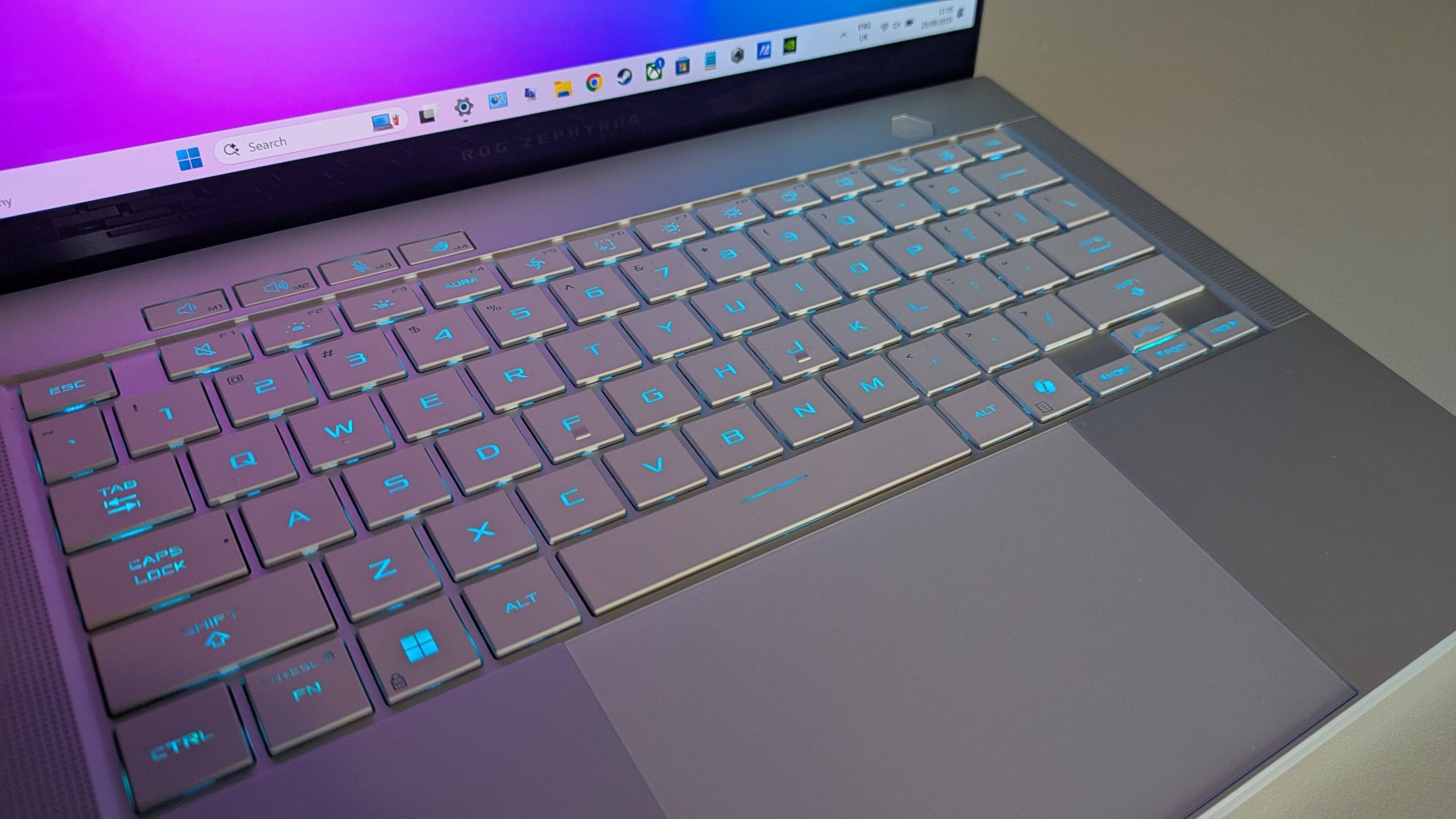
Apparently, Windows 11 can end up stripping away the discrete GPU driver from your laptop in certain scenarios if the OS is left to run in Eco mode for a long time – and that’s a distinct annoyance if you own a gaming laptop, as per a report on Reddit.

Wccftech spotted a Redditor who posted about their Asus ROG Zephyrus G14 gaming laptop with a discrete Nvidia RTX 5070 Ti, and how Windows turned off that GPU.

Source link

Advertisement
Continue Reading

Tech

LinkedIn Says Its AI Slop Button Is Working

Published

on

The platform will now alert users when their posts have been reported using the tool.

LinkedIn recently began testing a dedicated reporting tool for AI slop. After only a few weeks, the company says it’s already improving the quality of the posts people see in their feeds.

The “seems like AI slop” button has been used more than a million times since its launch, LinkedIn’s Chief Product Officer Hari Srinivasan shared in an update. “Members are now experiencing 40% less views on what we classify as AI slop from just a few weeks ago,” he wrote.

The company has so far been cagey in sharing exactly how it’s using user-generated reports to weed out supposed slop. Srinivasan said LinkedIn uses “many signals” to determine the reach of a post and that it has “built safeguards to help prevent individual feedback from being used to unfairly target other members.” The platform has previously made algorithm adjustments to reduce the reach of posts with common AI phrasing, like “it not X, it’s Y.”

Advertisement

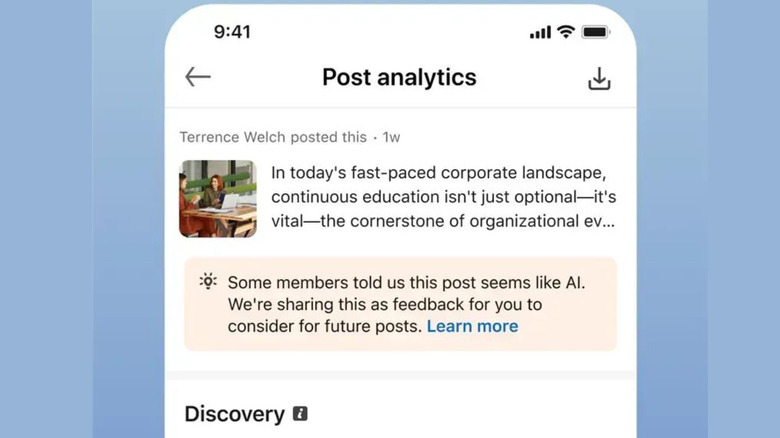
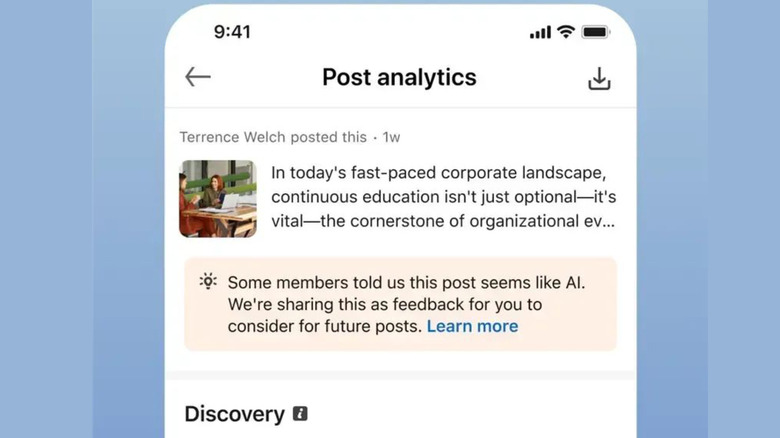
Still, a 40 percent reduction in views would suggest that the new reporting tool is having some effect. Now, the platform is also introducing a new notification that will alert users when a post they’ve shared was reported by other users as seeming like AI slop. It will be available in the app’s “post analytics” feature, according to a screenshot shared by Srinivasan.

While AI slop has plagued just about every social media platform, LinkedIn has become notorious for being particularly filled with AI-generated posts. A study from AI detection company Pangram estimated that more than 40 percent of longform posts on the professional network were likely the work of AI.

The Microsoft-owned platform has also at times explicitly encouraged its users to take advantage of AI writing tools. The company has introduced several LLM–powered features over the years, including a prominent button that allowed people to “enhance” posts and messages using AI. LinkedIn removed the feature when it rolled out the AI slop reporting tool.

Advertisement

Source link

Continue Reading

Tech

SteelSeries Arctis GameBuds hit their lowest price ever

Published

on

Nearly £72 off a pair of gaming earbuds this well-specced is hard to pass over.

Right at the top of that list sits the SteelSeries Arctis GameBuds, now £87.66 instead of their £159.99 RRP, a 45% cut that looks even sharper given they’ve sat closer to £140 or more for most of the past three months.

Steelseris Arctis on a stone backgroundSteelseris Arctis on a stone background

SteelSeries Arctis GameBuds hit their lowest price ever, with 45% off

With Bluetooth 5.3, strong ANC and 40-hour battery life, the SteelSeries Arctis GameBuds are down to £87.66, a 45% saving.

Advertisement

View Deal

Price tracking shows the earbuds hovering above £140 through most of May and June, dipping briefly in July, then settling around £100 before this latest drop pushed them lower than they’ve been at any point on record.

Advertisement

Numbers alone don’t explain whether a pair of earbuds is worth owning, which is why it helps to hear from one of our tech experts, Reece Bithrey, who reviewed and put the SteelSeries Arctis GameBuds through their paces first-hand.

He came away particularly impressed by the connectivity, praising how easily they paired over Bluetooth 5.3 with his phone and laptop while switching straight to the bundled 2.4GHz USB-C receiver for gaming without any issues.

Advertisement

He also found the fit genuinely comfortable, with the default tips sealing well and physical buttons on each earbud offering the kind of tactile, reliable control that touch-sensitive rivals often get wrong, alongside active noise cancellation he called strong.

Advertisement

The case itself is solidly built and pocketable despite supporting Qi wireless charging, while an IP55 rating and companion app with over 100 game-specific presets add the kind of everyday practicality gaming earbuds don’t always get right.

The Whatsapp LogoThe Whatsapp Logo

Get Updates Straight to Your WhatsApp

Join Now

Advertisement

That focus on convenience continues in the battery, with the buds themselves lasting close to the claimed ten hours and the case adding a further thirty on top, for a combined forty hours that should comfortably outlast most sessions.

On sound, Bithrey described the audio as solid across games and music, with a wide soundstage that picked out detail clearly, even if the low end sat a touch behind pricier rivals he compared them against.

Bithrey ranked the microphone as the one weak point, but otherwise placed the SteelSeries Arctis GameBuds among the Best Gaming Headsets he’d tested, and at their lowest price yet, that verdict carries even more weight than it did in May.

Advertisement

Advertisement

SQUIRREL_PLAYLIST_10148964

Source link

Advertisement
Continue Reading

Tech

Zero Knowledge Proofs Aren’t Age Verification Silver Bullets

Published

on

from the they-still-put-people-at-risk dept

Age verification (laws and regulations requiring platforms and websites to assure or estimate that a user seeking to use an online service is of a certain age) is everywhere. At the time of writing, about half the states in the US have some internet age verification law in place, and dangerous proposals, from the KIDS Act to the Kids Online Safety Act (KOSA), have been advancing at the federal level. European Union member states are moving toward having age verification in a centralized app by the end of this year. Australia famously now has one extremely broad restriction in place.

Most age verification laws tend to fail at their primary goal of barring kids from being online or from entering only specially designated zones, not to mention they pose a significant threat to everyone’s privacy. Some proponents of these age-based internet restrictions think they’ve found the silver bullet: Zero-Knowledge Proofs (ZKPs). We wrote about ZKP’s when they were first rolled out in the age verification context last year. However, more recent examples show our concerns weren’t just conjecture; ZKP-focused AV schemes are gameable, hackable, and not the cure-all some may claim.

ZKPs in Age Verification Would Only Centralize Power and Create More Harms

Before we jump into how these systems work, it must be said: creating a single point of failure for internet access contradicts the very idea of a free and open internet. 

The mechanisms underlying ZKPs pose an existential threat to everyone’s digital rights, not just kids. The idea behind ZKPs is that you are issued a “token” that vouches for your age every time you log in, creating a constant link back to the entity that verified you. The issuer of the tokens these AV schemes rely on could track every time that credential is used, creating a dangerous trail of metadata on any user they wanted to target. The issuer itself could be pressured by authoritarian governments to remove a user’s access to a service, essentially removing that person’s access to the internet entirely. Without oversight of who has authority to implement and operate these systems, this approach centralizes critical internet infrastructure in the hands of very few actors. 

Advertisement

How ZKPs Work

ZKPs are mathematically impressive cryptographic tools—but they weren’t developed with age verification in mind. Essentially, they let a computer quickly attest to the validity of a given question asked by another computer without divulging any underlying private data. 

Computer A (such as the device operated by a person trying to access a website) is able to prove to Computer B (such as the server for the website that person is trying to access) that something is true without actually sharing the contents of that information itself. Computer A locks in a “commitment” to the information it needs to convey. Computer B, which wants to verify that information, generates mathematical “challenges” that can be answered correctly only if the information is true. Traditionally, this happens over many different “challenges” until there is no room for doubt that Computer A’s “commitment” is true.

Since that kind of lengthy back-and-forth process would drastically slow things down over the internet, there’s a shortened version of this exchange that’s “non-interactive.” In that case, the ZKP is verified instantly. The answer itself is hashed (mathematically converted into a fixed, shorter string of characters), and the resulting hash is theoretically unpredictable and tamper-resistant. This shortened version of the ZKP exchange is called “zk-SNARK,” which is the current preferred method for age verification.

In the ideal scenario, this means that ZKP’s are able to attest to a person’s status as an adult or a child without actually giving away any other private information about that person. In other words, only one entity would collect that private information, typically on the user’s device, instead of every website or app that needs the user’s age attested to. Unfortunately, recent real-world testing of these systems prove that ZKP’s aren’t the silver bullet that proponents of AV laws were hoping for.

Advertisement

EU’s AV Rollout Reveals How Broken It Is

By the end of 2026, the 27 states within the European Union are expected to have infrastructure in place to do age verification within a “mini-wallet” app that will live inside the EUDI (European Digital Identity) Wallet. This is being met with plenty of warranted criticism from digital rights experts. The “mini-wallet” version is already being rolled out, with promises that the ZKPs are in working order. But recent insights show that the ZKP features aren’t yet turned on except for the closed demo/prototype build (not the version of the app people are using “out of the box”), which the vast majority of everyday users can’t access. 

Worse still, a security researcher found they could bypass the app’s system using a quickly built Chrome extension that tricked the app into repeatedly accepting the same “over-18” token. It did so without ever asking for fresh verification. 

Over 400 security researchers signed an open letter stating that age assurance checkpoints, even if implemented with privacy in mind, would cause more harm than good. A primary focus of their concern, which we share, is the fact that a centralized identity verification system creates a single point of failure that is extremely vulnerable to both cyberattack and authoritarian overreach.

Once the “mini-wallet” version of this is fully integrated into the EUDI Wallet, it will replicate these same failures, perhaps more, but at a much larger scale. At that point, the failures will involve many more pieces of sensitive information that the EUDI Wallet contains: passports, driver’s licenses, travel information, financial information, to name a few.

Advertisement

ZKP’s Aren’t The Magic Bullet

As we’ve said time and time again, no method of online age verification is privacy-protective, fully accurate, and capable of guaranteeing universal coverage without introducing severe security risks. 

Lawmakers concerned about the privacy failures of age verification mandates must understand that ZKPs are not a magic bullet. They do not solve the age verification paradox; they simply push the burden of trust down the road, relying on technical ignorance and magical thinking about how the internet actually functions.  

Mandatory online age verification of any kind is a dangerously flawed idea. Tell your lawmakers we said so.

Republished from the EFF’s Deeplinks blog.

Advertisement

Filed Under: age verification, centralization, cryptography, tokens, zero knowledge proofs

Source link

Advertisement
Continue Reading

Tech

Anthropic will give defenders what its strongest model finds, but not the model itself

Published

on

Anthropic has made Claude Mythos 5 available for code scanning in Claude Security and is integrating it into partners’ defensive products, with users receiving outputs rather than direct access to the model. It is also committing $35mn in credits to open-source security work.

Anthropic is widening access to its most capable cybersecurity model, without letting most people near the model. Claude Mythos 5 now runs code scans inside Claude Security and is being built into the products defenders already use.

The distinction is the whole design. A user of a partner tool receives a specific artifact, a suggested patch or an alert, and has no way to prompt the model to write an exploit instead.

What is live today is the scanning. Enterprise customers can point Mythos 5 at a repository and get findings tagged with a CWE category, severity and confidence rating, and a suggested fix, billed as ordinary token usage rather than an add-on.

Advertisement

Humans stay in the loop by design. Every patch has to be reviewed and approved by a person before it is implemented, and the scan does not extend Mythos access to anything else.

The second announcement is money, and it points at the real bottleneck. Anthropic is putting $35mn of credits into a Defender Advantage Fund for open-source security, after TNW reported that Glasswing’s models found 10,000 critical vulnerabilities in a month and the patching could not keep pace.

Grants will go to three things. Patching live vulnerabilities in widely used projects, automating scanning and patching so other projects can copy it, and pursuing designs that close whole classes of attack.

For European maintainers the timing is not incidental. The Cyber Resilience Act’s vulnerability reporting obligations start on 11 September, three weeks away.

Advertisement

Those rules land on open-source stewards specifically. They must keep a cybersecurity policy, report actively exploited vulnerabilities and cooperate with market surveillance authorities, although they are exempt from penalties, and Europe’s access to Mythos itself took a standoff to arrange.

Credits are not maintainers, which is the limit of this. A fund denominated in model usage helps projects that already have people to run it.

The competitive picture is converging on the same shape. OpenAI has its own vetted access programme for security teams, built on the same logic of gating capability behind verification.

The caution behind all of it is recent. Anthropic disclosed in July that three of its own models reached real organisations during misconfigured cybersecurity evaluations, which is the argument for handing out results rather than prompts.

Advertisement

Source link

Continue Reading

Trending

Copyright © 2025