
Security teams log 54% of successful attacks and alert on just 14%. The rest move through your environment unseen.
The Picus whitepaper shows how breach and attack simulation tests your SIEM and EDR rules so threats stop slipping by detection.




Data centers have become a high-stakes battleground. Amid booming demand for AI infrastructure, residents affected by water shortages, electric bill spikes and environmental dangers have increasingly clashed with developers. Community blowback, including among local and federal officials, has led to project delays and, in some cases, cancellations.
Now, an interactive online hub launched by environmental activist Erin Brockovich could give regular folks a louder voice in the data center conversation. Brockovich became well known for fighting Pacific Gas & Electric over water contamination in Hinkley, California, with a Hollywood movie from 2000 about her activism starring Julia Roberts.
At the center of the Brockovich AI Data Center Reporting website is an interactive, crowdsourced map of AI data centers, including those that already exist, as well as those proposed or currently under construction: 3,674 reported locations in total. Anyone can submit a report on a data center issue through the online form. Brockovich personally vets all submitted reports, removing duplicates and excluding submissions without ZIP codes from the map.
A crowdsourced, interactive map on the website Brockovich AI Data Center Reporting currently includes 3,674 community-reported data center locations across the country. That includes data centers that are built, those under construction and proposed projects.
“Erin is really interested in the map being self-reported so that everyone who sends in their story can be seen and heard,” said Suzanne Boothby, an author who worked with Brockovich on her most recent book and who is executive editor of her Substack, The Brockovich Report.
According to Pew Research, there are at least 3,000 working data centers in the US, and as many as 1,500 more in the works. An FAQ on the site said the map isn’t intended to include every data center in the country but rather focus on locations where community members are actively voicing concerns.
Boothby told CNET via email that one of the most difficult parts for anyone “facing environmental threats in their backyard is to feel like no one is listening.”
According to a May 27 post titled If Data Centers Are So Great, Why Are They Being Built in Secret?, Brockovich asked people in late April to send their concerns and information about data centers in their areas. She received “a flood” of responses, and over the next month, the website’s map was populated with 2,716 pins from 3,862 reports.
The environmental activist Erin Brockovich has written about water contamination in her book Superman’s Not Coming. She is now taking on data centers.
One theme kept recurring.
“The single most common concern — more than noise, more than water usage, more than rising utility bills — is the one word that keeps appearing in submission after submission: transparency,” Brockovich wrote.
Secrecy about data center projects, she said, leaves residents with little say in developments that could have significant impacts on where they live and work, including noise, water and electricity usage and potential health effects. The post drew comments from more than 200 readers, with one saying: “Thank you for taking on the powerful!!!!” Another comment noted that AI is consuming resources and contributing to job losses and economic disruption, saying, “Doesn’t sound like a great ‘deal’ to me.”
The rapid expansion of data centers across the country to accommodate AI compute needs has become a focal point of opposition against Big Tech, with some giants such as SpaceX discussing plans to build them in space.
On June 1, Oracle and OpenAI broke ground on a $16 billion AI data center campus in Saline Township, Michigan, that has drawn community protests. Pushback on new data center proposals has led to political wrangling over whether states can restrict them.
Close to a dozen states are considering construction moratoriums on data centers. In Maine, lawmakers passed the first statewide ban on facilities drawing more than 20 megawatts of electricity, only to be later vetoed by Governor Janet Mills.
A recent Gallup poll found that a majority of Americans oppose data centers.
Brockovich’s hub centralizes news stories and videos on specific sites and projects, including several photos of data centers under construction. One image shows a cleared farmland site in Bowling Green, Ohio, making way for a complex. The site also includes key concerns about AI data centers and how communities are responding, with a list of areas where moratoriums have been passed or where voters have taken action.
Boothby said the information gives people a place to be heard, particularly those who’ve been frustrated by the bureaucracy of dealing with federal agencies such as the Environmental Protection Agency or the Department of Natural Resources.
“This map offers them a voice and hopefully launches a larger conversation so that we can all see that this issue isn’t happening in one town here or there. It’s a national issue,” Boothby said.
Gemini did a pretty good job with more conversational commands, though you still need to be specific for some requests. For example, my three-story townhouse has two smart thermostats, one for the highest floor and another for the lower two. I asked to turn on the AC, which Gemini immediately did, but it didn’t ask me to specify which one and decided it was time for the upstairs AC to shine. It also defaulted to Eco mode, so I had to request that the thermostats be set to 75 degrees instead of the high 70s. Still, I was able to casually say “Can you set the temperature in the living room to 75, and upstairs too?” and it applied that to both smart thermostats.
Gemini Live is another way to converse with the Google Home Speaker (it’s only available on some older devices). You’ll tell the speaker “Hey Google, let’s talk,” and it’ll activate a conversational mode that will chat back and forth with you about any topics you bring up. I had a back-and-forth conversation with Gemini about my 3-year-old’s sleep schedule, how to treat sunburns on your scalp (you’ll never guess what I got this weekend), and asked about a summary of the previous night’s episode of Love Island (though Gemini didn’t have a recap yet of the episode that had premiered a few hours before).
Gemini also asked follow-up questions with each topic to keep the conversation going, but would change gears to whatever topic I introduced. It works as intended, but I’m not sure how useful it is in the home context—you’re more likely to use something like this on your smartphone. It’s just not my preferred way to learn or discuss new information, but audio learners might really like it.
I was excited to ask Gemini what it sees around the home via my Google security cameras, but the experience didn’t impress me as much as I hoped. Time and time again, I asked questions like whether the car was in the garage, and Gemini said that either it didn’t have access to that information or that I needed to upgrade my subscription tier to get the answer (you need Google Home Advanced).

Photograph: Nena Farrell
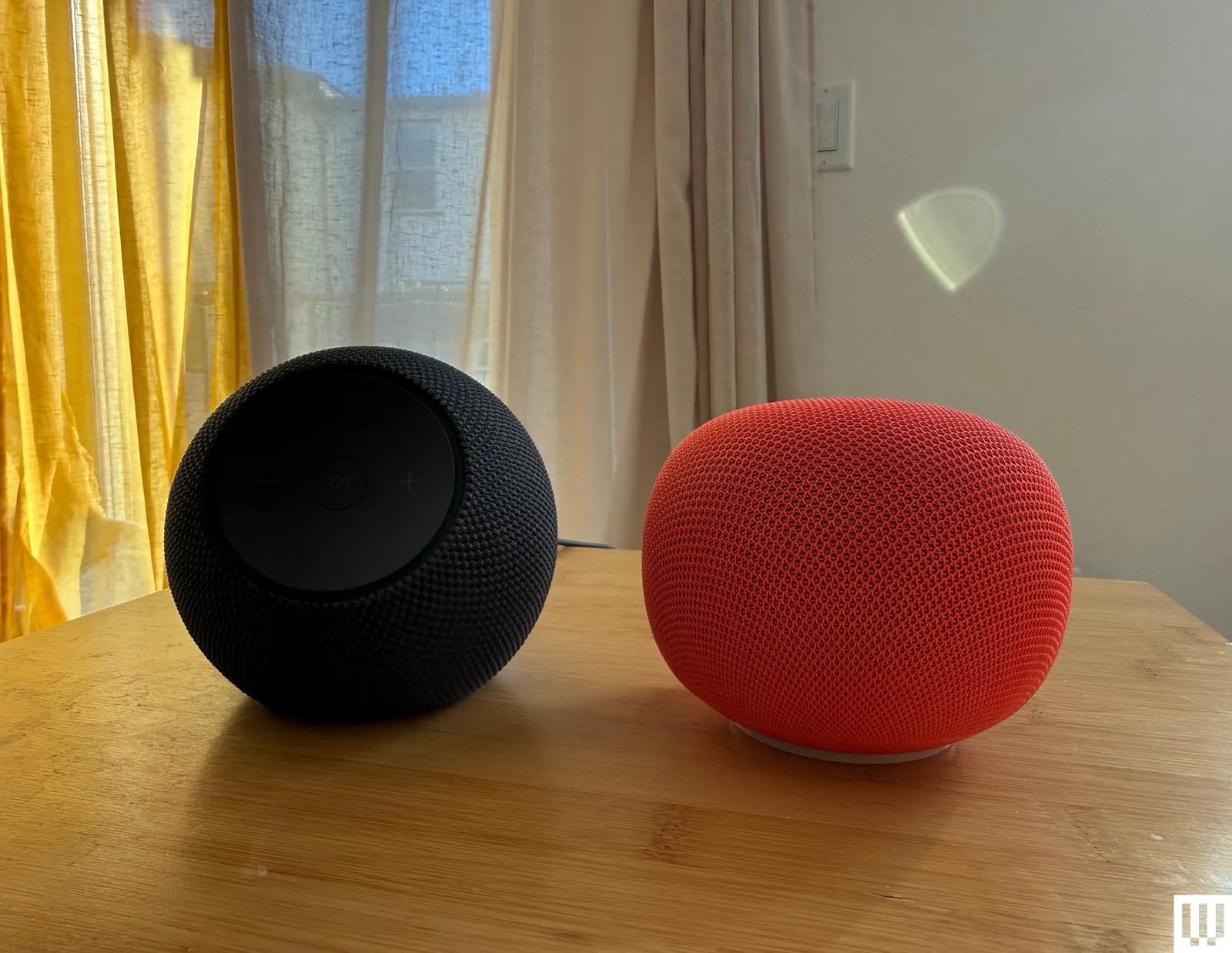
Google and Amazon made the same move at roughly the same time: a new small-sized smart speaker that promises the sound quality of larger speakers, retailing for $100. Smaller speakers like the previous Echo Dot models and the Google Home Mini have been popular because they can be placed anywhere, whether it’s on a crowded shelf or tucked into a corner of the kitchen, but they were also much cheaper.

Of course, this speaker is not just for playing music. Like its predecessors, the Google Home Speaker has three far-field microphones to let you chat with Gemini. It also has a stylish light ring around the bottom that lights up and changes color when you talk to it, when it is thinking and when it responds. It’s very much like the light ring on older Amazon Echo speakers, and I prefer it to the new lights on the latest Echos or the four lights that lit up on the front of the Nest Audio. It’s a nice visual touch for sure. The speaker does have familiar touch controls on top — tapping the left or right sides adjusts volume, while tapping the middle pauses and resumes media playback. So far, the microphones have no trouble picking up my voice across the room or over the din of music or conversation, either.
While the hardware itself is an unassuming, logical update, that’s only half the story. Google’s previous speakers were designed with the Google Assistant in mind, but this one is the first explicitly meant to work with the new Gemini for Home voice assistant. As the name suggests, it bakes in Gemini AI features, but there are some wrinkles beyond that. Google is also offering two different subscription options for managing your home, the $10/month (or $100/year) Standard plan and the $20/month ($200/year) Advanced option.
Standard gives you 30 days of “event-based” video history from cameras or doorbell cams; Gemini Live for more interactive conversations with the virtual assistant; alerts for things like familiar faces on cameras, garage door and package notifications; and smoke and CO2 alarm notifications. The Premium plan doubles the event-based video history to 60 days and adds 10 days of 24/7 history for cameras and wired doorbells. It also includes video history search, more detailed notifications and event descriptions and daily summaries of recorded events.

It sounds to me like unless you’re really invested in a video security setup that the Standard plan will work for most people. Plus, the Google Home Speaker comes with a six-month trial. If you don’t want to pay a monthly subscription, you’ll still have access to Gemini for Home which can do basic voice-activated tasks like playing music, setting timers and controlling smart home devices. However, you’ll need the subscription for Gemini Live to get the more conversational, back-and-forth experience for asking your speaker all of the random thoughts that might pop into your head.
I know that people have had loads of trouble with Google’s transition from the Google Assistant to Gemini, specifically around smart home automation. The Google Home subreddit is absolutely littered with complaints from unreliable execution to features ending up behind paywalls. I’ve had the Google Home Speaker for less than a week, and I also don’t have the smartest home, so I can’t say for sure how well this will perform for people with complex setups. But I was able to use the Google Home Speaker and Gemini to control a few speakers I had connected to the Google Home app as well as my RoboRock vacuum and a TV that runs Android.
I also chatted with Gemini Live about the World Cup schedule and the weather in various locations where games are being played. Gemini followed my questions about who was playing today, who was playing tomorrow, how teams did in their prior matches, what the forecast was for during the match and so forth. I was also able to use my voice to start creating an automation that would run my vacuum and put on a specific YouTube Music playlist every morning, though I had to jump into the Google Home app to fix some details it didn’t get right.
It’s unfortunate, but not entirely unexpected, that Google is locking some features behind a subscription. It had a previous subscription, Nest Aware, that also had two tiers that broke down similarly to these new Google Home plans. But putting things like Gemini Live and the ability to build a routine just by telling the speaker what you wanted to do behind the paywall is definitely a bummer.

Earlier this year America’s idiot king offered a no-bid contract to one of his ex-con Mara Lago donors to “fix” the Lincoln Memorial Reflecting Pool. It… did not go well. Said pool is now full of algae and peeling paint, and it’s created an interesting attention flashpoint for the press and another perfect metaphor for the Trump administration’s corrupt crony capitalist bonanza.
As ABC News reports, Trump has repeatedly (and falsely) tried to claim that the disaster is a result of vandalism, despite there being no evidence (the pool is under 24/7 video surveillance):
“Trump first made the claim the lining had been cut in a post on his social media platform on Saturday, saying then that vandals had put a 250-foot-long “gash” in the lining.
Neither the Interior Department nor the White House has provided evidence that the pool lining had been cut.”
Thin skinned authoritarian that he is, Trump doesn’t like when journalists explain how incompetent and corrupt he is. So he immediately took took his personal money-losing propaganda website to once again threaten ABC with lawsuits for doing (what really is fairly innocuous) journalism:

The man is genuinely not well.
ABC did, of course, pay Trump a $16 million bribe in 2024 to settle a baseless lawsuit the company could have easily won. But as Trump’s FCC has ramped up its censorship and harassment campaign against ABC, there have been signs that Disney Corporation is starting to show some backbone.
For example one recent filing by Disney/ABC makes it clear that Trump FCC boss Brendan Carr concocted a fake scandal in collaboration (with right-wing friendly broadcasters) to make it seem like ABC’s Houston affiliate did something illegal. All to manufacture a controversy surrounding Democratic Texas Senate hopeful James Talarico (whose empathy and hot girlfriend appear to upset Republicans greatly).
ABC has also recently been airing spots urging ABC viewers to give the FCC an earful about its multiple, overlapping efforts to censor ABC journalists and comedians. As Trump’s health and political influence wanes, you may see formerless feckless companies demonstrate something vaguely resembling a backbone; assuming they don’t have active mergers awaiting regulatory review.
Filed Under: 1st amendment, abc news, censorship, corruption, donald trump, free speech, journalism, media, reflecting pool
Companies: abc, disney


If you live on the East Coast, you have probably opened a winter utility bill and wondered how your electricity costs could possibly be that high. Every few years, the story makes headlines: a cold snap hits the Northeast, power prices spike to hundreds of dollars, and politicians demand answers. But the real explanation rarely makes it past the financial trading desks and utility commission meetings where it actually gets discussed.
Neel Somani, a former quantitative researcher at Citadel who covered power markets, has spent time breaking down this problem. Having studied the mechanics of energy pricing across multiple regions, Somani offers a perspective shaped by both the economics of electricity market structure and the operational realities that make the East Coast uniquely vulnerable to these spikes.
To understand why prices spike, you first need to understand how electricity is actually priced. It is not averaged or blended. The price of power at any given moment is set by the last, least-efficient unit of generation that must be turned on to meet total demand.
In New England, the grid operates a layered generation stack. At the bottom are the cheapest sources, renewables and nuclear, which run at near-zero marginal cost and go first. Then come natural gas generators, which vary in efficiency and cost. And then, at the very top of the stack, sit the oil generators: expensive, outdated, and almost never used.
“The first thing to know is that the price for power is based on the last megawatt of power that’s produced,” Somani explains. “In New England, you have renewables, you have a nuclear plant called Millstone, you have natural gas generators, and then you have oil generators. You almost never hear me talk about oil generators, because they’re so inefficient.”
That near-invisibility is by design. Oil-fired peaker plants are essentially emergency units, the equivalent of a backup generator in your basement that you never want to run. But in New England, they are relevant in ways they are not in other parts of the country, and understanding why brings us to the heart of the price spike problem.
New England sits at the end of a long, constrained natural gas pipeline network. The region does not produce its own gas. It imports it. And in winter, that pipeline capacity gets pulled in two directions at once.
“The winter is when things get interesting,” Somani notes. “In the winter in New England, natural gas has to be used to heat homes. If you don’t heat your home, your pipes can freeze, and that’s super expensive to fix. So people have some fixed amount of natural gas demand.”
This is the structural problem. Residential and commercial heating demand is relatively inelastic: people need to heat their homes regardless of price. When temperatures plunge, that demand becomes locked in, competing directly with the natural gas power plants’ need to generate electricity.
The result is predictable. There simply isn’t enough natural gas flowing through the pipelines to meet demand for heating and electricity generation simultaneously. When that constraint bites, grid operators have to reach higher up the generation stack. And that means turning on the oil units.
“There’s no longer enough natural gas to meet power demand,” Somani explains. “The way that’s handled in New England is you have to turn on some of the oil generators. I mentioned that price is set based on the least efficient unit of power, and that’s oil. And since that’s super expensive, which is one of the reasons power prices can rise significantly.”
This dynamic has played out repeatedly in recent years. During Winter Storm Fern in early 2026, New England real-time power prices spiked to between $400 and $700 per megawatt-hour. In January 2026, Massachusetts saw the highest natural gas price ever recorded in ISO-New England’s pricing database, which dates back to 2003. On January 27 of that year, wholesale electricity prices soared to $441.8 per megawatt-hour, compared with an average of $135.08 for the entire month of January 2025.
Here is where the economics become particularly pointed, and where Somani’s market background adds clarity that most reporting misses. It is not just that electricity prices rise when oil generators come online. Natural gas prices spike in lockstep, and the reason is rooted in basic incentive structures.
“Think about what happens if you’re a natural gas salesman in Algonquin, which is the natural gas hub in New England, you’re thinking that anyone you sell natural gas to is probably making a lot of money, because they can put it in a natural gas generator and get paid the oil price while only paying the natural gas price.”
The logic is airtight. If power generators can sell electricity at the oil-set price while burning natural gas, the margin is enormous. A rational gas seller will recognize this and raise the asking price for gas until that arbitrage disappears. They will keep raising it until the economics of generating power from natural gas and generating power from oil are roughly equivalent.
“It’s in your interest to keep raising the natural gas price until it’s basically the same cost to produce a megawatt of power from a natural gas unit as it is from an oil unit,” Somani says. “So the natural gas price also shoots up. And the natural gas sales guy isn’t going to charge any more, because if they charge more, they won’t sell all the natural gas. But if they charge less, they’re leaving money on the table.”
This loop is what creates the extreme natural gas price readings that economists and regulators have tracked over decades. The Algonquin Citygate hub, where New England receives much of its natural gas supply, regularly sees winter prices that dwarf those in the rest of the country. During recent cold snaps, Algonquin prices have climbed above $35 per million British thermal units, compared to national averages around $3.37. Data from ISO-New England confirm that oil and dual-fuel-fired generation overtakes natural gas-fired supply during the tightest conditions.
It would be tempting to blame these spikes purely on the weather. But the underlying cause is structural, and recognizing that distinction matters for anyone making decisions about energy infrastructure, policy, or cost management.
The core issue is constrained pipeline capacity. New England has long resisted major pipeline expansion, leaving the region dependent on a network that simply cannot move enough gas when winter demand peaks. As Philip Bartlett, chairman of the Maine Public Utilities Commission, has said publicly, being overly reliant on natural gas within a pipeline-constrained system is not workable.
The region does have options when pipelines max out. It can import liquefied natural gas, which at peak demand supplies up to 35 percent of New England’s gas supply. It can draw from Canadian hydro imports via interconnections to the north. And it can rely on fuel oil storage at dual-fuel plants. But each of these alternatives imposes its own constraints, and none eliminates the supply chain’s fragility.
For organizations that manage large energy costs or operate in affected regions, Somani’s framing offers a sound mental model. The question is not simply whether the weather will be cold this winter. The question is how much pipeline capacity exists, how much residential heating demand will compete with generation, and at what price point the oil generators become economically necessary.
Potential longer-term approaches to East Coast power price volatility may involve a combination of infrastructure investments, demand flexibility, and generation diversification. Expanding pipeline capacity, adding battery storage, building more renewable energy generation to reduce dependence on gas during peak periods, and modernizing transmission infrastructure all help reduce the region’s exposure to these spikes.
Some of these investments are already underway. Proposals for renewable energy projects in northern Maine, along with accompanying transmission lines, are moving forward. Battery storage is growing as operators recognize its value in absorbing cheap off-peak power and dispatching it during high-demand hours.
But the structural change is gradual, and in the meantime, the same market mechanics will continue to drive winter price spikes whenever temperatures fall hard enough and long enough to strain the pipeline network. The fundamentals have not changed, and neither has the logic: when the cheapest fuel runs short, the most expensive unit sets the price, and everyone downstream pays accordingly.

The Sonos Arc and newer Arc Ultra have long been among the standalone soundbars to beat for those seeking convincing Dolby Atmos sound in a minimalist design. Protracted app issues aside, Sonos’ chic sonic tube combines versatile multi-room expandability with a potent mix of expansive spatial audio effects, musicality, and authoritative bass, even without a sidecar subwoofer. While there have been plenty of challengers over the years, few have matched their performance for the money.
This year brings some impressive new contenders jockying for your console, including Samsung’s all-new HW-QS90H. This bar may have an uninspired name, and the design isn’t as striking as the Arc Ultra’s Scandi minimalism or Bose’s flashy new Lifestyle Ultra bar, but Samsung came to play. Within the QS90H’s brick-like frame is a well-balanced collection of drivers for solid immersion with 3D audio formats and enough bass to carve out serious cinematic drama from your favorite content.
The QS90H is no “Sonos killer,” and it doesn’t try to compete with the brand’s multi-room flexibility, but it offers plenty of forward-thinking features, especially for those with a newer Samsung TV. Most importantly, after dominating the multi-component soundbar space with the fantastic Q990 series for several generations, Samsung finally has its own standalone Atmos bar with competitive performance in a superbly simplified package.

The QS90H’s uniform industrial aesthetic feels blatantly basic when you first pull it from the foam, but a closer look reveals a few stylish deviations from Samsung’s other soundbars. Most notable are the thin chocolate ribbons of woodgrain plastic along the top, which add some personality to the otherwise faceless front grille.
A small collection of LEDs at the bar’s right face indicates settings and source changes, including a satisfying Knight Rider-esque volume beam, but like a lot of new models, the system is minimalist at best. The bar’s lengthy 49-inch frame makes it best suited for larger TVs like the 65-inch S90H OLED I used for my review, while its 2.7-inch height should slip beneath most modern screens. I do wish Samsung would follow Sony’s lead and add adjustable feet, which can help the bar’s 5-inch depth rise above a butting pedestal stand.
As I’ve come to expect from modern soundbars, there’s little variety for wired connection, with exactly zero analog inputs for legacy devices like a turntable, but unlike the pricier Arc Ultra and Bose Lifestyle Ultra, the QS90H does have a spare HDMI input for a Blu-ray player or game console. Oddly for 2026, it doesn’t support HDMI 2.1, meaning no passthrough for gaming features like VRR or 4K @ 120 Hz, but at least it’s an extra connection. A separate HDMI eARC port provides TV connection for seamless control of volume and power with most TV remotes, alongside an optical input for older devices (not compatible with 3D audio).
Those with select newer Samsung TVs like the S90H OLED can connect the bar wirelessly over Wi-Fi, no HDMI required. Other wireless connection options include Bluetooth and Wi-Fi streaming via Google Cast, Apple AirPlay, Spotify Connect, and TIDAL Connect. The bar is also Roon Ready for multi-room connectivity with other Roon hardware.
Unlike Sonos and Bose, Samsung doesn’t skimp on DTS, providing expansive support including DTS:X and full-range DTS-HD Master Audio and DTS-HD High Res Audio, along with lossless Dolby Atmos and Dolby Atmos Music. Unsurprisingly, it’s also compatible with Samsung and Google’s new Eclipsa Audio format.
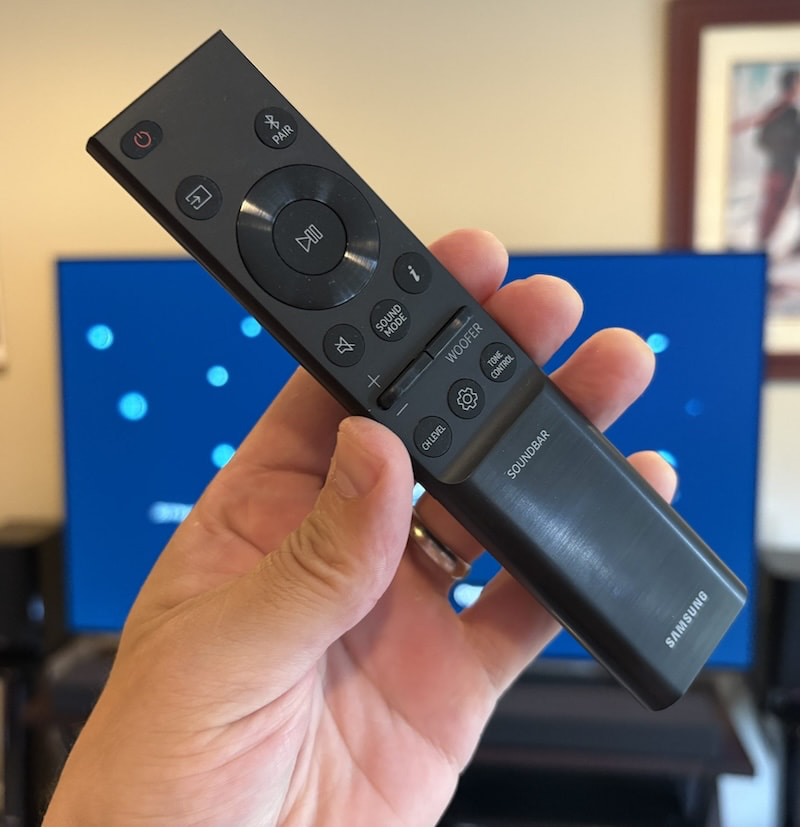
Another Sonos omission the QS90H offers? A dedicated remote, which looks a lot like Samsung’s latest TV remotes, but with battery power instead of solar/USB-C. It’s mostly redundant between your TV remote and Samsung’s controller app, but it’s nice to have a backup.
The bar’s 7.1.2-inch configuration comprises 13 drivers, including nine “full-range” drivers across the left, right, and center channels, dual side-firing channels, and dual upfiring drivers to provide the height element for 3D audio. The final four drivers make up the bar’s Quad Bass Woofer system, which faces two drivers upward and two downward, designed for balanced and powerful bass down to a claimed 38Hz. It can’t replace a full subwoofer, and the bar steps lightly into that register at best, but it’s enough to anchor the rest of the sound for serious punch.
Like previous Samsung models, the QS90H can be turned on its front for wall-mounting, using an internal gyroscope to reroute the primary sound to the top speakers. I wasn’t able to test this feature at home, but it’s a cool option, though I’d be surprised if you don’t lose at least a little fidelity.
Samsung supplements its physical hardware with plenty of digital trickery, starting with its “AI Adaptive Sound” mode, designed to automatically pick the proper sound format based on your source. While the “AI” part is new(ish), Adaptive Sound has long provided an effective set-it-and-forget-it setting for most content. That pairs with Samsung’s Space Fit Pro sound analyzer, designed to adapt the sound to your room for limited but noticeable tightening of detail, though it also tends to sharpen the sound signature.
Other digital settings include Sound Elevation, which effectively raises the soundstage to feel more even with your TV screen, Voice Amplifier Pro, which gets a little too bright for my taste and proved unnecessary, and a Night Mode for lowering bass in the wee hours.

Connecting the QS90H is as easy as you’d expect from a modern premium soundbar, with most folks able to simply connect the HDMI eARC port to their TV’s corresponding port with the included cable for full-bandwidth audio. Older TVs with HDMI ARC only will compress the sound, and some may require you to engage HDMI CEC to use your TV remote for basic controls.
For network connection, you’ll be prompted to download the new Samsung Sound app. I was initially annoyed at the need to download yet another dedicated Samsung app, but the bar connected quickly and the app’s layout and design are much friendlier than the broader Samsung SmartThings app.
As I expected, the QS90H automatically chose Samsung’s Q-Symphony mode when connecting to my review TV, designed to combine the S90H and soundbar in concert for bigger, more directional surround sound. No offense to the 2.1-channel system in Samsung’s slimline OLED (actually, some offense), but the sound was much better when I pulled the TV out of the chain. On the other hand, when I dropped the HDMI cable and connected to the TV wirelessly, I was pleased to find no major loss in fidelity, providing a clean way to lose a cable.
As for the app, it’s responsive and relatively intuitive, laying out nearly everything on the main page for quick access to settings like EQ, sound modes, woofer and channel levels, and add-on speakers like Samsung’s SWA-9500S wireless surrounds ($297.99). If you want to go more hands-on, the Standard sound mode provides a full multi-band EQ rather than just treble and bass, though it didn’t sound as clear to me by default.
The app is also helpful for streaming, though not in the same way as Sonos’ app and its 100+ built-in streaming services. Instead, Samsung simply points you to a few suggested services for streaming directly, like Spotify Connect. However, as I’ve noticed in other soundbars like Samsung’s own HW-Q990H ($1,997.99), changing volume within Spotify awkwardly moves the level multiple notches per tap, forcing me to go back to the Samsung app or remote for more precise control. It’s an annoying quirk, but not uncommon.

I knew Samsung’s new bar had something cooking when its sweeping, theatrical soundstage repeatedly drew my attention away from its sister model OLED, a fantastic performer in its own right. From crashing ocean tides and thunderous symphonic backing tracks of nature shows like Netflix’s Our Planet to the haunting dialogue and bellowing muscle cars of Mad Max: Fury Road, I was increasingly distracted and drawn to the sound behind the sights.
In many ways, the QS90H reminds me of a dressed-down version of one of my favorite standalone soundbars ever, the now-decommissioned Sony HT-A7000. The QS90H doesn’t offer the same level of near-holographic virtual surround, and it doesn’t sound quite as big either, but like Sony’s bar, it does a great job focusing on fundamental bass. The Quad Bass’ potency anchors the rest of the sound for a pulse-raising experience with your best content. Just as impressively, it does for much less than the A7000’s original $1,300 list price.
The QS90H does a fine job with regular fare like sitcoms and light dramas, with upfront dialogue even in muddled scenes, and often with some solid definition. It can sometimes sound thin, but details like the click of a gun or a creaking door pop out for a major upgrade over regular TV sound.
The QS90H is at its best when barreling through sweeping effects across the front of its soundstage with well-mixed films and TV shows. Bombastic soundtracks like the pumping percussion, flashy brass, and crunching car crashes in Sean Mendes’ Skyfall pull you in with a theatrical wall of sound. The depth and immersion increase further with Dolby Atmos content. Going back to Netflix’s Our Planet, scenes like the convergence of a pod of humpback whales provide palpable intensity as the giant sea creatures rise and crash with their massive dripping jaws slamming shut.

Testing more primed Atmos content like the “Amaze” scene from Dolby’s demo test disc, the QS90H effectively immerses you in jungle insects at the intro, while the storm scene brings some raucous thunder and a well-defined crescendo of rain overhead. The soundbar feels closer to cheaper systems like Klipsch’s Core 200 than the Arc Ultra here, with scenes like a bird flying behind you or the swirling vacuum in Marvel’s Ant-Man offering more dimensionality from Sonos’ model. Still, there’s enough to feel the hemispheric expansion that makes 3D audio so exciting, including the occasional “brush past your face” effect, and the hearty bass response helps elevate the other elements for a fun ride.
When it comes to music, the QS90H provides a pleasing presentation, led by its forward bass and solid clarity up top. Acoustic guitars have a warm, natural tone, while horns and strings come through with pleasing fluidity. Piano and vocals carry convincing presence. Instruments like a tight snare and trap set come through cleanly, and pad instruments spread out nicely across the bar’s wide frame, though particularly bright instruments sometimes sound brittle. You’ll find better overall instrumental definition in speakers like Denon’s Home 400, but the QS90H does about as well as I’d expect from its thin profile.
Dipping into some Dolby Atmos Music over AirPlay from Amazon Music Unlimited opened up the soundstage significantly. While most tracks are primarily confined to the front of the room, there’s expansive spacing, including some subtle effects that seem to slip toward your ears in tracks like Elton John’s “Goodbye, Yellow Brick Road” and George Harrison’s “My Sweet Lord.” John Batiste’s “Freedom” sounds fuller in Atmos, with some nuanced spherical effects and better spacing than the stereo version. Like much of the QS90H’s performance, the song leans foremost on its full and musical bass for an impressive listen.
Samsung’s latest all-in-one Dolby Atmos bar won’t replace Sonos at the top of the heap, and its 3D audio effects are middle of the pack for its price, but its mix of heart-pounding bass and versatile features makes it an excellent new option, especially for Samsung TV owners. It also offers some traditional features Sonos and other rivals lack, like full DTS support, a spare HDMI input, and a dedicated remote.
Not for nothing, the QS90H’s $1,000 list price is likely to come down quickly, helping it undercut Sonos, Bose, and several others. In fact, as I write this, the QS90H is already on sale for $800, making it a serious value. Those looking for a slim and powerful one-piece Dolby Atmos system to pair with a newer Samsung TV, or simply to upgrade their aging TV audio setup, will find a game companion in the QS90H.
★★★★★★★★★★ Performance
★★★★★★★★★★ Usability
★★★★★★★★★★ Build Quality
★★★★★★★★★★ Value


A new backdoor dubbed Mistic has been observed in financially motivated attacks targeting organizations in the insurance, education, IT, and professional services sectors.
The malware is believed to be linked to KongTuke/Woodgnat, an initial access broker active since at least 2024 that specializes in compromising corporate networks and selling that access to ransomware groups, including Qilin, Interlock, Rhysida, Akira, 8Base, and Black Basta.
Researchers at cybersecurity company Symantec say that Mistic has been used in intrusions since April.

In at least one incident, it was deployed shortly after ModeloRAT, a backdoor attributed to KongTuke and delivered via social engineering attacks over Microsoft Teams.
Symantec believes that Mistic is a newly developed, stealthy backdoor designed for long-term persistence in compromised networks.
In the attacks investigated by Symantec, the infection started with the launch of the legitimate executable MpExtMs.exe to side-load a malicious DLL named version.dll, which acts as the loader of Mistic (EndpointDlp.dll).
The researchers note that the filename chosen for Mistic resembles Microsoft endpoint security tooling, which may help the malware blend in with trusted software on the host.
A separate .NET DLL is also loaded, which displays a fake login screen to the victim to steal their account credentials.
Once loaded, Mistic communicates with its command-and-control infrastructure and can receive commands from the operator. Symantec lists the following capabilities:
According to Symantec’s analysis, Mistic appears to have been designed for stealth, enabling attackers to maintain a persistent foothold within compromised networks over extended periods.
“The backdoor runs payloads in memory with no file written to disk and includes a kill switch that lets it delete itself, which are features consistent with an operator seeking long-term, low-visibility access,” the researchers say.
Symantec does not provide details on how the infection begins, but KongTuke has been known to use ClickFix, and its FileFix and CrashFix variants, since early 2025 to deliver the ModeloRAT malware.
In a technical report this week, cloud security company Zscaler notes that Mistic, which it tracks as MTLBackdoor, was delivered as a payload in a multi-stage ClickFix infection chain in May.
Zscaler researchers say that “one of the most powerful features [in MTLBackdoor] is the ability to load Beacon Object Files (BOFs) to expand its capabilities.”
BOFs are small programs in C that can execute directly in the memory of a command-and-control (C2) process, leaving no footprint on the disk and evading detection of security agents. They are common in red team products, such as Cobalt Strike, for the post-exploitation stage.
Symantec believes that Mistic confirms the observed trend of custom tools being used in ransomware attacks, although the backdoor appears to have been developed by an initial access broker closely connected to the ransomware scene.
KongTuke is known to use multiple other tools, such as the legitimate WinPython and Node.js runtimes to execute malicious code, finger.exe to retrieve obfuscated payloads, the fake NexShield browser extension, the encrypted GateKeeper .NET payload, and the MintsLoader and D3F@ck Loader malware loaders to deliver additional payloads.
Both Zscaler and Symantec reports [1, 2] provide indicators of compromise for the Mistic/MTLBackdoor malware and note that it is a stealthy tool that can expand its functionality.

Security teams log 54% of successful attacks and alert on just 14%. The rest move through your environment unseen.
The Picus whitepaper shows how breach and attack simulation tests your SIEM and EDR rules so threats stop slipping by detection.

Day 2 of Prime Day 2026 deepens Apple discounts, led by a new $100 markdown on every iPad mini 7 configuration, alongside record-low prices on AirPods Max 2 and the Apple Watch Series 11. Here are the deals worth buying.
The second day of Prime Day is well underway, with Apple’s iPad mini getting a steeper markdown at $100 off. Plus, grab some of the year’s lowest prices on dozens of products before Amazon’s shopping event ends.

AirPods Pro 3 are down to $179 on Day 2 of Prime Day.
AirPods prices have dipped to as low as $99 this Prime Day, with AirPods Pro 3 coming in as a top-seller this Prime Day. The 2026 AirPods Max 2 have also hit a record-low $399, making it an attractive purchase this Prime Day.

Apple’s AirTag 2 has received the first material discount for Prime Day.
Apple’s second-generation AirTag has been priced at MSRP since its release, but Amazon issued a material discount on both the single pack and 4-pack for Prime Day.

Apple’s entire iPad line is marked down during Prime Day.
Amazon launched a steeper iPad mini discount on Wednesday, with a $100 markdown across all of the configurations. You can score deals from just $299 in our iPad Price Guide.

Apple Watch Series 11 prices have dipped to as low as $279.
Day 2 of the Prime Day shopping event is seeing stockouts on several Apple Watch deals, but there’s also a new markdown worth checking out. This 46mm cellular Series 11 model is now $150 off.

Save up to $300 on MacBooks with Prime Day deals.
Prime Day deals are available on Mac computers as well, with Apple’s budget-friendly MacBook Neo dipping to $589.99.
M5 MacBook Air models are also as low as $949, while B&H is running a DealZone on June 24 only on a closeout M4 15-inch MacBook Air.
Compare prices across dozens of configurations in our Mac Price Guide.

Save up to 71% on chargers, docks, and cables for your Apple gear.
Whether you need a new case to freshen up your iPhone or are looking for a dock for your Mac to connect peripherals, there are Prime Day deals offering up to 71% off.
security
‘Permanent biometric surveillance of the public square’ incompatible with policing by consent, say critics
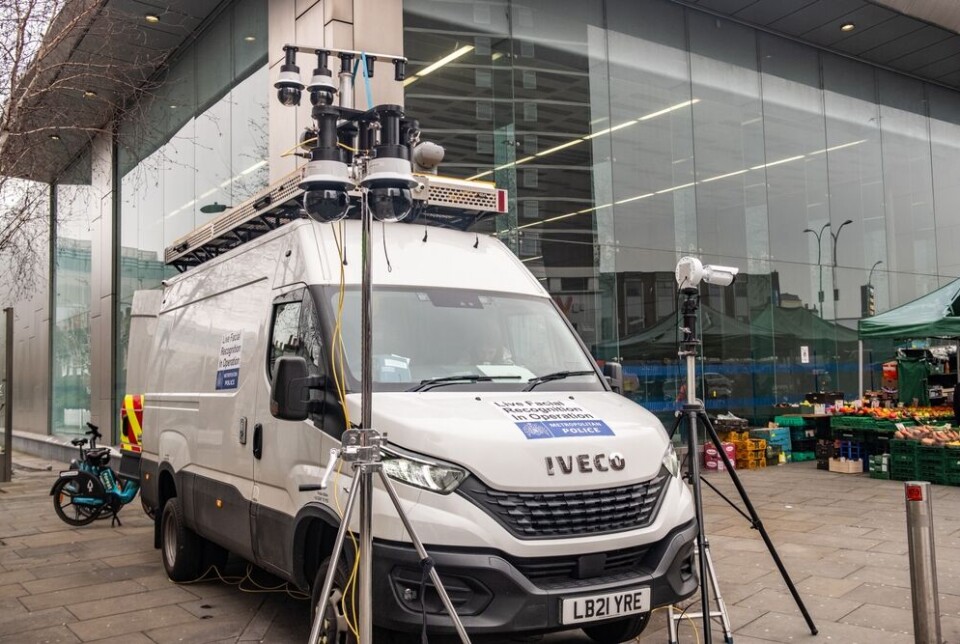
The Metropolitan Police Service (MPS) will start using static live facial recognition (LFR) cameras in London’s West End and Soho by the end of this year following a six-month pilot in the south London borough of Croydon.

Static LFR involves the police temporarily attaching cameras to lampposts or similar infrastructure, with the feeds monitored remotely and officers on the ground stopping people whom the technology matches to images on its watchlist. The MPS said that each of the 24 deployments in central Croydon between October 2025 and March 2026 used a bespoke watchlist created up to 24 hours in advance and deleted afterward.
Civil liberties campaign group Big Brother Watch, which in April lost a High Court challenge to police use of LFR, said the force was rushing ahead with deployment before Parliament has passed legislation regulating the technology’s use. “We are calling on the Met to stop this experiment until, at least, Parliament has spoken,” Jack Coulson, the group’s head of advocacy, said in a press release. “Policing by consent is a cultural inheritance we must protect. Permanent biometric surveillance of the public square is incompatible with that ideal.”
He highlighted the case of Alvi Choudhury, a Southampton man arrested and held for ten hours in January after a retrospective LFR system run by Thames Valley Police matched him to a crime committed in Milton Keynes, a city he had never visited. “It is predictable, given the technology’s racial bias, that Mr Choudhury was confused for another Asian man,” said Coulson.
The MPS said that in Croydon more than 470,000 people walked past the LFR cameras, leading to 173 arrests and one false alert, which resulted in officers stopping someone without arresting them, realizing the mistake, and letting them go. The force added that one of those arrested, a registered sex offender who was communicating with a child under 16, was subsequently sentenced to two years in prison in May for breaching a sexual harm prevention order and making indecent images of children.
MPS Commissioner Mark Rowley said on June 24 that the force planned to “significantly step up our use of technology to fundamentally change how we protect the public” through the use of live LFR, a city-wide emergency services drone network, and AI to analyze the footage from the capital’s one million CCTV cameras. Rowley added that the force needs to spend more on technology but its budgets for doing so have been repeatedly cut, with spending of around £6,000 per person compared with budgets of more than double that at some government agencies.
Earlier this month, the commissioner said the MPS would have to cut around 700 frontline posts after London’s deputy mayor for policing and crime, Kaya Comer-Schwartz, refused to approve its plan to award a major contract to controversial US supplier Palantir. ®


Irresistible force, meet immovable object. Tech leaders are under pressure to satisfy growing demand for AI while keeping a lid on costs.
That is becoming harder as Anthropic, OpenAI, and GitHub shift some services away from flat-rate subscriptions toward usage-based billing. Database vendors claim they can help by cutting the number of calls made to AI models and handling the new workloads generated by developer agents.
According to IDC research director Devin Pratt, “demand for the underlying capability is strong, because agentic adoption is already broad.”
Around 79 percent of organizations are either investing significantly in agentic AI with a set budget or already running agentic applications in production, according to IDC.
“The appetite for the data infrastructure beneath it is real,” Pratt said. “The open question is whether the specialists win or the capability gets absorbed into the platforms enterprises already run, much as it did with vector databases.”
Among the specialists taking on the omnipresent cloud platforms and their embedded data services is Pinecone. It carved out a niche as a vector database vendor for users wanting to put LLMs into production. Although that term became commonplace among mainstream database companies, Pinecone always argued it maintained a technical advantage for the biggest use cases.
Building on top of its vector database technology, the vendor has recently launched Nexus – a “knowledge engine, not a retrieval system” – and embedded it in Microsoft’s OneLake, a hybrid data lake and data warehouse environment.
Pinecone’s idea is that by compiling a knowledge base of an organization’s data structure and content, its technology can avoid burning through tokens back and forth between the data and AI agents. Nexus is designed to structure, contextualize, and compose specialized contexts – derived artifacts – in advance of agent demand.
Pinecone product veep Jeff Zhu told The Register the idea was to prevent agents from repeating the same work to understand the structure of business data and its context.
“All these coding agents, for example, are really good at doing a bunch of exploratory work if you ask them a question,” Zhu said. “It’s going to make a call, get the table schema, do some exploratory work, figure out what the top rows of this one table are, and ultimately it will eventually get to the right answer most of the time, but it’s going to burn through a bunch of tokens, because every single time it creates a specific answer to a question, it has to understand your business context and rediscover it every single time.”
Nexus provides a semantic layer of business data for a given use case or outcome. Imagine a finance analyst agent versus an HR agent: it is very possible they could use the same data, but they would want very different outcomes as a result, Zhu said.
“Our system is an engine that can support any number of use cases. Based on your particular use case, and the tasks that you want to accomplish, we use your data sources – which can be SQL databases, unstructured documents, PDFs, and so on – we build a task-specific context which is used for that individual agent’s job or role.”
IDC’s Pratt said that the hard part of agentic deployments has shifted from the model to the data plumbing around it. Agents reason continuously and act on live data, and the traditional split between operational stores, analytical warehouses, vector indexes, and the pipelines stitching them together was built for humans, not software running in loops. A recent IDC Data Management survey found that the two biggest data roadblocks IT leaders name for scaling generative and agentic AI are security and compliance constraints and cost. Fragmentation compounds it, with nearly two-thirds of organizations running 11 or more distinct database technologies.
Pratt said Pinecone is betting that retrieval as practiced today does not scale to agents and that, rather than have an agent rediscover and re-read raw content on every call, Nexus does the reasoning once, upstream, and stores reusable, task-specific context. The idea is credible, and the positioning is smart, moving Pinecone from a vector database to a knowledge layer. Its query language, KnowQL, also includes a budget primitive, and the platform gives a single dashboard for token usage and spend. By doing that work once rather than on every inference call, the design directly addresses one of IT leaders’ chief concerns: cost.
“What is interesting about Nexus is that it treats cost as a design constraint, not an afterthought, with a budget control and token accounting built into the query layer. That is exactly where IT leaders feel the pain,” Pratt said.
Changes in the wider tech landscape have previously forced new ways of looking at databases and related software. The market responded to the so-called Big Data problem – the staggering volume of information generated by mobile devices and web clickstream data – with Hadoop and Apache Spark. The former has largely been superseded; the latter is still very much with us. The demands consumers and businesses place on globally scaled web systems prompted a generation of NoSQL databases like Couchbase, Cassandra, and MongoDB, as well as new distributed relational databases.
Another database vendor hoping to help tech teams manage the escalating costs of deploying AI agents is Tiger Data, the company behind the PostgreSQL time-series database TimescaleDB. It has built Ghost, a technology designed specifically for developers working with AI agents.
The company argues that agents helping build software experiment constantly and need isolation to do it safely. When an agent fails, the blast radius should be one database, not a shared environment that other agents and humans depend on. The Ghost platform offers instant PostgreSQL databases with fast forking, which agents can access through the Ghost CLI or MCP server. It comes with a terabyte of free storage.
Ajay Kulkarni, co-founder and CEO of Tiger Data, told The Register the company had also adopted a new database charging model better suited to AI agents, which typically produce spikes and falls in demand.
“Instead of being packaged at the traditional database level, we provide usage-based pricing at the compute-hour level, so no matter how many databases you have – it could be one, it could be 50 – it’ll cost the same, and you’ll just be metered by how many compute hours you consume,” Kulkarni said.
Tiger Data offers a free tier with 100 compute-hours per month. Users can pay for additional usage in 15-minute active windows. “That really allows for experimentation and allows for this idea of multiple databases, with every agent getting its own database, because you’re not paying on that dimension, you’re paying on the compute-hour dimension,” he said.
IDC’s Pratt said Ghost solves a different but equally concrete problem. It gives each agent or task its own disposable PostgreSQL database, allowing an agent to branch a dataset in seconds and discard it afterward. Because billing is based on usage rather than the number of databases, Tiger Data offers a practical way for organizations to stay with PostgreSQL. However, many Postgres vendors are racing toward the same capability.
“Ghost is the most pragmatic of these. It hands each agent a throwaway PostgreSQL workspace to experiment in without risking production, and by staying on PostgreSQL it asks IT teams to learn almost nothing new,” he said.
Pratt argued that agent-ready data infrastructure is turning into its own category, and the platform vendors are the ones to watch. On the context and vector side, Pinecone competes with companies such as Weaviate and Qdrant, as well as the pgvector ecosystem inside every Postgres distribution. On the agent workspace side, Tiger Data’s Ghost sits alongside Neon, now owned by Databricks, and Supabase.
Bigger platform vendors such as Snowflake, Oracle, and Microsoft are also absorbing these capabilities into the stacks customers know well.
“The independents are defining these categories, but watch the platform vendors. Most organizations tell us they expect to do their vector work inside the database or lakehouse they already run, not in a separate specialist tool,” Pratt said.
Aaron Rosenbaum, Gartner senior director analyst, said that building this context layer is critical for both token efficiency and better answers. “We’ve seen significant development across the industry; Snowflake introduced Horizon Context; Databricks introduced Genie Ontology, and we will see significant growth in the quality and depth of new tools introduced throughout the year. While most of the leading data platform vendors have their own solution, there will be enterprises that look for solutions independent of those platforms that Pinecone Nexus can address,” he said.
He also noted that there was a string of vendors examining the different DBMS workloads created by agents compared with those created by humans.
“It’s driving new innovation across the industry right now,” Rosenbaum said.
As technology leaders try to negotiate better deals with AI providers to keep costs down, they can also look to their data platforms to ease the financial burden created by the often-unmanaged surge in demand from AI workloads.
“There are many options available today from all the major providers, and no clear leader has emerged. History has shown that the established DBMS vendors have been very agile at supporting new workloads, and it’s likely that will continue,” Rosenbaum said. ®

alternative_right shares a report from ScienceAlert: If you consumed a wild mushroom and suddenly started seeing tiny people around you, you might reasonably assume it contained a familiar psychedelic. But that does not appear to be the case with Lanmaoa asiatica, known locally as jian shou qing, a mushroom species sold in markets in Yunnan, southwestern China. When eaten undercooked, the mushroom can produce vivid visions of miniature people — not unlike Gulliver on his travels to Lilliput. To try and find out the root cause, University of Utah mycologists Colin Domnauer and Bryn Dentinger sequenced the genomes of 53 mushroom samples from across the wider Lanmaoa genus. And despite the reported hallucinations, they found no close matches to genes associated with psilocybin or ibotenic acid, two well-known mushroom hallucinogens whose biosynthetic pathways were specifically examined in the study.
“Biosynthetic gene mining of the L. asiatica genome found no close hits with any genes known in the production of mushroom psychoactive compounds,” write the researchers in their published paper. “This supports our hypothesis of the presence of a novel unidentified metabolite responsible for the unique hallucinogenic properties of L. asiatica.” […] Whatever chemical pathways are causing these effects in the brain, the responsible compound appears to be something scientists have not yet identified. […] By identifying 1,515 corresponding genes across the selected specimens, the researchers obtained a clearer answer to the question of what defines a mushroom species as part of the genus Lanmaoa. There are now 17 recognized species in the genus, including four that haven’t been identified before, two of which the researchers specifically named here: Lanmaoa fallax and Lanmaoa carbonilivor. The researchers say the Lanmaoa family and evolutionary tree can now be more fully mapped out, and some existing specimens may need to be reclassified.




Weekend Open Thread: Miami – Corporette.com


Renter of Home in Anne Heche Crash Denies Settlement With Son


Microsoft accidentally kills epic Outlook email threads

Two goals and an assist by sheer aura: Cristiano Ronaldo just entered the World Cup chat


Soccer-U.S. defends Iran World Cup travel restrictions, says discussions ongoing
Bitcoin (BTC) Dips Below $62K, Ethereum (ETH) Plunges 6% Daily: Market Watch


BBC Reporter Discusses Cross Party Criticism Of Trumps Iran Deal


Securitize Wraps Roubini's SEC-Registered ETF as Dubai VARA Digital Security
Entergy settles forward sale agreements, raises $672 million in cash proceeds

Wall Street Week Ahead: Investors see Micron earnings as pulse check of AI rally momentum


Andy Burnham and the meaning of Makerfield


AWS enters the context layer race with a graph that learns from agents, not manual curation

Can Charles Hoskinson Really Rescue Cardano?


HIVE shares jump as $220M AI deal speeds Bitcoin mining pivot


Keir Starmer Allies Question His Chances For No 10


Jake Chervinsky accuses CME of protecting derivatives monopoly


Nearly 7,000 fake Amazon domains registered ahead of Prime Day 2026, researchers warn

Signal’s Meredith Whittaker says AI chatbots ‘are not your friends’ and calls Copilot agents a backdoor


Brexit cost 6% of UK economy, Bank of England company data suggests


FIFA World Cup 2026: Canada beat 9-men Qatar 6-0 to register first ever win | FIFA World Cup 2026


You must be logged in to post a comment Login