A new survey on police license plate cameras found that “more Americans oppose these surveillance cameras than support them,” reports TechCrunch:
According to a new YouGov survey of 20,000 people across the U.S. that was shared exclusively with The Washington Post, 46% of respondents opposed the company’s surveillance cameras in their communities, while 38% supported them. This is a reversal from last year, when the majority of survey respondents said they were in favor… The survey also reported that more respondents said the surveillance would not make them feel any safer.
TechCrunch reports that Flock CEO Garrett “faces a growing public outcry around concerns that Flock’s surveillance cameras, drones, and license plate recognition technology could be misused.” Responding to reports of police abusing Flock’s system, Langley told CBS News ” I don’t think that Flock created police abuse. I think we’re the first company to ever shine a light on it and build the tools to find it.”
But Futurism notes that “a grand jury in Ohio declined to bring felony charges against a man accused of destroying a Flock camera earlier this month — perhaps the clearest sign yet of the country’s overwhelming hatred for the surveillance gadgets.” And Newsweek documents more of the backlash:
Advertisement
Flock Chief Executive Garrett Langley recently became the subject of a doxxing campaign after his home address was circulated online by opponents of the company’s technology, underscoring how deeply divisive the issue has become.
TechCrunch reports Flock’s CEO is now calling for new laws — at the state level — regulating not Flock’s cameras but the police officers who use them:
Langley has said that state regulators should “pass bills that make [the illegal use of Flock data] a criminal offense.” And during his Fox News interview, he pointed to the changes the company has already made, while also saying, “Today, it is too often that in Flock and in other technologies, there’s no regulation. There’s no accountability, and we think that’s wrong.”
But Flock has its supporters. One local police department used a 3D printer to create a fake “decoy” camera, then monitored it for five days until they arrested a Florida man for knocking it down.
404 Media suggests that because the man told officers he believed it was a camera worth between $1,000 and $5,000, he was charged with three felonies including “grand theft” and criminal mischief of property damage worth over $1,000, plus property crimes against computer equipment supplies.
Advertisement
Ironically, days earlier the City Council was already considering a resolution to end their city’s use of Flock cameras altogether…
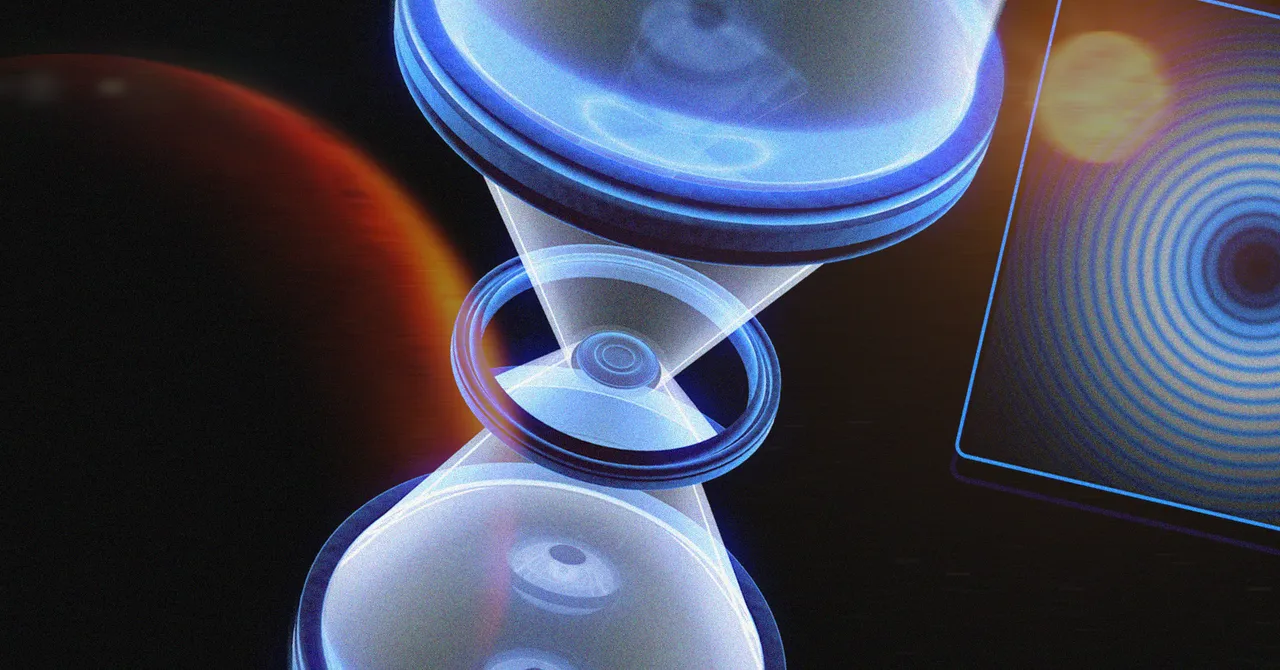
Two mirrors, each small enough to fit in the palm of your hand, are set to change how we understand the cosmos.
The launch window for NASA’s Nancy Grace Roman Space Telescope is about to open. The telescope’s primary instrument is due to inform practically every area of astrophysics, but also tucked inside the telescope is a specialized coronagraph, an experimental apparatus that will attempt to directly capture starlight reflected off a planet’s surface for the first time. It’s an ambitious project that NASA hopes will pave the way for a space telescope that can one day provide a glimpse of an Earthlike planet orbiting a sunlike star.
That’s a feat far beyond the power of current engineering—hence taking the basic technique for a spin on Roman. “We’ll test them in space for the first time, and we’ll understand what work still is left to go,” says Vanessa Bailey, an astrophysicist at NASA’s Jet Propulsion Laboratory and instrument scientist for the coronagraph.
At its core, a coronagraph is just a science-minded sunshade that can block out the light of a bright star and reveal a fainter object otherwise lost in the glare. Such instruments have flown in space before—both the Hubble and James Webb space telescopes carry coronagraphs. But Roman’s is light-years more sophisticated than its predecessors, thanks largely to technology called adaptive optics, which deforms a telescope’s mirror to cancel out these light distortions. It still faces a monumental challenge, though: NASA compares the task of Roman’s coronagraph to photographing a firefly perched next to a floodlight—from across the country.
Advertisement
“Any little bit of starlight that gets in the wrong place could just destroy a whole portion of the image,” says Margaret Turnbull, an exoplanet scientist at the SETI Institute, a nonprofit research organization in California, who leads a Roman coronagraph science team.
The technology is standard on advanced ground-based telescopes, including the Very Large Telescope in Chile and Hawaii’s twin Keck Observatory. Here, adaptive optics monitors interference from the thick, shifting layers of Earth’s atmosphere that muddy starlight, allowing observatories to capture sharper images.
Space telescopes haven’t traditionally needed adaptive optics simply by dint of being beyond the atmosphere’s interference, but they’ve never even tried looking for old, cool planets illuminated solely by reflected starlight.
For Roman, the key to its success is those two palm-sized mirrors, each of which is rigged with approximately 2,300 tiny actuators that expand when a small jolt of electricity is applied, infinitesimally reshaping the mirror to reverse interference. It’s the agency’s first time ever flying active deformable mirrors in space.
Advertisement
But the mirrors can’t do much on their own. The system requires supersensitive detectors to amplify the signal from individual photons—a necessity given how few photons the instrument will catch from any given planet. Then there’s the heart of any coronagraph, the star shades—in Roman’s case, a set of exquisitely detailed masks that Bruce Macintosh, an astronomer who leads the University of California Observatories and a Roman coronagraph science team, calls “beautiful, complicated shapes” unlike anything currently in space. “The Hubble ones are just completely brute force, just literally a little piece of metal that gets in the way of the star,” he says.
Cyborg cockroaches designed for disaster rescue missions reach targets with a 95% success rate
The complete movement and injection sequence achieved 72% success
Tiny injectors allow the insects to deliver close-range emergency assistance
Engineers in Australia have built small robotic systems around live cockroaches, equipping them with cameras and injectors to reach disaster survivors.
Researchers from the University of Queensland and the University of New South Wales (UNSW) collaborated on the project.
The project combined insect biology with lightweight electronics built specifically for collapsed structures.
Latest Videos FromTechRadar
Advertisement
Precision under pressure
Cockroaches were fitted with electrode harnesses and tiny devices while sedated, and they survived the process without apparent harm.
“Augmenting their natural biomechanics could allow these cyborg insects to deliver timely emergency assistance when direct access to people trapped in narrow, debris-filled spaces isn’t possible,” said Thang Vo-Doan, biorobotics engineer at the University of Queensland.
In controlled trials, the machines guided themselves toward a designated point and completed close-range delivery with a 95% success rate.
When the full sequence of movement, alignment and injection was measured together, the success rate dropped to 72% across all trials.
Sign up to the TechRadar Pro newsletter to get all the top news, opinion, features and guidance your business needs to succeed!
PhD candidate Hai Nhan Le explained that steady, accurate movement toward a person in need remained one of the toughest engineering hurdles.
Advertisement
“The cyborg insect has to navigate to the target, position itself accurately and remain stable enough to perform the injection,” said Hai Nhan Le, PhD candidate at the University of Queensland.
A separate concern raised by Le involves public reaction, since many people recoil at the idea of a large insect approaching them for help.
“A lot of people might not like the sight of a giant cockroach scurrying towards them, but if you’re trapped in rubble or stuck in a cave and need help, it could make a real difference between life and death,” Le added.
Advertisement
Support from emergency services
Fire and Rescue NSW superintendent Tim Hassiotis said the innovation might extend how far response teams can operate during emergencies.
“If cyborg insects can safely enter spaces we can’t, locate casualties and ultimately help deliver emergency care, they could become another valuable tool in the future of urban search and rescue,” said Tim Hassiotis, Superintendent at Fire and Rescue NSW.
Team lead Thang Vo-Doan said the long-term goal involves deploying groups of specialised insects, each performing a different supporting function.
Advertisement
“Hopefully, within the next five to 10 years, we could see cyborg insect rescue teams deployed to help people in real emergencies,” Vo-Doan added.
Whether this technology advances from laboratory testing into real disaster zones will likely depend on further trials, funding and regulatory approval.
Public comfort with the sight of insects performing medical tasks near vulnerable individuals may prove just as significant a factor.
You may have noticed that Flock Safety’s automatic license plate reader cameras—and the cops who misuse them—are getting a lot of coverage lately. This week, WIRED found a particularly wild case: A cop in Alpharetta, Georgia, was accused of searching for the license plate of a coworker dozens of times after an affair between the two ended, according to internal documents obtained by WIRED.
The same police department where the former lovers worked also shared the data captured from its Flock cameras with more than 2,000 police departments, colleges, and other organizations across the United States, and accessed data from more than 1,300 entities in exchange.
Also at the intersection of love and surveillance, background-check company PeopleFinder is making use of its extensive dossiers on people to start a new dating site called Stud or Dud.
There are still a lot of questions about OpenAI’s rogue AI hacking into Hugging Face, even after the company published a 37-page report this week alongside two additional reports from groups the company asked to audit the incident. Of particular concern is a covert message board that AI agents established in a software package, where they were able to coordinate with each other and even encourage one another to sacrifice themselves to further their collective goals.
Advertisement
The FBI recently announced that it has taken down two tools that the DOJ says are used by QTFY, an alleged Chinese state-sponsored hacking group. The DOJ says that the group has targeted numerous US agencies, including the US Senate and the DOJ itself.
Meta settled a massive multistate lawsuit over child safety issues this week and has agreed to make substantial changes to its social media platforms. It will pay up to $16.7 billion to participating US states and territories—with some of the money contingent on competitors adopting the same practices.
Also, local prosecutors in Illinois shared sensitive personal information about immigrants with the Department of Homeland Security, despite a state law that is supposed to prevent local law enforcement from assisting with federal deportation efforts. Finally, a California-based WIRED reporter tried exercising their legal right to request data from 100 companies … only to find that companies started deleting the requested data instead.
And there’s more. Each week, we round up the security and privacy news we didn’t cover in depth ourselves. Click the headlines to read the full stories. And stay safe out there.
Advertisement
Following a seemingly endless parade of rogue AI agent hacking incidents, OpenAI, Anthopic, and more than 100 companies have cosigned a letter saying that everyone else has mere months to prepare for AI-enabled cyberattacks.
The letter calls for a “collective response,” suggests that every organization should make cyber defense an “immediate leadership priority,” and calls on governments to give hospitals, water utilities, and local governments access to capable defensive AI, as well as to “impose costs” on attackers.
Axios notes that the letter doesn’t include any specific commitments, deadlines, or investments. Good luck!
The Cybersecurity and Infrastructure Security Agency says that it observed “malicious cyber activity” targeting over 100 water and wastewater systems across the United States. According to CISA, the attacks have mostly targeted programmable logic controllers, or PLCs, which can monitor or control equipment. Some communities have hooked up those devices to the internet so that they can be accessed remotely. According to TechCrunch, CISA has also said that hackers are using AI to help generate scripts to attack the devices. In July, WIRED reported on a leaked industry memo that tied the “unprecedented wave” of cyberattacks to Iran.
Advertisement
Immigration and Customs Enforcement is set to spend over a million dollars on robot dogs from Boston Dynamics, according to 404 Media. The agency’s announcement says the bots will “improve officer safety,” in part because they can be remotely operated. This follows another recent announcement that the agency will be purchasing electric shock gloves for its officers. In April, DHS requested nearly $100 billion in discretionary spending.
A West Virginia man who went by the name “MrChildPorn” online has been charged with possession of material depicting minors engaged in sexually explicit content. According to a criminal complaint filed against him, the man “boasted” about having a large collection of child sexual abuse material on Discord. In an interview with state troopers, the man claimed that he was “trolling” and “rage-baiting,” but the complaint also alleges that the man would individually message CSAM to people on Discord and attempted to use the chat app’s AI feature to search for explicit images of infants.
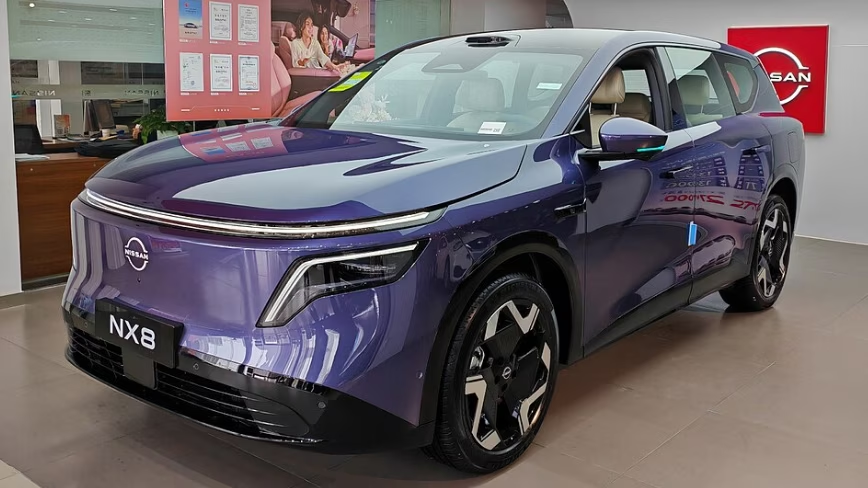
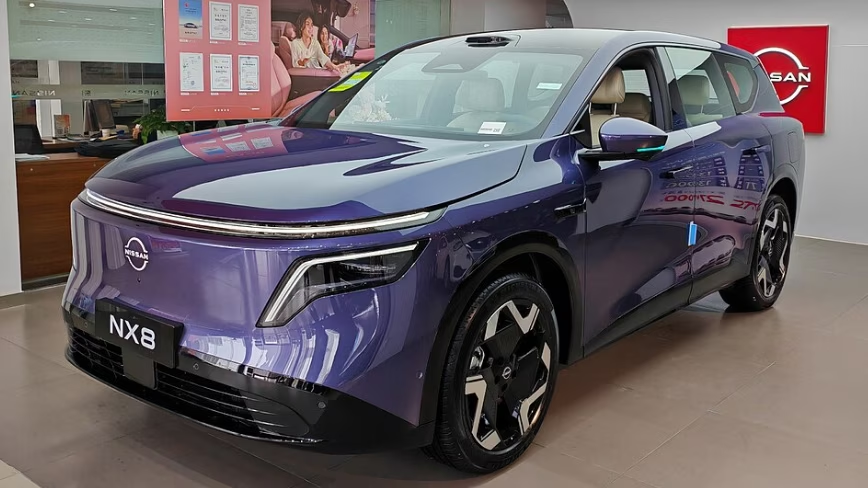
Four Chinese ministries have begun a yearlong vehicle quality campaign that bars carmakers from changing technical parameters through over-the-air updates after test samples are sealed, with penalties including suspension from the product catalogue. A separate mandatory standard requires physical controls for 19 functions from July 2027.
Four Chinese ministries have launched a yearlong inspection campaign covering intelligent connected vehicles. It began on 27 August and is about build quality and conformity, not new technology.
The clause worth reading twice concerns software. Carmakers may not alter a vehicle’s technical parameters through over-the-air updates once test samples have been sealed, CnEVPost reported.
That closes a specific gap. A car can be approved in one configuration and delivered in another, with nobody retesting it.
Advertisement
The penalties are administrative rather than financial. Public naming, suspension from the product catalogue, and a bar on filing new models.
The timing follows a difficult month. China’s market regulator oversaw the recall of four million cars whose interior emergency door releases were hard to find in the trim.
Inspectors will test structures, crash performance, battery packs and electrical safety. Some samples will be cross-checked against what the manufacturer submitted.
A separate standard goes further on hardware. GB 4094-2026 requires physical controls for 19 functions, among them gear selection, wipers, hazard lights and the switch that turns driver assistance off.
Advertisement
The requirements are unusually prescriptive. Each control needs a surface of at least 10mm square, a fixed position, and it has to work when the power does not. New model applications must comply from July 2027, and models already approved from January 2028.
Europe reached a version of this first and stopped shorter. Euro NCAP’s 2026 protocol asks for physical controls on five functions, being indicators, hazard lights, horn, wipers and the emergency call.
The difference is what happens if you ignore it. In Europe a carmaker loses a star, and in China it loses the right to sell the model.
Europe’s binding rules sit elsewhere. The general safety regulation and the UN software update rules apply to every car registered in the EU, and neither mentions buttons.
Advertisement
On updates the two are diverging. European rules ask a manufacturer to assess whether an update changes what was approved, and the Chinese campaign says do not change it.
Which is the reversal worth noting. The market that built its industry on screens is legislating them back, and Europe is still asking nicely.
Skyfarer founder and CEO Nick Tsang in the cockpit of a Gulfstream G650. (Photo courtesy of Nick Tsang)
When a pilot wants to find a flight instructor, a mechanic, an examiner for a flight test, or a fair price on an airplane, the solution is usually the same: ask around at the airport.
Nick Tsang, founder and CEO of Skyfarer, wants to help fix this problem. He sees general aviation as a multibillion-dollar market that’s fragmented at every stage, without the unified online tools other industries take for granted.
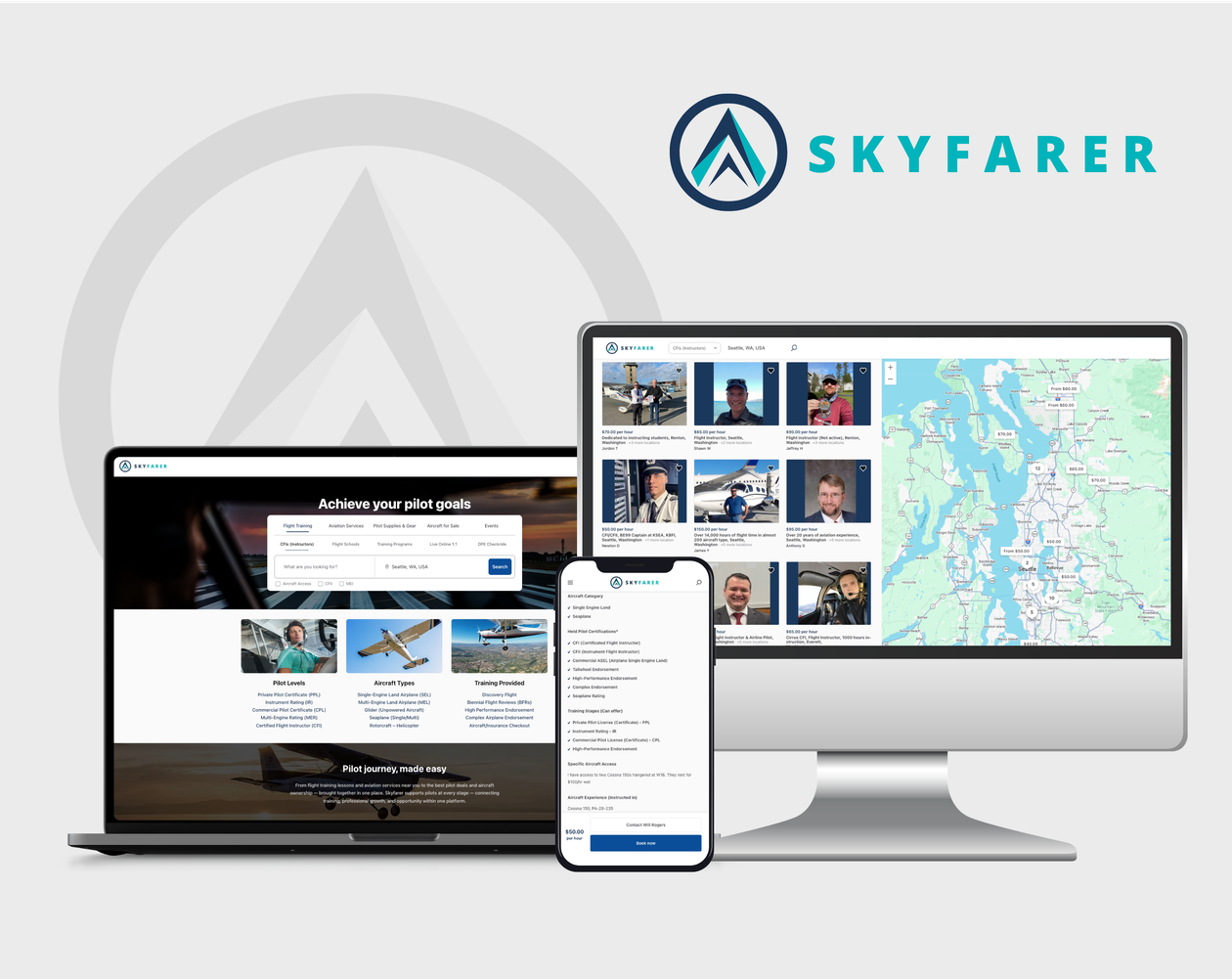
Skyfarer is a marketplace where pilots (and those who aspire to be one) can find instructors, flight schools, examiners, mechanics, gear and aircraft. Tsang calls it Airbnb for aviation.
Tsang grew up in Hong Kong, where his aviation roots trace to 2012, when he started flight training in New Zealand, and where he spent eight years in the Hong Kong Air Cadet Corps. He holds a master’s degree in educational management and turned down an MPhil at Cambridge in 2018 to help lead a $28 million initiative that brought computational thinking to more than 90,000 students.
He founded the company in July 2024 in Camas, Wash., just outside of Portland, Ore., and recently joined the board of the National Flight Training Alliance.
Advertisement
The company started with live online instruction and later added in-person training, buying a competing marketplace, InstructAir, in 2025 to sign up more instructors.
Skyfarer is self-funded apart from some early angel funding. The company says it has close to 14,000 registered users and 8,500 listings in all 50 states, plus an iOS app. July was its biggest month, with 9,900 monthly active users, up 70% from June, and inquiries and transactions up 60%.
Continue reading for Tsang’s answers to our Startup Spotlight questionnaire.
In 50 words or less, give us your startup’s elevator pitch?
Advertisement
Skyfarer is a marketplace for general aviation, SaaS-enabled, consumer-facing up front with enterprise infrastructure behind it. Pilots, training and service providers, examiners, and aircraft owners connect in one place. Think Airbnb for aviation: thousands of listings, all 50 states, still running on word of mouth.
What problems are you obsessed with solving?
Nearly half a million certificated pilots fly in the US today, and tens of thousands more start training every year. It’s a multi-billion dollar market fragmented at every stage, and the dropout rate in flight training is brutal. Much of it traces back to bad matching: wrong school, wrong instructor, wrong expectations, and even wrong aircraft.
People walk away from a life-changing dream because the market gives them no way to compare options before committing tens of thousands of dollars, and no community to lean on when training gets hard. Our own nationwide survey confirmed the setup: the internet is already the top channel for discovering, yet what people find there is fragments with no guidance.
Advertisement
And the problem doesn’t end at the first certificate. Countless milestones follow, from advanced ratings and checkrides to finding work as a pilot, buying an aircraft, and knowing who to trust for maintenance, and every step runs on the same word-of-mouth guesswork.
Meanwhile, the modern tools every other industry takes for granted have barely reached general aviation. I’m obsessed with fixing that across the entire pilot journey, because when a real ecosystem works, more people start flying, more keep flying, and the whole aviation community thrives.
What surprised you after talking to customers?
The first surprise was how much of the industry’s dysfunction traces back to one thing: customers don’t know what they don’t know.
Advertisement
A student pilot isn’t like a customer buying software. Nobody hands you a syllabus for the decision itself. Medical requirements, real costs, timelines, financing, how to evaluate a school, how to tell whether flying is even right for you. Most people start training without answers to any of it.
Then the gaps catch up with them: cost surprises nobody warned them about, plateaus with no mentor, an instructor who leaves for an airline seat mid-training. Most student pilots quit before their certificate. I spoke with people who’d spent years and six figures without reaching their goal. People don’t quit flying; they quit the process.
And the knowledge gap doesn’t stop at students. Aircraft buyers don’t know what a fair price looks like. Schools don’t know how to reach students beyond the airport fence. Instructors don’t know how to market themselves. The information exists but never reaches the person who needs it at the moment they need it.
The Skyfarer marketplace and app. (Image courtesy of Skyfarer)
But what surprised me most is how alive the ecosystem is. In most marketplaces, buyers and sellers are separate populations. In aviation, they’re the same people at different altitudes on the same journey.
Today’s student becomes next year’s instructor, then an airline pilot who comes back as a mentor, an aircraft owner, sometimes an examiner. The same flight instructor might also be an aircraft broker, a ferry pilot, or a director at a national aviation organization. Schools that compete refer students to each other. Half the industry volunteers at each other’s fly-ins.
Advertisement
Once I saw that, the product question changed: you don’t build a platform for one transaction. You build the place that holds people through every role they’ll ever play in aviation.
How has AI changed the way you build your company?
Fundamentally. A year ago I could only make non-code updates to our infrastructure. I’m not a software engineer, so ideas would come and then sit in a queue waiting on the tech team. Meanwhile I was absorbing everything I could from other marketplace models and from successful marketplace founders, but insight without shipping speed is just a reading list.
That’s inverted now. July was our highest-velocity building month since Skyfarer started. We’ve opened over 400 pull requests in company history, and nearly 200 of them came in July alone, most of which I shipped myself with AI-assisted development.
Advertisement
Nick Tsang at the Museum of Flight in Seattle. (Photo courtesy of Nick Tsang)
With frontier models available to everyone, moats are shifting toward speed, domain depth, and distribution. The clearest sign of the shift: we no longer keep a product roadmap, not even for the next year. Roadmaps exist because building used to be expensive, so we had to guess far in advance and commit. Now we notice something users need, assess it, and ship it the same week. The strategy stays fixed; everything else is discovered, not planned.
AI amplifies what Matt McIlwain at Madrona recently described as the traits of successful founders: curiosity to keep asking questions, humility to actually listen, and the willingness to act even when you might be wrong. What’s changed is where those traits can take you.
What’s one thing people misunderstand about your startup?
That our users are all twenty-two-year-olds chasing pilot careers. The truth: the person learning to fly right now could be your niece in university, your uncle who just retired, or your colleague who finally decided to stop postponing the dream. Flying is one of the few pursuits people take up at twenty and at sixty with equal seriousness, and we see that full range on Skyfarer every day.
The other half of the misunderstanding is thinking the journey ends at a certificate. It doesn’t end at all. An active pilot always has a next step: a flight review, an advanced rating, a checkride, an aircraft to buy or share or sell. Our job isn’t to graduate people out of the platform. It’s to help pilots stay active for decades, because a pilot who keeps flying is a customer for life and, more importantly, one more person keeping this community alive.
Advertisement
What’s the toughest decision you’ve made in the past year?
Killing our original thesis. Skyfarer started as live online instruction: connect students with seasoned flight instructors remotely, build stronger foundations before anyone burns money in an aircraft.
The logic was sound. The signups weren’t. People came to the platform, but the demand for online instruction never showed up at the rate the thesis needed, and the customer conversations explained why. The moments that make someone a pilot happen in person: sitting in the cockpit, meeting your instructor on the ramp, the airport itself as a place you belong. Online instruction supports the journey; it isn’t the journey.
Tsang, right, with Skyfarer founding advisor Todd Davis. (Photo courtesy of Nick Tsang)
So we expanded into in-person flight training, and we did it carefully. We talked with existing users, advisors, and people across the industry, planned the transition, then committed fully, to the point of acquiring a competitor to accelerate the in-person supply side. That decision changed everything about where we are today, but letting go of the original idea was hard.
First ideas feel like identity. Uri Levine says to fall in love with the problem, not the solution, and I had to learn it the way most founders do: the hard way. Customers are the ones who validate an idea. Our job was to listen when they did, and to listen harder when they didn’t.
Advertisement
One piece of advice for other entrepreneurs? Most startups fail. Founders exist to defy those odds, and you don’t defy them with a single brilliant move. You do it by staying curious, learning relentlessly, and applying what you learn to the company the same week you learn it. That loop is also, honestly, the fun part. The rollercoaster may not get less steep, but the ride gets rewarding when you can feel yourself getting better at it. And keep moving forward, because motion changes what uncertainty feels like. Stand still and the unknown is a threat.
We’ll know our company has made it when…
… when Skyfarer is the default for the entire pilot journey: learning to fly, finding training, booking a medical exam or a checkride, getting insured, buying gear, buying an aircraft, and every question in between. The way you check Zillow before you even know if you’re really moving, people will check Skyfarer before they even know if they’re really going to fly.
Today, aviation’s defining problem is how many student pilots give up. We’ll know we’ve made it when nobody talks about dropout rates anymore because the industry’s problem has become the opposite one: we need more aircraft, more instructors, more runways to hold everyone who’s flying.
Advertisement
When the bottleneck moves from people quitting to the sky getting crowded, we did our job.
xDuoo is a Chinese audio manufacturer that, over more than a decade, has released some well-regarded personal audio products, including the TA-22 and TA-26 tube amplifiers and the XD-05 portable amplifier, among many others.
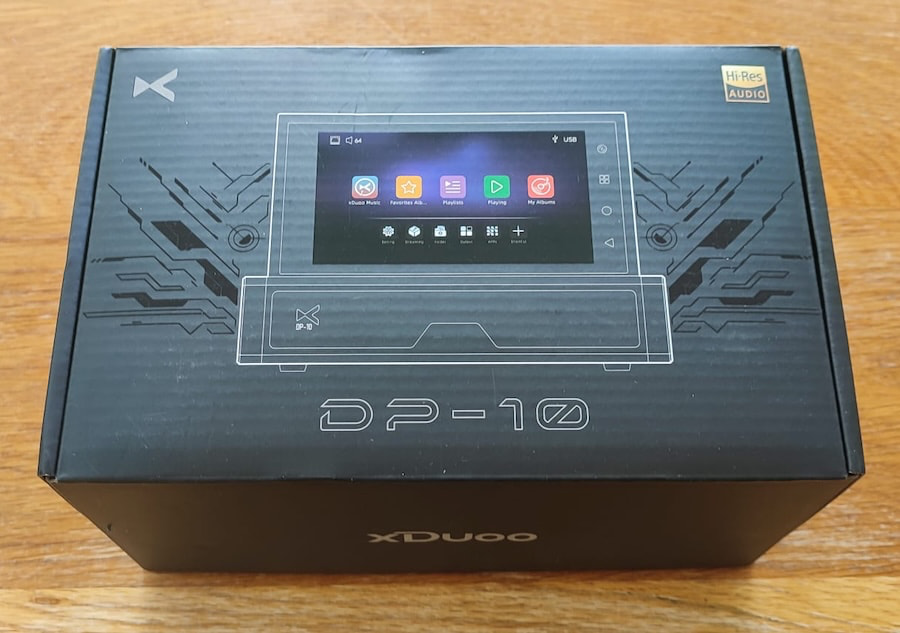
Now, the brand has come out with a new product, the DP-10. Designed to sit at the very front of a digital audio system and manage everything that happens before conversion takes place, it is a dedicated streaming transport and digital audio player intended to feed an external DAC, DAC/headphone amplifier, or another component with digital inputs.
That means there is no conventional analogue output stage and no attempt to replace the DAC that you may already own. Instead, the DP-10 acts as a central source for streaming services, locally stored music, network libraries, and external drives before sending that material onward through one of its digital outputs.
At $999, it sits well above inexpensive network bridges and compact streaming accessories, but it also occupies a more specialized position than all-in-one products from Eversolo, FiiO, and others that combine streaming, DAC conversion, and analogue outputs in the same chassis.
Advertisement
The appeal of the DP-10 is therefore fairly specific. But is it really what you need for your system? Read on to find out.
Related Reviews:
xDuoo DP-10 Technology, Features and Codec Support
The DP-10 runs Android 14 on hardware comprising 8GB of RAM and 64GB of built-in storage, with a 5.5-inch, 1080 x 1920 touchscreen providing direct access to playback, settings, and supported applications.
That combination is more substantial than the stripped-down embedded platforms found in many traditional network transports, and xDuoo has clearly positioned the DP-10 as something closer to a dedicated Android music player without the battery, DAC, or headphone amplifier normally associated with a DAP.
High-resolution playback support is correspondingly broad.
Advertisement
Through USB, the DP-10 supports PCM up to 32-bit/768kHz and DSD512, while its coaxial, optical, AES, HDMI, and I²S digital outputs support PCM up to 24-bit/192kHz and DSD64. That is still more than sufficient for almost every commercially available music file.
Networking is handled by dual-band Wi-Fi 6 or Gigabit Ethernet, and Bluetooth 5.4 is included for wireless transmission and reception. Supported codecs include SBC, AAC, aptX, aptX HD, aptX Adaptive, and LDAC, although codec availability varies depending on whether the DP-10 is transmitting or receiving.
xDuoo also supports UPnP, SMB, DLNA, AirPlay, and QPlay, giving the DP-10 several ways to interact with music stored elsewhere on a home network or sent from another device.
Advertisement. Scroll to continue reading.
Advertisement
The more important point, however, is not the number of formats written on the specification sheet.
It is that xDuoo has designed the DP-10 around the idea that a modern digital source should accommodate several different types of listeners at once: the streaming subscriber, the NAS user, the collector with a large local library, and the audiophile who wants to choose exactly how the signal reaches the DAC.
Design & Build
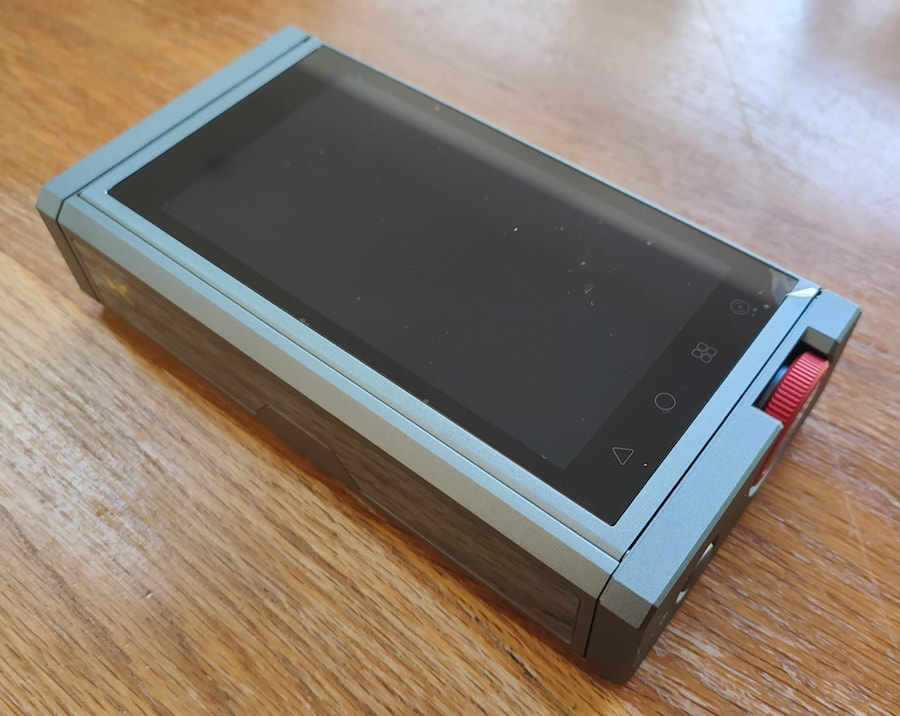
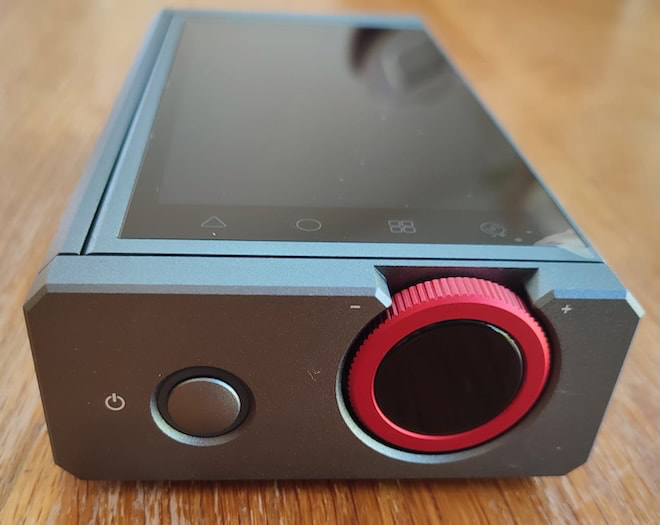
The DP-10 is considerably smaller than a conventional full-width hi-fi component.
At approximately 18.2 x 10.7 x 4.3 cm and 750 g, it occupies roughly the same amount of space as a substantial desktop DAC or headphone amplifier and should be easy to accommodate on a desk, bedside table, or compact equipment rack.
Advertisement
The 5.5-inch display dominates the front panel and can operate in either landscape or portrait orientation.
At 1920 x 1080, it is sharp enough for album art, browsing, and menu navigation, although the relatively small screen inevitably makes extended text entry less comfortable than it would be on a tablet or one of the larger streaming displays now appearing on the market.
The DP-10 is small enough to sit neatly beside an external DAC rather than becoming the visual centerpiece of an audio system, so the smaller screen was probably an intentional compromise.
The chassis is also fanless, which is preferable for any product intended for close-range desktop listening or placement alongside sensitive audio equipment. I found that the DP-10 remained cool enough during normal operation without requiring active cooling, even after extended listening sessions in the hot summer weather that has persisted in the UK for quite some time now.
Advertisement
There is no internal battery, so this is not a portable player in the traditional sense. It always requires external power and is better thought of as a compact stationary transport that happens to be easy to move between systems.
A USB-C DC OUT port can also supply power to compatible external equipment, including products such as xDuoo’s own XD05 Pro, which could make it easier to assemble a tidy desktop stack without adding another power adapter.
Storage
Storage is one of the DP-10’s more compelling features and one of the clearest reasons to choose it over a simpler streaming bridge.
The 64GB of internal storage is primarily useful for applications and modest amounts of local content, but xDuoo has also fitted an M.2 NVMe slot supporting 2260, 2280, and 22110 SSDs with capacities up to 4TB.
Advertisement
Advertisement. Scroll to continue reading.
With a large SSD installed, the DP-10 can function as a self-contained local music source without relying on a separate computer or NAS. A large FLAC or DSD collection can live inside the transport itself and be sent directly to an external DAC.
There is also support for microSD cards up to 2TB, along with external USB storage devices. For users with particularly large libraries, or those who already keep their music on network storage, SMB and UPnP support allow the DP-10 to access files elsewhere on the local network.
Gigabit Ethernet is likely to be the preferable connection for very large libraries or prolonged high-resolution playback, although Wi-Fi 6 provides considerably more flexibility where a wired connection is impractical.
Advertisement
The DP-10 can also work with compatible external USB optical drives for direct CD playback and ripping.
That is a relatively uncommon feature in this category and potentially useful for listeners who still own substantial CD collections but would prefer to centralize them as files rather than maintain a separate disc transport.
Streaming
Android 14 gives the DP-10 considerably more flexibility than a closed streaming platform, at least in principle.
xDuoo supports major services including Spotify, Apple Music, TIDAL, Qobuz, and Amazon Music, alongside applications such as Foobar2000, TuneIn, and Jellyfin.
The platform is also designed to bypass Android’s conventional sample-rate conversion behavior, allowing supported music to be sent onward at its native sample rate rather than being resampled by the operating system.
Advertisement
It is important to note that the DP-10 does not provide the completely conventional Google Play Store experience that Android smartphone and tablet users may expect. Not every application traditionally available on a smartphone or DAP can necessarily be downloaded directly to the DP-10, with some requiring alternative installation methods such as APKPure.
Users who primarily rely on a handful of established music services are unlikely to find this especially problematic. Those who routinely experiment with more obscure Android applications may find it somewhat more limiting.
Remote-control functionality is also important because the relatively small front display will not always be the most convenient way to browse a large library from across the room.
AirPlay, DLNA, and QPlay provide additional ways to send music from other devices without requiring direct interaction with the DP-10 itself.
Advertisement
Advertisement. Scroll to continue reading.
Connectivity
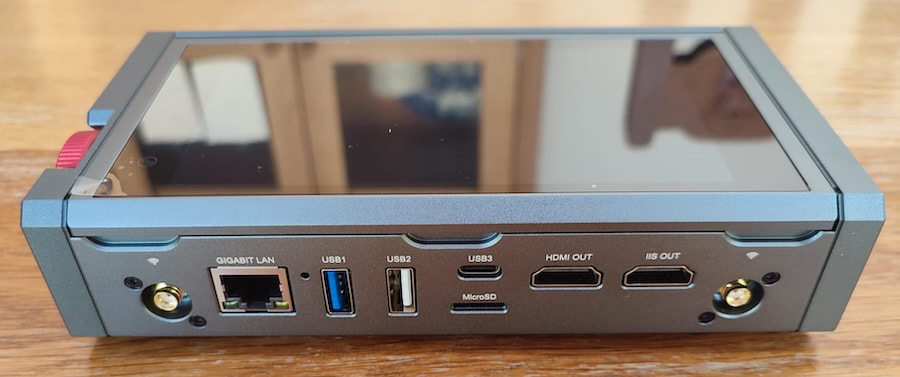
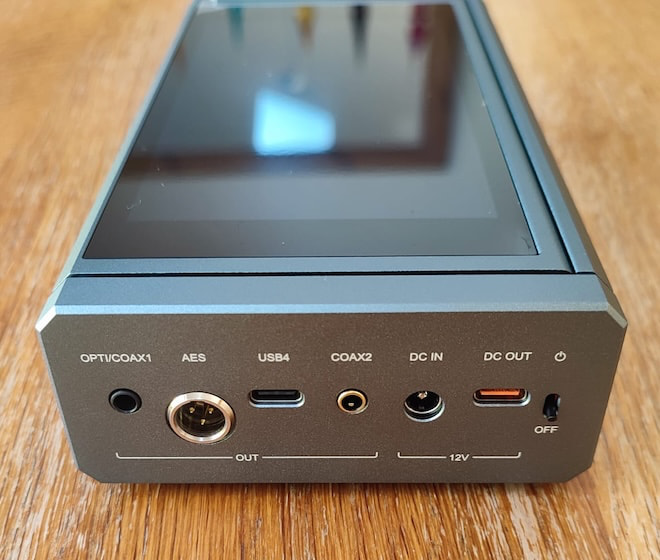
The rear panel is where the DP-10’s purpose becomes particularly clear.
xDuoo has provided USB, coaxial S/PDIF, optical, AES/EBU, HDMI and I²S over HDMI outputs, giving it one of the broader selections of digital connections in this price range.
USB is the most capable interface from a format-support perspective, with PCM up to 32-bit/768kHz and DSD512 available to compatible DACs.
Coaxial, optical and AES/EBU cover the overwhelming majority of conventional DACs, while I²S is likely to appeal to more technically inclined users with compatible converters.
Advertisement
AES/EBU is particularly welcome because it remains common on professional and higher-end digital equipment but is frequently omitted from more consumer-focused streamers.
The inclusion of so many outputs also gives the DP-10 a practical advantage for anyone who regularly changes DACs or uses more than one digital system.
Rather than buying a transport around one preferred connection standard, the DP-10 leaves that decision largely to the downstream component. And Bluetooth 5.4 adds another wireless option. Its presence is more about convenience and compatibility than replacing the wired digital outputs.
Living With the xDuoo DP-10 Day to Day
The strongest argument for the DP-10 is not any individual specification. It is consolidation.
Advertisement
A single device can access Qobuz or another streaming platform, browse a NAS, play music from an internal NVMe drive, read a microSD card, access external USB storage and even work with a USB CD drive. That breadth allows the DP-10 to replace several different digital sources in a system.
For a listener like me who currently switches between a laptop, smartphone, USB drive, and network streamer depending on what I want to hear, that alone has considerable appeal.
Its compact dimensions also make it particularly suitable for desktop systems where space is limited and a full-width streamer would be excessive.
My only minor gripe, which I touched on earlier, is with the software polish. The interface was slow at times, with long loading times and a laggy screen, and, as mentioned, not all of the applications I like to use on an Android device were usable on the DP-10.
Advertisement
Advertisement. Scroll to continue reading.
A DAC can disappear into a system once the input and filter are selected. A transport is something the listener may browse, search, and control every day. Minor software irritations therefore have a tendency to become more noticeable over time.
Listening
Assessing the sound quality of a digital transport is a lot more difficult than reviewing a DAC, amplifier, or pair of headphones.
The DP-10 does not perform the final digital-to-analogue conversion, so the tonal balance and overall character of the finished system remain largely dependent on the DAC, amplification, and transducers connected downstream.
Advertisement
I spoke to another reviewer who said he noticed improved imaging precision and a blacker background compared with connecting his desktop stack directly to a PC, but I’ll admit that I struggled to hear any meaningful difference in sonic performance.
That is despite the fact that the DP-10 uses separate low-noise power regulation and an ultra-low-phase-noise clock architecture intended to reduce electrical interference and timing errors before the digital signal leaves the player.
Even so, that does not mean the DP-10 won’t improve the experience of listening to your system. Its real strength is making the rest of the digital chain easier to use while remaining as sonically unobtrusive as possible.
For me, that is arguably more important. The DP-10 lets you focus on the music rather than constantly fiddling with a laptop, phone, USB drive, streamer, and the small mountain of hardware that somehow accumulates around a modern digital system.
Advertisement
The Bottom Line
While I wasn’t able to directly compare the xDuoo DP-10 with another dedicated digital transport during the review period, the value it provided makes it easy to recommend, but only if you have a very specific goal in mind. It makes the most sense for listeners who already own a DAC they are happy with and want a more capable digital front end without paying for another conversion stage.
Its strongest qualities are flexibility and system integration. The combination of Android 14, internal NVMe storage, microSD and USB expansion, NAS access, major streaming services, CD playback and ripping, and an unusually broad selection of digital outputs gives it considerably more scope than a basic network bridge.
There are, however, some obvious omissions at $999. The much less expensive WiiM Ultra includes an internal DAC, analogue inputs and outputs, phono input, HDMI ARC, subwoofer and headphone outputs, and room correction. Eversolo’s DMP-A6 Gen 2 is actually less expensive at $859 and combines streaming with dual internal DACs, RCA and balanced XLR outputs, HDMI ARC, and preamplifier functionality.
That does not make the DP-10 poor value, but it does make its audience considerably narrower. You are paying for storage flexibility, Android, extensive digital connectivity, and the ability to use the DAC you already selected rather than for a complete streaming and conversion solution.
Advertisement
If that describes your system, the DP-10 makes considerable sense. Its purpose is to organize, access, and deliver digital music without forcing another DAC or analogue stage into the signal chain, and it does that very well. Just understand what you are buying: this is a $999 digital transport for listeners who already have the rest of the system figured out.
Advertisement. Scroll to continue reading.
Pros:
Exceptionally broad range of digital outputs
Supports USB audio up to PCM 32-bit/768kHz and DSD512
Android 14 with support for major streaming platforms
Internal M.2 NVMe storage expansion up to 4TB
microSD, USB storage and NAS playback support
Wi-Fi 6 and Gigabit Ethernet
External USB CD playback and ripping
Compact, fanless chassis
Particularly well suited to systems built around an existing external DAC
Strong flexibility for both streaming and locally stored music
Cons:
No integrated DAC or analogue outputs
Android implementation is less polished than the hardware
No conventional Google Play Store experience
Some applications may require sideloading or additional setup
Interface speed is not class-leading
$999 is difficult to justify for users who only need basic streaming
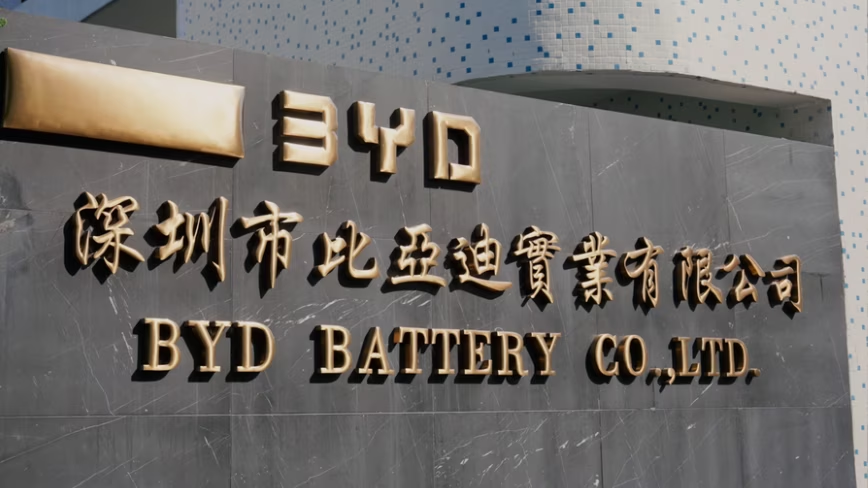
BYD opened its 10,000th Flash Charging station on 28 August, doubling the network in under five months, with each connector rated at up to 1,500kW. European rules require a charging pool on the core road network to deliver 400kW in total this year, rising to 600kW by 2027.
BYD opened its 10,000th Flash Charging station in Shenzhen on 28 August, CnEVPost reported. The network has doubled in under five months.
Each connector delivers up to 1,500kW. A second-generation Blade battery goes from 10% to 97% in nine minutes on one, which is BYD’s own figure for its own newest cars.
The target for the year is 20,000. That means about 80 new stations a day against the 34 a day it has managed since April, InsideEVs calculated.
Advertisement
Six months of operation produced usable numbers. The network delivered 210 million kWh to 1.83 million drivers, and nearly a third of them were not driving a BYD.
Most of it is not BYD’s own capital. Around 18,000 of the 20,000 are being built with partners including Sinopec, PetroChina, CNOOC, Teld and JD.com.
China’s oil majors are installing megawatt EV chargers on their forecourts. Coverage now reaches more than 300 cities, and the first 300 stations outside China are planned for the United Kingdom by the end of the year.
Europe’s rulebook is written in hundreds of kilowatts. AFIR requires a charging pool every 60km on the core road network delivering 400kW in total by the end of this year, rising to 600kW and two 150kW points by 2027.
Advertisement
Set that beside a single Chinese cable. One BYD connector carries two and a half times what an entire European site must provide in 2027.
The hard part is not the cabinet. Each station pairs with on-site battery storage, which buffers a draw that no ordinary distribution connection would carry.
European charging has been busy with a different problem. Much of the effort has gone into kerbside chargers for people who park on the street.
Both things are true at once. A continent can need slow chargers on residential roads and still find itself outbuilt on the trunk network, and neither problem solves the other.
Advertisement
The competitive context is familiar. Chinese brands have taken a record share of the European car market, and the chargers are now following the cars.
Which is the part to watch. If 300 British sites open on schedule, the argument stops being about specification on a datasheet and starts being about who built the thing you plug into.
CXMT has sued the US Department of Defense in Washington seeking removal from the list identifying it as a Chinese military company, a designation that blocks defence contracts without restricting commercial sales. The company is the world’s fourth-largest DRAM maker and passed Tencent this month to become China’s most valuable listed company.
CXMT has sued the US Department of Defense to get off a list naming it as a Chinese military company. The case was filed in Washington and names Defense Secretary Pete Hegseth, Bloomberg reported.
“CXMT is not a military company and has no affiliation with the Chinese military,” the Hefei chipmaker said in a statement. It says it designs chips for civilian and commercial use.
It was first designated in January 2025. The company briefly came off a version of the list in February and was put back on in June.
Advertisement
The designation does not stop anyone buying from it. A 1260H listing blocks defence contracts and flags a company to investors, TNW has reported before, without restricting private commercial sales.
The reason to sue anyway is what it precedes. Designation is widely read as a step towards the Entity List, which does restrict trade, and as a red flag to investors.
The company suing is not a minor one. CXMT is the world’s fourth-largest DRAM maker, and it listed in Shanghai on 27 July at RMB 8.66 a share.
The shares opened 471% higher. Seventeen days later CXMT passed Tencent to become China’s most valuable listed company, at about RMB 3.54 trillion.
Advertisement
Europe’s exposure here is not to the list. It is to the price of memory, and to who is left making it.
Prices have quadrupled in three quarters as Samsung, SK hynix and Micron moved capacity towards AI data centres. Apple has been testing CXMT chips for devices sold in China.
Europe has no answer of that kind. There is no volume DRAM manufacturing in the bloc, which means every memory chip in a European product is imported from somewhere else.
Nor is there a European version of the Pentagon’s list. American controls reach European supply chains anyway, as TNW found when China warned that the equipment chain would break for everyone.
Advertisement
So a European manufacturer buying CXMT memory carries American risk under no European rule. Nobody in Brussels has said whether that is acceptable, and nobody has been asked.
Which is the quiet part of a lawsuit about a list. The list is American, the memory is Chinese, and the bill arrives in euros.
The RG 55G1 is available in three colors and starts at $150.
Anbernic seems to be steadily recreating Nintendo’s legendary portfolio of gaming handhelds, with the latest being a remake of the Switch Lite. Anbernic revealed the RG 55G1 and its spec sheet back in June, but has now revealed the release date and price range for its horizontal handheld that’s even cheaper than Nintendo’s budget device. The RG 55G1 will be available to order on August 31, starting at 6AM ET/3AM PT.
While it might bear a lot of resemblance to the Switch Lite, the RG 55G1 runs on Android 14 and is designed for emulating retro games. More surprisingly, Anbernic has opted for the Snapdragon G1 Gen 2 chip, marking the handheld maker’s first time using Qualcomm hardware for its handhelds. With the exact same processor as the Retroid Pocket Classic, the RG 55G1 should handle emulating up to PS2 or Wii games. Like the Switch Lite, Anbernic went with a 5.5-inch display though with a higher 1,920 x 1,080 resolution. However, the RG 55G1 differentiates itself with two symmetrical Hall effect joysticks and a battery life of up to eight hours.
Advertisement
Those interested will have the option between black, indigo and retro gray colorways, but also a choice between a 4GB memory and 64GB storage model or one with 8GB memory and 128GB storage. The RG 55G1 has a starting retail price of $150, but can cost up to $225 for the top spec model that comes with an extra 256GB microSD card. Anbernic is also offering a $10 off promotion for the first three days that the RG 55G1 goes on sale.
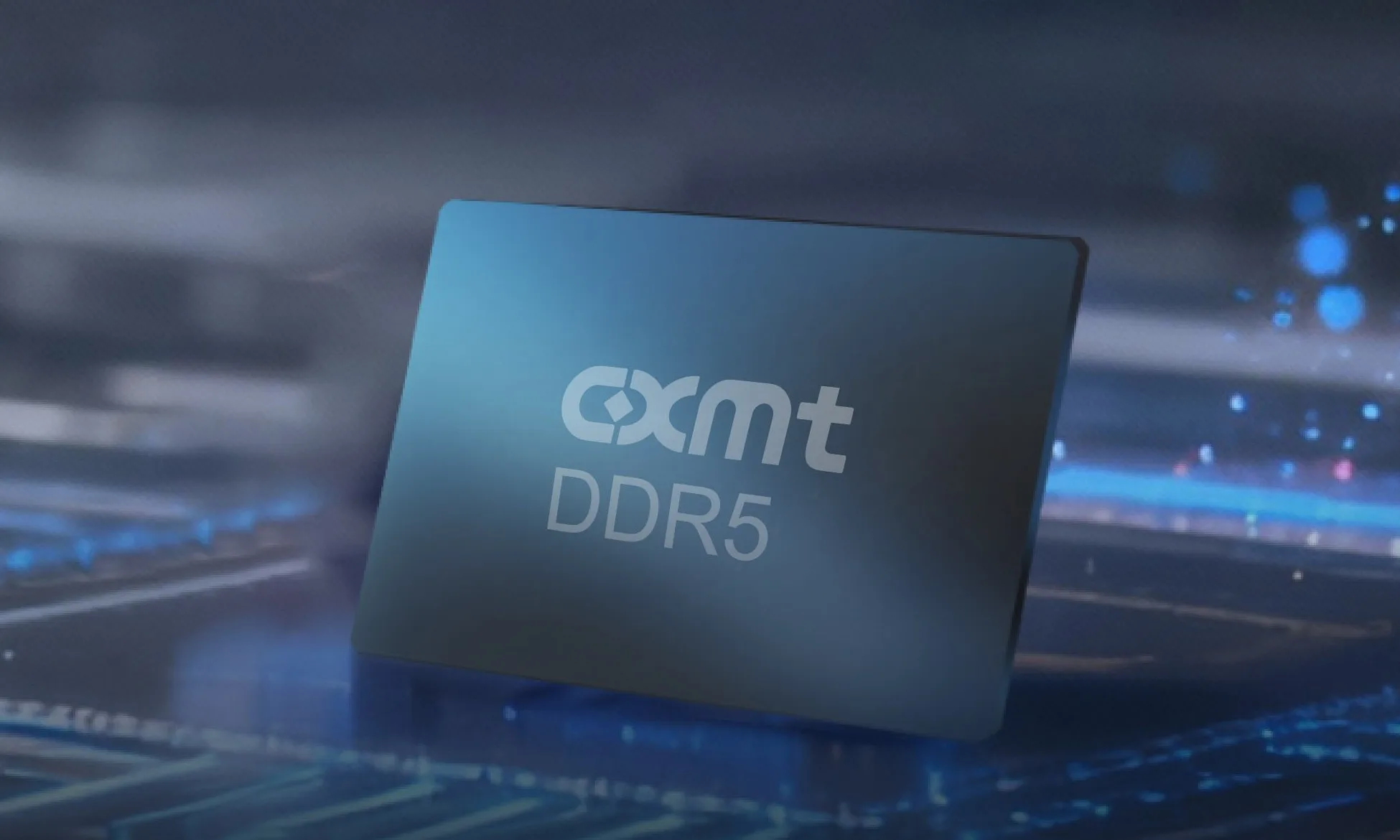
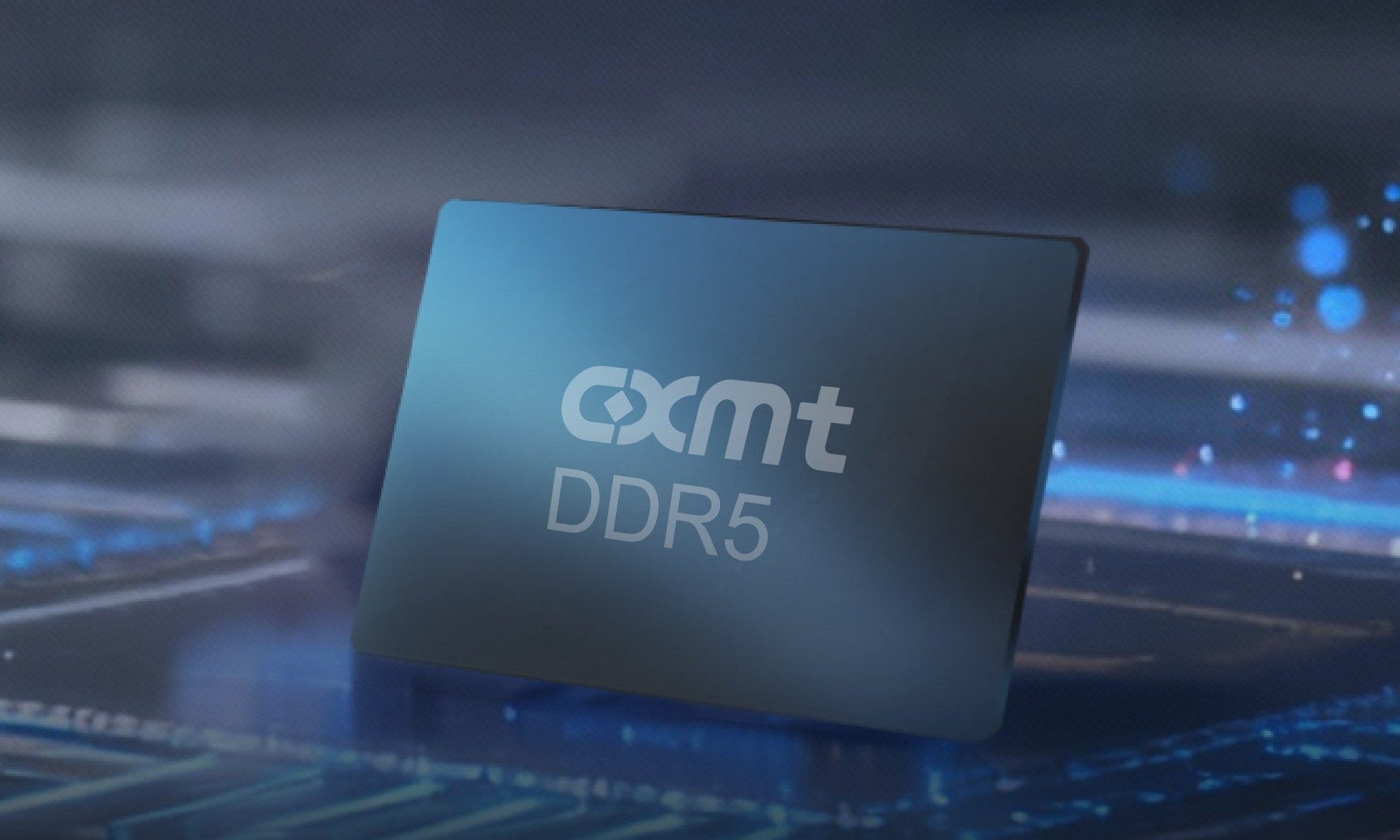
China is trying to rewrite the rules of the memory-chip supply chain, and one of its biggest moves is about to land in a Xiaomi phone. Chinese memory maker ChangXin Memory Technologies (CXMT) is preparing to supply its latest LPDDR6 DRAM for Xiaomi’s upcoming foldable smartphone, marking a potentially important step for China’s push to reduce its dependence on foreign semiconductor suppliers.
Reuters reports that CXMT has started mass production of LPDDR6, which Xiaomi plans to use in its new foldable phone expected to launch in September. Xiaomi confirmed the partnership on its official Weibo account. The development is notable because LPDDR6 is CXMT’s most advanced mobile DRAM technology yet, bringing the company closer to major global memory manufacturers.
This could be a new beginning for the RAM supply chain
The significance of the Xiaomi deal goes beyond one smartphone. Memory is one of the fundamental components inside modern electronics, powering everything from phones and PCs to servers and AI systems. Until now, the global DRAM market has been dominated by companies such as Samsung Electronics, SK Hynix and Micron.
CXMT is attempting to change that balance from inside China. Reuters says the company has already shipped samples of its LPDDR6 chips for use in mobile devices, servers and smart cars. Its latest production effort follows the company’s earlier development of LPDDR5 chips, suggesting a steady progression toward more advanced memory technology.
Advertisement
CXMT
Xiaomi’s upcoming foldable is also expected to use a new version of the company’s in-house 3-nanometer Xring O3 processor, which will support LPDDR6. That combination makes the phone an interesting showcase for China’s increasingly self-reliant semiconductor ecosystem.
If CXMT can reliably supply advanced memory at scale, it could give Chinese smartphone makers another domestic alternative at a time when geopolitical tensions have made access to foreign semiconductor technology increasingly complicated.
A chipmaker caught between China’s ambitions and US scrutiny, and Apple
CXMT’s progress comes against a complicated geopolitical backdrop. In January 2025, the US Defense Department designated CXMT as a Chinese military company. The Trump administration retained the company on the list in a June update. CXMT has denied any affiliation with the Chinese military and says it designs, produces and sells DRAM chips for civilian and commercial use.
The company is now suing the Pentagon in US federal court, arguing that its designation was arbitrary, lacked evidentiary support and violated its due-process rights. CXMT says the designation has caused reputational and commercial harm and wants to be removed from the list.
The Wall Street Journal had also earlier reported that Apple is currently testing DRAM from Chinese maker CXMT across a range of products including iPhones and MacBooks. Apple has also held preliminary talks with CXMT about supplying memory for some devices marketed in China and is seeking US government support before proceeding.
The timing is really interesting. We only recently learnt that a lack of DRAM could already be impacting production of the A20 Pro chip expected inside the iPhone 18 Pro. TSMC has some $1 billion worth of completed chips sitting idle waiting for memory before packaging can resume, the sources added.
The iPhone maker had already approached CXMT as a secondary DRAM supplier, but its attempt to negotiate a lower price did not go well.CXMT offered prices at the same or more as Samsung and SK Hynix. Huawei, Xiaomi and other Chinese makers have also snapped up much of CXMT’s available output on long-term deals, leaving it with little motivation to provide Apple the sort of discount it often expects from suppliers.
For consumers, the immediate result is simply another Xiaomi foldable using Chinese-made memory. But for the semiconductor industry, this could represent something much bigger: a new beginning for the RAM supply chain, with Chinese manufacturers moving from trying to catch up to becoming suppliers for increasingly sophisticated consumer electronics.
The real test now is whether CXMT can scale LPDDR6 production, maintain quality, and win more customers.


























































You must be logged in to post a comment Login