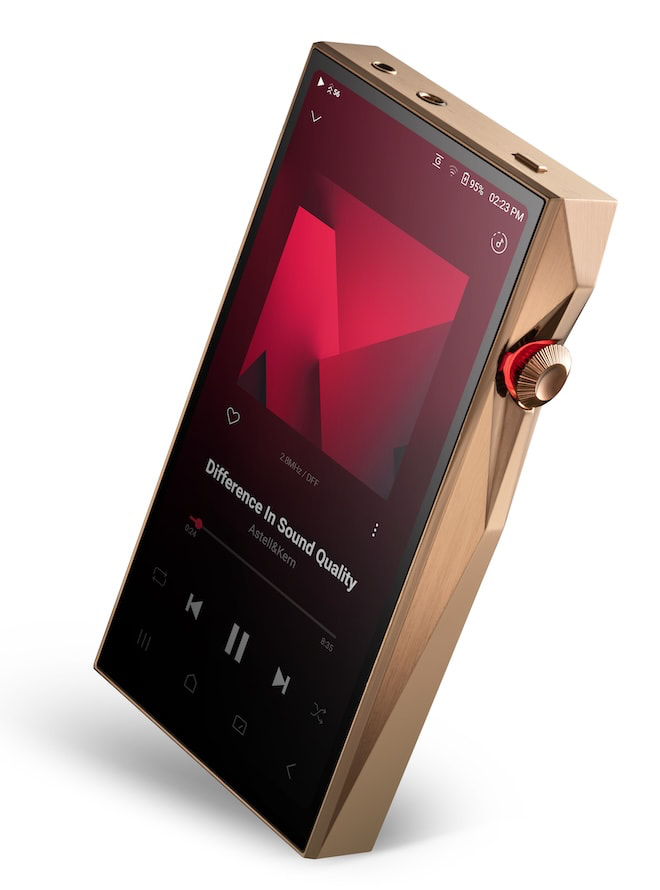
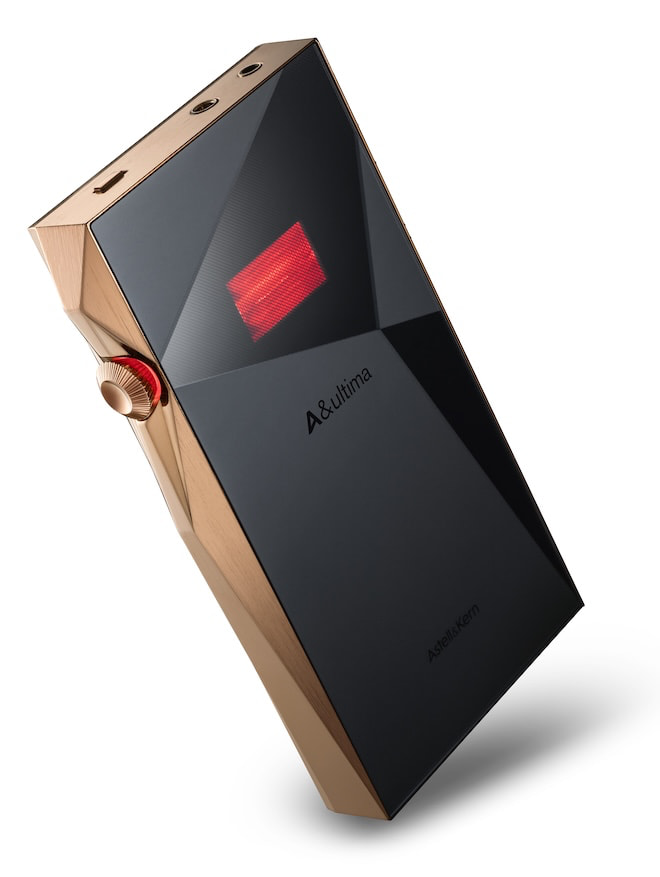
Astell&Kern has taken a flagship digital audio player with four vacuum tubes, 54 possible sound configurations and enough mass to make the word “portable” feel legally optimistic, and decided that the missing ingredient was a copper chassis. The question is whether the new material offers any meaningful performance benefit or merely gives collectors another expensive object to polish.
The new Astell&Kern SP4000T Copper expands the recently introduced SP4000T line with a chassis made from copper rather than the stainless steel used for the original silver version.
Pricing and general availability have not been announced, and Astell&Kern has not explained the delay. The timing is worth watching, however. FiiO has already increased prices in response to sharply rising memory costs, while Shanling has warned that AI driven demand and higher component prices will affect both upcoming products and new production runs.
With 256GB of internal storage and no immunity from the same semiconductor supply chain, Astell&Kern may still be calculating the final price or adjusting its production schedule before making a commitment. That remains speculation until the company says otherwise, but the SP4000T Copper is entering a very different cost environment than the one in which the original player was developed.
Advertisement
Related Reviews:
Astell&Kern SP4000T Copper
What Is Actually New?
The SP4000T Copper is not a second generation player or a substantially revised platform. Its internal architecture, amplification system, operating system and playback capabilities appear to be unchanged from the silver SP4000T announced ahead of High End Vienna in June 2026.
The original player is already something of an engineering fever dream. It is the first portable digital audio player to use four Raytheon JAN6418 MIL Spec vacuum tubes in a channel separated Quad configuration. Each tube is measured and paired before being mounted on its own modular circuit board.
Listeners can select Triode, Ultra Linear or Pentode tube operation, then combine those settings with OP AMP, TUBE AMP or five Hybrid amplification levels. Three adjustable tube current settings bring the total to as many as 54 possible combinations.
That is either an impressive degree of control or enough menu options to make one forget that the original purpose was listening to music.
Astell&Kern also employs a second generation, five stage anti microphonic system intended to reduce noise caused by movement and external vibration. That matters with subminiature tubes such as the JAN6418, which can become microphonic when used inside something that gets carried around, placed on a desk or dropped into a bag beside three charging cables and a set of keys.
Advertisement
Our hands on experience at CanJam London found the SP4000T powerful, responsive and far more commanding than its portable dimensions might suggest. It also weighs 565 grams, so slipping it into a trouser pocket remains a bold lifestyle choice.
The SP4000 Platform With Four Tubes Added
The digital section combines two AKM AK4191EQ delta sigma modulators with two AK4499EX DACs in a fully separated architecture. The design keeps the digital processing and analog conversion stages apart, while the left and right channels receive their own dedicated signal paths.
Advertisement. Scroll to continue reading.
Astell&Kern also includes its High Driving Mode, TERATON ALPHA power and noise management system, ESA signal alignment, Advanced DAR upsampling and Any Layer HDI circuit boards. Native playback extends to 32 bit/768kHz PCM and DSD512.
Balanced output reaches a claimed 8Vrms, while the 3.5mm single ended output delivers up to 4.2Vrms. Those figures should provide adequate power for most IEMs and a wide range of full size headphones, although difficult planar magnetic models may still be better served by a dedicated desktop amplifier.
Advertisement
Android 15 provides access to current streaming applications, while Astell&Kern’s ADP technology bypasses Android’s normal sample rate conversion to preserve bit perfect playback. The SP4000T is also the company’s first player to use dual Wi-Fi antennas, which Astell&Kern claims can produce approximately twice the 5GHz download performance of its previous design.
Other features include 256GB of internal storage, microSD expansion up to 1.5TB, a six inch 2160×1080 touchscreen, Bluetooth 5.2, aptX HD, LDAC, LHDC, BT Sink, USB DAC operation, ReplayGain, Crossfeed, AK File Drop and USB PD 3.0 charging. The internal 7,450mAh battery is rated for approximately 10 hours of playback, with a full charge requiring around five hours.
Does a Copper Chassis Really Matter?
Copper is substantially more electrically conductive than stainless steel. In a properly designed enclosure, that can make it an effective material for electromagnetic shielding and potentially improve heat distribution. But material conductivity alone does not guarantee better sound. Shielding performance also depends on chassis construction, panel seams, grounding, internal layout and how the enclosure is electrically connected to the circuits inside.
There is also an awkward detail for anyone preparing to claim that the copper exterior transforms the SP4000T: the regular stainless steel model already uses a 99.9 percent pure copper Shield Can around its sensitive audio circuitry. That internal component is specifically intended to block electromagnetic interference and reduce noise before the exterior chassis enters the discussion.
Advertisement
A full copper enclosure may provide another layer of shielding, but Astell&Kern has not published comparative noise measurements, distortion figures or listening test data showing that the Copper version performs differently from the stainless steel model.
The company has made similar claims for previous copper editions, including the SP4000 Copper, describing the material as beneficial for conductivity, shielding and signal integrity. It also applies a multilayer coating to limit oxidation and preserve the appearance of the copper surface. Those are technically plausible benefits, but they remain manufacturer claims unless supported by direct measurements between otherwise identical models.
In other words, the SP4000T Copper is not automatically snake oil. Copper is a legitimate engineering material, and this is more substantial than changing the paint color and inventing a paragraph about “earthy musicality.”
But without comparative test results, it is difficult to argue that the copper chassis will produce a meaningful audible improvement. The most obvious changes are appearance, exclusivity and possibly weight. The copper version is therefore best understood as a luxury material option with a technically defensible backstory, not a confirmed sonic upgrade.
Advertisement
If the price premium is modest, buyers may reasonably choose it for the appearance and added collectibility. If Astell&Kern adds several hundred dollars because copper apparently requires its own security detail, then customers will mostly be paying for jewelry that happens to play DSD512.
Key Specifications
DACs: Dual AKM AK4499EX
Digital processors: Dual AKM AK4191EQ
Vacuum tubes: Four Raytheon JAN6418 MIL Spec tubes
Amplification: OP AMP, Tube and five stage Hybrid modes
Tube operation: Triode, Ultra Linear and Pentode
Maximum configurations: 54
Maximum playback: 32 bit/768kHz PCM and DSD512
Display: Six inch, 2160 x 1080 touchscreen
Operating system: Android 15
Internal storage: 256GB
Expansion: microSD cards up to 1.5TB
Balanced output: 4.4mm, up to 8Vrms
Single ended output: 3.5mm, up to 4.2Vrms
Wireless: Dual band Wi Fi, Bluetooth 5.2
Bluetooth codecs: aptX HD, LDAC, LHDC, AAC and SBC
Battery: 7,450mAh
Rated playback: Approximately 10 hours
Standard model dimensions: 85.7 x 150 x 19.5mm
Standard model weight: 565 grams
The Bottom Line
The Astell&Kern SP4000T was already one of the most elaborate portable players on the market, combining four vacuum tubes, multiple amplification modes, flagship AKM conversion and enough output power to challenge some desktop systems.
Advertisement. Scroll to continue reading.
The Copper edition does not appear to change any of that. It wraps the existing platform in a more conductive, more visually distinctive and almost certainly more expensive enclosure.
Could the copper chassis provide incremental shielding or thermal benefits? Yes.
Advertisement
Has Astell&Kern demonstrated that it sounds better? Not yet.
For existing SP4000T owners, this is not an upgrade. For buyers who were already considering the player and prefer copper, it is a legitimate material choice. For collectors, it will probably be irresistible because Astell&Kern understands that the shortest route to an audiophile’s wallet sometimes involves a periodic table.
Price & Availability
Astell&Kern has not announced final Copper edition pricing. Its global product page currently lists the standard SP4000T at $3,300, while several U.S. dealers list the silver model at $3,620. That makes it reasonable to expect the copper version to land above $3,500, although any exact figure would be speculation until Astell&Kern confirms it.
August 2026 Demonstrations
Astell&Kern says the SP4000T Copper will be available for demonstration at several upcoming audio events in China and the United States.
Advertisement
The August calendar includes the Hong Kong High End Audio Visual Show, running August 7-9 at the Hong Kong Convention and Exhibition Centre, followed by SIAS Shenzhen from August 14-16 at the Shenzhen Convention and Exhibition Center.
The major U.S. portable audio event later in the month is CanJam SoCal, scheduled for August 29 and 30 at the Irvine Marriott in California.
Good sleep is a priceless commodity, and a big factor is what you’re sleeping on, including your mattress and pillows. Purple is one of our favorites on that front, from the brand’s super supportive-yet-soft pillows to its cooling mattresses. All to say, there’s plenty of great bedding to shop at Purple, and right now you can get it at a serious discount. You can save up to 30% off of bedding, pillows, and more from Purple, from the PerfectStay Duvet Cover Set to the Purple Harmony Anywhere Travel Set, with these Purple promo codes and deals.
Purple Promo Codes: Save on the Mattress That Fits You Best
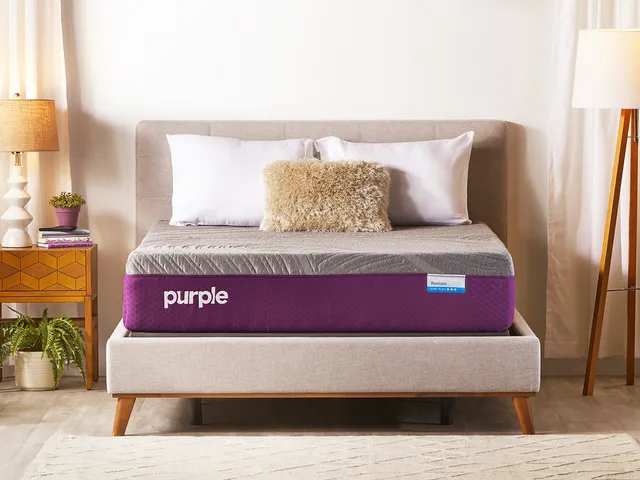
Purple has a mattress for every type of sleeper, and we have a Purple promo code to help you save on those important sleep purchases. There are different types of mattresses to choose from depending on your need. The original Purple is the OG, with two inches of Purple’s signature GelFlex Grid for instant back pain relief, along with two layers of foam. The PurplePlus mattress has cradling support that isolates motion for a more peaceful sleep. And the luxe model, the RestorePlus hybrid mattress, allows for a cooler sleep and has lower back support with GelFlex Grid’s deep relief and zoned coils for extra comfort.
Courtesy of Mattress Firm
Save up to 30% With Purple’s Limited-Time Sales (No Promo Code Needed)
Right now, Purple has huge savings on tons of their up to 30% off sleep accessories like pillows, cushions, and sheet sets. I’ve found that all kinds of sleepers are drawn to Purple’s Freeform Adjustable Pillow and Purple Harmony Pillow in particular, especially since you can adjust it to best match your sleeping position. Plus, you can find some nice accessory bundles on sale, too.
Photograph: Eric Ravenscraft
Other Ways to Save on Purple Mattresses and Pillows
Looking for other ways to save on Purple’s sleep gear? Don’t miss Purple’s bundles that offer up to 25% off. Shoppers using FSA and HSA funds can also save an average of 30% on a mattress, since it does support your health. Check out the eligible products from Purple here to shop with those funds.
Advertisement
If you’re looking for a single pillow, you can score a pillow for free by signing up for Purple’s email updates. Purple also offers as low as zero percent APR if you use Affirm to shop.
Purple
Freeform Adjustable Pillow
Score a Friend a Free Purple Pillow
You can get a free pillow for a friend, too. When checking out for a $200 purchase as a new customer, you can choose to gift a friend a free Purple Cloud Pillow. Plus, if that friend later shops at Purple, you could get up to $75 in Amazon gift cards for your friend’s purchase.
Advertisement
Qualified Customers Can Get 10% Off Their Purchase
— Teri Hatfield was named chief revenue officer for Iterable, a customer engagement platform. The Seattle-area tech executive most recently served as executive vice president of sales and solutions at Salesforce and CRO of Tableau, which Salesforce acquired in 2019. She joined Tableau in 2012 and spent more than a decade in sales leadership roles at Verizon earlier in her career.
“I’ve come to believe that great customer relationships don’t start with technology. They start with understanding your customers,” Hatfield said on LinkedIn. “Iterable stood out because it’s built around that belief.”
Hatfield will work remotely for Iterable, which is based in San Francisco.
Ken Miller. (Arnold & Porter Photo)
— Seattle-area attorney Ken Miller has joined Arnold & Porter as a partner in the life sciences and technology transactions teams within the law firm’s corporate and finance group.
Miller began his legal career at Perkins Coie, where he spent 16 years focused on tech companies and nonprofit organizations.
In 2015, he moved to the Gates Foundation as associate general counsel, briefly serving as lead counsel for the Gates Medical Research Institute before returning to the foundation as director of legal. In that role, he led work tied to the Global Health Division, the research institute, and business development and licensing, privacy and AI.
Advertisement
Ben Reed. (LinkedIn Photo)
— Ben Reed is now chief marketing officer for AIM Intelligent Machines (AIM), a Seattle-area startup developing software that lets bulldozers and excavators operate on their own.
Reed previously ran a firm offering AI marketing and go-to-market advisory services. Other past roles include CMO for Sanctuary AI and a decade at Microsoft, where he departed as head of strategic storytelling for the company’s digital transformation platform.
“I’ve spent much of my career helping frontier technologies become understandable, credible, and consequential, from Microsoft Surface and HoloLens to physical AI, humanoids, and robotics. At AIM, the unusual opportunity is that the technology, customers, deployments, and proof already exist,” Reed said on LinkedIn.
Philip Wong. (Gravitics Photo)
— Aerospace startup Gravitics named Philip Wong chief financial officer. The Marysville, Wash.-based company designs and manufactures modular space infrastructure such as commercial space station modules, cargo-carrying spacecraft and orbital carriers. Its customers include U.S. Space Force and Axiom Space. On Tuesday, Gravitics announced a partnership with Lockheed Martin on a Department of War contract.
Wong joins Gravitics from Viasat, a communications company providing satellite internet services, where he led financial strategy and investment planning. He previously held leadership roles at Pure Storage and Seagate Technology and is based in California.
“Philip has spent 30 years deploying capital across satellite, network, and space infrastructure … He knows how to translate real engineering programs into the financial strategy that supports them,” said Colin Doughan, co-founder and CEO of Gravitics, in a statement.
Advertisement
— Ian Fliflet, former chief growth officer at Seattle online sales platform OfferUp, is sharing his insights on Intro, a service that provides video chats with experts from wide-ranging backgrounds.
— Katy Brown, president of Microsoft’s Americas Markets & Industries organization, was named to Avanade’s board of directors. Brown has been with the tech giant for nearly 30 years and is past president and board chair of the Professional Businesswomen of California. She also serves as executive sponsor of the Bay Area Women at Microsoft group.
— Ben Minicucci, CEO and president of Alaska Air Group, has joinedLyft’s board of directors. Minicucci has spent more than two decades with the airline, which is the parent company of Alaska Airlines, Hawaiian Airlines and Horizon Air.
— Seattle tech leader Ash Wahiwas appointed to MoPOP’s board of directors. Wahi is the founder and CEO of Revenaut, a startup building an AI marketing tool. His career includes leadership roles in product and advertising at Microsoft, Snap and Meta.
Advertisement
— TiE Seattle, a nonprofit supporting entrepreneurship, named five new members to its board of directors:
Joseph Sirosh, CEO of CreatorsAG and former executive at Amazon and Microsoft. He also serves on the board for the biotech company AbSci.
Monika Panpaliya, partner director of product management at Microsoft and former leader at JPMorgan Chase & Co., Boeing and T-Mobile.
Vamshi Reddy, CEO of Quadrant Technologies, founder of Seattle Venture Capital, and past leader at Lenora Systems and Microsoft.
Prasad Anguluri, co-founder of the social media platform Haply, which connects neighbors. Anguluri also serves as a Bothell City Council member, president of ANG Technologies, and co-founder of Innovative Investing Group.
Sanjay Puri, who was previously a vice president with Icertis and a former leader at Avalara, 9Mile Labs, Edifecs and others.
— JT McCrone, a Fred Hutch Cancer Center genomic epidemiologist, was named leader of Nextstrain, an open-source project that tracks the evolution and spread of viral and bacterial pathogens in real time.
The effort is primarily based in Seattle at Fred Hutch and two institutions in Basel, Switzerland. It has received $1.5 million from the Gates Foundation to support its next phase, which aims to make analyses of viral evolution more accessible and scalable.
— Graham Littlehaleis now an investing partner with venture firm Felicis. He previously served as vice president of Point72 Ventures.
Some intelligence analysts have declined to brief on antifa at interagency meetings because they do not regard it as a serious counterterrorism threat.
Advertisement
As a terrorism scholar who spent a decade running the State Department office that designates terrorist organizations, I understand their confusion. The threat the administration describes does not exist in the form the administration describes it.
There is no membership roll, no command hierarchy and no funding structure. There is no leader of antifa – the Trump administration has not named one – and there is no record of deadly attacks attributed to a U.S.-based organization called antifa.
Groups like the Islamic State group and al-Qaida have killed tens of thousands of people and have a documented chain of command. Antifa does not. You cannot decapitate a movement with no head, and you cannot sanction an organization that does not exist.
Advertisement
As such, the Trump administration created one.
Trump administration targets antifa
The construction project began on Sept. 22, 2025, when President Donald Trump signed an executive order purporting to designate antifa as a domestic terrorist organization. The order describes antifa as “a militarist, anarchist enterprise that explicitly calls for the overthrow of the United States Government.” It directs every relevant agency to investigate and dismantle its operations.
Two problems are immediately apparent. First, no legal authority exists to designate domestic organizations as terrorist groups. It’s a gap that Congress has deliberately preserved for First Amendment reasons.
Second, the order designates as an organization something the FBI’s past leadership has described as an ideology. Trump’s executive order asserts an antifa enterprise into existence and then declares war on it.
Advertisement
Three days after the executive order, the White House implemented the order through National Security Presidential Memorandum 7, which converts the fiction into machinery. The memorandum directs the Treasury Department to identify and disrupt financial networks that fund what it deems domestic terrorism. The memorandum instructs banks to file suspicious activity reports with the Financial Crimes Enforcement Network, the U.S. government’s financial intelligence unit.
That means the government’s financial surveillance apparatus, built to trace al-Qaida’s money in the wake of the 9/11 terrorist attacks, is being pointed at Americans that the administration considers left-wing.
The memorandum likewise directs the FBI’s Joint Terrorism Task Forces to coordinate a comprehensive national strategy to investigate, prosecute and disrupt entities and individuals. That harnesses a network of roughly 200 task forces comprising over 4,000 personnel from federal, state and local agencies.
The wording of National Security Presidential Memorandum 7 gives away the administration’s true intent. It identifies the markers of this supposed terrorist movement as anti-Americanism, anti-capitalism and anti-Christianity. It criticizes the movement for its hostility toward those who hold traditional American views on family, religion and morality.
Advertisement
Those are not indicators of terrorism. They are political positions.
State Department targets groups overseas
The foreign component of the campaign arrived in November 2025. That’s when the State Department designated four European groups – one each from Germany and Italy and two from Greece – as Specially Designated Global Terrorists and Foreign Terrorist Organizations pursuant to the Immigration and Nationality Act.
The State Department-designated groups are real. And some of their members have committed genuine crimes, including assaults and small-scale bombings.
But as I have noted, the designations are very peculiar. These groups have committed vandalism and harmed people, but not one of the four has carried out an attack that led to any fatalities.
Advertisement
German leaders have said the threat from one of the designated groups, Antifa Ost, or Antifa East, had recently decreased significantly.
As the former head of the State Department’s office that recommended to the secretary of state which groups to designate, I’ve been involved in the designations of hundreds of individuals and organizations. The bar was never this low. That’s because the Foreign Terrorist Organization list loses its meaning, and its deterrent power, when it includes groups whose body count is zero while genuinely lethal movements go unlisted.
The foreign nexus
That brings us back to the State Department’s ministerial. The sequence of events leading up to it matter:
Invent the organization by executive order; build the enforcement machinery by presidential memorandum; manufacture the foreign nexus through the State Department’s Foreign Terrorist Organization designations; and then convene the world to ratify the story. Each step launders the previous one.
Advertisement
Behind it all, Trump administration officials have discussed using the foreign terrorism labels to justify going after Americans with links to the movement. That is the point of the exercise, and U.S allies like the Netherlands have explained how antifa could not be designated as a terrorist group under their laws.
Counterterrorism tools are among the most powerful instruments the U.S. government possesses. I don’t believe that using them against an ideology, one defined by opposition to fascism, makes America safer. I believe it tells every ally the U.S. asks for help that the world’s leading counterterrorism power can no longer tell the difference between a threat and an opponent.
Implications of the ministerial meeting
This is not just an issue of semantics and rhetoric – each action by the Trump administration against a strawman enemy creates risks. And the push to internationalize the antifa threat could have dire consequences at home.
First, if the State Department leaves the July 16 meeting with pliable allies willing to brand antifa a terrorist organization, it will embolden the administration to point to a supposed global conspiracy of the far left.
Advertisement
That path leads to a State Department foreign terrorist designation. Such a designation means Americans could have their bank accounts frozen and quite possibly find themselves rounded up for providing material support to a movement rather than an organization. This would be more dangerous than Trump’s earlier executive order.
Second, it could chill freedom of speech and assembly. Once other governments treat antifa as a terrorist entity, the U.S. government gains cover to shut down protests under the guise of exposing global left-wing plotting.
Third, it could justify the revival of projects like the FBI’s Counterintelligence Program, resurrecting the surveillance, infiltration and disruption of lawful political activity that the bureau was supposed to have abandoned after the abuses of the 1970s.
Fourth, as one European counterterrorism scholar recently warned, the summit lays bare a widening split between American and European counterterrorism priorities and the Trump administration’s willingness to bend counterterrorism policy to partisan ends.
Advertisement
That divergence is the real hazard, far more than any phantom left-wing terrorism group, because European counterterrorism leans so heavily on U.S. intelligence. As such, transatlantic counterterrorism cooperation could be in for turbulent times.
Whatever the outcome of the ministerial meeting, there is no version that will make Americans safer.
I believe one result is certain: Genuine threats – from groups with leaders, actual funding and malicious intent – will get less attention from the U.S. and any ally co-opted to take action against antifa.
Jason M. Blazakis is Professor of Practice and Director of Center on Terrorism, Extremism and Counterterrorism at Middlebury College
Intel shared rare x86 chip design access with a brand-new startup
RosaicLabs can now build custom processors using licensed Atom architecture
Intel shifted its low-power strategy from Atom towards newer E-Core designs
Intel has given RosaicLabs access to part of its Atom processor technology in a rare move involving the company’s x86 intellectual property.
Reports from Reuters claim the agreement involves register-transfer level, or RTL, code that describes processor functions before they are converted into physical silicon during manufacturing.
Atom was designed for low-power computing, making the technology suitable for systems requiring efficient performance without high energy consumption or excessive heat generation.
Latest Videos FromTechRadar
Advertisement
Why Atom technology fits the reported agreement
Intel’s Atom processors have historically powered entry-level systems, networking equipment, embedded devices, and other products where power efficiency matters more than maximum performance.
The processor family runs on the x86 architecture and was developed to provide Intel-based computing for smaller and lower-power devices.
RosaicLabs is expected to receive RTL code for Atom technology, which could allow it to create custom processor designs using Intel’s existing architecture.
A veteran semiconductor executive said such access provides “comprehensive exposure” to Intel’s intellectual property, giving customers the ability to develop their own silicon based on licensed designs.
Sign up to the TechRadar Pro newsletter to get all the top news, opinion, features and guidance your business needs to succeed!
Providing Rosaic access to Atom technology is unusual because Intel has traditionally kept key parts of its x86 intellectual property under tighter control rather than widely licensing processor designs.
Advertisement
However, Intel’s Atom portfolio has become smaller as the company shifted its low-power processor strategy toward E-Cores, which succeeded Atom-based designs in newer products.
E-Cores use newer microarchitectures such as Gracemont, meaning Intel may view selected Atom technology as suitable for external licensing while keeping its latest processor designs within its own roadmap.
The exact Atom technology Rosaic will receive remains unclear, although the startup could potentially gain access to Tremont, one of Intel’s final Atom microarchitectures.
Advertisement
Tremont was used in products such as Elkhart Lake and Jasper Lake, which supported embedded systems, low-power laptops, and Chromebooks.
Rosaic has some connections with Intel
Rosaic is a startup incorporated in Delaware in May 2026, but details about the company remain limited beyond its reported agreement with Intel over Atom processor technology.
An amended corporate filing dated July 24 shows the company can pursue a $10 million seed funding round while approving capital expenditures below $5 million without investor or board approval.
Advertisement
The startup’s founding team reportedly includes former Rivos employees, linking Rosaic with a semiconductor company that Meta acquired for roughly $2 billion last year.
Rosaic’s connection with Intel also extends to its leadership because chief executive Amarjit Gill previously helped assemble Rivos’ founding team alongside Intel chief executive Lip-Bu Tan, who chaired that company.
Gill and Tan also shared an investment history, making early bets on Nuvia before Qualcomm acquired the startup, adding another link between Rosaic’s leadership and Intel’s current chief executive.
These professional relationships have drawn attention to Rosaic, although neither company has publicly explained whether they influenced Intel’s decision to share Atom processor technology.
Advertisement
After the announcement, Intel shares rose 12%, although no evidence directly linked those market gains with the reported licensing arrangement.
This agreement suggests Intel may see continued value in Atom’s low-power x86 design, but its broader intentions remain uncertain until Rosaic reveals its future processor plans.
Gemini Spark is an AI agent designed to take on longer-running tasks that continue in the background. It’s much smoother now thanks to an update that incorporates the platform directly into Google‘s Chrome browser. So now the AI can actually browse the web alongside you, doing its own tasks, instead of simply talking about it, even if you close your browser.
Before you can try Spark, you need the right ingredients. You will need the latest version of Google Chrome on Windows or macOS, a personal Google account, and either a Google AI Pro or Google AI Ultra subscription. With the right subscriptions, you just need to set Safe Browsing to either Standard Protection or Enhanced Protection before Spark becomes available.
Advertisement
Latest Videos FromTechRadar
With those requirements out of the way, click the three dots in the upper right corner of Chrome and choose Settings, then AI Innovations or Gemini in the Chrome menu, where you can navigate to the Permissions section and switch on the Let Gemini browse for you option.
Now you can open the Ask Gemini panel at the top of Chrome and give it a task that benefits from browser access. Spark will show you its proposed plan before doing anything, and the first time you use it, Chrome will ask whether you want to connect your browser to Spark. Click Allow or Connect, and from then on you can start handing Spark more ambitious jobs.
If something involves making a purchase, entering sensitive information, or confirming an important action, Spark pauses and asks for your approval before continuing.
The video below shows you exactly how Spark works:
(Image credit: Future)
I first decided to see how the AI did at the often time-consuming but important chore of comparison shopping. I asked Gemini using Spark to find a good deal for a TV.
Advertisement
Sign up for breaking news, reviews, opinion, top tech deals, and more.
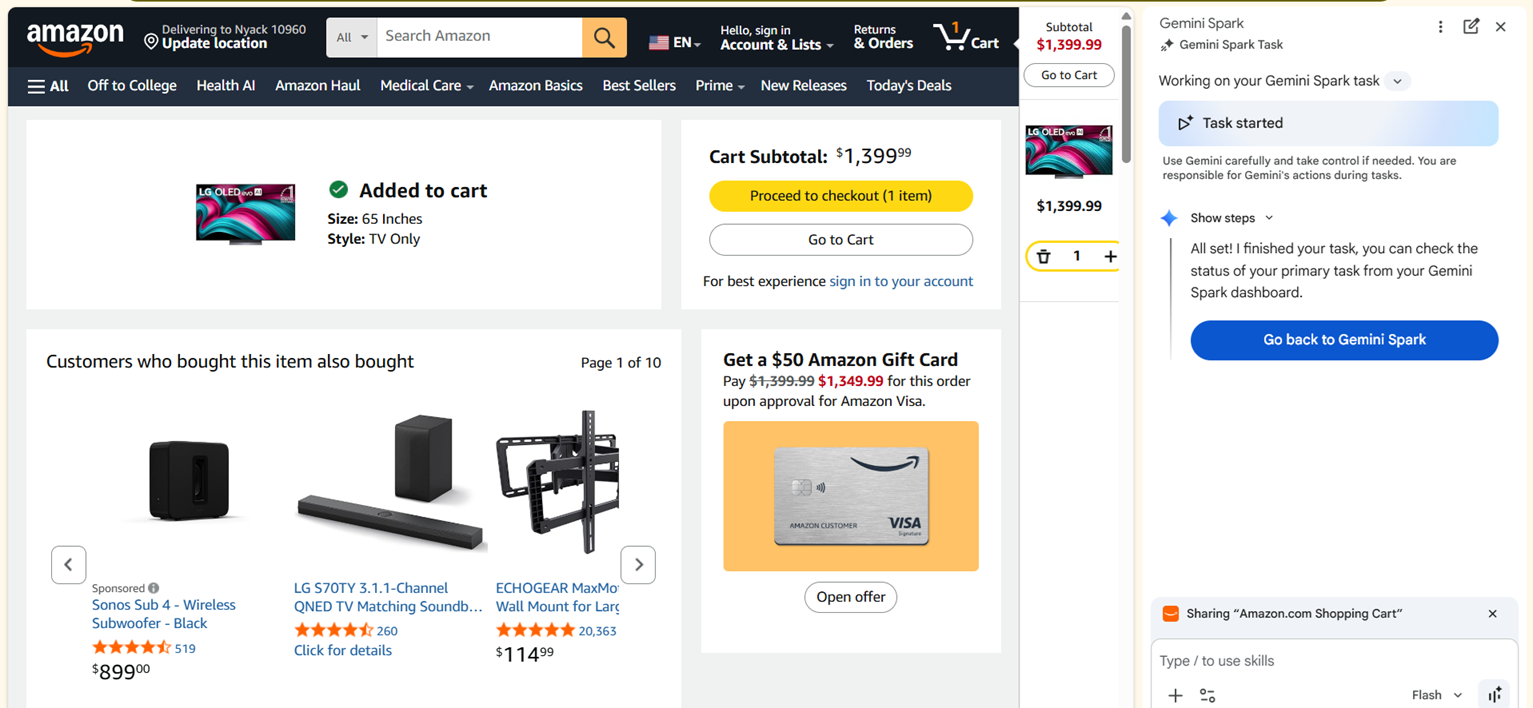
Instead of asking which television I should buy, I gave Spark a proper assignment. I told it to compare prices for a 65-inch model at Amazon, Best Buy, Costco and Walmart, look for promo codes, and calculate the final price after discounts then prepare for checkout.
Spark didn’t just provide a summary. I could watch the AI navigate to different websites, try out different options, and work out which I might prefer.
When it found what it believed was the best option, it added the television to the cart and stopped, waiting for me to approve the purchase before doing anything involving payment.
Advertisement
Spark is happy to do the repetitive work, but it won’t spend your money without asking first. It feels like exactly the right balance between useful automation and common sense.
Planning a family day out
(Image credit: Future)
My second experiment was slightly more ambitious because it combined several different tasks into one. I asked Spark to plan a family day out for two adults and two toddlers.
Advertisement
Normally that would have meant switching constantly between Google Maps, museum websites, restaurant reviews and booking pages. Spark simply got on with it. It compared opening hours, checked travel times, built a schedule that actually flowed logically through the day, found a restaurant with online reservations and reserved it, then prepared the museum ticket purchase and before asking me to approve the bookings.
AI for tedious tasks
Spark takes the tedium out of a library card application. (Image credit: Future)
Google claims Spark is great at filling out paperwork, especially using information from your own Google accounts. As my kid is getting to the right age for it, I asked Spark to fill out his library card application.
After checking that it had the right information about my address and other details, Spark opened up my library’s website and went to work. It filled in my contact information, mailing address and other saved details. When it reached the final submission page, it stopped and waited for my approval instead of clicking the button itself.
Advertisement
It’s not an incredibly long form, but it’s easy to see how Spark could save quite a lot of time on the more complex medical or insurance papers. It’s a lot faster to review and make sure the AI got it right than to write it all out yourself.
Using Spark highlighted how different it feels from regular Gemini. Spark shifts the workload because it can actually interact with the browser instead of simply describing what I should do next.
Gemini Spark is one of the more compelling AI features Google has introduced in quite some time. It won’t replace every online task, but it can quietly eliminate a surprising amount of clicking, tab juggling and repetitive typing.
Laptop Intelligence: Google finally announced the much-talked-about project to blend Android and ChromeOS into a new, AI-driven “computing” experience earlier this year. Now, the first OEM Googlebook design has leaked ahead of the machine’s expected – and still unconfirmed – release date.
Google unveiled the Googlebook laptop in May, explaining that several OEMs would be joining in with their own take on the AI-ready machine. Thanks to Digital Citizen, we now have a closer look at the Googlebook Lenovo is building for a late-2026 release. The Lenovo Googlebook 15 carries some design choices expected to become standard across the new platform, while other hardware decisions set minimalism aside in favor of better connectivity.
The leak shows what seems to be a full press image set for Lenovo’s Googlebook 15. The PC giant has apparently built one of the very first Googlebook laptops to reach the market, a notable milestone that could help shape the early commercial fortunes of Google’s latest hardware push.
The Lenovo Googlebook 15 features some of the platform’s most distinctive design choices, starting with a Google “G” key at the bottom left of the keyboard. Much like Microsoft’s much-maligned Copilot key, the new G key is expected to serve as a shortcut to launch the Gemini chatbot.
Advertisement
The keyboard also includes 14 Function keys, with a dedicated accessibility key on the upper right that’s rarely seen in laptop designs. According to the leaked press images, the Lenovo Googlebook 15 comes packed with connectivity on both sides. Options include a full-sized HDMI port, a USB-C port, a 3.5mm headphone jack, and what appears to be a full-sized USB-A port alongside a second USB-C port.
The leaked images provide a rendered mockup of what should be Googlebook’s UI, with a rather standard desktop offering and a status bar taken straight from a modern Android iteration. Googlebooks use Aluminium OS, a new operating system Google has been working on for a while to bridge Android app compatibility with ChromeOS’ always-on environment.
The one thing the images don’t reveal is any hint of actual hardware specifications. Google has called the Googlebook its most advanced laptop yet, built to get the most out of the Gemini chatbot, with the company framing intelligence as the new spec that matters most. As PCWorld has noted, the heavy reliance on automation and agentic AI could make Googlebooks the first wave of “anti-personal computers,” devices designed to act on a user’s intent, leaving them no longer solely in control of the machine.
The state already hosts more than 500 data centers.
Tim Warner/Getty Images
Governor Greg Abbott has ordered that Texas utility commissions must conduct a review of any proposed new data centers in the state. In response to the order, the Public Utility Commission of Texas (PUCT) and the Electric Reliability Council of Texas (ERCOT) must collect information about potential new data centers’ ownership and finances as well as their planned power needs, water use and approach to minimizing the negative impact on residents.
According to third-party statistics, Texas is home to 521 data centers. That’s currently the second-most in the country, behind only Virginia. On top of the existing power demands of those centers, ERCOT is currently reviewing more than 474 gigawatts in requests to connect to the state’s electric grids. The governor’s office said more than 90 percent of those requests stem from data centers, adding that “unprecedented load growth could endanger the reliability and stability of the Texas electric grid.”
We’ve already seen measures aimed at limiting or outright prohibiting data center construction at the federal, state and city level. Given the concerns about resource use and drains on existing infrastructure, data centers have proven deeply unpopular among many US citizens.
On Monday, Apple briefly removed the popular messaging app Telegram from the App Store for iOS devices after a report that a user was sharing illegal content. According to both Apple and Telegram CEO Pavel Durov, the app — which has more than 1 billion users — was restored on the App Store within hours. But Durov accused Apple of overreacting to a ransom attempt in a group chat.
In a Telegram post about the incident, Durov said a member of a public group chat edited a previously posted message and added what Durov called “AI-modified illegal content” to it in an attempt to get the group chat flagged, because its admins had presumably refused to pay a ransom. Instead, Apple removed the app from the Apple App Store entirely until the user was banned. Apple confirmed in an email to CNET that Telegram remained available in the separate Mac App Store and that users who already had Telegram downloaded were not affected.
“We briefly removed Telegram from the App Store after our review found content that violates our strict guidelines prohibiting child sexual abuse material,” Apple said in a statement. “The app was subsequently restored after the developer promptly removed the content and banned the user who posted it.”
Apple did not immediately respond to questions about why the Mac version of Telegram remained available for download while the mobile version was removed.
Durov said that the extortionist manipulated Apple into an “overreaction” that led to the app’s removal, which he said occurred without warning. That could happen, he said, to other apps that include user content.
“If an app used by more than a billion people can be removed from the App Store without prior warning, any app can be,” Durov wrote.
Telegram’s official X account more pointedly criticized Apple’s actions in a series of posts and replies. In one, Telegram posted, “reports of my demise are greatly exaggerated,” followed by an apple emoji. In another that included a link to Durov’s post, Telegram wrote, “I’m sure this stance will be applied equally to all other apps in the store, in the future, right? @Apple.”
Advertisement
Telegram faces an ongoing dispute with Australian authorities over content related to terrorism and child safety. After Telegram was fined AU$1 million (roughly $700,000) for failing to respond to information requests, the government began pursuing additional penalties against the platform.
In 2018, Apple temporarily removed Telegram and its experimental client, Telegram X, from the App Store after determining that “inappropriate content” was available through the apps. Telegram restored additional safeguards, and Apple reinstated both apps later the same day.
Styrofoam – or closed-cell extruded polystyrene (XPS) foam if you want to be precise – is one of those materials that is both super versatile for packaging and insulation, but also a menace when it comes to disposal, even if you ignore that the monomer styrene (C8H8) is a known mutagenic toxin. One of the more creative ways to deal with the metric tons of polystyrene waste generated each year is to turn it into gasoline, as demonstrated by [Lowered Expectations] in a recent video.
With polystyrene being just another hydrocarbon polymer, the idea of turning these polymers into the mixture of hydrocarbon chains we call ‘gasoline’ isn’t so crazy. The problem is mostly doing it in a way that makes some economic sense and doesn’t risk turning your domicile into a hazmat risk site or threaten the health of you, your loved ones and the neighborhood.
The method demonstrated in the video uses fairly basic methods involving pyrolysis and distillation. The first step involves dissolving the polystyrene in gasoline that was previously recovered from stale gasoline, which is another dangerously fun science experiment. This creates a thick slurry that’s then put into the distillation flask for the heating phase.
Advertisement
After testing the distillates for spark ignition the useful distillates were combined with fuel stabilizer added. Before tossing this into a gasoline engine tank for further testing, the concerns of auto-polymerization of styrene monomers are addressed, which requires special inhibiters.
Although this mixture runs a gasoline generator just fine, a borescope inspection of the cylinders showed a build-up of a shiny, gummy residue. There’s also the issue that this mixture contains styrene monomers, which are as noted very unhealthy to breathe in from either the fuel or any remaining monomers in the exhaust. Definitely not something to try at home, basically.
The House of Zen’s new Helios racks, Venice Epycs, may dent Nvidia’s dominance — if the bubble doesn’t pop first
AMD has posted strong second quarter results and forecast even better future financials once its Helios rack systems and Instinct MI400-series GPUs reach buyers.
“In data center AI, the growing number and scale of Helios and MI450-series deployments position the [datacenter] business for significant growth in the second half of the year, with growth accelerating in 2027,” CEO Lisa Su told investors on Tuesday during the chip design company’s Q2 earnings call. “We now expect data center segment revenue to more than double year over year in 2027,” she added.
Advertisement
Yet, despite reporting Q2 profits surging 163 percent year-over-year on revenues of $11.5 billion, and several multi-gigawatts worth of Helios commitments from the likes of OpenAI, Anthropic, and Meta in the bag, Wall Street isn’t buying it.
The company’s share plunged 10.5 percent after its results announcement, before settling 8.7 percent below opening price at the time of publication.
The apparent cause for concern: AMD’s growing exposure to the AI bubble. Much of the company’s growth potential across both CPUs and GPUs is tied to AI adoption by a handful of companies that are yet to prove they can operate profitably.
On Tuesday’s earnings call, Su attempted to assuage investor fears, but in the same breath she said the quiet part out loud.
Advertisement
“When we talked about the large frontier-model companies, OpenAI, Anthropic, Meta, they will be consuming through a number of CSPs,” Su said. “There are additional customers or lots of customers who are interested in Helios at, let’s call it, a more regular scale than gigawatt scale.”
In other words, while AMD can sell plenty of GPUs, most are sold to a handful of customers. And while other entities have AMD on their shopping lists, they don’t buy in bulk.
Microsoft, another flagship customer for AMD’s latest generation of AI picks and shoves, serves both OpenAI and Anthropic, while Meta is reportedly looking to enter the GPU cloud biz itself.
Despite this, AMD remains optimistic about its prospects over the next few quarters.
Advertisement
It’s not hard to see why because since the launch of its MI300-series GPUs in late 2023, AMD has established itself as the most credible alternative to Nvidia.
At its Advancing AI event in San Francisco last month, the company showcased a new rack-scale compute platform called Helios packing 72 Instinct MI455X GPUs each with 432 GB of HBM4 memory on board.
On paper, the system meets or beats the performance of Nvidia’s Vera Rubin platform on most metrics. The Reg explored these chips in greater detail here.
AMD is also eager to cash in on demand for CPUs to power agentic AI sandboxes, which Su anticipates will be the biggest growth driver for Epyc sales before long.
Advertisement
Also unveiled at Advancing AI, AMD’s Venice Epycs will offer up to 256 cores and 512 threads with support for 16 memory channels at speeds of up to 1.6 TB/s per socket.
However, the CPU market isn’t the duopoly it once was and AMD now faces its traditional foe Intel, plus new competitors such as Nvidia, Arm, Qualcomm, AWS, Google, and Microsoft.
Nonetheless Su remains bullish about AMD’s prospects.
“Whether it’s server CPU, datacenter, AI, or our embedded business, and our PC business, we see them all benefiting from the AI tailwinds,” Su said.
Advertisement
It seems the AI tides will lift all chips, but let’s not forget that tides rise and fall.
In any case, while AMD’s embedded division is doing quite well with revenues topping $977 million, an increase of 19 percent over this time last year, things aren’t looking so hot for the House of Zen’s gaming and client computing divisions. While client PC sales were up 23 percent YoY to $3.1 billion during the quarter, AMD warns that the ongoing RAMpocalypse is likely to cut into PC sales over the next few quarters.
Meanwhile in gaming, the end of a console sales cycle is hitting AMD hard on semi-custom processor orders, with gaming revenue down 31 percent during the quarter to $779 million
AMD’s datacenter and AI sales teams therefore get the job of delivering the company’s Q3 forecast which calls for revenues of $13 billion plus or minus $300 million. ®




































































You must be logged in to post a comment Login