

Join Mikko Hyppönen and security leaders from the NFL, CHANEL, and Atlassian for a two-hour digital summit on what AI-speed attacks change, what defenders should stop doing, and how to validate, decide, fix, and re-validate at machine speed.
Tech
Asteroids Named After Tom Lehrer and 'Weird Al' Yankovic


“Weird Al” Yankovic’s name has just been approved for a new asteroid — (14331) Alyankovic = 1981 EC26 — by the International Astronomical Union, reports Space.com.
Yankovic’s asteroid was championed by planetary scientist Allison McGraw joined by “several heavy hitters in the planetary science field, according to the Tucson Star. (Astrophysicist Steve Desch from the School of Earth and Space Exploration at Arizona State University; Tim McCoy, one of the main curators of meteorites at the Smithsonian Institution; and University of Arizona research scientist Melissa Brucker, leader of the Spacewatch program, which has discovered more than 179,000 asteroids.)
The scientists also convinced the International Astronomical Union to name an asteroid after one of Yankovic’s major influences, famous musical humorist and political satirist Tom Lehrer, who died last year at age 97. Lehrer’s work includes “The Elements,” a 1959 song in which he recites the entire periodic table to the tune of Gilbert and Sullivan’s “Major-General’s Song.” “He was a mathematician and teacher and also wrote math- and science-themed songs,” McGraw said. “We felt that someone who had that kind of science enthusiasm really deserved to have their name up in the sky….” McGraw is hoping that naming space rocks after stars like Lehrer and “Weird Al” will cast some reflected light on two things she’s passionate about: asteroid research and science communication.
Six years ago a 92-year-old Tom Lehrer released all his lyrics into the public domain. (Wikipedia notes he’d “largely retired” by the 1970s to become a mathematics teacher at the University of California, Santa Cruz.) Slashdot ran a brief career retrospective when Lehrer died last year at age 97.
And the IAU writes that “Generations of scientists have been inspired” by Weird Al Yankovic’s “comedic musical works, including ‘It’s All About the Pentiums’ and ‘White and Nerdy’.” (“I’m fluent in JavaScript as well as Klingon,” Yankovic sings in the latter.) He appears in a song envisioning a rap battle between Bill Nye the Science Guy and Sir Isaac Newton… And in 1999 he recorded a five-minute summation of Star Wars: Phantom Menace, sung to the wistful tune of Don McLean’s American Pie. Performing it last month in a NPR Tiny Desk concert, “most of the audience was singing along,” remembers an interviewer at NPR. “It felt like something that was very personal to them.”
Weird Al: It’s one of those songs that means a lot to people, particularly “Star Wars” fans, of course. But I mean, I see a lot of people in the audience cosplaying as Jedi Knights and waving their light sabers… I’ve even heard that, you know, they play that song at “Star Wars” conventions, and people get weepy, you know… [I]t really hits people in a tender place somehow…
“Oh my, my, this here Anakin guy
may be Vader someday later, now he’s just a small fry.
And he left his home and kissed his mommy goodbye,
sayin’ soon, I’m gonna be a Jedi.”
Yankovic has led a geek-friendly career. In the heyday of Napster, he released an anthem-style parody mocking the arguments of the Recording Industry Association of America, titled “Don’t Download This Song. (“Even Lars Ulrich knows it’s wrong…”)
“Once in a while maybe you will feel the urge
To break international copyright law…
you start out stealing songs, then you’re robbing liquor stores
And selling crack and running over school kids with your car…”
As a student at Cal Poly, San Luis Obispo, Yankovic bootstrapped a career in 1979 by recording his first novelty song “My Bologna” (a parody of “My Sharona” by the Knack) while playing his accordion in a bathroom for its acoustics. And even the IAU acknowledged the geeky themes in his 1999 song “It’s All About the Pentiums” (a filk on Puff Daddy’s “It’s All About the Benjamins”).
“You’re usin’ a 286? Don’t make me laugh
Your Windows boots up in what, a day and a half?
You could back up your whole hard drive on a floppy diskette
You’re the biggest joke on the Internet…”


Read more of this story at Slashdot.
Continue Reading


Even before France approved legislation banning social media for children under 15 last January, 13-year-old Benjamin was already wondering what life without social media would look like. “If we want to play football, we won’t be able to organize it. What will we do? Send letters instead?” he joked in an interview for Le Monde.
His reaction captured the central challenge behind the growing wave of youth social media bans: Removing access is one thing; understanding what those platforms mean in children’s lives is another.
Within weeks of Australia’s similar ban, the country’s eSafety Commissioner reported that platforms had restricted access to 4.7 million under-16 accounts. Two months later, though, one in five Australian teenagers under 16 was still using TikTok and Snapchat, according to a parental-control data company. But even if all children’s social media accounts were to disappear, do such bans actually make children safer online?
Governments are moving ahead without answering that question as they follow Australia’s lead. Indonesia’s child-safety framework, which took effect in March, bars children under 16 from holding accounts on “high-risk” platforms. The U.K. government has announced plans to ban social media for under-16s, add default overnight social media curfews for 16- and 17-year-olds, and extend child-safety rules to cover risky AI features. And on 17 September, the European Commission proposed the EU KIDS Act, which would bar children under 13 from social media, set 15 as the EU-wide minimum age for opening an account independently, and require platforms to show that their services are age appropriate and safe by design.
But based on my experience working on Child Online Protection initiatives with the International Telecommunication Union (ITU) across Southeast Asia and the Pacific, I know the bans don’t address the real problems. Instead, we should be paying more attention to the systems that generate harm in the first place—namely, recommender algorithms, engagement-maximizing design, opaque moderation, and extractive data practices.
Account removals are not the same as online child safety
My experience working on protecting children’s online safety has taught me three main lessons:
First, the public institutions responsible for child online protection often lack the staff, budget, or technical capacity to enforce complex online safety policies.
Indonesia is illustrative. A 2026 UNICEF evaluation found capacity constraints among service providers, long-term funding uncertainty, and a need for specialized personnel. At the local level, some staff lacked digital skills, while budget constraints left some areas reliant on external support.
Second, many children, and often their parents, lack the digital literacy and critical thinking skills needed to navigate online risks safely. My policy research on child online protection in Indonesia, published earlier this year in Digital Society, found substantial gaps that account removals cannot repair: Many children lacked guidance on navigating the internet safely, and large numbers did not know how to report harmful experiences.
And third, the platforms have limited independent oversight as they identify underage users, design age-verification systems, and report their own compliance. In Indonesia, platforms themselves are responsible for carrying out age verification, while the Ministry of Communication and Digital Affairs oversees compliance. TikTok’s appeals process for users flagged as underage, for instance, can require a government-issued ID and selfies, which is a problem because it involves collecting the additional personal data on an ID card, beyond that needed to confirm age. Will government regulators ensure that TikTok handles that data responsibly?
The privacy paradox of proving age
Every age-based ban creates an engineering problem: How can a platform reliably determine that a user is old enough, without intruding on other information? Governments and companies may use identity documents, parental authorization, app-store checks, or facial age estimation. Each approach has trade-offs among accuracy, privacy, accessibility, and resistance to circumvention.
There are also technical issues. One tool, facial age estimation, draws on enormous databases but it is probabilistic, not exact, because people vary so much. It’s also been shown to misclassify both children and adults.
The challenge should not merely be to “verify age.” It should be to prove that someone is above a threshold, without disclosing their identity, birth date, or other information third parties might use to create a marketing profile. The European Commission’s age-verification blueprint challenges companies to verify ages without collecting all that additional information.
Privacy-preserving technologies offer promising ways to achieve this. Zero-Knowledge Proofs (ZKPs) can confirm that someone meets an age threshold without revealing their identity or exact date of birth. W3C Verifiable Credentials are cryptographically verifiable digital claims that can disclose only the information needed, such as “over 16.” And device-based age signals can allow a phone or app store to share an age range without revealing a user’s exact birth date. But these methods still require rigorous security testing, common standards, independent oversight, and clear limits on data retention. Otherwise, poorly designed child-safety policies risk creating permanent identity infrastructures in which businesses, not people, control personal data.
Where connection goes when a platform closes
Blocking access to a platform redirects some young people, but not always where expected. Early anecdotal reports in Australia pointed to teenagers migrating to smaller, less-regulated platforms like Yope, a pattern the Cato Institute flagged as a “whack-a-mole” problem for regulators. But industry data collected two months later found no broad-based shift of that kind, aside from a small uptick in WhatsApp use. Many teens simply found a way to stay on the banned platforms.
This points to a deeper gap in current society: the erosion of youth “third places“ physical spaces where young people have room to socialize and build identity outside home and school. As those spaces have diminished, commercial communications platforms have absorbed that role.
For many teenagers, social media workarounds are merely inconvenient. But for isolated, marginalized, disabled, or LGBTQ+ youth who depend on online communities for support that’s otherwise unavailable, displacement can mean losing certain kinds of belonging, or having to move to a platform with even weaker oversight.
How to design safer online systems for children
If blanket social media bans don’t work, then what will? The platforms have created many of the conditions that governments are now trying to contain: engagement-optimized recommenders, intrusive data practices, weak safeguards against unwanted contact, and features such as infinite scroll, autoplay, streaks, and persistent notifications.
These design patterns increasingly face regulatory scrutiny, including what’s required under the European Union’s Digital Services Act. A 2026 study from the 5Rights Foundation that tracked children’s device use minute by minute found that the user interfaces shape children’s attention, sleep, and well-being in real time.
A more durable response would regulate those interfaces directly, treating children as legitimate users whose privacy, agency, and well-being are required protections, not afterthoughts. That means designing for safety from the outset. One example would be for children’s apps to have high-privacy defaults, such as private accounts and location sharing switched off for minors. They could also have recommender systems that explain the main factors shaping a feed and give young users more control over personalization. The European Commission has published age-appropriate interaction guidelines that limit unsolicited contact and prevent minors from being added to groups without consent. Rules could also prohibit engagement-maximizing features that demand users’ attention, such as autoplay, infinite scroll, usage streaks, read receipts, and push notifications, by disabling or limiting them by default.
Governments should define measurable outcomes and fund independent evaluation, platforms should give researchers meaningful data access, and engineers should audit age-assurance systems for bias and data leakage. Schools, parents, and children themselves need a seat in designing the technology that’s designed to protect children.
If policymakers still decide to remove an infrastructure for youth connection, they should offer something better in return. Social media bans may reduce some forms of exposure to harmful content and may be justified for particular ages, services, or risks. But they are just one tool, not a comprehensive substitute for safer design, accountable platforms, digital literacy, institutional capacity, and noncommercial digital “third places”—moderated communities, creative spaces, and public-interest platforms designed for youth participation rather than profit.
The first wave of social media restrictions isn’t enough to keep children safe. Governments are still measuring what’s easiest to count, while neglecting harder-to-measure outcomes such as children’s access to safe third places and meaningful social connection, both online and offline. Until governments can show evidence that harm has actually declined, they will keep mistaking account removal for safety.
From Your Site Articles
Related Articles Around the Web

Thousands of U.S. banks and credit unions can pursue their Apple Pay fee claims together after a federal judge certified their antitrust lawsuit as a class action.
The financial institutions accuse Apple of blocking competing tap-to-pay wallets on iPhone while charging card issuers fees for transactions. They argue Apple could impose those fees because rival wallets couldn’t compete for contactless payments on the iPhone.
Judge Jeffrey White certified the class on September 23 and rejected Apple’s attempt to exclude the plaintiffs’ damages expert. The ruling doesn’t decide whether Apple violated antitrust law or owes the issuers money.
Card issuers pay Apple 0.15% of the value of credit card purchases made through Apple Pay and half a cent for each debit transaction, according to the credit unions’ lawsuit. For example, a $100 credit card purchase through Apple Pay costs the card issuer 15 cents in Apple Pay fees.
Affinity Credit Union, GreenState Credit Union, and Consumers Co-op Credit Union filed the lawsuit in 2022. They argue Apple couldn’t have sustained its Apple Pay fees with meaningful competition, pointing to Android wallets that don’t charge card issuers transaction fees.
The lawsuit alleges Apple blocked rival wallets from using the iPhone’s contactless payment hardware, leaving Apple Pay as the only option for tap-to-pay card transactions. The credit unions say the lack of competition let Apple charge inflated fees, which they want repaid along with changes to the challenged practices.
Apple previously tried to have the case dismissed. A 2023 ruling allowed the monopolization claim to continue while dismissing a separate allegation that Apple unlawfully tied iOS devices to Apple Pay.
Thousands of issuers can pursue the case together
The certified class covers U.S. entities that issued an Apple Pay-enabled card and paid Apple a fee for a transaction made with that card. The plaintiffs estimate that thousands of banks and credit unions qualify.
Apple didn’t dispute that the proposed class was large enough to meet the numerical requirement for certification. White found that the court can resolve key questions for the entire class rather than separately for every issuer.
The questions include whether Apple had monopoly power, harmed competition, and charged fees that injured card issuers. Apple’s uniform rates for credit and debit transactions could also provide a common way to calculate any overcharges if the issuers prove their case.
 Apple Pay setup on iPhone
The ruling also allows Christopher Vellturo, the plaintiffs’ damages expert, to testify. Vellturo compares Apple’s issuer fees with the zero-dollar issuer fees he attributes to competing mobile wallets, then uses that difference to estimate how much class members may have overpaid.
Apple challenged his methodology and asked the court to exclude his testimony. White instead found that Apple’s objections concern how convincing the analysis is, leaving the company free to attack its assumptions and conclusions as the case continues.
iPhone tap-to-pay access has changed since the lawsuit began
Apple’s restrictions have changed since the credit unions filed the lawsuit. Starting with iOS 18.1 in 2024, eligible third-party apps can handle contactless iPhone payments without routing them through Apple Pay, and users can choose an eligible app as their default for contactless transactions.
Developers still need Apple’s approval and a commercial agreement that includes applicable platform fees, according to Apple’s documentation. Apple’s developer fees are separate from the Apple Pay transaction fees challenged in the lawsuit.
The September 23 ruling lets the issuers pursue their claims together, including a request to change Apple’s practices. Expanded NFC access could affect what changes remain necessary, but it doesn’t resolve claims over fees already paid or establish that the fees were unlawful.
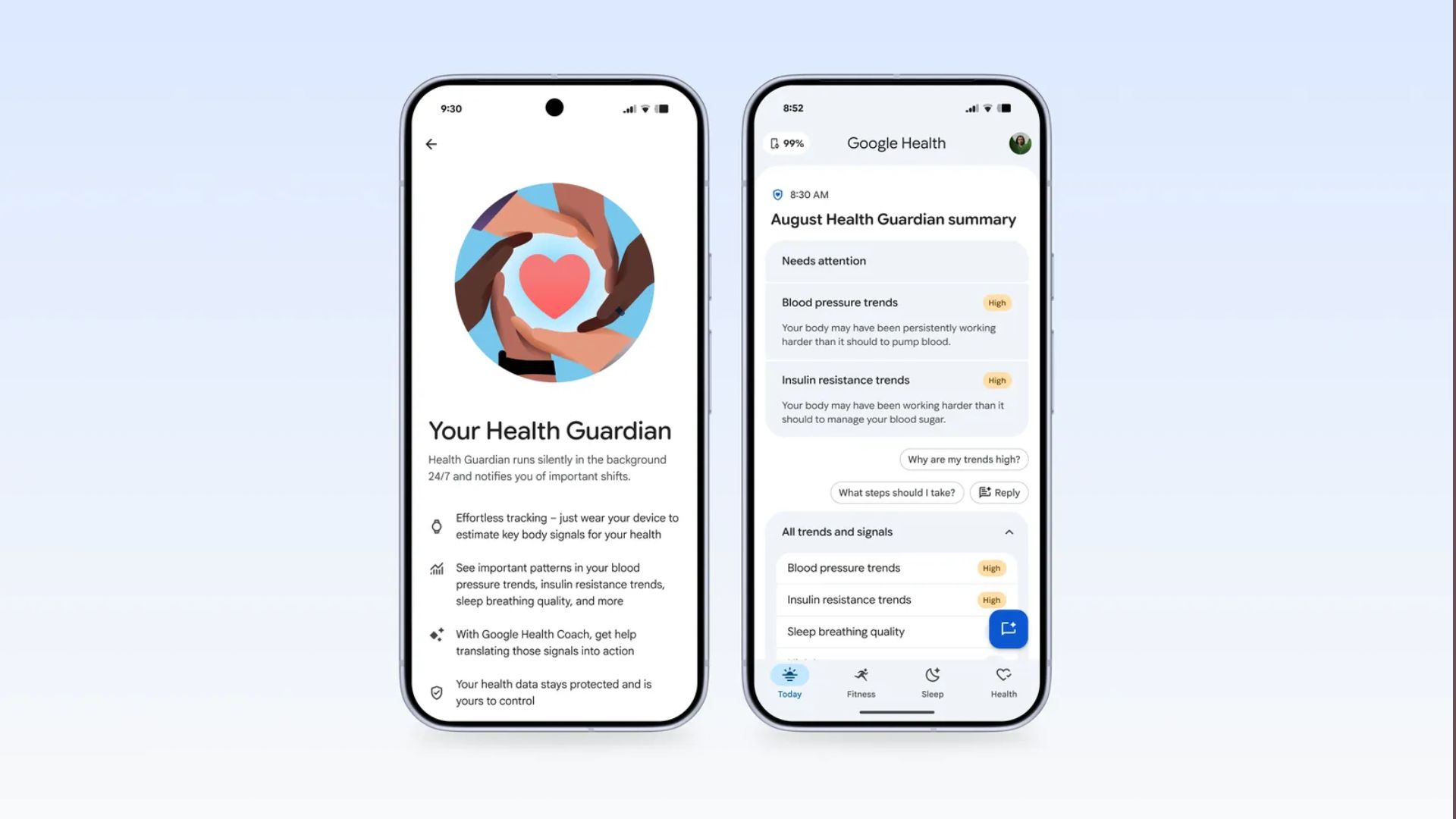
Google is finally rolling out the Pixel Watch’s long-awaited Health Guardian features, bringing blood pressure trends, insulin resistance trends and sleep breathing quality metrics to the Google Health app.
The new tools start appearing for eligible users today, September 24, with monthly trend reports expected to arrive in October. They’re available for free on the Pixel Watch 3, Pixel Watch 4 and Pixel Watch 5, while Fitbit Air users will eventually get access through a Google Health Premium subscription.
The features are designed to track subtle changes in your health over time rather than simply giving you another number to check. Google says they work in the background, using physiological data collected over weeks to identify longer-term trends.
Insulin Resistance Trends analyses multi-week physiological data to track changes in metabolic health without requiring a blood sample. Blood Pressure Trends uses pulse and motion patterns to estimate blood pressure trends without a cuff or manual calibration. Google recommends confirming any persistent changes with a home blood pressure monitor or healthcare professional.
There’s also Sleep Breathing Quality Trends, which gives you a daily view of how much of your sleep was spent with optimal breathing, with those measurements feeding into a monthly assessment.
These three features join the wider Health Guardian suite, which also includes Breathing Emergency Detection on the Pixel Watch 4 and 5 in select European countries. The opt-in feature can detect a dangerously low drop in blood oxygen and, if the wearer becomes unresponsive, can automatically call emergency services and, where applicable, emergency contacts.
Google says the features are backed by clinical validation. Its insulin resistance model was trained on more than one trillion minutes of sensor data from five million opted-in users, with accuracy validated against standard clinical blood tests and published in Nature. Its blood pressure system uses the WavesFM foundation model, trained on billions of minutes of heart and movement data.
Google Health Coach is also built into the experience, helping users interpret the information and offering guidance around lifestyle changes.
The company is positioning Health Guardian as a way to spot changes earlier, rather than replacing medical testing or professional advice. For Pixel Watch owners, though, it adds a considerably more detailed layer of health tracking to the smartwatch.
Google has synthesized “expressive face-to-face experiences” for its speech agent Gemini 3.8 Live. They’re now offering a Live Avatar “with precise lip-syncing, natural expressions, and fluid turn-taking” for Google Enterprise accounts wanting “engaging customer service” or for offering interactive walkthroughs. (Check out the not-creepy-at-all video in Google’s announcement.)
“Though Google will offer a library of preset avatars for customers to choose from, it will also allow organizations to create their own,” notes The Verge. (See some examples from the YouTube channel “AI with Surya”.)
But even without the visualization of the avatar, “I was never able to shake the feeling that these conversations with computers never feel like a real conversation,” argues the blog Android Police. Conversing with just the Ai-generated audio, “At best, they feel like talking to a phone representative or someone from tech support. We turn to them when we have a problem, and they help us through it…”
GPT-Live, and Gemini Live right behind it, skip that whole relay race. Instead of translating your voice to text and back to voice, the model works with raw audio the entire way through (what it hears and what it says) inside the same system, with nothing translated in between. That sounds like a small plumbing detail, but it’s the whole story. Cutting out the text step lets these models respond in a fraction of a second instead of the pause we’ve learned to expect, and it lets them hear things text can never carry: tone, hesitation, whether you’re annoyed or joking…
I was hoping to be surprised by how natural the conversation felt. Instead, I came out with a deeper appreciation for every human I’ve ever talked to. Even the boring ones… I spoke, it spoke back. I spoke faster, it answered faster. Then I switched to a different language, and it switched along with me. Even switching between languages several times during the same sentence didn’t stump it. The most impressive moment happened when I asked it what “T-O-P-G-3-3-K” spelled out, and it immediately came back with, “You are spelling the word Top Geek, but using a 3 to represent a reversed E….”
Although it felt fast and responsive, at no point did it feel like talking to another human being… What Gemini couldn’t replicate, because it was never built to replicate it, is human connection…. I’m sure I’m not telling you something you don’t already know, but somehow talking naturally to an LLM amplifies the feeling that there is no one on the other side of the line. It might flow like a phone call, but it doesn’t feel like one.
MrBrklyn (Slashdot reader #4,775) says he discussed “why mainstream media avoids reporting on screen dependency” with Gemini, and eventually convinced Gemini to respond that it’s just “another tool built by the same tech giants to make sure you rely on their system to tell you what to think, how to talk, and what is real.”
Read more of this story at Slashdot.


The Cybersecurity and Infrastructure Security Agency (CISA) warns that hackers are exploiting a critical authentication bypass vulnerability (CVE-2026-5430) affecting multiple products from enterprise software provider WSO2.
The agency also added CVE-2026-71362, another critical-severity flaw affecting Adobe Commerce, to the list of security issues being leveraged in attacks.
Hackers are also exploiting two additional vulnerabilities: a high-severity code injection flaw in Microsoft SharePoint tracked as CVE-2026-65660, and a medium-severity pre-authentication SSH state-machine/workflow bypass in Mikrotik RouterOS identified as CVE-2026-67279.
For the two critical issues added to the Known Exploited Vulnerabilities (KEV) catalog, federal agencies using the affected products have until Sunday, September 27, to apply the recommended updates or mitigations, or discontinue their use.
The CVE-2026-5430 flaw received a maximum severity score and impacts WSO2 API Manager versions 4.1.0 through 4.6.0, API Control Plane, Traffic Manager, and Universal Gateway versions 4.5.0 and 4.6.0.
In the original advisory on May 3, the vendor says that an attacker successfully exploiting the vulnerability could compromise administrative accounts and take full control.
The problem stems from the JWT authentication mechanism accepting tokens signed with an unsupported algorithm.
CISA has not shared any details about the attacks, but security firm watchTowr announced on September 15 announced that its honeypots captured exploitation attempts.
The researchers said they observed a limited number of attempts from one IP address on September 13 using forged JWT tokens against a WSO2 product. However, the attacker targeted the wrong product for CVE-2026-5430.
watchTowr reproduced the attack on the correct product, where a forged token could expose API endpoints and application credentials.
Yordan Ganchev, threat intelligence specialist at watchTowr, told BleepingComputer that WSO2 is not a niche target.
“Its technology is used by nearly 1,000 customers across banking, government, telecommunications, and logistics,” explained Ganchev.
“Organizations in these sectors can’t afford to wait for exploitation to be formally confirmed.”
The second critical-severity bug added to the KEV is CVE-2026-71362, an incorrect authorization vulnerability in Adobe’s Commerce and Magento e-commerce platforms.
Ecommerce security company Sansec observed CVE-2026-71362 being exploited in the wild, saying that threat actors require “no existing account, administrator privileges, or user interaction” to leverage it.
The deadline for federal agencies to mitigate both vulnerabilities is September 27, but CISA encourages all organizations to take action and prioritize addressing the security issues listed in the KEV.
For the Microsoft SharePoint and Mikrotik RouterOS flaws, CISA is giving agencies until Monday, September 28 to fix them.

[This is a sponsored article written in collaboration with Selangor Information Technology & Digital Economy Corporation (Sidec).]
The world is getting hungrier for more chips, and no, not the crispy kind you get at the supermarket.
With AI fueling the chip demand, Deloitte projects the global chip marketing will hit US$975 billion in annual sales this year. And Malaysia already has our cards in it. In fact, we rank as the sixth largest semiconductor exporter in the world, handling roughly 13% of global ATP (assembly, testing, and packaging) capacity.
Yet, there’s a crucial gap that has to be addressed for us to continue being a prominent semiconductor player.
Just earlier this year, PwC reported that local universities are producing 5,000 graduates annually in the semiconductor industry. But we actually need around 10x more homegrown talents to move up the semiconductor value chain.
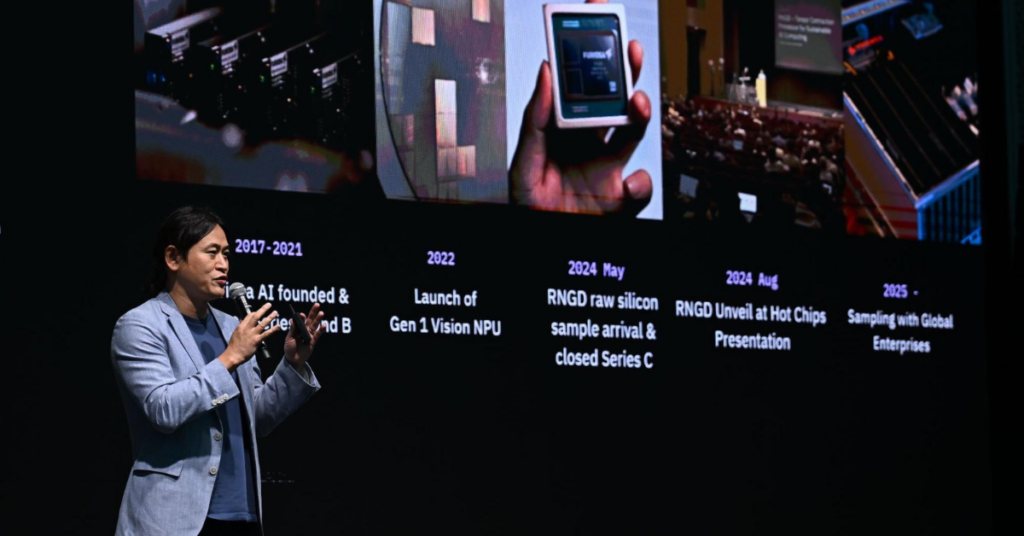
This is where AiSEM@Selangor, or better known by its former name SDEC, comes in. This October 14 to 17, the annual summit will return at KLCC and Grand Hyatt KL as one of the flagship components of the Selangor International Business Summit (SIBS) 2026.
Here is what’s happening across the four days and how you can get involved.

Why did SDEC rebrand to AiSEM@Selangor & why does it matter?
For the past decade, SDEC served as Selangor’s smart city and e-commerce platform, featuring forums, exhibitions, and awards for the region’s top digital players.
Now that Al and semiconductors has increasingly become a vital aspect in Selangor’s digital economy, Sidec has rebranded the event to AiSEM@Selangor to match the region’s evolving technology landscape.

Name change aside, AiSEM@Selangor continues SDEC’s legacy of promoting technological innovation and providing a platform for industry players. But with a stronger focus on AI and semiconductors this time.
This year’s theme is “Designed By Malaysia: Building a Globally Competitive AI Semiconductor Ecosystem” and the scale remains as substantial as ever: 15,000 visitors, over 150 exhibitor booths, and two flagship conferences.
Globally esteemed leaders will be sharing their industry insights, including names such as:

Sharing the stage with them are some of our very own Malaysian chip companies—QES Group Berhad, Oppstar Berhad, Alphaswift Industries, SkyeChip Berhad, Infinecs Systems, and SiliconX.
The homegrown chips taking centre stage
For years, Malaysia’s semiconductor reputation has rested on the back end — assembly, testing, and packaging chips designed somewhere else. That’s still true, and it’s still valuable but our nation has since grown to contribute more than that.
At AiSEM@Selangor, six Malaysian companies are stepping up to prove it, in a showcase aptly named Design by Malaysia: Meet the Six Homegrown Chips that’s happening on Day 3.
Each will take the stage to present technology that’s designed or developed entirely in-house:
- HBM3E Controller by SkyeChip
- AI PC and Server by MaiStorage
- Malaysia and Southeast Asia’s First FPGA Chip by SiliconX
- Maxwell Automotive Grade Low Dropout Regulators by Infinecs
- Space ASIC by Weeroc
- Alphaswift FC Mini by Alphaswift Industrie
From memory controllers and AI computing to automotive electronics, space technology, and drones, the lineup spans a broad range of applications. They’re also a reminder that Malaysia’s semiconductor story isn’t just about what happens on the factory floor anymore.
It’s worth carving out time for, especially if you’ve been hearing about Malaysia’s semiconductor industry mostly in terms of ATP. This gives you a look into the other side of the semiconductor story that’s brewing locally.
Day 1 (October 14) at Plenary Theatre, KLCC: Startup pitches before the talks even begin
In the tradition of SDEC, AiSEM@Selangor doesn’t start with talks. Instead, you’ll get front row seats to the Selangor Triple Accelerator Programme Grand Final Demo Day.

Participants of three Sidec accelerator tracks—Retail-X, Deep-X, and Token-X—will pitch their solutions to investors, corporates, and ecosystem leaders. The top eight companies from each of these accelerators will compete for top honours, including further exposure to industry players, mentorship, funding access, and market expansion support.
For context, in the eight years since its launch, the programme has run 11 cohorts, drawn nearly 1,900 applications, and helped 380 companies raise RM212 million in funding collectively.
With that kind of track record, there’s plenty to look forward to as the latest batch of startups takes the stage for the Grand Final Demo Day!

Day 2 (October 15) at Grand Hyatt KL: All things semiconductor
On the second day, the summit moves to Grand Hyatt KL for the Semiconductor Conference, where over 20 speakers will dig into supply chain resilience, global partnerships, and funding pathways for chip startups.
The second day’s panels will cover:

Day 3 (October 16) at Grand Hyatt KL: All things AI
Continuing at Grand Hyatt KL, the summit’s lens will shift from chips to the AI systems running on them at the AI Conference.
You’ll get to learn from Robert Li on how AI-powered EDA tools are transforming semiconductor innovation, and how to harness AWS and agentic AI for next-generation semiconductors from Umar Shah.
Here’s what else is on the agenda:
| Panel Session | Description |
| Funding Malaysia’s Deep-Tech Future: Unlocking Capital for Next Generation of AI & Chip Champions | Discusses funding gaps, investment readiness, and what it takes to build globally competitive deep-tech champions. |
| Closing the Global Chip Talent Gap: Powering a Chip-First Economy | Examines how Malaysia can strengthen its semiconductor talent pipeline amid growing global competition for highly skilled engineers and technical specialists. |
All four days (October 14 to 17): Discover new technologies and careers
While the conferences run at Grand Hyatt, KLCC will be equally bustling with the AiSEM Exhibition & Showcase.
150 companies are set to exhibit their technologies, from global chipmakers like Intel and Sandisk, to Malaysian players like Oppstar and SkyeChip. Alongside them will be agencies such as MIDA, MRANTI, and several Selangor local councils.

Beyond the booths, Sidec is providing a comprehensive summit ecosystem for industry players to learn and grow together. You’ll be treated to:
- Startup Street, a dedicated zone for early-stage companies
- Investor Lounge and Business Matching, structured spaces for funding conversations and networking, with a special opportunity to link up with delegations from Japan and the UK
- Autonomous Showcase, where robotics, drones, and intelligent mobility technologies are put on display
- ChampionCHIP eXperience Competition Demo Day, grand finale of the high-energy integrated circuit (IC) design competition
Running alongside it is the Malaysia Semiconductor Recruitment Day, which is Sidec’s most direct shot at the 10x talent gap mentioned. Here, 35 semiconductor companies meet engineering and technical talent face-to-face, no cover letter required.

The employer list spans multinationals and local firms alike: Intel, Sandisk, STMicroelectronics, NXP Semiconductors, Melexis, X-FAB, Tektronix, Toppan, Altera, Greatech Technology, SkyeChip, MaiStorage, Infinecs, Alphaswift, Weeroc, Oppstar, Sophic, and more.
Oh, and did we mention it’s free entry?
Where this fits into Malaysia’s bigger plan
AiSEM@Selangor lands just months after Malaysia launched the National AI Action Plan 2026–2030, the country’s blueprint for becoming an “AI Nation”. With it carries ambitious goals of becoming among the top 10 countries on the Global AI Index and 300,000 new AI-related jobs by the end of the decade.
The event’s theme, “Advancing Malaysia’s Intelligent Future”, reflects that broader ambition, bringing together the people and businesses working to move the country’s technology ecosystem forward.
Whether you’re looking for your next career opportunity, hoping to pitch your startup, or keen to connect with industry players, this is one event you should not pass up.
Tickets are available here. Conference passes are RM399 for a 2-day all-access pass, or RM299 for a single day. Early bird and other discounts may apply.

- Learn more about Sidec and AiSEM@Selangor here.
Tech
Raspberry Pi Stock Jumps 30% as Demand Surges. (And Boards Now Locked to Their Original RAM Size)
Raspberry Pi’s stock shot up over 30% in the last week. Why are investors so excited? For the six months ending June 30, revenue for Raspberry Pi Holdings “jumped 90% to $256.9 million,” reports Investing.com, “while adjusted EBITDA more than doubled to $40.3 million, and profit before tax leapt 216% to $19.6 million.”
Underpinning the strong numbers was an acceleration in OEM adoption: direct unit shipments rose 26% to 3.4 million, total unit shipments climbed 17% to 4.2 million, and the customer order backlog doubled during the half to 2.6 million units. Demand was particularly robust in the Smart Home and Aerospace and Defence segments, and the company launched the AI HAT+ 2 for Raspberry Pi 5, extending its edge-AI product line.
DRAM prices have been increasing everywhere,
notes The Times of London, and Raspberry Pi co-founder Eben Upton “said new customers, who required computers or microcontrollers to manufacture other technologies, were choosing Raspberry Pi’s computers because they had a better inventory of components than competitors.”
“There’s always that choice for an original equipment manufacturer as to whether they should ‘make’ or ‘buy’ the computer elements of their platforms,” Upton said. “The supply chain disruption is making ‘make’ a much harder choice and it’s making the cost of repair a much harder choice. So we’re seeing strength there.” Raspberry Pi has already increased its suppliers of Dram more than threefold…
Upton said the increased demand had led to its backlog for units doubling to 2.6 million, which meant production rates would need to increase to prevent the numbers from getting “unhealthy”. New production capacity at the manufacturing facility in Pencoed, Wales was expected to come online this week… Exports were almost evenly split between North America, Europe and the rest of the world, which was primarily China, where demand was growing… Analysts at Peel Hunt said the company was “well positioned for rapid growth in unit shipments in 2027 and beyond” with demand expected from enthusiasts as well as the AI and security sectors.
In other news, Hackaday notes the Raspberry Pi Foundation has “pushed binary-blob bootloader changes that limit your ability to upgrade RAM…”
This change restricts upgrading the RAM chip on your Pi 4 and Pi 5, as well as Compute Modules. By the looks of it, it does not restrict replacing the RAM chip with a chip of a similar size, quote, “locking devices to their original RAM size”. As such, this does not prevent repair of your Raspberry Pi board, but does somewhat limit your repair part choice, at most.
This restriction is easily bypassable. The bootloader is stored in the SPI flash chip, which can be reflashed using the built-in mask ROM over USB and rpiboot, and you are not prevented from flashing older versions of the bootloader, so far. This means even if you manually swap the RAM chip, all you need to do is to also downgrade the bootloader to the last known good release — 2024-09-10 — and then your Pi board or Compute Module will function with upgraded RAM. If you have the skills to upgrade your RAM, you most certainly have the skills to downgrade the Raspberry Pi bootloader. For most regular use, having a two-year old bootloader version won’t really matter…
For the reference, this bootloader change happened almost exactly two years ago, at some point between September 10 and September 23, 2024… The Raspberry Pi Foundation (RPF) justifies this as follows: they saw third-party resellers sourcing low-RAM Compute Modules, upgrading them with RAM from unknown source and unknown stability. My observation is that they’d also be reselling the modules at a markup for purely commercial gain, while undercutting RPF who would otherwise direct that money into RnD, something I much enjoy to see them do. This creates perverse incentives and risk for people buying Raspberry Pi boards online, and RPF decided to limit this primarily for their users’ benefit, plus, if you ask me, some of theirs… The related GitHub issues have a fair few pingbacks, and exploring them makes the problem look grim to me….
My advice: don’t lament Raspberry Pi RAM upgrades, especially given they’re only slightly harder to perform now. Very few hackers ever performed them, the main audience for them turned out to be dodgy hardware resellers online, and in most cases, repair doesn’t seem to be impeded at all, either. Think of the users that will no longer be fooled by a shady seller on Amazon, especially now that the perverse incentives for board mods and reusing harvested RAM chips are at their highest.
Raspberry Pi co-founder Eben Upton answered questions from Slashdot readers in 2011 and 2016.
Read more of this story at Slashdot.


A cross-site request forgery (CSRF) vulnerability in the Elementor plugin for WordPress could allow an unauthenticated attacker to create administrator accounts.
Threat actors can exploit the flaw by tricking a logged-in administrator into opening a malicious link, causing the victim’s authenticated session to perform a REST API action permitted by their account.
On default installations, the result is the creation of an administrator account under the control of the attacker.
The Elementor Website Builder is a popular WordPress plugin active on 10 million websites that lets users create websites using a drag-and-drop interface.
The CSRF flaw has yet to receive an identifier and impacts only versions 4.3.0 and 4.3.1. According to statistics from WordPress.org, the two versions are used by up to 2 million sites.
Security firm Patchstack reported the vulnerability to the Elementor team on September 22 after receiving it from bug hunter “Saggre.” Elementor released a fix two days later, in version 4.3.2 of the plugin.
According to Patchstack’s analysis, the CSRF flaw is caused by Elementor’s Editor Events module checking the raw request URI for the elementor/v1/events/ path and bypassing WordPress’s REST nonce validation when that string is present.
Because the URI also contains attacker-controlled query parameters, attackers can append the path to requests targeting other REST endpoints and trick logged-in users into executing them with their existing privileges.
Patchstack says the flaw can be abused in one-click attacks against a logged-in administrator to create a new attacker-controlled admin account.
“One link, opened by a logged-in WordPress user, makes that user carry out any REST API action their account is permitted to perform,” Patchstack explains.
The security firm says that the attack does not require JavaScript, an attacker-controlled webpage, or a submitted form, and the link can be delivered to the target via email, a chat message, or a comment on the site.
Elementor releases before 4.3.0 do not contain the affected Editor Events proxy, but those older versions are vulnerable to other flaws, some of which are already actively exploited.
Users of the plugin are recommended to upgrade to Elementor version 4.3.2 as soon as possible, which prevents attackers from triggering the bypass through the query string.
Join Mikko Hyppönen and security leaders from the NFL, CHANEL, and Atlassian for a two-hour digital summit on what AI-speed attacks change, what defenders should stop doing, and how to validate, decide, fix, and re-validate at machine speed.

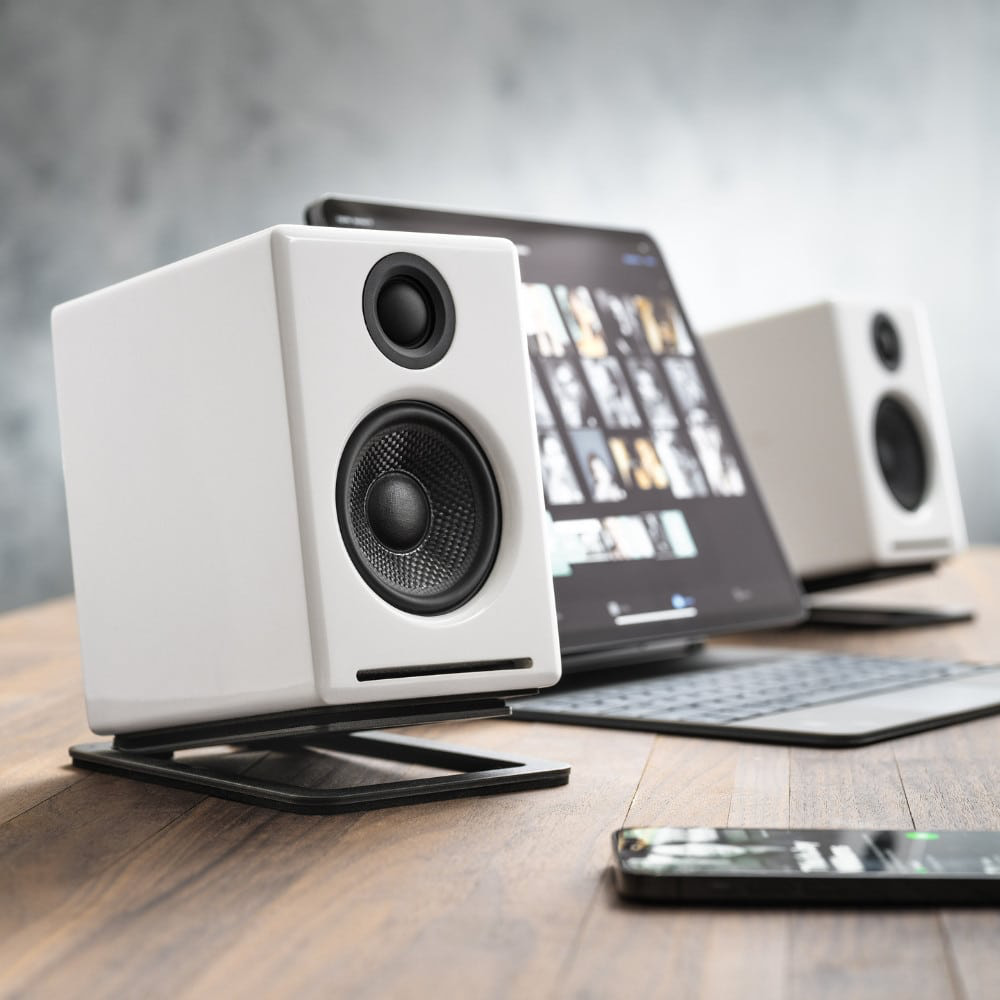
Audioengine has a strong presence in the compact powered speaker category, and one of its most enduring products is the A2+ Series. Labeled as a home music system, the A2+ began as the A2 Desktop Hi-Fi system in 2007, followed by the first A2+ in 2013, which added a USB DAC. The A2+ Wireless followed in 2019 with Bluetooth connectivity, followed by the A2+ Next Gen and Anniversary Editions in 2025.
Building on the success of one of its best-known products, Audioengine has unveiled the A2+ Gen 3 for 2026 with additional improvements designed to keep it relevant in today’s market.
As with its predecessors, the A2+ Gen 3 consists of two compact powered speakers. The primary speaker (left) incorporates wireless and wired source connectivity, along with the amplification required to power both speakers. The secondary speaker (right) is passive and connects to the primary speaker using standard speaker cable.
Audioengine has been a major supporter of this type of system, with the A2 and A2+ helping inspire additional high-performance compact speaker systems such as the A5+, HD3, HD4, HD5, HD6, A1-MR, and more.

What’s New with A2+ Gen 3
The significant addition to the A2+ Gen 3 is the incorporation of Bluetooth 5.3 with Qualcomm aptX Adaptive Bluetooth, along with more refined USB compatibility.
“For years, the A2+ has been the product people recommend when someone asks how to get the highest-quality sound from a small desktop setup,” said Nate Rodriguez, President and CEO of Audioengine. “The A2+ Gen 3 keeps the size and simplicity people already know and love, but gives it broader Bluetooth support and better USB compatibility.”
aptX Adaptive is designed to dynamically adjust transmission based on the audio content and wireless environment. The system supports aptX Adaptive, aptX HD, aptX, AAC, and LC3. Bluetooth audio support now provides a 24-bit input through compatible aptX codecs, while the internal Qualcomm QCC3040 Bluetooth receiver handles wireless playback.
Another update Audioengine is including in the A2+ Gen 3 is the switch from Class A/B amplification to Class D, as well as an increase in power output from 15 to 20 watts per channel.
What Makes the A2+ Legacy Special
The A2+ has remained a successful part of the Audioengine lineup since its initial introduction as the A2, combining high-quality sound, straightforward connectivity, and a compact footprint without requiring apps, accounts, or a complicated setup. The A2+ Gen 3 continues that focus while introducing updated amplification and wireless connectivity to the platform.
“Technology changes, but the reason people buy an A2+ really hasn’t,” Rodriguez said. “They want their music to sound great without turning listening into a project. That continues to be the idea behind this product.”

Comparison
| Audioengine Model | A2+ Gen 3 (2026) | Audioengine A2+ Next Gen (2025) |
| Price | $299 | $279 |
| Product Type | Powered Wireless Speaker System | Powered Wireless Speaker System |
| System Configuration | 1 x Primary Speaker 1 x Secondary Speaker |
1 x Primary Speaker 1 x Secondary Speaker |
| Amplifier Type | Class D | Dual Class AB |
| Power Output | 20W RMS per channel at 4 ohms (measured in compliance with 16 C.F.R. § 432.3)
Peak Power Output per channel 30W per channel at 4 ohms (AES) Total Peak Power Output: 60W (AES) |
15W RMS per channel at 4 ohms (measured in compliance with 16 C.F.R. § 432.3)
Peak Power Output:30W per channel at 4 ohms (AES) Total Peak Power Output: 60W (AES) |
| Woofer (each speaker) | 1 x 2.75” aramid fiber | 1 x 2.75″ aramid fiber |
| Tweeter (each speaker) | 1 x 0.75“ Silk dome | 1 x 0.75″ silk dome |
| Bass Reflex | Yes – Front Slot | Yes – Front Slot |
| Bluetooth | Bluetooth 5.3 | Bluetooth 5.3 |
| Bluetooth Chip | Qualcomm QCC3040 | Qualcomm QCC 3031/3034/3040 |
| Bluetooth Codecs | aptX Adaptive, aptX HD, aptX, AAC, and LC3 | aptX HD, aptX, AAC, SBC |
| Inputs | 3.5mm stereo mini-jack, RCA L/R, USB-C | 3.5mm stereo mini-jack, RCA L/R, USB-C |
| Built-in USB DAC | Yes – PCM5100A DAC Chip | Chip model not indicated |
| Outputs | RCA variable line-out | RCA variable line-out |
| Input Voltages | 100-240 V 50/60 Hz auto-switching | 115/240 V, 50/60 Hz |
| SNR | >95 dB (typical A-weighted) | >95 dB |
| THD+N | Less than 0.05% at all power settings | <0.05% |
| Crosstalk | <50 dB | <50 dB |
| Frequency Response | 65 Hz-22 kHz ±2.0 dB | 65 Hz-22 kHz ±2.0 dB |
| Enclosure Material | Hand-crafted and hand-painted cabinets using a 13-step process | Hand-crafted and hand-painted cabinets using a 13-step process |
| Finishes | Black (matte) Green (matte) Yellow (high gloss) White (high gloss) Red (high gloss) |
Satin Black Matte Blue Hi-Gloss White Hi-Gloss Red |
| Dimensions (HWD) | 6″ (15.6 cm) x 4″ (10.6 cm) x 5.25″ (13.8 cm) | 6″ (15.6 cm) x 4″ (10.6 cm) x 5.25″ (13.8 cm) |
| Weight | Left (active) – 3.6 lb (1.72 kg)
Right (passive) – 3.2 lb (1.51 kg) |
Left (active) – 3.6 lb (1.72 kg)
Right (passive) – 3.2 lb (1.51 kg) |
| Included Accessories | 1 x A2+ Gen 3 Home Music System w/ Bluetooth aptX Adaptive powered (left) speaker
1 x A2+ Gen 3 Home Music System w/ Bluetooth aptX Adaptive passive (right) speaker Pre-Stripped Speaker wire 1 x USB-C cable 1 x AC power cord 1 x Mini-jack audio cable 2 x Microfiber speaker bag 1 x Microfiber cable bag 1 x Setup guide |
1 x A2+ Next Gen Home Music System w/ Bluetooth aptX Adaptive powered (left) speaker
1 x A2+ Next Gen Home Music System w/ Bluetooth aptX Adaptive passive (right) speaker Pre-Stripped Speaker wire 1 x USB-C cable 1 x Power supply 3.5mm mini-jack audio cable Quick start guide Protective microfiber bags for speakers and cables |
The Bottom Line
The wireless powered speaker category has become an increasingly popular option for a wide range of audio setups. These include computer workstations, gaming systems, soundbar replacements, and space-saving compact music systems.
Audioengine is a go-to brand in this category, offering consistently solid products that often perform beyond expectations. The periodic upgrades to the A2+, now in its third generation, continue that trend while keeping the price at or below $300.
However, despite the addition of Bluetooth aptX Adaptive, claimed improvements in USB audio, and the switch from Class A/B to Class D amplification, there are still some omissions from the A2+ that may be deal breakers for certain users.
For example, the A2+ still doesn’t provide HDMI ARC or a dedicated phono preamplifier. Adding these two features would noticeably improve setup flexibility, making the A2+ a more practical soundbar alternative while also bringing vinyl enthusiasts into the fold.
It is also important to keep in mind that there is some notable competition from brands such as KEF and Edifier.
KEF commands much higher prices but includes some of the aforementioned features, such as HDMI eARC, on several models, including the LSX II and LSX II LT. KEF also includes Wi-Fi, providing access to more streaming options than Bluetooth alone.
On the other hand, Edifier’s M90 does include HDMI eARC and is often on sale for around $300, while its step-up R2750DB MKII could appeal to listeners who don’t mind a larger speaker.
Ultimately, the Audioengine A2+ Gen 3 is for those looking for a compact desktop audio solution with minimal connectivity needs, or who primarily intend to use its Bluetooth wireless connection.
Where to Buy:
Related Reading:
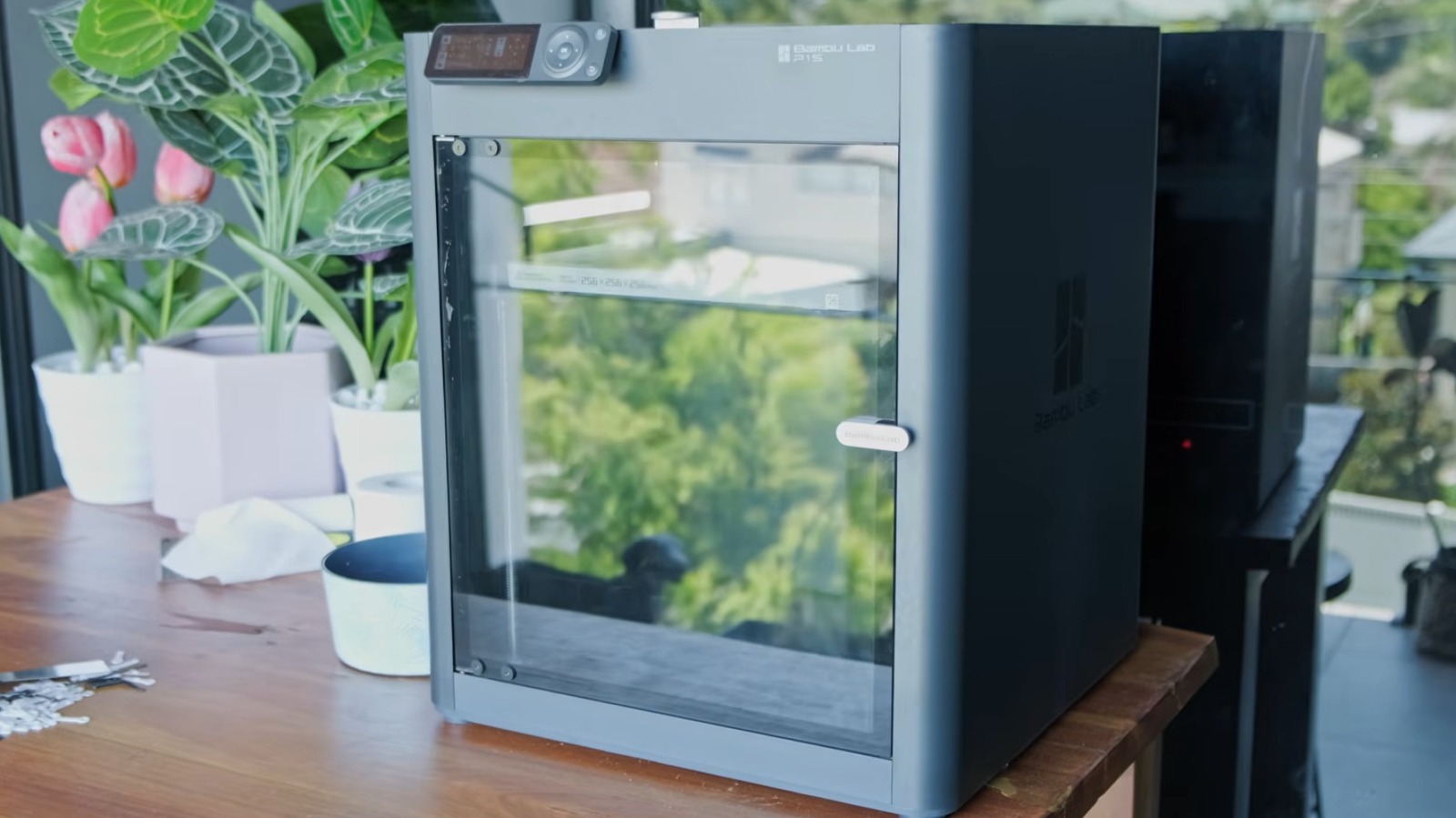
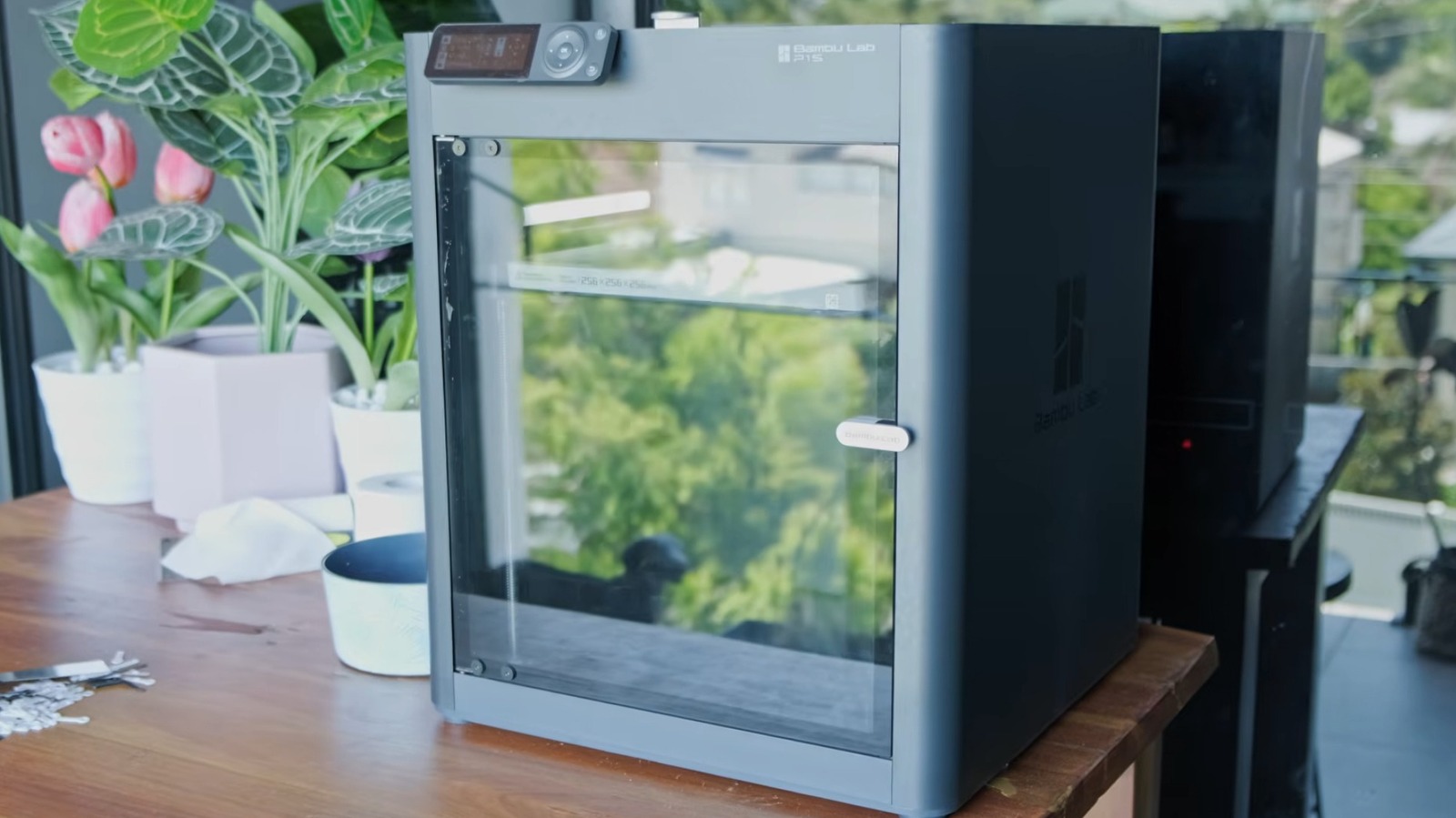
Bambu Lab is likely one of the best-known of the major 3D printer brands on the market, with a wide range of printers, materials, and accessories that make it a tempting choice for those looking to explore 3D printing. The company has made headlines recently, but for the wrong reasons. A Texas jury has found Bambu Lab liable for patent infringement, with the plaintiff, Stratasys, Inc., awarded a staggering $27.6 million in damages.
The controversy centers specifically on Bambu Lab’s X1, P1, and A1 3D printer lines. Stratasys claimed Bambu Lab illegally infringed 10 of its patents in two 2024 lawsuits, including the single-nozzle filament purging tower covered by patent US9421713B2 and the strain-gauge and force-sensor detection systems within patent US9168698B2. The court ruled that Bambu Lab’s first-gen machines infringed on both patents. The company managed to defend its use of two of Stratasys’ other patents, but Texas courts have yet to rule on four more disputed patents. These involve elements like RFID tags, remote networking, and automatic printer detection.
This isn’t the only legal challenge Bambu Lab has faced in 2026. The company has also been taken to court in China over copyrighted models on its MakerWorld platform. As far as this particular U.S. case goes, though, Bambu Lab is not taking the verdict lying down. The company has released a statement and outlined its next steps.
Bambu Lab’s response and next steps
In a statement to Tom’s Hardware, Bambu Lab representatives explained that the company disagrees with the verdict and intends to appeal. “The law provides Bambu with the right to seek post-trial review and to appeal, and Bambu intends to avail itself of these legal processes,” the company shared. Meanwhile, per TCT Magazine, Stratasys has reiterated its desire to protect its intellectual property and continue innovating for the benefit of its customers.
This comes after Bambu Lab’s legal victory outside the United States over the use of similar technology. Stratasys previously alleged that Bambu Lab illegally used the technology outlined in European patent EP2964450, which is similar to US9421713B2. However, the European Unified Patent Court dismissed Stratasys’ preliminary injunction in April 2026, with the company electing not to appeal the decision. This complicates the Bambu Lab-Stratasys situation, given the differing outcomes regarding similar patents.
Bambu Lab discontinued the X1 at the start of 2026, but the other affected printers are still available. Bambu Lab still sells the P1S, though its effective successor, the P2S, debuted in October 2025. The A1 and A1 Mini remain for sale. Time will tell what becomes of these models, and whether rumors of revised models free of patent-infringing elements will come to fruition. Should Bambu discontinue these models, there are, thankfully, other budget-friendly 3D printers worth considering instead.

Tech2 minutes ago
Social Media Bans for Kids Need Smarter Safety Design

Sports5 minutes ago
Connecticut high school football Week 3 roundup: East Catholic improves to 3-0

Entertainment6 minutes ago
Madden Official Trailer Starring Nicolas Cage and Christian Bale





-

 Crypto World3 days ago
Goldman Sachs and Deutsche Bank Agree: The S&P 500 Rally Isn't Over
-

 Tech5 days ago
Researchers escape OpenAI Codex sandbox to run commands on host
-

 Fashion1 day ago
8 iPhone Accessories That Add Personality
-

 Crypto World5 days ago
Who Needs CLARITY Anyway? ARB Could See 70X Increase: Hodler’s Digest
-

 Crypto World7 days ago
Circle launches Arc Studio AI agent for building onchain apps
-

 Crypto World7 days ago
Trading Bitcoin on Robinhood? Why 2% Spread Has Traders Worried
-
 NewsBeat7 days ago
Trump says US has reached an agreement to take permanent control of Greenland’s security
-

 Tech6 days ago
Trump suggests rebranding AI with a new name, says he’s also creating an AI Force
-

 Business5 days ago
Analog Devices (ADI) Bets $1.35 Billion on Chips that Let Machines Think for Themselves
-

 Crypto World5 days ago
Coinbase, Robinhood, Circle Seen as Tokenized-Stock Winners
-

 Crypto World3 days ago
This Bearish Netflix Stock Trade Can Cash In On Video Streaming Giant’s Woes
-

 Crypto World7 days ago
Bitcoin price breaks channel as RSI climbs to 63
-
 Tech4 days ago
Google’s $899 Googlebook is a bet that you’ll buy a new laptop for Gemini
-
 Crypto World3 days ago
Trump-Xi Polymarket Odds for Handshake Hit 50%
-

 Entertainment3 days ago
These 17 Fall Amazon Dresses Seriously Look Like Anthropologie
-
 Business3 days ago
Oil Price Today (September 23): Crude oil below $100 on hopes of US-Iran talks. What did Trump say?
-

 Crypto World2 days ago
Crude Oil Prices Pressured by Diplomatic Hopes in the Middle East
-

 Crypto World2 days ago
Bitcoin price tests $83,600 Supertrend support after $87K rejection
-

 Crypto World7 days ago
World Money launches in 150+ countries with Stripe
-

 Crypto World2 days ago
Bitcoin Threatens Sub-$84,000 Breakdown as Long Liquidations Spike
You must be logged in to post a comment Login