The round amount is undisclosed. Backers include Nordic Makers, Emblem, the Lovable company itself, the Sequoia Scout Fund, and the Andreessen Horowitz Scout Fund. Lovable CEO Anton Osika personally endorsed the team. Atech lets users describe a hardware concept in natural language and receive a working prototype.
Atech, a Copenhagen-based AI hardware startup, has raised an undisclosed pre-seed round from Nordic Makers, Emblem, Lovable, the Sequoia Scout Fund, and the Andreessen Horowitz Scout Fund.
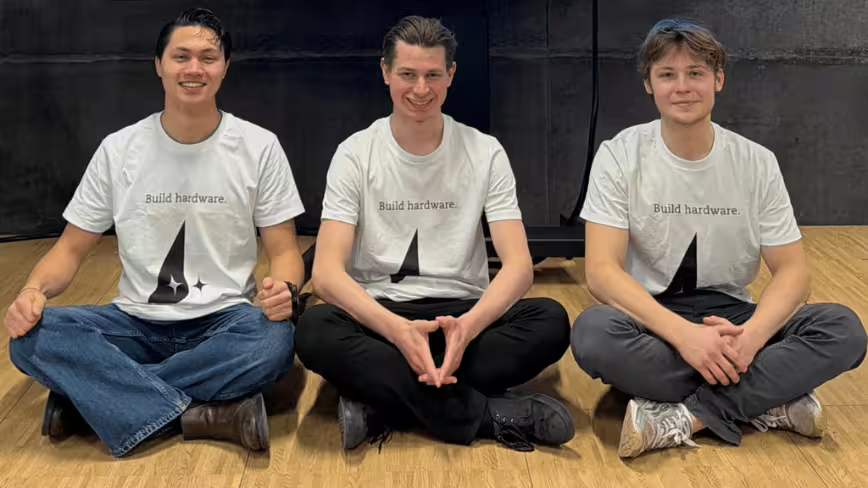
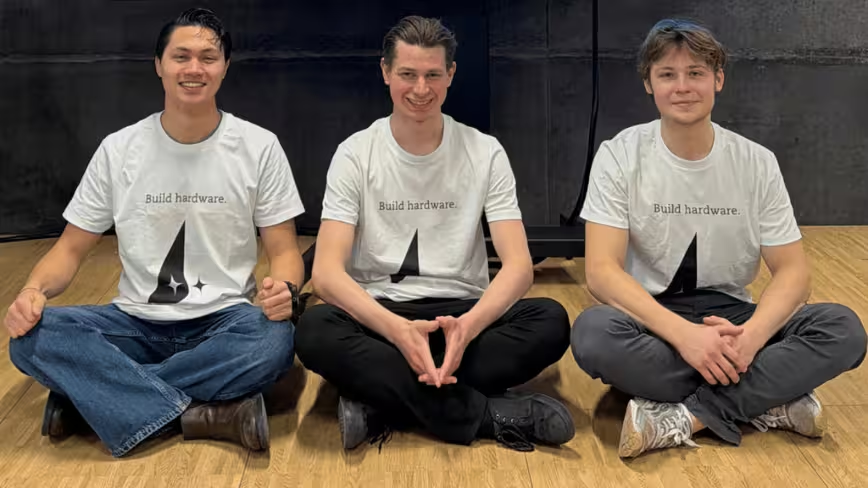
Founded by Vladimir Baran (CCO), Tomas Erik Harmer (CEO), and David Stålmarck (CTO), the company is building what it calls “vibe-engineering” for hardware, a platform that lets users describe a physical device concept in natural language and receive a working prototype, with all underlying technical complexity handled by the platform.
The conceptual anchor is the parallel with what Lovable did for web application development. Lovable, the Swedish startup that allows non-developers to build full-stack web applications through natural language prompts, is valued at over $1 billion following rapid growth from its 2024 launch.
Anton Osika, Lovable’s CEO, backed Atech directly and provided the company’s most significant endorsement: “I am seeing the same patterns Lovable had but for hardware. I’m really excited to see Atech’s journey. The team is one of a kind.”
Advertisement
That institutional stamp of approval, from the founder of the software-vibe-coding category, is the most newsworthy element of the announcement and frames Atech explicitly as the hardware equivalent of an already-validated category.
The problem Atech is addressing is genuine and well-documented. Building a hardware prototype has traditionally required either years of specialised engineering expertise or significant capital to hire that expertise.
A developer can build and deploy a web application in a weekend using modern tools; the equivalent end-to-end hardware experience does not exist. This asymmetry has kept hardware innovation concentrated among a small group of specialists and within well-capitalised companies, while software development has been progressively democratised over the past decade through layers of abstraction that removed the need to understand compilers, memory management, or network protocols.
Harmer, Atech’s CEO, described the gap: “Software has an entire stack of tools that lets a teenager build an app in a weekend, hardware doesn’t, and we’re still working at the first level of abstraction. Atech is building the missing layers, so creating in the physical world can feel as fast and joyful as writing code.”
Advertisement
The investor syndicate is notable for a pre-seed round and warrants careful characterisation. The Sequoia Scout Fund and the Andreessen Horowitz Scout Fund are scout programmes operated by Sequoia Capital and a16z respectively, through which scouts, typically founders and operators in the funds’ networks, make small investments (often $5,000 to $100,000) in early-stage companies on behalf of the firm.
Scout fund participation does not constitute a direct investment by Sequoia or a16z in the traditional sense, and does not imply follow-on commitment from the parent firms. For Atech, the value of scout participation is primarily signalling, proximity to two of the world’s most prominent venture capital firms, rather than the capital amount itself.
Nordic Makers is a Copenhagen-based angel investor collective with deep ties to the Danish and broader Nordic startup ecosystem. Emblem is a European seed fund.
Lovable’s participation as a corporate backer, rather than just as an endorser, gives the round a strategic dimension: Lovable has a direct commercial interest in seeing hardware development democratised, as it would expand the surface area for Lovable-style interfaces.
Advertisement
The broader thesis Atech is operating within, which the company refers to as “Physical AI”, is gaining traction across the industry. Nvidia’s 2025 annual report framed Physical AI as its next major market opportunity: intelligent systems that sense, interact with, and act upon the physical world, including robotics, autonomous vehicles, drones, and industrial systems.
As these applications proliferate, the ability to rapidly prototype physical hardware becomes a competitive capability rather than a niche skill.
Whether a natural-language-to-prototype platform can genuinely close the hardware-software gap depends on how far the abstraction stack Atech is building can reach: PCB layout, component selection, firmware, and manufacturing considerations are all domains where the penalty for getting things wrong is a physical object that does not work, not a bug fix pushed in a pull request.
That is a harder problem than Lovable solved, and it is the question the company’s first customers will answer.
There are dozens of U.S. Air Force bases scattered across the U.S. Some are large and well-known, such as Nellis Air Force Base in Nevada, which houses the Air Force’s most advanced air combat training facility. Others, however, fly under many people’s radar. For example, you may not have heard of Buckley Air Force Base in Aurora, Colorado, but the facility traces its roots back to World War II. Named for a World War I fighter pilot that was killed in combat, this base had an interesting history following the second World War. It was briefly an auxiliary field for Lowry Air Force Base before being converted to an Air National Guard Field, and then to a Navy Air Station. It was eventually transferred to the Air Force in 1959.
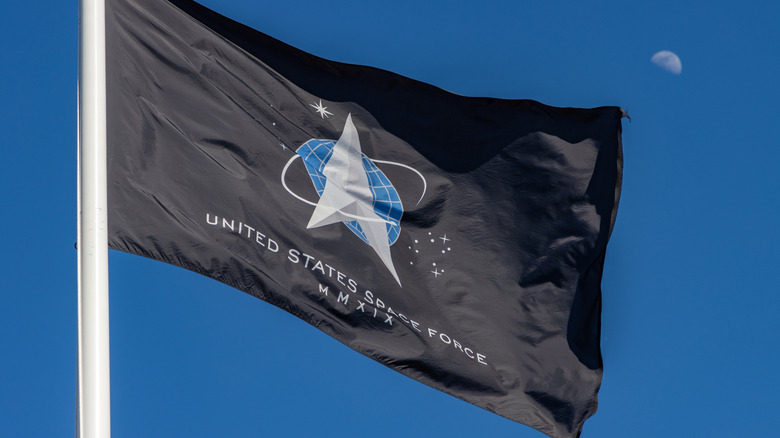
In 2004, Buckley became the host base for the 460th Space Wing and also hosted the Colorado Air National Guard. After the Space Wing was deactivated in 2020, Buckley became a unit of the new United States Space Force and renamed Buckley Space Force Base. Today, it hosts Space Base Delta 2, which provides support services for global missile warning and tracking. It also houses 117 tenant units, such as the Navy Reserve Center Denver and the Army National Guard Colorado. Overall, the base is used by active-duty service members from every service branch, along with civilians, contractors, reservists, and more. While you may not see any soldiers in uniform on base, you will indeed still see planes flying in and out.
Advertisement
The Buckley base maintains aircraft and conducts training
Ajax9/Getty Images
Buckley Space Force Base’s name change didn’t alter the base’s core mission, but simply reflects its realignment under the Space Force. Its main mission, to “[e]mpower Joint and Allied dominance across all domains through unrivaled global combat support,” falls under several domains, including air, space, cyberspace, land, and sea. Major units that are stationed there include the Colorado Air National Guard’s 140th Wing, which flies and maintains F-16C+ Fighting Falcon aircraft.
In addition to the Fighting Falcon, Buckley sees a wide variety of aircraft flying into and out of the base. In 2025, six MV-22B Ospreys from the Marine Corps conducted training out of Buckley, giving crews high-elevation experience for potential future operations and illustrating Buckley’s contribution to joint operations throughout the region and beyond.
The United States Space Force is a branch of the U.S. Armed Forces and operates six bases across the country, including Buckley. There are two more bases in Colorado, one in Florida, and two in California. The organization’s mission is to “secure our nation’s interest in, from, and to space.” At the time of this writing, there were 9,400 active duty members, also known as Guardians. One has even been to space, launching to the International Space Station in 2024.
Some social workers are reaching a breaking point, leading them to leave the profession
A quiet crisis is unfolding among Singapore’s social workers, the professionals who keep vulnerable families from falling through the cracks.
Many are juggling 30 to 50 active cases at any given time, and alongside the emotional demands of the job, social workers typically start on modest salaries of around S$4,000. Some are even reaching a breaking point, with the pressure in certain cases leading practitioners to leave the profession altogether.
What does a typical day look like for these workers, and what measures are in place to help them cope with mounting stress?
Too many cases, too little time
Image Credit: Nattakorn_Maneerat via Shutterstock
On paper, social workers in Singapore manage an average of 22 cases per year, according to the Ministry of Social and Family Development (MSF). On the ground, however, several practitioners have told media outlets that the reality is markedly different.
In 2022, some social workers who spoke with former MP Louis Ng said they were managing between 30 and 50 cases at any given time—that’s almost at least 50% more than the average number from MSF. He described such workloads as excessive, warning that they are directly detrimental to the quality of care social workers can provide.
Advertisement
With caseloads that high, there is simply not enough time to give each family the attention it needs. And when a crisis strikes, they cannot choose between one client and another because everyone’s situation is equally serious.
The cases are not straightforward. A single file might involve family violence, a child at risk, a parent with untreated mental illness, and a household on the verge of eviction—all at once.
One social worker told Channel News Asia (CNA) that the job ultimately comes down to ensuring children are safe, the elderly have a place to stay, and families are not in conflict. But doing that well requires time that most social workers say they do not have.
Moreover, heavy administrative demands compound the problem. One worker noted that direct contact with clients—the actual work of helping—accounts for only 5 to 10% of his time. The rest is paperwork.
Advertisement
The COVID-19 pandemic has only worsened the strain on our social workers, with a Jul 2021 study by the Asian Social Work and Policy Review finding that nearly 60% of frontline social workers experienced anxiety at the height of the pandemic and about 45% even faced depression.
When passion becomes a liability
Image Credit: Ekkasit A Siam via Shutterstock
Many social workers enter the field driven by a strong sense of purpose. But within the sector, some say passion alone is not enough to sustain them—and may even be counterproductive.
An anonymous founder of Instagram account @SGSocialWorkMemes, known within the industry for its candid portrayal of social workers’ experiences, shared in an interview with CNA that this narrative can have unintended consequences.
Framing social workers as being motivated by outcomes rather than income, they said, can become an excuse to justify lower pay, turning fair compensation into a perceived bonus rather than an entitlement for the work and hours put in.
Starting salaries in the sector sit at around S$4,000 per month, with many earning between S$3,000 and S$4,000. For a role that carries significant responsibility and emotional strain, some argue that the pay does not adequately reflect the demands of the job.
Advertisement
The overemphasis on passion also, over time, feeds a broader misconception: that social work is something anyone can do, or that social workers are essentially paid volunteers. This undermines the real expertise, training, and skill the profession requires.
Burnout in practice
Image Credit: National Council of Social Service
Another social worker who spoke with CNA, Amelia (not her real name) has been in the sector for 10 years. She described a workday that sometimes runs from 9AM to 4AM, managing 20 of her own cases, supervising eight social workers who each carry an average of 30 cases, and responding to back-to-back crises throughout.
These crises can range from a text about a client running out of milk powder for their child, to a message about a husband beating his wife—sometimes with a photo of a bruise or bloody wound attached—to bringing three children to the hospital and having them admitted at 4AM, just five hours before work begins the next morning.
This is what burnout looks like in social work: not just exhaustion, but vicarious trauma and compassion fatigue accumulated over years of absorbing other people’s worst moments. As one worker described it, “The more you do, the more you can’t look away.”
Beyond the emotional toll, social workers also describe structural frustrations. One recurring requirement is “mandatory sightings” of children—home visits or video calls to physically verify their safety. Workers say this surveillance function can sit uneasily alongside the profession’s broader aim of supporting marginalised families rather than monitoring them.
Advertisement
Tensions are further compounded by rigid programme structures in Singapore’s social service system. When funding and targets are tied to specific outcomes, such as employment, social workers may find themselves unable to formally address interconnected issues like housing instability or mental health, even when these are clearly central to a family’s situation. Watching those needs go unmet within a system too narrowly defined can add to long-term strain.
What is being done
Image Credit: BrightSparks
The pressures on our social workers have not gone unnoticed.
MSF has been progressively revising salary guidelines in recent years. In the latest update for the social service sector, starting salaries for social workers and counsellors rose by 3% in 2025 to S$3,970.
Overall, recommended salaries across roles in the sector increased by an average of 5%. Some positions saw larger adjustments of up to 15% in the 2026 financial year, which runs from Apr 2026 to Mar 2027.
Beyond pay adjustments, the National Council of Social Service also rolled out the Sabbatical Leave Scheme last Feb, offering social service professionals 10 weeks of paid sabbatical leave with salary support of up to S$15,000 to recharge and rejuvenate, on the condition that participants mentor junior colleagues and share their learnings upon return.
Advertisement
Taken together, these measures reflect gradual efforts to strengthen the sector, though growth remains modest relative to demand. As of Dec 2024, there were 3,031 accredited social work professionals in Singapore—an increase of about 7.8% in the number of registered social workers from the year before.
To expand the workforce, several efforts are underway.
In Sept 2025, the Singapore University of Social Sciences launched its sixth school, the School of Social Work and Social Development, aimed at strengthening the sector through education, research and partnerships. The launch comes as Singapore faces increasingly complex challenges and a projected demand for 2,000 additional social service professionals over the next five years.
The underlying question
Singapore’s social service sector needs to expand because the need for it is growing. An ageing population, rising mental health concerns, and increasingly complex, multi-generational family issues are driving up caseloads.
Advertisement
But social work carries a high level of responsibility and an equally high emotional burden, with pay that many in the profession describe as modest relative to the demands of the job.
As the gap between rising demand and limited capacity persists, the question becomes whether the system can scale fast enough to sustain those holding it up—before burnout turns into attrition, and attrition into gaps in care for the families who need it most.
Read other articles we’ve written on Singaporean businesses here.
Google I/O 2026 starts on May 19, and while we already have a pretty good idea of what to expect, there’s plenty of room for surprises. The tech giant has been all-in on AI for the past few years, and that probably won’t change, but there could be a few hardware announcements on tap this year.
From Android XR glasses to hearing more about Aluminum OS, there’s a lot to look forward to. Below, we’ll fill you in on what we expect Google to talk about during the I/O keynote.
More AI features
We expect Google to announce several new artificial intelligence features that integrate further into its products. Now that agentic AI is all the rage, we’ll most likely see Google lean even further in this direction. This type of AI can perform tasks on your behalf, like controlling your computer, with minimal oversight. We’ll have to wait and see what and how many AI features Google announces this time.
Advertisement
Let’s also not exclude updates to existing or new products that Google could announce. Veo, Lyria, Beam and countless others could get some spotlight at this year’s conference.
Veo and Lyria are Google’s AI-generated video and music tools, respectively, and have continued to improve since they were originally announced. Beam is an ambitious and futuristic way of video conferencing that uses several cameras to make you appear as though you’re speaking directly to the person in front of you as a 3D model.
Gemini 4.0
The next generation Gemini is likely going to be announced at Google I/O 2026
Advertisement
Thomas Fuller/Getty Images
Among all the AI announcements, we’re expecting Google to spend a significant amount of time talking about its flagship AI model for Gemini. Whether it gets a solid 4.0 status or something like a 3.8, we know the new version of Gemini will likely be one of the biggest announcements of Google I/O 2026.
Exactly what Google has been working on with Gemini is anyone’s guess. It’s easy enough to assume that the latest model will be smarter and faster than previous models, but Gemini itself is in nearly every Google product these days, so how the latest and greatest AI from Google trickles down will be interesting to see.
Google recently released a new notebooks feature for Gemini that will let you store sources for a particular topic in one place for easy access. Notebooks are self-contained databases full of sources on a particular topic that you can continue to add to. Gemini will use a notebook for context, so you don’t have to start all over again with information sources.
Those notebooks also sync directly with Google’s AI research assistant NotebookLM, allowing you to create a host of different outputs, like video overviews, charts and more. One of the main differentiators between NotebookLM and Gemini is that NotebookLM will only use your notebook as the source of truth, whereas Gemini will scour the internet with the notebook’s context for the search.
Advertisement
Gemini can also now create dynamic and interactive simulations directly in your chats when you ask it to “show you” or “visualize” something.
Google hasn’t slowed its rollout of Gemini features, so a lot more are likely on their way with the latest version of the AI model.
Android XR Glasses
Android XR will most certainly steal some of the spotlight during this year’s I/O conference.
Advertisement
Andrew Lanxon/CNET
Google showed off its Android XR glasses at last year’s I/O, along with a few partnerships it formed to create them, so we’ll likely see the smart glasses become more of a product than a concept this year.
Smart glasses are gaining popularity, and Google took awhile getting back into the space after its first swing in the sector. Google Glass was way ahead of its time, but from the demos we’ve seen of Android XR, that patience may have paid off.
Google’s first set of “smart glasses” back in 2013 was an obvious pair of spectacles with a protruding lens that the wearer could view information on, and even take photos and record video. The product was met with immediate and significant pushback as an invasion of privacy, as well as being elitist and rude. This eventually resulted in the term for the wearers as “Glassholes.”
A lot has changed since the introduction of Google Glass, and Android XR glasses won’t look nearly as obvious when released, which could make it even creepier, but at least they’ll come with a load of usable features like heads-up notifications, live translation and Gemini Live. They’re also launching into an established market now, with smart glasses competitors from Meta’s collaborations with Ray-Ban, Oakley and more. Samsung’s own Galaxy XR headset runs on the Android XR platform and is already available to purchase. This first piece of hardware running on the platform paves the way for more hardware, with smart glasses being a natural next step.
Advertisement
Google I/O could bring us more demos, final hardware details and a release date for when you’ll be able to get Android XR glasses in your hands. Given that there are multiple partners in the ring, the price ranges could vary, potentially offering both entry-level and high-end offerings.
Android 17
Google/Screenshot by CNET
Android is Google’s playground for showcasing the best of its AI features, though some of them may be exclusive to the new Pixel phones we expect to see later this year.
Google released the first beta version of Android 17, its phone-operating system, back in February, and three additional betas have been released since, with the latest in mid-April. We can expect the latest version of the OS to be released in its final form sometime in June or July, shortly before we expect the next family of Pixel devices to be announced. For the past few years, the new Pixel lineup has been announced in August during the Made by Google event.
So far, there are no blockbuster features in the Android 17 beta, but Google has introduced interesting tweaks throughout. One of the most interesting features so far is app bubbles, which allows you to quickly access any app in a floating window and dismiss it to a bubble on your screen.
Advertisement
Last year, Google separated its Android announcements into a separate show a week before its I/O conference: The Android Show. This allowed Google to spend more time talking about AI without sacrificing the announcements it had on tap for Android. Whether The Android Show will return this year remains to be seen — though reportedly, a YouTube placeholder for the event was accidentally set live last week before being taken down.
Aluminum OS
One of the most interesting projects Google has been cooking up is a new operating system that merges Android and ChromeOS. Dubbed Aluminum OS, the product will bring Android to laptops and other devices with the full Chrome web browsing experience.
When exactly we’ll see hardware for the new OS is still unknown, but Google could surprise us with partnership announcements or even a full product announcement at I/O this year. The return of a Google-made Pixelbook doesn’t seem out of the realm of possibility, either.
Merging both of Google’s operating systems will likely bring a more seamless software experience between how AluminumOS computers and Android phones interact.
Overview’s satellites will collect sunlight continuously in geosynchronous orbit and beam it as near-infrared light to existing ground solar installations, which convert it to electricity. The approach extends solar farm output through the night without new land, new grid connections, or new infrastructure on the ground.
Meta has signed an agreement with Overview Energy, a space solar startup, to secure up to 1 gigawatt of power from satellites that collect solar energy in orbit and beam it to Earth as near-infrared light.
An initial orbital demonstration is planned for January 2028; commercial power delivery is expected in 2030. Financial terms of the agreement were not disclosed.
The deal is the first commercial capacity reservation for space-based solar energy by any company, and it marks the highest-profile endorsement yet of a technology that has long occupied the realm of speculative engineering.
Advertisement
The core problem the deal is addressing is the most pressing operational constraint in AI infrastructure: data centres need electricity around the clock, but most renewable energy sources, wind and solar, are intermittent by nature.
The 💜 of EU tech
The latest rumblings from the EU tech scene, a story from our wise ol’ founder Boris, and some questionable AI art. It’s free, every week, in your inbox. Sign up now!
Meta’s data centres used more than 18,000 gigawatt-hours of electricity in 2024 alone, roughly equivalent to powering 1.7 million American households for a year. As the company expands its AI compute footprint, including the Hyperion data centre campus in Louisiana and the Prometheus campus in Ohio, the latter of which is being powered by nuclear energy, its total power demand will increase substantially.
Advertisement
The company’s target is to bring its renewable energy capacity to 30 gigawatts. The challenge is that even as companies commit to renewable energy, solar farms stop generating at night and wind farms are weather-dependent.
Battery storage at data-centre scale is expensive and land-intensive. Nuclear energy solves the intermittency problem but requires years of regulatory approval and construction. Space solar is a third path.
Overview’s design is meaningfully different from earlier space solar concepts that proposed using lasers or microwaves to beam energy from space to a central receiving station.
Those approaches face significant technical, safety, and regulatory barriers: microwave beams require large purpose-built rectenna installations, and high-intensity laser transmission raises aviation and safety concerns. O
Advertisement
verview instead uses a broad, low-intensity near-infrared beam, invisible to the naked eye and, according to CEO Marc Berte, safe to look at directly from the satellite, aimed not at a new receiving station but at an existing utility-scale solar farm.
That farm’s existing photovoltaic infrastructure converts the near-infrared light into electricity exactly as it would convert sunlight. The beam effectively extends the solar farm’s generation hours into the evening and nighttime, without requiring any new land, new grid connection, or new ground infrastructure.
The satellites will operate in geosynchronous orbit, remaining fixed relative to a given point on the Earth’s surface.
Overview was founded in 2022 and is based in Ashburn, Virginia, within the data-centre-dense corridor of northern Virginia that houses a large portion of the world’s internet infrastructure.
Advertisement
The company emerged from stealth in December 2025. It has already demonstrated power beaming from a moving airborne platform to the ground, a precursor to the space-based transmission it is developing.
The satellite LEO demonstration planned for January 2028 will be the first test of energy transmission from orbit. The advisory board includes Jim Bridenstine, former NASA Administrator and former Congressman; Mike Griffin, former NASA Administrator; and Joseph Kelliher, former FERC Chairman and Executive Vice-President of Regulatory at NextEra Energy.
The three advisers span both the space and energy regulatory domains that Overview’s technology must navigate simultaneously.
Nat Sahlstrom, Meta’s Vice-President of Energy and Sustainability, framed the deal as a strategic hedge: “Space solar technology represents a transformative step forward by leveraging existing terrestrial infrastructure to deliver new, uninterrupted energy from orbit. We are excited to help bring this new energy technology to market.”
Advertisement
The caveats are substantial. The 2030 commercial delivery date is eight years from Overview’s founding, in a sector, space solar power, that has produced ambitious concepts but no commercial systems anywhere in the world.
The technical challenges of building, launching, and maintaining a geosynchronous satellite capable of continuous high-power energy transmission at commercial scale remain unsolved.
The agreement grants Meta early access to capacity from Overview’s system; it does not guarantee that the system will exist as planned, and financial terms are undisclosed.
Overview has introduced a new unit of measurement, “megawatt-photons”, to describe the light power required to generate a megawatt of electricity, a framing that reflects how unlike a standard power purchase agreement this deal is.
Advertisement
For Meta, the cost of signing a capacity reservation agreement with a pre-commercial startup is low relative to the potential benefit of securing 1 gigawatt of around-the-clock renewable power for its 2030 data centre estate.
If Overview succeeds, Meta has secured a strategic advantage. If Overview does not, Meta has lost the cost of signing the agreement.
John Sayles aims wide with Lone Star. Set along the Texas border, the film tries to unpack history, identity, and the uneasy balance between communities that live side by side but don’t always trust each other. When a skeleton turns up in the desert, Sheriff Sam Deeds (Chris Cooper) starts digging into the past, and it doesn’t take long before the town’s version of its own history begins to fall apart.
At the center is the legacy of two very different lawmen. One ruled through fear and didn’t bother hiding it (Kris Kristofferson). The other built a reputation on fairness, or at least something close to it (Matthew McConaughey). The problem is that reputations don’t always survive scrutiny, especially in a place where people have learned to keep certain details buried because it’s easier that way. And out there, there’s always somewhere to dig… and always someone with a shovel riding shotgun in the flatbed.
Sayles layers in multiple threads; racial tension, cross-border identity, old relationships that never fully resolved, but not all of them land with the same weight. The film wants to say something meaningful about the U.S.–Mexico border and life in Texas, but it never quite feels grounded in the reality of the place. The politics come across as constructed rather than observed, and the conflicts often feel more outlined than lived in.
That’s where the comparison to something like No Country for Old Men becomes unavoidable. That film actually gets West Texas; the silence, the distance, the way tension just hangs in the air like heat off the asphalt. Lone Star gestures in that direction but doesn’t fully get there.
Advertisement
There’s still value in the way it connects past and present, and the performances keep it moving, but the film never quite finds the edge it needs. It circles big ideas without fully committing to them, and in a story built around buried truths, that hesitation stands out.
Image Quality
Criterion’s release of Lone Star comes as a 4K Ultra HD and Blu-ray combo. The 4K disc is region-free, while the Blu-ray is Region A locked. The new restoration was supervised by director John Sayles and cinematographer Stuart Dryburgh, sourced from the original 35mm camera negative and scanned in 4K. I watched the film in Dolby Vision and also spent time comparing it to the included Blu-ray.
The 4K presentation is a clear step forward, but it doesn’t try to reinvent the film. Detail is stronger, especially in wide outdoor shots where the landscape has more separation and depth. Close-ups benefit as well, with better definition and more stable textures. Nothing looks overly processed, and the image maintains a natural appearance throughout.
Color handling is consistent. Skin tones look correct, and the film’s mix of dusty outdoor locations, interiors, and flashbacks is handled without any noticeable imbalance. Dolby Vision helps keep darker scenes under control, but this isn’t a dramatic HDR showcase. The gains are more about stability and refinement than major shifts in contrast.
Advertisement
The Blu-ray is still solid, but the differences are easy to spot on a larger screen. The 4K disc offers cleaner fine detail, slightly better color separation, and improved depth. It’s not a radical gap, but it’s enough to make the 4K version the preferred way to watch.
Stereo Playback Only
Audio is limited to a single English DTS HD Master Audio 2.0 track, with optional English SDH subtitles that appear within the frame.
This isn’t a film that leans on big dynamic swings or aggressive sound design. It’s more about small details and consistency. Ambient sounds, music, and occasional effects like gunshots are all handled in a way that supports the setting without calling attention to themselves.
Advertisement. Scroll to continue reading.
Dialogue is clear and easy to follow, which matters given how much of the story is driven through conversations. The track also does a good job maintaining a consistent feel between present-day scenes and flashbacks, so nothing feels disconnected.
Advertisement
The 4K disc does not include any bonus features.
All extras are on the Blu-ray. The main addition is a 39-minute conversation between John Sayles and filmmaker Gregory Nava. It covers the origins of Lone Star, Sayles’s approach to storytelling, and how the idea of the “border” factors into both the film and his broader work. It’s direct and stays focused on the material.
There’s also a 19-minute segment with cinematographer Stuart Dryburgh, where he discusses the visual approach and his collaboration with Sayles. It’s more technical but still accessible.
The rest is standard. A vintage U.S. trailer is included, along with a printed leaflet featuring an essay by Domino Renee Perez and technical notes.
Advertisement
Overall, the extras are limited but relevant to the film.
22-year-old Evan Tangeman of Newport Beach, California, was sentenced to 70 months in prison for laundering funds stolen in a massive $230 million cryptocurrency heist.
According to court documents, Tangeman (also known as “E,” “Tate,” and “Evan|Exchanger”) helped the suspects behind the crypto-heist launder at least $3.5 million between October 2023 and May 2025.
Fourteen suspects were charged in September 2024 and May 2025 in a RICO conspiracy for over $230 million in cryptocurrency and laundering the funds using crypto exchanges and mixing services.
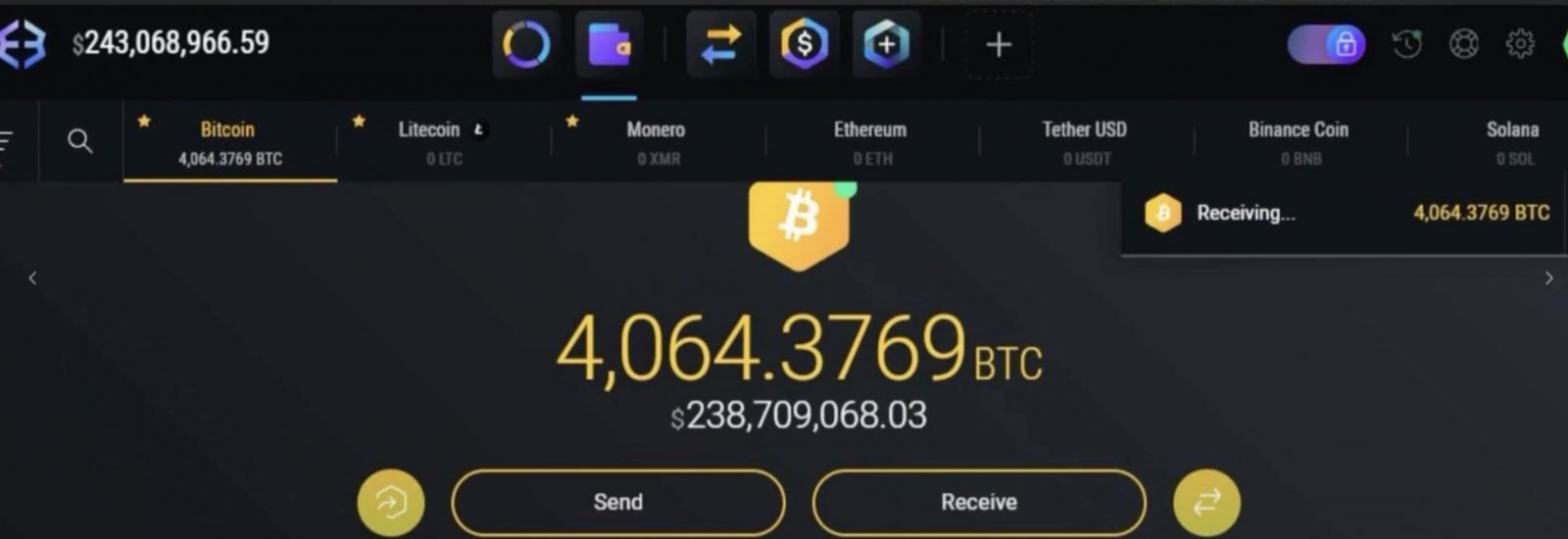
20-year-old Malone Lam (aka “Greavys,” “Anne Hathaway,” and “$$$”) and 21-year-old Jeandiel Serrano (aka “Box,” “VersaceGod,” and “@SkidStar”) were arrested and charged in September 2024 for allegedly stealing over 4,100 Bitcoin from a Washington, D.C., victim (worth more than $230 million at the time) in an August 2024 attack.
As crypto fraud investigator ZachXBT found, they targeted a Genesis crypto exchange creditor using spoofed phone numbers and impersonating customer support at Google and Gemini.
Advertisement
While impersonating a member of the Gemini support team, they claimed the victim’s account had been compromised, tricking them into resetting their two-factor authentication (2FA) and sharing their screen using the AnyDesk remote desktop application. This allowed them to steal the victim’s cryptocurrency after gaining access to the Bitcoin Core private keys.
Next, they allegedly laundered the stolen funds via a combination of crypto mixers and exchanges, with the help of accomplices (including Tangeman), using “peel chains,” pass-through wallets, and virtual private networks (VPNs) to hide their identities and locations throughout the scheme.
Stolen crypto being transferred (ZachXBT)
The other nine suspects (including Tangeman) were indicted in May 2025 and are facing charges of racketeering conspiracy, money laundering, obstruction of justice, and conspiracy to commit wire fraud.
The group used the stolen cryptocurrency to finance their lavish lifestyles, including private security guards, high-end watches, designer handbags, nightclub outings ranging up to $500,000 per evening, and international travel.
They also rented homes in Los Angeles, the Hamptons, and Miami for $40,000 to $80,000 per month, as well as private jets and a fleet of at least 28 cars valued from $100,000 to $3.8 million (including a widebody Lamborghini Urus for Tangeman).
Advertisement
“This criminal enterprise was built on greed so brazen it borders on the cartoonish. They stole millions, spent it on half-million-dollar nightclub tabs, Lamborghinis, and Rolexes,” U.S. Attorney Pirro said on Friday.
“But Evan Tangeman didn’t just launder the money that fueled that lifestyle. When his co-conspirators were arrested, he moved to destroy the evidence. That is consciousness of guilt, and this office and the court have treated that accordingly.”
Tangeman pleaded guilty in December 2025 to laundering stolen funds for a criminal organization as part of a RICO conspiracy. He was sentenced to 70 months in prison and ordered to serve three years of supervised release afterward.
45-year-old Kunal Mehta (aka “Papa,” “The Accountant,” and “Shrek”) also pleaded guilty in November 2025 to helping to launder at least $25 million of the stolen cryptocurrency and is currently awaiting sentencing.
Advertisement
AI chained four zero-days into one exploit that bypassed both renderer and OS sandboxes. A wave of new exploits is coming.
At the Autonomous Validation Summit (May 12 & 14), see how autonomous, context-rich validation finds what’s exploitable, proves controls hold, and closes the remediation loop.
The bill specifically blocked the construction of data centers that consume 20 megawatts of power or more and directs state agencies and other entities to not issue permits unless proposed projects fall under those energy needs. Passing the bill would also require the creation of a “Maine Data Center Coordination Council” that would “provide strategic input, facilitate coordinated state planning considerations and evaluate policy tools to address data center opportunities and related benefits and risks to the State.”
While Mills killed this attempt at data center regulation, she said she would sign an executive order calling for the creation of a council like the one proposed in the bill. She also signed LD 713, a bill that prohibits data centers from participating in Maine’s business development tax incentive programs.
Maine is far from the only state pursuing data center bans or temporary blocks. There are at least 12 other states exploring similar legislation, like New York, where lawmakers recently introduced a bill that would block the construction of new data centers for at least three years. At the federal level, Senator Bernie Sanders (I-VT) and Representative Alexandria Ocasio-Cortez (D-NY) endorsed a bill that would not only create a moratorium on new data center construction, but also any upgrades to existing facilities.
Advertisement
Any desire to slow down AI development or the infrastructure that makes it possible runs counter to the demands of tech companies, and the perspective of the Trump administration, who’s actively encouraging faster AI buildout in the US. President Donald Trump’s recent AI framework even called for the process of building and powering data centers to be streamlined in March.
AXPONA 2026 was a tremendous show by any metric; bigger crowds, stronger energy, and more gear than anyone could reasonably process without developing a caffeine dependency and mild resentment toward elevators. We’re already counting the days until next year. But let’s not pretend everything was perfect. If you were hunting for genuinely affordable loudspeakers, the pool was shallower than it should have been. Which is exactly why the forthcoming Talisman R from Ruark stood out like a Chabad House in King’s Landing.
Plenty of six-figure systems flexing for Instagram, not nearly enough options for people who actually have to pay their mortgage or whose children can’t survive on a diet of char dogs from the Weiners Circle and Portillo’s — although a much thinner and younger version of myself did just that for almost a month back in 2000. Pickle spears and tomatoes count as salad for those who might be wondering.
There were, however, some notable exceptions. Quad has something new cooking that we’re not quite ready to spill the mushy peas on yet. Paradigm showed off the new Premier Series v2, which looks like a serious play in the sane-price category. SVS continues to show up for people who want performance without selling a kidney. Acoustic Energy remains quietly consistent. And then there was this one—slightly under the radar, a little cagey on details, and far more interesting than it had any right to be.
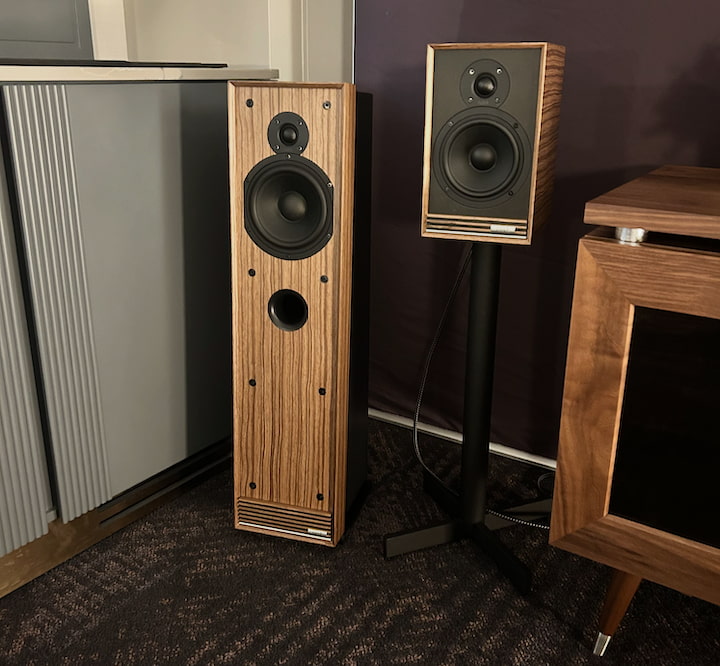
The Ruark Audio Talisman R was one of the more surprising debuts at the show. It’s Ruark’s first floorstanding speaker in roughly two decades, which alone makes it worth paying attention. If pricing lands under $2,000 in the U.S. through Fidelity Imports, this could turn into a problem for some of the usual suspects who seem convinced the 25-40 crowd is just waiting for a pair of 80-pound floorstanders from France or Denmark; speakers that demand a small power plant for amplification and a quick organ sale to close the deal.
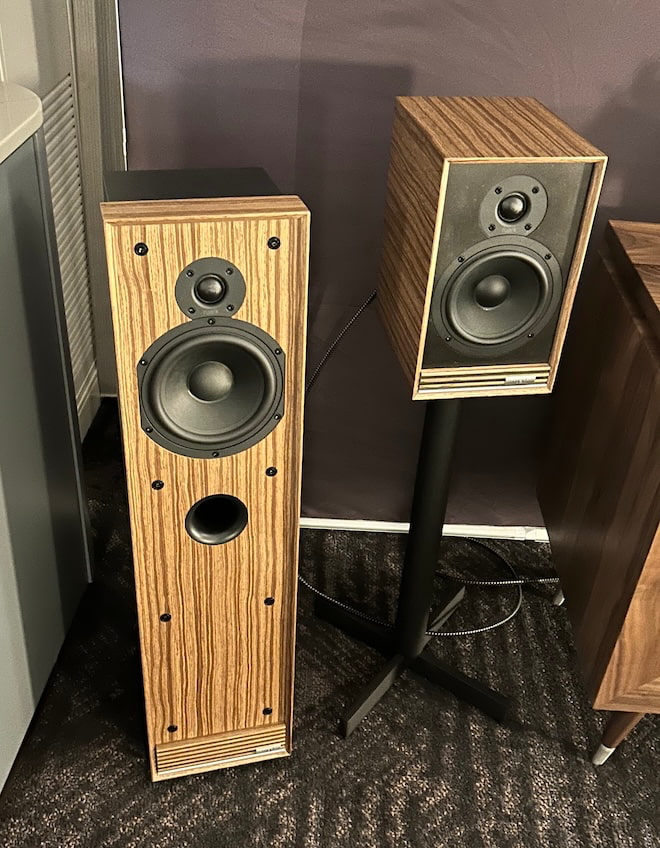
Ruark Talisman R (floostanding) and Sabre-R (stand-mount) Loudspeakers
Physically, it’s compact for a floorstander; about 85 cm tall, or roughly 33.5 inches, but it doesn’t come across as compromised. Ruark kept things close to the vest in terms of full driver details, with more expected when it shows in Vienna, but what was on display didn’t feel like a prototype. Fit and finish looked sorted. No rough edges, no “we’ll fix that later” energy.
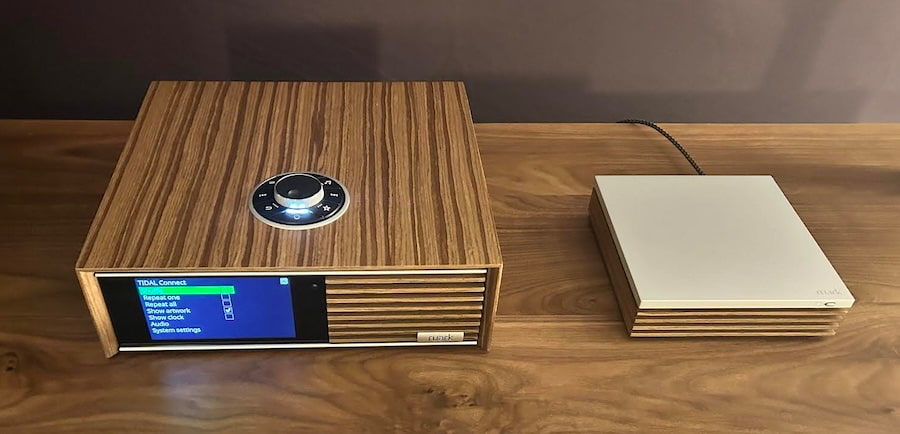
In the room, driven by the Ruark R610, it came out swinging. Bold, crisp, and articulate without sounding thin. The soundstage pushed wider than expected, especially with electronic material, and it held its composure at volume. This isn’t a polite, sit-in-the-corner tuning. It has some bite.
I wanted a pair within minutes, which is usually the only metric that matters. My ego keeps eyeing the ATC EL50 Anniversary Loudspeakers. My brain knows these are the smarter call.
What stuck with me is how flexible they felt. This isn’t a one trick demo speaker that only works in the room it was born in. It comes across like a blank canvas. You can shape it. I would not pair it with something lean or overly clinical. That feels like the wrong direction. It wants a bit of weight and drive behind it.
Think Lauren Bacall, but only after Humphrey Bogart already spotted her across the room and knew exactly what he was looking at. Cool, controlled, a little dangerous, and never trying too hard. The kind of presence that does not need to raise its voice to own the room. That is what this reminded me of. The Talisman R does not force a personality on you. It responds to what you give it.
The finish lines up with the rest of Ruark’s range. Clean, understated, nothing trying too hard. My brain immediately went practical. Concrete slab risers in my new home office, nearfield-ish setup, something that looks right without screaming for attention.
Pairing options feel wide open. A strong tube integrated would be a great call, yes something like Unison Research. Marantz, Rega, Cambridge Audio, even the Quad 3 I just reviewed all make sense. Each would push it in a slightly different direction, and that is the appeal.
Advertisement
Advertisement. Scroll to continue reading.
And here is the part that needs saying. There are not enough products like this getting attention. Too much focus on gloss and price tags that feel disconnected from reality. I have probably spent more time thinking about these than most of my peers. Fine by me.
If Ruark does not mess this up between now and September when they go on sale, this could be the steal of the year.
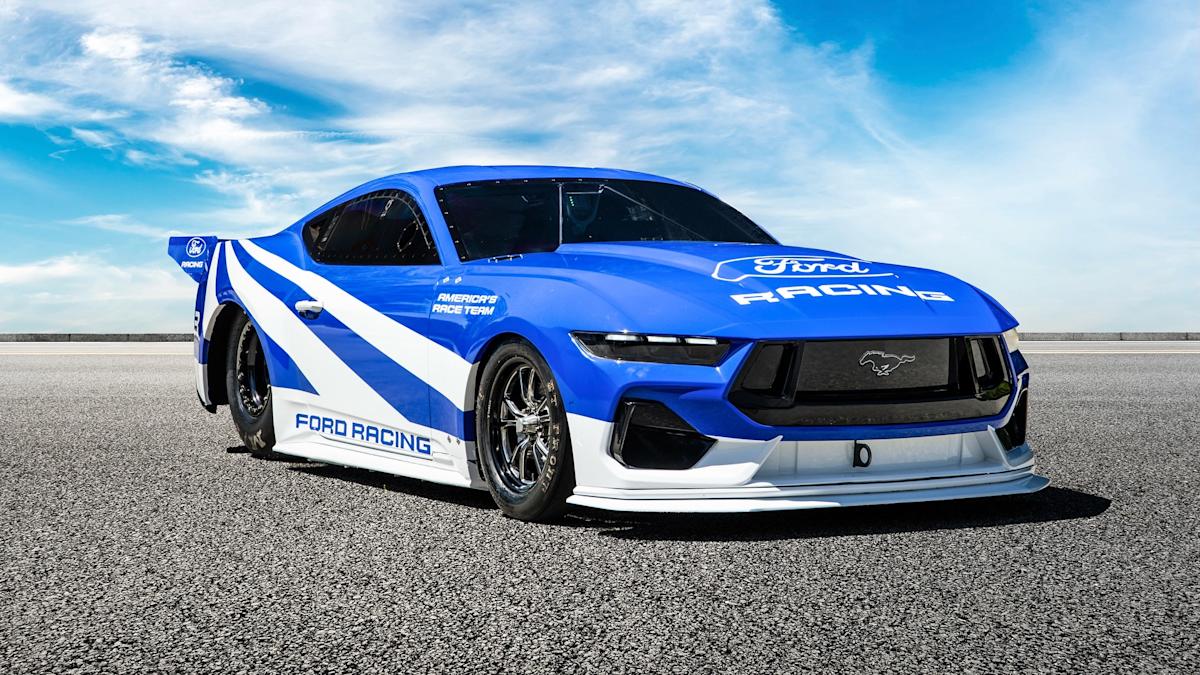
Ford Racing’s Mustang Cobra Jet 2200 just ran a quarter mile in 6.87 seconds at 221 mph at an NHRA event in Charlotte, setting a new world record for an EV. The run smashed Ford’s own previous EV record of 7.62 seconds, set by the Cobra Jet 1800 last September, by an impressive 0.75 seconds.
As the name suggests, Ford’s Cobra Jet 2200 puts a massive 2,200 horsepower to the wheels thanks to a newly designed electric motor and inverter combo. Ford elected to use two motors and inverters instead of four of each as before to reduce complexity and boost efficiency to 98 percent. Overall power is up by 600 horsepower, but the motors and inverters weigh half as much as before. Everything runs on a 900-volt architecture and 32 kWh battery that charges in 20 minutes, easily enough for the NHRA’s 45-minute turnaround rule.
The car has some unusual features for an EV like a clutch that lets the driver dump all the power to the road instantly for maximum acceleration. It also uses a multi-speed transmission that allows the car to run in its ideal power band through the duration of the run — reducing the quarter-mile time by up to a second, according to Ford. The battery design also allowed the team to tune weight distribution for optimal traction. Another racing touch is a pyrotechnic circuit breaker that can instantly break the high-voltage connection via a small explosive charge to align with NHRA safety rules.
Some of this tech, like the high-efficiency motors and 900 volt system, could conceivably trickle down to consumer vehicles. Unfortunately, Ford and other US automakers have significantly reduced their investment in BEV technology of late. Ford recently announced that it would reboot the F-150 Lightning as an EREV with a gas generator, while last week GM delayed its next-gen full-size EV pickups and SUVs — all in the face of rapidly rising gasoline prices.
There are many white whales the TV world has tried to conquer over the years. With some, it’s managed to win the battle and bring those concepts to the mainstream market. Others have slowly but surely disappeared.
MicroLED finds itself somewhere in the middle of those two realities. Brands like to show it off as a concept of what the future of TVs in the home could look like. But often it’s a concept piece, as it was when Samsung showed off another MicroLED screen at CES 2026.
But could it move from concept to actual reality? I was invited to Harrods to see Hisense’s 136-inch MX MicroLED TV, and there’s now reason to believe it could exist beyond the show floors of consumer electronics events. But if it does, it’s also unlikely to make its way to your living room any time soon.
The long wait for MicroLED
Launched many, many, many years ago, MicroLED was championed by both Samsung and LG as the technology leading the charge for people’s homes, bringing the TV industry’s obsession with colour and brightness to higher heights.
Advertisement
But instead of gathering pace, its momentum slowed. The technological promise seemed to smash into a cost and effectiveness barrier. Year after year, there were murmurings that MicroLED TVs could arrive sooner than you’d expect, but without any real timescale.
Advertisement
Image Credit (Trusted Reviews)
Samsung’s The Wall threatened to become an actual TV, but every time Samsung made an announcement, it was conveyed in vague, nebulous terms. If memory serves, there was a mention of a 75-inch MicroLED being a possibility. Clearly, that never came to fruition.
Others have taken their MicroLED tech and pushed it towards B2B, with massive, modular screens for advertising and the like. But the promise of MicroLED seemed to have faded as TV manufacturers realised the promise of Mini LED as another avenue.
But Hisense is one of the few that’s persisted. The 136MXQTUK I saw is the first MicroLED TV I’ve come across outside of tech events or a company’s HQ. There, in the Harrods in Knightsbridge, you can head up a series of escalators, walk past the many weird and expensive kit that decks the floors and you’ll find one of the biggest TVs on the planet.
Advertisement
In that sense, MicroLED has leapt from tech demo and wish fulfilment to something you can see and touch.
Advertisement
But who is MicroLED for?
Image Credit (Trusted Reviews)
But of course, MicroLED TVs come at a price, and it’s the cost that’s been the prohibitive factor to making it a mainstream proposition.
Hisense has made it its mission in recent years to become a leader in the market, whether it’s with Mini LED, RGB Mini LED or large screen sizes.
A good ten years ago when the Chinese brand first entered the UK market, they were a value-led proposition, a TV for those that didn’t want to spend too much. Over the years they’ve evolved, broadened their range and upped their quality. They’re still not up to the standard of a Samsung, a Sony or an LG, but they’re making steps to reach that level.
Advertisement
And now they find themselves in Harrods, alongside the likes of Samsung, Sony and LG.
But who exactly is a MicroLED TV for? Now that it’s a thing, someone has to buy that thing, and the cash required is significant. We’re very far from Hisense being a value-led brand.
Advertisement
At £120,000, the 136MXQTUK is for the few, not the many. A modular TV where Hisense’s installers come to your (lavish) home, or boat, penthouse – you get my point – and install it as you wait. With the frame going up first, filled by the modular pieces that make up the screen, it’s a process that apparently takes up to four hours to complete.
Advertisement
This isn’t a TV likely to come down in price – there will not be any Black Friday discounts – nor do I think there’s going to be smaller sizes. The stage is set, and it’s a very large one, at an expense that makes it for the millionaire crew.
The scale of the screen is impressive in the flesh, and I have to commend Hisense’s persistence for making this a reality where others have stumbled – but in all honestly, I left Harrods in a mood unchanged from how I felt about MicroLED TVs at CES.
The picture quality wasn’t the best I’ve seen, and you could see the lines that marked each module, which is a distraction unless you’re watching from far away. You don’t want to see the seams, especially if you’re paying £120,000.
Perhaps it was the slightly dim setting of the venue, or the picture mode the TV was in (which seemed to be in Standard or Vivid), or the AI processing likely to have been used for a TV of this size, but it didn’t look as clear or as bright as I was expecting.
Advertisement
Image Credit (Trusted Reviews)
Advertisement
I expected to be wowed by the colours, depth and brightness, but I felt underwhelmed. It didn’t compare to what I’ve seen from Samsung and LG. There’s something about the colours that’s off to my eyes.
If I had won the Euro Millions, would I spend £120,000 on this TV? My answer would be that I’m not sure, which in itself is probably a ‘no’. Would I spend that amount on a Samsung MicroLED? Having seen it, I think it’d be more of a yes.
I can be a “bah, humbug” type of person, but there’s a whiff of 8K TV about MicroLED TV – a format where there’s just not enough enthusiasm about it, and where I think the excitement for it has naturally passed.
Hisense sees a clear and open path with MicroLED, one in which it believes it can make hay in, and good on them for taking the plunge. But I think the relative lack of interest from other TV brands is a sign that, while the future of TVs is bright and colourful, it’s no longer a MicroLED future.
























































You must be logged in to post a comment Login