Connect with us

Tech

Banking giant UBS wants all new employees to have AI skills

Published

on


  • 2027 UBS recruits told they must have AI proficiency and a willingness to learn
  • The bank’s AI Fluency Pathway will continue to support junior workers’ development
  • While thousands of jobs could be at risk, we’re starting to see shifts rather than outright displacement

Swiss investment giant UBS is now requiring all junior bankers to demonstrate AI proficiency as the skill moves from being a nice-to-have to an absolute requirement within recruiting.

The change currently applies to graduates and interns applying to the company’s 2027 intake, per the Financial Times, and it’s unclear whether UBS will broaden the requirement to all workers in the future.

Source link

Continue Reading
Click to comment

You must be logged in to post a comment Login

Leave a Reply

Tech

Motorola could be working on an iPhone Ultra-like foldable

Published

on

Motorola could be the latest phone maker to jump on the wide foldable trend, with leaked sketches pointing to a new book-style device that looks designed to open into a broader, more tablet-like screen.

The sketches, spotted by Android Headlines, reportedly come from an anonymous source and show a foldable that follows the general design of other wide foldables. There’s no word on its exact dimensions yet, but the overall shape is clear: a conventional-looking phone that unfolds horizontally into a wider display.

There are a few interesting details in the drawings, too. The rear appears to feature a horizontal camera module with what looks like two lenses, alongside a flash or additional sensor. The layout resembles the camera bar used on some Pixel phones, and could also help prevent the phone from rocking when it’s placed on a flat surface.

Motorola also appears to be paying attention to how the phone feels when it’s being opened. The sides have rounded edges, giving users a more curved surface to grip, while the sketches refer to this design as the “Easy Open Profile.” It sounds like a small detail, but anything that makes a large foldable easier to open could be useful in everyday use.

Advertisement

Inside, there’s a punch-hole camera cutout, while the display is shown without an obvious crease. That last point is worth treating cautiously, though. A sketch can suggest a crease-free screen, but it won’t tell us how well Motorola has actually managed to hide the fold in a finished device.

Advertisement

Motorola’s potential move comes as wide foldables appear to be gaining momentum. Samsung has already entered the category with the Galaxy Z Fold 8, while Huawei has its Pura X Max, and Apple is also rumoured to be preparing an iPhone Ultra with a wider foldable design.

According to Android Headlines, Motorola’s device could arrive “in the coming months”, although there’s no specific launch date yet. There’s also no confirmed name, price or hardware specifications.

Advertisement

So for now, this is very much an early look rather than a confirmed product. But if Motorola is indeed preparing a wide foldable, these sketches suggest the company is at least thinking beyond the usual tall, narrow foldable format.

Source link

Advertisement
Continue Reading

Tech

UK food supply chain at risk from hostile attacks

Published

on

SECURITY

Defending against cyber foes is among factors hitting food price inflation, report finds

A UK watchdog is warning that cyber criminals making moves against online systems in the food supply chain could cause serious upset, following damaging attacks on the Co-op and Marks & Spencer last year.

Advertisement

The National Audit Office (NAO) named cyber-attacks as one of the major threats to the food supply chain and said the Department for Environment, Food & Rural Affairs (Defra) should work closely with industry to help prevent severe shocks.

“Recent disruptions have shown the resilience of the UK’s food supply chain, but risks are increasing in likelihood and severity. Defra should learn from approaches taken in other countries, and strengthen preparedness for emergencies by testing plans with local government and industry,” said Gareth Davies, head of the NAO.

In its report published late last week, the NAO said the sector had shown some resilience to cyber-attacks, but the government needed to work with the sector to help mitigate their impact.

The report found businesses in the food supply chain have faced increased costs and, in some cases, disruptions to day-to-day operations, for example following 2025 cyber-attacks on retailers such as Marks & Spencer and the Co-op.

Advertisement

Leading UK retailer Marks & Spencer estimated the cyberattack that took place in April last year will cost it around £136 million ($177.2 million) in total. The retailer said one of the earliest actions it took in its incident response was to disconnect its warehouse management systems, which in turn meant online and in-store orders were adversely impacted.

Food retailer the Co-op confirmed that thieves stole data from 6.5 million of the organization’s members during a cyberattack last year.

In its report, the NAO said: “The way the food supply chain has developed over time has prioritized efficiency, which reduces costs for businesses, and therefore for consumers. However, it leaves the supply chain more vulnerable to disruptions. Defra and food supply chain stakeholders see risks increasing, and businesses are investing to address growing risks such as increased threats of cyber-attacks. Defra is less confident about the ability of businesses to withstand shocks without government intervention in the next five to 10 years because of increasing risks and the potential for more severe disruptions.”

The NAO found cyber-attacks were among the disruptions that had increased operating costs for businesses and disrupted day-to-day operations, affecting their core digital systems.

Advertisement

Several food supply chain organizations cited the substantial investments businesses are making to manage the threat and incidence of cyber-attacks. However, some said overall economic pressure on businesses is making this and other resilience investments more difficult, the NAO added.

Defra said it undertook specific food-related exercises which, since 2023, have focused on testing responses to a cyber incident affecting the food sector.

However, the government department may not be best placed to offer tech advice. In 2023, it admitted two-thirds of its interactions with its 21 million customers still require paper-based forms, after decades of digital government initiatives. Meanwhile, 30 percent of its applications were out of support. ®

Source link

Advertisement
Continue Reading

Tech

This Clavichord Is A Well-Tempered Project

Published

on

The Clavichord needs no introduction to fans of Early Music, and a lengthy one to literally everyone else. Even classical music buffs who have heard of Bach’s works for the “Well-Tempered Clavier” — another word for clavichord — will mostly have heard them performed on Piano. That is perhaps fitting, as the clavichord is a distant ancestor of the modern piano. It has keys — though fewer of them than a piano — whose action strikes strings — though much, much fewer of those than a piano, as each string is required to generate multiple notes. [Ian Summers] has an excellent guide on how he built his, though be warned that that link goes to a PDF and the SSL certificate was having problems as of this writing. If you aren’t comfortable grabbing a PDF over old-style HTTP, we’ve embedded the demo/build video below so you can give a listen to what this pre-piano instrument sounds like.

[Ian]’s Clavichord isn’t a pure reproduction of a historical example, which makes it unusual in the world of Early Music where most obsess over authenticity. That means [Ian] was able to document his design decisions and why he built the instrument the way he did. There are two octaves and ten strings, which means each string is expresses two or three notes since this instrument is fully chromatic– that means there are ‘dark’ keys for the sharps/flats. Like a piano, the keys whack the strings to make sound, but unlike a piano, they do so directly: no mechanism and no hammers, which makes for some interesting differences in the sound. You can add vibrato, for instance.

[Ian] accomplished this build entirely with traditional woodworking, unlike the 3D printed piano mechanism we saw recently. There’s enough meat in the guide, and the instrument is simple enough that we suspect it would be easy enough to adapt the design to make it with extruded plastic or laser-cut parts, like this Zither.

Advertisement

Source link

Advertisement
Continue Reading

Tech

Why You Should Think Twice Before Buying That High-End Wi-Fi 7 Router

Published

on


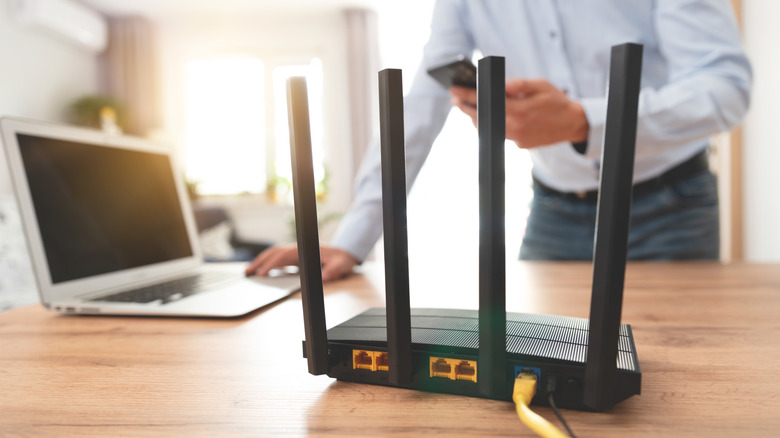
Since arriving on shelves in 2023, Wi-Fi 7 routers have enticed consumers with promises of lightning-fast internet access and other benefits. However, while Wi-Fi 7 delivers on many of its selling points, that doesn’t necessarily mean you need to spend extra money on a premium Wi-Fi 7 router. Even if you decide to buy one of these routers, a mid-range model is often all you need for most households. That said, you may not even be able to take advantage of the benefits Wi-Fi 7 offers just yet.

It’s true that Wi-Fi 7 routers are an upgrade over their previous iterations. Although results vary based on numerous factors, they can offer throughput speeds up to about three times faster than their Wi-Fi 6 equivalents. Tests also reveal that Wi-Fi 7 routers tend to beat routers of previous generations when it comes to maintaining signal strength. CNET‘s testing reveals that the 15 Wi-Fi routers in its lab averaged 515 Mbps at 50 feet across all three bands, outperforming the Wi-Fi 6 routers by a significant margin, as those averaged 383 Mbps. The 6GHz band plays a big part here, though that band isn’t new to Wi-Fi 7.

Those benefits are all real, so if you’re considering upgrading to a Wi-Fi 7 router, that makes sense. You just need to make sure you’re not breaking the bank when doing so, as premium models aren’t worth it for most people.

Advertisement

Things to consider when buying a Wi-Fi 7 router

First, it’s worth noting that not all devices support Wi-Fi 7. That doesn’t mean a device that doesn’t support the technology won’t be able to connect to the internet via a Wi-Fi 7 router, but it does mean that it may be unable to take full advantage of the tech.

This factor alone shouldn’t make or break your decision to get a Wi-Fi 7 router. Even if your current devices don’t fully support the technology, newer, upgraded ones likely will. However, if you’re hoping for instant improvements across every piece of tech you own, that’s probably not going to happen.

Advertisement

Not all Wi-Fi 7 routers are created equal. Some Wi-Fi 7 routers are tri-band, while others are only dual-band, which means they don’t offer the fastest 6GHz option. Tests have shown that only the tri-band models are the better buy, as they’re the ones that offer a true performance uplift.

Lastly, be aware that your internet plan is most likely the ceiling, no matter how capable the router. The Federal Communications Commission (FCC) tested the advertised download speed across several ISPs, and the weighted average came out to 467 Mbps. You might not need a router that exceeds what your plan offers. On top of that, the 6 GHz band that Wi-Fi 7 offers may be fast if you’re near the router, but since it can’t penetrate walls and other obstacles as well as other frequencies, it might not properly serve your household.

Advertisement

You might not need the expensive Wi-Fi 7 router

Ultimately, a Wi-Fi 7 router isn’t necessary for everyone, and the same is true about premium models. You should assess your needs if you’re not sure whether making the upgrade is worthwhile. If you live in a household where the Wi-Fi connection needs to support multiple devices, gaming, video calls, large file downloads, etc., you’re the target consumer for this technology. If your Wi-Fi needs are fairly standard, you can probably wait to make the switch.

If you do decide to go ahead with buying a Wi-Fi 7 router, it’s still important to understand that you might not need to spend hundreds of dollars on a high-end model. You’re likely in the market for one of these routers because speed is a priority. Fortunately, tests indicate that you can find Wi-Fi 7 routers that deliver on this front for around $200 or less. Similarly, rankings of Wi-Fi 7 routers on websites like RTINGS indicate that, while the top-performing models may technically be the premium ones, the mid-range units tend to be more than good enough for the average household.

If you’re still unsure whether Wi-Fi 7 is right for you, you might want to do more research into the features that differentiate Wi-Fi 7 from Wi-Fi 6 before making a decision. It may also be necessary to learn about how to upgrade your devices so they’re more compatible with Wi-Fi 7.

Advertisement


Source link

Advertisement
Continue Reading

Tech

Peers ask why UK cyber bill leaves execs off the personal liability hook

Published

on

Peers have questioned why the UK’s Cyber Security and Resilience Bill does not allow regulators to penalize senior executives when an organization’s failure to comply involves their consent, connivance, or deliberate or careless neglect.

Echoing arguments heard across the industry for years, Baronesses Kidron and Ludford backed probing amendments that would introduce personal civil liability for senior execs and make cybersecurity a board-level responsibility.

“The intention behind the amendment is to change the culture of an organization, to ensure preventative action is taken, to avoid penalties,” said Baroness Kidron. “As I said at the outset, culture change starts at the top.”

Advertisement

The Register has previously reported on calls for NHS organizations, some of which would be covered by the bill’s reforms, to treat cybersecurity as a board-level priority.

More recently, 60 organizations committed to the aims of the UK government’s Cyber Resilience Pledge, promising to ensure their boards take responsibility for their organization’s cybersecurity.

Peers supporting the amendments pointed to financial sector rules introduced over the past decade that can impose regulatory or criminal liability on the C-suite for serious failings.

They argued that the amendments would bring the bill closer to the EU’s NIS2 directive, which includes senior management accountability measures. Personal liability is not mandatory under NIS2, however, and member states have implemented it differently.

Advertisement

Supporting the personal liability proposal, Lord Clement-Jones said: “If an individual is fit to draw a multimillion-pound executive salary running a critical national provider, they must be prepared to carry personal responsibility for securing it.”

Despite support from several peers, the government defended its existing plan to impose substantial maximum fines and introduce security, resilience, and governance requirements through secondary legislation.

“It is absolutely right that organizations, especially those delivering our essential services, are held properly accountable for their activities,” said cybersecurity minister Baroness Lloyd of Effra, who did not support the personal liability amendment.

She cited the maximum fines of £17 million or 4 percent of the offending organization’s annual turnover, whichever is higher, calling it “a meaningful enforcement regime.”

Advertisement

Baroness Lloyd said the forthcoming security and resilience requirements would mandate board-level governance in line with the NCSC’s Cyber Assessment Framework. The government has yet to consult on the details.

“That will cover issues such as organisational capability, senior responsibility, and accountability for security and resilience and effective risk escalation, and it is in that way that we will connect the clarity on what is expected of boards with the accountability through the enforcement regime.”

Reporting requirements and other matters

Separately, peers quizzed the government on the structure of the bill’s strict reporting requirements, warning that the current wording threatens to overwhelm regulators with an administrative burden.

One of the CSR bill’s primary objectives is to collect more data about the threats facing UK organizations by imposing stricter reporting requirements on in-scope entities. 

Advertisement

The bill requires regulated organizations to issue an initial notification within 24 hours and a fuller report within 72 hours. It defines an incident as an event that has, or is capable of having, an adverse effect on an operation.

Former security minister Baroness Neville-Jones suggested changing the wording from “capable of” to “likely to have,” to reduce the reporting burden on regulated organizations.

Lord Clement-Jones agreed, warning that the current wording would “unleash an administrative tsunami of defensive reporting.”

He also argued that the government’s definition of a data compromise was overly broad and “dramatically expanding the notification net to include technical data anomalies that cause zero disruption or loss to actual customers.”

Advertisement

He said the reporting rules and broad definition of compromise could leave responsible operators of essential services spending more time on paperwork than improving their defenses.

The government was unmoved, and Baroness Lloyd said that the more stringent reports were crucial in achieving the aims of the bill, which seeks to update the existing NIS Regulations 2018.

While some peers were looking to ease the burden of reporting, others sought to increase it in other areas.

Baroness Harding, who is uniquely placed to weigh in on cyberattack response, proposed a 14-day intermediate report and a final report due one month after the attack first occurred.

Advertisement

Drawing on her experience as the former TalkTalk CEO, she said that after 72 hours, attacked organizations start to get “real data,” but “it’s really only after a couple of weeks that you’ve got a proper sense of what has happened.”

The final report comes at the one-month mark, when “the fog is starting to clear and you have a proper sense of the real scale of the problem,” she said.

Harding said that senior executives are typically told from all sides not to say anything about a cyberattack, but this only serves the criminals, who meanwhile may be attacking other victims.

“If you share this information in the fog with regulators and with law enforcement agencies, that’s how the law can prevail,” she said.

Advertisement

“It’s how regulators can work out what’s happening, it’s how they can warn others who might be affected, and it’s how the law enforcement agencies can do their work to actually try and find the bad guys.”

Baroness Lloyd defended the bill’s existing two-stage process, arguing that it already provides information at the points when regulators need it.

She reaffirmed that the initial 24-hour report alerts the NCSC and allows it to determine whether other organizations are affected, while the 72-hour report will contain the necessary details to enable a more actionable response.

“We believe that the stages we set out meet that. They have been carefully developed to provide the right notification at the appropriate time,” she told peers.

Advertisement

“They have been developed in consultation with industry, as many noble Lords exhorted in the previous group.

“Crucially, under the information-gathering powers in Clause 15, regulators can also request further information about an incident that has been reported to them if they consider this necessary to understanding the incident and how it is being managed.

“Obviously, that may be appropriate in some incidents and not in others. That kind of practical balance is enabled by the bill.”

Separately, the Grand Committee spent the second day scrutinizing the bill, fleshing out datacenters’ responsibilities, as well as examining requirements to notify affected downstream customers within 24 hours of a breach instead of 72 hours.

Advertisement

The government also rejected concerns that cybersecurity data collected under the reporting rules could contribute to unfair overseas proceedings. Baroness Lloyd said ministers had considered the issue and assessed the risk as very low. ®

Source link

Continue Reading

Tech

Comparing PETG And PCTG Filaments

Published

on

The average 3D printer owner knows a few types of filaments – PLA, ABS, somewhere in the middle, PETG.  PCTG is another option that can be confusingly similar to PETG. Recently, [Igor Gaspar] of [My Tech Fun] took a poke at both types. He obtained both PETG and PCTG transparent filaments from the same manufacturer to compare them directly.

As we recently detailed in an article on PET polyesters, PETG is glycol-modified PET, meaning that some of the glycol monomers are replaced by CHDM monomers to create a more flexible and robust material. PCTG is very similar to PETG, except that more than half of the glycol monomers are replaced rather than less than half. This creates a PET-type material that has distinct physical properties from PETG, which might be desirable for some applications.

PCTG is more ductile due to the addition of more CHDM, but also requires higher temperatures to print, closer to ASA presets. During testing, it’s obvious that PCTG is indeed much more flexible, making it potentially a good choice for springs and compliant mechanisms. PCTG is also highly impact-resistant, unlike PETG, and resists higher temperatures much better.

Advertisement

Overall, other than the higher printing temperatures, PCTG seems like a solid option for more extreme environments, potentially as an alternative to ASA and similar filaments.

Advertisement

Source link

Continue Reading

Tech

Startup takes on AI hallucinations with $25M and an HQ rooted in a small Washington town

Published

on

Kevin Owens, co-founder and CEO of Resect AI. (Resect AI Photo)

Resect AI, an artificial intelligence startup led by a team of scientists and engineers in Washougal, Wash., launched out of stealth Thursday with $25 million in funding to commercialize an open-source technology designed to catch AI hallucinations before they happen.

Unlike traditional AI monitoring tools that evaluate generated text after the fact, Resect AI says its patented technology operates in-stream — looking deep inside large language models in real time to observe, detect, interpret, and modify model behavior before a hallucination can occur.

By intervening directly within the model’s internal decision-making process rather than running post-hoc checks, the platform stops fabrications at the source while simultaneously generating an audit trail for enterprise compliance and due diligence.

“AI has prematurely been put in a position of trust. Adding labels such as ‘use at your own risk’ flies in the face of proper governance or compliance,” Kevin Owens, co-founder and CEO of Resect AI, said in a news release. “We are building the next large enterprise AI company to bring transparency and accountability to AI for industries such as publishing, finance, healthcare, research, and education where factual accuracy is absolutely critical.”

Beyond its tech, the startup’s leadership is also bullish about its small-town presence.

Advertisement

Washougal is a city of roughly 18,000 residents, 175 miles south of Seattle, tucked along the Columbia River across from Portland. Resect AI employs four people at an office on Main Street — including its co-founders — out of a 30-person workforce spread across the Seattle area, California, New York, and Texas.

“We believe the talent is up to par and we loved the sense of community that we found when we first came up here,” Owens told GeekWire. “We have been coming to the greater Washington and Oregon areas on and off over the years and finally decided this needed to be our headquarters.”

Owens said the decision has already paid off, noting that the startup has quickly tapped into the region’s talent pool by recruiting PhDs from both the greater Seattle and Portland markets while connecting with Northwest capital markets leaders.

Resect AI is also planning to open an office in the Seattle area in the near future for engineering and to serve as a business hub.

Advertisement

Alongside Owens, Resect’s other co-founders include Tim Walton, chief artificial intelligence officer; Tyler Gerber, chief operating officer; and Tommy Lofgren, chief product and marketing officer.

The company plans to use the funding to accelerate research and development, expand its go-to-market initiatives, and fuel talent acquisition — bringing its total headcount to 50 by the end of 2026.

Source link

Advertisement
Continue Reading

Tech

When Are Portable Apple CarPlay Screens Actually Worth It?

Published

on

If your vehicle is older, you might want to check this out.

CarPlay has become a must-have for many drivers. It’s no surprise, since it makes life so much easier when it comes to accessing your iPhone apps in the car. Navigation, music, messages — all right there on the dashboard. And while there are more than 800 CarPlay-compatible vehicles, you might have one that isn’t on the list. But no, you don’t need to trade in your car. Some portable screens can give you CarPlay for much less. They aren’t quite as good as built-in systems, but they get the job done.

Despite all the convenience CarPlay offers, some automakers have been getting rid of it. GM, for example, has decided to phase out CarPlay and Android Auto from its EVs. Yes, many people love CarPlay. But they want you to use their own systems. It’s an understandable business move, considering that some even charge you to unlock extra features in their cars. Getting a portable CarPlay screen ends up being a good way to get around this.

Advertisement

What to look for when buying a portable CarPlay screen

Unlike buying a new car, getting one of these portable CarPlay screens won’t cost you much. You can find many of them for under $50. Even if you pay $150 for one of these, it’s still much cheaper than a new car. Some have larger displays and will cost more, and some really cheap ones might be best to avoid — those usually have really bad touchscreens. Start by choosing the right size. Most of these range from 6 to 11 inches. Some users find large screens too distracting, so it might be worth going with a smaller one. Smaller screens are easier to fit in your car, too.

But size isn’t the only thing that matters here. There are other specs you should consider, like screen resolution. Some portable screens have very low resolution. It’s not as if any of these screens were designed for watching 4K video — they weren’t. But going with a low-resolution screen will make everything look terrible, from text to icons. Look for screens with a resolution of at least 1280×720 pixels. The audio output is also a big plus. Most of these screens have awful speakers, so be sure to choose one that supports AUX, Bluetooth or FM for playing audio. Also, make sure you’re getting wireless CarPlay instead of wired CarPlay. Not every portable screen lets you use CarPlay without a cable.

Advertisement

Extra features they can offer you

Even though these portable screens are designed for CarPlay, some of them offer interesting extra features. Many models include integrated dash cameras with microSD loop recording. Others might come with a rear camera, which is nice for adding parking assistance to your old car. Also, keep an eye on how the display attaches to your dash. Some of them have very unstable mounts, and you don’t want your screen flying off as you turn a corner. And keep an eye out for screens that come with Android built in. That doesn’t matter for running CarPlay, but it lets you install apps that can run without your iPhone.

As you can see, buying one of these portable screens is an easy way to get around the lack of CarPlay. They work and are cheaper than a retrofit to your car’s built-in system. Sure, they won’t look like a factory system, but that’s fine. For the price, you’re still getting a great deal.

Source link

Advertisement
Continue Reading

Tech

Plastics Companies Are Writing Lesson Plans. What Could Go Wrong?

Published

on

This story originally appeared on Grist and is part of the Climate Desk collaboration.

This fall, 54 million K-12 students are headed back to the classroom for another year of lessons in all the classic subjects: math, English, history, biology. But there’s another subject that’s been sneaking into school curricula: plastics.

A new report from the nonprofit Plastic Pollution Coalition documents the many ways the plastics industry has been inserting its agenda into classrooms across the US—including through lesson plans and worksheets, hands-on science experiments, and a program called “PlastiVan” that travels from city to city teaching students about “the contribution plastics make to modern life.”

Industry interests offer these resources to teachers for free or for cheap, according to the report. The materials tend to highlight the necessity of plastics while downplaying their significant downsides to human health and the environment.

Advertisement

“When that information is provided to kids, it obfuscates the true impacts of plastic pollution,” said Madison Dennis, senior policy and advocacy manager for Plastic Pollution Coalition and one of the report’s main authors. Besides harming marine life, plastics can expose people to hazardous chemicals, clog storm drains and contribute to flooding, and release planet-warming greenhouse gases. The Plastic Pollution Coalition is calling for stricter school policies against the use of industry-sponsored learning materials.

The report lays out four case studies of plastics industry “propaganda” for schoolkids. One involves the Society of Plastics Engineers, or SPE, a trade group that recently became a division of the Plastics Industry Association. SPE’s lesson plans include activities like a “plastic scavenger hunt,” which aims for students to “understand that plastics are ubiquitous and their importance to society and their personal life.” A video titled “Your Bottle Means Jobs” explains how plastics recycling supports local employment.

Another case study highlights the American Association of Chemistry Teachers, an initiative of the Dow Chemical Company. One of the association’s lesson plans teaches elementary and middle school students how to compare the strength of various types of plastic bags that can be found in a grocery store. After a brief experiment, the lesson invites them to “pretend [they] are an employee for Dow Chemical Company” and are designing a plastic bag for a customer.

While many of the materials claim to support STEM learning objectives, they do so while promoting familiar industry talking points, emphasizing the affordability and safety of plastics. Some acknowledge plastic pollution as a serious problem, but they blame irresponsible consumer behaviors and, instead of recommending less plastic be produced, propose more recycling as the primary way to address it.

Advertisement

In reality, only 9 percent of all plastics are recycled worldwide, and scientists have repeatedly warned that recycling will be unable to keep up with projected growth in plastic production. Investigative reporting has shown that industry groups knew this decades ago, but promoted recycling anyway in order to defuse growing concern over plastic pollution.

Wendy Johnson, a science education specialist at the National Center for Science Education, said the industry’s lesson plans and worksheets don’t reflect good pedagogy. Materials claiming to be aligned with state-level STEM standards don’t say which standards they support, or how they’re aligned. Lesson plans instruct students to read teachers’ notes, or list industry-specific vocab terms like “stretch blow molding” or “thermosetting.”

“By using all of these technical terms, it’s tricking people into thinking … that they’re doing science,” Johnson told Grist. What the materials really teach, she said, is “ideological perspectives about the economy,” like the desirability of cheap consumer goods.

Source link

Advertisement
Continue Reading

Tech

Why AI visibility now demands paid and organic GEO optimization

Published

on

For the last two years, the advice to brands has been more or less standardized: get cited and recommended in AI, and the rest will follow.

Whether that is called GEO or AEO, the objective is the same: make sure AI can understand your brand, retrieve the right information and recommend it when a customer asks.

Source link

Advertisement
Continue Reading

Trending

Copyright © 2025