
Connect with us

Tech

Best Workout Headphones 2026: Perfect companions for workouts

Published

on

If you’re someone who works out regularly, you’ll need a pair of of the best workout and sports headphones that can hold up to the intensity and duration of your workouts.

We’ve reviewed all types of headphones that could be classified as sports, running or workout headphones, and with this list we’ve tried to review and cover as many different types of pairs as we can. We’re always reviewing new pairs and update this list regularly.

And how do we know which headphones to choose as best workout headphones? We put them through their paces, taking them on runs, using them in the gym and listening to how good they sound. If they’re headphones for swimming, we jump into the pool. If they have ANC we’ll put that to the test in both outdoor and indoor situations, as well as see how durable they are to wear over longer periods of time.

No headphone exists in a void either, so we compare to similarly priced efforts to see how competitive they are in terms of performance.

Advertisement

It’s not only workout and sports headphones that we test. If you’re looking for another pair, have a look at our best headphonesbest wireless headphonesbest wireless earbuds and best noise-cancelling headphones pages.

August 2026 update:

Advertisement

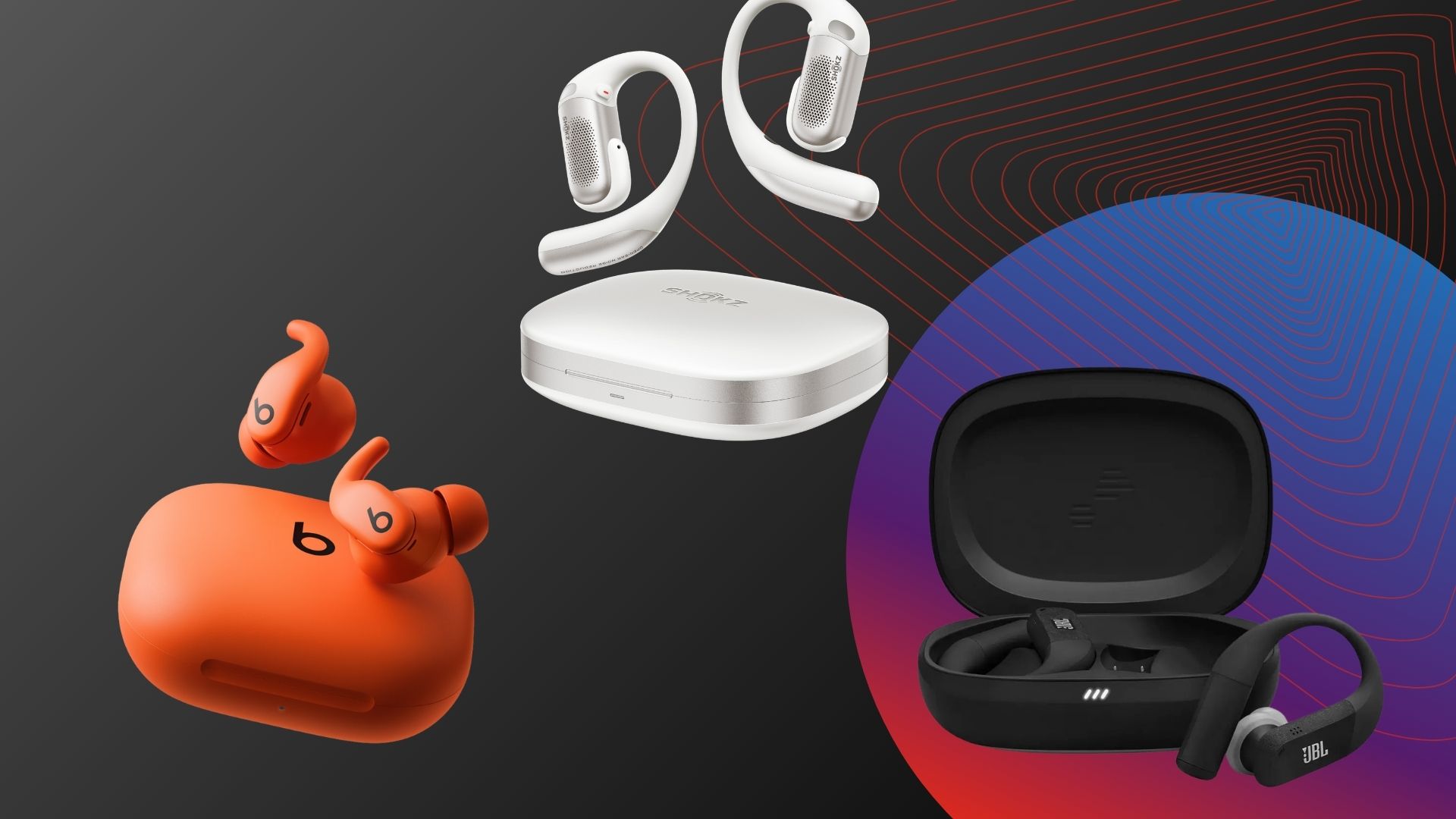
Our best workout headphones have long been due an update, so we’ve refreshed and added several new entries. The Shokz OpenFit Pro serve as our best for open-ear users, the Powerbeats Pro 2 are our best noise-cancelling effort, while if you’re on a budget, our pick is the JLab Go Sport+.

Advertisement

For less than £200 / $200, it’s the Powerbeats Fit, and if you’re looking to save more money, then we’d recommend the JBL Endurance Peak 4.

Best running headphones at a glance

SQUIRREL_ANCHOR_LIST

Learn more about how we test headphones

Not just anybody can review a pair of headphones. You don’t need superhuman hearing to tell what’s good, but you do need to know what to listen out for.

Our headphone tests are done by some of the best and most prolific reviewers in the industry, with years of experience listening to everything from the plasticky freebie earbuds that come with your smartphone, to five-figure beasts of glass and marble. We love music and we want your tunes to sound good, too.

Advertisement

So we listen to every pair of headphones we can get on or in our ears. Our test tracks are wide-ranging to give headphones a thorough challenge. They’re also familiar, so we know every track backwards, and we know which bits might trouble the lesser performers.

We listen again and again, and we do that for weeks in case the sound changes – because it usually does. Then we’ll listen to similarly priced rivals and come up with a verdict that reflects the performance and features for the money.

When it comes to running headphones we’ll take them for a run. If it’s for swimming we’ll do that too, if there’s a heartbeat monitor we’ll put that to good use as well. We’ll test every aspect of the headphone there is so you have all the information you need to make a confident purchase.

Advertisement

Advertisement
  • Wide soundstage, rich audio

  • Comfortable design

  • Long battery life

  • Noise Reduction is effective

  • Strong wireless performance

  • Call quality can suffer in loud areas

  • Little lag with Noise Reduction system

  • Not the most detailed audio

The Shokz OpenFit Pro are the best open-ear headphones Shokz has made so far. Sound quality is good for its type, comfort is strong, battery life is long, and the Noise Reduction mode makes a solid impression.

The OpenFit Pro uses an over-ear hook design, so the drivers sit close to your ears without entering the canal, firing sound directly at them. The hook keeps everything locked during movement, and putting them on is fairly straightforward even if you wear glasses or have long hair. The charging case is on the larger side, slightly bigger than the Beats Powerbeats Pro 2 case, but it’s slimmer and slides into a jacket pocket without too much trouble.

Advertisement

Controls are physical rather than touch-based, which makes them much easier to find and press without guesswork, particularly useful when you’re mid-run and don’t want to fumble around.

Shokz rates the OpenFit Pro at 12 hours on a single charge, dropping to around six with Noise Reduction active. In our testing we landed closer to 10. Factor in the charging case and the total battery stretches to 50 hours.

The Shokz app features battery information, toggling between Open and Noise Reduction modes, adjusting the strength of the latter, and remapping the physical controls.

Noise Reduction here isn’t designed to shut the world out entirely, just to take the edge off constant background sounds, and it does that well even in larger, noisier environments. Call quality is solid too with solid vocal clarity on both ends, and the microphones do a commendable job of isolating your voice despite the open design, though hearing the other person becomes harder in genuinely loud surroundings.

Advertisement

Warmer and richer than the Bose Open Ultra Earbuds, with more bass than you might expect from open-ear headphones which have historically struggled in that area. It is a touch less detailed and clearer than the Bose, but the overall presentation makes it one of the best-sounding open-ear headphones we’ve tested.

  • Delivers enjoyable sound

  • Comfortable and secure fit

  • Solid battery life

Advertisement
  • The touch controls could be better

  • Quite a cheap build

  • Struggles in windier and louder environments

The JLab Go Sport+ are about as close as you’ll get to a genuinely impressive pair of sports earbuds at this low point.

The ear hooks are adjustable and do a solid job of keeping the buds locked in place across sweatier sessions. An IP55 rating means sweat and a light rain shower won’t cause problems, which is a reassuring level of protection for a pair sitting at this end of the market.

Battery life is one of the Go Sport+’s stronger suits. The buds themselves deliver nine hours of playback, while the charging case extends that total to 35 hours. If you do find yourself caught short, ten minutes on charge is enough to recover an hour of playback, which is a useful feature for anyone who forgets to top up before heading out.

Advertisement

The sound is bright and energetic, with a fun character that keeps you moving during a run or a gym session. Open up the JLab app and there’s a custom EQ to fine-tune things to your liking, a safe hearing mode that puts a cap on volume, and a Be Aware mode that pipes in ambient sound to stay conscious of traffic or a training partner.

The build is plastic and there’s no noise cancellation to speak of, but the list of what the Go Sport+ gets right is a long one. For the price, they represent one of the more compelling options on this list for anyone looking for a capable sports earbud without stretching their budget.

Advertisement
  • Inexpensive asking price

  • Secure fit

  • Good comfort

  • Easy to use

  • Audio profile skews towards bass

  • In-line controls not compatible with every device

Good audio quality shouldn’t need to cost the earth, and the Avantree E171 are a testament to that. With a low asking price of just £14.99, they are some of the cheapest wired earbuds you can find and could be the perfect pick for anyone who’s just getting into running and doesn’t want to invest in a premium pair of Adidas RPT-02 SOL or OpenRun Pro right off the bat.

We found them easy to wear and position, with no incidents of them coming loose or falling out during workout sessions. These headphones pack an IPX7 water rating, meaning that they can be submerged in water up to 1m deep for thirty minutes. That type of protection makes them more than serviceable for any workouts in the rain.

Advertisement

These are wired headphones and connect via a 3.5mm headphone jack. The cable comes with an in-line mic/control that allows you to adjust the volume and speak into the microphone. It’s worth noting that these controls are not compatible across the board – with no support for the built-in volume control on PCs and laptops – so you may need to test your devices to ensure that they are supported.

We found these headphones to offer a well-balanced audio experience, although they are clearly tuned towards bass rather than higher frequencies. Kept at a lower volume, the bass was better balanced with a powerful low end in songs like Fleetwood Mac’s The Chain. The soundstage held a lot of presence, however, with natural midranges throughout.

While you can find more premium running headphones on this very list, you won’t find anything as affordable as the Avantree E171. These could be the perfect starting point for runners hoping to indulge their musical side while working out and arguably a steal for under £15.

Advertisement
  • Comfortable design and new colours

  • Bigger music player storage

  • Now includes a fast charge mode

  • Still need to drag and drop files on

  • Doesn’t work with music streaming services

  • Battery life drop in music player mode

The Shokz OpenSwim Pro is one of the stronger swimming headphones, and covers most of the bases you’d want from a pair built for the pool.

Advertisement

The IP68 rating is a solid foundation, letting you submerge these headphones for up to two hours at a stretch. Pair them with your phone over Bluetooth and you can stream audio directly, a connection that held up well during our testing. Switch over to MP3 mode and you can load music files straight onto the headphones themselves.

Storage has jumped considerably from the 4GB found on the OpenSwim, landing at a much more generous 32GB. Shokz has also expanded file-type support, allowing for a wider range of audio formats to loaded onto the headphones.

The Pro sticks with bone conduction, the tuning of the headphones emphasises warm bass and decent clarity depending on the mode. Control is done through physical buttons that handle volume, track skipping and swapping between the two listening modes, which is a sensible call when wet fingers and touch controls rarely get along.

The OpenSwim Pro does cost more than its predecessor. If your budget can stretch to the asking price, you get a well-rounded swimming headphone that covers Bluetooth streaming, generous on-board storage and dependable water protection in one package.

Advertisement
  • Clear, detailed and balanced sound

  • Strong noise-cancellation performance

  • Long battery life

  • Comfortable to wear

  • Not the most exciting audio delivery

  • No customisation of sound or ANC

  • Charging case is still on the big side

  • Expensive

Advertisement

The Beats Powerbeats Pro 2 took their time to arrive after the launch of the original, but the wait was worth it. These buds sound noticeably cleaner and clearer than the old model and, for the first time in the series, pack Active Noise Cancellation, putting them in the same bracket as the Sennheiser Momentum Sport.

A heart-rate sensor works with a range of workout tracking apps, making them a useful fitness companion for tracking your well-being beyond just playing music.

The fit is where the Powerbeats Pro 2 really earn their place on this list. The hook design, combined with four silicone tip sizes in the box, keeps them planted in your ears no matter how intense the session gets. They’re smaller and lighter than the originals, and the case has been trimmed down too. An IPX4 rating means sweat and light rain won’t cause any problems, which is what you’d expect from a pair built with exercise in mind.

There are a couple of things worth knowing before you commit. Beats offers no in-app control over the sound or the noise cancelling, so you’re working with what you get out of the box. Apple users do get a few additional perks on iOS, but the Powerbeats Pro 2 aren’t quite to the same level of features as the AirPods Pro 3.

Advertisement
  • Clear, detailed sound

  • Improved noise-cancellation

  • Smaller design and case

  • Better battery life than Fit Pro

  • Comfortable to wear

  • Lack of any new features

  • Still only IPX4

  • Strong alternatives from Bose and JBL

Advertisement

Beats built the Powerbeats Fit to stay put, and they do exactly that, clinging on through all the stomach crunches you put your body through. That secure fit is only part of the story, as these are among the better Beats buds we have tried in a while.

The design is a touch smaller than the Fit Pro‘s, and Beats includes four tip sizes to help you find the best fit. We got a good seal straight away and found them comfortable throughout testing.

Noise cancelling cuts down ambient hum and background chatter. It does depend on the seal you make with the earbuds and we did feel that the noise-cancellation isn’t the strongest, despite a big improvement over the Fit Pro. Transparency mode is on board too and does a solid job of piping the outside world back in.

Sound is where the biggest boost is compared to the Fit Pro. Everything is clearer, and more detailed. Highs are crisper and bass has proper punch. It is a genuine step up from the older true wireless pair.

Advertisement

The battery holds up well at seven hours per charge and 30 hours total with the case. iPhone users get Automatic Switching and Audio Sharing baked in, while Android users get access through the Beats App, though they do miss out on some of the better features and tweaking options stay fairly thin across the board.

If you want Beats that don’t budget at a more affordable price than the Powerbeats Pro 2, the Powerbeats Fit are the ones to buy. A proper update to the Fit Pro, with better sound and better noise cancelling to match.

Advertisement
  • Secure fit now from a slimmer slimmer design

  • Plenty of sound modes

  • Effective ANC in most scenarios

  • Touch controls still aren’t great

  • Some ANC struggles in windier conditions

  • Charging case a bit on the big side

The JBL Endurance Peak 4 arrives as a meaningful step forward from the already capable Endurance Peak 3, bringing a slimmer, more comfortable design that sits more securely during runs or gym sessions.

JBL has kept its TwistLock system in place, which continues to do a reliable job of keeping the buds locked in place when things get intense. Five colour options and three tip sizes are both welcome additions that help the Endurance Peak 4 feel like a more considered package than its predecessor.

Advertisement

Feature coverage has been expanded too. Adaptive noise cancellation is now on board and performs well in most environments, though it struggles a little when the wind picks up. A dedicated Personi-Fi mode tailors the audio profile to your ears, and call quality has been noticeably improved thanks to a six-mic array. Battery life is a highlight at 12 hours per charge, extending to 36 hours with the case, or 8 hours with ANC running.

The sound sits squarely in JBL’s sporting tradition: bright, bass-forward and energetic enough to keep you motivated on a long run. It falls short of the refinement some rivals offer at a similar level, and the touch controls can be fiddly to operate mid-session.

At £89.99 / $99.95, the Endurance Peak 4 are a strong pick for runners and gym-goers who want a workout earbud that covers most bases without pushing into premium territory.

Advertisement
  • Comes with sweatproof ear cushions

  • Plenty of power with some finesse

  • Bluetooth and analogue modes

  • Not most stylish look

  • Large carry case

  • Doesn’t include IP water rating

We’ll admit that when it comes to finding the right apparatus to help you enjoy your favourite tunes whenever you’re out on a run, on-ear headphones don’t typically make the cut as they can run hot rather quickly. Thankfully, this isn’t the case with the H20 Audio Rpt Ultra, so you can enjoy all the benefits of over-ear headphones but without any of the downsides.

Advertisement

The reason why the Rpt Ultra are so comfortable to wear during workouts is down to the ear cushions not only being sweatproof and breathable, but also removable so that they can be cleaned after workouts to avoid a build up of bacteria. Simply put, they’ve been designed specifically with exercising in mind.

As anyone who’s tried to change the volume mid-run can attest, sweat and touch controls do not mix, which is why the use of physical controls on the Rpt Ultra feels like a great addition. There are tactile buttons on the headphones to help you control playback and volume, as well as the ability to switch between ANC and transparency mode.

Going one step further, it’s also unlikely that you’ll get caught out by a low battery warning with these headphones as the Rpt Ultra can last for up to 50-hours, and that’s with the active noise cancelling switched on. Even flagship headphones like the Sony WH-1000XM6 can’t keep up with that type of longevity, so you’re more than covered if you have a long-distance run in the diary.

All of these features are great but H20 has made sure not to drop the ball where it really counts: sound quality. The 45mm drivers do a great job of separating the various layers of a track, and in our testing we were particularly impressed by the depth they presented, not to mention a thumping bass line which really helps to keep you motivated mid-run.

Advertisement

Full Specs

  Shokz OpenFit Pro Review JLab Go Sport+ Review Avantree E171 Review Shokz OpenSwim Pro Review Beats Powerbeats Pro 2 Review Beats Powerbeats Fit Review JBL Endurance Peak 4 Review H20 Audio Ript Ultra Review
Manufacturer Shokz JLab Avantree Shokz Beats Beats JBL
IP rating IP55 IP55 IPX7 IP68 IPX4 IPX4 IP68 Not Disclosed
Battery Hours 50 35 9 45 30 36 50
Wireless charging Yes Yes
Fast Charging Yes Yes Yes Yes Yes Yes
Size (Dimensions) x x INCHES x x INCHES
Weight 58.1 G 27.3 G 86.4 G 61.3 G 101.5 G
ASIN B0CYNFWD2R B078T9HFDJ B0DT4WR7ZB B0FPGQZTFB B0DRNCBWG5
Release Date 2026 2024 2018 2024 2025 2025 2025 2025
Model Number ADHF-E171-BLK Powerbeats Pro 2
Audio Resolution SBC. AAC SBC, AAC SBC, AAC SBC, AAC SBC, AAC
Driver (s) 11 × 20 mm ultra-large driver 6mm Dynamic Driver Bone conduction transducer Custom-designed, dual-element dynamic diaphragm transducer 10mm dynamic
Noise Cancellation? Yes Yes Yes Yes
Connectivity Bluetooth 6.1 Bluetooth 5.3 Wired Bluetooth 5.4, built-in storage Bluetooth 5.3 Bluetooth 5 Bluetooth 5.4
Colours Black, White Black, Coral, Teal, Yellow, Light blue, Sand, Green Black, White Black, Red Jet Black, Quick Sand, Hyper Purple,, Electric Orange Jet Black, Spark Orange, Gravel Grey, and Power Pin White, Black, Blue, Purple, Black/Grey Black
Frequency Range – Hz 20 20000 – Hz 20 20000 – Hz 20 20000 – Hz – Hz 20 20000 – Hz 20 20000 – Hz – Hz
Headphone Type On-ear (Open) True Wireless In-ear On-ear (Open) True Wireless True Wireless On-ear (Open) Over-ear
Sensitivity 95 dB
Voice Assistant Siri
UK RRP £219 £29.99 £14.99 £169 £249 £89.99 £244
USA RRP $249.95 $29.99 TBC TBC $249 $99.95 $249
EU RRP TBC €299
CA RRP TBC
AUD RRP TBC

Source link

Advertisement
Continue Reading
Click to comment

You must be logged in to post a comment Login

Leave a Reply

Tech

How human decisions lead to harmful bias in AI tools

Published

on

Muneera Bano and Didar Zowghi of CSIRO explore the human factors that often lead to AI bias.

In the United States, leading HR software company Workday is currently facing a lawsuit over its use of job screening tools powered by AI which allegedly discriminated against applicants based on factors such as age, disability and race.

The company, whose hiring software is widely used by large employers around the world, has denied the allegations.

The case is one of many examples of AI systems alleged to have caused discriminatory harm. When AI systems replicate and amplify discrimination, they blur the boundary between technical error and systemic injustice, turning bias into a digital harm.

Advertisement

And while our first instinct might be to blame the algorithms, they don’t decide what they can generate, what safeguards are built into them, or how a company responds when incidents of discrimination are reported. People make those calls long before an AI produces any output.

That is why technical fixes to AI systems are not enough. What is needed is an overhaul of AI ecosystems to ensure they are more inclusive.

A broader pattern

AI systems quietly narrow who gets seen as competent, employable or fit to lead.

For example, in a 2025 study, we tested how two AI models, OpenAI’s GPT-4 (which has now been retired) and Microsoft Copilot, represented software engineers in a simulated recruitment exercise: 300 candidate profiles for four job roles, followed by recommendations and generated images of each AI model’s preferred candidates.

Advertisement

Both models favoured male profiles, especially for senior roles. Their images also skewed towards engineers who were younger, slimmer, and lighter-skinned. The models were reproducing associations embedded in language, imagery, employment records and assumptions about who belongs in the profession.

These outputs don’t stay contained to a research study. AI-generated recommendations are entering hiring, education and public services.

This matters when certain demographics and women remain underrepresented in AI development and leadership, while being disproportionately exposed to its harms.

The problem is not limited to gender and race.

Advertisement

Even when AI systems operate across different languages and cultures, they often reproduce predominantly western values, assumptions and ways of understanding the world. The wealthy countries have become the main beneficiaries of AI, which widens global inequality.

In another study from 2025, we manually reviewed reported AI incidents.

Almost half involved a diversity or inclusion issue, with racial, gender and age discrimination most prominent. The harms traced back to different points in the AI development life cycle: non-diverse training data, and neglected diversity and inclusion principles during design, development and deployment.

Why technical fixes are not enough

Technical work matters, including bias identification, re-balancing datasets and adjusting outputs. But these fixes often treat bias as a property of the AI model, when much of it originates from outside the system.

Advertisement

Data does not enter an AI system as a neutral record of reality.

People decide what data to collect, how to label and categorise it, and whose experiences are important. These decisions are shaped by history, cultural norms, institutions and existing power imbalances.

Wherever society has linked leadership with men, technical skill with lighter skin, or innovation with youth, AI models learn from those associations and formalise, automate and repeat them at a larger scale.

Bias also usually appears through the intersection of multiple identities, such as gender, race, age, disability and class. A system that looks fair when each identity is tested separately can still disadvantage people at the overlap of several.

Advertisement

Building a more inclusive AI ecosystem

That’s why building a more inclusive AI ecosystem requires interdisciplinary knowledge, such as educating AI engineers about social science theories to help them understand the social origin of bias.

Inclusive AI is not about political correctness; it is about upholding human rights, preventing harm, ensuring justice, and building trust.

It also requires genuine participation from affected groups and sustained attention to the power structures these systems operate within. AI development teams should test not just whether a model is accurate, but whether its benefits, errors and harms are distributed fairly across different groups.

Together, this would help ensure tech companies better understand the nature of a bias once it’s manifested through AI and therefore develop new methods or tools to minimise the harm it causes.

Advertisement

Organisations that adopt AI also need stronger governance to monitor how the technology behaves. This could include, for example, having someone accountable for reviewing risk and responding to incidents and monitoring systems once they are live.

Algorithms don’t decide which data matter or what level of risk is acceptable. People make these choices. It’s high time tech companies remember that. The focus should not just be on fixing a biased algorithm, but rather on examining the human decisions that allowed the risk of harm, and who was missing when those decisions were made.

The Conversation

By Muneera Bano and Didar Zowghi

Dr Muneera Bano is a principal research scientist at CSIRO’s Data61 and an internationally recognised researcher in responsible AI. She leads research on diversity and inclusion in AI, developing practical engineering methods and governance approaches that help organisations design AI systems that better serve the people and communities they affect. Her research bridges software engineering, AI governance and human-centred design, with a strong focus on translating evidence into practice through collaboration with government and industry.

Advertisement

Prof Didar Zowghi is senior principal research scientist at CSIRO’s Data61. She leads the science team in ‘Diversity and Inclusion in Artificial Intelligence’ and ‘Requirements Engineering for Responsible AI’. She built a research team to pioneer a new research area exploring the challenges and opportunities of diversity and inclusion in achieving responsible AI.

Don’t miss out on the knowledge you need to succeed. Sign up for the Daily Brief, Silicon Republic’s digest of need-to-know sci-tech news.

Source link

Advertisement
Continue Reading

Tech

Brake problems in GM EVs draw greater federal scrutiny

Published

on

General Motors electric vehicles, including ones built in partnership with Honda, are now facing increased scrutiny from the top U.S. auto safety regulator after hundreds of incidents, more than 20 crashes or fires, and at least six injuries.

The brake problems also extend to some non-EV models, including the Chevy Colorado, GMC Canyon, and the Buick Enclave and Envision. More than 1 million vehicles may be affected.

The National Highway Traffic Safety Administration (NHTSA) first started its investigation in April 2024 after reports of trouble from owners of 2023 model year Cadillac Lyriq vehicles. The agency’s Office of Defects Investigation (ODI) said Monday that it was upgrading this probe to what’s known as an “engineering analysis.” That’s the highest level of investigation that ODI performs, and is often a step the office takes before telling a company to issue a recall.

The initial complaints ODI received two years ago typically involved owners describing receiving a “Brake System Failure” message when starting up the vehicle, or after coming to a complete stop. GM performed “several internal investigations” into the issue, according to ODI, and determined that the problem was linked to fractures in the spindle of its “eBoost” brake-by-wire system.

Advertisement

But ODI said on Monday that it kept receiving reports of a loss of braking assistance that were “inconsistent with GM’s description of a spindle failure.” The additional reports described an “immediate loss of brake assist” while a customer was in the process of braking to slow their car down, which the safety regulator said “could result in extended braking distance, which increases the risk of a crash or injury.” ODI said it needs to do a further analysis of the potential for failures in the eBoost system.

The eBoost system was introduced in 2019 and gradually rolled out to more models over the years. The system ditches a traditional mechanical link between the brake pedal and the braking system, opting for an electronic one instead. This allows GM to change the brake “feel” in different driving modes. The automaker put eBoost on its most popular EVs, like the Blazer EV, Equinox EV, Cadillac Lyriq, and the Honda Prologue and Acura ZDX, which it made with Honda in a joint venture. The Cruise Origin — the purpose-built electric autonomous vehicle with no steering wheel or pedals, which GM abandoned in 2024 — also used eBoost.

In one crash reported to NHTSA, the driver of a 2025 Lyriq said they lost their brakes while trying to pull into a parking space in front of the store. The vehicle drove over the curb and crashed through the store front, coming to rest “mid-way in the store, amidst the furniture and store structure,” according to the driver.

In another, the driver of a 2024 Blazer EV said they had to “deliberately steer the vehicle into a concrete curb” to slow it down and avoid a “catastrophic intersection collision.”

Advertisement

When you purchase through links in our articles, we may earn a small commission. This doesn’t affect our editorial independence.

Source link

Continue Reading

Tech

The hottest new tech trend is slower texting, and it actually makes sense

Published

on

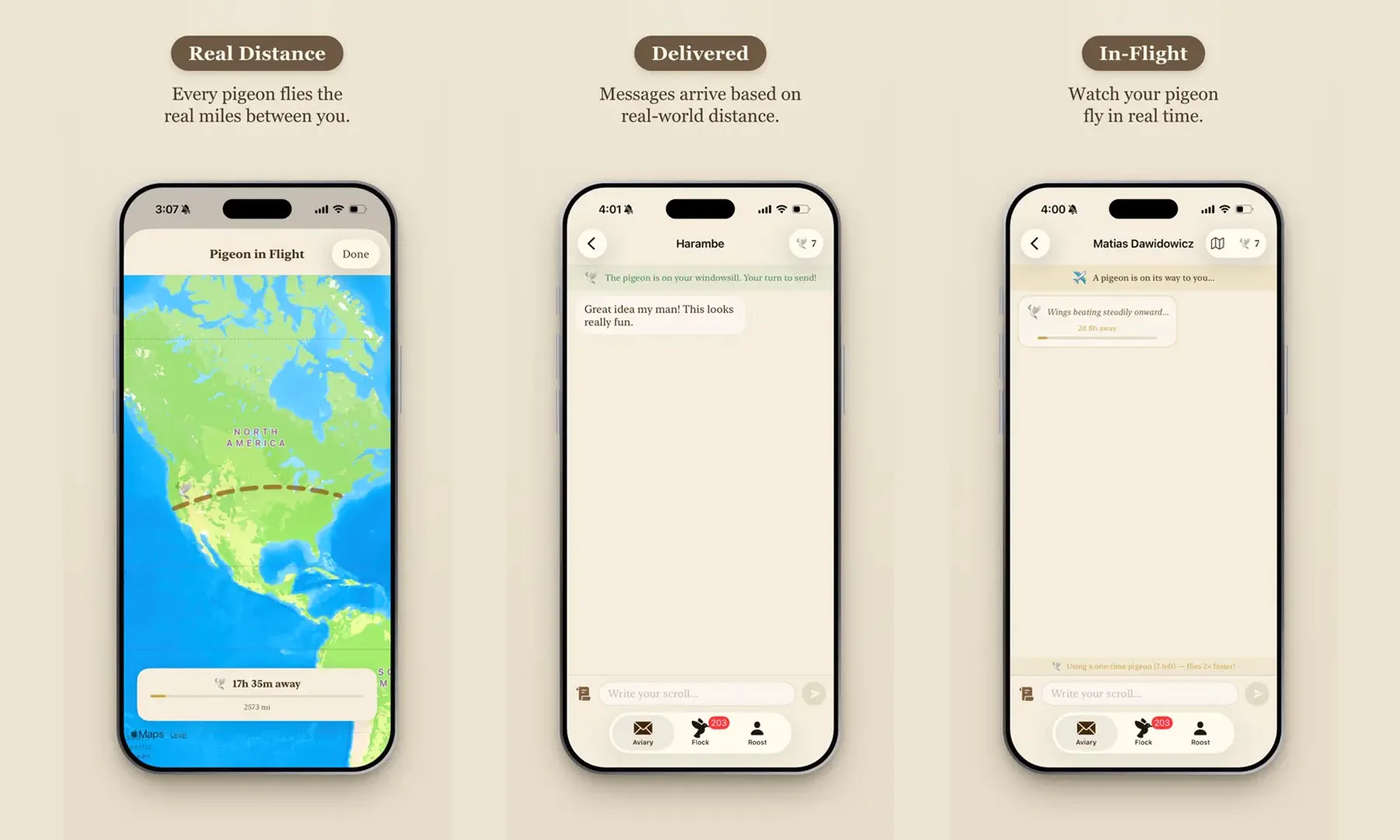
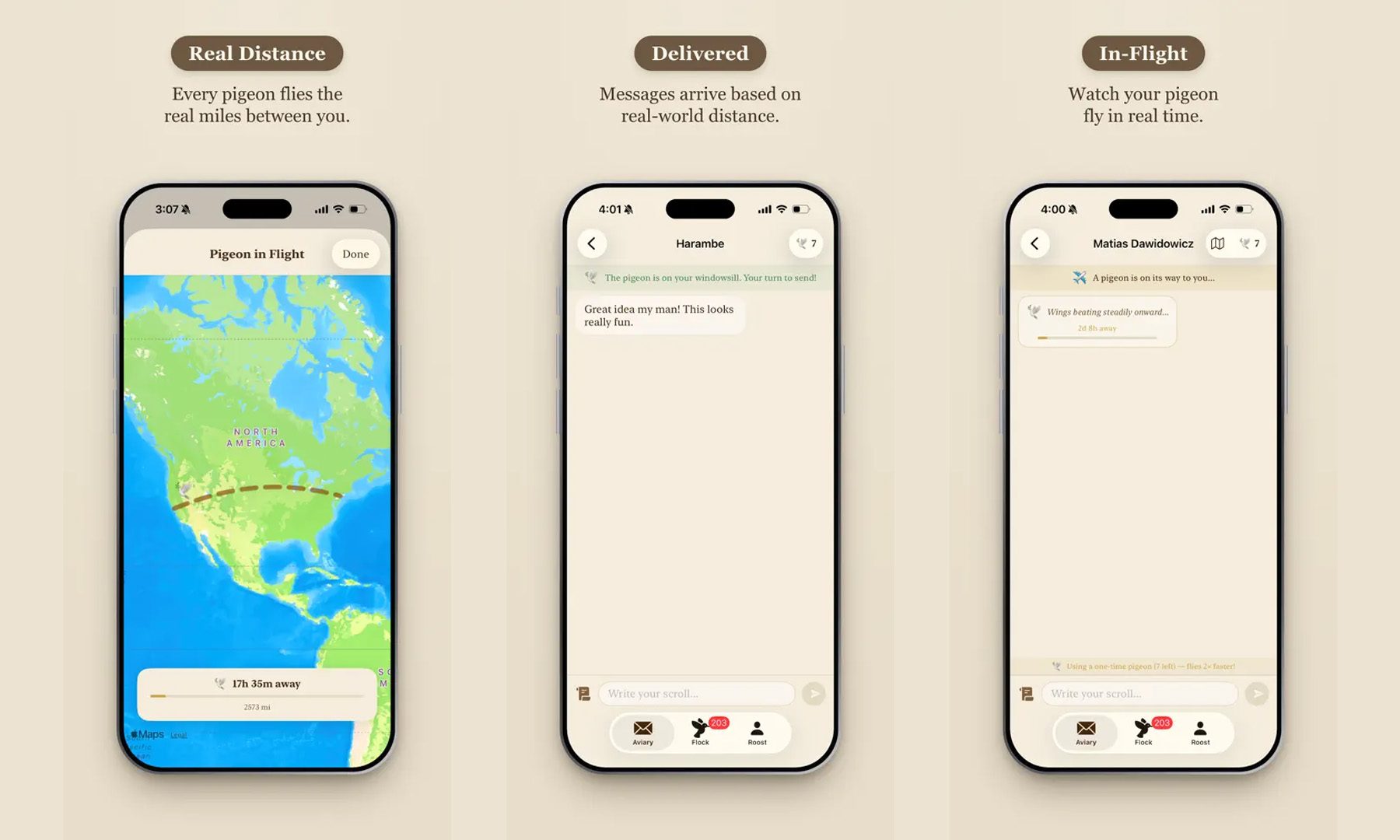
For decades, tech has been obsessed with making communication faster. Now, apparently, we’ve had enough. As The New York Times reports, the latest trend is slow tech, with apps like Carrier Pidge and Roost deliberately making messages take minutes, hours or even longer to arrive. Yes, we’re talking about digital carrier pigeons. Carrier Pidge launched in April and recently jumped from a few hundred users to more than 75,000, while Roost reportedly reached 650,000 downloads this month.

Apparently, waiting is cool again

Carrier Pidge lets you send a message via a digital pigeon whose journey you can track on a map. Its speed is based on real racing pigeons, topping out at 110mph, and there’s even a tiny 0.2% chance your bird disappears, meaning you’ll have to cough up 99 cents for a replacement. Roost takes the idea even further, offering more than 1,000 animals, from pigeons and penguins to snails that crawl along at a wonderfully useless pace.

The appeal isn’t really the wildlife. It’s the friction. Instead of another instant notification demanding your attention, you actually have to wait for someone to respond. That may actually matter more than we think: research has suggested that constantly picking up your phone in short bursts can be more mentally taxing than simply spending a long stretch on it. Carrier Pidge’s 29-year-old creator, Noah Iarrobino, previously made an app that charged users 99 cents every time they hit snooze, while Roost creator Logan Mendelsohn comes from the trust-and-safety tech world and is now planning to hire as the app grows.

Maybe our phones got a little too good at being phones

There may actually be something behind the silliness. A 2023 survey found that 80% of Gen Z adults, defined in the survey as people born after 1997, worried their generation relied too heavily on technology. Cal Newport, a computer science professor at Georgetown University, argues that our brains aren’t particularly well suited to a completely friction-free world where information arrives faster than we can process it.

And people aren’t just tolerating the slowness — they’re embracing it. One user told The New York Times that she and her friends even started writing to each other in Bridgerton-esque language, calling one another “my dearest lady.”

After decades of making everything faster, maybe the next killer feature really is making us wait. And honestly, if sending a text by pigeon is what it takes to make our phones a little less exhausting, perhaps we shouldn’t laugh at the birds just yet.

Advertisement

Source link

Continue Reading

Tech

University of Limerick welcomes first graduates in immersive engineering

Published

on

The course is designed in partnership with major technology companies.

16 graduating students form the first cohort of University of Limerick’s (UL) master’s degree in immersive software engineering (ISE), with many stepping into highly sought-after roles at companies including Stripe, Salesforce-owned Fin, Analog Devices and Amazon Web Services, the third-level institute said.

Launched in 2022, the master’s course in ISE prioritises practical, on-the-job experience over lectures and theoritcal studies, UL said. Since its launch, its intake has grown to around 60 students a year.

The degree is backed by leading tech firms, including of OpenAI, Qualcomm, Susquehanna, Eli Lilly and Deloitte, as well as big Irish names such as Manna, Provizio, Tines and Protex AI, allowing students to undertake five long-term paid residencies with the participating businesses.

Advertisement

Students also have a chance to build their own companies in partnership with Dogpatch Labs, the institute said.

“We launched the ISE programme with an ambition. We wanted to prove that a radically different model of software engineering education built on real-world complexity rather than the traditional lecture hall would produce graduates able to operate at the highest level of the software industry,” said Prof Stephen Kinsella, the co-director of UL’s ISE programme.

“Today, we’re seeing the results of that ambition realised. Our students are stepping into roles with some of the country’s most innovative companies. We’re excited for, and proud of, each of them and can’t wait to see how they progress as the future of Ireland’s tech ecosystem.”

In total, students spend around half of the course in the workplace and are given the opportunity to work on real-world problems and products, UL said. Today’s graduating cohort of master’s students have also won multiple prestigious awards and scholarships, including from Naughton and Google.

Advertisement

Fintech giant Stripe (which also runs the prestigious Young Scientist & Technology Exhibition) has worked to help develop the ISE programme, co-building the curriculum and the residency placement process as a founding partner.

“The incredible students graduating today took a bet on a different kind of degree when they signed up to ISE,” said Alison Ahern, the head of education partnerships at Stripe

“I’m delighted to see that faith being repaid as they leave for exciting careers and bright futures. ISE is made possible by deep collaboration between academia and industry leaders, and Stripe is proud to support a truly world-class programme. We’ve also enjoyed the partnership immensely, and we look forward to continuing to work with ISE.”

Don’t miss out on the knowledge you need to succeed. Sign up for the Daily Brief, Silicon Republic’s digest of need-to-know sci-tech news.
Advertisement

Source link

Continue Reading

Tech

CISA orders urgent patching of actively exploited Zimbra flaw

Published

on

Zimbra

The Cybersecurity and Infrastructure Security Agency (CISA) has ordered U.S. government agencies to patch an actively exploited vulnerability in Zimbra Collaboration Suite (ZCS) within three days.

The Zimbra security team patched the security flaw (tracked as CVE-2026-73570) in version 10.1.20, released on July 20.

Successful exploitation allows unauthenticated attackers to gain remote code execution by exploiting a command injection weakness in the SNMP monitoring component when SNMP notifications are enabled on the targeted system.

image

“Due to improper sanitization of untrusted input during SNMP notification processing, an unauthenticated attacker can send specially crafted SMTP requests that may result in execution of arbitrary operating system commands as the Zimbra user,” it explained.

CISA’s warning comes after CERT Polska, the Polish Computer Emergency Response Team (CERT), first flagged the vulnerability as targeted in the wild last Monday.

Advertisement

While threat security watchdog Shadowserver tracks more than 12,000 Zimbra servers exposed on the Internet, there is no information on how many are honeypots or have already been secured against attacks exploiting the CVE-2026-73570 flaw.

On Monday, Shadowserver also said it has found over 270 compromised Zimbra Collaboration Suite instances while looking for CVE-2026-73570 exploitation artifacts.

Zimbra Collaboration Suite servers exposed online
Zimbra Collaboration Suite servers exposed online (Shadowserver)

​On Friday, CISA confirmed CERT Polska’s alert, added the flaw to its KEV catalog, and ordered U.S. Federal Civilian Executive Branch (FCEB) agencies to secure their systems within three days, by August 24.

Although CISA didn’t share any information on these ongoing attacks, the Polish CERT team asked security teams to check logs for suspicious activity, such as the Zimbra service restarting unexpectedly, and for files created in the /opt/zimbra/jetty/webapps/, /opt/zimbra/jetty_base/webapps/, and /tmp/ folders by user zimbra over the last 30 days.

ZCS is a popular email and collaboration suite used by hundreds of millions of organizations and people worldwide, including hundreds of government agencies and thousands of businesses.

Advertisement

Zimbra security issues are commonly targeted in the wild and have been used to steal sensitive data from vulnerable email servers in recent years.

Most recently, Seqrite Labs researchers revealed in March that APT28 (a state-sponsored threat group linked to Russia’s military intelligence service) was exploiting a stored cross-site scripting (XSS) vulnerability in attacks targeting Ukrainian government ZCS servers.

In October 2024, U.S. and UK cyber agencies warned that APT29 hackers (tracked as Midnight Blizzard and Cozy Bear) linked to Russia’s Foreign Intelligence Service were targeting Zimbra servers using a flaw previously exploited to steal email account credentials.

Russian Winter Vivern cyber spies have also abused a reflected Cross-Site Scripting (XSS) vulnerability to steal emails belonging to NATO-aligned individuals and organizations via Zimbra webmail portals.

Advertisement

article image

Overall prevention scores can hide what happens after initial access. Once attackers are using valid credentials, prevention drops sharply.

The Blue Report 2026 measures defenses technique by technique across 338 million simulations run in customer production environments.

Get the report

Source link

Continue Reading

Tech

IBM’s next-gen mainframe chip is the first to run Arm and Z workloads on the same cores

Published

on

IBM is announcing today at the annual Hot Chips conference what may be the most consequential change to mainframe architecture in decades: a processor whose cores can natively execute both IBM’s own instruction set and Arm’s — switching between the two in nanoseconds.

The chip, which will power the next generation of IBM Z and LinuxONE systems, is the first dual-architecture mainframe processor ever built. It is designed to let enterprises run the vast and fast-growing ecosystem of Arm-native Linux software — including the AI frameworks that increasingly define modern infrastructure — directly alongside the z/OS transaction-processing workloads that anchor the world’s banks, insurers, and governments.

“As technology enthusiasts on both sides, we’re really excited about being what I would consider one of the most powerful commercially available processors that’ll be dual architecture,” Tina Tarquinio, chief product officer for IBM Z and LinuxONE, told VentureBeat in an exclusive interview ahead of the announcement.

The announcement marks the first hardware milestone from the strategic collaboration IBM and Arm unveiled in April, and it offers an unusually direct answer to a question that has shadowed the mainframe for years: can the machine that processes most of the world’s regulated financial transactions remain a first-class citizen in an AI era built largely on other people’s silicon?

Advertisement
IBM Arm Processor

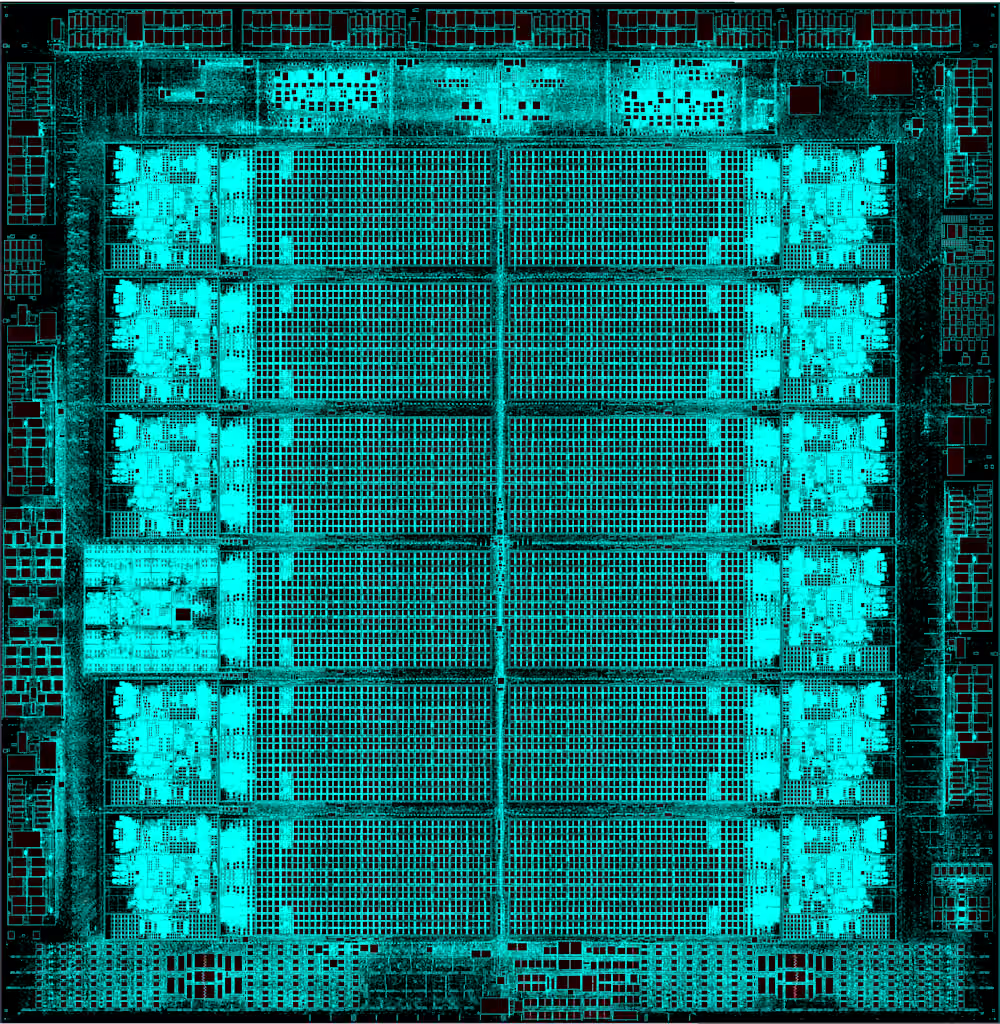
A computer-aided design layout of IBM’s new processor, the first mainframe chip capable of natively running both IBM’s instruction set and Arm’s. Each of its 11 cores can switch between the two architectures in nanoseconds. (Credit: IBM)

How IBM engineered a processor core that speaks two instruction sets

The most striking engineering decision is what IBM chose not to do. The company could have bolted a handful of standalone Arm cores onto the side of its processor — a simpler design that other chipmakers have used for heterogeneous computing. Instead, IBM built every core on the chip to be bilingual.

“On this chip are 11 cores, and each core can dynamically switch back and forth between Arm software mode and traditional Z software mode,” Jacobi explained in an exclusive interview with VentureBeat. “That enables us to run the mission-critical enterprise software right next, on the same chip, to the much broader software ecosystem of Arm applications.”

The mechanism relies on the open-source KVM hypervisor. Enterprises can run Arm64 Linux virtual machines and Linux on Z virtual machines side by side, and as the hypervisor dispatches each virtual machine onto a physical core, the core flips into the corresponding mode. The performance penalty, Jacobi said, is effectively zero. “That switch takes about the nanosecond scale,” he said. “Because you’re running for many milliseconds in the virtual image, this switching overhead sort of amortizes to zero — pretty much no impact at all.”

Advertisement

Traditional z/OS workloads run in a separate partition on the same chip, outside KVM — meaning a bank’s core ledger, its fraud models, and a modern Arm-native monitoring stack can all share the same silicon, the same memory fabric, and the same reliability guarantees. Jacobi was candid that IBM debated the easier path and rejected it. “We’re really not addressing their need if we just have a few, I’d say, loosely Arm cores in the corner of the chip,” he said. “It really needed to be deeply integrated into the entire system design for it to have the same qualities of service that clients are used to.”

The specifications underscore that this is no compromise design. Built on a leading-edge 2-nanometer process node, the chip runs its 11 high-performance cores at a base frequency above 5.7 GHz — extraordinarily fast by industry standards — with on-chip AI inference accelerators for in-transaction fraud detection, a dedicated data processing unit for I/O acceleration, and a large cache architecture. Full systems will scale to hundreds of cores and tens of terabytes of memory. “That’s really, really fast compared to what you otherwise get in the industry,” Jacobi said. “It’s just another example of how mainframe technology is not old technology. It’s very modern, leading-edge technology.”

Why the mainframe needed Arm’s 22 million developers

The strategic logic behind the chip is about software, not hardware. IBM’s s390x architecture runs an enormous share of the world’s mission-critical transactions, but the broader universe of enterprise software — monitoring tools, security agents, cloud-native middleware, and above all the AI stack of PyTorch, ONNX Runtime, and container workloads — was built for x86 and, increasingly, for Arm. By Arm’s own estimates, close to half of the compute shipped to major hyperscalers in 2025 was Arm-based, driven by AWS Graviton, Google Axion, and Microsoft’s Arm silicon. Arm counts more than 22 million developers worldwide.

Porting each application to s390x has been a grinding, one-ISV-at-a-time effort, and Tina Tarquinio, chief product officer for IBM Z and LinuxONE, described the calculus bluntly. “No matter how great our ecosystem team is, we would never be able to work with all of them and port them all,” she told VentureBeat. “There’s a lot of ISVs out there, and so we wanted to make a fundamental, big step-function forward. We took a swing from a technology point of view.”

Advertisement

Notably, she said customers weren’t asking for a dual-architecture chip per se — they were asking for outcomes. “I wouldn’t say our clients were saying, ‘Can you please make me a dual-architecture environment?’ But they were saying, ‘Help me get these surround workloads, or different types of workloads, to run in a quicker-to-market fashion.’”

The compatibility promise is ambitious: Arm Linux binaries should run unmodified. “The new Arm capabilities are designed to be 100% binary compatible,” Jacobi said. “Once you have, for example, Red Hat Linux for Arm, and you have applications that run on Red Hat Linux for Arm, they will run on the system without modifications.” Arm defines the instruction set architecture and supplies validation tooling to guarantee that IBM’s implementation behaves identically to every other Arm chip — while IBM designs and builds the silicon entirely in-house. “Very good partnership. Very solid engineering partnership as well,” Jacobi said of the collaboration.

What a next-generation Spyre accelerator means for enterprise AI on the mainframe

IBM is also previewing the next generation of its Spyre AI accelerator at Hot Chips, and the pairing is not coincidental. The current architecture already offers two tiers of AI: an on-processor accelerator, introduced with the Telum chip in 2022, that handles ultra-low-latency inference such as fraud scoring inside a payment transaction, and the Spyre accelerator card sitting in the I/O subsystem for heavier models.

The new Spyre raises the ceiling considerably. “We’re also bringing a much higher performance chip that is capable of running large language models for agentic workflows,” Jacobi said — both AI-ops workflows that administer the system itself and business workflows “for things like document understanding and insurance adjudication.” The new accelerator will ship with high-bandwidth memory to feed those models.

Advertisement

Here the dual-architecture bet and the AI bet converge. Enterprises want to run inference next to their data; the data lives on the mainframe; and the AI tooling is overwhelmingly Arm-native. Mohamed Awad, Arm’s executive vice president for cloud AI, framed the announcement in exactly those terms: “As AI scales, more of the computing landscape is converging on Arm. Bringing Arm compute and its software ecosystem to these platforms will extend that momentum into mission-critical enterprise infrastructure to give organizations greater choice in how they deploy AI.”

The timing tracks with where enterprise AI actually stands. McKinsey’s most recent State of AI survey found that while 88% of organizations now use AI in at least one business function, nearly two-thirds have not yet scaled it across the enterprise — and the companies capturing the most value are those redesigning core workflows rather than running detached pilots. For regulated industries whose systems of record sit on IBM Z, running AI where the transactions happen is arguably the most direct route to that kind of integration.

When the dual-architecture IBM Z system will ship — and why existing customers shouldn’t worry

Buyers will need patience. The chip will debut in the successor to the z17, which shipped in the second quarter of 2025, and IBM holds to a roughly three-year product cadence — pointing to a launch around 2028. But Tarquinio insisted the program is well past the concept stage. “It’s more than being on the drawing board. We’re full steam ahead on the whole system,” she said, adding that IBM will release more details in the run-up to launch.

For IBM’s installed base, the reflexive question is whether embracing Arm signals a slow sunset for the traditional architecture. Both executives pushed back hard. “This is a big and. It is not an or,” Tarquinio said. “I have a roadmap that goes out 10 or 15 years of hardware systems. Many of our teams are working on this next system; many are also working on the one after that, and the one after that.”

Advertisement

Jacobi cast the move as continuity rather than rupture. “The traditional mainframe that we have today as a z17 system is not just a faster version of what we built 25 years ago,” he said. “We didn’t have pervasive encryption capabilities. We didn’t have on-processor AI capabilities. Adding the Arm capability is the next big iteration in this continuous evolution.”

The competitive subtext is the cloud. Asked why an enterprise would run Arm workloads on a mainframe instead of a hyperscaler, Tarquinio pointed to the platform’s availability numbers: “We’re talking eight nines of availability — that’s 0.3 seconds of downtime a year. If you’re running your ledger, if you’re running your fraud detection, any of these mission-critical apps, you want that.” The pitch, she said, is fit for purpose: match the infrastructure to the SLA, not the fashion.

There are real caveats. IBM’s own press release notes that statements of future direction “represent goals and objectives only.” The Arm support is Linux-only for now, and the hardest engineering — running a foreign instruction set at production performance, with mainframe-grade fault detection and recovery, under real customer workloads — remains to be proven over the next two years.

But the ambition is unmistakable. For sixty years, the mainframe has survived every wave of technology that was supposed to kill it — minicomputers, client-server, the cloud — by absorbing what it needed from each. Now IBM is attempting its boldest act of absorption yet: teaching the machine that runs the world’s money to speak the language of the AI era, fluently and natively, on the same silicon. “Bringing something that’ll really be first of its kind in production,” Tarquinio said, “showcases again what IBM is capable of from a technology point of view.” The mainframe, it turns out, isn’t being left behind by the future. It’s learning to run it.

Advertisement

Source link

Continue Reading

Tech

Thelonious Monk Live in Paris 1967 Vinyl Review: Historic Quartet and Nonet Performances Get Superb Rudy Van Gelder Mastering

Published

on

In the Thelonious Monk universe, I’ve noticed over the years a general perception among aficionados that the artist’s work diminished significantly later in his career. Personally, I have not found that to be accurate, as evidenced by the excellent 1968 Palo Alto concert that Impulse! Records issued several years ago. That notion comes to mind again while listening to an outstanding 1967 live concert recorded in Paris.

Monk Live in Paris 1967 (Volume One) marks the first in a series of official releases selected by Thelonious Sphere Monk III. This new release was sourced from digital remasters created in 2002 by the late, great audio engineer and producer Rudy Van Gelder, working from a pristine archival tape reel discovered in France. The recordings were restored at the time for the Monk Estate’s then-label, Thelonious Records, but unfortunately remained unreleased for more than 20 years.

monk-fedora

These revelatory performances are finally being issued to the public on the Estate’s own terms. Portions of the recordings have circulated as bootlegs over the years.

For this performance, Monk’s classic mid-1960s quintet was expanded to a full nonet, adding several significant players, as documented in the album’s official press materials: “… it showcases Monk’s longstanding quartet featuring tenor man Charlie Rouse and the bass/drums tandem of Larry Gales and Ben Riley, who are joined by five very special guest horn men. Alto saxophonist Phil Woods, trombonist Jimmy Cleveland, Ray Copeland and tenor titan Johnny Griffin (Rouse’s predecessor in the quartet) perform in various permutations – with the full nonet, including trumpet legend Clark Terry…”

The 180-gram audiophile vinyl features disc mastering and lacquer cutting by Warren Defever of Third Man Mastering, with United Record Pressing handling the plating and pressing. The recording is also available as a digital download. You can order the vinyl now for about $30 from Amazon.

Advertisement

Pressed on translucent blue vinyl, the record is well centered and, happily, quite quiet. The album also includes a bonus insert with additional liner notes.

The band is swinging on Monk Live in Paris 1967 (Volume One) and, as far as I can tell, Monk seems to be having a great time taking the music into some interesting spaces. One of the standouts for me is trumpeter Ray Copeland, who launches into some joyful, soaring solo flights.

monk-hat-limited
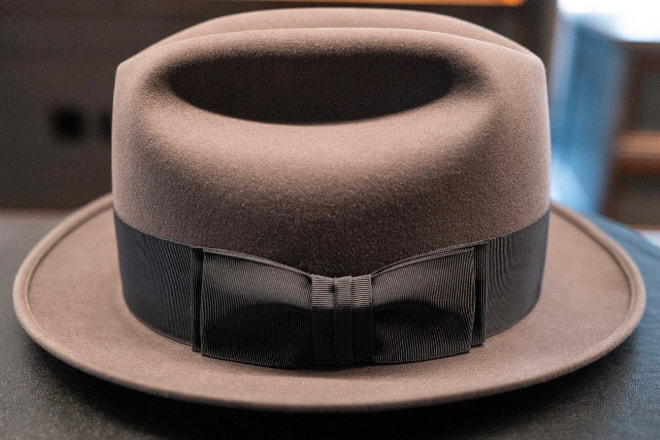
Thelonious Monk Signature inside the Hat

As an added bonus, the Monk Estate has partnered with luxury hatmaker Optimo to recreate a limited run of 88 hats, one for each key on a piano keyboard, like the one Thelonious Monk wore back in the day. Each hat comes with the first pressing of the recording, produced in a special edition color and signed by Thelonious Sphere Monk III and Optimo founder Graham Thompson. The hat is titled, simply, The Monk.

Part two of the concert is expected to be issued later this year, so as soon as we get our hands on it, I’ll be sure to follow up with a review. Can’t wait!

Advertisement. Scroll to continue reading.
Advertisement

Our Ratings:

★★★★★★★★★★ Music

★★★★★★★★★★ Sound Quality

★★★★★★★★★★ Packaging

Where to buy:


Mark Smotroff is a deep music enthusiast / collector who has also worked in entertainment oriented marketing communications for decades supporting the likes of DTS, Sega and many others. He reviews vinyl for Analog Planet and has written for Audiophile Review, Sound+Vision, Mix, EQ, etc. You can learn more about him at LinkedIn.

Advertisement

Source link

Continue Reading

Tech

XPENG’s robotics arm has raised more than $900M ahead of its humanoid production run

Published

on

XPENG said on Monday that its robotics business has raised more than $900M in what the company described as its first funding round, a substantial sum for a unit that has yet to sell a single robot commercially.

The timing is deliberate, since the Chinese carmaker has committed to putting its IRON humanoid into mass production before the end of this year and is running out of calendar to do it in.

IRON was unveiled at XPENG’s AI Day in November 2025 and runs on the same Turing chips the company designed for its own electric vehicles. That shared silicon is the core of the pitch, alongside more than 60 joints, a spine with five degrees of freedom, and a layer of what XPENG calls bionic muscle fascia intended to soften the machine’s movement.

The robot demonstrated publicly is a seventh-generation prototype, with an eighth generation earmarked as the production model. Moreover, the company has said it wants full capability integrated before the production line starts, which is a considerable amount of engineering to compress into the remaining months of the year.

Advertisement

Deployment plans start close to home. The first units are expected to work as showroom assistants and tour guides, patrol XPENG campuses, and take positions on the company’s own factory floors, with commercial deliveries in China and abroad following in 2027.

Putting robots in your own dealerships is becoming a recognisable pattern in the Chinese car industry, with BYD already committing to a humanoid in every showroom. It has the useful property of generating deployment numbers without requiring a customer to be convinced first.

The longer-term target is a million units a year by 2030. He Xiaopeng, XPENG’s chief executive, has said the robots could eventually be priced at levels “very similar to car prices” within five years, and that software accounts for more than half the value of the machine from the first day it ships.

He has also taken personal charge of the division. In an internal note reported earlier this year, he wrote that the robot industry “is becoming increasingly hot and competitive, and we have clearly seen the direction and timing of victory, but it still requires more arduous implementation and extremely high decision-making ability”.

Advertisement

That reshuffle came alongside the departure of Shi Xiaoxin, the senior director of robotics product planning who had overseen the IRON project, which is not the sort of personnel change a company usually makes with a production deadline months away.

One point deserves care. XPENG Robotics, then known as Pengxing Intelligence, completed a $100mn Series A in July 2022, so the description of this as a first round most likely reflects a restructured entity rather than a first-ever raise, and XPENG has not published the investor list or a valuation for the new money.

The capital arrives in a market that has been repricing humanoid companies upwards for two years, with LimX Dynamics reaching a $2.2bn valuation before an IPO and Morgan Stanley doubling its forecast for Chinese humanoid shipments to 50,000 units. Against a million-a-year ambition, that industry-wide figure is a reminder of how early this all is.

Robotics also sits inside a wider reorientation at the company, which now describes itself as a physical AI business spanning humanoids, robotaxis, and flying vehicles rather than a carmaker with side projects. Each of those lines consumes capital on a scale that vehicle sales alone are not currently covering.

Advertisement

The car business is why the money matters, as XPENG reported a 17.6% revenue decline in the first quarter alongside widening net losses, having been profitable the quarter before, and management has been describing robotics, robotaxis, and flying vehicles as the eventual drivers of revenue and profit.

Raising outside capital for the robotics unit keeps that spending off the carmaker’s own balance sheet while the vehicle business works through a difficult year. Whether IRON reaches a production line before December is the question the $900M is meant to answer.

Source link

Advertisement
Continue Reading

Tech

August updates break printing, PDF export in WPF apps

Published

on

Printer

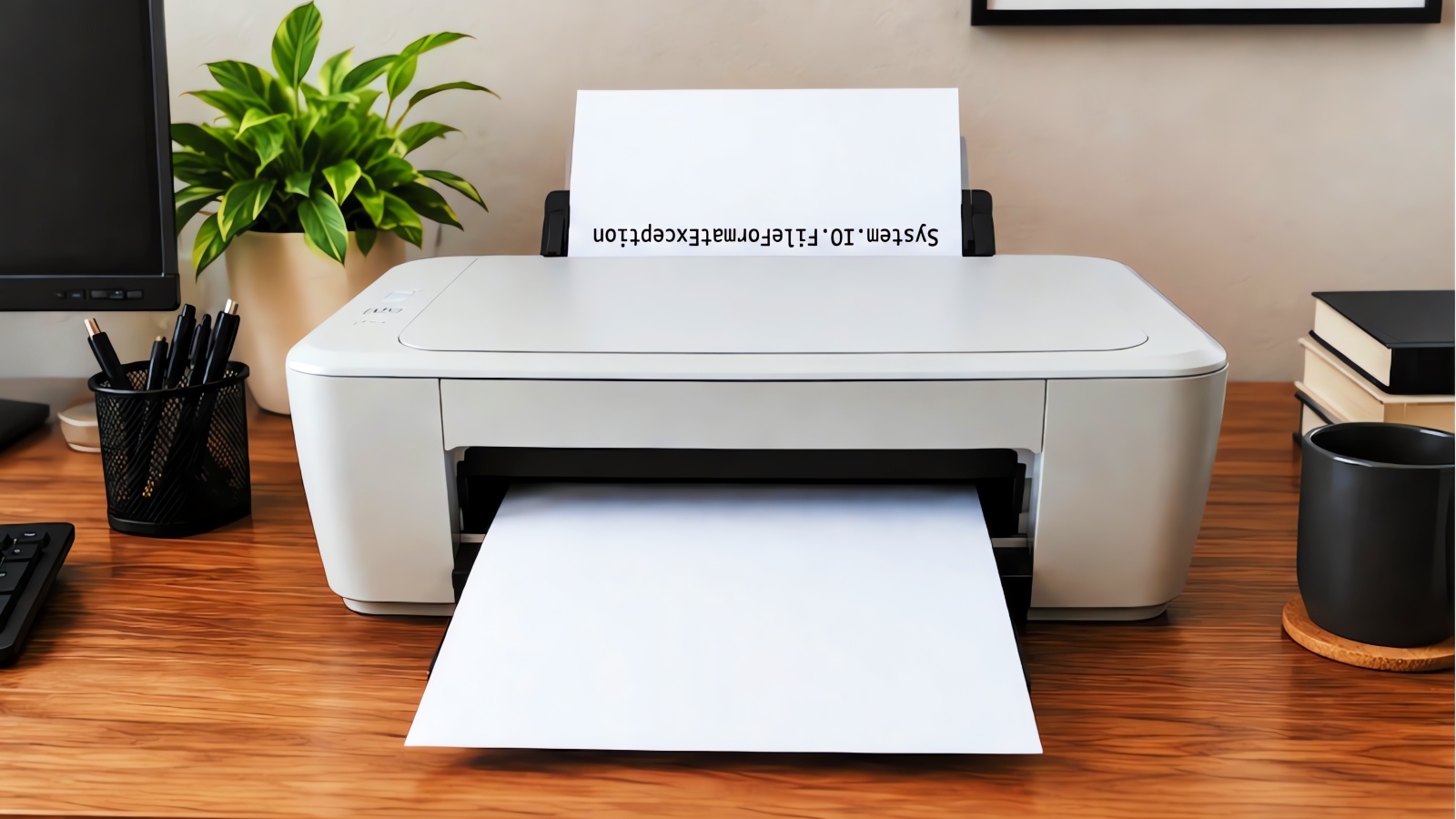
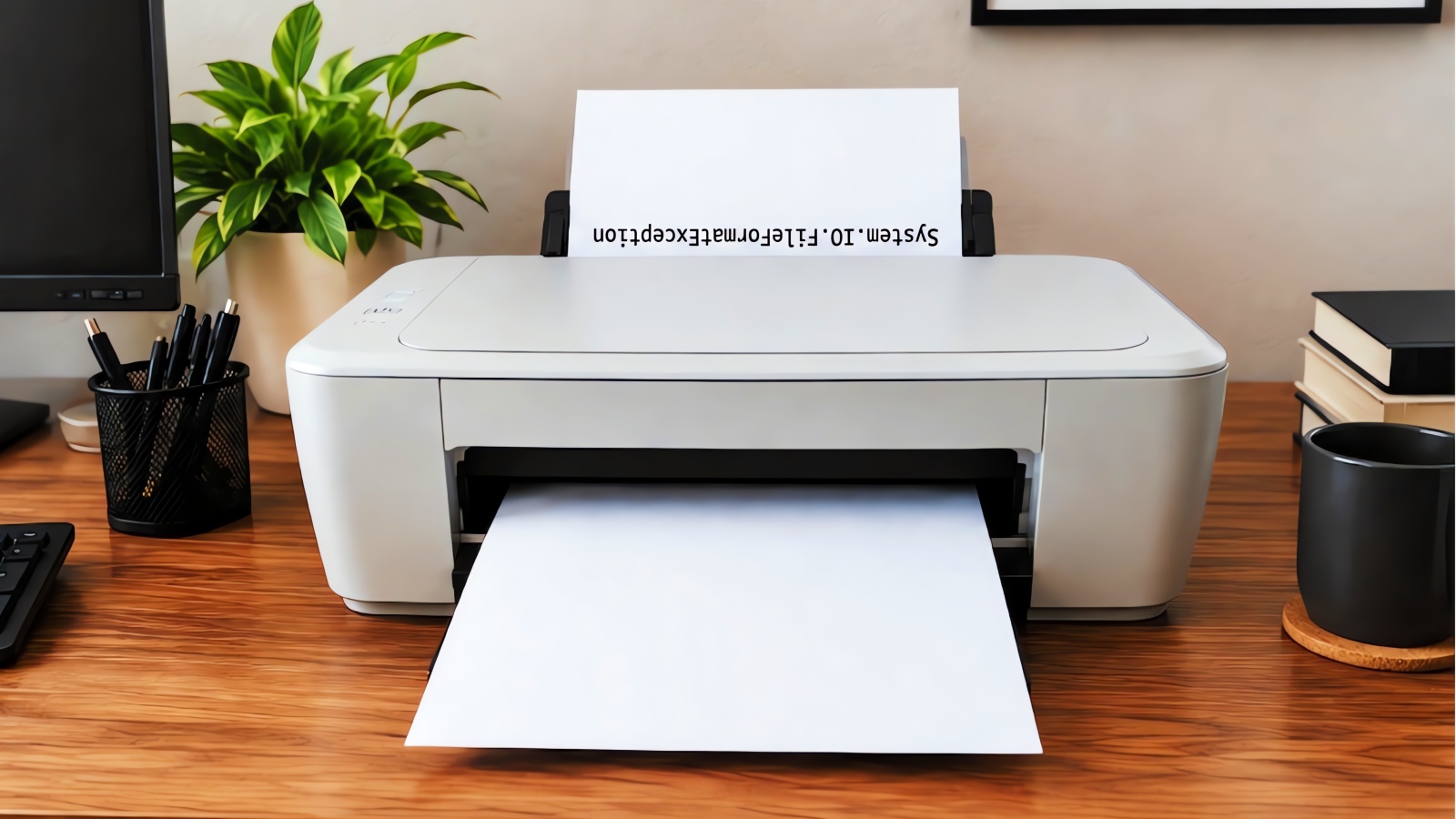
Microsoft has confirmed that .NET Framework updates released as part of the August 2026 Patch Tuesday are breaking printing and PDF export in some applications.

In a Windows release health alert seen by BleepingComputer, Microsoft says this known issue affects only apps that use the Windows Presentation Foundation (WPF) UI framework, an open-source graphical subsystem for building Windows desktop client applications.

“After installing the August 2026 .NET Framework cumulative update, some WPF applications may fail with a System.IO.FileFormatException when printing or generating PDF/XPS content that uses certain fonts, including Calibri,” Microsoft says.

image

The complete list of impacted platforms includes both Windows client releases (including the latest versions of Windows 10 and Windows 11) and Windows Server (from Windows Server 2012 up to Windows Server 2025).

Microsoft says it is still investigating the issue and, until it can ship a permanent solution, has provided a temporary fix to help affected users work around these printing problems.

Advertisement

This workaround requires enabling the Switch.MS.Internal.TtfDelta.DisableCmapAndSbitOverflowProtection AppContext switch in the application config file by adding the following:


However, the company warned that doing this will also disable protections introduced with the August 2026 .NET Framework update, exposing the system to attacks that could exploit vulnerabilities addressed by this month’s security updates.

“Microsoft recommends using this workaround only as a temporary measure and only when required to address this issue,” it warned.

Roughly five years ago, in February 2021, Microsoft addressed another known issue that caused WPF apps and Visual Studio to crash after installing Windows 10 cumulative updates.

Advertisement

On Friday, Microsoft also shared a temporary workaround for a known issue triggered by Windows 11 updates released during the August 2026 Patch Tuesday and causing games like ARC Raiders, MARVEL Tōkon: Fighting Souls, and The Finals to crash and freeze.


article image

Overall prevention scores can hide what happens after initial access. Once attackers are using valid credentials, prevention drops sharply.

The Blue Report 2026 measures defenses technique by technique across 338 million simulations run in customer production environments.

Get the report

Source link

Advertisement
Continue Reading

Tech

Poetry for Engineers: Safe Distance

Published

on

How do I touch you
across the ocean,
across cold depths
where light travels through glass.

Not copper—fibers. Optical.

Through liquid glass, through flickering light
that carries you in fragments. Light broken into pulses.

You say: it’s easier this way. What are we missing like this? You smile.
Safe distance.

Advertisement

I say: network.

Signals slide beneath the sea, through cables thinner than trust, faster than touch,
slower than longing.

We stand alone, together. Synchronous, yet apart. Icons replace skin, latency replaces breath.

This distance protects us. Silence that feels intentional.

Advertisement

Everything is under control as long as nothing truly hurts.

And we choose it
because it shields us
from what we might become if we actually met.

You are my counterpoint. My response.
My reflection
at a safe distance.

Beneath the ocean, nodes remember paths.

Advertisement

Packets shake hands without bodies.

If we get lost,
we resend everything, with error,
with noise,
with hope.

Source link

Advertisement
Continue Reading

Trending

Copyright © 2025