

Connect with us
DAPA Banner
DAPA Coin
DAPA
COIN PAYMENT ASSET
PRIVACY · BLOCKDAG · HOMOMORPHIC ENCRYPTION · RUST
ElGamal Encrypted MINE DAPA
🚫 GENESIS SOLD OUT
DAPAPAY COMING

Tech

B&H MacBook Air Blowout Sale Drives 15-Inch Down to $969

Published

on

B&H is blowing out remaining 15-inch MacBook Air M4 inventory at $969 with free expedited shipping, delivering the lowest online price exclusively for AppleInsider readers.

Whether you’re looking for a Father’s Day gift or need a new laptop to add to your own Apple setup, B&H’s $969 15-inch MacBook Air deal is worth checking out. The last-gen M4 model, which originally retailed for $1,199, is marked down to $969 in Sky Blue.

Buy 15″ MacBook Air M4/16GB/256GB for $969*

This configuration has Apple’s M4 10-core chip, along with 16GB of unified memory, and 256GB of storage. While Apple updated the starting storage capacity to 512GB in this year’s M5 line, the cheapest M5 15-inch MacBook Air will run you $1,099 with current discounts, which is $130 more than this blowout deal.

Advertisement

You can also pick up a closeout M4 13-inch MacBook Air with a 10-core GPU and 512GB SSD for $929 in Apple’s Midnight finish.

Buy 13″ MacBook Air M4/16GB/512GB for $929*

To activate the deals at B&H, which are available exclusively to AppleInsider readers, simply click through the special pricing links in this post from a laptop or desktop computer. The offers cannot be activated through B&H’s mobile app at this time.

B&H is also throwing in free 2-day shipping for speedy delivery to your doorstep. Special financing or a sales tax refund in qualifying states is available via the store’s Payboo card as well.

Advertisement

Source link

Continue Reading
Click to comment

You must be logged in to post a comment Login

Leave a Reply

Tech

iPhone 17 Pro Max vs Samsung Galaxy S26 Ultra: battle of the big-hitters

Published

on

The iPhone 17 Pro Max and Samsung Galaxy S26 Ultra are the two most obvious choices if you want a no-compromise flagship phone in 2026.

Both are big, powerful, expensive, and built around the same basic promise: you get huge displays, elite cameras, long battery life, high-end performance, and a growing number of AI tools if you’re willing to pay the high asking price.

Advertisement

Source link

Advertisement
Continue Reading

Tech

DLSS 4.5 Ray Reconstruction arrives this August to make ray tracing look cleaner and more stable

Published

on


Ray Reconstruction is designed to replace the hand-tuned denoisers traditionally used in ray-traced and path-traced games.
Read Entire Article
Source link

Continue Reading

Tech

What’s on Paramount Plus in June? I’ve Selected a Handful of New Arrivals to Watch

Published

on

When Paramount Plus first arrived on the scene, the streaming service made a name for itself as the destination for fans of Paramount-owned brands. You could watch CBS shows such as Survivor and The Amazing Race alongside nostalgic favorites from MTV and Comedy Central, including The Challenge, South Park, Paramount films and more. Paramount Plus has expanded even more since then, becoming the home of UFC fights, Taylor Sheridan‘s Yellowstone universe and his standalone series such as Mayor of Kingstown, Tulsa King and The Madison.

This June sees the return of The Agency, the CIA thriller with a cast that can’t be beat — Michael Fassbender stars, alongside Jeffrey Wright, Jodie Turner-Smith and Richard Gere. Also arriving this month is the British dramatic thriller Wild Cherry, which binge drops on June 24. You can catch these shows, plus the return of two Tyler Perry-produced dramas, a livestream of the Tony Awards and more in the coming weeks.

Here are the new releases we’re most excited to see on Paramount Plus this June. 

Advertisement

June 2

Paramount Plus

Advertisement

Devotion: Obedience or Betrayal

Why watch: People will definitely be talking about this little-known religious sect once this show comes out.

The religious community of Gloriavale in New Zealand is a small, isolated group that most people have never heard of… until now. Devotion: Obedience or Betrayal is a new three-part docuseries that reveals the secrets of the little-known community that is now being accused by many past members of abuse, control and mistreatment. The series arrives on June 2.

Advertisement

June 7

CBS

Advertisement

The 79th Annual Tony Awards

Why watch: You need a safe space to have your opinions about the Chess revival and CATS: The Jellicle Ball confirmed.

The 79th Annual Tony Awards — hosted by Pink — will honor the best of Broadway; some of this year’s biggest nominees include The Lost Boys, Schmigadoon!, and the latest revival of Death of a Salesman. The ceremony will stream live on Paramount Plus on Sunday, June 7, from 8 – 11 p.m. ET, and it will also be broadcast on CBS.

Advertisement

June 10

BET

Advertisement

All the Queen’s Men (Season 5)

Why watch: This is the fifth and final season of the popular series with lots of loose ends to tie up.

Eva Marcille stars as as Marilyn “Madam” DeVille, the proprietor of an all-male exotic dance club in Atlanta in All the Queen’s Men. The show originally ran on BET Plus for its first four seasons and will now conclude with season 5, streaming on Paramount Plus. The first half of this season will consist of eight episodes, with more dropping later this year to conclude the series.

Advertisement

June 21

Paramount Plus

Advertisement

The Agency

Why watch: There might not be a more impressive cast than this one.

The Agency, a George Clooney-produced spy drama starring Michael Fassbender, Jeffrey Wright, Jodie Turner-Smith and Richard Gere (and Katherine Waterston and Hugh Bonneville… the list goes on), is back for season 2 this month. (The series was previously known as The Agency: Central Intelligence in its first season, just in case you were confused as to whether it was the same show.) All 10 episodes of the new season will be available to stream on Sunday, June 21. In the series, Fassbender plays an undercover CIA agent named Martian who returns to his everyday life in London after living under cover for years in Ethiopia. Soon, his two worlds start to overlap and he finds himself betrayed and betraying others who trust him.

Advertisement

June 24

Natalie Seery/BBC Studios/Firebird Pictures/Paramount Plus

Advertisement

Wild Cherry

Why watch: This BBC thriller was acclaimed when it came out in the UK and now it’s coming to the US.

All six episodes of the British thriller Wild Cherry will arrive on Paramount Plus on June 24. The limited series originally debuted on BBC One last November. In it, two mothers, played by House of the Dragon star Eve Best and The Penguin’s Carmen Ejogo, previously close friends, are forced to take sides after their teen daughters (played by Imogen Faires and Amelia May) are implicated in a shocking scandal at their private school. As a result, the facade of their perfect, tony lives is shattered, along with their relationships.

Advertisement

June 30

Paramount Plus

Advertisement

Tyler Perry’s Ruthless (Season 6)

Why watch: Tyler Perry fans rejoice: this popular show is back after a two-year break.

Like All The Queen’s Men, Tyler Perry’s Ruthless began as a series on BET and its latest season will stream exclusively on Paramount Plus. In the sixth season of the show, which premieres on June 30, Melissa L. WIlliams returns as Ruth, a member of the Rakudushi cult, a religious group with ever-changing internal alliances and often dangerous and disturbing practices. This season, the FBI is closing in on them and the future of the cult hangs in the balance.

Advertisement

Source link

Continue Reading

Tech

Mathematicians used Minecraft mobs to calculate Pi without writing a single line of code

Published

on


Molly Lynch of Hollins University and Michael Weselcouch of Roanoke College approached the problem less like programmers and more like experimentalists. Instead of recreating a traditional algorithm inside Minecraft – a process that typically involves building elaborate in-game logic systems – they leaned on probability and the game’s existing mechanics…
Read Entire Article
Source link

Continue Reading

Tech

Nvidia looks beyond China’s Unitree for its humanoid robot push

Published

on

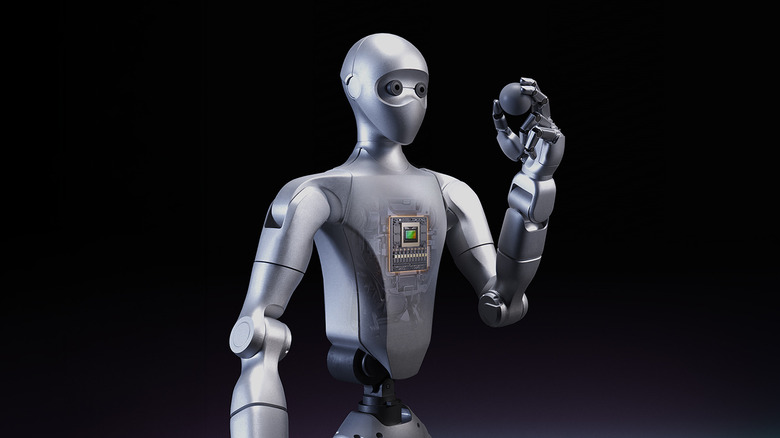
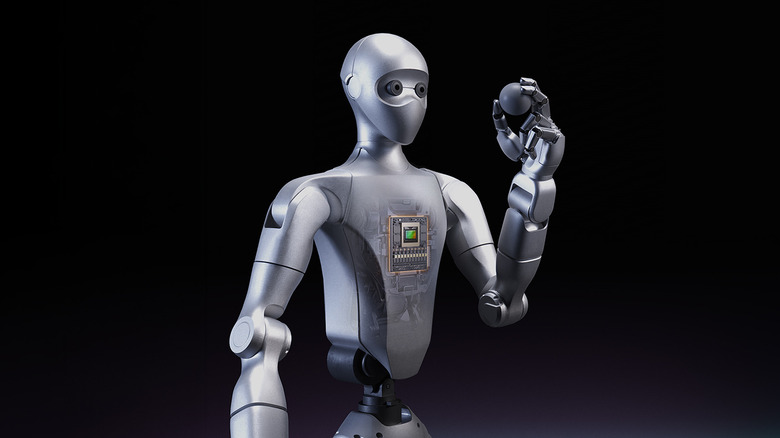
The first robot in Nvidia’s new research line is a collaboration with three flags on it. The body comes from China’s Unitree, the hands from Singapore-headquartered Sharpa, and the computing brain from Nvidia.After Jensen Huang’s keynote in Taipei on Monday, ahead of the Computex trade show, the company said it plans to repeat the exercise with humanoid makers in the United States, Europe and South Korea.The machine announced this week is a standardised version of Unitree’s H2 robot, built as a reference platform for academic researchers. The idea is to give labs a common piece of hardware to develop on rather than each building or buying a different machine.

Researchers at Stanford University and the University of California San Diego are among those who plan to use it, along with Seattle-based Ai2, ETH Zurich in Switzerland, the Stanford Robotics Center, and UC San Diego’s Advanced Robotics and Controls Laboratory. Sales, primarily to research institutions, are set to start later this year.

The robot uses Nvidia’s Isaac GR00T platform, the software and reference-hardware stack the company has been building out for humanoid development, which is the connective tissue across these partnerships rather than any single chassis.

Nvidia executives told Reuters the company intends to pursue more partnerships like the Unitree one with robotics firms outside China. They did not name the prospective US, South Korean and European partners, and spoke on condition of anonymity because the plans are not public. That is the part of the announcement worth holding lightly. A stated intention to work with unnamed companies in three regions is a direction of travel, not a deal.

Advertisement

The timing is hard to miss. The Unitree robot landed the same week the Chinese firm itself moved towards a public listing, having outsold rivals including Tesla on humanoid units last year. Unitree has become the most visible name in a Chinese sector that shipped roughly 90 per cent of the world’s humanoid robots in 2025, which makes it both an obvious partner for Nvidia and an awkward one. The firm shipped more humanoid units last year than any rival, Tesla included, and is preparing a listing in Shanghai alongside compatriot AgiBot.

That awkwardness is the subtext of the wider plan. Nvidia’s pitch is that it supplies the brain regardless of whose body it sits in, and lining up American, European and Korean partners alongside Unitree spreads that bet across the geopolitical map rather than concentrating it in China.

For a company whose chips are already entangled in export-control politics, a robotics strategy that does not depend on a single country has obvious appeal.

For now, the concrete thing is one research robot with a Chinese body, Singaporean hands, and a Nvidia brain, heading to a list of named universities later this year. The rest is a plan, told to a wire service by people who would not put their names to it.

Advertisement

Source link

Continue Reading

Tech

AMD at Computex: Ryzen 7 5800X3D revival, 7700X3D launch, RX 9070 GRE goes global, and AM5 support through 2029

Published

on


In Taiwan a few hours ago, Team Red revealed the return of the Ryzen 7 5800X3D for AM4 users, a cheaper Ryzen 7 7700X3D for AM5, and the global launch of the Radeon RX 9070 GRE.
Read Entire Article
Source link

Continue Reading

Tech

‘The Oral Tradition That Built Software May Not Survive AI’

Published

on

A historian-turned-software engineer warns that “so little is ever written down” by professional programmers in a new article for Fast Company:


Perhaps there’s an early design doc, but then it turns out that everything was substantially revised before work began. Maybe there are a few wiki pages explaining known issues, some of which were solved a long time ago and others that have been left to molder in the codebase. Somebody might have left a comment in the code itself, but typically it’s a warning not to change something or else something else will break… Software engineering has an ambivalent relationship with documentation. Everyone agrees documentation matters in theory, but in practice it’s inconsistent, outdated, or missing entirely. Part of that is simple inertia. Writing documentation is usually less interesting than writing the code itself. But it’s also ideological. The Agile movement emerged in part as a reaction against the heavily documented Waterfall methodology, and one of Agile’s core values explicitly prioritizes “working software over comprehensive documentation.” In escaping bureaucratic overdocumentation, the industry also normalized underdocumentation.

High turnover at software jobs always brings “a constant drain of domain knowledge.” And he’s he’s skeptical that generative AI will be able to fill in those gaps:

[H]aving it generate documentation on the codebase itself might sound like a solution to the absence of other written information. LLMs can certainly summarize code back to you. But hold up with that idea. Beyond hallucinations, there’s a deeper problem: Writing documentation is itself part of the thinking process. Whether I’m writing history or software, putting an approach into words helps refine it before I sink hours into implementation. Documentation also captures intent. An LLM may be able to summarize what a codebase does, but it cannot reliably explain why a developer chose one approach over another, or what trade-offs shaped that decision…

Advertisement

An LLM can read code that I’ve written. It might even scan a large codebase and accurately summarize what it’s doing. But it can’t assess authorial intent.
Thanks to long-time Slashdot reader smooth wombat for sharing the article.

Source link

Continue Reading

Tech

The Painful Truth About Long Covid

Published

on

By 2025, most experts had adopted the same position. “I think everybody now agrees that long Covid is a biologic disease,” said Igho Ofotokun, of Emory University School of Medicine, in his concluding comments at the Long Covid International Conference. “It’s not in your mind. It’s real.” Ofotokun also offered an explanation for the lack of scientific progress. “The big elephant in the room is just that we don’t have a gold-standard definition for long Covid. So it really makes it difficult to do all the things we want to do. Makes designing of clinical trials extremely difficult, following outcomes in clinical trials extremely challenging.”

Part of the definitional problem for long Covid is the absence of definitive biomarkers: genes, antibodies, any unique physiological signature of the illness. To discover biomarkers, researchers must first identify patients presumed to have a specific illness, then see what they have in common beyond their symptoms. Identifying a biomarker allows for the development of disease-targeting interventions—gene therapy, antivirals—and enables the sorting of people who have a particular condition from those whose symptoms mimic the condition but are caused by something else.

Scientific experts are in charge of the search for long Covid biomarkers. But their search depends on the essential question of how to classify someone as having long Covid in the first place, the answer to which has been strongly influenced by patient advocates. Deciding who to include in a study of long Covid requires a provisional set of exclusionary criteria. If the criteria are too strict, they will exclude people who have the condition; if they are too relaxed, they will include people who don’t have the condition. Each of these poses a risk to the accuracy of the science.

But for patient advocates, strict criteria have an additional risk. If they are implemented, some sufferers who believe they have long Covid won’t “officially” have it. This risk was front and center when, not long after the outbreak, the National Academies of Sciences, Engineering, and Medicine (NASEM) took on the challenge of producing a “uniform, core definition” of long Covid. At the time, basic questions remained unanswered: Does long Covid require a prior positive SARS-CoV-2 test? What symptoms are necessary? How long must they go on?

Advertisement

In 2024, with a “focus on the patient perspective and interdisciplinary dialogue,” the committee produced an “intentionally inclusive” definition, to “ensure that patients who experience long Covid will be included in the definition.” Long Covid, they decided, is “an infection-associated chronic condition that occurs after SARS-CoV-2 infection and is present for at least three months as a continuous, relapsing and remitting, or progressive disease state that affects one or more organ systems.” Among the possible symptoms: shortness of breath, cough, persistent fatigue, post-exertional malaise, difficulty concentrating, memory changes, recurring headache, lightheadedness, fast heart rate, sleep disturbance, problems with taste or smell, bloating, constipation, and diarrhea.

According to the NASEM definition, a single symptom from the list is enough. It can be mild or severe. Previous infection “may have been recognized or unrecognized”—that is, a prior test for Covid is unnecessary. Put differently: If you start having trouble sleeping, on and off, for three months, and you attribute that to an unverified case of SARS-CoV-2, you have long Covid.

Source link

Advertisement
Continue Reading

Tech

US, Australia, and UK Plan New Unmanned Vehicles to Protect Undersea Data Cables

Published

on

“Around 570 cables (plus a further 80 planned) carry between 95% and 99% of the world’s intercontinental telecommunications data,” reports CNN (since fiber cables offer speeds of terabits per second, carry much more data than satellite links). And “networks of green energy cables carrying electricity are also starting to sprawl across the world’s seabeds.”

Now to protect them, the U.S., Australia and the U.K. “are planning to develop new unmanned undersea vehicles” as part of their trilateral security partnership.

Western governments see a growing risk of Russian and Chinese sabotage of undersea cables and are also concerned that Iran may seek to exploit the many data networks running through the shallow waters of the Persian Gulf. The “seabed is a battlefield” said Australia’s Defence Minister, Richard Marles, in Singapore, calling for tougher action against so-called shadow-fleet vessels… The programme will improve the three nations’ reconnaissance and strike capabilities, “and bolster superiority in anti-submarine and anti-surface warfare,” as well as mine countermeasures, [according to a statement from their trilateral AUKUS partnership]… The new AUKUS project will sharpen all three countries’ ability to respond to threats, including those targeting underwater cables and pipelines, through a range of “cutting edge sensors and weapons systems for undersea drones,” UK Defence Secretary John Healey said.

Marles said undersea internet cables — “the arteries of modern civilization” — were being cut at an unprecedented rate, with island nations like Australia acutely vulnerable. “Over the past 18 months, we have witnessed a series of attacks against subsea critical infrastructure at a scale and frequency that is historically unprecedented,” he said. The UK government has also highlighted the vulnerability of the world’s digital highways. “Every international payment, every cross-border trade executed in milliseconds, every flow of data between businesses here in the UK and markets overseas — all travel along the seabed,” Telecoms Minister Liz Lloyd said Friday… Last month, the UK said it had tracked three Russian submarines covertly surveying undersea cables in the north Atlantic… A UK parliamentary inquiry warned last year that UK infrastructure might be targeted in a crisis, adding it was “not confident that the UK could prevent such attacks or recover within an acceptable time period.”

The UK Navy is already exploring the creation of a hybrid force that incorporates the widespread use of underwater drones to combat Russian threats in the Atlantic.

Advertisement

Source link

Continue Reading

Tech

NVIDIA’s Isaac Gr00t Platform Gives Researchers Access To Frontier Humanoid Robotics

Published

on

It uses a nearly 6-foot tall humanoid chassis and tactile five finger hands.

As part of his AI-palooza Computex keynote, NVIDIA’s Jensen Huang dove into the most relatable form of artificial intelligence: robots. The company announced the new Isaac Gr00t reference design humanoid robot platform that combines a Unitree H2 Plus humanoid robot, Sharpa five-fingered hands and NVIDIA Jetson Thor onboard compute. That’s tied together with NVIDIA’s Gr00t open software and models designed to help “researchers and developers accelerate humanoid development workflows.” 

The platform uses a nearly 6-foot tall Unitree H2 humanoid chassis that weighs 150 pounds, with 31 degrees of freedom across the body. (The H2 model is listed on Unitree’s website for $29,900, though the company has only shown renders on its website). The Gr00t developer platform will also support the cheaper Unitree G1 humaoid robot. NVIDIA first revealed its Gr00t N1 foundational model in March

The chassis is married to dual Sharpa Wave tactile five-finger hands with 22 degrees of freedom, multi-view sensing including a head-mounted stereo camera, wrist cameras and inertia measurement, along with whole-body control with arm torque of up to 120 Newton-meters (88 foot pounds). 

Advertisement

 Gr00t Isaac is powered by NVIDIA’s Jetson AGX Thor T5000 onboard compute with an NVIDIA Blackwell GPU, 128GB of unified memory and a configurable 40 to 130 watt power range . The 15Ah battery provides just under 1 kWh of capacity for about three hours of endurance.  

As has been a theme with humanoid presentations, there was no physical robot to be seen. Rather, Huang touted Isaac Gr00t as an open foundation humanoid development platform. The company said that multiple institutions including Ai2, ETH Zurich, Stanford Robotics Center and UC San Diego will use the reference design. “Robotics moves fastest when researchers can build on open platforms, share code and test ideas on real machines,” said Stanford Robotics Center’s executive director Steve Cousins in a statement.

Advertisement

Source link

Continue Reading

Trending

Copyright © 2025