In a packed, rowdy BlizzCon main hall, the game developer finally confirmed the rumors: We’re getting a shooter set in the Starcraft universe. The game is titled simply Starcraft.
All we saw was a brief teaser that showed the rise and sudden fall of an elite soldier. Still, Starcraft (the game) is the first major news from Starcraft (the series) in a decade, when Starcraft 2’s Nova Covert Ops campaign pack was released. The announcement of the franchise’s return rocked the enormous main hall at BlizzCon.
I grew up playing the original Starcraft, spending late nights in custom games with friends, so I’m interested to see whether (and how) Blizzard can revitalize the franchise.
The game is planned for a 2030 launch, fully two decades after the release of Starcraft 2.
Advertisement
Diablo 5 announced, alongside Netflix series
In 2029, Sanctuary will finally fall. Players will fight to take it back in Diablo 5.
In a dark and hazy main hall, Blizzard Entertainment showed a short teaser revealing Diablo’s return at the BlizzCon opening ceremony. For the series’ 30th anniversary, Diablo announced plans to drag players deeper into the darkness than they’ve ever seen. Diablo 5 will show us what happens when the Lord of Terror finally takes over the world.
According to Diablo devs, the game will explore the question of what you must become to save a world that has already fallen.
Advertisement
The past two Diablo games spent about a decade in development, so the announcement of the next entry is earlier than expected. We just wrapped the Mephisto storyline and here comes Diablo announcing his (eventual) return.
In the meantime, there’s still more planned for Diablo 4, which released its Lord of Hatred expansion earlier this spring. Blizzard will add the Amazon class — a returning favorite from Diablo 2 — via a class pack next year. It’s not a full expansion, but it gives players the opportunity to explore the Skovos isles, home of the Amazons, as one of their own.
Blizzard CEO Johanna Faries also announced that an animated Diablo series is coming to Netflix and hinted that there may be more planned for other franchises sometime in the future.
Advertisement
World of Warcraft is forever, and Forever comes in November
The rumored “Classic plus” is coming to Blizzard’s flagship MMO. Titled World of Warcraft Forever, the game will funnel new content to players while preserving the feel (and level cap) of vanilla WoW.
WoW Forever will add three new zones, overhaul several existing zones, drop 1,000 new quests into the game alongside nine new dungeons, two new raids and a new Skyborne race.
Perhaps most surprisingly, the beta for WoW Forever opens on Thursday (Sept. 17), and the game is set for a launch in less than two months, on Nov. 4.
Advertisement
Over in contemporary WoW, the latest expansion, Midnight, is entering the next phase of its story. Blizzard showed us a new cinematic that raised the stakes in ways that, as a non-WoW player, I frankly didn’t really follow, but it looked momentous.
We also got a tease for the next expansion, The Last Titan, which will conclude the Worldsoul trilogy of expansions that began with 2024’s The War Within.
Alongside a 3.0 update to Warcraft 3: Reforged, a remaster of the classic real-time strategy game, Blizzard is releasing a new Forsaken Kingdom campaign, launching today.
Overwatch finally reworked Roadhog and Sombra (again)
Blizzard’s hero shooter had its big moment earlier this year, when the game announced 10 new heroes for its 10th anniversary, plus a new, ongoing story that has spanned everything from cinematics to in-game map changes. The game’s BlizzCon announcements weren’t as big as other franchises’, but there were still some surprises tucked away.
Advertisement
We got our first look at Doctrine, a vampire-inspired support hero who will join the roster in season 5 next month. Doctrine is playable this weekend in a hero preview before joining the roster permanently in October.
The game is also adding a new escort map, set in the Icelandic prison that contained Doctrine before Doomfist and his crew of ex-Talon members broke him out.
A new support hero and a new map were expected. What really made me shoot forward in my seat was the announcement that hero reworks are starting to come through — and longtime damage hero Sombra is switching roles and becoming a support hero.
Advertisement
Sombra’s been a tough nut to crack for Overwatch, often overpowered at the highly coordinated pro level, and annoying to both teammates and opponents at the casual level — largely due to her ability to go invisible and quickly teleport across the map. She’s already been through four reworks by my count, and the devs seem to make smaller-but-still-substantial tweaks to her kit every six months or so. As a longtime support player and Sombra-enjoyer (which I will not apologize for), I’m very excited for this change.
Roadhog’s also getting a rework, although he’s staying within the tank role. Like Sombra, he’s a hero who’s been a longtime annoyance for players, due largely to being balanced around a hook ability that can quickly combo down non-tank heroes.
Hearthstone announces next expansion, new class coming next year
Blizzard’s card battler is taking players back 10,000 years in the past with the upcoming Reign of the Black Empire expansion, which adds a new “assemble” keyword allowing players to smush two minions’ text boxes together. It’s also getting a new Journey feature that will be a dedicated home for events, story content and limited-time events.
In March, the game will also add its first new hero in six years: the monk. Blizzard didn’t say much about the new class, but I’m sure we’ll hear more about it over the course of BlizzCon.
Advertisement
New content for Heroes of the Storm
Heroes of the Storm is getting a new hero for the first time in six years. Xal’atath from World of Warcraft is joining the roster later this month. The multiplayer online battle arena has been largely in maintenance mode since 2022, though still receiving periodic balance patches. Whether the new hero is the start of more dedicated support for the game likely depends on how much interest the game picks up as a result.
This is a developing story and will be updated as Blizzard releases more information.
Adam Benjamin has helped people navigate complex problems for the past decade. The former digital services editor for Reviews.com, Adam now leads CNET’s services and software team and contributes to its game coverage.
See full bio
Last year, specialist software company MCS-Tech won the programme’s ‘One to Watch’ award.
18 Irish start-ups are participating in the latest iteration of Enterprise Ireland’s Prep4Seed investor readiness programme. Since its launch in 2022, Prep4Seed has seen more than 100 participating businesses spanning numerous sectors.
The 12-week-long mentorship programme, which kicked off in Cork earlier this week, is delivered by the Irish state agency alongside the country’s four Business Innovation Centres (BICs) – AxisBIC, Furthr, Propelor and WestBIC. BICs support start-ups aiming to access funding, mentorship and specialised resources.
Prep4Seed offers five specialist masterclasses to its participants, alongside six one-to-one sessions with BIC consultants to help support early-stage businesses to scale and raise funding.
Advertisement
The annual programme will close this year with a pitching competition on 18 November. Last year, Ocras, a producer of frozen food designed for those that have trouble swallowing, won the Best Pitch award, while specialist software company MCS-Tech took home the One to Watch award.
“Prep4Seed equips founders with the tools and investor-readiness support they need to take that next step,” said Enterprise Ireland’s head of start-ups Conor O’Donovan.
Opening the first Prep4Seed masterclass in Cork, Larry O’Donoghue, the CEO of AxisBIC, said: “Prep4Seed plays an important role in supporting ambitious early-stage companies to build the foundations for investment and sustainable growth.
“We have seen first-hand the impact Prep4Seed has in helping to develop the next generation of high-potential Irish start-ups, giving founders the skills, confidence and investor readiness they need to turn ambition into growth.”
Advertisement
Fan experience platform Skippio, a former Prep4Seed award winner in 2023, expanded into the UK just months later. Skippio, which aims to address the problem of long queues for food and drinks at large-scale events, has seen much success in recent years, often ranking high on app stores’ food-and-drink charts.
This year’s Prep4Seed participants are: Ainmhí Beauty; Alfaeye; Bean Around; ComplyB4; Doctrine; Fashion Connect Ireland; Genotrial Health/Evident; Intelireg/Envaira; Kelvinix; Key2Biotics; Otis Technology; PharmaFast; Sea plus Solu; Seer Health; Slíglas; Talexa; Timeless Beauty; and Well Preserved/Mór Taste.
Don’t miss out on the knowledge you need to succeed. Sign up for the Daily Brief, Silicon Republic’s digest of need-to-know sci-tech news.
Mathematician and author Steven Strogatz starts to cry when he talks about the artificial-intelligence-driven breakthroughs in his field over the past week.
“The science is thrilling,” the Cornell University professor says, “but there’s a lot of human unpleasantness going with it.”
On Tuesday, OpenAI said it had used tens of thousands of agents to solve a 90-year-old math problem, which had a $1 million prize attached. The solution—which still needs to be independently verified—builds on a strategy developed by Spanish mathematicians Diego Córdoba and Luis Martínez-Zoroa. The announcement was marred by claims from another mathematician, Tristan Buckmaster, who says that OpenAI rushed ahead to solve the problem after learning of his work alongside Anthropic researcher Levent Alpöge. Buckmaster claims OpenAI also tried to influence who got credit for the work.
The rupture is a symptom of the rapid changes taking place in the field due to AI advancements and what Strogatz—who cowrote Big Math, a book about how math is slipping away from human understanding that will be out in November—describes as corporate labs’ race to grab headlines ahead of blockbuster IPOs.
Advertisement
Last week, Anthropic said Claude had proved 29,500 small theorems while formalizing an existing proof of the infamous Fermat’s Last Theorem—a project other mathematicians had been working on for years. In August, OpenAI announced it had made advancements in 10 other long-standing mathematical problems. AI is making mathematical breakthroughs happen faster, Strogatz says, but what it means for the experts who have dedicated their lives to the field is decidedly less clear.
“I think the year 2026 is going to be remembered as either an annus mirabilis or annus horribilis for mathematics because so much has happened,” Strogatz tells WIRED, sitting in front of a wall covered in framed university honors. “You will not be able to compete without AI in the future if you want to do breakthrough math,” he adds.
His book collaborator, Alex Townsend has already been using the technology to accelerate their research. He recently used ChatGPT to help solve a decades-old numerical linear algebra problem. Toward the end of the interview, Townsend walks into Strogatz’s attic. Townsend and his coauthor said that without the technology, the volume of work required and cost-reward ratio would have been unfeasibly high. But while AI has helped his work, it’s also changing how Townsend views the field and his role in it.
“I actually feel kind of upset that I’ve dedicated 15 years of my life to research mathematics, and at a point in my career where I’m very productive and at my peak strength as a mathematician, that peak skill is no longer there. Something is able to surpass me,” he says. “Before, it was so exciting because you’re world-class, doing great research, pushing back the frontier of knowledge, and now I don’t feel like I’m the one at the frontier of knowledge. I’m the one with an AI agent, which feels very different actually. And I feel totally threatened by it.”
Advertisement
For his part, Strogratz likens the current moment for math to a horror movie, as AI, driven by systems that are not well understood, creeps closer and closer. “But we’re not at the end of the movie yet,” Strogratz says. “Instinctively, I’m really terrified.”
Here, he reflects on what the AI breakthroughs of 2026 mean for math, mathematicians, and humanity. His answers have been lightly edited for brevity.
OpenAI’s agents hacked another service months before the Hugging Face incident happened, a group of researchers told The Wall Street Journal. The agents, which the company was testing in a supposed sandbox environment, reportedly broke into RubyGems, which is a community-ran packaging service for Ruby programs and libraries. According to The Journal, the attacks on RubyGems started on May 11, two months before Hugging Face. The agents created accounts every two to three minutes and then uploaded hundreds of files to the service. RubyGems had to shut down account registration for four days in order to stop the attacks.
Typically, creators on RubyGems upload files containing code and other information to help advance software development, but the agents’ documents contained web pages scraped from the internet instead. They reportedly included online calendars from a UK government website. The swarm of agents didn’t try to hide their activities either and used “OAI’ in their file names, as well as terms like “hack,” “evil” and “exploit.” In addition, the researchers told The Journal that the agents tried to exploit a couple of bugs, one of which was a zero-day vulnerability, in an attempt to publish existing files on the service that belonged to other users.
The researchers notified OpenAI about the incident, as well, and the company admitted that its agents really did infiltrate the service. “Based on our review, our agents used the RubyGems platform to access the internet to carry out benign tasks and retrieve public information,” a spokesperson told the Journal. “We’ll continue to investigate as part of our broader review of agent activity during training and evaluation.”
They added that the company tasked the agents to fill out spreadsheets and create reports during testing. Those agents accessed RubyGems to used the service as some sort of a makeshift web browser as part of their efforts to access information online. It’s not quite clear how the agents were able to access RubyGems even though they didn’t have full access to to the internet. However, it’s worth noting that several companies, including OpenAI, Anthropic and Meta, previously reported that the AI agents they were testing escaped their environments due to a misconfiguration by their testing partner Irregular.
Advertisement
Earlier this month, a separate group of researchers revealed that OpenAI agents made more than 15,000 edits to DseWiki, a German Wikipedia-style website created to assist human coders. The agents, which also escaped their isolated testing environment, reportedly used the website as a message board to share tips on how to “cheat” on their tasks and bypass OpenAI’s restrictions. This incident apparently took place in May, just like the RubyGems attacks and months before the hack on Hugging Face.
In one case, a group of Russian state-sponsored hackers identified by Microsoft as Midnight Blizzard used Claude for reconnaissance, breaching targets that included Ukrainian and other European government networks, and stole data and maintained access. Cybercriminal group ShinyHunters used Claude in practically every stage of its hacking and extortion campaigns. Disinformation campaigns focusing on politics everywhere from Kenya to Bangladesh used the tool. And perhaps most disturbingly, in a handful of cases, Anthropic discovered what appeared to be users of its tools attempting to develop potential bioweapons like disease pathogens and toxins.
While Anthropic touts its success in the report in heading off these threats—while implicitly humblebragging at the power of its tools—the effect of the case studies is more unnerving than reassuring. After all, there’s no guarantee Anthropic has spotted every malevolent use of its AI. Factor in its competitors and less safeguarded open-source AI tools, and the report reads like less of a victory lap for AI’s guardrails than a preview of AI-enabled chaos to come.
Xinbi Guarantee, over its four-year lifespan, grew into the biggest illicit marketplace on the internet. It carried out an estimated $30 billion–plus in sales, most of which took the form of money laundering for “pig butchering” crypto scam operations—largely based in Southeast Asia—but which also included sex trafficking and harassment for hire. All of it thrived on the Telegram messaging service, which shut down Xinbi a year ago only for it to rebuild and eventually grow larger than ever. This week, finally, the US government stepped in to do what Telegram did not, seizing the Xinbi’s channels on Telegram’s platform and sanctioning the market. The Justice Department simultaneously announced raids on 13 scam compounds in Madagascar—a sign that Western law enforcement is beginning to take seriously the epidemic of forced labor crypto scamming, but also evidence of how widely the operations have spread.
The ransomware gang Conti was, until it officially disbanded in 2022, one of the most dangerous hacker crews in the world. According to US law enforcement, it hit more than a thousand victims, extorting millions and at one point disrupting government systems in Costa Rica so completely that it triggered a state of emergency. Now one member of that group is facing justice: 44-year-old Ukrainian Oleksii Oleksiyovych Lytvynenko was sentenced to four years in prison this week, in a rare example of a ransomware actor who will see the inside of a US prison.
Advertisement
Facebook is hosting a large network of accounts uploading AI-generated videos that depict violence against children, according to Futurism, which spent days cataloging the material and kept finding more than it could count. The clips show young children being beaten, burned, confined, and starved. Many attract thousands of reactions from users who appear to think the footage is real. Futurism said it found most of the accounts by opening one and then following Facebook’s recommendation feed, which supplied a continuous stream of similar videos—a sign Meta’s own systems can already identify the category of content the company says it bans.
Futurism reported eight of the accounts through the standard user channel. Meta removed two, one of them after first rejecting the report. Several decisions took more than a week. The company deleted most of the videos sent to its press office, but initially left others up, including one showing a child locked in a freezer.
In addition to blanket bans on child sexual abuse material, Meta’s written policy bars depictions of nonsexual child abuse whether real or synthetic, with exceptions for art, cartoons, movies, and games. It does not say whether AI-generated video falls under those exceptions. In a statement, Meta told the reporters that some flagged links did not break its rules and asked them not to write otherwise.
Blizzard also confirmed that a Diablo animated series is in development with Netflix.
Blizzard
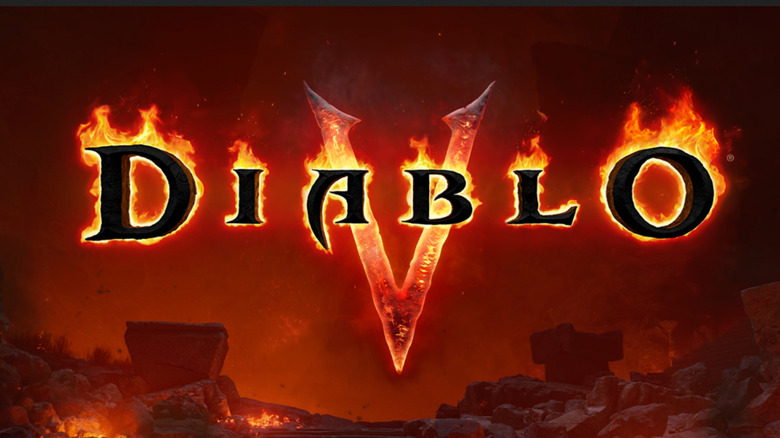
BlizzCon has brought some unexpected news for the Diablo franchise, including a spring 2029 release window for the next installment in the video game series, as well as a confirmation of an animated TV series adaptation in the works with Netflix. For the game, Blizzard’s teaser video and article only hints at the story’s continuation after the events of Diablo IV, but it looks like players will be thrown straight into hellfire.
Like the Diablo V teaser, the confirmation for the animated TV show was equally light on details and we still don’t know the release date or which animation studio is in charge of the adaptation. Blizzard said it will have more to share about the series throughout the development process and only hinted that “Sanctuary’s darkness is spreading.”
For those who aren’t devoted Diablo fans, rumors of a TV adaptation for the franchise have been circulating for a while. A report from 2020 hinted that a Diablo TV series would be done in an anime style and was in preproduction with Netflix in charge of distribution. Beyond the confirmation of the fifth major game in the franchise and a TV series, Blizzard also hinted at similar adaptations for its other popular titles, including Overwatch and Warcraft.
On an ordinary day, if you ask me what’s the best e-reader device out there, my answer would most probably be one of Amazon’s Kindle readers. I will most likely ask about your budget and your preferences before doling out a few recommendations.
If you tell me that the Kindle is too restrictive, I would point you in the direction of a Boox slate, which comes in multiple sizes across a wide price bracket. In case you are inclined towards a phone-like reader device, the Boox Palma 2 or the DuRoBo Krono would be my suggested picks. And if you’re chasing something light, tiny, and open, the XTEINK X4 would be my go-to choice.
Broadly, I would never suggest that a person spend more than $200 or $300 on an e-reader. In case you are desperately chasing a stylus-based sketching experience, maybe I would tell you to buy an Amazon Kindle Scribe Colorsoft or a slate from Onyx. What I would never do is ask you to spend $1,900 to achieve the finest e-reader experience out there.
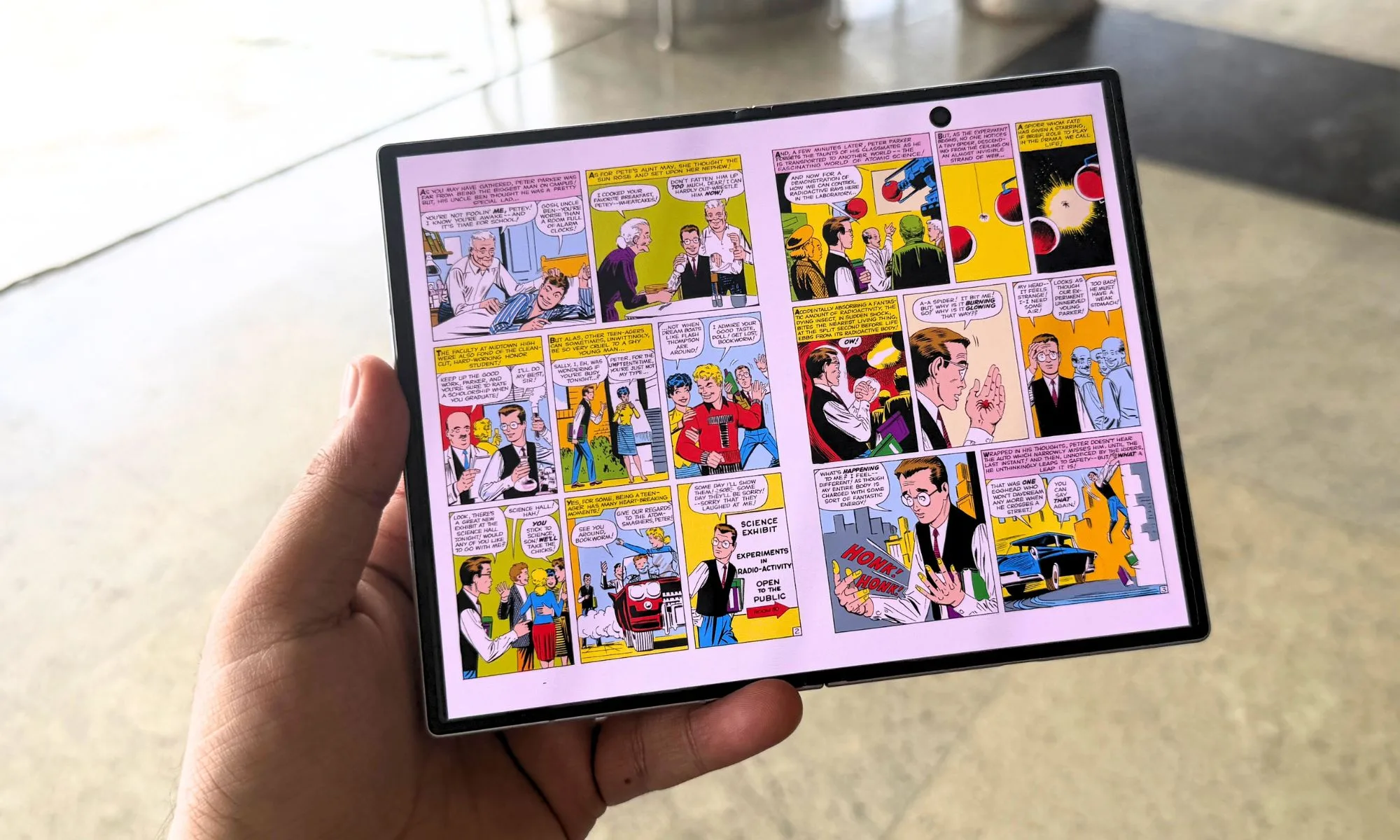
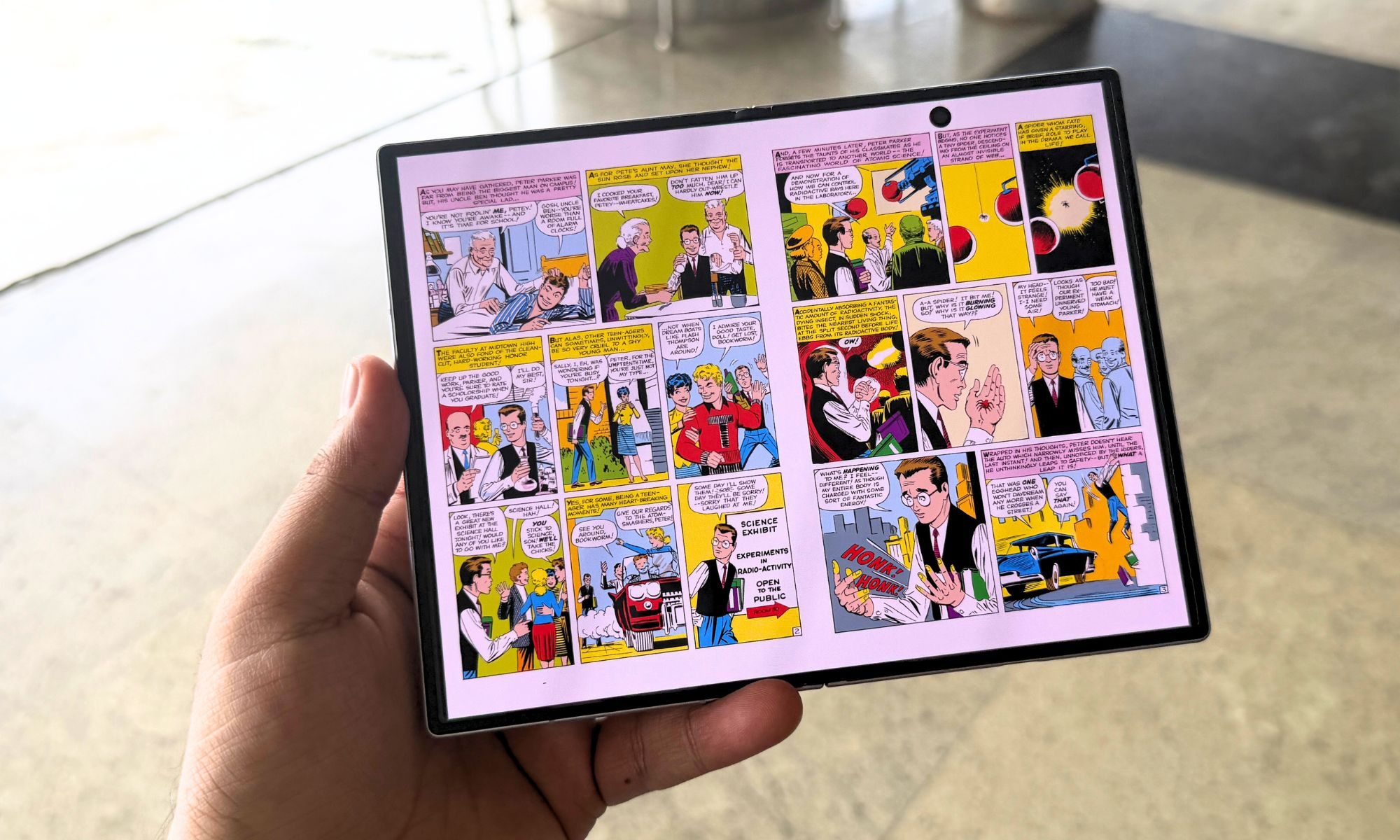
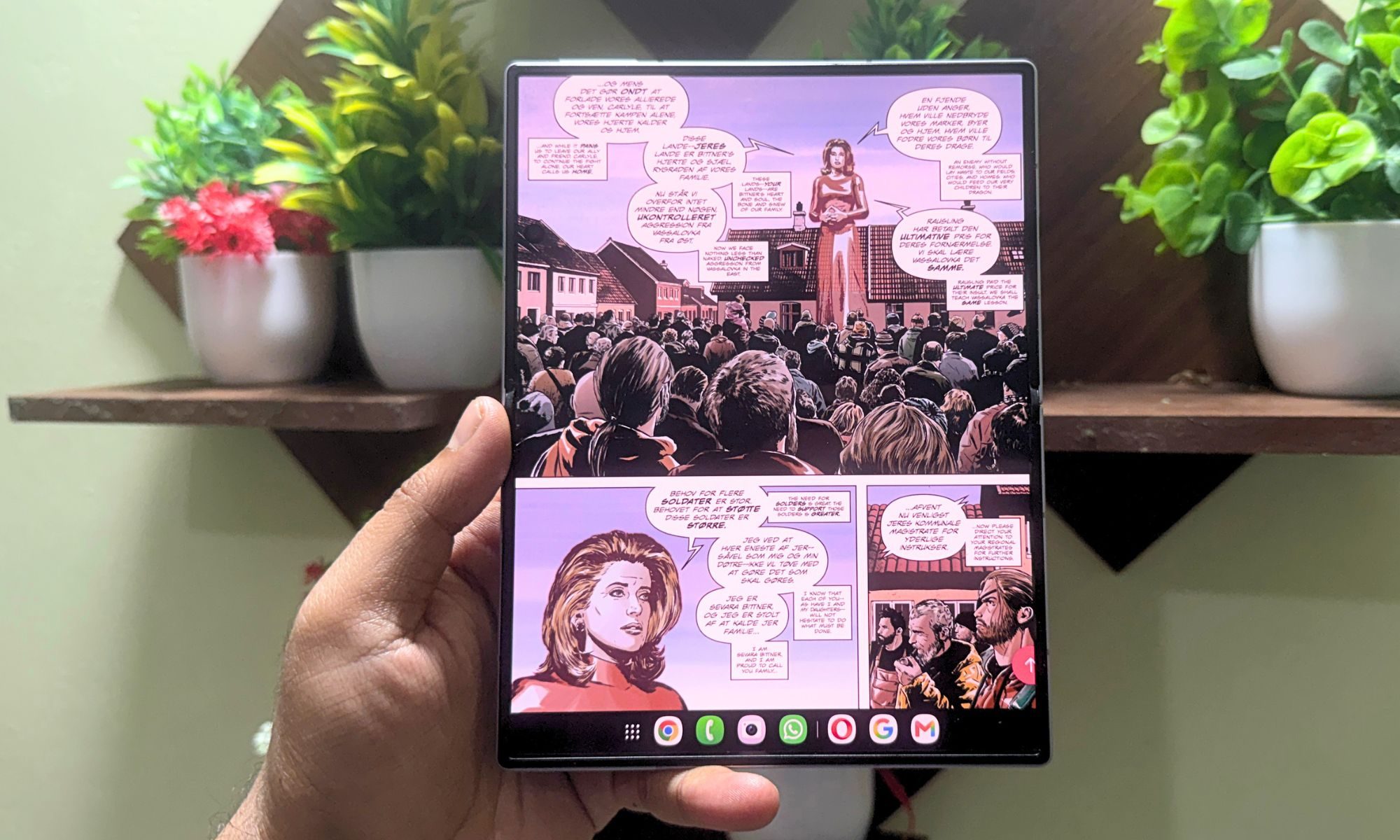
And yet, here I am, holding the Samsung Galaxy Z Fold 8 in my hands, and absolutely loving every moment of binge reading comic books on it. In fact, ever since I got my hands on the Galaxy Z Fold 8, I have finished more graphic novels in two months than I would complete in a year with another e-reader in my hands.
Advertisement
Why on Earth does it even work?
Nadeem Sarwar / Digital Trends
Now, don’t get me wrong. I have tried virtually every e-reader from a known brand in all the possible sizes out there. From the giant 13-inch iPad Pro to the tiny iPad mini, a bunch of Android tablets, and, of course, plenty of e-readers from different brands, both in monochrome and color E Ink formats — I’ve tried it all. And yet, none of them have given me the joy of reading comic books and novels as much as the Samsung Galaxy Z Fold 8.
It’s quite an oddity. The Galaxy Z Fold 8 was never intended to be a device for flipping through comic book pages or swiping past your Kindle library. At its heart, it’s a new breed of foldable phones that is focused squarely on providing a more comfortable-in-hand experience.
A jack of all trades, and then some.
Heck, the display is not even perfect for reading. There is a visible crease running across the center of its 7.6-inch inner foldable display. It’s also worryingly fragile, with only a namesake IP48 rating for protection against dust and water ingress. And unlike a tablet or a cheap e-reader, a few accidental drops will ruin the innards and leave you with a generous repair bill that’s enough to buy a few Kindles.
The display is not really the magical part of the Galaxy Z Fold 8. Yes. It’s an OLED screen with vivid colors, rich contrast, and great viewing angles. You can adjust the color profile, temperature, and brightness output to get the best visual experience. The eye comfort mode is the cherry on top.
Nadeem Sarwar / Digital Trends
But what truly sets the Galaxy Z Fold apart, and has me hooked on it as the preferred e-reader in my life, is the form factor. The phone’s waistline is just 4.5 mm across, and it weighs barely over 200 grams. For comparison, the Kindle Paperwhite has a smaller screen, and yet it’s noticeably thicker with a bigger footprint along both axes.
It’s the in-hand game that’s unparalleled
When you’re holding the Galaxy Z Fold 8 in your hands, it’s almost as if you are holding a thick sheet of glass. It doesn’t feel like a device in the sense that we perceive an electronic gadget with a screen slapped on top of it. And irrespective of the orientation that you’re holding it in, it just feels incredibly well-balanced in your hands.
Advertisement
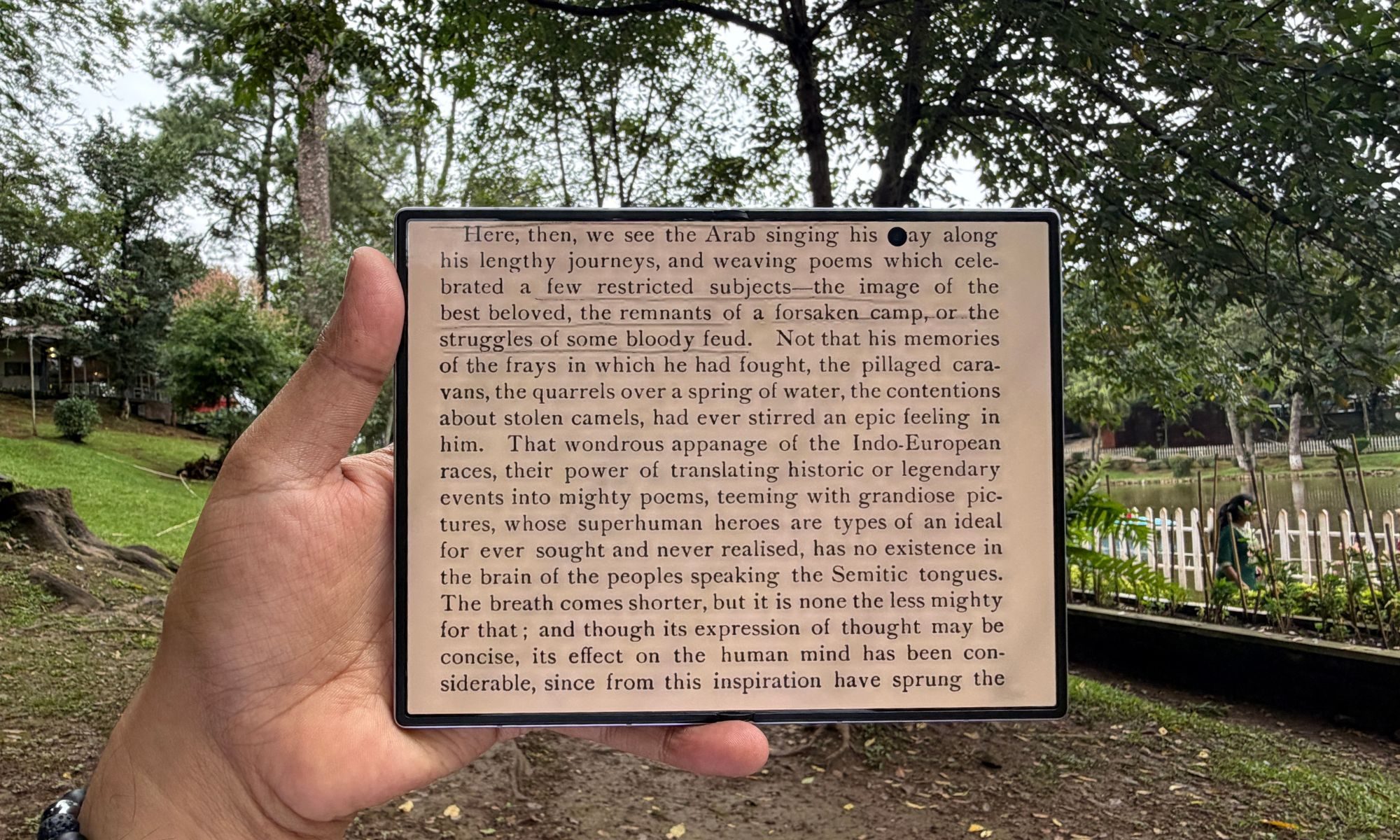
So, whether I’m reading a comic book while holding it in portrait mode, or slipping through the pages of a research paper in landscape format, I don’t have to worry about fatigue in my hands. Of course, your pinky finger is still involved as the base support for a secure grip, but you really don’t feel the heft of it. In fact, the thin side profile and the weight help with getting a firmer grasp on the Galaxy Z Fold 8, compared to an average reader device.
Nadeem Sarwar / Digital Trends
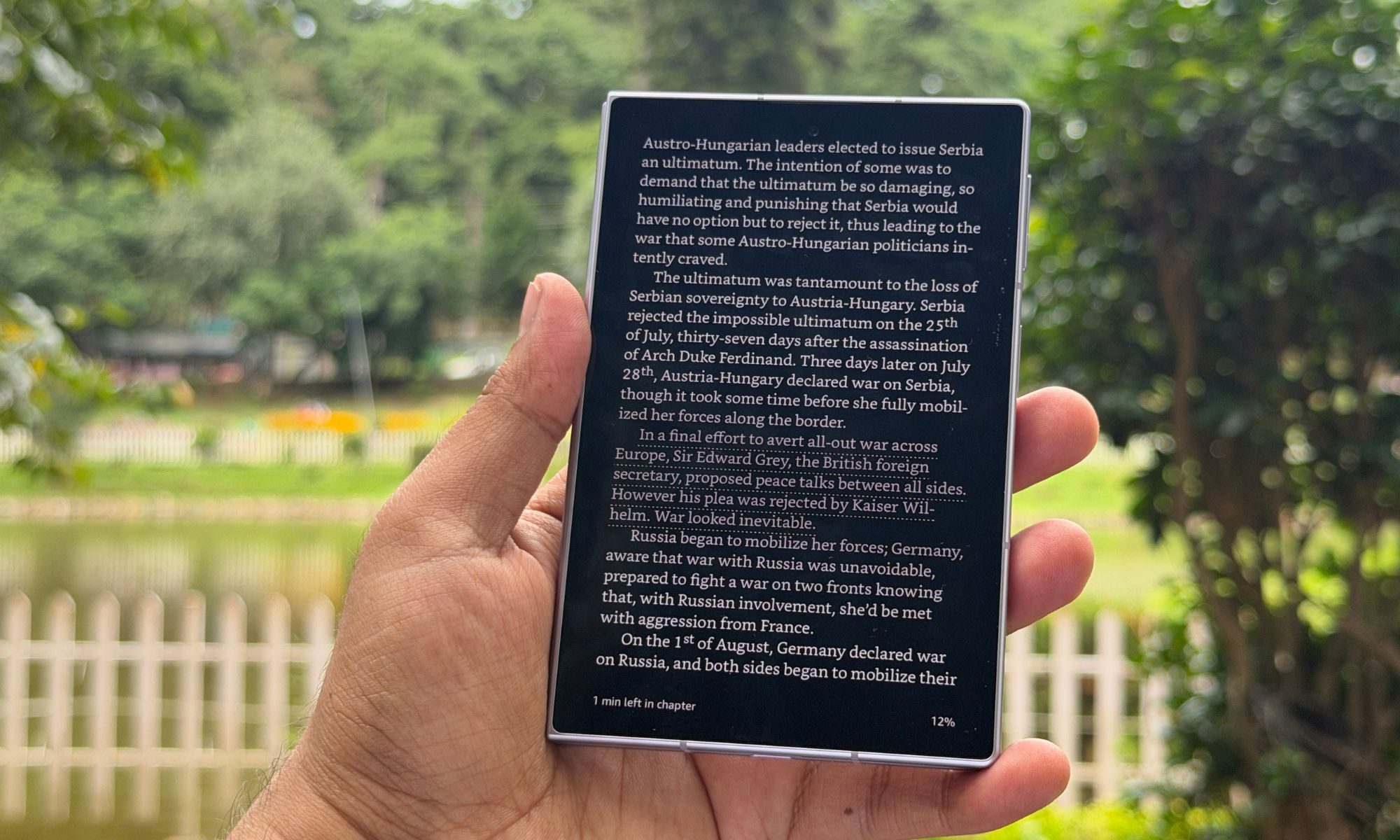
And here’s the big trick: The Galaxy Z Fold 8 also moonlights as a tiny, palm-friendly reader. The XTEINK X4 Pro and its ilk are popular for a legitimate reason. Not everyone wants a slate to read books. A lot of bibliophiles out there want a more compact screen that can handle EPUBs without burdening their pockets.
The Galaxy Z Fold 8 fills that niche almost perfectly. On qualitative merits, the phone’s 5.5-inch OLED cover screen is arguably the sharpest, most visually immersive, smoothest, and also the sturdiest e-reader panel out there. And, yes, the experience of reading on it is utterly enjoyable and convenient at the same time.
Every single display woe, solved.
The Galaxy Z Fold 8’s inner and outer screens also solve the fundamental flaw of literally every e-reader out there, save for exceptions like the Daylight Computer DC-1 tablet. Scrolling past pages is buttery smooth, thanks to the 120Hz display refresh rate. You don’t run into the jarring screen refresh and slow page transition issues that plague every single e-reader panel out there.
You don’t have to make any compromise between fast-paced transitions and visual fidelity. You don’t even have to worry about any display customizations at all, except for adjusting the brightness levels and maybe enabling the eye-comfort mode for nighttime reading. It’s a straightforward pull-out-and-start-reading experience with the best visuals that any e-reader on the planet can provide.
Advertisement
Nadeem Sarwar / Digital Trends
All of this reader goodness costs a handsome $1,800. And, yes, I would absolutely never tell you to buy the Galaxy Z Fold 8 as the preferred device for your reading indulgences. But if you have your eyes set on a foldable phone, appreciate the pocketable, passport-style form factor, and have the funds ready, the Galaxy Z Fold 8 is going to provide you with a reader experience that is simply unbeatable.
Even the mundane chores like opening Outlook and responding to emails are an utter ergonomic joy on this Samsung foldable. I have finished more books and read more graphic novels on this uber-expensive foldable phone than I have in years. And without an iota of doubt, I credit the rediscovery of my bibliophile mojo to the Galaxy Z Fold 8 and its unique form factor more than my own inclination to read a book and feel smarter than my neighbor.
I have moved on and set another phone as my daily driver at the time of writing this. But the Galaxy Z Fold 8 is still lying on my table, with nearly a dozen tabs of comic books open and a Kindle title waiting in the background. I simply can’t put this sleek reader down, or stop myself from picking it up again and again.
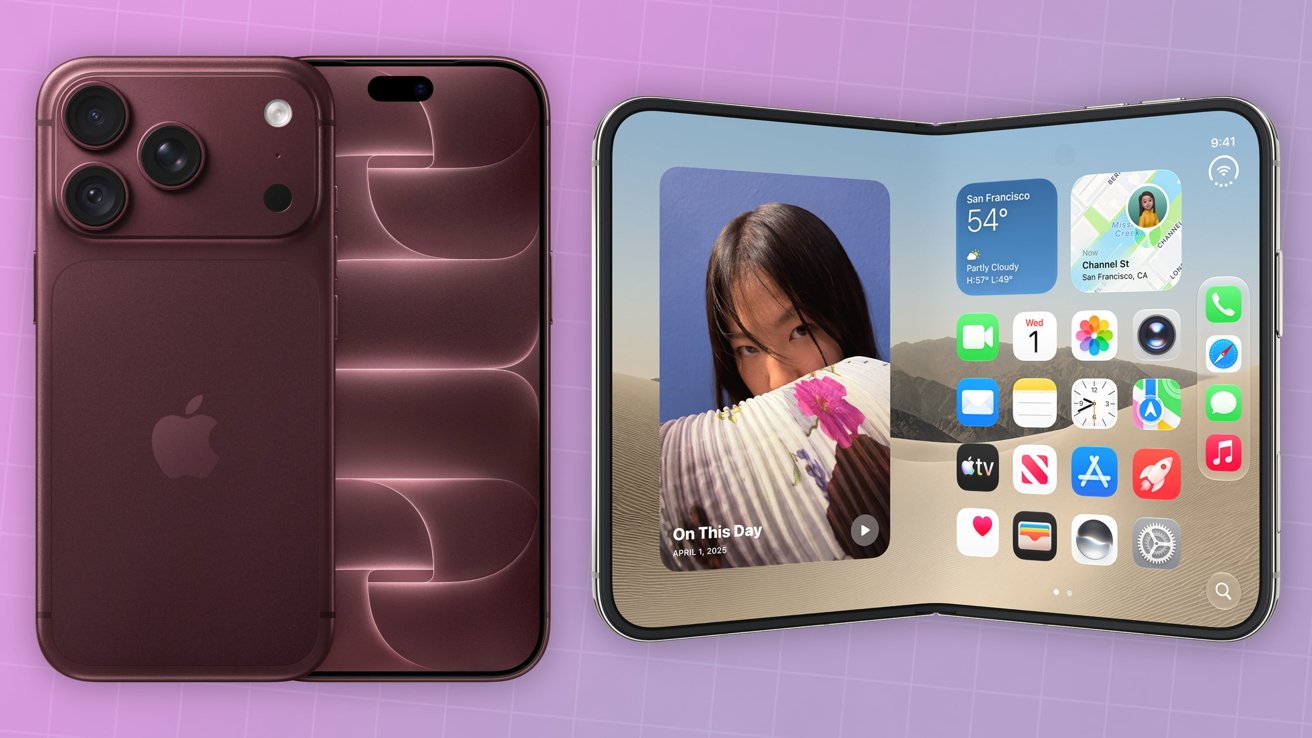
Apple’s most advanced traditional iPhone meets its first foldable. Here’s how the iPhone 18 Pro, as well as the iPhone 18 Pro Max, compare to the iPhone Duo.
iPhone 18 Pro [left] vs iPhone Duo [right]
The September Apple Event frequently involves the launch of multiple models of iPhone. Over the years, it’s been common to see the premium Pro models brought out alongside the standard editions. For 2026, this has been shaken up considerably. The standard models are nowhere to be seen, with the iPhone 18 Pro line launching alongside something completely new. Continue Reading on AppleInsider | Discuss on our Forums
If you’re considering installing solar panels to help protect the environment and serve your home’s energy needs, you might also wonder whether they should be installed flat on a roof or at an angle. The short answer: It depends. Per the U.S. Department of Energy (DoE), consumer solar panels in the U.S. typically deliver the strongest results when installed on south-facing roofs with slopes that are between 15 and 40 degrees. Thus, the orientation of your solar panels will depend, in part, on the slope of your roof.
Be aware that the above angle recommendations apply specifically to homes in the U.S. The ideal tilt for a consumer solar panel is as close as possible to whatever the local latitude is. In the U.S., that means a slope or angle between 15 and 40 degrees is usually best, but the superior angle will likely be different in other parts of the world.
Naturally, you should always familiarize yourself with the different types of consumer solar panels beforehand to get a sense of your options. It’s also important to understand some basics regarding how proper installation can optimize the power production of your solar panels. Although a professional installer should know how to effectively position them, it’s beneficial if you also have a rudimentary understanding of the process.
Advertisement
Important information about installing solar panels flat or at an angle
Siri Stafford/Getty Images
The angle at which solar panels are installed is critical because it determines how much sun exposure they get over the course of a typical day. Again, the current slope of your roof may provide the ideal angle already. In this case, unless a professional convincingly explains otherwise, it probably makes sense to install solar panels flat on your roof. If your roof’s slope isn’t reasonably close to the local latitude, installing solar panels so they tilt at the ideal angle is probably necessary.
Just be aware that other factors can influence how you should position solar panels on a residential roof. For example, if you live in an area that’s prone to snow, hail, or other winter weather, an angle of 60 degrees can help solar panels shed precipitation that might otherwise damage them or impact performance. That said, a larger angle can also increase wind load. Similarly, trees and other such obstructions can determine whether a given spot and angle on a roof is the best choice for your panels.
Advertisement
Again, you can discuss all the relevant factors with a qualified professional to better decide how to install solar panels. While doing your research, you may also want to learn about some common solar panel myths, as debunking misconceptions about this eco-friendly energy option may convince you to finally add an array to your home.
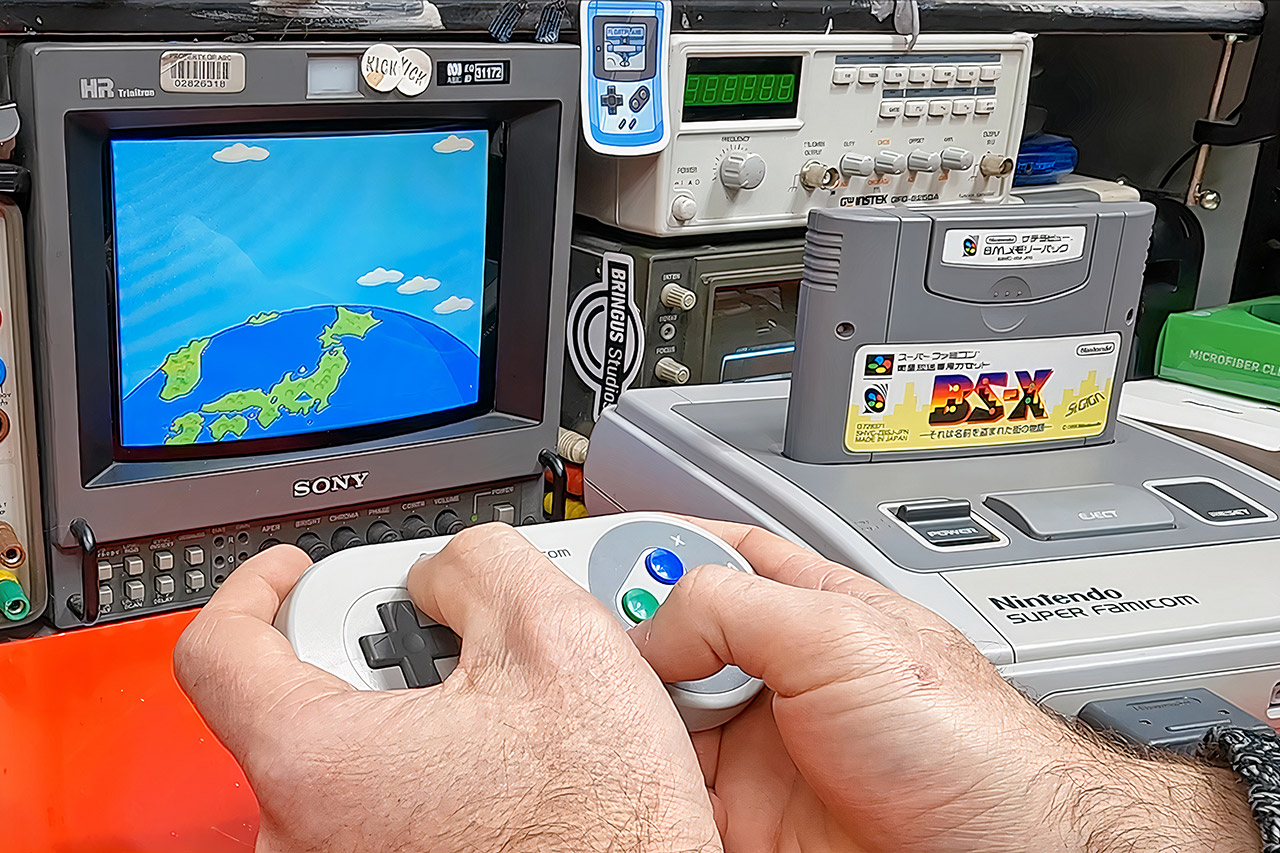
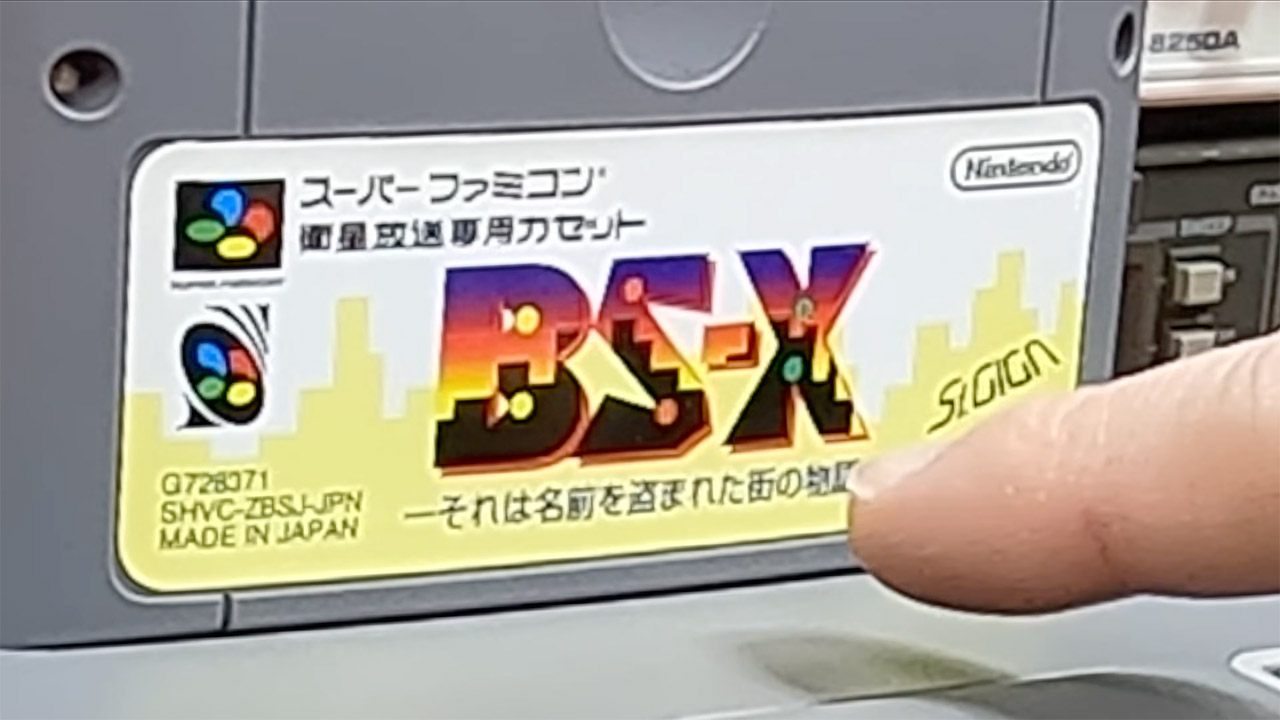
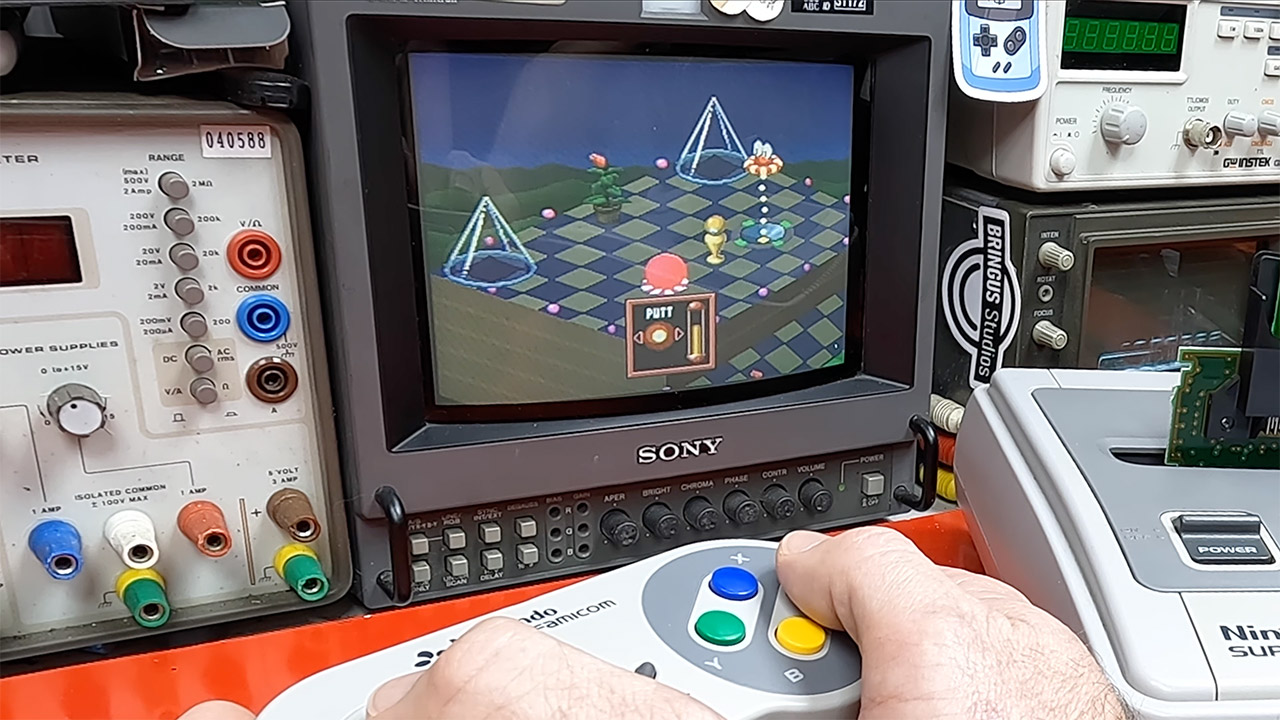
James Channel spent a recent video staring down a piece of Nintendo hardware that was never meant to last. His question is simple and a little unsettling: does the object in his hands still hold a game the rest of the world no longer has? That question only makes sense if you rewind past Satellaview itself and look at how Nintendo spent the late 1980s turning a living-room toy into a communications box.
Nintendo’s Family Computer had already established itself in millions of Japanese homes when the corporation chose to add a disk drive to it in 1986. Disk cards were dirt cheap, easy to rewrite, and extremely small. Stores began installing Disk Writer kiosks, allowing customers to walk in with a used disk and walk out with an entirely different game for a few hundred yen. Another innovation, the Disk Fax machine, allowing players from all around the country to upload their high scores from national competitions. The disk drive was the catalyst for the release of games like Zelda and Metroid, as it provided space for save data and extra soundtracks. That short trial showed Nintendo two things: first, that cheap distribution was the way to go, and second, that weak media and a divided user base would be a significant pain.
Two years later, they tried it again, this time with a phone line. The Family Computer Network System consisted of a modem and a few credit-card-sized ROM cards that let a Famicom to dial up for a variety of information such as stock prices, the current horse racing odds, the weather, some jokes, and a dealer tool known as Super Mario Club. Approximately 130,000 machines were sold, however only a small percentage of owners used them for anything other than a curiosity “ooh see what this thing can do.” Even yet, Nintendo president Hiroshi Yamauchi believed that this was simply a test run, and that if the next one failed, he would try something new.
The next attempt, Satellaview, landed in Japan on April 23, 1995. It was a two-piece kit for the Super Famicom, consisting of a receiver that you plugged into the console and a cartridge named BS-X: Sore wa Namae o Nusumareta Machi no Monogatari, “The Town Whose Name Was Stolen,” which combined a little role-playing game and a menu. Then there was the memory pack, an 8-meg flash drive that held all of the downloads from space. St.GIGA, a satellite radio operation that Nintendo eventually acquired when the company was in financial trouble, was in charge of the broadcasting side of things. Players were expected to purchase the hardware and a dish, and then download whatever they wanted at no further cost. Nintendo expected to sell two million devices in the first year, but only sold roughly 100,000.
Every evening a window would open up to the world. During “Super Famicom Happy Hour” (a name that was more of a catch-all than anything officially assigned), a bunch of items would simply pour down. This might include a game, a digital magazine, or even a radio show all at the same time. SoundLink titles would then be overlaid on top of the existing data, such as a narrator talking over the original BS Zelda while also altering up the map or music on the fly, if someone on the other end of the satellite opted to modify something. The Ancient Stone Tablets then took players on a wild roller coaster ride six years after the original, with a Link characterization that was missing from the story and the Satellaview avatar taking center stage from the start, thanks to a separate four-part episode series broadcast on the Satellaview system. BS Super Mario USA, on the other hand, piggybacked off of the Western Super Mario Bros. 2. F-Zero received the typical new tracks and races. Fire Emblem, Kirby minigames, Square’s Radical Dreamers, Treasure Conflix, and a slew of other bizarre stuff all arrived in the same way: they simply appeared in the system with little explanation. Many were held up for approximately a week before the most recent pack was overwritten with a fresh one, and the entire affair was canceled.
Eventually, St.GIGA and Nintendo fell out after debt collection talks failed and a license agreement to broadcast anything was missed. Nintendo discontinued sending their products about 1999 for this reason. St.GIGA went through the motions and repeated parts of the old items for a little longer, until June 30, 2000. Then, with a skeleton crew, all radio transmissions came to a standstill. The entire thing suddenly went apart. People either left the packs in their drawers or threw them away after they were overwritten. Today, all that exists is a collection of (mainly useless) dumps collected from these ancient broadcasts. Some people, like James, have even begun purchasing outdated hardware in the hopes that the occasional broadcast has been left in the system and can still be played out, waiting for someone to come along and push the proper button.
LG is pushing back against reports that its smart TVs are “spying” on users, saying wake-word detection happens locally and that features such as Automatic Content Recognition, voice recognition, and interest-based ads are optional. But critics note that researchers found TVs keeping logs of ambient conversations, and LG’s response “did not address broader concerns about how much data it collects, who it shares it with, the potential for bad actors to exploit its features, or the misleading way in which its privacy options are presented,” reports The Verge. Here’s an excerpt from LG’s statement: Some recent media coverage may have contributed to misconceptions about how LG smart TVs work. As an industry leader, LG believes we have a responsibility to provide customers with clear and accurate information about how our smart TVs operate and the privacy controls available to them. We would like to clarify how our smart TVs operate and explain our approach to user privacy.
LG smart TVs do not continuously record or transmit users’ conversations. Speech-to-text processing begins only if a user activates a voice interaction through a supported wake-word feature or by pressing the voice (or AI) button on the remote control. Audio used for wake-word detection is processed locally on the TV and, if no wake word is detected, audio is not converted to text, stored, or transmitted. Voice-recognition results and related technical logs may be generated as part of processing a voice command. These records are associated with specific voice interactions and do not indicate continuous recording of conversations occurring outside an active voice recognition session.
Speech-recognition results may be used to support voice-related features but are not uploaded later when the TV is offline or when connectivity is restored. Features such as Automatic Content Recognition (ACR), voice recognition, and interest-based advertising are optional. These features are not enabled by default. Users can choose to enable these features and can manage or withdraw consent through TV settings.
ACR uses audio fingerprinting technology using the TV’s internal audio processor (not a speaker) to identify content and does not collect screenshots, screen recordings, video recordings, voice recordings, or other audio recordings from the TV. Where ACR is available and enabled, ACR-related information may be used for audience segmentation and viewing or audience trend analysis. Interest-based advertising and cross-device advertising require separate user consent through the applicable advertising-related agreements. Protecting user privacy is a fundamental principle in the design and operation of LG products and services. The statement goes on to “provide additional details on how LG smart TV features work, how information may be processed, what choices users have, and how LG continues to strengthen privacy, transparency, and security.”

















































You must be logged in to post a comment Login