BT and Verizon new joint venture could target $4 billion in annual revenue
The companies are targeting 3,000 global enterprises across 180+ countries
AI and cloud are the two primary selling points for this new joint venture
BT and Verizon have come together to form a 50:50 joint venture looking to serve around 3,000 multinational customers across more than 180 countries.
The official announcement details the creation of a new “scaled international connectivity platform” designed for a cloud-first, AI-first world.
Martijn Blanken has been appointed as CEO of the new joint venture, the name of which currently remains unconfirmed.
Latest Videos From
BT and Verizon target multinational enterprises in new JV
By combining their respective expertise, the two hope to provide enterprise customers more resilient global networking, more secure connectivity and infrastructure designed specifically for local laws, regulations and data sovereignty demands.
Advertisement
“Customers will benefit from new, secure and resilient connectivity platforms, which are designed for the age of AI and sovereign where it matters,” BT CEO Allison Kirkby noted.
“Our international customers require secure, flexible connectivity that works seamlessly across borders and cloud environments,” Verizon CEO Dan Schulman added.
The announcement also implies that, by spinning off a new JV for global enterprises, it would allow the two companies to improve focus on their domestic markets.
Advertisement
Sign up to the TechRadar Pro newsletter to get all the top news, opinion, features and guidance your business needs to succeed!
BT boasted about its “resilient communication and network services,” and Verizon said it would bring secure connectivity via its enterprise wireline arm.
Though it’s unclear which type of enterprises the JV will be targeting, it will likely bid on contracts for some of the biggest enterprises given the target of around 3,000 customers. Private enterprise networks, cloud connectivity, cybersecurity and cross-border connectivity will form the basis of the company.
According to the firms, the join venture could target around $4 billion in combined annual revenue.
If there’s one thing that annoys me about using a smartwatch outdoors, it’s squinting at the screen under bright sunlight. Whether I’m checking directions on a walk or glancing at a notification while cycling, a dim display can quickly turn a premium smartwatch into a guessing game.
That’s why the latest Galaxy Watch Ultra 2 leak immediately caught my attention. But after reading through it, I couldn’t shake one nagging thought: all these upgrades probably won’t come cheap.
Finally, a smartwatch that can outshine the sun?
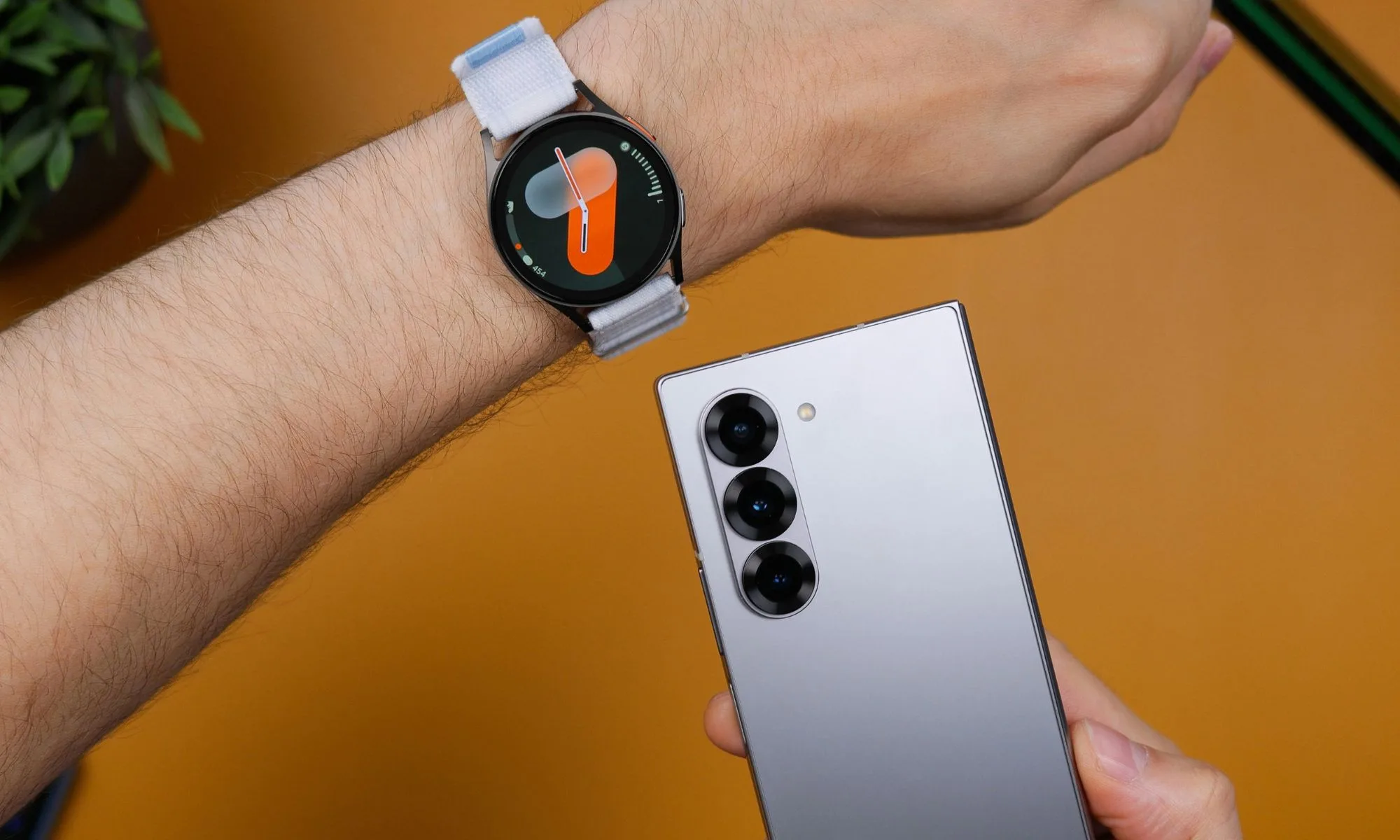
According to a new leak from tipster Ice Universe, Samsung’s next flagship smartwatch could arrive with a display capable of hitting an eye-watering 5,000 nits of peak brightness. If that figure holds up, it would be a meaningful leap over the current Galaxy Watch Ultra and one of the brightest smartwatch displays we’ve seen. The leak also suggests Samsung will use its newer On-Cell Film (OCF) OLED technology. Beyond making the screen brighter, the newer panel is designed to be more power efficient while taking up less space inside the watch. That’s the kind of upgrade I like seeing because it improves the everyday experience.
Unsplash
But there’s more to it! The Galaxy Watch Ultra 2 is also rumored to receive an IP69K rating, offering enhanced protection against high-pressure water jets and harsh environments. Most people may never intentionally blast their smartwatch with hot water, but tougher protection is never a bad thing on a wearable that’s meant to accompany you almost everywhere.
Every upgrade comes with a price tag lurking nearby
The leak doesn’t stop there. An 800mAh battery is also reportedly in the cards, a sizeable jump from the original Galaxy Watch Ultra’s 590mAh cell. Pair that with a more efficient display and whatever processor Samsung chooses next, and the result could be noticeably longer battery life. That’s exactly what I want from an Ultra smartwatch.
Advertisement
Nadeem Sarwar / Digital Trends
Still, there’s one reason I’m keeping my excitement in check. Bigger batteries, brighter displays, and tougher hardware rarely arrive without affecting the final price. Samsung has steadily pushed its Ultra branding toward the premium end of the market, and these rumored upgrades only reinforce that direction. Of course, this is still a leak, so it’s worth taking every detail with a healthy dose of skepticism until Samsung makes things official. If recent rumors are accurate, we won’t have to wait long: the Galaxy Watch Ultra 2 is expected to debut alongside the Galaxy Watch 9 lineup and Samsung’s newest foldables at its next Unpacked event. For now, I’m all for a smartwatch that’s easier to read in the sun. I just hope my wallet doesn’t end up feeling the heat instead.
Bridges are a part of our constructed landscape that we take for granted. And bridges by themselves aren’t especially important. What is important is that bridges let you get from one place to another. Technology is often the same. We get from point A to point B through some bridge technology that, probably, most normal people never even notice.
Years ago, point A was commercial 3D printing. Industry had stereolithography, selective laser sintering, fused deposition modeling, and other rapid-prototyping technologies. These were not toys. They were expensive industrial systems used by companies that needed prototypes badly enough to pay serious money for them.
Fast Forward to Today
Today, you can go to a big box store and buy a 3D printer for well under $1,000, and often far less. Modern machines are almost plug-and-play and tend to do all the hard parts for you. That’s point B. How we got between points is a story of hackers who had a dream, and many Hackaday readers lived through it and even played a part in that bridging.
For a long time, RepRap was synonymous with hobby-level 3D printing. The project, started by [Adrian Bowyer] at the University of Bath in 2005, was built around a powerful idea: a machine that could print many of its own parts, thereby helping make more machines. RepRap Darwin reached its early self-replicating milestones in 2008, and the movement produced a thicket of descendants, variants, and arguments about rods, belts, bearings, extruders, firmware, and what “self-replicating” really meant. Of course, the machine could only print some of the parts you needed, but it was still impressive how much of a printer you could make with one printer.
Advertisement
Without RepRap, the desktop 3D printer boom would have looked very different. It created a common pool of ideas: Cartesian frames, printed brackets, hobbed bolts, heated beds, RAMPS boards, Marlin firmware, and a whole common vocabulary. It also created the expectation that a 3D printer was something you could understand, modify, repair, and improve. That expectation would not survive everywhere, but it defined the early culture.
Kicking Kickstarter
By the early 2010s, 3D printing had the right ingredients for a crowdfunding explosion. The technology was visible enough to be exciting, but not yet mature enough to be boring or attract big players. Hackerspaces were multiplying. Arduino had made embedded tinkering feel approachable. Laser-cut plywood, stepper drivers, and commodity motion hardware were easy to source. There were enough RepRap veterans to know what worked, and enough newcomers to believe the next machine would finally make 3D printing simple.
Kickstarter was a perfect amplifier. A desktop 3D printer looked good in a campaign video. It moved. It made things. It appeared to turn imagination directly into plastic. Printrbot was one of the defining examples. [Brook Drumm’s] original Printrbot campaign launched in 2011 and became one of the notable early 3D printer crowdfunding successes, raising far beyond its initial goal. The pitch was seductive: a printer you could afford, build, and actually use. Not an industrial system, not a laboratory instrument, but your first 3D printer.
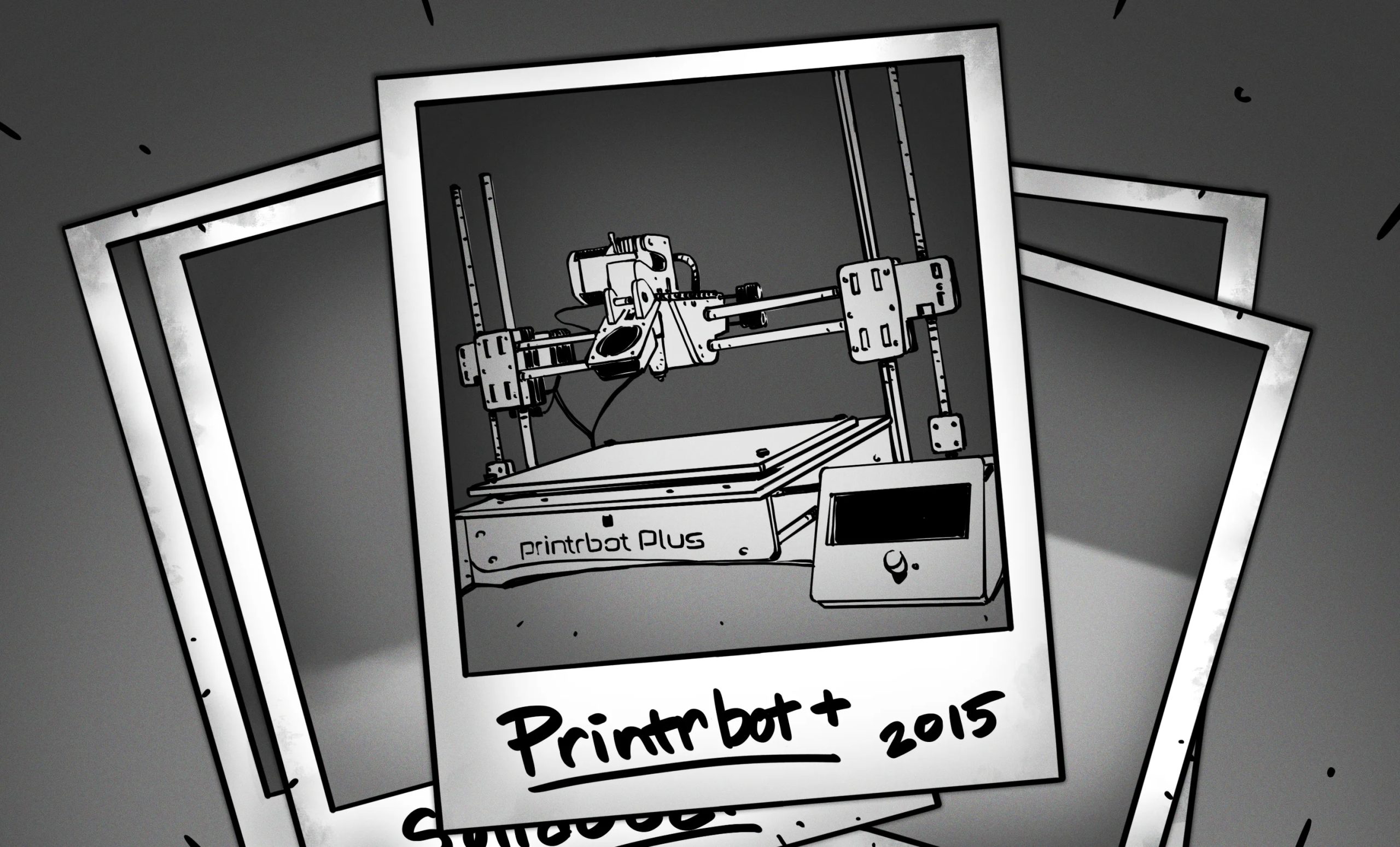
I had a Printrbot Plus built from a kit, and that experience says a lot about the period. It was not a toaster. It was not even quite a drill press. It was more like buying a small CNC machine from a bright, optimistic friend who assumed you owned calipers, weren’t afraid of firmware, and could recognize when a machine was racking itself out of square. You can see some very old YouTube videos of my machine below.
Advertisement
The Printrbot was charming because it was so direct. There was very little mystery in it. It was made from wood! Even some of the gears were wooden. You could see the rods, belts, pulleys, endstops, and wiring. You could also see the compromises. The Printrbot used LM8UU linear bearings that were, in some cases, held in place with zip ties. This was not necessarily as terrible as it sounds; zip ties are a valid engineering material if your tolerance stack and expectations are sufficiently charitable. But the bearings could be a little loose. The folk remedy was equally period-correct: jam a bit of 3 mm filament in there as a wedge to keep the bearing from wiggling.
That little trick captures the mood of the time. The printer came from a factory, or at least from a company, but it still expected you to meet it halfway. It was full of these tiny bits of tribal knowledge. Blue tape on glass. Hairspray. Kapton. ABS juice. Tighten the belts, but not too much. Level the bed with a piece of paper, unless you had a feeler gauge, unless the bed was warped, in which case all bets were off. If the extruder skipped, maybe the nozzle was clogged, or the filament was too fat, or the hot end was too cold, or the hobbed gear was packed with dust, or the phase of the moon was affecting your controller board. Ok, maybe not the last one.
Advertisement
Solidoodle
Solidoodle was another emblem of that period. Founded in 2011 by [Sam Cervantes], the company pushed hard on affordability, with early machines such as the Solidoodle 2 attracting attention partly because they promised a usable enclosed printer at a price that seemed startling at the time. Wired covered the Solidoodle in 2012 as an assembled $499 machine, which was exactly the sort of price that made people start thinking desktop 3D printing might jump from hackerspaces to ordinary homes.
The Solidoodle story also shows the danger of that moment. The market wanted cheap, reliable, attractive, assembled, easy-to-use machines. The technology could supply maybe three of those at once. Companies were trying to scale production, support beginners, improve hardware, and hit aggressive prices while the entire field was still learning what “reliable” even meant for a low-cost filament printer. Solidoodle eventually suspended operations in 2016, a fate that befell more than one early desktop 3D printing company.
Part of Solidoodle’s problem was that they were too invested in the original RepRap idea. I almost bought a Solidoodle because I was fearful of trying to put a kit together with so many mechanical parts. Why didn’t I? Because RepRap lead times were enormous. At least part of the problem was that they were using Solidoodle printers to produce parts for Solidoodle printers.
Advertisement
Say you have ten printers. You get orders for 100. Great, right? But getting parts for those 100 printers done on your ten printers will take a long time. Of course, you could take the first ten to help, but now you can only ship 90 printers. If you only had 100 orders, you’d be fine. But in the printer-starved 2010s, a cheap printer like Solidoodle or Printrbot would get orders faster than they could fill them, and had to decide if they’d fill orders faster or try to make do with their existing printer farms. There really isn’t a right answer to that question. We heard that [Brook], for example, expected to sell 50 printers through Kickstarter. They wound up with a backlog of over 1,000 printers. Within a year they had $2 million in sales and it went up from there. Until, of course, it didn’t.
MakerBot
MakerBot deserves mention here, too, although it occupies a slightly different lane. It started in the open-source maker world and became the company most associated with the dream of consumer 3D printing. For a while, it seemed like MakerBot might become the Apple II of 3D printers. Instead, it became a cautionary tale about trying to turn a hacker tool into a mass-market appliance too quickly. The machines got slicker, the company moved away from its open-source roots, and the consumer revolution failed to arrive on schedule. By 2016, even mainstream coverage was asking what happened to the 3D printing revolution that had been promised.
But failure is too simple a word. The Kickstarter-era machines did not fail in the way that, say, a fad diet fails. They moved the ball down the field. They trained a generation of users. They revealed what mattered: rigid frames, better motion systems, predictable extrusion, heated beds that stayed flat, slicers that didn’t require a sacrificial offering, and firmware that could recover from ordinary user behavior. They also created demand. People who bought a Printrbot or a Solidoodle might have cursed it, modified it, and eventually replaced it, but they knew what they wanted next.
And what they wanted next was cheaper and better. That leads to the next wave: the low-cost commodity printers. The Monoprice Select Mini was one of the machines that made people do a double-take (see the video below). It was small, inexpensive, and not especially glamorous, but it was also a complete 3D printer at a price (around $200) that, up to that point, had seemed impossible. The Anet A8 represented another branch of the same tree: a very cheap kit printer, descended in spirit from RepRap machines, that put a large-ish build volume within reach of people willing to accept risk, tinkering, and sometimes questionable electrical design.
Advertisement
The End?
These machines were not the end state either. The cheap printers democratized access, but many still required an operator rather than a mere owner. The Anet A8 in particular became infamous not just for its low price but for the upgrades people considered mandatory: better firmware settings, frame braces, MOSFET boards, power supply caution, and general fire-safety paranoia. Still, it mattered. A rough kit at $150 or $200 changes a market. It lets students, hackers, model builders, repair-minded homeowners, and the merely curious take a chance. My A8 is unrecognizable today with an aluminum frame and a 32-bit controller board, a proper 24V power supply, a custom hot end mount, and other enhancements.
You can see my original A8 (and a peek at the Printrbot in the background) in the video below.
Advertisement
A few years later, it looked like this video.
The real consumer-ready printers came later, after years of iteration. Auto bed leveling became common. Filament paths improved. Machines got stiffer. Slicers became far better. PEI spring steel sheets replaced a lot of glass-and-hairspray rituals. Direct drive and better Bowden setups reduced extrusion drama. Enclosed CoreXY machines brought speed without quite so much ringing and finagling. Companies learned that the printer had to be a system: hardware, firmware, slicer profiles, materials, documentation, and support.
Right, Yet Wrong
Looking back, the funny thing is that the early hype was both wrong and right. Desktop 3D printers did not become like inkjet printers, and they certainly did not become like microwave ovens. Most people do not need to manufacture a plastic bracket before breakfast. Most people do not want to think about layer adhesion, nozzle wear, or whether that weird clicking noise is the extruder eating the filament.
Advertisement
I lived through the time when the hacker dream was that every home would have a computer. Most of us didn’t see what would really happen. Every person has at least one computer; every home has dozens. But we were on the right track; most of us just didn’t see what would drive it. But I never really thought 3D printers would become as common as personal computers.
I did think it might become like a drill press. Not everyone has a drill press. In fact, most people probably do not. But no one is amazed to learn that you have one. It is a normal thing for a certain kind of person to own. If you fix things, build things, make brackets, or restore equipment, a drill press is not exotic. It is just one of the tools that may live in the shop.
That is where 3D printing has largely landed. Not universal, but ordinary. A decade ago, saying you had a 3D printer was a conversation starter. People wanted to see it move. They wanted to know if you could print a wrench, a phone case, a toy, or, inevitably, another printer. Today, in technical circles, saying you have a 3D printer is more like saying you have a bench vise. The interesting question is not whether you have one, but what you use it for.
That normalization is the real legacy of the awkward Kickstarter era. Those machines were crude, but they were legible. They let us see the process. They forced us to learn what mattered. They converted 3D printing from an industrial service into a shop skill. A Printrbot with zip-tied LM8UU bearings and bits of filament jammed in as shims was not a consumer appliance. It was a bridge.
Advertisement
And like many bridges, it was not the destination. It was the thing that got us there. Of course, things continue to move. Maybe one day we will look back on the current generation of printers and wonder how we ever used them. But, like the personal computer, we probably can’t imagine what is going to drive the adoption of those new machines.
The New York Times tells the story of a 63-year-old retiree who wrote a check for several thousand dollaras to pay her taxes. But she discovered much later that her taxes were never paid because that check had been intercepted and then altered to be payable to someone else:
In some cases, thieves may pilfer one or more checks from local mailboxes. Adam Rust, director of financial services for the Consumer Federation of America, said thieves sometimes “fish” for checks at free-standing drop boxes, using long tools with sticky pads on the ends to grab letters. In other cases, more sophisticated criminals may steal large batches of checks, copy them and then sell them on the internet. Often, the purloined checks are chemically altered in what’s known as “check washing” to remove the name of the recipient. The thief replaces it with a fraudulent name, and often increases the amount of the check, before cashing or depositing it.
The 63-year-old retiree’s bank told her she’d waited too long to recover the funds:
Schwab’s “security guarantee,” outlined on its website , says that “Schwab will cover losses in any of your Schwab accounts due to unauthorized activity.” But fine print at the bottom of the page notes that reimbursement “requires your timely reporting of unauthorized activity to Schwab,” and that Schwab “will not be liable for additional or increased losses resulting from a failure to report unauthorized activity in a timely manner.” It notes that more details are available in account agreements… Notify your bank as soon as possible, said Scott Anchin, senior vice president of strategic initiatives and policy at the independent bankers association. Banks generally allow at least 30 days and sometimes up to 90 days from the time your statement is made available to you to report suspected check fraud, he said.
Advertisement
So how can you avoid check fraud? Adam Rust, director of financial services for the Consumer Federation of America, just suggests that “No one should ever mail a check.”
If you must write a check, he said, try to deliver it in person or take it inside a post office to mail rather than relying on your own mailbox or public drop boxes. The American Bankers Association recommends using permanent “gel” ink pens when you do write checks to reduce the risk of tampering… And if you don’t already, consider using your bank’s online bill payment service.
The article notes that even the U.S. federal government “has been moving away from paper checks for things like benefit payments and income tax refunds, saying digital payment methods are more secure.”
We may receive a commission on purchases made from links.
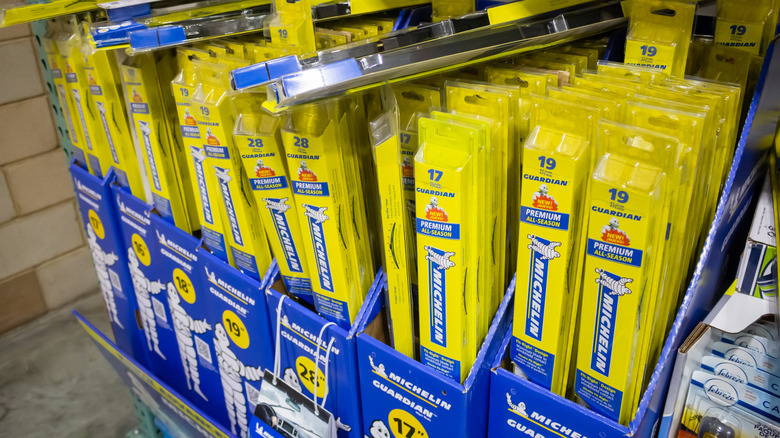
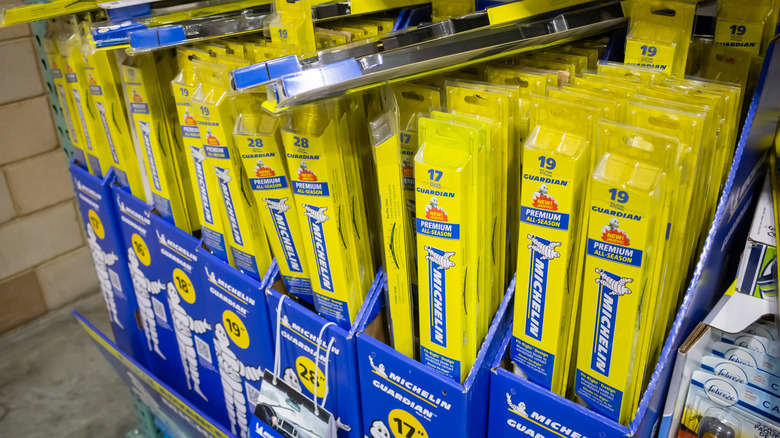
Maintaining your windshield wipers to ensure they last is important because eventually, they will need to be replaced. Luckily, there plenty of options available. Even a brand like Michelin, which is primarily known for being a major tire manufacturer, makes wipers. And customer feedback overall seems pretty good, though it does vary based on the type.
Advertisement
For example, the Michelin Optimum+ Ceramic Beam wiper has 4.2 out of 5 stars on 671 customer reviews at Walmart. Users highlight how easy the blade is to install, how well it performs in heavy rain, and how quiet the blades are. However, there are also negative reviews, with customers complaining the blades didn’t fit, left streaks behind, or broke during storms. The Michelin Endurance XT Silicone + Weathershield wiper has 4.4 out of 5 on 126 reviews, with customers praising the blade’s performance. But some were unhappy, complaining of missing pieces and a short lifespan.
The Michelin RainForce All Weather Performance blade on Amazon has 4.5 out of 5 on 7,836 reviews. Much of the feedback is similar, with positive reviews mentioning easy installation, and negative comments relating to the poor fit. However, others were a bit more neutral. “Overall construction is fair,” one person wrote, “I don’t see what sets them apart from other brands.” Amazon reviews for the 4.2-star rated Michelin Radius Beam wiper are nearly identical on every point.
Advertisement
Performance, production, and real-world use
The Image Party/Shutterstock
When it comes to real-world performance, Car Talk put Michelin windshield wiper blades to the test in a hands-on evaluation, along with products from other brands. Findings were based on several factors, including water removal, ease of use, and overall performance. The Michelin Stealth Ultra Beam was ranked as the runner-up for best wiper blade overall, with Car Talk highlighting the blade’s hybrid design, silicone material, and construction as its primary strengths.
Unlike some of the other best and worst windshield wiper brands, Michelin blades aren’t actually manufactured directly by the company itself. Instead, the Michelin name is used as a trusted brand across a wide range of aftermarket wiper designs. Pylon Manufacturing is the exclusive licensee that manufactures and distributes the Michelin windshield wiper blade lineup in North America. This explains why there are a number of different styles and materials utilized under the same Michelin brand name.
Michelin’s current wiper lineup consists of different options, including beam-style blades that focus on consistent windshield contact through flexible frames. In addition to rubber blades, there are also silicone-coated blades available which are designed to last longer while holding up under a range of different weather conditions. Aerodynamic frames and universal connector systems are also integrated, as the brand focuses more on all-weather use and durability, rather than highlighting major differences between the individual models.
If you lived in New York City during the 1980s or 1990s, and you happened to stumble on Channel 35 after 10 pm, you would have seen her: a busty woman with dyed-blond hair in a black mesh bikini, beaming broadly as she gyrated against an adult film star or simulated fellatio on a half-naked male stripper.
You knew her theme song (the rockabilly “Baby, Let Me Bang Your Box”), and you would have been able to repeat her catchphrases (“Lie back, get comfortable,” “don’t forget to wear your rubbers,” etc.).
That woman was Robin Byrd, now 71, a former adult film star who became a local celebrity with her eponymous public access show, which ran from 1977 to 1998 (and still airs in reruns, provided you have old-school cable). Featuring a garish heart-shaped set and decades-old phone sex ads, The Robin Byrd Show featured Byrd interviewing a porn star or exotic dancer, who would then perform a striptease complete with unnecessarily lingering close-up shots. She’d close the show by dancing to her theme song (during which Byrd would, more often than not, juggle a pair of comically oversized breasts). The show was charmingly low-budget, with Byrd giving her guests tapes of the show instead of paying them: “I called it tit for tat and dick for dat,” she tells me.
As beloved as Byrd is in New York City, a new HBO documentary makes it clear her impact was much wider. Directed by Jyllian Gunther and Stephanie Schwam (two self-described “Byrd-watchers”), Bang My Box: The Robin Byrd Story, streaming on HBO Max Tuesday, hails Byrd as a sex-positive icon who advocated for freedom of speech and the LGBTQ community, promoted safe sex during the HIV/AIDS epidemic, and led a landmark lawsuit against Time Warner Cable when it tried to censor her show. The movie is also a love letter to the analog era of smut, with Byrd becoming something of a meme long before the age of dial-up.
Advertisement
WIRED spoke to Byrd about the documentary, internet porn, her advocacy, and, of course, how she wore boobs as a hat.
This interview has been edited for clarity and length.
EJ DICKSON: When Stephanie and Jyllian approached you with the idea of making a documentary, what was your initial response?
ROBIN BYRD: I had many offers before, but it didn’t feel right. And Stephanie and Jyllian, they were Byrdwatchers [Byrd’s term for fans of her show]. I raised them. They used to sneak it when they were teenagers. They got it. It was during a Mercury retrograde, and Mercury retrograde involves communication. It’s a time to renew and redo and rethink. I realized I’m not getting any younger, and my story needs to be told by the right people.
Advertisement
New York magazine compared you to Mister Rogers. Would you ever, in a million years, have expected to be compared to him?
Well, I compare myself partly to him, and also Ed Sullivan and Johnny Carson. There used to be a lady called Shari Lewis who had this puppet Lamb Chop. I was raised with that. I was raised by the TV. And look at that, I became the TV.
Your show ran for more than 600 episodes. Do you have a favorite guest or favorite episode?
The first time I had on [a trans person], nobody in the studio knew that she had a dick and she was gorgeous. And I had a gay male actor on, and when he saw her, they got into a huge fight in front of the camera, so I had to sit in the middle of them. It didn’t make sense to me, and I didn’t know that he was going to act that way. But there was discrimination in the gay world, just like there’s discrimination in the straight world.
Focus and productivityapps abound, all to help you stave off the many distractions coming from your phone. Or the annoying people at your open-office desk. Digital well-being tools can silence notifications, limit apps like TikTok and Instagram, and help you focus on the task at hand. But you can also turn them off very easily as soon as you feel like you haven’t endlessly scrolled enough.
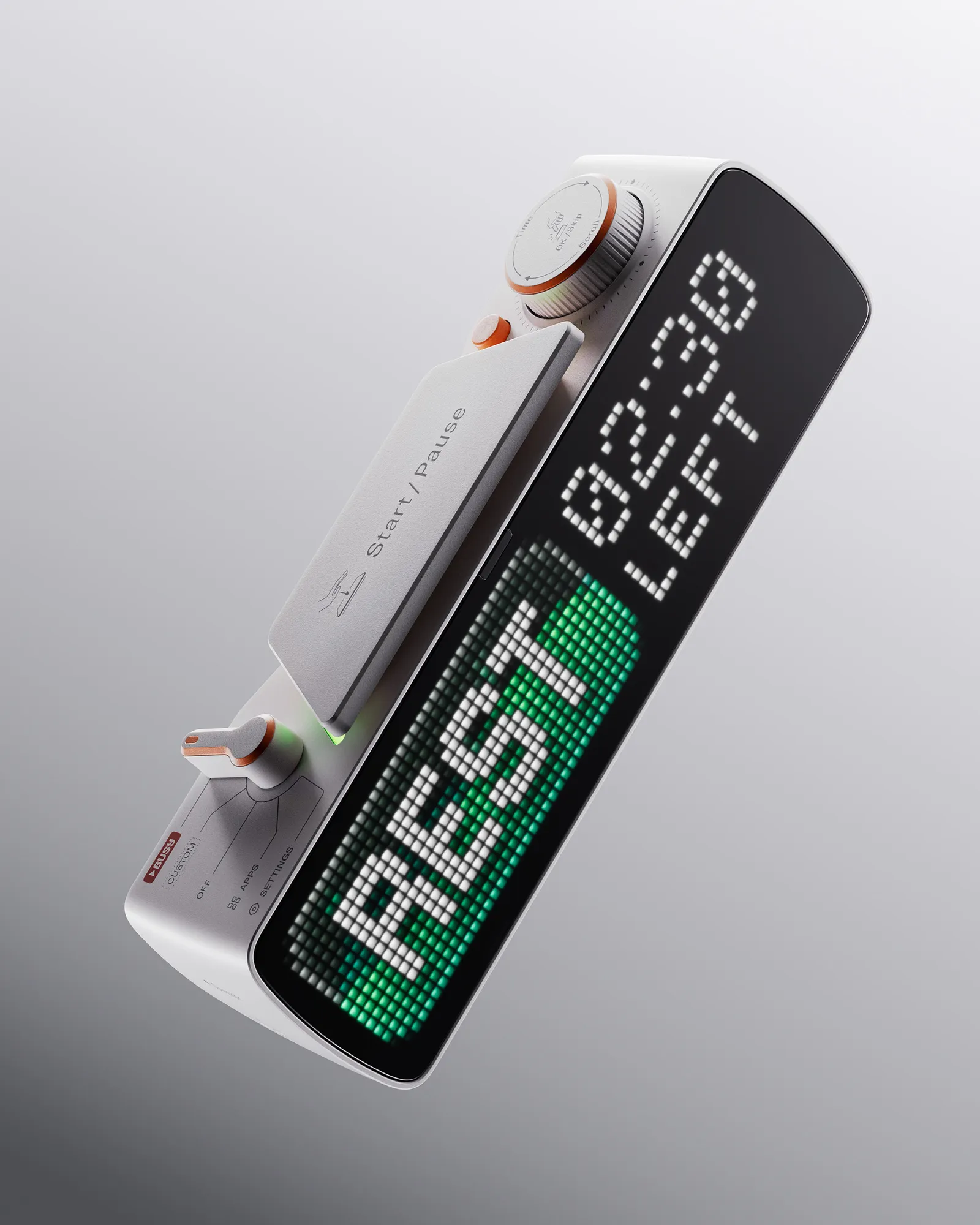
This is where Flipper’s Busy Bar comes in, a hardware clock with an LED screen that doubles as a clock and a dedicated timer. Slap the big button in the middle, and the screen displays a bright red “BUSY” sign or another message that lets the people around you know you’re, well, busy. (Maybe try “GO AWAY” or “GET OUT OF MY ROOM, MOM.”) The bar goes on sale today and costs $249.
“How do you let people know politely, yet firmly, that you don’t want to be disturbed?” says Callum Tennent, a creative writer at Flipper. “We decided the politest way to do it was a massive red light on your desk.”
Courtesy of Flipper Devices
Flipper Devices made the Flipper Zero, a $200 portable hacking tool that got big on TikTok in 2022 for using a Tamagotchi-esque dolphin character to detect wireless frequencies and potentially break RFID-controlled locks. It was a device that raised a variety of security concerns. Canada proposed a ban on the device out of fear that it might enable car thefts. In 2023, the US Customs and Border Protection seized 15,000 Flipper Zero devices, then ultimately released them. Flipper is currently working on another model, the Flipper One, that has even more advanced capabilities.
Advertisement
In between those more controversial devices comes the Busy Bar. The bar also works with the separate Busy app, yet another one of those productivity and focus tools living on your phone. What it doesn’t have is the capability of hacking anything. “It’s being made by us here at Flipper, but there’s no real connection to them,” Tennent says. “They’re totally disconnected products.”
Fundamentally, the Busy Bar is a pricey “On Air” light. It offers many of the same productivity capabilities that are likely already baked into your phone’s operating system—like blocking notifications on your phone. But Flipper is making the case that—much like the Brick, a hardware gadget you tap to block access to certain apps—having a hardware option to shut off the distractions around you is meaningfully different than just trying to use software productivity tools on your device.
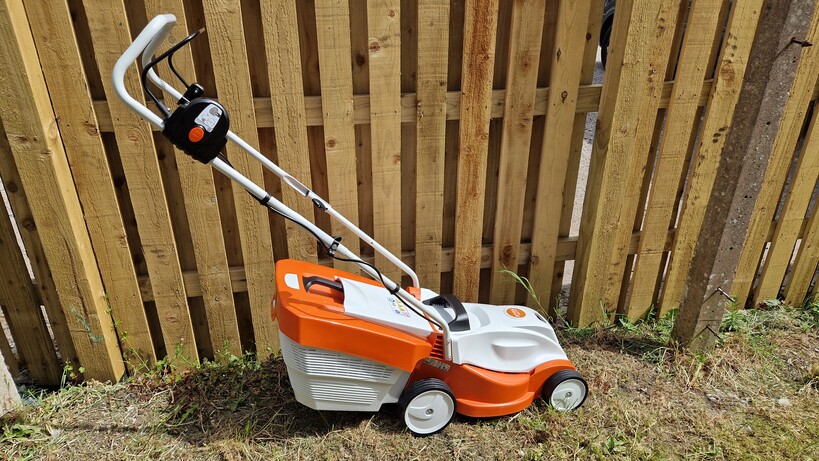
The Stihl RMA 35 is a quiet and refined cordless lawn mower. It’s well balanced, comfortable to use, and has an excellent cutting action. It’s great at what it does but could come with a few extras like a safety key or a better folding handle for storage.
Solidly built from quality materials
Curved blades leaves an excellent cut
Excellent balance makes it comfortable to use
Grass collection box is bulky
No soft grip handlebar
Height adjustment mechanism is clunky
Key Features
Introduction
As expected from the clever minds at Stihl, the RMA 235 cordless lawnmower is built to last and cuts incredibly well. It would be perfect if it had a more comfortable handle though.
Advertisement
Design and Features
Quiet mowing
Superb build quality and materials used
Automatic blade speed adjustment
Advertisement
It’s immediately obvious that this Stihl lawn mower has been built to last. Unlike some low cost cordless lawn mower models that are plagued by bendy plastics and rattling handles, the RMA 235 is built like a tank.
Starting with the handle, it’s bolted to the mower body, so it doesn’t creak or rattle about on uneven ground. Although it doesn’t fold down completely for storage, it does away with fiddly cam locks or annoying butterfly bolts on the bottom half of the handle. It also has two height settings for gardeners of different heights.
Image Credit (Trusted Reviews)
Weighing just under 14 kg, this slight but stout lawn mower with its 33 cm cut width is ideal for small to medium lawn sizes. It’s no lightweight, but it feels really solid and well made to make up for it. It feels like it’s built to last, which is always a relief. If you need to mow a bigger lawn, the excellent Stihl RMA 248.3 has the cut capacity for you.
The top of the handle is a bit basic. It lacks a foam grip, such as the one found on the incredibly comfortable Gtech CLM50, but the RMA 235 feels comfortable because of the balance. I’ve always found Stihl garden tools to be perfectly balanced, which adds to the overall comfort and handling.
Image Credit (Trusted Reviews)
Advertisement
The wheels are large and the big operating handle is oversized to make it easy to operate. The only annoying thing about the RMA 235’s design to me is the bulky grass collection box. Although it features a full level indicator, it doesn’t fold flat for storage, and the best you can do is sit it on top of the folded-over handlebars.
Advertisement
Image Credit (Trusted Reviews)
And it’s all powered by Stihl’s tried and tested AK battery platform. The big blocky battery or charger weren’t included with the version I tested of the RMA 235 but are compatible with loads of great tools in the range. The battery is held in a compartment on the front of the cordless lawnmower body. The clever cutout on the flap serves an extra purpose too- you can check the battery level indicator without having to lift it up.
Older versions of this lawn mower used to have a safety key above the battery, but this has been removed. If you want to make the lawn mower safe for children while not in use, you’ll need to take the battery out while you’re not using it.
Image Credit (Trusted Reviews)
The cutting height from 25 – 65 mm is done in five steps and controlled by a little plastic flap on the side of the cordless lawn mower body. It’s not as slick as the sprung handlebar on the Karcher LMO 18-36, but you can just about adjust it with your foot.
Advertisement
Image Credit (Trusted Reviews)
Performance
Quiet at just 76 dB
Excellent quality of cut
Doesn’t fold down small for storage
Setting up the RMA 235 is slightly different to a low of cordless lawnmowers I have tested out. Instead of attaching a fiddly bottom handle to an adjustable joint, I simply had to bolt it on to the mower body. It’s not ideal for ultra-compact storage later, but it’s great for getting a quick start. The upper handle bolts on with butterfly bolts.
It’s hard to beat a Stihl lawnmower on the grass. The cleverly designed, curved blade underneath is sharp and well-balanced, producing next to no vibration and keeping the noise right down. The big wheels help it to glide across uneven lawns while maintaining an excellent, even cut.
Image Credit (Trusted Reviews)
And the motor is intelligent too: The blade speed goes up and down depending on the resistance felt from the grass. If there’s barely any grass to cut, the rotations per minute are kept low to around 2900rpm to help preserve the battery. However, if you shove it into long or rough grass, the motor kicks the rpm up to 3400rpm. It’s a smart system that gets the most from each charge.
Advertisement
Advertisement
I used the AK 20 battery for testing. It’s rated to cut up to 200m². The larger capacity AK 30 battery will increase that by 100m². Another plus is the grass collection box. Although it doesn’t fold flat, it really packs the grass in.
The curved blade underneath helps to blow the cut grass into the box, so you don’t have to empty it out every two minutes.
Image Credit (Trusted Reviews)
What lets this cordless lawnmower down, is how much storage space it takes up. For a relatively small mower, the handles stick out too far. And the grass box takes up plenty of space, as it’s a hard clamshell-style one. This would be forgivable if the mower stood upright, but unfortunately it doesn’t.
Advertisement
Should you buy it?
You want a quality cut and have plenty of storage space
Advertisement
Excellent build quality and brilliant cutting make this lawn mower stand out from the competition aimed at small gardens.
Advertisement
You don’t have much storage space
The handlebars only fold part way, and stick out quite a bit, and the grass collection box is solid and doesn’t fold, making this lawn mower hard to store.
Advertisement
Final Thoughts
It’s easy to see why the RMA 235 is such a consistent performer on the lawn. Stihl has created a finely balanced and powerful lawn mower that makes short work of small to medium lawns. I just wish it would fold down more for storage. If you’re tight on space, read our guide to the best cordless lawn mowers.
How We Test
We test every lawn mower we review thoroughly over an extended period of time. We use standard tests to compare features properly. We’ll always tell you what we find. We never, ever, accept money to review a product.
Find out more about how we test in our ethics policy.
Used as our main lawn mower for the review period
Used on a variety of grass lengths to see how well the mower cuts
Tested to see how easy the mower is to push, turn and store
FAQs
Does the Stihl RMA 235 fold for storage?
Its handle bars half fold, but the overall lawn mower and solid grass catcher are quite large.
Apple appeared to be finally cooperating with India’s antitrust regulator, but now says it can show that the country’s three-year investigation consisted of simply copying and pasting claims from rivals.
In 2021, the Competition Commission of India (CCI) began investigating Apple after receiving a complaint against its App Store fees. In 2024, it accused Apple of antitrust practices, and the company has been consistently arguing against that ruling ever since. Now ahead of a further closed-door hearing with senior CCI officials, Apple has submitted its own accusations.
According to Reuters, Apple’s submission includes the claim that the CCI’s investigators “blindly replicated” a consumer spending graphic from an EU rule. Apple’s submission reportedly also includes tables comparing the CCI’s report to filings from opponents in the case, such as rival Indian payment firms.
“The DG [Director General] made no effort whatsoever to independently verify or critically assess these statements,” said Apple, “often parroting them verbatim.”
Advertisement
Apple also claims that during the three-year investigation, the CCI did not give it “a single opportunity to record its statements and provide oral evidence.”
Consequently, Apple claims that India failed to properly conduct its own investigation, and therefore its findings should be quashed.
Apple opened its first-ever store in India in 2023 – image credit: Apple
According to Apple, this refusal to allow it to contribute to the investigation, contrasts with how Google was given multiple opportunities to defend itself during a similar case.
Advertisement
During that case, Google also argued that the CCI had copied and pasted parts of a European ruling. The regulator denied this.
Twin Indian cases
This submission from Apple concerns the accusation that it has practiced antitrust behaviors in India. That accusation is at the stage where Indian regulators intend to determine the extent of its fine against Apple.
Those regulators have repeatedly claimed that Apple has been trying to stall the case. Apple had refused to supply global financial documents for the 2022-2024 period in question, although in early June 2026, the company agreed to cooperate.
However, Apple was stalling specifically because this antitrust fine is based on an Indian law that the company is separately contesting. This law is what allowed India to base its fine on Apple’s global turnover, rather than solely local, and this is how Apple estimated it could be fined $38 billion.
Advertisement
The law, though, came into effect during 2024 so Apple has been arguing in a New Delhi court that it should not be applied to the whole 2022-2024 period in question.
Apple had seemingly hoped to delay providing global financial records while this separate case was continuing. India denied this, but appeared to have agreed to Apple only submitting local accounts.
When Apple finally stopped resisting the submission, it asked for a “final extension” to prepare these local Indian turnover details. This extension took the case up to June 25, 2026, which is when Apple then filed this new accusation of the CCI’s copying and pasting reports.
What happens next
Apple’s case in the New Delhi court concerning the application of the new law to the whole period in question appears to be continuing. There are as yet no scheduled further hearings, however.
Advertisement
The CCI and Apple are scheduled to hold a closed-door hearing on July 21, 2026.
It’s not clear why Apple has waited until this point to question the validity of the Indian investigation. But the similar accusation made by Google had no effect on the CCI’s ruling against it in 2023.
This is all now taking place as India is becoming an ever-more significant part of Apple’s business. Health regulators are examining the Tata iPhone plant in the country, and the same firm was recently the victim of a cyberattack.
Yet, iPhone production in the country is rapidly increasing.
Advertisement
Apple only began assembling iPhones in India in 2017, and then it was solely to produce the iPhone SE for sale in the country. As of March 2026, though, one in four iPhones worldwide was made in India.
Donald Trump shuttered the web site Climate.gov in 2025, cutting off public access to climate information from America’s National Oceanic and Atmospheric Administration (NOAA).
But “former members of the site’s team have brought much of it back at a new domain,” reports The Register:
“Trusted climate information should not disappear when politics change,” Climate.us managing director Rebecca Lindsey said of the new platform in a press release. Lindsey, who previously served as the Climate.gov program manager and lead editor, told The Register in an email that she and one of the web developers responsible for the site were the first to be caught up in government purges when DOGE swept through the department in late February 2025… Created in cooperation with sustainability nonprofit accelerator Multiplier, Climate.us aims to be an independent alternative to its old .gov, and many of the former NOAA crew behind the previous website have teamed up for the new initiative to “keep climate information accurate, accessible, scientifically rigorous, and useful for the people who rely on it.”
Climate.gov, which now redirects to a NOAA page about climate but which hosts none of the data the shuttered site used to contain, was taken offline in July 2025 following a Trump executive order prioritizing “gold standard science….” arguing that prior climate science models relied on worst-case scenarios, which somehow meant the public availability of 15 years of climate data and reporting ought to change…
Advertisement
All of the content that was purged from the .gov is now back, along with blogs from experts, climate status reports, maps and data pathways, and national assessments of climate change as well.
Lindsey told us that rapidly changing political winds have led her to believe that the government isn’t the right place for that mission to continue, and that she would have concerns about returning the site to federal management if a future administration changed its position on climate change… Lindsey said that the Climate.us team will continue with the same mission it had before the Trump administration attempted to quash it: Getting climate science in front of the public in a manner that’s understandable so they can make their own decisions about how to respond.
A post about Microsoft Edge has ignited a fierce debate on X
The post asked who runs Edge on Apple’s macOS platform
Users both praised and criticized Edge, but I still prefer Firefox
Apple and Microsoft are known to be arch-rivals in the tech world, so when X user Macfolio asked its followers “what kind of freak uses Microsoft Edge on a Mac?” they might have expected the debate to fall along partisan lines, with rival sets of fans lining up to berate each other’s products.
But while there was indeed a vigorous debate, it wasn’t the pile-on you might have expected. Instead, many users chipped in with reasons why they enjoy using the combination of Microsoft’s web browser and Apple’s macOS operating system.
X user @wiedymi, for example, described Edge as “the best browser for Mac.” User @secretised explained that when they used it, it was “the only browser that didn’t consume 4GB of RAM with four tabs,” while @osxdaily said “It’s actually pretty good!”
Latest Videos From
For others, the reason was more prosaic, with @asikunaa pointing out that “some internal government sites require you to use Edge actually because they don’t distribute the security certificates for Chrome.”
Meanwhile, user @tarekmohmd9 summed up what many people apparently felt, saying Edge on macOS has “the speed boost of Chromium without the horrible RAM management of Chrome, it’s great (faster than Safari, uses less resources than Chrome, supports most Chromium extensions unlike Opera and Firefox).” They finished succinctly by saying “it is excellent.”
Advertisement
Of course, not every response was positive. User @rafalo claimed that “I just downloaded it and uninstalled it after [five seconds].” And @LansorHQ simply asked, “What kind of freak uses Edge in general?”
Why I use Firefox instead
(Image credit: Shutterstock)
I’m a long-time Firefox user and have been rocking Mozilla’s browser for over 20 years. I’ve dabbled with other browsers, from big dogs like Chrome and Safari to more niche offerings like Opera and Vivaldi. And yes, I’ve spent plenty of time with Microsoft Edge, too.
Advertisement
Sign up for breaking news, reviews, opinion, top tech deals, and more.
Yet despite all that, I keep coming back to Firefox. There are a few reasons for that, and I’ve got to admit that a sizable one is inertia. After so many years of usage, Firefox feels comfortable and familiar. I like how it works and switching would be a chore considering how many extensions and tabs I have running.
But there’s a lot more I love about Firefox. I use both a Mac and a PC in my day-to-day life and Firefox runs on both, unlike the Mac-only Safari. I can also send tabs between any of my devices, which is helpful when I find something interesting on my iPhone and want to read it later on my Mac or PC.
As I’ve written about previously, it’s also a genuine privacy-first browser that goes to great lengths to protect your data, which is something that I truly appreciate. It isolates cookies to stop them building a detailed picture of you, and Firefox limits access to my data that could be used to create a digital ‘fingerprint’ of my browsing habits.
Advertisement
So despite the debate on X, I won’t be switching to Microsoft Edge any time soon. But the discussion highlights that just because you use one operating system or another, you don’t have to be exclusively loyal to that developer’s own products — you can even switch to those made by their arch-rival.



















































You must be logged in to post a comment Login