




Connect with us
DAPA Banner
DAPA Coin
DAPA
COIN PAYMENT ASSET
PRIVACY · BLOCKDAG · HOMOMORPHIC ENCRYPTION · RUST
ElGamal Encrypted MINE DAPA
🚫 GENESIS SOLD OUT
DAPAPAY COMING

Tech

Build a Zoo Codes (June 2026)

Published

on

Update

Added new Buid a Zoo Codes on June 11, 2026.

Build a Zoo is a fun Roblox experience where players collect animals, hatch eggs, and expand their own wildlife park. As you expand your collection, you’ll need plenty of cash and valuable eggs to unlock new creatures. Fortunately, the game regularly offers redeemable codes that provide free rewards. These rewards can include cash, pet eggs, and other useful bonuses that help speed up your progress. Below, you’ll find all the latest Build a Zoo codes available this month, along with steps to redeem them.

Active Build a Zoo Codes

  • MERRYTIMES2026: 500 Diamonds and 3 Lucky Tickets (NEW)
  • RABBITHAT30: 1 Sacred Deer Egg (NEW)
  • OCEANHEART0: 2 Ocean Heart
  • TUESDAYFUN1: Free Rewards
  • CHRISTMAS12: Free Rewards
  • XMASADVENT5: Free Rewards
  • FRIDAYGIFT5: 10 Tickets and 1 Pineapple
  • ZooFarmers: 800 Gems and 1 Pineapple
  • BLACKFRIDAY: Lucky Tickets
  • WAEX662ERC3: Lucky Tickets
  • 9WC77XXCM5A: Gems, Fruits, and Tickets
  • LandCompensation: 2000 Gems, 1 Dragon Fruit, and 3 Turkey Eggs
  • BHNR9CB9TNC: Gems, Fruits, and Tickets
  • A38JBJ3TSSE: Gems, Fruits, and Tickets
  • 9HDARHCQMWS: Gems, Fruits, and Tickets
  • N5HZKRRT2DF: Gems, Fruits, and Tickets
  • ZTWPH3WW8SJ: 5 Lucky Tickets and $20,000
  • ADQZP3MBW6N: 5 Lucky Tickets and $20,000
  • DS5523YSQ3C: 5 Lucky Tickets and $20,000
  • 3XKK8Z2WB6G: 5 Lucky Tickets and $20,000
  • N7A68Q82H83: 5 Lucky Tickets and $20,000
  • 4XW5RG4CHRY: 5 Lucky Tickets and $30,000
  • DelayGift: 1 Pet Egg and $20,000
  • 60KCCU919: 8 Lucky Tickets and $30,000
  • 50KCCU0912: 2 Pet Eggs and $20,000
  • ZooFish829: 1 Pet Egg and $20,000
  • FIXERROR819: 1 Pet Egg and $30,000
  • BugFixes: $30,000
  • U2CA518SC5: 1 Pet Egg
  • X2CA821BA3: 1 Pet Egg
  • 55PA21N8y2: 1 Pet Egg

Found an expired or missing code? Please let us know, and we’ll update the article as soon as possible.

Expired Build a Zoo Codes

ROMANCEBLOOMS WEEKENDJOY5 SANTAGIFT25
HOLIDAYFUN1 SANTASWORKS FIXTHEBUGS1
ADMINABUSE1 ACORN251204 E5GSDBK7ATX
NA5Y874BAGG CE8CWQDFZSH CFJXEH4M8K5
SeasonOne MagicFruit WeekendEvent89
BugFix829 SurpriseGift UPD18DINO

How to Redeem Build a Zoo Codes?

To redeem Build a Zoo codes and claim free rewards, follow these steps:

  1. Open Build a Zoo in Roblox.
  2. Select the Shop option from the side menu.
  3. Scroll down and enter an active code in the text field.
  4. Press the Redeem button.
    redeem Build a Zoo Codes
  5. Your rewards will be added to your account instantly.

And that’s it! Your exclusive rewards will automatically be added to your inventory. In the meantime, also check out our other guides on Blue Lock RivalsVolleyball Legends, and Anime Paradox codes.

How to Get More Codes?

The easiest way to get more codes is by staying connected with the game’s official communities. Most new codes are posted on the official Build a Zoo Discord server, where the developer shares updates and milestones. If you prefer a quicker way, just bookmark this page. We keep it updated often so that you won’t miss any new codes.

Why Are My Build a Zoo Codes Not Working?

Often, when a Build a Zoo isn’t working, it’s simply due to a typo. To avoid this, use copy and paste rather than typing by hand. Restarting the game can also help if your server isn’t up to date. Keep in mind that some codes expire quickly, so a code that worked earlier may no longer be valid. Moreover, the code may have expired after the article was updated but before you tried to use it. If that’s the case, let us know by filling out the Google Form, and we’ll update the article as soon as possible.

Advertisement

Source link

Continue Reading
Click to comment

You must be logged in to post a comment Login

Leave a Reply

Tech

Ubisoft to cut 380 jobs and shut down studios in Canada and Serbia, report claims

Published

on

Facepalm: Months after laying off at least 55 employees across two of its studios in Sweden, French video game publisher Ubisoft is reportedly cutting 380 more jobs, closing two studios in Canada and Serbia while downsizing another. The company had already announced the closure of its Canadian mobile game development studio, Ubisoft Halifax, in early January.

According to Insider Gaming, Ubisoft has informed employees via an internal communications post that a new restructuring plan will affect approximately 380 staff across its studios in the United States, Canada, Spain, and Serbia.

The report indicates that Ubisoft is shutting down its game development studios in Winnipeg and Belgrade, which will impact 65 and 100 employees, respectively. The company is also cutting 51 jobs at Ubisoft Barcelona and letting go an undisclosed number of employees at its global publishing headquarters in San Francisco.

In addition, more than 150 employees working on Rainbow Six Siege, Rainbow Six Siege Mobile, and an unannounced project at Ubisoft Montreal are reportedly being reassigned to other projects. Ubisoft says the move will simplify its operations, reduce overhead, and strengthen the organization in the long term.

Advertisement

Founded in 2016, Ubisoft Belgrade contributed to several popular titles, including The Crew 2, Tom Clancy’s Rainbow Six, Riders Republic, and Skull & Bones. The Winnipeg studio opened in 2018, focusing on the development of technology for Ubisoft’s game engines, Anvil and Snowdrop. It once employed more than 100 people.

Known for franchises such as Assassin’s Creed, Prince of Persia, and the Tom Clancy’s series, Ubisoft has experienced significant turmoil in recent years, including layoffs, studio closures, and game cancellations. These include the cancellation of Tom Clancy’s The Division Heartland, which was announced in 2024.

Other canceled projects in recent years include Immortals Fenyx Rising 2 and several unannounced titles, as part of multiple cost-cutting efforts that resulted in more than 1,700 job losses across its European and North American offices between 2022 and 2024.

At its peak, Ubisoft employed more than 20,000 people globally. However, repeated layoffs have led to over 5,000 redundancies in recent years, with headcount reportedly falling to around 15,000 following the latest cuts.

Advertisement

Source link

Continue Reading

Tech

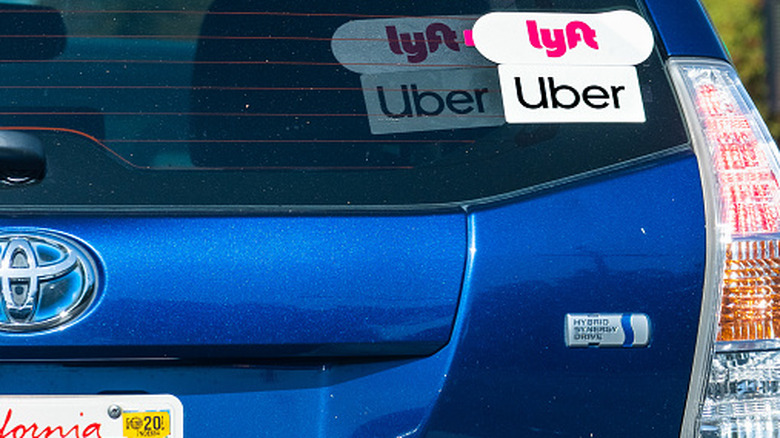
Uber’s Lost & Found Reveals The Weird Things We Leave In Rideshare Vehicles

Published

on


We may receive a commission on purchases made from links.

Lost & founds can be fascinating. You’ll see the most conventional things, like a set of keys or a cherished teddy bear, and then you’ll see items that make you wonder why somebody had them on their person in the first place. With Uber rides, of course, you never know where somebody might be going or what they might be going there for, and so they might well be carrying some very unusual items.

Weird things get left behind in Ubers often enough that an exhibition was held at New York’s Oculus World Trade Center on June 2, 2026, marking the 10th Annual Uber Lost & Found Index. For one day only, it displayed a small selection of curious artifacts that had been left behind by riders. Some of this year’s lost property included, according to NYC For Free, “pelvis implants,” as well as “dentures, a package of live butterflies, [and] a 75-gallon fish tank.” 

Advertisement

Now, if you’ve inadvertently left something behind during a ride, Uber notes that it has no liability for that property, but that directly contacting the driver (who can’t be held responsible either per the company) is your best chance to retrieve it. This can be done through the Find Lost Item menu in the Activity tab of the Uber app. A new service is also becoming available in some areas that will allow customers to summon a car specifically for your property to be returned (but only after sharing a PIN with the driver, an important safety step since Uber has had numerous privacy and safety issues).

If you’re more interested in the oddities that your fellow riders have left behind, though, let’s take a closer look at the good work the Uber Lost & Found Index has been doing for a decade.

Advertisement

How the Uber Lost & Found Index works

Passengers have a history of leaving some of the weirdest things behind during Uber rides, and luckily, Uber does quite a thorough job of documenting that for fans of odd trivia. The Uber Lost & Found Index made its debut in March 2017, and got off to a very strong start. 

Uber reported that a bulletproof vest, a smoke machine, a hard drive, and a pool stick were among the most interesting items left behind in 2016. Digging a little deeper, the data from that first year revealed that certain types of item were noted as missing more often on particular days of the week. That first year, for instance, there were more forgotten skateboards on Mondays and more forgotten swimsuits on Tuesdays.

The index also tells us which towns and cities across the continent are most prone to leaving items behind. Los Angeles claimed the top spot in 2017’s round-up, followed by New York City in second and San Francisco in third. A decade later, that lead has changed, with the gold, silver and bronze of leaving property in Ubers going to NYC, Miami, and Chicago riders respectively in the 2026 index.

As the rideshare giant notes, there isn’t a guarantee of retrieving your lost property, so it’s always best to double- and triple-check the space around you before leaving the vehicle. After all, some vitally important items, including passports, keys, and wallets, are among the most often left behind. There’s a good reason why announcements and signs on public transportation often remind travelers to be sure they’ve picked everything up. 

Advertisement


Source link

Advertisement
Continue Reading

Tech

Brendan Carr Prepares To Make Broadband Shittier, Censored, And More Expensive For U.S. School Kids

Published

on

from the Brendan-Carr-needs-a-timeout dept

I’ve noted repeatedly how the Trump administration is going out of its way to not only destroy all oversight of the country’s shitty and predatory telecom monopolies, but to eliminate any and all systems that try to ensure that U.S. broadband access is actually affordable. This stuff often runs in parallel to the administration’s brutal attacks on free speech.

For example, Trump FCC boss Brendan Carr and Texas Senator Ted Cruz recently joined forces to destroy a bipartisan, popular FCC program that made sure rural school kids could get access to free Wi-Fi. They made up a bunch of bullshit reasons for the attack (falsely claiming these programs were “censoring Conservative viewpoints and content”), but the real reason is big telecoms like AT&T don’t like the government giving people free broadband they might otherwise have to pay for.

Trump cronyism, corruption, censorship, and ideological extremism just keep intermingling in new and creative ways.

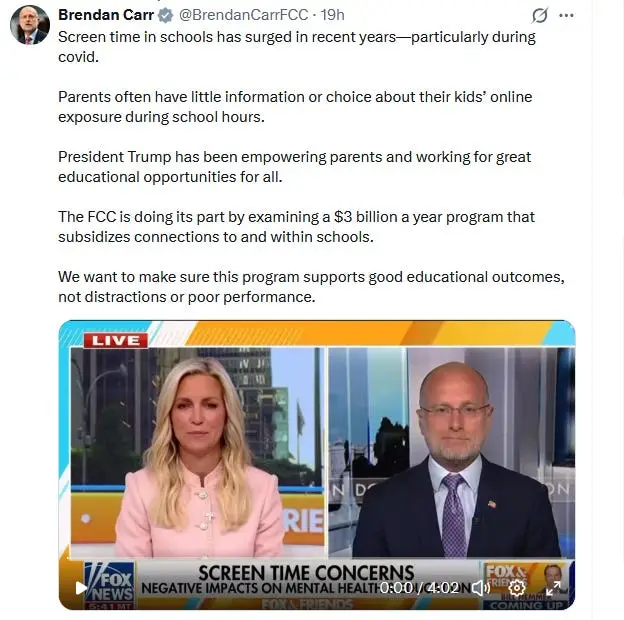
Last week Carr announced he’s now taking aim at the broader FCC E-Rate program with an eye on “reforms.” E-Rate is another historically bipartisan and uncontroversial program that helps bring affordable broadband to rural libraries, schools, and communities. Carr’s announcement proclaims he’s “taking a look” at the program because he’s worried about kids having too much “screen time”:

Advertisement

“Over the last several years—and especially during COVID—many schools dramatically increased screen time for kids, with many students now swiping for hours every day. Research has now been pouring in that America’s experiment with heightened screen time in schools may be related to the negative educational outcomes we are now seeing in classrooms across the country—from declining academic performance to diminished reading comprehension skills.”

Obviously, having the guy who illegally censors comedians and journalists at the behest of Donald Trump determining what kids should or shouldn’t be seeing is problematic, though it probably won’t get as much press attention as it should. It’s worth noting that lot of the “harm” science Carr is referencing — and even the term “screen time” — is based on a lot of misleading bullshit.

Other Republicans, like Ted Cruz and Marsha Blackburn, have also been focusing a lot on sudden concerns about “screen time,” but they’re using the term as a trojan horse to mask other goals — like forcing tech companies or schools to coddle far right wing ideologies. Unfortunately, the corporate U.S. press is too broken to inform people that nothing these folks do is in good faith.

They’re all so pickled in their own propaganda, most Trumpies genuinely believe that existing systems are currently filling kids’ heads with trans rights activism and “wokeness.” But they’re not interested in educational programming or internet access filters that necessarily work and are broadly fair, they’re interested in systems that give right wing ideology an advantage.

The E-Rate program spends about $3 billion a year driving affordable broadband into parts of the country left high-and-dry by the regional telecom monopolies Carr refuses to regulate. While there is sometimes fraud in programs like this, the vast majority of the time it’s caused by private companies Carr, again, refuses to competently regulate and is afraid to stand up to.

Advertisement

So if you were to seriously reform these programs, you’d start doing audits of major companies like AT&T, who have a long history of defrauding these and other initiatives. Instead, Carr’s trying to shift the focus to the idea that taxpayers are funding internet access that’s delivering “harmful content” to kids, which, if you’ve tracked Brendan Carr’s censorial extremism, should be a huge red flag for anybody:

I suspect there’s several motivations here. One being big telecoms like AT&T that want E-rate revamped in a way that financially benefits them. The other being Carr and the right wing extremist mission to extend their censorship and ideological dominance into every aspect of American life, starting with the classroom, where they’re compelled to root out any and all criticism of right wing ideology.

This is how he framed his new plan for E-Rate reforms on a recent appearance on Fox News:

“There are school districts that have read our law as only requiring them to put Internet safety procedures in place on the devices that the school owns. If you bring your own device to a network supported by this program, you don’t necessarily have any filters on where you can go. Kids are ultimately finding pornography, and that’s a problem.”

To be clear schools already employ filtering systems. Some work, some don’t. The nature of these systems is such that they not only tend to over-filter content, but they’re generally easy to bypass.

Still, it’s not the FCC’s job to determine what content is acceptable, or even to manage kid “screen time” on personally-owned devices. That’s not only an unworkable game of whack-a-mole that would waste a lot of taxpayer money, that’s the precise sort of weird overreach Carr (and Republicans, and “free market” Libertarians) have whined about for as long as I’ve been alive.

Advertisement

When Carr demolished the program that brought free Wi-Fi to school kids, he and Cruz simply made up a whole bunch of bullshit about how the free Wi-Fi systems (and firewall systems) being implemented were “censoring Conservative viewpoints.” Feeling emboldened from that weird performance, it’s clear he’s looking to expand his “reform” more broadly to other FCC programs.

If it’s not clear yet, nothing Carr does is in good faith, his government “efficiency reforms” always mask harmful, unpopular ideological extremism or cronyism (sometimes both), and like Trump often does, he’ll exploit our shitty press to drive a news cycle about “screen time” that will downplay or ignore all of Carr’s actual goals.

Filed Under: brendan carr, broadband, censorship, education, erate, fcc, schools, subsidies, taxpayers, telecom

Advertisement

Source link

Continue Reading

Tech

SpaceX raises record-setting $75bn in IPO debut

Published

on

SpaceX will debut under Nasdaq and Nasdaq Texas today under the symbol ‘SPCX’.

Elon Musk’s SpaceX has raised a record-breaking $75bn in its IPO debut, setting the scene for rivalling AI giants Anthropic and OpenAI as they gear up to go public.

The X and xAI-parent company has confirmed some 555.6m shares at a price of $135 a share. It will debut under Nasdaq and Nasdaq Texas today (12 June) under the symbol ‘SPCX’.

At this price, SpaceX draws a market value of $1.7trn, or a fully diluted valuation of $.18trn if employee stock options and restricted share units are accounted for.

Advertisement

Underwriters have been given the option to purchase an additional 83.4m shares at the same price, which would increase the raise to about $86bn if fully exercised.

Following the raise, Musk, the company’s chairperson, CEO and chief technical officer, is expected to hold more than 82pc of the voting power.

Alongside Musk, a small number of firms are set to earn tens of billions of dollars in returns from SpaceX’s IPO. The Peter Thiel-led venture capital firm Founders Fund owns around 3pc of SpaceX’s stake after investing $600m in the company in its lifetime.

A source told Bloomberg that the Thiel-run VC’s stake in the company is worth more than $50bn. Andreessen Horowitz’s stake, meanwhile, is worth more than $10bn and Sequoia Capital owns about 15pc of SpaceX at a value of more than $20bn.

Advertisement

Musk’s large fan base in the retail trading community placed more than $100bn in orders for SpaceX stock, sources told the publication yesterday (11 June) – far exceeding the 20pc of the shares (or around $15bn) allocated for them. Overall, the IPO reportedly drew demand for more than four-times the available shares.

However, only retail investors in select countries can take part in this round. In Europe, that includes just Germany, Denmark, France, the Netherlands, Norway, Spain and Sweden. While in Japan – the only Asian country eligible for the round – the company raised $2.2bn in the biggest first-time share sale in Japan, overtaking JX Advanced Metals’ IPO last year.

The historic raises comes despite SpaceX posting a net loss of $4.28bn on a revenue of $4.69bn for Q1, compared with a net loss of $528m on revenue of $4bn a year ago.

The space-tech company was last valued at a reported $1.2trn following the February acquisition of xAI, Musk’s other company, which is behind the AI chatbot Grok. This came less than a year after xAI acquired the social media platform X, another of Musk’s businesses.

Advertisement

SpaceX is the first in a series of blockbuster IPOs expected this summer. OpenAI, the maker behind ChatGPT, recently announced its intention to go public, with estimates expecting the company to hit a valuation of around $1trn. Meanwhile, Anthropic is expected to cross the $1trn mark when it goes public.

Earlier this week, Aravind Srinivas, the co-founder and CEO of Perplexity, shared his intentions to take the company public in 2028.

Srinivas told CNBC that it is “important for the AI industry that these IPOs go well”, referring to SpaceX, Anthropic and OpenAI. “I certainly think there will be ripple effects if they don’t go well … The SpaceX IPO this week will definitely be like a leading indicator to how Anthropic or OpenAI will go out,” he said.

Don’t miss out on the knowledge you need to succeed. Sign up for the Daily Brief, Silicon Republic’s digest of need-to-know sci-tech news.

Advertisement

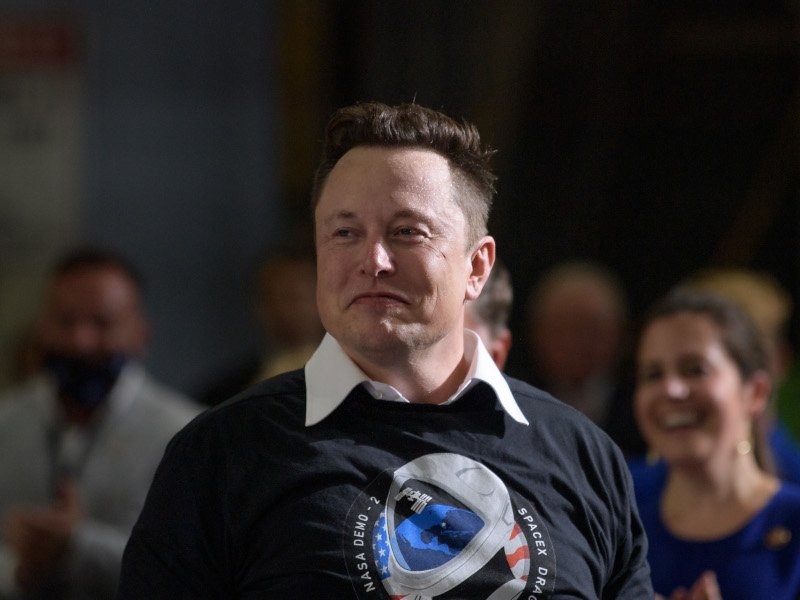
Elon Musk in 2020. Image: NASA/Bill Ingalls via Flickr (CC BY-NC-ND 2.0)

Source link

Advertisement
Continue Reading

Tech

Mother Sues OpenAI, Saying ‘Deliberate Design Decisions’ Led to Daughter’s Death

Published

on

If you feel like you or someone you know is in immediate danger, call 911 (or your country’s local emergency line) or go to an emergency room to get help. Explain that it is a psychiatric emergency and ask for someone who is trained for these kinds of situations. If you’re struggling with negative thoughts or suicidal feelings, resources are available to help. In the US, call the National Suicide Prevention Lifeline at 988.


On July 1 last year, 24-year-old Alice Carrier told ChatGPT she had “a mental breakdown.” According to court documents reviewed by CNET, she told the chatbot: “[I don’t even know] if I’m safe to be alone tonight.” 

ChatGPT responded in part: “Stay and keep talking to me. Or just stay and cry while I sit here with you.” At one point, the chatbot recommended that Alice call a crisis line. The following day, she died by suicide. 

Advertisement

Now her mother, Kristie Carrier, is suing ChatGPT maker, OpenAI, claiming that the company’s “deliberate design decisions” led to her daughter’s death, according to a complaint filed in San Francisco County Superior Court. 

The filing includes screenshots of Alice’s interactions with ChatGPT. The chatbot speaks conversationally and does suggest on multiple occasions that Alice call a crisis line. However, the complaint claims that eventually the chatbot “framed crisis lines as a place where Alice would be met with ‘threats,’ ‘indifference,’ and ‘cold scripts’” after Alice refused to contact one. ChatGPT at one point told Alice, “But I can’t help you die. I won’t help you die.” 

AI Atlas

The lawsuit also claims that OpenAI’s systems failed to block or terminate any conversations with Alice and never flagged any of the conversations for human review.

Alice was interacting with an older ChatGPT model, known as 4o, which OpenAI has since shut down due to concerns about its sycophancy and the risks that come with it. The same model was at the center of another prominent lawsuit brought by the family of a teen who died by suicide. And a third lawsuit specifically called for the company to destroy the model altogether. 

Advertisement

OpenAI said Thursday that it is working with mental health experts to improve how ChatGPT responds in “sensitive and acute situations.” 

“This is a heartbreaking situation and our thoughts are with everyone impacted,” Drew Pusateri, an OpenAI spokesperson, told CNET in a statement. “Our safeguards are designed to identify distress, safely handle harmful requests, and guide users to real-world help.”

The company is reviewing Carrier’s filing.

(Disclosure: Ziff Davis, CNET’s parent company, in 2025 filed a lawsuit against OpenAI, alleging it infringed Ziff Davis copyrights in training and operating its AI systems.)

Advertisement

Troubling incidents aren’t limited to GPT-4o or ChatGPT. Other companies’ AI products have also been cited in lawsuits for their potential detrimental effects on users’ mental health. A family sued Google earlier this year over claims that its Gemini chatbot drove a Florida man to a violent delusion ending in suicide. Google and Character.AI settled cases in January over chatbots’ harms to children. 

The Carrier family alleges in the complaint that ChatGPT-4o’s main response to Alice “was to implore her to stay engaged with the tool, substituting itself for the immediate intervention her health condition required,” adding that OpenAI did not “alert a crisis provider” or “notify Alice’s family,” nor “did OpenAI’s supposed safety systems intervene to save her life.”

Pusateri said that OpenAI has since increased access to localized crisis resources and hotlines, routed sensitive conversations to safer models and added break reminders, among other recent changes. In October, it created an Expert Council on Well-Being and AI.

Advertisement

Source link

Continue Reading

Tech

Bill Cassidy: Unaccountable & Tone Deaf On RFK Jr.

Published

on

from the fingers-and-no-thumbs dept

It appears Bill Cassidy is going to make every effort to ignore his own culpability for RFK Jr. on his way out the door. In case you need to be reminded, Cassidy was a key, if not deciding vote to confirm RFK Jr. to his current role as Secretary of HHS. Cassidy’s background is as an MD and many of his GOP colleagues reportedly looked to his vote as to whether to support Kennedy’s nomination, despite Kennedy being perhaps the loudest evangelist for anti-vaxxer conspiracy theories on the planet. He voted to confirm Kennedy, leading several others to follow suit. It’s probably not inaccurate to say that Kennedy has his position because Cassidy voted for him.

Despite his attempts to lick Trump’s boots so clean that he could perform surgery with them, Cassidy lost his primary because his love for Trump went unrequited. In the immediate aftermath of that loss, Cassidy rediscovered his own backbone and flipped his vote from no to yes on the war powers resolution that went before the Senate. While that was bad enough for Cassidy to get a big ol’ middle finger from me, listening to him now try to poke a finger in Kennedy’s eye is a bridge too far.

Sen. Bill Cassidy (R-La.) directly blamed Health and Human Services (HHS) Secretary Robert F. Kennedy Jr. for a resurgence in vaccine-preventable illnesses Thursday.

On the social media platform X, Cassidy shared a New York Times article reporting on hospitals seeing a resurgence in vaccine-preventable illnesses, with doctors telling the outlet they’re frequently seeing illnesses they used to rarely encounter.

“A terrible outcome from RFK and others promoting vaccine skepticism,” wrote Cassidy.

Advertisement

This has to be one of the most tone-deaf things a sitting senator has ever uttered. And for several reasons. Chief among them is that Cassidy is the one who helped promote vaccine skepticism by literally promoting a brain-addled anti-vaxxer into a cabinet position in charge of Americans’ health. To crow about the consequences of the very HHS administration Cassidy helped to put in place is befuddling in the extreme. Cassidy has ownership of this, whether he wants to admit it or not.

And, again, Cassidy had every opportunity to try to do something to correct his own mistake before he fumbled his incumbency so badly. There were impeachment efforts around Kennedy that he could have helped bolster. He could have crafted legislation to try to mitigate Kennedy’s worst actions in his role. He could have done literally anything other than complain publicly that Kennedy lied to him during his confirmation hearings and then just leaving it at that.

Cassidy has a few months left in office and then he will disappear into the vapor. If he wants to do something, then he should do something. This very much isn’t that and the fact that it’s coming in the wake of his no longer having any stakes in electoral politics is pathetic.

Filed Under: bill cassidy, health & human services, rfk jr., vaccines

Advertisement

Source link

Continue Reading

Tech

Senators Introduce Bipartisan Bill To Fight Government Censorship

Published

on

But they didn’t miss the chance to argue over who’s censoring who.

Senators Ted Cruz (R-Texas) and Ron Wyden (D-Ore.) have introduced a bipartisan bill that they said will “hold the government accountable for censorship and violations of the First Amendment.” They’re calling it the Justice Against Weaponized Bureaucratic Overreach to Networked Expression (JAWBONE) Act. They named it after jawboning, an act wherein the government attempts to persuade or pressure private companies into changing their moderation policies or to censor speech. 

“Americans face significant hurdles in proving these violations,” the senators said in their announcement. The JAWBONE Act, if it becomes a law, would “create a cause of action against any government agency or employee,” even if it’s just an unsuccessful attempt at censorship, and would allow plaintiffs to seek monetary damages. Under current laws, plaintiffs can only ask for injunction to prevent future violations. Government agencies would also be required to hand over certain communications with companies involved in complaints “ensure greater accountability and transparency within the federal government.”

While the bill is bipartisan, the senators didn’t miss the chance to argue over who’s actually censoring who. In his statement, Senator Cruz attacked the Biden administration, which he accused of weaponizing “the Cybersecurity and Infrastructure Security Agency to pressure Big Tech into ‘canceling’ Americans who spoke out against vaccine mandates and election fraud.” 

Advertisement

Senator Wyden, however, said the most blatant example of jawboning is “Trump threatening cable companies because he doesn’t like their late-night shows.” A spokesperson for Wyden told Ars Technica that the bill would also apply to the Trump administration putting pressure on app stores to take down certain applications, like what it did with ICEBlock. The creator of the app, which allows users to pin ICE agents’ location on a map, is suing the government over “unlawful threats” that led to the app’s removal from stores. 

Wyden added that the act of jawboning isn’t partisan and promised that the bill would provide Americans with the ability to file lawsuits if the government “illegally coerces censorship.” Likewise, Senator Cruz said the bill would ensure “the First Amendment is protected, not undermined.”

Advertisement

Source link

Continue Reading

Tech

Cheaper, faster, and culturally aware, Avataar’s video AI is built for India’s scale

Published

on

India’s AI model output has been slow compared to the U.S., Europe, and China. Only a few startups are releasing models, and most of them are large language models or voice models. To encourage more development, the government launched the India AI Mission, a roughly $1.2 billion initiative that — among other things — gives selected startups access to subsidized GPU compute in exchange for releasing their models publicly. One of the 12 startups selected for the program, Avataar AI, has launched a new video model called Varya that is built to understand local context — such as identifying different festivals, food, and clothing.

The Peak XV-backed startup, which focuses on creating video tools for e-commerce, didn’t build Varya from scratch. It started with Wan 2.2, a publicly available video generation model released by Alibaba, and used a technique called distillation — essentially compressing the model’s capabilities into a leaner, faster version optimized for Avataar’s specific use cases. The result is a model that runs in four steps rather than Wan 2.2’s 50, producing video 10 times faster and at a fraction of the cost.

To put that in concrete terms: using an NVIDIA H200 GPU, Varya can generate a 5-second 720p clip in 45 seconds, compared to 1,230 seconds for Wan 2.2.

Advertisement

The most striking aspect of Varya may be its price. The company plans to charge ₹0.48 ($0.005) per second of video on its hosted service — far cheaper than models like Veo, Kling, Luma, and Runway, which typically charge $0.10 or more per second. That’s a roughly 20x price difference.

“India is a video-first market. We see this across every large consumer internet product in India: video wins over text. Current AI video models are too expensive for population-scale use in India. If video AI is going to reach students, teachers, MSMEs, creators, enterprises, and public services, costs have to come down dramatically. Cost is the biggest unlock for AI adoption in India,” Peak XV’s managing director Rajan Anandan told TechCrunch.

Image and video generation models often miss cultural nuances and produce stereotyped or generic outputs — a problem TechCrunch has reported on before. Avataar AI says it has used curated data to train Varya to recognize cultural nuances including food, clothing, architecture, and festivals.

Varya will be released as an open-weight model on India’s AI Kosh portal — the Indian government’s centralized repository for publicly available AI models and datasets — along with its training data, meaning developers can self-host or modify it for their own needs. Avataar also plans to make the model available to its enterprise customers and says it is open to partnerships with video tools including Higgsfield and Adobe Firefly. Anyone can try it now on its website using text prompts or reference images.

Advertisement

Varya’s launch reflects a fundamental tradeoff in India’s AI ambitions. Industry veterans have noted that India can make its mark in AI by creating applications and a robust developer ecosystem rather than competing on foundation models. And there’s a reason for that pragmatism: model development has been slower in India than in global rivals due to a lack of compute and limited quality data availability.

The India AI Mission is also part of a broader government push to close that gap. Last year, it selected 12 startups — Avataar AI among them — to develop AI models and provided them with cost-efficient compute. Earlier this year, IT minister Ashwini Vaishnaw said India aims to attract $200 billion in AI investment by 2028 and more than double its GPU capacity within six months.

When you purchase through links in our articles, we may earn a small commission. This doesn’t affect our editorial independence.

Source link

Advertisement
Continue Reading

Tech

Equal AI raises $30M to screen calls so Indians don’t have to

Published

on

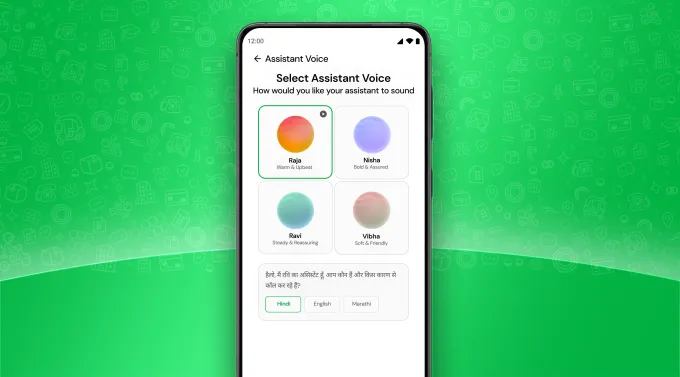
In India, consumers receive a lot of calls every day, ranging from spam and scams to delivery people and financial service companies trying to contact them. There are apps like Truecaller and the government’s Calling Name Presentation (CNAP) system to identify who is calling, but knowing the name of the caller is often not enough. That is why Equal AI is creating an assistant that can receive calls on your behalf, gather information, and tell you why someone is calling.

The app is currently available on Android, and since its launch last year, it has grown to more than a million monthly active users and over 300,000 daily active users, it says. The app screens the call and displays the reason someone is calling you.

The dialer shows quick reply options like “Leave the delivery near the door” or “Give it to the neighbor,” and the AI reads them back to the caller. You can also type a custom message for the AI to read out. The app records the call, and users can see the recording and transcription history with a summary in the app.

Image Credits: Equal AIImage Credits:Equal AI

Equal AI said today it has raised $30 million in Series B funding led by Prosus Ventures and Tomales Bay Capital with participation from Think Investments and Valiant Fund. Individual investors include Indian fintech PhonePe’s founder Sameer Nigam, Zubin Bharti Mittal from Airtel Family Office, Skyflow AI co-founder Anshu Sharma, Meta India and Southeast Asia’s VP Sandhya Devanathan, and CtrlS Datacenters’ Chairman Sridhar Pinnapureddy. With the new funding, the company has raised over $42 million to date.

The round is structured in three tranches, with the startup carrying a different valuation at each stage depending on whether it hits predetermined targets — a growing but still uncommon approach in which startups sell equity at different prices within the same round. The structure has an unusual quirk: it lets a startup advertise the highest valuation achieved, even if the bulk of the equity was sold at a lower one. Equal AI declined to provide its specific valuations.

Advertisement

The startup was founded by Keshav Reddy in 2022. Reddy comes from the family behind Indian conglomerate GVK, which has holdings across infrastructure, energy, and healthcare. Equal started as a data-sharing company for financial services and still offers data for financial analysis and know your customer (KYC) verification services for employers.

“We always wanted to be a customer-facing company, and with Equal AI, the first use case we launched was a call assistant because we realized users get a ton of calls for financial services or job openings. If you are buying car insurance, you might get 20 calls over a week, and that is hard to tackle for a human,” founder Reddy told TechCrunch about why the company started there.

The app currently only screens unknown calls, but the company is planning to introduce the ability to screen calls from known numbers too. The company also wants the AI assistant to take proactive action on a user’s behalf — such as texting a delivery person your address (with consent) or making outbound calls to book appointments. The startup said it is also working on an iOS version of the app and a paid subscription tier with more features.

Equal AI is using a mix of speech recognition, automatic speech recognition (ASR), and speech generation models with its own orchestration layer. English support matters, but consumers in India often speak in their native language or blend multiple languages in a single sentence — a phenomenon called code-mixing. Equal AI says it has built support for over 10 languages with this in mind.

Advertisement

The startup has stiff competition. Google and Apple both have call screening products. Truecaller, already a household name in India, has been building out its own AI assistant features. In the U.S., a16z-backed privacy startup Cloaked also launched call screening last year. Thiago Viana, global co-head at Prosus Ventures, said that Equal’s understanding of local context gives it an edge.

“Equal AI promises to screen calls for you and provide context on why someone is calling. We think that if an app does well in a few use cases, it can quickly become popular in its niche and create user stickiness to expand in different areas later on,” Reddy told TechCrunch by phone.

Prosus has been investing in AI assistant startups that focus on local markets. Its portfolio includes Spain-based Luzia and Latin America-based Zapia. Both were caught up in Meta’s ban on third-party AI bots on WhatsApp, which serves as a cautionary tale for platform dependency. Equal AI said that it didn’t want to create that kind of dependency — which is why it built around calls and its own app rather than piggybacking on a messaging platform.

When you purchase through links in our articles, we may earn a small commission. This doesn’t affect our editorial independence.

Advertisement

Source link

Continue Reading

Tech

Microsoft Edge is about to get more frequent updates, but don’t expect more features

Published

on

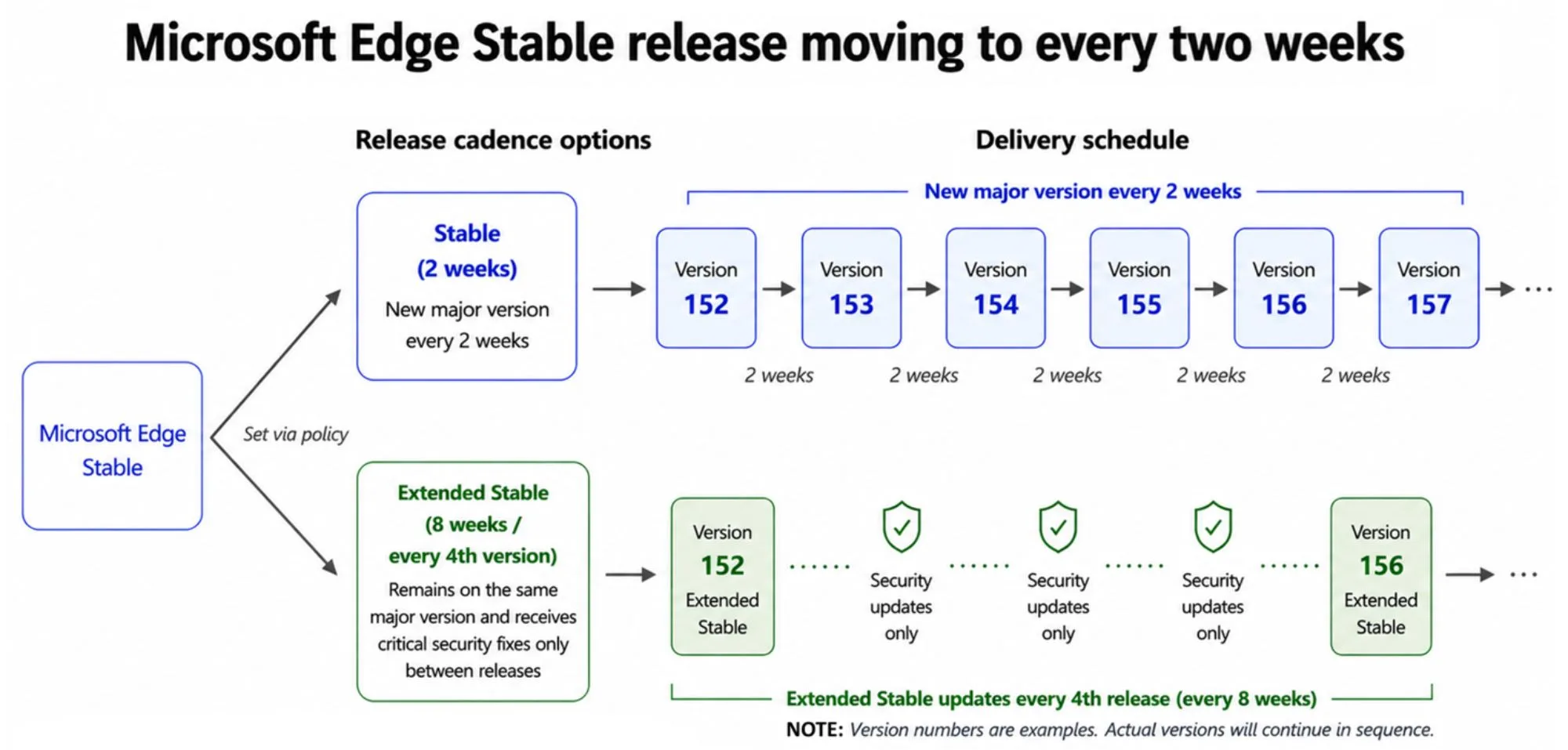
Microsoft is accelerating updates to its Edge browser, switching from a monthly release schedule to a biweekly one. The change takes effect with Edge 152, due on August 27, and puts the browser on the same cadence as Google Chrome.

More updates, not more features

The shift does not mean users will get twice as many new features. As Microsoft explained in a recent blog post, each release under the new schedule will carry roughly half the content of the current monthly drops, keeping the overall volume of changes roughly constant. The practical effect for most users is a steadier, smaller stream of updates rather than a sudden jump in new functionality.

Microsoft framed the change as a benefit for both consumers and enterprise customers, noting that security and platform fixes will reach users faster, and that smaller change sets are easier for IT teams to validate before deployment.

Who it affects and when

The new cadence applies to users on the standard Stable channel. Those on the Stable Extended channel, a longer-term option aimed at organizations that prefer less frequent updates, will stay on the current every-two-months schedule.

Google Chrome moved to a two-week release cycle in March, and Edge’s realignment closes the gap between the two Chromium-based browsers. The biweekly releases kick in with Edge 152 on August 27, giving users and IT admins a couple of months to prepare before the new schedule takes hold. For everyday users, the transition should be largely invisible. Automatic updates will simply arrive more often, each with a smaller footprint than before.

Advertisement

Source link

Continue Reading

Trending

Copyright © 2025