
Security teams log 54% of successful attacks and alert on just 14%. The rest move through your environment unseen.
The Picus whitepaper shows how breach and attack simulation tests your SIEM and EDR rules so threats stop slipping by detection.





If you need to fill up your tank in California, state Governor Gavin Newsom hopes you don’t choose to do so at a Chevron. He says the company is driving its gas prices up at gas stations throughout the state, with many charging even higher prices than rival gas stations on opposite corners. The Governor’s office says drivers should avoid Chevron stations if they want to avoid being overcharged. The announcement first came ahead of Memorial Day, where California motorists faced average gas prices topping more than $6 per gallon. Those California prices are far above the national average as it is… but Newsom said Chevron’s prices will leave you paying even more for what’s essentially the same fuel.
Newsom’s office took to X to defend the Governor’s warning, citing some compelling evidence to back up his claims. They said that “unbranded gas comes from the same refineries, storage tanks, and pipelines” and meets the same California fuel standards as name-brand gasoline. That means drivers are paying a premium for branding rather than quality. The analysis they cited in the post from the California Energy Commission is further proof. It found Chevron stations were charging roughly 60 to 80 cents more per gallon than unbranded alternatives.

For context, rising fuel prices are a result of the U.S.’s ongoing war with Iran, which has disrupted traffic through the key shipping route of the Strait of Hormuz. Now, an area that normally sees about one-fifth of the world’s crude oil supply is having significantly less move through. Thus, higher prices for what does get by. According to AAA, the state’s average gasoline price reached $6.14 per gallon before the Memorial Day weekend. Gas prices in California continue to be the highest in the country.
Chevron tried to use California’s high gas taxes as an excuse for its prices. The company has even gone as far as to display signs at stations across the state blaming Newsom for higher fuel costs. Chevron also blamed independently owned Chevron franchises that set their own retail prices.
But Newsom’s office poked holes in both arguments, saying that franchise operators are locked into expensive agreements with Chevron and that the company is charging more than any other gas station company just because they can. So yes, California taxes do drive gas prices higher, but charging as much as $8 or more is being done just for pure profit. For now, calling it out and sending citizens a warning is all the Governor’s office can do. State legislation to penalize oil companies for excessive profits doesn’t go into place until 2030.

The Unlimited Day Pass could be a good option for weekends away or tourists.

If you’ve ever needed iPad data for a day or two without signing a contract or paying for an entire month, AT&T has a new option. The company’s Unlimited Day Pass offers 24 hours of unlimited wireless data to eligible iPad users for a flat $3 rate, without a contract, subscription or credit check. “AT&T is the first and only major U.S. wireless provider to give eligible iPad users (with eSIM capabilities) the freedom to buy on-demand connectivity when they need it,” the carrier said in a press release.
The plan is available to anyone (including non-AT&T customers), so it could be a good option for camping, weekends aways, or tourists. AT&T also notes that many folks with eSIM iPads have no cellular plan, so it could be a way to give your kid internet access when they’re using an iPad to study for exams. There’s no automatic renewal, so you’ll have no ongoing commitment or need to cancel.
If you sign up, the first day pass is complimentary, limited to one iPad per customer, then available at a flat daily rate via credit or debit card. To use it with any Wi-Fi + cellular iPad model, simply activate the plan from your iOS device settings, with no app or Wi-Fi connection needed. “Open the Settings app, tap Cellular Data [and] add AT&T Unlimited Day Pass,” AT&T explains. The 24-hour data activation will start shortly after purchase.
The new service is available for any eSIM equipped iPad dating back to 2019, including iPad, iPad Mini, iPad Air and iPad Pro models. Android and other tablets are not yet eligible. AT&T said it plans to expand the service to include “multi-day options such as weekend and week-long passes” in the future. The company notes that it may slow data speeds if the network is busy.
The numbers are in! Given the same amount of time in use, with data spanning more than a decade, Intel Macs come in for service at twice the rate that Apple Silicon Macs have.
When it comes to device longevity, Apple’s products tend to last quite a long time, if cared for properly. While this has been a consistent feature of Apple’s hardware, it seems that the chip being used plays a factor.
According to a June report from UK Apple refurbisher Hoxton Macs, it has found that Intel Macs it has sold is returned for a hardware fault at twice the rate of Apple Silicon models.
In its figures, it says that there was a 0.9% hardware fault rate for Apple Silicon Macs sold across 2025. This refers to the share repaired or replaced under warranty in the first year after sales.
However, an Intel Mac sold under the same circumstances doubles this rate. Crucially, this covers Intel Macs that are of the same age as the equivalent Apple Silicon model. For example, the data counts failures from a 2016 MacBook Pro through 2018, the same as it counts a M1 MacBook Air from 2020’s failures through 2022.
In the last three years, the company’s blended warranty-return rate for all Mac models it sells has more than halved. In 2023, there was a 2.9% return rate for faults, but by 2025, it was 1.1%
“Matched for age, an Intel Mac comes back for a hardware fault about twice as often as an Apple silicon one,” the company says. “The faults that matter most — logic-board and battery failures — run at roughly double the rate on Intel.”
This overall failure rate from Intel machines is consistent with what our own data from a few Apple Stores across the East Coast showed through the 2010-2020 period. The industry as a whole is skewing towards more failures, not less, like Apple’s trending.
When it comes to why there are fewer Apple Silicon-related fault issues, the retailer insists it’s because the chip switch changed what could go wrong.
During the Intel era, it is reported that batteries wore out faster due to the requirements of the chip. Batteries were replaced more frequently because they were more easily drained.
By contrast, the batteries in an Apple Silicon MacBooks use less power, reducing the cycle count and minimizing the need for replacement.

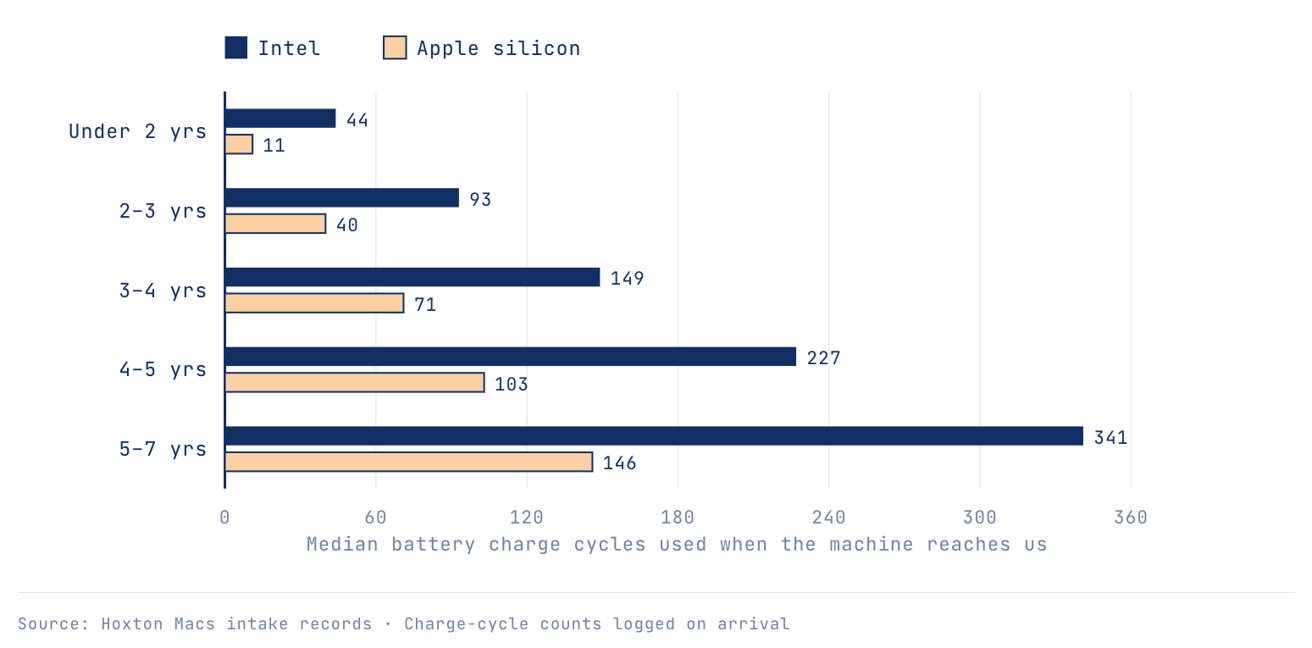
Battery cycle counts based on used Mac intake, based on device age. Image credit: Hoxton Macs
At all Mac ages, the Apple Silicon versions have less battery wear compared to their similar-aged Intel counterparts. A three-to-four-year-old Apple Silicon MacBook has about half the cycles of the Intel equivalent when it reaches the company’s restoration team.
There were also more reported issues with the USB Type-C ports on Intel Mac units, which also failed at a higher rate than on Apple Silicon machines.
The lack of a fan on the Apple Silicon MacBook Air is also helpful, unlike the fan-equipped Intel versions.
A fan moves air to cool the Mac’s components, providing a way for dust to be pulled inside. That dust then builds up and eventually clogs the airflow, preventing the thermal management system from working.
Since the Apple Silicon MacBook Air doesn’t use a fan for cooling at all, there are no blockage problems.
One theory is that the Apple Silicon design used fewer heat-generative components and has a cooler-running chip. Intel Mac faults clustered around the areas with high heat generation, including the separate graphics chip in some models.
The refurbishment repair report continues a trend for Apple, in being a very reliable manufacturer of computer hardware. It’s a reputation that it had for a long time, but it has seemingly improved further with the Apple Silicon era.
This is especially evident in annual surveys from the ACSI into customer satisfaction. In the September 2025 edition, Apple dropped from a score of 85 to 82, putting it narrowly in second place, behind HP.
With Intel hardware support finally dropped in macOS 27 Golden Gate, there’s now more of a reason for people still using Intel Macs to upgrade to Apple Silicon.
If they switch, it’ll be for a more hardy notebook than they’ve been using before.
AI vendors promote their enterprise products as if they’re turnkey solutions, but the chances are low that AI agents will hit the ground running right away. Unless you put in the effort to train a model on the specifics of your business, it’s unlikely to understand how your company, for example, defines revenue or knows who is allowed to see which file. That’s part of the reason why we’re seeing AI companies deploying engineers to help integrate their AI products into customers’ systems.
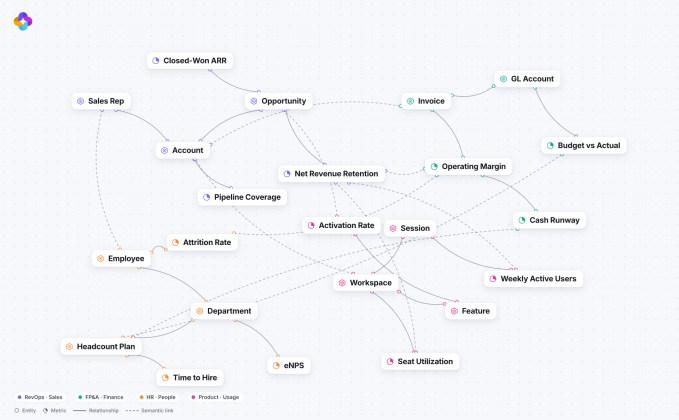
New York-based startup Jedify is attacking this very gap. The company says its platform connects to enterprises’ knowledge sources via APIs to build a “context graph” about their business that AI agents can use to work better. These sources can be databases, data warehouses and lakes, SaaS apps or BI tools, as well as unstructured sources such as reports, documentation, code bases, and even Slack channels and meeting recordings.
To build that out, Jedify has raised $24 million in a Series A funding round led by Norwest, TechCrunch has exclusively learned. The round saw participation from returning backers S Capital VC and Cerca Partners, as well as new investor Oceans Ventures. Data giant Snowflake also participated as a strategic investor and is integrating the startup’s tech with its AI products, such as its Cortex AI service, Semantic Views, and CoWork.
Jedify’s pitch is that to be useful within enterprises, AI agents need access to the relationships between entities, data, permissions, domain knowledge, workflows, operational assumptions, and company-specific terminology. This context, the company says, allows an AI agent to narrow its attention to the information that is relevant to a particular task instead of searching across everything a company has.
Co-founder and CEO Assaf Henkin (pictured above, on the far right) pointed to Kiteworks, a compliance company, as an example of how customers are using Jedify. Kiteworks connected Snowflake, Tableau, Notion, and internal playbooks, including documents and screenshots, to Jedify, then built agentic tools for different customer workflows.
“They wanted to arm their sellers and account teams with a sophisticated app — you can think of it as both like a dashboard application and a real-time conversational application. When they go into a customer conversation, Jedify builds for them, on the fly, everything they need to know. And during the conversation, they can, in real time, get very specific details surfaced proactively,” Henkin said.

Henkin argues that Jedify’s context graph is different from the semantic layers, metadata catalogs, and knowledge graphs that companies already use because it is multi-dimensional, capturing relationships across entities, data, people, permissions, and customers. It’s also model-agnostic and updates in real time as information flows into and out of the systems it is connected to.
“When you want to enable an agentic solution to really be autonomous, to drive decisions across CRM data, Zendesk tickets, maybe telemetry data that’s coming in real time, that’s when a context graph is much better in terms of capabilities versus a semantic layer,” he said.
Permissions are an obvious hurdle here. It wouldn’t do for an agent to give an intern access to the CFO’s revenue projections, for example. Henkin said his platform works to address that by inheriting permissions from identity systems, file systems, SaaS tools, and databases, including row-, column-, and table-level access rules, then lets its customers create additional groups that define what and whom agents or workflows are allowed to reach. It also offers observability and governance tools to help customers ensure their AI agents are behaving as intended.
Jedify is currently targeting mid-market and large enterprise customers that have mature data stacks and multiple databases or data warehouses. Henkin said the company has between 10 and 20 early customers, one of which is The Weather Company, and is seeing interest from data-heavy sectors such as gaming, industrials, and consumer packaged goods.
Snowflake’s investment and partnership are notable because large data platforms are also trying to build similar capabilities. But Henkin argues that Jedify is complementary to such efforts because much of a company’s data, and most of its institutional knowledge, isn’t usually stored with a single cloud provider.
“[The large data companies] will tell you, ‘Oh yeah, just bring everything.’ But in reality, companies have multiple databases, and warehouses, and data solutions […] The big thing is that not all of your data is in those environments, and most of your knowledge is not there, so it’s a bit of a disadvantage that they actually have,” he said.
Henkin also noted that for companies trying to do this on their own, training an AI model to build a comparable context layer can be cost-prohibitive, especially as companies are scrutinizing and clamping down on their AI token usage.
And the rapid advances in AI model development play into the company’s broader bet: as models grow more capable and more interchangeable, proprietary context that helps those models work better within businesses could prove a valuable and durable moat.
The startup will use the fresh cash for product development, hiring, and go-to-market motion. It brings the firm’s total funding to about $33 million.
When you purchase through links in our articles, we may earn a small commission. This doesn’t affect our editorial independence.

Two former executives from enterprise software giant Icertis have teamed up to launch a new Seattle startup aimed at a multi-trillion-dollar corporate headache.
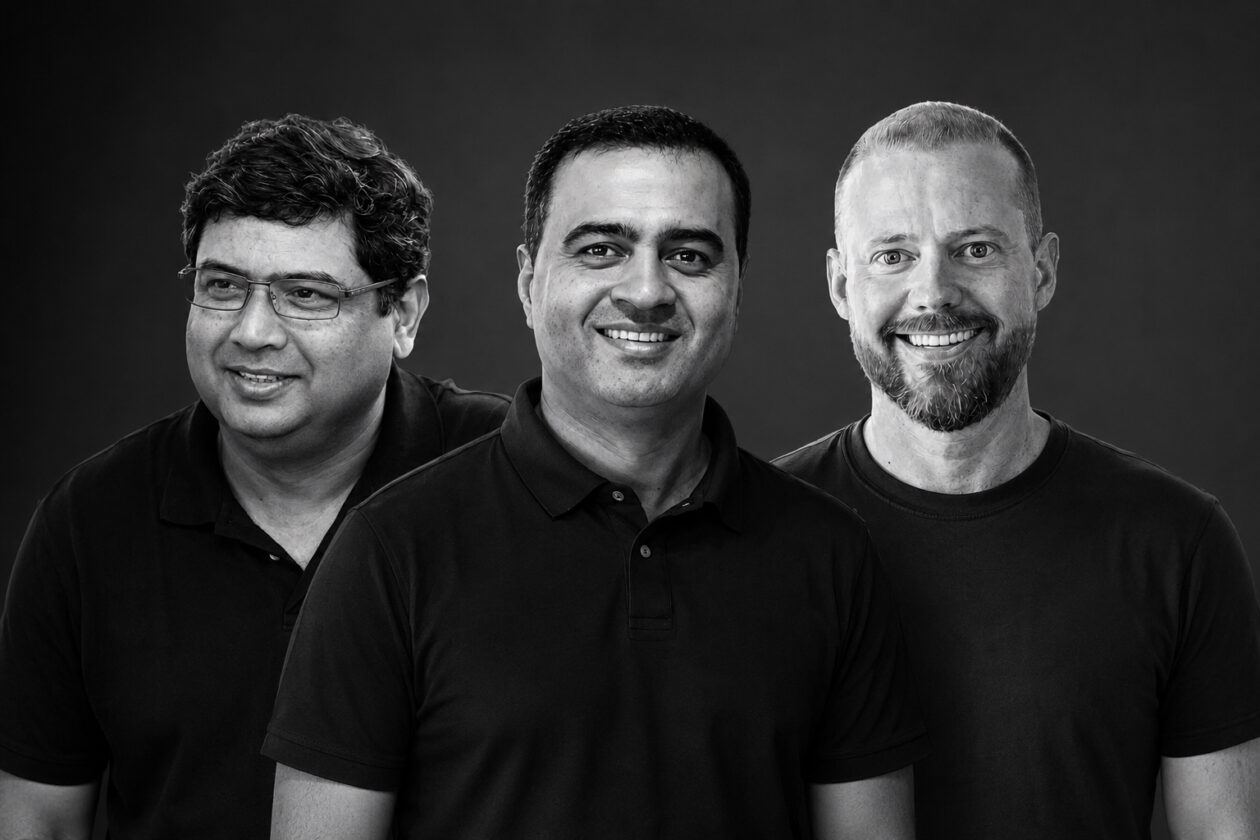
Rivvun AI, which today is announcing a $7.55 million oversubscribed seed funding round from Sitara Capital and 3one4 Capital, is led by CEO Anand Veerkar and Chief Product Officer Niranjan Umarane.
Both spent the last decade as executives at Icertis, helping scale the contract intelligence platform to more than $350 million in annual recurring revenue. They are joined at Rivvun by co-founder and serial entrepreneur Patrick Linton.
Rivvun is tackling what the founders describe as an “execution gap,” a costly friction point between what a corporation contractually negotiates and what actually hits its books.
“The enterprise has spent a decade being told AI will transform how it operates,” said Veerkar. “What it needed was AI that creates direct, measurable impact on the P&L — not productivity narratives, not dashboards. Rivvun closes the gap between what was agreed and what was collected, recovering money that goes straight to the bottom line.”
Rather than building a conversational chatbot, a copilot or another analytics dashboard, Rivvun has built what it terms an “autonomous value execution layer.”
Rivvun’s agents sit on top of a company’s internal ERP, CRM and procurement databases — like SAP, Ariba and Salesforce — to catch commercial discrepancies and write corrective actions back into those systems.
It dubs these AI agents “stewards” (focused on money going out to manage invoices, suppliers, and leakage) and “sentinels” (focused on money coming in to track renewals and customer behavior).
It has also developed what it calls a “margin bridge”: a financial module that matches what you sell against what you spend to protect profit margins.
According to the company, these agents continuously monitor commercial events across corporate systems, apply governed playbooks and write corrective actions directly back into the systems while preserving an audit trail.
To address specific industries, Rivvun is building vertical-specific logic tailored to sectors like pharmaceuticals, healthcare, banking and retail.
For example, the company said that a large manufacturing company with $3 billion in spend may experience leakage across its disconnected systems, creating an invisible problem that financial dashboards and consultants may miss. In that scenario, Rivvun’s agents could run continuously across the data sources, recovering an estimated $110 million to $138 million annually.
The company is targeting Chief Financial Officers, Chief Revenue Officers and other C-level executives who oversee large budgets, noting that there’s no “rip-and-replace” as the agents tie directly into existing software systems.
Citing research from McKinsey, Rivvun said that companies lost an estimated 3 to 4 percent of their total external spend because of inefficiencies and non-compliance. That’s about $2 trillion when factored across the Fortune 2000 companies, which Rivvun said is money that basically “disappears in the gap between what was contractually committed and what enterprise systems were ever built to collect.”
In a statement, Anurag Ramdasan of 3one4 Capital said Rivvun is one of the strongest teams they’ve encountered.
“They are not pitching a horizontal AI solution and hoping for enterprises to extract value out of it,” Ramdasan said. “They are delivering ROI on AI for large enterprises from the first day of implementation, which is very critical for enterprise AI adoption.”
Similar to how Icertis grew over the past decade, Rivvun is taking a dual approach to its operations. It is headquartered in Seattle, with engineering operations in Pune, India. It employs 15 people, with plans to double this year.
The company plans to use the new seed capital to fund engineering, customer pilots and expand its enterprise global sales operations.
At WWDC 2026, Apple unveiled iOS 27, the latest version of its iPhone software, packed with amazing AI-driven upgrades. From a new Siri experience to improved Photos editor tools and better system performance, many new capabilities have been introduced in the OS that will make life easier for users. Testing of iOS 27 on developers has already started, before its final release. Apple will roll out a public beta next month, in July, followed by a formal launch in the fall. Here are the nine best features coming to your iPhone.

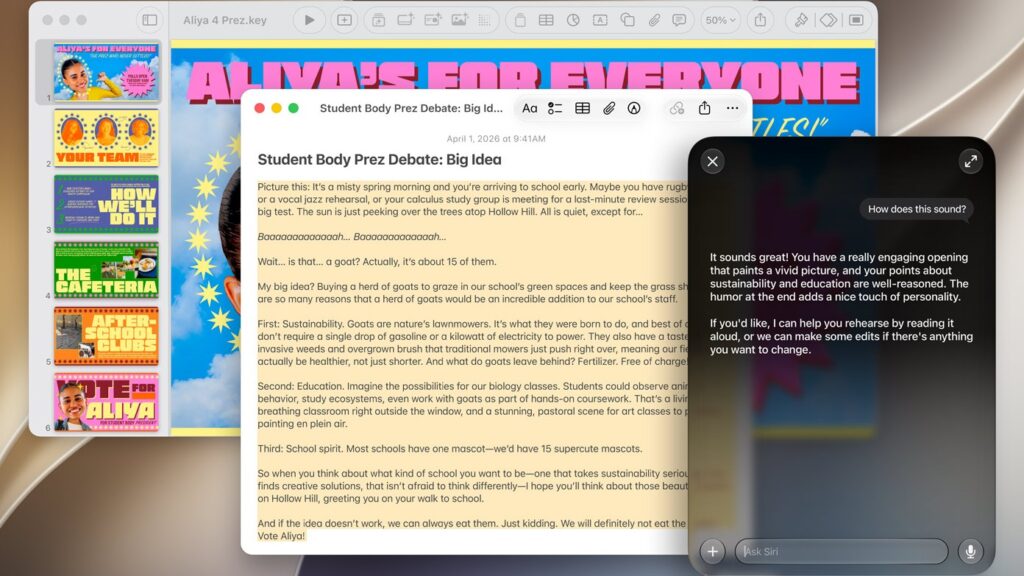
Siri AI by Apple has been included in iOS 27 as one of its most exciting innovations. The technology has been redesigned to make Siri smarter, more proactive, and better able to help users accomplish their tasks in real life. Because Siri now understands natural language, people can speak freely without using any commands.
The assistant can use information from apps such as Messages, Mail, Music, Phone, and Calendar to provide personalized responses to users. With Siri, users can ask questions about information in past messages. Because Siri can remember previous interactions, it can maintain a conversation.
Making the iPhone user experience smarter is one of the key purposes of iOS 27. Currently, Apple Intelligence operates on several types of information: voice messages, text, images, and app information. In this way, the system will be able to identify users’ needs and assist them.
The improvements also enhance Siri’s performance, with better language comprehension and greater accuracy when transcribing the user’s voice. Users can personalize certain aspects of the Siri experience and converse more naturally with the assistant.

This is the first time that Apple has introduced an upgrade to the Liquid Glass design with iOS 27. Apple has concentrated on practicality by improving readability and visual harmony. Higher contrast will enable people to see information more easily, either when they are using applications or accessing settings.
Apple has also updated app icons with sharper details and improved visual depth. Customization is now possible, allowing the user to choose whether the user interface will be clearer or tinted. This has been done to make the viewing experience more enjoyable.
Performance is an important aspect of iOS 27 because Apple has made many adjustments that can enhance the system’s overall performance. Specifically, the operating system has been optimized in some key areas to allow users’ applications and services to load faster.
Apps can be opened 30% faster, and photographs open much more rapidly, particularly when dealing with large photo libraries. The speed at which documents can be shared using AirDrop is also much greater than previously. Furthermore, Apple has been able to optimize system process efficiency in older iPhones, too.

A number of enhancements have been made to Visual Intelligence in iOS 27 to improve users’ experience with what their iPhone camera can offer. New functions have been integrated into Siri and can deliver helpful suggestions based on visual input from the camera.
This would allow users to learn about the nutritional details of any food item and gain insight into their eating habits. Another great feature is that it can scan information from any poster or brochure and automatically add events to the calendar according to those details.
With iOS 27, Apple is focusing on delivering fast, reliable communication by implementing improved network management capabilities. As a result of the latest updates, Apple will be able to switch between Wi-Fi and cellular data based on signal strength, and vice versa.
It also helps keep the conversation going, even under unfavorable network conditions. Texts can be sent instantly, without waiting for other content, such as photographs or video clips, to finish uploading. It also allows users to share images in full resolution in Shared Albums.
One of the biggest additions is the ability to organize tabs and web pages by topic. This makes it easier to manage multiple websites and quickly return to important content later. Safari also introduces a new monitoring feature that can track changes on specific web pages. Users can receive alerts when a sold-out product becomes available again or when concert tickets go on sale. Apple says these tools work while protecting user privacy, as much of the processing happens directly on the device.

The Shortcuts application becomes much more approachable with iOS 27 because it incorporates Siri’s power into its workflow. It is now possible to explain the process to Siri verbally, which will then create the automation itself, eliminating the need for complex settings.
Another way the firm is working on strengthening password protection is by making changes to the Passwords app. The app will be able to notify users of a breach and make it easy for them to change passwords. This reduces the amount of work that would otherwise be done manually.
The Home app receives new features in iOS 27 that make managing smart home devices more convenient. Apple is adding support for higher-resolution security camera recordings, giving users clearer footage when reviewing events. The app can also automatically identify and save important clips, making them easier to find later.
Apple is also enhancing notifications by offering smarter updates about activities in the home. On the other hand, for AirPods customers, the ability to adjust sound settings has been improved by the addition of an equalizer button.
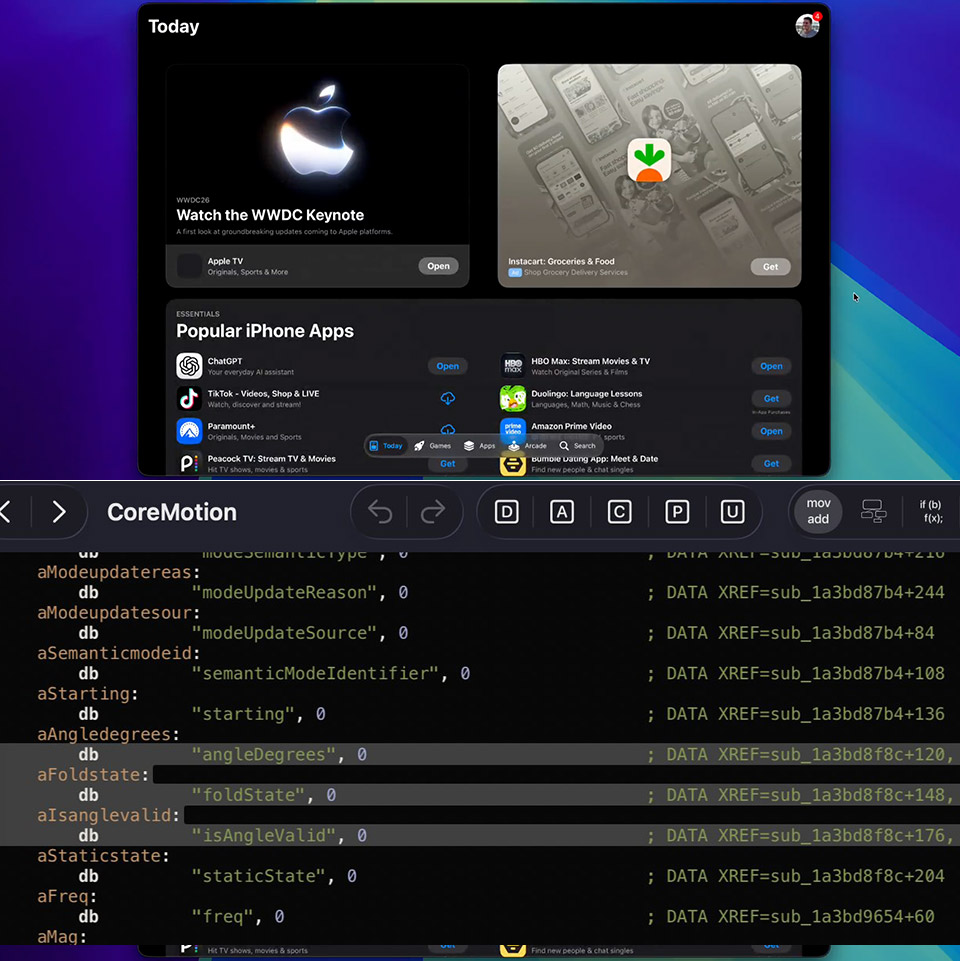
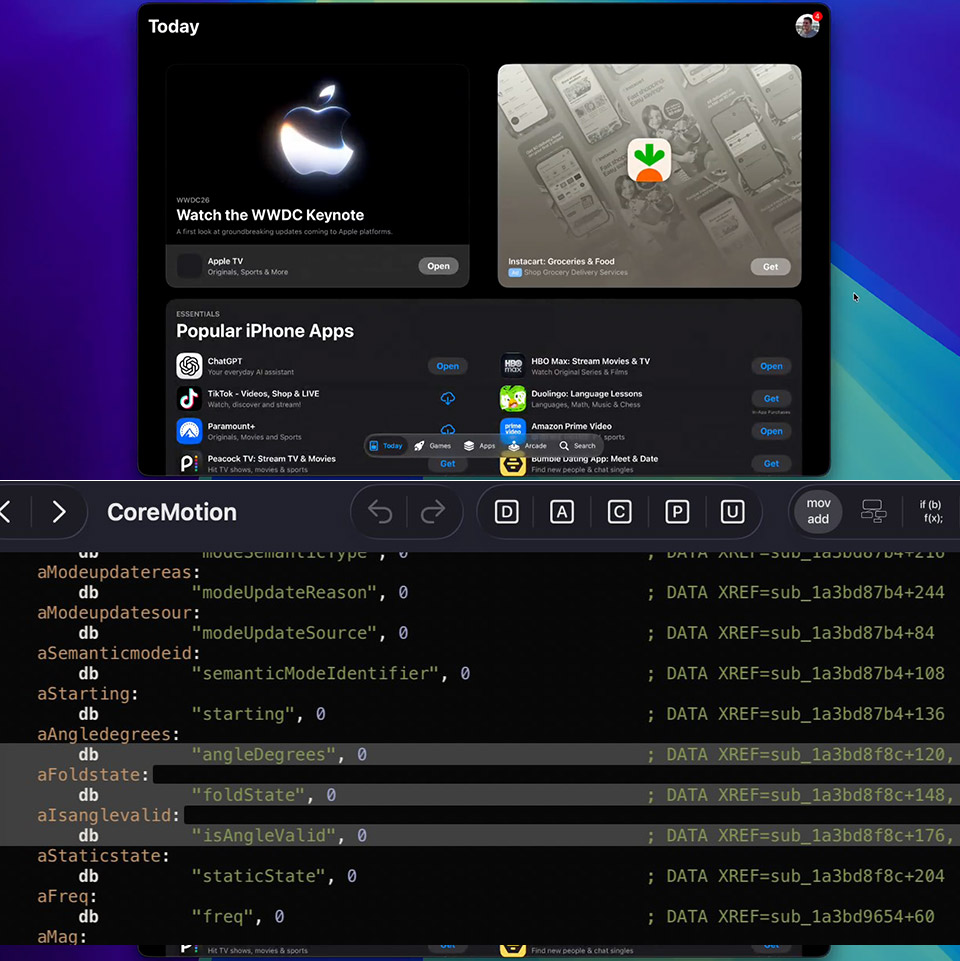
Photo credit: Sam Henri Gold
Exploration of the iOS 27 developer beta has turned up several strings of code that seem built specifically for a folding iPhone. These references include terms for tracking foldState along with the mechanical angle of a hinge measured in degrees. Such details would allow the operating system to understand exactly how the device is positioned at any given time, potentially unlocking new ways for apps to respond when the screens sit at different angles.
The latest iPhone beta has a new feature that reveals the total number of built-in displays. Most iPhones just have one screen, so this isn’t especially useful. However, analysts say it was not included in the most recent version, iOS 26, indicating that Apple is undoubtedly developing the software for the hardware. Just a few days ago, at the Worldwide Developers Conference, Apple developers were debating some significant modifications targeted at allowing apps to easily handle a broad range of screen sizes and shapes, which is exactly what you’d need for a phone that can fold out into a larger tablet-style display.
Sale

That type of R&D is completely compatible with the concept of a folding iPhone, which many people have long speculated about, because it would require flexible display technology and a highly robust hinge mechanism to function correctly. Mark Gurman of Bloomberg investigated the beta files and determined that developers are working on the equipment we’ve all been waiting for. Apple has faced a lot of criticism for how they will make this work. The most recent beta files still don’t have all of the answers about size, pricing, or features, but they do give us some tangible information on which to base our expectations. Some have dubbed this unknown gadget the iPhone Ultra, although Apple has yet to reveal its official name. Expect them to provide further specifics later this year, when they generally announce new iPhones and the latest version of iOS.
Of course, there are still a few engineering challenges to overcome, such as how to make the item thin enough to carry around all day while also being robust enough to withstand repeated folding. Early predictions put this item’s beginning price at well above $2,000. Even yet, the fact that the capabilities are now in beta indicates that the project is likely considerably further along than we previously thought. As further testing is performed, we may gain a better understanding of what Apple is actually planning here.
[Source]

At its annual Worldwide Developers Conference (WWDC), Apple unveiled plenty of software upgrades that are set to launch across its devices later this year.
One of those upgrades centers around Visual Intelligence, the Apple Intelligence-powered tool that allows users to “quickly learn more” about what’s in front of them. But what is Visual Intelligence and how does it work? Plus, what are the updates that we can expect once iOS, iPadOS, MacOS and VisionOS 27 rolls out in the coming months?
We explain everything you need to know about Apple’s Visual Intelligence below. For more WWDC26 information, visit our round-up of the iOS 27 features and our Image Playground guide too.
Visual Intelligence is an Apple Intelligence tool that can be found on compatible iPhones, iPads, Macs and the Vision Pro – though we’ll explain the specific models later.
Visual Intelligence uses AI to scan an image (whether it’s one on screen or captured via the camera) and pulls up relevant information according to what it is. For example, you could take a photo of a dog to find out its breed, or hold your camera up to a gig poster to add the event to your calendar.
It’s essentially Apple’s answer to Google Lens and Circle to Search.

While Visual Intelligence is available on compatible iPhones at the time of writing, Apple is planning on expanding its compatibility across its ecosystem with the rollout of OS 27. Once OS 27 launches, Visual Intelligence will then be integrated into the Camera app. Simply tap the shutter button to enable the new Siri AI to see what you see and receive a response.
In addition, Siri AI will suggest relevant actions based on what’s in front of you. For example, if you point your camera at a plate of food, Siri can provide you with nutritional information. Or you can point your camera at a bill and split the costs with a group of friends.
Visual Intelligence isn’t just on iPhones either. Mac users can bring up Visual Intelligence with a dedicated keyboard shortcut which will then allow you to select something on display and ask Siri questions about it. Siri can also recognise what’s been selected and provide relevant actions too.

iPad users won’t miss out on the fun, as Visual Intelligence is also integrated into the screenshot experience. That means you can simply take a screenshot of something and Visual Intelligence will provide you with relevant responses.
Finally, Visual Intelligence is also coming to VisionOS. When the update rolls out, Vision Pro users will be able to ask about things, simply by looking at them.

Regardless of what you use Visual Intelligence for, all images captured will be saved privately in the Siri app.
At the time of writing, Visual Intelligence is currently reserved for iPhones that support Apple Intelligence, which are the complete iPhone 17 and iPhone 16 series, plus the iPhone 15 Pro and iPhone 15 Pro Max.
However, Visual Intelligence is rolling out to more devices, including the Apple Vision Pro and M-series of Macs and iPads.
Yes, Visual Intelligence is available in the UK.
Microsoft warned customers on Tuesday that they may have issues installing the latest monthly updates on some Windows devices that were upgraded to Windows 11 24H2 or 25H2.
On affected systems, users will see 0x80073712 or 0x800f0993 errors when trying to install the June 2026 cumulative updates.
“A small percentage of devices running Windows 10, versions 22H2 and 21H2, or Windows 11, version 23H2, that were then upgraded to Windows 11, version 24H2 or 25H2, might fail to install the latest cumulative update,” Microsoft said in a service alert first spotted by Microsoft MVP Susan Bradley.

“After encountering this issue, devices cannot install monthly Windows updates. When you go to Settings > Windows Update > Update history, you might see that Windows updates fail with error 0x80073712/0x800f0993.”
When checking the Windows Update log files on impacted devices, users will see error 0x800f0993 (PSFX_E_REBASE_HYDRATION_CANDIDATES_MISSING) or 0x80073712 (ERROR_SXS_COMPONENT_STORE_CORRUPT) triggered when trying to install the latest updates.
According to Microsoft, a fix for this known issue will roll out to all unmanaged enterprise devices and personal PCs (Home edition) following a system restart.
“No new devices in these categories should be affected by this issue starting from May 19, 2026, 6:30 p.m. PT. Restarting the device might allow the resolution to apply sooner. No other action is required beyond a device restart,” Microsoft added.
For all other affected devices, Microsoft has released the following Windows updates as part of its June 2026 Patch Tuesday, which should install automatically during upgrades to Windows 11 to prevent this issue from occurring:
However, as Microsoft further explained, this issue will not be addressed on affected systems that have already been upgraded to Windows 11, version 24H2 or 25H2.
On these devices, users should remove the affected package to unblock update installation by running the following command in an elevated Command Prompt:
dism /online /remove-package /packagename:Package_for_RollupFix~31bf3856ad364e35~amd64~~26100.1742.1.10
If the above mitigation does not fix the update issue, users are advised to perform a Windows 11 in-place upgrade.
Over the past several months, Microsoft has fixed multiple issues affecting the Windows update installation process.
For instance, in April, it released an out-of-band update to fix the March 2026 non-security preview update (KB5079391) due to a known issue that also triggered 0x80073712 errors on Windows 11 during deployment.
One month later, Microsoft warned customers that they may encounter Windows Update failures after installing the January 2026 optional non-security preview updates in restricted network environments.
More recently, it resolved another known issue causing failures and 0x800f0922 errors when installing the May 2026 Windows 11 security update (KB5089549).

Security teams log 54% of successful attacks and alert on just 14%. The rest move through your environment unseen.
The Picus whitepaper shows how breach and attack simulation tests your SIEM and EDR rules so threats stop slipping by detection.


Dunbar Pharma’s Leah Fletcher discusses Ireland’s potential in the cannabinoid therapy landscape and how breaking the traditional is a critical step towards advancement.
Leah Fletcher is the co-founder and CEO of Irish biopharmaceutical Dunbar Pharma, which specialises in researching, developing and manufacturing EU-GMP-certified, plant-based active pharmaceutical ingredients.
A fan of the non-traditional route, Fletcher first began her career as a teacher in an Irish national school and then a school in British Columbia, Canada before taking a “huge leap from classroom to cleanroom”.
Her time teaching had instilled within her a deep interest in the human capacity to learn, adapt and navigate complexity, as well as how policy inevitably shapes society when there is a widening gap between what exists and what people are in need of.
She told SiliconRepublic.com, “My interest in cannabinoid medicines began while I was living in Canada around the time cannabis was legalised there. I was fascinated by how quickly the conversation around the plant was changing and how emotional, political and commercial it was. At the same time, I was aware of campaigners in Ireland, many of them mothers, lobbying for access to cannabinoid therapies for their children.”
As a new mother herself, this change in how the plant was being viewed and its potential made a significant impact and she began to think more often about the emerging gap between patient needs, the room for public debate and safe, regulated access.
Fletcher said, “I became interested in how cannabinoids could be moved away from uncertainty and placed into a pharmaceutical framework: evidence, quality, consistency, compliance and patient safety. I saw pharmaceutical systems not as a barrier, but as a solution.”
But, as is often the case with anything worth doing correctly, it wasn’t all plain sailing for Fletcher as she began this new venture.
“It would not be fair to paint a rosy picture. This has likely been one of the toughest professional journeys I will ever experience. One of the biggest obstacles has been the personal sacrifice of building something from the ground up,” said Fletcher.
She noted the importance of finding balance in entrepreneurship, but admitted that balance isn’t always possible and when you are missing family events, weddings and birthdays because of work in a lab, a conference, or travel, there is often a lack of honest, open conversation on the topic.
She said, “When you are building something you believe can improve people’s lives, there is a window where you have to give your whole self to it. That does not mean it is easy or sustainable forever, but in start-up mode, you have to be ready for whatever moves the project forward. It gets easier once the biggest hurdles are complete and a strong team is in place, but the early years require enormous resilience.”
Coming from a non-traditional, non-pharma background also presented a significant challenge for Fletcher as she found herself in a technical, regulated industry that required her to learn new language, systems and standards and to meet expectations. She explained the easiest way to navigate such a change is to accept and expect that you are likely the “least experienced person in the room”.
But the highlights for Fletcher have been deeply personal as well as professional.
She said, “One of the greatest privileges has been building things from scratch with my husband as co-founder and my father as facilities manager. It has been a family affair and something my young son has witnessed as he grows up. When he was a toddler, he used to say, ‘Mama makes magic potions’. There is no magic, but I love that, through his eyes, the work looked magical.”
Describing Ireland’s cannabinoid therapy landscape as “cautious and tightly controlled”, Fletcher explained that while access to therapies does exist it is limited and often focused on specific, treatment-resistant conditions.
“That reflects where we are as a country,” she said. “There is interest, but also a need for more clinical confidence, education and structured pathways. Ireland’s potential is much bigger than its domestic market. We already have a global reputation in pharmaceutical manufacturing, compliance, quality and life sciences talent.
“Those strengths matter because the future of cannabinoid medicines will be built on pharmaceutical credibility. Ireland also has world-class academic work happening around cannabinoid science and applications, including research activity at University of Galway, Trinity College Dublin and others. The knowledge base is here. The pharmaceutical infrastructure is here. The manufacturing discipline is here. The question is whether we connect those strengths well enough to create more home-grown pharmaceutical companies.”
She explained, businesses receive significant support from committed Irish investors and agencies such as Enterprise Ireland, but added, if Ireland wants more indigenous pharmaceutical companies to be able to compete globally, then the country is in need of stronger, flexible funding options for scale-up companies in regulated sectors.
Fletcher said, “Life sciences companies do not scale like software companies. Timelines are longer, regulation is heavier, capital requirements are different and risk is more complex.
“A company may need to fund licensing, controlled-drug permissions, facility build-out, cleanrooms, validation, stability programmes, specialist equipment and skilled teams before meaningful commercial traction is possible. That requires patient capital and policy structures that understand the sector.
“For cannabinoid therapies, Ireland could become a specialist hub for high-quality cannabinoid APIs, formulation, analytical development and regulated international supply. There could be many more companies like Dunbar Pharma contributing to global medicine, local employment and the Irish economy. Sometimes the difference is not talent or ambition; it is whether funding and policy supports are designed for the realities of building regulated pharma companies from the ground up.”
And it isn’t just the economy that would benefit from additional support in building up healthcare-based start-ups. Fletcher stated that the creation and availability of alternative therapies for patients is critical, but implementation and access must be carried out responsibly. Especially in an environment where many people are living with conditions that are difficult to treat and manage.
She said, “Innovation matters because patients deserve continued effort, not resignation. Alternative therapies must be held to high standards. Hope is powerful, but it has to be protected by evidence, quality and ethics. In cannabinoid medicine, public perception can be polarised, so innovators must avoid overpromising and build systems clinicians, pharmacists and patients can trust.
“It is also not enough to simply have the medicine. Access has to be designed into the system. Across Europe, we are seeing movement towards more practical access models: telemedicine, better private coverage, fewer barriers to specialist consultations, pharmacist-led models and more sensible scheduling of controlled drugs where appropriate.”
She is firmly of the belief that Ireland’s innovators and entrepreneurs have the skill needed to make an impact in the space of cannabinoid therapies, it just requires a dose of bravery, industry know-how and support.
Fletcher said, “Ireland has the talent, discipline and scientific credibility to build serious companies in complex technical sectors. We do not always need innovation to come from large multinationals or major global hubs. Smaller Irish teams can do ambitious, globally relevant work too.”
Don’t miss out on the knowledge you need to succeed. Sign up for the Daily Brief, Silicon Republic’s digest of need-to-know sci-tech news.
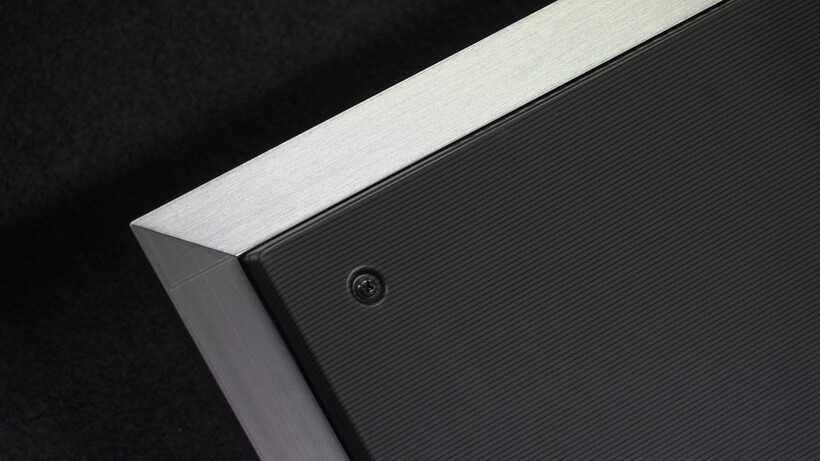
LG’s best OLED yet? The OLED65G6 delivers an excellent picture performance across a range of sources. There are a few flaws and aspects I’m not fond of, but this is a strong start to LG’s 2026 TV line-up
Bright, colourful, accurate-looking HDR picture
Impressive upscaling
Anti-reflection panel
Robust gaming performance
Wealth of entertainment options
Sound system is just ‘fine’
Apps ringfenced webOS sign-up
Dolby Vision x Filmmaker mode doesn’t seem to ‘adapt’
Anti-glare panel produces purple colour
Game mode is a little too bright and sounds a too sharp
SQUIRREL_PLAYLIST_10208579
Hyper Radiant Colour Tech
2nd Gen panel of the Primary RGB OLED panel
LG Shield Security
Secures data, offers multi-year updates
Dolby Atmos FlexConnect
Supports wireless immersive sound
Another year, another G-series OLED from LG. But don’t assume that this is another rehash because there have been changes under the hood.
LG has bet big on OLED with only Samsung as its main challenger, while others have placed their chips on alternatives such as Mini LED and RGB TVs.
The reasoning behind Mini LED/RGB is that they offer higher brightness, wider colour range and better performance in bright rooms. LG disagrees.
And with the OLED G6, it’s taking on the naysayers to disprove the notion that OLED may be inferior.
This is LG’s brightest OLED yet, and more than a decade after it launched its first OLED, it wants customers to know that OLED is still the best in the business.
So the gloves are off (again). Can LG’s G6 OLED knock its RGB rivals out, or is this going to go the distance?
There haven’t really been any significant changes to LG’s design of the G6-series in years – ‘if it ain’t broke, don’t fix it’.
The stand takes about four minutes to assemble, but it seems to be the same as the G5 and G4 stands. Of course, if you buy the wall-mounted version, you just deal with hanging it up on your preferred surface. Connections are side- and downward-facing for feeding sources to the TV.

The stand is adjustable. You can hang it in its low orientation, or if you want to put a soundbar below, put the stand into its high position.
The OLED65G6 features LG’s Vanta Black Anti-Reflective coating to reduce reflections and maintain black levels in a bright room. Black levels remain strong, but I don’t find the G6 necessarily as good as Samsung’s glare-free OLEDs at mitigating glare and reflections. That said, the S95H does raise blacks slightly in a dark room but the OLED G6’s panel does create a purple tinge to reflections.
Wide angles are very strong, and while brightness and colour saturation do tail off, you’d have to be very wide and far to notice this.

LG’s webOS interface still fundamentally looks like the webOS it’s been for the last few years. There’s no room for Freely but all the UK catch-up and on-demand apps are provided, side-by-side with the big global apps such as Disney+, Netflix and Apple TV.
Accessing these apps requires an LG account. In previous years, this was ring-fenced to some but not all apps; now it’s required for all apps. It’s not a change most will like unless they already have an LG account.

You get five years of updates with LG’s Re:New program that guarantees four major software updates.
The interface itself is swift and responsive. Scrolling down to the bottom doesn’t take long, the interface free from clutter or meaningless diversions. There are ads, of course, but I don’t find them intrusive. Flick to the left and you’ll be received by LG’s Information Board, which offers weather updates, Google Calendar and any smart tech in your Home Hub.

Given this is the G-Series TV (which once upon a time stood for Gallery), there is LG’s Gallery+ app, where you turn the G6 into a picture painting (not to be confused with LG’s Gallery TV, which can also do the same thing). A subscription is required, but there’s free content alongside AI-generated… things.
With the LG Sports app, you can keep track of your favourite teams across a range of sports, as well as access content via Prime Video, YouTube, Apple TV, and DAZN. Currently, there’s a spotlight on the World Soccer Festival (you can guess what that is).

LG still pushes the G-Series as a gaming TV despite its more lifestyle focus, and I measured input lag remains quick at 12.9ms. All four HDMI 2.1 inputs support ALLM, VRR and 4K/120Hz.
PC gamers get a boosted 165Hz refresh rate with both AMD FreeSync Premium and Nvidia G-Sync included. There’s also Dolby Vision Gaming (4K/120Hz) and the HGIG standard, which covers off most of the gaming HDR formats aside from HDR10+ Gaming.

For further tweaking, press the Settings button when the TV is in its game mode, and the Game Optimiser pop-up allows for deeper customisation, including adjusting black levels or switching the Game Genre setting to optimise for specific game types.
Head to LG’s gaming portal and that has cloud gaming options in GeForce NOW (which supports 4K/120Hz in the cloud), Amazon Luna, Xbox app, Utomik, and Blacknut, while Twitch broadcasting is built in too.
If this feels like Déjà vu, then that’s because nothing much has changed on the connectivity front. There are four HDMI 2.1 inputs, one of which supports eARC for a sound system. Other HDMI 2.1 features include QFT to reduce latency during gaming and QMS, which eliminates black screens when switching to other HDMI sources.
The rest covers a headphone output, digital optical output, two RF aerials for broadcasts, Ethernet, three USB 2.0 inputs, and a CI+ 1.4 common interface slot.

That’s virtually the same as it’s been for the last few years, which is fine, though the Hisense UR9 drops a HDMI input for a DisplayPort, which is different from the accepted norm.
Wi-Fi 6E support has Google Cast, AirPlay 2, and WiSA (for audio) under its umbrella, while there’s also Bluetooth 5.3 streaming.
This is the second year of LG Display’s Primary RGB Tandem panels, and the G6 is upping brightness further.
This year, it boasts what LG calls its Hyper Radiant Colour Tech, and along with the Alpha 11 AI Processor Gen3, it says it can boost peak brightness by 3.9 times.
That sounds like the usual marketing mumbo jumbo that doesn’t mean much to most people. I wasn’t able to record the figures of the OLED65G5 as I didn’t have the necessary equipment, but now I do and the OLED65G6 is one of the brightest OLEDs I’ve tested. In its Standard mode it registers the following:
| HDR Window (%) | Nits |
| 2 | 2668 |
| 5 | 2499 |
| 10 | 2458 |
| 100 | 400 |
The OLED65G6 can go even brighter, registering above 3000 nits in Filmmaker and Vivid modes, while very briefly reaching 4000 nits in the latter. If you’re of the opinion that OLEDs aren’t bright enough to watch during the day, the OLED G6 rebuffs that. And I suspect that when the G7 turns up, it’ll be even brighter.
HDR support covers HDR10, HLG, and Dolby Vision, and LG says there’s Dolby Vision x ambient Filmmaker mode, though as I’ll get to later, I’m not entirely convinced this is the case.
The 4.2-channel system has 60W of power at its disposal. On paper, it’s the same as the OLED65G5 model, but LG has re-tuned it to sound warmer and offer more bass. As always, we’ll hear whether that’s the case.

LG’s α11 AI Sound Pro feature claims to up-mix Dolby Atmos sound to 11.1.2 virtual channels, and I’d recommend using it – it’s a much more expansive sound when enabled.
WOW Orchestra combines the TV’s speakers with an LG soundbar to create a bigger sound, but the OLED65G6 also supports Dolby Atmos FlexConnect and will work with the Sound Suite speaker system LG launched in 2026.
The G6 features AI experiences powered by Google Gemini and Microsoft Copilot, which you can mostly (if not completely) avoid. LG’s Shield security system protects your data through the cloud and in real-time.
There’s been a lot of kerfuffle surrounding the launch of LG’s new 2026 TVs. Reviewers have mentioned different issues, different firmware updates – it’s all been a slightly messy rollout.
On my part, the G6 OLED I received seemed to have firmware dating back to 2024, which I couldn’t believe and thought I’d misread, but I updated the TV anyway. I’ve not experienced the issues some have, but there is one issue I’d like to point out.
I don’t think the Dolby Vision x Filmmaker mode is working properly.
On its website, LG notes it is the ‘ambient’ version of Filmmaker mode, but this is either not true, or it’s not working. Dolby Vision x Filmmaker mode is dark – and it’s meant to be like that as it’s tuned for watching with the lights off. The problem is that when the TV asks you to watch in this mode, it doesn’t compensate for ambient light. In a bright room, it’s so dark that detail is missing. I’ve turned on the AI Brightness mode in the settings, and that’s had zero effect.
Dolby x Filmmaker
Dolby Vision Home Cinema
Whether it was night-time scenes in Civil War, Dune or Sinners; detail is lost to the darkness in a bright room. Switching to Dolby Vision Home Cinema fixed this, but every time the LG G6 OLED receives a Dolby Vision signal, it’ll ask to watch in Filmmaker mode. My advice is to decline unless you’re watching in a dark room.
Aside from that, the LG OLED65G6 looks terrific in virtually all its picture modes. It’s not a massive increase in a real-world sense from the G5, but it is better.
Colours are rich, punchy, varied, but also seem accurate out of the box. Compared to a Hisense UR9 sat alongside it for the majority of testing, colours, shades and tones always seem to strike a better expression on the LG, with a more convincing performance.
Sharpness and detail are excellent; the OLED65G6 wrings every last bit of detail from the dank corridors and rusty surfaces of the Romulus station in Alien: Romulus; better than the Hisense UR9, which is softer, not as sharp and not as defined.

Where the LG loses points is with dark detail, which, while good across the films I demo on the OLED65G6, there are instances where black levels are a little impenetrable. But overall, black levels are rich and rock solid. There’s not a raised black in sight, even in a brightly lit test room. The pixel-perfect control of black levels means OLED TVs still reign over backlit LCD TVs.
In Disney’s Soul when Joe falls into The Great Beyond, highlights are rendered brightly, the sense of contrast from the TV is greater than the Hisense UR9, the pixel-perfect dimming also means it’s more precise with the starfield, picking out the varying brightness of the stars clearly and sharply.

It’s even more notable with Interstellar as they travel through the wormhole into another galaxy. As the camera pans past stars, the LG picks up more stars – and therefore more detail – than is visible on the Hisense.
With HDR10 content, the LG can feature white tones that are a little less bright – especially the ‘Construct’ scene in The Matrix Resurrections where Neo wakes up in a white room. Full-screen brightness is an area where Mini LEDs still have the advantage.
The Vivid mode features colours that are punchy, pure and rich – a boost in colour volume over the Home Cinema mode with a wider range of colours, and a performance that’s more balanced than it has been in recent years.

Brightness is excellent, contrast is terrific, detail levels are excellent and motion is handled with few issues. The Vivid mode boosts brightness and colours in all the right places, and it does so without adding distracting noise or garish colours. There are moments where it is oversaturated, but this the best Vivid mode I’ve seen on an LG TV.
A brief note on the Game Optimiser mode. It’s a little too bright to my eyes, and seems to introduce some clipping (loss of detail) with bright sources.
While the LG G6 OLED handles HDR content impressively well, most tend to watch in HD rather than 4K. It’s a good thing the OLED65G6 continues its excellent performance in this area.
With a Blu-ray of Mad Max: Fury Road, colours strike the right look (the red-orange of the ‘wasteland’, the blue skies, the white tones of the clouds). The LG uncovers more detail than the Hisense UR9 with a clearer sense of sharpness and finer detail visible. The LG retrieves more detail in the characters’ clothing, revealing more of the wear and tear they’ve been through.

The same is true with a Blu-ray of Pacific Rim – colours are consistently better on the LG than on the Hisense, complexions feature more colour and life, and the dark detail performance is the opposite of its HDR picture, offering more insight into dark scenes than the Hisense.
Colours have more punch, solidity and range. It’s a very pleasing HD image.
With a DVD of There Will Be Blood, the LG handles noise well, although it doesn’t eliminate all of it; it balances noise reduction without affecting film grain better than the Hisense.

Sharpness and detail are good enough for a DVD source, and I noticed the LG picked out more detail with Plainview’s beard than the Hisense UR9 did. There’s a touch more definition on the LG, colours – again – seem more accurate, with a richer and punchier feel for colours.
LG’s taken the G6 OLED in a different direction with its sound, responding to customer feedback.
The issues ‘fixed’ with the G6 aren’t the ones I’d have gone for. While the G5 sported a thinner sound, it was clear and sharp, especially with the highs. The G6 carries more bass and a warmer tone, but the highs have dulled and it’s not as detailed.
The built-in system isn’t very loud at my usual listening levels, and has to be pushed to close to 80 to have an impact. You won’t want to listen to stereo programming with AI Sound Pro as the processing can make it sound harsh. If it’s a Dolby Atmos soundtrack, enable AI Sound Pro; otherwise, use Standard mode for everything else.

For stereo content, the Standard mode is a good choice. Watching The Capture on iPlayer, and it’s clear, with a big, broad soundstage, good bass, and decent dynamism.
Switch to Atmos in AI Sound Pro, and there’s a warmer tone with richer bass and a smoother performance. Despite the emphasis on more bass, the LG can sound a bit tubby at times –in Blade Runner 2049, the lows can sound muddled and soft, and the highs aren’t the sharpest.

With Civil War, the LG isn’t the most energetic, coming across as tepid and quiet at half volume. Pump the volume up and there’s slight distortion but regardless the action scenes sound sluggish. It’s fine but not exciting.
Dialogue is clear and, for the most part, natural, though there have been times when the warmth of the sound renders male voices a little bassy. Watching series two of Daredevil: Born Again, and there are moments where the tone of voices isn’t quite right.
Nevertheless, sound is spread across the screen, and at times you can hear effects pushed out from the frame, widening the soundstage even further.
When playing games on the PS5, the sound system goes for a sharper response, and I find it too crisp and sharp in Game Optimiser mode.
SQUIRREL_PLAYLIST_10208579
It’s too soon to say whether this is the best OLED of 2026, but the LG G6 OLED delivers impressive picture across a range of sources
If the Filmmaker mode is meant to be adaptive, changing its performance with regards to the amount of light in a room, then it’s not working properly.
The G6 OLED is another excellent effort from LG. The picture quality is brighter, slightly more colourful, punchier, and feels like it’s more accurate.
The Dolby Vision x Filmmaker mode isn’t working as advertised in terms of its ambient function. It’s preferable to play in Dolby Vision Home Cinema in a room with lots of ambient light (if you’re in a dark room, Filmmaker mode is preferred).
Even though LG has given the sound system a retune, it still struggles with volume and is not the most exciting delivery. I also wish LG hadn’t locked all apps behind an account sign-up, either.
But the LG remains great for gaming, and there’s a wealth of entertainment options (if you get past the sign-up). RGB Mini LEDs are brighter, but they don’t offer the same level of contrast and control as far as black levels go. At least not yet.
Is it the best OLED? It depends on what you want. In terms of respecting the source, I’d say it’s the Sony Bravia 8 II. For sheer spectacle and mitigating reflections, it’s the Samsung S95H.
The LG G6 OLED finds itself in between those two, delivering accurate but great-looking HDR images without the slightly raised blacks of Samsung’s S95H.
LG’s best OLED yet? Absolutely, and a contender for one of 2026’s best TVs.
The 65-inch LG G6 OLED TV was tested over a month with real-world use and benchmark tests that included measuring brightness, input lag and using the Spears and Munsil Benchmark UHD disc to test viewing angles and colour accuracy.
At the time of review, the LG G6 OLED is only available in 48, 55, 65, and 77-inch models.
| LG OLED65G6 | |
|---|---|
| Contrast ratio | Infnity |
| Input lag (ms) | 12.9 ms |
| Peak brightness (nits) 5% | 2499 nits |
| Peak brightness (nits) 2% | 2668 nits |
| Peak brightness (nits) 10% | 2458 nits |
| Peak brightness (nits) 100% | 400 nits |
| Set up TV (timed) | 240 Seconds |
| LG OLED65G6 Review | |
|---|---|
| UK RRP | £3099 |
| Manufacturer | LG |
| Screen Size | 65.4 inches |
| Size (Dimensions) | 1441 x 263 x 910 MM |
| Size (Dimensions without stand) | 826 x 1441 x 24.3 MM |
| Weight | 27.3 KG |
| Operating System | webOS |
| Release Date | 2026 |
| Model Number | OLED65G62LW |
| Model Variants | OLED65G66LS |
| Resolution | 3840 x 2160 |
| HDR | Yes |
| Types of HDR | HDR10, HLG, Dolby Vision, Dolby Vision x Filmmaker |
| Refresh Rate TVs | 48 – 165 Hz |
| Ports | Four HDMI 2.1, three USB, ethernet, optical digital out, CI+, two RF tuners |
| HDMI (2.1) | eARC, ALLM, VRR, 4K/165Hz, QFT, QMF |
| Audio (Power output) | 60 W |
| Connectivity | Wi-Fi, Google Cast, AirPlay 2, WiSA, Bluetooth 5.3 |
| Colours | Black |
| Display Technology | OLED |




Weekend Open Thread: Evereve – Corporette.com

Jensen Huang Approves Samsung, SK Hynix, and Micron for NVIDIA (NVDA) HBM4 Memory Supply


Anatomy of the June crypto crash: Fed, Iran, Saylor

The Best Mystery Series of All Time Is Surging on Streaming 30 Years After It Ended


Alexander Zverev wins the French Open to finally earn a 1st Grand Slam title


Suspicious Polyfill login prompts pop up on Toshiba, Muji websites

Senator Cynthia Lummis Calls CLARITY Act the Most Consequential Financial Legislation of This Generation


Microsoft unveils seven homegrown AI models in new bid for ‘long term self-sufficiency’


Microsoft launches MXC, an OS-level sandbox for AI agents, with OpenAI and Nvidia already on board


(VIDEO) Justin Bieber Delivers Surprise Happy Birthday Serenade to Diners at Los Angeles Mexican Restaurant

The Pain Points Taking a Fragile Tech Rally Down a Notch
LBank Surpasses 25 Million Users Worldwide as AFA Partnership Continues to Drive Global Growth


Trump’s AI Ownership Plan Could Benefit Anthropic at OpenAI’s Expense

Meta steals a tactic from Tesla and builds data centers in tents


Von der Leyen’s AI envoy pick draws conflict-of-interest fire

Eli Lilly (LLY) Stock Surges 4% Following Breakthrough Sleep Apnea Trial Results

Bangladesh beat Australia after 20 years in ODIs, register only their second win over six-time world champions | Cricket News


High Stakes for Wembanyama as New York Pushes for 3-0 Lead


Hackers now exploit SolarWinds Serv-U flaw to crash servers


Notion restores access to Anthropic after service disruption



You must be logged in to post a comment Login