After building a couple of internal combustion engines by milling billet aluminium stock and cringing at the absolute waste of material this created, [Camden Bowen] figured he’d give casting metal parts a shot. Of course, the key here is to create the molds for said casting, which is where you got a few options available.
Since DIY is really his thing, he also made his own kiln using cement and perlite, plus a propane burner. For the aluminium material to melt, he bought a stack of aluminium alloy wheels, as these are made of an alloy that’s actually suitable for casting. These were turned into ingots as a first step towards casting the engine parts, which among other things helps to purify the metal.
For the actual casting method he picked lost PLA, meaning the intended shape is 3D printed in PLA, then put into plaster before it’s melted out of the newly minted mold in an oven and subsequently burned out in the kiln. For the plaster [Camden] used regular Plaster of Paris, mixed with sand to give it suitable heat-resistant properties.
After some trial and error, as well as a lot of trouble burning out all the PLA, he got a usable mold and managed to eventually cast an engine cylinder with only a few imperfections. Considering just how convoluted it would have been to mill that part out of billet aluminium, it’s easy to see why commercial manufacturers are casting such parts as well.
Record labels have never met a round-number anniversary they couldn’t monetize. Usually, I can hear the cash register before the lacquer has even been cut. Amy Winehouse’s Back to Black is one of those rare albums where I’m willing to holster most of the cynicism, because twenty years later, there is still nothing ordinary about the record or the woman who made it.
UMR/Island will release the 20th Anniversary Edition of Back to Black on October 23, 2026, almost exactly two decades after the album’s original October 27, 2006 UK release. The new collection will be available as a 3LP clear-vinyl set, 3CD edition and digital deluxe edition, with additional limited 1LP versions including Chalkboard Marble vinyl and a web-store-exclusive Zoetrope pressing. The expanded editions combine the original album with B-sides, demos, previously unreleased material and recordings from Winehouse’s February 8, 2007 performance at Paradiso in Amsterdam.
Why Back to Black Mattered
Calling Back to Black an important record feels almost inadequate at this point. Winehouse was only 23 when it arrived, but she sounded like someone who had already survived several lifetimes. The album took the vocabulary of 1960s girl groups, Motown, R&B, jazz and soul and dragged it into the 21st century without turning any of it into retro cosplay.
Producers Mark Ronson and Salaam Remi understood what they had in front of them and, rather wisely, did not polish away the sharp edges. Six of the album’s 11 songs used members of Sharon Jones & The Dap-Kings, helping give the record its muscular, analog-influenced foundation. Its success also helped bring vintage soul textures back into mainstream pop and opened the door for the wave of British singers that followed.
Advertisement
But production alone does not explain why the album endured. “Rehab,” “You Know I’m No Good,” “Love Is a Losing Game,” “Tears Dry on Their Own” and the title track were brutally personal songs about relationships, infidelity, addiction and heartbreak, delivered by somebody incapable of sounding emotionally detached from any of it.
Winehouse died from alcohol poisoning in July 2011 at the age of 27 after years of very public struggles with addiction. The tabloid circus often threatened to overwhelm the music, which makes returning to Back to Black all the more important. Before the spectacle took over, she was a devastatingly gifted songwriter and singer who created one of the defining albums of the 2000s.
The commercial and critical impact was enormous. Back to Black went on to sell more than 16 million copies worldwide, and Winehouse won five Grammy Awards in 2008. “Rehab” took Record of the Year, Song of the Year and Best Female Pop Vocal Performance, while Back to Black won Best Pop Vocal Album.
What Is Actually New?
This is not the first time Back to Black has been repackaged. A Deluxe Edition arrived in 2007 with B-sides, rarities and live material, while later releases included a half-speed-mastered 2LP edition and a 15th Anniversary picture disc. Apparently, owning Back to Black once is merely the opening bid.
The 2026 edition does add meaningful archival material, including four previously unreleased demos, along with additional demos and B-sides. The expanded material includes early versions of “You Know I’m No Good,” “Me & Mr Jones,” “Just Friends,” “Back to Black,” “Love Is a Losing Game” and “Tears Dry.” “Tears Dry (Alternative Demo)” was released digitally on August 25 as the first advance track from the anniversary campaign.
Advertisement
The other major draw is Winehouse’s February 8, 2007 Paradiso concert in Amsterdam. The 3CD and digital editions contain a 14-song performance featuring “Addicted,” “Just Friends,” “Cherry,” “Fuck Me Pumps,” “I Heard Love Is Blind,” “Back to Black,” “Rehab,” “Love Is a Losing Game” and “Valerie.”
Vinyl buyers should pay close attention to the tracklist. The published 3LP edition contains only 11 Paradiso performances, omitting “Cherry,” “Fuck Me Pumps” and “I Heard Love Is Blind.” Based on Universal’s own listings, the 3CD and digital editions are the options for listeners who want the full 14-song concert.
Advertisement. Scroll to continue reading.
The physical deluxe editions also include alternate cover artwork, photographs of Winehouse’s handwritten lyrics from Mark Ronson’s archive, previously unseen images from original album photographers Mischa Richter and Alex Lake, and new liner notes from Ronson and Salaam Remi. The official UK store currently lists the clear 3LP edition for £51.99 and the limited Zoetrope LP for £35.99. Official U.S. pricing was not posted when we checked.
Advertisement
The Bottom Line
Do you need another copy of Back to Black? If you already own a strong pressing, especially the previous half-speed 2LP edition, probably not on vinyl alone.
What makes this anniversary package more interesting is the archival material. The unreleased demos and expanded Paradiso performance give longtime listeners something beyond a new color variant and a commemorative sticker, while the 3CD and digital editions appear to offer the most complete version of the live material.
Twenty years later, the album still sounds startlingly alive because Winehouse never treated soul, jazz and girl-group pop as museum pieces. She made those influences personal, contemporary and painfully direct.
We know how her story ended, and I still wish like hell that we didn’t. But if this edition sends another generation back to the music instead of merely back to the tragedy, it has done something worthwhile.
Facepalm: Squadron 42, Cloud Imperium’s single-player, cinematic sci-fi game set in the Star Citizen universe, has been delayed once again. The title, which was originally slated to launch more than a decade ago in 2015, is now expected to be released in Q2 2027.
In a message posted on the official Roberts Space Industries website, game director Chris Roberts said the decision is intended to avoid competing with GTA 6, which is scheduled to launch this November on PlayStation 5 and Xbox Series X|S after an extended development cycle and multiple delays over the past couple of years.
Roberts noted that the decision to delay Squadron 42 was made after much deliberation, as the media attention surrounding the launch of GTA 6 will leave very little room for reviewers, streamers, and content creators to cover other games launching in the same window.
According to Roberts, Squadron 42 is a labor of love, with “twelve years of blood, sweat and tears” invested in it, and he doesn’t want the game to get caught up in the “attention buzz saw” surrounding GTA 6. He added that his team ideally wanted to launch the game in early 2027 but decided it would be better to release it after the hype surrounding GTA 6 had died down.
Advertisement
While the vast majority of players will have to wait until 2027 to get their hands on Squadron 42, Cloud Imperium will give “a small number of original backers and long-time Star Citizen content creators” an opportunity to play the game on October 9 and 10. The final launch date will be announced shortly thereafter.
Roberts acknowledged that many Star Citizen faithful will be disappointed that they won’t get to play Squadron 42 this year, but insisted that “it is the best thing for the project as it is truly something special and so needs the opportunity to have the focus of the wider gaming world.”
Set in the Star Citizen universe, Squadron 42 is described as the spiritual successor to Wing Commander, featuring branching missions and first-person combat. The game was announced in 2013 via a Kickstarter campaign, with a tentative release date set for 2015. However, it has since been delayed multiple times, with the first gameplay video released only in 2024.
Squadron 42 is expected to be released in multiple episodes, with Episode One said to offer about 70 missions spanning an estimated 20 hours of gameplay. Episodes Two and Three will launch later. The game will feature a star-studded cast, including Mark Hamill, Gary Oldman, Henry Cavill, and Gillian Anderson, among others.
No Ban: Despite being essentially banned from the US market, Huawei still plays a major role in the global technology industry. The Chinese conglomerate holds several crucial patents and other intellectual property, which is why US corporations continue to do “business” with the company despite Washington’s restrictions.
HP Inc. recently announced a new patent deal with Huawei, a company that is unable to sell or import products in the US after being banned by the FCC. The agreement is essential for keeping the US company in the technology business, but HP felt compelled to provide an official explanation of exactly what is at stake.
Huawei was first to disclose the patent licensing agreement, but HP is now lamenting the fact that the arrangement has been deeply “mischaracterized.” The deal stems from a settlement in a legal dispute between the two companies, so there is no grand scheme or broader partnership at play here.
The deal will allow HP to access essential patents related to Wi-Fi technology, which Huawei holds significant intellectual property rights to. The Chinese corporation sued HP over these patents, asking its US counterpart to stop selling products based on the disputed IP. HP was either going to properly license the patents or join the legal fight and risk losing the case.
Advertisement
HP chose the former, as it essentially had no other choice but to enter into a licensing agreement with the Chinese corporation. Otherwise, the US manufacturer could have lost its ability to properly serve US customers. Other players in the technology industry are doing exactly the same, as Huawei holds essential Wi-Fi patents required to support wireless connectivity in computers, printers, and other devices.
However, the agreement does not force HP to buy any Huawei products, which are likely illegal in the US following the FCC’s decision. “HP is not incorporating any Huawei components or technology into HP products. The agreement is not a strategic partnership, nor a commercial alliance, nor a supply agreement, nor any other form of collaboration,” the company stated.
HP also said that this is an all-too-common issue that US technology companies eventually have to deal with. Some crucial connectivity technology is owned by Chinese companies, and companies cannot provide lawful, standards-compliant products to US customers without properly licensing the underlying intellectual property.
The new agreement with Huawei is part of a broader licensing effort related to Wi-Fi technology that involves both HP and other US-based corporations. The patent group in question is known as the Sisvel Wi-Fi 6 pool, a program offering a one-stop solution for accessing essential patents related to the 802.11ax (Wi-Fi 6) connectivity standard.
Lambda, an AI cloud company that buys computing chips and rents them out to businesses, has raised $1 billion in private, short-dated debt to buy Nvidia’s AI chips that it will lease to Microsoft, Bloomberg reports.
The terms of the deal, which Bloomberg says was arranged by JP Morgan Chase, signal that Lambda is betting it will be able to quickly deploy the chips and start generating revenue from them, letting it repay the debt fairly quickly using that incoming cash.
This is the latest in a string of loans that Lambda is using to fund GPU infrastructure for specific customers. In May, it closed a $1 billion secured credit facility, and this week it announced the closing of a $926 million loan to fund Nvidia GB300 GPUs, one of Nvidia’s newest chip models, for a deployment it’s under contract to provide Nvidia.
The $1 billion private debt deal comes as Lambda is reportedly in talks for a $3 billion pre-IPO round. The company last November raised $1.5 billion in venture capital at a $5.43 billion post-money valuation, per PitchBook data.
Advertisement
Lambda isn’t the only one relying on debt to fund the AI boom — according to data Bloomberg compiled, banks and tech companies have raised over $400 billion in AI-related debt globally in 2026 so far.
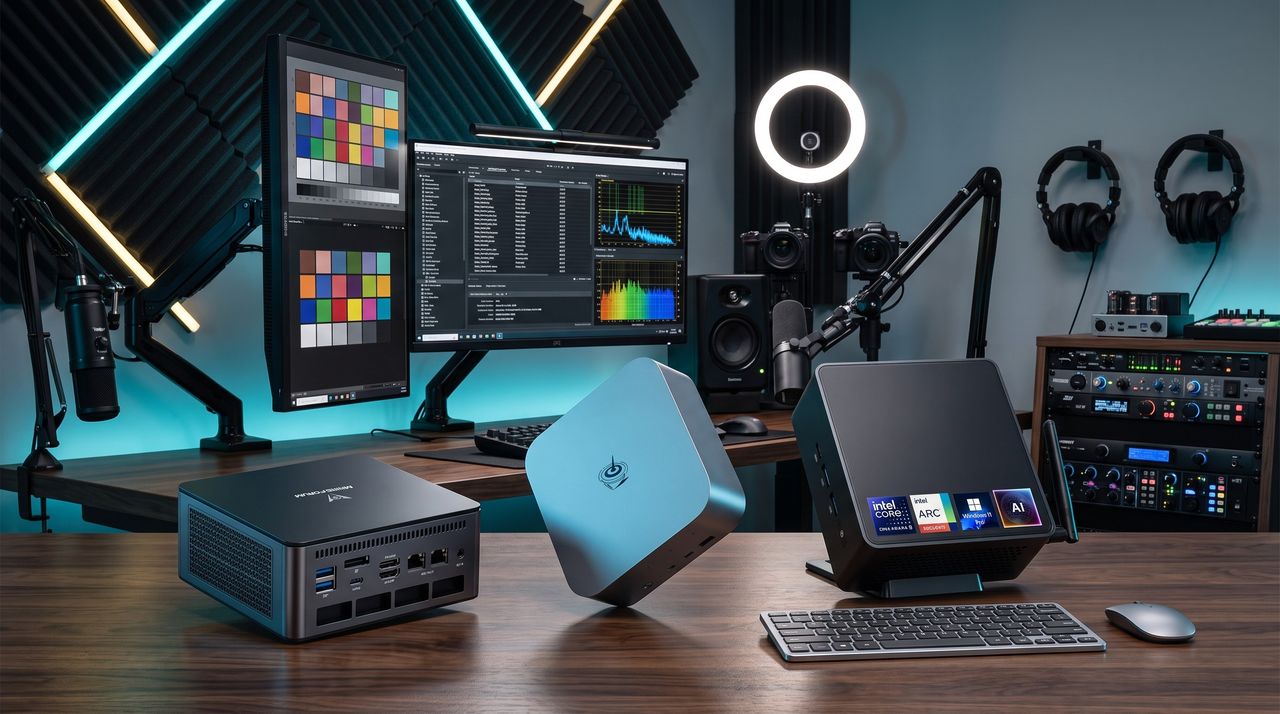
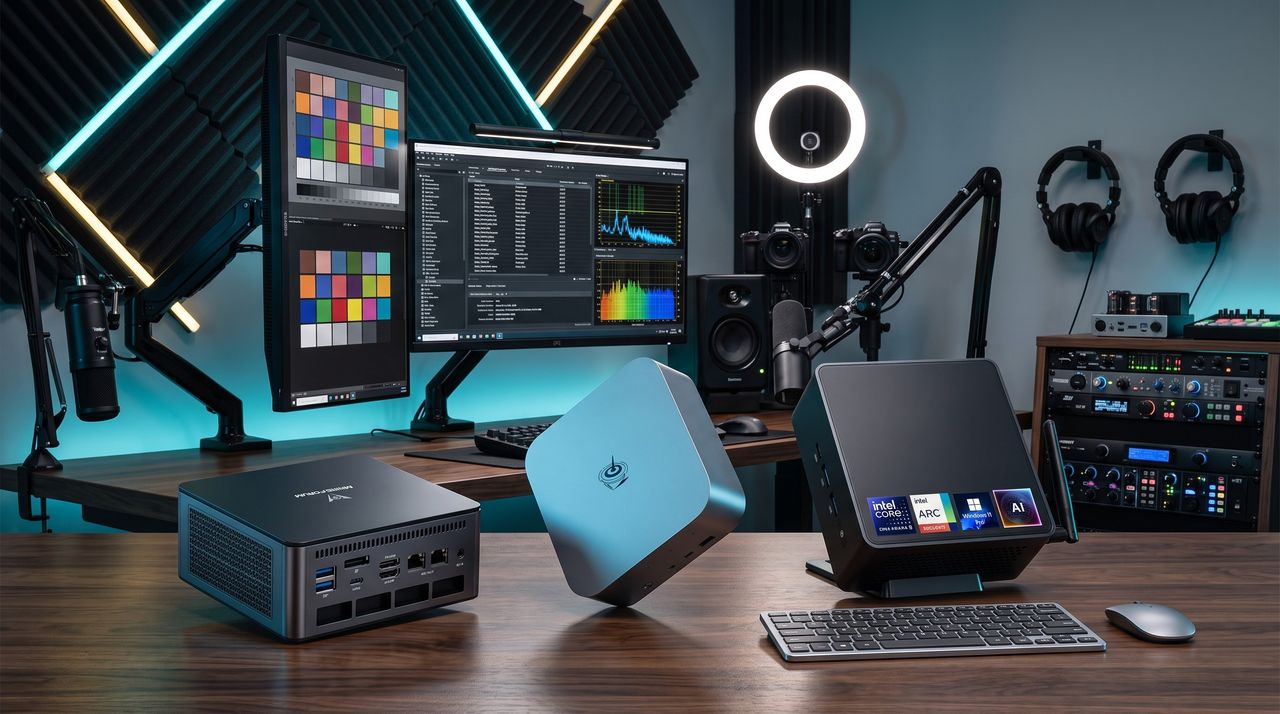
I’ve hand-picked my 12 favorite Mac mini alternatives for Windows, from budget picks to high-end content creation stations. There’s no denying Apple‘s newly unveiled Mac mini with M6 chip is a seriously cool piece of hardware, but fixed memory and limited port selection mean it’s definitely not for everyone.
If you want upgradable RAM and additional connectivity like USB4 for hooking up an external GPU, these are the Windows Mac mini alternatives I really like. I’ve included top-tier compact machines from brands we’ve reviewed highly during our mini PC testing, including Beelink, Geekom, GMKtec, Minisforum, and Asus. Whether you need a cheap mini PC for the office or a high-performance powerhouse for heavier workloads, these are the machines I recommend.
My top 12 Windows mini PCs
Advertisement
Why I chose these mini PCs
I had three key areas of focus when selecting these mini PCs — performance, connectivity and value for money.
Performance was obviously high on my list, which is why I’ve included mini PCs powered by some seriously capable AMD Ryzen and Intel Core processors. The Beelink SER9 Pro ranked as our best mini PC for business.
I also wanted plenty of memory and storage, although upgradeability obviously varies considerably between these machines.
Advertisement
There are some particularly well-connected choices among my top 12, too. The Minisforum UM890 Pro has two USB4 ports, OCuLink for connecting high-speed external hardware, dual 2.5GbE ports and enough display connections to drive four screens simultaneously.
The GMKtec EVO X1 also combines USB4 and OCuLink with dual 2.5GbE networking, alongside HDMI and DisplayPort outputs.
Price was important as well, so I tried to include options for different budgets rather than filling the list with flagship machines. We rate Acemagic’s K1 as our best mid-range mini PC, and at under $290, GMKtec’s G10 Mini PC is a very affordable choice.
For more options, check out the best mini PCs we’ve tested, and for more savings, see our round-up of this week’s best mini PC deals.
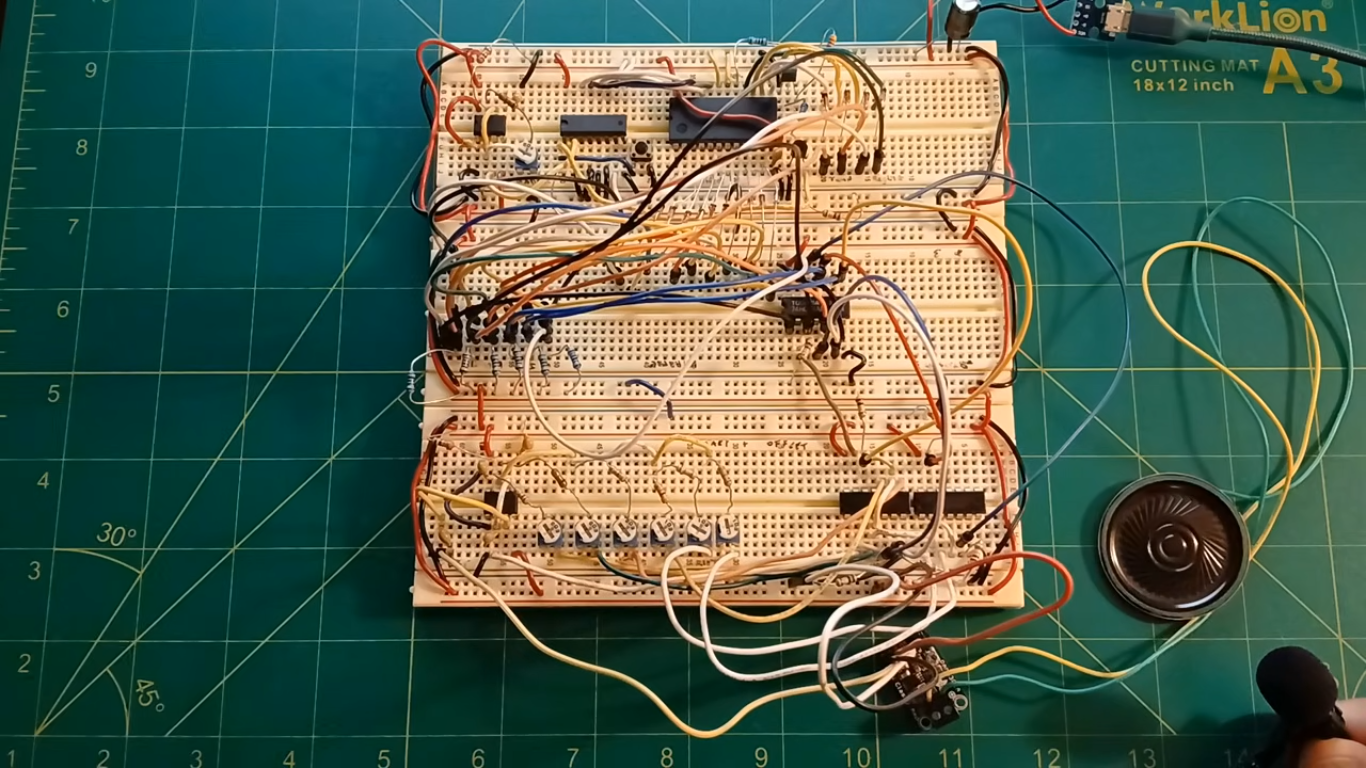
It’s technically true that any piece of software can be reproduced in hardware, although modern software’s size and complexity generally makes this a non-starter. But if we go far enough back in time, older software becomes easier and easier to implement in hardware. The original DOOM from 1993 might one day be recreated in full this way, but that day is not today. Instead, [Nick] has recreated the original music from that game, playing the opening track in nothing but 555 timers.
The circuit starts with a 555 timer that acts as a system clock with a rate of just over 7 Hz. These pulses feed a binary counter which in turn feeds a decoder, giving the circuit 15 positions. Each output of the decoder feeds to a diode matrix which stores information about what pitch the circuit should play. The circuit only needs to play six pitches so the diodes effectively connect each moment in time to one of these six notes. From there the circuit feeds into a set of switches which select different resistor networks of another 555 which is actually responsible for producing sound. The resistor networks have different values to adjust the timing of the 555 to produce different pitches.
Of course this entire exercise is largely academic as almost any microcontroller would be able to be programmed to play this chiptune quite easily, but it’s not a bad idea to get down into the weeds of digital logic from time to time in order to refine one’s skills and knowledge about what’s really going on in the inner workings of circuits. Or, go even deeper than that and build the logic gates themselves from first principles.
People are grafting a pre-release version onto their favorite games with unspectacular results.
Sometimes, photorealism (or something approaching it) makes a video game look better. Other times, well, you get whatever this is from NVIDIA’s leaked build of DLSS 5. The unfinished software, extracted from an early-access PC version of NBA 2K27, has been grafted onto various games. The results are… let’s just say, not universally beloved.
DLSS 5’s neural rendering model takes the upscaling technology in a new direction. Rather than simply reconstructing a sharper version of the image the game rendered, it “infuses pixels with photoreal lighting and materials,” according to NVIDIA. In practice, the results look more uncanny valley than truly next-gen. It’s like someone fed a still image from the game into Midjourney and prompted it to “make it look photorealistic.”
Advertisement
In fairness, the images and videos circulating online are from an early, unofficial build of NVIDIA’s upscaling tech. But with that requisite caveat out of the way, let’s have a laugh at how surreal and off-putting some of these results are.
Kill it… kill it with fire
Take Jesse Faden from Control, one of the first games to get the unofficial DLSS 5 treatment. In the game, she’s supposed to be roughly 28. But after applying a little DLSS 5 magic, she suddenly looks middle-aged. You can kinda see how the AI could get there from the original face. But it still misses the mark, simultaneously looking more real and more fake.
Advertisement
Then we have Skyrim (because, no matter the subject, we’ll always have Skyrim). DLSS 5 makes its lower-poly characters look like a 3D scan of a real person plastered onto a 15-year-old video game character.
Even setting aside how the technology can dramatically alter faces, there’s the fact that the underlying character models and animations are left untouched. That creates a bizarre mismatch that only heightens the uncanny effect. The faces may look kinda real-ish — until you see them stare blankly into the distance with suspiciously stiff movements.
If all of this kept performance in check, it might be strange but harmless. After all, if a developer wants to implement it and a player likes it, knock yourselves out. But that isn’t the case, at least with this leaked build. With Neural Rendering enabled, Control on an RTX 5070 Ti reportedly dropped from 71 fps to 35 fps at 4K. If the final version looks weird and kills performance, it’s hard to see this as anything but NVIDA — now an AI company first and foremost — losing touch with the gaming audience that took it to the top.
DLSS 5 is scheduled to launch in its official form this fall. Once developer-approved versions start rolling out, it’ll be interesting to see whether intentionally integrated uses of the final technology look and feel more natural.
Russia is offering the Garpia-A1E to foreign military customers
The drone can reportedly travel up to 1,000 kilometres
Garpia-A1E carries over 50kg payload and endures for over six hours
Moscow has begun marketing a long-range loitering munition built by a state defense manufacturer to foreign militaries.
The weapon, known as the Garpia-A1E, has drawn interest from buyers abroad following a series of live demonstrations.
Officials confirmed the export plan, but declined to name which countries have expressed interest so far.
Latest Videos FromTechRadar
Advertisement
A weapon built for distance
Unlike drones designed for repeated missions, this class of weapon flies toward its programmed coordinates and detonates on arrival, destroying itself in the process — a one-way flight profile that has earned the informal label “suicide drone.”
The aircraft spans 3.4 meters in length, carries a takeoff weight of 250 kilograms, and stretches 3 meters across its wings.
Engineers built the airframe around an existing gasoline-powered munition design, relying on a tailless layout and a rear-mounted propeller to strike fixed coordinates set before launch.
It tops out near 170 kilometers per hour, can remain airborne for more than six hours, and operates at altitudes ranging from 50 to 2,500 meters.
Sign up to the TechRadar Pro newsletter to get all the top news, opinion, features and guidance your business needs to succeed!
“Today, the Garpia-A1E is the only loitering munition on the global market with a range of up to 1,000 kilometers,” said Alexander Mikheev, general director of Rosoboronexport.
Advertisement
The payload capacity exceeds 50 kilograms, and the system’s accuracy keeps errors within four meters of the intended point of impact.
Prospective buyers overseas have already shown interest following a round of live testing, the director added.
Rosoboronexport remains open to negotiating direct sales agreements, along with arrangements to manufacture the drone inside countries considered friendly toward Moscow.
Advertisement
Meanwhile, the drone’s maker, Almaz-Antey, has expanded output at its production facilities, supporting the defense sector’s ability to fulfill international orders on competitive timelines.
Domestic orders come first
Any commercial arrangement involving Russian military hardware must account for existing domestic commitments before new contracts move forward.
However, it seems Russia’s domestic needs will not be a problem because the company has since expanded production.
Advertisement
Almaz-Antey has now reached a production capacity sufficient to meet foreign orders within competitive delivery windows.
That balance between domestic obligation and export ambition now defines Russia’s approach to marketing kamikaze drones internationally.
“When conducting contract and supply work regarding Russian military products, Rosoboronexport primarily considers the need for the manufacturer to fulfill its obligations to the Russian Ministry of Defence,” said Alexander Mikheev, general director of Rosoboronexport.
“Almaz-Antey has mastered the series production of the Garpia-A1E system and reached a level that enables it to fulfill contracts with foreign customers…without compromising the country’s defence capability.”
Advertisement
Loitering munitions have grown into one of the defining weapons of current conflicts, prompting analysts to closely track their battlefield influence and cost.
As of the time of writing, no delivery timeline has been disclosed publicly, though analysts expect pricing and rival systems to shape eventual contract decisions.
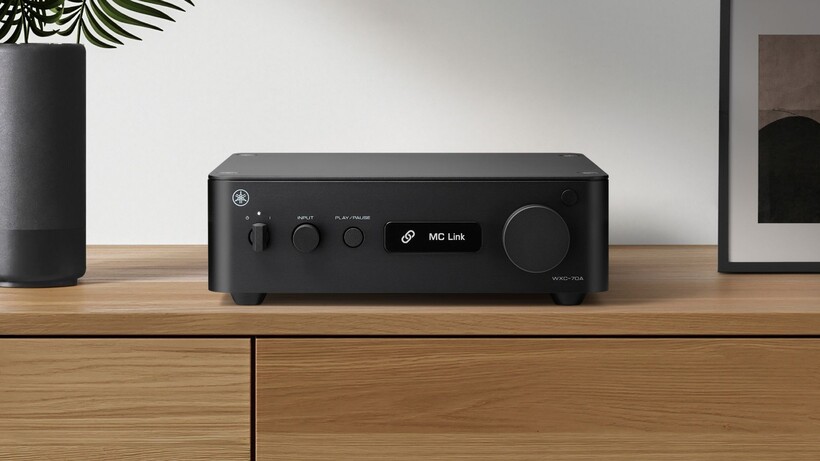
Yamaha has launched the WXA-70A streaming amplifier and WXC-70A streaming pre-amplifier as its newest hi-fi separates.
Both units share an ESS SABRE ES9039Q2M digital-to-analogue converter, a chip more commonly found in higher-priced separates, alongside Yamaha’s proprietary D.O.P.G. circuit design that isolates delicate analogue signals from digital noise.
That same DAC works alongside Yamaha’s ASRC clock-rebuilding technology to reduce jitter before the audio signal reaches the converter, preserving timing accuracy across sources ranging from wireless streaming to TV audio.
The WXA-70A pairs that digital architecture with Class D amplification from ICEPower’s newest 125ASX2 generation, and the amplifier outputs 70 watts per channel into 8 ohms and 105 watts per channel into 4 ohms.
Advertisement
Alongside that amplification, YPAO room calibration uses an included microphone to measure the listening space and adjust playback so the soundstage better suits your room.
Advertisement
The pair can also connect to a television through HDMI eARC or ARC, and a compatible TV remote can control volume and power through that HDMI connection.
Image Credit (Yamaha)
Dialogue Level control adjusts vocal clarity in films and sport without raising overall volume, while MusicCast multi-room support lets the WXA-70A and WXC-70A link with other compatible Yamaha speakers around the home.
Streaming support extends across AirPlay 2, Google Cast, Roon Ready, Spotify Connect, Tidal Connect and Qobuz Connect, a combination that covers most major services without a separate hub or bridge device.
Advertisement
For smart home installation, both models come with Control4 integration alongside a built-in web setup tool, an IR input for wired control systems and 12V trigger support for synchronising power with other connected components.
Advertisement
That level of control extends to wireless connectivity, since installers can disable Wi-Fi and Bluetooth individually during setup to prevent guests or nearby devices from selecting the wrong source by accident.
Pricing for the WXA-70A is set at £1,199, while the WXC-70A is available for £859. Yamaha has confirmed both models will reach UK retailers in November this year.
If you are a recent graduate or have time in between your educational and professional lives, consider an internship to boost skills and put you on the right path.
Internship programmes are an ideal way for young people, new graduates and those looking for a career change to add to their skillsets and develop a stronger network of peers and mentors.
As August is the time when SiliconRepublic.com takes a closer look at careers and skills in the finance and fintech sectors, what better way to close out the month than to take a look at some of the relevant internships open to potential applicants?
Abbott
US medical device and healthcare company Abbott has room for a finance intern at its Dublin facility, supporting the business team. The successful applicant will gain exposure to financial planning, reporting, analysis and process improvement activities. The internship will also include specific assignments across the company. Placements can be engaged with over six, nine or 12 months depending on the needs of the applicant and 19 September is the closing date.
Advertisement
Carrier
Smart climate and energy solutions company Carrier is in the process of recruiting a motivated and detail-oriented treasury intern, who will join the growing treasury team based in the newly established Carrier Dublin Treasury Centre.
The programme is nine months long and will involve supporting the team in executing strategic projects including in bank account reduction, bank account certification and master data updates. The ideal candidate will either have or be in pursuit of a BA in finance or accounting. Additional certification is favourable but not a requirement.
Fineco Asset Management
Dublin-based asset management company, Fineco Asset Management, is looking for an intern to join its team. The right applicant will be motivated and detail-oriented and will gain hands-on experience in the financial services industry through working closely with the finance team and other departments in the company. Ideally, whomever earns the position will have a strong analytical mindset and a keen interest in financial markets and investment management.
Microsoft
Tech giant Microsoft has a Dublin-based programme that opens and closes applications between August and October typically. Established in 2003, the Finance Rotation Programme welcomes around 60 interns and 70 graduate students each year to experience financial analysis and is geared towards people with no industry experience.
Advertisement
The programme takes two years, involves four- and six-month rotations and allows students to select rotations based on interests and career aspirations.
Tips and tricks
If you are interested in taking part in an internship, there are a number of factors you should consider before accepting, to ensure that your placement is the correct one for you.
One of the most important aspects of an internship is its potential to create a path towards your future career, but that doesn’t mean that organisations hold all the cards and the experience is always worth it without compensation. So before you commit, make sure that – whether it is paid or unpaid – you are not put in a financially precarious position.
If it is unpaid, but the experience is truly worth it, then it might well be the one for you. But if there is the potential that you might leave the role without having developed professionally, while also not having received fair compensation, then it might not have been of real value.
Advertisement
You should also consider if the area of finance or fintech you chose to learn more about via an internship has the potential to further your skills.
It can be tempting to choose a programme because the benefits are great, because it is convenient or because you respect the organisation, but if it doesn’t improve your abilities, or put you into contact with the type of people who can make things happen for you, then arguably it is wasted time.
But don’t worry, by doing a little research, narrowing down your goals and connecting with people who have forged the path ahead of you, it is possible to determine what is a good fit and what might be wise to pass on.
Don’t miss out on the knowledge you need to succeed. Sign up for the Daily Brief, Silicon Republic’s digest of need-to-know sci-tech news.































































You must be logged in to post a comment Login