TL;DR
ZTE showed the NaviX Ultra at WAIC, calling it the first agentic AI smartphone. It runs ByteDance’s Doubao agent. StepFun and Honor showed similar devices.



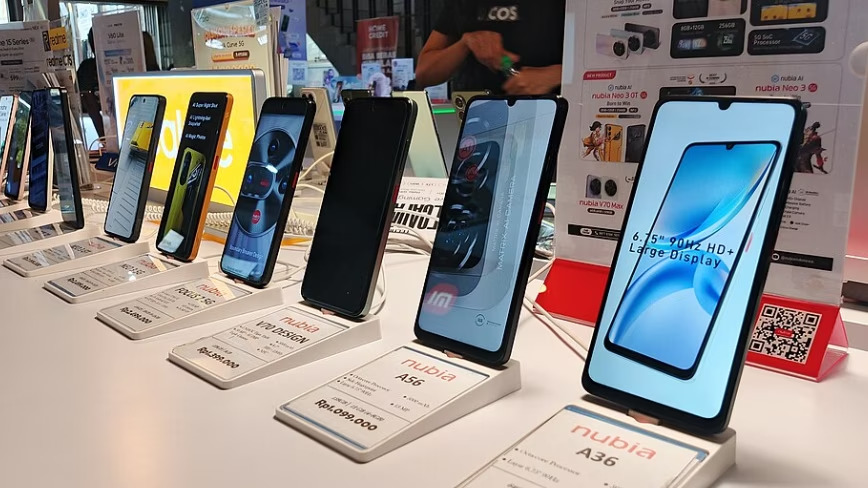
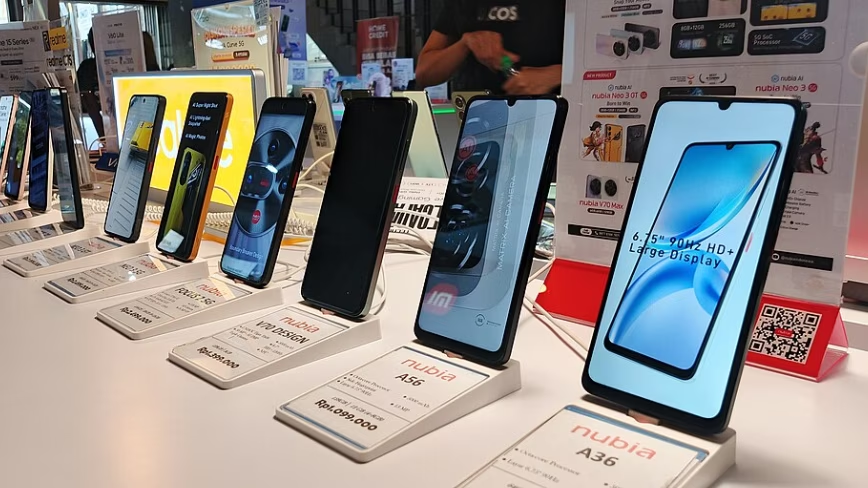
ZTE showed the NaviX Ultra at WAIC, calling it the first agentic AI smartphone. It runs ByteDance’s Doubao agent. StepFun and Honor showed similar devices.
ZTE showcased the NaviX Ultra at the World AI Conference in Shanghai this week, calling it the world’s first agentic AI smartphone. The device, built under ZTE’s Nubia brand, runs ByteDance’s Doubao AI agent and can be activated by voice or a dedicated button. It comes in four colours and was prototyped in December at 3,499 yuan ($516). The initial 30,000 units sold out quickly and doubled in price on the used market.
ZTE was not alone. StepFun unveiled a device running a proprietary operating system with a built-in agent called Amoo. Honor, the smartphone maker spun off from Huawei, is showcasing an AI agent co-developed with Alibaba that will ship on new devices later this year. The idea is the same across all three: build an agentic layer into the operating system that lets AI execute tasks autonomously across apps, rather than bolting isolated AI features onto an existing interface. “Many so-called AI phones on the market simply stack AI functions on top of an existing system,” said Nubia chief Ni Fei. “That actually makes it more cumbersome for users.”
The timing is not coincidental. China’s smartphone shipments have fallen for five consecutive quarters as the memory crisis pushed component costs up and consumer demand down. IDC expects the global smartphone market to post its steepest annual decline on record in 2026. Chinese manufacturers, many of which sell budget devices with thin margins, are being squeezed hardest. AI phones are their escape route. IDC’s Arthur Guo said more than half of China’s smartphone market could be dominated by AI devices this year.
The launches also deepen the competition with Apple, which just received Beijing’s approval to roll out Apple Intelligence in China through partnerships with Alibaba and Baidu. “In terms of AI smart devices, we are ahead of Apple,” Ni said on Weibo in June. The AI boom that is killing the cheap smartphone is simultaneously creating the argument for a new kind of phone. Whether an agent that books flights and edits photos is enough to make people replace a device they already own is the question the market will answer by the end of the year.

Any device you buy is an investment. You want the reassurance that it’s going to meet your short- and long-term needs for a while before you have to buy a new one. That’s true for smartphones, laptops and especially TVs.
Upgrading your TV means deciding on which brand is worth your hard-earned bucks. Picture quality, sound, smart features and the display panel are just some of the specifications you may consider. And CNET readers have opinions on all of that and more.
CNET’s People’s Picks gives readers a chance to share their opinions on their TV brand. Many of you love LG, but some readers have opinions on other brands that you may not have considered before now. Here’s which brands won readers over and what our experts think.
LG is well-known among TV brands for its OLED screens, and it’s a favorite among CNET editors and readers. LG earns high marks in many of CNET’s People’s Picks categories and wins three awards from readers: picture quality, fast-moving content and OLED/QD-OLED.
CNET editors give LG several nods for recent OLED TVs, lauding the contrast in the new C6H, the color accuracy of the G5 — recipient of a CNET Lab Award — and the contrast and brightness of G6 for movie buffs. The LG OLED G4 is one of the best gaming TVs for its top-notch gaming features, especially as a more cost-effective option compared to the LG G6.
Runner-up: Sony
CNET readers crown LG as a winner for picture quality. More than 3 out of 5 (61.7%) of CNET readers who own an LG TV reported an “Excellent” experience with their LG TVs in bright rooms and during the day. Readers say there’s no glare and it’s beautifully bright, and 65.1% of readers with LG TVs report perfect dark scenes with inky blacks and zero light bleed — performance that’s common on OLED models and can really improve the look of movies and TV shows. That brings LG’s picture quality to 63.4%.
Sony is a runner-up for picture quality, based on nearly half (49.8%) of readers with a Sony TV saying the brand has inky blacks with no bleed and great daylight performance.
Runner-up: Sony
LG wins for flawless, fast-moving content. Of readers, 71% say LG TVs are perfectly smooth, are without blur and are without weird, artificial artifacts with fast-moving content, whereas 28% say LG’s fast-moving content quality is natural but occasionally slightly blurry. When it comes to gaming, CNET readers (59.8%) who have an LG TV say fast-moving content is flawless and incredibly responsive and that the TV has great gaming menus.
Sony is the next top pick, with 60% of readers saying its fast-moving content is flawless on Sony TV screens.
Runner-up: Samsung
Lastly, LG sweeps the OLED/QD-OLED category with 82.4% of readers with an LG TV preferring the brand for its OLED displays. If you’re considering an LG OLED TV, the latest LG OLED G6 has excellent contrast, an improved antireflective coating and good brightness for gaming. One of CNET’s lab-tested favorites is the previous LG OLED G5. CNET editors say it has the best color accuracy. The C4 is still a favorite, but if you want the latest and greatest, LG’s C6 and C6H are standout OLED picks. The C6 is the ultra version of the C6 TV, and it comes in larger sizes with higher brightness and better colors.
Samsung trails behind LG with 45% of readers who own a Samsung TV have an OLED or QD-OLED model. That’s not surprising because Samsung has only been selling OLED TVs since 2022 after a single model in 2013, whereas LG’s OLED models have been on sale for more than a decade. Both the S90F and S95F are Samsung OLED TVs that get praise from CNET for image quality and glare reduction.
Runner-up: Vizio
Roku wins three categories in CNET’s People’s Picks — budget, smart TV ecosystem and standard LED/LCD. Roku has several affordable TVs. Most CNET readers (72%) have purchased a Roku TV that’s under $500. And nearly half of readers with Roku TVs have purchased their TV within the past year.
Roku has a few popular TV picks under $500, including the TCL 4-Series, the Pioneer 50-inch 4K smart Roku TV and the Roku – 40″ Class Select Series Full HD (1080p) LED Smart RokuTV. Roku’s cost-effective options don’t skimp on quality. For instance, the Pioneer 4K Roku TV is an LED TV with 4K resolution and a smart TV interface, and it supports High Dynamic Range to improve your picture quality.
Vizio is next up to Roku, with 45% of readers having Vizio TVs costing less than $500. If you’re in the market for a mini-LED TV, Vizio has its Mini LED Quantum Series 4K TV for under $500 in two sizes (65 and 75 inches). Interestingly, 40.8% of CNET readers with Vizio TVs have had them the longest (over five years) — speaking to its quality and longevity for the price.
Runner-up: TCL
Trust me, a smart TV’s interface can make or break your day-to-day experience. Roku understands that and wins over 59.1% of CNET readers.
Most readers with a Roku TV say its interface is fast, clean and very easy to navigate. No readers reported the interface being cluttered, slow or frustrating to use — the only TV brand to do so. Roku recently released a new interface that includes a “For You” section, which combines AI suggestions, saved entertainment and what you’re already watching. And the new interface has a “Quick Access” section to get to your most used apps faster, but we have a guide if you’re not a fan and want to turn it off.
TCL is a runner-up for the Smart TV ecosystem category. Over half (56.5%) of readers who own a TCL TV say the interface is fast, clean and easy to navigate, while 22.5% say the interface is good but has too many ads or sponsored recommendations.
Runner-up: Vizio
Standard LED and LCD TVs use LED backlights and are usually the most cost-effective compared to other TVs. Roku wins 34.8% of its owners over for this category. There are a few budget-friendly Roku LED TVs worth considering, including the Onn 43-inch Class 4K Roku smart TV and the Hisense 50-inch Class 4K LED Roku smart TV. The Roku Select Series LED TV is a CNET favorite for its usability features, like Roku’s interface and remote finder.
Readers say Vizio is the next top pick for LED/LCD TVs, with 32.7% owning an LED or LCD Vizio TV.
Runner-up: Sony
Hisense wins CNET’s People’s Picks for its sound quality. Nearly half of readers (45.7%) with Hisense TVs rate the internal audio as “great.” And that’s nearly double CNET readers’ satisfaction with popular brands like Sony (25.2%), Samsung (23.8%) and Vizio (22.2%). One of the perks of Hisense’s latest U7 and UR8 models is Dolby Atmos, which uses surround sound to deliver 3D audio. The U7 models also have a built-in 2.1.2-channel speaker system for more immersive sound. CNET’s favorite budget TV, the Hisense QD7 TV, also supports Dolby Atmos.
Sony is next up for the sound quality category, with 25.2% of owners saying Sony TVs have great sound quality with clear dialogue and decent bass. Some (41.7%) say it’s adequate for casual watching.
Runner-up: Hisense
Mini LED TVs use tiny LEDs to give you better brightness, blacks and contrast compared to most standard LED TVs. When it comes to mini-LED and QLED TV panels, TCL wins, with 57.5% of readers owning mini-LED/QLED TCL TVs and naming it their primary TV brand. TCL has been producing mini-LED TVs longer than most TV makers, and many of them have earned CNET’s praise.
According to CNET editors, the TCL QM8K is nearly comparable to an OLED TV in terms of picture quality for less money. TCL’s QM8L is another mini-LED QLED TV that CNET loves for its brightness, color and contrast, too.
Over half (52.1%) of readers with a Hisense TV have a mini-LED/QLED TV, with its model ranking second to TCL. Hisense has a few mini-LED models, including the U6, U7 and the new RGB mini-LED UR8, which we got a glimpse of at CES 2026. It’s around $1,300 and comes with better-than-before color reproduction.
Many TVs have similar features that may make it seem like the best deal is the biggest screen for your buck. Of everything to consider, CNET’s TV expert Ty Pendlebury advises looking at price, size and picture quality to help narrow down your options.
“It’s always what fits their budget, so not necessarily a ‘budget’ model. If an OLED is within your budget, get it, that’s the quickest shortcut,” said Pendlebury.
And don’t worry about perfecting your TV’s sound quality during your upgrade. Pendlebury says that most TVs sound tinny, so you should consider a soundbar as a separate purchase for better audio.
CNET’s editor-in-chief, David Katzmaier, has 26 years of experience reviewing TVs and has some practical advice to help you feel more satisfied with your purchase years later. For instance, bigger doesn’t always mean better.
“A bigger TV is great, but it can expose lower-quality sources,” said Katzmaier. The reason is that a bigger screen can show imperfections more than a smaller one. If you still want a bigger screen, consider subscribing to 4K plans to streaming services like Netflix and YouTube TV for better picture quality. You can also try adjusting your picture settings, such as putting the TV in Filmmaker Mode, but Katzmaier says that’s not a cure-all.
Watch this: TV Jargon Demystified: Here’s What You Need to Know About Color and Brightness
Instead of screen size, focus on getting a picture quality you’re satisfied with. “The biggest improvement would be getting a new display technology, especially QD-OLED/OLED,” said Katzmaier. “TVs with those kinds of screens deliver clear improvements in contrast and viewing angle that the others can’t match.”
CNET editors and readers highly recommend LG. But other brands were close runners-up. If you’re looking for deep black levels and strong color reproduction, readers recommend Sony as a second contender. Or if you’re struggling to watch TV in a room with a big window, consider TCL or Samsung — all CNET favorites.
“I’ve always liked Roku and Google TV better than proprietary systems from Samsung and LG, and I’m happy to see that CNET readers took our advice and bought LG and Samsung OLED TVs — because they’re the picture-quality champs,” said Katzmaier.
CNET has plenty of reviews of some of the latest TVs, like the TCL QM8L, if you’re looking for a brighter TV, or the Samsung S90F, if you’re looking for the best value for overall picture quality. Regardless, there are also guides to help narrow down your TV choice, like choosing between LCD and OLED TVs, what to know about micro-LED and a list of everything to look for when buying a new TV.
Did you like these findings? CNET’s People’s Picks is community-driven and helps us spread the word about the tech and services you love. Take our ongoing mobile carriers survey to tell us what you love about yours.

The big picture: A 21-year-old Florida resident was arrested last week for allegedly stealing more than $220,000 in cryptocurrency through malware hidden in video games. Although the indictment does not identify the storefront that hosted the infected games, it mentions several titles that were listed on Steam until recently.
The suspect, identified by the FBI as Zyaire Dontaevious Zamarion Wilkins, is accused of running a sophisticated cybercrime operation with unnamed co-conspirators for nearly two years. The group allegedly infected around 8,000 PCs by embedding malware in at least eight video games. Investigators believe they stole at least $220,000 from roughly 80 cryptocurrency wallets between May 2024 and February 2026.
The FBI charged Wilkins and his associates with several cybercrime offenses, including conspiracy to distribute malware. According to investigators, the suspects promoted the infected games on popular social media and messaging platforms such as Discord, Telegram, X, and LinkedIn. They also allegedly targeted users with large cryptocurrency holdings by identifying them with bots and contacting them directly.
The malware was designed to extract passwords and other sensitive data from victims’ computers, then use that information to steal cryptocurrency from their online wallets. The FBI ultimately tracked the suspects by linking the stolen bitcoin to more than 150 Bitrefill gift cards, which were reportedly used primarily to pay for Uber Eats orders.

According to the FBI’s complaint, the list of infected games includes BlockBlasters, Dashverse, Lunara, and PirateFi. All of them remained available on Steam until earlier this year, when the FBI announced it was investigating malware on the platform and urged anyone who had downloaded the infected games to come forward and assist with the investigation.
According to forensic cryptocurrency researcher ZachXBT and the online malware repository vx-underground, BlockBlasters alone accounted for roughly $150,000 of the stolen cryptocurrency from between 261 and 478 victims. That included $32,000 stolen from Twitch streamer RastalandTV in September 2025. The streamer, who was undergoing cancer treatment, had received the money as donations from viewers to help cover medical expenses.
The FBI believes Wilkins financed the entire operation and marketed the malware to underground cybercriminals. Investigators also identified the developer suspected of writing the malware and searched the individual’s property for additional evidence. According to Miami news station WPLG Local 10, Signal chats recovered from the developer’s devices linked Wilkins to the operation.
The messages reportedly revealed that Wilkins, who allegedly operated under the dark web alias Sibel.eth, purchased a $10,000 remote access trojan and discussed the best ways to trick victims into approving fraudulent cryptocurrency transactions. The suspected malware developer was not identified in the report and has yet to be formally charged.

For decades, hip-hop artists have been invited into schools as guest speakers, workshop leaders and visiting performers. They’ve mentored young people after school; started nonprofits; taught music production, poetry, history and entrepreneurship; and helped generations of students find their voices.
Yet many of these artists lack the one credential schools still value most: a bachelor’s degree.
But what if these artists have been teaching all along?
A new partnership between College Unbound and the Hip-Hop Education Center aims to answer that question, not by teaching artists how to become educators but by recognizing the expertise they’ve developed through decades of community leadership, cultural work and mentorship.
The program — a Bachelor of Arts in organizational leadership and change designed specifically for hip-hop educators and cultural leaders — isn’t a separate degree or a simplified version of one. Students complete the same degree requirements as every other College Unbound student. “It’s the same degree,” says College Unbound President Adam Bush. “It’s simply lived differently.”
The program is about more than hip-hop. It asks a question that reaches far beyond music: Who gets to decide what expertise looks like?
Although the bachelor’s degree officially launched this year, its roots stretch back decades.
Hip-hop emerged outside traditional institutions, often in response to systems that excluded Black and Brown communities. As hip-hop education gained legitimacy, educators wrestled with a difficult question: How can we preserve the authenticity of the hip-hop culture while creating pathways that allow practitioners to teach at schools and colleges?
Long before there was a curriculum at College Unbound, there were conversations between Bush, educator and author Sam Seidel, and Martha Diaz, founder of the Hip-Hop Education Center, who has spent nearly three decades helping to build the field of hip-hop education. These conversations focused on this central question.
For Seidel, who has spent much of his career documenting and advancing hip-hop education, the answer required finding the right institution.
“What was always important,” he says, “was making sure the people who created the culture and have been carrying it forward had a central seat at the table teaching the next generation.”
College Unbound proved to be an unusual fit. Rather than asking students to leave their experience at the classroom door, the college builds on it. Students develop projects rooted in the work they’re already doing, making professional experience, leadership and community knowledge part of the curriculum.
“This program opens opportunities for seasoned practitioners,” adds Diaz. “These are people who’ve spent decades mentoring young people, creating art and leading communities but haven’t always had access to the credentials that allow them to teach full-time.”
For Sebastien Elkouby, a hip-hop artist and educator, the degree feels less like a beginning than the fulfillment of a long-awaited opportunity.
Born in France, Elkouby spent years working in music before becoming a U.S. citizen, raising a family and earning a career and technical education credential. Today, he teaches Global Awareness Through Hip Hop Culture and Beatmaking classes at a public charter school in Los Angeles.
“When I found out about the College Unbound program, I thought, ‘Finally,’” he says. “I couldn’t have designed a better opportunity than going to college under the guise of hip-hop culture.”
His years as an emcee prepared him for the classroom in ways a traditional teacher preparation program might not have. Standing in front of students, he continues, isn’t much different from standing in front of an audience. “You have to capture their attention. You have to tell a story. Teaching is a performance.”
He sees similar parallels in curriculum design. The care he once devoted to writing lyrics with a beginning, middle and end now shapes the lessons he designs. His classes trace the historical roots of hip-hop, connecting music to social movements, politics and culture.
Asante Burks reached a similar conclusion while on a different path. Known professionally as Asante Amin, the rapper and member of Soul Science Lab believes that performing and teaching are two sides of the same coin. “On stage, I want to entertain, educate and inspire. In the classroom, I want to do exactly the same thing,” he says.
His teaching centers on the cypher, the circle where rappers, emcees and beatboxers share ideas, stories and experiences while learning from one another. In that setting, everyone becomes both teacher and learner. “It isn’t just me delivering knowledge. The collective mind is where real learning happens,” he adds.
That philosophy reflects one of hip-hop pedagogy’s central ideas: learning is participatory, communal and deeply connected to identity. It also challenges a persistent misconception. “People think hip-hop education is just playing rap music in class,” says Diaz. “It’s a culture, mentorship, history and community. It’s understanding students as whole people.”
A member of College Unbound’s first graduating class, Anjel Newmann now serves on the college’s faculty, leads the arts organization AS220 and serves on the school board in Providence, Rhode Island. She sees the bachelor’s degree as more than an academic credential.
“It’s helping people who have been teaching in the community move from guest speaker to lead teacher,” she says. “They know how to connect with young people who may have already tuned school out. They understand identity and community.”
College Unbound’s project-based model mirrors the way artists naturally work. “As artists, everything we do is project centered,” says Newmann. “You’re constantly researching, creating, revising and sharing your work. College Unbound allows every subject to connect to that bigger vision.”
For Newmann, the lesson extends beyond hip-hop. “There are experts in our communities who were blocked from credentials because of systemic barriers,” she says. “College Unbound didn’t ask them to become experts. It recognized that they already were.”
As colleges across the country search for new ways to serve adult learners and employers increasingly question what degrees actually measure, College Unbound offers one possible answer: Instead of asking students to prove they deserve admission, the institution begins by asking what they’ve already built.
Organizing communities, mentoring young people, leading nonprofits, creating art and solving real-world problems are acknowledged as evidence of learning. “We’re recognizing lived experience as the value that it is,” says Diaz.
Seidel hopes the program’s success ultimately will be measured by what graduates build together long after they leave. He imagines meeting them at a future gathering of hip-hop educators — that people who’ve built sustainable careers are supporting their families through education and the arts and remain connected years later. “I want to hear them telling stories about the work they’re doing together,” he adds.
The success of programs like this won’t be measured only by the diplomas students earn. It will be measured by whether colleges begin to recognize that expertise isn’t created the day someone receives a credential.
Burks believes that shift is inevitable.
“I think this educational process is the way of the future,” he says. “In order for education to remain meaningful and relevant, it’s going to have to implement experimental accreditation processes. It should be like music.”

Four years ago, Jony Ive left Apple, and joined OpenAI, yet he isn’t named in the intellectual property theft suit. The reasons for that are myriad, ranging from the personal to practical.
On July 10, Apple launched what looks to become a major lawsuit against OpenAI, accusing ex-Apple employees of stealing intellectual property. However, despite former Apple design chief’s links to OpenAI, he isn’t in the crosshairs of Apple’s lawyers.
In Sunday’s “Power On” newsletter for Bloomberg, Mark Gurman writes about the lawsuit and the oddity. He believes there are two big reasons for Apple not to implicate Ive in the lawsuit at all.
The first is relatively simple: He had little to do with it.
Though Ive is chiefly the face of OpenAI’s new hardware work, he is seemingly focusing on that product. While Tang Tan, one of the named targets of the lawsuit, does have more control over the hardware side of OpenAI as its chief hardware officer, Ive just does not.
Ive isn’t dealing with recruiting or operations at OpenAI. Since he doesn’t have much to do with that stuff, he wouldn’t have taken part in the activities in the lawsuit.
The lawsuit largely discusses the alleged actions of Tan, including problematic emails and encouraging potential hires from Apple to bring in prototypes and designs. Tan would’ve been in a position to carry out these actions, leaving Ive’s hands clean.
The other reason for not going after Ive is all about image. Gurman believes that Ive’s closeness to Laurene Powell Jobs, entrepreneur and widow of Steve Jobs, is insulating Apple’s ex-designer.
Powell Jobs is a supporter of Tim Cook and John Ternus, and she still has a close relationship to the company. The impact of Steve Jobs returning and saving the company means her approval is important to Apple as a whole.
Dragging Ive into the suit would make maintaining the relationship with Powell Jobs difficult.
On top of that, the optics of attacking Ive after his major role in the company’s history and his own close relationship to Steve Jobs would hurt the company.
If he had been named, Gurman proposes that Ive would’ve received sympathy while Apple would be criticized. That criticism would also be seen as Apple having an axe to grind following Ive’s decision to leave the company.
Ive left in 2019, but he was a consultant until 2022 under his design company, Love From. That period saw a number of Apple designers leave the company to rejoin their leader, Ive, at his new firm.
To Apple, Ive’s leaving and the subsequent departures may have been seen by Apple as Ive dismantling the design team while still under its payroll.
Whatever the reason for Apple avoiding Ive, it has led to him being almost completely absent in the lawsuit.
In the entire 40-page document, it refers to a group of “former Apple leaders,” which you’d expect includes Ive.
Apple can still do a lot of damage to OpenAI’s image and hardware work with its current lawsuit, going after Tang Tan. But by avoiding the temptation of tacking on Ive, Apple does so without causing itself that much reputational harm.
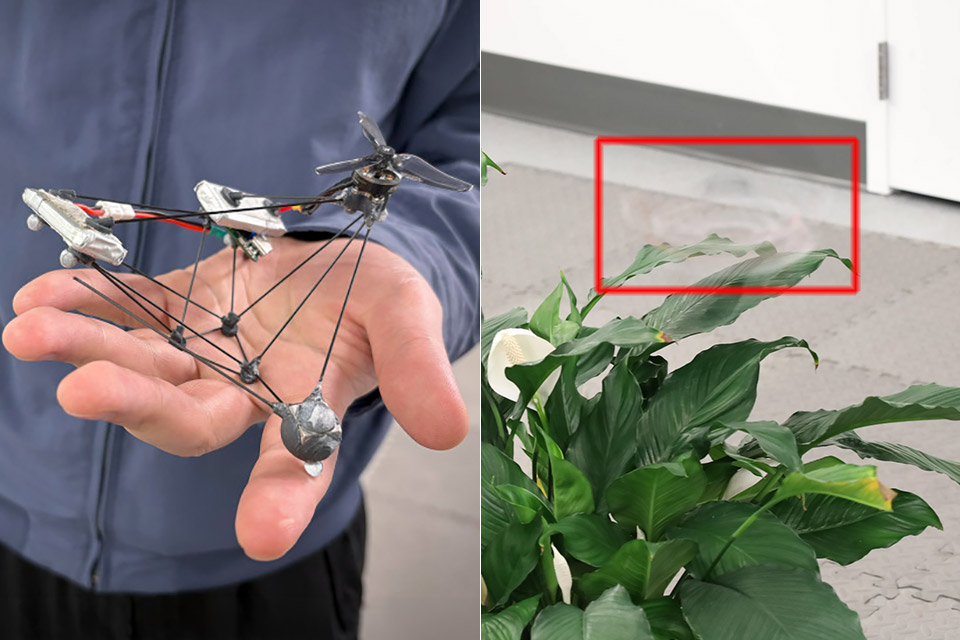
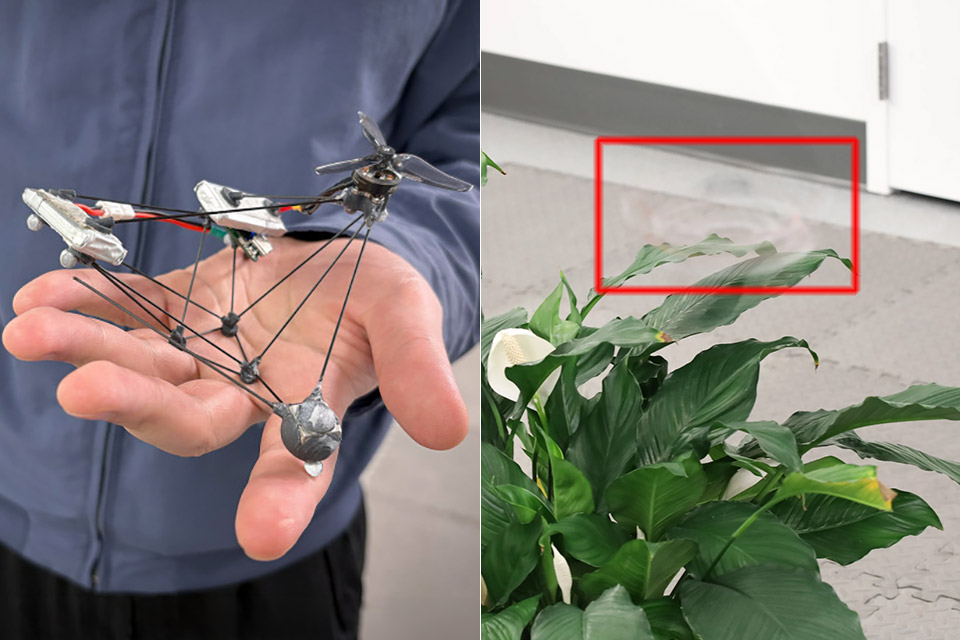
Engineers at Northwestern University have built a small flying machine that fades from view by rotating faster than eyes can follow. Phantom Twist earns its name through a constant twist that turns solid parts into a soft smear against the sky or ground below.
Standard drones attract attention since they essentially sit there with all of their weight focused in the center. Its four whirling blades lift it off the ground, but a giant still frame in the middle stands out like a sore thumb. People and animals can immediately recognize the motionless shape. A new version of this removes the “still” reference by relocating the entire assembly. In this unique design, a single motor drives only one propeller in one direction, but the rest of the system, including the batteries and control boards, spins in the opposite way and travels simultaneously. That way, you have a nice, smooth balance, and the entire piece does not hang in one spot. The only thing holding everything together are some support cables and a counterweight to keep it spinning smoothly.
Sale

When this drone is flying at top speeds of up to 25 revolutions per second, the human eye can only capture a fraction of a second. It only opens for a flash, just like a camera sensor. When you move so quickly, the image blurs and loses its clear edges. What’s left on the drone is a faint, hazy muddle that you scarcely see unless you look for it specifically. Using a human vision model, researchers evaluated the craft against a variety of backdrops, and it scored around 10 times lower on visibility than a normal quadcopter of similar size. Not because of any fancy colors or coatings, but simply because it moves so quickly that your eye doesn’t have time to lock onto it.
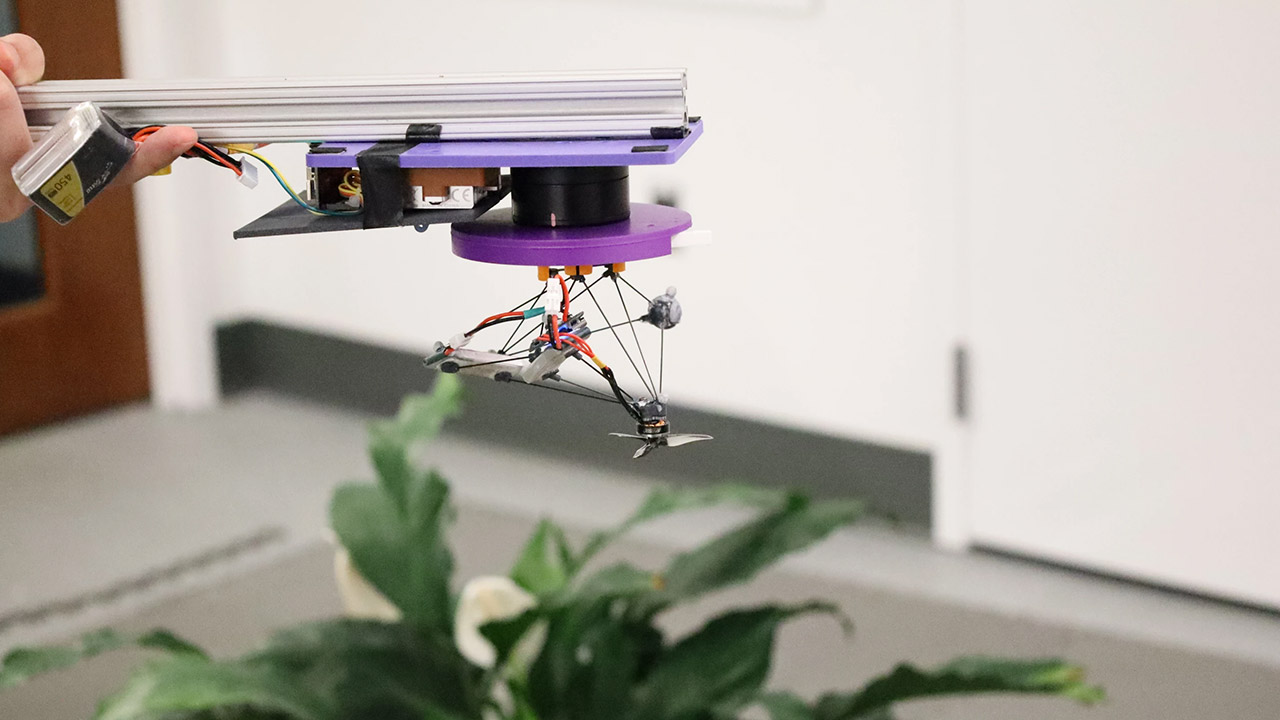
Before settling on the final design, a team led by Professor Michael Rubenstein used computers to experiment with almost 20,000 potential designs. Each one had its flight capabilities and stealth verified in simulation before the software eliminated the weaker designs and allowed the stronger ones to proceed to the production stage. He explained that the fundamental difference with this project was that instead of attempting to hide the drone to blend in with its surroundings, they were looking at how to construct the machine in such a manner that it tested the limits of human motion perception. Emma Alexander noted that human vision forms an image over time, and moving quickly enough prevents that picture from ever solidifying clearly. Essentially, the eye receives an averaged out image of the drone blended with its surroundings, which fuses into a beautiful soft haze.
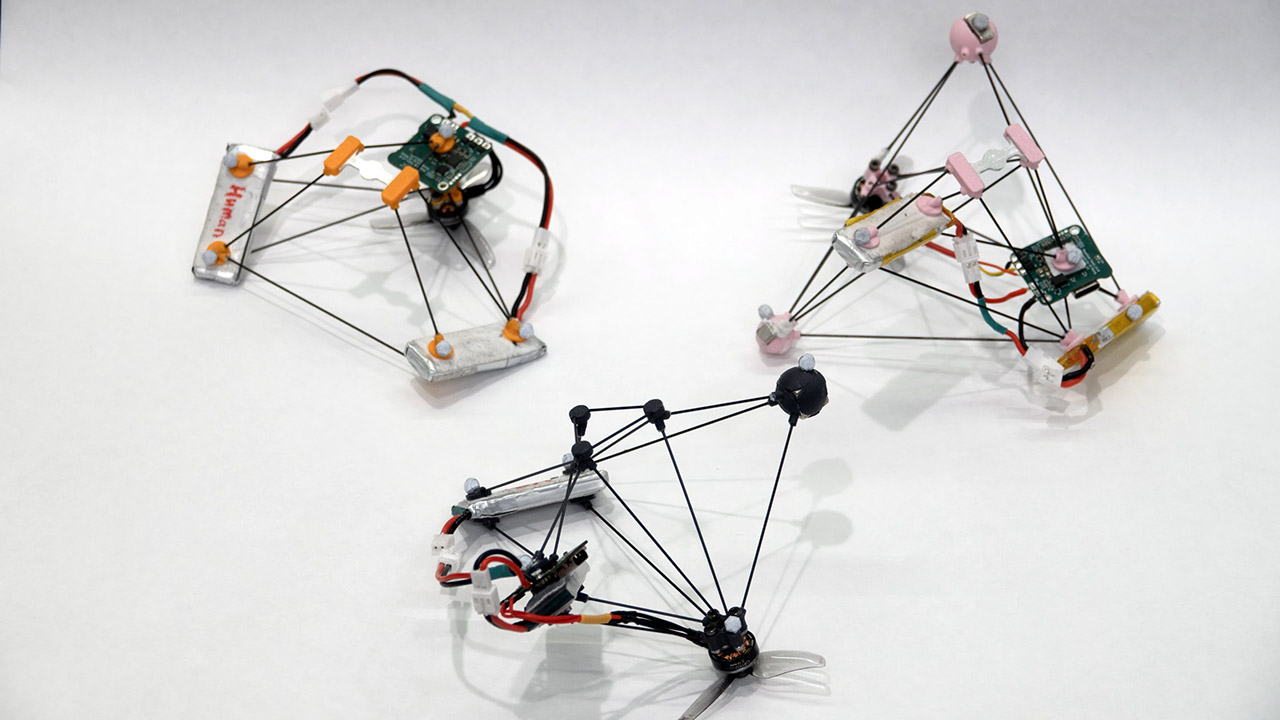
Wildlife researchers will be the first to take advantage of this. You can use an invisible drone to film nesting birds or monitor animals in wetlands without disturbing or influencing their activity. You can have a guy standing on the ground evaluating bridges, towers, or pipelines while the drone hovers overhead, and he has no idea. However, there are certain limitations to this technology, such as the noise produced by spinning propellers and the tiny rods that nonetheless capture the eye in the correct light. For the time being, these factors preclude complete concealment. Future generations, however, attempt to close the gap by improving the plastics and motors. Each step should get us closer to a veil that is nearly undetectable.
[Source]


Shenzhen hosted the opening night of something that had never happened before. The Ultimate Robot Knock-out Legend, or URKL, brought together 32 teams from more than ten countries for full-sized humanoid robots to trade strikes inside a cage. Every team started with the same base machine from Chinese robotics company EngineAI. The T800 stands roughly five feet eight inches tall, weighs between 165 and 187 pounds, and carries 29 joints built for human-like motion. Teams then added their own armor plating and tuned the software that decides how each robot moves, balances, and reacts.
My favorite moment from the entire URKL Robot Fight!
One brutal kick sent the robot’s head hanging loose. and it somehow kept fighting like nothing happened!
I completely lost it. Had to lower down the volume of my laugh 😂😂 pic.twitter.com/QtbHW7UcvS
— Eren Chen (@ErenChenAI) July 16, 2026
Fights followed fairly simple rules, with the emphasis on landing effective hits, staying on your feet, and avoiding being clobbered. The robots would hurl punches, try to launch kicks, and recover quickly after being knocked flat on their backsides. The judges monitored clean hits and overall machine expertise. People expected the robots to be tough from the outset, but there was still some doubt about how they would fare once the real suffering began. White Eagle and Matador’s early bout changed everything. The White Eagle robot found an opening and delivered a powerful high kick that smashed right into Matador’s cranium. The head jerked jarringly back and forth many times before just falling loose. As Matador descended, the head swung loose and then totally detached.

The majority of the audience anticipated Matador to freeze up right there and then. The head holds all of the cameras and crucial sensors that let a machine to detect what is going on and react in a split second; without them, many robots would be walking dead, unable to track their opponents or stand upright. Nevertheless, Matador persisted.
Even with the head dangling from its cables, the black robot remained upright long enough to hurl a few more punches and kick out with its legs. There was no way the body would merely collapse into a heap. The torso and lower frame housed all of the control systems that kept the creature running, while the wide-angle radar and other body-mounted sensors provided the main computer with all of the information it need to keep going. A combination of super-strong posture control and shock-absorbing joints enables the machine to endure impacts while keeping its arms and legs in sync even after the head is removed. White Eagle saw an opportunity and seized it, winning when Matador eventually gave up and was unable to climb back up. The delighted robot then raised its arms in celebration, executing a brief victory dance that the audience enjoyed. Staff arrived to take the second robot from the ring.

Why you can trust TechRadar
We spend hours testing every product or service we review, so you can be sure you’re buying the best. Find out more about how we test.
The first thing I thought when I pulled the Razer Hammerhead V3 HyperSpeed gaming earbuds out of their box was “Wow, these are ugly.”
Not exactly the strongest first impression, but it’s unavoidable when each bud has a weird, bulbous design that gives them an appearance like a pair of obese AirPods. The shiny black plastic material looks cheap, as does the printed Razer logo on the outside, which (despite all the Razer Chroma branding on the box) is just a decal that doesn’t illuminate.
They’re thankfully not uncomfortable to wear, but even in your ears they’re nowhere near as stylish as similarly priced competitors like the SteelSeries Arctis GameBuds.
With much flatter sound, they’re significantly less versatile (especially if you’re after a pair of gaming earbuds that you can also use to listen to music) and offer fewer features than that model to boot, with inferior active noise cancellation (ANC) that fails to block out most background noise when you’re out and about.

The Razer buds’ biggest benefit is the use of the latest Bluetooth 6.0 standard, which allows for ultra-low-latency connectivity with compatible devices and is ideal if you’re a serious mobile gamer looking for something to use with the latest phones. The included 2.4GHz Razer HyperSpeed Wireless dongle is also impressively compact and offers similar low-latency performance on PC, PlayStation 5, and handhelds like the Nintendo Switch 2.
This alone might be worth the compromises elsewhere if you’re a really serious mobile gamer, though there are a few more things worthy of praise. The included case is well-designed and feels pretty high quality, with an attractive RGB strip that is illuminated to denote pairing or charging status. I also really like how you don’t have to take the dongle if you want to use it: simply plug the case into your machine, and you’re ready to go, which makes it basically impossible to leave behind.
Find the Razer Hammerhead V3 HyperSpeed gaming earbuds at the right price – and they could be a good pick.
The Razer Hammer V3 HyperSpeed gaming earbuds cost $129.99 / £129.99 / AU$229.95 if you buy them directly from Razer, which is where I would recommend getting them, as stock at other retailers seems spotty.
If you do choose to buy from the likes of Amazon, be mindful not to accidentally purchase the cheaper Razer Hammerhead V3 X or older Razer Hammerhead True Wireless X model, as they look very similar.
At this price, the earbuds are going head to head with the likes of the SteelSeries Arctis GameBuds, which originally launched at $159.99 / £159.99 / AU$359 but are now regularly discounted to around $130 / £100 in the US and UK.
Even factoring in the added $30 / £30 at full price, I think the Arctis GameBuds are much better value. They offer a much more stylish design, versatile sound that you can easily customize with hundreds of selectable EQ profiles, in addition to slightly better overall battery life.
| Row 0 – Cell 0 |
Razer Hammerhead True Wireless X |
|
Price |
$129.99 / £129.99 / AU$229.95 |
|
Weight |
0.19oz / 5.6g (each bud); 2.22oz / 63g (case) |
|
Compatibility |
PC, PS5, mobile, Nintendo Switch, Nintendo Switch 2 |
|
Connection type |
2.4GHz HyperSpeed Wireless / Bluetooth 6.0 |
|
Battery life |
~40 hours |
|
Features |
THX Spatial Audio license included |
|
Software |
Razer Audio (mobile) / Razer Synapse (PC) |
You should know by now that I’m not a big fan of how these earbuds look. They have a basic stemmed in-ear design with quite a bulbous body constructed from shiny black plastic and a cheap-looking green Razer decal on the back. They honestly look like something you’d buy on Amazon for under 50 bucks rather than a product from a premium gaming brand.
The case is much better, at least. It’s large, but still easily pocketable, and has a pleasant matte texture to its exterior and a very robust hinge with satisfyingly strong magnets. There’s a subtle strip of LED lighting on it as well, which lights up in an attractive rainbow pattern when the case is opened. It also illuminates different colors to denote charging or pairing status, battery level, and so on, which makes it surprisingly practical as well.
Inside the case, there’s plenty of space for the two earbuds and a little slot for the compact HyperSpeed Wireless dongle. When in the case, the dongle is nestled inside a Type-C port with passthrough connectivity. This means you can plug the entire case directly into your PC or console in order to pair the buds, which is pretty handy and helps keep everything in one place.
Aside from this, the Razer Hammerhead V3 HyperSpeed gaming earbuds don’t have a particularly expansive feature set compared to the offerings of other brands. The earbuds support ANC and a transparency mode, in addition to automatic pausing when removed from your ears. The compatible software offers three default EQ profiles (for gaming, music, and movies, respectively) plus the ability to create your own.
On PC, the buds come with a license key for THX Spatial Audio, which simulates 360-degree sound decently well and is a solid bonus.

Although it is impressively low-latency and thus suited for competitive gaming, I found the sound of the Razer Hammerhead V3 HyperSpeed to be so-so compared to similarly priced alternatives. In the default gaming preset, the bass is plenty punchy, but they lack clarity and sounds quite muffled in the high end. It’s good enough for the likes of PUBG: Battlegrounds or Counter-Strike 2, but would be an incredibly poor fit for more story-driven titles.
The music-listening experience is bad, and no amount of EQ tweaking could remedy the uninspiring sound. I would recommend swerving the default music EQ as well, as it’s absolutely rancid and tanks not only the bass but also the low mids, leading to sound that’s not dissimilar to that produced by the free earbuds you get on an airplane.
Alternating between the Razer Hammerhead V3 HyperSpeed and the SteelSeries Arctis GameBuds, there is simply no contest: the SteelSeries pair sounds better no matter what you throw at it, and the fact that it can handle music too means that you don’t need to buy a second pair to use with your phone.
The ANC also underperforms compared to alternatives, be they the GameBuds or others such as the Sony Inzone Buds. It fails to block out much background sound and even struggles to drown out the consistent, low noise from a desk fan. If you want to take these on a plane, just forget about it.
The microphones are okay, but not particularly reliable. With any kind of background noise, they can begin to struggle to pick up your voice – which had me relying on my desktop mic instead. Touch controls are quite awkward as well. They feel unresponsive and struggle to pick up inputs, leading to frequent accidental pauses or skips if you’re trying to use them for your tunes.
The battery life is at least one area where the Razer Hammerhead V3 HyperSpeed doesn’t disappoint. I easily managed 7-8 hours per charge with the buds, and the case holds enough to fully top them up about four times when you’re on the go.

Here are two more compelling options to weigh up.
| Row 0 – Cell 0 |
Razer Hammerhead V3 HyperSpeed |
SteelSeries Arctis GameBuds |
PlayStation Pulse Explore earbuds |
|
Price |
$129.99 / £129.99 / AU$229.95 |
$159.99 / £159.99 / AU$359 |
$199.99 / £199.99 / AU$329 |
|
Weight |
0.19oz / 5.6g (each bud); 2.22oz / 63g (case) |
0.19oz / 5.3g (each bud); 1.7oz / 48.7g (case) |
0.2oz / 6.5g (one earbud with medium tip) |
|
Compatibility |
PC, PS5, mobile, Nintendo Switch, Nintendo Switch 2 |
Xbox, PlayStation, Nintendo Switch, PC |
PS5, PlayStation Portal, PC, mobile |
|
Connection type |
2.4GHz HyperSpeed Wireless / Bluetooth 6.0 |
2.4Ghz (via USB-C), Bluetooth 5.3 (mobile) |
PlayStation Link wireless, Bluetooth (mobile) |
|
Battery life |
~40 hours |
Up to 40 hours (buds 10 hours; case 30 hours) |
5 hours with 10 hours from the charging case |
|
Features |
THX Spatial Audio license included |
360° Spatial Audio, Qi Wireless Charging Case, 6mm neodymium drivers, four-mic ANC, transparency mode, in-ear detection/sensor, IP55 rating, fast charge, companion app with more than 100 presets |
Planar Magnetic Drivers, AI-enhanced noise rejection, Dual Device connectivity, 3 sets of ear tips |
|
Software |
Razer Audio (mobile) / Razer Synapse (PC) |
Arctis Companion App (mobile), SteelSeries Sonar (PC) |
N/A |
I tested the Razer Hammerhead V3 HyperSpeed gaming earbuds for multiple weeks across both PC and mobile, playing a range of different games.
This included plenty of Call of Duty: Black Ops 7, PUBG: Battlegrounds, Battlefield 6, Forza Horizon 6, Grand Theft Auto 5, and more, in addition to mobile titles like Neverness to Everness, and Call of Duty Mobile.
Throughout my time with the buds, I compared the experience to my hands-on testing of other gaming earbuds, including the SteelSeries Arctis GameBuds and other products featured on our best gaming earbuds guide.
First reviewed July 2026


An advanced threat actor is abusing the update mechanism for the ViPNet private networking product suite to target Russian organizations, including government agencies.
Dubbed HelloNet, the campaign has been active since at least May, deploying a malicious payload that acts as a proxy and loader for additional malware.
According to Kaspersky researchers, HelloNet has impacted organizations in the government, energy, transport, education, and logistics sectors.

ViPNet is a family of Russian information-security products developed by InfoTeCS, providing VPN, endpoint, and network access protection, firewall, certificate management, centralized administration, and secure messaging and file transfer.
The tool is commonly used in Russia, where it is certified by the authorities for use in government and other regulated environments.
Due to its market reach in Russia, especially among high-value organizations, it has been targeted often by hackers. In April, 2025, Kaspersky reported that threat actors impersonated a ViPNet update in attacks.
In the latest campaign, attackers placed a malicious file (wtsapi32.dll, dubbed HelloInjector) inside the local ViPNet Update System directory to be sideloaded at system startup via the legitimate itcsrvup64.exe.
This DLL is the first-stage loader that injects into the svchost.exe process, granting next-stage payloads elevated privileges on Windows and persistence across reboots.
Kaspersky does not describe exactly how the attackers gained initial access to perform this file change, nor do they claim that ViPNet’s update infrastructure itself was compromised.
HelloInjector runs its embedded payload, which Kaspersky named HelloProxy, in memory and contacts the command-and-control (C2) server to receive additional modules.
One of these modules is HelloExecutor, a backdoor that can execute commands and conduct network reconnaissance on the host.
A second one is HelloCleaner, a tool that removes ViPNet log data to hide the malicious activity.
Another implant called HelloBackdoor is Rust-based and supports uploading and downloading files, as well as command execution.
Kaspersky has tentatively attributed the campaign to an unidentified Chinese-speaking advanced persistent threat (APT) group.
However, the researchers stressed that the evidence is weak, relying primarily on an unused string referencing the Chinese website sina.com and a malware download mirror hosted by the University of Science and Technology of China.
As a result, they assign the attribution low confidence and do not rule out the possibility of a false flag operation.
The cybersecurity firm recommends thorough monitoring of systems running ViPNet software, particularly traffic passing through ports 5003, 5060 (HelloProxy), and 443 (HelloBackdoor).

Security teams log 54% of successful attacks and alert on just 14%. The rest move through your environment unseen.
The Picus whitepaper shows how breach and attack simulation tests your SIEM and EDR rules so threats stop slipping by detection.


AI and ML
Researchers found confidence increased even as accuracy fell
In 2026, AI still “hallucinates” and gives you wrong answers a good chunk of the time. Nevertheless, academics from French and Italian universities have found that access to AI advice suppresses critical thinking, making people more likely to confidently parrot incorrect information that the bot provided.
“For humans, the capacity to say, ‘I don’t know,’ is very important because it represents the recognition of the limits of our own knowledge,” said Valerio Capraro, associate professor at the University of Milano-Bicocca, in a phone interview.
“But now with AI, we can get an easy answer to virtually every question, so we wondered whether this would interfere with human capacity to say, ‘I don’t know,’ to suspend judgment.”
Capraro and co-authors Chiara Marcoccia (École Normale Supérieure) and Walter Quattrociocchi (Sapienza University of Rome) set out to see how access to AI advice affects people’s willingness to admit ignorance.
The title of their paper reveals their findings: “AI advice suppresses people’s willingness to say ‘I don’t know’, even when the advice is wrong and accuracy is incentivized.”
Capraro said that he and his colleagues designed a set of questions where large language models typically fail. In this instance, they asked study participants to answer questions about visual details in films, such as the color of the team’s uniform in Bend It Like Beckham or the vehicle Monica drives in Like a Cat on a Highway.
The researchers expected these sorts of details would be absent from most model training data, which was the case for the model used in the experiment (Step 3.5 Flash). They also tested recent frontier models (GPT-5.5, Claude Sonnet 4.6, Gemini 3.5 Flash), which missed the vehicle question but often got other details correct.
They used Step 3.5 Flash because it was usually wrong, as explained in the paper, so any reduction in judgment could not be explained away as sensible delegation to a reliable tool.
“We divided human participants into two groups,” explained Capraro. “One group had to answer these questions without AI advice, and another group could ask the AI for advice. What we found is that in the baseline, 44 percent of people responded that they didn’t know the answer, so they suspended judgment. With AI advice, only three percent did so. So the judgment suspension collapsed.”
Capraro said that even more interestingly, accuracy collapsed when AI help was available. In other words, they trusted AI’s answer more than their own.
“In the baseline, 27 percent of people gave the correct answer,” he said. “With AI advice, only nine percent of people gave the correct answer. So some would-be correct people asked for AI advice and became wrong.”
Also, access to AI advice made people more confident that they were correct. The baseline level was 30 percent, he said, but with AI help, confidence rose to 76 percent. They believed the bots, despite the possibility of hallucinations.
“So basically people became much worse – the accuracy was only one third – but they were twice as confident,” he said.
The researchers also conducted the experiment with monetary incentives, which helped a bit. Willingness to suspend judgment and admit ignorance rose from 3 percent to 8 percent and accuracy rose from 9 percent to 16 percent but was still below the baseline of 44 percent and 27 percent respectively.
While the researchers chose questions about film trivia, they contend their findings can be generalized across other domains.
Capraro said that he believes this is an issue that needs to be dealt with at a societal level through AI literacy and education policy initiatives. “Of course model providers should try to help, but I would imagine that the incentives are not very much aligned,” he said. “A much more promising approach would be at the educational level.”
“I’m very much concerned for children, because adults have learned critical thinking. But for children who basically are born with these systems, the risk is that they don’t even learn the basic critical skills.” ®
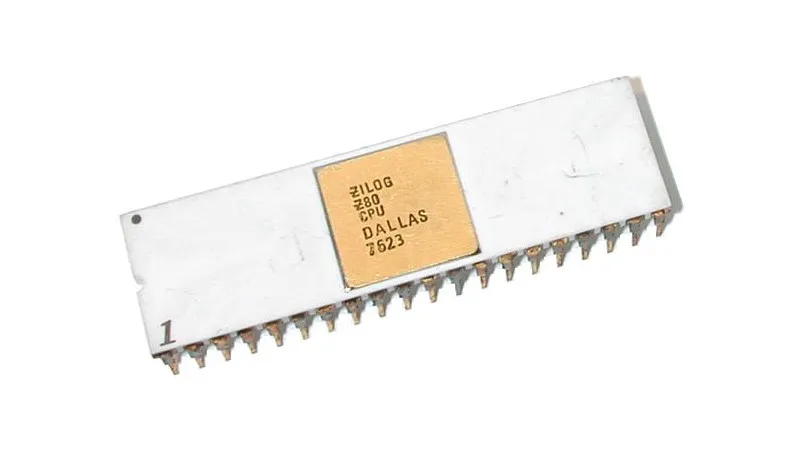
Perhaps the saddest thing about the Zilog Z80 is that this humble 8-bit microprocessor wasn’t allowed to live until its 50th birthday. This, fortunately, doesn’t prevent people like [David Oberhollenzer] from reminiscing on this influential processor and what it means to them personally.
First released in July of 1976, this humble 8-bit miracle would go on to power not just a range of home computers, but also be found in everything from industrial controllers to arcade systems. Despite this success, the new owner of Zilog — Littelfuse — decided to put an end to this winning streak in 2024 for the stand-alone processor and its peripherals.
Although the original Z80 ecosystem ceased production, this didn’t prevent hobbyists from creating new operating systems for it, let alone entire new development toolchains, or demonstrate multitasking on the Z80.
Meanwhile, the Z80 architecture is still very much alive and kicking, such as in the form of the eZ80 SoC in the TI 84+ CE calculator that [grubbycoder] ported Sonic 2 from the Z80-based Sega Master System.
Among all of this modern-day Z80 goodness, we also have a few gems from the past to admire, such as the OS that Zilog made for this architecture in the form of Z80-RIO, which was sadly not as successful as the hardware.



London Mayor Sadiq Khan handed a peerage by Keir Starmer alongside 15 other Labour figures… just days before the PM leaves No10


Weekend Open Thread – Corporette.com


The House | The City of London can help the new chancellor deliver growth in every postcode


Young campaigners urge incoming PM to act on outdoor junk food ads


CFTC blocks Kalshi from unwinding Michigan trades after court order


Nvidia Stock Slips After Big Tuesday Rally as Huang Confirms Vera Rubin Chip Is Now in Production Today


Ripple Payments Joins MiCA With 14 Firms, Does It Mean Anything For XRP?


Democrats look to World Cup watch parties to register thousands of voters

Disney’s Most Ambitious Failed Star Wars Attraction Is Coming to SDCC


Ripple wins EU-wide access as ESMA adds it to MiCA register

Two July Windows Left: The CLARITY Act’s Senate Fight and What Failure Means


Palantir Shares Rise After Expanded Nvidia Partnership and Fresh Analyst Upgrades Ahead of Earnings Day


Injective Submits SEC Transfer-Agent Registration to Onchain Ownership Records


Get Your ESP32 Sunny Side Up With This Solar Dev Board


XRP BOMBSHELL… XRP OMBOARDED FOR TRANSACTIONS!!!


Registration is now open for March for Men with Kev 2026


Dark Secrets Emerge When Jailbreaking LLMs

New Cornerback Enters Vikings Trade Rumor Mill


Money | Class 12 Economics | CBSE Board Exam 2026-27


Banco Bilbao Vizcaya Argentaria, S.A. (BBVA) Discusses Global Macro Environment and Economic Outlook for Core Markets Transcript




You must be logged in to post a comment Login