


Connect with us
DAPA Banner
DAPA Coin
DAPA
COIN PAYMENT ASSET
PRIVACY · BLOCKDAG · HOMOMORPHIC ENCRYPTION · RUST
ElGamal Encrypted MINE DAPA
🚫 GENESIS SOLD OUT
DAPAPAY COMING

Tech

Common Problems With Stihl Weed Eaters That Owners Have Experienced

Published

on


It’s no secret that Stihl makes some of the best string trimmers that money can buy, and even its less expensive models are still really good. The brand is known for its reliable yard and outdoor power tools, and its products are generally used by professionals and homeowners alike. It’s not uncommon to see Stihl products rank near the top of many tool roundups, including lists of the best chainsaws. With that said, no product is perfect, and from time to time, you may find that your Stihl string trimmer is causing you some trouble. As with most things, some problems are more common than others and are things that owners wrestle with semi-regularly. 

Problems can arise for a variety of reasons. Gas-powered string trimmers have a maintenance regimen that has to be followed, or else the trimmer may develop some problems. Stihl’s battery-powered string trimmers are also not immune to the occasional hiccup. It should also be said that sometimes issues are caused by the owner, as there are some things that people do with their string trimmers that they shouldn’t be doing. Whatever the cause, problems arise, and they can be fixed. 

Advertisement

So, if you’re having some trouble, or you’re wondering what kind of trouble you might run into with a Stihl string trimmer, below is a list of common issues based on what Stihl says on its FAQ page, along with discussions on social media and forums, as well as their most common fixes. 

Advertisement

String trimmer doesn’t run at full speed

Per Stihl, this is something that can happen often enough that the brand includes this problem toward the top of its FAQ page. The problem is described as being able to start and idle the string trimmer normally, but the trimmer never ramps up to full throttle and therefore does not cut grass or weeds effectively. Conversely, another fairly common problem is that the string trimmer will only remain on and functioning if it’s at full throttle. 

There are several potential causes for this, and they are all in the fuel system. Stihl says that the first thing you should do is check your fuel mixture. The brand says that you should never store fuel mix for longer than 60 days, so if it’s your first string trim of the year, you’ll want to drain the old fuel and replace it with fresh fuel. All of Stihl’s gas-powered equipment uses a fuel-to-oil ratio of 50:1. Improperly mixing fuel and oil can also cause this problem. 

Barring that, the common solutions for almost any problem like this are to check the spark arrester screen in the muffler to see if it’s clogged (and clean it if it is), check or replace the fuel filter, and check or replace the air filter. You’ll also want to check the spark plug and remove any excess carbon, just in case. If the problem persists, Stihl recommends sending it in for service. 

Advertisement

Bumping the trimmer doesn’t produce extra string

For the uninitiated, bumping is the act of running your string trimmer at full throttle and “bumping” the bottom of it against something hard like a brick wall or a concrete sidewalk. The centrifugal force pulls fresh string out from the head of the string trimmer, allowing you to keep cutting. This is a popular design on many big-name string trimmers. A common issue on Stihl trimmers, and to be fair, on many trimmers, is that you don’t get more string when you bump the trimmer. 

This can be caused by all sorts of potential problems, but they all revolve around the same part, the head of the string trimmer. You may be out of string, in which case you’ll need to load more into your existing head, a process that Stihl outlines here. The head may also be damaged or jammed, which would require you to take it apart to check for jams or broken pieces. This is largely the same process as replacing the string, except this time you’re looking for broken parts or a clog that you can clear. 

Advertisement

The most expensive, but easiest, way to fix basically any bumping or string trimmer head issue is to simply buy another head. Stihl sells these for nearly all of its trimmers, and they come with string pre-loaded. You should at least try to re-string your own trimmer head first, though, because it is much cheaper. 

Advertisement

The string trimmer head is locked up

It may seem like this is the same issue as the one above, but it is a different problem. In this case, people sometimes complain of a head that is locked up. That means you hit the throttle and the head doesn’t spin. This effectively stops the string trimmer from being able to cut anything since the string remains stationary. People may refer to this problem as the head seizing or locking up, which can be caused by several different potential issues. Replacing the head or replacing the string doesn’t fix this one. 

The problem tends to come from a couple of different places. First, it’s possible that you used straight gasoline instead of a gas and oil mixture (which is necessary for most two-stroke yard tools), which can cause the engine to seize due to a lack of lubrication. The solution here is to take it apart, clean it, use the proper fuel mixture, and then try again. Another common problem is a malfunction of the clutch mechanism, which may cause the head to stop spinning if the clutch can’t engage. Again, this includes disassembling the trimmer, cleaning it, repairing any damage (if you can), and then seeing if that worked. 

There are some YouTube videos that show how to do this. However, if you’re not mechanically inclined, the best option is to send it to Stihl for service. 

Advertisement

A battery-powered string trimmer won’t run

For those who go with a battery-powered Stihl string trimmer, you are not immune to having common issues of your own. A fairly common complaint is that people will insert the battery into their string trimmer, and it’ll just flat not work. You’ll hit the button to start it, and it simply won’t do anything. This can also happen to gas-powered string trimmers, but the reason is usually an incorrect fuel mixture or a flooded engine, which we’ll get to shortly. 

Battery-powered Stihl string trimmers have a few different things that can cause them not to start. The first, and most obvious, is that the battery might be dead. Take it out of the machine and put it into a charger for a bit to see if that helps. Barring that, there are two other common problems. The first is that Stihl uses a unique two-click battery system. If you don’t fully seat the battery with both clicks, it will not run, so give it another push to see if you get that second click. The other is that debris may make its way between the battery and the contacts, so clean out the battery connector area to see if that helps as well. 

Advertisement

One less common problem is debris getting inside the machine and getting jammed in a switch that connects the battery power to the rest of the machine. You can disassemble the unit and clean it out to fix that one if it’s happening to you. 

Advertisement

The string trimmer is flooded

Anything with a gas engine can flood, including cars and other heavier machines. A flooded engine occurs when there is too much fuel in the combustion chambers of the motor. This makes the fuel-air mixture too saturated with gas, preventing combustion and causing your machine to simply not start. This can happen to any engine, but it most commonly occurs in engines that have a carburetor, which gas-powered Stihl string trimmers have. It can be caused by over-priming the engine before starting it, a carburetor malfunction, or even cold weather. 

The fix generally requires you to find the cause. In my experience, most flooded engines are caused by over-priming. To fix that, you can simply wait for a little while. The excess fuel will evaporate, and then you can try again. From there, leave your Stihl string trimmer’s throttle lock on (this gives the engine more air), and try again without engaging the choke or priming the engine again. You may have to pull the cord repeatedly, but most of the time, this will fix the problem. 

If it does not fix the problem, the problem is most likely the carburetor or the motor itself. In that case, your best bet is to fix it or, if you’re not mechanically inclined, send it back to Stihl for repair.

Advertisement


Source link

Advertisement
Continue Reading
Click to comment

You must be logged in to post a comment Login

Leave a Reply

Tech

The 5 best fitness trackers we’ve seen so far this year, from Google and Garmin to sleeper hits from Amazfit

Published

on

I’ve been writing about fitness tech for years, and we’re finally at a point where more affordable fitness trackers are now every bit as capable as models that would have cost hundreds of dollars or pounds, little more just a few years ago. That’s not to say premium options don’t have their place too, but many of the standouts this year have certainly been on the cheaper end.

Whether it’s screenless devices showing less can be more, the latest iteration of the popular Oura Ring, or a pair of Amazfit options that can cut it with much more expensive models, here are the best fitness trackers in 2026 so far, in no particular order.

1. Google Fitbit Air

Google Fitbit Air

(Image credit: Peter Hoffmann)
  • Release date: May 26
  • Rating: 4/5

Source link

Continue Reading

Tech

Google is testing a webcam CAPTCHA that scans your hand, but it's already been bypassed using a photo

Published

on


Google is working on a new kind of challenge to improve its reCAPTCHA system, using biometric identification to confirm that the user is indeed human. The new method is officially named “hand gesture verification” (HGV), and, according to early testing, is mostly useless. Even worse, HGV might pose a significant…
Read Entire Article
Source link

Continue Reading

Tech

2026 Frikkin Lasers Challenge: A 3D-Printed Raman Spectrometer

Published

on

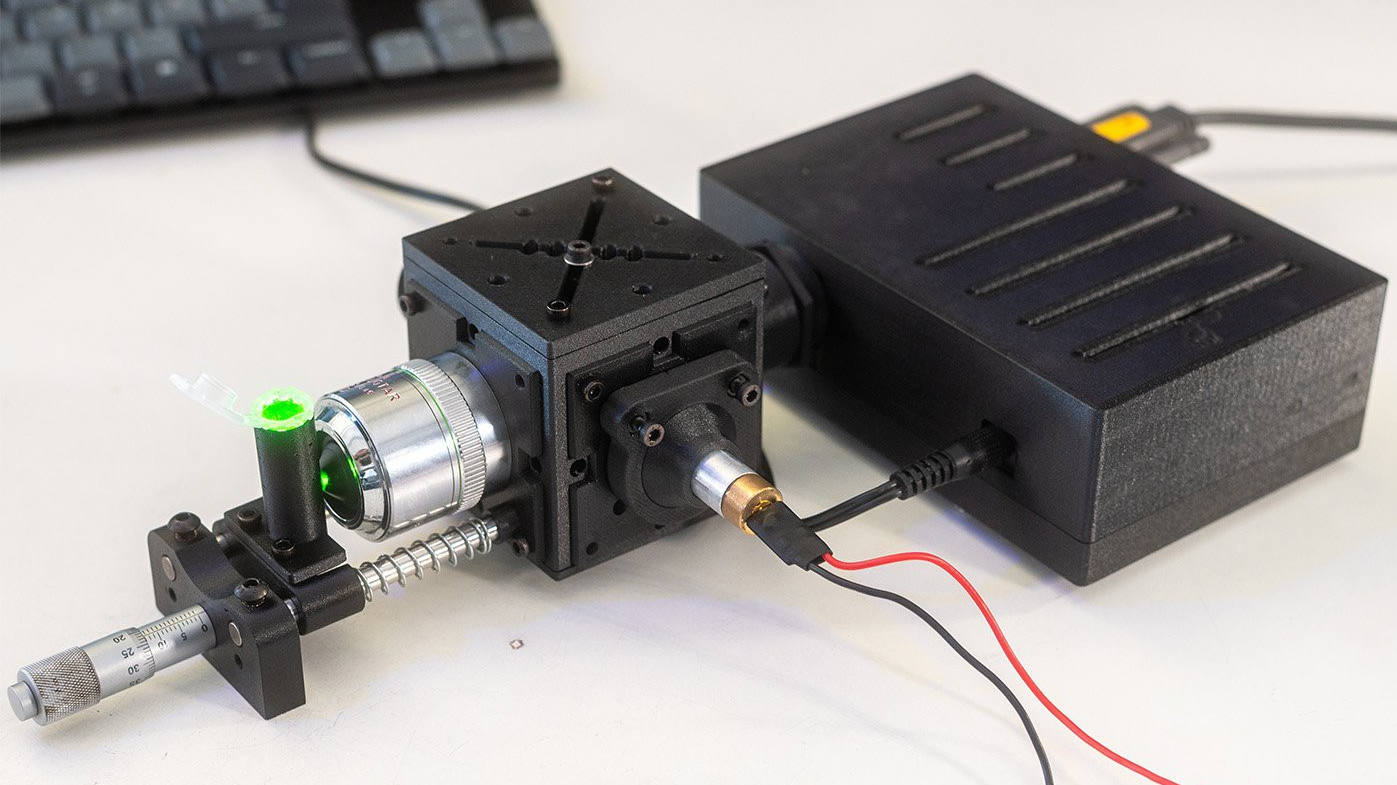
When light reflects off a surface, not all of it reflects off at the same wavelength; some photons impart a portion of their energy to raising the vibrational energy of the surface’s molecules, and are thus scattered away at a lower energy and longer wavelength. This is called Raman scattering, and the precise wavelength shifts are characteristic of the particular molecule being illuminated. It can therefore be used in Raman spectroscopy to identify molecules; these spectrometers are normally elaborate, expensive instruments, but [Allegedly Science] was able to build a simple system with surprising sensitivity.

The system is named the CubeRaman, after the cube-shaped body containing the main optical path. It uses a cheap 532-nm laser module as a monochromatic light source, with a bandpass filter to eliminate stray infrared light. The beam then reflects off a 45-degree dichroic mirror and passes through a microscope objective onto the sample. Raman-shifted light then scatters back through the objective, passes through the dichroic mirror and a long-pass optical filter, and is focused by an achromatic lens onto the slit of a spectrometer. The entire housing is 3D-printed, as are most parts of the kinematic mounts; the kinematic mounts use adjustment screws running through inserts in the mount, with the tips of the screws held in place by magnets.

[Allegedly Science]’s first test was with a raw diamond, which clearly showed the expected Raman shift. When trying to test a chemical inside a glass bottle, it mainly returned the signature of silica, making thin-walled cuvettes essential. Ethanol inside a plastic bottle was similarly interesting; varying the focal distance changed whether it detected the characteristic shift of ethanol or polypropylene. Nevertheless, [Allegedly Science] thinks there’s still room for improvement, particularly by eliminating stray light and using a narrower slit in the spectrometer.

Advertisement

Although we’ve seen an open-source Raman spectrometer before, this design is significantly more accessible. It does still require a separate spectrometer, though, so it might be worth considering some other spectrometer options.

Advertisement

Source link

Continue Reading

Tech

A Brief History of Fireworks

Published

on

In the 1970s, American Fireworks, a family-run pyrotechnics company in Hudson, Ohio, used a “home run box” to offer quick and easy fireworks displays for the Cleveland Indians (now the Cleveland Guardians) baseball games.

The red wooden crate had metal silos to store the rockets. Each switch on the control panel allowed the operator to set off a different firing sequence. This setup instantly triggered the display whenever a Cleveland batter hit a home run. Before computerized firing systems became common, panels like this represented the state of the art. But they did not eliminate human error. On 15 September 2015, the technician in charge of the Indians’ pyrotechnics accidentally set off the fireworks when the opposing team hit a home run. The embarrassed technician was caught on camera holding his head in his hands.

Two photos, one showing a rusted metal box with labeled buttons propped against a painted red wooden box, the other showing a person placing round cylinders into a tall rectangular box that\u2019s resting in bleachers. This home run box and control panel [left] were used to launch fireworks during Cleveland Indians games. The rockets were housed in metal silos within the box.Left: Jahna Auerbach/Science History Institute; Right: American Fireworks

The Early History of Fireworks

Fireworks are one of the many Song Dynasty inventions that migrated from China through the Middle East and into Europe by way of trade routes. Around 200 B.C.E, the Chinese invented small firecrackers by simply tossing pieces of bamboo into a fire. The air inside the bamboo would expand and crack the wood, and the pop supposedly scared away evil spirits. After the invention of gunpowder—a mixture of sulfur, charcoal, and potassium nitrate—about a thousand years later, some clever person thought to pack the powder into the bamboo tubes and ignite them, launching the first fireworks—and the first rockets—into the sky.

Advertisement

Two illustrations of historic fireworks, one showing wheel-shaped fireworks on a pole and the other showing a dragon figure attached to a rocket on a rope strung between two buildings. John Bate’s popular 1634 book on fireworks described fire wheels [left] and a flying dragon [right], consisting of a dragon-shaped rocket that sped along a rope. SSPL/Getty Images

By the Renaissance, specialized schools for pyrotechnics had emerged across Italian city-states, and European craftsmen began creating large spectacles for royal occasions and religious celebrations. In 1634, John Bate published the four-volume series The Mysteries of Nature and Art, the second of which described how to create all manner of fireworks. Woodcut illustrations showed fire wheels (now called pinwheels or Catherine wheels), as well as the more ambitious flying dragon—a rocket shaped like a dragon that emitted sparks while speeding across a rope strung between two buildings.

During the 18th and 19th centuries, chemists and alchemists discovered new chemical compounds and isolated new elements that expanded the palette for fireworks. Adding barium nitrate produced green, for example, and strontium nitrate produced red. Chemists also mixed in metal particles to create sparkles.

The 1880s saw the introduction of the loud screech or whistle that precedes the exploding boom. Amédée Denisse, a graphic artist by trade and a fireworks hobbyist, discovered that a cardboard tube containing potassium picrate added that satisfying auditory effect to his fireworks display.

How Did Fireworks Become a 4th of July Tradition?

British colonists brought fireworks to the Americas. In 1608, Captain John Smith set them off to celebrate the founding of Jamestown, Virginia, the first permanent English settlement in what would become the United States. More than a century and a half later, while the Continental Congress was meeting in Philadelphia in July 1776, future U.S. president John Adams speculated in a letter to his wife that Independence Day would be celebrated “with pomp and parade, with shews, games, sports, guns, bells, bonfires and illuminations from one end of this continent to the other.”

Advertisement

Although Adams got the day wrong—he mistakenly thought the committee would complete the revisions to the Declaration of Independence by the 2nd of July—he was correct in foreseeing that Independence Day would be celebrated with lots and lots of fireworks. Just a year later, on 5 July 1777, the Pennsylvania Evening Post reported on the grand exhibition of fireworks the previous night, which began and concluded with 13 rockets representing the 13 colonies.

It’s safe to say that the United States is still obsessed with fireworks. According to the American Pyrotechnics Association, the country spends about US $3 billion on fireworks each year; it’s also the leading importer of fireworks. As the U.S. gears up to celebrate its 250th birthday this 4th of July, expect to see fireworks displays everywhere, from kids with sparklers running in backyards to ambitious professional displays for huge crowds.

Color photo of spectators watching an elaborate fireworks display against a city skyline. Modern fireworks displays like the Macy’s 4th of July celebration in New York City are computer choreographed and controlled. Roy Rochlin/Getty Images

Fireworks today are an engineering marvel. State-of-the-art displays are computer controlled with precise digital timing, often tied to musical accompaniment. Designers can spend weeks choreographing complicated patterns and assigning launch times, shell types, and colors. The completed script is uploaded to an electronic firing system, which consists of the control panel and hundreds or thousands of firing modules that connect to the rockets. It can take days to set up the launch site for a large-scale display that lasts just minutes.

For example, last year more than 60 licensed pyrotechnicians worked for 12 days to arrange more than 80,000 shells for the Macy’s 4th of July Fireworks in New York City. Each of the firework shells measured up to 25 centimeters in diameter and weighed more than 13 kilograms—a far cry from their bamboo ancestors. More than 120 kilometers of wire connected the bundles of explosives to twelve computers. All that for a 25-minute display.

Advertisement

As much as I unabashedly love fireworks, they’re not for everyone and they do have a downside. The explosions can trigger PTSD for military veterans, and they can also upset animals. Every year, thousands of people are injured by mishandled or damaged fireworks. Known to set off wildfires, fireworks are often banned during droughts. Scientists who’ve studied the environmental impact of fireworks displays have noted their tendency to disperse airborne metallic particles and other harmful particulates.

Nighttime photo showing a young man's face displayed in the sky over a city. A drone light show over Busan, South Korea, shows a member of the K-pop band BTS.Hwawon Ceci Lee/Anadolu/Getty Images

Perhaps to counter those drawbacks, or maybe it’s just the next technological evolution in aerial display, companies are now offering drone light shows. Fleets of hundreds or thousands of LED-toting drones can be programmed to hover in the air and fly in formation, forming logos and other designs that are more stable than exploding fireworks.

These exquisitely choreographed light shows are truly impressive. And yet I relish the full sensory experience of fireworks, including the booms, the smoke, and the smell. So whether you’re celebrating your country’s birth, Guy Fawkes Day, Saint Sylvester’s Night, New Year’s, Diwali, or simply cheering a home run from your favorite team, I hope you get to enjoy this millennia-old technological marvel.

Part of a continuing series looking at historical artifacts that embrace the boundless potential of technology.

Advertisement

An abridged version of this article appears in the July 2026 print issue as “Rooting for the Home Team.”

From Your Site Articles

Related Articles Around the Web

Advertisement

Source link

Continue Reading

Tech

Did Microsoft Shift Its Profits to Low-Tax Countries?

Published

on

Microsoft is apparently shifting its profits to countries with low taxes — and out of countries where they have many more employees and significant sales. Back in 2005 Former Microsoft CEO Steve Ballmer even said that a low corporate tax rate “is part of the overall advantage of doing business in Ireland,” remembers long-time Slashdot reader theodp. (Ballmer added “It would be disingenuous to say otherwise.”)

But in 2026 the EU now requires a country-by-country compliance report, and the New York Times notes that Microsoft “was most likely the first major U.S. technology company to make a so-called country by country report of its finances to comply…”

Like other big companies, Microsoft uses transactions between subsidiaries to shift profits around to reduce its tax bill. The report revealed a consistent pattern: high returns in low-tax jurisdictions and slim margins in higher-tax ones. The report showed the sometimes absurd results. Microsoft said it had generated almost 40 percent of its pretax income in tax-friendly Ireland, where it employed about 3 percent of its global work force. In higher-tax Germany, the largest economy in Europe, Microsoft earned barely half of 1 percent of its global profits, it said.

Excluding Ireland, the company said, it generated less than 2 percent of its worldwide pretax earnings in Europe… [In Luxembourg Microsoft said it had $283 million in pretax income with only 34 employees.]

Advertisement

[America’s] Internal Revenue Service is challenging profit-shifting transactions used by Microsoft, and is seeking back taxes of nearly $29 billion4. The company has said it disagrees with the I.R.S. and said in a securities filing that it “will vigorously contest” the proposed tax bills.

This week a Microsoft blog post offered their own “context,” arguing that tax is “one important measure of contribution, but it is not the only one.

“Our investments, partnerships, infrastructure, and long-term presence in countries around the world also reflect a commitment to helping strengthen the economies and communities where we operate, today and for the future.”

Source link

Advertisement
Continue Reading

Tech

EV Batteries Defy Expectations, Last Hundreds of Thousands of Miles

Published

on

247,000 miles on an EV battery? So says the owner of a U.K.-based used-car sales company that specializes in Evs, who tells the Wall Street Journal EV batteries keep performing well even after several hundred thousand miles. “They are proving themselves to be exceptionally reliable.”

After five years on the road, the average EV will still be able to drive up to 95% of its original range, according to Recurrent, a data-science company that provides a battery-monitoring tool for EVs — better than many in the auto industry expected…

Potential new car buyers’ fear of having to pay for a battery replacement is the number one reason they choose to steer clear of EVs, according to a 2025 survey from industry research firm AutoPacific. When early EVs hit the market, buyers’ concerns were well-founded. Roughly one in 12 EVs built from 2011 to 2016 have had to have battery replacements. But new data shows that more modern EVs are doing better so far. Among EVs built from 2022 on, 0.3% have had battery replacements, according to a 2025 study from Recurrent. As battery technology has advanced, EVs have avoided problems like the ones that plagued the original Nissan Leaf when it hit the market in 2010, for example. Those cars lacked the battery-cooling technology that is in newer EVs, and they made headlines for wearing down quickly. Buyer perception hasn’t quite caught up, according to Scott Case, co-founder and chief executive of Recurrent…

The newest battery-powered EVs have lifespans comparable to internal-combustion-engine vehicles, even when driven more miles, according to Viet Nguyen-Tien, a research officer at the London School of Economics who focuses on Evs. Improvements in car batteries’ chemical contents, battery-management systems and thermal regulation have been the difference in making batteries last longer and cost less, Nguyen-Tien said. Battery prices have fallen more than 90% since 2010, according to a BloombergNEF report from late last year. Industry analysts say battery-replacement costs are also improving as more EVs are designed for repairability in the long-haul. An out-of-warranty battery replacement can cost anywhere from $5,000 to $16,000, depending on the manufacturer, according to Recurrent. But many EV manufacturers have shifted to allow smaller components of their battery packs to be repaired, which can allow owners to avoid the full costs of a battery replacement, Case said.

Advertisement

EV batteries aren’t without their challenges, though. A battery that is frequently fast-charged with high power loses its range, on average, at twice the rate of a battery charged at a lower power, according to telematics company Geotab. Frequently charging a battery to 100%, or letting it rest at 0% for extended periods, can also reduce range long-term. And EVs regularly deliver less range in extreme cold or heat.
The article also includes two new projections on EV adoption:

  • “The share of new EVs sold is expected to nearly double to 11% of new-car sales in the U.S. by 2030, according to industry consulting firm AlixPartners.”
  • “Globally, EVs already make up 15% of new-car sales and are expected to form nearly a quarter of the global market by 2030, according to AlixPartners.”

Source link

Advertisement
Continue Reading

Tech

Spotify’s streaming fraud issue runs so deep that Kalshi traders are profiting from rigged charts

Published

on

Spotify has removed more than half a million streams from Malcolm Todd’s song “Earrings” after finding suspected bot activity, according to a report by Financial Times.

The track, first released in 2024, suddenly rose to No. 1 on Spotify’s daily U.S. chart after a sharp jump in streams. At the same time, traders on prediction market Kalshi had been betting on whether Todd would land a No. 1 song on Spotify USA before the end of June. There is no suggestion Todd or his team were involved in any attempt to boost the song’s numbers. Kalshi has said it is investigating the matter.

A chart move became a payout

According to the report, U.S. streams of “Earrings” jumped almost 70% between Sunday and Monday. Spotify later removed streams it believed were initiated by bots, which are designed to play tracks repeatedly and make them appear more popular than they are.

After the correction, “Earrings” fell to fourth place on Spotify’s U.S. chart for Monday. Kalshi, however, had already paid out traders who bet on Todd reaching No. 1 before the end of June. According to the Financial Times, traders who backed the long-shot outcome could have made roughly 20 times their initial wager.

Can Spotify keep its charts clean enough?

Spotify has dealt with fake streams for years, usually as a royalties and chart integrity issue. Now, it has another problem to worry about, since those same charts can be used to settle prediction-market bets.

Advertisement

Spotify’s spam problem also goes beyond music streams. Earlier this year, the company removed tens of thousands of fake podcast episodes tied to illegal online pharmacies and scam websites. Music streaming fraud has become more sophisticated too. Prosecutors previously charged Michael Smith in an AI-assisted streaming fraud case involving bots and billions of artificial plays. He later pleaded guilty.

Spotify says it has “best-in-class” systems to detect and reduce fake streams, and does not pay royalties on manipulated plays. Kalshi says it is in touch with Spotify and is investigating, but the companies are not exactly aligned. Spotify’s legal team reportedly asked Kalshi to remove its logo from the app and website, and Kalshi has added a disclaimer saying its products are not endorsed by Spotify.

Source link

Advertisement
Continue Reading

Tech

Scientists warn Elon Musk’s orbital data centers could blind Earth’s biggest telescopes

Published

on

The race to blanket Earth with satellite internet has unlocked faster connectivity for millions. But according to the European Southern Observatory (ESO), it could also make one of humanity’s oldest hobbies, and one of its most important sciences, a whole lot harder. The organization warns that the rapid growth of satellite mega-constellations could severely disrupt observations made by some of the world’s most powerful telescopes.

Astronomers say the night sky is reaching its limit

According to the ESO, the number of satellites orbiting Earth has exploded in recent years. Starlink alone now accounts for roughly 10,400 satellites, while before 2022, humanity had launched only around 14,450 satellites into space in total. With companies planning even larger constellations, including SpaceX founder Elon Musk’s long-term vision of up to one million orbital “data center” satellites, astronomers fear the problem is only beginning.

To understand the impact, ESO researchers simulated what increasingly crowded skies would mean for ground-based observatories. Their findings weren’t encouraging. Even if future satellites are dim enough to remain invisible to the naked eye, Europe’s Very Large Telescope (VLT) in Chile could lose 28% of its observable field of view. Slightly brighter satellites could have an even greater impact on the Vera C. Rubin Observatory, potentially rendering many of its images unusable for several hours every night.

The solution isn’t fewer launches, though

Importantly, the ESO isn’t calling for an end to satellite internet. Instead, it’s proposing an international cap of 100,000 faint satellites in low Earth orbit, arguing that such a limit would help balance global connectivity with the long-term needs of astronomy. Researchers also stress that satellite brightness matters just as much as the number of spacecraft, since brighter satellites scatter more sunlight and interfere with telescope images.

The bigger takeaway is that this debate extends well beyond any one company. Starlink simply happens to be the largest constellation today, making it the easiest example. There’s also Amazon Leo, which is expected to launch later this year. As more companies pursue massive satellite networks, the challenge will be finding a way to expand internet access without turning Earth’s night sky into one giant obstacle course for astronomers.

Advertisement

Source link

Continue Reading

Tech

I hope Apple keeps the MacBook Neo away from the AI hype and preserves its true identity

Published

on

If there’s one thing that has disrupted consumer tech economics over the last year while changing how we understand and recommend products, it’s the ever-rising cost of memory and chips

The desperate need to scale up AI infrastructure has pushed major manufacturers to prioritize enterprise demand, leaving everyday consumers with far fewer choices. Those available cost significantly more than they did a year ago.

RAMageddon is disrupting consumer tech economics

You could’ve dismissed the memory crisis as a theory, but if even the world’s most valuable consumer tech company is feeling the pressure, it’s safe to say that it’s become a reality today, a harsher reality than many expected. 

Apple has a reputation for arriving late and landing well: OLED displays, always-on displays, and Siri AI all followed that script. Unfortunately, I can say the same for memory-driven price hikes; it’s Apple’s steepest mid-cycle price increase.

Not every product category has been hit equally. In fact, Apple has left iPhones out of this for now. However, tablets, mini PCs, and laptops have borne the brunt of it.

Advertisement

MacBook Neo lost to RAMageddon three months after launch

The situation is so ugly that Apple had to increase the MacBook Neo’s price by $100, a double-digit jump over its launch price. 

If you’re somehow under a rock, Apple’s MacBook Neo took the entire laptop industry by surprise in March, launching it at $599 for the base model, with 8GB of RAM, 256GB of storage, and an iPhone-class chip that was surprisingly capable. 

The Neo sold better than Apple had initially expected; it practically flew off store shelves. Just a month after its debut, the company reportedly increased its order from “several million” units to over 10 million. 

As someone who has been monitoring the Neo’s launch quite closely, I can give you more than a couple of reasons why. 

Why the Neo’s pricing still works

Packing an aluminum unibody into a $599 device while competitors settled for cheap-feeling plastic, bringing Apple Intelligence features previously available only on premium MacBooks and iPhones to a much lower price point, and serving as an aggressive Apple ecosystem gateway, the Neo checked almost every box that mattered; that’s its true appeal. 

Even after the $100 price hike, I’d say that the Neo still commands a unique position in the market, where it’s $400 to $500 cheaper than the entry-level M5 MacBook Air and offers better price-to-performance and value than most options in the segment. 

Advertisement

And that’s exactly why I hope Apple doesn’t “fix” the MacBook Neo next year by turning it into an AI-first device.

Dear Apple: The Neo ain’t broke, please don’t fix it

The consumer tech industry, as a whole, is obsessed with AI. 

Take Windows OEMs as an example. Even though a regular customer doesn’t care about on-device AI features powered by local LLMs or the local AI compute, most brands below the $1,000 mark are running behind Microsoft’s Copilot+ PC tags, which require at least 45 TOPS of on-device AI compute power

That, in turn, requires more powerful CPUs, GPUs, or integrated system-on-chips like Qualcomm’s. Those machines also need larger memory pools and faster memory, all of which inevitably push prices higher. 

That’s precisely why the MacBook Neo — with 8GB of RAM and its reportedly repurposed A18 Pro chip — made so much sense from day one.

Advertisement

It’s built for everyday computing, not local AI workflows

It didn’t need to look good on the specifications table, simply because Apple knew exactly what customers are looking for

People looking for a budget laptop usually want to browse the web, manage their documents and emails, attend Google Meet or Zoom calls, view and edit a couple of photos, and watch new movies or web shows on Netflix or their favorite OTT platform.

That is the target audience the Neo is made for: Neo is not made for people running local LLMs, generating AI images (especially with on-device tools), or editing or generating videos all day long. 

Apple is already embracing a segmented AI strategy

Apple’s current strategy is already segmented. Older iPhones, like the iPhone 15, don’t support Apple Intelligence. While the new Siri AI experience is available on the MacBook Neo and the iPhone 17, more advanced features like on-device Siri voices and natural dictation are limited to the iPhone 17 Pro or iPhone Air

In other words, Apple isn’t treating AI as a uniform experience anyway. The company is comfortable drawing those lines, which means the Neo’s successor doesn’t need to chase parity. It just needs to hold its lane.

If Apple wants to improve performance, it could simply reuse the binned A19 Pro chips, much like it reportedly did with the A18 Pro chip in the Neo, without significantly increasing the price by placing fresh orders. 

Advertisement

Using relatively older tech, like DDR4 memory, which Apple could source at a meaningfully lower cost and is perfectly usable on the device, is fine. 

Neo 2 needs “good enough” hardware, not the latest

The Neo doesn’t need to participate in the AI arms race with desktop-class NPUs, a massive GPU, 16GB of mandatory baseline memory, or even the latest DDR5-class memory chips for browsing through the web or sitting through Zoom calls, especially when the situation will allegedly get worse through the later half of 2026 and 2027.

More importantly, those are the kinds of components that can easily add $100 or $200 to the device’s price, pushing it closer to the $1,000 mark and resulting in internal cannibalization with the Air, which has a much more powerful chip. 

Once that gap starts to blur, the Neo risks losing the very identity that makes it compelling. Keep in mind that the 512GB storage variant already costs $800 in the United States.

Apple wouldn’t be the first to take this approach. Intel is bringing back older processors for budget machines. Dell recently launched laptops powered by Nvidia’s aging RTX 3050 GPU. Neither company pretends that everyone needs the latest CPU or GPU, recognizing the value of “good enough” hardware.

Neo shouldn’t lose its real identity

The Neo worked because it knew what it wanted to be: an affordable entry-level laptop that handles all your lightweight day-to-day tasks while being light on your wallet. Its biggest strength was knowing how few AI it actually needed to succeed. 

Advertisement

I’d like to say only one thing in the end: the best cheap MacBook is worth far more than the cheapest AI MacBook, which costs hundreds more.  

I hope the team in Cupertino keeps that in mind as they work on the Neo’s successor. 

Source link

Advertisement
Continue Reading

Tech

Microsoft's new EU disclosure shows exactly how tech giants separate profits from where the work happens

Published

on


Microsoft said nearly 40% of its pretax income was booked in Ireland, even though only about 3% of its global workforce is based in the country. In Germany, by contrast, the company reported less than half of 1% of its global profits. Across Europe as a whole, excluding Ireland, Microsoft…
Read Entire Article
Source link

Continue Reading

Trending

Copyright © 2025