Most AI GPUs run at shockingly low utilization across production systems
Companies are paying for twenty times more GPU capacity than needed
Overprovisioning is rising sharply instead of improving year after year
Companies across the tech industry are racing to buy massive amounts of AI infrastructure, but most of it does barely any useful work at all.
A report from Cast AI, based on tens of thousands of Kubernetes clusters across AWS, Azure, and GCP, found that average GPU utilization sits at just 5%.
Many teams deploy sophisticated AI tools to manage their applications, yet those same tools are not used to optimize the underlying infrastructure.
Article continues below
Advertisement
The numbers are getting worse, not better
Organizations pay for roughly 20x more GPU capacity than their workloads actually use at any given moment.
The numbers come from direct measurements of production clusters and millions of compute resources before any optimization was applied.
Advertisement
“This is the third year we’ve published this report. The numbers are worse,” said Laurent Gil, co-founder and President of Cast AI. “CPU utilization fell to 8%, down from 10%. Memory dropped from 23% to 20%.”
The report also measured something called overprovisioning, which is the gap between what workloads actually need and what teams allocate to them.
Sign up to the TechRadar Pro newsletter to get all the top news, opinion, features and guidance your business needs to succeed!
CPU overprovisioning rose from 40% to 69% year over year, while memory overprovisioning now stands at 79%.
Advertisement
This means organizations reserve nearly twice as many CPU resources and four times as much memory as their workloads actually consume.
In short, organizations pay for infrastructure that their workloads do not even request, and the trend is accelerating instead of improving.
The situation gets even more expensive when comparing CPU and GPU costs directly. A CPU core sitting idle costs only cents per hour, but a GPU sitting idle costs dollars per hour.
Advertisement
For the first time since EC2 launched in 2006, GPU prices are rising instead of falling.
In January 2026, AWS raised H200 Capacity Block prices by 15%, citing supply and demand, which broke a two-decade precedent.
“At 5% utilization, the math doesn’t work,” the report states. The hoarding instinct makes sense because lead times are long, yet that same hoarding feeds the scarcity loop that drives prices even higher.
Not every cluster performs this badly, and one organization hit 49% utilization on H200s and 30% on H100s, well above the 5% average.
Advertisement
The difference comes down to automation rather than luck or better hardware. The tools to fix this already exist, including automated rightsizing, GPU sharing or time slicing, and Spot management.
However, most teams never get there because overprovisioning feels safer than running out of capacity, but that safety comes at a steep price.
The teams that closed the gap stopped treating resource efficiency as a manual, one-time task and started treating it as an automated, continuous process.
But Cast AI data reveals that most companies seem willing to keep paying large fees rather than change their habits.
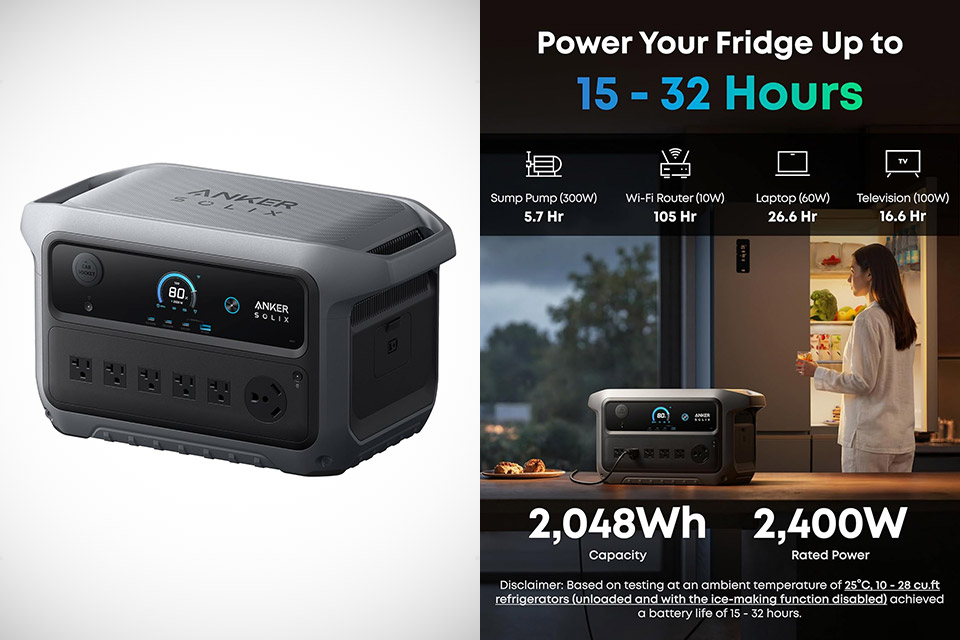
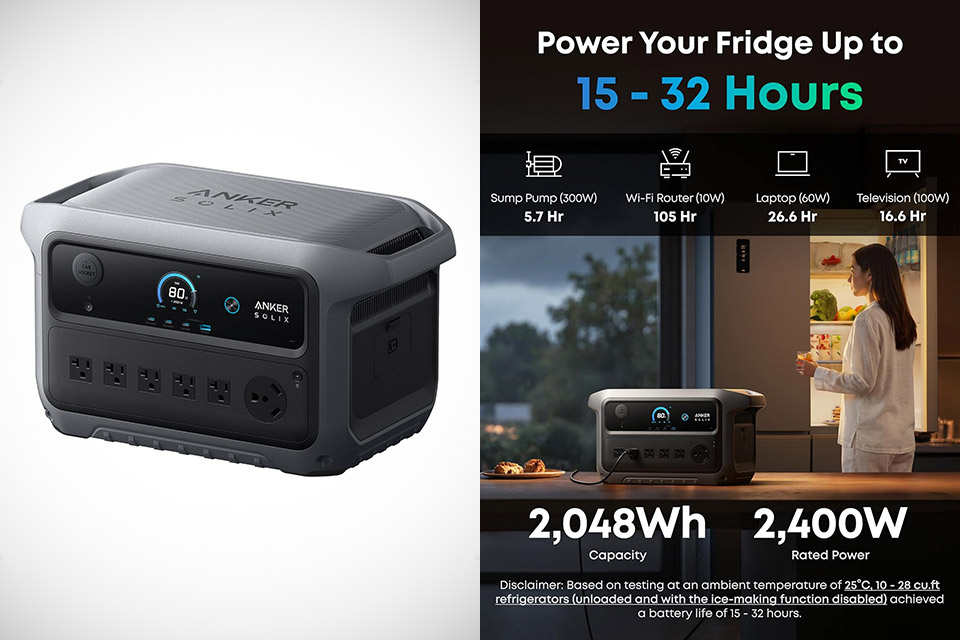
People often talk about finding value when a product simply works for you and does not involve a significant trade-off in performance or cost. The Anker Solix C2000 Gen 2 portable power station, priced at $799.99 (was $1,499), has a capacity of 2,048 watt-hours and is powered by lithium iron phosphate cells that can withstand thousands of charge cycles without trouble. With so much energy saved, you can power a conventional dual-door fridge for up to 32 hours on a full charge.
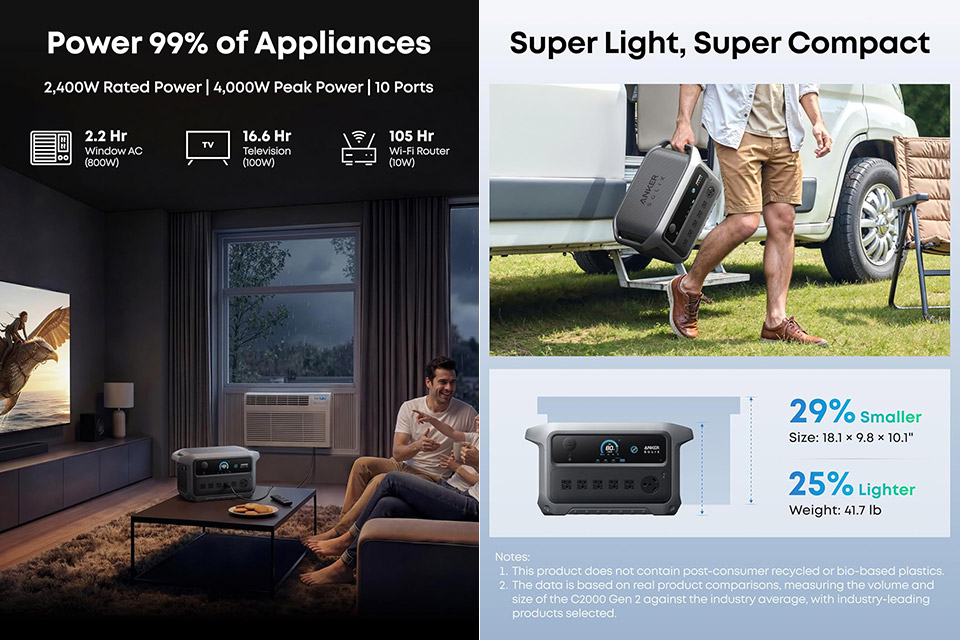
The output is consistent at 2,400 watts and can reach 4,000 watts, so using a window air conditioner, power tools, or small appliances will not disrupt your power supply. Five regular AC outlets will handle most household plugs, plus there’s an extra RV-style connector and a slew of USB connections to keep your phone, laptop, and lights all charged at the same time.
Charging is also quite flexible, as a typical wall socket will charge the unit from empty to full in just 58 minutes. Solar charging accepts up to 800 watts, and adding a wall power supply accelerates the process even further. If you’re on the road, the auto alternator charging works exactly as you’d think, and there are five different ways to top it off, ensuring that downtime is minimal. What really stands out in real-world applications is efficiency, and this isn’t just about raw statistics. The standby drain is minimal, around 9 watts, allowing the station to be ready for weeks without depleting its own battery.
It’s also pretty nice to know that the unit is small and light enough to toss in the car trunk or carry across a campsite without breaking your back, weighing in at 41.7 pounds and measuring roughly 18 by 10 by 10 inches, making it much smaller and lighter than some of the other units with the same capacity. If you need additional power in the future, simply add another battery, doubling the total capacity to 4,096 watt-hours, eliminating the need to purchase a new system. During a power outage, the operation can be operated quietly in your bedroom or living area. The app allows you to check the battery level, predict the runtime, and turn on or off the ports remotely, allowing you to keep an eye on things even when you are not present.
France Titres, the government agency in France for issuing and managince administrative documents has disclosed a data breach after a threat actor claimed the attack and stealing citizen data.
Also known as Agence nationale des titres sécurisés (ANTS), the administrative body operates under the French Ministry of the Interior, serving as the managing authority for official identity and registration documents in France. This includes driver’s licenses, national ID cards, passports, and immigration documents.
According to an announcement the agency published yesterday, the attack occurred last week, and while the investigation is still ongoing, several data types for an undisclosed number of individuals may have been exposed.
“On Wednesday, April 15, 2026, the National Agency for Secure Documents (ANTS) detected a security incident that may involve the disclosure of data from individual and professional accounts on the ants.gouv.fr portal,” reads ANTS’s announcement.
The types of data that may have been exposed are:
Advertisement
Login ID
Full name
Email address
Date of birth
Unique account identifier
Postal address (for some)
Place of birth (for some)
Phone number (for some)
ANTS stated that it is currently in the process of notifying those identified as impacted.
The agency noted that the exposed information does not allow unauthorized access to its electronic portals. However, the same data can be used in phishing and social engineering attacks.
“No action is required from users. However, they are advised to remain highly vigilant regarding any suspicious or unusual messages they may receive (SMS, phone calls, emails, etc.) that appear to come from ANTS,” the agency warned.
ANTS has notified the data protection authority (CNIL), the Paris Public Prosecutor, and has also involved the national cybersecurity agency (ANSSI) in the response effort. The agency warned that the sale or dissemination of the data is illegal.
19 million records claimed stolen
On April 16, a threat actor using the moniker ‘breach3d’ claimed the attack on hacker forums claimed the attack on ANTS, alleging to be holding up to 19 million records.
Advertisement
The threat actor claims that the stolen data contains full names, contact details, birth data, home addresses, account metadata, and gender and civil status.
The data has been offered for sale for an undisclosed amount, so it has not been broadly leaked yet.
ANTS saus that user do not need to take any action but recommends exercising “extreme caution” about suspicious or unusual communication over SMS, voice, and emails appearing to come from the agency.
BleepingComputer has contacted ANTS to ask about the threat actor’s allegations, but we have not received a response as of publishing.
Advertisement
AI chained four zero-days into one exploit that bypassed both renderer and OS sandboxes. A wave of new exploits is coming.
At the Autonomous Validation Summit (May 12 & 14), see how autonomous, context-rich validation finds what’s exploitable, proves controls hold, and closes the remediation loop.
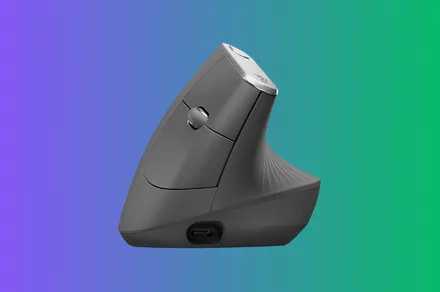
If you spend most of your working day at a mouse, the Logitech MX Vertical is one of the more practical desk upgrades you can make, and at $74.99 it’s down $45 off its $119.99 list price in a limited-time deal. The vertical design isn’t a gimmick: Logitech’s own testing shows a 10% reduction in muscular activity compared to a standard mouse, and the 57° wrist angle addresses the pressure points that build up over a long day in a way that a standard horizontal mouse simply doesn’t.
What you’re getting
The MX Vertical’s 57° angle puts your hand in a natural handshake position rather than the pronated grip that standard mice require. That rotation takes the pressure off the forearm and wrist, and the dedicated thumb rest positions your thumb comfortably without any adjustment period. Logitech worked with leading ergonomists on the design criteria, which is reflected in the result: this is a mouse that was built around how the human hand actually sits rather than retrofitted with a vertical angle as an afterthought.
The 4000 DPI high-precision sensor means less physical hand movement to cover the same cursor distance, which compounds the fatigue reduction across a full working day. A cursor speed switch on the top of the MX Vertical lets you adjust DPI on the fly without diving into software settings, which is a practical detail for anyone switching between tasks that need precision and those that don’t.
Multi-device support covers up to three Windows and Apple computers simultaneously, with Easy-Switch toggling between them. The rechargeable battery removes the ongoing cost of disposables, and the textured rubber surface keeps the grip secure without feeling clinical. Wireless connectivity keeps the desk clean.
Advertisement
Why it’s worth it
Ergonomic mice with serious sensor specs and multi-device support typically hold their price well. The MX Vertical at $74.99 brings all of that to a price that makes the upgrade decision straightforward for anyone already experiencing wrist discomfort or looking to get ahead of it, and the limited-time pricing makes this worth acting on before it moves back up.
The bottom line
The Logitech MX Vertical at $74.99 is one of the more genuinely useful desk upgrades available at this price. The vertical design, 4000 DPI sensor, and multi-device support add up to a mouse that improves how your wrist feels at the end of the day and performs well enough to make no compromises doing it, and the $45 saving makes the timing right.
The Kindle Colorsoft has been one of the more interesting e-readers since launch, but its original price made it a harder sell when the standard Paperwhite offered so much for considerably less money.
The headline feature is the Colorsoft display, a 7-inch panel that renders book covers, illustrated titles, and highlighted annotations in colour while retaining the paper-like quality that makes e-ink easier on the eyes than a backlit tablet screen.
Advertisement
That highlighting feature is more useful than it might initially sound, because being able to mark passages in yellow, orange, blue, or pink makes it far easier to return to specific sections when studying, researching, or simply revisiting a favourite passage.
The display also adjusts from white to amber, which means you are not stuck with a harsh cold light when reading late at night, and the transition is smooth enough that most readers will find a comfortable setting without much fiddling.
Battery life comes in at up to 12 weeks on a single USB-C charge, which is a meaningful figure for anyone who has grown tired of managing yet another device that needs weekly topping up before a trip or commute.
Advertisement
There is also a Page Colour feature that inverts the black text and white background within books, sitting somewhere between standard mode and full dark mode, and it is particularly useful for preserving colour in illustrated covers while keeping the reading experience comfortable.
Being refurbished means the unit will have been tested and certified before despatch, though buyers should factor in that a case is sold separately if they want protection beyond the device itself.
Avid readers who have been waiting for a reason to upgrade from a standard e-reader will find the Kindle Colorsoft makes a persuasive case, and the refurbished certification means the quality assurance is there to back up the confidence.
After 15 years at the helm, Tim Cook is stepping down as CEO of Apple and handing over the reins to the company’s senior vice president of hardware engineering, John Ternus. Cook, who joined Apple in 1998, succeeded Steve Jobs in 2011 and went on to transform Apple into a powerhouse worth $4 trillion.
With his time as CEO coming to an end on September 1, let’s take a look at some of the highlights of Cook’s 15 years as the leader of one of the most influential companies in the world.
Financial growth
Apple was already an influential company when Cook took the reins, but under his leadership, the company’s market capitalization increased tenfold. When Cook took over in August 2011, Apple was valued at just under $350 billion. The company passed $1 trillion in 2018, $2 trillion in 2020, $3 trillion in 2022, and $4 trillion in 2025. Now, the tech giant currently sits at $4.01 trillion.
The tech giant reported $112 billion in net income for the fiscal year ending in September 2025, which was eight times what Apple saw in September 2010. The company was able to achieve that 699% increase despite many issues, including the COVID-19 pandemic and geopolitical tensions between the U.S. and China. Cook, who was formerly chief operations officer and credited as the brains behind Apple’s global supply chain under Steve Jobs, expanded Apple’s reach in China and added roughly 200 stores to the company’s global network during his tenure as CEO.
Advertisement
New product categories
Image Credits:Justin Sullivan / Getty Images
Cook expanded Apple’s iPhone and computers ecosystem into a broader network of complementary devices that includes wearables and gadgets.
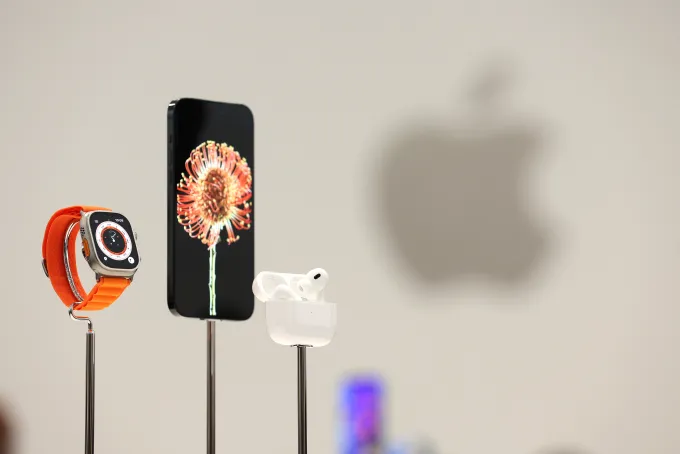
Apple launched the Apple Watch in 2015 and has since turned it into a full-fledged health and fitness companion complete with blood oxygen tracking and ECG monitoring. Apple then disrupted the earphones market in 2016 with the launch of the first AirPods, changing the wireless headphones category. It then launched its first over-the-ear headphones in 2020. It’s also worth noting that Apple purchased Beats in 2014.
The tech giant also released the Apple Vision Pro in 2024, positioning it not just as a VR headset, but as a spatial computing platform. The launch, however, failed to resonate with consumers who didn’t want to spend several thousand dollars to purchase the gadget.
Techcrunch event
San Francisco, CA | October 13-15, 2026
Advertisement
Under Cook, the company also released iPads at various sizes and multiple price points, and essentially turned the devices into full-on computers that can handle a variety of different tasks for personal, work, and school use.
Of course, Cook also oversaw key changes to the iPhone, including the introduction of the more affordable iPhone SE, as well as advancements like Face ID and edge-to-edge displays.
Advertisement
Although Apple moved away from the “i” branding in new product releases under Cook, he oversaw the major expansion of the company’s product lineup.
Under Cook, Apple built a powerful services business. The tech giant launched Apple Pay in 2014, which is now used by an estimated 818 million people globally. In 2019, the tech giant launched its Apple TV+ (now Apple TV) streaming service, whose content has since earned hundreds of awards, including the Academy Award for Best Picture.
Apple launched its Apple Music streaming service in 2015 to take on Spotify, and the service now has over 112 million subscribers. In 2019, Apple launched Apple Arcade and has since built it out with a portfolio of premium games.
Although Jobs first announced iCloud in 2011, the storage service has since grown vastly under Cook, including the launch of iCloud+ in 2021. Additionally, Cook oversaw the evolution of the App Store and repeatedly defended its 30% commission structure.
Apple’s services business generated $109.16 billion in revenue during the fiscal year ending in September 2025. The segment accounted for a significant portion of the company’s total $416.16 billion revenue for the year.
Advertisement
Shift to in-house processors
Image Credits:Harun Ozalp/Anadolu / Getty Images
Under Cook’s leadership, Apple began transitioning from Intel processors to its own Apple Silicon chips in 2020 and completed the shift across its Mac lineup by 2023. The result was longer battery life, higher performance, greater power efficiency, and more.
AI era
Image Credits:Hakan Nural/Anadolu / Getty Images
Apple entered its AI era in 2024 with the launch of Apple Intelligence. Since then, however, the company hasn’t had any major breakthroughs, and has faced significant delays in launching its anticipated revamped AI-powered Siri (it’s expected to roll out sometime this year).
The tech giant remained largely absent from the broader tech industry’s generative AI race that kicked off when OpenAI’s ChatGPT launched in 2022. Earlier this year, Apple and Google announced that Google’s Gemini would power its next-generation AI tools.
$600 billion U.S. spending commitment
Image Credits:Win McName / Getty Images
Cook joined President Donald Trump last year to announce a $600 billion U.S. spending commitment, marking the tech giant’s biggest investment plan ever. The four-year plan includes expanding hiring and manufacturing activity in the country, with a focus on building a stronger domestic semiconductor and advanced technology supply chain.
Apple Park
Image Credits:Kirby Lee / Getty Images
Jobs’ vision for Apple Park came to life under Cook’s leadership in 2017. The 175-acre headquarters, which replaced Apple Campus, houses more than 12,000 employees. It features thousands of native and drought-resistant trees and is powered by 100% renewable energy.
Today, Apple Park is the backdrop of the company’s new product launches.
When you purchase through links in our articles, we may earn a small commission. This doesn’t affect our editorial independence.
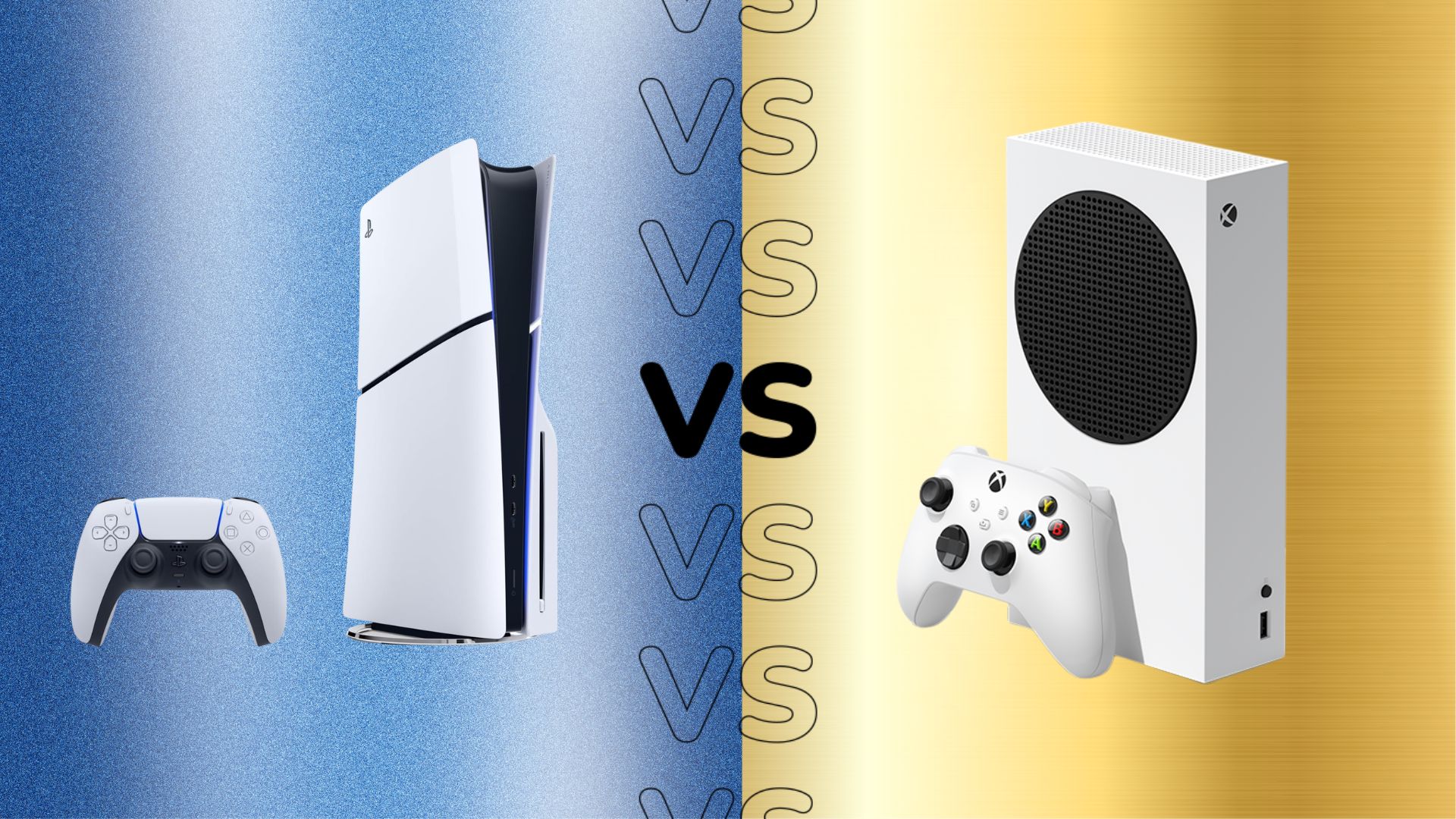
The PlayStation 5 and Xbox Series S are easily two of the most popular game consoles around – but what actually is the difference between them?
Whether you’re torn between the consoles and aren’t sure which one to go for, or if you’re just curious to know how the internals of the PS5 compare to the Xbox Series S then you’re in luck.
We should note that the PlayStation 5 comes as a few different iterations. Not including the premium PlayStation 5 Pro or the handheld PlayStation Portal, there’s the original PS5, the PS5 Slim and the PS5 Digital Edition. With this in mind, we’ve compared the latter three to the Xbox Series S below.
Keep reading to see how the PlayStation 5 compares to the Xbox Series S, and decide which console will suit your needs best.
Advertisement
We’ve also compared the PlayStation 5 vs Xbox Series X, if you want to compare the PS5 to the Xbox that’s equipped with a disc drive. Or we’ve rounded up the most up-to-date PlayStation 6 rumours, if you’re debating holding out for Sony’s hotly anticipated model.
Advertisement
Price
Many of the PlayStation 5 consoles have recently seen a pretty hefty price hike, which Sony explains was a “necessary step” to ensure it could deliver “high-quality gaming experiences to players worldwide”. With this in mind, the original PlayStation 5 is now £569.99/$649.99 while the Digital Edition is slightly cheaper at £519.99/$599.99.
Those price hikes means the PS5 line-up is considerably more expensive than the Xbox Series S, which has an RRP of £299.99/$399.99. That’s £300 or $200 less than the PS5 Digital Edition. Not only that, but it’s also possible to find the Xbox Series S with a price drop – although that usually tends to be around the £20-£30 mark.
Advertisement
However, do keep in mind that the Xbox Series S is a digital-only console, and doesn’t allow any support for an external disc drive. In comparison, you can purchase an external disc drive for the PS5 Digital Edition for around £70/$80.
Design
The PS5 has a more unique, customisable design
The Xbox Series S is smaller and more practical-looking
You can add a disc drive to the PS5 Slim Digital Edition later down the road
Advertisement
The PS5 and Xbox Series S have very different looks, with the PS5 opting for a more unique, two-toned design that can be positioned horizontally or vertically. The colour of the console can also be customised with different covers (sold separately) and the PS5 Slim can play physical media with the detachable disc drive, which is sold separately for the Digital Edition.
The PS5 Slim weighs less than the original PS5 at 3.2kg for the regular Slim and 2.6kg for the Digital Edition. Connectivity options include two USB-C ports, two USB-A ports, a storage expansion slot and an Ethernet port.
The Xbox Series S is a lot smaller and more lightweight at 1.9kg and comes in all black or black and white. Like the PS5, the Series S can be positioned horizontally or vertically, though there’s no need for a stand. The hardback book-like size of this console makes it easier to fit into a TV cabinet or desk than its Sony rival.
Advertisement
The Series S features two USB ports, an HDMI port, a storable expansion slot and an Ethernet port.
Winner: PS5
Advertisement
Specs
The PS5 Slim offers better raw performance
The Xbox Series S does not support native 4K
The Xbox Series S comes in two storage configurations, though both consoles offer expandable storage
In terms of sheer power, the PS5 comes out on top. For an in-depth look at how the internals of these consoles differs, check out the specs breakdown below:
Xbox Series S
PS5 Slim
CPU
8 x cores @ 3.8 GHz (3.66 GHz w/ SMT) Custom Zen 2 CPU
8 x cores @ 3.5 GHz w/ SMT, Custom Zen 2 CPU
GPU
4 TFLOPS, 20 CUs @ 1.55 GHz Custom RDNA 2
10.28 TFLOPs, 36CUs @ 2.23GHz
Memory
10 GB GDDR6 w/ 128-bit
16 GB GDDR6 w/ 256-bit
Memory Bandwidth
224GB/s
448GB/s
Internal Storage
512GB/1TB SSD
1TB SSD
Optical Drive
Digital only
4K UHD Blu-ray drive (sold separately for Digital Edition)
Performance Target
Up to 1440p @ 120 FPS
4K @ 60 FPS, up to 120 FPS
If you’re looking for raw power, the PS5 is the way to go. It offers a higher target performance than the Series S, with 4K at 60fps compared to the 1440p at 120fps, since the Series S does not support native 4K.
Advertisement
The Series S starts at just 512GB storage, which will not last long if you’re hoping to play large triple-A titles, although this can be easily resolved by opting for the 1TB model or an official memory card.
The PS5 does not support memory cards, but Sony has upgraded the PS5’s firmware with support for additional storage via the NVMe M.2 solid-state drives, meaning that it now has up to an 8TB maximum capacity.
Advertisement
If you want the most powerful Xbox, you’ll want to opt for the Series X, which carries a similar price to the PS5 Slim. That said, the Series S does still offer features like ray tracing and the NVMe SSD offers speedy loading times. This console is by no means powerless, but it may be better suited to those who do not own a monitor or TV that supports 4K and do not put as much emphasis on high-quality graphics.
Advertisement
Winner: PS5
Controllers
The PS5 DualSense controller offers haptic feedback
The DualSense Edge is ultra-customisable
The Xbox Series S controller will feel familiar to Xbox gamers
The PS5 comes with the latest DualSense controller, which features haptic feedback and adaptive triggers for a more immersive and realistic experience.
For those looking for more customisation, there’s also the DualSense Edge Wireless controller. This controller allows users to remap specific button inputs, replace stick modules with other designs, switch out stick caps and change the back buttons.
Advertisement
The Xbox Series S controller is not as advanced as Sony’s alternative, with no haptic feedback or adaptive triggers present. It offers a serviceable experience but is a more noticeable downgrade if you’re already using the DualSense controller. That said, if you’re upgrading from an older Xbox console, you may still find the layout more comfortable and familiar.
Advertisement
User Interface and features
The Xbox Series S’ Quick Resume feature lets you skip loading times
The Xbox Series S can upscale content to 4K
Ps5 gamers can now add another SSD with an expansion slot
When it comes to the UI, both consoles have received a decent number of software updates since they first launched in 2020.
The user interface on the Series S is the same as the Series X, although with a few overall changes. Anyone who disliked the Xbox One layout will have the same issues here, though the faster load times and specific sections for Xbox Game Pass, Microsoft Store and My Games do make for a more streamlined experience.
The Quick Resume feature allows players to swap between active states of up to six different games at once, so you can switch in and out of games without needing to wait for the loading screens.
Advertisement
Microsoft has also introduced Xbox Night Mode, which adjusts the brightness to keep the screen dark in a darker environment, as well as improvements to the UI and 4K upscaling when the console is connected to a 4K display.
Advertisement
The PS5 has undergone more even changes in this time; Voice chats are now known as Parties and can be accessed via the new three-pronged Game Base menu, and players can now pin five select games to the screen permanently.
Sony also altered the PS5 firmware to allow users to add another SSD card to the previously dormant expansion slot, increasing the console’s overall storage capabilities.
Winner: Draw
Verdict
Out of the two consoles, the PS5 is the one to go for if performance is a priority for you. It features a more powerful GPU and native 4K support, making it the better option in terms of graphics.
Advertisement
Advertisement
However, the Xbox Series S should not be passed over just because it’s not as powerful. If you don’t own a 4K monitor or TV, then the Series S may be a better and more affordable fit, especially since you can expand the storage using a memory card. The inclusion of Game Pass only boosts this console’s appeal in terms of value for money.
The selection of exclusive games on each platform will play into how alluring each console is, so you will want to consider which titles catch your eye. We think that you can have a blast on either console, just consider how much performance power and affordability mean to you and we’re sure you can figure it out from there.
This latest investment is in addition to the $8bn Amazon has already invested in the AI company.
In line with a strategy to expand AI infrastructure, Amazon has announced plans to invest up to $25bn into Anthropic – $5bn now and as much as $20bn in the future. To date, Amazon has invested $8bn in Anthropic and the AI start-up has also committed to spending more than $100bn over the next 10 years on Amazon’s cloud technologies.
This will include current and future generations of Trainium, which is Amazon’s custom AI chips, and tens of millions of Graviton cores, Amazon’s CPU chip. Additionally, Anthropic will secure up to 5GW of capacity to train and power their AI models, including significant Trainium3 capacity which is expected to come online this year.
Commenting on the announcement, Andy Jassy, the CEO of Amazon, said: “Anthropic’s commitment to run its large language models on AWS Trainium for the next decade reflects the progress we’ve made together on custom silicon, as we continue delivering the technology and infrastructure our customers need to build with generative AI.”
Advertisement
The news is hot on the heels of Anthropic’s plans to release Mythos, the platform’s latest model, to UK financial institutions. The model was launched as part of a limited release earlier this month, with access granted to big businesses and financial organisations to bolster their security. Reportedly, Mythos vastly outperforms other AI models in vulnerability detection and exploitation.
Amazon has been investing heavily in AI infrastructure as of late, with a $50bn contribution to a recent OpenAI funding round that closed at $110bn. As part of the round, Nvidia invested $30bn and SoftBank invested $30bn. The investment brought OpenAI from a $500bn valuation to a $730bn pre-money valuation.
OpenAI also has an additional deal with Amazon in which the organisation will utilise 2GW of computing capacity powered by Amazon’s in-house Trainium chips.
Don’t miss out on the knowledge you need to succeed. Sign up for the Daily Brief, Silicon Republic’s digest of need-to-know sci-tech news.
According to the data, Ireland’s jobs market is holding up, but confidence is staggered as employers become more cautious.
The Employment and Recruitment Federation, supported by Icon Accounting, has published the Irish Labour Market Annual Survey. This report explores Ireland’s jobs market and the impact that temporary and contract roles are having on the wider landscape.
The Federation’s research found that while Ireland’s jobs market is holding steady, “employer confidence is becoming more measured, with temporary and contract roles now overtaking permanent recruitment in a clear sign of growing caution across the market”.
The report suggests that this is indicative of a landscape in which organisations are still actively recruiting, but with a far more defensive mindset as they navigate the pressures of rising costs, uncertainty and talent constraints.
Advertisement
In 2025, permanent recruiting accounted for 44pc of net fee income, while temporary and contracting roles together represented 48pc. The Employment and Recruitment Federation said this is reflective of a move by employers towards achieving greater flexibility and that employers are becoming more selective and more controlled in how they build teams, particularly where longer-term commitments are required.
“That matters because it tells us something important about the broader economy,” said Siobhán Kinsella, the president of the Employment and Recruitment Federation. “Demand is still there, but businesses are making more guarded decisions around cost, growth and commitment.”
Uncertain future
The report comes at a time when the Irish jobs market is experiencing relatively low unemployment, where employment itself is growing steadily, but it is happening in a space where the sentiment is, according to the research, “becoming more mixed”. More than half of the companies who contributed to the report said that they have concerns about the shape of the economy and demand over the next 12 months.
Issues with attracting and retaining key talent are also weighing on organisations, as seven out of 10 agencies said that skills availability remains the biggest challenge in the market, with the sharpest shortages reported in healthcare, engineering, accountancy and finance, construction, and IT.
Advertisement
Kinsella said: “This is a market where businesses still need people but are under more pressure in how they hire. The challenge now is not simply filling roles. It is balancing growth ambitions with cost control, uncertainty and ongoing difficulty accessing the right skills.
“As students begin reviewing CAO options ahead of the Change of Mind period, the findings also point to a longer-term pipeline issue for Ireland, particularly in areas such as accountancy and finance, engineering, healthcare and technology where demand remains strong and shortages remain persistent.
“That creates a more fragile dynamic underneath the headline numbers. The labour market is still performing, but employers are no longer behaving with the same level of confidence they were a year or two ago.”
Also commenting on the report, David Shanahan, a director at Irish recruitment agency IT Search, which is a member of the Vertical Markets Group, noted that his own organisation’s researchfound that the volume of tech roles across the Irish market have increased from 6,082 in March 2025 to 6,810 in March 2026.
Advertisement
He noted, however, that there are some “important nuances” to make note of. “In areas such as data and cybersecurity, hiring is heavily contract focused. However, across AI, software engineering and DevOps, hiring is more evenly split than it might appear.
“Contract roles are largely tied to project and programme delivery, while permanent hiring is driven by product-led and commercial software companies, where the focus is on building and scaling their own technology platforms.”
Don’t miss out on the knowledge you need to succeed. Sign up for the Daily Brief, Silicon Republic’s digest of need-to-know sci-tech news.
Tenth time still isn’t the charm. One day after Tim Cook announced that he was handing the reigns to John Ternus, an analyst that has beaten this drum before is again saying today that a sale of Disney to Apple can and must happen. That sale is even less likely to happen now, than it was the last nine times we’ve updated this story.
It may have made Apple Park, but Apple is not going to take over Disney’s magic kingdom
The rumor that Apple will buy Disney is as old as the iPod and it’s lasted through a couple of Disney CEOs now. You’d think that analysts would have figured out that it isn’t going to happen. Or at least they should have begun to see that clickbait headlines about why Apple must buy Disney have to be losing their pull as the years go by and Apple keeps on doing nothing of the sort. Continue Reading on AppleInsider | Discuss on our Forums
A rare decay exposes cracks in physics that refuse easy explanation
The Standard Model shows strain under one of its toughest tests
Four-sigma anomaly hints something subtle may be missing in physics
Scientists at the Large Hadron Collider (LHC) have found something strange inside a particle decay process called an electroweak penguin decay, which could signal a major problem for modern physics.
The LHC is a 27-kilometer circular tunnel buried under the French-Swiss border where proton beams smash together at nearly the speed of light, recreating conditions similar to those just after the Big Bang.
Experiments like LHCb analyze the collision debris to look for cracks in the Standard Model, the rulebook for particle physics that has passed every test for over 50 years despite being known to be incomplete.
Article continues below
Advertisement
How scientists spotted the glitch in a million-to-one event
In their experiment, the researchers observed a B meson, a short-lived particle, breaking apart into three other particles.
This transformation is extremely rare, happening only once in every million B meson collisions.
Advertisement
That rarity makes it a powerful tool for spotting hidden influences from unknown particles.
Think of it like hearing a faint whisper in a noisy stadium. The whisper might be nothing, or it might be the most important message you have ever heard.
Sign up to the TechRadar Pro newsletter to get all the top news, opinion, features and guidance your business needs to succeed!
The scientists measured two things: the angles at which the particles fly apart, and how often the decay happens.
Advertisement
Both measurements disagreed with what the Standard Model of physics predicts, which sounds impressive, but physicists demand much higher certainty for a formal discovery.
The odds of this disagreement being a random fluke are about 1 in 16,000, as the current finding sits at four sigma.
The gold standard for a discovery is five sigma, which is a 1 in 1.7 million chance of being wrong.
Advertisement
Imagine rolling a die and getting the same number six times in a row. That is unusual, but not impossible.
Now imagine rolling the same number 20 times in a row. That would make you seriously question whether the die is fair. That is the difference between four sigma and five sigma.
There are several possible explanations if this anomaly turns out to be real.
One idea involves particles called leptoquarks, which would unite two different types of matter: leptons and quarks.
Advertisement
Another possibility is the existence of heavier versions of particles we already know about, extending the Standard Model rather than replacing it.
This kind of indirect evidence has happened before in physics. Radioactivity was discovered 80 years before scientists found the particles responsible for it.
This proves that you can detect something’s effects long before you can see it directly.
The current anomaly could be a similar early warning. The LHCb experiment analyzed about 650 billion B meson decays between 2011 and 2018 to find this penguin process.
Advertisement
Since then, the team has already collected three times more data, which will help confirm or rule out the anomaly.
Future upgrades in the 2030s will increase the dataset by 15 times, giving physicists the statistical power needed to reach a definitive conclusion.
The main complication comes from something called “charming penguins.” These are Standard Model processes involving charm quarks that are very hard to calculate precisely.
Recent estimates suggest these effects are not large enough to explain the anomaly. But the calculations are so tricky that physicists cannot be completely sure yet.
Advertisement
Think of it like trying to measure the thickness of a hair with a ruler. The ruler is simply not precise enough for the job.
The current available data is like that ruler. It is pointing in an interesting direction, but we need a sharper tool to be certain.
The four-sigma tension is genuinely exciting, but particle physics has seen promising anomalies disappear before.
More data and better calculations could still bring the results back into line with the Standard Model.
Advertisement
Last year, there was an independent LHC experiment known as CMS, which published results in agreement with the current study, albeit with lesser precision.
Together, both studies make the strongest combined case yet that something genuinely new may be operating at the most fundamental level of reality, but both share similar uncertainties.
For now, the Standard Model remains standing, but for the first time in decades it appears to be wobbling.
Whether that wobble is the beginning of a collapse or just a statistical mirage will be decided by the next few years of data.
Advertisement
Either outcome will teach us something profound about how science progresses when the most successful theory in history meets its first real test.

























![Selling XRP at $10 to Buy Back Cheaper at $5 Will Be The BIGGEST Mistake You Make! [DON'T DO THIS!]](https://wordupnews.com/wp-content/uploads/2026/04/1776814846_maxresdefault-80x80.jpg)



































You must be logged in to post a comment Login