This April, Hong Kong-based DAIMON Robotics has released Daimon-Infinity, which it describes as the largest omni-modal robotic dataset for physical AI, featuring high resolution tactile sensing and spanning a wide range of tasks from folding laundry at home to manufacturing on factory assembly lines. The project is supported by collaborative efforts of partners across China and the globe, including Google DeepMind, Northwestern University, and the National University of Singapore.
The move signals a key strategic initiative for DAIMON, a two-and-a-half-year-old company known for its advanced tactile sensor hardware, most notably a monochromatic, vision-based tactile sensor that packs over 110,000 effective sensing units into a fingertip-sized module. Drawing on its high-resolution tactile sensing technology and a distributed out-of-lab collection network capable of generating millions of hours of data annually, DAIMON is building large-scale robot manipulation datasets that include vast amounts of tactile sensing data. To accelerate the real-world deployment of embodied AI, the company has also open-sourced 10,000 hours of its data.
Prof. Michael Yu Wang, co-founder and chief scientist at DAIMON Robotics, has pioneered Vision-Tactile-Language-Action (VTLA) architecture, elevating the tactile to a modality on par with vision.DAIMON Robotics
Behind the strategy is Prof. Michael Yu Wang, DAIMON’s co-founder and chief scientist. Prof. Wang earned his PhD at Carnegie Mellon — studying manipulation under Matt Mason — and went on to found the Robotics Institute at the Hong Kong University of Science and Technology. An IEEE Fellow and former Editor-in-Chief of IEEE Transactions on Automation Science and Engineering, he has spent roughly four decades in the field. His objective is to address the missing “insensitivity” of robot manipulation, which practically relies on the dominant Vision-Language-Action (VLA) model. He and his team have pioneered Vision-Tactile-Language-Action (VTLA) architecture, elevating the tactile to a modality on par with vision.
Advertisement
We spoke with Prof. Wang about how tactile feedback aims to change dexterous manipulation, how the dataset initiative is foreseen to improve our understanding of robotic hands in natural environments, and where — from hotels to convenience stores in China — he sees touch-enabled robots making their first real-world inroads.
Daimon-Infinity is the world’s largest omni-modal dataset for Physical AI, featuring million-hour scale multimodal data, ultra-high-res tactile feedback, data from 80+ real scenarios and 2,000+ human skills, and more.DAIMON Robotics
The Dataset Initiative
This month, DAIMON Robotics released the largest and most comprehensive robotic manipulation dataset with multiple leading academic institutions and enterprises. Why releasing the dataset now, rather than continuing to focus on product development? What impact will this have on the embodied intelligence industry?
DAIMON Robotics has been around for almost two and a half years. We have been committed to developing high-resolution, multimodal tactile sensing devices to perceive the interaction between a robot’s hand (particularly its fingertips) and objects. Our devices have become quite robust. They are now accepted and used by a large segment of users, including academic and research institutes as well as leading humanoid robotics companies.
Advertisement
As embodied AI continues to advance, the critical role of data has been clearer. Data scarcity remains a primary bottleneck in robot learning, particularly the lack of physical interaction data, which is essential for robots to operate effectively in the real world. Consequently, data quality, reliability, and cost have become major concerns in both research and commercial development.
This is exactly where DAIMON excels. Our vision-based tactile technology captures high-quality, multimodal tactile data. Beyond basic contact forces, it records deformation, slip and friction, material properties and surface textures — enabling a comprehensive reconstruction of physical interactions. Building on our expertise in multimodal fusion, we have developed a robust data processing pipeline that seamlessly integrates tactile feedback with vision, motion trajectories, and natural language, transforming raw inputs into training-ready dataset for machine learning models.
Recognizing the industry-wide data gap, we view large-scale data collection not only as our unique competitive advantage, but as a responsibility to the broader community.
By building and open-sourcing the dataset, we aim to provide the high-quality “fuel” needed to power embodied AI, ultimately accelerating the real-world deployment of general-purpose robotic foundation models.
Advertisement
The robotics industry is highly competitive, and many teams have chosen to focus on data. DAIMON is releasing a large and highly comprehensive cross-embodiment, vision-based tactile multimodal robotic manipulation dataset. How were you able to achieve this?
We have a dedicated in-house team focused on expanding our capabilities, including building hardware devices and developing our own large-scale model. Although we are a relatively small company, our core tactile sensing technology and innovative data collection paradigm enable us to build large-scale dataset.
Our approach is to broaden our offering. We have built the world’s largest distributed out-of-lab data collection network. Rather than relying on centralized data factories, this lightweight and scalable system allows data to be gathered across diverse real-world environments, enabling us to generate millions of hours of data per year.
“To drive the advancement of the entire embodied AI field, we have open-sourced 10,000 hours of the dataset for the broader community.” —Prof. Michael Yu Wang, DAIMON Robotics
Advertisement
This dataset is being jointly developed with several institutions worldwide. What roles did they play in its development, and how will the dataset benefit their research and products?
Besides China based teams, our partners include leading research groups from universities, such as Northwestern University and the National University of Singapore, as well as top global enterprises like Google DeepMind and China Mobile. Their decision to partner with DAIMON is a strong testament to the value of our tactile-rich dataset.
Among the companies involved there are some that have already built their own models but are now incorporating tactile information. By deploying our data collection devices across research, manufacturing and other real-world scenarios, they help us to gather highly practical, application-driven data. In turn, our partners leverage the data to train models tailored to their specific use cases. Furthermore, to drive the advancement of the entire embodied AI field, we have open-sourced 10,000 hours of the dataset for the broader community.
Equipped with Daimon’s visuotactile sensor, the gripper delicately senses contact and precisely controls force to pick up a fragile eggshell.Daimon Robotics
From VLA to VTLA: Why Tactile Sensing Changes the Equation
The mainstream paradigm in robotics is currently the Vision-Language-Action (VLA) model, but your team has proposed a Vision-Tactile-Language-Action (VTLA) model. Why is it necessary to incorporate tactile sensing? What does it enable robots to achieve, and which tasks are likely to fail without tactile feedback?
Advertisement
Over these years of working to make generalist robots capable of performing manipulation tasks, especially dexterous manipulation — not just power grasping or holding an object, but manipulating objects and using tools to impart forces and motion onto parts — we see these robots being used in household as well as industrial assembly settings.
It is well established that tactile information is essential for providing feedback about contact states so that robots can guide their hands and fingers to perform reliable manipulation. Without tactile sensing, robots are severely limited. They struggle to locate objects in dark environments, and without slip detection, they can easily drop fragile items like glass. Furthermore, the inability to precisely control force often leads to failed manipulation tasks or, in severe cases, physical damage. Naturally, the VLA approach needs to be enhanced to incorporate tactile information. We expanded the VLA framework to incorporate tactile data, creating the VTLA model.
An additional benefit of our tactile sensor is that it is vision-based: We capture visual images of the deformation on the fingertip surface. We capture multiple images in a time sequence that encodes contact information, from which we can infer forces and other contact states. This aligns well with the visual framework that VLA is based upon. Having tactile information in a visual image format makes it naturally suitable for integration into the VLA framework, transforming it into a VTLA system. That is the key advantage: Vision-based tactile sensors provide very high resolution at the pixel level, and this data can be incorporated into the framework, whether it is an end-to-end model or another type of architecture.
DAIMON has been known for its vision-based tactile sensors that can pack over 110,000 effective sensing units.DAIMON Robotics
The Technology: Monochromatic Vision-based Tactile Sensing
You and your team have spent many years deeply engaged in vision-based tactile sensing and have developed the world’s first monochromatic vision-based tactile sensing technology. Why did you choose this technical path?
Advertisement
Once we started investigating tactile sensors, we understood our needs. We wanted sensors that closely mimic what we have under our fingertip skin. Physiological studies have well documented the capabilities humans have at their fingertips — knowing what we touch, what kind of material it is, how forces are distributed, and whether it is moving into the right position as our brain controls our hands. We knew that replicating these capabilities on a robot hand’s fingertips would help considerably.
When we surveyed existing technologies, we found many types, including vision-based tactile sensors with tri-color optics and other simpler designs. We decided to integrate the best of these into an engineering-robust solution that works well without being overly complicated, keeping cost, reliability, and sensitivity within a satisfactory range, thus ultimately developing a monochromatic vision-based tactile sensing technique. This is fundamentally an engineering approach rather than a purely scientific one, since a great deal of foundational research already existed. With the growing realization of the necessity of tactile data, all of this will advance hand in hand.
Last year, DAIMON launched a multi-dimensional, high-resolution, high-frequency vision-based tactile sensor. Compared with traditional tactile sensors, where does its core advantage lie? Which industries could it potentially transform?
The key features of our sensors are the density of distributed force measurement and the deformation we can capture over the area of a fingertip. I believe we have the highest density in terms of sensing units. That is one very important metric. The other is dynamics: the frequency and bandwidth — how quickly we can detect force changes, transmit signals, and process them in real time. Other important aspects are largely engineering-related, such as reliability, drift, durability of the soft surface, and resistance to interference from magnetic, optical, or environmental factors.
Advertisement
A growing number of researchers and companies are recognizing the importance of tactile sensing and adopting our technology. I believe the advances in tactile sensing will elevate the entire community and industry to a higher level. One of our potential customers is deploying humanoid robots in a small convenience store, with densely packed shelves where shelf space is at a premium. The robot needs to reach into very tight spaces — tighter than books on a shelf — to pick out an object. Current two-jaw parallel grippers cannot fit into most of these spaces. Observing how humans pick up objects, you clearly need at least three slim fingers to touch and roll the object toward you and secure it. Thus, we are starting to see very specific needs where tactile sensing capabilities are essential.
From Academia to Startup
After 40 years in academia — founding the HKUST Robotics Institute, earning prestigious honors including IEEE Fellow, and serving as Editor-in-Chief of IEEE TASE — what motivated you to found DAIMON Robotics?
I have come a long way. I started learning robotics during my PhD at Carnegie Mellon, where there were truly remarkable groups working on locomotion under Marc Raibert, who founded Boston Dynamics, and on manipulation under my advisor, Matt Mason, a leader in the field. We have been working on dexterous manipulation, not only at Carnegie Mellon, but globally for many years.
However, progress has been limited for a long time, especially in building dexterous hands and making them work. Only recently have locomotion robots truly taken off, and only in the last few years have we begun to see major advancements in robot hands. There is clearly room for advancing manipulation capabilities, which would enable robots to do work like humans. While at Hong Kong University of Science and Technology, I saw increasingly greater people entering this area in the form of students and postdoctoral researchers. We wanted to jumpstart our effort by leveraging the available capital and talent resources.
Advertisement
Fortunately, one of my postdocs, Dr. Duan Jianghua, has a strong sense for commercial opportunities. Recognizing the rapid growth of robotics market and the unique value that our vision-based tactile sensing technology could bring, together we started DAIMON Robotics, and it has progressed well. The community has grown tremendously in China, Japan, Korea, the U.S., and Europe.
Robots equipped with DAIMON technology have been deployed in factory settings. The company aims to enable robots to achieve “embodied intelligence” and close the gap between what they can see and what they can feel.DAIMON Robotics
Business Model and Commercial Strategy
What is DAIMON’s current business model and strategic focus? What role does the dataset release play in your commercial strategy?
We started as a device company focused on making highly capable tactile sensors, especially for robot hands. But as technology and business developed, everyone realized it is not just about one component, rather the entire technology chain: devices, data of adequate quality and quantity, and finally the right framework to build, train, and deploy models on robots in real application environments.
Our business strategy is best described as “3D”: Devices, Data, and Deployment. We build devices for data collection, our own ecosystem, and for deploying them in our partners’ potential application domains. This enables the collection of real-world tactile-rich data and complete closed-loop validation. This will become an integral part of the 3D business model. Most startups in this space are following a similar path until eventually some may become more specialized or more tightly integrated with other companies. For now, it is mostly vertical integration.
Advertisement
Embodied Skills and the Convergence Moment
You’ve introduced the concept of “embodied skills” as essential for humanoid robots to move beyond having just an advanced AI “brain.” What prompted this insight? What new capabilities could embodied skills enable? After the rapid evolution of models and hardware over the past two years, has your definition or roadmap for embodied skills evolved?
We have come a long way now see a convergence point where electrical, electronic, and mechatronic hardware technologies have advanced tremendously in last two decades. Robots are now fully electric, do not require hydraulics, because hardware has evolved rapidly. Modern electronics provide tremendous bandwidth with high torques. If we can build intelligence into these systems, we can create truly humanoid robots with the ability to operate in unstructured environments, make decisions, and take actions autonomously.
“Our vision is for robots to achieve robust manipulation capabilities and evolve into reliable partners for humans.” —Prof. Michael Yu Wang, DAIMON Robotics
AI has arrived at exactly the right time. Enormous resources have been invested in AI development, especially large language models, which are now being generalized into world models that enable physical AI capabilities. We would like to see these manifested in real-world systems.
Advertisement
While both AI and core hardware technologies continue to evolve, the focus is much clearer now. For example, human-sized robots are preferred in a home environment. This is an exciting domain with a promise of great societal benefit if we can eventually achieve safe, reliable, and cost-effective robots.
The Road to Real-World Deployment
Today, many robots can deliver impressive demos, yet there remains a gap before they truly enter real-world applications. What could be a potential trigger for real-world deployment? Which scenarios are most likely to achieve large-scale deployment first?
I think the road toward large-scale deployment of generalist robots is still long, but we are starting to see signs of feasibility within specific domains. It is very similar to autonomous vehicles, where we are yet to see full deployment of robo-taxis, while we have already started to find mobile robots and smaller vehicles widely deployed in the hospitality industry. Virtually every major hotel in China now has a delivery robot — no arms, just a vehicle that picks up items from the hotel lobby (e.g., food deliveries). The delivery person just loads the food and selects the room number. It is up to the robot thereafter to navigate and reach the guest’s room, which includes using the elevator, to deliver the food. This is already nearly 100 percent deployed in major Chinese hotels.
Hotel and restaurant robots are viewed as a model for deploying humanoid robots in specific domains like overnight drugstores and convenience stores. I expect complete deployment in such settings within a short timeframe, followed by other applications. Overall, we can expect autonomous robots, including humanoids, to progressively penetrate specific sectors, delivering value in each and expanding into others.
Advertisement
Ultimately, our vision is for robots to achieve robust manipulation capabilities and evolve into reliable partners for humans. By seamlessly integrating into our homes and daily lives, they will genuinely benefit and serve humanity.
This interview has been edited for length and clarity.
India has emerged as the largest user base for ChatGPT Images 2.0 since its launch last week, OpenAI said on Thursday. However, third-party data reviewed by TechCrunch points to a more measured global response, with limited overall growth alongside sharp spikes in select emerging markets.
ChatGPT Images 2.0, OpenAI’s latest image-generation upgrade, is designed to handle more complex prompts and produce detailed visuals, including accurate text across multiple languages. Early patterns from the company suggest users — especially in India, its largest market — are using it to create personal visuals such as avatars, stylized portraits, and fantasy-themed images.
Data shared by Sensor Tower and Similarweb with TechCrunch suggests the rollout has led to a more mixed global response. ChatGPT’s app downloads rose 11% week-over-week following the launch, per Sensor Tower, but overall engagement gains were modest, with daily active users and sessions up only around 1%. Similarweb data also shows a limited increase in ChatGPT’s global web traffic, rising about 1.6% week-over-week during the same period.
However, Sensor Tower data indicates some emerging markets — including Pakistan, Vietnam, and Indonesia — saw sharper spikes in ChatGPT’s app downloads, with increases of up to 79% week-over-week during the rollout period.
Advertisement
India, meanwhile, remained a major source of activity during the rollout. Sensor Tower estimates show ChatGPT was downloaded about 5 million times in India during the launch week, compared with roughly 2 million in the U.S., though growth remained modest on a week-over-week basis. Similarweb data also points to a limited uptick in engagement, with daily active users in India rising about 3.4% week-over-week during the same period.
In India, the early trends suggest ChatGPT Images 2.0 is largely being used as a form of self-expression. Rather than purely functional outputs, users are creating studio-style portraits from everyday photos, social media-ready images, and imaginative visuals that place themselves at the center, OpenAI said.
The early patterns also highlight how AI image tools are being adopted differently across markets. While India’s large user base is driving overall scale, sharper spikes in countries like Pakistan and Indonesia point to stronger new-user demand in emerging markets following the launch.
Techcrunch event
Advertisement
San Francisco, CA | October 13-15, 2026
OpenAI’s Images 2.0 launch comes amid intensifying competition in AI image generation. Google’s earlier image-focused model, the original Nano Banana, also saw strong early traction in India, indicating how the nation has become an important market for image generation.
Advertisement
With the new ChatGPT Images release, OpenAI is pushing further with improvements such as better rendering of non-Latin text, including Hindi and Bengali, and new “thinking” capabilities that allow it to refine outputs and generate multiple variations from a single prompt.
Beyond stylized portraits and avatars, OpenAI said early Images 2.0 users in India are experimenting with a wider range of formats — from fantasy newspaper covers to tarot-style visuals and fashion moodboards. Users are also using the AI tool to restore older photos and create cinematic portrait collages, the company said, suggesting early patterns of more personal use.
When you purchase through links in our articles, we may earn a small commission. This doesn’t affect our editorial independence.
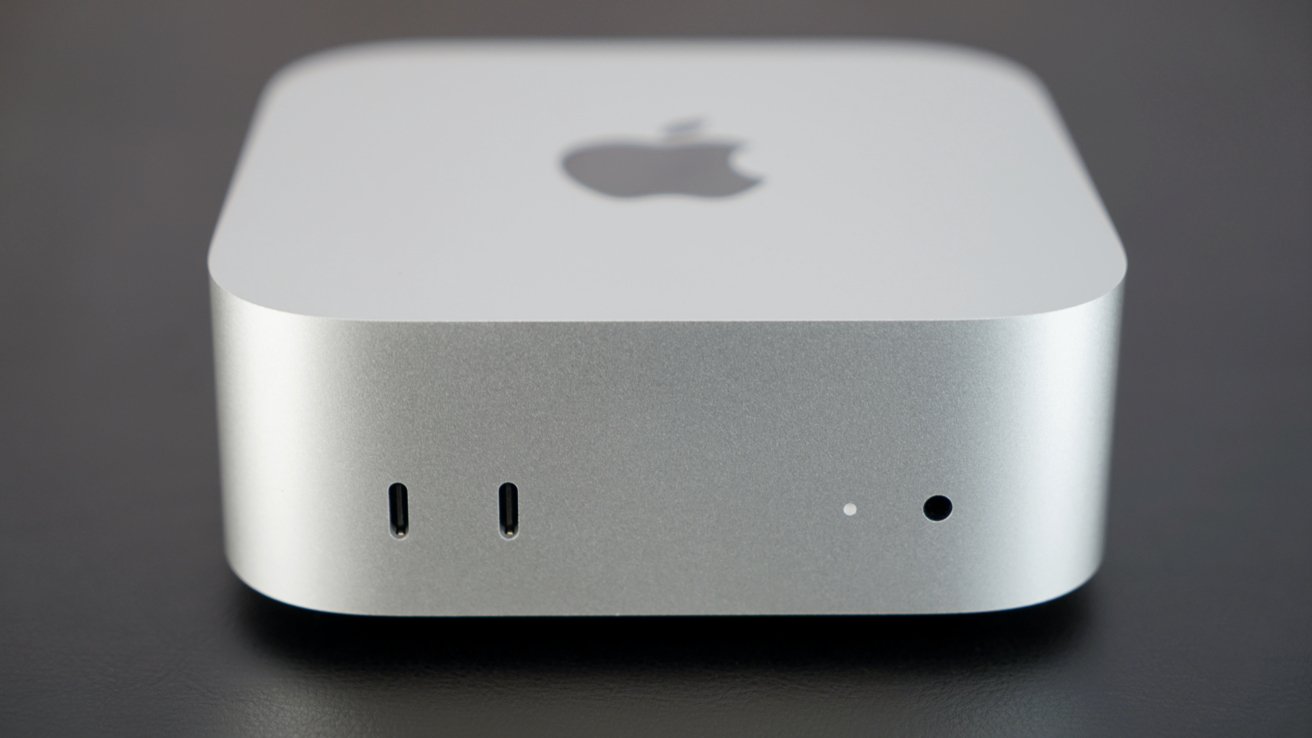
Apple CEO Tim Cook is thrilled at how well the new Mac lineup is doing, but that isn’t good news for anyone looking to score a Mac mini.
Apple’s had a great quarter as far as Mac is concerned. And not just with returning Apple fans, but new to Mac users, too.
On Thursday, ahead of the April quarterly earnings call, Cook told CNBC:
“We could not be happier with the enthusiasm that we’ve seen do the most advanced Mac lineup in our history… we saw huge excitement for MacBook Neo, which opens up the Mac experience to a whole new range of customers.”
Advertisement
The MacBook Neo, introduced in early March, is Apple’s most budget-friendly MacBook offering, coming in at $599. While critics have balked at the use of the A18 Pro chip, as it’s a “mobile chip,” Apple’s right, there is a market for it.
In fact, Cook even said that Mac had its best launch week ever for first-time Mac customers. The high demand for Apple’s “Little Laptop that Could” greatly contributed to it.
However, that demand is a double-edged sword. While no company wants to see a sales slump, it doesn’t necessarily mean that “more is more,” when it comes to moving products, either.
Demand for certain products, specifically the M4 Mac mini, is at an all-time high. So high, in fact, that you can’t get one.
Advertisement
“Huge demand,” Cook said of the Mac mini. “So big a demand that we can’t fulfill it all. We had supply constraints during the quarter. We still have supply constraints, and we’ll likely have them for several months.”
This is largely because Apple’s pint-sized desktop has become a fan favorite for running local AI models and tools. And it’s not just Apple that’s seeing shortages, either: third-party sellers can’t keep them in stock, leaving marked-up models on eBay as the only option in most cases.
In addition to Mac mini shortages, some models of the Mac Studio are also completely out. While it’s still possible to get “lower end” models if you’re willing to wait up to twelve weeks, higher end models are also listed as “unavailable.”
Apple’s ability to prevent memory prices from increasing the cost of iPhones and other products won’t last forever. Tim Cook has warned that it’s only going to get harder to do so.
The consumer tech industry is struggling to deal with the cost of memory, with supplies choked by the extreme demand of AI infrastructure build-outs. While Apple has managed to stop the cost impacting the price of its products so far, even it has its limits.
Asked on the analyst conference call following its Q2 financial results release, incumbent CEO Tim Cook has revealed that pricing has affected the company’s bottom line.
The December quarter had a minimal impact due to memory pricing, Cook said, warning at the time that it would be more of a concern in the March quarter. Apple did see a bigger impact in that March quarter, but Apple managed to offset the cost by carry-in inventory.
Advertisement
With the issue not going to die down anytime soon, Cook added an extra warning that there will be a significant memory cost effect in the June quarter. However, even that will benefit from carry-in inventory offsetting the cost.
Beyond the June quarter will be a problem, with Cook warning of a further increase in impact. It’s unknown what will happen at that time, but there’s only so much inventory available to insulate the company from dealing with them.
Cook concluded that Apple is continuing to evaluate the situation, and it has a range of options available to it.
When Apple released its latest smartwatches late last year, I was convinced that the Apple Watch SE 3 was the better buy for most users because it offered excellent value. I still stand by that, but hear me out: when the Series 11 is heavily discounted, I would recommend it over the SE 3, even if the latter was also on sale.
As I said, the price difference is still significant, but the additional features you get with the Series 11 makes it the better-value option for iPhone users right now.
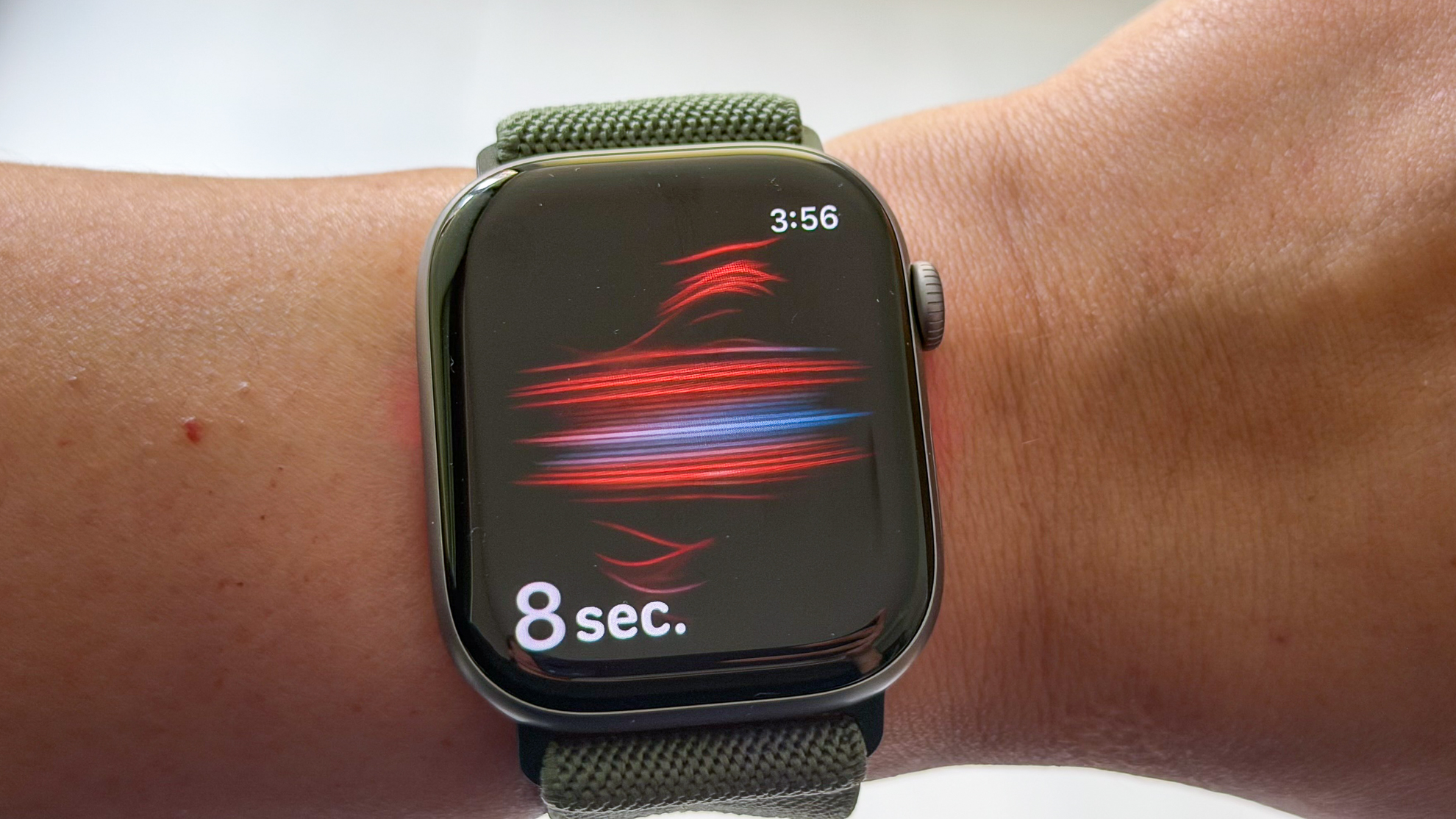
The other health features you’ll get with the Series 11 that the SE 3 misses out on are blood oxygen monitoring, sleep apnoea detection and irregular heart rhythm notifications (aka the ECG feature).
Another minor addition the Series 11 gets you is 5G connectivity if you opt for the LTE version (which is also discounted by up to 21% off). This really shouldn’t be that big a deal though as smartwatches don’t need super-fast connectivity and, in any case, 5G support on smartwatches is something telcos still don’t offer in Australia, but Apple is working towards that.
My Apple Watch 11 taking a blood oxygen reading (Image credit: Sharmishta Sarkar / TechRadar)
Alongside all that, it offers everything you need to encourage you to exercise more, tracking a wide variety of activities that, I admit, even the SE 3 will do, but the battery life on the Series 11 exceeds the SE 3’s by 25%, which you can stretch even further by using the Low Power mode.
Advertisement
Our Apple Watch Series 11 review gave it a very respectable four stars out of five, calling it “a mainline Apple Watch that can go the distance.” While it offers “no major performance gains year over year,” it provides a “bigger battery” and a “more durable display that’s still vibrant and rich.” This bigger display now makes it a lot easier to use the Messages app on the Apple Watch. I personally wear the 46mm version and handwriting a message on the screen is so much easier now.
Moreover, watchOS 26 gives it a fresh feel that truly highlights its health features, especially the new Sleep Score functionality. All this makes it the best smartwatch for iPhone and quite unbeatable at this price.
If you don’t have any heart health issues, then the SE 3 will suit you just fine, but if you need a reliable health monitor, I think the Apple Watch 11 is the much better option.
In this week’s roundup of the latest news in online speech, content moderation and internet regulation, Mike is joined by Jess Miers, law professor at University of Akron School of Law. Together, they discuss:
Advertisement
Support the podcast by joining our Patreon, with special founder membership available until May 28th.
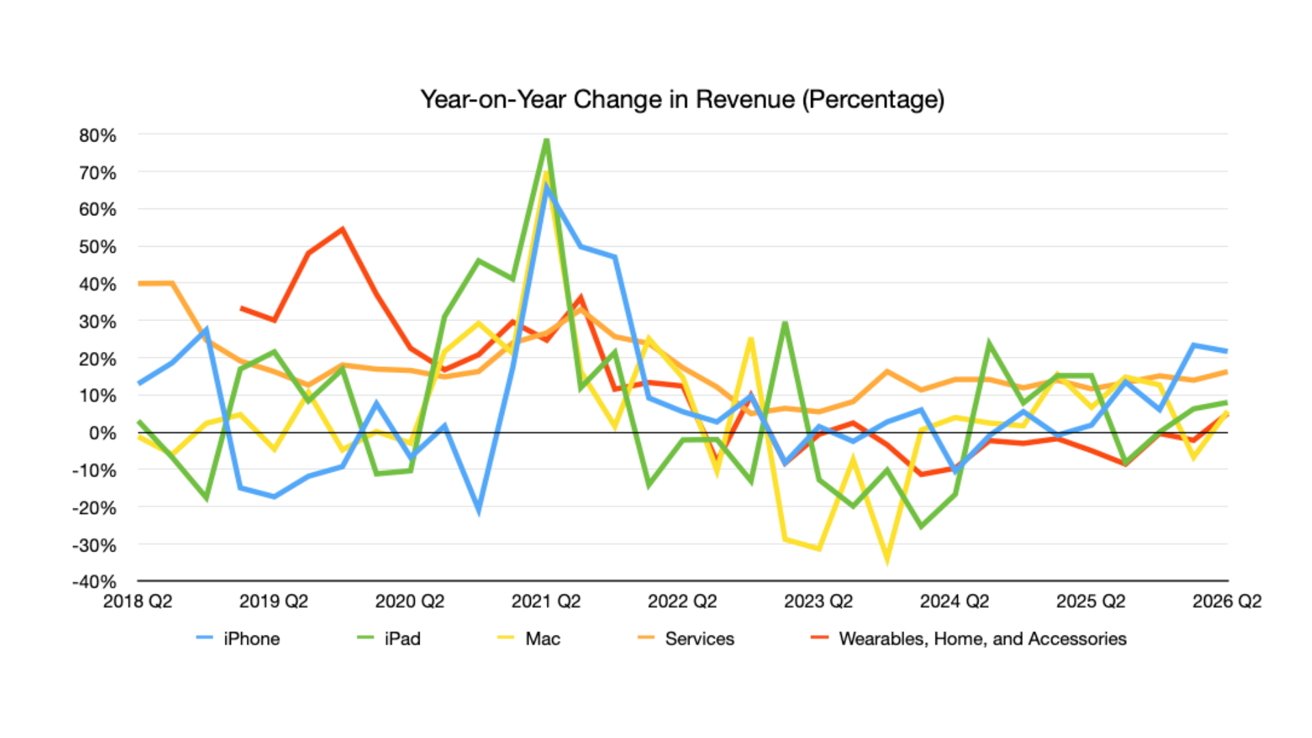
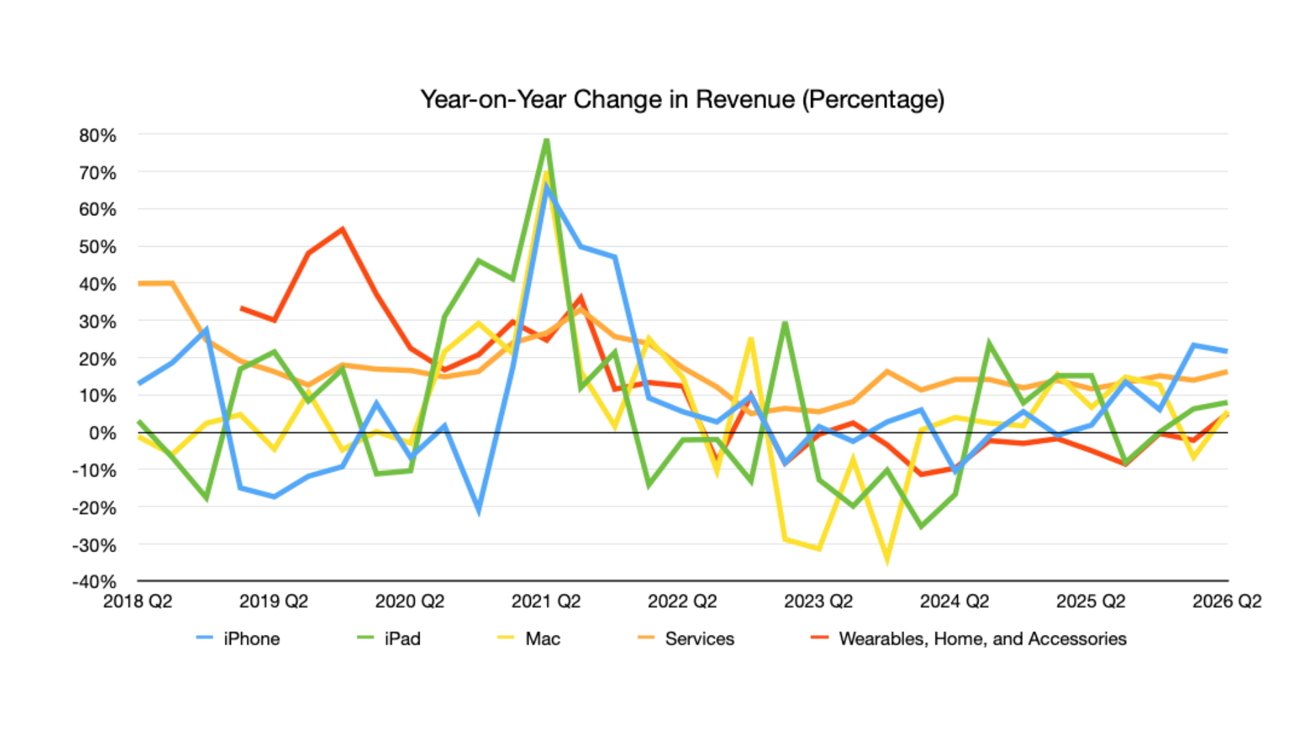
There are no signs of Apple slowing down in Q3 2026, as it is likely to see even more year-over-year growth in spite of a tough comparison for iPad.
Apple just had a record-breaking March quarter that brought in $111.2 billion in revenue. It seems that momentum won’t be slowing going into Q3.
Apple Chief Financial Officer Kevan Parekh shared forward-looking statements for Q3 2026 that estimate up to 14% to 17% growth year-over-year. That would mean growth from 2025’s $94 billion up to $110 billion for 2026.
In addition to that growth, Apple expects a gross margin of 47.5% to 48.5%. Operational expenditure is between $18.8 billion and $19.1 billion.
Growth in China has also been a big lift for Apple due to continued demand for the iPhone 17 lineup. Apple CEO Tim Cook attributed this to having devices that resonate with people, not necessarily better government relations.
Apple’s YoY growth continues
There’s a chance that Q3 won’t have any new hardware, and that includes the long-expected iPad with A19. Parekh specifically called out that the iPad would have a tough compare in Q3 due to the year-ago release of the iPad with A16.
Advertisement
That’s the closest we’ll get to Apple saying that there won’t be any new iPads without an explicit confirmation.
Services are expected to see similar year-over-year growth. That could be aided in some fashion by the new App Store contract system for annual subscriptions.
The results for Q3 will be revealed at the end of July, which will likely be Cook’s last earnings call. He’s ending on a nice round number of 90 total earnings calls in his career at Apple.
After two decades in tech, he now makes tiny collectible figures of pop culture characters
After spending two decades climbing the corporate ladder, including a stint at a FAANG company, 40-year-old Singaporean GT has found himself on a very different path.
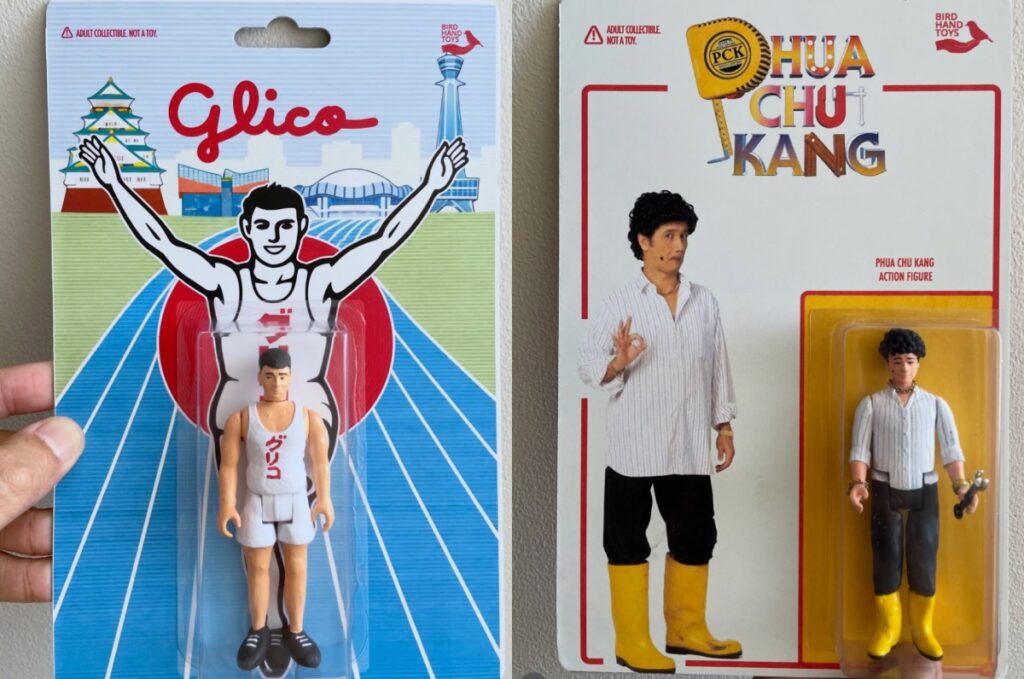
The former tech worker has turned a hobby into a small business, making tiny, handmade action figures inspired by pop culture characters, from the Glico man to even local TV icon Phua Chu Kang.
Today, GT runs Bird Hand Toys from his home in Australia, where he sculpts and assembles 3.75-inch “bootleg” figurines based on movies, TV shows, and nostalgic cultural references.
A hobby that found him
Bird Hand Toys’ Glico man and Phua Chu Kang handmade action figures./ Image Credit: Bird Hand Toys
GT’s path into toy-making was anything but deliberate.
Born and raised in Singapore and educated in Australia, he spent 15 to 17 years moving through corporate roles before eventually landing at a major global tech firm. By then, he and his wife had already built an ideal Singaporean life: stable jobs, a home, a dog, and a strong network of family and friends.
Advertisement
But GT also held Australian permanent residency, a document he had kept for years. Eventually, the chance to relocate and build a life in Australia became too compelling to ignore.
So in 2021, at the height of the COVID-19 pandemic, GT and his wife left their jobs, sold the car, and packed up for the move. The airports were ghostly quiet, with fewer than 10 people on their flight. Not exactly a glamorous beginning, but still, it was the start of a new chapter in their lives.
Some of the early figures GT sculpted include Dick Tracy and Chippy Jackpot./ Image Credit: Bird Hand Toys
Once settled in Australia, GT returned to corporate work and began looking for a creative outlet to unwind from the pressures of office life.
One day, while scrolling through Instagram, he came across a community of toy makers creating miniature action figures. Intrigued, he decided to try making some himself sometime in 2022.
GT was able to teach himself through trial and error and picked up the hobby very quickly.
Advertisement
“There’s very little information out there, so a lot of the early process involved a lot of problem solving to figure out every step of the process, from the size of the card backing, types of glue and paper to use, plastic blister packaging supplier and how to make a bootleg toy.”
In those early days, GT’s work drew heavily from the films, TV shows, and pop culture he grew up with in the 20th century. The first few figures he made were enough to suggest he might actually be onto something.
The project took a more concrete turn when he won an eBay bid for more than 100 vintage Star Wars figures for US$180 (S$230), which he used as base models for his creations.
The making of a bootleg action figurine
Bird Hand Toys sits within a niche creative space in what GT calls the “bootleg toy space”—unofficial action figures of movie and TV characters that never got to the commercial production stage.
Advertisement
One of the earliest pieces he made was a miniature version of American artist Jackson Pollock, complete with a tiny paintbrush, paint splatters, a checked scarf and a cigarette. It took about a month to complete the action figure.
Jackson Pollock, GT’s first creation. / Image Credit: Bird Hand Toys
In the early days, GT’s process was relatively simple: he would source an existing action figure and then sculpt over it to transform it into an entirely new character.
However, he quickly realised this approach came with limitations.
Firstly, there’s a limited number of existing action figures he can get a hold of. Secondly, this approach was not economical as each base figure would cost anywhere from S$30 to S$50. As such, it became difficult to scale or fulfil bulk orders.
In one instance, a chef in the US commissioned 15 of a specific figure. GT recalled having to search across multiple stores in New South Wales just to secure enough base figures to complete the order.
Advertisement
All of GT’s figurines are 3.75 inches tall./ Image Credit: Bird Hand Toys
While he still occasionally uses his original method, GT has moved into designing and 3D printing his base figures.
He said this change removed many of the earlier constraints and significantly lowered costs, allowing him to produce multiple figures more efficiently. It also gave him greater creative freedom, enabling more detailed sculpting and refinement around each base model, which in turn improved the overall quality of his work.
For each action figure, completion could take any time from a day to two weeks, depending on its complexity.
While the materials to create them may appear simple—basic tools such as a base figure, a Dremel, sculpting putty and paint—the process is far from mechanical.
GT treats each piece as a design exercise, requiring not just handcraft but an eye for composition. Each design has to reflect the character’s cultural context while still working as a cohesive visual piece that can sit on a wall or shelf.
Advertisement
All of his figurines are 3.75 inches tall. While it might seem like a random choice, the size was popularised by vintage Star Wars action figures, and for GT, it also came down to practical reasons.
“I guess they are this size because of the eBay lot, which started me in this scale, and everything else, like the blister packaging and card backing, has been configured for this scale, so I’ve kept to it,” said GT.
“Also, I find this size to be the most appealing as it has that nostalgic G.I. Joe and Star Wars feel to it.”
Gaining traction & recognition
Each one of GT’s figurines starts from S$70, though the most expensive piece he has ever sold has gone for US$200 (S$255). A Singaporean buyer also recently dropped nearly S$700 on his figurines.
Advertisement
GT’s Singaporean and Asian-inspired creations./ Image Credit: Bird Hand Toys
At the start, GT focused on international characters. It was only this year that he launched a Singapore/Asia-focused page because he thought it would be “interesting to reimagine classic 90s Singapore TV characters and moments into action figures.”
Through this process, he found that a lot of the old logos and pictures of Singaporean pop culture figures were low resolution since they were from “way back.”
“I felt it would be meaningful to give them the love they deserve to have a fresh, sharpened logo and images so they don’t fade with time,” he said.
“Also, people do find these very nostalgic, and the format of it as a semi-art piece that they can own is something that really works.”
According to the 40-year-old, the first month of the Asia page has taken off very quickly.
Advertisement
He shared that he has been receiving a lot of positive feedback and encouragement for what he is doing, including from singer-songwriter Inch Chua, whom he made a figurine of.
GT’s custom piece for DJ Tim Oh./ Image Credit: Bird Hand Toys
Apart from Chua, his celebrity-inspired figures have also found their way to British DJ Fatboy Slim and Singapore actor Gurmit Singh. GT has also taken on commissioned work, including a custom piece for DJ Tim Oh, complete with miniature accessories based on his interests.
Part of this traction has also come from retail exposure. Since Mar, his designs have been stocked at Singapore fashion store The Corner Shop (杂货店), a collaboration that went viral online.
Beyond retail, most of GT’s sales still come online. Through direct commissions and orders, his handmade figurines have made their way to homes across the US, Japan, and Thailand.
Focusing on Bird Hand Toys full time
All this while, Bird Hand Toys had remained a side hustle for GT. But after being “recently laid off” from the FAANG company he worked at in Australia, he decided to make it his full-time focus.
Advertisement
“This is the first time I’ve had the opportunity to fully pursue a more creative path, and it is an opportunity to use my time towards a craft I’m passionate about,” he explained.
The challenge, of course, as it has been from the start, is running the business as a one-man show, from responding to customer messages on Instagram to creating new content and fulfilling commission orders.
Looking ahead, GT wants to continue honing his craft and get even better at it. He does have one goal that’s equal parts humble and quietly ambitious.
It would be nice to be on holiday and find my stuff on a shelf in a store now and then.
A newly disclosed Linux kernel flaw dubbed “Copy Fail” can let a local, unprivileged attacker gain root access on major Linux distributions, with researchers claiming the bug affects kernels shipped since 2017. “The POC exploit works out of the box today, but a future version that can escape from containers like Docker is promised soon,” writes Slashdot reader tylerni7. “Technical details are available here.” Slashdot reader BrianFagioli shares a report from NERDS.xyz: A newly disclosed Linux kernel vulnerability called Copy Fail (CVE-2026-31431) allows an unprivileged user to gain root access using a tiny 732-byte script, and it works with unsettling consistency across major distributions. Unlike older exploits that relied on race conditions or fragile timing, this one is a straight-line logic flaw in the kernel’s crypto subsystem. It abuses AF_ALG sockets and splice to overwrite a few bytes in the page cache of a target file, such as /usr/bin/su. Because the kernel executes from the page cache, not directly from disk, the attacker can inject code into a setuid binary in memory and immediately escalate privileges.
What makes this especially concerning is how quiet it is. The file on disk remains unchanged, so standard integrity checks see nothing wrong, while the in-memory version has already been tampered with. The same primitive can also cross container boundaries since the page cache is shared, raising the stakes for multi-tenant environments and Kubernetes nodes. The underlying issue traces back to an in-place optimization added years ago, now being rolled back as part of the fix. Until patched kernels are widely deployed, this is one of those bugs that feels less like a theoretical risk and more like a practical, reliable path to full system compromise.
The U.S. Senate unanimously passed a rule banning senators from trading on prediction markets effective immediately. CNBC reports: The move came amid rising concern about insider trading on prediction market platforms such as Kalshi and Polymarket, and about event contracts that can involve death or violence. On April 22, Kalshi said it had suspended and fined one U.S. Senate candidate and two candidates for the House of Representatives for political insider trading on their own campaigns.
Earlier on Thursday, a group of Democratic members of Congress called on the Commodity Futures Trading Commission to issue a rule “that prevents insider trading and corruption in the market and prohibits event contracts on the outcome of elections, war and military actions in the U.S. or abroad, sports, and government actions without a valid economic hedging interest.” Kalshi and Polymarket both praised the Senate’s action. “I applaud the Senate for passing this resolution to ban Senators and their offices from trading on prediction markets,” Kalshi CEO Tarek Mansour wrote in a post on X. “Kalshi already proactively blocks members of congress and enforces against insider trading. This is a great step to increase trust in our markets by making it an industry standard,” Mansour said. “Now, let’s pass this in the House!”
Polymarket, in its own post on X, said, “We’re in full support of this. Our Rulebook & Terms of Service already prohibit such conduct, but codifying this into law is a step forward for the industry. Happy to help move this forward however we can.”
Search is evolving quickly, and traditional strategies alone are no longer enough to stay competitive. Today, users are increasingly turning to AI-powered platforms to find answers, discover brands, and make decisions. AI SEO services are designed to help businesses adapt to this shift and remain visible in this new search landscape.
Blueprint Digital focuses on helping brands appear not only in traditional search engine results but also in AI-generated responses across platforms like ChatGPT, Google Gemini, and Perplexity.
What Are AI SEO Services?
AI SEO go beyond standard keyword optimization. They focus on making your content accessible, relevant, and authoritative enough to be included in AI-generated answers.
This approach combines several elements, including:
Technical optimization to ensure content is easy for AI systems to interpret
Structured content that clearly answers user intent
Authority building through high-quality content and backlinks
Audience research to align with how people ask questions in AI tools
The goal is to position your brand as a trusted source that AI platforms can reference and recommend.
Why AI Search Matters
The way people search online is changing. Instead of scrolling through pages of links, users are increasingly relying on direct answers generated by AI tools.
Advertisement
Recent data shows that AI is already influencing a significant portion of search behavior. For example, a large percentage of users have interacted with AI tools recently, and many search queries now trigger AI-generated summaries.
This shift means businesses need to optimize not just for rankings, but for visibility within these AI responses.
A Strategic Approach to AI-Driven SEO
Effective AI SEO require a combination of strategy, content, and technical expertise. Blueprint Digital takes a comprehensive approach that aligns with how modern search works.
This typically includes:
Identifying topics and questions your audience is asking
Creating content that directly addresses those queries
Structuring content for clarity and easy extraction by AI systems
Strengthening domain authority to increase trust signals
By focusing on these areas, businesses can improve their chances of being featured in AI-driven search results.
From Visibility to Conversions
Being mentioned in AI results is valuable, but it is only part of the equation. The ultimate goal is to turn that visibility into measurable outcomes.
Advertisement
AI SEO is designed to:
Increase qualified traffic
Improve engagement with your content
Generate leads and conversions
Strengthen overall brand authority
By aligning SEO efforts with business goals, companies can ensure their strategy delivers real results, not just impressions.
Who Can Benefit from AI SEO?
AI-focused optimization is especially useful for businesses that rely on online visibility to generate leads or sales. This includes:
Service-based businesses
eCommerce brands
B2B companies
Local and national organizations
As AI continues to influence how people search, adopting this approach early can provide a competitive advantage.
Preparing for the Future of Search
Search is no longer limited to traditional engines. AI platforms are becoming a primary way people discover information, and businesses need to adapt accordingly.
By investing in AI SEO, companies can position themselves for long-term success in a rapidly changing digital environment. With the right strategy, it becomes possible to stay visible, relevant, and competitive as search continues to evolve.



 Prof. Michael Yu Wang, co-founder and chief scientist at DAIMON Robotics, has pioneered Vision-Tactile-Language-Action (VTLA) architecture, elevating the tactile to a modality on par with vision.DAIMON Robotics
 Equipped with Daimon’s visuotactile sensor, the gripper delicately senses contact and precisely controls force to pick up a fragile eggshell.Daimon Robotics
 DAIMON has been known for its vision-based tactile sensors that can pack over 110,000 effective sensing units.DAIMON Robotics
 DAIMON vision-based tactile sensor captures high-quality, multimodal tactile data.DAIMON Robotics
 Robots equipped with DAIMON technology have been deployed in factory settings. The company aims to enable robots to achieve “embodied intelligence” and close the gap between what they can see and what they can feel.DAIMON Robotics















































You must be logged in to post a comment Login