Connect with us
DAPA Banner
DAPA Coin
DAPA
COIN PAYMENT ASSET
PRIVACY · BLOCKDAG · HOMOMORPHIC ENCRYPTION · RUST
ElGamal Encrypted MINE DAPA
🚫 GENESIS SOLD OUT
DAPAPAY COMING

Tech

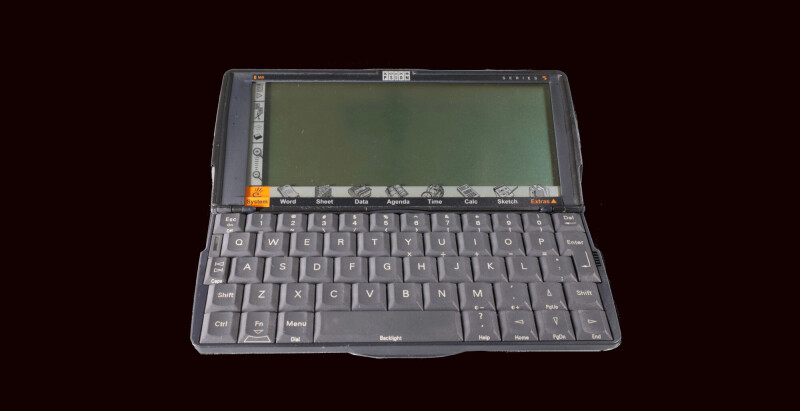
David Potter, the man who put Psion in the palm of your hand, logs off at 82

Published

on

OBITUARY  South African-born pioneer of the British tech industry David Potter, the man behind the iconic Psion pocket computers, passed away on 28th June, six days before his 83rd birthday.

Potter was the founder of the company of the same name, a pivotal firm in the British technology industry from the 1980s to the 2000s. Psion supplied software for the early computers from Sinclair Research, the ZX80 and the ZX81, including a Flight Simulator that you can play online. In 1982, Psion supplied the bundled software with the Sinclair ZX Spectrum, and the later, the XChange suite for the Sinclair QL, later available for DOS under the name PC-Four – a deal The Register reported in detail for the QL’s 30th anniversary.

In 2016, Potter was interviewed by the Archives of IT, which you can watch online:

Advertisement

2016 interview with David Potter by the Archives of IT

There’s also a corrected transcript [PDF], plus some edited highlights of the interview.

Advertisement

A bold 1983 advertisement claimed: “The best software on earth comes from Psion.” However, Potter realized early on that the instability of the rapidly moving home computer market posed a problem for the company, as he explained in a 1991 interview in Personal Computer World:

“What’s the longevity of this market, what’s the utility of these products, where’s it going to? And the more we asked these questions the fewer answers we could get. And we came to the conclusion that these products were of tremendous educational value, a lot of fun, but there was no real long-term utility and the market was not long term because of that. So we decided to diversify and put a lot of our development resources into two very new areas for us. One was applications software. The second area was quite a new, radical concept of a handheld computer”.

This led it to create the first of the multiple ranges of pioneering hand-held pocket computers for which it is better remembered today. In 1984, Psion launched the Organizer range, and in 1986, its successor the Organizer II, which came with two slots for what were arguably the computer industry’s first replaceable SSDs. In 1989, Psion introduced all-solid-state MC laptops. Although unsuccessful, the MC’s hardware was miniaturized to create the pocket-sized Psion Series 3 in 1991, and Psion’s bespoke GUI OS became EPOC16. The machines sold in the millions, which in turn led to the Psion 5 and netBook.

The Register’s magisterial history of the development of the Series 5, Psion: the last computer, covers this evolution in depth. For the Series 5, Psion designed and implemented EPOC32, a realtime-capable 32-bit Arm OS in C++. Later, EPOC32 was renamed Symbian and powered the first wave of smartphones, as The Reg covered in depth in 2010 in a two-part history: Symbian, The Secret History: Dark Star, followed by Symbian’s Secret History: The battle for the company’s soul.

Advertisement

The Reg has reported on Potter too many times to link. We first quoted him in 1998, and most recently in 2017 when he invested in Planet Computers, becoming Honorary chairman of the company. Planet produced the Gemini pocket computer whose keyboard was licensed from Psion.

In 2000, Potter sold £12.6 million worth of Psion shares, only to see them quadruple in value within months. In an interview with Management Today, he said he had a knack for badly timed share deals:

“It’s always the case. I always joke that the best buying signal for Psion shares is when I sell. If you look back over the years there is a correlation between my selling and the price going up.”

Reg readers would have already had an inkling: the year before, he had told us that he thought Amazon might flop, but that he was bullish about Psion’s future.

Advertisement

By 2004, Psion sold its stake in Symbian to Nokia. Some shareholders were unhappy, but he told them Linux was a growing threat. (He certainly got that right.) Subsequently, Microsoft bought Nokia’s phone unit – then killed it as a tax write-off. Its outstanding and unique OS is FOSS now.

Dr David Edwin Potter was born in East London on July 4, 1943 – but not the East London that Psion enthusiasts might expect: the East London in the Eastern Cape Province of South Africa. His father died when he was young, and as his mother had to work, he and his sister were raised by their grandmother. By the time Potter was 10, their mother remarried, and the family moved to what is now Zimbabwe.

Colly Myers

Potter’s mother’s second marriage led to the birth of his half-brother Colly Myers, and the two worked together for decades. Myers wrote the Xchange spreadsheet module Abacus, and much of the original EPOC32 kernel. Years later, Myers became MD of Psion, and then CEO of Symbian, from which he stepped down in 2002. Myers pre-deceased his elder brother: in February this year, Symbian co-founder Stephen Randall let friends know about his passing on LinkedIn.

After a year (two terms) at the University of Cape Town, at 18, Potter went to Cambridge University thanks to a Beit scholarship. There he studied the Natural Sciences Tripos, followed by a PhD in Mathematical Physics at Imperial College.

Advertisement

In 1969, he married a fellow South African, journalist Dr Elaine Goldberg [PDF]. He stayed on at Imperial, and from 1970 taught applied physics. This led him towards develop software to model non-linear phenomena on the university’s early mainframes:

“I began to use these behemoths, these ludicrous machines, which didn’t remotely have the power of Psion Revo, for example. And they cost millions of pounds. I became something of an expert in them and designed substantial software systems.”

This led to his interest in the then-new microprocessors:

“If there are opportunities in the world you need to grasp them. I was fortunate enough to be in an area that was really going to change the world in a huge way.”

Advertisement

In 1974, he and Elaine moved to Los Angeles, where he became an Assistant Professor at UCLA. From there, they watched the British economy go into a massive decline. He told the Archives of IT:

“I saw this happening from afar, and thought, this is mad… So somebody said recently, you know, when there’s a sale on, it’s quite a good idea to buy things. So I had savings of about £3,000, and I wrote to my bank manager and I said, ‘Please invest them in the following six companies,’ which I didn’t know very much about – but I knew about Racal Electronics, about GEC, Arnie Weinstock’s great company. And anyway, four others. And, then I forgot about them, went on with my academic business.

In 1975, with Elaine expecting their first child, they came back.

“When I returned to Britain everything had more than doubled, and of course there was the beginning of the recovery in 1975. So, that taught me a little bit about, if you research things enough, and I was capable of research, maybe there were opportunities.”

Advertisement

Emboldened, he moved to his next investment effort:

“We had our first child in 1975. And, just to have a break I went skiing – on a packet tour down to Austria I think, and I had a very pleasant four or five days. I came back on a newish aeroplane carrying people – I used to go by train. And I looked around as we were flying back, and I thought to myself, all these Brits have been skiing, and sleeping under duvets. And so, clearly they’re going to come home, they’re going to throw away their blankets and buy duvets… So I researched whether there was a duvet supplying company in Britain, and I found one… The company was called E Fogarty.”

E Forgarty & Co was a major employer in Boston, Lincolnshire, but after a hot summer, went under in 2018.

“I researched it and found it had just built a new factory, and then I had the chutzpah to go and interview the chairman. I told him I was a potential investor but not how little I was planning to invest. Then I sat in the pubs outside the factory in the evening and chatted to the workers about overtime etc, and got a complete picture of what was going on. I could see the opportunity and put 40 per cent of my capital into Fogarty. The price tripled in 18 months. That was how I got my education in business and company matters, and some of the capital to start Psion.”

Advertisement

In 1980, he bought an off-the-shelf company called Red Cheer and renamed it. He wanted to call it “Potter Scientific Instruments”, whose initials spell the Greek letter PSI (Ψ). However, the acronym was already taken, so he added “Or Nothing” to yield the name PSION.

Potter was awarded [PDF] the Mountbatten Medal by the Institution of Engineering and Technology in 1994. In the 1996 New Year Honours, he was awarded a CBE – Commander of the Order of the British Empire – for “services to the manufacturing industry.” He served on the Dearing Committee for its 1997 report on Higher Education. In 2001, he became a Fellow of the Royal Academy of Engineering, and that year was also a notable Labour Party donor. He also held multiple honorary doctorates.

In 2009, Potter retired from the company he founded. His other efforts have included with the charity the couple started, The David and Elaine Potter Foundation.

One aspect of his activities we did not know about – apart from being a duvet entrepeneur – was that he not only contributed to the openDemocracy organization, but that in 2013, he saved it from bankruptcy. OpenDemocracy published an obituary for him before any tech industry outlet: Remembering David Potter: Industrialist, physicist, philanthropist.

Advertisement

The Register received plaudits from a number of ex-Psion people.

“Psion was a company that had a tremendous and friendly culture. It was a joy to build new technology products that were at the forefront of innovation.

“All Psion handhelds included their own software, apps and operating system developed in-house from the ground up. This is extremely unusual. The devices also usually included custom silicon to improve power efficiency and performance. The teams developing these products knew they were at the leading edge, and this attracted the best talent which stayed because of the highly collaborative and friendly culture.”

Ian Fogg

Advertisement

“At the peak of his powers, David Potter was the man who kept Microsoft’s Bill Gates awake at night.

“Psion started in a small office above an estate agent in Maida Vale and grew rapidly into a FTSE-100 company.

“On a personal level, David was a deep thinker, a good listener, and a genius. It was a pleasure simply to be in his orbit and he inspired a generation of leaders who are still at the top of their game.”

Anthony Garvey ®

Advertisement

Bootnote

In February this year, East London was officially renamed KuGompo City.

Source link

Continue Reading
Click to comment

You must be logged in to post a comment Login

Leave a Reply

Tech

LEGO Assembles a Full Grid of Drivable Brick Minicars for Formula 1 Drivers at the British Grand Prix

Published

on

LEGO Drivable Brick Minicars British GP Formula 1
Silverstone gets ready for a different kind of lap this weekend when all 22 Formula 1 drivers take the wheel of minicars made from LEGO bricks. Builders at the LEGO factory in Kladno, Czech Republic, put more than 6,400 hours into creating these 22 vehicles. Each one incorporates over 28,000 bricks arranged over a steel frame to match the specific livery of every team on the grid. Driver numbers and team emblems appear in their proper places with a playful LEGO touch.

Complete LEGO minicars weigh approximately 280 kg. Only 65 kilos of that weight come from the actual bricks, which are what people think of when they hear the word LEGO. Standard go-kart wheels sit at each corner, with electric motors providing power to propel them forward. When they do? The maximum speed is a fairly reasonable 25 kph (15.5 mph).


LEGO Speed Champions Ultimate Formula 1 Collector’s Pack – Contains 10 Sets in 1 – Includes Exclusive…
  • AUTHENTIC F1 RACING COLLECTION – Bring home the high-speed trackside excitement with the Ultimate Formula 1 Collector’s Pack. Live the F1 dream
  • BUILD. RACE. DISPLAY. – This collectible LEGO car kit brings F1 to life like never before. Cheer on your favorite teams and show off your winning…
  • GREAT MODEL CAR GIFT – The perfect way to build together and race together. A thrilling experience for the whole family

A team of 20 designers and engineers worked their magic on this project, and team leader Jonathan Jurion stated that they went back to the drawing board after last year’s Miami Grand Prix to double-check every detail. Drivers and fans responded clearly: they wanted a larger version of the entire experience.

To be honest, last year’s show had a much more relaxed atmosphere. There were fewer automobiles, and the scene was chaotic, with bricks flying everywhere. Thankfully, they’ve addressed this issue this time around with the inclusion of plastic bumpers, roll hoops, and fenders to keep all of the parts where they belong, on the vehicles, rather than in mid-air and going for the drivers.

Advertisement

LEGO Drivable Brick Minicars British GP Formula 1
The actual racing, if you can call it that, begins approximately 90 minutes after the drivers are lined up for the parade on Sunday. The course is a full lap of the Silverstone circuit, which will be aired live online via Formula 1 networks.

LEGO Drivable Brick Minicars British GP Formula 1
Julia Goldin, the LEGO Group’s chief product and marketing officer, believes that the fan and driver reactions in Miami made it a simple decision to continue with the project. Emily Prazer, Formula 1’s chief commercial officer, thinks that this unusual collaboration between the two worlds will be a success because people of all ages will enjoy watching genuine F1 drivers in miniature cars.

LEGO Drivable Brick Minicars British GP Formula 1
This one started small in Miami, but it’s now heading to Silverstone with the complete package – a slew of custom-built machines. The sight of these F1 racers blatting around one of the world’s quickest tracks in LEGO-built cars is sure to be a spectacle before the main event begins.

Source link

Continue Reading

Tech

The Space Shuttle Endeavour Goes On Public Display Later This Year

Published

on

NASA’s shuttle has been in LA since 2012, but now it’ll have a permanent exhibit at the California Science Center.

The California Science Center has announced that Endeavour, NASA’s final space shuttle, will go on permanent display at the Samuel Oschin Air and Space Center on November 13, 2026. The new 200,000 square-foot addition to the science museum that will house the shuttle alongside a collection of 100 artifacts, including a selection of “rare and historic aerospace objects.”

Endeavour has technically been on display horizontally at the California Science Center since 2012, but this new exhibit will showcase the shuttle in launch position, complete with Endeavour’s solid boosters and external tank. Besides viewing the shuttle in all its glory, museum guests will be able to ascend an 140-foot gantry elevator next to the shuttle, simulating the experience astronauts have right before they board and launch.

Advertisement

NASA originally created the Space Shuttle Endeavour as a replacement shuttle following the Challenger disaster in 1986. Starting in 1992, Endeavour was used in multiple missions, repairing and deploying satellites, servicing the Hubble Space Telescope and ferrying astronauts to the International Space Station. The shuttle was formally retired in 2011, and NASA announced it would spend its permanent retirement in Los Angeles in 2012. That same year, the shuttle made a slow, and perilous 12-mile land trip from the Los Angeles International Airport to the California Science Center, where it’s been housed to this day.

Source link

Advertisement
Continue Reading

Tech

This $89 dongle lets a Windows browser take complete control of your iPhone from anywhere nearby

Published

on


  • Comet Q’s controls iPhones remotely without installing anything on the device
  • Hardware-level access survives screen locks, sleep states, and network interruptions
  • One USB-C cable replaces cables normally required for traditional KVM setups

GL.iNet, the Hong Kong-based networking company behind a range of popular OpenWrt routers, has revealed the Comet Q, what it says is as the world’s first browser-based, pocket-sized remote-control device built specifically for USB-C devices, covering laptops, phones, tablets, and Mac minis.

What separates the device, also known as the GL-RMQ1, from conventional remote desktop software is that it operates at the hardware level, meaning it keeps working even when the controlled device sleeps, locks, or loses its network connection.

Advertisement

Source link

Continue Reading

Tech

inside Smartschool’s approach to exam prep

Published

on

Artificial intelligence has proven that it can trawl the internet to retrieve information quickly for answering questions. But teaching students using AI is a harder task. The stakes are even higher when the goal is not just learning in school, but performing well on high-stakes exams like the SAT and ACT.

On the face of it, education might seem like a natural extension of large language models. If AI can replace customer support, certainly it can provide back answers just as a teacher would.

But being educated in a school is not a consumer experience. Teachers and school administrators aren’t looking for chatbots. Chatbots can hallucinate, chatbots can make mistakes. But if you hand over the instruction of a pupil to a chatbot, you can impede a student’s progress for months. Educators need the tools they use to be bullet-proof, safe, accountable, and consistent.

That’s why the creators of Smartschool, a Palo Alto-based educational technology company, decided to build their platform by starting with the problems faced by students and educators. Rather than adapting existing AI tools, they invested in building an AI tutor designed to help students truly learn and perform under pressure. That gap between a clever chatbot and a tool educators can actually trust is what Smartschool set out to close, with the SAT and ACT among the key exams it supports.

Advertisement

In a way, they were well prepared for the task. Smartschool was founded by three Polish entrepreneurs – Matt Masłowski, Paul Burzyński, and Kajetan Lewandowski. The trio had experience working for a variety of tech firms along with a solid education background. They also grew up in a Poland undergoing a difficult economic transition, where opportunities were limited and access to quality education was far from guaranteed.

Coming from relatively underprivileged backgrounds, we wanted to be able to help people get great educations and make it possible to have similar stories, so long as they want to take action,” remarks Maslowski, Smartschool’s CEO. “Because if we keep the current education system as it is, when the whole world is changing so rapidly, we will have an extremely unfair and unequal society in the future,” he says.

The challenges of AI-based learning

A core observation of the Smartschool team is that generic AI systems were not designed for the realities of the classroom. This is particularly true for mathematics education, as large language models are known to hallucinate. They might jump ahead, skip steps, and reward wrong answers. These kinds of technical glitches can pose real problems for teachers and students, and certainly are responsible in part for the skepticism that now exists towards AI.

AI cannot also fit all in an educational setting. A successful platform needs to be customizable, so that it can be aligned with the curriculum and state standards, not to mention data privacy regulations.

Advertisement

Most edtech tools are just wrappers around ChatGPT,” says Paul Burzyński, Smartschool’s chief product officer. “They have no understanding of what a student is actually working on in class.

That gap between impressive AI demonstrations and practical classroom requirements is what Smartschool set out to address. Burzyński led the translation of advanced AI capabilities into classroom-ready workflows, working with teachers, students, and school districts to ensure the technology supports learning rather than distracting from it.

Mathematical reasoning

At the center of its platform is a proprietary mathematical reasoning engine developed under the product vision of Chief Product Officer Paul Burzyński and implemented by CTO Kajetan Lewandowski’s engineering team. Unlike general-purpose AI systems, Smartschool’s platform was designed specifically for real classroom conditions, combining educational workflows with advanced mathematical reasoning capabilities.

It can evaluate handwritten student work, interpret diagrams and geometric constructions, and assess open-ended solutions,” Burzynski explains. “This is important because student learning is not limited to multiple-choice answers; it often involves showing reasoning steps and making mistakes that reveal thought processes.

Advertisement

Rather than simply providing up answers like a GPT-powered Chatbot or search engine, Smartschool’s system is designed to give structured feedback that helps students improve their reasoning. The company reports that its system achieves 99.6 percent accuracy when assessing and providing feedback on high-school-level mathematics problems. The goal is not just correctness, but educational usefulness.

Under Burzyński’s product leadership, the Smartschool team designed the system for scale and classroom integration. It can be connected with existing learning management systems, curricula, and single sign-on platforms. Teachers can also assign work with one click, while student submissions are automatically graded and synced with gradebooks. Educators receive insights into student progress and misconceptions too.

This design ensures the technology fits into existing teaching workflows instead of forcing schools to adapt to new systems,” says Burzynski.

AI that teachers and students can trust

As CEO, Masłowski has led Smartschool’s expansion into U.S. school districts while working closely with educators and administrators to ensure the platform delivers measurable learning outcomes. Alongside Burzynski and Lewandowski, he has helped demonstrate the reliability of the system to schools adopting AI-powered learning tools for the first time. But educators have caught on, encouraged by early success stories. Smartschool now operates in 30 US school districts, including within the New York City Department of Education and in Boston Public Schools. And there are measurable results. A study from the Learning Experience Design Research Institute found that 90 percent of students using the platform in Wisconsin’s Pewaukee School District met or exceeded math standards, for example.

Advertisement

Investors, and the media, have also taken note. The company in April raised $3 million in seed funding from private angels Mati Staniszewski (ElevenLabs), Marcin Żukowski (Snowflake), and Nick Woods (HazelHealth), as well as Inovo VC, the a16z Scout Fund, and The Explorer Fund. Several investors were early supporters of the team. Both Masłowski and Burzyński have also been recognized in Forbes 30 Under 30.

According to Maslowski, while it takes time to build trust in a market as conservative as edtech, the kinds of relationships the company is building, based on its experience and knowhow, should be in place for the long term. “Since the beginning, our focus has remained consistent,” he says. “We want to build AI that teachers can trust and that improves real educational outcomes in classrooms.

Source link

Advertisement
Continue Reading

Tech

Pet project: Seattle startup studio’s new app connects neighbors through their dogs

Published

on

Sniff founder Amish Patel and Chewie, his standard poodle. (Photo courtesy of Amish Patel)

Amish Patel knows his neighbors by their dogs’ names before he knows their own. It’s a pattern he noticed in his Seattle neighborhood — and one he’s now built an app around.

Patel’s newest pet project — born out of his Conduit Venture Labs startup studio, is Sniff, an iOS app that turns the everyday moment two dogs greet each other on a walk into a lasting connection between their humans.

The idea traces back to Patel’s own block in Seattle’s Madrona neighborhood, where he moved with his standard poodle, Chewie, right before the pandemic. With no kids and limited ways to meet people, the neighborhood park became the default hangout — and a group text thread became, in Patel’s words, a real sense of community. The catch: most of those contacts were saved under names like “Glory’s mom” or “Louie’s dad.”

“The five people in Madrona that I hang out with, more often I met through him,” Patel said of Chewie.

Beyond widening Patel’s own social circle, Sniff has a greater societal objective — taking on loneliness and isolation, an epidemic cited in the U.S. Surgeon General’s 2023 advisory on social connection.

Advertisement

“Younger people are having kids less, getting more isolated … we’re sitting on our phones, even though we’re all next to each other,” Patel said. “One out of four people don’t know their neighbors or talk to their neighbors.”

Dogs — and Sniff — could be an answer.

Sniff verifies that users are real people who actually live in the neighborhood they claim, using address and location data, and the app is geofenced so members can only discover dogs nearby. Inside the app, users see only dog profiles and photos — no human names or personal details — until a connection is made. Patel said artificial intelligence plays a role only on the trust-and-safety side — confirming identity and location — rather than in matching people up.

Once connected, neighbors can message through the app, arrange meetups, and lean on each other for help — dog walking, sitting, or just a hand when something comes up. Patel said the trust that builds from already knowing someone’s dog often translates directly into people who are willing to help.

Advertisement
Screenshots from the Sniff app show a profile, community boundary, events and more. (Sniff Images)

The pilot is open in Madrona, Leschi, Madison Park, the Central District and Capitol Hill, but pet parents anywhere in Seattle can sign up today. Each neighborhood stays geofenced until it reaches enough engaged sign-ups, at which point Sniff opens it up — Madrona, the first to launch, already has about 100 people on the platform.

To help build momentum in each neighborhood, Sniff is partnering with the Seattle Chamber of Connection — where Patel sits on the board — to recruit “Pack Leaders”: local dog owners who help organize meetups and informal introductions as their neighborhood’s user base grows.

Patel is a Microsoft vet who spent eight years on projects including Xbox Kinect and Microsoft Band, before moving into the startup world with stints at fitness wearable maker Katalyst and football helmet manufacturer Vicis. He landed an entrepreneur-in-residence role at Seattle startup studio Pioneer Square Labs in 2020, and two years later co-founded Conduit Venture Labs with Susan Paley, the former first CEO of Beats by Dre.

Conduit focuses on “hard-tech” ventures that blend hardware and software. Sniff is Conduit’s fourth in-house startup, following Fluffy — a computer vision platform for doggy daycares — and an audiobook AI venture in the loneliness space that Patel said is preparing for a public seed round this fall. A fourth project, in health tech, remains under wraps for now.

The Sniff app itself was built lean: a couple of developers, a product lead, and Patel splitting his time across the studio’s other projects. Patel said the team has since shifted to AI-assisted development to move faster, and is now searching for a CEO to take the project in-house full time as it raises capital and pursues some hardware-related features.

Advertisement

For all the talk of trust layers, geofencing and future hardware, Sniff’s entire premise still comes down to a dog doing what dogs do. The humans get the friendships, the favors, the group texts. The dogs, Patel said, get something simpler.

“They just get to be more social,” he said, “because we don’t keep them in our house with us while we’re doom scrolling through everything.”

Source link

Advertisement
Continue Reading

Tech

New PamStealer macOS Malware Uses Clever Tradecraft To Remain Stealthy

Published

on

An anonymous reader quotes a report from Ars Technica: Researchers have found a never-before-seen piece of macOS malware that combines a series of clever tradecraft to infect Macs with stealthy, custom-developed credential-stealing code. The malware is delivered in two stages. The first is distributed in a disk image that masquerades as Maccy, a clipboard manager for Macs. It’s compiled as AppleScript that is notable for the way it delivers the second stage. The malware is named PamStealer because the Rust-written infostealer uses the Pluggable Authentication Modules interface built into macOS to validate the target’s login password before sending it to an attacker-controlled server.

[…] PamStealer shows a native password prompt designed to resemble a system authorization request. Text that appears with the prompt says: “Maccy wants to make changes. Enter your password to allow this.” As noted earlier, once a target complies, the malware validates it locally through the PAM API. “This check is done entirely through PAM: there is no call out to dscl, security, osascript or any spawned process to verify the password, as many commodity macOS stealers do,” [said Jamf, a security firm for macOS users]. “The result is a quieter routine that keeps only a verified password, and one fewer process chain for defenders to detect on.”

If the validation fails, PamStealer displays the prompts again until it receives the correct one. Once the target enters the correct password, PamStealer displays a message stating that the file is damaged and can’t be installed. This is designed to be a decoy to prevent the target from suspecting anything is amiss. The malware uses tactics to maximize the information it can steal. One tactic is to request the target grant full disk access to the fake Maccy app. It also contains code designed to access ethereum accounts. The various techniques — particularly the Script Editor lure, a self-contained JXA dropper, a Rust-based second stage, and local validation of credentials through PAM are all noteworthy.

Source link

Advertisement
Continue Reading

Tech

Tesla Stretches the Model Y L Into a Proper Six-Seat Family SUV for the US Market

Published

on

Tesla Model Y L US Launch
Tesla opened orders for the Model Y L across the United States on July 2. The new variant stretches the popular crossover to deliver a genuine six-passenger layout with a usable third row for the first time in this lineup. Engineers added six inches to the wheelbase and seven inches to overall length. They also increased height by roughly two inches compared with the standard Model Y. These changes turn the third row from an occasional squeeze into space that works for adults on longer drives or for carpool duty with kids and gear.


Third-row legroom is now a respectable 31.2 inches, while headroom has improved to a very generous 38.1 inches. Your family will be very comfortable, and the second row will include captain’s chairs with heating, ventilation, motorized armrests, and the one-touch folding feature that makes it so much easier to get to the back. The third row features heated seats, motorized reclining, and standard child-seat anchors, which are a parent’s greatest friend. The bigger rear door apertures make it easier to get in and out; no more struggling to get the kids or yourself into the back seat. When both rear rows are folded flat, the maximum cargo volume is 89.6 cubic feet, allowing you to accommodate all of your luggage, sports equipment, or DIY project gear for a weekend without breaking out the trailer. However, if you choose a regular model Y with the third row up, you will have far less room.


Amphibious Remote Control Car, 1:18 Monster Truck Toys for Boys RC Cars, 2.4 GHz Waterproof RC Trucks…
  • 2.4 GHz Remote Control Car – 1:18 scale cool design, waterproof RC truck toys made of premium material and sturdy, with LED lights, waterproof remote…
  • High Quality & DIY Removable Toys RC Cars – This remote control monster truck structure design quality, flexibility and strength in one. The rc truck…
  • All Terrain Amphibious Monster Truck – 4-wheel drive off-road design rc trucks for kids, with high-quality tires (shock absorption, strong grip…

An 83-kwh battery provides an estimated 325 miles of range on 19-inch wheels, but increase the wheel size to 20 inches and you’ll get about 5 miles less. Dual motors transmit power to all four wheels, propelling you from 0 to 60 in 4.4 seconds. Plus, with a towing capacity of 3,500 pounds, you may tow small trailers or boats if necessary. If you’re looking at three-row electric vehicles, the Model Y L is up against the likes of the Kia EV9 and Hyundai Ioniq 9, but what sets it apart is its ability to outperform them on acceleration while matching range in a smaller overall package, and you can fit it into smaller spaces, which is a big plus.


Inside, you have an 8-inch touchscreen all to yourself in the second row, which is ideal for messing with the climate controls and audio while in the passenger seat. You also receive cooled wireless charging pads that can charge your phone at up to 50 watts, so you won’t have to worry about your battery dying. The sound system is significantly improved, with 19 speakers and the use of acoustic glass and adaptive dampening to reduce road noise and wind buffeting.

Advertisement


The Launch Series variant costs $61,990, which includes special badging, wheels, and a complimentary one-year subscription to Full Self-Driving, Supercharging, and premium connection. Once the original batch is sold out, you can expect to see further selections at cheaper prices. At this pricing, the Model Y L sits above the Model Y Performance but well below what you would have spent for a Model X, so if you want a larger model but don’t want to pay top bucks, this is a strong choice.

Source link

Advertisement
Continue Reading

Tech

International Google Pixels Are Different Than American Models

Published

on

Google is one of the largest smartphone manufacturers in the world, so it probably shouldn’t come as a surprise that Pixel handsets are sold in a number of regions outside the US. However, like all good device makers, Google tweaks its products based on where they are sold in order to conform to local regulations and customer preferences. Different countries have different languages, power sockets and networks, for instance. So for those curious about what’s different between Pixels sold here in America and those available abroad, here is a quick rundown of some of the most notable tweaks and changes between US models and their international variants.

Hardware

Unlike Samsung phones which often vary between featuring Snapdragon or Exynos chips depending on where they are sold, the differences between US and international Pixels are relatively minor, especially when you’re looking at the past several generations of products. The majority of recent international Pixel phones feature the same Tensor chips, memory and storage as US versions, along with identical camera sensors, display tech and charging capabilities. On the base Pixel 10, this includes a Tensor G5 processor, 12GB of RAM, 128GB or 256GB of storage, a 6.3-inch Actua OLED display and a rear camera module with a 48MP main, a 12MP ultra-wide and 10.8MP telephoto sensors. The physical design of Pixel handsets across various regions is also largely unchanged, right down to the materials used and color options.

The one small hardware discrepancy on Google’s most recent generation of phone is that while the Pixel 10, Pixel 10 Pro and Pixel 10 Pro XL are all eSIM-only in the US, international models still support a physical Nano SIM slot along with eSIM functionality. Google says this change was made due to the ease of use and widespread support for eSIMs among American carriers in addition to being able to use the space that would normally be occupied by a physical SIM card for components needed to support mmWave 5G. The outlier to this is that all versions of the Pixel 10 Pro Fold (both in the US and abroad) offer physical Nano SIMs trays.

Software

Similar to hardware, there aren’t a ton of differences between the software on US Pixels and international variants. That is, with a caveat that as Google’s phones are available in more than 30 countries and support over a dozen languages, it can take extra time to localize features for specific markets. Often, brand new tools and apps will be available first in English in North America while Google works to ensure regulatory compliance and general usability in other languages and locales. One example of this is Magic Cue, which uses AI to surface important information like addresses and calendar appointments in messages based on context. Currently, the feature is available in a handful of countries including the US, Canada, India, the UK, Japan and others while Google works on enabling the feature in additional markets.

Cellular support

Perhaps the biggest difference between US Pixels and international models is cellular compatibility. On one hand, this may be somewhat obvious as carrier support varies greatly from country to country, but it’s still something that’s really important to consider, especially if you’re traveling or moving from one place to another. After all, a phone without a useful internet connection and the ability to make calls will be severely limited in its capabilities.

Advertisement

Furthermore, the type of cellular coverage can vary quite a bit from region to region. In the US, carriers like Verizon have invested much more heavily in mmWave 5G than many international providers. This type of 5G connectivity offers very high upload and download speeds with the trade-off being shorter range and penetration compared to mid-band and sub-6Ghz frequencies. So in an effort to keep costs down and ensure optimal performance, many phones sold internationally, including recent Pixels, don’t support mmWave 5G. The US also has stricter testing and vetting requirements for phones sold through carriers than many other countries, which is another reason why a lot of Chinese phones are not officially on sale here.

Generally, there is quite a bit of parity between Pixel phones sold in the US and those available overseas. If you are planning to move and you’re wondering about where you should buy your next phone, it’s often easiest to purchase it in the country or region you will be living in. But aside from that, particularly when it comes to hardware, there aren’t a ton of differences between US Pixels and international models.

Source link

Advertisement
Continue Reading

Tech

Enterprises lost Claude Fable 5 for a few weeks. New data shows two-thirds had already built their hedge

Published

on

Two-thirds of enterprises have hedged their AI model strategy, and the past few weeks of controversy around Anthropic’s Claude Fable 5 model showed why that posture has gone mainstream. 

On June 12, a U.S. export-control order pulled Anthropic’s Claude Fable 5 — the most capable model on the market — offline for every customer, with no warning and no timeline. It returned this week wrapped in tighter safeguards, after China’s Z.ai released its open-weights GLM-5.2 into the vacuum. New VentureBeat Pulse Research, which surveyed 145 enterprises across these last few weeks, shows that two-thirds had already hedged their model strategy before the order came down: 51% blend closed frontier models with open-weight models deployed on their own infrastructure, and another 16% are moving core workflows off closed APIs entirely. The remaining third was all-in on closed ecosystems when the lights went out.

The blackout put a spotlight on vendor dependency, by showing what happens when the model you rely on disappears. But vendor dependency is only the most visible piece of a deeper problem: Most enterprises lack the monitoring to know when an AI system they’ve put into production stops working correctly.

Just 1 in 10 enterprises has automated monitoring that would catch an AI model drifting, misbehaving, or failing in production. Roughly a quarter would learn of a production failure only when end users — internal or external — report it, or lack the visibility to detect it at all. And 79% of enterprise organizations have already taken a real financial or operational hit from autonomous agents — most often shadow AI, unauthorized agentic work run by enterprises’ own employees on corporate credit cards, outside anyone’s oversight.

Advertisement

We call this the “Control Gap,” or the distance between how aggressively enterprises are deploying AI and how little of it they can see, own, or govern. June’s blackout turned this into a live stress test.

About this data: VentureBeat Pulse Research surveyed 145 qualified respondents at organizations with 100 or more employees in June 2026, with fielding spanning the Fable 5 blackout that began June 12. The sample is self-selected and directional: 41% work in technology/software, 20% are consultants or advisors, and the respondent base skews senior and technical — CIO/CTO/CISOs (18%), directors of engineering/IT (14%), enterprise architects (12%). More than half of the respondents were from companies with 2,500 employees or more. 

While our sample is not huge, what you can trust more than the exact percentages is the pattern: Every question in the survey, independently, points the same way, with deployment running ahead of governance, visibility, and cost control.

The full methodology is in the report.

Advertisement

How the Fable 5 export order rewrote enterprise AI risk

Fable 5 launched June 9 to immediate acclaim — and sticker shock, at $10 per million input tokens and $50 per million output. Three days later, the U.S. government issued an emergency export-control directive barring access by foreign nationals. Anthropic, with no way to verify nationality in real time, suspended the model for everyone.

Z.ai has continued to pick up momentum; on Wednesday it released an open agentic coding environment, called Zcode. OpenAI, meanwhile, previewed its cutting-edge GPT-5.6 line on June 26.

Enterprises had already spent the spring learning what AI dependence costs in dollars. Uber burned through its entire 2026 AI coding budget in four months after Claude Code adoption hit 84% of its roughly 5,000 engineers, Forbes reported. Microsoft canceled most internal Claude Code licenses in its Windows and Microsoft 365 division, steering engineers to its own tooling, according to The Verge.

June added the harder lesson: The model your workflows depend on can vanish overnight, by government order, through no decision of yours or your vendor’s. And Chinese companies like DeepSeek were releasing hugely disruptive, powerful models, driving down costs to a fraction of Western ones.

Advertisement

Brian Craig, senior director of architecture at Liberty IT, the Ireland-based engineering arm of Liberty Mutual, one of the world’s largest insurance companies, saw both lessons collide in real time. Craig is Irish, which meant the export order hit him directly as a foreign-national user.

Onstage at VentureBeat’s AI Impact event in New York on June 24, mid-blackout, I asked him about it. “Fable arrived, and immediately you saw the sticker price of using it, and you went, ‘Ooh, goodness, it better be really good,’” Craig said. “But luckily enough, we didn’t get to use it enough to get to fall in love with it.” Then it was gone.

The hedge was already built before the blackout hit

Craig’s company was built to route around exactly this kind of disruption. Liberty IT runs what it calls an AI backbone — roughly 50 components spanning security, governance, observability, and orchestration, each independently replaceable.

“You can’t lock in right now in one vendor and even one framework,” Craig told the room. “You need to keep being able to have the flexibility with that backbone to be able to hook into different models, different vendors, depending not so much on who’s the flavor of the day, but on what you can feel confident about for the next six months.”

Advertisement

The survey shows Craig has plenty of company. A 51% majority of enterprises run a hybrid posture — closed frontier models for general reasoning, open-weight models deployed locally for specialized execution — and 16% are making a hard pivot, moving core workflows onto open weights running on their own hybrid or private cloud. The 32% holding a closed commitment are candid about why: The operational overhead of self-hosting still outweighs the savings for them. After June, that calculus has a new variable in it.

Model hedge

Defection is now the active posture, and the target may surprise you. Asked which primary AI vendor they are most likely to downsize or phase out over the next 12 months, respondents named Microsoft first at 30% — most citing cutbacks to Copilot and Azure AI frameworks in favor of direct model access — ahead of the 28% who plan to trim no vendor at all. OpenAI drew 21%, largely on pricing volatility, with Anthropic at 15% and Google at 6%. No vendor faces an exodus. But loyalty by inertia has ended: Among these enterprises, actively cutting at least one provider is now more common than expanding across all of them.

Vendor defection

Just 1 in 10 enterprises would catch a failing production model automatically

How would an enterprise know if one of its production AI models was drifting, behaving unsafely, or failing to complete tasks? We asked directly. Forty percent say they are very confident they would detect it. The question also asked what that confidence rests on, and respondents split into two camps: 30% rely on humans reviewing critical AI outputs, and just 10% — 14 of the 145 organizations — have automated monitoring and alerting running against production systems. The remaining respondents hold weaker positions still: 32% expect to catch most issues “eventually,” 19% say they would likely hear about a failure from end users first, and 8% report no systematic visibility into production AI behavior at all.

Detection gap

That distinction matters because the two approaches are very different. Human review may seem like the gold standard, but it only reaches the outputs someone designates as important for such a review — and it happens at the pace humans can move at, with the inconsistency any manual process carries. Automated monitoring watches everything the system produces, continuously, and flags anomalies as they happen — for the same reason enterprises stopped depending on manual checks for uptime and security a decade ago.

As agentic workloads multiply output volumes far beyond what any review team can read, the manual approach starts to fall behind. The leaders at our June 24 event in New York treat human review as a designed control with automation underneath it. “Nothing gets deployed into production unless it’s a human actually reviewing it and signing off,” Craig said of Liberty’s agentic software factory, where planning, coding, testing, critic, and librarian agents ship features from epic to production.

“It always has to be risk-based. That’s why we work for an insurance company.” Todd Johnson, the Morgan Stanley managing director who runs agentic AI across the bank’s end-of-day P&L controller process, described the same principle from finance: “One of our strong principles in our AI governance generally is that there always has to be human accountability, even if there’s a degree of automation.” VentureBeat covered Morgan Stanley’s new results around its P&L resolution agent system separately.

Liberty Mutual and Morgan Stanley chose manual sign-off deliberately, layered on top of observability, identity, and governance infrastructure. Whether the human-review camp has similar infrastructure underneath is more than a single-select question can establish. The 16% who separately named missing observability tooling as their biggest governance barrier are the ones saying outright that it hasn’t been built.

Advertisement

The top governance barrier is organizational: no single owner for AI across platforms

Why does the AI visibility tooling never get built? The respondents’ answers suggest it is an organizational shortcoming. The single most-cited barrier to governing AI across platforms is the absence of a single owner or accountable team, at 32%. Vendor opacity follows at 25%, missing tooling at 16% — and a lack of talent lands dead last at 5%.

The skills exist, but the organizational mandate does not: Only 38% say a central team actually governs AI behavior across their platforms today, 21% say ownership is unclear or actively contested between teams, and 17% say no role holds formal accountability at all.

Missing owner

The AI surface being governed makes the vacuum worse. Fully 85% of enterprises run two or more platforms each claiming to be the “primary” AI layer — ERP, ITSM, productivity suite, data platform, each with its own AI, its own controls, and its own assumptions. 36% describe an open contest between four or more. Just 8% have consolidated to one. Asked in a free-text question what one thing they would fix, respondents converged from different directions on the same answer: a single accountable owner, and a control plane that abstracts cost, drift, and model choice away from the end user.

79% have already paid for an agent control failure — led by shadow AI

The cost of the vacuum is showing up on corporate cards.

Asked to name the most severe financial or operational control failure they have experienced from autonomous agents, 49% of enterprises cite shadow AI — departmental teams running unauthorized agentic pipelines on corporate credit cards, bypassing central financial oversight entirely. Another 25% have been hit by an infinite-loop bill, an uncaught recursive workflow racking up thousands in token costs in a single incident, and 6% by an agent that degraded production databases with unthrottled queries. Only 21% report guarded stability, with hard token throttling and budget caps at the infrastructure layer. Add it up: 79% of these enterprises have already paid for an agent control failure in real money or real downtime.

Advertisement
Agent bill

Finally, the economics of tokens suggest the pressure will keep rising. Per-token inference costs are falling 70 to 80% a year, and agentic workloads consume 100 to 500 times the tokens of the LLM tools they replaced.

Brian Gracely, senior director of portfolio strategy at Red Hat, told our New York audience the answer starts with right-sizing: “If I’m simply trying to resolve an insurance claim, I don’t need to know about the history of Western civilization in my model. I don’t need to know soccer scores.”

Enterprises are pairing smaller, specialized models with semantic routing, he said, so the platform decides which requests genuinely need frontier-scale reasoning — and which are burning premium tokens on commodity work. (One adjacent data point from the survey underlines the appetite for pragmatism: 73% of enterprises report little or nothing to show for their custom fine-tuning investments of the past 18 months — a reckoning we’ll examine in its own report.)

The bottom line: Replaceability is spreading faster than ownership

The survey describes enterprises moving fast on AI with weak controls underneath. 58% are adding more AI initiatives than they retire. 85% run multiple platforms that each claim to be the primary AI layer. Three times as many enterprises rely on human review to catch a failing production model as have automated monitoring in place. And 79% have already paid for an agent control failure — most often unauthorized agent spending on corporate cards, outside IT’s oversight.

On one problem, enterprises have clearly adapted: model dependency. Two-thirds hedge their model strategy, either running open-weight models alongside closed ones (51%) or moving core workflows off closed APIs entirely (16%). The Fable 5 shutdown showed the value of that position — the hedged companies could route around a model that a government order made unavailable overnight.

Advertisement

The remaining problems are internal, and no purchase fixes them: 32% name the lack of a single accountable owner as their top governance barrier, and 17% say no role holds formal accountability for AI at all. Assigning an owner costs nothing and requires no vendor. It still hasn’t happened at most of these companies.

Our coming Q3 wave of research will measure whether June changed this — whether enterprises assigned owners and installed automated monitoring, or just added a second model and moved on.

Get the full Control Gap report here.

The themes in this report — agent orchestration, governance, and cost control — are the agenda at VB Transform, VentureBeat’s flagship event, July 14-15 at Hotel Nia in Menlo Park, with technical leaders from Visa, GM, Waymo, Intuit, Instacart, LangChain and others. Details and registration here.

Advertisement

Disclosure: VentureBeat’s June 24 AI Impact event in New York was sponsored by Red Hat and Intel. Sponsors have no input into VentureBeat Pulse Research survey design, findings, or editorial coverage.

Source link

Continue Reading

Tech

Overland AI lands Marine Corps deal worth nearly $20M to build self-driving military vehicles

Published

on

Overland AI’s autonomous ground vehicles lined up at the company’s proving grounds. (Overland AI Photo)

Seattle-based Overland AI has landed a U.S. Marine Corps contract to produce autonomous ground vehicles, a milestone the defense-tech startup says makes it the first ground autonomy company to serve as the prime contractor on a military production deal. 

The nearly $20 million agreement — $19.7 million, according to the Department of War — calls for Overland to deliver more than a dozen autonomous ground vehicles, along with the software that runs them. Initial deliveries are expected to begin sometime in early 2027.

The agreement was announced June 29. The vehicles will work with a Marine Corps system that shoots down enemy drones. Overland’s vehicles will initially handle resupply for those crews rather than replace any existing vehicles, co-founder and CEO Byron Boots said in a media briefing, as reported by trade publications DefenseScoop and Defense One

Boots is a University of Washington machine-learning professor who leads the school’s Robot Learning Laboratory and is the Amazon Professor of Machine Learning at the UW’s Allen School of Computer Science & Engineering. He co-founded Overland in 2022 with Stephanie Bonk, the company’s president, spinning it out of the UW

The company’s technology is designed to let military vehicles drive themselves across rough, off-road terrain in places where GPS isn’t available. 

Advertisement

Overland has grown to more than 100 employees and raised over $140 million in venture funding, including a $100 million round in February led by the venture firm 8VC. It opened a 22,000-square-foot production facility in Seattle last year, and ranks No. 9 on the GeekWire 200, our index of the top privately held Pacific Northwest tech companies. 

Advertisement

The company isn’t alone in chasing military ground autonomy. One of its rivals, Maryland-based Forterra, won a larger, $92 million Marine Corps production deal earlier in June — but as the autonomy supplier under prime contractor Oshkosh Defense, rather than holding the contract itself. That’s the distinction Overland is claiming as a first. 

Overland’s deal came through a Pentagon program called APFIT — short for Accelerate the Procurement and Fielding of Innovative Technologies — which fast-tracks funding to move promising technology from prototypes into production. For Overland, it marks a step from testing and demonstrations into building vehicles at scale for the military. 

“We’re registering extremely high demand from U.S. operational units who want to incorporate this technology into their concepts of operation,” Boots said in the briefing, pointing to the war in Ukraine as evidence of a growing role for uncrewed vehicles.

Overland has been working for years with the Army, Marine Corps and Special Operations Command, also completing a multiyear DARPA autonomy program. The new contract builds on recent work integrating its self-driving technology into Marine Corps vehicles.

Advertisement

Source link

Continue Reading

Trending

Copyright © 2025