




Tech
Does a New Theory Finally Explain the Mysteries of the Planet Saturn?
“Saturn and some of its 274 moons are pretty weird,” writes Smithsonian magazine:
[Saturn moon] Titan has strangely few impact craters, Hyperion is tiny and misshapen, and Iapetus has a tilted orbit. What’s more, planets tend to wobble along their rotational axes as they spin, like an off-kilter spinning top in the moments before it topples over. Formally called precession, scientists have long thought that Saturn’s wobble rate should match Neptune’s because they’re probably gravitationally linked. However, data from NASA’s Cassini spacecraft, which studied the ringed planet from 2004 to 2017, revealed that Saturn’s precession rate is slightly speedier than Neptune’s.
In 2022, some researchers suggested that the destruction of a hypothetical moon, called Chrysalis, around 160 million years ago may have knocked Saturn out of sync and formed the pieces that became the planet’s rings. But this work implied that Chrysalis probably would’ve crashed into Titan, posing a major problem, study co-author Matija Äuk, an astronomer at the SETI Institute, tells New Scientist‘s Leah Crane. In that case, Chrysalis’ debris couldn’t have become the rings, he says.
So, Äuk and his colleagues used computer simulations to investigate what would happen if Chrysalis did smack into Titan. If that happened around 400 million years ago, they found, the crash would’ve wiped away Titan’s craters and made its orbit more elliptical. The altered path may have slowly pushed the trajectories of other moons, which then scraped against one another and left chunks of ice and rock that now make up Saturn’s rings. The timing seems to align with the rings’ estimated age of roughly 100 million years. Additionally, one piece of kicked-up debris may have formed the weird moon Hyperion, which may have subsequently tilted the orbit of the moon Iapetus, according to the analysis. The scenario could also resolve Saturn’s unexpected wobble, which is currently “a little bit too fast,” Äuk tells Jacopo Prisco at CNN.
The study has been accepted for publication in the Planetary Science Journal, and is already available on the preprint server arXiv.
Tech
Engineers Risk Their Lives to Repair Ukraine Power Grid
Every time Russia attacks Ukraine’s power infrastructure, Ukrainian engineers risk their lives in the scramble to get electricity flowing again. It’s a dangerous job at best, and a lethal one at worst. It also requires creativity. Time pressure and equipment shortages make it nearly impossible to rebuild things exactly as they were, so engineers must redesign on the fly.
These dangerous, stressful conditions have led to more engineers being hurt or killed. The rate of injuries among Ukrainian workers in electricity generation, transmission, and distribution jumped nearly 50 percent after Russia’s full-scale invasion began four years ago, according to data provided by Antonina Nagorna, who leads the Department of Epidemiology and Physiology of Work at the Kundiiev Institute of Occupational Health, in Kiev. By her count at least 48 people had died on the job through the end of 2025, either while repairing damage or during the bombardment itself.
Transmission mastermind Oleksiy Brecht joined that grim count in January. Brecht, who was director for network operations and development at the Ukrainian grid operator Ukrenergo, died while coordinating work at Ukraine’s most attacked electrical switchyard, Kyivska, west of the capital. He was 47 years old.
Brecht’s life and death are a window into the realities of thousands of Ukrainian engineers who face conditions beyond what most engineers could imagine. “The war completely transformed the professional life of a top-manager engineer,” says Mariia Tsaturian, an energy analyst and chief communication officer at the think tank Ukraine Facility Platform, who previously worked with Brecht at Ukrenergo. “As for junior staff, their world was turned upside down entirely. A substation engineer working under shelling is something no one had ever seen or experienced before,” she says.
How Russia Attacks Ukraine’s Grid
Over the course of the war, Russia has increasingly focused on destroying Ukraine’s energy infrastructure. It sends attack drones almost daily during the winter there, when heat and electricity is needed most to survive the bitter cold. Every 10 days or so it barrages Ukraine’s power system with combinations of missiles and hundreds of drones, repeatedly mangling equipment and cutting off power. The cold imposed on Ukrainian homes is especially hard on former prisoners of war held in Russia, where cold is routinely employed as a form of torture.
In the first two years of the war, keeping the grid flowing was a 24/7 job. But Ukrenergo has adapted to the impossible since then, says Vitaliy Zaychenko, Ukrenergo’s CEO, who somehow found a moment to speak with Spectrum via video call. Now, “we are more prepared for each attack. We have well-trained teams. We have support from Europe,” he says.
But the risk involved in repairing the grid remains unnerving. Last month a crew from DTEK, Ukraine’s biggest private-sector energy firm, was traveling between locations when it was targeted by a Russian drone. They heard the drone coming and escaped before their bucket truck was destroyed. Russian forces have employed “double tap” attacks against DTEK’s crews, targeting their power infrastructure with a follow-up strike designed to kill first responders—a practice confirmed by the U.N.
When Russia began targeting power infrastructure in October 2022, Brecht’s job shifted from high-level direction of grid planning and maintenance to near-constant triage and real-time system reengineering. Most weeks, Brecht spent several days in the field, crisscrossing the country to coordinate work at smashed substations. Brecht would often be found on site figuring out how to restart power using whatever equipment was available. “It was a unique decision every time,” says Zaychenko.
Oleksiy Brecht died in January while overseeing repairs to a bombed-out substation near Kyiv. He called his employees at Ukrenergo “my fighters. They called him “our general.”Ukrenergo
Zaychenko noted Brecht’s “genius” for finding creative grid fixes, his passion and leadership skills, and his credibility with power brokers in Ukraine and abroad. Brecht scoured the globe sourcing critical replacement parts, including stockpiled or older equipment from international utilities. Transformers, which can take a year or more to source, are especially precious.
When the right equipment wasn’t forthcoming, Brecht figured out how to make do. For example, he would deploy transformers from Western Europe rated for 400 kilovolts to restart a 330-kV circuit. He would adapt transformers designed for 60-hertz alternating current for emergency use on Ukraine’s 50-Hz grid. “He would find a way,” says Zaychenko, who worked closely with Brecht for over 20 years.
Brecht’s assistant at Ukrenergo, Svitlana Dubas-Veremiienko, says he also contributed to the teams’ morale and confidence. She shared on Facebook that he smoked “like a locomotive” at the worst times, and yet exuded calm: “In his presence, chaos subsided,” she wrote. Brecht was not easy to intimidate. “He was someone who never feared anything or anyone,” adds Tsaturian.
Brecht’s work proved so essential that Ukrenergo’s former Deputy CEO Andrii Nemyrovskyi recalls telling Ukraine’s Ministry of Defense in 2022 that the military must protect two people: Zaychenko, because he ran grid operations, and Brecht because “system operations requires that the system exists.” Last week, President Zelenskyy posthumously named Brecht a “Hero of Ukraine” for “strengthening the energy security of Ukraine under martial law.”
Ukraine’s Power Infrastructure Under Fire
Brecht joined Ukrenergo in 2002 after earning his degree in power engineering from Igor Sikorsky Kyiv Polytechnic Institute. Over the next 20 years, he held leadership positions in dispatching and grid planning and development. He joined Ukrenergo’s management board in June 2022 and served as its interim leader in 2024.
Brecht’s contributions to Ukraine’s wartime survival began with several key upgrades to Ukrenergo’s technical capabilities ahead of the February 2022 invasion. He reintroduced “live line” techniques, providing training and equipment that enable crews to work on circuits while they continue to carry power to homes and to sustain critical needs.
Brecht also led preparations for Ukraine’s disconnection from the Russian grid and synchronization with Europe’s. When the invasion began, Ukraine’s Minister of Energy at the time, Herman Halushchenko, had argued that switching from Russia’s grid to Europe’s was too risky, according to Tsaturian and Nemyrovskyi. But Brecht insisted—correctly, as hindsight has shown—that synchronizing with Europe would provide crucial stability and backup power. At his urging, the switch was completed in daring fashion during the first weeks of the invasion.
(Halushchenko was dismissed last year following longstanding allegations of corruption and Russian influence in Ukraine’s energy sector that gave way to indictments in November 2025 that have rocked President Zelenskyy’s government. In January, Halushchenko was detained while attempting to leave the country and charged with money laundering.)
DTEK workers conduct repairs on 26 January following a Russian attack in Kyiv.Danylo Antoniuk/Cover Images/AP
A Ukrainian Electrical Engineer’s Final Day
Brecht’s final act of service followed the mass destruction of January 19—a day when Kyiv’s high temperature was –10° C. That night, Russian forces targeted Ukraine’s energy infrastructure with 18 ballistic missiles, a hypersonic cruise missile, 15 conventional cruise missiles, and 339 drones.
The impact included catastrophic damage at the 750-kV Kyivska substation, which feeds electricity to the capital and ensures cooling power for two nuclear power plants.
Brecht was leading a team of about 100 people who were undoing the damage when he made a deadly choice. He picked up a section of busbar—solid conduits that connect circuits within substations. It had been blasted to the ground and, unbeknownst to Brecht, was carrying lethal voltage. It’s unclear whether its circuit was still connected, or if it had picked up voltage from another circuit.
Zaychenko says an investigation is ongoing to provide answers. “I don’t know why he touched this busbar. Maybe because of tiredness. Maybe something else,” he says. “He was trying to help the team to do this job quickly. It was a huge mistake and a huge loss for us.”
From Your Site Articles
Related Articles Around the Web
Tech
Apple either over- or under-invested in server hardware, depending on how you read this report
Years of under-investment in data centers may mean that Apple will increase its reliance on Google when the revamped Siri launches. Or it may not, it’s hard to tell from the inconsistent report.

The improved Siri will use Google servers to meet demand
Even back in 2021, Apple was Google’s largest corporate cloud customer , as the company preferred leasing data centers rather than build up its own network of servers. That’s reportedly worked well, even now when Apple Intelligence requires more servers.
According to The Information, what servers Apple does own are proving to be vastly underused. Citing unspecified former Apple employees, the report claims that on average, only 10% of Apple’s Private Cloud Compute capacity is in use.
Continue Reading on AppleInsider | Discuss on our Forums
Tech
iPhone 17e vs. iPhone 16e: What's new on Apple's latest $599 handset
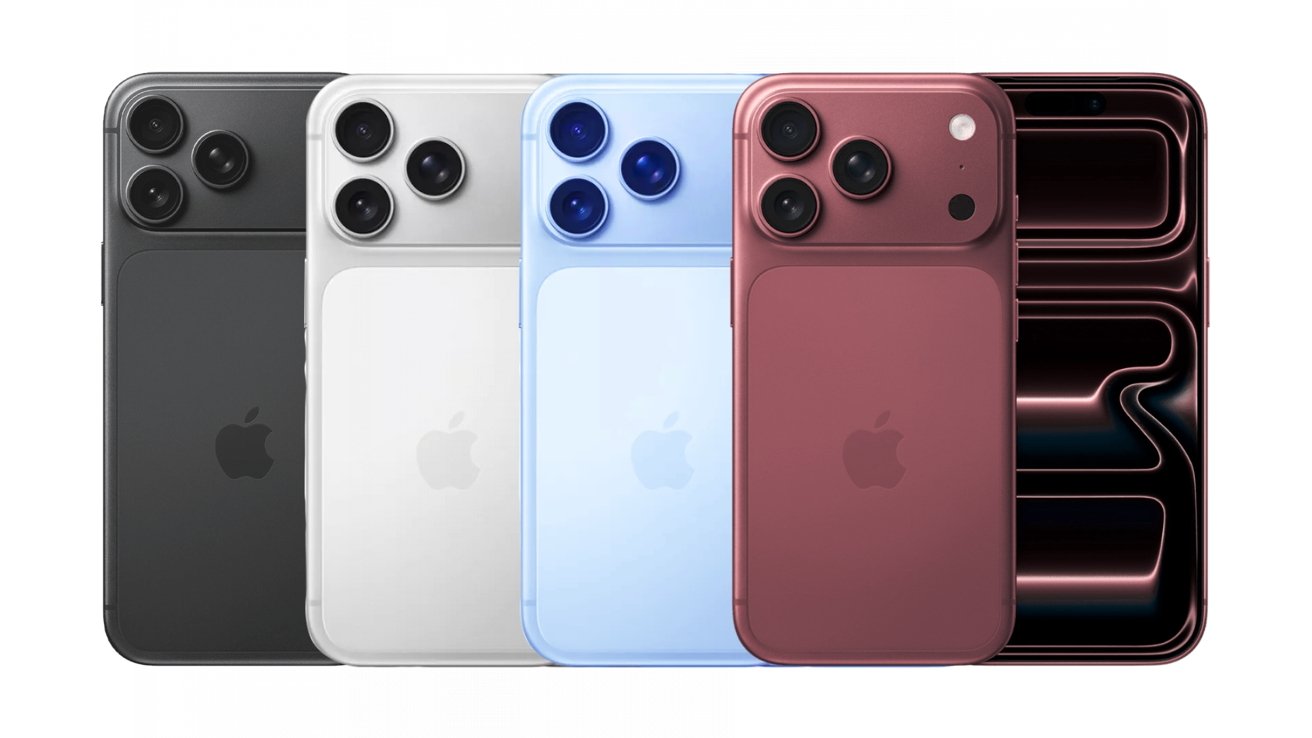
Apple’s most affordable iPhone just got an upgrade, but how does the new iPhone 17e compare to the iPhone 16e? Well, thankfully the price remains the same at $599, which is good news in our current economic climate. An immediate difference you might notice is that one of them now comes in a third color: pink. That’s at least one win for me because I am all for putting more color into tech.
There are a few differences under the hood as well, namely that the iPhone 17e is arriving with the A19 chip and double the storage. We’ve already seen what’s possible with an A19 chip in the standard iPhone 17 — it’s not a super exciting upgrade, but it is a boost nonetheless.
Pre-orders start at 9:15AM ET on March 4, and while we work on a full review, let’s take a deeper dive into what has changed on this year’s model and what that might mean in the real world.
iPhone 17e vs. iPhone 16e: Design and display
Of course, the biggest difference in the design for the iPhone 17e is the shiny new pink color. I’ve long complained about how many major tech companies stick to the safety of black, white or gray colorways. Thankfully, the iPhone 17e’s pink hue is a departure from that approach. It’s also an understated shade that’s elegant, compared to the typically brighter and louder tones reserved for cheap(er) phones.
Both the iPhone 17e and iPhone 16e measure 5.78 x 2.82 x 0.31 inches. However, the iPhone 17e did get a bit heavier at 5.96 ounces compared to the iPhone 16e’s 5.88 ounces. It’s very unlikely you’ll notice the 0.08 ounce difference, though. (And if you do, you have a gift.)
In terms of durability, the iPhone 17e is outfitted with Ceramic Shield 2, which is a glass face that Apple said is three times more scratch-resistant than the iPhone 16e’s original Ceramic Shield. Ideally, it’ll survive falls to the ground (within reason) and spare you a scratched up display from casual wear and tear.
There doesn’t seem to be any change in the display — whether that be in its brightness or color rendering capability — but that isn’t too shocking. Both the iPhone 17e and iPhone 16e feature a 6.1-inch Super Retina XDR OLED panel with a 1,200-nit peak brightness. That’s bright enough to combat the ambient glare from the sun, so you should be able to read it outside relatively easily. They’re also specced out with a 2,532 x 1,170 resolution at 460 ppi — meaning text and lines will be clean and sharp.
iPhone 17e vs. iPhone 16e: Cameras
I didn’t expect a huge bump in camera technology, especially if Apple intended to keep the price the same. We’ve got upgrades in other categories for sure, but it would’ve been nice to see an extra camera on the back. Like the iPhone 16e, the iPhone 17e is kitted out with Apple’s 48-megapixel Fusion 2-in-1 camera with a 12MP 2x Telephoto setting. You also get digital zoom up to 10x. Take a look at our iPhone 16e review to see exactly what that looks like in practice, but to sum up our experience: it’s solid.
There’s a great level of detail and vibrancy, but like I said, it’s limited. Without a potential ultrawide camera, you cannot capture as much of your surroundings because you’re not getting that 0.5x zoom option.
One major upgrade, however, is that the iPhone 17e is now capable of recognizing dogs and cats in Portrait mode. It also saves depth information so you can turn regularly captured photos into portraits after the fact. This might be a noteworthy upgrade, considering the iPhone 16e struggled in Portrait mode, incapable of capturing non-human faces and objects.
There’s also the 12MP TrueDepth camera on the front, which we didn’t have many complaints about, and don’t expect to disappoint on the iPhone 17e.
iPhone 17e vs. iPhone 16e: Processor, battery life and charging
Apart from the color, the biggest differences between the iPhone 17e and iPhone 16e is their starting storage and overall performance. The new iPhone is packed with an A19 chip, while the latter comes with an A18 chip.
Yes, you’re getting a performance bump with the A19 chip, but casual users are unlikely to feel the difference. If you’re a power user trying to get the most out of an affordable iPhone and want to get crunchy about it, there’s roughly a 5 percent difference in CPU speed and over 10 percent in GPU performance (according to CPU Monkey).
Despite that bump, the battery life hasn’t changed. With both devices, Apple says you’re getting up to 26 hours of video playback and up to 21 hours streamed. The company doesn’t typically share specifics on battery sizes, but GSMArena is reporting that both models come with a 4,005mAh battery. What has changed, however, is being able to receive double the wattage from wireless charging. The iPhone 17e can now take up to 15W for Qi2 fast wireless charging — compared to 7.5W from the Qi support on the iPhone 16e.
iOS 26 and Apple Intelligence
At a glance, there does not seem to be any difference in what the iPhone 16e and iPhone 17e offer in terms of iOS and Apple Intelligence capability. However, it’s relevant to note that you will likely get better performance out of the iPhone 17e with regards to AI features because of its superior A19 chip.
In case you wanted to do the numbers comparison yourself, we’ve compiled a nifty table here so you can eyeball them with ease. But for a sense of how the iPhone 17e holds up in the real world and whether it’s worth the money, stay tuned for our full review.
iPhone 17e vs. iPhone 16e: Specs at a glance
This article originally appeared on Engadget at https://www.engadget.com/mobile/iphone-17e-vs-iphone-16e-whats-new-on-apples-latest-599-handset-162009364.html?src=rss
Tech
Semafor Keeps Hosting Ridiculous “Restoring Trust In Media” Events That Only Further Undermine Trust In Media
from the these-are-not-serious-people dept
You might recall that when political news website Semafor entered the media industry on the back of $25 million in private money, they made all kinds of promises about how they were somehow going to revolutionize U.S. media. In reality most of their promises were relatively inane, and it didn’t take long before the outlet demonstrated it was primarily interested in propping up the status quo.
Case in point: one of the very first things the outlet did is start hosting “Restoring Trust In Media” annual conferences. Except each year they make it a priority to unironically validate, normalize and platform a lot of the people actively working to undermine trust in news. Like former Fox News propagandist Tucker Carlson the first year, and overt bigot Megyn Kelly last year.
Semafor keeps being criticized for not only not helping to “restore trust in media,” but for actively making the problem worse. But they keep doubling down. This year’s event, for example, is a who’s who of people that have made U.S. media immeasurably less trustworthy over the last year:

So you’ve got FCC boss Brendan Carr, an authoritarian zealot who has been wiping his ass with the First Amendment. You’ve got Mathias Dopfner, the owner of Politico whose feckless “both sides” reporting and apparent admiration of Trump has helped normalize authoritarianism. You’ve got Matt Murray, the Washington Post Editor who is helping Jeff Bezos throw the paper’s reputation in the toilet in service to Trumpism and corporate power.
You’ve also got Hamish McKenzie, the Substack co-founder who has openly coddled white supremacists and fascists for engagement cash. A few folks from Fox News, arguably the biggest and most successful right wing propaganda operation ever created. And then some representatives for Meet The Press, another stellar example of generally feckless establishment “both sides” or “view from nowhere” access journalism.
When Semafor co-founder and editor-in-chief Ben Smith has been criticized for this in the past he’s pretty consistently been strangely obtuse, insisting these are important people who need interviewing.
But none of the attendees are ever meaningfully pressed. Tucker Carlson wasn’t pressed at all at his role as propagandist. Megyn Kelly isn’t pressed for her grotesque levels of racism and race-baiting engagement clowning. Key figures at Washington Post or Politico aren’t asked serious questions about their role in normalizing authoritarianism.
The Semafor reporting and interviews that come out of these events are generally toothless. For example this piece about Brendan Carr, one of the most extreme anti-free-speech zealots to ever lead the agency (who destroys consumer protection standards in his free time), never really seriously explains why anything he’s been doing is even particularly controversial. In fact it starts like this:
“US Federal Communications Commission Chair Brendan Carr on Wednesday praised CBS under the new leadership of David Ellison and Bari Weiss.
“I think they’re doing a great job,” Carr said at Semafor’s Restoring Trust in Media event Wednesday, adding that he appreciates the network is “trying to do something different” and experimenting with new formats.”
Real hard hitting stuff there, guys.
The result is a sort of bizarre pseudo-journalistic credibility kayfabe, punctuated by conferences purportedly dedicated to a subject the hosts and attendees either don’t understand or lack the credibility to be candidly honest about.
Also please note how Semafor doesn’t think it’s important to invite literally anybody from the worker-owned independent media that’s actually trying to restore trust in U.S. journalism. Not a single independent journalist (Marisa Kabas would be a good choice) with anything interesting or useful to say about where traditional corporate media may have genuinely gone wrong over the last few years.
The great irony is that Semafor can’t be honest about eroding trust in media because that would involve criticizing consolidated corporate media and the extraction class. It would require criticizing increasingly-consolidated Republican ownership of media for propaganda purposes. It would require being honest about the fact that journalism probably shouldn’t be a traditional for-profit venture.
Being honest about any of this would upset financiers, sources, ownership, and a big swath of ad-clicking viewership. You can’t have that, so instead you get this bizarre, performative simulacrum of what integrity and meaningful introspection is supposed to look like.
Filed Under: ben smith, brendan carr, integrity, journalism, mathias dopfner, matt murray, media, propaganda, restoring trust in media
Companies: semafor
Tech
iPhone 17e and M4 iPad Air
Apple has promised a “big week” for the company, which includes an in-person event for press and creators on March 4. But it didn’t exactly wait until Wednesday to get things started. The news started on Monday with the announcements of the iPhone 17e and M4-powered iPad Air.
We’ll be updating this roundup throughout the week as we learn exactly what Apple has in store for everyone (though we have a decent idea of what to expect, such as new MacBooks). For now, though, here’s our recap of everything Apple announced on Monday:
iPhone 17e

Apple
Apple has spruced up this year’s entry-level iPhone with some pretty solid upgrades, though it’s keeping the starting price at $599. The iPhone 17e has double the base storage of the iPhone 16e at 256GB. It also has MagSafe support with Qi2 wireless charging speeds of up to 15W, double that of the iPhone 16e.
Design-wise, Apple hasn’t exactly rocked the boat. The iPhone 17e looks pretty much identical to its predecessor. It appears that Apple is sticking with the same 48MP Fusion camera system as it used in the iPhone 16e too.
That said, the 6.1-inch Super Retina display has Ceramic Shield 2. According to Apple, this provides “3x better scratch resistance than the previous generation and reduced glare.” The company slotted its C1X cellular modem into the iPhone 17e as well. It says this is up to two times faster than the C1 that was in the iPhone 16e. The device has the same A19 chip as the iPhone 17, so it supports Apple Intelligence AI tools, and it runs iOS 26.
In addition, the iPhone 17e has an IP68 rating for water and dust resistance, as well as the promise of “all-day battery life.” It also supports satellite-powered features including Emergency SOS, Roadside Assistance, Messages and Find My.
Pre-orders for the iPhone 17e open on March 4 and it will be available in black, white and soft pink. The device will hit shelves in more than 70 countries and regions on March 11.
iPad Air M4

Apple
The latest iPad Air boasts Apple’s M4 chip. That means the mid-range iPad is effectively remaining a year behind the iPad Pro. The M4 is almost two years old at this point, while the top-end model has the newer M5 chip. Still, if you only use an iPad for casual tasks like watching shows, web browsing, email and so on, the M4 will be more than powerful enough. It will be more adept at handling resource-intensive tasks like video editing than previous iPad Air models too.
Apple has also bumped up the RAM from 8GB from the last-gen model to 12GB. Given the sharp increase in RAM prices in recent months, it’s slightly surprising that Apple is sticking to the same prices for the iPad Air. The 11-inch M4 iPad Air starts at $599 while the 13-inch version starts at $799, each with 128GB of storage. There’s a $50 discount for those buying it for educational use.
Apple claims the M4 delivers up to 2.3 times faster performance compared with the M1 iPad Air and “over 4x faster 3D pro rendering with ray tracing performance.” Of course, the new iPad Air runs iPadOS 26.
Apple gave the iPad Air other internal upgrades by including its N1 and C1X connectivity chips. As such, this is the first iPad Air with Wi-Fi 7 support. As you might expect, 5G cellular connectivity is available as well.
The design of the M4 iPad Air doesn’t seem to have changed, as it appears to have the same LCD display Apple used in the last two iterations of the tablet. The company has stuck with the same rear-facing camera and dual-speaker setup as well.
As with the iPhone 17e, pre-orders for the M4 iPad Air open on March 4. The tablet will hit retailers in 35 countries and regions on March 11. It will be available in blue, purple, starlight and space gray.
Tech
Samsung Needs to Learn a Big Lesson From Xiaomi
In the last week, both Samsung and Xiaomi have taken the wraps off their latest superphones, but only one of them has properly impressed me. I’ve spent weeks testing the Leica Leitzphone by Xiaomi ahead of its launch at MWC 2026 and I concluded that it’s the best camera phone I’ve ever used. I even gave it a CNET Editors’ Choice award because it has been so damn impressive — and I think Samsung should be worried.
Samsung’s Galaxy S26 Ultra is a jack-of-all-trades phone, packing a supercharged processor, a funky privacy screen and that all-important S Pen stylus. But its cameras only saw small improvements, with a slightly larger aperture on the main and telephoto cameras being the most notable upgrades. Beyond that, it really comes down to Samsung’s various software AI tricks, like the ability to change the style of hat you’re wearing in a photo.
The S26 Ultra’s cameras haven’t seen much of an upgrade this year.
This has become a trend for Samsung, with the last few Ultra phones only slightly iterating on previous camera setups, adding a few extra megapixels here and there but largely leaning into software updates to make up for a lack of hardware innovation. While Samsung’s top-tier phones have been among the best camera phones around, Xiaomi and Leica’s Leitzphone has shown what true photography innovation looks like.
This camera beast packs a number of firsts. We’ll start with the LOFIC image sensor, which stands for Lateral Overflow Integration Capacitor and is basically a new type of sensor technology that improves dynamic range in a single image. It’s capable of taking gorgeous images in all conditions, including at night. Samsung was rumored to be considering LOFIC sensors for its phones (as is Apple) but evidently opted not to go down this route just yet.
The Leica Leitzphone by Xiaomi has some amazing photography skills that help it take photos that look almost as good as those I take from my actual Leica camera.
The Leitzphone is also among the first phones ever to use real moving lens elements in its telephoto zoom, allowing true lossless zooming rather than jumping only between specific zoom levels. It works well and a similar setup has been rumored to appear on the last few generations of Ultra, but it’s never actually happened.
Then there’s the physical control ring around the Leitzphone’s camera, the stunning Leica colour profiles built right into the camera experience and the pristine quality of the Leica Summilux optics used in the lenses.
The Photos I’ve Taken on Xiaomi’s Leica Phone Are Some of My Best Ever
By partnering with such a photography icon, Xiaomi has truly innovated its photography, delivering multiple firsts that genuinely improve the image-taking experience. As both a professional photographer and a genuine enthusiast myself, I’ve been blown away by the photos I’ve been able to shoot with the phone.
But Samsung hasn’t excited me this time round. Its new generative AI tools might be fun gimmicks, but they’re not appealing to an actual photographer like myself. The S26 Ultra needs to be more than a cameraphone, of course — it needs to be “ultra” in every sense of the word. But Samsung’s latest model shows that proper photography isn’t a priority for the company.
The Leitzphone is arguably more camera than it is phone.
As such Samsung risks losing out on the huge number of photographers and content creators (both professional and amateur alike) who are instead going to be looking at rivals like Xiaomi for products that can live up to their imaging demands.

Tech
Your Wi-Fi router's guest network may not be as secure as you think
Researchers have found that the extra wireless network you set up for visitors may not isolate devices the way router makers advertise, potentially allowing attackers on the same network to intercept traffic.

Asus RT-AX57 router
Wi-Fi security researchers have found new vulnerabilities that let attackers on the same network intercept and mess with traffic. These issues exist even when WPA2 or WPA3 encryption and client isolation are turned on.
The techniques, known as AirSnitch, were shared on February 25 at a security symposium in San Diego. Researchers from the University of California, Riverside, and KU Leuven presented their findings.
Continue Reading on AppleInsider | Discuss on our Forums
Tech
How Deepfakes and Injection Attacks Are Breaking Identity Verification
By Ricardo Amper, Founder & CEO, Incode
Deepfakes are evolving and are no longer confined to misinformation campaigns or viral media manipulation. Most security teams already understand the deepfake problem; however, the more urgent shift is how synthetic media is being operationalized.

This fraud vector is being leveraged inside the identity moments that power the internet and economy – such as customer onboarding at a bank, driver onboarding for gig and delivery platforms, marketplace seller verification, account recovery, remote hiring, partner access, and privileged access workflows.
As more work and business is done remotely, identity has become a primary control point – and a primary target. Bad actors don’t only want to fool a selfie check; they want to impersonate a real person, establish durable access, and reuse that foothold across consumer and enterprise environments.
Cybersecurity and fraud teams are now dealing with a convergence of tactics that all aim at the same decision – the moment a system concludes “this is a real person”:
- High-fidelity synthetic faces and voices that can pass quick checks
- Replayed real footage from stolen or harvested sessions
- Automation that probes verification flows at scale
- Injection attacks that compromise the capture pipeline and substitute the input stream upstream
This is why “deepfake detection” alone is no longer enough. Enterprises need full-session validation: including perception, device integrity, and behavioral signals… all in a single, real-time control.
That is the model behind Incode Deepsight: an approach built to validate identity sessions end-to-end, not just evaluate the media in isolation.
The right question is not only “Does this face look real?” It is “Can we trust this entire session end-to-end?”
Deepfakes and injection are enterprise security issues
In enterprise systems, a successful bypass is not a reputation event; it’s an access event. When verification accepts a manipulated or compromised session as real, attackers can:
- Create fraudulent accounts using synthetic identities
- Take over existing user accounts
- Bypass HR verification in remote hiring
- Gain unauthorized access to sensitive internal systems
Unlike social media deception, these attacks can enable persistent access inside trusted environments. The downstream impact is durable: account persistence, privilege-escalation pathways, and lateral movement opportunities that start with a single false verification decision.
An independent study from Purdue University evaluated leading biometric vendors under advanced deepfake and presentation attack scenarios.
See how Incode’s DeepSight performance ranked across real-world attack simulations.
Where identity checks fail: assuming the sensor is trustworthy
Most identity checks are built around two signals: facial similarity and “liveness.” Both are useful, and both can be undermined if the system assumes the input stream is authentic.
Attackers break that assumption in two complementary ways.
First, they mimic real media. Deepfakes and voice clones are improving under real operating conditions – short clips, mobile capture, compression, and imperfect lighting. A workflow that depends on a narrow visual surface area is increasingly exposed to false acceptance.
Second, they bypass the sensor entirely. Injection attacks substitute the input stream before it reaches analysis. Instead of presenting a face to a camera, attackers can:
- Use virtual camera software to feed synthetic or pre-recorded video
- Run verification sessions inside emulators designed to mimic legitimate mobile devices
- Operate from rooted or jailbroken devices that bypass integrity checks
- Substitute live capture with manipulated streams upstream
In these scenarios, the media can look perfect because it never had to survive a real capture path. That is why perception-only defenses (even strong ones) are necessary but not sufficient.
What the Purdue Political Deepfakes Incident Database benchmark shows
One practical problem for deepfake defense is generalization: detectors that test well in controlled settings often degrade in “in-the-wild” conditions.
Researchers at Purdue University evaluated deepfake detection systems using their real-world benchmark based on the Political Deepfakes Incident Database (PDID).
PDID contains real incident media distributed on platforms such as X, YouTube, TikTok, and Instagram, meaning the inputs are compressed, re-encoded, and post-processed in the same ways defenders often see in production.
Key factors include:
- Heavy compression and re-encoding
- Sub-720p resolution
- Short, mobile-first clips
- Heterogeneous generation pipelines
Detectors were evaluated end-to-end using metrics such as accuracy, AUC, and false-acceptance rate (FAR). In identity workflows, FAR is often the more consequential metric, because even a small false-acceptance rate can allow persistent unauthorized access.
Purdue’s results also highlight a practical reality for defenders: performance varies dramatically across detectors once inputs look like production.
Among the commercial systems evaluated in Purdue’s PDID benchmark, Incode’s Deepsight delivered the strongest results when the task is purely visual deepfake detection – evaluating video content itself under real incident conditions.
But that is only the first layer of the problem.
It’s important to be precise: PDID measures robustness of media detection on real incident content. It does not model injection, device compromise, or full-session attacks.
In real identity workflows, attackers do not choose one technique at a time; they stack them. A high-quality deepfake can be replayed. A replay can be injected. An injected stream can be automated at scale.
The best media detectors still can be bypassed if the capture path is untrusted. That’s why Deepsight goes even deeper than asking “Is this video a deepfake?”
Deepsight closes that gap by validating the full session across three layers: perception, integrity, and behavior, so that the system can stop attacks whether they arrive as a convincing deepfake, a replay, or an injected stream.
Manual review doesn’t close the gap
Human review can reduce some classes of fraud, but it is not a scalable security control against synthetic media.
Even trained reviewers struggle to determine real from fake as generative models improve.
Today’s injection attacks invalidate the premise and undermine human judgment entirely: a session can appear legitimate while the input stream is substituted upstream. Even consensus reviews among several experts cannot establish that the capture path was authentic.
The security model that holds up: trust the session, not just the pixels.
If attackers can win either by improving the media or by bypassing the sensor, defenses have to validate the session across multiple layers in real time:
- Perception: Is the media itself manipulated?
- Integrity: Is the device, camera, and session authentic?
- Behavior: Does the interaction reflect a real human and a normal verification flow?
This model creates resilience. If a high-quality deepfake evades perception, integrity and behavioral signals can still prevent a successful bypass. If media is injected, integrity checks can fail the session regardless of how realistic the pixels look.
How Incode Deepsight blocks deepfakes and injection attacks in real time
Attackers are scaling. They can iterate against verification flows quickly, probe edge cases, and operationalize what works. Deepfakes raise the baseline risk of false acceptance, injection removes the camera as a reliable sensor and automation increases the volume of attempts.
Enterprises that treat identity verification as a one-time check rather than a real-time security process will struggle to keep pace.
Incode Deepsight is designed around a simple premise: if identity workflows are being attacked at both the media layer and session layer, defenses must validate the entire verification session end-to-end.
During live verification, Deepsight combines three layers in real time:
- Perception analysis: Multi-modal AI that evaluates video, motion, and depth signals across multiple frames to detect synthetic media and physical spoofs. Deepsight also protects ID capture by detecting AI-generated identity documents.
- Integrity validation: Camera and device authenticity checks to identify and block injected media sources, such as virtual cameras, emulators, and compromised environments.
- Behavioral risk signals: Detection of automation indicators and bot-like interaction patterns that frequently accompany scaled attacks.
This layered model is what makes Deepsight resilient in practice. If a high-quality deepfake evades perception, integrity and behavioral signals can still prevent a successful bypass. If media is injected, integrity checks can fail the session regardless of how realistic the pixels look.
The goal is straightforward: determine whether the entire verification session can be trusted – not only whether a face looks real, but whether a real human is present on a trusted device in a live, untampered interaction.
Closing the gap between detection and deployment
Defending identity workflows now requires controls that assume adversarial AI and untrusted capture environments.
Deepfake defense must evolve from spotting manipulated pixels to validating the authenticity of entire verification sessions. Layered defenses across media authenticity, device integrity, and behavioral signals are the most reliable way to reduce false acceptance without adding unnecessary friction for legitimate users.
Learn how Deepsight blocks deepfakes and injection attacks in real time. incode.com/deepsight
Sponsored and written by Incode.
Tech
OPPO Celebrates Holi 2026 with Special Upgrade Deals
To mark Holi 2026, OPPO India has introduced festive offers on its Reno Series and Find X9 models. Customers will be able to take advantage of interest-free EMI options, zero-down-payment options, and other cashback benefits. These offers will be available for a brief period of time from March 1st to March 8th.
Festive Holi Offers
1. Zero Down Payment & Interest-Free EMI
| Model | Variant | EMI Tenure |
|---|---|---|
| OPPO Reno 15 Pro Mini | 512GB | 24 Months* |
| OPPO Reno 15 Pro Mini | 256GB | 24 Months* |
| OPPO Reno 15 | 12GB + 512GB | 15 Months |
| OPPO Reno 15 | 12GB + 256GB | 15 Months |
| OPPO Reno 15 | 8GB + 512GB | 15 Months |
| OPPO Find X9 | 12GB + 256GB | 18 Months |
| OPPO Find X9 | 16GB + 512GB | 18 Months |
| OPPO A6 Pro | 8GB + 128GB / 8GB + 256GB | 8 Months |
| OPPO A6 | 6GB + 256GB / 6GB + 128GB / 4GB + 128GB | 6 Months |
2. Bank Card Cashback Benefits
To make upgrades more attractive, OPPO is offering customers up to 10% cashback on bank card transactions. These offers will be available for EMI and non-EMI transactions. The cards issued by SBI, Axis Bank, Bank of Baroda, Federal Bank, DBS, IDFC First Bank, Kotak Mahindra Bank, and Yes Bank are eligible for these offers.
3. 10% Cashback on UPI Transactions
OPPO is offering up to 10% cashback on UPI transactions during the Holi sale. This benefit helps reduce the overall purchase cost. At the same time, it encourages customers to use digital payment methods.
OPPO Reno15 Series

The OPPO Reno15 Series is built for those who love capturing colourful moments. The Pro Mini model features a 200MP camera, while the Reno15 comes with a 50MP main camera.
Both devices offer 3.5x telephoto zoom, PureTone Technology, and 4K HDR video recording. The Pop-Out feature makes photos look more dynamic. The Reno15 starts at Rs 41,399, and the Reno15 Pro Mini starts at Rs 53,999.
OPPO Find X9

The OPPO Find X9 combines premium imaging with festive offers, starting at Rs 69,499. It includes a Hasselblad-tuned triple camera system led by a 50MP Sony LYT808 sensor with OIS, supported by a 50MP ultra-wide and a 50MP Sony LYT600 3X periscope telephoto lens.
The phone sports a 6.59-inch 120Hz AMOLED display protected by Gorilla Glass 7i and carries an IP69 rating. With the MediaTek Dimensity 9500 chipset, a 7025mAh battery, 80W wired and 50W wireless charging, plus AI tools like AI MindSpace, AI Editor, and O+ Connect, it delivers a complete flagship experience.
OPPO’s special Holi deals are valid between March 1 and March 8, 2026. Since the campaign runs for a short time, buyers should plan their purchase accordingly.
Tech
Apple bakes in AI smarts into its new $599 iPhone 17e
Apple on Monday unveiled the latest version of its budget-friendly iPhone line. The iPhone 17e retails for $599 and will be available on March 11.
The smartphone comes with the A19 chip that’s found in the base iPhone 17, and will support Apple Intelligence. The base model comes with 256 GB of storage, which Apple says is twice the entry storage from the previous generation.
One of the most notable changes from the previous budget iPhone is the addition of MagSafe and Qi2, which supports wireless charging up to 15W.
The smartphone is available in black, white, and a new soft pink color.
Additionally, the iPhone 17e comes with C1X, Apple’s latest-generation cellular modem, which, the company says, is up to twice as fast as the C1 modem in the iPhone 16e, and uses 30% less energy.
As for the camera, the iPhone 17e features that same 48-megapixel camera as the iPhone 16e.
The iPhone 17e is rated IP68 for dust and water resistance, and its 6.1-inch Super Retina XDR display is protected by Ceramic Shield 2, which is said to offer trice the scratch resistance than the previous generation.
Techcrunch event
San Francisco, CA
|
October 13-15, 2026
The iPhone 17e supports Emergency SOS via satellite, Roadside Assistance, and Find My.
-
Sports7 days agoWomen’s college basketball rankings: Iowa reenters top 10, Auriemma makes history
-
Politics7 days agoNick Reiner Enters Plea In Deaths Of Parents Rob And Michele
-
Fashion3 days agoWeekend Open Thread: Iris Top
-
Business6 days agoTrue Citrus debuts functional drink mix collection
-
Politics4 days agoITV enters Gaza with IDF amid ongoing genocide
-
Tech2 days agoUnihertz’s Titan 2 Elite Arrives Just as Physical Keyboards Refuse to Fade Away
-
Sports3 days ago
The Vikings Need a Duck
-
Crypto World6 days agoXRP price enters “dead zone” as Binance leverage hits lows
-
NewsBeat5 days agoCuba says its forces have killed four on US-registered speedboat | World News
-
NewsBeat2 days agoDubai flights cancelled as Brit told airspace closed ’10 minutes after boarding’
-
Tech6 days agoUnsurprisingly, Apple's board gets what it wants in 2026 shareholder meeting
-
NewsBeat5 days agoManchester Central Mosque issues statement as it imposes new measures ‘with immediate effect’ after armed men enter
-
NewsBeat2 days agoThe empty pub on busy Cambridge road that has been boarded up for years
-
NewsBeat1 day ago‘Significant’ damage to boarded-up Horden house after fire
-
NewsBeat2 days agoAbusive parents will now be treated like sex offenders and placed on a ‘child cruelty register’ | News UK
-
NewsBeat6 days agoPolice latest as search for missing woman enters day nine
-
Entertainment9 hours agoBaby Gear Guide: Strollers, Car Seats
-
Business5 days agoDiscord Pushes Implementation of Global Age Checks to Second Half of 2026
-
Business4 days agoOnly 4% of women globally reside in countries that offer almost complete legal equality
-
Tech3 days agoNASA Reveals Identity of Astronaut Who Suffered Medical Incident Aboard ISS