

If you’ve ever used an online patient portal to message your doctor in the middle of the night, you won’t be surprised to learn that responding to those messages takes an increasingly big bite out of clinicians’ workdays.
Tech
Does AI really make workers more productive?

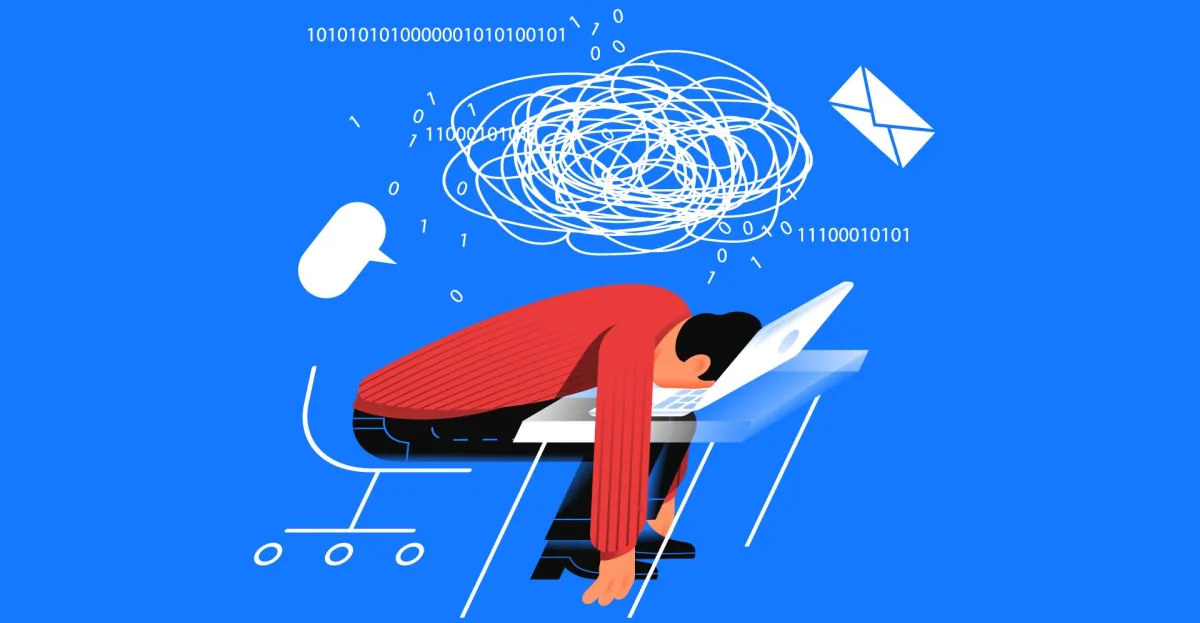
So in recent years, hospitals have begun adopting an AI tool that can draft responses for them. The tool was supposed to make a time-consuming task go more quickly and smoothly, said Philip Barrison, an MD-PhD student at the University of Michigan Medical School who studies AI in healthcare.
Instead, the tool has given doctors and nurses a new to-do list. First they have to read the AI-generated response and decide if it “is actually something that they think they would say,” Barrison said. Humans are suggestible, and looking at something and deciding whether you would have thought of it on your own is a cognitively complex task.
Even if the message looks correct, the clinician still needs to “edit it to the point where they think it’s acceptable” to send to a patient, Barrison said. The AI tool introduces a totally new set of complicated judgment calls into what used to be a relatively straightforward process. As a result, many clinicians have chosen not to use it at all.
They’re fortunate to have the choice. Buoyed by expectations of cost savings and skyrocketing productivity, companies are increasingly asking (and sometimes requiring) employees to use AI to make their work more efficient. Meta, for example, last year instructed some workers to use AI to “go 5X faster by eliminating the frictions that slow us down.” The CEO of Shopify told employees they’d need to prove they “cannot get what they want done using AI” before the company would approve new hires. Some companies are even evaluating or ranking employees based on how much they use AI tools.
Workers in some sectors have found major time savings from AI. But for others, the tools just change the work rather than making it faster. Workers might be spending less time writing patient portal messages, for example, but more time editing the releases the AI tool writes.
At best, this mismatch between employer expectations and employee reality can be an annoyance. In other cases, however, it can result in workers being laid off for failing to meet unrealistic efficiency demands. Some critics say the overzealous adoption of AI in high-stakes settings like healthcare even puts people’s lives at risk. Now workers, unions, and experts are increasingly calling for guardrails to protect employees from inflated expectations around AI — and customers, students, patients, and the general public from mistakes that can happen when managers put AI adoption above all else.
The hidden costs of AI use
Corporations are increasingly presenting employees with a choice: Use AI to be more productive or “you’re going to be automated out of a job,” said Aiha Nguyen, director of the labor futures program at the research organization Data & Society.
But the effects of AI on productivity aren’t as straightforward as some CEOs have claimed. In one 2025 study, software developers believed AI made them faster, but in fact they took 19 percent longer to complete tasks. (The researchers tried to repeat the experiment this year but had trouble recruiting developers who would agree to work without AI.) And in a recent survey of 5,000 white-collar workers, 40 percent of rank-and-file employees said AI saved them no time at all.
Workers across heavily AI-exposed fields point to hidden timesucks that come with using the technology. Julie, an art teacher, wrote in a response to a Vox reader survey that her school’s administrators routinely suggest using AI for lesson-planning, emails, and progress report comments. She’s tried AI-generated lesson plans, but they don’t account for the fact that kids may work through an activity at different speeds.
“First, I am checking what AI suggests, then I am editing them. Why add a step I can accomplish on my own?”
— Julie, an art teacher who wrote in response to a Vox reader survey
“First, I am checking what AI suggests, then I am editing them,” she said. “Why add a step I can accomplish on my own?”
For an employee at an East Coast communications agency, an internal AI tool was supposed to speed up the process of drafting press releases and other documents about the pharmaceutical industry.
“The goal is, I think, to be able to plug and chug into this machine and be able to turn a lot of materials around a lot quicker than we already do,” said the employee, who asked to remain anonymous for fear of career repercussions.
But when the employee tried to use it for basic research, it made too many mistakes. Double-checking its work erased any time savings. When the employee tried using it for communications with clients, its people-pleasing tendencies became a problem, as the tool put a “weird happy spin” even on messages warning of bad news.
“Part of the reason we take a human speed to turn things around is because there is so much nuance behind everything that we do,” the employee told me. “AI is just not going to be able to catch it.”
It’s not just that AI makes errors. With the advent of agentic AI, workers are increasingly being asked to edit and oversee the output of multiple AI tools, a new kind of work that can have unexpected costs.
One recent study of 1,488 workers across industries, for example, found that excessive oversight of AI agents could lead to what the researchers called “AI brain fry,” a kind of cognitive fatigue. “Participants described a ‘buzzing’ feeling or a mental fog with difficulty focusing, slower decision-making, and headaches,” the researchers wrote in Harvard Business Review. Brain fry was also associated with an increased number of errors and an increased desire to quit one’s job.
The researchers also found that while using one or two AI tools increased productivity, adding additional tools produced diminishing returns, and after four tools, productivity actually declined.
What workers really want from AI
Despite such findings, companies continue to pressure employees to use AI, and to cite AI investment as a rationale for layoffs, even as companies that try to link staff reductions to AI adoption tend to struggle on the stock market.
Some workers and organizations, however, are beginning to push back. National Nurses United, the country’s largest nurses’ union, has criticized the use of AI tools in hospitals to estimate staffing needs or to recommend treatment protocols for patients.
There’s no guarantee that these tools will take into account a patient’s individual profile, including underlying medical conditions, the way human clinicians can, Cathy Kennedy, the union’s president, told me. AI is supposed to “help us do our work more efficiently, but at the end of the day, it makes it even more burdensome,” she said.
Hospitals need to evaluate, with nurses at the table, whether AI tools really work as advertised, Kennedy said. “We have to stop — we have to go back and really see if this is truly doing what it needs to do,” she said.
The same is true across industries, Barrison, the healthcare researcher, told me. “Organizations need to be prepared to say when, if they were seeking a return on investment, if they were seeking value in a technology — how do you define what that value is? And if there’s not value there anymore, how do you turn it off?”
Some workers have found ways that AI actually helps them do their work — just not the ones management expected. Julie, the art teacher, likes to use Claude to learn more about topics she’s less familiar with, like kiln-firing ceramics.
Meanwhile, researchers have found that AI can actually reduce employee burnout, if it’s used to complete tasks employees find burdensome. “Everybody in every job has a list of things that they procrastinate on,” said Julie Bedard, a managing director and partner at Boston Consulting Group who led the AI brain fry study. “Those are the places I get, unsurprisingly, a lot of enthusiasm to try AI with.”
But employers won’t find out what those burdensome tasks are unless they listen to rank-and-file employees. “Worker standards and worker rights should continue to be at the heart of all of this,” Nguyen said, “rather than just focusing too much on the AI.”

Continue Reading

Bank of America just gave Apple one of Wall Street’s most aggressive price targets yet after betting that AI could become the company’s next major growth engine, rather than just another iPhone feature.
The firm raised its Apple price target to $380 from $330 on Tuesday, arguing that “agentic AI” could become a major long-term revenue driver for the company. Bank of America believes Wall Street continues to underestimate Apple’s AI revenue potential across its ecosystem.
Bank of America had previously trimmed its Apple target to $320 in March 2026 over concerns tied to staggered iPhone launch timing and shifting revenue seasonality. The firm maintained a Buy rating at the time and continued to argue AI would remain a major long-term growth driver for Apple.
Bank of America analyst Wamsi Mohan kept a Buy rating on Apple stock and laid out a bullish case for the company’s AI strategy. The note argued Apple could generate far more revenue from AI services than investors currently expect.
The note also pointed to Apple’s slower rollout of Apple Intelligence features relative to rivals. Bank of America expects Apple to generate between $15 billion and $30 billion in AI-related revenue between its own offerings and App Store commissions by fiscal 2030 under its base-case assumptions.
Bank of America tied that outlook to the rise of “agentic AI,” a term used for AI systems that can complete tasks more autonomously across apps and services.
Wall Street’s Apple AI narrative is changing
Some analysts are starting to view Apple’s AI business differently. Earlier Wall Street discussions around Apple Intelligence focused on Siri delays, staggered feature rollouts, and concerns that Apple had fallen behind rivals in generative AI.
Morgan Stanley has taken a more aggressive view on Apple stock in recent months. The firm raised its Apple price target to $315 in December 2025 and pointed to long-term growth opportunities tied to AI, Services, and the strength of Apple’s ecosystem.
Apple has focused its AI strategy on private, on-device processing and tighter integration across the iPhone, iPad, and Mac. The company has also argued that its control over hardware and software gives it an advantage as AI tools gain deeper access to personal data, apps, and payment systems.
 Apple is betting long-term on Apple Intelligence
Bank of America’s revised outlook centers on that broader ecosystem strategy. The note reportedly focused less on Apple leading the race to build large language models and more on the company turning AI into a services and ecosystem layer across its devices.
Through that lens, Apple’s AI strategy becomes less about standalone chatbot features and more about long-term platform growth.
Apple stock has traded on steady iPhone demand, Services growth, and aggressive share buybacks. Bank of America’s new $380 price target suggests the firm sees AI becoming a more meaningful long-term driver of Apple’s valuation.
The company hasn’t publicly detailed long-term revenue expectations tied to Apple Intelligence or future Siri capabilities. Apple is expected to discuss additional AI features during WWDC in June 2026.

At the end of every quarter, marketing leaders are asked some version of the same question: what actually drove growth?
It should be easier to answer by now. Teams have more data than ever, better analytics, and increasingly sophisticated AI. And yet, most leaders still hesitate before responding, or fall back on directional answers they don’t fully trust.
In fact, 78% of marketers still struggle with attribution, which tells you something important hasn’t changed.
Latest Videos From

That’s because the issue isn’t measurement. Most organizations can explain what happened, but turning insight into action while it still matters remains a challenge.
That gap between insight and action is what I think of as the customer decision gap.
More data hasn’t changed the outcome
Marketing teams have invested heavily in understanding performance – and still, the outcomes don’t match the investment. Dashboards update in real time. Attribution models attempt to connect the dots across channels. AI helps surface patterns that would have been impossible to spot manually just a few years ago.
And still, the outcomes are underwhelming.
Customer acquisition costs continue to climb. Experiences often feel disjointed. Growth is harder to sustain, even for brands that are doing “all the right things” on paper.
When you step back, the reason becomes clearer. Most marketing organizations are still structured around campaigns, channels, and reporting cycles. Those systems are useful for explaining what already happened, but they aren’t designed to guide what should happen next.
So teams end up optimizing toward what’s easy to measure instead of what actually moves the business forward. They generate insights, but those insights don’t consistently translate into better decisions.
Data creates potential value. What matters is whether you turn it into action.
Where the gap shows up
The customer side of this is easy to recognize because we all experience it.
You buy something online and get a promotion for the same product the next day. You browse once and get retargeted for weeks, even after you’ve clearly moved on. You switch from an app to a store or a support channel and have to start from scratch, as if the company has no memory of you.
None of these moments happen because there isn’t enough data. In most cases, the signals are already there. What’s missing is the ability to act on them in a coordinated, timely way.
Part of the challenge is fragmentation. Customer data still lives across ecommerce platforms, email marketing platforms, loyalty systems, and service environments, each with its own version of the customer. Even when organizations invest in unifying that data, they often stop at creating a better view.
A unified profile is important, but it doesn’t solve the problem on its own. The real test is whether that understanding changes what happens next. Can a team use it to make a better decision in the moment? In many cases, the answer is still no.
Why AI isn’t fixing it
There’s been a lot of hope that AI tools would close this gap. In reality, it’s exposed it.
Many teams have layered AI on top of environments where data is still incomplete, delayed, or inconsistent. When that happens, AI doesn’t improve decision-making. It accelerates whatever is already happening, for better or worse.
If the underlying data is fragmented, the outputs will be too. If the context is missing, the recommendations won’t land. And when those decisions are wrong, they don’t just stay small, they scale quickly.
That’s why many AI initiatives struggle to deliver meaningful business impact. The models themselves aren’t the issue. It’s the lack of a reliable, shared understanding of the customer and a way to act on that understanding in real time.
Shifting from measurement to decisioning
What’s needed is a shift in how marketing actually operates. Instead of focusing primarily on measuring performance after the fact, teams need to get better at making and executing decisions as things are happening.
It means moving beyond optimizing individual campaigns or channels and thinking about the full customer experience. It means being able to adjust in real time rather than relying on predefined journeys that assume customers will behave in predictable ways.
For example, if a customer shows signs of churn, the right response isn’t a scheduled campaign that goes out next week. It’s an immediate adjustment in how that customer is treated across channels. If someone has just made a high-value purchase, the next interaction should reflect that, whether it happens in email, on the website, or through customer support.
In other words, decisions need to be continuous and connected, not episodic.
This is what an outside-in model looks like. Instead of organizing around internal timelines and processes, you organize around what the customer is doing and what they need in that moment.
What this requires from organizations
Making that shift isn’t just a marketing exercise. It changes how teams work together.
Marketing, data, and technology can’t operate in parallel tracks. They need a shared foundation and a shared understanding of the customer that stays current as new signals come in. Just as importantly, they need the ability to act on that information without having to move it between systems first.
It also changes how performance is evaluated. When you can connect decisions directly to outcomes, you get a clearer picture of what’s actually driving growth. You start to see not just which campaigns performed well, but which actions improved retention, increased lifetime value, or reduced churn.
The organizations getting this right tend to treat customer intelligence as something that’s always evolving. They focus on keeping data connected and current, and on making it usable in the moments where decisions are made.
Closing the gap
Closing the customer decision gap is quickly becoming the core challenge for marketing leaders.
It’s no longer enough to understand your customers or to report on performance. The expectation is that you can translate that understanding into action, consistently and in real time.
That’s what closes the gap between what you know and what you can actually do.
And over time, it’s what separates brands that simply collect data from those that turn it into consistent, measurable growth.
We feature the best content marketing tools.
This article was produced as part of TechRadar Pro Perspectives, our channel to feature the best and brightest minds in the technology industry today.
The views expressed here are those of the author and are not necessarily those of TechRadarPro or Future plc. If you are interested in contributing find out more here: https://www.techradar.com/pro/perspectives-how-to-submit
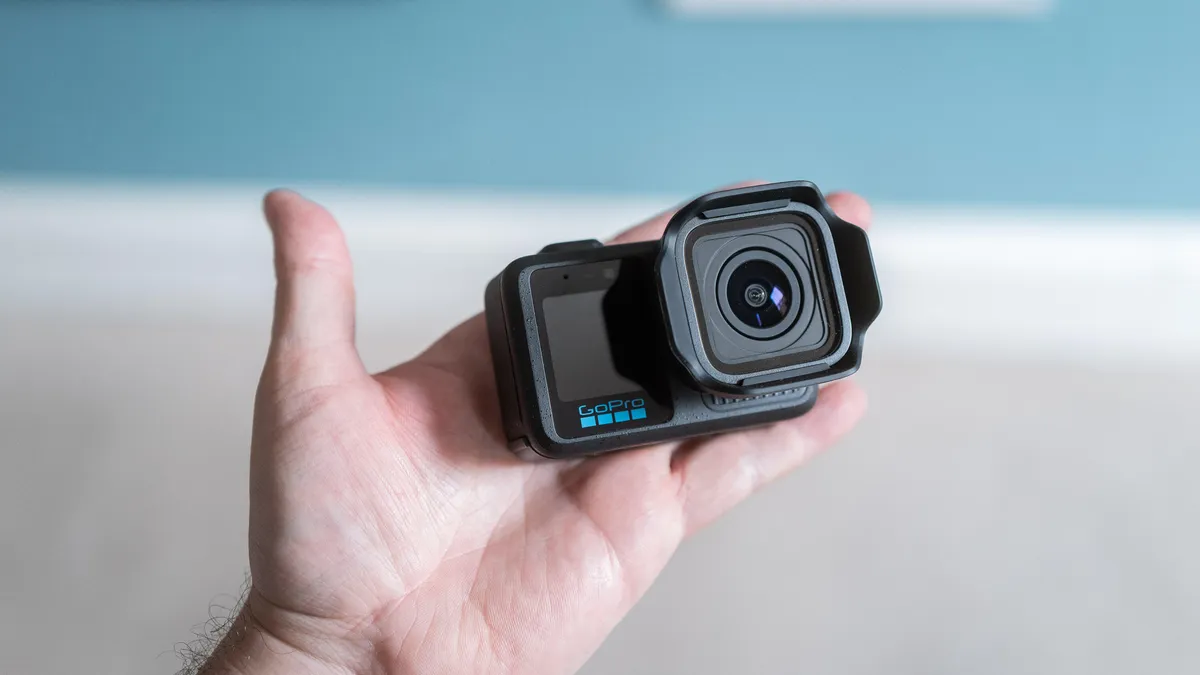
I’ve been using GoPro’s Mission 1 Pro action camera for a few weeks now. I’m not quite ready to slap a final verdict on it, but I’ve definitely learned a few things that are worth knowing if you’re considering buying one. I’ve tested a range of features, from the new slow-motion mode to shooting 50 megapixel stills, and it’s impressed in some ways — and left me wanting more in others.
But I’m not yet ready to give it a review score. The reason being that I’ve had a very early sample with unfinished software that isn’t representative of how it might work if you went and bought one. My first model even had a pre-production lens, which was changed on the second unit I received. So while there are some things I’ve been able to test, it’s not fair to the camera to base my review off what I’ve seen so far.
But here’s what I can tell you.
How much is the Mission 1 Pro?
The Mission 1 Pro is on sale now for $700. Then there’s the base Mission 1, which has the same large sensor and new processor of the Pro model but lacks the slow-motion skills. It costs $500. At the top of the range is the Mission 1 Pro ILS, which has the same specs as the model I’ve been testing but uses an interchangeable micro four thirds lens mount — a first for any GoPro.
The ILS model — due out later in the year — will also cost you $700. It’s the model I’m most excited about, but I’ll get into that later.
Taken in DNG raw and adjusted in Lightroom, the wide-angle lens of the camera allowed me to capture a lot in one shot.
Why is the Mission 1 Pro exciting?
The Mission 1 Pro’s got a new GP3 image processor and a larger 1-inch sensor. GoPro says it offers better dynamic range and low-light performance. More importantly, it offers an astonishing 960fps frame rate for slow-motion video and 8K open-gate recording, meaning it captures footage using the entire sensor.
Those are potent specs from a device that still fits in the palm of your hand and is fully waterproof, even without a dive case.
Is the Mission 1 Pro slow motion good?
On paper, very. It can shoot at an astonishing 960 frames per second, which is the sort of speed you’d normally only get from dedicated slow-motion cameras. But there are caveats. First, it’ll only capture this footage at full HD, so if you’re working on a 4K or 8K project, you’ll need to upscale that footage and you could potentially lose quality as a result.
The camera cage, grip and shutter button add a lot of bulk to the camera, but they do make it much more ergonomic when you’re out and about shooting away.
It also only shoots in short bursts of 10 seconds at a time, so you’ll need to get your timing right if you want an epic shot; you can’t simply leave it running for minutes and hope you get the shot. But I don’t think that’s a problem. It’s important to keep in mind that slowing 10 seconds of 960fps footage to a 30fps timeline results in roughly five minutes of slow-motion video.
My preferred slow motion is shooting at 240fps, which the camera can achieve at 4K resolution and in its Log color profile for better color grading in post production. That 240fps frame rate still offers an impressive 8x slow-motion effect when played back at 30fps and goes well beyond what even my professional Canon R5 or Blackmagic Cinema Camera 6K Pro can achieve.
What is the general Mission 1 Pro video quality like?
Here’s where I can’t really answer with any certainty. The footage I’ve shot so far has been hit and miss. I’ve found the auto white balance to be a bit unreliable, often producing slightly unnatural colors and forcing me instead to shoot using manual white balance — which, to be honest, I would probably want to do anyway to ensure consistent colors in a shot.
I also sometimes found the image processing went a bit too far in brightening shadows and saturating the color, resulting in more of an HDR look than I would have wanted. It’s why I’d rather shoot my footage mostly using in the 10-bit Log profile, which gives me more flexibility for adjusting my footage in post production.
I heavily edited this still image, taken in DNG raw. Apart from adjusting the white balance, as the auto settings looked very cool and magenta, I also brought the highlights down a touch. The footage looks good, although the wide lens’s fixed focus means I’m not quite sharp, as the focal plane is optimized more toward infinity.
Overall, image quality seems solid, though not noticeably better than the already excellent Hero 13 Pro it replaces. The biggest upgrades in this model appear to be aimed at those who want more advanced slow-mo capabilities.
That said, it’s important to remember that I’ve installed at least four firmware updates during my testing and only received the final production hardware a few days ago. I haven’t yet had the chance to re-test it in a wide range of scenarios. It’s certainly off to a good start, but whether it does enough to justify an upgrade from the previous model remains to be seen once I’ve spent more time shooting in both daylight and low-light conditions.
How about still images?
They’re fine, at least based on my tests so far. The super-wide angle lens means that fine details aren’t great, but if you’re into capturing those huge, sweeping vistas on your travels, then it’ll be fantastic. It shoots in DNG raw and my advice is to use it: Having manual control over the colors has been critical for me, as has the ability to pull back shadow and highlight detail in Adobe Lightroom.
This straight-out-camera photo, taken in JPEG with manual white balance, isn’t bad but I think it looked too over-processed, with shadows that have been artificially brightened too much, resulting in an HDR-style image. By editing my DNG raw file, I was able to keep the shadows at a more realistic level, thereby maintaining the darker vibe I was going for. I love how the wide-angle lens allowed me to use these leaves as a natural frame for the waterfall.
What about battery life?
Again, it’s impossible to say with certainty at this point as the software updates will certainly play a big part in how energy efficient the camera is. However, the battery life from the new Enduro 2 battery already seems solid. Even after a long day out shooting footage on the levada walks on the stunning island of Madeira, I still got back to my lodgings with plenty of battery to spare.
What new accessories are there for the Mission 1 Pro?
There’s a new camera cage that comes with a detachable grip and a sort of shutter button that fits into the cold shoe slot. While it makes the usually very small camera a lot bigger, it also makes it easier to hold and operate more like a regular compact digital camera.
The new Enduro 2 battery should offer enough juice for a day of mixed shooting.
GoPro has also announced a set of wireless microphones which will natively work with the cameras without the need for external receivers — much like DJI does with its mics and Osmo cameras. I haven’t tried these yet, but for content creators and vloggers these will likely be a must buy.
What about the interchangeable lens Mission 1 Pro ILS?
This is the model I’m most excited about. While the specs on paper for the Mission 1 Pro are awesome — especially when it comes to slow motion — I’m generally not a fan of the super-wide angle, fixed-focus look achieved by “traditional” action cameras like this. Sure, they’re great if you want a big field of view when strapping one to your head and hurling yourself down a mountain on a bike, but GoPro cameras have never challenged traditional filmmaking.
But strap on a high quality micro four thirds lens from the likes of Panasonic, Olympus or Voigtlander and now you’ve got a proper setup capable of high-speed shooting at a range of focal lengths, adjustable focus and shallow depth of fields for cinematic bokeh –all from a camera body small enough to slip into your jacket pocket.
I’m genuinely excited about spending some real time with the Mission 1 Pro ILS and seeing whether GoPro can truly play in a more professional cinematography arena.
There’s still a screen on the front to help you frame up those selfies.
Should you buy the GoPro Mission 1 Pro?
I’m still in the early days of testing but I can say a few things with certainty. The 960fps slow-motion mode is an amazing headline, but its application is arguably quite niche. I struggled to even find things to shoot and was only really happy with a brief clip of a pigeon flapping its wings. Think hard about whether that sort of slow motion is really important to you, especially considering its limitations.
Beyond the slow-mo skills, the overall quality that I’ve seen so far isn’t leaps and bounds beyond what the company offers from its Hero 13 camera. So if you already have a recent GoPro and mostly use it to shoot at 4K at a standard 24, 30 or 60fps, then I don’t think you’ll see much benefit. But for those of you upgrading from a much older model — such as the Hero 7 — you’ll certainly see the boost in quality.
The real excitement will come when the ILS model arrives and we’re able to pair that larger image sensor and slow-motion skills with a professional-standard lens. Stay tuned for that.

After the James Webb Space Telescope (JWST) began operations in 2022, it soon made a tantalizing discovery in the form of mysterious red dots: small, red-tinted astronomical objects of unknown origin and composition. So far well over 300 of such little red dots (LRDs) have been identified, with many theories on what they are. Fortunately the Chandra X-ray Observatory recently added some more clues as detailed in an accompanying paper.
Current theories include them being a form of primordial galaxy, or a supermassive black holes embedded in a dense gas cloud. The LRD discussed in the paper with the designation 3DHST-AEGIS-12014 was found to emit X-rays unlike other LRDs. By comparing the data between JWST and Chandra for this LRD it lends credence to the theory that these LRDs are a transitional phase as a supermassive black hole ingests the material of said gas cloud.
X-rays produced during this can sometimes make it out of the gas cloud, after which we can observe it. If that’s the case, these LRDs should cease to exist the moment the black hole has consumed enough of the cloud, which is something that we may be able to find evidence for if we’re lucky.
This adds just another reason why keeping the Chandra X-ray Observatory mission funded, after it narrowly got saved in 2024.


Microsoft is testing a new Defender for Endpoint capability that will automatically isolate compromised endpoints to thwart attackers’ attempts to move laterally across the network.
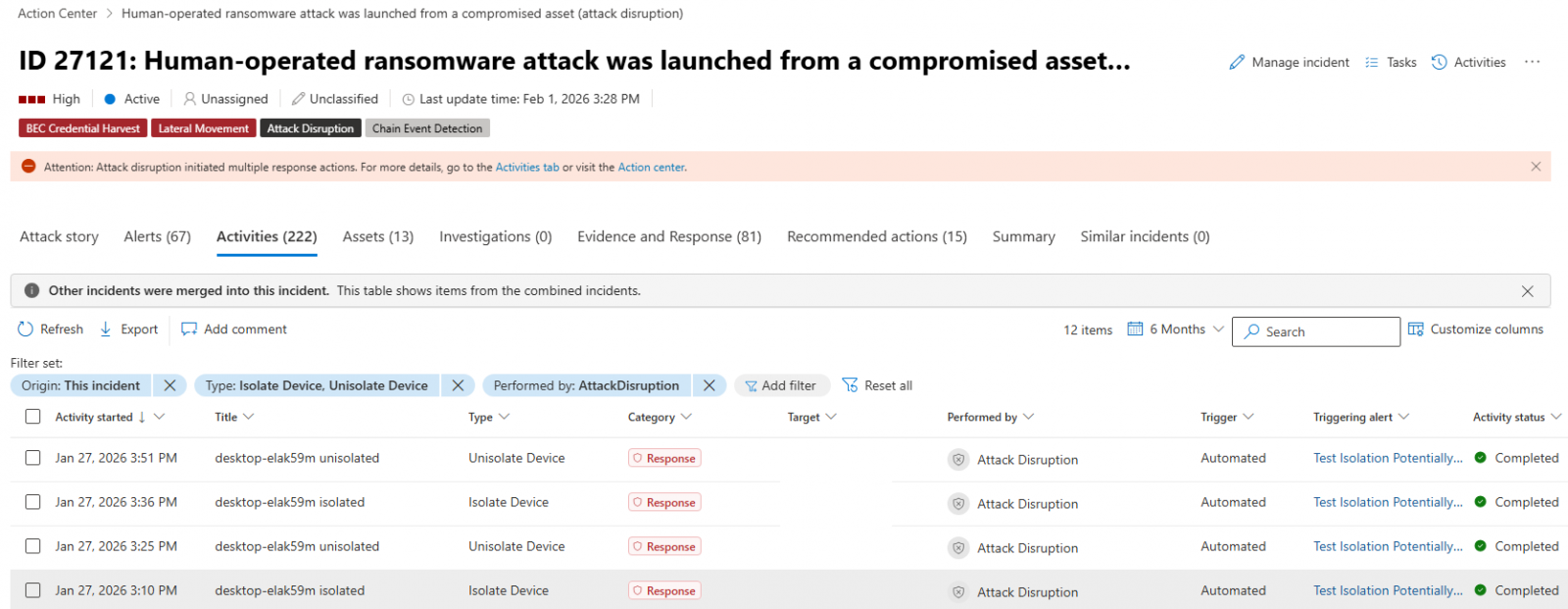
This is now available in preview mode and works as part of automatic attack disruption, a feature designed to contain attacks, limit their impact, and provide security teams with more remediation time.
Compromised endpoints that are automatically isolated are disconnected from the network to reduce the risk of further impact, but they retain connectivity to the Microsoft Defender for Endpoint service, which will continue to monitor the device.
“When a device in your organization is suspected to be compromised, Microsoft Defender for Endpoint can automatically isolate the device as part of automatic attack disruption,” Microsoft said.
“Automatic isolation helps reduce the risk of further impact on the organization, limit attacker lateral movement, and prevent impacts such as data exfiltration and ransomware propagation.”
Automatic device isolation works only on onboarded end-user workstations managed by Microsoft Defender for Endpoint.
As Microsoft explained, they can also be released from containment at any time by security operators after completing the incident investigation and mitigating the risks.
To release a device from automatic isolation, select the device from the “Device inventory” or open the device page and select “Release from isolation” from the action menu.
Nearly four years ago, in June 2022, Microsoft also announced that admins could manually contain compromised, unmanaged Windows devices by cutting off incoming and outgoing communication with onboarded Defender for Endpoint endpoints.
Microsoft also began testing device isolation support for Defender for Endpoint on onboarded Linux devices in January 2023, with the capability reaching general availability in October 2023.
The same month, it revealed that Defender for Endpoint could also isolate compromised user accounts as part of automatic attack disruption to block lateral movement in hands-on-keyboard ransomware attacks.
More recently, Microsoft began testing another new feature for the Defender for Endpoint enterprise endpoint security platform that automatically blocks traffic to and from undiscovered Windows endpoints, preventing attackers from breaching other non-compromised devices on the network.
Earlier this month, it revealed another Defender for Endpoint preview feature that will allow admins to schedule antivirus scans on onboarded Linux systems using the Microsoft Defender portal, mdatp managed JSON configuration, or the mdatp command-line tool.
“Scheduled scans support daily quick scans, interval-based quick scans, and weekly full scans, with options for low-priority execution, idle-time scheduling, and randomized start times,” it said.
Automated pentesting tools deliver real value, but they were built to answer one question: can an attacker move through the network? They were not built to test whether your controls block threats, your detection rules fire, or your cloud configs hold.
This guide covers the 6 surfaces you actually need to validate.

Data breach notification service Have I Been Pwned says a data breach at convenience store chain 7-Eleven affects over 185,000 people, including their names, dates of birth, and physical addresses.
The data breach, reported in April, also included phone numbers and email addresses.
Have I Been Pwned, which collects caches of data breaches and alerts affected individuals that their data was compromised, said in a new listing that 7-Eleven was the victim of a hack-and-extortion attack. The ShinyHunters group took credit for the breach, saying they would publish the data if they weren’t paid.
Per a listing with Maine’s attorney general’s office, 7-Eleven chief information security officer Jim Kastle said the hackers gained access to an internal server containing franchisee documents. A separate listing with Massachusetts’ attorney general said the breach also included Social Security numbers and driver’s licenses.

The average person works 80,000 hours over the course of their career. Ideally, that time should be fulfilling, well-paid, and spent doing things that make the world a better place.
Of course that’s much, much easier said than done. In an increasingly fragile job market made still more fraught by AI, there’s no longer such a thing as a safe bet.
According to Benjamin Todd, most people lack a systematic approach to thinking about their career choice. Todd is the co-founder and president of 80,000 Hours, a nonprofit dedicated to helping people move into careers focused on tackling the “world’s most pressing problems” — issues that include AI safety, biosecurity, global health, and animal welfare. 80,000 Hours uses the effective altruism framework of importance, neglectedness (how many resources are devoted to the problem), and tractability (or solvability) to decide which causes to prioritize.
In his new book 80,000 Hours: How to Have a Fulfilling Career That Does Good, which was released this week, Todd pulls together more than a decade of research and advising into a guide for making career decisions. It’s aimed at people just starting out as well as more experienced workers looking to make a switch, providing a framework to make career choices.
I spoke with Todd about careers and skill sets that are more resistant or adaptable to AI job disruptions, why “going with your gut” (usually) isn’t good advice, tips for landing a high-impact job offer, and other topics.
Our conversation below has been lightly edited for length and clarity.
There’s a lot of anxiety around advances in AI and job displacement, how that affects people’s job prospects and how they should think about career choices.
Yeah, I feel like when I talk to people about their careers these days, that’s the main thing that’s on their mind. … I think a lot of the simple answers about which jobs will be best [in the age of AI] are too simple.
How have the last few years — thinking about AI but also other disruptions and changes to the job market — changed your core assumptions about how people should choose their careers?
The main thing that comes to mind is we seem to be getting more and more evidence that far more capable AI will be here soon.
Then I think that just has a lot of implications for which problems are most pressing, and then potentially also which skills are most valuable. If there’s going to be a lot of change and things will be more unpredictable 10 years from now, then it makes sense to focus on shorter-term plans than to spend 10 years training to do something. Starting medical school now seems a lot more risky than it would have been 10 or 20 years ago.
When you say AI is coming and going to change things, are you talking about artificial general intelligence (AGI) specifically?
I mean there’s multiple levels. I think [where the technology is now], if it just froze here, would be kind of similar to the internet and how important it was. But the big-picture thing that seems most important is the idea that you could get to some kind of AI that can do a lot of remote work jobs at roughly a human level. That seems like it could bring the economy and science into a significantly different regime.
I’m probably a bit more skeptical than most technologists of mass near-term unemployment from AI, though I also think that most economists are still underrating how big a deal it could eventually be.
You mention in the book that managing AI agents is a skill less likely to be replaced by AI. Why is that?
I talk about four things that could make skills become more valuable in the future given technology and automation. And the second one is complementarity to AI. So it’s not that AI won’t be able to do that, it’s that it’s a skill where as AI gets better, that skill becomes more valuable. Because if AI is more useful and being used to do more things, and you can make it like 1 percent or 10 percent more efficient, then the value of that additional efficiency increases as AI becomes more useful.
Right now, AI is pretty bad at these messy, nebulous, long-horizon things where you need to coordinate between lots of people and decision-makers. I think in an intermediate future there will be a lot of the more routine work tasks that are being done by AI agents, but then there’s human managers who are needed to stitch them together.
That seems to me like that might be a very lucrative job, but that might not add up to a lot of jobs.
That comes down to how much more stuff can get done in total. And those people would be way more productive than people have been in the past, because everyone is running a team of 10 AIs. So we would want many more people doing that type of thing.
One way to think about it is that a lot of things that in the past would have been too expensive to do would become economically feasible because now you don’t need a team of 30 people to start this new nonprofit. You can do it with a team of three people and a bunch of AI. So then a lot of people could start new projects and you just get a lot more total things being done with [the aid of] AI rather than, “Oh, we have to do the same stuff as before, but with only 10 percent as many people employed.”
I think that’s maybe good for people at a mid- or senior level in their career, but it could make things harder for more entry-level people.
I think that’s a little bit too early to say. So there is some research that finds that skilled human managers are also better at managing AI agents, and there’s a kind of correlation in that skill set. There is research about the most junior software engineers, [that finds] their jobs are down 20 percent. But in some ways young people are just much more adaptable to new technology, and I find a lot of college students seem to be significantly more sophisticated at using AI.
So in some ways, and because it’s changing so fast as well, young people might be better placed to learn how to use these tools faster and adapt as they keep changing. I’m a bit less confident it’s going to be bad for the younger workers.
That’s interesting because I’ve seen quite a lot of headlines and quite a lot of anxiety from younger people around their job prospects.
I think it’s very understandable to be anxious because they’re facing far more change to the job market than any recent generation has had to face. No one really knows exactly how it’s going to shake out. I would say one point for optimism is in theory it will mean that many projects are possible that weren’t possible before. That does also open up a lot of extra opportunities for young people who I think in some ways are better placed to take on these more risky and novel things because they’re less set in their ways.
“I would say one point for optimism is in theory it will mean that many projects are possible that weren’t possible before.”
Because better or worse, AI is a force multiplier.
Totally. We were talking about this skill [at managing AI agents] being lucrative. It would also be applicable to a lot of social problems as well.
What does effective altruism get right about career choice — and wrong?
I think most people just aren’t thinking enough about the impact of their career at all, and they actually have this amazing opportunity to at a minimum save people’s lives and maybe do a lot more by helping prevent the next pandemic or being one of the only people working on AI risks.
When people are thinking about choosing a career, that should really be one of the first things they say: “The world’s facing massive problems. You could do something about them. Wouldn’t that be fulfilling and interesting? Why not do it?”
But people within effective altruism can think too much about their impact. I think people naturally compare themselves to others, but then people who get into effective altruism will tend to compare themselves based on impact. That’s better than comparing it based on how many yachts you have, but there’s still always someone who has more impact than you, and it’s easy for people to have this sense they’re not doing enough. They can potentially go into careers where they think there’s an intellectual case for being really impactful, but it’s not actually a good day-to-day lifestyle for them and they can end up getting pretty demoralized several years down the line. Those are some of the more common pitfalls.
I think you make a very compelling case that when people go with their gut, when they try to make career choices based on intuition, they aren’t always very good at that. You recommend a more systematic approach to thinking this through. Do you think people usually benefit from an outside observer acting as a sounding board?
I do encourage people to work through a systematic approach, especially when it comes to assessing personal fit. A lot of the advice is really about getting out of your head. I think oftentimes the most useful thing people can do is just apply to lots of positions and see what they get.
Often the best way to assess your fit is to speak to someone who has experience hiring in [that] area, they’re the people who’ve done the most assessing of who is going to succeed in a path.
In general, getting an outside perspective is super useful. That’s part of one of the big benefits of the one-on-one advice we offer on the 80,000 Hours website. … You can not consider enough options or factors, so getting an outside perspective is one of the best ways to help broaden your frame and make sure you haven’t missed something.
The key is to have a mixture of a more systematic approach and not do something your gut is actively worried about without understanding the reasons. There’s lots of research that shows that guts are bad at stock picking or predicting which person is going to succeed in some 10-year career path. But your gut is really good at things like, “Do I trust this person?” because that’s what we’ve evolved to be really good at guessing, and it’s something you have had a decent amount of practice about over your life. So if your gut is worried about a path, that might be picking up on something that actually you’re not excited about. The advice I give is don’t go with your gut, but do check with it. So I also wouldn’t say to totally ignore your gut either.
I think some people will chafe at the idea that some career paths are far more impactful than others. What would you say to more skeptical readers? People who would be reluctant or unable to retrain?
In the introduction, I mention this study where people were surveyed on how much they thought different charities more effectively save lives than others. They thought the best charity would be about 50 percent more effective than an average one at saving lives. Our intuitions are very bad at grasping big differences in scale. … When you ask experts in global health, they say there’s a hundred times difference between the most effective charity and the average for saving lives. It seems like no one knows about these differences even though it’s a huge deal. It means you could work for 10 years on a path and then retire and do whatever you most enjoy for the remaining 30 years and still achieve what would have taken hundreds of years working in one of the less effective charities.
I would actually advocate that people keep working rather than retire, but because there’s these huge differences in impact, it actually means it should be possible to find something that is both better for you personally and more impactful for the world.
There is a chapter in the book about what you can do that’s the most impactful thing without changing jobs if you’re already in a career. I talk about donating 10 percent of your income [to effective charities], political advocacy, and even just “slacktivism.” When most people do that they just tweet into their echo chamber … but if you’re talking about something that actually is a huge deal that no one knows about, [it can be effective.]
Another example I use is if you can help someone else find a really impactful job, then that has just as much impact as doing the job yourself. … I talk about being a multiplier.
How can people realistically transition into higher-impact careers, especially if those paths come with greater uncertainty in the age of AI?
It depends a lot where someone is starting from. … There’s more and more fellowships that are designed to help people transition [into higher-impact careers] quickly. You did the Horizon Institute for Public Service fellowship, which I would say is in this genre.
For more experienced people, if you’re an accountant or something like that, lots of organizations need people doing operations and accounting so they might sometimes hire people from outside the field pretty quickly. If that doesn’t work, it’s more of a case of thinking over one or two years, asking, “How can I best position myself to get one of these jobs?”
For that, you could look at the list of skill sets in the guide and think about whether you could learn any of these skills. There’s also a chapter on types of jobs that are really good for gaining skills quickly. One example is working at smaller, rapidly growing organizations, because you can advance faster and those roles tend to be more generalist. That type of generalist skill set is really useful in a lot of social impact organizations, and it means you can do things with AI earlier and get stuff done using those tools. Whereas if you go to a larger organization instead where the work tends to be more routine, that’s closer to something that AI is going to be able to do sooner.
What advice do you have for people with financial constraints that require them to secure a role right away, even if it may not be the highest impact or greatest fit?
I see impact as one important factor, but your own well-being matters too. You might also have dependents as well. Ultimately, you have to make your list of options and then choose the one that’s best given your goals. If money is a priority for you right now, then I think you should focus on that. There’s no shame in it.
I also talk about the idea of having a plan Z, [if your plan A and B don’t work out] that on some level you’re okay with. If you can’t do that, then you should focus on getting yourself into a stronger position first. Maybe you need to focus more on things like building skills or saving money which will mean you can take bigger risks later.
There’s this axiom that the best time to get a job is when you have a job, so you have more leverage or experience. How true do you think that is?
What most helps in getting a job is doing something as close as possible to the actual work. Obviously being in a job already is a very good way to demonstrate that you can do the work. But people who don’t have jobs already can often find ways to do that, like a portfolio project.
I talk about the “pre-interview” project, where you come to the interview with a specific proposal [to the company you’re applying] for how you would help them with some challenge the organization is facing … most jobseekers don’t have that level of understanding of a position. So you’re already standing out just by having thought about it.
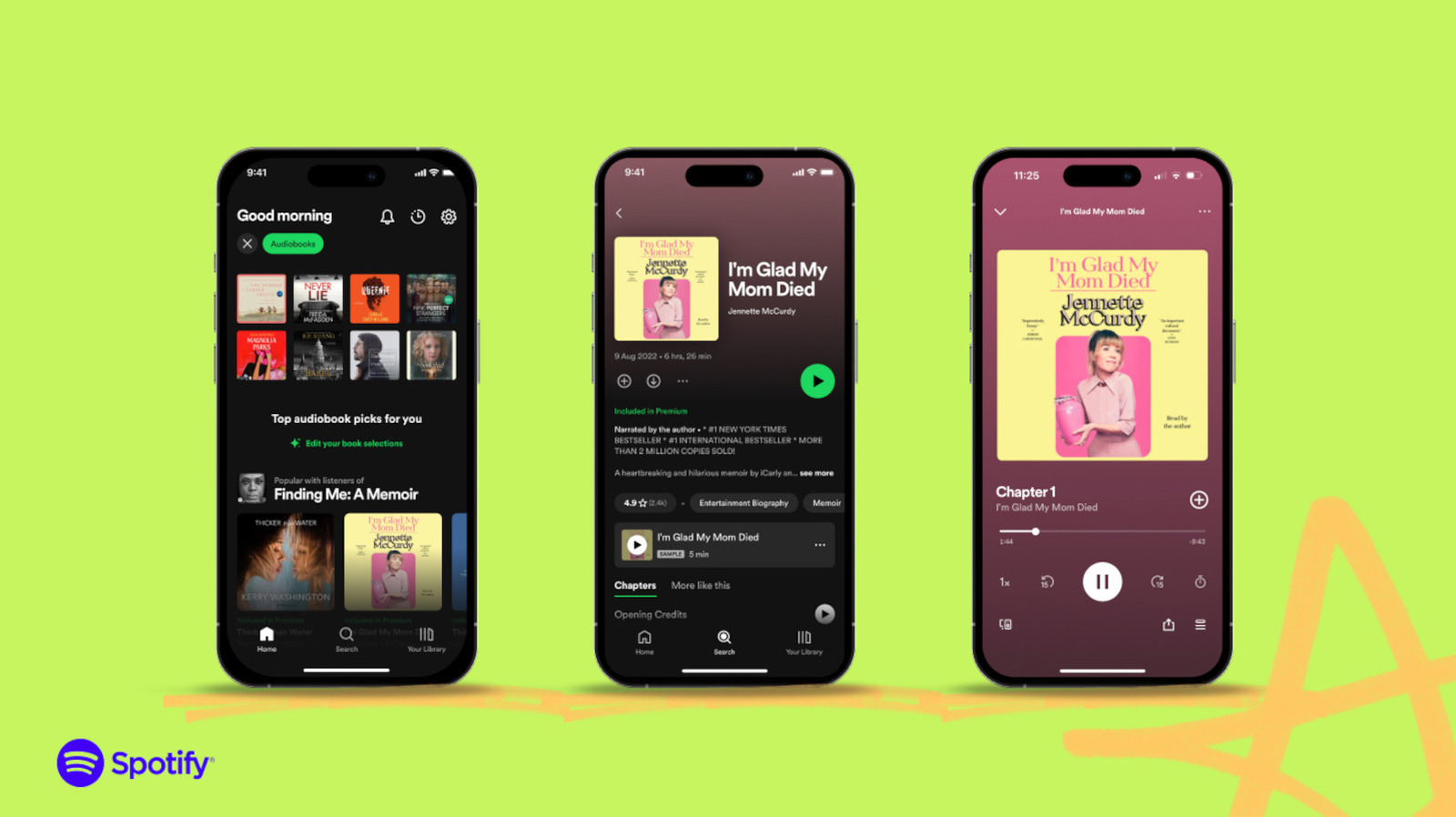
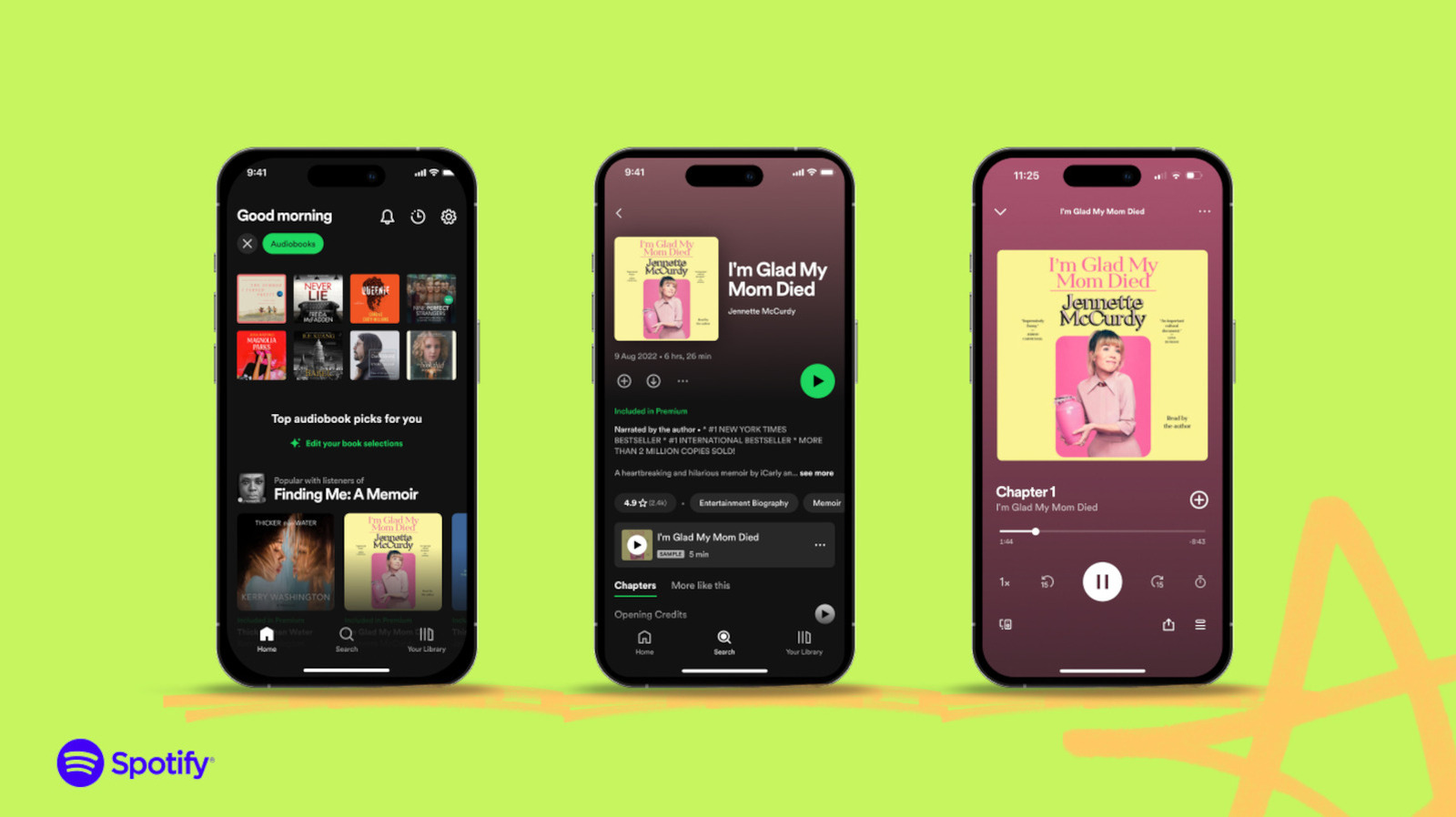
Spotify is expanding its offerings with a pretty wide selection of narrated long-form magazine articles from several publications that are most likely already familiar to you. The audio streaming service has announced that it’s adding over 650 long-form articles to its audiobook library. While all the pieces it added are in the English language only, they will be available in all of Spotify’s regions where audiobooks are available.
The articles included in this rollout include pieces from Rolling Stone, The Atlantic, Vogue, Variety, Billboard, Vibe, GQ, WIRED, Vanity Fair and Pitchfork. Spotify has teamed up with more publications, but as you can see, the curated collection offers articles on topics subscribers are most likely interested in, namely music and technology. “With Articles, we’re introducing long-form journalism in audio as a natural extension of the music, podcasts, and audiobooks people already come to Spotify for, focused on topics we know they love,” said Colleen Prendergast, Licensing Lead at Spotify Audiobooks. Prendergast also said that by offering subscribers shorter formats to listen to, the hope is for them to interact more with books, particularly the audiobooks in Spotify’s library, over time.
Each narrated article Spotify has released is under two hours long, and subscribers can listen to them against their audiobooks listening time. A Spotify Premium subscription includes 15 hours of audiobook listening time a month. Voracious readers can purchase top-ups, however, such as the Audiobooks+ monthly add-on with higher listening time limits. They can also just purchase individual articles to listen to for $2 each.
The company said in its announcement that the narrated articles it released were produced in-house by the Spotify Audiobooks team. We’ve asked Spotify for clarification whether that means the narrations were done by human talents or generated using AI, and we’ll update this post when we hear back.
Spotify announced several generative AI-focused updates during the company’s investor day last week. One of the features it’s launching next month in the US will allow users to generate personal podcasts directly within Spotify by drawing from the user’s profile and any file they upload, including PDFs and URLs. It’s also launching “Prompted Playlists” for audiobooks, which can create playlists based on user’s prompts describing what they want to hear more of and their listening history.

The war over forever chemicals in cookware has seen celebrity chefs, major cookware makers, and state legislatures enter into battle. Now, a new front has opened over advertising claims.
Cookware company Caraway is alleging that “Big Cookware” is using a lawsuit to try to “silence” the company, which rose to prominence making forever-chemical-free pans. Caraway recently launched a marketing campaign in response to a lawsuit filed in February by two large pan makers, which claims that Caraway is harming their reputation by marketing its products as free of “toxic” chemicals—despite never mentioning either company by name.
The lawsuit, filed by Groupe SEB USA and Meyer in the Southern District of New York, claims that Caraway’s marketing around forever chemicals, a colloquial term for per- and polyfluorinated alkyl substances (PFAS), is harmful to the industry as a whole. Caraway’s marketing materials, the two companies say in the suit, is not grounded in scientific fact and “has caused immense and continuing harm to consumers, to Plaintiffs, and to other cookware and bakeware companies in the marketplace.”
In response to questions from WIRED, Carmine Zarlenga, a lawyer at Mayer Brown representing Groupe SEB USA and Meyer in the case, sent over a press release. “Claiming to be a smaller company is no defense to false advertising—all companies large and small have the same rights and obligations under federal and state false advertising laws,” Zarlenga said in the release.
The lawsuit is the latest attack on anti-PFAS advocacy by two of the largest companies in the global cookware industry. In 2024, as more than two dozen state legislatures weighed bans on consumer products with PFAS in them, Groupe SEB, the parent company of Groupe SEB USA, and Meyer formed the Cookware Sustainability Alliance, an advocacy group for the industry. That group has actively opposed bans, including signing letters and testifying in statehouses.
Last fall, facing a bill in the California legislature to ban consumer products containing PFAS, celebrity chefs, including Rachael Ray, Marcus Samuelsson, and David Chang sent letters to the legislature opposing the bill. (Ray and Chang have cookware lines affiliated with Meyer, while Samuelsson serves as a “chef partner” for All-Clad, which is owned by Groupe SEB. WIRED sought comment from All Clad, Ray, Samuelsson, and Chang. All four did not respond.) The bill ultimately passed the legislature but was vetoed by Governor Gavin Newsom.
“The Cookware Sustainability Alliance focuses on state-level advocacy to protect perfectly safe cookware from being swept into overly broad PFAS product bans,” the group’s president, Steve Burns, told WIRED in an email. “We are not a party to any lawsuit at this point.”
Last year, the Cookware Sustainability Alliance challenged claims made by Caraway through the National Advertising Division (NAD), an independent nonprofit that is often linked with the Better Business Bureau National Programs that self-polices the ad industry. The alliance challenged some of the claims in Caraway’s advertising around PFAS.
The NAD ruled that Caraway could continue to advertise its products as “nontoxic” and “PFAS-free,” but it should avoid specific claims in its advertising, including that other nonstick cookware “can release toxins into your food and home during ordinary, manufacturer-recommended use.”
Caraway, the February lawsuit alleges, continued to use that messaging despite the NAD decision. The company says that most examples of advertising highlighted in the lawsuit simply state that its products are nontoxic and that it fully complied with the NAD’s recommendations. But the suit also claims that Caraway “has not taken down many of the relevant advertisements.” In a memo to support a dismissal motion, Caraway alleged the NAD did not provide “any factual support whatsoever to the element of consumer deception.”

Not so long ago, business laptops were painfully boring. Thankfully, things have changed a lot. In 2026, the best business laptops aren’t just built for Excel sheets and Zoom calls anymore. They now pack desktop-level performance, OLED displays that rival those on premium TVs, AI-powered productivity tools, and battery life that can actually last a long flight without making you fight for the airport charging socket.
This shift has also made choosing the right laptop way more confusing. Some machines focus entirely on portability for people constantly traveling between meetings, while others pack dedicated GPUs and AI chips for creators, developers, and multitaskers. To help narrow things down, we’ve rounded up some of the best business laptops you can buy right now.
1. ASUS ExpertBook Ultra 2026

The ASUS ExpertBook Ultra 2026 is a business notebook built on premium design and high-end AI performance for professionals and executives. With an Intel Core Ultra 7 processor and an Intel Arc B390M graphics card, the device delivers top-notch AI-assisted performance across a range of applications. It features a 32GB LPDDR5X RAM and a 2TB PCIe Gen 4 SSD for superior multitasking and performance. Meanwhile, its 14-inch 3K OLED touchscreen display supports a 120Hz refresh rate and delivers accurate Pantone colors with HDR support.
Regarding connectivity, ASUS comes equipped with two Thunderbolt 4 ports, two USB Type-A ports, HDMI 2.1, Wi-Fi 7, and Bluetooth 5.4. For AI integration, ASUS has included the Intel NPU, Copilot+, and MyExpert AI. In addition, the use of a magnesium chassis ensures the computer is slim, durable, and lightweight, with a weight under 1 kilogram. The device comes with a 70 Wh battery and very fast charging, with the laptop reaching up to 50% in 30 minutes.
Best Features of ASUS ExpertBook Ultra 2026
- Performance-oriented with powerful AI
- Super fast solid-state drive (SSD)
- Slim, lightweight, and strong body construction
- Pantone-certified OLED display screen
- Multitasking and creative-friendly
2. Dell 14 Premium

Dell 14 Premium focuses on the needs of professionals seeking a portable yet powerful, premium-design laptop. In terms of performance, Dell 14 Premium is one of the closest equivalents to MacBook Pro among professional-oriented Windows laptops. The inclusion of Intel Core Ultra processors and Nvidia RTX GPUs ensures that productivity and creative applications can be used comfortably while multitasking and performing AI-assisted operations.
Using Intel Core Ultra 7 processors along with an Nvidia RTX 4050 graphics processing unit (GPU) offers reliable computing capabilities in business and creativity-related purposes. It has a maximum memory size of 32 GB with a total storage volume of 2 TB. This laptop also features a 14.5-inch OLED touchscreen display, a slim metallic build, and wireless connectivity.
With its light metal frame, it is perfect for traveling professionals, while its OLED screen enhances viewing quality for any kind of presentations or editing.
Best Features of Dell 14 Premium
- Optionally comes equipped with RTX 4050 for creative work
- Lightweight premium design
- Intel Core Ultra processor
- OLED display
- Excellent performance for business and productivity
3. Lenovo ThinkPad X1 Carbon Gen 13The

The Lenovo ThinkPad X1 Carbon Gen 13 laptop is designed specifically for business professionals who require dependable performance every day. This laptop has a robust carbon fiber design, along with AI features that help ensure privacy.
The laptop can incorporate the most advanced technologies thanks to Intel Core Ultra 7 and Intel Arc processors, enabling seamless multitasking. RAM capacity on the laptop is up to 64 GB, and memory space can go up to 2 TB. Moreover, this laptop incorporates a 14-inch 2.8K OLED display, providing excellent picture quality.
Lenovo has included various AI-based security tools to help business clients use the laptop more easily. Such tools include privacy alerts and tips about using a VPN. Connectivity via Thunderbolt 4, WiFi, and ports makes the laptop easy to use for business. In addition, carbon fiber and magnesium materials increase laptop durability and reduce weight.
Best Features of Lenovo ThinkPad X1
- Premium lightweight business design
- Excellent keyboard experience
- AI-enhanced privacy and security tools
- Powerful multitasking performance
- High-quality OLED display
4. HP EliteBook Ultra G1i

The EliteBook Ultra G1i by HP is an ultralight laptop designed for business professionals who need improved performance and enhanced security. This device comes equipped with Intel Lunar Lake processors, intelligent AI technology, top-notch security, and an elegant OLED screen, enabling improved efficiency and productivity at work. It serves as a perfect companion for traveling businessmen and executives.
For connectivity, the laptop includes Thunderbolt 4 ports, USB 3.2 support, Wi-Fi 7, and Bluetooth 5.4. The HP also integrates enterprise-grade security features like BIOS protection, malware isolation, and remote lock/wipe capabilities. As for the laptop’s design, it is made of sturdy metal with an impressive matte finish and is quite light, at an estimated 1.18 kg. Furthermore, its battery will ensure that you can use it continuously for 13 hours.
Best Features of HP EliteBook Ultra G1i
- Lightweight premium build
- Excellent OLED touchscreen display
- Strong AI-enhanced productivity performance
- Advanced enterprise security tools
- High-quality webcam and audio setup

Crypto World40 seconds ago
Cardano Treasury Vote Ratifies Developer Experience Initiative With 67.9% Support

Politics2 minutes ago
Top 10 Best Rhinoplasty Surgeon in Turkey 2026
Entertainment3 minutes ago
Julie Andrews surprises attendees with rare appearance at event combating 'devastating' Parkinson's disease

Politics2 months ago
US brings back mandatory military draft registration

NewsBeat2 months ago
Steven Gerrard disagrees with Gary Neville over ‘shock’ Chelsea and Arsenal claim | Football

Tech4 weeks ago
Register Renaming | Hackaday

News Videos17 minutes ago
Tom Lee & Raoul Pal :”Important Warning To All Small Bitcoin & Crypto Investors” (New Prediction)

News Videos31 minutes ago
Ghostiefruit Accidentally lets Zakarious in Money SMP!

News Videos45 minutes ago
Why Billionaires Are Building Their Own Banks #finance #wealth #money
-

 Crypto World5 days ago
Blockchain.com files with SEC for U.S. IPO
-

 Fashion4 days ago
Holiday Weekend Open Thread – Corporette.com
-

 Business4 days ago
Dell Technologies DELL Stock Surges 15% on AI Server Momentum and Analyst Upgrades in 2026
-

 Crypto World4 days ago
Bitcoin Accumulation Weakens as BTC Realized Losses Hit $600M
-

 Crypto World4 days ago
Space X IPO Is ‘Bad News’ for Tech Stocks: But What About Bitcoin?
-

 Politics4 days ago
Makerfield: a tale of two social-media histories
-

 Crypto World3 days ago
Robinhood crypto COO Tanya Denisova exits
-

 Business2 days ago
NYT Strands Answers May 24 2026 Revealed for Puzzle No. 812 Theme Summer Essentials
-

 Crypto World4 days ago
MicroStrategy’s Saylor Says Miners No Longer Set Bitcoin Price, Another Force Has Taken Over
-

 Crypto World4 days ago
AI infrastructure race heats up as IREN pitches full-stack strategy, WhiteFiber lands $160M deal
-

 Tech5 days ago
WhatsApp ads could make Irish debut after discussions with DPC
-
 Tech4 days ago
A 0.12% parameter add-on gives AI agents the working memory RAG can’t
-

 Tech5 days ago
You Can Now Add ChatGPT To PowerPoint
-

 Business4 days ago
Trump Invests $1M-$5M in Kura Sushi USA Chain With 27 California Locations
-
 NewsBeat5 days ago
Charity run by Reform leader Malcolm Offord accused of ‘law breaking’ over Scottish registration
-

 Sports5 days ago
2026 CJ Cup Byron Nelson leaderboard: Brooks Koepka finds putting stroke in Round 1
-

 Crypto World6 days ago
Exa Labs raises $250 million in funding led by a16z
-
Business4 days ago
Goldman Sachs reinstates Ageas stock coverage with neutral rating
-
 Crypto World4 days ago
Verus Bridge Hacker Returns $8.5M ETH, Keeps $2.8M as Bounty
-

 Tech1 day ago
Microsoft’s quiet Claude Code retreat and the real cost of enterprise AI
You must be logged in to post a comment Login