Security teams log 54% of successful attacks and alert on just 14%. The rest move through your environment unseen.
The Picus whitepaper shows how breach and attack simulation tests your SIEM and EDR rules so threats stop slipping by detection.



A 21-year-old using the alias “Snoopy” was sentenced to 18 months in prison for his role in hacking DraftKings accounts in the November 2022 cyberattack.
In December 2025, the man, Nathan Austad of Minnesota, pleaded guilty to conspiracy to commit computer intrusion, admitting that he and co-conspirators compromised 60,000 DraftKings user accounts.
During the attack, the hackers added payment methods under their control to 1,600 accounts and stole $600,000.

DraftKings is a fantasy sports and sports betting platform where users can build teams of real-world athletes and compete for cash prizes based on their performance in actual sporting events.
In November 2022, DraftKings disclosed that hackers accessed customer accounts through credential stuffing attacks that exploited weak passwords or reused login credentials.
At the time, DraftKings reported that less than $300,000 had been stolen from affected customers. A month later, the company disclosed that 67,995 customer accounts had been compromised in the attack.
In May 2023, U.S. authorities charged Joseph Garrison for his role in the scheme, accusing him and his co-conspirators of selling access to hacked DraftKings accounts through online marketplaces such as the “Goat Shop.”
In January 2024, prosecutors charged additional suspects for the cyberattack, including Kamerin Stokes (“TheMFNPlug”) and Nathan Austad (“Snoopy”).
Austad reportedly operated his own shop where he sold access to stolen accounts and also used other platforms for the same purpose.
“AUSTAD directly controlled and profited from his own shop, which was named after the character Snoopy from the Peanuts comic strip,” the U.S. Department of Justice says.

The DoJ’s press release does not disclose the amount the hackers earned from selling access to the compromised accounts, but notes that Austad’s cryptocurrency accounts received approximately $465,000 in assets.
The U.S. DoJ also mentions direct messages that Austad sent to his co-conspirators, in which he openly admitted to perpetrating fraudulent activity and warned others to prepare.
Joseph Garrison received an 18-month imprisonment sentence in January 2024, while Kamerin Stokes received a 30-month sentence in April 2026.
In addition to the prison sentence, Austad received three years of supervised release and was ordered to pay $463,684 in forfeiture and $1,327,061 in restitution.

Security teams log 54% of successful attacks and alert on just 14%. The rest move through your environment unseen.
The Picus whitepaper shows how breach and attack simulation tests your SIEM and EDR rules so threats stop slipping by detection.


A malicious Microsoft Edge extension dubbed ‘Edgecution’ has been used in a ransomware attack to escape the browser sandbox and deploy a Python-based backdoor.
Access to the local system is obtained by leveraging the Chrome Native Messaging protocol that allows browser extensions to interact with native desktop applications, such as a password manager communicating with the extension to fill in web forms.
This allows the browser to launch the native application as a separate process and communicates with it over standard input/output data streams.
An Edgecution compromise begins with the attacker posing as IT support personnel on Microsoft Teams and directing employees to a fraudulent page under the pretense of installing a spam filter update.
Researchers at cloud security company Zscaler believe that Edgecution is deployed by an initial access broker (IAB) connected to the Payouts Kings ransomware operation.
In recent attacks using tactics previously associated with the IAB, the threat actor directed victims to a fake Microsoft “Outlook Updates Management Console” presenting download buttons for update packs or software verification.
However, the buttons downloaded malicious components, copied scripts to the clipboard, or launched forms requesting Microsoft 365 and Outlook passwords.

“These buttons offer the threat actor three different options (via an AutoHotKey script, Windows batch script, and PowerShell script) to deploy the Edgecution malware,” explains Zscaler.
“When the AutoHotKey script or clipboard content is executed, the commands will configure the environment, fix the encrypted ZIP file headers, extract relevant files, and create a scheduled task that executes Microsoft Edge.”
The malware components are fetched from the fake Microsoft update site in a ZIP archive fetched with malformed headers to prevent security products from recognizing it as a valid archive.
According to the researchers, the ZIP file contains an embedded Python version 3.13.3 and two directories named extension and native, providing a hint about the technique used in the attack.
The first malware component is the malicious Microsoft Edge extension disguised as an Edge Monitoring Agent. It connects to the attacker’s command-and-control (C2) endpoint, receives instructions for execution, and sends the results back to the operator.
The Edgecution malware runs in a headless Edge browser, making it invisible to the user, and uses Chrome’s Native Messaging protocol to talk to a local application.
The extension is limited to the browser’s sandbox, but the attacker overcomes this limitation through a second malware component, a Python-based backdoor that serves as the host-level executor.
This component receives commands that are relayed from the malicious extension, and can potentially request the following jobs:
The role of the scripts is to provide a way for the extension to launch the Python backdoor. This is achieved by creating in the native directory a batch file the extension can invoke.
Additionally, they create the required Chrome native messaging manifest that describes how the browser can connect to the native app.
Zscaler’s technical analyis notes that both malware components have some unused commands that could be activated in future versions.
The researchers warn that the method used by Edgecution “illustrates the evolving sophistication” of threat actors tied to ransomware operations, and allows them to establish persistence on compromised hosts.
They recommend that organizations strengthen monitoring of browser extensions and enforce strict controls over native messaging host configurations to reduce the risk of compromise.
ZScaler’s report provides a list of indicators of compromise (IoCs) that include command and control servers used by Edgecution, hashes for the malicious extension, and the Python backdoor.
Security teams log 54% of successful attacks and alert on just 14%. The rest move through your environment unseen.
The Picus whitepaper shows how breach and attack simulation tests your SIEM and EDR rules so threats stop slipping by detection.
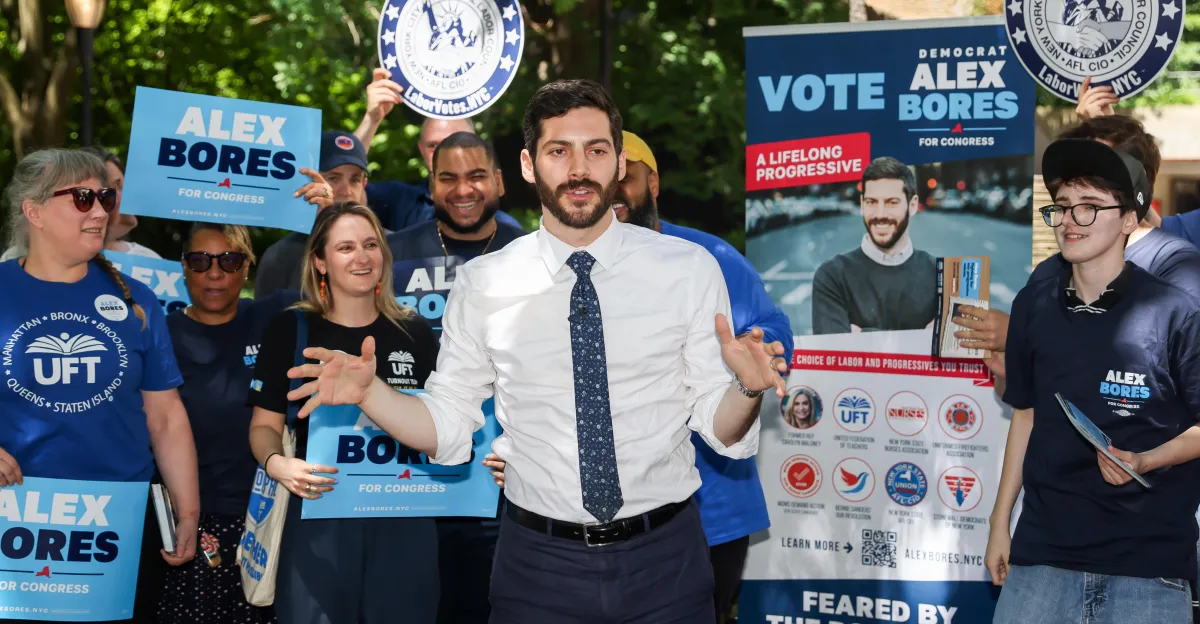
New York’s congressional primaries on Tuesday were supposed to be the moment AI’s top backers definitively proved they could bend US politics to their will. Instead, they left behind a muddy stalemate that only raises more questions about whether their spending can keep pace with an anti-AI backlash.
The stage for the battle was set last year, when some of America’s leading tech investors launched a new, $100 million super PAC dedicated to electing candidates who were “aligned with the pro-AI agenda” and defeating those who weren’t.
Months later, this group — dubbed Leading the Future (LTF) — named its first target: New York Assembly member Alex Bores.
Bores had been the chief sponsor of the Empire State’s “RAISE Act,” which required developers of frontier AI models to follow various safety protocols or face steep fines. LTF fiercely opposed that bill. Thus, when Bores launched a congressional run, the super PAC sought to teach him — and his fellow Democrats — a lesson: Purse sweeping AI regulations and your next campaign will drown in a flood of opposition spending.
At first glance, it may look like LTF just achieved that objective. Bores lost his bid on Tuesday night to represent New York’s 12th District. Headlines deemed the race a victory for “Big Tech.”
But appearances can be deceiving. In truth, Silicon Valley’s libertarians are losing the fight over AI regulation — and the NY-12 race only underscores this reality.
Contrary to LTF’s hopes, Bores’s loss is unlikely to dissuade Democrats from backing far-reaching regulations on AI, for at least four reasons:
First, the race’s winner, Assembly member Micah Lasher, is about as hostile to LTF’s vision as Bores was. Lasher co-sponsored the RAISE Act and campaigned on pausing data center construction nationwide, launching antitrust investigations into the major AI labs, protecting artists from “AI-driven copyright infringement,” prioritizing organized labor’s interests in debates over AI deployment, and myriad other regulatory constraints on the technology. In his victory speech, Lasher directly addressed the AI companies who took an “unusual interest” in the race, saying he “won’t be taking my cues from either of you when it comes to protecting our kids, our jobs and our families.”
Silicon Valley’s proponents of light-touch AI regulation are losing.
Simply put, if the tech industry wants to convince Democrats that backing strict AI regulations is politically self-defeating, they’ll need better evidence than a race won by…a Democrat who backs strict AI regulations.
Second, it’s far from clear that Bores’s candidacy was actually hurt by industry opposition. As my former Vox colleague Kelsey Piper notes at The Argument, when LTF announced it was targeting Bores, betting markets gave him only a 10 percent chance of victory, placing him behind both Lasher and Kennedy scion Jack Schlossberg. Bores ultimately came in a close second, trailing Lasher by only 4 percentage points (or about 4,000 votes).
It’s plausible that LTF unintentionally aided Bores’s rise to contention by validating his bonafides as the bane of Big Tech. Certainly, that identity earned the assembly member abundant media coverage. “For voters, tech billionaires spending millions to beat a state legislator wasn’t a flex; it was a tell,” Jesse Ferguson, a Democratic strategist who advised the Bores campaign, told me.
Third — and related — the race ended up becoming a fight between AI companies, not just about them.
Bores’s candidacy was not solely powered by a grassroots backlash to industry meddling. Rather, he was himself the recipient of massive Silicon Valley donations, albeit from the segment of the tech industry that worries about AI safety. Anthropic, the maker of the cha6bot Claude, was an enthusiastic supporter of the RAISE Act. And when LTF came for that law’s chief sponsor, the AI giant’s super PAC rallied to his support, supplying Bores with at least $11 million in outside funding. The crypto billionaire Chris Larsen, meanwhile, tossed another $19 million Bores’s way.
Importantly, this flood of financing was a reaction to LTF’s intervention. In other words, by targeting Bores, the super PAC arguably made it easier for him to raise money — and highlighted the existence of a pro-regulation, tech industry donor network. It is hard to see how this will make Democrats more afraid to meddle with AI.
Finally, Lasher’s victory probably didn’t have that much to do with artificial intelligence, one way or another. Lasher has been involved in New York politics for about a quarter century longer than Bores has, and boasts personal ties to Michael Bloomberg, Kathy Hochul, and other power players in the state’s Democratic Party. He was the race’s favorite for more or less the entirety of the race. Therefore, even if Lasher favored light-touch AI regulation, his narrow victory over Bores wouldn’t prove much. Given his actual positions on AI, his win does nothing to advance LTF’s argument.
Meanwhile, since Leading the Future launched last year, the national political climate has turned sharply against them.
In a recent Fox News poll, 80 percent of respondents said they favored regulating AI to protect public interests, even if doing so slows innovation. Other surveys show a large majority of Americans opposing the construction of new data centers in their areas.
By itself, public opinion might not be an insuperable obstacle to Big Tech libertarians’ agenda. Voters are increasingly skeptical of AI, but still don’t typically consider it a top priority.
Yet the national security state is also turning against laissez-faire in the AI sector. And its will is harder to ignore. Amid growing concerns about AI’s capacity to aid cybercrime, the White House released an executive order earlier this month encouraging labs to seek the government’s approval before releasing new models. Weeks later, the Trump administration took the extraordinary step of essentially ordering Anthropic to remove its Fable model from the market, on national security grounds. This represented a more radical and capricious government intrusion into the AI industry than Bores’s signature law ever contemplated.
Leading the Future knows that the ground has shifted beneath its feet. When it first announced its targeting of Bores, it lambasted the RAISE Act as a “clear example of the patchwork, uninformed, and bureaucratic state laws that would slow American progress and open the door for China to win the global race for AI leadership.”
Last month, however, the super PAC announced that it actually supported the RAISE Act, as the law “gets the combination of innovation and safety right.” LTF reconciled these positions by insisting that, while Bores’s initial draft of the legislation was ruinous, the final version was excellent.
This is unconvincing. It’s true that the RAISE Act got watered down before enactment. But the idea that these changes were large enough to transform the bill from an act of catastrophic national sabotage — into a model of pro-innovation lawmaking — is implausible. And LTF’s supposed support for the measure is belied by the months it spent vigorously lobbying the federal government to preempt New York’s law.
In reality, the group has simply retreated in the face of shifting political winds. Silicon Valley’s proponents of light-touch AI regulation are losing. And Bores’s loss did nothing to change that.

Slate Auto’s much-discussed sub-$25K electric truck is one step closer to reality. It’s now available for preorder on the company’s website. However, it could still be a year or two before drivers who preorder a Slate actually get their vehicles.
The base model of the car is priced at $24,950 and there are a number of color and accessory options available. But Car and Driver points out that it’ll end up costing more than $25,000 after factoring in a destination and delivery fee that the company says will be lower than typical. Even so, that fee could still run $1,200 to $1,500.
Even with that fee, however, Slate’s truck would stand apart in a US car market where SUVs rule the land and the average car price rose above $50,000 earlier this year before settling back down, according to Kelley Blue Book. Electric vehicles are typically priced about $5,000 to $7,000 more, making the Slate even more of an anomaly.
This week, as it opened up preorders for the electric truck, Slate gave more details about its range and capabilities, which have changed since the truck was announced last year. New battery specs have raised the truck’s range from 150 miles per charge to 205. Slate is also banking on the truck’s custom options to draw customers: It’s offering more than 100 wrap colors and different ways to convert the two-seater truck to other builds, even after the vehicle is purchased.
Preordering the Slate truck costs $300 and is nonrefundable. The company says the 180,000 customers who already placed refundable reservations for $50 can put that $50 toward a preorder.
According to Slate’s website, the first deliveries of the truck will be later this year. But full production of the Slate truck isn’t expected to ramp up completely until sometime in 2027. Slate has raised $1.3 billion and counts Amazon founder Jeff Bezos as one of its investors.
Not everyone is impressed with the concept, or even the pricing of the Slate, with The Wall Street Journal dismissing the company’s updates with the headline, “Will Anyone Buy This Cheap EV Truck With Hand-Crank Windows and No Radio?“
But those who’ve actually seen and ridden in the vehicle are singing its praises. Nick Yekikian at Edmunds wrote that the truck “is cute and has real charm in person” and said it has evolved since the last time he saw it. He wrote, “The build quality is generally more solid, and it looks ready to hit the road.” He also posted a video about his experiences with Slate.
Aaron Gold at MotorTrend wrote, after riding in the Slate, that it’s “pretty much what we were expecting, which is a good thing, as we at MotorTrend have high hopes for this cute, inexpensive electric truck.”
David Tracy at The Autopian called driving the truck “insanely fun.” He wrote, “It’s a simple pickup truck, and it’s reasonably cheap. Is it the cheapest? No. Is it the most practical for families? No. But what the Slate has going for it is this: It is, by far, the most soulful new vehicle an American consumer will be able to buy for $25,000.”
As far as competition for inexpensive electric vehicles, the closest to Slate’s planned price is likely the Chevrolet Bolt at just under $30,000. But other automakers are working on less expensive electric vehicle models.
Ford is expected to release a low-cost electric truck in the $30,000 range, due out in 2027. And political changes could open up the possibility of Chinese-built EVs, which have their fans in the US but are not widely available due to tariffs and other factors. As Reuters points out, some Chinese EVs are priced below $12,000; for the average cost of an American car, you could buy three or more of the cheapest EVs in China.

In theory, there’s a way to build a prediction market that actually provides valuable insight on issues through the wisdom of the crowds. But that’s not at all what we have with the current crop of prediction markets, mainly Kalshi and Polymarket, which seem to have leap-frogged FanDuel and DraftKings as the deservedly hated gambling apps that pretend not to be gambling apps. While we haven’t spent too much time talking about those markets here on Techdirt, we have mentioned some examples of where they are found to be distorting information, rather than revealing deeper insights.
But, really, if your entire marketing pitch is that you’re a tool for revealing truths, it should be existentially embarrassing for it to be revealed that your advertising strategy is to have influencers blatantly fake bets to pretend they had won, when they really would have lost. It’s like the opposite of a truth market. It’s false advertising.
A piece published over the weekend by the Wall Street Journal (whose publisher actually has a deal with Polymarket) is incredibly damning, suggesting pretty clearly that Polymarket and a crew of young influencers it has hired have engaged in outright fraud that both the FTC and the CFTC would go after, if either agency were inclined to act:
In his videos, George Makihara appears to have a lucrative side hustle making bets on Polymarket.
In January, the college student posted a video that showed him winning $100,000 on a wager that President Trump would publicly say the word “McDonald’s” that month.
The bet was one of 145 that Makihara appeared to place on Polymarket’s website between January and mid-May, based on his videos—bets adding up to almost $410,000.
But none of those bets were real, according to a Wall Street Journal investigation.
The basics of the scam are pretty straightforward: Polymarket hired one of those “influencer marketing” companies to round up college kids to make social media videos showing them winning bets on Polymarket. Except, it turns out that the bets shown in those videos aren’t real. They’re faked, using a fake version of Polymarket, with the clever domain name Poiymarket (that’s a lower case i rather than an l there). And, of course, none of the influencers disclosed they were being paid by Polymarket, let alone that the bets shown in the videos were made up.
This doesn’t seem to be a one-off case of a rogue influencer either. The WSJ found over 1,100 videos by multiple creators, and determined that in 70% of the videos, no actual bets were placed, even as the videos showed the influencers winning $1.9 million. Within that, one smaller segment of the videos used faked or outdated news coverage to pretend the influencers had won about a million dollars — when, the WSJ worked it out, those same bets would actually have lost $166,000 if anyone had actually placed them.
And according to the reporting, this isn’t just a case of the marketing firm Polymarket hired going too far. The article reports that Polymarket created the fake website and required the influencers send them all their videos for approval before posting:
Creators said they send the finished videos to Polymarket for review. If a video isn’t engaging enough, or if it bears obvious signs of being faked, Polymarket will ask for the videos to be reshot, the creators said.
All of this clearly violates the FTC’s rules on disclosing paid promotion, not to mention being clearly deceptive advertising. That isn’t even mentioning that Polymarket apparently demanded that the ads target Americans, even as Polymarket isn’t supposed to be operating its prediction market in the US (even though tons of people are using it there via VPNs and proxies).
This is where the CFTC should step in. Polymarket has been doing the whole “nudge, nudge, wink, wink” thing about supposedly not targeting the US. But this report makes it clear that they absolutely are targeting the US and that it’s an important market to them. In a normal administration, the CFTC would take note of this and take action:
As of early June, it only paid clippers if at least 60% of their audience was in the U.S., according to instructional materials.
There’s also this excuse given by one of the influencers, who may be about to learn about deceptive advertising laws:
Razeen Khan, a college student in California, worked as a Polymarket creator for several months until March. He compared the videos to fast-food commercials, where food can appear more appealing than it does in real life.
“We’re depicting what actually happens,” he said. “You’re still going to buy the burger.”
This is quite the choice in what to compare things to, Razeen, because the FTC now has a few decades on the record of going after companies for representing food in ads in a deceptive manner. In 1968, there was the Campbell’s Soup case, in which the FTC dinged the soup company for placing clear marbles in the bottom of bowls so that photos of the soup made it look like there were more noodles and vegetables in the soup than there really were.
The general rule of thumb to avoid having the FTC come down on you is that if any food is shown in an ad, it has to be the actual food. Everything else around it can be faked or made to look better. But the food has to be real. Hell, there was just a case against Burger King (which appears to have settled earlier this year), alleging that the burgers it showed in commercials were bigger than what was actually sold.
So, yeah, Razeen, I’d suggest maybe talking to a lawyer before you claim that you’re just doing the same thing that you think fast food companies do… when those fast food companies know that they can face serious legal penalties for faking things. Like you appear to have done.
Of course, the real question is whether this FTC will do anything about it. On the merits, it’s about as clean a case as the agency is ever going to get — so blatant that looking the other way carries its own cost. But part of the reason Kalshi and Polymarket seem to be everywhere these days is that the Trump administration has gone to bat for both companies in their fights with state regulators — and that Donald Trump Jr. has financial links to both companies. So the agency that should be the natural enemy of a company building fake websites to run faked ads, instead answers to a White House championing that company, while the president’s son personally profits from its success.
Which is its own kind of tell. A prediction market’s entire pitch is that it surfaces the truth — that the wisdom of the crowd, with real money on the line, produces better information than anyone else can. Polymarket just demonstrated what it actually thinks of that promise: when it needed to sell itself, it didn’t trust the real numbers. It hired college kids, built a counterfeit version of its own site, and manufactured the wins. The product that’s supposed to reveal the truth couldn’t market itself without faking it.
This is the rare case clean enough to force the question. If the FTC does nothing with a fraud this obvious, it won’t be because the case is too weak. Instead, it will tell you exactly whose interests the Trump FTC thinks are worth protecting.
Filed Under: cftc, deceptive advertising, false advertising, fraud, ftc, influencers, prediction markets
Companies: polymarket

The NotePin S AI wearable, seen here on the wrist of CNET’s Katie Collins, could be really useful for my job. And it’s on sale for Prime Day.
I took over the role of CNET’s editorial leader earlier this year, and while I’ve participated in Prime Day sales as a TV reviewer and general deals editor here for (literally) decades, this is my first Prime Day as EIC. In case you’re wondering what purchases a person like me is considering this time around, here’s a sampling.
iPad 11-inch A16 ($300): My artistic daughter has been asking for an iPad and if my wife approves, I’ll likely get her this basic version, our top pick for most people. I’d also get her the Apple Pencil (on sale for $60). We’d save both of these for Christmas presents.
Belkin Portable Charger Bank ($38): My family and I always need portable chargers. Half our devices call for Lightning and the other half for USB-C. This does both and I like the built-in cables.
Plaud NotePin S AI Notetaker ($152): In my new role I take more meetings than ever, and I also have plenty of valuable face-to-face conversations in the office and beyond. I currently depend on the Otter app on my phone and Gemini+Google Meet recordings at work to take notes (with appropriate permission, of course). This AI wearable could be my “secret weapon” to consolidate everything in one place.
JBL Go 4 Bluetooth Speaker ($38): I actually bought this one a few days ago when it was $40 – still a great deal, but now even better. It’s no longer one of our best Bluetooth speakers but it’s good enough for my (other) daughter, who wants one for the beach. At this price, I won’t be too annoyed if (when?) it gets destroyed by sand and surf. And yes, I got her the pink one which I know she’ll love. We’re saving this for her birthday.
Anker Solix F2000 portable power station ($749): I own a travel trailer and upgraded to solar with an inverter, but at a recent (shady) campsite, I still had to break out my loud, annoying propane generator. Sure, I could just add more standard 12V LiPo4 batteries, but this portable power station is so much more versatile. It includes a 30A RV outlet, and the wheels make it worth the extra $50 over the Bluetti AC200L. No way my wife approves this one, but it stays on the list anyway because I’m camping tech obsessed.


The new Google Home Speaker brings Gemini and expanded smart home capabilities, and Matter hub support. Reviews highlight its more natural voice experience, though some note that audio quality doesn’t clearly surpass the older Nest Audio.


One order directs federal agencies to work with private companies and universities to deliver a quantum computer capable of supporting scientific research by 2028. The Department of Energy has been tasked with identifying the technical benchmarks that will define the system.
Read Entire Article
Source link

The Ultimate AWS Data Master Class Bundle has 9 courses to get you up to speed on Amazon Web Services. The courses cover AWS, DevOPs, Kubernetes Mesosphere DC/OS, AWS Redshift, and more. It’s on sale for $40.

Note: The Techdirt Deals Store is powered and curated by StackCommerce. A portion of all sales from Techdirt Deals helps support Techdirt. The products featured do not reflect endorsements by our editorial team.
Filed Under: daily deal

Data governance is unglamorous work. It is also the reason most AI strategies stall before they scale.
Spending on models, platforms and use cases keeps growing. But the disciplines that make those investments effective – data quality, ownership and governance – often receive far less attention.
Part of the challenge is that data governance is neither “fun” nor “sexy.” It lacks the excitement of new technologies and the appeal of quick wins, so it is consistently deprioritized.
Yet as organizations scale their AI ambitions, governance is increasingly the factor that determines whether those efforts succeed or stall.
Head of Engineering Growth at Optima Partners.
The imbalance in attention is now starting to show. While AI adoption continues to grow, many organizations still struggle to move beyond pilot stages into enterprise-scale deployment. The gap between ambition and execution is widening, and weak data governance is often at the center of it.
The issue is not awareness. Most business leaders recognize that governance matters. The challenge is that governance demands structural decisions, cultural alignment and sustained discipline – the hard parts of the job. And, unlike a new platform or tool, its value often only becomes fully apparent when it is missing.
Weak governance rarely fails loudly at first. The problems accumulate.
Early AI initiatives often prioritize delivery, with dashboards, models and applications taking precedence over governance. Silos form, data definitions diverge and access controls become inconsistent. A common pattern: two teams – one in marketing, one in data science – train separate models against different definitions of the same metric.
Both definitions look correct in isolation. In production, the predictions conflict, neither team can explain why, and the investigation takes weeks longer than building either model did. Quality issues are patched rather than fixed, and new projects begin to rely on shaky assumptions.
As complexity grows over time, confidence in the data declines.
Data dictionaries and permission frameworks are not administrative overhead – they are what makes scalable AI possible. Building them early demands investment before visible returns but postponing that effort is far costlier.
Left unchecked, governance gaps eventually land hard, resulting in delayed projects, compliance failures and decisions made on unreliable data. At that point, organizations are forced into reactive fixes – or even total rebuilds – that are far more expensive and disruptive than addressing governance from the start.
Regulators are placing increasing importance on accountability in how data is used. The UK’s Information Commissioner’s Office (ICO) has made it clear that organizations must be able to demonstrate control over data use, particularly as AI systems become more prevalent. Scotland’s new National AI Strategy also highlights that organizations must follow best practice in responsible AI governance aligned with OECD principles.
This has reinforced the perception that governance is primarily a compliance exercise – something important but not necessarily prioritized at the prototype stage. Effective governance is far more than that: it shapes how data flows through an organization, how decisions are made and how confidently teams can act. It defines accountability and sets the standards needed to maintain consistency at scale.
In that sense, governance is a design choice, and businesses need to make the right one to effectively scale their innovation ambitions.
Governance is not one-size-fits-all – nor it is purely a technical problem to be addressed through tools or platforms alone. In fact, the harder initial challenge is often a people and accountability one. Before designing a governance model, organizations need to define the who as much as the how. Who owns the data? Who is responsible for its quality and who decides how it should be used?
In many organizations, these responsibilities are unclear. Management is shared, and ownership is (often wrongly) assumed rather than defined. But it is only once those questions have been answered – in practice as well as on paper – that businesses can turn their attention to developing a governance model that fits their structure.
Some take a centralized approach to this, with control sitting in a single function. This can provide consistency and clarity, but the model may struggle to scale across complex organizations with diverse needs.
Others adopt a federated model, combining central standards with local ownership. This can be more flexible and scalable, but only if the business is committed to those shared standards and has defined clear roles and accountability. Without them, federated models risk furthering data fragmentation.
The key is alignment. Governance models should match how teams actually use data and AI, not how they’re assumed to operate.
A practical test: ask three different teams how they define a key business metric – revenue, active users, or customer churn. If the answers differ, the governance problem already exists. The operating model question is not how to prevent that divergence in future; it is who has the authority to resolve it now.
Governance is rarely the most visible part of an AI strategy. It’s detailed, structural work that often goes overlooked, but that is precisely why it matters.
For business leaders, the challenge is to move beyond acknowledging its importance and begin making early, deliberate decisions about how it is implemented. That means defining data ownership, aligning operating models and investing in the capabilities that support long-term success.
Technology choices are reversible. Data ownership decisions compound. The governance model you design – or neglect – in the next twelve months will shape what your AI strategy can actually deliver in three years.
We’ve featured the best small business software.
This article was produced as part of TechRadar Pro Perspectives, our channel to feature the best and brightest minds in the technology industry today.
The views expressed here are those of the author and are not necessarily those of TechRadarPro or Future plc. If you are interested in contributing find out more here: https://www.techradar.com/pro/perspectives-how-to-submit

An anonymous reader quotes a report from Barron’s: Walmart is signing a long-term contract to buy nuclear power for the first time ever, a promising sign that the industry’s future is supported by more than just the AI data center boom. The retail giant agreed on Tuesday to buy power from a nuclear plant in Illinois owned by Constellation Energy for its operations in the area, including its stores and a high-tech warehouse in Illinois that stores and sorts perishable food.
Walmart will buy 176 megawatts of power from the plant over a 15-year period, or enough power to serve around 150,000 homes. The Walmart deal will allow Constellation to expand the capacity of the Illinois plant by 30 megawatts, a process known as an uprate, which can involve replacing older equipment and improving efficiency. Walmart, which has pledged to eliminate net carbon emissions from its U.S. operations by 2040, will also receive the environmental attributes associated with the nuclear energy, which generates electricity without carbon emissions. Further reading: Trump Admin Announces $17.5 Billion In Loans For 10 New Large Nuclear Reactors




Weekend Open Thread: Miami – Corporette.com


Renter of Home in Anne Heche Crash Denies Settlement With Son

Two goals and an assist by sheer aura: Cristiano Ronaldo just entered the World Cup chat


Microsoft accidentally kills epic Outlook email threads


Soccer-U.S. defends Iran World Cup travel restrictions, says discussions ongoing
Bitcoin (BTC) Dips Below $62K, Ethereum (ETH) Plunges 6% Daily: Market Watch


Andy Burnham and the meaning of Makerfield


BBC Reporter Discusses Cross Party Criticism Of Trumps Iran Deal
Entergy settles forward sale agreements, raises $672 million in cash proceeds


Securitize Wraps Roubini's SEC-Registered ETF as Dubai VARA Digital Security


Keir Starmer Allies Question His Chances For No 10

Wall Street Week Ahead: Investors see Micron earnings as pulse check of AI rally momentum


AWS enters the context layer race with a graph that learns from agents, not manual curation

Can Charles Hoskinson Really Rescue Cardano?


HIVE shares jump as $220M AI deal speeds Bitcoin mining pivot


Jake Chervinsky accuses CME of protecting derivatives monopoly


Jose Alvarado Wants Taylor Swift at More Knicks Games

Signal’s Meredith Whittaker says AI chatbots ‘are not your friends’ and calls Copilot agents a backdoor


Nearly 7,000 fake Amazon domains registered ahead of Prime Day 2026, researchers warn


FIFA World Cup 2026: Canada beat 9-men Qatar 6-0 to register first ever win | FIFA World Cup 2026




You must be logged in to post a comment Login