

Like many people, I have a contentious relationship with the Memories feature on my iPhone, the AI-powered nostalgia machine that serves up photos and slideshows from deep in your camera roll, either reminding you of a beautiful day at the beach or surfacing an old photo of your ex. About once a month, for whatever reason, my iPhone reminds me of the time my phone got stolen.
Tech
Esoteric T-01 Turntable Brings Grandioso MagneDrive Technology Down to $50,000

Esoteric has never approached analog playback like a company interested in keeping things simple. Its first turntable, the Grandioso T1, incorporated a contactless magnetic induction drive system, magnetic platter support, an external power supply and the ability to synchronize the motor to a 10MHz master clock.
Four years later, Esoteric is taking the most interesting technology from that flagship platform and putting it into the new T-01, a somewhat smaller and easier to install turntable that still weighs more than some loudspeakers and costs $50,000 with its TA-9D tonearm.
“More attainable” requires some perspective here.
What Exactly Is MagneDrive?
The T-01 is not a belt-drive turntable, nor is it a conventional direct-drive design.
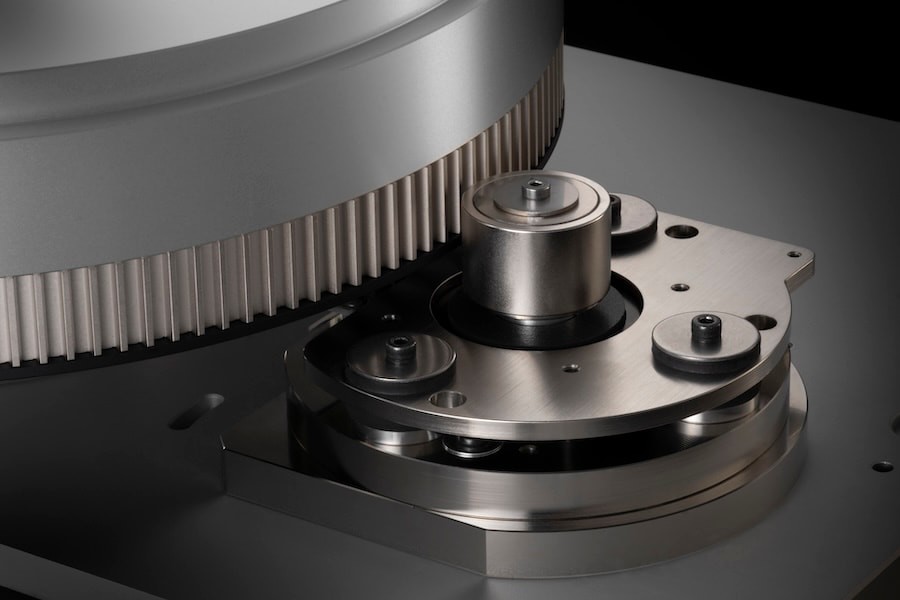
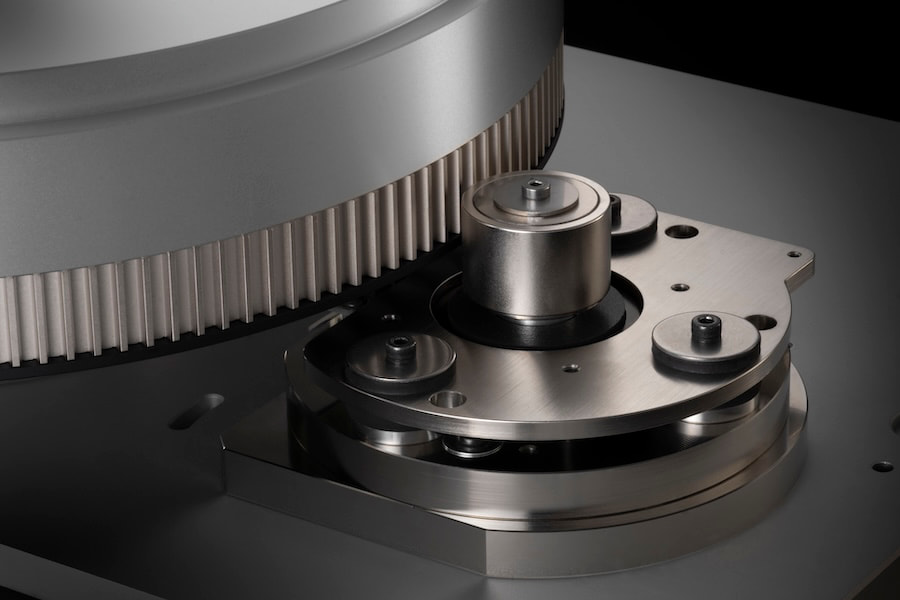
Esoteric mounts a dome-shaped magnetic driver with alternating north and south poles to the motor. Around the lower circumference of the non-magnetic aluminum platter is a soft-iron induction wheel. As the magnetic driver rotates beside it, magnetic induction causes the platter to rotate synchronously without the motor or drive assembly physically touching the platter.
The objective is to isolate the platter from motor vibration and rumble while retaining sufficient torque and precise control over rotational speed. Esoteric says it spent more than five years developing and commercializing the system, which is now patented.
That is the genuinely interesting part of the T-01. There is no belt to stretch or replace and the motor is not mechanically coupled to the platter in the conventional sense.
But we would stop short of suggesting that Esoteric invented contactless magnetic turntable drive technology as a category. Clearaudio has used magnetic decoupling in products including the Master Innovation, where a belt-driven lower flywheel magnetically transfers rotation to the playback platter. Esoteric’s induction-based implementation is different, and remains extremely unusual, but magnetic isolation itself is not exclusive to Esoteric.
Magne-Float Takes Some Weight Off

The physical platter still weighs 13 kilograms, or almost 29 pounds, but Esoteric’s Magne-Float system uses opposing magnetic force to reduce the effective load on the spindle bearing to approximately 4 kilograms.
The T-01 still uses an inverted bearing, so this is not a completely levitated platter spinning in mid-air. The magnetic assistance reduces the load placed on that bearing, which is intended to lower friction and mechanical noise.
The Grandioso T1 applied the same basic idea to an even heavier 19-kilogram platter. The T-01 therefore looks less like an entirely new design philosophy and more like Esoteric figuring out how to package its flagship analog engineering in something that does not require quite as much floor space, hardware or financial anesthesia.

Smaller Than the Grandioso T1 Is Still Not Small
One of the biggest changes involves the motor architecture.
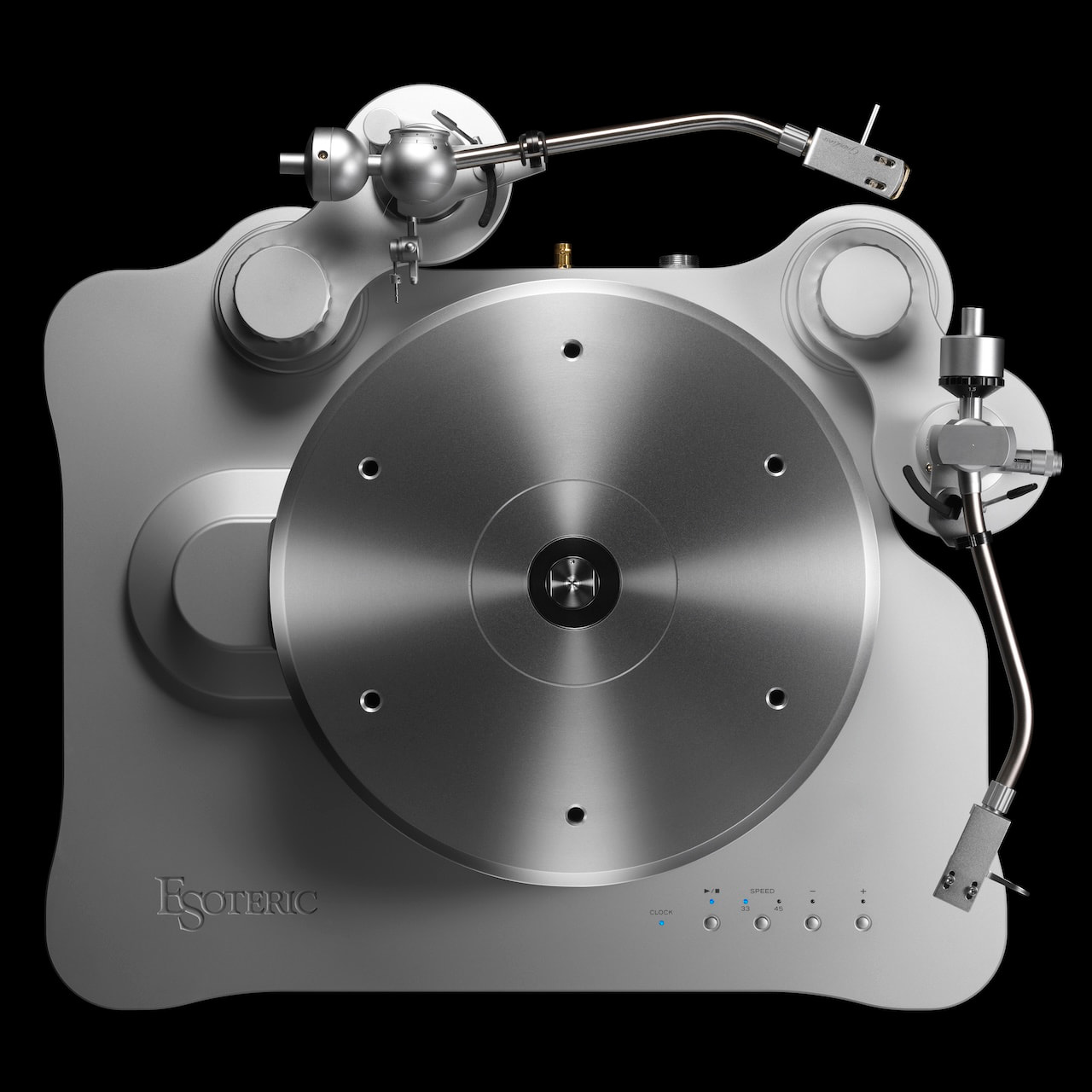
The Grandioso T1 uses a separate motor assembly, while the T-01 integrates its MagneDrive motor into the main chassis and houses it inside what Esoteric calls a Vibration Absorber Case. The power supply remains external, but it is a compact 7-kilogram unit rather than another imposing full-width component.
The turntable itself weighs 35 kilograms, including the 13-kilogram platter, so the complete T-01 and power supply combination comes in at approximately 42 kilograms, or almost 93 pounds. The chassis uses three layers of aluminum and MDF with a piano-lacquered center layer, while the feet combine a spike, spike pad and damper into a single isolation assembly.
Buy a strong rack. Your IKEA Kallax has suffered enough.

Yes, Your Turntable Can Use a 10MHz Clock
The T-01 includes Esoteric’s Master Sound Discrete Clock motor driver and accepts an external 10MHz reference clock through a 50-ohm BNC input. It can therefore be synchronized with Esoteric’s G-01XD or G-05 master clocks.
Yes, Esoteric has found a way to make a turntable care about an external 10MHz clock. Anyone familiar with the company’s digital products should be completely unsurprised.
Whether adding an external reference clock produces an audible improvement over the T-01’s internal motor control is something we would want to test rather than accept on faith. What is clear is that the feature allows an all-Esoteric system to share the company’s clocking architecture across both digital and analog playback.
The T-01 supports 33 1/3 and 45 RPM playback, offers ±12 percent speed adjustment in 0.1 percent increments and specifies wow and flutter at 0.06 percent W.R.M.S. Up to two tonearms can be installed with the appropriate arm bases.
How Does the T-01 Compare?
At $50,000 with its Esoteric tonearm, the T-01 lands in a rather interesting part of the ultra-high-end turntable market.
The Clearaudio Master Innovation Wood starts around $37,500 in the U.S. without a tonearm and is probably the most interesting comparison from an engineering perspective. Its belt-driven architecture uses magnetic decoupling between its flywheel and platter, along with Clearaudio’s Ceramic Magnetic Bearing and optical speed control. Similar objective; very different execution.
The TechDAS Air Force III Premium, currently listed around $42,525, attacks mechanical isolation from another direction entirely. Its massive 29-kilogram platter rides on an air bearing, the record is held flat using vacuum pressure, and an external synchronous motor drives the platter by belt. It is a far more complex mechanical ecosystem but arguably one of the T-01’s most obvious Japanese competitors.
VPI’s Titan Direct sits above the Esoteric at $64,000 and combines magnetic direct drive with air-suspension isolation and support for as many as three tonearms. It represents the American answer to the same basic problem: eliminate as much unwanted mechanical behavior as possible and control platter rotation with extreme precision.
Then there is the SME Model 60, which arrived in North America at $71,900 with its Series VA tonearm. SME uses a sophisticated belt-drive system, electronic speed controller, suspended chassis and separate power supply. It is more expensive, but anyone contemplating a $50,000 Esoteric is unlikely to stop comparison shopping because another contender costs twenty grand more. That ship left the marina several components ago.
The other competitor is sitting inside Esoteric’s own catalog. The Grandioso T1 was priced at $80,000 with its TA-9D tonearm when reviewed in 2023, making the T-01 roughly $30,000 less while retaining MagneDrive, Magne-Float and 10MHz clock capability.

The Bottom Line
The Esoteric T-01 is not unique because nobody else has experimented with magnetic isolation, oversized platters or elaborate speed control. Clearaudio, TechDAS, SME, VPI and others have been attacking those problems for years with very different engineering solutions.
What makes the T-01 interesting is that Esoteric has taken the defining technology of the Grandioso T1 — its patented induction-based MagneDrive system — and engineered it into a considerably less complicated and less expensive platform without abandoning Magne-Float, external clock synchronization, an outboard power supply or multiple tonearm capability.
At $50,000 with the TA-9D tonearm, this remains a turntable for a very small group of vinyl listeners with equally ambitious cartridges, phono stages and systems. But compared with the Grandioso T1, the T-01 is easier to install, considerably less expensive and still unlike almost anything else in its price range.
Apparently $50,000 is what passes for Esoteric becoming practical.

Price & Availability
The Esoteric T-01 will begin shipping internationally at the end of September 2026.
- T-01 with tonearm: $50,000 USD / €48,000 / £41,999
- T-01AL without tonearm: $46,000 USD / €45,000 / £38,999
A phono cartridge is not included. Ouch.
Related Reading:
Continue Reading

OpenAI has released a plugin for the integration.

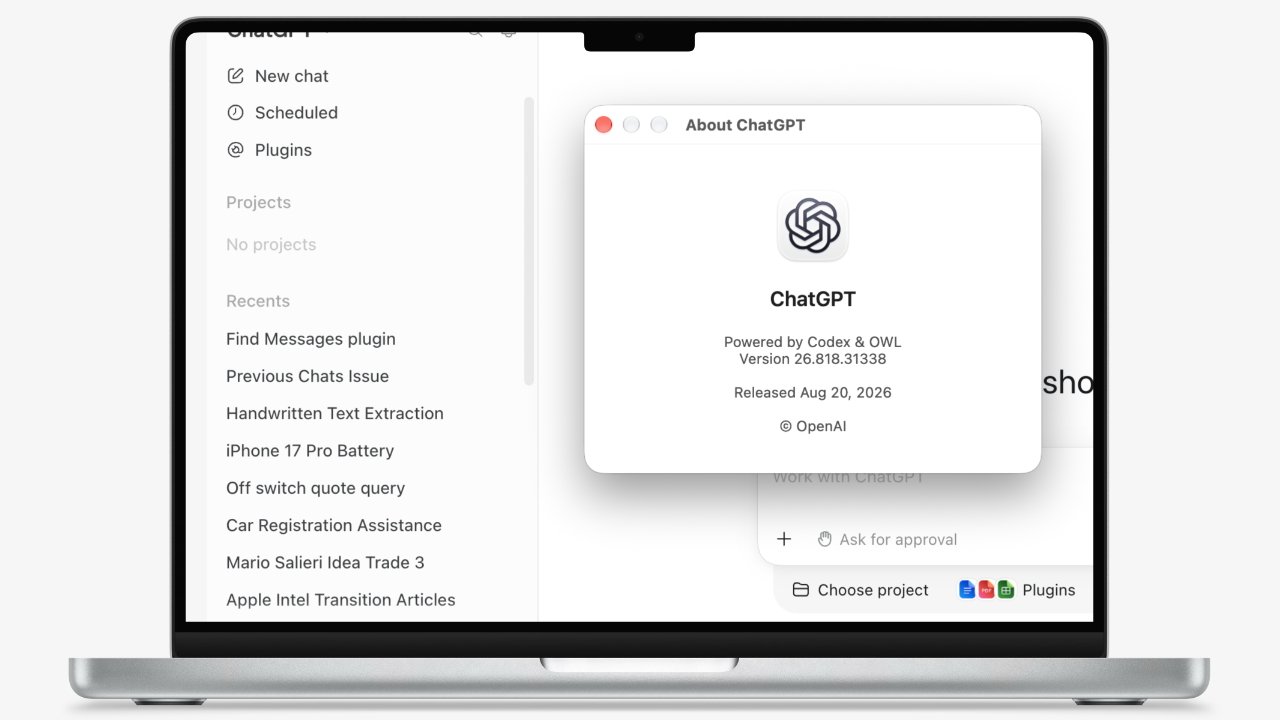
OpenAI has launched a plugin for the Apple Messages app, and as Bloomberg notes, it could raise privacy and security concerns. At the moment, it’s only available to ChatGPT Work and Codex users on Mac, allowing them to search messages and even draft and send replies through the chatbot on their desktop. In the example OpenAI posted, the user asked ChatGPT to look for conversations they’d missed the day before in their Messages app. They then used the chatbot to write and send their reply.
The feature is, at least, opt-in. Bloomberg says users will have to do several things to allow the plugin to work. First, they’ll have to allow ChatGPT to access their Mac’s on-device Messages history when the permissions screen pops up during the setup process. They’ll also be prompted to change their privacy preferences in Mac’s System Settings to give ChatGPT Full Disk Access. In addition, they’ll have to give ChatGPT access to the names of their contacts and to automation tools. In other words, nobody would be installing the plugin by accident.
It’s not quite clear if OpenAI worked with Apple to develop the plugin, but the latter has history of cutting off third parties’ access to its services if they didn’t get permission. In 2024, for instance, it kept disabling Beeper Mini chat app’s access to iMessage until Beeper gave up rolling out fixes that re-enabled the integration. It’s also worth noting that Apple and OpenAI aren’t quite on the best of terms recently. The iPhone-maker sued OpenAI in July, accusing it of trade secret theft. It claimed that OpenAI specifically hired its employees away with the purpose of obtaining confidential company information.

The Memory is a glitchy, fragmented one — an auto-generated slideshow of my first few years living in New York. But because my phone was stolen, the photos in the slideshow are a random assortment of mislabeled JPEGs and grainy images I’d saved from Facebook, all somehow imported from my hard drive to my camera roll at some point and set to sentimental music.
I used to get mad that I didn’t back up my actual, treasured photos on a hard drive. But now, I just wish I’d printed out the best ones and put them in a box. That kind of thing can survive for generations.
We should all be printing our photos. I’m not just talking about converting your camera roll into a stack of 4×6-inch glossy pieces of paper, either. It’s actually easier than ever to turn the gigabytes of images we carry around in our pockets into physical objects, like albums and books and frames, the kind we can gather around to pore over and one day pass down to our children. Even individual prints that we touch and hold can tell a story in a way that pixel on a screen never could. Real photos are effectively embodied memories that we can casually encounter as we go about our daily lives. And it’s not just because an algorithm decided to send us a push notification to go look at them, either.
“Printing photos in any form, whether it’s to hang on a wall or to hold in our hands, is effortful,” Brianna Marshall, dean of the Steely Library at Northern Kentucky University, told me. “It requires us to take action to experience the memories in more meaningful ways than an occasional passive scroll of our photo roll.”
In a way, I owe a lot to that phone thief. It was only after losing so many photos that I started paying closer attention to how I managed the new ones I’m taking, which are thankfully backed up in multiple places in the cloud. I’ve made some photo books and some albums of big events, like my wedding. I have a box with some prints inside, although there should be more.
I now have a couple of kids who do many cute things every day, and my camera roll is getting more crowded. My walls are looking increasingly bare. I know I should be printing even more photos, and you probably should, too. When we commit to a process around curating and printing our photos, we’re also creating a ritual around preserving our memories and giving ourselves a chance to interact with them for years or even decades to come. This is so much more rewarding than taking thousands of pictures indiscriminately and then just uploading a few to Instagram periodically and hoping for some likes.
Why your camera roll isn’t a family history
There’s something magical about sitting down with a family photo album. My mom has made them obsessively for decades, and any time I’m home, I end up pulling one off the shelf. Each page is carefully curated to tell a story about a moment — a dance recital, a vacation, a holiday — and taken together, the album tells a story about our lives at that time. She’s made albums about her own childhood, and she’s started some for my own children. Collectively, they’re a family history that we can gather around.
As much as Apple, Google, and other tech companies have tried, you can’t replicate that feeling with an app. There are a ton of upsides when it comes to backing up your photos digitally, including the ability to access them from anywhere or quickly share images or entire albums. However, cloud storage platforms tend to compress your photos, harming image quality. They can also change their terms of service or their business model at any time, potentially leaving you to pay a monthly fee or face losing your photos forever.
On a more basic level, though, something is lost when you’re scrolling through pictures on a smartphone, where your inbox or your TikTok feed is just a swipe away. The images “seem a little bit more removed and a little less approachable,” said Debra Norris, professor of photograph conservation at the University of Delaware. “It becomes a point of conversation and enjoyment and accessibility that doesn’t exist when an image is on the phone.”
Your phone is full of distractions, yes, but it’s also probably just overflowing with photos. My camera roll has nearly 30,000 images, which means that finding one specific shot from a certain day on a vacation a few years ago is more of a chore than a point of conversation. Encountering old photos serendipitously would be utterly impossible if not for — I kind of hate to say it — the help of features like iPhone Memories. This software can help resurface some old photos, and that experience can be delightful.
Try taking things into your own hands, though. Rather than leaning back and letting AI decide which memories you’d like to remember, you can curate your photos as you take them, favoriting the good ones within a minute or two to help you separate the wheat from the chaff later. The end goal here might be printing the very best to put in a frame, an album, or even just a dedicated photo storage box. In doing so, you’re actually crafting the first draft of a visual family history. When you do ultimately print those photos (more on this in a moment), you’ll give that history a physical presence and create a sort of legacy.
“We can take so many photographs on these phones and yet a curated box of images that are especially meaningful, it’s magical really,” Norris said. “And it’s something that your children will save and treasure and share with their children, and that will continue.”
How to get the best photos off your phone
Once you get into the habit of curating your photos as you go, the actual printing part of the process is pretty easy. There are plenty of services that let you upload photos directly from your phone and will then print them in various sizes and ship them to your house or pick them up in a store (like CVS or Walgreens). Finding the right one will depend on your budget and your preferences. Nations Photo Lab and Printique are two that get rave reviews for quality prints and easy uploads. I’ve personally used Shutterfly (which offers discounts to Costco and Amazon Prime members) and Mpix, which are popular and affordable enough, but I do think the price is reflected in the quality.
You may also want to print your own photos, which can be limited and liberating at the same time. I have not tested out any dedicated photo printers, but I would trust the reviews of the good gadget bloggers at Wirecutter and Rtings, who have. You can expect to spend a few hundred bucks on the printer alone if you go this route.
Then there are the album makers. Many companies that will print your photos, including the four I just mentioned, will also print albums and photobooks. Because the layout process for making these objects is both essential and time-consuming, you might be better off going with a company that specializes in albums and books. I used Artifact Uprising to make a book of my wedding photos and loved the results, although the price tag was steep. Mixbook is the service I’d like to check out next.
You could also just get an old-fashioned photo album and put the prints directly in it, as my mom does. This is as easy as buying an empty photo album or scrapbook and filling it with your prints. You want something that is, at minimum, acid-free and lignin-free, and should opt for uncoated polyester, polyethylene, or polypropylene sleeves for the sake of longevity. (In the United States, Gaylord Archival and University Products are top suppliers of these kinds of products to museums and hobbyists alike.) You can add newspaper clippings or ticket stubs or any other physical objects to tell a more complete story, something you definitely can’t do with your phone’s camera roll.
If you don’t want to go the album route, or you already have prints waiting to be transferred over, you should keep them in an acid-free archival storage box. Your finished photo books and albums also benefit from this treatment. (If you’re dealing with old photos or want to take extra measures, check out the Library of Congress’s guide to photo preservation.) You may also want to frame them, an old custom that has also never been easier in the digital age. I have a few things hanging on my wall that I framed through Framebridge, which will let you upload an image and receive a framed print. I’ve also heard good things about Level Frames, and one of my colleagues swears by Frame It Easy. Your local frame shop works too, of course, or you could grab frames at flea markets, garage sales, and thrift stores.
Regardless of who actually prints or frames the prints, the most important thing when it comes to building a habit of curating and printing your photos is to find a process that works for you. If AI-powered tools like Apple Memories do a good enough job of finding the needles in the veritable haystack of pictures on your iPhone, that’s fantastic. Print those photos. Make a book with them. If you prefer favoriting good photos as soon as you take them or putting your best shots in a digital album at the end of every month, keep it up. Just set aside time to print some of those.
“My advice is always just to start somewhere, and not to let any guilt over what you did or didn’t do in the past stall you from moving forward,” Marshall said. “Save the photos that you treasure.”
Mac users can now give ChatGPT their entire Messages history and have it write texts. Hand OpenAI your house keys while you’re at it.
Since January 2026, users have been able to hand over all of their Apple Health data to OpenAI, in return for medical advice that can be dangerously wrong. Despite earning at least one more lawsuit because of that, OpenAI is pressing ahead, and has now chosen to take on Messages on the Mac.
A new Messages plugin for ChatGPT is intended to search your messages, which could be handy. It’s meant to summarize message threads, which could be a blessing.
Everyday conversations just got easier with the new Apple Messages plugin.
Search messages, catch up on conversations, draft and send replies— all with ChatGPT on your Mac.
Now available in ChatGPT Work and Codex on desktop. pic.twitter.com/nicfZMuxZc
— ChatGPT (@ChatGPT) August 20, 2026
But it’s also meant to write messages for you, because it’s arduous to type out six words and an emoji. OpenAI insists that it’s fine letting ChatGPT write your messages, ignoring the whole soulless aspect of that, because you have to approve a message before it’s sent.
Yet ChatGPT’s own video shows that there is an option to “Always allow sending to this chat.” So it appears that, no, you don’t have to approve each message.
Then according to Bloomberg, OpenAI noted that the plugin can only work if the user chooses to use it. The company further emphasized that this is all done on device, plus it does not create an index of users’ messages.
Yet reportedly during sign up to the plugin, ChatGPT notifies the user that it will access their on-device Messages history. So whether it builds an index or not, if you use the plugin, it has full access to everything you’ve sent on Messages.
And then under the right conditions, it can send Messages for you. So now you’re trusting all of that potentially private information to OpenAI and assuming it won’t do anything with it.
OpenAI would be one of the firms that ripped off all authors of all books in the world in order to train its AI, and then sell your information back to you.
Apple has not commented on OpenAI’s launch, but it may be significant that the plugin is for the Mac and not, as yet, the iPhone. OpenAI says that it uses AppleScript the Mac’s Accessibility features to perform these tasks, and there is no AppleScript for iPhone.
Whether or not Apple’s iOS privacy features would mean ChatGPT couldn’t take over Messages as it now can on the Mac, don’t use it. It is taking the privacy and security of Apple’s Messages, and potentially undoing all of that just to have the ability to quick search through messages.
That is genuinely a benefit, if you have enough Messages threads to make searching manually a chore. But if you do need this feature, you’re getting it anyway with the forthcoming Siri AI.

Nevada, get ready for the robotaxis.
The Nevada Transportation Authority unanimously approved three permits Thursday that will allow Tesla, Uber, and Waymo to operate commercial robotaxi services in Clark County, home to Las Vegas. Together, these permits would deploy up to 8,000 robotaxis across the county over the next 12 months.
Tesla’s permit allows it to deploy up to 5,000 robotaxis, while Waymo is allowed operate up to 1,000 autonomous vehicles over the next year. Uber was also approved for 1,000 robotaxis, which it will operate through partnerships with Hyundai subsidiary Motional and Zoox. Zoox already holds an autonomous vehicle network company permit that allows it to operate 100 robotaxis.
Whether these companies will be able to launch that many robotaxis is an unanswered question. Testimony from Tesla representatives and the other companies suggests the answer is no.
“The 5,000 has always been a ceiling for us,” said Eric Early, Tesla’s Cybercab chief engineer, during the meeting. “I don’t think we’ll be in a position by this time next year to deploy 5,000 vehicles, and it’s not [because of] the technology. … I think we would be extremely happy and satisfied if we could get ourselves up to 2,500, maybe a bit higher than that in the next year.”
Even if these three companies roll out only half of those totals, Clark County — and Las Vegas specifically — is shaping up to be a major robotaxi battleground, with Tesla, Uber (via its autonomous vehicle partners Motional and Zoox), and Waymo all competing for the same riders.
That kind of fast, large-scale robotaxi deployment is poised to change the city — and specifically its workforce. Depending on who you ask, these companies will either deliver a whole new category of jobs designed to maintain, charge, and clean these vehicles or will wipe out an entire category of workers: human taxi and gig drivers.
Representatives from the Livery Operators Association and local taxi companies opposed the permits, arguing the approvals move too far, too fast.
“These applications raise two grave concerns,” said Kimberly Maxson-Rushton, a lawyer representing the Livery Operators Association, at the hearing. “One deals with the oversaturation of the commercial transportation industry as a whole in Nevada,” she said. “And the second one deals with the overcrowding of the roadways, and specifically the Golden Triangle.”
The Golden Triangle, an area between the airport and Las Vegas Boulevard and the surrounding area, is where most of the AV testing has occurred to date. Motional is also testing in the downtown area and in a shopping district known as Town Square.
Uber has tried to position itself as the Goldilocks option in this fight, advocating for a hybrid approach in which ride-hailing networks are made up of humans and robotaxis. The company has even lobbied for a system that would require robotaxis to operate on a ride-hailing network that also uses human drivers, a stance that puts it at odds with Waymo and doubles as a hedge against its own autonomous ambitions falling short of Tesla’s or Waymo’s.
Uber made a similar pitch during the NTA meeting, noting that a hybrid approach would allow cities to gradually integrate vehicles to meet peak demand rather than flooding the market all at once.
When you purchase through links in our articles, we may earn a small commission. This doesn’t affect our editorial independence.

An old iPhone or iPad may have years of useful life left, but the wrong second act can turn aging software into a security risk. Here’s how to tell when it deserves a new job, a new owner, or a trip to the recycler.
 Apple devices can be repurposed
Most retired devices still have a working display, usable cameras and enough battery life for undemanding tasks. A clever project can keep that hardware out of a drawer, but novelty alone doesn’t make the project worthwhile.
Repurposing an old device can save money and postpone another purchase, but a second life isn’t automatically useful or responsible.
Using an iPad solely as an e-reader can provide real value with limited security exposure. An iPhone that no longer receives security updates shouldn’t stay signed into messages, banking apps, saved passwords, or smart-home controls.
Continue Reading on AppleInsider | Discuss on our Forums
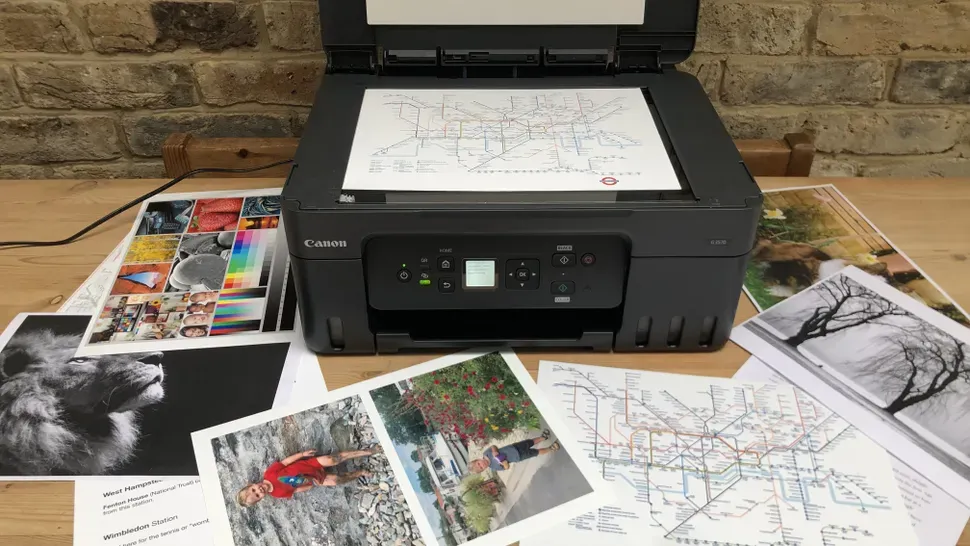
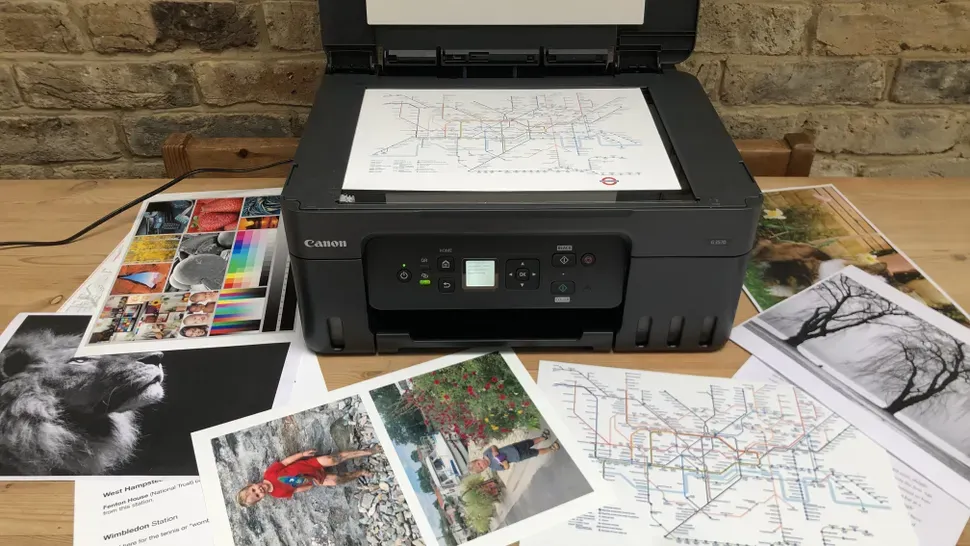
The Canon MegaTank G3270 is our number one budget ink tank printer, and an ideal back-to-school choice or office upgrade if you want to save money versus traditional inkjet cartridge replacements. Impressing us for its “satisfyingly crisp” text documents and vibrant photos, I was pleased to spot Canon’s MegaTank G3270 on sale for $160 (was $249) at Amazon.
Canon rates the included ink for up to 6,000 black-and-white or 7,700 color pages. It also estimates that the supplied ink could last for up to two years, although that of course depends on how much you print.
In the UK, this printer is called the Canon MegaTank G3570, which down to £178 (was £189) at Amazon. For some bizarre reason, the listing name is for Canon’s DSLR camera, but I’ve checked – it is a printer, and it’s sold by Amazon, not a third-party.
Why we recommend it
The real appeal isn’t just the purchase price, but how much printing you can potentially get from the ink supplied with it (and how much you’ll save compared to traditional inkjet cartridges).
In his four-star review, our senior printer editor Jim said: “Canon’s entry-level MegaTank AIO is aimed at the home office with few features, but lots of bottled ink and a very low running cost.”
He went on to add, “It’s only slightly larger than a cartridge-based equivalent and it can print on every kind of blank media from square photo paper to fabric patches. The scanner bed enables reliable digital copying, while the inbuilt Wi-Fi means you can print from your smartphone using Canon’s excellent companion app.”
For more top performers, including this MegaTank, see our guides to the best home printers and best ink tank printers.
Price context & historical value
Amazon’s $159.99 price is $89 below the usual $248.99, for which you get a printer, scanner and copier along with a full set of high-yield bottled ink.
It has been cheaper in the past though. We’ve seen it for as low as $109 last year, but even so this is still a very good price for the back-to-school season.
If you want to save on other units, see our guide to the best printer deals we’ve seen this week.
Should you buy it?
✅ Buy the Canon MegaTank G3270 if…
You regularly print at home and are tired of replacing expensive cartridges. It’s particularly well suited to families, students and home offices that need a straightforward machine for documents, schoolwork and occasional photos. Having scanning and copying built in is also very useful.
❌ Skip the Canon MegaTank G3270 if…
You regularly print large documents and need them finished quickly. Its 11ppm black and 6ppm color speeds are adequate for home use, but this isn’t a high-speed office printer designed to churn through large workloads.
The Catch: What to know before you buy
Automatic two-sided printing is the biggest feature missing from the G3270. That’s worth considering if you regularly produce lengthy documents, as duplex pages require some manual intervention.
There’s no automatic document feeder either, so scanning or copying a stack of pages means placing them on the flatbed one at a time.
Tech
Netflix Drops Trailers for ‘Blue Eye Samurai’ Season 2, Cyberpunk: Edgerunners 2 and More at Anime NYC 2026

Netflix closed out Anime NYC’s first night on Thursday, entertaining the crowd with a crop of guests and announcements about its upcoming anime slate. The convention is now in full swing and will run from Thursday through Sunday, packing in panels, sneak peeks, exhibits and screenings.
Are you ready for more Cyberpunk Edgerunners, Sakamoto Days and Blue Eye Samurai? These titles and more are coming to the streamer, and we’ve got you covered with teasers, new photos and more.
Here’s everything you need to know about Netflix’s announcements Thursday night.
Cyberpunk: Edgerunners 2

The uber-popular series will return for its second season on Oct. 20, four years after it made its debut on Netflix. This standalone installment will have 10 episodes and take fans back into the Cyberpunk 2077 universe, so prepare for more action, violence and a revenge-y plot. Though Netflix dropped some photos back in June, you can peep the official teaser and a new set of images below.
Blue Eye Samurai Season 2 release date

Follow Mizu to London when Blue Eye Samurai returns for season 2 in January 2027, continuing her revenge stroll and crossing names off her list. Netflix shared a small teaser with the launch information, so be sure to check back for details on when the six-episode premieres. See trailer here.
Bass x Machina
 Netflix
This original, new steampunk-style anime has a talented voice cast that includes Janelle Monáe, Brian Tyree Henry, Tati Gabrielle and Cree Summer. The story, set in the West, is about a father on a justice streak and features supernatural and sci-fi elements, bloodshed and what’s expected to be a really good soundtrack. It’s due out on Netflix on Nov. 3. See trailer here.
Fool Night
 Netflix
About a month ago, Netflix gave fans a tease of the adaptation of Kasumi Yasuda’s manga, Fool Night, and on Thursday, we got to see a little more. The score and glowy visuals are setting this up to be one of the most anticipated series of the season. If you’re unfamiliar, here’s an official synopsis from Netflix:
“Transfloration— a technology that implants seeds into the bodies of those near death, transforming them into plants. It is the desperate measure humanity has chosen to ensure its survival. In a distant future where thick clouds cover the sky, trapping Earth in constant winter and night, most of the planet’s vegetation has withered away. Facing a serious oxygen shortage, humanity has built a society that relies on the meager amount of oxygen provided by Transfloration. A young man, Toshiro Kamiya, lives in poverty and works hard to pay taxes, cover living expenses, and afford medication for his mentally ill mother. However, the cruel reality around him gradually eats away at his hope. In this dark world full of despair, he chooses the path of the “Spiriflor” — the plants that humans transform into.“
Sakamoto Days, Season 2
Everyone’s favorite retired-but-unretired hitman, Taro Sakamoto, is back on the scene to dig up intel on Slur — and much more. Season 2 of Sakamoto Days will arrive in January 2027, but until then, check out this trailer to get a look at the players in this new installment. See trailer here.
Lego One Piece
 Netflix
This may not feel like anime, but if you like Lego’s cinematic universe and anime, you’ll get this mashup of Lego One Piece (just look at Chopper!). This two-part special is a remixed version of what viewers saw in seasons 1 and 2 of Netflix’s live-action One Piece series, narrated by Usopp (Jacob Romero). You can stream it on Sept. 29. See trailer here.
The One Piece
Another adaptation of the beloved manga, The One Piece, is a Netflix original anime produced in collaboration with WIT Studio, Shueisha, Fuji Television Network, and Toei Animation. The streamer said season 1 will cover the East Blue Saga, based on the first 50 chapters. Look for its debut in February 2027.
 Netflix



Microsoft has patched a maximum-severity vulnerability in the Entra ID identity and access management (IAM) platform that has been exploited in attacks.
Formerly known as Azure Active Directory (or Azure AD), it is a cloud-based IAM platform that provides Microsoft 365, Azure, or Dynamics CRM Online customers with authentication, policy enforcement, and protection across apps and resources.
Tracked as CVE-2026-69836, this critical security flaw was discovered by Microsoft principal security engineer Robert Fitzpatrick, and it allowed threat actors with no privileges to gain code execution in low-complexity attacks.

Microsoft says exploit code for CVE-2026-69836 is not yet available online and added that users don’t need to take any action since the flaw has already been fully patched.
“Deserialization of untrusted data in Microsoft Entra ID allows an unauthorized attacker to execute code over a network,” Microsoft said in a security advisory published on Thursday.
“This vulnerability has already been fully mitigated by Microsoft. There is no action for users of this service to take. The purpose of this CVE is to provide further transparency.”
The company didn’t share any additional information, and a Microsoft spokesperson was not immediately available for comment when BleepingComputer asked for more details on attacks exploiting the CVE-2026-69836 flaw.
Yesterday, Microsoft addressed four more maximum severity flaws, three of them allowing unauthenticated attackers to escalate privileges remotely on Azure Arc (CVE-2026-65816 and CVE-2026-69555) and Exchange Online (CVE-2026-65801). The fourth, tracked as CVE-2026-65770, enabled remote code execution on an Azure Managed Instance for Apache Cassandra.
In September 2025, it patched another critical Entra ID privilege escalation flaw (CVE-2025-55241) reported by Outsider Security security researcher Dirk-jan Mollema that enabled attackers to gain complete access to the Microsoft Entra ID tenant of every company in the world.
On Friday, CISA also tagged a critical-severity remote code execution (RCE) flaw in the Windows Internet Key Exchange (IKE) Service Extensions component as actively exploited.

Overall prevention scores can hide what happens after initial access. Once attackers are using valid credentials, prevention drops sharply.
The Blue Report 2026 measures defenses technique by technique across 338 million simulations run in customer production environments.

Siliconops.ai has launched siliconcloud.in, a sovereign cloud platform designed for Indian enterprises. This platform has been developed to enable companies to retain their data within India while better managing it. It is meant for companies that require cloud services with security and reliability while meeting data residency and regulatory requirements.
Siliconcloud.in is designed for regulated industries such as banking, healthcare, pharmaceuticals, government, and manufacturing. Siliconops.ai developed the platform in partnership with Nutanix and operates it through data centers in India. This enables organizations to ensure that their data remains inside the country. These services offered by the platform include compute services, backup, disaster recovery, and managed cloud services. With the help of such services, organizations can migrate their IT workloads to cloud infrastructure while keeping their data within India. This can also support their data residency and operational requirements.
Siliconops.ai’s Experience Behind siliconcloud.in
Siliconops.ai has been operating in the technology industry for nearly four decades. During this time, the company has built and managed technology environments for Indian enterprises. Its experience covers the needs of businesses that depend on reliable and secure IT infrastructure.
The launch of siliconcloud.in takes advantage of this experience with enterprise technology. This is because Siliconops.ai is now applying the same expertise to sovereign cloud services in India. With siliconcloud.in, Siliconops.ai is expanding its presence in India’s growing sovereign cloud market.
Speaking about the launch, Shyam Gaidhane, CEO of Siliconops, highlighted the importance of data control for enterprises. He said, “In the age of AI, data has become one of an enterprise’s most valuable assets. The conversation can no longer stop at where data resides; it must also address who controls it.”
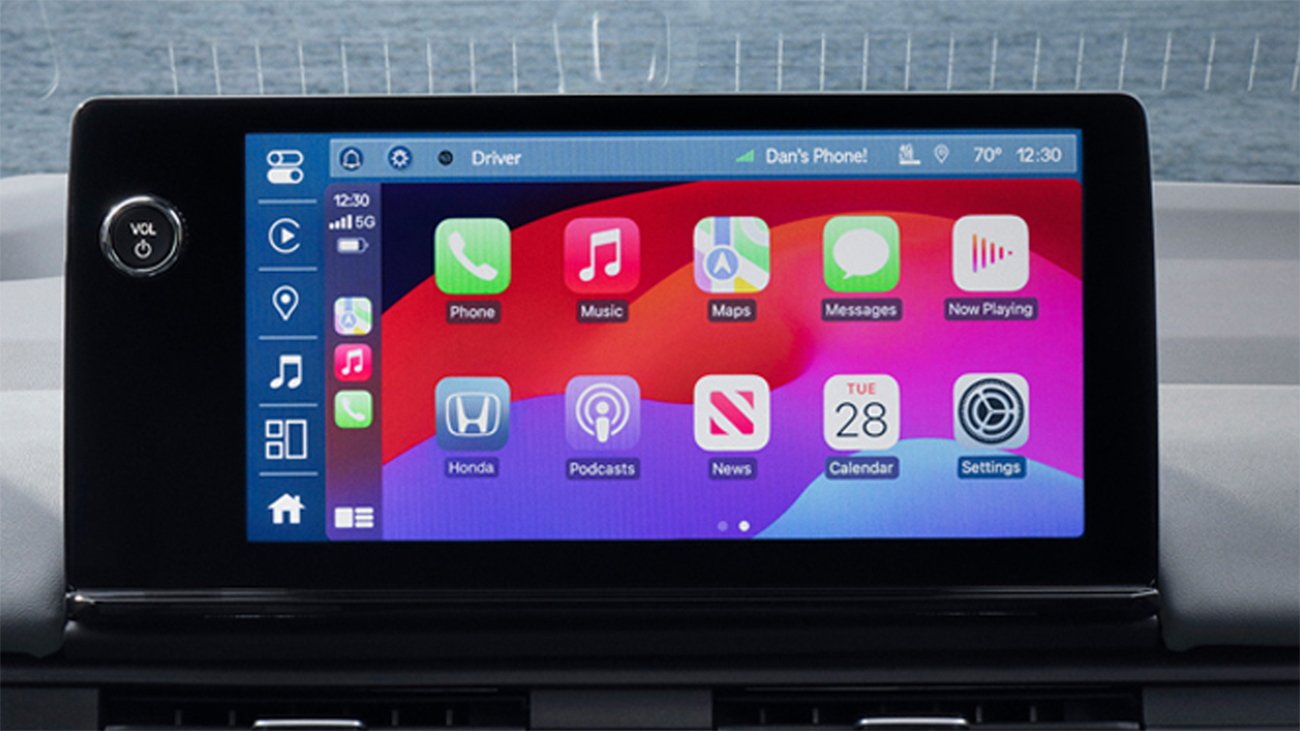
GM’s decision to drop CarPlay is being put to the test, with a nearly identical CarPlay version outselling its Chevy counterpart by an increasingly wide margin.
In 2023, General Motors announced it wouldn’t include CarPlay in its electric vehicles going forward. There was notable public backlash.
Then, in 2025, GM CEO Mary Barra announced that the company would remove Apple CarPlay and Android Auto from all vehicles. Instead, the company would use an in-house infotainment system built on Android Automotive OS.
The company called the decision “Jobsian,” patting itself on the back, and claiming that this was a win for privacy. However, what it really did was make a move to own the digital relationship with its customers.
Now, a year later, sales data has finally offered a glimpse into how that panned out for GM. Matthew Haughey, a UX/UI designer, compared the sales data between two similar vehicles on his blog, A Whole Lotta Nothing.
The first vehicle is the Chevy Blazer EV, a mid-market electric vehicle geared towards the average buyer. The second is Honda’s Prologue EV.
The Prologue EV was made in partnership between Honda and Chevrolet, as Honda didn’t have a particularly robust EV program. As a result, the Prologue EV is essentially a Chevy Blazer EV with a Honda sticker on it.
But there are two crucial differences.
The first is that Honda’s Prologue EV has CarPlay. Chevy’s Blazer EV does not.
This resulted in an unintentional A/B test between the vehicles over the last few years. And the results were interesting.
The 2024 Chevy Blazer shipped without CarPlay. That year, Honda’s Prologue EV outsold the Blazer EV by 43%.
In 2025, the Prologue EV outsold the Blazer EV by 73%. In the first six months of 2026, the Prologue EV has outsold the Blazer EV by more than 165%.
People are buying the Honda Prologue EV more than one and a half times as much as the vehicle it’s based on.
You may be wondering what the second crucial difference is.
Well, the Honda is cheaper, too, which probably doesn’t hurt its sales. Especially in a time where everything seems to be getting more expensive.
A base model Honda 2026 Prologue EV EX boasts an MSRP of $39,900. Its Chevy counterpart, the Chevy 2026 Blazer EV LT, has an MSRP of $44,700.
That’s a difference of about 11%. Not insignificant, and obviously, dealership offers, trade-ins, and brand allegiance can all make that 11% more or less significant to your average buyer. In some quick checks online, street prices between the two were about the same, and generally within a few hundred dollars.
Convenience is king
Haughey makes it clear early on in the article that he’s a fan of CarPlay, saying that he believes it to be a safer hands-free option. The thing is, Haughey isn’t alone.
People like CarPlay, if for no other reason than they really dislike infotainment systems as a whole. A J.D. Power study showed that CarPlay users had notably higher satisfaction levels compared to built-ins, and still ranked above Android Auto.
Again, this may be less about CarPlay and more about infotainment systems. If you’ve ever had to use a vehicle’s built-in infotainment system, it’s a safe bet that you already know that.
Automotive makers are wildly out of touch with what their users want. The answer isn’t innovation or flashy design: it’s simplicity.
Ultimately, the reason people like CarPlay, or even Android Auto, is because it already mirrors something they use daily. It’s an interface that is familiar, no need to navigate winding mazes of submenus.
If you want to play music, it’s a tap or two away. If you want to call someone, you have a familiar voice assistant who can do it quickly and cleanly without you needing to take your eyes off the road.
Removing that option in favor of something unfamiliar, and likely overly complex, isn’t going to win over your customer base. If anything, I’d expect it to do the opposite.

Entertainment22 seconds ago
Chuck Liddell Accuses Ex-Wife of Abducting Their Daughter

Fashion4 minutes ago
Frugal Friday’s Workwear Report: Floral Puff-Sleeve Split-Neck Top

Sports4 minutes ago
Newcastle Knights vs Manly Sea Eagles Tips, Odds, Teams & Predictions – NRL Round 25 2026

Fashion1 month ago
Weekend Open Thread – Corporette.com

Fashion4 weeks ago
Weekend Open Thread: Brooks Brothers

NewsBeat1 month ago
London Mayor Sadiq Khan handed a peerage by Keir Starmer alongside 15 other Labour figures… just days before the PM leaves No10

News Videos30 minutes ago
FY – Money Dance – Official Music Video

News Videos59 minutes ago
What The FED And BiS Just Said About Crypto Is SHOCKING!!! Clarity News, ETH & ADA News! BTC TA!?

News Videos1 hour ago
GFR 2017 Class | UPSC Principal & Vice Principal General Financial Rules | Delhi Principal Vacancy
-

 Fashion7 days ago
Weekend Open Thread: Ann Taylor
-

 Sports6 days ago
Birmingham 2026: Day 6 Timetable for Irish Athletes
-
 NewsBeat6 days ago
Myanmar says over 300,000 Rohingya refugees verified for repatriation as exodus enters ninth year
-

 Business3 days ago
SMA Solar Technology AG (SMTGY) Q2 2026 Earnings Call Transcript
-

 Politics6 days ago
SEQ Code: The Three Letter Boarding Pass Code That Could Give You The Worst Seat
-

 Crypto World6 days ago
Pi Network Protocol 27 endgame: last upgrade before what?
-

 Tech3 days ago
Qwen3.8-27B runs frontier-class coding agents and reasoning locally, no cloud API required
-

 Crypto World4 days ago
OCC Greenlights Trump Family Crypto Firm for Trust Charter
-

 Tech6 days ago
Every fusion startup that has raised over $100M
-
 Entertainment6 days ago
Marvel Studios Reveals New X-Men Cast Including Adam Driver and Sadie Sink
-
 Business6 days ago
Monarch Mutual Fund set to enter MF space with maiden overnight fund; files draft with Sebi
-

 Fashion7 days ago
Weekly News Update, 8.14.26 – Corporette.com
-
 Fashion7 days ago
Silver bangles for women – Newbridge Silverware
-

 Business6 days ago
Facebook Down Now? Users Report Login And Loading Problems As Outage Trackers Monitor Ongoing Issues
-

 Business6 days ago
Cristiano Ronaldo’s Secret Wedding Deepens As Presenter Claims Family Learned ’30 Seconds’ Before
-

 News Videos1 day ago
Don’t Leave Your Financial Future To Chance | August 19, 2026
-

 Fashion7 days ago
Cart Confidential Vol. 44 – Julia Berolzheimer
-

 Crypto World4 days ago
NAVI Prime launches institutional lending framework on Sui
-

 Crypto World5 days ago
Data of 54K Wallet Users Leaked, Clarity Odds Just 10%: Hodler’s Digest, Aug. 16
-
 Fashion7 days ago
knitwear for women sale – up to 50% off
You must be logged in to post a comment Login