
Connect with us
DAPA Banner
DAPA Coin
DAPA
COIN PAYMENT ASSET
PRIVACY · BLOCKDAG · HOMOMORPHIC ENCRYPTION · RUST
ElGamal Encrypted MINE DAPA
🚫 GENESIS SOLD OUT
DAPAPAY COMING

Tech

Etzioni on AI: What the World Cup tells us about the best roles for humans and machines

Published

on

Pregame ceremonies in Seattle on June 19, 2026, before the U.S.-Australia World Cup Group D match. (GeekWire Photo / John Cook)

In soccer, a single blown offside call can decide who advances and who goes home. But what can you do? Referees are only human.

Well, the 2026 World Cup has put computer vision and AI on the officiating crew: video review, a sensor inside the ball, semi-automated offside calls, cameras bolted into every rafter. And the tech has already decided a goal.

On June 15 in Monterrey, Sweden were busy thrashing Tunisia when Mattias Svanberg came off the bench and scored with his first touch. The linesman’s flag shot up. Offside. The goal was gone, until it wasn’t. Video review handed it back, because the ball itself had registered a touch the human eye missed: a faint flick off Alexander Isak that reset the play and left Svanberg onside. Yet the cameras missed the flick. The sensor inside the ball caught it.

How does a ball overrule a linesman? Start with what FIFA has actually wired into the tournament. Sony’s Hawk-Eye underpins the video review, the goal-line decisions, the semi-automated offside system, and a “last touch” feature that settles who knocked the ball out for a corner.

Chenliang Xu, a computer-vision researcher at the University of Rochester, told the university’s news service it’s “a very sophisticated system that glues together multiple computer vision techniques.” Underneath, that means calibrated cameras, models trained to spot the ball and the players and their poses, and a thin layer of logic that decides when a human should take a look. 

Advertisement

Player and ball tracking run on neural networks trained on millions of labeled images, the same lineage of models behind face unlock and the perception stack in a self-driving car.

Xu compares the training to “teaching a child how to recognize things”: feed a model enough examples and it learns what matters. Sixteen cameras ring each stadium, because a single angle can be blocked or fooled, and many angles can be triangulated into a three-dimensional picture of the play. It works the way your eyes do.

“If you block one of your eyes,” Xu says, “it’s very hard to perceive depth.” Two eyes recover what one eye cannot. So do 16 cameras. The reconstruction lands in seconds, and a person signs off.

How is it so fast? The system is narrow. According to FIFA, the cameras throw off more than 150 million tracking points per match, more data than any all-purpose model could process in real time. The networks are tuned for one job, recognizing players and a ball, and stripped of everything else, which is precisely what makes them quick.

Advertisement

The narrowness is also a confession. The system measures the one thing a camera and a sensor can measure cleanly, a body’s position at the instant the ball is struck, and it stays out of the call that starts most arguments: whether an offside player was actually interfering with play. The machine gets the measurement. The referee keeps the judgment. A good reminder that currently AI is Assistive Intelligence, not more.

@media (max-width: 600px) {
aside.callout { float:none !important; max-width:100% !important; margin-left:0 !important; margin-right:0 !important; }
aside.callout .callout-img { display:none !important; }
}

But the quietest AI at this World Cup isn’t on the broadcast.

A torn hamstring can end a player’s World Cup, and a contender’s with it. Long before kickoff, clubs pour the data from GPS vests and motion sensors, the gear sold by firms like Catapult and Zone7, into models that flag when a player’s accumulated workload is bending toward injury, sometimes before the athlete feels a thing. It produces no spike on a graphic and no slow-motion replay. It produces a number that tells a coach to rest a hamstring for a day.

The cameras get the highlight, but the hamstring monitor keeps the players from being, well, hamstrung.

Advertisement

Source link

Continue Reading
1 Comment

1 Comment

  1. Pingback: How AI and Sensors Reshape the 2026 World Cup Experience - Artiverse

You must be logged in to post a comment Login

Leave a Reply

Tech

Microsoft wants Windows 11 and your phone to become best friends

Published

on

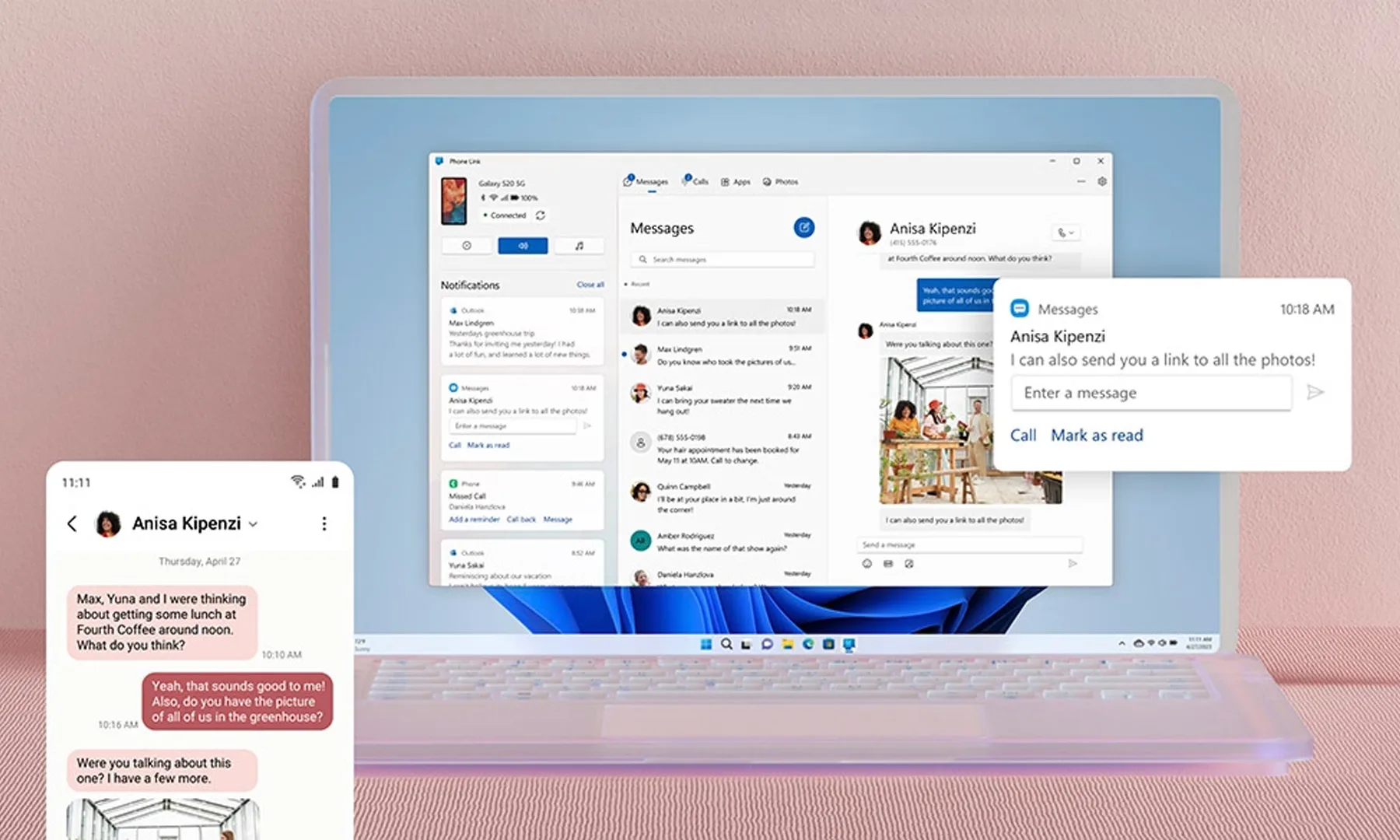
For years, Phone Link has felt like that one app everyone knows exists but rarely remembers to open. Microsoft apparently wants to change that. According to a report from Windows Central, the company is working on a major overhaul of how smartphones integrate with Windows 11, making phones feel like a native part of the operating system instead of something users access through a separate app.

Phone Link is coming out of hiding

One of the biggest changes reportedly involves the Phone Companion panel in the Start menu. Instead of simply showing basic device information, Microsoft is said to be expanding it to display recent phone activity that users can scroll through without opening Phone Link. Hovering over these activities could even reveal additional details, such as an entire message or photo preview.

Microsoft is also testing a brand-new smartphone flyout in the Windows 11 system tray. Whenever a connected phone is nearby, a dedicated phone icon will appear next to the Wi-Fi and battery indicators. Clicking it would open quick controls for features such as Do Not Disturb, vibrate mode, and find phone settings, while also showing battery level and connection status. Perhaps the neatest addition is support for dragging files directly onto the phone icon, instantly transferring them to the connected device.

Clipboard history, messages, and a more connected PC

Microsoft isn’t stopping there. The company is also exploring clipboard history syncing between Windows 11 and smartphones using the native Windows Clipboard feature. While clipboard sync already exists today, it only remembers the last copied item. The new approach would reportedly synchronize an entire clipboard history, allowing users to access a synced list of previously copied text and content across both devices.

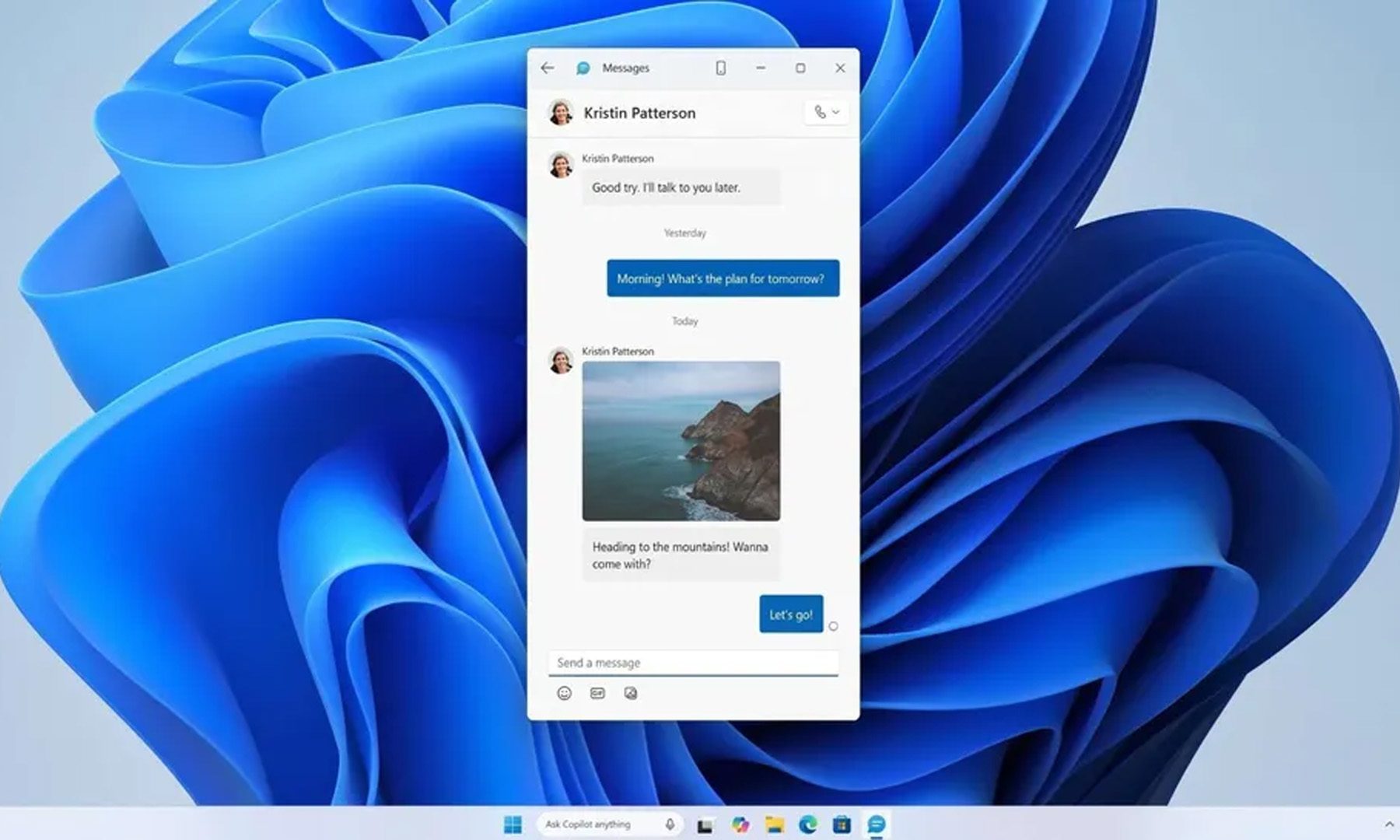
Another interesting addition is a dedicated Messages app for Windows 11. Rather than living inside Phone Link, SMS conversations would get their own standalone application that can be pinned to and launched from the Start menu, making texting from a PC feel much more like using a native Windows experience.

According to the report, all of these features are currently being explored and prototyped internally, meaning there’s no guarantee they’ll all ship as described. Microsoft is expected to gather feedback from Windows Insiders before committing to shipping anything concrete into future Windows 11 updates.

Advertisement

Windows is finally embracing the smartphone era

If all of this sounds familiar, that’s because Microsoft has been moving in this direction for a while. Windows 11 already lets users browse their phone’s storage directly from File Explorer and even use supported smartphones as wireless webcams. The reported changes build on that foundation by making smartphone features feel less like an add-on and more like they’re baked directly into the Windows UX shell.

The funny thing is, Microsoft spent years trying to convince people to buy Windows Phones. That obviously didn’t work out. Now, instead of fighting Android and the iPhone, it’s embracing them, and honestly, that might be the smarter strategy. If these features arrive as described, Windows 11 could finally make the jump between PC and phone feel almost invisible.

Source link

Advertisement
Continue Reading

Tech

Hackaday Links: July 12, 2026

Published

on

Although we’d rather bring you news of clever modifications and repairs down on the farm, more often than not, the name “John Deere” has appeared on the pages of Hackaday because of their opposition to farmers actually being able to work on the machines their livelihoods depend on. But thanks to a settlement reached between the company and the Federal Trade Commission this week, farmers seem to have been handed a much-needed win in the Right to Repair battle.

When a lawsuit against a company ends in a settlement, it usually means spending money they would rather pay than go to court. Indeed, earlier cases against John Deere have resulted in plenty of checks being written. But this time around, the FTC agreement requires Deere to make its diagnostic and repair software available to owners and independent shops. It also has a clause that prevents them from retaliating against owners who want to handle their own repairs rather than going through the company’s official service channels — hard to believe that’s something that actually needs to be specified, but it does give you a hint as to just how bad the situation has been. We’ll definitely be keeping an eye on this story.

Sounds like the Feds were busy this week, as the Federal Communications Commission also gave the green light to Reflect Orbital to launch a prototype satellite for their controversial “sunlight as a service” concept. The company plans to put the spacecraft into a roughly 600 km orbit around the planet, where it will deploy its 324-square-meter reflector and angle itself to illuminate a spot on the ground. It might sound like something a Bond villain would come up with, but Reflect Orbital says the capability will be used to beam sunlight directly onto solar panels at night and to provide light for search-and-rescue operations.

As you might expect, providing such a service on a global scale would require many such reflectors, which is where the concern really comes in. Critics note that a sky full of literal mirrors can cause all sorts of issues, ranging from the scientific to the scenic. The American Astronomical Society points out that each satellite in the constellation could appear to be four times as bright as the full Moon, and that it’s possible an amateur sky watcher could get an eyeball full of redirected sunlight should one of them unexpectedly zip past the aperture of their backyard telescope.

Advertisement

Moving from 600 km above to 400 meters below the surface of the ocean, the Royal Canadian Geographical Society and Woods Hole Oceanographic Institution have provided our first look at the wreck of Ernest Shackleton’s final ship, Quest. The schooner-rigged steamship was launched in 1917 and had a storied career that included not only a number of scientific expeditions but service during the Second World War. The ship ultimately met its fate in 1962 when it was damaged by ice and sank off the north coast of Labrador. The exact location of the wreck was unknown until its discovery in June of 2024.

Now, before you start questioning your knowledge of history, we should probably clarify that Shackleton was not exploring the Labrador Sea in 1962. He did, however, die aboard Quest in 1922 at the age of 47 as he was preparing to depart on another expedition to the Antarctic.

This next one isn’t new, but it’s the first time we’ve come across this gallery of gorgeous Soviet-era control rooms. Hackaday isn’t the place to dive into the political and socioeconomic aspects of the USSR. All we know is that they were putting out some damn fine-looking control panels back then. Half of them look like they wouldn’t be out of place on a Moon base, and the white lab coats with the little hats really complete the retrofuturism vibe. Now we have to go watch Chernobyl again.

Advertisement

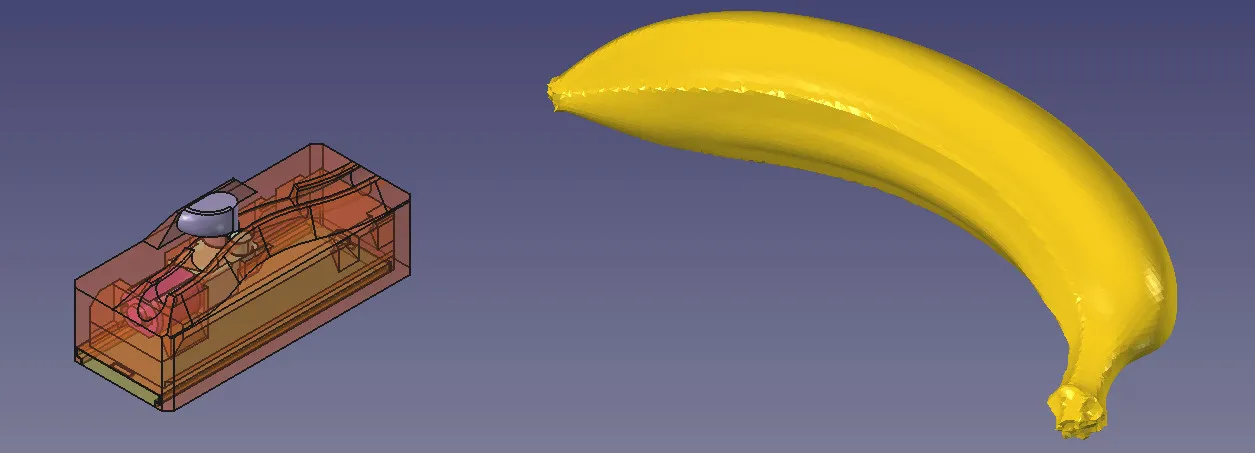
In software news, FreeCAD has received a new tool that we know many in the community will be excited about: Banana For Scale. Forget the confusion between Metric and Imperial measurements. Placing a 3D banana in the scene alongside your rendered part provides a globally recognized size reference. While the free and open-source CAD package has often been criticized for being behind its commercial counterparts in terms of user interface and overall feature set, we think this addition should go a long way toward evening the scales — no pun intended.
Finally, Phoronix reports that Linux 7.2-rc3 includes several vital updates to device drivers for the Sega Dreamcast. Users running Linux on the ill-fated PlayStation 2 competitor will benefit from improvements made to the keyboard, mouse, and joystick interfaces. These fixes join the improved code for the console’s GD-ROM optical drive that emerged back in April. The “Year of the Linux Desktop” continues to be elusive, but it certainly looks like 2026 may finally be the Year of Linux on the Dreamcast.


See something interesting that you think would be a good fit for our weekly Links column? Drop us a line; we’d love to hear about it.

Advertisement

Source link

Continue Reading

Tech

Back-to-School Shoppers Are Using More Tech Tools but Buying Fewer Tech Goods

Published

on

Back to school doesn’t mean back to tech upgrades. As inflation rises without wage growth matching it, and consumer confidence worsens, parents are going online more to find deals, even if they aren’t necessarily buying new tech products, according to Deloitte’s 19th Back-to-School survey.

For the fourth straight year, back-to-school shoppers will spend less per child — $557 — as inflation continues to rise, and 57% of parents believe the economy will get worse in the second half of the year. That’s the highest percentage since the onset of the COVID pandemic in 2020, the survey said.

And that spending will be lower on tech, averaging $417, down 16% from $498 last year. Conversely, parents will spend $323 on clothing, a 22% increase over last year’s $264, as clothing costs rise.

Advertisement

To gather its findings, Deloitte tabbed an independent research panel, which conducted an online survey of 1,207 parents with at least one child entering grades K to 12 this fall. The research was performed from May 22 to May 29, with a margin of error of plus- or minus-3 percentage points.

Less tech spending

Thanks to the AI boom that has led to “RAMageddon” — a global memory chip supply shortage — prices for all types of tech products are significantly higher. Laptops, phones and gaming consoles are hundreds of dollars more expensive, and that won’t ease any time soon.

Accordingly, parents are holding back on tech purchases for the new school year, Deloitte found. Back-to-school shoppers will spend $81 less on tech, which the survey said includes computers and hardware, gadgets and digital subscriptions.

Gone are the days of rushing to upgrade. A CNET Group TechPulse Research Study found that 73% will keep their devices as long as they still work, and 76% won’t upgrade until they think the new devices are “clearly worth it.”

Advertisement

An online arsenal

Amid worries about the economy, parents are maximizing the internet to get the best bang for their buck. The survey found that 80% of people are using at least one internet tactic, and the more they use, the more they spend. Folks using search, social media and generative AI (like ChatGPT, Gemini and Claude) will spend $737 per child this year — $206 more than parents who are using search and social but not AI, the survey found.

Retailers should take note of the correlation, the survey advises. “The implication is clear: The more digitally engaged the shopper, the greater the spending potential,” the authors said.

But Deloitte found that back-to-school shoppers are using the internet to learn about promotional events, such as those offered by major merchants like Amazon, Walmart and Target. The survey found that 68% of parents plan to shop during these promos, and 54% said that they often make unplanned purchases spurred by promos and discounts.

These price hunters often wind up spending more as they stretch their budgets to cover more items, the survey said. The researchers classified 31% of parents as “hyper-value seekers,” which are those who use four or more of these strategies: switching to a cheaper brand, choosing a private label over name brands, shopping at more affordable retailers, buying in bulk and using cashback websites. These parents will spend 14% more.

Advertisement

Gen AI’s influence is backed up by recent data. A May report from Adobe Analytics found that consumers who referred to retail websites via AI tools spent 53% more money than shoppers who didn’t. The data showed that people using AI for shopping recommendations stay longer on retailer websites and are more likely to buy something.

Deloitte told CNET that the surveyed parents plan to use AI in various ways this year — comparing prices (22%), researching products (19%), finding new products (15%), budgeting expenses (15%), reading reviews (14%) and completing purchases (10%).

Deloitte said that 67% of retail executives surveyed will have tailored experiences, targeted campaigns and loyalty programs driven by AI within the next year.

More from CNETThe Best Laptops for School in 2026

Advertisement

Source link

Continue Reading

Tech

Apple Intelligence began in Apple Car research

Published

on

We’ve been telling you this for years — Apple Car research wasn’t lit on fire, and the fruits of Apple’s labor on it will be seen in artificial intelligence performance in the M7 and M8 processor.

Before AI used to be called Apple’s biggest failure, that title went to the Apple Car which was cancelled after ten years of development and ten billion dollars of investment. AppleInsider argued at the time that Apple Car research would pay off, but now both of these failures are being recast as positives, with Bloomberg saying this research is being used in designing future AI processors.

The report claims that for the future M7 and M8 processors, Apple is concentrating more on AI support than on issues such as overall speed and power efficiency. This reportedly means that these chip designs for the Mac and Apple Intelligence servers are based on the company’s efforts toward a self-driving car.

When that car was cancelled in 2024, AppleInsider said exactly this based on how, for one thing, Apple Car staff were redeployed to what was then John Giannandrea‘s AI team. But there had long been clues and even, for Apple, close to public confirmation that the Car was an AI project.

Advertisement

“We’re focusing on autonomous systems,” began Tim Cook as long ago as June 2017, “and clearly, one purpose of autonomous systems are self-driving cars. There are others.”

Just saying that much was unusual for Apple, which normally never comments on future products or plans. Yet Cook went further and specified why Apple was doing a car.

“We sort of see it as the mother of all AI projects,” he said. “It’s probably one of the most difficult AI projects actually to work on and so autonomy is something that’s incredibly exciting for us, but we’ll see where it takes us.”

That was nine years ago, half a decade before ChatGPT was released to the public. Yet perhaps because Apple usually referred to it as Machine Learning, the consensus in the technology industry kept being that Apple was caught out by AI.

Advertisement

Apple has certainly been behind compared to the massive spending on AI datacenters, but it’s meant that it also hasn’t overspent. In June 2026, for example, it was revealed that OpenAI was losing $1.25 for every $1 it earned, and investors are turning back to Apple.

Source link

Advertisement
Continue Reading

Tech

Ubisoft’s Black Flag remake is a symptom, not a strategy

Published

on

Ubisoft has remade the best-loved game in its biggest franchise. Assassin’s Creed Black Flag Resynced arrives 13 years after the original, and the BBC found it largely worth the wait.

The Caribbean looks spectacular now. New underwater sections and coral reefs show off what modern hardware can do with a setting that was always the game’s real star.

But the more revealing story is why it exists at all.

The year Ubisoft would rather forget

The publisher began 2026 by closing two studios, cancelling six games, and delaying seven others. Further rounds of closures and layoffs have followed since.

Advertisement

The 💜 of EU tech

The latest rumblings from the EU tech scene, a story from our wise ol’ founder Boris, and some questionable AI art. It’s free, every week, in your inbox. Sign up now!

A hit would help. Assassin’s Creed has sold an estimated 230 million copies across the series, and Black Flag is the instalment fans ask for most.

So Ubisoft reached for the safest bet on the shelf. That is not cynicism, it is arithmetic.

Advertisement

Nostalgia is now a business line

Games expert Christopher Dring put the trend down to financial necessity. Big titles take longer to build, and studios fill the resulting gaps in their release schedules by dusting off older classics.

These games tend to sell, he noted, and the remake and remaster business has become substantial. An industry that cannot ship enough new work has learned to monetise its back catalogue.

The economics are brutal in the other direction too. A modern AAA game can take the better part of a decade, which is a long time to fund nothing.

The one place Ubisoft resisted

Pricing is where the company deserves some credit. Black Flag Resynced costs around £50, at a moment when Mario Kart runs to £75.

Advertisement

Grand Theft Auto VI, arriving in November, sits around £70. A remake priced below both is a rare instance of a publisher pricing honestly for what it is.

It is also a hint about how these products are positioned. Remakes are catalogue revenue, not tentpoles, and Ubisoft has priced accordingly.

What 13 years actually changed

The visual leap is the obvious one. The original shipped at the tail end of gaming’s so-called muddy era, when everything was brown in the name of realism, and the remake finally lets the Caribbean look Caribbean.

The design changes are more contested. The tedious modern-day office sequences are gone, which almost nobody will mourn, and combat now blends modern Assassin’s Creed systems with the original’s timing-based fights.

Advertisement

Some of it grates. The BBC’s reviewer noted the game hand-holds relentlessly, in one case allowing under ten seconds on a puzzle before a character blurts out the answer.

Ubisoft has form for treating its worlds as commentary as much as playgrounds, as its Watch Dogs 2 showed. Black Flag’s piracy was always its most pointed writing, and the remake leaves it intact.

Certain animations should have stayed in 2013 as well. Others, like the ability to use hidden blades in combat, were quietly not restored.

The bigger picture

Ubisoft is not alone in mining its past, and the industry’s structural pressures are pushing everyone the same way. Even distribution is being rebuilt, with Sony ending physical PlayStation discs in 2028 and publishers chasing recurring revenue through subscription services like Ubisoft’s own.

Advertisement

Ubisoft has been recycling this world for a while, having shipped an Assassin’s Creed pirate game for the browser years ago. The Caribbean keeps paying rent.

None of which makes Black Flag Resynced a bad game. It is a good one, and if this is the template, more of the series will get the same treatment.

But a company that cancels six games and remakes a seventh is telling you something. The remake is not the strategy, it is the bridge, and Ubisoft still has to build something on the other side.

Advertisement

Source link

Continue Reading

Tech

Christopher Nolan’s personal take on smartphones is surprisingly practical

Published

on

Christopher Nolan has spent his career embracing cutting-edge filmmaking technology while resisting one of the most common gadgets on the planet: the smartphone. The Oscar-winning director behind Oppenheimer, Inception, and the upcoming The Odyssey says his decision isn’t about rejecting technology altogether. It’s about protecting something he believes has become increasingly rare – time to think.

In an interview with The Telegraph ahead of the premiere of The Odyssey, Nolan explained that he still doesn’t own a smartphone, despite living in a world where QR codes, digital tickets, and messaging apps have become everyday necessities. His reasoning, however, is far more practical than philosophical.

Rather than fearing the technology itself, Nolan believes smartphones would consume the quiet moments that fuel his creativity. Those idle minutes while waiting for a train, sitting in an airport lounge, or arriving early for dinner are where many people instinctively reach for their phones. Nolan says that’s when he solves problems, develops scenes, and figures out the next step in a film. The Telegraph first reported his comments.

Nolan doesn’t hate technology – he just refuses to let it interrupt his thinking

Given Nolan’s reputation for championing practical filmmaking, many assume he’s anti-technology. The reality is far more nuanced. His latest film, The Odyssey, makes extensive use of visual effects alongside large-scale practical filmmaking, animatronics, puppetry, and in-camera techniques. Nolan has consistently argued that technology should support storytelling rather than replace it, a philosophy that’s evident throughout his work. During the interview, he also spoke about the industry’s growing fascination with generative AI, suggesting younger audiences have been surprisingly quick to reject what he described as obvious “AI slop.” According to Nolan, his own children immediately recognize low-quality AI-generated content because they grew up immersed in online culture.

Advertisement

That perspective extends beyond filmmaking. Nolan admits he deliberately avoids smartphones because he knows he’d become “horribly addicted” to endlessly looking things up. Instead of constantly consuming information, he prefers letting ideas develop naturally during moments of downtime. Ironically, he says the only technology that’s genuinely tested his resolve is the widespread return of QR codes since the pandemic, which has made life without a smartphone increasingly inconvenient.

A filmmaker who still values undistracted experiences

Nolan’s approach also shapes how he believes audiences should experience movies. He praised filmmaker Quentin Tarantino’s Vista Theatre in Los Angeles, where visitors are expected to leave the auditorium if they need to check their phones or smartwatches. Nolan called it a “wonderful rule,” adding that the cinema even pipes the movie’s audio into the restrooms so viewers don’t miss important scenes while stepping out.

His comments arrive at a time when smartphones dominate nearly every idle moment of modern life. Studies have repeatedly linked excessive phone use with reduced attention spans and increased digital distraction, while growing movements advocating “digital detoxes” continue to gain traction. Nolan’s stance isn’t that smartphones are inherently harmful – he simply believes they’re too effective at capturing our attention.

Advertisement

That philosophy also explains why he rarely responds to online rumours or social media speculation surrounding his films. Without a smartphone constantly demanding his attention, Nolan says he’s content letting the noise pass while focusing on the work itself.

For someone celebrated for making films about memory, time, and perception, perhaps Christopher Nolan’s biggest productivity hack shouldn’t be a new app or AI assistant. It’s protecting the empty moments most of us stopped noticing years ago.

Source link

Advertisement
Continue Reading

Tech

Porting The Nvidia GPU Driver To Haiku For 3D Acceleration

Published

on

As good as a desktop OS may be, at some point it has to feature accelerated 3D graphics. This has been a bit of a sticking point for Haiku OS, as none of the big names in GPU cards are likely to start putting out drivers for this OS any time soon. Fortunately there is the Linux open source driver code from Nvidia that can be used as a jumping-off point for a port, which is what [X512] and the community did over at the Haiku forums did over the course of more than a year.

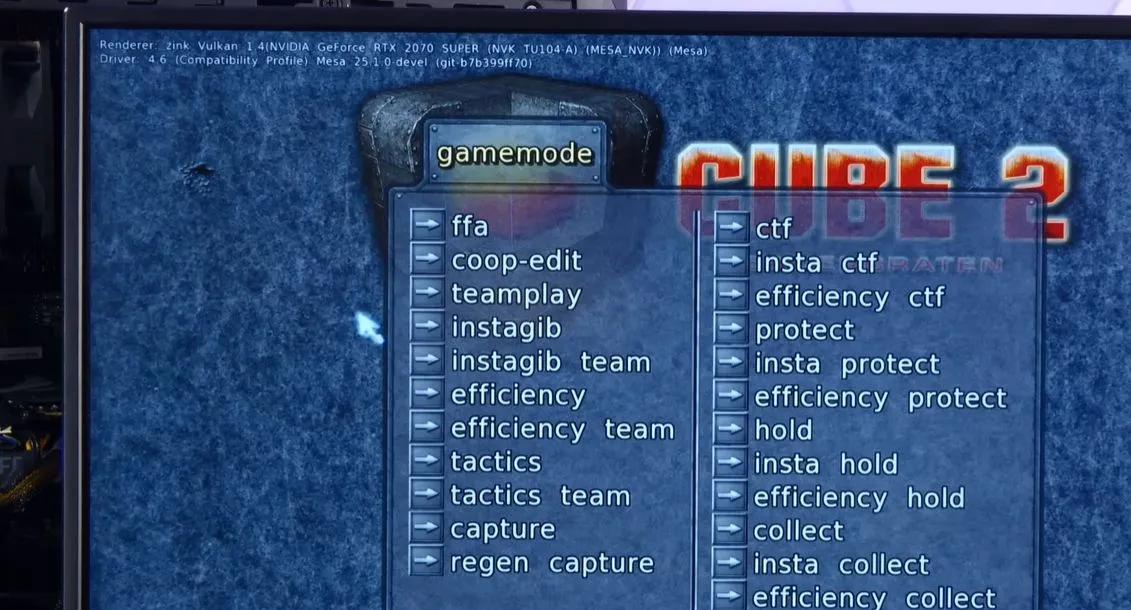
In a recent video [Action Retro] takes a poke at the fruits of these efforts, trying out the driver with an RTX2070 Super GPU. Of note is that this driver requires the GSP (GPU System Processor) controller that got added by Nvidia with the Turing series of GPUs, meaning that you need at least a GTX16 or RTX20 series card.

You can get an installation package from the GitHub repository, such as for the v0.0.2 pre-release that was created in January of 2026. In this pre-release state quite a few things are working, with the ability to play 3D games at a reasonable FPS being the biggest improvement over plain VESA mode. Features like CUDA are not available as they’re not in the open sourced section, of course.

In the [Action Retro] video the whole installation process is demonstrated, starting with a fresh nightly Haiku build. First the gaming performance in software-rendered VESA mode is demonstrated before the GPU driver is installed. This shows a marked improvement in performance, although Minecraft needs to be updated for the newest Mesa library that omits OSMesa, so that couldn’t be tested. Overall it shows that Haiku has made another massive leap forward in becoming a viable daily driver OS.

Advertisement

Meanwhile, over on the ReactOS side of things we just saw a Half-Life 2 playthrough by [Aotori Hibiki], on an Intel Sandy Bridge PC with GeForce 8400GS graphics. Here ReactOS has the advantage of being Windows NT-compatible, including WDDM-style GPU drivers, allowing it to use the same drivers as Windows. Simultaneously, ReactOS is now implementing its first NT6 kernel API calls to make it compatible with modern  (Vista+) Windows.

The upshot here is that for people who want to daily drive an open source OS with all the creature comforts imaginable, things have never seemed more promising. Especially for people who don’t want Yet Another Linux Distro but just an utterly boring desktop-centric, single-user focused OS that Just Works™ these are great tidings.

Advertisement

Source link

Continue Reading

Tech

Summer Games Done Quick Once Again Raises Over $2 Million For Doctors Without Borders

Published

on

The annual speedrunning marathon event ran from July 5-11.

Summer Games Done Quick is officially over after a marathon week of speedrunning games for a good cause, and the organizers say it raised a total of $2,408,701 for Doctors Without Borders in that time (again!). The annual event in Minneapolis kicked off on July 5 and wrapped up early Sunday morning. Roughly 2,500 people showed up in person, in addition to the thousands of viewers who watched from home.

This year’s Summer Games Done Quick brought a new speedrunning world record: streamer Bluekandy completed a No Dupes run of Kirby Air Raiders with a final time of 37 minutes and 54 seconds. Other highlights include “a Balatro run that beat all odds, and impromptu beatboxing during the Resident Evil: Requiem run,” the organizers noted in an announcement. Everything was streamed on Games Done Quick’s Twitch and YouTube channels, where you can find the full archive of videos now if you missed anything while the event was live.

Advertisement

Source link

Continue Reading

Tech

Samsung is building a dedicated AI chip for PCs, and HP and Lenovo are already testing it

Published

on

Why it matters: AI PCs have mostly meant one of three chip options: Intel, AMD, or Qualcomm, each bolting an NPU onto a general-purpose processor. Samsung’s GAIA is different, a dedicated, memory-centric AI accelerator from a company that also happens to control its own DRAM production. If PC makers validate it, Samsung would be back in PC silicon for the first time since its 2012 Chromebook experiment.

According to multiple Korean outlets, including Chosun, Samsung’s LSI division which works on the Exynos mobile chips, is developing a dedicated AI accelerator for PCs codenamed GAIA.

The company is reportedly already supplying prototypes to HP in the US and Lenovo in China to verify performance, with mass production possibly starting as early as 2027 and devices potentially landing in late 2027 or early 2028.

GAIA isn’t meant to run the whole system the way a Ryzen, Core, or Snapdragon X chip does. It’s a companion processor built on a 4nm-class node, described as a “memory-centric” AI accelerator that places compute close to memory rather than routing everything through a separate processor. Samsung is explicitly positioning it apart from GPU-based AI accelerators, the kind used for large-scale AI training and inference, in favor of an NPU architecture aimed at PC-side generative workloads: on-device language models, real-time translation, image generation, and similar tasks offloaded from the CPU and GPU.

Advertisement

That memory-centric design is also why Samsung is reportedly pushing further integration with processing-in-memory (PIM), its next-gen DRAM tech that runs computations inside the memory itself instead of shuttling data back and forth to a processor.

PIM has been a Samsung side project for years without a real commercial breakthrough. GPUs got fast enough, and their software ecosystems matured fast enough, that the bottleneck PIM was built to solve stopped mattering as much.

A dedicated NPU with real OEM traction, and a software stack built around it from the start, is a more natural fit for PIM than a general-purpose GPU ever was. It also plays to what Samsung actually controls: it’s one of the only companies that can pair custom AI logic with its own memory manufacturing.

Samsung last tried to sell PC silicon over a decade ago, when Exynos chips briefly powered early Samsung Chromebooks starting in 2012 before the business was shelved two years later. Since then, Samsung’s own Galaxy Book laptops have run on Intel or Qualcomm, including Snapdragon X2 Elite in the latest Galaxy Book. GAIA would put Samsung’s own logo back on the silicon inside its own laptops, and possibly others.

Advertisement

There’s an added tension here: Nvidia and Qualcomm both lean on Samsung’s foundry for parts of their chip production. Samsung competing with its own customers in the AI PC space, while still fabricating for at least some of them, is the kind of conflict that tends to complicate supplier relationships.

It’s also a business-unit story. Samsung’s LSI has run structural losses for years, and a credible win (on AI no less), on top of Exynos and automotive silicon, gives Samsung another lever to pull.

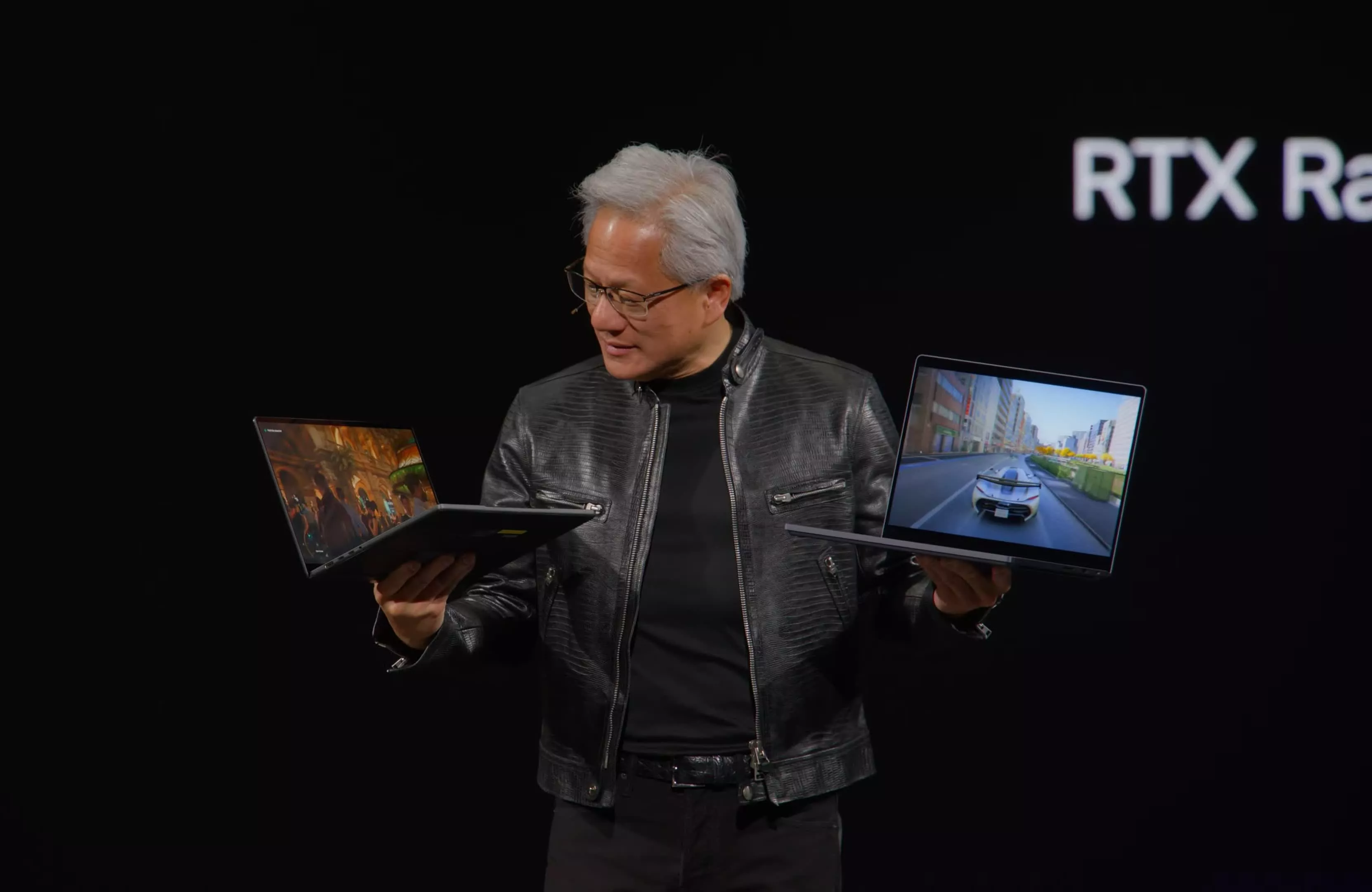
At this time there’s zero performance numbers, no power figures, and no details on GAIA’s architecture or how it could compare to AMD’s XDNA NPUs, Intel’s on-die accelerators, Qualcomm’s Hexagon NPU in Snapdragon X2, or Nvidia’s RTX Spark platform. In other words, we can’t imagine if GAIA is genuinely competitive or just enough to get Samsung a seat at the table. Samsung has yet to confirm any of this publicly.

The industry has been trying to convince PC buyers that NPUs matter for two years now, and the honest answer is that most people still can’t name a task their current NPU handles that they’d otherwise miss. A second or third NPU vendor doesn’t fix that either.

Advertisement

What GAIA could be betting on is that local GenAI workloads will be heavy and popular enough to need dedicated local silicon, not just a checkbox spec. Whether that’s a 2027 reality or another premature bet remains to be seen.

What matters more for AI PCs going forward?

Advertisement

Source link

Advertisement
Continue Reading

Tech

Sunday Reboot: No cell service for 250 years

Published

on

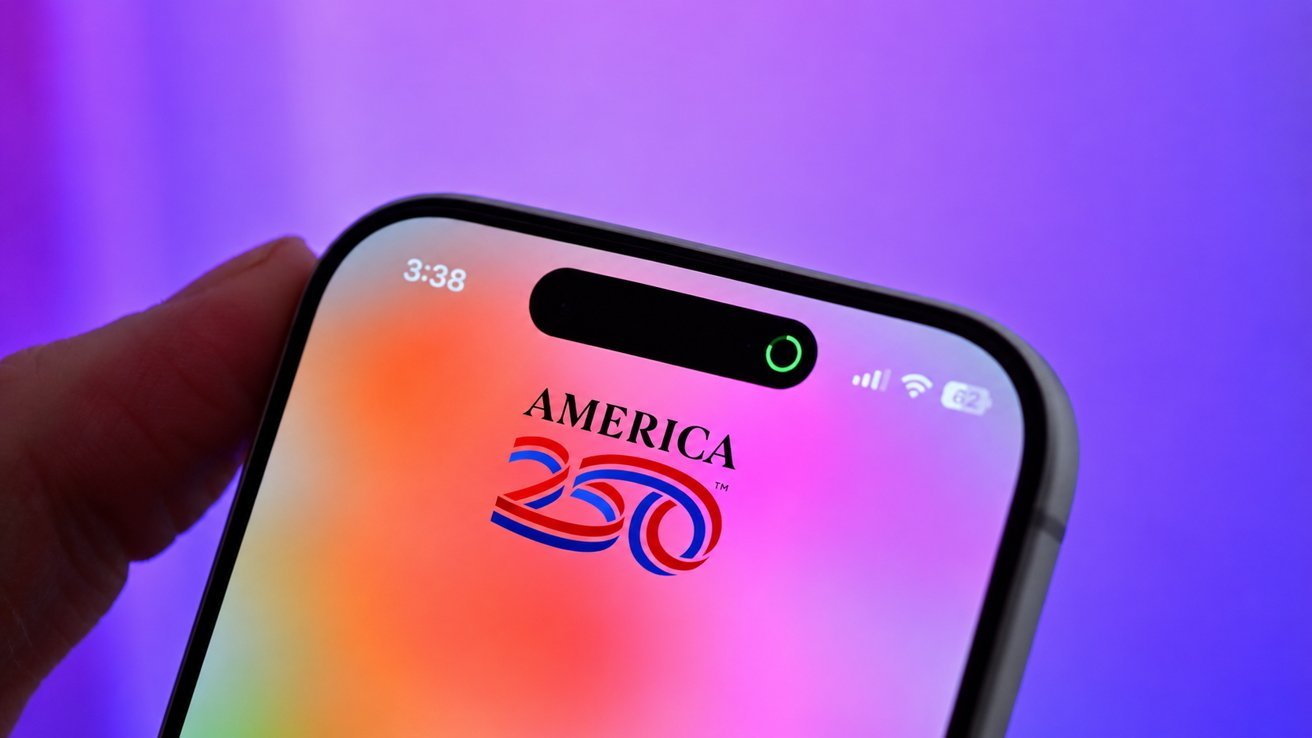
In this week’s Sunday Reboot, an iPhone 17 Pro Max goes underground for a very, very long time.

Close-up of a smartphone screen showing colorful gradient background with America 250 logo, time and status icons at the top, held in a hand against a soft purple backdrop
America 250

Sunday Reboot is a weekly column covering some of the lighter stories within the Apple reality distortion field from the past seven days. All to get the next week underway with a good first step.
Continue Reading on AppleInsider | Discuss on our Forums

Source link

Continue Reading

Trending

Copyright © 2025