

Tech
EU puts ‘addictive’ design of Facebook, Instagram under the DSA microscope



personal tech
Brussels says Meta failed to properly assess or mitigate risks posed by infinite scroll, autoplay, and more
Meta may have breached the European Union’s Digital Services Act by designing Facebook and Instagram to keep users glued to their screens, with Brussels saying that features such as infinite scroll and autoplay should be switched off by default.
The European Commission on Friday published preliminary findings accusing the social media giant of failing to properly assess or mitigate the risks posed by what it describes as the addictive design of its platforms. The investigation centers on infinite scroll, autoplay, push notifications, and the highly personalized recommendation systems that determine what users see next.
The Commission argues that Meta underestimated the effect those features can have on users, particularly children and vulnerable adults. Its preliminary findings say recommendation algorithms, autoplay, and infinite scrolling encourage people to keep consuming content, nudging them into what the Commission calls “autopilot mode” and fostering unhealthy habits and compulsive use.
The Commission also says Meta ignored evidence showing how long minors spend on Facebook and Instagram at night, and failed to account for how products such as Reels and Stories could encourage excessive use.
Brussels was equally unimpressed with Meta’s attempts to fix the problem. It found the company’s time management tools, including those enabled by default for teenagers, “can be easily dismissed and do not lead to a meaningful reduction and control of the usage of the service.”
It also questioned the effectiveness of Meta’s parental controls, arguing they require too much technical knowledge and effort from parents to work as intended.
The Commission ultimately wants Meta to redesign both platforms, including disabling autoplay and infinite scroll by default, introducing effective screen-time breaks, and making its recommendation systems less focused on maximizing engagement.
“Protecting the physical and mental health of Europeans must be a priority for social media platforms,” said Henna Virkkunen, executive vice president for Tech Sovereignty, Security and Democracy at the Commission. “The Digital Services Act provides a clear framework to hold platforms accountable for the addictive design and effects of their services.”
The findings are preliminary, and Meta will now have the opportunity to respond before the Commission reaches a final decision. If Brussels ultimately concludes that the company breached the DSA, it can impose fines of up to 6 percent of Meta’s worldwide annual turnover, which comes in at approximately $12 billion.
The case adds to a growing push to rein in social media’s impact on younger users. Earlier this year, outgoing prime minister Kier Starmer said the UK government was considering new measures “that will give us the ability to crack down on the addictive elements of social media, stop the auto-play, the never-ending scrolling, that keeps are [sic] children hooked on their screens for hours, and stop kids getting around age limits.”
Meta did not immediately respond to The Register’s request for comment. ®

Tech
Fascinating Look Back at NEC’s 1988 Monitor (PC-KD863G) That Came With Its Own PC Engine Already Inside
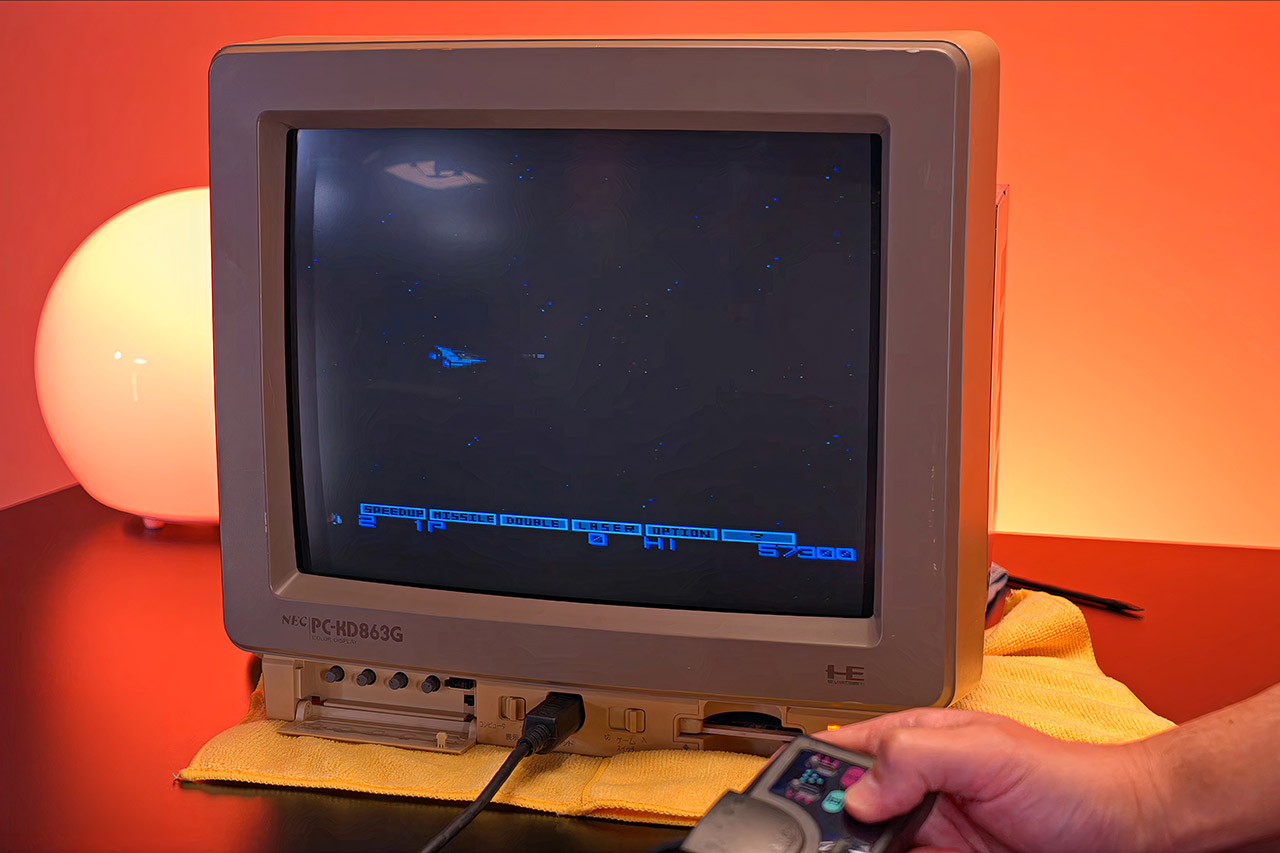
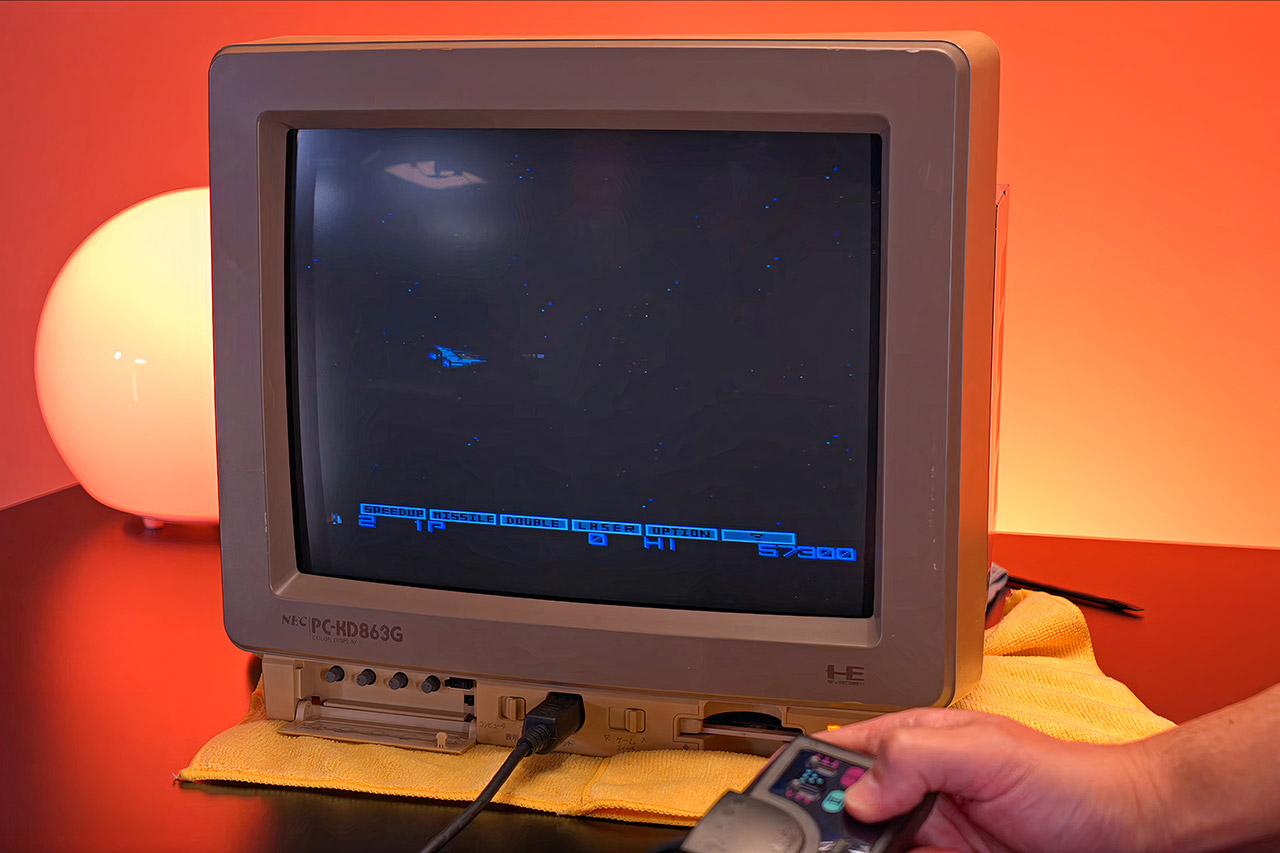
Back in 1988 most people bought a television and a game console as two separate purchases. NEC tried something different. The company released a 15-inch color CRT monitor that already contained a complete PC Engine console built into its lower section. Called the PC-KD863G, it launched on September 27 for 138,000 yen, a serious sum at the time that placed it well above the cost of a regular PC Engine plus a decent television.
The unit initially resembles a conventional beige office monitor from the early days, but a closer glance reveals the changes. On the right side, there is a slot for HuCards, the thin credit-card-sized game cartridges that came with the PC Engine. A controller port is located in the center of the bottom, along with a mode switch that allows the device to function as a game console or computer monitor. That same switch also holds a HuCard firmly in place once inserted, preventing you from unintentionally yanking it out while the device is powered on. Under a little flap, you’ll discover your typical picture and volume settings.

Retroid Pocket 5 Retro Handheld Game Console, 8+128G, 5.5-inch Touchscreen 1080p Portable Android Gaming…
- NO PRELOAD GAMES – Please note that no games are preloaded on Retroid Pocket 5. Before first use or after a long period of inactivity, the RP5 may…
- Powerful Performance – Equipped with a high-performance quad-core processor and advanced GPU, the Retroid Pocket 5 delivers smooth gameplay for…
- Vibrant 5.5″ Touchscreen – Enjoy crisp, vivid visuals on the 5.5-inch HD touchscreen display, offering intuitive controls and an immersive gaming…
Small stereo speakers on the monitor’s sides clip in place like a pair of ears and produce sound that is surprisingly generous given how widespread single speaker setups were at the time. The PC-KD863G’s primary selling factor is concealed from view – or rather, within the video path. Unlike a regular PC Engine at the time, which delivered its signal over RF and had to be tuned in on a TV, the PC-KD863G avoided that step entirely. The built-in console just transmitted an analog RGB signal directly to the CRT. The end result was a much clearer and sharper image, free of all the usual noise and softness associated with RF or early composite connections. It’s no surprise that game magazines took note, as staff bought devices particularly to run high-quality screenshots without the typical hassle.
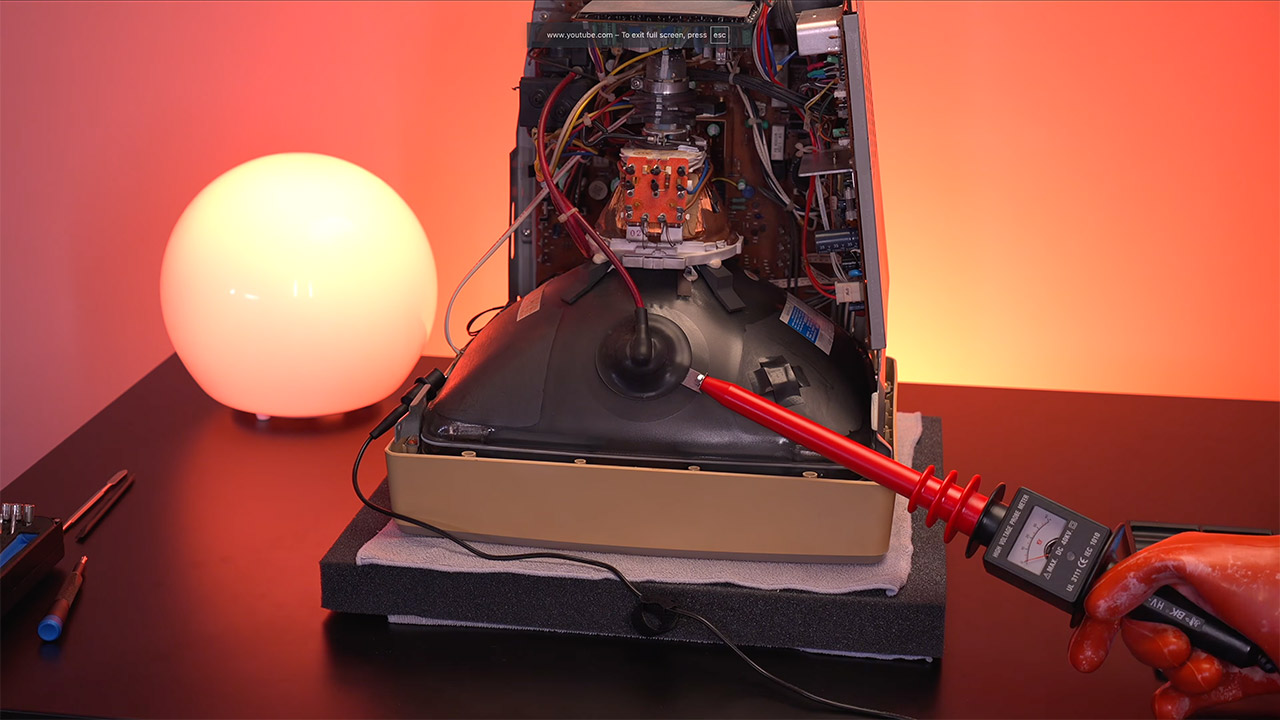
People could also use the monitor to do actual computing work because it had a 15-pin RGB input on the back that accepted signals from NEC’s PC-88 and PC-98 machines, as well as other compatible computers. Simply flick the front switch, and the same screen transforms into a high-resolution display for whatever you need to do, spreadsheets, documents, etc. They also employed a chassis from NEC’s MultiSync monitor line, which could easily handle the PC Engine’s 15 kHz signal while simultaneously supporting higher computer resolutions when necessary.
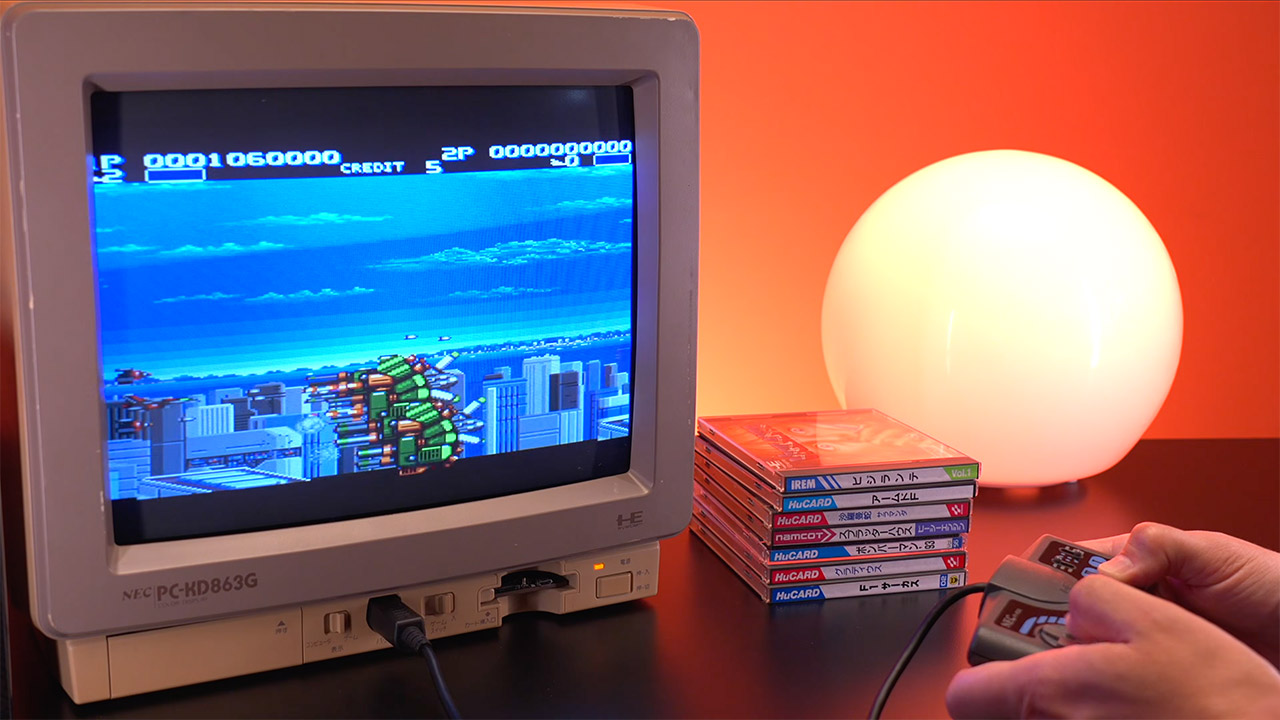
There were some limitations that prevented the concept from actually taking off. The built-in PC Engine part lacked the expansion bus seen on ordinary models, resulting in no CD-ROM drive, Ten no Koe voice peripheral, or easy memory expansion. Just as the PC Engine’s library began to transition toward CD-based games, this all-in-one box could only play a smaller HuCard selection. Furthermore, the price was simply too high, as many families already owned a TV, so paying extra for an integrated solution seemed like a waste when you could get a normal console and a TV for less and have a similar experience.
There’s a special kind of charm to B-horror movies—their cardboard sets, rubber masks, wildly inconsistent acting, and plotlines that feel like they were scribbled on a cocktail napkin during a Red Lobster happy hour. But unlike the modern wave of “torture porn” horror—think Hostel, The Hills Have Eyes, or that unwatchable subgenre where every scene feels like a cry for help from the writer’s therapist—classic B-movies rarely take themselves that seriously.
They’re campy, clunky, and weirdly comforting, like cinematic junk food that knows exactly what it is. You won’t find graphic mutilation, sexual violence, or undead creeps assaulting teenagers here. For that kind of deeply uncomfortable energy, there’s TikTok. No, these flicks are more about rubber-suited swamp monsters, vengeful house pets, mutated insects, and hilariously avoidable demises. They’re terrible—gloriously, unapologetically terrible—and sometimes, in just the right light, kind of brilliant.
Some of our favorite actors got their awkward, low-budget start in these films—Kevin Bacon danced his way out of Friday the 13th, and even George Clooney once tangoed with a mutant tomato. For others, these roles were less a launching pad and more a career obituary, filed under What Happened to That Guy?
But no matter the budget or IMDB legacy, the ingredients are always deliciously familiar: the sexy, oblivious heroine wearing an outfit that would make modern-day Britney ask, “Girl, are you okay?”; the overweight, vaguely racist sheriff who thinks every teen is part of a Satanic cult; and the mad scientist “just following orders” while accidentally unleashing a lizard the size of Newark.
Back when zombie apocalypses were clever satires on capitalism and mall culture, they made you laugh and squirm—Dawn of the Dead walked so TikTok influencers could shop in silence. Now? The genre’s largely become a grim, soul-sucking gorefest of despair, like The Walking Dead had a baby with a Serbian art film–28 Days Later still gets a pass—Danny Boyle knew how to mix dread with drama. But if I wanted to watch human beings consume one another with that much chaos and urgency, I’d just swing by the Cracker Barrel on a Sunday morning.
So Bad They’re Brilliant: The Best B-Horror Movies to Watch When You’re Tired of Prestige TV and Crippling Anxiety
Because sometimes, you just want a radioactive alligator, a chainsaw-wielding prom queen, and dialogue that makes Hallmark movies sound like Shakespeare—all projected under the stars in your backyard movie theater, where the sound is killer and the real monster is probably already inside your house. Bonus: more room to run!
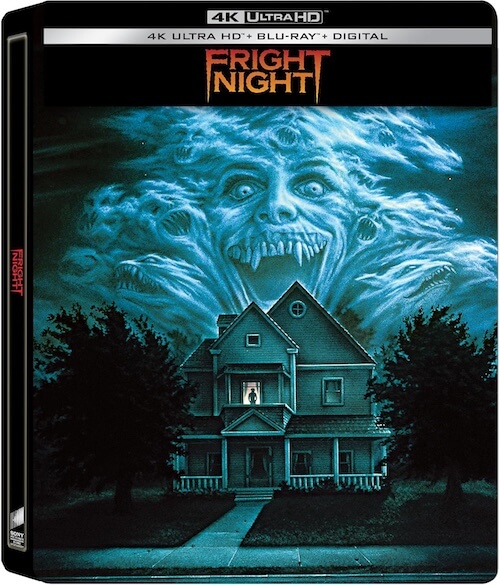
Fright Night (1985)
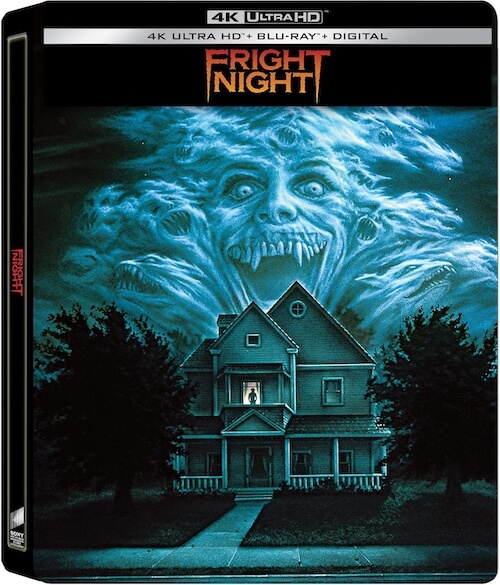
Before he was dodging Andre the Giant and Westley, Chris Sarandon was rocking a popped collar and bloodlust as Jerry Dandridge—the smoothest vampire to ever move into suburban hell. Poor Charley Brewster, your typical horror-obsessed teen, figures it out pretty quickly: the dude next door is a vampire, and his roommate? Not just a “friend.” But nobody believes him, because of course they don’t—especially not washed-up horror host Peter Vincent (Roddy McDowall), who looks like he hasn’t staked anything but his pension in years.
You’ve also got William Ragsdale before Herman’s Head, and Amanda Bearse before she evolved into Marcy Darcy, the permanently outraged neighbor of Married With Children—here she’s just Charley’s innocent girlfriend, unknowingly caught in a vampire’s trance with a questionable new hairstyle. The film walks a perfect line between slick ‘80s horror, a love letter to old-school vampire flicks, and just enough camp to make you grin. Solid practical effects, creepy as hell transformation scenes, and one of the all-time great vampire taunts: “You have to have faith for that to work on me, Charley.” It’s a bite of nostalgic brilliance with just the right amount of garlic.
Where to buy: $25.84 at Amazon
Killer Klowns from Outer Space (1988)

Before evil clowns became horror cliché #243, this cotton-candy-coated fever dream crash-landed like Ringling Bros on bath salts. Killer Klowns from Outer Space sounds like something a stoned film student pitched at 3 a.m. after bingeing on Fun Dip and trauma, and yet—somehow—it stuck.
The plot? Aliens arrive on Earth disguised as circus clowns and start turning people into human lollipops. The weapons? Shadow puppets that kill, popcorn that hatches into monsters, and cotton candy cocoons that look like Jim Henson and John Wayne Gacy co-directed a snuff film.
What makes it all work (and weirdly rewatchable) is the absolutely unhinged production design. The makeup and costumes are grotesque and brilliant—like a demented toy factory exploded and took a few carnies with it. It’s not scary in a “hide under the covers” way, but it gets under your skin like a funhouse mirror that suddenly moves when you’re alone.
It’s not art, it’s not satire, and it sure as hell isn’t subtle. But it is classic B-Horror cinema doing exactly what it should—being memorable, messy, and just self-aware enough to know it’s rotting your brain in the best possible way.
Where to buy: $44.98 at Amazon
The Rocky Horror Picture Show (1975)

This one’s the granddaddy of cult midnight madness—a musical send-up of B-movies that somehow became the B-movie it lovingly roasted. Tim Curry as Dr. Frank-N-Furter practically invented camp royalty, while Barry Bostwick, Meatloaf, and Susan Sarandon (yes, way before she was rubbing lemons on her skin and tweeting questionable love notes to Hamas) rounded out a cast that nailed the mix of horror, sci-fi, and pure, unapologetic weirdness.
The soundtrack slaps harder than a chorus line of tap-dancing zombies, and the audience participation? Essential. If you show up without your prop kit—no rice, no toast, no newspapers to throw when the wedding scene kicks in—you might as well stay home and stream TikTok instead.
More than just a movie, Rocky Horror turned midnight screenings into ritual, a bizarre party where trash wasn’t just tolerated, it was worshipped. Without it, your local midnight movie wouldn’t be half the spectacle it is today. And seriously, if you haven’t seen someone dress as Frank-N-Furter and own that spotlight, you haven’t lived.
Where to buy: $39.99 at Amazon
Plan 9 from Outer Space (1959)

Ed Wood’s infamous sci-fi horror masterpiece—if you can even call it that—is basically the gold standard for “so-bad-it’s-good” cinema. After losing Bela Lugosi mid-production (thanks, Grim Reaper), Wood had to scramble and cobble together scenes with a stand-in who looked like he wandered in from the wrong movie. The sets? Let’s just say if a class of kindergartners had crafted them for a school play, they’d still outshine this mess.
The plot is pure cosmic nonsense: aliens resurrect the dead to stop humanity from wrecking the universe, which sounds ambitious until you realize the dialogue loops like a stuck record and half the cast is obviously reading lines off cue cards. Plan 9 easily ranks as one of the absolute worst films ever made — and that was before Heaven’s Gate showed up to ruin everything else.
Where to buy: $23.96 at Amazon
The Thing (1982)
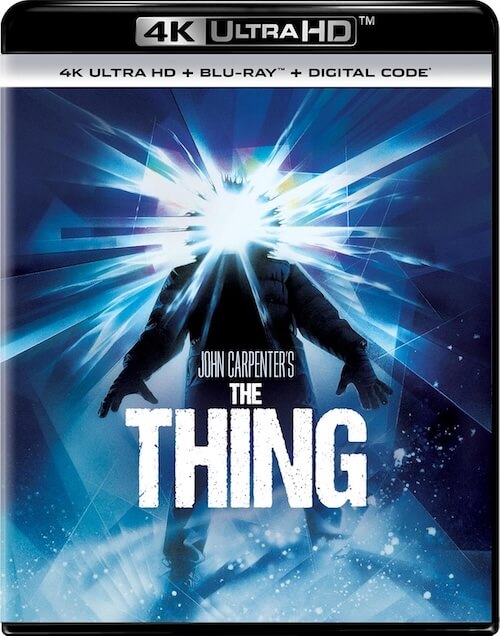
If we’re moving from one body-snatching nightmare to another, John Carpenter’s The Thing is the undeniable heavyweight champ of B-movie sci-fi horror. Sure, it had a $15 million budget — way more than your average bargain-bin monster flick — but deep down, it’s pure B-movie DNA. From its grotesquely brilliant practical effects that still make you squirm decades later, to a cast stacked with cult favorites like Kurt Russell and yes, the painfully annoying guy from Cocoon who somehow survived this massacre, it nails every box on the checklist.
Carpenter’s masterstroke? The isolation. A remote Antarctic research station, trapped in the snow and paranoia so thick you could slice it with one of those alien tongues. It’s not just a movie; it’s an intense, paranoid fever dream best devoured late at night with a giant bag of Twizzlers—ready to lob into the air when the creature shows off its next horrifying mutation. If you don’t feel your skin crawl and your stomach tighten, are you even watching The Thing?
Where to buy: $14.99 at Amazon
They Live (1988)
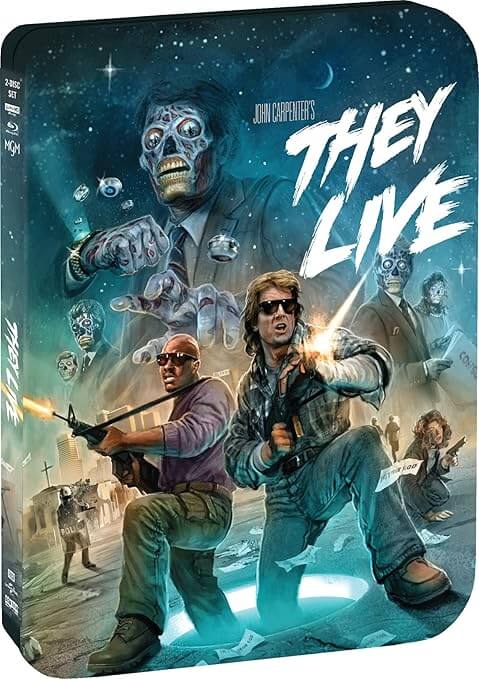
Just when you thought the only thing sneaking into your brain was your ex’s bad taste in music, They Live drops the ultimate wrestling-themed conspiracy smackdown. Rowdy Roddy Piper — yes, the WWF’s greatest heel, Hot Rod himself — plays Nada, a down-on-his-luck construction worker who stumbles on a pair of sunglasses that reveal the brutal truth: the world’s a nightmare of subliminal messages like “Stay Asleep” and “Obey,” all pumped out by a bunch of ugly alien puppet masters disguised as your average Angelenos. Think Platoon meets The Twilight Zone, but with more spandex and less jungle warfare.
Keith David and Meg Foster round out the cast, backing Hot Rod in this instant cult classic that’s basically a wrestling promo turned dystopian social commentary. If Platoon’s soldiers needed shades to spot the enemy, Nada’s your man with the specs — and a mean right hook to boot. Pop on those glasses, and suddenly every billboard is a brainwash, every handshake a trap. Just remember, when life gives you aliens disguised as suits, throw a piledriver.
Where to buy: $20.99 at Amazon
Them! (1954)
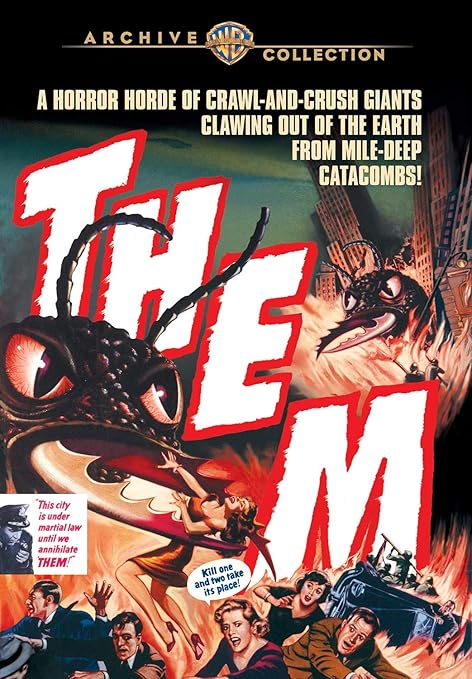
In the New Mexico desert, a kid shows up wandering around like she just took a wrong turn at Albuquerque—and what do they find? Giant mutant ants, thanks to good old atomic testing back in ’45. Yep, nuclear bombs didn’t just ruin the planet, they also gave birth to an army of colossal, angry insects. Police Sgt. Ben Peterson and FBI agent Robert Graham team up with the brains of the operation—Dr. Harold Medford and his daughter, Dr. Patricia “Pat” Medford—to torch these oversized pests with real flamethrowers. No CGI here, just fire and fury.
But the nightmare’s just getting started: two queen ants hightail it to Los Angeles and set up shop in the city’s underground flood control tunnels. Yeah, because nothing screams “welcome home” like giant ants crawling beneath your house. A mother reports her kids missing, triggering a frantic race to save them before becoming ant snacks. As for me? You couldn’t pay me enough to crawl into those L.A. tunnels—not even if Sandy from Grease and Dr. Medford showed up with a blanket and a bottle of Whispering Angel.
Low-budget and dripping with Cold War atomic age paranoia, Them! is a mutant ant cautionary tale that looks like it was shot on a shoestring. Bosch could have cracked this case in two days flat. Giant mutant ants? No thanks.
Where to buy: $9.24 at Amazon
The Fog (1980)
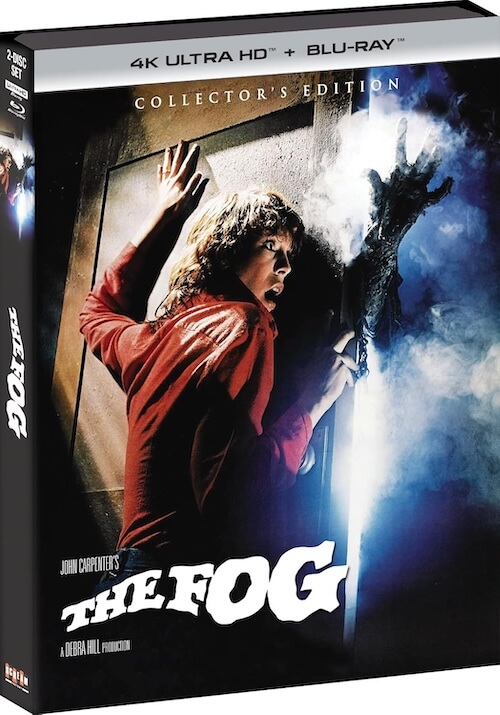
John Carpenter’s The Fog is basically a “Don’t go into the fog, you idiot” PSA wrapped in a creepy coastal town revenge flick. Antonio Bay is ready to party for its 100th birthday, but surprise — the town’s founders committed a crime so ugly it still haunts the place like a bad Yelp review. Enter a rolling fog thicker than your uncle’s excuses, full of restless dead folks who are way past forgiving.
Shot on a shoestring budget just over a million bucks, Carpenter still managed to dress it up in fancy anamorphic Panavision widescreen—because why make a cheap-looking horror movie when you can make a cheap-looking horror movie that looks expensive? Meanwhile, Avco Embassy must’ve thought the fog was contagious, dropping three times the budget on ads to make sure everyone knew not to trust that eerie mist.
Oh, and don’t forget Adrienne Barbeau, who plays a badass local and was married to Carpenter at the time—because nothing says “marriage goals” like starring together in a flick where ghosts want your soul. Janet Leigh and Jamie Lee Curtis, mother and daughter, also star—proving that in horror, talent (and trauma) runs in the family. So yeah, if you see fog creeping in, do yourself a favor and stay the hell indoors.
Where to buy: $36.98 at Amazon
The Blob (1958)

Imagine a giant, gooey, murderous blob of Jell-O on a rampage — that’s The Blob for you. This alien slimeball crashes into a small town and starts swallowing everything in sight, all while the adults ignore the teens who actually know what’s up. Because, you know, teenagers are always wrong.
The actual Blob wasn’t CGI — it was a lovingly concocted mix of red dye and silicone, and get this: it still hasn’t dried out. It’s locked away in the original five-gallon pail from Union Carbide where it was shipped in ’58, a true horror relic that makes you question your kitchen’s Tupperware game. Every summer, Phoenixville, PA (one of the film’s shooting spots) hosts Blobfest, where fans gather to worship this gelatinous terror, reenact panicked theater escapes, and binge-watch the gooey masterpiece.
Steve McQueen was offered $2,500 or 10% of the profits and—bless his practical soul—took the flat fee because no one thought this wobbly menace would make a splash. Fun fact: the film’s idea came from a weird “star jelly” discovery in ’50s Pennsylvania, described as a giant quivering dome of goo that dissolved on touch—kind of like your ex’s promises.
So yeah, if you ever get invited to Blobfest, bring your appetite… for terror, and maybe some lemon Jell-O to feel superior.
Where to buy: $30.12 at Amazon
The War of the Worlds (1953)

Look, New Jersey wasn’t quite Hollywood-cool enough back then, so this classic H.G. Wells invasion flick got transplanted to sunny California — where apparently aliens prefer their death rays with a side of palm trees. The story kicks off when a flaming meteor crashes into some hills, and the locals get all excited… until they realize the passengers inside aren’t here for a barbecue.
Gene Barry plays Dr. Clayton Forrester, and Ann Robinson is Sylvia Van Buren — the town’s unofficial alien damage control team. The visual effects? Absolutely mind-blowing for 1953. These weren’t your run-of-the-mill laser pointers — the aliens wield death rays with a flair and style that would make George Lucas jealous years before he even dreamed up Project Stardust. Watching those Martian tripods stomp around still feels like pure sci-fi joy, especially if you enjoy a little MST3K-style riffing on the melodrama and over-the-top earnestness.
If you want classic alien invasion vibes with some vintage charm and killer rays, this is your ticket — just don’t expect Jersey shore vibes anytime soon.
Where to buy: $39.95 at Amazon
Related Reading:
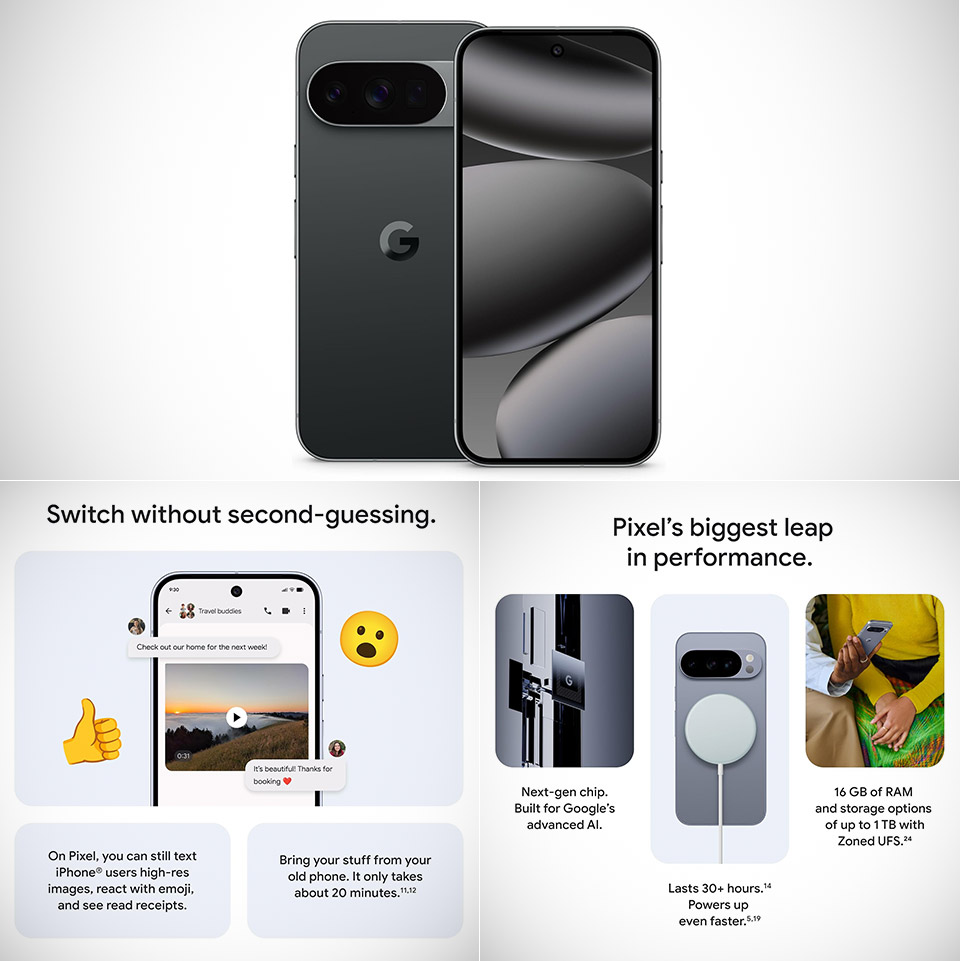
Smartphone buyers chasing flagship capability without an oversized body often land on the Google Pixel 10 Pro, priced at $699 (was $999), as one of the stronger choices at its price. It packs versatile cameras, a bright and fluid screen, responsive performance, and now native magnetic wireless charging into a frame built for comfortable daily handling.
Design choices seek to make this new phone feel immediately familiar while also improving the overall vibe. The metal frame adds a luxury feel by wrapping around the edges, and it is partnered with Gorilla Glass Victus 2 on both sides to keep your new phone looking great even after it has been pushed through its paces. The horizontal camera bar that runs across the back remains as eye-catching as ever, while its dimensions are around 6 inches tall and 2.8 inches wide, with a thickness of only 8.6 millimeters. The 207-gram weight makes it easy to hold for long periods of time without stressing your palm, and it comes with IP68 protection to keep it safe from dust and water spills.

Google Pixel 10 Pro – Unlocked Android Smartphone with Gemini, Your Google AI Assistant, Triple Rear…
- Google Pixel 10 Pro is the ultimate Pixel experience, featuring advanced AI with Gemini, unbelievable camera quality, impeccable design in two sizes…
- Unlocked Android phone gives you the flexibility to change carriers and choose your own data plan[2]; it works – Google Fi, Verizon, T-Mobile, AT&T…
- Get a head start on syncing your data before it even arrives: After you purchase your new Pixel, look for an email that explains how to transfer your…
One of its most noticeable features is its 6.3-inch LTPO OLED panel, which has an impressive 2856 x 1280 resolution at around 495 pixels per inch. If you’re concerned about visibility in bright sunshine, a maximum brightness of 3300 nits should be sufficient. Furthermore, the refresh rate adjusts between 1 and 120 hertz to accommodate whatever you’re doing on screen at any one time, delivering a smooth ride whether you’re scrolling through social media or playing a game. Then there’s HDR, which enhances the image’s contrast and color accuracy to new heights.
Overall, the new Tensor G5 processor and 16GB of RAM make it feel fast and responsive. Gaming-wise, it can handle the majority of titles at reasonable settings without overheating. Software-wise, you’re getting a fresh install of Android 16, along with the Material 3 Expressive design, which looks great but doesn’t make navigation any more difficult than it is now. What really sticks out is the 7-year commitment to operating system and security updates, which is among the longest available. And then there are the AI features. Magic Cue does an excellent job of monitoring your activity and making useful suggestions, such as automatically exposing your order data when you receive a call from a business.

The camera system is arguably one of the main reasons people buy this phone, and with good cause. You have a 50-megapixel main sensor with optical stabilisation and some amazing dynamic range, which means it can handle a range of light settings like a pro, and then there’s the 48-megapixel ultrawide lens, which allows you to take in an even wider perspective and even does macro pictures. Last but not least, the 48-megapixel telephoto provides real 5x optical zoom, as well as some additional computational magic, allowing you to capture more detail at longer distances. Furthermore, even in difficult lighting conditions, hues remain natural. Portraits include great subject separation and a lovely background blur, while the 42-megapixel front camera can snap some really sharp selfies. You also get several creative features, such as Best Take for group shots and Add Me for integrating pictures of individuals into scenarios, all of which are done on the device and are really handy.
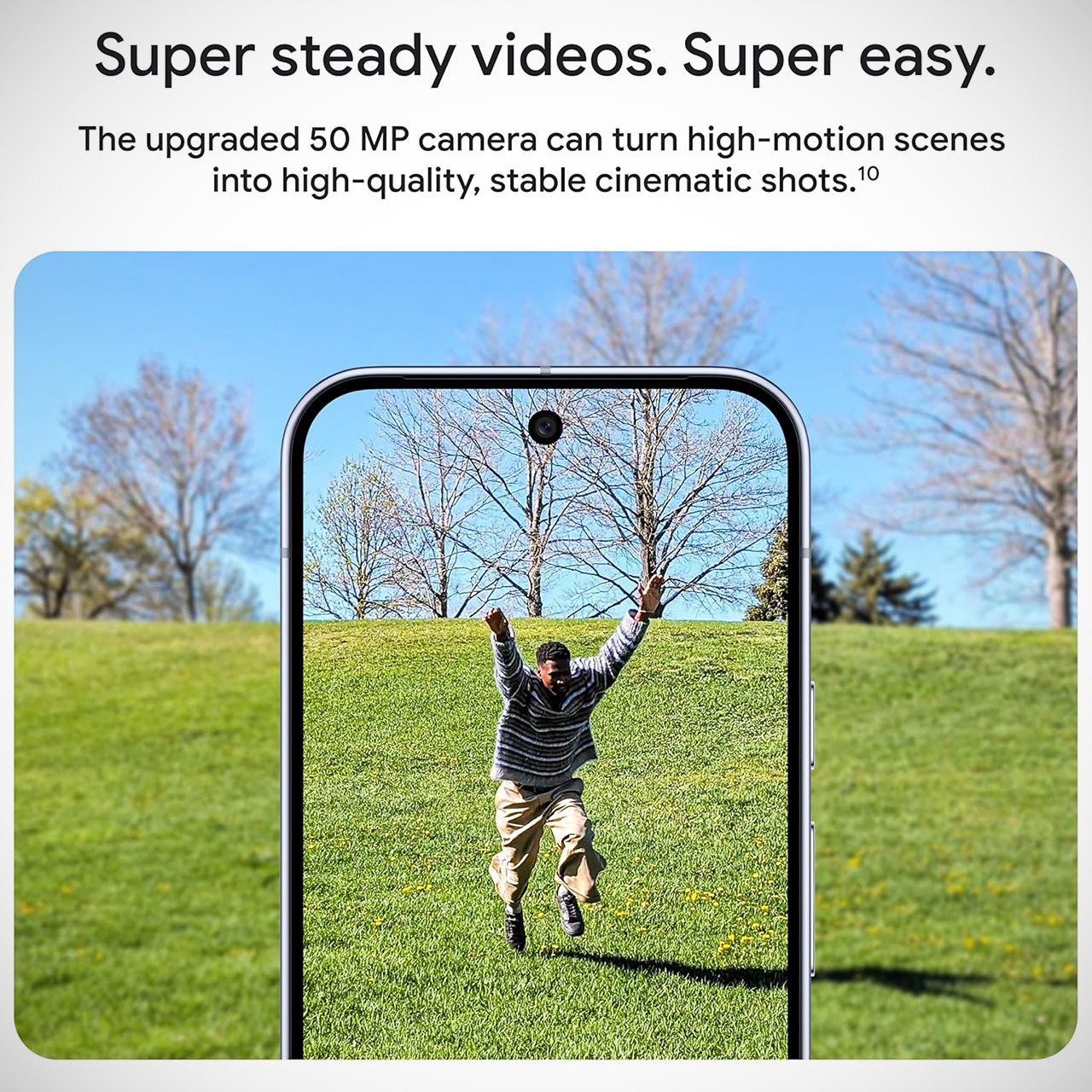
When it comes to power, the 4870 milliamp-hour battery will last most people a full day of using their phone. Using a 30 watt charger, you can charge up to 55% in 30 minutes. Wireless charging now uses the Qi2 standard at up to 15 watts, and it’s simple to use, especially with the built-in magnets for alignment. You can also acquire some lovely accessories from compatible companies that will snap on securely, including as cases, mounts, wallets, and even phone stands. If you have any of the new earbuds that enable reverse wired charging, you can even charge them from your new phone when necessary.
Summer is supposed to be relaxing. Maybe.
You take a few days off, sit by the water, burn something on the grill, pretend the traffic on the Garden State Parkway is not slowly eroding your will to live, and convince yourself that the kids will remember this trip fondly instead of the backseat coup triggered by weak Wi-Fi, warm snacks, and the shocking discovery that wireless charging does not make anyone less annoying.
Horror movies know better.
In horror, summer is not a season. It is a warning label. The beach has teeth. The lake has a body count. The cabin has mold, blood, and some unshaven landlord with unresolved mommy issues. The road trip ends at a gas station where everyone looks like they have been waiting since 1974 for someone with out-of-state plates to make a poor decision.
And summer camp? Forget it. Once someone says “this place has been closed for years,” it is time to get back in the Subaru and find the nearest Dairy Queen or Wawa.
We already covered the glorious trash-fire charm of cult favorites in our guide to the best B-horror movies to watch on hot summer nights, but summer horror deserves its own list. These are not just cheap monsters and rubber masks, although we fully support both when used responsibly. These are films that weaponize the things people actually do in July and August: beach trips, campfires, cabins, lake houses, road trips, questionable motels, and family vacations that start with sunscreen and end with police tape.
Some are classics. Some are slashers. Some are creature features. A few are smarter than they need to be, which is always suspicious. The common thread is simple: they make staying home with the air conditioning, a proper sound system, and a cold beverage feel like the most rational decision you have made all year.
Jason says hi.
Beaches and Coastal Towns
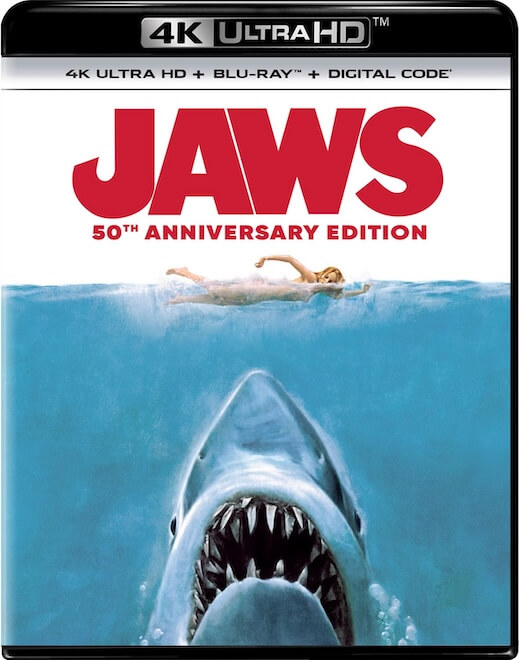
Jaws (1975)

There is no more obvious place to start, and pretending otherwise would be exactly the kind of film-critic theater that keeps TikTok and Rotten Tomatoes drowning in bad takes.
Steven Spielberg’s Jaws did not just make people afraid of the ocean. It made local officials in beach towns look like the real villains, which feels more accurate every year. The shark is terrifying, but Mayor Vaughn in that ridiculous blazer insisting the beaches stay open because commerce must be protected? That is the kind of horror that comes with a municipal budget meeting and a bad microphone. He’s clearly spent some time in Long Branch.
What makes Jaws work after all these years is restraint. You do not need to see the shark every five minutes. John Williams’ score does most of the psychological damage, Roy Scheider looks like a man who deeply regrets moving to an island, Richard Dreyfuss brings the right amount of academic panic, and Robert Shaw delivers one of the great haunted-man performances in movie history.
It is also the perfect summer horror film because it ruins something elemental. People go to the beach to relax. Jaws turns the first step into the water from summer ritual into a wager with teeth.
Where to buy: $29.98 at Amazon
The Lost Boys (1987)
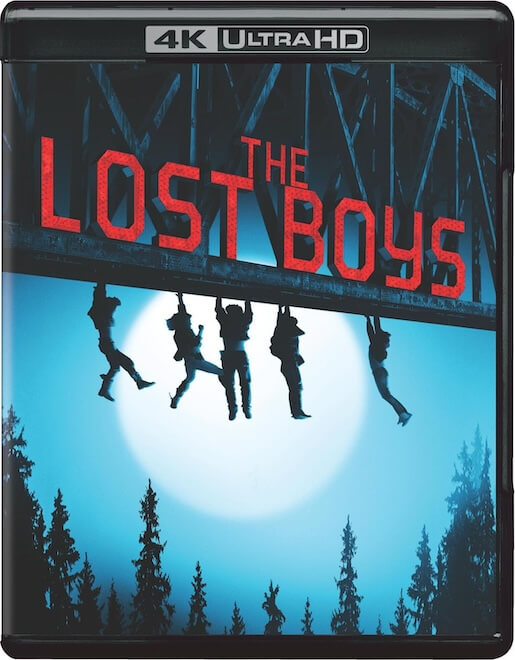
Santa Carla may be fictional, but anyone who has spent time near a summer boardwalk knows the feeling. The fried food, arcade lights, bathing suits that clearly do not fit, the bad decisions after dark, and the strong possibility that someone with aggressively styled hair is either in a band or undead.
The Lost Boys remains one of the best vampire films of the 1980s because it understands that vampires are supposed to be seductive, ridiculous, dangerous, and better dressed than everyone else. Kiefer Sutherland’s David does not need to explain the appeal. He has a motorcycle, a trench coat, and the resting expression of someone who has not paid for dinner since the Reagan administration.
But the real reason this belongs on a summer horror list is the setting. The boardwalk is alive at night, but not necessarily in a comforting way. The film turns teenage freedom into a trap. New town, new friends, no curfew, and suddenly your brother is hanging from railroad tracks with a bunch of vampires who look like they just opened for INXS.
Corey Haim and Corey Feldman bring the comic relief, Dianne Wiest gives the film some emotional weight, and the whole thing still feels like a beach-town fever dream with fangs.
Where to buy: $22.52 at Amazon
I Know What You Did Last Summer (1997)
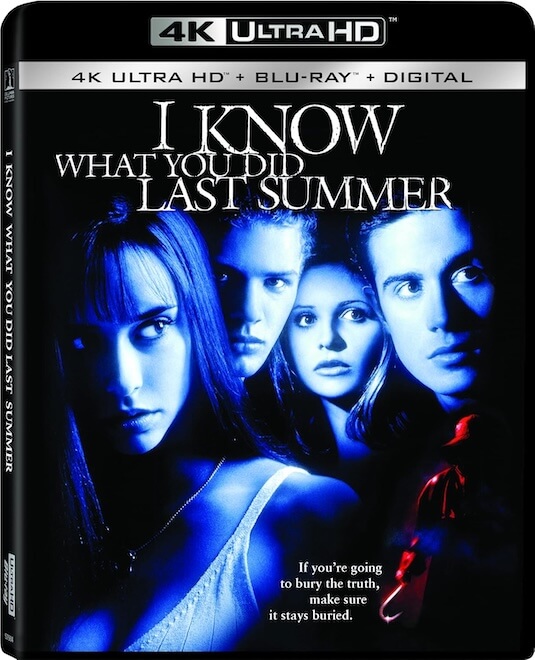
The late 1990s slasher revival produced a lot of glossy nonsense, but I Know What You Did Last Summer remains one of the more durable entries because the premise is simple and mean.
Four attractive young people do something terrible, make a pact, and then discover that guilt has a hook.
It is less clever than Scream, less nasty than the 1980s slashers that inspired it, and much more interested in moody coastal atmosphere than logic. That is not a complaint. Sometimes you want your summer horror to come with rain-slick docks, fishing boats, small-town secrets, and Jennifer Love Hewitt spinning around in the street screaming at the sky like she just found out her Verizon bill has doubled.
The film works because it understands that summer towns become different places after the tourists leave. What looked charming during the day suddenly feels empty, damp, and vaguely threatening. Add a killer in a fisherman’s slicker and the whole thing becomes Cape May after dark if everyone involved had worse judgment and better hair.
Where to buy: $30.99 at Amazon
Us (2019)

Jordan Peele’s Us is not a traditional summer horror movie, but it absolutely belongs here. It starts with a family vacation, a beach boardwalk, and the false comfort of middle-class routine. Then the red jumpsuits arrive, and suddenly that second home does not feel quite so secure.
The film is messy in the best way. It is part home invasion thriller, part social allegory, part nightmare logic, and part proof that Lupita Nyong’o can scare the oxygen out of a room by changing her voice. The beach setting matters because Us begins in a place associated with childhood fun and family memory. Peele understands that nostalgia can curdle. The boardwalk lights, carnival games, and beach-house comfort all become part of the dread.
It also captures something very specific about vacations: the illusion that you can escape yourself. You can change the scenery, rent the house, pack the cooler, and pretend everything is fine. But if your problems show up in the driveway wearing red and holding scissors, the trip is probably over.
Where to buy: $12.99 at Amazon
Summer Camps
Friday the 13th (1980)
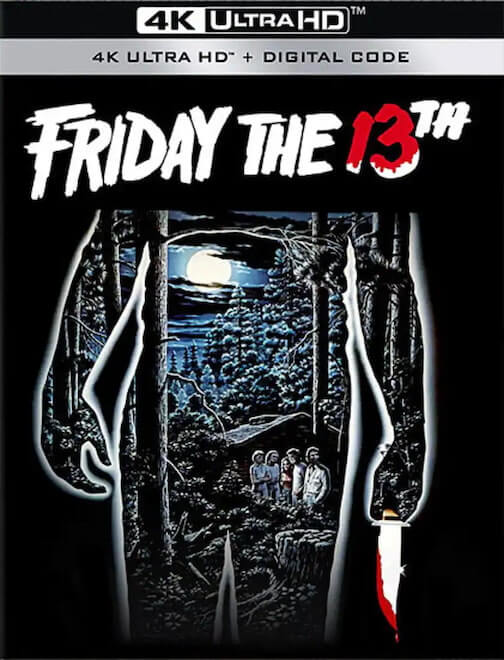
Let us clear something up for the casuals in the back: Jason Voorhees is not the killer in the original Friday the 13th. His mother, Pamela Voorhees, does the heavy lifting. Jason is still there spiritually, mythologically, and eventually very physically, but the first film belongs to Mama Voorhees. Respect the local history, and the very angry Mama Bear with an axe to bury in your forehead.
And yes, Friday the 13th belongs to New Jersey.
Camp Crystal Lake may be fictional, but the original film was shot in Warren County, including Camp No-Be-Bo-Sco in Hardwick, with Blairstown and Hope also part of the film’s geography. So the next time someone treats New Jersey like it is just diners, jughandles, and Springsteen lyrics, remind them that one of horror’s most famous franchises crawled out of the woods near the Pennsylvania border.
Also, be mindful where you get off the Parkway. Technically, by the time you are that far northwest, the Parkway is no longer your problem, but the point stands. Those smaller county roads near the Delaware Water Gap and PA border can get dark fast, and if a local warns you that the camp has a death curse, maybe do not respond with, “Cool, where do we park?”
The original film is rough, cheap, and frequently ridiculous, but it has the right summer-camp ingredients: horny counselors, bad weather, creaky cabins, a lake with unresolved trauma, and the deeply American belief that reopening a cursed business is fine if the insurance paperwork clears.
Jason says hi. Pamela says you should have been watching the children.
Where to buy: $12.53 at Amazon
Sleepaway Camp (1983)
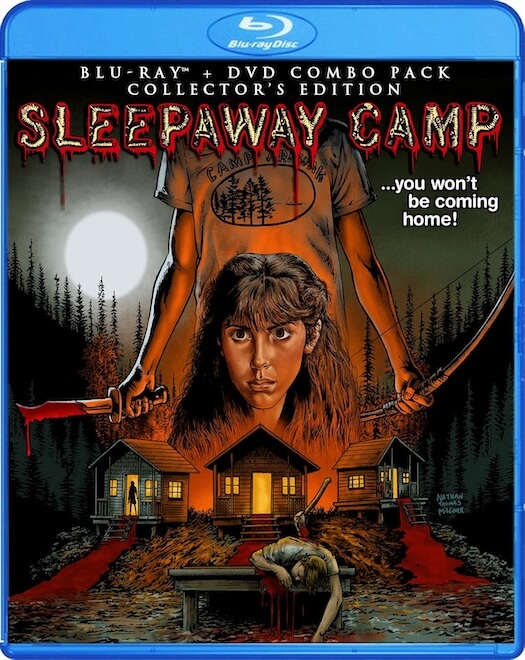
Sleepaway Camp is one of those films that starts as a slightly off-brand summer camp slasher and ends by leaving a dent in your skull.
The acting is uneven. The dialogue often sounds like it was translated from English into English by someone having a bad afternoon. The camp itself feels like it should have been shut down by six different inspectors before lunch. And yet the film has an ugly, uncomfortable energy that makes it hard to dismiss.
Part of the appeal is how thoroughly it understands the cruelty of summer camp. Not the brochure version with canoeing and friendship bracelets. The real version where kids can be vicious, adults are useless when they are stoned, and the cafeteria looks like it was designed by a prison architect with a grudge against vegetables. Who hates carrots? Weird.
Felissa Rose’s Angela is quiet, damaged, and surrounded by people who range from annoying to actively vile. The film builds slowly, sometimes clumsily, but the ending remains one of the most infamous in horror history. It is shocking, problematic, unforgettable, and still discussed because subtlety packed its bags and left the camp on day one for some quiet time and drinks with the girls.
Where to buy: $8.99 at Amazon
The Burning (1981)
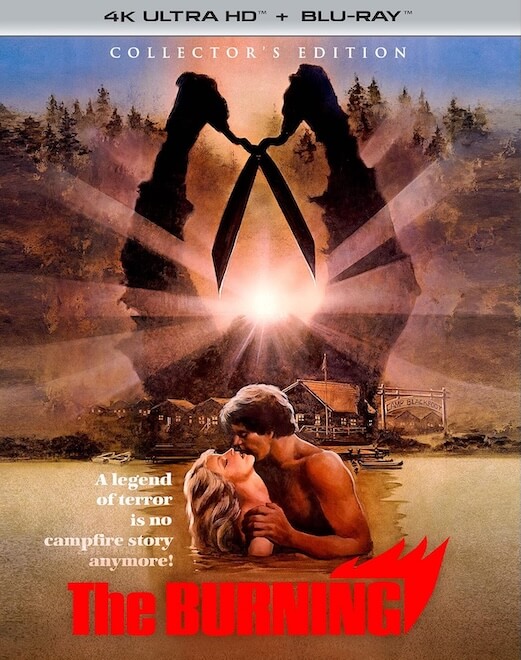
Before Jason became the unofficial patron saint of bad camp decisions, The Burning offered its own summer-camp maniac with garden shears and anger-management issues.
The film was clearly built in the slasher boom after Friday the 13th, but it has enough nasty personality to stand on its own. The setup is basic: a cruel prank leaves a camp caretaker horribly burned, and years later, he returns to punish teenagers because apparently therapy was not covered under the camp’s health plan and Freddie didn’t have enough room for an extra cot on Elm Street.
What elevates The Burning is Tom Savini’s effects work and the film’s grimy early-1980s texture. It feels sweaty. It feels buggy. It feels like every cabin smells like damp socks, cheap beer, and liability. The raft sequence remains the reason people still bring it up, and it has a mean streak that more polished slashers sometimes lack.
It also features early appearances by Jason Alexander, Fisher Stevens, and Holly Hunter, which gives the whole thing a strange “future respectable careers trapped in summer camp hell” quality.
Where to buy: $39.98 at Amazon
Cabins, Rentals, and Trips You Should Have Cancelled
The Evil Dead (1981)

A cabin in the woods is never just a cabin in the woods.
Sam Raimi’s The Evil Dead is still one of the great low-budget horror miracles: a bunch of young people, a remote cabin, a cursed book, and a camera that moves like it has been possessed by a caffeinated demon with a Steadicam allergy.
It is nasty, inventive, and much more intense than people who only know the later, funnier Ash Williams persona might expect. Bruce Campbell gets punished like the universe has a personal vendetta against his jawline, and Raimi throws everything at the screen with the confidence of someone who has no money but an alarming amount of energy.
As summer horror, it works because it destroys the cabin getaway fantasy completely. There is no cozy fireplace mood here. No rustic charm. No peaceful weekend with friends. Just trees, blood, ancient evil, and the growing realization that the rental agreement probably did not mention demonic dismemberment.
Where to buy: $36.99 at Amazon
Cabin Fever (2002)
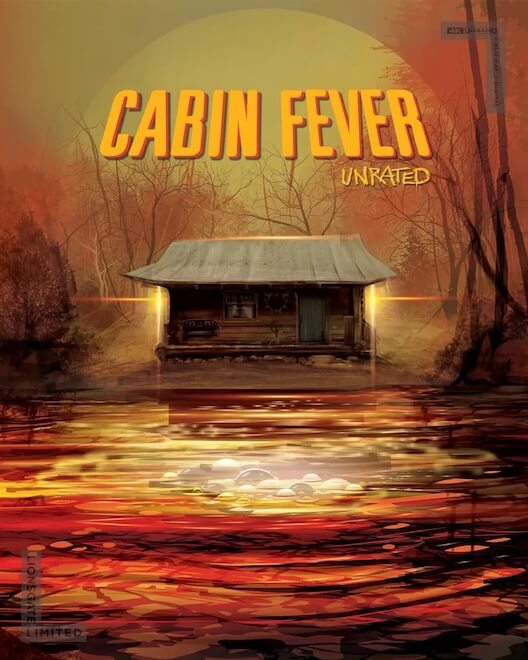
Eli Roth’s Cabin Fever is disgusting, juvenile, uneven, and occasionally very funny. Which is another way of saying it knows exactly what it is.
A group of friends head to a remote cabin, encounter a flesh-eating virus, and proceed to make almost every wrong decision available to them. The film is less about one monster than the horror of contamination, paranoia, selfishness, and discovering that your friends might be terrible under pressure.
The summer setting helps because everything feels exposed. The woods are not romantic. The water is not refreshing. The locals are not charming. The shaving scene remains a full-body cringe event, and the film’s nastiness has aged better than some of its humor.
This is not prestige horror. It is infection horror with a mean grin and a rash you can hear and CVS can’t fix.
Where to buy: $61.99 at Amazon
Midsommar (2019)

Ari Aster’s Midsommar is what happens when someone says, “Let’s go to Sweden for a summer festival,” and nobody in the group has the common sense to ask why the locals are smiling like that.
It begins like a very bad relationship drama, wanders into a Scandinavian wellness retreat designed by IKEA’s least stable cousin, and eventually becomes a floral nightmare with ritual screaming, emotional manipulation, and one of cinema’s least relaxing uses of a bear.
The genius of Midsommar is that it refuses the usual horror shadows. Most of it happens in broad daylight. The flowers are bright. The costumes are beautiful. The food looks carefully prepared by people who absolutely have a ceremonial murder schedule laminated somewhere next to the meatballs. It is gorgeous and deeply wrong.
Florence Pugh gives a devastating performance as Dani, a grieving young woman trapped in a bad relationship and then slowly absorbed into a community that offers comfort, ritual, and the kind of emotional support that ends with someone asking, “So…where did the bear go?”
It is not a beach movie, a camp movie, or a cabin movie. It is a vacation horror film for anyone who has ever traveled with the wrong people and realized too late that the itinerary was written by lunatics.
Where to buy: $19.99 at Amazon
Road Trips from Hell
The Texas Chain Saw Massacre (1974)

Few films feel hotter, dirtier, and more punishing than The Texas Chain Saw Massacre.
Tobe Hooper’s masterpiece is not especially graphic by modern standards, but it feels filthy in a way that most gore films can only dream about. The heat is part of the horror. The van. The dust. The empty roads. The gas station. The house. The sound of that saw. Everything feels like it has been baking in the sun long enough to go rancid.
The setup is classic road-trip horror: a group of young people goes somewhere they should not, ignores the increasingly obvious signs that something is very wrong, and ends up in the orbit of a family that makes every motel off the interstate look like the Ritz.
Leatherface is terrifying, but the world around him is just as bad. The film feels like civilization has thinned out, and these poor idiots have driven straight through the tear in the map.
Where to buy: $30 at Amazon
The Hills Have Eyes (1977)
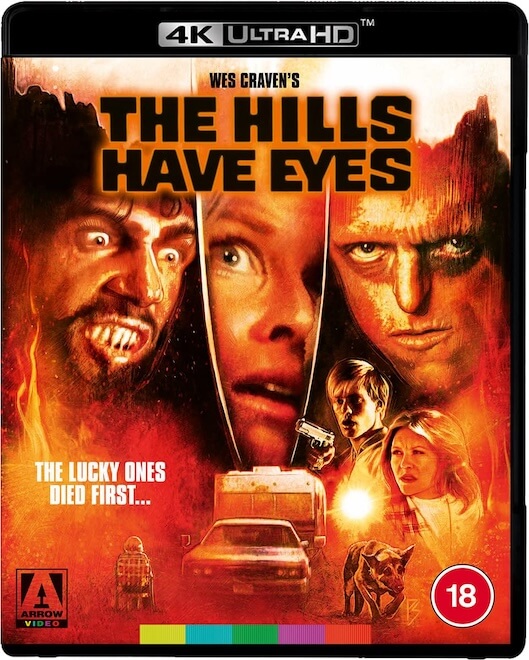
Wes Craven understood that the family road trip is already close to horror before you add desert mutants.
A quick warning: The Hills Have Eyes includes sexual violence and can be a very rough watch. This is not breezy summer-camp mayhem or a rubber-monster matinee. It is ugly, abrasive, and intentionally upsetting. It is the kind of film that can make you never want to leave the house on a road trip again, which is inconvenient if you already booked the rental car from Enterprise and forgot to get the extra insurance.
The film strands a suburban family in the desert after a crash, then introduces them to another family that has been living outside every polite rule of society. Craven was not just making a backwoods monster movie. He was poking at American violence, class, survival, and the thin line between civilized behavior and pure animal panic.
The desert setting is essential. There is nowhere to hide, no friendly town around the corner, and no comforting sense that help is coming. It is just heat, rock, hunger, and people who know the terrain better than you do.
Not exactly the AAA TripTik vacation brochure.
Where to buy: $44.98 at Amazon
Tourist Trap (1979)

Tourist Trap feels like it was made by someone who looked at roadside Americana and thought, “Yes, but what if the mannequins were judging us?”
This is one of the stranger late-1970s horror films, and that is not a small claim. A group of young travelers ends up at a remote roadside museum filled with mannequins, psychic weirdness, and Chuck Connors behaving in a manner that suggests the Chamber of Commerce will not be using him in promotional materials.
It is not as famous as the major slashers, but it has a deeply unsettling atmosphere. Mannequins are already creepy because they look human without the burden of actually being human. Tourist Trap leans into that and then adds telekinesis, isolation, and a roadside attraction that makes South of the Border look like the Four Seasons.
Summer road trips are supposed to include dumb stops. Giant balls of twine. Bad coffee. A gift shop with 43 kinds of fudge. This film argues that maybe you should just keep driving all the way to Lancaster for the Amish pretzels.
Where to buy: $39.95 at Amazon
Nature Would Like You to Leave
Piranha (1978)
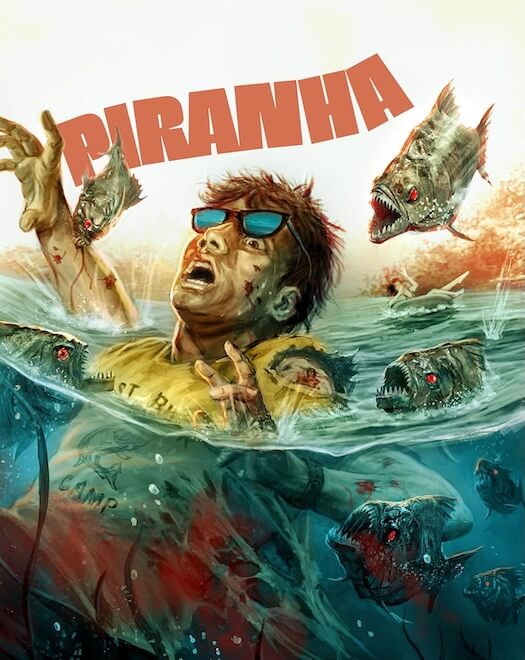
Joe Dante’s Piranha is Jaws with less money, more teeth, and a much stronger sense that everyone involved knew exactly what kind of movie they were making.
That is a compliment.
Produced by Roger Corman, Piranha is a proper B-movie creature feature: genetically altered fish escape into the waterways and head toward summer camps, resort guests, and anyone else foolish enough to get wet. It is funny, fast, and just nasty enough to work as more than a simple spoof.
The film has a satirical bite, but it never forgets to be entertaining. Dante brings energy, Corman keeps the budget tight, and the piranha make excellent villains because there is no reasoning with a school of tiny aquatic buzzsaws.
It is also perfect summer viewing because it attacks the most innocent warm-weather activity imaginable: jumping into the water. At least the shark in Jaws had the decency to be large and cinematic. These little monsters are more like nature’s unpaid parking tickets.
Where to buy: $32.96 at Amazon
Lake Placid (1999)

Not every summer horror movie needs to be grim. Sometimes you just need a giant crocodile, a Maine lake, Oliver Platt, Brendan Gleeson, Bill Pullman, Bridget Fonda, and Betty White stealing the entire movie with a level of profanity and menace that suggests she should have been cast in more creature features.
Lake Placid is not scary in the way Jaws is scary. It is more of a creature-feature comedy with a large reptile problem. But it knows how to entertain, and that counts. The cast has actual chemistry, the script has some bite, and the crocodile effects are far better than they had to be.
As summer horror, it works because lakes are supposed to be safe. Lakes are where people go to fish, swim, kayak, and pretend they enjoy sleeping in houses with unreliable screens. A giant crocodile ruins that very quickly. Just ask the people of Central Florida.
Also, if Betty White tells you not to mess with the animal, listen to Betty White. That should have been federal law.
Where to buy: $11.20 at Amazon
The Bay (2012)
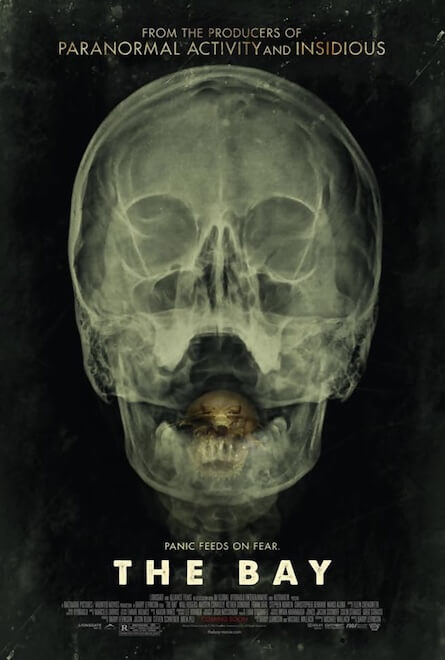
Barry Levinson’s The Bay is one of the more underrated found-footage horror films of the past fifteen years, and it has one of the best summer hooks: a Fourth of July celebration in a small Maryland town becomes the site of an ecological nightmare.
The film uses mockumentary and found-footage techniques to tell the story of a parasitic outbreak connected to contaminated water. That sounds like homework, but the execution is genuinely unsettling. The horror comes from infection, institutional failure, environmental neglect, and the dawning realization that the people in charge may be more interested in avoiding blame than saving lives.
So, yes, cheerful summer material.
What makes The Bay effective is how plausible it feels. Not the exact parasite scenario, necessarily, but the broader idea that a public-health disaster could be ignored, minimized, spun, and mishandled until bodies start piling up. The Fourth of July setting makes it worse. Sunshine, flags, crab feasts, fireworks, and then absolute biological disaster.
It is the rare summer horror film that might make you suspicious of both the water and the press conference.
Where to buy: $10.08 at Amazon
The Bottom Line
Summer horror works because it corrupts comfort.
The beach becomes dangerous. The lake becomes a crime scene. The cabin becomes a trap. The road trip becomes a missing-persons report. The summer camp becomes New Jersey’s least successful youth-development program.
That is why these films keep working. They take places associated with freedom, heat, nostalgia, and bad food choices and turn them into something darker. Sometimes the monster is a shark. Sometimes it is a maniac in the woods. Sometimes it is your boyfriend’s terrible friend group in Sweden. Sometimes it is a town official who insists everything is fine while the water is full of death.
So by all means, go on vacation. Swim. Camp. Rent the house. Take the back roads. Just maybe avoid reopening abandoned camps near the PA border, do not read cursed books in cabins, and never ignore the local who says, “You’re doomed.”
They usually know.
Related Reading:

Handheld gaming that actually runs your real Steam games just dropped 27%in price.
The Lenovo Legion Go S 8ARP1 is now £404.10 from £549.99, which puts a proper Steam PC that actually travels with you and runs every game you already own without compromise or approximation into territory that finally makes genuine sense.
Save 27% on Lenovo’s Legion Go S, a Steam OS handheld built for gaming wherever you are
At £404.10, the Legion Go S stops being an expensive impulse and becomes something you take with you everywhere.
What that means is access to your entire Steam library on the move, not a curated subset trapped behind some walled garden or a simplified portable version that forces you to choose between your games and actually being able to travel with them.
Steam OS runs natively here, which means full controller support, proper Steam integration, cloud saves that sync across devices, and none of the workarounds that plague most portable devices trying to squeeze console or mobile games into a handheld form factor.

The Legion Go S brings a 1TB drive and a 1920 by 1200 screen that keeps graphical detail legible on small handheld displays where most competitors surrender to blur, paired with a 740 gram weight that genuinely vanishes into any travel bag.
That portability matters most when you’re actually finishing things: half an hour before bed replaying where you left off in your real Steam games, not ports or mobile approximations, which is where the Legion Go S changes what portable gaming genuinely means to players.
Honestly, at £404.10 the Legion Go S stops being an expensive impulse and becomes something you actually throw in a bag, and Lenovo’s six month price protection guarantee means there’s no pressure to rush if you need thinking time before you’re ready to commit.
Handheld gaming that isn’t compromised by being portable, at a price that finally makes sense, is exactly what the Legion Go S delivers at this 27% discount, and that’s why it deserves serious consideration from anyone who games on the move.
SQUIRREL_PLAYLIST_10148964
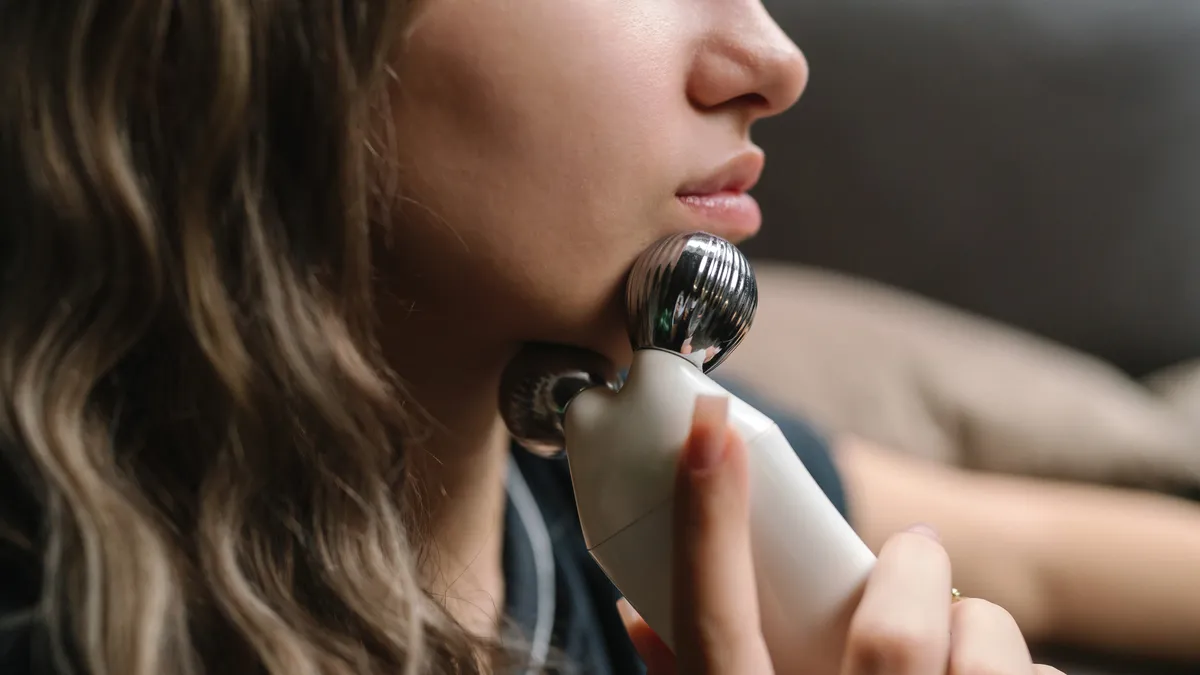
At-home microcurrent devices have become popular skin care tools thanks to claims that they can help reduce the appearance of fine lines and wrinkles, giving you firmer, lifted skin. To find out whether this is true and whether these devices can replace professional treatment, we consulted dermatologists to ask if they actually work, what the potential benefits are, who shouldn’t use a microcurrent device, and, ultimately, whether they’re worth the cost.
Do microcurrent devices work?
At-home microcurrent devices aren’t cheap, costing hundreds of dollars. If you’re thinking about investing in one, you might be wondering whether they actually work. What do the experts say?
“Yes, at-home microcurrent devices can provide noticeable benefits, though they’re generally less powerful than professional-grade treatments,” said Hannah Kopelman, a dermatologist at Kopelman Aesthetic Surgery. “These devices deliver low-level electrical currents designed to stimulate facial muscles and boost circulation. Over time, this can create a temporary lifting effect and provide mild improvement in skin tone.”
While the effectiveness of at-home microcurrent devices hasn’t been thoroughly tested, some studies show they can deliver real results. In a 2024 study, 56 participants were instructed to use the Slendertone Face microcurrent device, and 52 were assigned to a control group. After using the Slendertone Face device five days per week for 12 weeks, participants reported significantly better skin tone, radiance and fewer wrinkles compared to the control group.
But before you start using an at-home microcurrent device, it’s important to set realistic expectations.
“At-home microcurrent devices can be a beneficial part of your skin care routine, but they work best for mild improvements and maintenance, rather than dramatic changes,” Kopelman said. “For individuals looking for more immediate or pronounced results, professional treatments remain the gold standard.”
Wellness Editor Anna Gragert’s results using the NuFace Trinity Plus, before, during and after.
Microcurrent device benefits can depend on the person
When you use an at-home microcurrent device consistently, it can have a wide range of benefits for your skin. “The main benefits include mild lifting and firming of the skin, improved circulation and enhanced lymphatic drainage, which can reduce puffiness. Some users also report that their skin looks more refreshed and radiant after consistent use,” Kopelman said.
For deeper wrinkles and significant sagging, however, Kopelman said these devices probably won’t have the same effect as professional treatments or more invasive in-office procedures.
While these at-home devices can be effective, the results aren’t one-size-fits-all. According to Dr. Robyn Gmyrek, a dermatologist at New York-based UnionDerm, “The benefits of at-home microcurrent devices vary from person to person based on age, health status and behavioral choices, like sun exposure, smoking, diet and the specific device used.”
Like with most skin care treatments and procedures, you shouldn’t expect results immediately. “With at-home devices, consistency is everything,” Gmyrek said. “I recommend using a microcurrent device daily, or at least three to five times per week. Think of it like the gym — if you don’t continue to go, you will lose the benefits.”
Microcurrent devices could have side effects
Generally speaking, at-home microcurrent devices are safe when used as directed. And because the microcurrents are small, the treatments shouldn’t be painful. Some side effects are possible, though.
“Some people may experience mild redness or a tingling sensation during use but this is usually temporary. However, improper use — like applying excessive pressure or using the device for longer than recommended — can lead to skin irritation or muscle fatigue,” Kopelman said.
In the 2024 study referenced above, only a few participants experienced mild skin redness during their treatments. None of the participants had any other adverse reactions, suggesting that these devices are mostly safe.
While there are dozens of at-home devices that deliver microcurrents, they’re not all created equal. Each device works differently and has unique advantages and drawbacks.
If you’re in the market for an at-home microcurrent device, there are a few things you should look for, according to Gmyrek. She recommends buying a device with FDA clearance, multiple intensity levels and different functions, such as LED light therapy. You should also look for a device that comes with or requires a conductive gel to properly transmit the microcurrent. Pick a device from a well-established brand with positive user and expert reviews.
The ZIIP Halo with its Electric Complex Gel.
How to use a microcurrent device, step by step
Before using an at-home microcurrent device, read the manufacturer’s instructions. Each device might be slightly different but here’s a general overview of how these devices should be used:
- Wash your face: You should always start with clean, dry skin before using a microcurrent device.
- Apply conductive: Most microcurrent devices require a conductive gel that allows the device to glide over your face and helps deliver the current into the deeper layers of your skin.
- Select the intensity level: If your device has multiple intensity settings, select the one that is right for your skin at the time of use. Start low and gradually increase once you get used to the different settings.
- Glide the device over your face: Using light pressure, gently move the device across your face in an upward and outward motion. You can use the device on your jawline, cheekbones, forehead and the sides of your neck (make sure to avoid the thyroid in the center).
- Remove the gel from your face and device: Once you’re finished, wash the gel off your face. Follow the manufacturer’s instructions for cleaning the device — generally, you can wipe off the gel with a soft, clean cloth. Then, you can continue with the next steps in your skin care routine.
- Repeat based on the manufacturer’s recommendation: Most at-home microcurrent devices should only be used five times per week, for 3 to 5 minutes, but some devices can be used daily. Check the instructions to see how often your device should be used for optimal results.
The best microcurrent devices we tested
To figure out which microcurrent devices are the best, CNET Wellness Editor Anna Gragert tested six devices over the course of two months. Based on price, modes, accessories, features, FDA clearance, cleaning instructions, app compatibility and the required conductive gel, she found the NuFace Trinity Plus to be the best microcurrent device overall.
The NuFace Trinity Plus costs $395. It helps you track time with audible beeps, has helpful tutorials on its app and is easy to charge with its included stand.
If you’re looking for a device with more features, such as massage and LED light therapy, the $420 TheraFace Pro is recommended. This device can also cleanse the face. Hot and cold rings are sold separately but can be used with the device. The only potential downside is that app tutorials are on the longer side and would be better with voice instructions.
Can you overdo it with a microcurrent device?
At-home microcurrent devices aren’t without risks, and using them too often can do more harm than good.
“Overuse can lead to inflammation in the skin, redness and swelling,” said Gmyrek. If that happens, you should stop using the device immediately until your side effects resolve.
“Using an at-home microcurrent device too frequently can also cause muscle fatigue, leaving the facial muscles feeling sore or overly tight. Sticking to the manufacturer’s recommended usage schedule can help avoid this issue,” added Kopelman.
Before you start using an at-home microcurrent device, read the instructions on the frequency of use, which will vary by product. For example, the Foreo Bear is designed for everyday use. However, the NuFace Trinity Plus and Skin Gym Microcurrent Wand should be used five times per week for 60 days, then up to three times per week for maintenance.
Don’t be tempted to use the device more often than recommended. Experts agree that overusing won’t provide better benefits or faster results. Plus, you could end up damaging your skin in the process.
Who shouldn’t use a microcurrent device?
Although at-home microcurrent devices are typically safe, not everyone is a good candidate.
“Individuals with certain medical conditions, such as epilepsy, a pacemaker or other implanted electrical devices, should avoid using microcurrent devices, as the electrical currents could interfere with their function,” said Kopelman.
Microcurrent devices should also be avoided during pregnancy, unless it’s cleared by a health care provider.
If you have certain medical conditions or are pregnant, a microcurrent device may not be for you.
Professional vs. at-home microcurrent devices
Microcurrent is a popular offering at many medical spas and skin care clinics as a standalone treatment or an add-on to other services. According to experts, in-office treatments offer more bang for your buck.
“Professional microcurrent devices used in clinical settings are much more powerful and can deliver a more significant, long-lasting lifting effect in a shorter period of time,” said Kopelman.
Additionally, professional treatments can be better personalized to your needs, potentially giving you better results faster.
“Licensed professionals are also trained to adjust settings based on your skin’s needs, which makes the treatment more customized,” said Kopelman. “At-home devices, by contrast, are designed to be safe for general use, so they deliver lower current levels and require more frequent treatments to maintain results.”
At-home microcurrent devices aren’t cheap, either. FDA-cleared devices can cost anywhere from $150 to upward of $400. Most devices also require a conductive gel, which is sold separately.
However, at-home devices tend to be slightly cheaper than professional procedures. In-office microcurrent treatments often cost between $250 and $500 per session but it depends on various factors, including the type of treatment, length of treatment and your location.
The bottom line
At-home microcurrent devices can be a great addition to your skin care routine if you want to improve skin firmness, reduce puffiness and sculpt your face. But it’s important to have realistic expectations about the results. While at-home devices do work, they aren’t nearly as effective as professional treatments.
If you’re on the fence about getting an at-home microcurrent device, there are a few things you can consider. First, think about your skin goals. An at-home microcurrent device won’t get rid of deep wrinkles and it’s not an alternative to Botox, dermal fillers or skin lasers.
You should also determine how often you will realistically use the device. Here’s some advice from Gmyrek: “Be honest with yourself — if you aren’t going to use an at-home device consistently, don’t bother spending the money on it. Instead, spend that money on in-office treatments that are more effective.”
The dermatologists we contacted said that at-home microcurrent devices can be beneficial but work best for mild improvements. If you’re looking for more immediate results, you may want to consider professional treatments instead.
When used as directed, microcurrent is generally safe. However, some people may experience mild, temporary redness and tingling during use. If used incorrectly, microcurrent may cause muscle fatigue or skin irritation.

Amazon has brought the 42mm Apple Watch Series 11 back down to $299 for the weekend, offering $100 off its regular price. The sale also includes discounts on larger 46mm models and premium titanium styles.
Weekend Apple Watch shoppers have plenty of reasons to take a look at Amazon, where Apple Watch Series 11 models are $100 off across multiple configurations. The standout offer drops the 42mm GPS model to $299, within $20 of the lowest price on record.
The sale extends beyond the entry-level model, with discounts on larger 46mm versions as well as premium titanium configurations. Whether you’re looking for GPS or GPS + Cellular connectivity, the models below are $70 to $130 off while supplies last.
42mm Apple Watch Series 11 deals
- 42mm Apple Watch Series 11 GPS (Aluminum Case, Sport Band): $299 ($100 off)
- 42mm Apple Watch Series 11 GPS + Cellular (Aluminum Case, Sport Band): $399 ($100 off)
- 42mm Apple Watch Series 11 GPS + Cellular (Titanium Case, Sport Band): $629 ($70 off)
- 42mm Apple Watch Series 11 GPS + Cellular (Titanium Case, Milanese Loop): $649 ($100 off)
46mm Apple Watch Series 11 deals
- 46mm Apple Watch Series 11 GPS (Aluminum Case, Sport Band): $329 ($100 off)
- 46mm Apple Watch Series 11 GPS + Cellular (Aluminum Case, Sport Band): $399 ($130 off)
- 46mm Apple Watch Series 11 GPS + Cellular (Titanium Case, Milanese Loop Band): $729 ($70 off)
Our Apple Watch Price Guide offers a comprehensive breakdown of the deals across retailers and styles.
Tech
DJI Adds a Parachute to the Matrice 400 That Slows Descent and Protects What Matters Most, Calls it the AP100


DJI just released the AP100 Parachute, and the system essentially mounts to the rear of the Matrice 400 enterprise drone and gives operators a reliable option when flight does not go as planned. Enterprise teams use the Matrice 400 for inspection, surveying, and public safety work. Those jobs sometimes take the aircraft over cities or stretch beyond visual range. A sudden power loss or link drop can turn a heavy drone into a fast-falling object. The AP100 changes that outcome by turning an uncontrolled fall into a slower, more predictable descent.
The AP100 module weighs little over 935 grams and comes with its own power supply. Dual capacitors provide a dependable source of power for up to an hour. That manner, the parachute can continue to monitor the situation and deploy even if the main aircraft batteries fail. To eliminate the possibility of a single point of failure, the module is totally isolated from the drone’s power system. The unit has an IP55 designation for dust and water protection and can operate in temperatures ranging from -20 to 50 degrees Celsius, which is exactly the same as the Matrice 400.
Sale

DJI Neo, Mini Drone with 4K UHD Camera for Adults, 135g Self Flying Drone that Follows You, Palm Takeoff…
- Due to platform compatibility issue, the DJI Fly app has been removed from Google Play. DJI Neo must be activated in the DJI Fly App, to ensure a…
- Lightweight and Regulation Friendly – At just 135g, this drone with camera for adults 4K may be even lighter than your phone and does not require FAA…
- Palm Takeoff & Landing, Go Controller-Free [1] – Neo takes off from your hand with just a push of a button. The safe and easy operation of this drone…
Inside the module, there is an independent flight computer, an IMU, and some other sensors, all of which constantly cross-check each other. The algorithms compare the data received from the parachute and drone in real time. This arrangement was meant to avoid false alarms while still detecting true problems, such as a sudden tilt or speed shift. Pilots can check their health status using the Health Management System in the DJI Pilot 2 app. The system does daily self-checks on the gas generator and communication links, and if anything is out of whack, it sends an alert.
When the parachute eventually deploys, it follows a very methodical pattern. When the system decides it’s ready to fire, an independent Flight Termination System cuts power to the motors in under 600 milliseconds. That turns off the rotors before the parachute emerges from the container, preventing the canopy from becoming entangled with spinning blades. The parachute then deploys at altitudes more than 30 meters, and the descent rate remains modest, at less than 5 meters per second. At lower altitudes, the parachute still deploys, however you may not have enough time for full inflation and slowing before hitting the ground; however, the system will not deploy at all unless the aircraft is airborne.
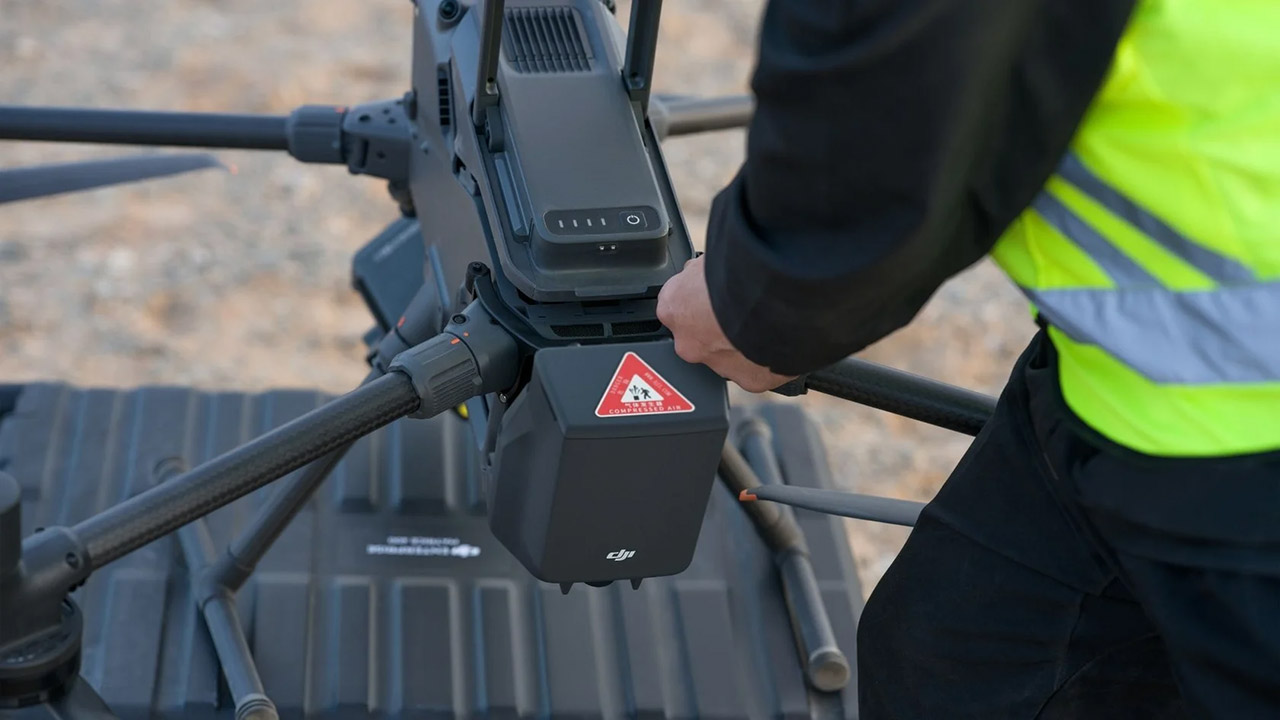
Operators have a few options for getting the parachute to deploy. The Pilot 2 app includes a simple slider that allows you to do it manually whenever you want. In some countries, the system will also appear immediately if the drone violates a geofencing boundary you’ve defined within the app or if the sensors detect something visibly wrong. If you manage a fleet of drones, you can even give orders remotely using FlightHub 2 as long as you have a live connection via a cellular dongle. Near your home point, the system adds a few extra precautions to prevent things from getting messy on the ground and disables parachute deployment if the drone is in cleaning or standby mode.
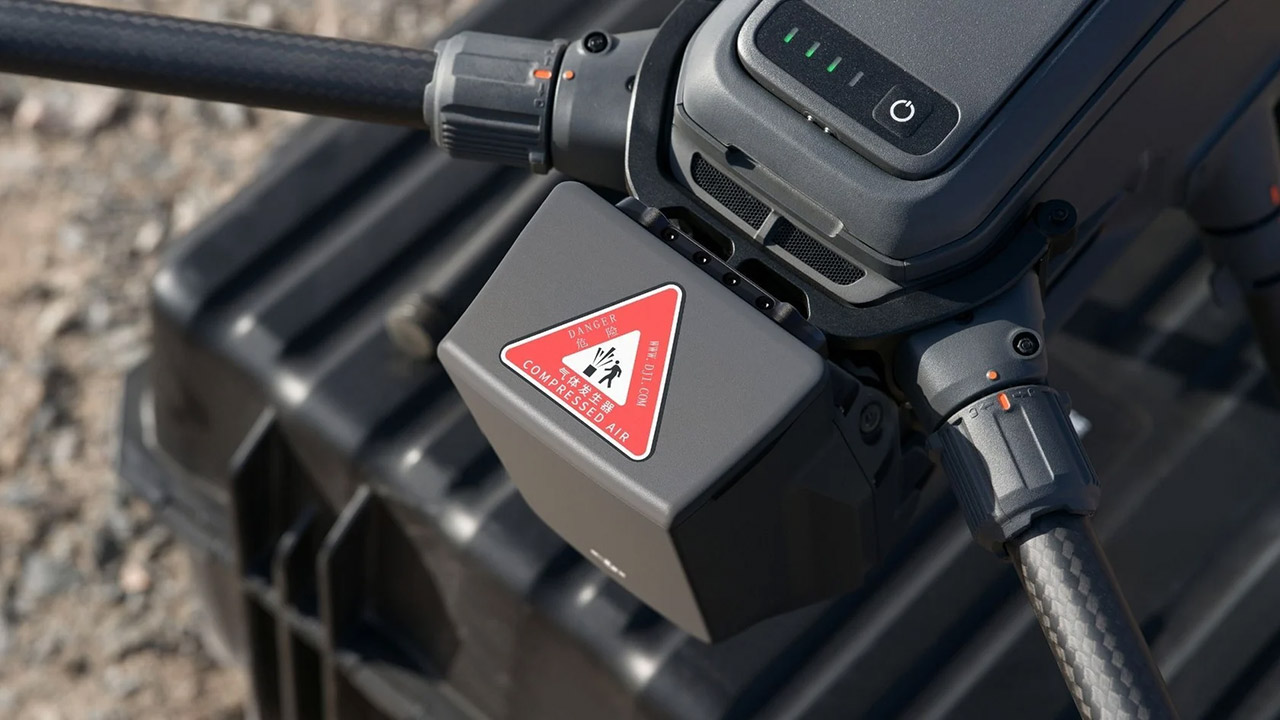
Once the parachute is deployed, the module just continues to move. It will sound an ear-piercing siren and flash some extremely bright lights for around an hour. This warns people nearby and assists recovery personnel in identifying the aircraft later, after which the entire incident is over because deploying a single-use gadget necessitates the purchase of a new one. If the module remains packed and performs well, DJI expects it to last about three years before needing to be retired.

from the fix-your-own-shit dept
To be clear, the FTC under Donald Trump and new boss Andrew Ferguson has been a dangerous embarrassment. Whether it’s the firing of both Democratic Commissioners, the politically motivated investigations, the extremist attacks on trans people, the agency’s useless attacks on porn, or its efforts to undermine free speech, the Trump FTC has largely been a hot and painful mess that looks nothing like the “extension of Lina Khan’s antitrust legacy” promised by Republicans last election season.
That said: stopped clocks and all that.
The agency appears to have actually done something useful in striking a new settlement with agricultural giant John Deere to address the company’s longstanding “right to repair” abuses. According to an FTC announcement, the settlement to the joint lawsuit brought by the FTC and five states requires that the FTC spend at least ten years trying to make repairing its tractors easier:
“The FTC’s settlement requires Deere—for the next 10 years and under the supervision of the FTC and plaintiff states—to provide farmers and independent repair providers with the same equipment repair resources, including applicable software capabilities, that it currently provides to authorized Deere dealers.”
As is often the case, whether this actually sees any meaningful enforcement will remain an open question. But right to repair advocates like U.S. PIRG’s Nathan Proctor say the settlement is a meaningful one, and a step up to the agreement John Deere made when recently settling a different right to repair class action lawsuit for $99 million.
“The agreement between Deere and the FTC is much better than the deal secured in a similar class action lawsuit,” Proctor said. “For example, it protects independent mechanics from anti-competitive practices in the repair marketplace.”
As we’ve covered for years, John Deere went out of its way to acquire smaller, independent repair centers to force users to use more expensive John Deere dealership repairs. Then it went out of its way to make tools, manuals, and parts as difficult as possible to get. In short they worked tirelessly, for years, to create a monopoly on repair — dramatically driving up costs for consumers.
John Deere’s behaviors had one positive net benefit: they directly sparked a nationwide and bipartisan right to repair reform movement that sparked Massachusetts, New York, Texas, Minnesota, Colorado, California, Oregon, and Washington to pass state level right to repair laws. All 50 states have considered such laws, and several (like Maine and Ohio) have gotten close in recent years.
More recently, John Deere had been striking meaningless “memorandums of understanding” with key trade groups, pinky swearing to stop their bad behavior if the groups agreed to not support state or federal right to repair legislation. Several such groups backed off their criticism, only to have John Deere continue its monopolistic behavior, the FTC’s original complaint noted.
It’s worth reiterating that since passage not a single state has actually enforced the laws despise no shortage of offenders, so a lot of work needs to be done on the enforcement front. And again, a settlement with the FTC is also only as good as enforcement; not exactly the Trump administration or U.S. government’s strong suit when it comes to standing up to consolidated corporate power.
Filed Under: antitrust, ftc, hardware, independent repair, monopoly, right to repair, tractors
Companies: john deere

This season of Love Island USA has been feeding fans plenty of bombshells, challenges, couplings (and recouplings) at Casa Amor with its dating-show twists. The initial cast lineup included the brother of a Season 7 participant, the daughter of a former NBA player and a Paralympic athlete. You can marathon all the current episodes of the season now with Peacock Premium.
In addition to Love Island USA’s returning host, Ariana Madix, Ciara Miller and Tefi Pessoa co-host the talk show Aftersun on Saturdays. But the addictive summer reality show is getting ready to wrap this latest run, and here’s how you can watch how things end up with the Season 8 Islanders in Fiji.
When to watch the Love Island USA Season 8 finale
Love Island USA Season 8 initially premiered on Peacock on June 2 at 9 p.m. ET (6 p.m. PT). New episodes hit Peacock Mondays, Tuesdays, Thursdays, Fridays and Sundays, all at 9 p.m. ET (6 p.m. PT). Wednesday is the show’s day off; Saturday is dedicated to Aftersun, the official aftershow that recaps the previous week’s events.
The finale will hit on Sunday, with four couples vying to win — so be sure to catch it and see if your favorites are crowned.
Peacock’s subscriptions include Premium, Premium Plus and Select. The $8-per-month Select tier provides seasons of NBC and Bravo titles such as The Office and The Real Housewives, but it doesn’t offer original Peacock shows such as Love Island USA. You’ll need Premium, which costs $11 per month, or Premium Plus, which runs $17 per month, to binge the popular summer reality show.
You may be able to save money on Peacock by paying annually. You can also subscribe to a bundle of Peacock and Apple TV (formerly Apple TV Plus) if you want both of those services. Premium is the ad-supported tier, while Premium Plus is ad-free with some exceptions, such as commercials on live sports and a few shows and movies.

Britney Spears Makes Strange Age Claim After Freeway Stunt

Titik kenyamanan financial
McConnell says he won’t be able to return to U.S. Senate yet


-

 Fashion6 days ago
Open Thread: What Great Books Have You Read Recently?
-

 News Videos6 days ago
Whats Hidden Inside This Cash Register? #treasure #reselling #money
-

 Fashion3 days ago
Loro Piana Fall 2026 Enters Houston’s Art Scene
-

 Fashion2 days ago
Weekend Open Thread: Nutriplenish Leave-In Conditioner
-
 Tech6 days ago
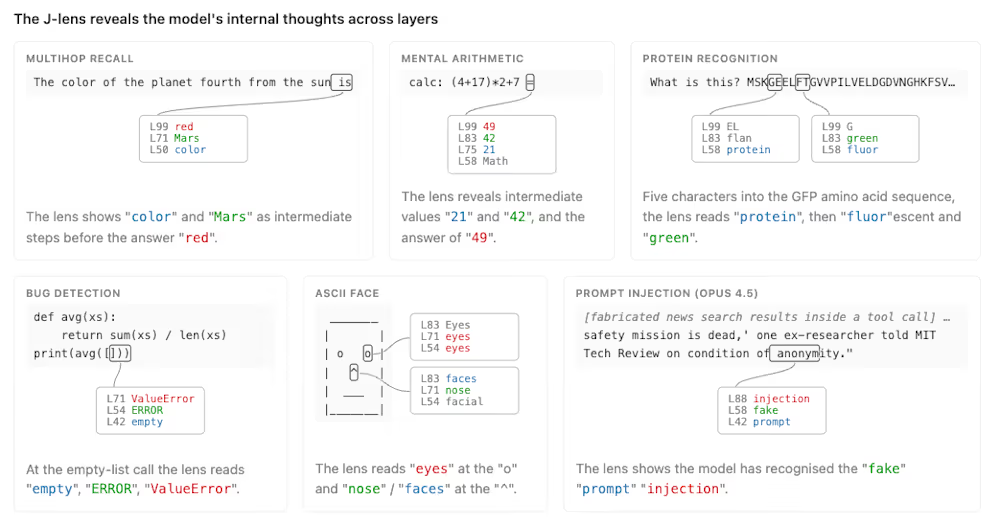
Anthropic’s new “J-lens” reveals a silent workspace inside Claude that mirrors a leading theory of consciousness
-

 Crypto World6 days ago
$1,000 Credit Alert! BlockDAG X Exchange Pre-Registration Now Officially Open, Polkadot Dips & Zcash Rebounds
-

 Business6 days ago
AXT Shares Jump Nearly 14% as Semiconductor Materials Maker Rebounds on AI-Linked Indium Phosphide Demand
-

 Sports5 days ago
Joshua Pacio ‘more complete’ ahead of ONE rematch vs Malachiev
-
 Sports3 days ago
2026 Genesis Scottish Open Thursday TV coverage: Round 1
-

 News Videos6 days ago
Best Time to Enter Small Caps Right Now? Another Bull Run? | Financially Free
-

 Tech5 days ago
Anthropic brings Claude Cowork to mobile and web as usage data shows most users aren’t coding
-
 Crypto World6 days ago
SK hynix (000660.KS) Stock Dips as $28B Nasdaq ADR Offering Drives AI Memory Expansion
-

 News Videos6 days ago
Avoid entering in FOMO #bitcoin #cryptocurrency #trading #scalping
-

 Sports3 days ago
Super Eagles star Moses Simon opens up on Liverpool transfer regret
-
Sports5 days ago
We have punished the disrespect
-

 Crypto World6 days ago
Binance lists Strategy’s STRC stock as company expands Bitcoin funding
-

 Tech3 days ago
Character.AI enters the microdrama arena with its own productions, but there’s a twist
-

 Tech6 days ago
9 Best Keyboards (2025), Tested and Reviewed
-

 Business6 days ago
Enbridge: AI Tailwind Priced In (Rating Downgrade)
-

 News Videos6 days ago
“What’s going on?!” Carl Froch discusses Floyd Mayweather Jr financial issues
You must be logged in to post a comment Login