
TL;DR
IQM added Vanguard director Barbara Venneman to its board as it nears a $1.8bn Nasdaq listing, Europe’s first for a quantum computing company.



An anonymous reader quotes a report from ZDNet: If digital sovereignty is important to you, and it certainly is in the European Union (EU), then you’ll be pleased to know that EuroOffice, a new open-source browser-based office suite alternative to Microsoft 365 and Google Workspace, has officially reached its first stable release. A coalition of EU-based companies, including Nextcloud, Ionos, and other Euro-Stack participants, is positioning Euro-Office as a cornerstone of European digital sovereignty. However, The Document Foundation (TDF), LibreOffice’s steward, accuses the project of reinforcing Microsoft’s document lock-in, which TDF argues isn’t friendly to open standards.
Setting aside the open-source politics for the moment, here’s what Euro-Office brings you. The release went live on June 9. It is, however, not a stand-alone office suite. As the software’s backers explain in a FAQ, “Euro-Office is more of an integration component. It merely handles document editing itself. Storage, as well as navigation, permissions, and sharing logic, have to be offered by a platform it is integrated in, like Proton Docs, Nextcloud Hub, or OpenProject.” So, while you can install Euro-Office on your own Linux server, you’ll need to integrate it yourself. If you’re not a Linux expert, however, don’t give up hope. Some companies have already released packaged, ready-to-install Euro-Office stacks, including Nextcloud Hub 26 Spring, Ionos’ Nextcloud Workspace, and Office.eu. These initial deployments are web-based rather than standalone desktop suites.
The goal, organizers say, is to give European organizations a way to host their office suite on EU infrastructure under EU law, while maintaining an experience familiar to Microsoft Office users. Specifically, Euro-Office is meant to be “a solution for editing documents, spreadsheets, and presentations, developed as a true sovereign community collaboration of over a dozen different organizations.” TDF’s main objection is that Euro-Office’s decision to default to Microsoft’s OOXML format undercuts its claims of European digital sovereignty, since OOXML remains closely tied to Microsoft Office behavior and control. “Compatibility is not sovereignty,” TDF warned, saying a European-branded suite that saves files in OOXML by default “is de facto an ally of Microsoft in its content lock-in strategy.”
IQM added Vanguard director Barbara Venneman to its board as it nears a $1.8bn Nasdaq listing, Europe’s first for a quantum computing company.
IQM Quantum Computers, the Finnish maker of superconducting quantum systems, has appointed Barbara Venneman to its board of directors as the company approaches what would be the first Nasdaq listing by a European quantum computing company. Venneman currently serves on the board of Vanguard, one of the world’s largest investment management firms, and previously led Deloitte Digital globally. The appointment signals that IQM is stacking its governance with public-markets experience ahead of a shareholder vote scheduled for June 25.
That vote will determine whether IQM completes its merger with Real Asset Acquisition Corp (Nasdaq: RAAQ), a special purpose acquisition company based in Princeton, New Jersey. The deal, announced in February at a pre-money valuation of $1.8 billion, would give IQM a primary listing on Nasdaq with a potential dual listing on the Helsinki Stock Exchange. The SEC declared the registration statement on Form F-4 effective on June 5.
The transaction has gained momentum since February. IQM and RAAQ announced an upsized PIPE of $146 million in early June, up from an initial $134 million commitment, after Finnish pension insurer Ilmarinen joined existing institutional investors. Combined with cash from RAAQ’s trust account, an earlier €50 million financing from BlackRock, and IQM’s existing balance sheet of $172 million, the company expects to hold more than $450 million in cash at closing.
IQM’s commercial profile sets it apart from the cloud-only quantum providers that have dominated the US public market so far. The company builds full-stack superconducting quantum computers for on-premises deployment, giving customers direct ownership of the hardware rather than API access to shared systems. It has sold 21 quantum systems to 13 customers, including four of the ten largest supercomputing centres in the world, and ships what it describes as 15% of all publicly disclosed quantum systems globally.
The company reported verified 2025 revenue of approximately €31 million ($36 million) and more than $100 million in cumulative bookings and order visibility. Founded in 2018 as a spinout from Aalto University and VTT Technical Research Centre of Finland, IQM now employs more than 400 people across Europe, Asia, and North America. Its technology partners include Nvidia, Hewlett Packard Enterprise, and AWS, which made IQM’s Garnet processor the first quantum system available via AWS cloud in the European Union.
Venneman brings more than 30 years of experience in digital transformation and enterprise technology commercialisation. She also serves on the board of advisors at Decagon.AI, an enterprise AI software company, and holds an MBA from McGill University and a computer science degree from the Université de Montréal. IQM’s board chair Sierk Poetting said her background in “enterprise technology commercialization, AI, and governance” would be valuable as IQM scales its commercial presence in the US.
The board also reshuffled its founder representation. CEO and co-founder Jan Goetz will replace co-founder Juha Vartiainen as the founder representative on IQM’s board, consolidating the company’s executive and governance leadership under the same person as it transitions to public-company reporting requirements.
IQM is not the only quantum company taking the SPAC route to public markets. Infleqtion listed on the NYSE earlier this month, and Horizon Quantum Computing has pursued a similar path. The SPAC structure carries well-documented risks, with the 2021 wave of blank-cheque listings producing widespread underperformance. IQM’s deal will test whether a European hardware company with real revenue, institutional backing from BlackRock and Finnish pension capital, and a $1.8 billion valuation can break that pattern.

The AMD R600 Gallium3D driver saw 59 commits [last] Sunday to Mesa 26.2. Making this code restructuring and code cleaning all the more notable is that the improvements to this old AMD Radeon graphics driver was done in part by GitHub Copilot.
Gert Wollny has been among the few open-source developers left working on the AMD R600g driver that covers from the Radeon HD 2000 series through Radeon HD 6000 series graphics cards… [T]he old open-source GPU driver support is being assisted by AI long after the upstream vendor has stopped working on this driver — the Radeon HD 2000 “R600” series launched in 2007.

iOS 27 beta has an Extensions system for third-party AI in Siri, but Apple skipped the announcement at WWDC amid EU, legal, and messaging headwinds.
Apple’s iOS 27 developer beta contains underlying support for a feature the company never mentioned at its WWDC keynote on June 8: an Extensions framework that would allow iPhone users to swap between ChatGPT, Anthropic’s Claude, and Google’s Gemini directly inside Siri. Bloomberg’s Mark Gurman has reported that the system includes a settings panel and a dedicated App Store section, both built but toggled off on Apple’s backend. Apple has held discussions with OpenAI, Anthropic, and Google about granting entitlements for the framework, according to Bloomberg.
The feature was widely expected. Gurman first reported in March that Apple was building Extensions to replace the bilateral ChatGPT deal with an open system any qualifying AI provider could join. TechCrunch described the approach in May as a “choose your own adventure of AI models.” By the time WWDC arrived, the question was not whether Extensions would launch, but how prominently Apple would position it.
The answer was: not at all. Apple devoted the WWDC keynote almost entirely to Siri AI, its rebuilt assistant powered by a custom 1.2-trillion-parameter Gemini model running on Nvidia Blackwell GPUs in Google Cloud. The company introduced a standalone Siri app, personal context features, and a three-tier privacy architecture.

The 💜 of EU tech
The latest rumblings from the EU tech scene, a story from our wise ol’ founder Boris, and some questionable AI art. It’s free, every week, in your inbox. Sign up now!
Extensions did not appear in any slide, demo, or press release. Three strategic pressures help explain why.
The first is regulatory. Apple confirmed during WWDC week that Siri AI will not launch in the European Union, citing unresolved negotiations with the European Commission over the Digital Markets Act. The EU rejected Apple’s proposal for a Trusted System Agent that would let rival virtual assistants access Siri AI’s capabilities without direct exposure to sensitive device data.
Announcing a framework that invites third-party AI into Siri while simultaneously telling EU regulators that third-party access poses unacceptable risks would have been difficult to reconcile.
The second is legal. OpenAI is preparing possible legal action against Apple over the ChatGPT partnership struck in June 2024. OpenAI’s lawyers are working with an outside firm on options including a breach-of-contract notice, according to Bloomberg.
OpenAI believed the deal would drive billions in subscription revenue, but says Apple buried the integration behind friction, with users required to explicitly invoke “ChatGPT” by name and responses appearing in constrained windows. Announcing Extensions, a system explicitly designed to demote ChatGPT from its exclusive position to one option among several, would have escalated those tensions at a sensitive moment.
The third is messaging. Apple spent two years rebuilding Siri from the ground up after its original AI plans fell short. Siri engineering chief Mike Rockwell said the team had a working version the previous year but scrapped it because it did not meet their vision.
Craig Federighi called Siri AI’s agent-like capabilities “experimental.” Introducing a model-picker at the same moment Apple was trying to convince users, developers, and investors that its own AI had finally arrived would have undercut the relaunch narrative.
Gurman’s hands-on review of the Siri AI beta, published today, suggests the concern is not unfounded. He described the assistant as functional but buggy, with slow responses, cancelled queries, and misunderstood requests. Siri AI is roughly competitive with where leading chatbots were approximately six months ago, according to his assessment.
The assistant still cannot handle advanced workloads like research, programming, or data analysis. Apple is rolling out access through a waitlist, and even the public beta in July will be limited.
The underlying architecture, however, is designed to accommodate Extensions whenever Apple decides to flip the switch. Google’s Gemini already powers Siri AI under the hood through a deal worth roughly $1 billion per year. Extensions would sit on top of that, giving users the ability to route specific tasks through whichever third-party model they prefer.
That means Writing Tools, Image Playground, and open-ended chat could each be powered by a different provider. Apple’s approach would effectively turn Siri into a platform layer rather than a single-provider assistant.
For Anthropic and Google, the stakes are significant. Extensions would give Claude and Gemini native access to more than 1.5 billion active Apple devices without requiring users to download separate apps or leave the Siri interface.
For OpenAI, the picture is more complicated. The Extensions system might actually benefit ChatGPT by giving it more prominent placement through a model-picker interface, but it would also end the exclusive position OpenAI believed it was paying for with the original partnership.
The iOS 27 beta code also contains references to a foldable device internally codenamed V68, expected to debut in September, and macOS 27 includes pull-to-refresh gestures and Sidecar touch input that point toward a touch-screen MacBook under codenames K114 and K116. These hardware signals suggest Apple is building the Extensions framework with new device form factors in mind, not just current iPhones.
Apple has not publicly confirmed or denied that Extensions will ship with iOS 27 this fall. The framework is built, the discussions with AI providers are underway, and the regulatory, legal, and strategic obstacles are all in motion simultaneously. The question is no longer whether Apple will open Siri to third-party AI. It is whether the EU, OpenAI’s lawyers, and Apple’s own messaging discipline will let it happen on the timeline Apple originally intended.

My wife found this in a store and bought it for me a joke because it says “manly man smell like tree” on the box, which, I mean, you have to buy that. Sometimes a thing that seems like joke turns out not to be. Like this guide. The Last Call Shampoo bar is the same way—there’s a jokey element here and it’s fun, but it’s also a great bar of soap. Or shampoo. Or whatever you want it to be, really.
I’m what you might call a minimalist when it comes to all things grooming-related. I have a beard; I have never put anything on it. If I’ve ever used conditioner in my hair, it was by accident. You get the idea. I don’t see why I should need a bar of shampoo and a bar of soap, so to me, this thing is everything in one neat little package that lasts quite a while, doesn’t have any plastic packaging, and is even cheaper than most shampoo bars I’ve seen. Try it, you’ll like it. And you’ll smell like a fresh, clean tree. —Scott Gilbertson


Trustap was founded in 2017 and has offices in Cork and Dublin, as well as the UK, the US, Spain and Croatia.
Irish payments and transactions start-up Trustap has raised $10m in funding to be used for product development and expansion of its team.
It will also facilitate the launch of Trustap Index, described by the Cork-based fintech company as “a solution designed to make marketplace or e-commerce listings fully transactable by AI agents”.
The service will “work with leading AI models to handle product discovery, negotiation and payment on a buyer’s behalf, with the human confirming each transaction before funds are released”, according to Trustap, to align with a growing shift towards delegation of online commerce from people to AI agents.
The index, which will launch in 2026 and has an open waitlist for early access, aims to close gaps in discoverability of products for shopping agents and help them make more informed buying decisions based on numerous shopping criteria across fragmented platforms through “structured data precision”.
“This funding gives us the runway to ensure that when an AI agent shops anywhere on the internet, it can find the listing, verify the seller and complete the payment securely through infrastructure it can rely on,” said Conor Lyden, Trustap’s founder and CEO.
“We’ve spent years building the transaction platform that make ecommerce, peer-to-peer and marketplace platforms safe, more profitable, and trustworthy for buyers and sellers. Trustap Index is the natural next step in that journey.”
The funding round was led by Aperture Capital, with participation from TX Ventures and other existing investors.
Ben Robinson, CEO of Aperture Capital, said: “The rise of agentic commerce is happening faster than many people realise. We believe that Trustap, which already works with hundreds of marketplaces providing secure end-to-end transaction management, is uniquely positioned to orchestrate agentic transactions.
“Trustap acts as a single, trusted aggregation point that indexes and transforms fragmented inventory data into consolidated machine-readable information.”
Trustap was founded in 2017 and has offices in Cork and Dublin, as well as the UK, the US, Spain and Croatia. It employs more than 40 people working with around 300 customers.
It raised $5.5m in a Series A funding round almost two years ago, and soon after became the first company invested in by the Digital Irish Venture Fund.
Don’t miss out on the knowledge you need to succeed. Sign up for the Daily Brief, Silicon Republic’s digest of need-to-know sci-tech news.
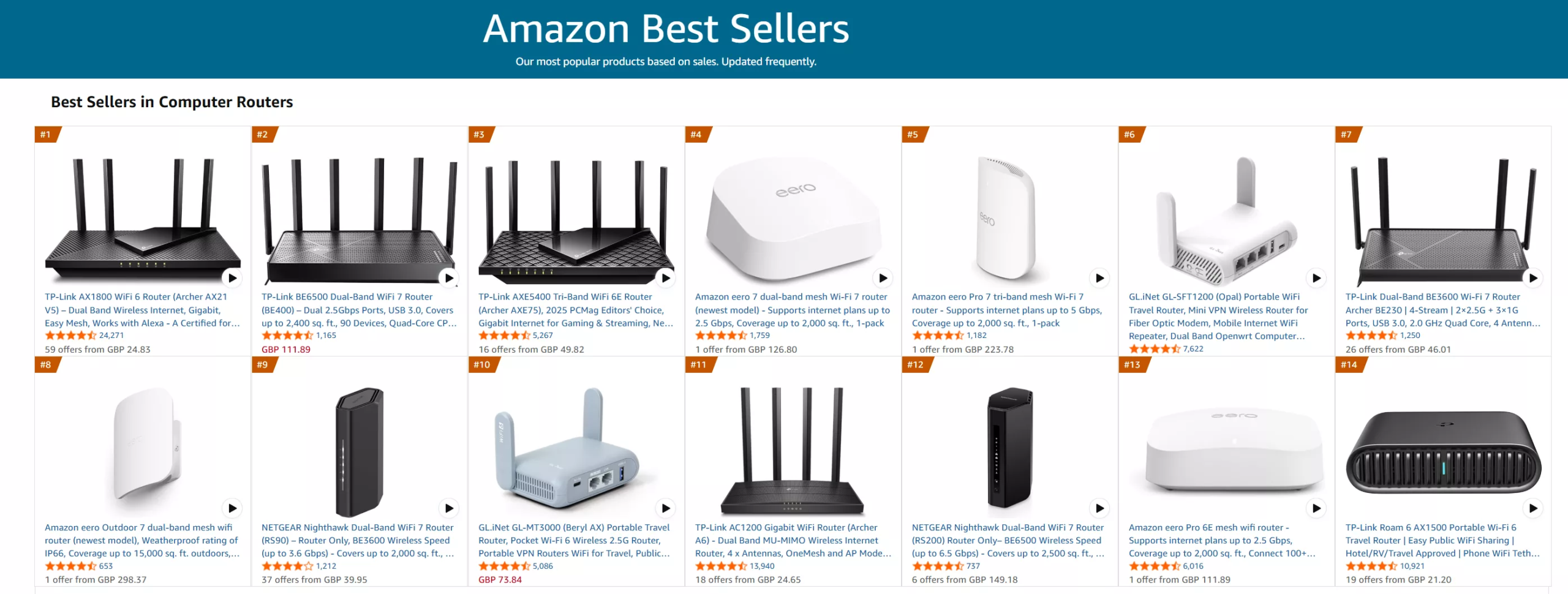
What just happened? TP-Link continues to vehemently argue that it is a US, not Chinese, company. The Pentagon says otherwise, and so does US-based Netgear, which believes its rival makes false advertising claims and has cost it millions of dollars in lost sales because consumers wrongly think that it’s no longer associated with China.
Netgear has filed counterclaims against TP-Link in the US District Court for the District of Delaware, escalating a legal fight that TP-Link started last November.
The original lawsuit accused Netgear of running a smear campaign that connected TP-Link to Chinese cyberespionage fears and breached a 2024 settlement between the two router giants. Netgear’s response now says the real deception is TP-Link’s attempt to rebrand itself as an American company.
According to the counterclaim, TP-Link “remains, at its core, a Chinese company selling Chinese-made products.”
Netgear alleges that TP-Link’s 2024 reincorporation in California did not fundamentally separate the business from China-based TP-Link Technologies, which later changed its name to Lianzhou.
It claims much of the company’s R&D and manufacturing remains in China under the same cofounder, with more than 13,000 employees there through 2024, compared with around 350 in the US.
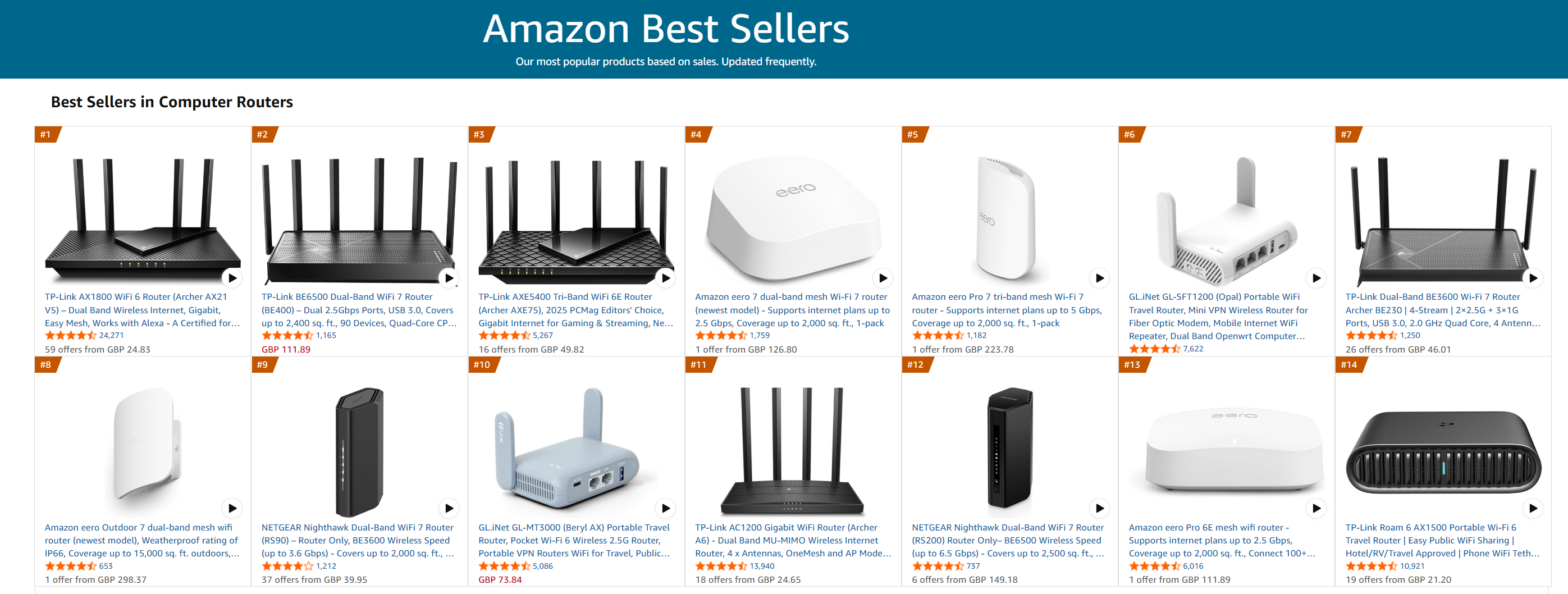
Netgear also takes aim at TP-Link’s “Made in Vietnam” labeling, alleging that the country is mostly used for final assembly and that 99.5% of components in US-bound products are imported from China.
It says those claims are important because customers are increasingly wary of Chinese-made networking hardware, especially after federal agencies began scrutinizing TP-Link over pricing, cybersecurity, and national security concerns.
Netgear’s filing arrived one day after the US Department of Defense added TP-Link Technologies to its list of Chinese military companies operating in the United States. The designation does not itself ban consumer sales, but it adds extra pressure as TP-Link tries to convince regulators that its US arm is independent.
TP-Link is already seeking an exemption from the FCC’s foreign-made router ban by arguing that TP-Link Systems Inc. is headquartered in Irvine, California, and should be treated as an American company.
The FCC rules block approval of new consumer routers made outside the US, though existing devices can keep receiving updates until 2029. Netgear and Amazon-owned Eero have already received exemptions.
This isn’t TP-Link’s only courtroom problem, either. Texas sued the company in February, accusing it of deceptive marketing and allowing China-linked hackers to access American consumers’ devices. TP-Link denied those allegations, insisting it is independent from the Chinese government and that US user data is stored in the United States.
Netgear is seeking damages and an injunction barring TP-Link from repeating the contested claims. TP-Link, meanwhile, maintains that Netgear’s China-focused attacks are false, defamatory, and commercially motivated.


Customers can order new joysticks, batteries, screens and more.
Just because your Anbernic handheld has a broken joystick or a cracked screen doesn’t mean you have to trash it. Anbernic recently revealed a store page that’s dedicated to replacement parts for its gaming handhelds, ranging from its more recent RG Rotate to its older offerings like the RG350P. The store page has options to buy replacement shells, screens, conductive rubber pads, joysticks, batteries, motherboards and buttons for whichever handheld you’re trying to repair.
Beyond ordering the specific part on the storage page, you have to specify the model and color for your order. Anbernic is warning customers to get this info right since it won’t offer any claims if you mess up your device info. While the storage page is live, Anbernic doesn’t currently offer any guides or step-by-step instructions on how to replace individual parts.
However, for anyone with some DIY know-how, Anbernic’s new store page provides a useful way to extend the life of an already affordable device. Repairs could cost up to $236 for a replacement motherboard for more powerful devices, or as cheap as $3 for a spare conductive rubber pad. It’s a similar move to Apple introducing its Self Service Repair page, since previously, Anbernic customers had to go through the company’s support channels and be approved for a replacement device.
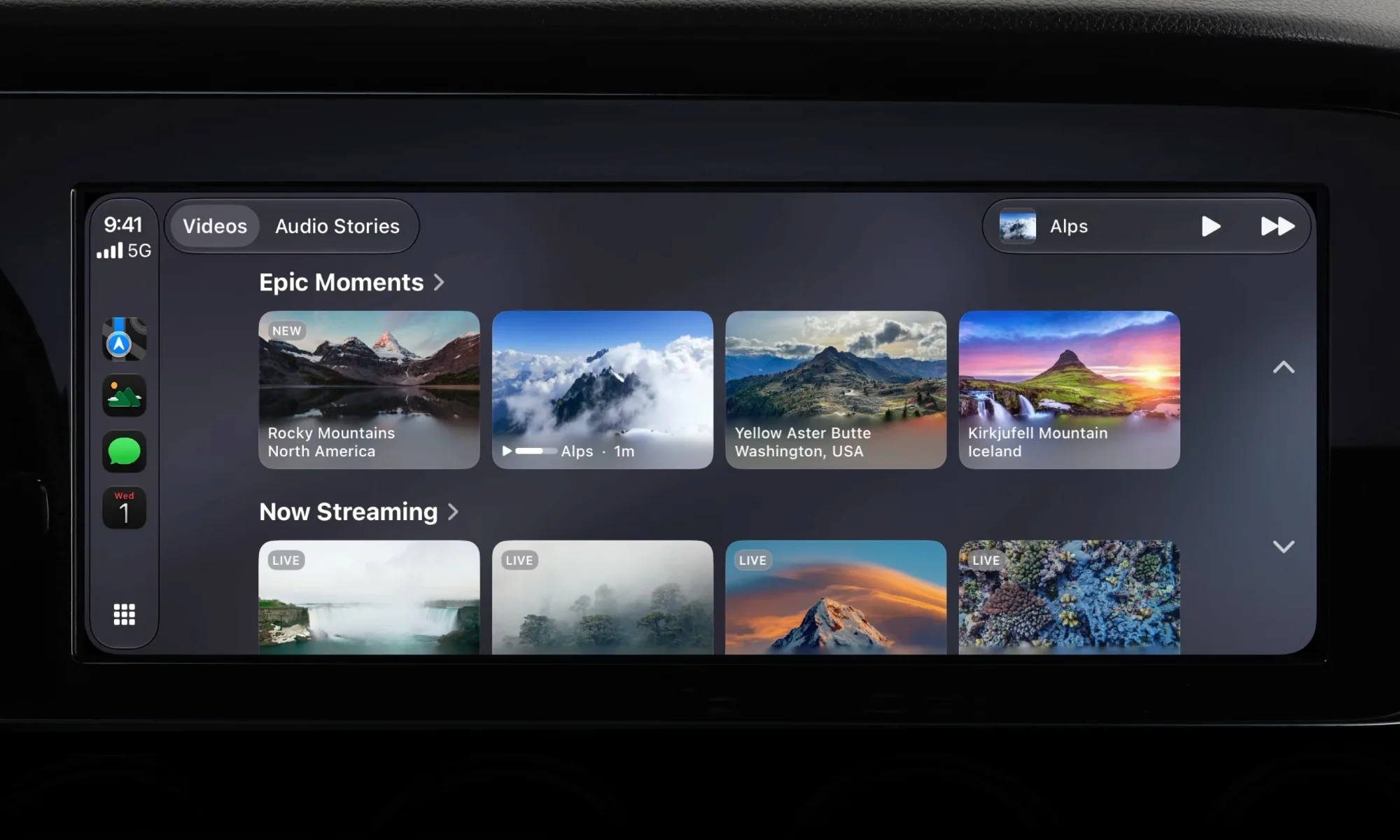
Apple barely talked about CarPlay at its WWDC 2026 keynote, giving most of the spotlight to Siri AI and the broader Apple Intelligence additions in iOS 27. But that doesn’t mean CarPlay is a no-show this year.
The Cupertino giant buried most of the CarPlay updates in a developer-only video, and, as it turns out, there’s genuinely more here than you would have expected. As a CarPlay user myself, I’d say some of these features are long overdue, while others tag along with the broader iOS 27 redesign.
So, without any further ado, let’s discuss everything new coming to your CarPlay dashboard this fall, with the stable iOS 27 release.

The most substantial update to CarPlay this year is support for video playback. Apple’s iOS 27 lets developers build video streaming apps for your car’s dashboard. CarPlay already got AirPlay video casting last year, but iOS 27 takes it a step further, letting you watch videos directly from supported apps.
Apple hasn’t confirmed the list of supported apps yet, but it might include names like YouTube and Netflix. The catch, however, is that you can only watch videos on your CarPlay screen when your car is parked. Further, the manufacturer has to specifically enable the feature, which is why I’m not expecting every car to get this on day one.
This is the “how was this not already here” CarPlay update. I can’t tell you how many times I’ve tried to jump to a specific part of a song using the horizontal audio bar on the CarPlay Now Playing screen, only to realize it doesn’t do anything.

With iOS 27, the Now Playing screen finally gets a real scrubber. Using the horizontal progress bar, you can drag and jump to any point in a song or podcast. If you’re the type who replays the same 10 seconds of a song on a loop, or skips podcast intros entirely, this one’s for you, no question.
Music and podcast apps will get a persistent MiniPlayer. It’s in the top-right corner of the CarPlay dashboard, offering basic playback controls along with the album art.
You can simply glance over while checking the map for your exit, and you’ll actually know what’s playing and be able to skip it, without backing out of navigation first.

This is one of the quieter yet most important CarPlay updates Apple ships with iOS 27. The company is improving how the iPhone-mirroring system tracks your direction and position, refining both GPS accuracy and the heading detection (the direction your car is pointing in).
I’ll admit that it’s not a flashy feature, but it should fix the occasional car icon spinning in circles at a stoplight glitch or navigation confidently rerouting you down a street you are not on.
Wireless CarPlay is all about convenience, and it works just fine, until it doesn’t, and that’s usually when I give up and switch to a wired connection. For anyone who’s dealt with mid-drive drops, unclear voice calls, or a dip in audio quality after hanging up, iOS 27 could be much-awaited fix.
Though Apple doesn’t explain the extent of the change, it says that wireless CarPlay connections are more reliable in iOS 27.

iOS 27 adds new app templates across categories. It also gets support for Live Activities (introduced with iOS 16.1) and widgets from any app, so you could have a live sports score widget running on your CarPlay display without actually opening the app.
Developers also gain new APIs for building conversational voice apps, including AI chatbot integrations, into CarPlay.
While the design language would remain the same, CarPlay gets a total of 14 new wallpapers in the same Celosia style, debuting across iOS 27 and macOS 27. Liquid Glass elements will reflect the transparency level you choose with the new iOS 27 slider, while app icons gain additional refractive layers that add depth and definition.

On top of all that, CarPlay also gets Siri AI with iOS 27. For those catching up, it’s Apple’s long-delayed, Gemini-powered assistant that can handle natural follow-up questions the way Gemini does.
So, you should be able to ask for a restaurant, then ask what time it closes, without repeating the entire request. Siri AI also stores every conversation on your iPhone’s Siri app, with a small car icon indicating you asked the question while using CarPlay.
The catch, however, is that Siri AI for CarPlay requires an iPhone 15 Pro or newer.

SpaceX went public this week in the largest IPO ever, making CEO Elon Musk the world’s first trillionaire.
Despite its name, SpaceX has been emphasizing the potential of its costly AI business, and competitors OpenAI and Anthropic may soon follow with their own public market debuts. So on the latest episode of TechCrunch’s Equity podcast, Kirsten Korosec, Sean O’Kane, and I discussed what’s looking like a hot IPO summer.
“We have SpaceX not only sucking up just a huge chunk of the money that’s available on public markets, but also really stress testing the limits of what a public company can be and how much it can be controlled by one single person,” Sean said. “My eye is really on these other tech companies that will go public and how much they will try to emulate.”
Kirsten also noted that there are other startups trying to “ride that SpaceX IPO wave,” for example by raising money for orbital data centers after SpaceX helped to popularize the concept.
“So there’s a ripple effect that’s happening throughout the market that I think is probably even more interesting than just the headline, ‘SpaceX makes Elon a trillionaire,’” she said.
Keep reading for a preview of our conversation, edited for length and clarity.
Anthony Ha: I want to zoom out a little bit from just the SpaceX IPO, because beyond the Elon Musk of it all, it’s the beginning of what could be a [series] of different IPOs for different AI companies. We’ve talked about Anthropic confidentially filing to go public, and now OpenAI has done the same. How excited are either of you about this?
Kirsten Korosec: I want to start off by saying that I love Julie Bort’s story, which I think sums it up pretty nicely. It’s a great headline, so I’m gonna read it here: “It’s not FAANG anymore, it’s MANGOS.” FAANG being Facebook, which is now Meta; Amazon; Apple; Netflix; Google, now Alphabet.
Now it’s shifted, and we’ve got Meta, Anthropic, NVIDIA, Google, OpenAI, SpaceX. [We’ve still got] massive tech companies, surely, but there is a shift here, right? First of all, we’ve got a bunch of AI labs in there, and that’s very different. Netflix gets booted out of there, a giant streaming service. And so to me, it’s an interesting shift in terms of public markets and the vast amount of money and capital available in the public markets shifting away from consumer [and] social networks and towards, specifically, AI labs and other, more innovative deeptech, such as SpaceX.
So I think that’s the most interesting thing — aside from the fact that this summer is going to keep us all very busy as reporters, more than probably any other summer in a while.
Sean O’Kane: You know, once upon a time I wanted to be a lawyer, and one of the reasons I didn’t was because I hated the paperwork that was going to be involved. And here I am looking forward to reading hundreds more pages of SEC filings this summer — talk about a beach read.
It’s a moment we’ve been anticipating for a while. We’ve spent the last few years really wondering if the IPO market was going to quote-unquote “open back up” after a lot of consternation about private markets, and mockery about people reaching their like Series [whatever] fundraising round. This is a good stress test — I mean, “good,” take that word however you want — a good stress test of public markets in general.
We have SpaceX not only sucking up just a huge chunk of the money that’s available on public markets, but also really stress testing the limits of what a public company can be and how much it can be controlled by one single person. My eye is really on these other tech companies that will go public and how much they will try to emulate.
A thing that I keep saying and thinking about with SpaceX is, they’re really trying to take some of the most extreme aspects of Google and Meta’s original IPOs back in the early 2000s and mashing it up with that “We’ll lose money forever” with Amazon. And I’m curious how much Anthropic and OpenAI will try to do the same. Will they remake themselves in the image of SpaceX? Or will they try to put themselves in a different light?
Anthony: One aspect that really got driven home as I was reading about the OpenAI IPO is also the extent to which some of this is also a bit of a race in terms of timing. I think we can confidently say at this point, SpaceX is first out the gate, which probably has some advantages and disadvantages. It’s also a bit of a different company because it’s billing itself as an AI company, but obviously has a bunch of other stuff going on, too.
But there is a sense in which, at least according to some analysts, OpenAI and Anthropic may both want to go before the other one, because there’s only a finite amount of capital, a finite amount of interest. At some point some of these valuations have to start coming back down to Earth, and so they may both be scrambling to be first.
Kirsten: I mean, there’s very much a race between Anthropic and OpenAI. You’re even seeing OpenAI talk about slashing prices, and they’re certainly going to be competing on the IPO calendar. But that is very short-term thinking. If they’re smart, they should be much more concerned about the long-term play here.
To me, what’s really interesting is while Anthropic, OpenAI, and SpaceX all prepare for these moments, there are a host of other companies out there that are raising money on the backs of the success of companies like SpaceX, or going into SPACs. Just today, for instance, or as we’re recording this, a company called Quantum Space is doing a SPAC and absolutely trying to ride that SpaceX IPO wave.
We’ve got a host of other startups that our reporter Tim Ferholz has reported on that are clearly — they’re not going to go public, right? But if SpaceX is successful with space data centers, they’re raising money off of that potential and they’re building businesses on that potential. So there’s a ripple effect that’s happening throughout the market that I think is probably even more interesting than just the headline, “SpaceX makes Elon a trillionaire.”
Sean: The commonly accepted theory in Silicon Valley is that AI is remaking the economy, but because of its use. AI is actually already remaking the economy — just because of how people are trying to build it. We have everything that you just described, we have these other companies rushing to public markets. And I think that’s a really good point to think about: Will they ever regret rushing to public markets?
But we even have companies like Ford and General Motors who are pivoting their unused battery creation capacity to be energy providers for data centers. And Ford’s stock shot up when it announced what is honestly a pretty modest-looking energy storage business, in comparison to something like Tesla. And Tim De Chant had a really great series of stories this week about GM’s pivot, as well.
The economy’s already being remade. Whether that’s durable, again, that’s the question, but it’s happening right now.
Kirsten: That is actually a really good point, because to me, I want to say five, six, seven, eight years ago, there were all these headlines of “the next Tesla killer” and these automakers and other companies are still chasing trying to recreate all these various businesses, and specifically the strategies of Elon Musk-based businesses. They haven’t learned their lesson.
I wish I could communicate this to all the automaker CEOs out there: I get it that you have a lot of unused batteries and you want to pivot to something else, but trying to model your business after Tesla or SpaceX and others, it doesn’t always work. Perhaps look elsewhere.
Sean: So Ford shouldn’t get into space data centers. Is what you’re saying?
Kirsten: No, they shouldn’t. But just watch. This is going to happen.
When you purchase through links in our articles, we may earn a small commission. This doesn’t affect our editorial independence.


OFFBEAT
L3Harris supplies system that can down incoming drones with laser-guided rockets
The US Army has awarded a contract to defense biz L3Harris for its Vampire counter-drone system to support an urgent requirement to protect against hostile airborne threats.
As drones continue to be a danger to ground forces, the Army’s order, worth up to $106 million, will form part of its layered defense approach against remotely operated and autonomous aerial vehicles.
The Vampire system is described by the firm as a completely self-contained platform that delivers a precision strike capability against drones and remotely piloted aircraft.
It can be fitted to vehicles, such as mounting on the back of a truck, and combines a telescopic mast with an electro-optical/infrared (EO/IR) stabilized targeting system. It also has a launcher for a variety of what the military likes to call effectors – projectiles or missiles that typically go bang.
In the case of Vampire, this will often be the Advanced Precision Kill Weapon System (APKWS), comprising US-made Hydra 70 2.75-inch (70 mm) rockets with an added laser homing capability.
This seems to have become the (relatively) low-cost weapon of choice for downing certain types of drones, and is now being fitted to British Typhoon fighter jets deployed to the middle east, for example.
However, L3Harris says that Vampire has a modular plug-in design that allows for the rapid addition of other sensors, effectors, and radio management systems.
The system can engage aerial targets up to six kilometers (3.8 miles) away. Its laser designator can highlight targets, while also coordinating with other platforms, allowing for a distributed approach to target engagement.
“We’ve worked with the Army to understand their needs for new counter-UxS systems that can be quickly assembled, delivered, set-up and fired,” said L3Harris president, for Targeting & Sensor Systems, Tom Kirkland.
“Vampire is effective at hunting and engaging drone threats affordably, which enables US armed forces to sustain reliable defense of its personnel and infrastructure.”
We asked L3Harris how many systems the US Army will be getting for its $106 million.
The company says it developed Vampire at the beginning of the war in Ukraine to provide a low-cost solution to help eliminate Russian drone threats. It has since ramped up production at a new production line in Huntsville, Alabama, in a response to the growing need it sees from the US and allies to counter the drone threat.
L3Harris says the system has so far logged more than 350,000 operational hours in support of European combat operations since 2023. ®





Alexander Zverev wins the French Open to finally earn a 1st Grand Slam title


Anatomy of the June crypto crash: Fed, Iran, Saylor


Oppenheimer backs SpaceX as $70 billion retail frenzy builds


Markets Rally as SpaceX IPO Looms Amid Iran Tensions and Inflation Surge


FIFA WC 2026 Group C: Morocco, Scotland challenge Brazil’s hunt for glory | FIFA World Cup 2022


High Stakes for Wembanyama as New York Pushes for 3-0 Lead


Notion restores access to Anthropic after service disruption

Eli Lilly (LLY) Stock Surges 4% Following Breakthrough Sleep Apnea Trial Results


Weekend Open Thread: Tuckernuck – Corporette.com

Bangladesh beat Australia after 20 years in ODIs, register only their second win over six-time world champions | Cricket News


NanoClaw integrates JFrog registries to secure AI agent downloads


Bitget enters Argentina’s regulated crypto market through PSAV registration


This Week In Security: Microsoft On Microsoft, Register Your Domains, Linux On ARM, And FreeBSD Joins The File Cache Club


Politics Home | Healey Resignation Is “Colossal Failure Of Government”, Says Former Labour Defence Secretary


First Time Since 1971: Australia Register Historic Low In ODI Cricket

Donnie Wahlberg & More Heat Up Las Vegas at Circa’s Barry’s Downtown Prime


The Ryan Gosling True Crime Thriller On Netflix That Gets Even Stranger, Stream It Now

Opendoor Ends India Operations, Fueling a Bigger Conversation About AI and Outsourcing


Ginebra moves within two more wins of first PBA title in three years


‘This is Seattle’s position on AI’: City Council votes unanimously to pause big new data centers


You must be logged in to post a comment Login