People across the world are increasingly turning to AI for everyday tasks, from looking up recipes and doing their homework to researching work projects or making presentations.
But using AI every day doesn’t necessarily mean people are feeling comfortable with its implications for the world: About 68% of Americans who use AI daily are worried about it, according to a new survey conducted by opinion research firm Gallup, and concern about the tech skews even higher among people who use it less frequently.
Commissioned by Microsoft, the Gallup study currently has results from 37 countries, where researchers polled about 1,000 people in each country between April and July. The project will eventually span 140 countries. Notably, India, a large population of tech users, is not currently part of the reported results, nor is Australia and Malaysia.
Advertisement
The findings appear to put the U.S. at the anxious end of an international chart even as people in other parts of the world expect the technology to improve their lives. According to Gallup, Western countries are most concerned about AI, with the United States leading in anxiety — 74% Americans reported feelings of worry, and only 36% expect AI to mostly help the country.
Other wealthy Western countries showed a similar mix of relatively frequent use and concern. In Canada, for example, 29% of those surveyed reported using AI daily, and of those, more than half expressed concerns about the impact of the technology. Overall, 64% of Canadians aware of AI said it worried them.
The survey paints a different picture in the rest of the world, however. In Singapore, which had the highest portion of daily users in the study (46%), more than 80% of those aware about AI expect the tech to improve their everyday lives, and 77% think it’ll help the country. China, where 35% of people report using AI daily, most people expect it to help the country. The story is similar in Israel.
Advertisement
Still, optimism about AI doesn’t necessarily appear to translate to trust in the tech’s accuracy. According to Gallup, people who use AI daily were generally more trusting of its results, especially in high-adoption countries like Singapore, Israel and China, while less frequent users remain skeptical across the board. In the U.S., only 45% of daily users expressed that level of confidence. Altogether, only 36% (median) of the people surveyed said they trust AI’s results a lot.
Overall, though, Gallup reports that positivity about AI outweighs negative sentiments: In 34 of the 37 countries surveyed, people mostly reported feeling curious about the tech, with a fewer number saying they felt happy or excited. Only about 32% of those surveyed said they felt worried about AI. Positive emotions seem to be most common in China (90%), Singapore (89%) and Kenya (87%).
It’s not clear how much sentiment in some countries, especially China, might have changed since the survey ended in July, as the pace of AI development has lately burgeoned into a matter of international importance. AI safety is one of the major topics on the table for discussion when U.S. President Donald Trump and Chinese Premier Xi Jingping meet on Thursday.
Notably, China’s head of the Ministry of State Security, Chen Yixin, wrote in a recent article that AI will have “a systemic impact on the political and security environment,” and could threaten China’s “political security, institutional security, and ideological security.”
Advertisement
“One of the clearest findings is that attitudes toward AI are multidimensional. People can be curious about AI, expect it to be beneficial and use it frequently while still being worried about it. Similarly, they can see considerable potential in AI while remaining skeptical about whether the information it provides is accurate,” Pablo Diego-Rosell, senior scientist at Gallup, told TechCrunch.
While the report paints a picture of optimism colored by some concern, it’s nevertheless true that AI worries are increasingly becoming part of public discourse. People who rely on AI for day-to-day tasks may end up supporting tougher rules or resisting its use in hiring, healthcare, education or government. And there’s certainly an argument to be made that training and serving AI models can harm the climate, and their unregulated use can disrupt cybersecurity, diminish content ownership, upset the creative arts fields, or harm data privacy.
At the end of the day, the report suggests that greater exposure alone will not resolve the unease around the technology. Still, given the amount of money that’s being invested, AI will likely continue proliferating even as disputes rage around where it belongs and what limits should be placed around it.
When you purchase through links in our articles, we may earn a small commission. This doesn’t affect our editorial independence.
My YouTube algorithm is sacred, with years of data about my preferences and viewing history fermenting into whatever videos it picks for my home screen. YouTube’s algorithm, while not perfect, sure knows what I want to see. The current top three videos on my front page are an Apple Watch analysis, a Big Brother season 28 update, and something called “I Lost to the Muppets” from comedian Chris Fleming. Click. Click. Click.
As part of its Made on YouTube event Wednesday, Google released several new features, including a Custom Feeds button for adjusting what videos pop up on your front page. It’s a rare chance for users to directly tweak their algorithmic feed on YouTube, in ways that go beyond just pressing thumbs up on a video or blocking a creator.
To try it out, users can click the Your custom feeds button below the search bar and type a request for the feed they’d like to see. YouTube uses large language models to process your request and whip up a freshly personalized homepage. “I want a rainy Shanghai vibe: café jazz, street food, and vlogs,” read one of my suggested prompts.
Courtesy of YouTube
YouTube tested Custom Feeds as an experimental feature earlier this year, before deciding that it was a good fit. The company plans to roll it out soon as an option for all US users, whether viewing on mobile, desktop, or TV.
Advertisement
“Users are always telling us that they want more control,” says Emily Moxley, YouTube’s vice president of product management. “They want more ability to steer their algorithm. With custom feeds, we’re giving them a natural-language way that they can do that. They can tell us exactly what they want.”
So, I told YouTube exactly what I wanted to see: “Gooey macaroni and cheese recipe videos, Caleb Hearon clip compilations, and crystal singing bowl videos under 15 minutes.” And the feed it generated was exactly that. My perfect zen blend for rotting on the couch after a long day. YouTube suggested potential additions to expand my prompt, like “uploaded this month” and “without talking or commentary.” Not bad.
The Custom Feeds button sits next to other topic tabs below the search bar, like “Music” and “Podcasts.” Experimenting with this tool doesn’t replace your standard homepage, which you can access anytime by clicking the “All” button. Users can save multiple custom feeds.
Platforms like YouTube have used machine learning tech for years to build your social media feeds. Now, in the age of generative AI, YouTube is building on that technological foundation and introducing a new way to use AI to build custom video feeds, the company announced at Made on YouTube on Wednesday.
You will soon be able to build multiple custom feeds of recommended videos by prompting YouTube like you would a chatbot, using plain language. So you can have feeds dedicated to specific subjects, like photography or college football, and YouTube creates dedicated tabs on your homepage for each feed. This will be rolling out across desktop, TV and mobile in the US next month.
YouTube’s experimental Ask YouTube tool lets you search for videos with AI, and it’s expanding its capabilities. Now, if you search for information about a new product, like the new iPhone Duo, the Ask YouTube AI can compile information from videos and outside sources. It uses that information to build comparison tables, among other things. You can click on a video that the tool surfaces and continue asking questions on the video’s watch page.
It is somewhat similar to how a chatbot can search the web for information, compile it and cite its sources. But similar to the decline in traffic that digital publishers have seen with the rise of generative AI, there is a risk that YouTube’s AI-enhanced search may eliminate the need for people to click on video links and consume original content.
Advertisement
“Our goal is to connect viewers with the right video faster. With Ask YouTube, we expect watch time to remain steady or improve,” a YouTube spokesperson told CNET. Other AI features, such as chapters and AI-generated summaries, “showed no negative impact on watch time; instead, they helped retain viewers.” Videos included in the AI search’s answers will “prominently display the video title and channel name,” the spokesperson said.
The AI takeover of YouTube has been an ongoing project for its parent company, Google, in recent years. While creators have been using AI to edit and create videos, leading to an onslaught of AI slop, the platform has been integrating new tools powered by Google’s Gemini models. Now, YouTube is focusing its AI efforts on personalization, both for viewers and creators, to ultimately keep us scrolling and monetize content. It is also adding Gemini as a content creation assistant to Shorts and the YouTube Create app.
YouTube has been under fire this year as a landmark court decision found that Meta and Google designed their sites to be intentionally addictive to children and teens, harming their mental health. YouTube has denied this, saying it’s a streaming platform, not a social media platform. Many child safety researchers and advocates are worried about social media sites adding more AI features. We’ve already seen how AI features can harm kids, such as in the case of Reuters’ 2025 investigation that found Meta’s AI chatbots on Instagram would engage in sexual and romantic roleplay with children.
Creator-specific tools coming to YouTube
YouTube is introducing a dedicated tool for episodic content, called Shorts series. This will let content creators designate videos as part of a dedicated series, with season and episode numbers. As more content creators are investing in serialized content — think Sydney Jo’s The Group Chat series or microdramas — this tool will allow people to separate and highlight these videos from the rest of their posts. Viewers will be able to more easily find and watch these videos. The series will live on a creator’s page as a playlist. Only creators in YouTube’s partner program will have access at launch, available on web, mobile and TV.
YouTube is also offering creators two new ways to personalize content for their viewers. Creators will be able to test multiple thumbnails and preview clips for their videos. YouTube will serve the video to real viewers, and depending on each thumbnail and video cut’s performance, it will match a viewer with the version YouTube thinks they will be most likely to click on. This kind of personalization is a key part of AI’s promise for digital marketers.
Advertisement
Auto dubbing, or real-time audio translation, will be available for livestreams, starting with English and Spanish, with plans to expand to additional languages in the future. YouTube is also expanding how creators can monetize their content with a new affiliate partnership with Amazon.
Katelyn Chedraoui
Reporter 2
Katelyn is a reporter with CNET covering artificial intelligence, including chatbots, image and video generators. Her work explores how new AI technology is infiltrating our lives, shaping the content we consume on social media and affecting the people behind the screens. She graduated from the University of North Carolina at Chapel Hill with a degree in media and journalism. You can reach her at kchedraoui@cnet.com.
See full bio
Beats has just unveiled its latest pair of headphones with the Beats 360, but how does it measure up to Apple’s AirPods Max 2?
Beats is part of Apple, and has been since being bought by the company back in 2014, which means choosing between the two for headphones can feel like a difficult task. That’s where we come in.
Although we haven’t reviewed the Beats 360 yet, we have reviewed the AirPods Max 2 and have noted the key differences between the two headphones below.
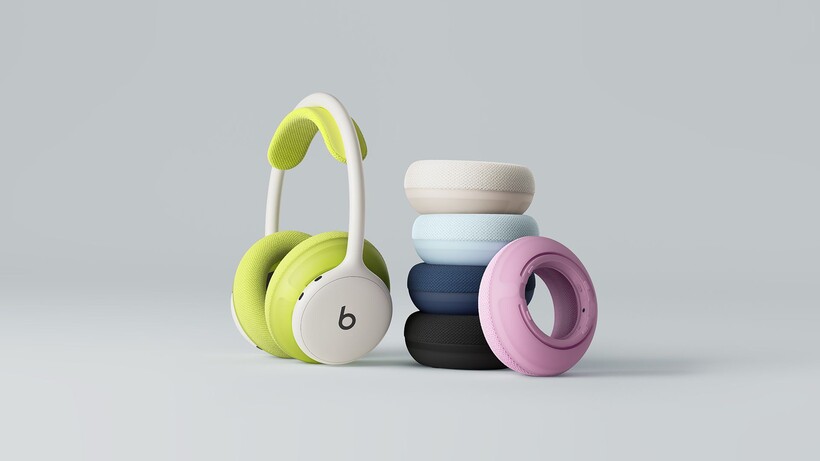
The Beats 360 is available to order now and has an RRP of £299.95. The headphones come in a choice of four colours – Sky, Cloud, Pink and Black – and will include colour-coordinated earcup and headband cushions.
Advertisement
SQUIRREL_PLAYLIST_10208788
You can also purchase different coloured earcups and headband cushions separately with Cushion Kits. At the time of writing, you can buy Cushion Kits for just £9.95 directly from Apple, which is £40 less than they’ll usually be.
Advertisement
The AirPods Max 2 is considerably more expensive in comparison, with an RRP of an eye-watering £499.
SQUIRREL_PLAYLIST_10208393
Beats 360 has interchangeable earcup and headband cushions
One of the biggest design differences between the Beats 360 and AirPods Max 2 is that the 360 has interchangeable earcup and headband cushions. That means alongside the colour-matched cushions that come in the 360’s box, you can buy additional knit cushions in six colours – Black, Cloud, Pink, Sky, Navy and Volt (which is a vibrant yellow), or UltraPlush options in either Black and Cloud. The latter is the same engineered leather that’s found on the Studio Pro.
Advertisement
In comparison, although the AirPods Max 2 comes in a choice between five colours – Blue, Purple, Starlight, Orange and Midnight – you can’t change the earcups or headband.
Advertisement
Both can be paired with either an Android or iPhone, but the Beats 360 offer Android features
Contrary to popular belief, you can pair the AirPods Max 2 with an Android phone, however you will lose access to Apple features like Siri, Find My and easier pairing.
Otherwise, thanks to its custom Beats chip, the Beats 360 promises seamless integration across both Apple and Android ecosystems. For example, if you pair the Beats 360 with an iPhone then you’ll benefit from one-touch pairing, Siri, audio sharing, personalised spatial audio with dynamic head tracking and Find My integration. However, pair the Beats 360 with an Android and you’ll see Google Fast Pair, access to Find Hub and audio switch too.
AirPods Max 2. Image Credit (Trusted Reviews)
Essentially, if you’re an Android user and are torn between the Beats 360 and AirPods Max 2, then the decision is easy, as the Beats 360 offer more features specifically for your Android ecosystem.
Both are fitted with ANC and nine microphones
Both Beats and Apple make pretty hefty claims with regards to their respective flagship headphone’s ANC prowess. While Apple stated that the AirPods Max 2 saw 1.5x better ANC than the original AirPods Max, Beats promise the 360 has the brand’s best ever ANC that’s 1.75x more powerful than the Studio Pro.
Advertisement
Advertisement
Beats 360. Image Credit (Trusted Reviews)
As we’re yet to review the Beats 360, we can’t currently verify this claim. Having said that, in my brief time with the headphones, I was instantly impressed with how well the headphones muted a noisy event – even without playing an audio. With that in mind, we have high hopes for the 360.
During our time with the AirPods Max 2, we found the headphones did a great job at cancelling noise from public transport and general chatter. While some sounds did creep through, mainly traffic and cars, generally we were impressed with its ANC and found it comparable to some of the best noise cancelling headphones on the market.
Beats 360 has a Power button and no Digital Crown
One of our biggest annoyances with the AirPods Max 2 is the fact it doesn’t have a dedicated Power button. Instead, you either need to simply leave the AirPods Max 2 untouched for an extended period, or place the headphones into the so-called Smart Case to power them down. It’s such a strange decision, and feels like we’re potentially wasting battery.
AirPods Max 2 in Smart Case. Image Credit (Trusted Reviews)
Fortunately Beats hasn’t made the same mistake as Apple, with the 360 fitted with easy-to-use controls on the back of each earcup. These controls include a volume rocker and a play/pause button on the right, and a listening mode and a power button on the right. What isn’t included on the Beats 360 is a Digital Crown.
Advertisement
Found on the AirPods Max 2, the Digital Crown can be used for multiple features, from volume control and playing or pausing media, to answering calls, using the camera remote feature, accessing Siri and more. It’s useful, but still frustrating that you can’t use it to turn the headphones off.
Advertisement
Beats 360 promises longer battery
During our time with the AirPods Max 2, we found the headphones matched Apple’s claim of 20 hours of battery between charges. It’s decent, but falls far behind many other over-ear headphones – including the Beats 360.
In fact, the Beats 360 promises to deliver up to 32 hours of battery life between charges while a five minute charge results in an additional hour of playback too. Considering we found the Studio Pro actually surpassed Beats’ battery promise, we have high hopes for the Beats 360.
Early Verdict
Judging by its specs alone (as we haven’t reviewed it yet), the Beats 360 looks like a seriously promising set of headphones. With the promise of Beats’ best ever ANC, a customisable design and longer battery life, the Beats 360 will suit both iPhone and Android users – especially as it has a more affordable price tag too.
That doesn’t mean the AirPods Max 2 isn’t a great choice – in fact, we concluded the headphones to be Apple’s best sounding option. It’s just with a £499 price tag, a fairly pointless case and a below-average battery life, unless you’re a diehard Apple fan, the AirPods Max 2 isn’t the most appealing option on the market.
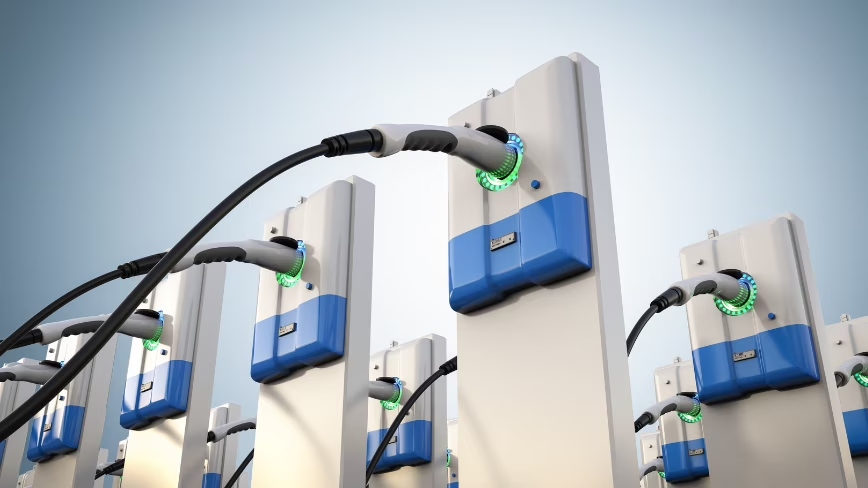
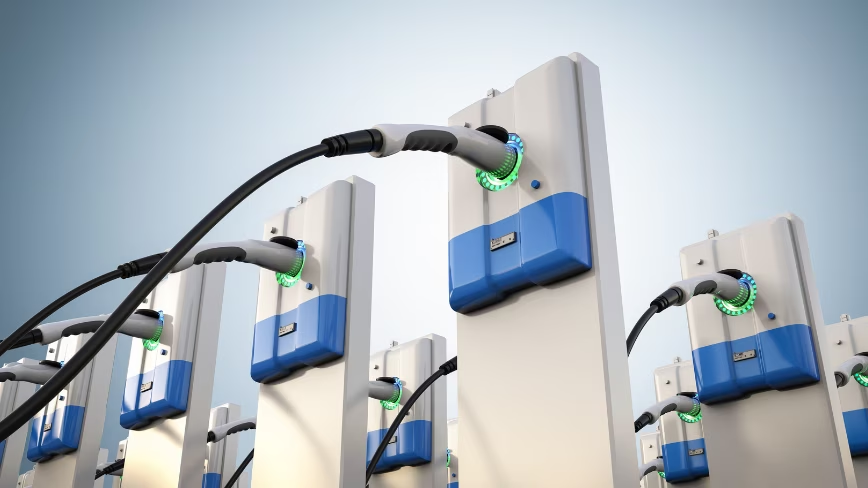
Geely has revealed a fifth-generation charging system peaking at 2,250 kW, which it says takes new Lynk & Co and Zeekr models from 10 to 70% in four minutes and 30 seconds. Under AFIR a charging pool on Europe’s core network must provide 600 kW in total by 2027.
Geely has revealed a fifth-generation Smart Charging System that peaks at 2,250 kW, InsideEVs reported. New versions of the Lynk & Co 10 and Zeekr 001 charge from 10 to 70% in four minutes and 30 seconds, and from 10 to 97% in eight minutes and 40, the company says.
Nothing sold here is close.
The quickest cars on Western markets peak at 400 kW, and the Mercedes-AMG GT four-door will take 600 kW when it arrives. Geely did not say what peak rate its own cars actually reach.
Advertisement
The rules make the better comparison.
A charging pool on Europe’s core network must provide 400 kW in total by the end of this year under AFIR, rising to 600 kW with two 150 kW points by 2027. One Geely connector is nearly four times that whole site.
The battery claim is the part worth reading.
Geely says an AI system called Xingrui PowerMind predicts cell temperatures and adjusts speed to hold an average of 55 degrees Celsius, with a ceiling of 65. It also claims a lithium-ion pulse restoration technique, using micro pulses to reactivate lithium that plates onto the anode during repeated fast charging.
Advertisement
Europe starts testing that in November.
Euro 7 takes effect on 29 November and requires a battery to retain 80% of capacity after five years or 100,000 km, and 72% after eight years or 160,000 km. BYD put 350 fast charges into one car in nine days and reported 98.7% retention, which measures cycles rather than calendar years.
Deployment is the other gap.
BYD passed 10,000 Flash chargers in August, wants 20,000 by December and plans 3,000 in Europe, beginning with 300 in the United Kingdom. Each of its connectors delivers up to 1,500 kW. Geely has not said how many chargers it intends to build, or where.
Advertisement
It owns two European brands.
Geely’s chairman said in April that the group would stop building factories anywhere in the world and use Volvo’s instead. Volvo and Polestar sit in the same group as Zeekr and Lynk & Co. Neither has been offered this charger.
Two thousand feet of half-inch PEX already slept six to eight feet under Craftsman Chris’s yard when his first homemade cooling plan came up short. Four parallel five-hundred-foot slinky loops and a Taco 009 pump pushed water through a heat exchanger in the furnace plenum, yet the dirt had baked in the sun after excavation and the loop stayed warmer than he needed. Direct ground water barely cooled the house. He needed a machine that could pull heat out of indoor air and dump it into that soil instead of into hot summer wind.
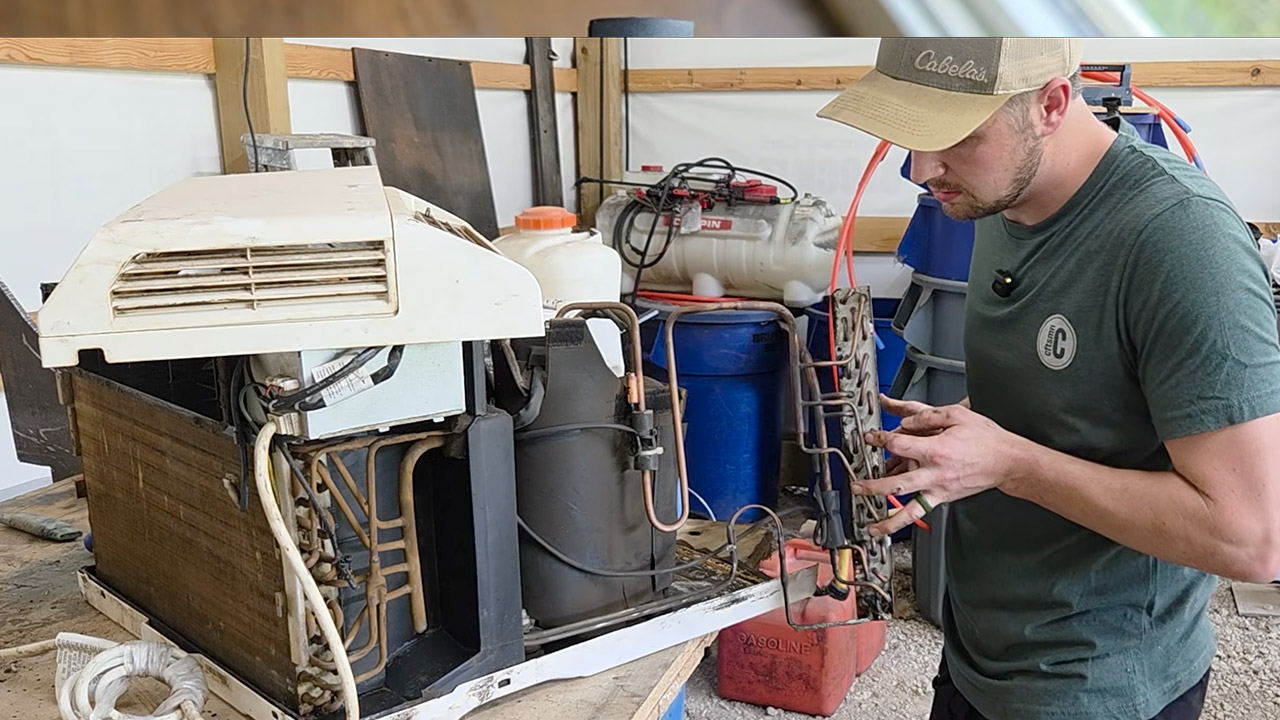
Chris ended up with a 14,000 BTU LG Dual Inverter window unit that he fished from a dumpster. After cleaning the coils with Simple Green and a fin brush, and then washing them with soapy water, he was able to free up the condenser fan without touching any of the copper piping. He then moved the outdoor coil roughly 90 degrees without damaging a single copper line, ensuring that the refrigerant remained sealed. A little of scrap sheet metal and a MIG welder came in helpful for creating a water jacket around the coil, and to make it all work, he rigged up the ground-loop water to feed in at the top, surround the condenser, and exit at the bottom into the underground PEX tubing.
Brushless Motor – Super Power: The combination of a three-phase brushless motor and a 5000mAh battery significantly improves the wind speed, power…
Scroll Switch – Customizable Wind Speed: This small fan adopts a scroll switch design, and the wind speed can be adjusted steplessly. The portable fan…
Fashionable Design – Metal Body: The body of this handheld fan is made with advanced oxidation technology, giving it a metal-like texture. Its smooth…
Keeping the sealed circuit intact was important since he never cut any tubing or vented the refrigerant, thus the compressor and valves continued to function properly. Of course, new problems arose anyhow. For one reason, oil might accumulate at the new low point of the spun coil, starving the compressor. Then there was the issue of uninsulated aluminum on the water jacket absorbing extra heat, as well as air bubbles requiring a long time to purge. I suppose the final nail in the coffin was that the safety plug on the original power cord wouldn’t reset, so he had to temporarily replace the power cord end. Nonetheless, none of these concerns prevented him from running the test.
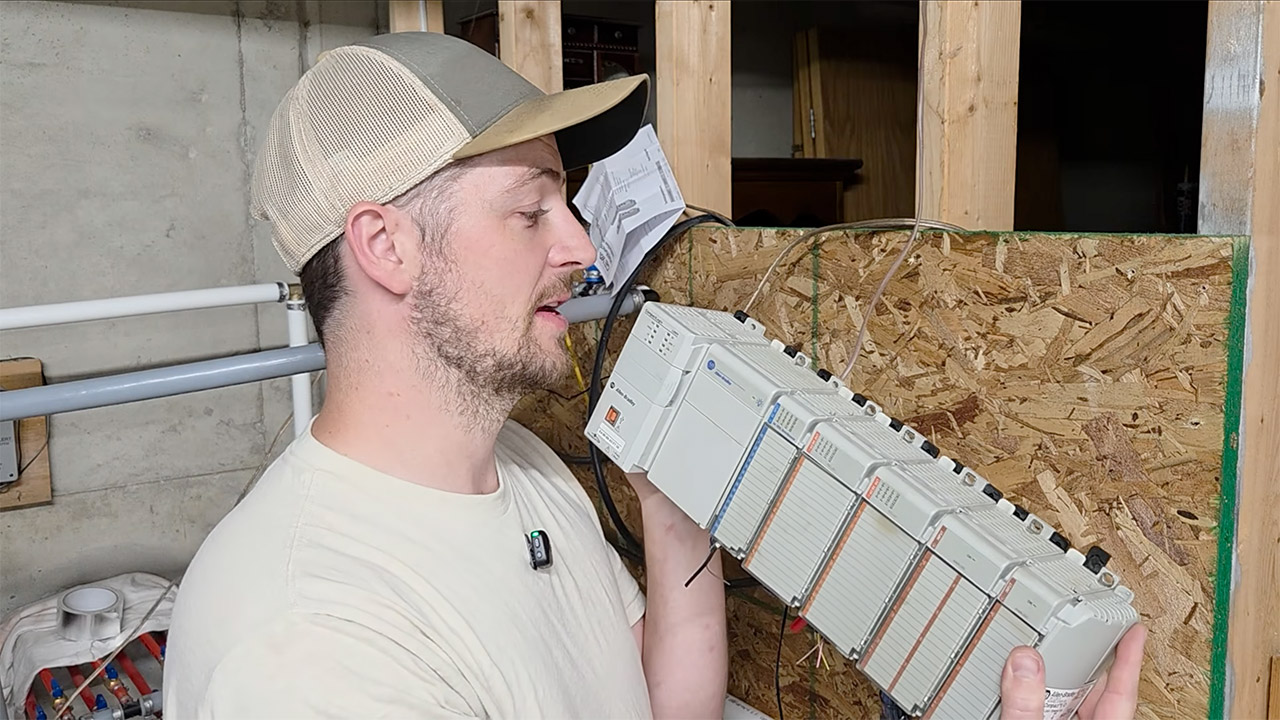
The control system for the device remained fairly rough, almost as beat up as the tank. He set together an old programmable logic controller and a linear actuator to hit the stock power button whenever the thermostat signaled for cooling. Not exactly a beautiful interface, but rather a production remnant that looks like it belongs on a plant floor and is being used to click a single button on a thermostat. The water flow rate through the jacket was around 3.3 gallons per minute, utilizing the same Taco pump that already serves the loops.
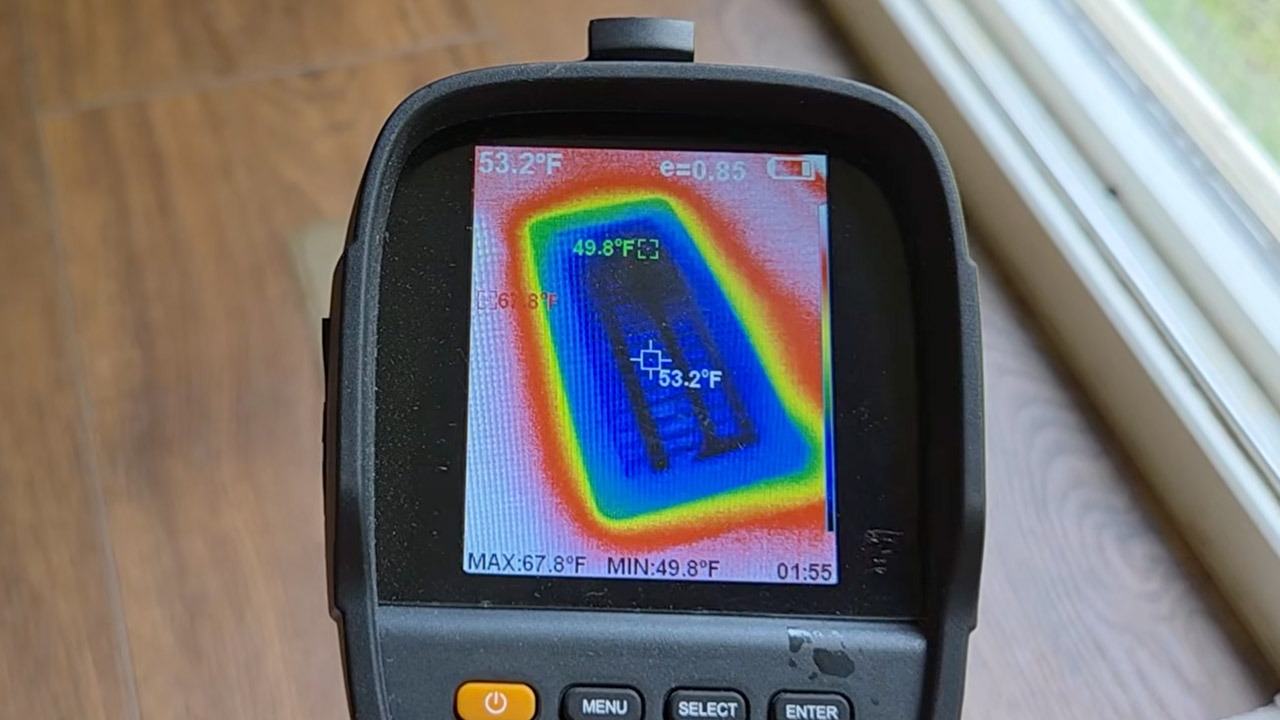
The first true run produced somewhat better results than the previous plenum-only setup. The air leaving the unit was between 49 and 54 degrees. He detected a temperature split of 26.5 degrees, which is fairly good. Water entering and leaving the underground loops varied by barely 3 to 5 degrees, but the jacket itself typically reached the upper 70s or low 80s. As an extra benefit, the cool air was actually making its way upstairs into the main living area. The next topic on the agenda is whether a single window unit and 2,000 feet of piping in the backyard can keep the entire house cool all summer. [Source]
Earlier this week we noted how California Democrats fecklessly folded to Paramount’s demands and settled the 12-state antitrust lawsuit against Paramount’s $111 billion merger with Warner Bros. We also noted how the conditions affixed to the deal are largely pathetic, and generally consist of a lot of performative fluff Paramount itself recommended and California AG Rob Bonta had previously laughed off.
But Bonta is thinking politically about not just Paramount’s lobbying influence, but any future relationships with potential presidential candidate Gavin Newsom or potential future California governor Xavier Becerra (both of whom rushed to pushing for settlement).
None of the conditions meaningfully protect consumers, labor, and markets from what’s coming, but they clearly spent a lot of time designing conditions that let them pretend otherwise.
That includes a purported “independent CBS and CNN oversight board” that’s supposed to prevent Larry Ellison from degrading CNN and CBS’ editorial mission even further. That’s something Paramount itself first floated last August, largely because it knows it will be able to safely ignore it (just as Rupert Murdoch did when he struck a similar deal after the acquisition of the Wall Street Journal).
Advertisement
And sure enough; as details leak out it’s clear the board is largely decorative. Insiders have already noted how the “independent” board will consist of journalists that have at least ten years experience in journalism, but they’ll be hand picked by Paramount:
“According to the terms of the settlement, the board must be established within 180 days of the closing of the deal. It will be composed of five current or former journalists with at least 10 years of experience each and will be appointed by the board of the company for three-year terms.”
That’s just profoundly embarrassing. There’s absolutely zero chance that Paramount is going to appoint the kind of folks capable of pointing out that Ellison, and underlings like Bari Weiss, are actively working to convert CNN and CBS into corporation and oligarch-friendly agitprop. And there’s really nothing preventing Paramount from tap-dancing around the requirements.
I’m sure, like a stopped clock, this board will occasionally and initially make a useful decision to give the impression it’s a real entity. But historically this stuff is designed to prevent real oversight, particularly by government. Former and current insiders at the network simply aren’t impressed:
“There is no way that is going to work,” former CNN anchor Jim Acosta said. “They will start to fire anchors and certain folks to send a message, and the rest will either have to fall in line or leave. This was a colossal mistake.”
CNN and CBS were already pockmarked with a lot of weak-kneed corporation-friendly journalism. Now that Ellison’s involved, both will indisputably begin to look more and more like other right wing propaganda outlets like the New York Post and Fox News.
Advertisement
These kinds of conditions are designed to make it look like responsible people are doing something about media consolidation — without actually doing anything about media consolidation. You protect consumers, labor, and markets by actively enforcing antitrust law; not by endlessly designing half-cooked half-measures that state regulators then fail to consistently enforce.
What’s extra embarrassing is that Democrats like Bonta, Karen Bass, and Newsom had an opportunity here to demonstrate that Democrats had backbone and actually care about subjects like media reform, media consolidation, and the rise of right wing propaganda and disinformation.
Instead they immediately buckled to Ellison’s threat that he’d move Paramount out of California, and are now patting themselves on the back for “saving jobs” — when the end outcome of these deals is always thousands of layoffs as the bigger company offloads merger debt to labor and consumers.
One nice thing about antitrust: if U.S. politicians were to actually enforce the law, we’d have markets more heavily peppered with the kind of small and mid-sized companies that lack the scale and political influence to threaten government when it tries to enforce the law.
Advertisement
Throughout this whole process Paramount (and by proxy a consolidated press) have made it sound like the 12 states were engaged in “radical leftism” simply by enforcing existing antitrust law. It’s important to remember how little Newsom, Bonta, Bass, and Becerra cared about standing up to corporate power the next time you’re in the voting booth.
Disney+ and Hulu subscribers are about to pay more for their streaming services as Disney rolls out another round of price hikes.
The increases affect both ad-supported and ad-free subscriptions, although customers who subscribe to the ad-supported Disney+ and Hulu bundle will see no change. The largest increases are coming to the standalone ad-free plans, which will each cost an additional $2.50 per month, a roughly 13% increase.
Subscribers could begin receiving notifications about the price increases as early as Wednesday. The new prices are as follows:
Disney+ without ads: $21.49, up $2.50
Hulu without ads: $21.49, Up $2.50
Disney+ and Hulu without ads: $21.99, up $2
Disney+ with ads: $12.49, up $0.50
Hulu with ads: $12.49, up $0.50
Disney+ and Hulu with ads: $12.99, unchanged
The ad-supported Disney+ and Hulu bundle is the only plan exempt from this next batch of price increases. At $12.99 per month, it costs just 50 cents more than subscribing to either service individually with ads.
AppleInsider has some deals for new Disney+ bundle subscribers. Deals include Disney+ and Hulu for $11.99 for the first six months, or a Disney+, Hulu, and HBO Max plan starting at $19.99 per month.
Tom Clancy’s The Division and The Division 2 are two of my favorite online and co-op games of all time; I still play The Division 2 most months (at least) and have done so since launch.
The second game still has a committed player base and is a game that keeps on going and keeps on giving for fans who play regularly and those who come back occasionally.
It’s established a rich universe full of interesting lore, gripping side stories, and compelling characters, with novels, a mobile game, DLC and expansions, and books, all playing a part in filling out its brilliant world. And with more expansions and content coming all the time — even now in 2026, more than seven years after release — there’s loads to get into.
Advertisement
As a result, there’s plenty to draw on for my bumper Division quiz, and there’s sure to be some stuff in here that’ll have even the most experienced players a little, well, quizzical.
Good luck and let me know how you get on!
What did you think of our quiz on all things The Division? Let me know how you got on in the comments, and let me know what else we could do quizzes on!
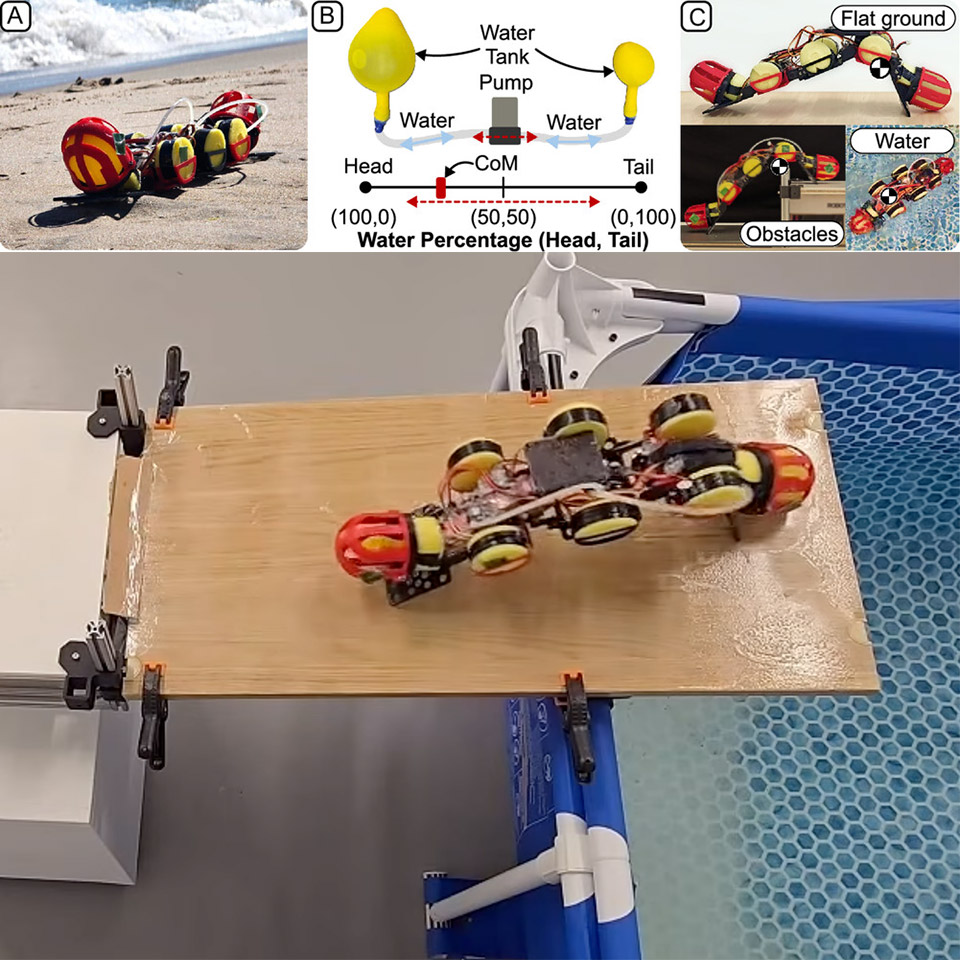
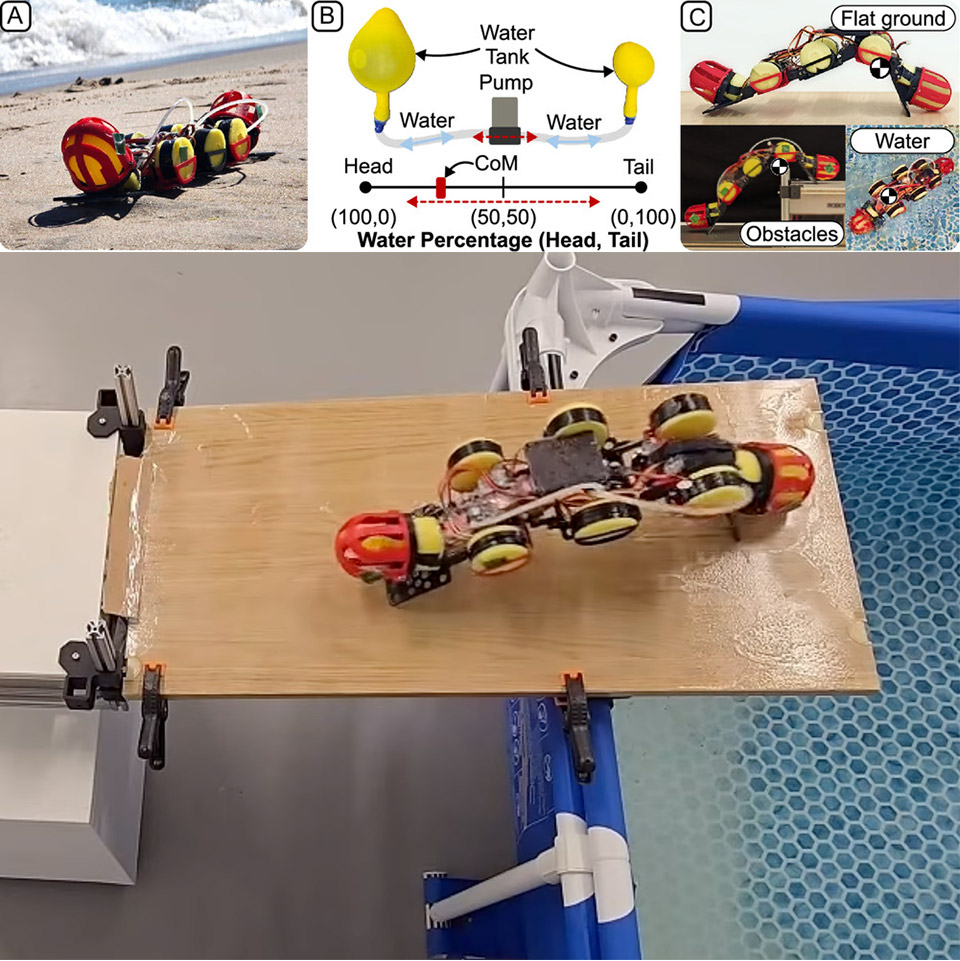
NYU Tandon assistant professor Nana Obayashi and Ph.D. student Daniil Filimonov built WorMa so one undulating machine could inspect a coastline, a flooded street, or a wetland without extra limbs or a second gait. WorMa blends “worm” and “mass,” and that mash-up is the entire plan. Five 3D-printed segments form a body about 50 centimeters long and a little over one kilogram. Four servos at the joints send a traveling wave down the length. Silicone pads under the belly give directional grip on dirt or pavement. Foam disks along the sides keep the robot from sinking once it enters water. An ESP32 runs the servos and the pump.
Nearly 350 grams of water, or 28% of the robot’s total weight, are suspended in two latex balloon reservoirs located inside the robot’s head and tail. They are linked by a piece of silicone tubing, allowing the water to be transferred back and forth. In the robot’s center, a 12-volt peristaltic pump stirs the water, slowly transporting it from one end to another. It takes little under 110 seconds for the pump to completely drain one reservoir and refill another. By shifting the water around, the robot can change where its weight is, on the ground or in the water, while still maintaining its wavelike movement. The water in the head reservoir adds weight to the robot’s front end, strengthening its grip on the ground. The water at the tail end lessens the weight at the front, causing the robot to move differently on the surface.
BUILD, CODE & DRIVE YOUR OWN ROBOT CAR: Turn coding, electronics and engineering into a working programmable robot car you can assemble, program and…
EXPLORE FPV, LINE TRACKING & OBSTACLE AVOIDANCE: Control the robot with the ELEGOO app or IR remote, view live FPV video through the onboard camera…
BEGINNER-FRIENDLY BUILD WITH GUIDED WIRING: Keyed XH2.54 connectors help reduce wiring mistakes, while the illustrated tutorial and example programs…
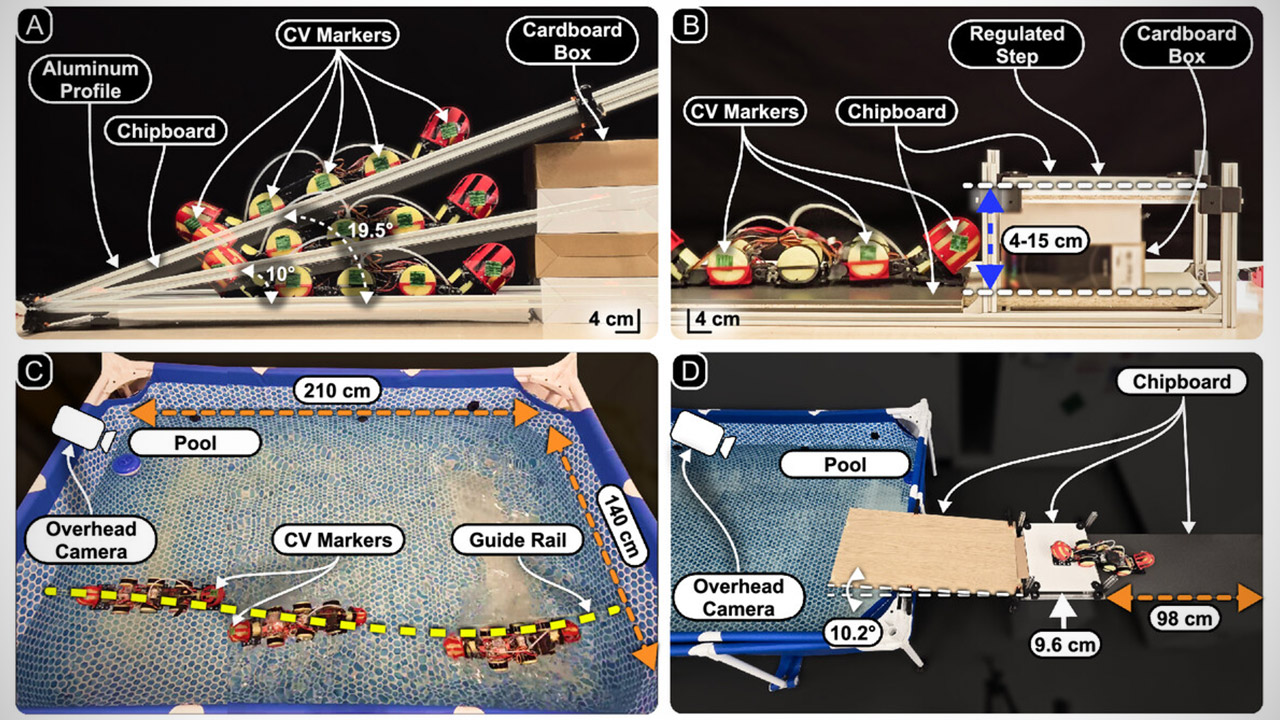
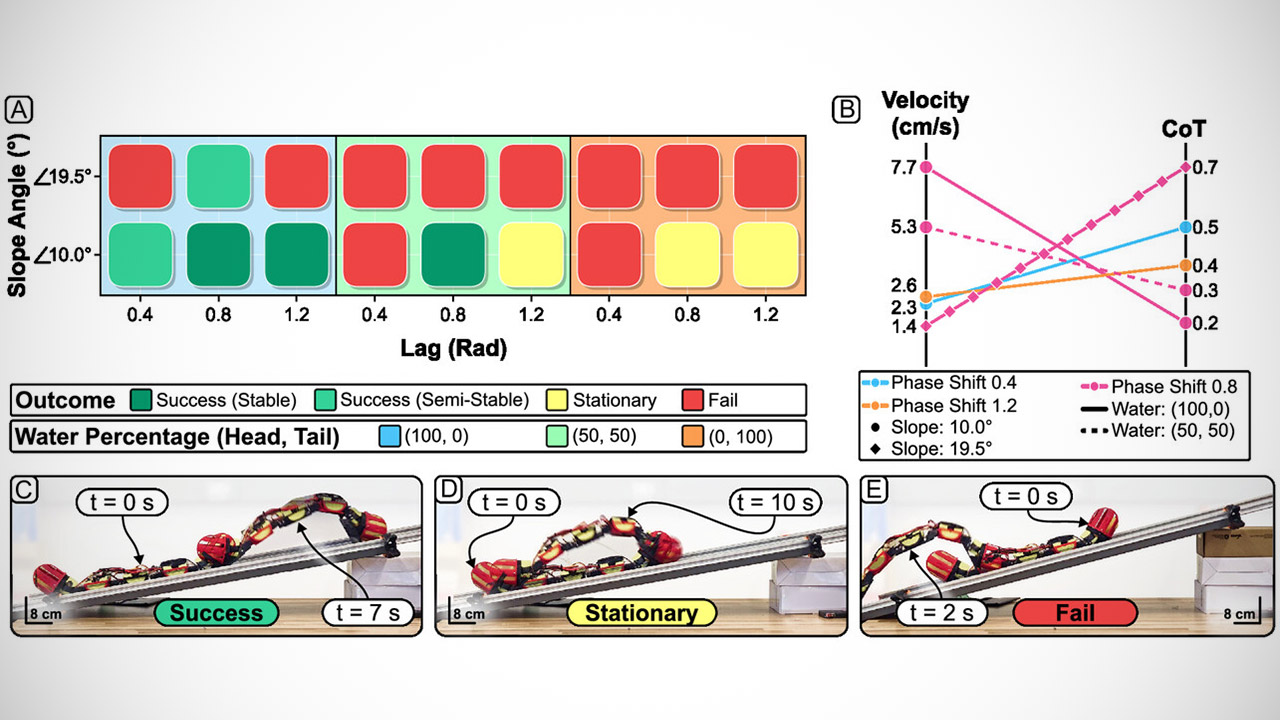
When you take the robot up a 19.5-degree incline, the only setup that can gain enough grip at the front to haul the entire thing up is the head-heavy one. That front weight also reduced transportation costs by more than a third as compared to other weight placements, but other layouts simply couldn’t obtain enough bite at the nose to climb over the slope’s lip. Jumping a 15cm step is simple and only requires a quick pumping sequence. When WorMa approaches a step with water at the front, the front end grabs it and pulls it up; the water then flows to the back, allowing the lightened front to rise up and grab the edge. Water returns to the head so the robot can haul the rest of its body over. A fixed mass distribution failed even a four-centimeter step.
Advertisement
Things flip on their head in the pool. WorMa swims 26% faster and 52% more efficiently with water in its tail. It is moving at 9.6 cms per second at one point, yet returning to dry land requires the exact opposite movement. The water must shift back to the front, allowing the leading pads to grab and lift the robot out of the water. If you do this with a hefty tail or an even weight split, it will remain stuck at the waterline.
Tying all of this together, the robot can move on flat ground, navigate a step, climb a slope, and swim in water, all while moving 300 grams of water at each stage. An operator can still determine when to move the water. If this type of robot is ever going to roam a real shoreline on its own, upgrading to quicker pumps and an inbuilt system that allows it to rebalance in real time seems like a logical next step. [Source]
The United States Navy once operated an iconic twin-engine, two-seat, variable-sweep-wing fighter known as the F-14 Tomcat. If that sounds familiar, it’s because it’s the same plane that Tom Cruise immortalized in the film “Top Gun.” The Navy ultimately retired the 4th-generation F-14 in favor of the F/A-18 Hornet, destroying most of them to ensure none of their spare parts found their way to Iran, which had purchased a sizable number before the Iranian Revolution ended relations between the U.S. and Iran.
Fortunately, some F-14s survived and are on display in museums around the United States, where people can see the legendary fighter jet. One aircraft in particular began a long trek from one museum to another, traveling 2,700 miles to get from the National Naval Aviation Museum in Pensacola, Florida, which had two F-14s, to the Pueblo Weisbrod Aircraft Museum in Pueblo, Colorado.
Advertisement
The task of moving the F-14 fell to Worldwide Aircraft Recovery. Due to the plane’s size, the drive between the two cities, which would normally be 1,300 miles by car, covered more than twice the distance.
Advertisement
The T-14 Tomcat’s 2,700-mile trek from Florida to Colorado
Unfortunately, flying the F-14 wasn’t an option, which is why it had to travel by road. That wasn’t a problem for Worldwide Aircraft Recovery, which specializes in recovering aircraft and transporting them. The F-14 measures 22 feet wide without its wings, significantly wider than the nine to 12 feet of a typical roadway lane.
Because some states denied Worldwide Aircraft Recovery’s request to operate on their roads, the trip required the plane to travel through Alabama, Mississippi, Tennessee, Kentucky, Indiana, Illinois, Iowa, Missouri, Nebraska, and Kansas, before finally reaching Colorado. The trip took two weeks, with night driving occurring only in Florida, Alabama, and Nebraska. Most of the transit was conducted during daytime, with some states requiring police escorts as the truck carried the F-14 on their roads. Normally, the 1,335-mile drive would take you from Florida through Alabama, Mississippi, Louisiana, Texas, and New Mexico, so you can see how circuitous the drive was.
Receiving a T-14 Tomcat is a great addition to the Pueblo Weisbrod Aircraft Museum, as the U.S. destroyed most of its F-14s, making complete aircraft remarkably rare in the country. After the aircraft arrived, museum staff began the arduous task of reassembly, and once completed, it will find a home inside the museum, where it will be displayed for the public.





























































You must be logged in to post a comment Login