TL;DR
Faraday Future raised $25M in convertible notes for its robotics pivot. Half is locked in investor-controlled accounts.




Faraday Future raised $25M in convertible notes for its robotics pivot. Half is locked in investor-controlled accounts.
Faraday Future announced on Thursday that it has raised $25 million through convertible promissory notes, bringing its total financing over the past two months to $70 million. The company says the capital is sufficient to fund Phase 1 of its robotics business plan through the end of 2026. The stock, which trades on Nasdaq under the ticker FFAI, closed below $1 per share and is currently under a Nasdaq deficiency notice for failing to maintain the minimum bid price requirement.
The structure of the raise warrants attention. Of the $25 million, only $12.5 million goes directly into the company’s operating account. The remaining $12.5 million is deposited into control accounts held by the investors, and will be released to Faraday Future only upon satisfaction of certain undisclosed conditions. The press release describes “institutional investors’ confidence” in the company’s prospects but does not name any of the investors. The shares underlying the convertible notes are unregistered and subject to trading restrictions. The company’s own risk factors, filed with the SEC, acknowledge that it currently lacks sufficient share capital to execute its strategy and that obtaining stockholder approval for additional shares could result in “substantial additional dilution.”
Faraday Future is pivoting from electric vehicles to what it calls “Embodied AI,” positioning itself as a physical AI company that delivers both humanoid and bionic robots. The company says it shipped 68 robots as of 30 April, with a full-year target of 1,500 units across four product lines aimed at education, security inspection, reception and guided tours, performance, and university research. Its Q1 2026 financial results reported that the robotics business achieved positive gross margins and generated ecosystem revenue, though the company did not disclose the total revenue figure in its press release.
The company also signed an MOU with RobotShop, a Canadian robotics e-commerce platform, as its first distribution partner for the robotics line. An MOU is a non-binding agreement and does not represent a committed order.

The 💜 of EU tech
The latest rumblings from the EU tech scene, a story from our wise ol’ founder Boris, and some questionable AI art. It’s free, every week, in your inbox. Sign up now!
The corporate history is relevant context. Faraday Future was founded in 2014 by Chinese billionaire Jia Yueting, who has been at the centre of multiple financial controversies. The company went public via SPAC merger in 2021, after which the SEC launched an investigation into matters related to the PIPE and SPAC transactions. Wells Notices were issued to the company and certain executives. The SEC concluded its investigation in March 2026 with no enforcement action, which the company described as removing a “major historical overhang.” Separately, a special committee of independent directors had conducted its own investigation beginning in October 2021.
The EV side of the business has struggled to reach meaningful scale. Faraday Future’s FF 91, a luxury electric vehicle priced above $300,000, has been delivered in very small numbers since its 2023 launch. The company is now developing what it calls “EAI automotive robots,” essentially AI-enhanced vehicles, alongside its humanoid and bionic robot product lines.
The humanoid robotics market is attracting serious capital in 2026. Morgan Stanley doubled its forecast for China’s humanoid robot sales to 28,000 units this year. Unitree is filing for a $7 billion IPO after outselling Tesla on humanoid robots. 1X is shipping its NEO humanoid to US homes at $20,000 per unit. Mind Robotics, Rivian’s spinoff, raised $1 billion in under a year at a $3.4 billion valuation. In that context, Faraday Future’s $70 million in convertible debt financing, half of it conditional, positions the company at the very margins of a market being defined by companies with orders of magnitude more capital, more credible production capabilities, and more established technology.
The company’s own SEC filings list risk factors that include its “reliance on a single OEM for most of its robotics products,” competition from companies “with far superior experience, funding and name recognition,” the possibility that it may not maintain its Nasdaq listing, and the fact that its strategy requires stockholder approval for additional share issuance that could be substantially dilutive.
Faraday Future says it now has the room, for the first time in years, to shift financing decisions from “liquidity-driven to capital-structure-driven.” That framing reflects a company that has historically raised money on whatever terms it could get, when it could get them. Whether $70 million in convertible notes, with conditions attached, represents a genuine strategic inflection or another chapter in a long series of optimistic announcements followed by operational difficulty, is a question the market has been asking about Faraday Future for the better part of a decade.
Goldman Sachs projects 50,000 to 100,000 humanoid robots shipped globally in 2026. Faraday Future’s target of 1,500 units would represent a fraction of that market, but even that modest target requires execution from a company that has consistently struggled to deliver on its production commitments. The robotics pivot may be real. The capital may be sufficient for Phase 1. But the gap between announcement and delivery is where Faraday Future’s story has historically broken down.


The wave of departures from the Allen Institute for AI to Microsoft is bigger than previously known: A total of at least 10 former Ai2 staffers and researchers have joined the tech giant, including the core of the Seattle-based institute’s flagship OLMo open-source model effort.
In addition to the previously reported Microsoft hires — former Ai2 CEO Ali Farhadi, former COO Sophie Lebrecht, and research leaders Hanna Hajishirzi and Ranjay Krishna — former Ai2 researchers now at Microsoft include Luca Soldaini, Kyle Lo, Dirk Groeneveld, Pete Walsh, Matt Jordan, and Jake Poznanski.
They have joined the Superintelligence team led by Microsoft AI CEO Mustafa Suleyman, working on its core mission and AI model post-training, a Microsoft spokesperson confirmed in response to GeekWire’s inquiry. Formed in November, the team is developing what Suleyman has called “humanist superintelligence,” advanced AI systems in areas such as health care, energy, and AI companions.
More broadly, Microsoft is working to reduce its dependence on OpenAI for its own AI models. The hiring of the Ai2 group brings Microsoft a team with deep expertise in efficient, fully open model development, an area where Ai2 has punched well above its weight.
Ai2 confirmed that the researchers are no longer with the institute.
“While we saw a small number of departures earlier this year, Ai2’s mission remains unchanged,” a spokesperson said. “We remain focused on developing a fully open AI ecosystem and advancing AI for good across health, science, and environmental research.”
As evidence of Ai2’s continued momentum, the spokesperson cited a new computing cluster brought online last week as part of the $152 million initiative backed by the NSF and Nvidia, known as Open Multimodal AI Infrastructure to Accelerate Science, or OMAI.
When Farhadi’s departure as CEO was announced in March, Ai2 board chair Bill Hilf said the cost of competing at the frontier of AI as a nonprofit had become a fundamental challenge.
“The cost to do extreme-scale open model research is extraordinary,” Hilf said at the time, adding that it’s “really hard to do extreme-scale model work inside of a nonprofit.” He said the board had to weigh whether philanthropic dollars were best spent trying to keep pace with tech giants spending billions on infrastructure to train the most advanced models.
Behind the scenes, the changing nature of Ai2’s funding environment has also been playing a role in the exits, according to people with knowledge of the situation. Ai2’s primary backer is now the Fund for Science and Technology, a $3.1 billion foundation created under Allen’s instructions. The funding process has shifted from providing an overall annual budget to a proposal-based process.
A spokesperson for FFST said previously that Ai2’s “work and mission remain the same.”
Ai2’s approach to open-source AI has set it apart in the industry. Unlike most leading AI labs, the institute releases the full weights, training data, code, and evaluation tools behind its models, allowing outside researchers to inspect, reproduce, and build on the work.
Among the leaders remaining at Ai2 is Noah Smith, the Ai2 senior research director and University of Washington professor who leads the $152 million OMAI project.
The late Microsoft co-founder Paul Allen started Ai2 in 2014, with the mission of advancing AI research for the common good. Farhadi had led the institute since July 2023, succeeding founding CEO Oren Etzioni. The Ai2 board is searching for a new permanent CEO.
In a Q&A posted May 4 on the Ai2 site, interim CEO Peter Clark outlined the path forward, emphasizing longer-term research, open models, and applied AI in areas such as scientific discovery, embodied AI, and environmental science.
“Ai2 was created to take that longer-horizon view,” Clark said in the Q&A. “From the beginning, Paul Allen’s vision was to advance AI in ways that push science forward while also delivering meaningful benefit to the world, and, critically, doing it in the open.”
He said that commitment has “become even more important in the current landscape.”

AI-generated videos are getting so realistic now that spotting a fake version of someone online is becoming harder by the week. And for creators, that opens up a pretty uncomfortable problem: what happens when your face starts appearing in videos you never made? YouTube seems to be taking that concern seriously.
The platform is now expanding its AI likeness detection system to a much larger group of creators, giving eligible users new tools to track and report videos that digitally imitate them using artificial intelligence. The feature was previously limited to a smaller pilot group within the YouTube Partner Program, but YouTube says it will begin rolling it out to all eligible creators over 18 in the coming weeks.
The new system lives inside YouTube Studio and is designed to help creators identify when their face may have been used in altered or synthetic videos uploaded to the platform. This means YouTube’s detection tools scan for AI-generated content that appears to replicate a creator’s likeness. If the system finds something suspicious, creators can review the content and request removal if it violates YouTube’s privacy policies.

That matters because AI-generated impersonation is becoming a growing issue online. Deepfake-style videos can now mimic facial expressions, voices, and even speaking patterns with alarming accuracy. For creators who build trust through their online identity, fake videos can quickly become damaging or misleading. YouTube says the tool is meant to give creators more visibility into how their images are used while helping audiences avoid confusion about manipulated content.

Once the feature becomes available for your account, you can set it up directly through YouTube Studio on desktop. Here’s how to do it:
Once setup is complete, the platform will start scanning for AI-generated or altered videos that may be using your face. If any matches are detected, you’ll be able to review the content and request removal directly through YouTube Studio.
Interestingly, YouTube also warns that creators may not immediately see flagged videos after enrolling. That doesn’t necessarily mean the feature is broken — it could simply mean there aren’t many AI-generated uploads using their face in the first place.
The company says the system continues working quietly in the background even when no matches appear. This rollout also highlights a bigger shift happening across online platforms right now. AI tools are evolving faster than most moderation systems can keep up with, and companies are increasingly being pushed to build safeguards around identity misuse, synthetic media, and deepfakes before those problems spiral further. For YouTube creators, this new detection system may become one of the platform’s most important AI-era safety tools yet.
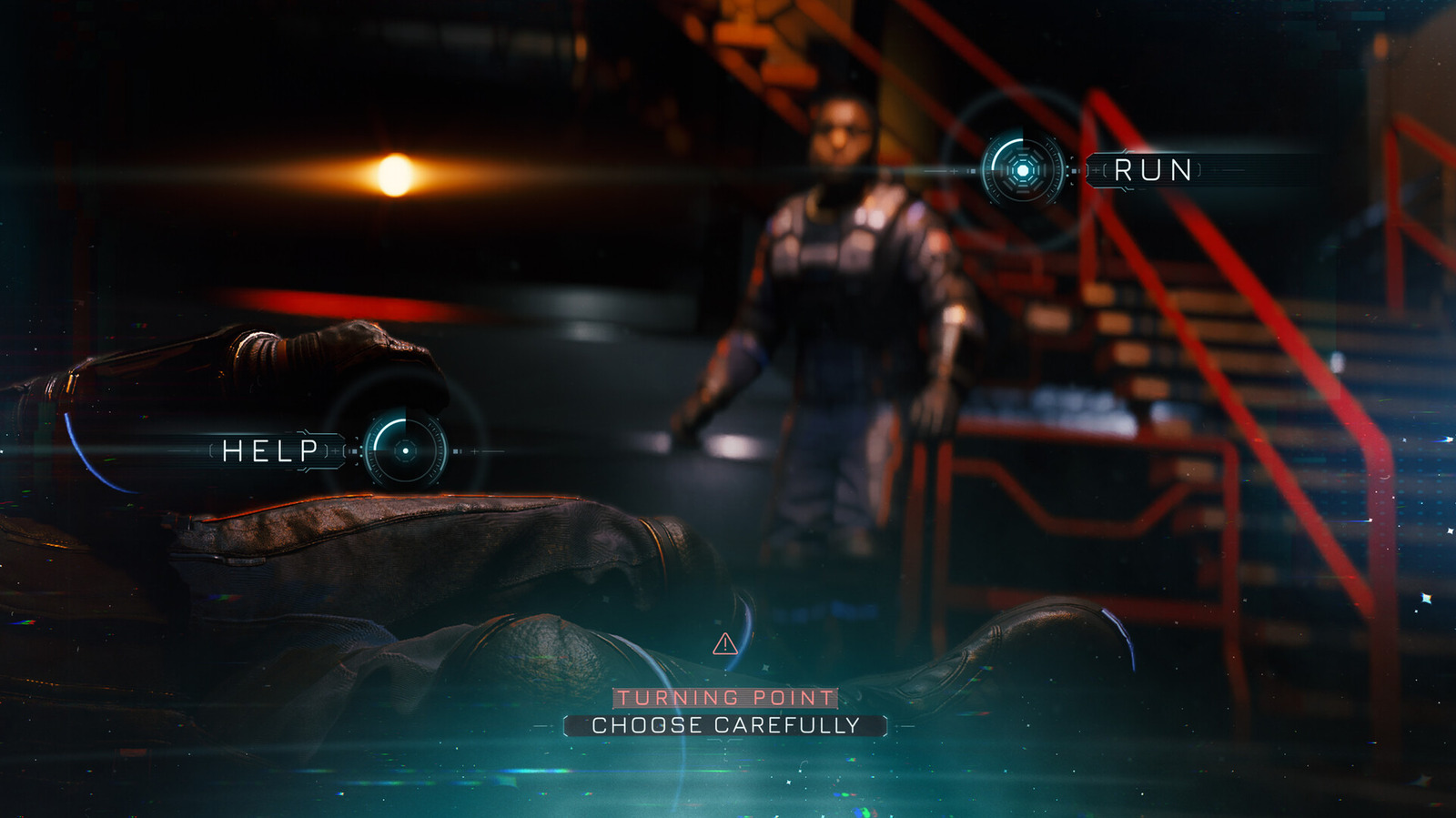
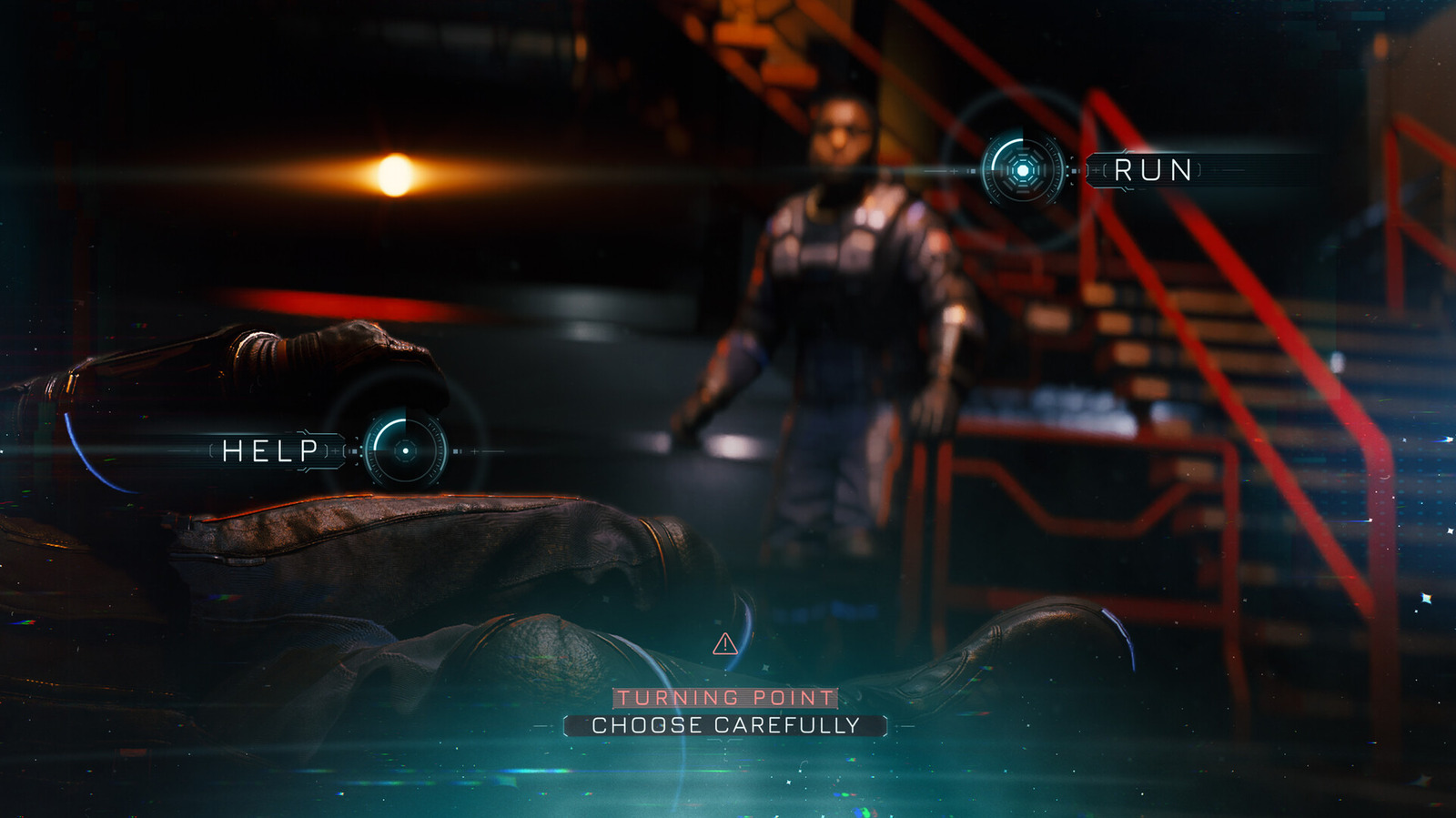
Supermassive Games (Until Dawn, The Quarry) is back with the second season of its Dark Pictures series. The first entry in said season is Directive 8020. As you might expect, this is a survival horror game with a large emphasis on narrative decisions, with your choices ultimately determining which characters survive. This time around, Supermassive is leaning into sci-fi with a story inspired by The Thing.
After a colony ship crash lands on a planet that seemed like it could be a safe haven for a dying Earth, the crew is hunted by an alien creature that can morph into other lifeforms, including humans. There are five main characters, including pilot Brianna Young, who is portrayed by Lashana Lynch (No Time to Die). You can play solo or pass the controller between a few friends in a couch co-op mode, with each taking charge of a character or two. Online multiplayer will be added later.
One thing that makes Directive 8020 distinct from other Supermassive projects is a new feature called Turning Points. This allows you to return to previous decisions and select a different option. The idea here is to make it easier for players to experience all of the outcomes in the branching narrative.
Directive 8020 is out now on Steam, PS5 (where you can check out a free trial) and Xbox Series X/S. It’ll run you $50.
Battlestar Galactica: Scattered Hopes is a strategy game that’s set in — surprise! — the universe of the beloved sci-fi series Battlestar Galactica. It’s said to build on developer Alt Shift’s previous game, Crying Suns, a narrative-driven, tactical roguelite that itself drew inspiration from BSG.
You’ll take charge of a fleet of ships that’s attempting to escape the destruction of the Twelve Colonies and return to the eponymous carrier ship. You’ll have to take care of disputes within your fleet, deal with bad actors in your ranks, manage resources and make upgrades and repairs.
However, the Cylons are hot on your trail and you’ll need to prepare yourself as best as possible for your next encounter with the deadly robots. The battles are more about survival and sustaining as little damage as possible than securing victory in all-out combat.
My colleague Igor Bonifacic tried an early build of the game last year and enjoyed it. Reviews I’ve seen are generally positive. You can try Battlestar Galactica: Scattered Hopes by picking it up on GOG or Steam (a demo is available on the latter). It’ll usually cost $25, but there’s a 20 percent discount until May 18.
The Caribou Trail looks pretty interesting. It’s a first-person walking sim set in the trenches of World War I, in which you take on the role of a young soldier who hails from Newfoundland. Said to be inspired by the true stories of troops who served in the Gallipoli campaign, the game tells a tale of friendship and survival, with some “folklore and psychological tension” mixed in.
The Caribou Trail, which is from Unreliable Narrators and Gambit Digital, is out now on Steam and the Epic Games Store (usually $13, 10 percent off on Steam until May 28). The developers had planned to release a PS5 version at the same time, but were unable to resolve a critical problem with that build in time. As such, they delayed the PS5 version until July 7.
I really enjoyed my time with Minos, a roguelite in which you construct a maze that takes out raiders with traps. Mazebound — from Absam Studios — is a completely different flavor of procedurally generated maze game. It’s a first-person survival horror title in which you’ll gather materials, craft weapons, hunt for nourishment and try to fend off the terrifying creatures that lie in wait.
Thankfully, you don’t have to go alone (it’s dangerous to do that, after all). You can bring friends with you in multiplayer. I would probably have to do just that.
Mazebound is available on Steam. It’ll usually cost $10, though it’s 20 percent off until May 20.

Mixtapes used to be a way that we cultivated a personal selection of music for our own enjoyment, or to give as gifts to those we wanted to impress with a personal touch. These days, we’d typically try that with a playlist, but it’s less romantic despite also being more ephemeral. Songs fall off streaming services all the time, and few of us have the exact same subscriptions as those we’re trying to flirt with. Thus, [Hunter Irving] whipped up a more lasting solution for this modern age.
The concept is simple—it’s a collection of songs that are packaged together in a easily portable format that won’t disappear because of corporate bureaucratic nonsense. [Hunter] has termed their project Mixapps—because it’s a method of sharing music based around Progressive Web Apps (PWA). To create a custom mix, you start by running a Python script, which will then let you add tracks and reorder them as you desire. From there, you run a second script that builds the web app for you.
You can then upload the prepared app directory to a web host to share it with anyone you like. They can then save the PWA to the home screen of their mobile device, where it will live happily ever after. There’s no need to keep hosting the app online or for the user to remain connected to the Internet; everything is self contained on their device. If you’re curious, there’s a demo you can check out online.
It’s worth noting that there are intellectual property concerns to be had as with any form of music sharing, but what else is new? We’ve explored the magic of mixtapes in the past, anyway, to be sure. If you’re finding new ways to trade music and playlists, romantically or platonically, don’t hesitate to let us know.

When to watch Chelsea vs. Man City
Where to watch Chelsea vs. Man City
Chelsea will take on Manchester City at Wembley Stadium in the 145th FA Cup final on Saturday, with Calum McFarlane’s Blues standing in the way of the Cityzens claiming a rare domestic cup double.
After a hugely disappointing season, which saw Enzo Maresca and his successor, Liam Rosenior, both sacked due to the Blues’ poor form, interim Chelsea head coach McFarlane has the opportunity to restore some pride and claim some silverware. The West Londoners have won just once since McFarlane took charge last month — a semifinal win in this competition against Leeds — with defensive weaknesses remaining an issue for the Blues.
City, meanwhile, comes into this final on something of a high after a 3-0 demolition of Crystal Palace in midweek — a result that keeps the pressure on English Premier League leaders Arsenal. That win also means a clean sweep of domestic honors remains in play for Pep Guardiola’s team, who lifted the English Football League Cup back in March.
Chelsea takes on Manchester City at Wembley Stadium in North London on Saturday, May 16. Kickoff is set for 3 p.m. BST in the UK, which is 10 a.m. ET or 7 a.m. PT in the US and Canada, and 2 a.m. AEST on Sunday in Australia.
Chelsea will be hoping to end a 13-game winless run against Man City in today’s final.
This year’s FA Cup final will be available to watch live in the US on ESPN2 and stream via the network’s ESPN Select and ESPN Unlimited streaming packages. ESPN Plus, which carries the FA Cup, was essentially rebranded as ESPN Select and is the cheaper option at $13 a month. ESPN2 is available on live TV streaming services such as Fubo or YouTube TV.
ESPN’s streaming platforms changed in 2025. The sports network now offers two tiers with its new direct-to-consumer setup: ESPN Select and ESPN Unlimited. ESPN Select is essentially what ESPN Plus used to be, with the same content available to subscribers, including FA Cup soccer, for $13 a month. If you want full access to ESPN’s networks and services, such as ESPN, ESPN2, ESPN3, ESPNews and ESPN Deportes, as well as all of ESPN Select’s (which is all of ESPN Plus’) content, then ESPN Unlimited is the way to go. It costs $30 a month.
Saturday’s showpiece final will be available to watch for free on BBC1 and BBC iPlayer, with coverage kicking off at 2 p.m. BST.
Viewers in the UK also have a second option for watching the final, with the game also being shown on pay-TV channel TNT Sports 1.
You’ll be able to watch the game online for free via the network’s on-demand streaming service, BBC iPlayer.
With an app that’s available for Android and Apple mobile devices, as well as a vast array of smart TVs and streaming boxes, all you need is a valid UK TV license to stream the game.
You can access TNT Sports via Sky Q, Virgin Media and EE TV as part of a TV package.
Alternatively, TNT Sports has a new streaming home with the launch of HBO Max in the UK. It costs £31 either way and comes in a package that includes Discovery Plus’ library of documentary content.
A bundle including HBO Max’s entertainment plan alongside TNT Sports currently costs £31 per month.
Canadian soccer fans looking to watch this FA Cup fixture can catch all the action live via Sportsnet.
Sportsnet is available via most cable operators, but cord-cutters can subscribe to the standalone streaming service Sportsnet Plus instead, with prices starting at CA$30 per month or CA$250 per year for the standard plan.
Soccer fans in Australia can watch FA Cup matches live on the streaming service Stan Sport.
Stan Sport will set you back AU$20 a month, on top of a Stan subscription, which starts at AU$12. It is worth noting the streaming service is offering a seven-day free trial. On top of select FA Cup matches, a subscription gives you access to Premier League, Champions League and Europa League action, along with international rugby and Formula E.


Long before Homer wrote the Odyssey, Minoan seafarers were plying the trade routes of the Mediterranean and spinning stories of adventure — but when it comes to imagination on an outlandish scale, the late science-fiction author Vonda N. McIntyre’s tale about a transoceanic Minoan odyssey just might have awed even Homer.
McIntyre finished the manuscript for her final book, “The Curve of the World,” less than two weeks before she died of pancreatic cancer in 2019. Since then, a team of writers and editors assembled by Clarion West — the Seattle-based literary nonprofit that McIntyre founded in 1971 — has been working to get the novel in shape for publication.
That work is now complete. The book has made its debut, and Clarion West is celebrating with a virtual book launch party on Saturday.
Nisi Shawl, an award-winning science-fiction and fantasy writer, admits to “fan-girling” during the editing process. “The sheer joy of the prose, the sensual array of delights that are offered, every bit of the way, the writing is just so pleasurable,” Shawl says in the latest episode of the Fiction Science podcast.
McIntyre was arguably best known for her novelizations of three “Star Trek” movies, plus two books based on the original TV series, a “Star Wars” novel and a totally original “Starfarers” book series. One of her award-winning novels, “The Moon and the Sun,” was adapted for a movie that was titled “The King’s Daughter” and released after her death.
“The Moon and the Sun” blended history, fantasy, science fiction and romance in an alternate-universe version of 17th-century France under the reign of Louis XIV. “The Curve of the World” follows a similar trajectory — but set in the Bronze Age, about 3,600 years ago.
In a sense, the tale is complementary to Homer’s Odyssey, which is getting the Hollywood treatment this summer in a movie starring Matt Damon as Odysseus. “It’s a side-by-side emergence of a literal hero’s journey and a literal heroine’s journey,” Shawl says.
McIntyre’s main character is a woman, not a man. She’s a diplomat, not a warrior. And her odyssey is the reverse of Odysseus’ homeward voyage. The long and winding trip begins at home, on the island of Crete, and goes far beyond the Mediterranean Sea to the Americas.
Along the way, the Minoan crew encounters Nordic pirates on the high seas, hunter-gatherers on North America’s Atlantic Coast and a bloodthirsty society in ancient Mesoamerica that keeps its mummified ruler around long after death. Perhaps the most outlandish stretch in McIntyre’s tale has the crew crossing over to the Pacific side of the Americas and sailing up to, of all places, Puget Sound.

The Minoans encounter a strange new world where the inhabitants live in longhouses, weave the fur of woolly dogs into their blankets, and feast on cedar-planked salmon. But it’s no utopia: The visitors become entangled in intertribal conflicts as well as natural threats that are all too familiar to the Pacific Northwest’s modern-day residents.
Although the Minoans were skilled travelers and traders, they weren’t as skilled as they’re portrayed to be in McIntyre’s novel. “While I’d love to believe some intrepid Minoans crossed the Pacific using the stars, unfortunately the archaeological evidence for anything beyond the Mediterranean remains extremely limited,” Alessandro Berio, a Brazilian archaeoastronomer who has studied the Minoans extensively, said in an email.
“The Minoans, generally considered Europe’s first advanced maritime civilization, established the earliest large-scale trade network in the Mediterranean. Archaeological material has been recovered throughout Egypt, the Levant and Anatolia,” Berio said. But he added that clear evidence for Mediterranean navigators venturing beyond the Mediterranean itself “only appears later, during the Phoenician period.”
That’s the difference between the sort of history that Berio studies and the fiction-flavored history that was McIntyre’s specialty. Shawl is a practitioner of that type of history as well: Shawl’s best-known novel, “Everfair,” describes a steampunk world in which socialists and missionaries unite to foster an independent nation in the Belgian Congo at the dawn of the 20th century.
“I’m starting to come to the conclusion that ‘alternate history’ is probably a misnomer, because sometimes it’s sort of like a veering away from the history we know, right?” Shawl says. “Sometimes it’s a hidden history, something that happened within the interstices of the history that we know. And sometimes it’s just straight-up a different version, a different perspective.”
McIntyre was known for highlighting different perspectives when it came to gender and sexual diversity. There’s plenty of that in “The Curve of the World.” For example, one of the characters smoothly switches between acting as a man or a woman, depending on the circumstance.
Shawl found the novel’s main character, a trader and emissary named Iakinthu, to have a particularly interesting perspective on the cultures she encounters. “She was not being, like, traditionally aggressive, but she was not giving way, either,” Shawl says. “She was very much, ‘You got to do you, but when it comes to our interactions, you do me.’ I really want to study how Vonda portrayed her doing that, because I think it will be helpful in modern times.”
In the book’s acknowledgments, McIntyre provided a cautionary note about real Minoan history vs. her alternate “Idaean” history: “Do not try to match the Idaean timeline to ours because your head will explode,” she wrote.
“My head did explode,” Shawl admits. “My head exploded because I was trying to hold together all the different layers of reality that she was carving up and serving. Other people have told me of earlier incidents where they were like, ‘Is this how it really could have happened? Is this what did happen? What is Vonda doing?’
“Well, she’s just being great, that’s all,” Shawl said.
Clarion West is presenting a virtual book launch party for “The Curve of the World” at 11 a.m. PT Saturday. Follow the link from this webpage to RSVP and get the Zoom link for the event. Shawl and two other book editors — Debbie Notkin and L. Timmel Duchamp — will read from the book and discuss the project. Kath Wilham also participated in the editing process.
Clarion West is also presenting a “Curve of the World” reading and conversation with Shawl and Theo Downes-Le Guin — the literary executor for author Ursula K. Le Guin’s estate — at Elliott Bay Book Company in Seattle at 7 p.m. PT on July 16. Follow the link from this webpage to RSVP and get in-person or virtual tickets.
My co-host for the Fiction Science podcast is Dominica Phetteplace, an award-winning writer who is a graduate of the Clarion West Writers Workshop and lives in San Francisco. To learn more about Phetteplace, visit her website, DominicaPhetteplace.com.
Fiction Science is included in FeedSpot’s 100 Best Sci-Fi Podcasts. Check out the original version of this report on Cosmic Log to get sci-fi reading recommendations from Shawl, and stay tuned for future episodes of the Fiction Science podcast via Apple, Spotify, Player.fm, Pocket Casts and Podchaser. If you like Fiction Science, please rate the podcast and subscribe to get alerts for future episodes.


1080p, 1440p, 4K Tested Forza Horizon 6 is one of the best-looking racing games yet, but max settings and RT can crush modern GPUs. We tested 47 graphics cards to see what it really takes to run well.

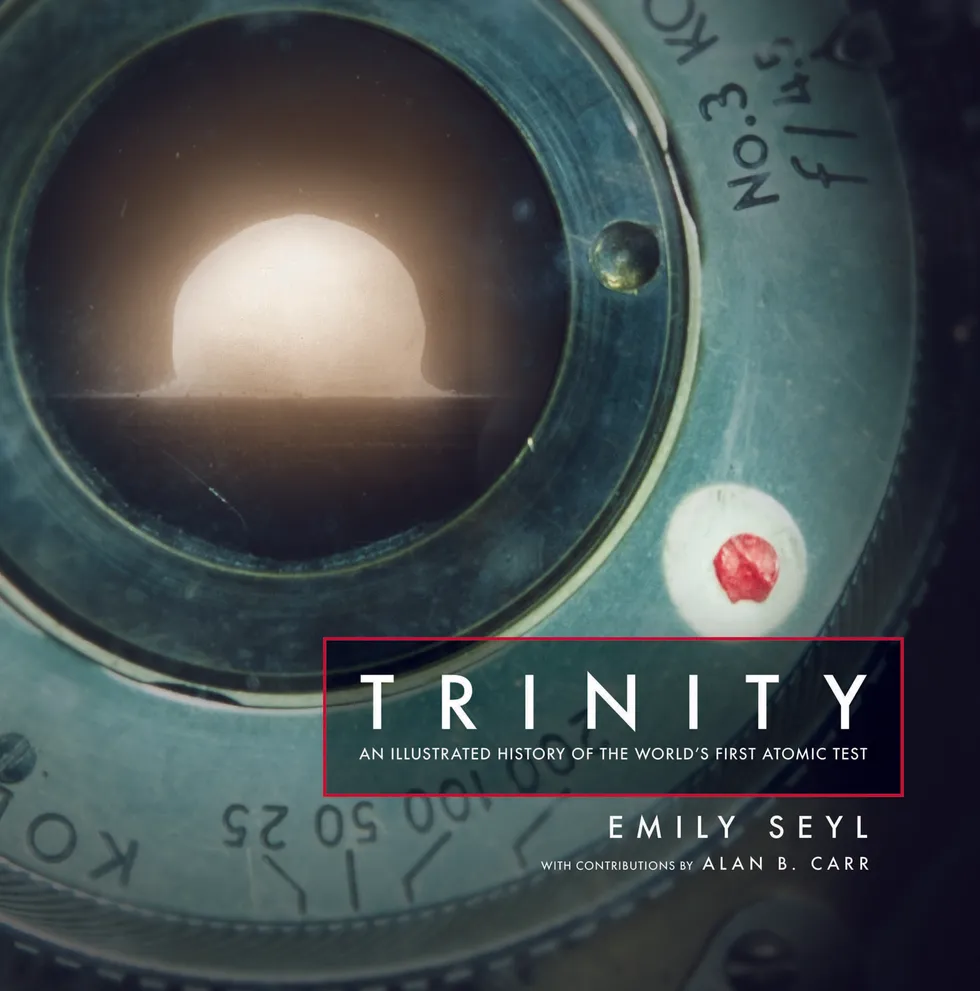
aspect_ratio Reprinted with permission from Trinity: An Illustrated History of the World’s First Atomic Test by Emily Seyl with contributions by Alan B. Carr, published by The University of Chicago Press. © 2026 by The University of Chicago. All rights reserved.
In the North 10,000 photography bunker, Berlyn Brixner was listening to the countdown on a loudspeaker, his head inside a turret loaded with cameras and film. He was one of the only people instructed to look toward the blast—through his welder’s glasses—ready to follow the path of the fireball as it launched into the sky. The two Mitchell movie cameras at his station would deliver the best footage to come of the Trinity test, used by Los Alamos scientists to make some of the first measurements of the effects of a nuclear explosion.
When the detonators fired, the cameras captured what Brixner could not have seen—the very first light of a violent, silent sea of energy unfurling into the basin. As 32 blocks of high explosives erupted all together, their incredible force surged inward toward the sleeping plutonium core, compressing the dense sphere of metal instantaneously from all sides and bringing its atoms impossibly close together. A carefully timed burst of neutrons sowed momentary, uncontrolled chaos, and then, as quickly as it began, the fission chain reaction ended. Footage from a high-speed Fastax camera in Brixner’s bunker, shot through a thick glass porthole, shows a translucent orb bursting through the darkness less than a hundredth of a second after detonation, as a rush of heat, light, and matter blew apart the Gadget.
When the brightness faded enough for witnesses to make out ground zero, they saw a wall of dust rise up around a brilliant, shape-shifting, multicolored ball of flames—forming a fiery cloud that shot into the sky atop a twisting stream of debris. The camera footage tells a story no less dramatic but hundreds of times more intricate, preserving the moment for scientists to return to again and again to measure and describe the behavior of the fireball and other visible effects with exacting detail. On balance, the photography effort was a huge success, despite only 11 of the 52 cameras producing satisfactory images. By arranging those cameras at intentionally staggered distances, complementary angles, and with a broad spectrum of frame rates and focal lengths, the Spectrographic and Photographic Measurements Group was able to piece together a remarkably complete picture of their subject.
 On 12 July 1945, Herbert Lehr, a U.S. Army sergeant and electrical engineer assigned to Los Alamos, delivered the plutonium core to the McDonald ranch house, where the bomb was assembled. Los Alamos National Laboratory
According to the group’s leader, Julian Mack, the more than 100,000 frames that were captured still “give no idea of the brightness, or of time and space scales.” Mack attributed fortune, as much as foresight, to the photographic record that was made, especially during the earliest phase of the blast. Indeed, the explosion was several times more powerful than predicted, and the intensity of its effects overwhelmed many of the cameras and diagnostic instruments. The human observers were similarly overcome. “The shot was truly awe-inspiring,” said Norris Bradbury, the physicist who would succeed Robert Oppenheimer as director of Los Alamos. “Most experiences in life can be comprehended by prior experiences, but the atom bomb did not fit into any preconception possessed by anybody. The most startling feature was the intense light.”
 Norris Bradbury, the physicist responsible for the final assembly of the Gadget, stands next to the partially assembled bomb at the top of the shot tower. The cables on the outside of the bomb would transmit the signals to trigger the synchronized detonations of conventional explosives, which would then create the inward-directed shock wave that would compress the bomb’s plutonium core. Bradbury would go on to succeed Robert Oppenheimer as director of Los Alamos on 17 October 1945.Los Alamos National Laboratory
It is a common sentiment that words and even pictures pale in comparison to the experience of the explosion. Even so, soldiers, scientists, and many other witnesses have added their firsthand accounts—often absorbing and poetic—to complement the trove of hard data collected during the test shot. They describe an intense and blinding brightness that filled the basin with daytime; an ominous, darkening cloud rearing its head in eerie silence; the wait for the invisible wave rushing out from the heart of the Gadget; and the mighty roar that arrived at last, in a thunder, and seemed never to leave. Physicist Isidor Isaac Rabi, watching from 20 miles away, remembered, “It blasted; it pounced; it bored its way right through you.”
James Chadwick, head of the British contingent of scientists who joined the Manhattan Project, later said, “Although I had lived through this moment in my imagination many times during the past few years and everything happened almost as I had pictured it, the reality was shattering.”
 The blast, captured with an assortment of high-speed and motion-picture cameras, shows the fireball expanding between 25 milliseconds and 60 seconds, by which time the mushroom cloud is over 3 kilometers high.Los Alamos National Laboratory
And physicist George Kistiakowsky found himself certain that “at the end of the world—in the last millisecond of the Earth’s existence—the last human will see what we saw.”
From Your Site Articles
Related Articles Around the Web


The project comes from ComputerBase forum member AssassinWarlord, who started with a Gigabyte RTX 3070 Gaming OC and an AMD Radeon RX 6900 XT with a dead GPU.
Read Entire Article
Source link

Apple is reportedly preparing a major Apple Card signup push that would effectively give new customers free AirPods Pro 3, a sharp shift in strategy as Chase prepares to take over the troubled program from Goldman Sachs.
Apple has largely avoided the large signup bonuses commonly used across the credit card industry. Early Apple Card marketing focused on privacy features, Daily Cash rewards, Wallet integration, spending transparency, and the titanium physical card.
Bloomberg‘s Mark Gurman claimed on May 15 that Apple plans to launch a promotion in retail stores during the week of May 18. Under the rumored offer, customers who sign up for a new Apple Card and purchase AirPods Pro 3 would receive $249 in cash back, effectively offsetting the full retail price of the earbuds.
Neither Apple nor JPMorgan Chase has publicly confirmed the promotion. Still, the reported offer would represent one of the largest public Apple Card signup incentives since the credit card launched in 2019.
There have been bonuses for referrals that go to the new cardholder, but they’re usually around $75 and max out at $200 with several conditions. The new, more aggressive offer could represent a shift in strategy.
Apple confirmed in January 2026 that JPMorgan Chase would take over the Apple Card portfolio over the next 24 months. The move ends a partnership that became increasingly difficult for Goldman Sachs to sustain after years of losses and operational problems tied to the card business.
Reports tied to the transition said Goldman sold roughly $20 billion in Apple Card balances at a significant discount after delinquency rates climbed higher than expected.
Analyst estimates during Apple Card’s early rollout suggested Goldman Sachs spent roughly $350 to acquire each new customer. The AirPods Pro 3 promotion would still represent a substantial acquisition cost, though potentially lower than the figures associated with the original launch period.
Apple wouldn’t necessarily absorb the full $249 retail cost internally. A banking partner such as Chase could also cover part of the promotion cost in exchange for acquiring long-term Apple Card customers.
 Apple Card
Credit card issuers routinely spend hundreds of dollars upfront to win new customers. Banks can justify that cost when interchange fees, interest charges, subscriptions, and long-term retention produce more revenue over several years.
The reported promotion would also expand the role of Apple’s retail stores beyond hardware sales and technical support.
Apple Stores already function as onboarding centers for services including AppleCare, iCloud+, Apple One, and device financing. A large-scale Apple Card signup campaign tied to hardware would push the stores further into functioning as customer acquisition channels.
The timing also fits Apple’s larger business strategy. Smartphone growth has slowed globally, and Apple has leaned more heavily on recurring services revenue and ecosystem retention to support long-term growth.
Products including Apple Card, Apple Pay, high-yield savings accounts, and installment financing now play a larger role in Apple’s services growth strategy. The company will likely lean onto more aggressive customer acquisition promotions in the future, at least, if this rumor proves true.







Coffee Break: Travel Steam Iron


BloFin War of Whales 2026 Grand Prix opens registration for $5M trading championship


Weekend Open Thread: Theory – Corporette.com


What to expect when you’re expecting a budget


What to Know Before Buying a Curling Wand or Curling Iron


Auto Enthusiast Carves Functional Two-Stroke Engine from Solid Metal


E-Estate Announces 1 Year Live: Washington DC Summit as Real Estate Tokenization Enters Its Next Phase


GM Agrees To Pay $12.75 Million To Settle California Lawsuit Over Misuse Of Customers’ Driving Data


Tech Moves: Microsoft AI leader jumps to OpenAI; former AI2 exec joins Meta; and more


CZ says US crypto rivals tried to block Trump pardon


GM agrees to $12.75M California settlement over sale of drivers’ data
Bitcoin Suisse expands with Digital Asset License and Investment Business Act Registration Approval in Bermuda


Pakistan to enter Chinese capital market as war inflation bites


Google’s Gemini AI Predicts Incredible Solana Price by the End of 2026


Bitcoin Suisse expands with Digital Asset License and Investment Business Act Registration Approval in Bermuda


Sky News Presenter Says Keir Starmer Is Not Waving But Drowning
Hacker Drains $5.9M From Ethereum Liquidity Provider TrustedVolumes


Amazon Sundays: Spring Glassware & Vases


H&R Real Estate Investment Trust (HR.UN:CA) Q1 2026 Earnings Call Transcript

Prime Video’s Forgotten but Brilliant 2-Part Horror Anthology Is a Perfect Binge



You must be logged in to post a comment Login