When you think about it, time is all we’ve really got. Where to go from there is ultimately up to you. Maybe you use an app to track every task, or just go with the onboard timer. But that can be a lot of steps to begin with, and then the phone screen goes dark again. For some people, the whole out of sight, out of mind thing will kick in. At worst, you get distracted, start doing something else, and then feel guilty and frustrated when the timer starts going off.
But there’s hope for us visual simpletons, and the purveyor of that hope is [Edris] of Ponderly Robotics. You see, [Edris] created an extremely easy-to-use timer that looks like something you’d find on Captain Picard’s desk as a token of defeating the Borg. But the affably-named FlipBuddy is far more useful than that description implies.
[Edris] uses the open-source FlipBuddy every day, and swears by its simplicity. The point is accessibility, and respect for privacy. That said, there’s a companion app to provide insight.
Basically, you assign a task to each cube face. Choose one, and place the cube with that side facing up. FlipBuddy wakes up, connects to WiFi, and then pushes your session to the cloud, bypassing the need for your phone.
Time to switch tasks? Just put the new side face up. When you’re done for the day, use the stop face, which we’re hoping means to set it on the knocked-off corner.
Advertisement
You don’t need much to make FlipBuddy come to life. [Edris] used an ESP32 (an S3 SuperMini or similar will work), an MPU6050, six WS2812B LEDs, and a 3.7 V Li-Po cell. The beautiful, 3D printed origami mesh enclosure prints as a single, flat piece, and you get to fold it up around the internals and make your new buddy come to life.
Part of the point of FlipBuddy is that it can become as intuitive as punching a chess clock. So if it’s buttons you’re after, check out this simple Pomodoro timer.
An anonymous reader quotes a report from The Guardian: Scientists have made the first viruses designed by artificial intelligence in a milestone that raises hopes for new medicines but also concerns over how to ensure the technology remains safe. The viruses are specific kinds known as bacteriophages, which only infect bacteria and are used around the world to treat patients with persistent infections. In lab tests, a cocktail of the AI-designed viruses killed E coli bugs that were resistant to natural bacteriophages.
Dr Brian Hie, a chemical engineer at Stanford University in California, used genome language models, the genetic equivalent of the large language models behind AI chatbots, to design functioning genomes for bacteriophages. The viruses were then made in the laboratory and pitted against E coli in a dish. The ability to “rapidly design” genomes and tune them for specific bugs while overcoming resistance could “transform phage therapy” and “expand biotechnological toolkits,” the researchers wrote in the journal Science.
But beyond the potential benefits, the scientists said the work raised “important biosafety, biocontainment and biosecurity considerations” and urged others who were designing whole genomes to “consult both safety and security professionals throughout the project.” In an accompanying article, Prof Tom Inglesby and Dr Moritz Hanke at the Center for Health Security at Johns Hopkins University in Baltimore, reinforced the warning, writing: “Although this is promising for life sciences applications, it also raises urgent biosafety and biosecurity questions. The ability to compose viral genomes using generative AI now exists; the governance to safely steer it does not.” Tom Ellis, a professor of synthetic genome engineering at Imperial College London, said the work was impressive, but revealed how hard it would be to make more complex genomes. “This is literally the smallest and easiest genome to make,” he said. An AI trained on the genetic code of dangerous bugs could be used to design more harmful viruses, Ellis said, but controlling access to genetic data and having restrictions on making genomes that look dangerous would help. “Governments are working hard to do this already,” he added. “But honestly,” he said, “the threat from full AI design and writing of a genome of a virus or bacteria is very overblown when we consider that just taking existing pathogens and making gain-of-function changes to their genomes is so much easier and much more likely to be a real pathogenic threat.”
Dr Filippa Lentzos, a reader in science and international security at King’s College London, said the most important point to intervene at the moment was when DNA was being manufactured. “It’s important to see the bigger governance picture and not focus regulation solely on the AI model,” she said. “A layered approach makes more sense: safeguards around model development and access, responsible research review, synthesis screening, and established laboratory biosafety and biosecurity.”
Research showed that the device remained fully functional for up to 70 days with zero implant-related complications.
Researchers based at the University of Galway have developed a new implant that could better deliver next-generation therapies for ovarian cancer.
The project was carried out by a team at Cúram, the Research Ireland Centre for Medical Devices based at the Galway university, along with collaborators from the University of Minnesota, Massachusetts Institute of Technology and the Wyss Institute.
The implant, made out of a flexible biomaterial, conforms to the body’s internal contours and sits inside the peritoneal cavity – the space surrounding the abdominal organs of a person assigned female at birth where ovarian cancer predominantly occurs. The porous material and allows medicines to diffuse into the tissue surrounding the affected area.
Advertisement
The device is also connected to an external port through the skin, meaning therapies can be added as often as needed without further surgery or intrusion, and allows for continues monitoring to see how the disease responds. The team’s research was published earlier this year on the scientific journal Device.
“One of the most frustrating aspects of treating ovarian cancer is that we know localised delivery of therapy works better, but the tools we’ve had until now weren’t built for the job,” said Dr Aoibhín Sheedy, a PhD graduate with Cúram and the lead researcher on the project.
“We designed this implant with ovarian cancer patients in mind. We wanted an implant that can deliver living cell therapies repeatedly, reliably, and with real precision to the tumour site.”
Ovarian cancer is often diagnosed at late stages, the researchers say, with treatment often involving surgeries to remove as much of the tumour as possible. Currently, targeted treatment and ways to detect the cancer’s reoccurrence is impossible, they add.
Advertisement
Preclinical research was able to demonstrate that the team’s device remained fully functional for up to 70 days with zero implant-related complications compared to conventional treatments. The team thinks that the device can deliver a range of living cell or non-cell based therapies.
“The tricky part about working with novel therapies, such as immunotherapies, in the setting of ovarian cancer is that repeated delivery is done with outdated materials that are not designed for this setting,” said Dr Martin Felices, an associate professor in medicine at the University of Minnesota.
Dr Eimear Dolan’s lab at the University of Galway developed the delivery system for the implant. She is an associate professor in biomedical engineering at the University.
“What excites us most is the two-way nature of this approach. Clinicians could use this to track how the immune cells are performing, whether the tumour is responding, and then adapt treatment accordingly,” Dolan said.
Advertisement
“That kind of real-time intelligence is something we’ve never had access to before in this setting.”
“It is also very difficult to sample through these systems. The delivery system, created by Dr Dolan’s laboratory, allows for safer repeated delivery of cellular and biologic therapies in the context of the peritoneal cavity,” Felices added.
For decades, Singaporeans were taught that good financial habits meant putting money into a savings account, or locking it away in a fixed deposit.
That approach made sense when bank interest rates were competitive and the choices were limited.
But today’s savers face a very different landscape.
Advertisement
Traditional savings accounts often require salary crediting, minimum spending, or multiple banking products to unlock their highest interest rates. Fixed deposits, meanwhile, ask customers to trade liquidity for returns.
As more Singaporeans become comfortable managing their own money, many are starting to ask the same question: Why let cash sit in a bank account earning little when it could potentially earn more—without locking it away?
It’s a question that entrepreneur Walter de Oude believes the financial industry hadn’t answered well enough. His solution is Chocolate Finance, a Singapore-based cash management platform designed to help people put their spare cash to work without the lock-ins or complexity typically associated with investing.
The idea has clearly resonated. Since launching in 2024, Chocolate Finance has amassed more than 150,000 users and S$1.5 billion in assets under management.
Advertisement
The problem Walter wanted to solve
Image Credit: Chocolate Finance
The idea behind Chocolate Finance can be traced back to Walter de Oude’s previous venture, Singlife, which he founded in 2014.
In 2019, Singlife introduced the Singlife Account, an insurance savings product that gave customers a place to park their cash while earning a higher rate than many traditional bank accounts.
It quickly became one of the company’s most popular products, confirming the demand Walter had expected: Singaporeans weren’t necessarily looking for more investment products, they simply wanted a better place for their spare cash.
The product gained 60,000 customers within its first year. However, according to Walter, the Singlife Account was deprioritised as a customer acquisition tool once Singlife acquired Aviva due to its “very low profit margin and high capital costs.”
Spotting an opportunity for a platform dedicated entirely to cash management, he founded Chocolate Finance. The company claims to have “consistently delivered bank beating returns” since it launched.
Advertisement
But Walter’s ambition was not to build just another cash product.
His vision was to create a simpler way for people to manage all of their money, helping customers choose the right home for different types of savings, from everyday cash to longer-term goals, without unnecessary complexity.
How Chocolate Finance works
Rather than operating as a bank, Chocolate Finance is a licensed fund manager offering a cash management account. Customer funds are invested in a professionally managed portfolio of high-quality, short-duration fixed-income and money market funds.
The aim is to generate competitive returns while keeping funds accessible, with no lock-in period or withdrawal penalties. Customer funds are also held in segregated accounts, meaning they are kept separate from the company’s own operating funds—and hence ringfenced and protected.
Advertisement
Image Credit: Chocolate Finance
At the time of writing, Chocolate Finance offers 2% p.a. on customers’ first S$20,000 and 1.8% p.a. on the next S$80,000, with balances above S$100,000 up to 1.8% p.a.
It has also rolled out a US dollar account, offering 4.1% p.a. on customers’ first US$20,000 and 3.8% p.a. on the next US$80,000 with balances above US$80,000 up to 3.8% p.a.
Imagine returns better than a fixed deposit, but you could take it out anytime. That’s exactly the problem Chocolate Finance was built to solve: helping people get better returns on short-term cash without locking it away.
Walter de Oude, founder of Chocolate Finance
It’s worth noting that, as a fund management platform, Chocolate Finance does not guarantee investment returns.
Customer funds are invested in a managed portfolio, meaning both returns and principal are subject to market movements, and deposits are not protected under the Singapore Deposit Insurance Corporation.
Advertisement
That said, to provide greater certainty, Chocolate Finance’s Top Up Programme supports the advertised returns on the first S$100,000 and US$100,000 if portfolio performance falls short during the qualifying period, which has been extended to Dec 31, 2026, or until the company reaches S$2 billion in assets.
Its Visa debit card, which offers zero foreign exchange fees, HeyMax miles perks and the option to convert cash returns into miles, has also made it a favourite among frequent travellers and miles collectors.
Image Credit: Chocolate Finance
The company also has since expanded into helping businesses in Singapore get better returns on their spare cash with the launch of its business account, which offers eligible companies 1.5% p.a. returns on their first S$300,000.
While its cash account remains the foundation, Chocolate Finance sees it as the first step. The company plans to introduce more products tailored to different savings goals and investment horizons, while keeping its core promise of making money management simple.
Getting more out of your cash
With no account fees, no minimum investment amount and a straightforward sign-up process, Chocolate Finance lowers the barriers for consumers looking to make better use of their spare cash.
Advertisement
It comes at a time when many Singaporeans are reassessing where they keep their savings.
Fixed deposit rates have fallen from their 2023 highs—the best 12-month rates now sit around 1.5% p.a.—while many bank savings accounts continue to offer low base interests. As a result, significant amounts of household cash remain in low-yield accounts.
S$50,000 in a basic savings account earns roughly S$25 a year, but the same amount in a cash management solution could earn S$1,350–1,500 with no lock-in.
For those looking beyond traditional savings products, Chocolate Finance offers an alternative worth considering.
Advertisement
If you’d like to learn more, visit Chocolate Finance and see why more than 150,000 users have chosen to rethink where they keep their spare cash. After all, when it comes to managing your money, leaving cash idle can come with an opportunity cost.
[Disclaimer: Chocolate Finance is a brand of Chocfin Pte Ltd (UEN 202347190R). Chocfin Pte Ltd is licensed and regulated by the Monetary Authority of Singapore (CMS101452) to perform fund management activities. Chocolate’s returns are subject to change based on market conditions, with Chocolate top-up support offered as an incentive during the Qualifying Period, and it does not constitute a guarantee of return or capital. Returns are calculated on a compounded basis. Terms and conditions apply. This advertisement has not been reviewed by the Monetary Authority of Singapore. Past performance is not indicative of future results. All investments involve risk, including the risk of losing all of the invested amount and may not be suitable for everyone.]
A New Mexico Court judge on Thursday ordered Meta to pay a fine of $567 million, on top of the $375 million levied in March, in a case regarding social media harms and addiction. This brings the total fines the company has to pay to $942 million.
The court also ordered Meta to make changes to how its platforms function in the state: it wants the company to remove Like counts, and only show such metrics to children under 18 with approval from a parent or a guardian. Push notifications to underaged users in the state are also to be paused between 10 p.m. and 7 a.m, and their usage should be limited to 90 hours a month, which amounts to roughly three hours per day.
“Significant numbers of people in New Mexico experience harm from Meta’s products due to risks of sexual exploitation, interference with education, and adverse mental health outcomes,” the order said.
The judge acknowledged that Meta is not the only platform causing a mental health crisis among youth in the state, but maintained that its platforms play a significant part. He said that the company has caused a significant “public nuisance” in New Mexcio, and is required to abate that.
Advertisement
Meta said that it is going to appeal the judgment.
“We work hard to keep people safe on our platforms and have been transparent about the challenges of identifying and removing bad actors and harmful content. We remain confident in our record of protecting teens online and will continue to defend ourselves against claims that misrepresent the facts,” company spokesperson Andy Stone said in an emailed statement.
“For years, Meta knew its platforms were harming New Mexico’s kids, from feeding a youth mental health crisis to connecting predators with children, and it chose engagement and profit over their safety,” state Attorney General Raul Torrez said in a statement.
“Today, Meta is paying for that choice. This judgment holds the company accountable for the damage it caused to our children, our families, and our schools, and it forces real changes to how Meta operates in New Mexico,” he added.
Advertisement
The ruling comes in the wake of another loss in Los Angeles in March, where the court also ruled against the social media company for creating addictive patterns.
Samsung’s upcoming “budget” flagship has been making the rounds in the rumor mill over the past couple of weeks. From disappointing camera leaks to build refinements, nearly everything about the Galaxy S26 FE has been revealed. Now, another fresh leak has even given us a proper look at the phone along with its color options.
A fresh set of leaked renders from AndroidHeadlines gives us a clear look at the Galaxy S26 FE in all three of its expected color options. The images line up with an earlier color leak pointing to Graphite, Aqua Green, and a third finish sitting somewhere between blue and purple.
At least one color has some personality
Graphite is exactly what you would expect from a modern Samsung phone. It is the dark, understated, and safe look. Aqua Green brings more life to the lineup, while the blue-purple option is easily the most distinctive of the three in the leaked renders. The latter also looks close to the new color that debuted along with the Galaxy S26.
AndroidHeadlines
There could still be additional Samsung.com-exclusive finishes that have yet to leak, but the current reporting points specifically to these three colors for the main lineup. Samsung has not officially confirmed any of them.
It really wants to look like a Galaxy S26
The renders also reinforce the biggest visual change we had already seen in earlier leaks. The Galaxy S25 FE’s three individually protruding rear cameras are now being replaced by the new design language as seen in the Galaxy S26 lineup.
Advertisement
AndroidHeadlines
Previous leaks have pointed toward an Exynos 2500, 8GB of RAM, and Android 17. But this is still just unconfirmed rumors so far. We covered the alleged Exynos 2500 benchmark recently, where the S26 FE trailed the newer Exynos 2600 inside the standard Galaxy S26 by a sizeable margin.
Samsung is also expected to launch the phone around September, which would line up closely with last year’s Galaxy S25 FE release. This is still just a leak, so we’ll have to wait for an official Samsung announcement to know if these colors are actually confirmed.
Christian Ivan worked for months within Blender, carefully creating a flawless 3D model of Manhattan Island, from a desolate landscape in 1600 to 2026. The final output was an 8-minute piece of work that scarcely claimed to be historically accurate. Ivan admitted to using ancient maps and atlas photographs from the New York Public Library to achieve the desired effect.
The time-lapse begins showing the island appearing desolate, with the occasional tree and some sand beneath a perfectly clear blue sky. There’s a hint to the Lenape people at the outset, before a handful of Dutch ships arrive and a little cluster of structures forms on the southern side. And that’s when New Amsterdam emerges, complete with twisting roads and fortresses to keep things under control. As the town grows, more figures emerge on the screen, serving as a cruel reminder that each new house or warehouse was erected on the backs of a small group of people who live on this tiny island.
THE CITY THAT NEVER SLEEPS – Construct the ultimate souvenir with the LEGO Architecture New York City – The Big Apple (21066) building set for…
CREATE 6 ICONIC LANDMARKS – Builders can create six NYC architectural icons in minimalist white, including the Brooklyn Bridge, Empire State…
DISCOVER HIDDEN DETAILS – As they construct their city skyline, builders can discover details that are uniquely New York, such as yellow taxi cabs…
When the British take over, the settlement begins to expand out little. More docks are erected along the waterfront, and the street begins to grow north. It’s moving at a fairly steady pace, and the shoreline is shifting as rivers are progressively swallowed up by piers and filled in. As we enter the early American years, we begin to see a few more dwellings and dock work being built, as well as a continual stream of ships arriving faster than ever before. Warehouses begin to proliferate, and what was once a few colonies begins to resemble a proper operating port metropolis.
Then comes the Commissioner’s Plan of 1811, and in a single stroke, the middle of the island becomes gridlocked, with the old straight avenues and numbered streets marching north right where all that previously empty or sparsely populated land used to be, and that was a single decision made, and we still have it that way to this day. Growth accelerates from there. During the nineteenth century, the old empty blocks began to fill up with large brick buildings, factories, tenements, and industrial businesses, all piled on top of one other. As a result, the skyline begins to rise; at first, it is just trudging along, but you can tell it is starting to lift, and before long, you can see the skyline reaching into the sky.
Ivan demonstrates his technique by walking through the entire process three times in a row. First, you get a good bird’s-eye view of the entire island, giving you an idea of its overall form and how development progressed from south to north. The camera then zooms in on Lower Manhattan, where the oldest streets still exist and the first skyscrapers are beginning to rise. Following that, the camera moves on to Midtown, where the grid has become more organized and the towers have begun to cluster. Watching the same old history unfold from three distinct perspectives makes it much simpler to grasp the scope of the changes that occurred. Lower Manhattan is the first to be settled, and its unique early layout remains until steel frames arrive and skyscrapers begin to take off. Midtown is filled in a little later and more methodically, with avenues converted into office skyscraper corridors.
The twentieth century begins in a rather obvious manner. The Empire State Building appears on the scene, and additional Art Deco buildings spring up all around it. The twin towers of the World Trade Center emerge briefly before disappearing, leaving you with a tranquil visual reminder that huge changes may not always arrive as expected. The newer skyscrapers keep appearing in the last act, and the model is changed correspondingly. The island’s population continues to rise until it reaches its current level. [Source]
Apple has released macOS Tahoe 26.6.1 to fix a Screen Sharing vulnerability that could let an attacker on the same network authenticate without valid credentials.
The timing makes this update more interesting than its small version number suggests. Apple’s security notes for macOS 26.6, released July 27, already listed three separate vulnerabilities affecting Screen Sharing Server.
Apple is now following that release with another Screen Sharing fix less than two weeks later. The company has also issued corresponding updates for macOS Sequoia and Sonoma.
Rachit Agarwal / Digital Trends
What Apple fixed in macOS 26.6
Apple’s macOS 26.6 security notes identify three distinct Screen Sharing Server vulnerabilities, each with its own CVE.
CVE-2026-43779 could allow an app to intercept network connections intended for another process. CVE-2026-43777 covered a remote denial-of-service risk, while CVE-2026-43760 could allow an app to access sensitive user data.
Advertisement
Those aren’t three attempts to squash the same bug. They’re separate vulnerabilities with different potential consequences, which is worth keeping in mind when looking at the latest update.
Why the new flaw is different
The issue fixed in macOS 26.6.1 is more directly tied to authentication. Macworld reports that an attacker on the same network could potentially authenticate to Screen Sharing without valid credentials.
Apple
That puts it in a different category from the three flaws patched in macOS 26.6. Still, seeing several unrelated Screen Sharing vulnerabilities addressed across consecutive macOS releases makes the follow-up patch harder to dismiss as routine maintenance.
Which Macs should get the update
The fix extends beyond macOS Tahoe. Apple also released macOS Sequoia 15.7.9 and macOS Sonoma 14.8.9 for the same Screen Sharing authentication issue.
If you use Screen Sharing, or keep it enabled on a Mac that regularly connects to shared networks, installing the update promptly is the sensible move. The latest flaw involves authentication, and Apple has now pushed fixes across three macOS generations rather than limiting the patch to Tahoe.
There are a few other affordable gaming laptops I haven’t tested yet that are worth considering. Asus and Dell both have RTX 5050 options, but neither is under $1,000. The Asus ROG A14 is out there, but it is currently only available with an RTX 5060.
Other affordable RTX 5050 laptops include the Omen 16, which is currently selling for $1,100. I haven’t tested that device in a while, but it’s a solid deal. The cheapest deal I’ve seen is the HP Victus 15 with the RTX 5050, which is only $999. If you want to upgrade to the next level of GPU performance, such as an RTX 5070, you’ll see a significant jump in price. One of the cheapest RTX 5070 gaming laptops is the Asus ROG Strix G16, which sells for $1,760. That should give you an idea of how performance scales up from what is considered “budget.” Read our Best Gaming Laptops guide for more high-end picks.
Advertisement
Here are two other affordable gaming laptops I’ve tested that are worth mentioning:
Photograph: Luke Larsen
Lenovo LOQ 15 Essential Gen 11 for $1,850: If the version of the LOQ 15 I recommended above isn’t available, I would consider this one more seriously. If (and when) that older model goes out of stock, my opinion here will change. But as it stands, it’s hard to justify this “newer” laptop, which pairs a three-year-old GPU with a three-year-old CPU (the Core i7-13650HX). The good news is the display is on par with the other LOQ 15, which is a step up in color from the Alienware 15. But the deal-killer is the included 135-watt power adapter. Like the Acer Nitro V 16 below, it loses power when playing games in Performance mode despite being plugged in. That means the extra 10 to 15 percent of higher frame rates you get in Performance mode is on a time limit. Also, at its full price of $1,850, it’s way overpriced, so wait for a discount.
Photograph: Luke Larsen
Acer Nitro V 16 for $1,040: Much can be forgiven if the price is low enough, but unfortunately, the Acer Nitro V 16 isn’t as cheap as it once was. The display is bright enough and has a fast 180-Hz refresh rate, but the colors are an issue. As I saw in my tests, the color accuracy and gamut are wildly off, resulting in some funky, desaturated coloring. The other big issue with the Acer Nitro V 16 is the power supply. Like the LOQ 15 Essential, it also only comes with a 135-watt charger rather than a larger 180-watt brick that most RTX 5050 laptops have. While the smaller power brick is nice, it means you can’t run intensive games in Turbo mode without draining the battery—even while plugged in. I was told that the updated 2026 model would fix this problem, but it still lists a 135-watt charger. I was fine to overlook that issue when the laptop was selling for less than the competition, sometimes as low as $750. At its current price, though, you’re better off with the MSI Cyborg A15.
Advertisement
What You Should Look For in a Cheap Gaming Laptop
Most cheap gaming laptops share a lot in common. They’re all usually between 0.8 and 1 inch thick and tend to have bare-bones gaming-capable hardware. Here are some of the key specs to look for:
Display: 15-inch or 16-inch display. Depending on the aspect ratio, they’ll have basic displays with a standard 1920 x 1080 or 1920 x 1200 resolution. You won’t find higher-resolution panels on gaming laptops under $1,000. Also, take a look at the refresh rate. 144 Hz is the standard, but the higher the better for less motion blur and smoother animation. While OLED and mini-LED are more common in higher-end gaming laptops, all budget-oriented options use LED IPS.
CPU: The latest processors from Intel and AMD will all be here, and in the budget tier, the differences aren’t as significant as in higher-end options. For AMD, that’s usually either the Ryzen 5 220 or Ryzen 7 250. Intel’s latest gaming chips in this price range are the Intel Core Ultra 5 225H or Core Ultra 7 240H. While Intel has announced its next-gen Core Ultra Series 3 chips, these haven’t come out yet.
Advertisement
GPU: We’re currently in Nvidia’s RTX 50-series graphics cards, which came out at the beginning of 2025. In gaming laptops under $1,000, you’ll be stuck with either the RTX 5050 or 5060. These likely won’t be replaced until at least 2027, so it’s safe to buy these for now.
Memory: You want at least 16 GB of RAM, and that’s typically what you’ll be stuck with in budget gaming laptops. Many gaming laptops let you upgrade RAM yourself later, though with the price of stand-alone memory these days, it might not be a bad idea to configure it with 32 GB upfront.
Storage: Gaming laptops start at 512 GB, and that will be enough for most. Upgrading to 1 terabyte isn’t a bad idea, though, whether that’s configured up-front or done yourself later. You can always store games on an external hard drive, but with the size of games these days, the more storage you have, the better.
What About Older Gaming Laptops?
Advertisement
The laptops above are the cheapest gaming laptops you should buy, but as you’ll discover with some research, there are some even lower-priced options out there—some as low as $500 or $600. Most come with older graphics cards and processors, meaning you’re getting a dip in performance. This is especially true if you buy something like an RTX 3050 or 2050. The RTX 50-series is the latest version, which came out at the beginning of 2025. The RTX 40-series was announced in 2023, meaning anything older than that is well over three years old. I wouldn’t recommend anything that old, especially not if it was already budget-oriented. I haven’t seen anything cheap enough that would make me think you shouldn’t go with one of the RTX 50 series options above instead.
How We Test Budget Gaming Laptops
Here at WIRED, we test budget gaming laptops the same way we test high-priced ones. Gaming comes first, and we run a series of in-game benchmarks to establish a baseline that can be compared apples-to-apples, including titles from different genres like Cyberpunk 2077, Marvel Rivals, and Monster Hunter: Wilds. This spits out a score, yes, but while it’s running, we pay attention to factors like fan noise, internal temperatures, and surface temperatures. We also test the game in more realistic scenarios to get a feel for how all the elements of the system come together, including the screen. We also use other CPU and GPU benchmarks like 3DMark Steel Nomad and Cinebench to evaluate performance.
Speaking of the screen, we use a colorimeter to test the breadth and accuracy of the colors, the peak brightness, and the contrast. These are all important and contribute to the overall experience of using the laptop both in and out of gaming. We also test battery life in local video playback. This is not so much for gaming, but more to see how well it works for other work or for school. We also test out the speakers and webcam to see how they hold up.
Advertisement
Lastly, we handle these laptops to get a sense for durability, build quality, and usability. That means typing on the keyboard, swiping on the touchpad, opening and closing the hinge, carrying it from place to place, and applying pressure to the lid and palm rests. Add in the included specs, price, and configuration options, and it comes together in something that I’d either personally recommend or not. For budget-oriented devices, price is given more weight in this evaluation. If one gaming laptop costs more than another, it needs to add something that offers a qualitative benefit.
A new study argues that life may have emerged twice on Earth. “Two of the main lineages of life — bacteria and archaea — may have independently figured out the secrets of metabolism that upgraded them from non-living to living,” reports ScienceAlert, citing a new study that “focused on the most rudimentary set of chemical reactions thought to enable this transformation.” From the report: “The surprise is that the enzymes that catalyze those reactions are not conserved across the evolutionary divide that separates bacteria and archaea,” says William Martin, a biologist at Heinrich Heine University Dusseldorf in Germany.
“The new data leave only one conclusion. The bacterial and archaeal lineages made the transition to the free-living state independently. Only free-living cells are alive. “Let’s call it by name: we are looking at one origin of the genetic code, but two origins of life.” That’s a huge claim to make, especially when defining what life even is can be surprisingly tricky. The findings have been published in the journal Science Advances.
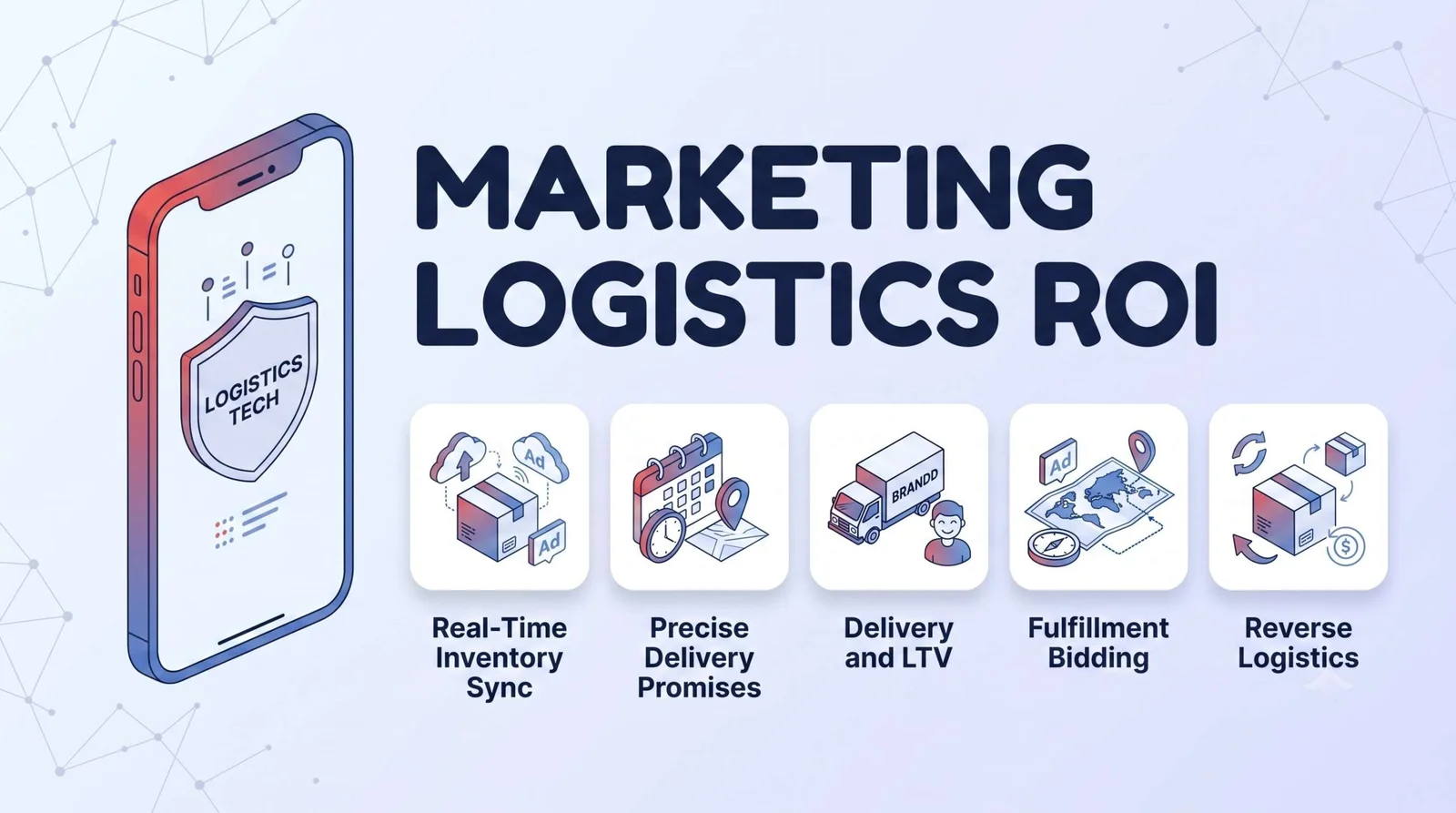
Logistics technology increases marketing ROI by integrating real-time inventory and fulfillment data directly into ad channels, preventing wasted ad spend on out-of-stock products while boosting conversion rates through precise delivery promises. Connecting warehouse management and shipping infrastructure to marketing systems lowers customer acquisition costs (CAC) and increases long-term customer lifetime value (LTV).
When e-commerce brands evaluate campaign performance, they often look exclusively at ad copy, bidding algorithms, or audience targeting. However, marketing ROI is heavily dictated by what happens after a shopper clicks an ad: whether the product is in stock, how quickly it will arrive, and whether the fulfillment experience encourages repeat business. Modern logistics technology turns supply chain operations into an active conversion driver rather than a passive back-office cost center. Quantifying that connection means looking past ad platform dashboards, and resources that break down the ROI of logistics technology investments can help teams build the financial case for making that shift.
Quick Take
Running advertising campaigns without real-time supply chain integration leads to wasted ad spend, higher bounce rates, and lower customer retention. Connecting inventory, order management, and shipping systems directly to marketing platforms dynamically pauses ads for unavailable inventory, surfaces precise delivery dates on product pages, and protects campaign profitability. Integrating logistics into your growth strategy converts operational accuracy into higher conversion rates and superior Return on Ad Spend (ROAS).
The Direct Connection: How Operations Dictate Marketing Efficiency
Digital advertising returns do not depend solely on campaign settings inside Google Ads or Meta Ads Manager. Profitability relies on operational synchronization between supply chains and marketing channels. When a brand advertises a product that is backordered or temporarily out of stock, every paid click results in immediate site abandonment, inflating acquisition costs without yielding revenue.
Advertisement
Conversely, when logistics systems share real-time data with storefronts and ad networks, marketing teams can optimize campaigns based on physical stock levels, fulfillment center proximity, and shipping transit times. Aligning operational execution with customer acquisition forms a foundational pillar of a comprehensive digital marketing strategy.
1. Stopping Ad Spend Waste with Real-Time Inventory Syncing
One of the most immediate leaks in e-commerce marketing budgets is paid traffic directed to out-of-stock products. When a popular item sells out in the warehouse, ad platforms often continue displaying Shopping ads or dynamic retargeting banners for hours or days if product feeds are updated manually or via slow batch processing.
Integrating modern Warehouse Management Systems (WMS) or Order Management Systems (OMS) with catalog feeds automates ad availability. For example, e-commerce platforms can feed inventory thresholds directly into advertising platforms. Rather than deleting listings, merchants can deploy the official Google Merchant Center pause attribute to temporarily halt ad delivery without losing historical listing status or performance history.
Automating this pipeline ensures ad spend is directed exclusively to items that are ready to pack and ship immediately. Teams evaluating their fulfillment stack alongside specialized inventory management software tools can eliminate wasted pay-per-click (PPC) budget while maintaining steady inventory turnover.
Advertisement
2. Converting Shoppers with Dynamic Delivery Promises
Shoppers consistently rate shipping speed and delivery clarity among their top purchasing criteria. Displaying vague shipping timelines like “3–7 business days” introduces purchasing friction at the exact moment a visitor considers buying.
Logistics platforms calculate real-time transit times by analyzing warehouse processing schedules, carrier transit limits, cut-off times, and destination zip codes. According to Kibo Commerce fulfillment research, 75% of online shoppers are more likely to complete a purchase when an exact Estimated Delivery Date (EDD) is displayed on the product page and checkout screen.
Implementing continuous delivery date calculations relies on shipping management engines like ShipperHQ delivery promise solutions, which evaluate multi-origin fulfillment constraints to surface accurate delivery dates. Pairing accurate delivery promises with an e-commerce conversion rate optimization framework directly increases site-wide conversion yield without requiring additional media spend.
3. Maximizing Customer Lifetime Value Through Post-Purchase Delivery
Acquiring a new customer is expensive, and first-order profit margins are often thin due to initial ad costs. Sustainable profitability relies on building high Customer Lifetime Value (LTV) through repeat orders. A single late delivery or lost package damages brand trust and eliminates the likelihood of future purchases.
Advertisement
Empirical research on e-commerce logistics published in RSIS International last-mile delivery studies demonstrates that delivery accuracy is the single strongest predictor of customer loyalty (beta = 0.412), outranking both overall delivery speed and pricing flexibility. When fulfillment technology provides accurate delivery tracking and proactive exception handling, customer satisfaction rises and repeat order rates increase.
Optimizing post-purchase tracking reduces “Where Is My Order?” (WISMO) support calls while keeping shoppers engaged with branded tracking portals. Higher retention rates allow marketing teams to invest in aggressive customer lifetime value strategies, knowing that operational efficiency will protect long-term margins.
4. Geo-Targeted Ad Bidding Based on Fulfillment Proximity
Shipping costs vary significantly based on geographic distance between fulfillment centers and customers. Standard national ad campaigns treat all regions equally, bidding the same amount for a click regardless of whether the order will ship locally via inexpensive ground transit or cross-country via expensive express air freight. Underlying transportation costs, including the fuel consumed by delivery fleets themselves, factor into which regions stay profitable to advertise into, which is one reason logistics operations look at fleet fuel cards as a way to keep per-mile fuel spend more predictable across their delivery vehicles.
Logistics technology provides spatial inventory awareness, permitting brands to align advertising bids with regional fulfillment capabilities within an omnichannel retail marketing strategy. Marketing platforms can ingest real-time regional stock levels to make strategic adjustments:
Advertisement
Proximity Bidding: Increase bid adjustments in zip codes surrounding regional warehouses where ground shipping offers 1-to-2 day delivery at minimal cost.
Regional Ad Pausing: Automatically scale down or pause heavy promotion of heavy SKUs in zones where freight surcharges erode profit margins.
Localized Inventory Promotion: Target specific product campaigns strictly to geographic regions where local fulfillment nodes hold surplus stock.
5. Protecting Campaign Margins via Reverse Logistics Automation
Product returns present a major challenge to digital marketing ROI. High return rates dilute reported Return on Ad Spend (ROAS) by reversing top-line revenue after ad costs have already been incurred. Traditional manual return processing is slow and expensive, often resulting in full cash refunds and unsellable inventory.
Automated reverse logistics platforms transform return flows by automating exchanges and inventory grading. As detailed in Redo reverse logistics operational benchmarks, deploying self-service return portals and automated exchange logic preserves revenue that would otherwise be lost to refunds, converting up to 30% of return requests into replacement sizes or alternative products.
Combining reverse logistics software with a dedicated post-purchase customer experience plan protects net revenues, keeps acquired customers inside your ecosystem, and prevents marketing acquisition budgets from dissolving through unrecovered product returns.
Common Misconceptions About Logistics and Marketing
Aligning operations with marketing requires avoiding several common operational pitfalls:
Assuming Speed Matters More Than Accuracy: Promoting ultra-fast delivery promises that the fulfillment network cannot reliably hit damages brand trust far more than setting a realistic, guaranteed delivery date.
Treating Logistics as an Isolated Cost Center: Viewing warehousing and shipping strictly as expenses rather than revenue drivers prevents organizations from leveraging operational performance in ad messaging.
Relying on Manual Product Feed Updates: Updating product availability feeds manually or on 24-hour batch cycles leaves massive windows where out-of-stock items continue consuming ad spend.
Ignoring Return Data in Campaign Bidding: Failing to feed return rate data back into marketing analytics can lead ad channels to over-invest in high-volume SKUs that carry unsustainably high return rates.
Where Logistics Technology Cannot Fix Marketing Returns
While supply chain integration improves marketing efficiency, technology cannot overcome fundamental product or strategic flaws. Logistics software will fail to boost marketing ROI under the following circumstances:
Poor Product-Market Fit: Fast shipping and real-time inventory tracking cannot compel customers to buy products that lack perceived value or competitive pricing.
Weak Ad Creative and Messaging: Operational efficiency ensures accurate delivery, but uninspiring ad copy and weak value propositions will fail to generate initial click-through traffic.
Insufficient Inventory Volume: Advanced geo-bidding and dynamic delivery engines require baseline inventory availability across multiple nodes to function effectively.
Key Takeaways
Sync Feeds in Real Time: Connect WMS/OMS platforms directly to ad channels to automatically pause ads for out-of-stock items using Google Merchant Center attributes.
Display Precise Delivery Dates: Surface dynamic Estimated Delivery Dates (EDDs) across product pages and checkout to reduce cart abandonment and increase conversion rates.
Focus on Delivery Accuracy: Recognize that on-time delivery accuracy is the primary operational driver of customer retention and repeat purchase LTV.
Leverage Geo-Targeted Bidding: Adjust ad bids based on regional warehouse stock and ground shipping proximity to maximize order profitability.
Automate Reverse Logistics: Use self-service return platforms to convert return requests into product exchanges, preserving net revenue and campaign ROAS.
Frequently Asked Questions
How does connecting an inventory feed to ad platforms lower Cost Per Acquisition (CPA)?
Syncing inventory feeds directly to ad platforms lowers CPA by eliminating ad spend on out-of-stock items. When an item sells out, real-time feed updates automatically pause campaigns or update ad attributes. This ensures that every paid click lands on an actionable, in-stock product page capable of converting, reducing wasted clicks and driving down total customer acquisition costs.
Will displaying an Estimated Delivery Date (EDD) slow down website page speed?
Not if implemented using asynchronous API calls and server-side logic. Modern delivery promise platforms calculate transit times using optimized cloud microservices that query warehouse schedules and carrier data without delaying initial page rendering. Asynchronous execution preserves site loading speed and Core Web Vitals performance while displaying accurate delivery estimates.
Advertisement
How does reverse logistics automation directly protect marketing Return on Ad Spend (ROAS)?
Reverse logistics platforms protect ROAS by automating immediate product exchanges during the return initiation process. By offering dynamic size swaps, color variations, or instant store credit within a self-service portal, the platform retains customer revenue from the initial ad conversion rather than issuing a full cash refund that negates the ad spend efficiency.



 But there’s hope for us visual simpletons, and the purveyor of that hope is [Edris] of Ponderly Robotics. You see, [Edris] created an extremely easy-to-use timer that looks like something you’d find on Captain Picard’s desk as a token of defeating the Borg. But the affably-named FlipBuddy is far more useful than that description implies.































































You must be logged in to post a comment Login