French startups raised €6.7 billion in 2025, down 5% year on year, even as the US grew 38% and Europe 12%. Mistral accounted for 25% of all capital raised. AI drove 43% of funding, defence tech surged 148%, and exits hit a five-year low at €5.3 billion.
A new report on the French tech ecosystem by Alexandre Dewez, a partner at venture firm 20VC, paints a picture of a startup scene that is growing more dependent on a handful of AI companies while the rest of the market stalls. French startups raised €6.7 billion across 411 funding rounds in 2025, a 5% decline in capital and a 21% drop in deal volume compared with the previous year. The numbers stand in sharp contrast to the US, where startup funding grew 38% year on year, and Europe as a whole, which saw a 12% increase.
Advertisement
The report, based on roughly 100 slides of data covering funding, exits, unicorns, and sector trends, argues that France minted its first decacorn but is struggling to build the breadth of winners that would signal a maturing ecosystem. Mistral’s Series C at an €11.7 billion valuation was the headline achievement of 2025, but the AI lab accounted for 25% of all capital raised by French startups that year. Strip out Mistral and the picture looks considerably weaker.
AI dominates, but France lacks category leaders
AI was the main growth engine of the French ecosystem in 2025, accounting for 23% of funding rounds, up from 13% in 2024, and 43% of all capital raised, up from 27% the year before. France also produced several mega seed rounds for foundation model companies, including H at €212 million, Genesis at €97 million, Gradium at €64 million, and Bioptimus at €32 million.
But the report makes a pointed observation: unlike other European countries, France lacks clear category leaders in AI’s most commercially valuable segments. The UK has ElevenLabs in voice. Sweden has Lovable in vibe-coding. Germany has Parloa in customer success and n8n in AI automations. Even Mistral, France’s flagship AI company, is not dominating its category against OpenAI, Anthropic, Google, and Meta.
Mistral’s European nationality, which enables companies seeking a sovereign AI option, has become its main differentiation point rather than technical superiority. The company has lost its early open-source edge and is competing in a multi-modal AI market where the largest US and Chinese players have significantly more capital and compute.
Pennylane was the standout performer
The report names fintech Pennylane as the French startup of the year for 2025. The accounting software company crossed €100 million in annual recurring revenue, growing 130% year on year, and raised two rounds in a single year at valuations of €2 billion and €3.9 billion respectively.
Advertisement
Pennylane has expanded from pure accounting software into an ERP and neobank for French small and medium-sized businesses, and opened operations in Germany. It is a rare example of a French startup executing at growth scale with the kind of metrics that attract top-tier international investors.
Defence is the second hottest sector after AI
European defence tech startups raised $1.6 billion in venture funding in 2025, a 148% increase year on year, making defence the second-largest growth category after AI. Within France, 18 defence startups raised €228 million, a 25% increase on the previous year.
The biggest signal came in January 2026, when Harmattan became France’s first defence unicorn after raising a $200 million Series B led by Dassault Aviation, the maker of the Rafale fighter jet. Harmattan builds autonomy and mission-system software for defence aircraft, and French president Emmanuel Macron publicly praised the deal as a win for the country’s strategic autonomy.
One of the report’s most striking findings is the degree to which US capital now dominates French startup funding. American funds were involved in rounds accounting for 55% of the total amount raised in 2025, and their capital has been concentrated in AI companies, particularly foundation model builders like Mistral, Genesis, and Gradium.
At the Series A level, only 30% of the 20 best rounds in 2025 were led by French funds. Pan-European funds led 60% and US funds led 10%. The report notes that where Index Ventures, Accel, and Balderton were historically the only pan-European firms consistently leading one or two French Series A rounds per year, at least 15 pan-European funds now do the same.
French VC funds are caught in what the report calls the “messy middle,” losing top Series A deals to international funds and top pre-seed and seed deals to a growing crop of French micro-funds with €5 million to €35 million under management. Several French funds are struggling to raise their next vintage, and when they do, they are raising smaller funds than before. Top talent is leaving.
San Francisco is pulling French founders westward
The AI boom has reasserted San Francisco’s dominance as the centre of the global tech industry, and French founders are responding. Multiple early-stage founders are actively building between the Bay Area and Paris, including the teams behind Poolside, Genesis, Zero Entropy, and Anyshift. French venture firms Founders Future, Frst, and Hexa have opened offices in San Francisco.
Advertisement
Entrepreneur First, the British accelerator, closed its Paris office in October 2025 to focus on its US programme. Since launching in Paris in 2018, roughly 700 entrepreneurs had passed through the programme and helped build more than 100 startups. Its departure is a signal that even institutions designed to nurture European founders see the gravitational pull of the US as too strong to resist.
Exits hit a five-year low
The exit picture is bleak. French startup exits totalled €5.3 billion in 2025, a 65% decline year on year and the lowest figure in five years. The IPO market remains largely closed to European tech companies, and trade sales have not filled the gap.
Secondaries have become the dominant source of liquidity, with both VC-led transactions, such as Descartes with Battery Ventures, and PE-led deals, such as Brevo with General Atlantic, providing the main exit routes. This is not a sign of a healthy ecosystem. Secondary sales provide partial liquidity for early investors but do not generate the kind of large-scale returns that attract new capital into the venture system.
France has produced 47 unicorns to date, defined as startups that have been worth at least $1 billion at some point. The report estimates that 36, roughly 77%, are still likely worth $1 billion or more based on recent fundraising, revenue, or headcount growth. The remaining 11 have likely fallen below the threshold, a reminder that unicorn status is not permanent and that the French ecosystem still has a maturity problem when it comes to building durable, large-scale companies.
To the surprise of nobody at all, people are continuing to abuse prediction markets to make a quick buck. Or according to accusations recently levied against a Google employee, a million quick bucks. Software engineer Michele Spagnuolo has been accused of using insider information from his employer to place bets on Polymarket about common Google search subjects. A federal criminal complaint has charged Spagnuolo with commodities fraud, wire fraud and money laundering. He allegedly earned $1.2 million after betting that the top-searched person on Google for 2025 would be singer d4vd, then tried to hide the source of his sudden windfall.
A Google spokesperson shared the following statement with ABC News regarding the case: “We’re working with law enforcement on their investigation. The employee accessed our marketing material using a tool available to all employees, but using such confidential information to place bets is a serious breach of our policies. We’ve placed the employee on leave and will take the appropriate action.”
Insider trading has been making headlines with some regularity on prediction markets. Everyone from an employee of YouTuber MrBeast to political candidates to military personnel have tried to turn privileged information into money on these platforms. Some people have allegedly gotten up to even stranger hijinks to try and scam the bets. Polymarket adopted new rules in March specifically to cut down on insider trading, but only time will tell whether the policies are effective.
Workplace AI usage has nearly tripled repeatedly across global office environments since 2023
ChatGPT lost significant market share as competing workplace AI tools expanded rapidly
Google Gemini emerged as ChatGPT’s strongest challenger within professional productivity workflows
Workplace AI adoption has entered a phase of extraordinary acceleration across global office environments, as The total time spent using AI tools nearly tripled between 2023 and 2024, then repeated that explosive growth into 2025.
A new report from DeskTime analyzed anonymized data from more than 50,000 users over three years, revealing increasing competition with ChatGPT within workflows.
ChatGPT, which commanded an astonishing 99.91% of all tracked AI time back in 2023, has seen that monopoly shattered considerably, as according to DeskTime, which tracked power users who log at least 26 hours annually, ChatGPT’s share dropped to 74.71% during the first four months of 2026.
This erosion mirrors what earlier internet users saw as Firefox gradually lost ground to newer alternatives.
“With AI, it’s often difficult to separate hype from reality, so DeskTime decided to look into what’s really going on in today’s workplace,” said Artis Rozentals, the chief executive of DeskTime.
“The figures are compelling…AI is fundamentally redefining work, and the risk of falling behind is growing exponentially.”
Advertisement
Sign up to the TechRadar Pro newsletter to get all the top news, opinion, features and guidance your business needs to succeed!
Gemini and Claude remains ChatGPT’s major rivals
Google’s Gemini has surged to become the primary challenger among workplace AI tools by capturing 14.38% of office AI time tracked so far in 2026.
Claude has mounted an even more dramatic ascent, now accounting for 8.56% of usage and showing the steepest upward curve this year.
Advertisement
Both rivals have converted casual experimenters into repeat users at a pace that ChatGPT cannot match.
However, Microsoft’s Copilot presents a puzzling contrast, as its share has stagnated at roughly 1% across multiple years.
Neither growth nor collapse appears to characterise this tool’s trajectory within office settings.
Advertisement
Meanwhile, a category of smaller alternatives, including Perplexity and Mistral, has failed to gain any meaningful foothold.
The market for workplace AI agents increasingly resembles a three-horse race rather than a one-player field, and workplace professionals are actively diversifying their toolkits rather than sticking with a single familiar interface.
These figures come from a single productivity tracking service and may not represent a widespread narrative of AI use.
The definition of “AI time” may vary across different job functions and industries in ways that distort competitive comparisons.
Advertisement
Nevertheless, the current trend appears consistent enough to warrant attention from any dominant software provider.
Whether ChatGPT can reverse this decline or will follow Firefox into niche status remains an open question for the remainder of 2026.
Two people in a dinghy get a c loser look at Launchpad, the superyacht docked in Seattle on Lake Union on Wednesday. (GeekWire Photo / Kurt Schlosser)
People saw it on Facebook. And they saw it on Instagram. But many had to come see it up close and in person.
Social media scrollers turned into real-life gawkers on Wednesday as a steady stream of onlookers paused along the western shore of Seattle’s Lake Union to take in Meta founder and CEO Mark Zuckerberg’s superyacht.
No one knew why the $300 million, 387-foot Launchpad was in Seattle. Some wished it wasn’t. Others were pretty thrilled to get a glimpse of the gleaming blue and white vessel, backed into a giant slip along Westlake Avenue North.
Seattle boat salesman Tony Witek grabs a selfie with Mark Zuckerberg’s superyacht in the background. (GeekWire Photo / Kurt Schlosser)
“I’ve been selling boats here in Seattle on Lake Union for 35 years, and I believe this to be the biggest boat I think I’ve ever seen on the lake,” Tony Witek told GeekWire.
The biggest boat Witek has ever sold was about 90 feet long. He called Zuckerberg’s Dutch-built yacht a “personal cruise ship.” Asked how many boats he’d have to sell to afford one like Zuck’s, Witek laughed.
“I think you’d only have to sell this one, and then you could easily go into retirement,” he said.
Advertisement
On a blue-sky May day at lunchtime, the bike and pedestrian trail along the lake was especially busy, and slowed to a pinch point as people stopped to stare, take selfies, FaceTime friends or just ask, “Whose boat is that?”
On the water, people got even closer in dinghies and kayaks — and were warned to stay back by a private security guard from land. A stand-up paddleboarder floated nearby to take pictures. The Argosy Cruises tour boat slowed during a pass by the yacht’s bow. Two electric rental boats did circles as passengers looked up at the towering Launchpad.
Walkers, runners, bikers and others pause and pass by the Launchpad superyacht as seen from the trail along Lake Union. (GeekWire Photo / Kurt Schlosser)
The vessel arrived in Seattle Tuesday night, drawing a similar crowd as it passed through the Ballard Locks. The timing was called less than ideal by some, as Meta cut nearly 1,400 jobs in Washington state earlier in the day.
“The timing of it seems a little distasteful,” said Tim Peterson of Renton. “Probably should have kept it out there in the Sound a little bit longer.”
Peterson said he can’t afford a boat of his own and said he’d be lucky to be able to get a dinghy. He’s not on Facebook, but he is on Meta-owned Instagram.
Advertisement
“I helped pay for it a little bit,” he laughed. “I guess my taxes helped pay for it as well,” he added, lamenting the yacht as a glaring example of excess while many people lack food, housing and healthcare.
“If people have that, then by all means, get you a big old boat,” Peterson said.
A U-Haul box truck is unloaded by workers from the Launchpad superyacht moored on Lake Union on Wednesday. (GeekWire Photo / Kurt Schlosser)
The yacht drew several employees from Meta’s nearby South Lake Union offices. Two engineers said it was interesting to get a sense of the scale of the ship, especially one owned by the head of their company.
“That’s what it’s like to work for a conglomerate,” one of the workers said. The two didn’t want to give their names for fear of being fired.
Steven Redpath, a former Boeing worker, said he used to come to Lake Union to see the aerospace company’s superyacht, Daedalus. The floating corporate entertainment venue was sold for approximately $13 million in 2020.
Advertisement
“Boeing has cleaned up their corporate image and got rid of the yacht,” said Redpath, who took a detour on his bike ride to get a glimpse of Launchpad.
“We bend over backwards for public transportation. We are always looking for solutions to the homeless crisis, and that doesn’t help with either one,” he said, pointing at the yacht. “I think capitalism is letting us down. This is not what our founding fathers were intending to do. This is run amok.”
A float plane takes off from Lake Union above the Launchpad superyacht. (GeekWire Photo / Kurt Schlosser)
Gurneet Takhar, an estate planning attorney in Seattle who spends her time analyzing the money moves of millionaires and billionaires, called the yacht “an interesting asset to own.”
A man piloting a dinghy nearby said he owned a boat on the lake and cruised over to get some size perspective, joking about how many of his boats would fit in the yacht. Another man made a comment about taxes while pointing out the yacht’s Marshall Islands flag, a common registry for large yachts.
And another onlooker, a real estate broker reflecting on the effect of tech layoffs on Seattle and the housing market, called the boat “ugly.”
Advertisement
Deckhands from the yacht could be seen unloading cardboard boxes from a U-Haul box truck parked on the dock. It was tough to tell what was in the boxes — supplies for the stay in Seattle, perhaps. Other workers, including one wiping down parts of the boat, could be seen on decks above.
There was no sign of Zuckerberg.
Ava Pappas shoots a video talking about the big boat behind her on Wednesday in Seattle. (GeekWire Photo / Kurt Schlosser)
Ava Pappas stopped by after seeing a picture of the yacht in her aunt’s Instagram story.
Pappas leads a Seattle run club called Cool Down Running that runs from the Center for Wooden Boats in South Lake Union up to the Fremont Bridge and back on Wednesday nights.
She planned to make a stop with the group mid-run.
Advertisement
“It’s insane. Most people don’t understand the caliber of this megayacht,” Pappas said. “It’s definitely just a treat to be able to see it in person. It’s a beautiful boat, and I love just kind of looking at it in awe.”
Check out more GeekWire images:A kayaker who owns a boat nearby said he cruised over to get a look at the superyacht on lake Union. (GeekWire Photo / Kurt Schlosser)A worker scrubs part of the superyacht while it’s docked on Lake Union on Wednesday. (GeekWire Photo / Kurt Schlosser)A sailboat in a neighboring marina is dwarfed by Launchpad. (GeekWire Photo / Kurt Schlosser)A paddleboarder floats near Launchpad taking close-up photos. (GeekWire Photo / Kurt Schlosser)
The Steam Deck OLED 512GB variant has risen from $549 to $789, while the 1TB model has climbed from $649 to $949. The entry-level LCD Steam Deck, which had anchored the lineup at $399, has been discontinued entirely. Competitive pricing was one of the Steam Deck’s most unexpected strengths when… Read Entire Article Source link
In the months leading up to the implementation of Australia’s social media ban in December 2025, there was much discussion about the possible negative consequences.
Among these were concerns that teenagers would consume less news. As most young adults use social media for news and many rely on it, this was a real risk.
So months on, has this come to pass? In our newly-published research, we found the more young people are impacted by the ban, the more likely they are to report they are getting less news and having less opportunity to discuss news and the issues that matter to them.
Advertisement
Our research
In February we surveyed 1,027 young people aged 10 to 17, just two months after the legislation took effect.
First, we investigated if the ban had affected young people’s social media use by asking them if their engagement with each banned platform had changed at all, and if so, whether the change was a complete stop or if they just used it less.
We found 61% of under-16s who had previously been using banned platforms reported little or no change in their social media use. For the majority of young people surveyed, the ban was ineffectual.
Advertisement
In fact, only one in four (26%) reported their social media use had been affected.
Next, we asked young people if the ban had affected their engagement with news.
For those whose social media use was significantly disrupted, the result was stark: 51% reported getting less news as a direct result of the ban.
Advertisement
This finding is a significant concern because it suggests that as the ban becomes more “successful”, with a greater number of young people being removed from platforms, their news engagement will fall in parallel.
The impact on civic involvement
A 2025 report from the Australian Curriculum, Assessment and Reporting Authority, based on testing of year 6 and year 10 students, finds school students’ civics knowledge is the lowest it has been since testing began 20 years ago. This is despite most young people believing it’s important to take action in the community on issues that matter to them.
Our findings show that when young people are impacted by the social media ban they lose access to news about issues they care about. They are also talking less about news and finding fewer opportunities to share their views or take other forms of action.
Advertisement
Our previous research shows news engagement makes young people feel knowledgeable and more capable of responding to issues.
A large body of research also shows news interest and engagement is closely associated with civic engagement. The more engaged people are with news, the more likely they are to become involved in community and social issues.
Social news or no news
It’s unlikely that being cut off from news on social media will lead young people back to traditional news sources.
Advertisement
Most young Australians say they don’t feel represented or heard by traditional news organisations. They also feel the news mainstream outlets create isn’t accessible to young people and doesn’t focus on the issues that matter most to them.
In our survey, 75% said news organisations have no idea what their lives are actually like, and 71% said they find it difficult to find news relevant to people their age.
Our earlier research also shows Australian news organisations rarely include young people in news stories. When they are included, they are seen but not heard.
For instance, young people are shown in news stories in photographs and video footage ten times more than their voices are heard or they are quoted in stories.
Advertisement
In addition, another study of news has shown that when young people are included in breaking news events, they are often stereotyped as being lazy, dangerous and entitled.
These findings demonstrate some of the reasons young people have likely turned to social media for news in recent years.
So what should we do?
It’s likely that over time, more young people will be cut off from social media as loopholes in the ban are ironed out. This emphasises the need to find ways to encourage young people to engage with other news sources in productive and meaningful ways.
A key concern is trust. We need to educate young people about the importance of news to democratic process, providing them with insights into how high quality journalism is produced and supporting them to make informed decisions about who and what to trust online.
Advertisement
This can happen as part of media literacy education but this requires investments in high quality curriculum resources and teacher training.
In Australia, we are in the fortunate position that we already recognise the need for media literacy in the Australian curriculum. High quality news literacy resources are being produced by the ABC through programs such as BTN (Behind The News), and other organisations such as Squiz Kids.
At the same time, to develop trust, mainstream news organisations need to do a much better job of representing young people in fair and inclusive ways so they feel seen and heard.
Finally, it’s important to recognise that amid all of these changes to young people’s technology access, our research shows family is the first and most trusted source of news for young people. We need to help parents understand the important role they play in helping their kids navigate the news.
Dataware house gambles cloud conveniences, AI accelerated insights will justify the cost.
Cloud data warehouse Snowflake plans to spend $6 billion on Amazon’s custom Graviton CPUs and AI accelerators over the next five years.
The collab aims to reduce friction in connecting Snowflake customer data with a growing number of AI services built atop AWS’ cloud infrastructure.
Advertisement
“We are making it easier for enterprises to bring AI directly to governed data, so they can move faster, operate with greater density and create measurable impact at scale,” Snowflake CEO Sridhar Ramaswamy said in a canned statement.
Snowflake is a long-time AWS customer, having built the company atop the cloud titan’s servers going back to 2011. Over the past few years, Snowflake has shifted an increasing amount of compute from Intel and AMD CPUs to Amazon’s own Arm-based Graviton instances.
Now in their fifth generation, Amazon’s latest Graviton processors cram 192 Arm Neoverse V3 cores which are fed by 12 channels of memory up to 8800 MT/s.
As we’ve previously reported, CPUs are back in the spotlight again after years of being overshadowed by GPUs and other AI accelerators.
Advertisement
The models themselves still run on GPUs, but the tools and functions those models call — a SQL query or Python script, for example — do not. Those workloads still rely on CPUs.
This has driven renewed demand for CPU cores as each agent’s performance is inherently limited by how quickly the processor can service the request.
Under the agreement, Snowflake will run and train its GenAI models and services using a combination of GPUs running in AWS and Graviton CPU cores. For example, Snowflake says that its Cortex AI platform can convert natural language to SQL queries, summarize data, and conduct sentiment analysis.
According to Amazon, Snowflake’s lifetime AWS marketplace sales crossed $7 billion and exceeded $2 billion during the 2025 calendar year. Clearly the data warehousing platform is betting these AI tools will continue to drive revenues enough to justify splashing $1.2 billion a year on additional infrastructure.
Advertisement
Gamble or not, Wall Street doesn’t seem to worried, with Snowflake rallying by more than 30 percent in after hours trading Wednesday.
Snowflake isn’t the only company diving deeper into Graviton’s orbit. Back in April, Meta revealed plans to deploy tens of millions of Amazon’s Graviton 5 CPU cores. The multi-year collaboration was expected to make the social network one of the biggest consumers of AWS’ homegrown silicon.
Much like Snowflake’s $6 billion investment in Amazon’s infrastructure, Meta’s cloud spend is largely aimed at securing cores for AI agents.
But unlike Snowflake, which for better or worse remains heavily reliant on AWS for compute, Meta’s tie up may only be a stopgap while it awaits Arm’s buzzword-packed AGI CPUs. ®
The Glassworm botnet targeting developers in software supply-chain attacks has been disrupted after researchers took down its resilient command-and-control infrastructure relying on Solana blockchain transactions and the BitTorrent DHT network.
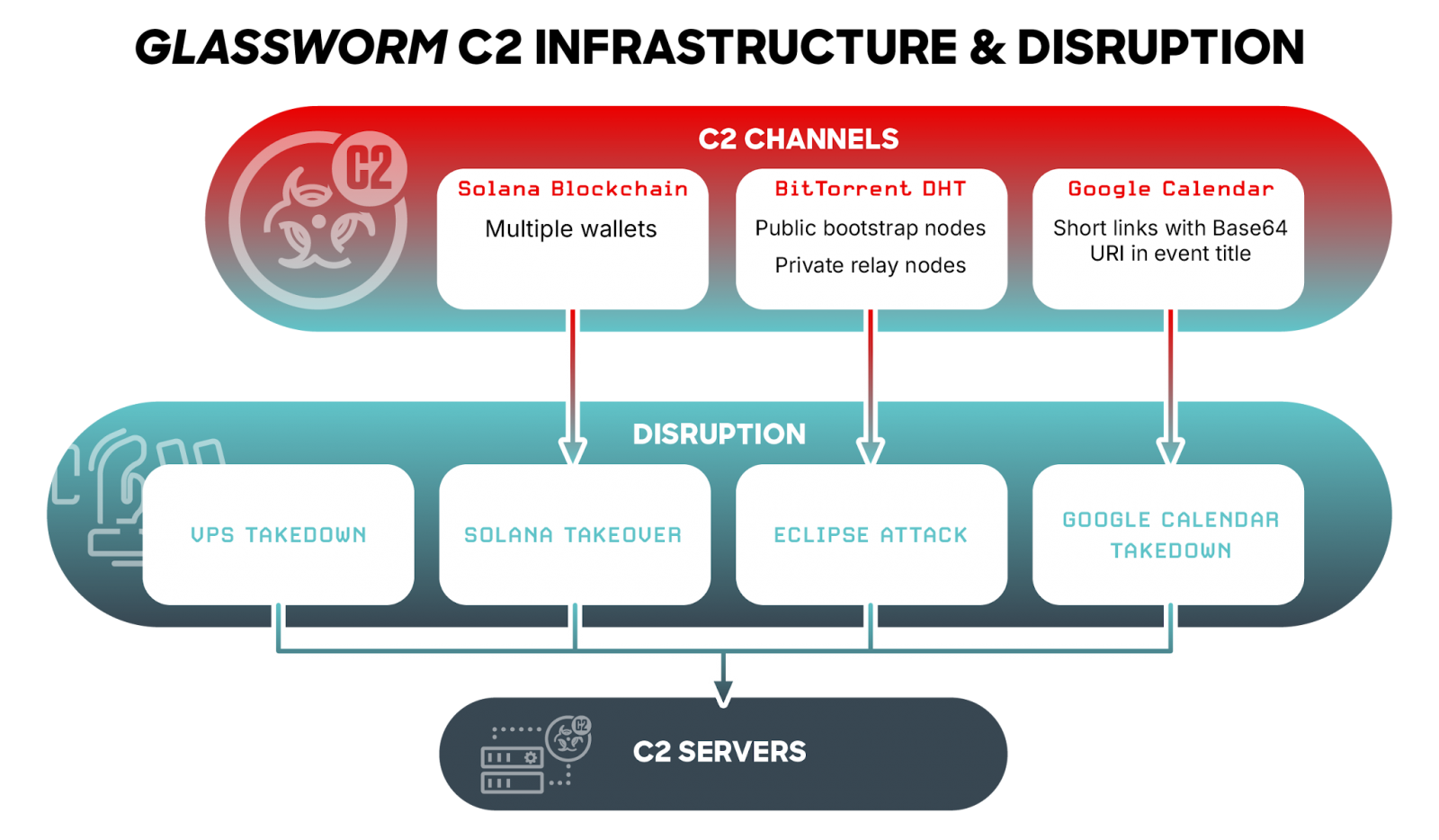
In a coordinated operation conducted yesterday, CrowdStrike, Google, and The Shadowserver Foundation cut off the botnet operators’ access to four distinct command-and-control (C2) channels designed to resist conventional disruption efforts.
Glassworm campaigns have been ongoing since October 2025 and initially targeted developers with malicious OpenVSX and Microsoft VS Code extensions that stole cryptocurrency wallets and developer credentials.
One reason the Glassworm threat has survived this long is its C2 infrastructure, which relies on non-traditional communication channels that are difficult to take down.
“The combination of blockchain, peer-to-peer, and legitimate web services as resolution layers was designed to be resilient against takedowns — a dynamic front protecting the actual C2 servers behind multiple layers of indirection,” CrowdStrike notes.
The researchers say that “Glassworm’s operators built their infrastructure for resilience,” and taking down the botnet required hitting the four C2 channels simultaneously:
Advertisement
Solana blockchain: C2 server addresses are encoded in the memo fields of blockchain transactions, creating an immutable, publicly accessible dead drop that cannot be taken offline by conventional means.
BitTorrent Distributed Hash Table (DHT): The GlasswormRAT queries the BitTorrent peer-to-peer network for configuration data stored against hardcoded public keys, leveraging a global decentralized network with no single point of failure.
Public calendar service: Glassworm uses Google Calendar event titles as dead-drop locations for Base64-encoded C2 paths.
Direct server connections: Traditional C2 infrastructure hosted on commercial VPS providers served as the final payload delivery mechanism.
Because of this architecture, disrupting a single channel would have little impact on the Glassworm operation, as communications could shift to another channel, allowing the threat actor to maintain control.
“All four channels had to be disrupted simultaneously in a coordinated effort. As a result, infected machines can no longer receive new instructions or payloads,” CrowdStrike says.
Following the disruption, all machines compromised in a Glassworm attack are beaconing to the IP address 164.92.88[.]210 operated by CrowdStrike.
Organizations are advised to look for this network indicator and take immediate remediation action. Additionally, the researchers have published YARA rules to confirm infections on suspected hosts.
Automated pentesting tools deliver real value, but they were built to answer one question: can an attacker move through the network? They were not built to test whether your controls block threats, your detection rules fire, or your cloud configs hold.
This guide covers the 6 surfaces you actually need to validate.
Sony launched “MLB The Show Mobile” for iPhone and Android with free-to-play monetization and high hardware requirements as it pushes deeper into the mobile sports market.
Sony says it built “MLB The Show Mobile” from the ground up for smartphones instead of adapting the console version of “MLB The Show” directly. The company centered the release around collectible player cards, progression systems, and competitive multiplayer modes.
Promotional material tells players to “Build your team. Set your strategy. Stack rewards.” Sony is also using pre-registration bonuses to pull existing “MLB The Show” players into the new mobile ecosystem.
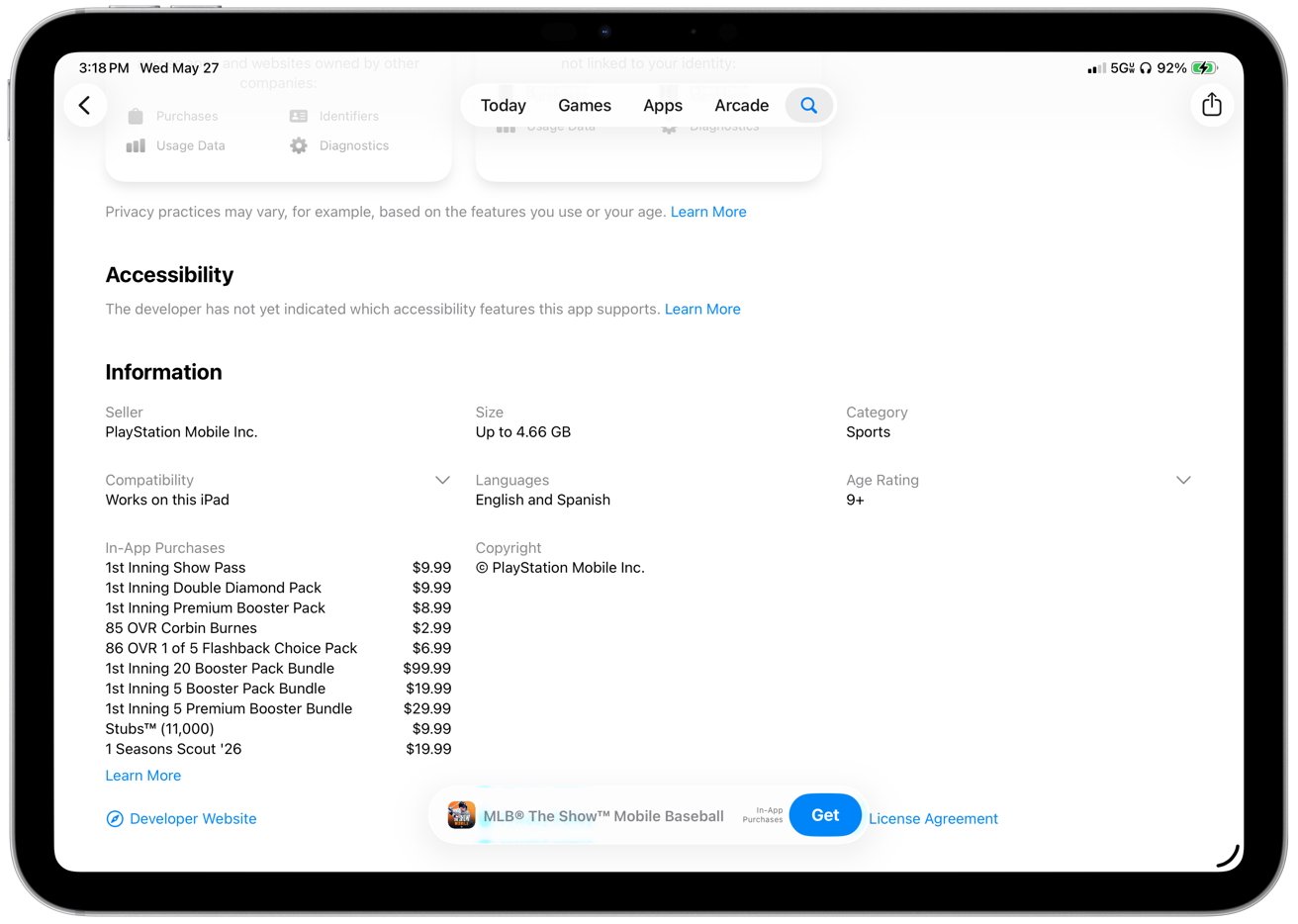
Sony released “MLB The Show Mobile” as a free download, but the App Store listing heavily promotes paid card packs, season passes, booster bundles, and virtual currency.
Advertisement
In-app purchases range from $2.99 player cards to a $99.99 “1st Inning 20 Booster Pack Bundle.” The pricing structure mirrors free-to-play sports games built around recurring purchases and collectible progression systems.
Sony’s launch material prominently promotes pack-opening mechanics and collectible progression. One section of the company’s press release tells players to “Open packs and hunt for the cards that transform your lineup” as part of a mode called “Chase the Ultimate Pull.”
“MLB The Show Mobile” includes more than 900 player cards alongside solo progression modes and head-to-head best-of-three PvP matchups. Sony also says the game features officially licensed MLB teams, athletes, and all 30 MLB stadiums.
In-app purchases range from $2.99 player cards to a $99.99 “1st Inning 20 Booster Pack Bundle.”
“MLB The Show Mobile” carries higher hardware requirements than many mobile sports games, particularly on iPhone. Apple’s App Store listing says the game requires iOS 26 and an iPhone with an A12 Bionic chip or later, including devices as old as the iPhone XS and iPhone XR.
The App Store listing also shows “MLB The Show Mobile” can require up to 4.66 GB of storage depending on downloaded assets and updates.
Advertisement
“MLB The Show” already operates as a live-service title on consoles through modes like “Diamond Dynasty.” The mobile version keeps that same progression loop through rewards, roster collection, and recurring purchases.
A modest upgrade on the previous model, Homey Pro Early 2023, the Homey Pro 2026 doubles the RAM, increasing the number of apps you can run. For large homes with a lot of devices, the new hub is worth buying if you’re either new to the system or your old Pro hub is approaching its limits. Those with smaller homes and lower requirements will find the Homey Pro mini a better choice.
Exceptionally powerful automation
Wide device support
Reacts quickly
Ethernet is not integrated
Can’t join existing Thread networks
Key Features
Advertisement
Review Price:
£399
Multi-device support
Advertisement
Works with Z-Wave, Zigbee, Thread, Matter and more
Optional Ethernet
Advertisement
Requires the special Ethernet adaptor
Introduction
One of the most powerful home automation systems, Homey has expanded its reach to hit smaller homes with the Homey Pro Mini, and revamped its high-end offering with the Homey Pro 2026 hub that I have been using for the past few weeks.
Effectively, the same product as the Homey Pro 2023 but with more memory, the new hub is ideal for those with more devices or the need to run more Flows. Should you upgrade or start with this hub if you’re new to the system? Read my full review to find out.
Advertisement
Advertisement
Design, installation and protocol support
Wi-Fi built in, Ethernet via adaptor
Zigbee, Z-Wave, Thread and Matter support
Externally, the Homey Pro 2026 is identical to the Homey Pro Early 2023, which feels like a missed opportunity. Although the round hub looks great (well, as nice as a smart home bridge can get), it still doesn’t have integrated Ethernet and only has dual-band Wi-Fi 5 built in.
Image Credit (Trusted Reviews)
Ethernet is built into the cheaper Homey Pro mini (though it doesn’t have Wi-Fi), but you’ll need a separate adaptor for a wired connection. I think Ethernet makes much more sense for a device like this, as it’s more reliable, which is what you need if you’re going to trust your home automation to a single device.
Image Credit (Trusted Reviews)
In that regard, the Ethernet adaptor is an essential purchase. If you do get one, just remember to follow the instructions and plug it in the right way: the Ethernet adaptor plugs into the power adaptor via its integrated USB-C cable, then you use the Homey Pro’s USB-C cable to connect the hub.
Advertisement
Image Credit (Trusted Reviews)
It’s worth connecting the Homey Pro 2026 to Wi-Fi anyway. The Ethernet connection is preferred, but should it drop out, Wi-Fi will take over.
Protocol support for the Pro 2026 is the same as for the Pro Early 2023, with Z-Wave, Zigbee, Thread, Matter, 433MHz and Infrared all supported. In other words, you can connect anything to this hub.
In comparison, the Homey Pro mini doesn’t have Z-Wave, Infrared or 433MHz support, although you can add these with the addition of a Homey Bridge.
Advertisement
The main difference between the Homey Pro 2026 and the 2023 version is memory: the new version has 4GB, compared to the 2GB on the older hub. Both have the same 1.5GHz quad-core processor.
More memory means that you can run more apps: more than 100 here, vs 60 on the old one. If you’re approaching that limit on the old Pro, then it’s worth upgrading to the new one. Those new to Homey with large smart home installations should buy the Homey Pro 2026; those with smaller installations with more basic needs will find the Homey Pro mini better.
Advertisement
Adding the Homey Pro 2026 is easy via the Homey app. If you’ve got an old Hub, you can run a backup (I think it’s worth paying the small fee for cloud backups), and then restore to the new hub, and all devices will reconnect.
Advertisement
It can take a while, and it took around 10 minutes before all of my devices had reconnected.
If you’re starting from scratch, then the wizard takes you through creating the floors and rooms that make up your home, and then you can start to add devices and build automations.
Features and performance
Excellent device support
Thread doesn’t connect to existing network
Very powerful automation
The only real restriction with the Homey Pro is that it can’t join an existing Thread network, due to the shared radio for Zigbee and Thread. Looking at my home, I ended up with two Thread networks: one that contained my Apple, Aqara, Tado and SmartThings devices, and one for the Homey Pro.
Depending on the layout of your home and the number of devices you have, this may be an issue. To extend a Thread network, you need plug-in Thread devices, but these aren’t as popular as you might think, and I’ve largely got battery-powered devices such as my Ultion Nuki 2025 smart lock.
Advertisement
Advertisement
As a result, I struggled to place the Homey Pro 2026 in a location that worked for everything. If I put the hub in the main house, it doesn’t reach the smart lock on my office; if I place it in my garden office, then I don’t get coverage in my house.
While a Homey Bridge can be added to expand Infrared and Z-Wave coverage, this device doesn’t have Thread built in. I think it’s time that Homey launched a Bridge with Thread.
There are options. First, you can connect devices to an alternative system first. I run Apple Home and have a HomePod mini, so it’s easy to connect devices here, and then share them with Homey. Plus, this route gives me a backup control system.
Image Credit (Trusted Reviews)
The other option is to use two Homey Pro bridges. You can’t put them directly in the same account, but there is the HomeyLink app to bridge them, giving you all of your devices in one interface without having to switch between hubs.
Device support is excellent, and now all of my devices work whether via official apps or via community-written ones. For example, in my garden office, I have a SmartWings blind and Ultion Nuki smart lock, connected via Matter over Thread, a Yale Linus smart lock connected via the Yale cloud app, and a Ring Alarm connected via a community app.
Advertisement
Advertisement
This level of support has meant that I can move away from Apple Home for my automations and no longer need a HomeBridge server running on a Raspberry Pi.
A couple of years ago, the support was relatively poor and I couldn’t connect many of my smart home devices; today I can connect everything.
Individual device control is easy. I can add my most-used devices to the Favourites section, but otherwise each device gets its own tile in the app, organised by floor, then room.
Advertisement
Image Credit (Trusted Reviews)
My only wish is that Homey would create an iOS widget for quick access to my favourite devices. Currently, the only widget option is for Flows (Homey’s name for routines).
Flows are simple to build and can be simple in operation or much more complicated. For example, when I unlock my office Ultion lock, my Ring Alarm turns off, the Yale Linus unlocks and the SmartWings blind opens; the opposite happens when I lock the door.
Advertisement
Image Credit (Trusted Reviews)
That kind of automation can be done with many smart home systems, but Flows are even more powerful with an And option giving more control over when a Flow triggers.
For example, I can have a Flow that says turn on the garden lights if the Ultion Nuki lock locks and it’s after sunset. In other words, the garden lights only come on to show the way back to the house when I’m done with work, only if it’s after dark.
While the basic Flow editor makes most things possible, there’s an Advanced Flow editor available via the web app that offers even more powerful features: multiple triggers, options to wait for multiple devices to finish simultaneously, and more. It’s both brilliantly simple or extremely complicated, depending on what you need.
Advertisement
Homey also offers more control. When I had underfloor heating installed, the plumber didn’t put a two-port zone valve in, so when any radiator turns on, the kitchen floor starts to get warm. My solution is to use an Aqara Valve Controller T1 to isolate the underfloor heating, turning on when the Tado X thermostat turns on, and shutting the valve when the Tado X system turns off.
I can do this automation in Apple Home, which gives me the on/off trigger only; in Homey, I get the same trigger, plus triggers for when the temperature is above or below a target, or when humidity is above or below a target.
Advertisement
Image Credit (Trusted Reviews)
Where other systems may give more basic options, Homey exposes everything, making it potentially a lot more powerful.
With the power of the Homey Pro 2026, Flows activate very quickly. As soon as I unlock my office, for example, the alarm turns off and the blinds start opening straight away.
Advertisement
Should you buy it?
You want the most powerful hub
If you’ve got a lot of devices and complex routines, Homey is the best smart home system and this is the best hub.
Advertisement
You have more basic needs
If you have fewer devices and basic automation needs, stick with your current hub or buy the Homey Pro mini instead.
Advertisement
Final Thoughts
Doubling the RAM of the previous hub, the Homey Pro 2026 can run more than 100 apps, making it ideal for homes with lots of devices.
Device support is excellent, with support for Z-Wave, Zigbee, Thread, Matter and more, either direct or via the cloud. Powerful automation and exceptional flexibility make this hub and Homey the best smart home system for power users.
Advertisement
I’d have liked integrated Ethernet and a simple option to extend Thread reach, but that aside, this is the top smart home hub, although those with lower requirements will be fine sticking with the older Homey Pro or with the simpler, cheaper Homey Pro mini.
Advertisement
How We Test
We test every smart home product we review thoroughly over an extended period of time. We use industry standard tests to compare features properly. We’ll always tell you what we find. We never, ever, accept money to review a product.
We test how each product integrates with other smart home systems including Amazon Alexa, Google Assistant, Apple HomeKit, IFTTT and Samsung SmartThings
We use each smart home product in a real world setting, integrating it into our home.
FAQs
Can you migrate from an old Homey Pro to the new one?
Yes, you can run a backup and then restore it on the Homey Pro 2026.
Late on May 25, 2026, monitoring cameras caught an event that combined two dramatic forces in one frame. Mount Mayon volcano in Albay province on Luzon had already been sending streams of glowing lava down its slopes for months. Staff at the Philippine Institute of Volcanology and Seismology kept watch through equipment positioned on Lignon Hill in Legazpi City, including a color camera that records activity around the clock.
Around 10:33 p.m. local time, a bright green ball plummeted into the high sky from the color feed. It expanded out into a brilliant streak before zooming down as if it were heading straight for the volcano, as the entire thing appeared to be careening in that direction. Then, in a flash, it blazed brightly before disappearing completely. That whole burn lasted only around one second: the first thought for many people who saw the clip was, did this thing actually reach the slopes?
Capture Stunning Footage – This vlogging camera features a 1-inch CMOS sensor and records in 4K resolution at an impressive 120fps. Capture…
Effortlessly Frame Your Shots – Get the ideal composition with Osmo Pocket 3’s expansive 2-inch touch screen that rotates for both horizontal and…
Ultra-Steady Footage – Say goodbye to shaky videos. Osmo Pocket 3’s advanced 3-axis mechanical stabilization delivers superb stability. Enjoy smooth…
Teams examined every piece of data available, including seismic instruments, infrasound detectors, and footage from other cameras, all of which pointed to the same conclusion: that object never touched the earth and did not even make it to the volcano. It simply split apart high in the atmosphere. A little later, the Philippine Institute of Volcanology and Seismology issued a statement claiming that they had witnessed no impact and that what they were seeing was so visually spectacular because the volcano was right there in the foreground.
Advertisement
These fireballs are caused by small asteroids or comets being blasted into the atmosphere at great speeds, as friction with the air generates a lot of heat and converts the surrounding air into a bright, flaming plasma. The green color comes from the combination of speed, composition, and atmospheric conditions in that brief time. In this case, the green stood out against the constant stream of red and orange lava flows below.
Bill Cooke, the head of NASA’s Meteoroid Environments Office, described it as simply a beautiful video of an unusual coincidence; a volcanologist who saw it described the juxtaposition of this sudden streak from above and all that lava moving steadily along below as a clear clash of two very powerful natural forces. Another of the scientists remarked that this small shard, roughly the size of a coffee cup, briefly managed to divert everyone’s attention away from the much larger volcanic spectacle going on. [Source]































![BITCOIN: Failure To Reclaim This Level Will Be Disastrous! [My EXACT Plan]](https://wordupnews.com/wp-content/uploads/2026/05/1779929426_maxresdefault-80x80.jpg)




































You must be logged in to post a comment Login