When the sun is shining, there are few things better than having friends and family over for an outdoor gathering. The mere thought of good food sizzling on the barbecue and ice-cold drinks clinking together is enough to make most of us shut down our laptops and head for the nearest exit, but the one thing that truly makes the experience is a great playlist. With that in mind, these are the best outdoor speakers to have for your next shindig.
As you can probably imagine, there’s a bit more to consider when it comes to buying an outdoor speaker. Sure, sound quality and integration with your existing ecosystem is always a good place to start, but what really makes the difference is how well that sound can maintain its fidelity at higher volumes, as it’s sure to be competing with plenty of noise around it.
There’s also the question of durability. If an outdoor speaker isn’t rough and ready with proper dust and waterproofing then it won’t last long in the elements. It also needs to be tough enough to bounce back from an accidental fall off a table. These are the elements that we take into consideration when putting these speakers to the test.
Our team of tech experts take these speakers into the great outdoors and sees how well they perform across a variety of genres, whilst also taking note of the battery drain over long-term use. All of this information is then compiled into our reviews to give you a full understanding of what it’s like to own each speaker. Only those are the true cream of the crop make it into this list.
Keep on reading to see which models are highly rated by our team, and if you’re considering setting up and outdoor theatre to enjoy your favourite films under the stars, then you’ll also want to check out our guide to the best outdoor projector. Alternatively, if you just want a reliable speaker for indoor use then our best Bluetooth speaker round-up has you covered.
Best outdoor speakers at a glance
SQUIRREL_ANCHOR_LIST
Learn more about how we test portable speakers
We play a lot of music, and we play it loud. We play it everywhere – in the house, in the garden, and even in the bath if a speaker is waterproof.
We don’t just listen to the speakers; if there are special features then we make sure we fiddle with them until we’re satisfied. Some Bluetooth speakers have smart functionality, and as a result we’ve started speaking to our speakers as well. With portable speakers we take them outside and listen to them to get a feel for how they sound in the great outdoors.
Of course, it always comes back to the music. Speakers are tested by reviewers who have a love of music, a knowledge of sound quality, as well as a context of the market. We’ll listen to Bluetooth speakers alongside similarly priced rivals, so when we recommend a particular model, it’s among the best you can buy for the money.
-
Rich, fun, detailed audio
-
Impressively spacious performance
-
aptX Adaptive support
-
Long battery life for a speaker
-
Robust-feeling build quality
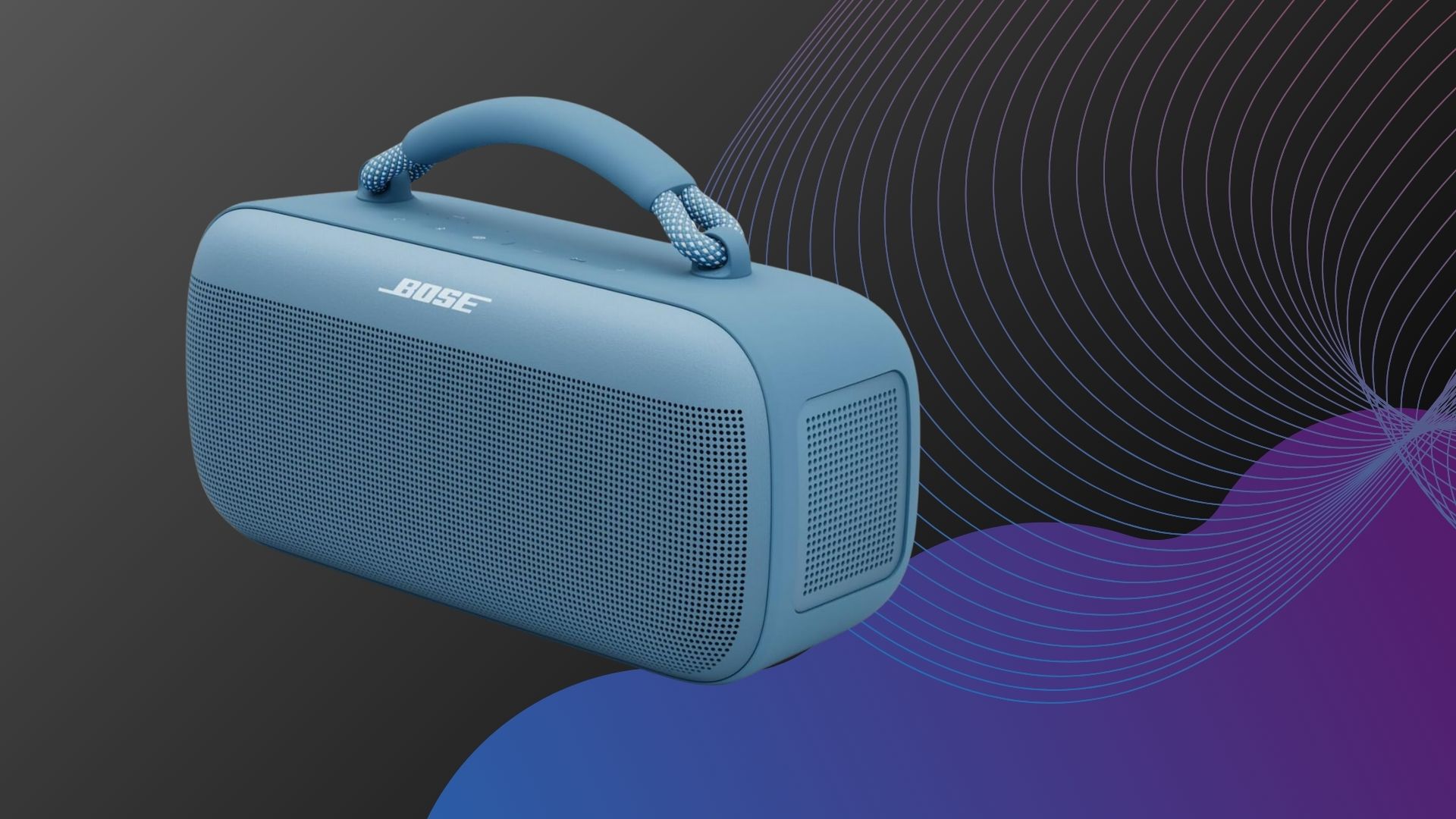
The SoundLink Max from Bose is pricey, but it’s also a terrific portable speaker, especially if you want to have a party outside.
The build quality is good, the SoundLink Max never gives the impression of being anything less than sturdy; while the handle is useful for carrying it around. It is heavier than you might expect. It has an IP67 rating so it should be able to handle use throughout all the seasons.
Battery life is up to 20 hours, but charging brings up one of our few bugbears with this speaker, which is that charging is an overly complicated process. The speaker doesn’t come with a plug (the US version does), and charging with the cable can take a long time. It’s worth buying a plug so the speaker charges faster.
The Bluetooth performance is strong, you can walk a fair distance away from the speaker without the signal breaking up, and there’s support for aptX Adaptive Bluetooth, which enables high quality audio. The Bose app allows for customisation of the sound EQ, but it can be a little buggy, especially if you jump to another app and come back to it.
The sound quality is fantastic. It’s a rich but detailed sound, the soundstage is wider than the dimensions of the speaker, the bass is strong, the highs are nice and sharp and the mid-range is clear. It’s an energetic-sounding effort too, which provides songs with plenty of excitement.
The price of £399 / $399 might put some off, but we think the Bose SoundLink Max is a great-sounding portable speaker.
Longtime readers of Trusted Reviews will know that the Bang & Olufsen Beosound A1 2nd Gen was our favourite Bluetooth speaker for several years, with an eye-catching design and a powerful sound profile to back it up. The only speaker that bested it, rather fittingly, was its direct successor, the Bang & Olufsen Beosound A1 3rd Gen.
Anyone who’s had any experience with Bang & Olufsen will already know that the brand has earned its status amongst audiophiles, with an ear for detail that just can’t be denied. Despite the speaker’s portable size, B&O’s prowess carries over to the Beosound A1, particularly at the lower end thanks to improved bass which permeates through an area.
On top of the sound quality, one of the reasons why the Beosound A1 works so well as an outdoor speaker is its upgraded battery life. Unlike its predecessor, you can use the newer A1 for up to 24-hours on a single charge, so if you do fancy having an all-day gathering in the garden then you can do so here.
That battery can also be replaced if necessary, which just further extends the life cycle of the Beosound A1. Sure, it’s definitely pricier than most Bluetooth speakers at £299/$399, but you’re getting a ton of long-term value from that investment. It can also withstand the elements thanks to an official IP67 rating.
Even though it’s an aspect that’s sure to matter less to some folks compared to the durability and audio quality, it would be strange not to at least point out the obvious that the A1 is easily the nicest-looking Bluetooth speaker on the market. Sure, there are plenty of well-designed options, but none of them feel quite so fashionably designed as the A1, giving it a timeless quality.
We very much liked the original Stormbox Micro but felt it could be improved in a few areas. The Micro 2 seems to have taken on that feedback and it’s an improvement in pretty much every way.
The design has been tweaked with buttons coloured white to contrast against the black fabric covering and the speaker’s dimensions are bigger, holding more battery life (12 hours) and able to be used as a power bank to charge mobile devices. The useful tear-resistant strap remains, offering plenty of versatility in how the speaker can be used or transported whether it’s attached to the handlebar of a bike or connected to a rucksack.
Like many of the speakers on this list, the Stormbox Micro 2 hits an IP67 rating, insulating it against dust and water as well as being immersed within a body of water 1m deep for thirty minutes.
As we mentioned, battery life is up to 12 hours, which puts it among the likes of the Sonos Roam (11) and Ultimate Ears Wonderboom 3 (14) except the Tribit is much cheaper than either. Also new is support for an app where the speaker’s sound can be adjusted.
In terms of its audio performance, the Micro 2 can hit higher volumes than the original, produces a bigger sound and projects audio further way from the speaker’s body. Add in to the mix better levels of clarity and detail, and music on this speaker sounds improved over the original, with bass better described, treble frequencies sharper and clearer and the midrange is more detailed and clearer.
While bass is better than before, speakers such as the Tronsmart T7 can produce more, but that speaker comes in a different form factor and isn’t as compact (or as versatile in its design) as the Tribit.
The JBL Charge 5 Wi-Fi adds Wi-Fi support to the popular Charge 5 speaker, but it’s more thna just that addition that makes this an impressive portable speaker.
It is bigger than other speakers we’d consider to be portable, and doesn’t come with a handle either. Shaped like an NFL ball, it has tough, rugged design; and its IP67 rating ensures it’s able to survive most weather situations that come its way, as well as a drop into a pool.
Battery life is up to 20 hours, which is very good for a portable speaker. Wi-Fi support means you can stream via AirPlay 2, Google Cast, Alexa Multi-Room Audio and Spotify Connect, with audio supported up to 24-bit/96kHz. With the JBL One app, you can stream directly from apps such as Tidal and Amazon Music.
We’re slightly disappointed by the omission of the PartyBoost feature that connected multiple JBL speakers together but our guess is that a) it wasn’t used a lot, and that b) Wi-Fi multi-room support means you get that feature back (in a way) with other speakers on your Wi-Fi network.
The audio performance is a step-up over the Charge 5, whether you’re listening via Bluetooth or on Wi-Fi. On a Bluetooth connection, the Charge 5 Wi-Fi’s treble is clearer, brighter, and sharper. On a Wi-Fi there are even more gains to be had in terms of overall detail and clarity.
Despite the JBL’s looks, its audio is refined and balanced. We didn’t think it merited a full five stars when it first launched, but now that it’s fallen to the same price as the Roam 2, and is a better-sounding speaker than Sonos’ effort, we’re confident in saying it’s one of the best speakers at its price.
Four years after the original launched, Sonos brought the sequel to the Move in the Move 2, featuring a number of design tweaks and a redesigned audio system, though this does come at a cost, with a higher price of £449 / $449.
Nothing has really changed in the size of the speaker, we feel this remains more an outdoor speaker for the garden or to take with you in a car. It still weighs 3kg, so this isn’t really a speaker to slip in your bag and head out of the house with. The buttons have been tweaked so they’re easier to understand and use. Black, white, and a fetching green finishes are the colours the speaker comes in.
An IP56 rating means this speaker is protected against dust, water, and mud, although it’s not rated against is submersion in water. You can feel confident in leaving this speaker outside, and not having to worry about it being ruined in the morning. The battery can be replaced too, good for the longevity of the product as well as being better for the environment.
With Sonos’ Auto Trueplay feature, the speaker is able to automatically optimise audio output based on where it is placed placement for the best sound quality when the microphone is enabled. The biggest boost is to battery life which is now 24 hours (13 hours better than the original). During an eight hour session, we found that battery life fell to 54%, which we feel is more than good enough for any occasion.
But outdoor use isn’t the only reason to get the Move 2, as with its Wi-Fi support (Spotify Connect, AirPlay 2), this speaker works like any other Sonos speaker when used indoors. There’s hands-free access Amazon Alexa and Sonos Voice Control, but there’s no Google Assistant on this model.
The audio quality is another area that’s gained improvements. The speaker now supports stereo playback, producing a wider presence than original’s mono speaker was capable of. Purchase two of these speakers, and you can get full-on stereo playback. We found there was more subtlety that this speaker was capable of, better at retrieving the detail in a song, and when it needs to, it can summon plenty of punch and weight to the midrange and low frequencies.
This is an improvement on the original model, the price increase is at least justified by the better audio quality, stereo sound and improved batter life. The old Move is still a fine effort, on sale for less than £400 / $400 if you find this new speaker a little steep in terms of pricing.
If you’ve been eyeing up the Marshall Bromley 750 but aren’t too keen on having a speaker that’s quite so large, then the Marshall Bromley 450 is certainly the next best thing. The 450 takes the overall concept of the 750 but condenses it down into a frame that’s still big and powerful, but not so cumbersome that it’s tricky to move around from one spot to another.
Before we get into anything else, the real reason why you would want to buy the Marshall Bromley 450 over most other speakers on this list is the battery life. The 450 can run for up to 40 hours on a single charge, which is almost unheard of. With that kind of longevity in the tank, you can start the tunes in the morning and still have more than enough battery left by the time midnight rolls around.
From a design perspective, it’s easy to mistake the Bromley 450 for an actual Marshall amp. Not only is this a great nod to Marshall’s history, but it also gives you an idea of what to expect from the sound quality onboard. With two 6.5-inch woofers, four 2-inch full-range drivers and a pair of passive radiators, all of which are emboldened by eight Class-D amplifiers, this thing is a true beast.
The bassline is strong to the point where you’ll start nodding your head in tune with the music almost instantly, and Marshall’s True Stereophonic 360° sound design ensures that the audio can be heard no matter where you are at the party, keeping you locked in with every beat and melody.
The 450 comes with an official IP55 rating, meaning that it’s more than ready to withstand a splash or water and even a bit of rain, but it’s not fully waterproof so you definitely don’t want to have it situated too close to a pool. It would have been nice to have wheels and a telescopic handle too, but this isn’t a dealbreaker as the whole thing is still easier to move around the Bromley 750.
The JBL Xtreme 4 is what we’d call a mid-sized outdoor speaker. It’s nowhere near the size of something like the Marshall Bromley 450, but it’s not quite as compact as smaller options like the UE Boom 4. Still, even though you do sacrifice some portability, what you get in return is a much wider soundscape that’s perfect for larger gatherings that you need to travel to.
Bear in mind that the Xtreme 4 isn’t impossibly portable either, as there’s a helpful shoulder strap included so you can wear the speaker like a messenger bag as you jump from one party to the next. That might be enough to put some folks off, but trust us, any complaints about the size melt away the moment that you turn on this speaker and start blasting your favourite tunes.
The first thing you’ll notice is the rumbling bass that permeates from the speaker. If you have a penchant for bass-heavy tracks, such as rock or hip hop, then you’ll feel it immediately. It’s exactly the kind of sound profile that takes a gathering to the next level, but if you’d rather have a soundscape that gives more attention to the vocals, you can tweak things to your liking via EQ control on your smartphone.
If you’re out for a long day of partying then you’ll be glad to know that the Xtreme 4 has the endurance to keep up with your plans. The battery can run for up to 24-hours at a time, so you can enjoy tunes all day and night without worry. What’s really impressive though is that the battery can be replaced, ensuring that the Xtreme 4 can last a lot longer than most speakers.
There’s an official IP67 rating onboard, so the Xtreme 4 can withstand a spilt drink with ease, and even survive an accidental dip in fresh water. As much as we love this speaker, the upgrades included are fairly sparse so if you have an older JBL Xtreme speaker, you probably don’t need to pick this one up, but for everyone else, it’s an epic buy.
If you’re in the enviable position wherein money is of little concern then there are very few speakers out there that can deliver quite as luxurious an experience as the Devialet Mania. With a £790/$899 asking price, the Mania is certainly far more of an investment than any other option on this list, but what you get in return is an experience that’s practically unparalleled.
Just to look at the Devialet Mania, there isn’t really another speaker out there that feels like a conversation starter on its design alone. The orb-like shape of the speaker is undeniably futuristic, but there’s also a helpful handle built into the frame that makes it very easy to move from one location to another.
Of course, at this end of the price spectrum, what you’re really paying for is the unbelievable sound quality onboard. When diving into Marillion’s remaster of Hotel Hobbies from Clutching at Straws, the guitars came through with such clarity that you’d honestly think that they were in the room with you, and that clean approach continues with the vocals and the mid-frequencies too.
All of that detail is great, but it’s underscored by a powerful bass that’s fierce, especially if you pair it with songs that go all in at the lower end. For instance, running through the type of tracks you’d hear at the club, the Mania does such a great job of recreating that feeling of energy, which is precisely what you’d want to turn a fun party into a great one.
What’s more, there’s an Active Stereo Calibration mode wherein the four built-in microphones can assess the environment and tweak the EQ to deliver the best sound possible. It all works brilliantly, although we don’t recommend taking the Devialet Mania out into the wilderness as it’s not quite as rough and ready as other speakers on this list. For tunes in the garden however, it works just fine.
Marshall already has plenty of great outdoor speakers available, including the Marshall Bromley 450, but if you want something that’s small enough to fit in a backpack and ideal for smaller gatherings like a picnic or a more low-key barbecue, then the Marshall Emberton III is the way to go.
This excellent speaker builds upon the foundations of the Emberton II, not with a complete reinvention but rather a refinement, making for a better device overall. The big change is that the Emberton III can now run for longer in between charges, so you can anticipate around 32-hours of use at a time. If you need a speaker for a long weekend of camping and accidentally forget to bring a charging cable, you should still have enough in the tank to make it through to Monday.
Beyond the battery life, Marshall has made subtle design changes to the Emberton III which are very welcome. The silicone texture of the speaker itself is now smoother to the touch, and the grille is now flush within the build, no longer jutting out like how it did on the Emberton II. There’s also a section for a carry loop to be added, although you’ll need to buy one separately as, for whatever reason, there isn’t one included.
In terms of sound quality, there’s a slight give-and-take relationship here over the Emberton III’s predecessor. The bass doesn’t have quite the same power of the previous speaker, but what you get in return is more detail in the mid-range which makes the melody of a song sound a lot better to the ears, and gives a bit more depth to the vocals too.
Just like before, it’s an IP67 rating so you don’t have to worry if you spill your drink all over the Emberton III, but that’s all there really is to the device. It’s not a must-have upgrade for anyone who currently owns the Emberton II, and you can arguably find that previous-gen speaker on the cheap now, but for newcomers the Emberton III does the job brilliantly and is well worth snapping up for the extended battery life.
Full Specs
| |
Bose SoundLink Max Review |
Bang & Olufsen Beosound A1 3rd Gen Review |
Tribit StormBox Micro 2 Review |
JBL Charge 5 Wi-Fi Review |
Sonos Move 2 Review |
Marshall Bromley 450 Review |
JBL Xtreme 4 Review |
Devialet Mania Review |
Marshall Emberton III Review |
| UK RRP |
£399 |
£299 |
£46.99 |
£229.99 |
£449 |
£549.99 |
£329.99 |
£790 |
£159 |
| USA RRP |
– |
$399 |
$59.99 |
– |
$449 |
$799.99 |
– |
$899 |
$179 |
| EU RRP |
– |
€349 |
€59.99 |
– |
– |
€649 |
– |
€890 |
€169 |
| CA RRP |
– |
– |
CA$75.99 |
– |
– |
CA$969.99 |
– |
CA$1373 |
– |
| AUD RRP |
– |
– |
AU$76.49 |
– |
– |
– |
– |
AU$1499 |
– |
| Manufacturer |
Bose |
Bang & Olufsen |
Tribit |
JBL |
Sonos |
Marshall |
JBL |
Devialet |
Marshall |
| IP rating |
IP67 |
IP67 |
IP67 |
IP67 |
– |
IP55 |
IP67 |
IPX4 |
IP67 |
| Battery Hours |
20 |
24 |
12 |
20 |
– |
40 |
24 |
10 |
32 |
| Fast Charging |
– |
– |
– |
– |
– |
– |
Yes |
– |
Yes |
| Size (Dimensions) |
265 x 105 x 120 MM |
133 x 133 x 46 MM |
99.8 x 99.8 x 42.9 MM |
223 x 94 x 97 MM |
160 x 127 x 241 MM |
x x INCHES |
297 x 149 x 121 MM |
x x INCHES |
160 x 76.9 x 68 MM |
| Weight |
2.13 KG |
576 G |
315 G |
1 KG |
3 KG |
12.2 KG |
2.1 KG |
2.3 KG |
670 G |
| ASIN |
B0D1CQGFDR |
B0F3P3BN88 |
B09Q59321N |
B0C3VYT6Q6 |
– |
– |
B0CT8XDNXP |
B0DDWDVT73 |
B0DDCJMDJC |
| Release Date |
2024 |
2025 |
2022 |
2023 |
2023 |
2026 |
2024 |
2022 |
2024 |
| First Reviewed Date |
– |
– |
– |
– |
18/09/2023 |
– |
– |
– |
– |
| Model Number |
– |
– |
– |
JBLCHARGE5PROBLK |
Sonos Move 2 |
– |
– |
– |
– |
| Model Variants |
– |
– |
– |
– |
Black, Green, White |
– |
– |
– |
– |
| Audio Resolution |
SBC, AAC, aptX Adaptive |
AAC, aptX Adaptive |
– |
Up to 24-bit/96kHz |
– |
– |
– |
– |
SBC, AAC, LE Audio |
| Driver (s) |
– |
3 1/4-inch woofer, 0.6-inch tweeter |
– |
53mm x 93mm woofer, 20mm tweeter |
2x angled tweeters, 1x mid-woofer |
2 × 6.5-inch woofers, 4 × 2-inch full-range drivers, 2 × passive radiators |
Two 70mm woofer, two 20mm tweeter |
Four full range drivers, two SAM powered subwoofers |
2-inch full range, 2 passive radiators |
| Ports |
USB-C, aux |
USB-C |
– |
USB-C, USB-A |
USB-C |
2 × XLR/6.3 mm combo jacks, AUX 3.5mm (Input and Output), USB-C, RCA |
USB-C |
– |
USB-C |
| Audio (Power output) |
– |
60 W |
10 W |
40 W |
– |
– |
100 W |
– |
– |
| Connectivity |
Bluetooth 5.3 |
Bluetooth 5.1, Made for iPhone (MFI), Google Fast Pair, Microsoft Swift Pair |
– |
Wi-Fi (Spotify Connect, Chromecast, Alexa Multi-Room Audio, AirPlay), Bluetooth 5.3 |
Wi-Fi, Bluetooth 5 |
Bluetooth 5.3, Auracast |
Bluetooth 5.3 |
Bluetooth 5, AirPlay 2, Spotify Connect |
Bluetooth 5.3 |
| Colours |
Blue, Black |
Natural Aluminium, Honey Tone, Eucalyptus Green, Warm Granite |
Black |
Black |
Black, Green, White |
– |
Black |
Grey, Black, Sandstorm, Gold, Crimson |
Black & Brass, Cream, Sage, Midnight Blue |
| Frequency Range |
– Hz |
54 20000 – Hz |
70 20000 – Hz |
– Hz |
– Hz |
42 20000 – Hz |
44 20000 – Hz |
30 20000 – Hz |
65 20000 – Hz |
| Speaker Type |
Portable Speaker |
Portable Speaker |
Portable Speaker |
Portable Speaker |
Portable Speaker |
Wireless Speaker |
Portable Speaker |
Portable Speaker |
Portable Speaker |





















































You must be logged in to post a comment Login