

Connect with us
DAPA Banner

Tech

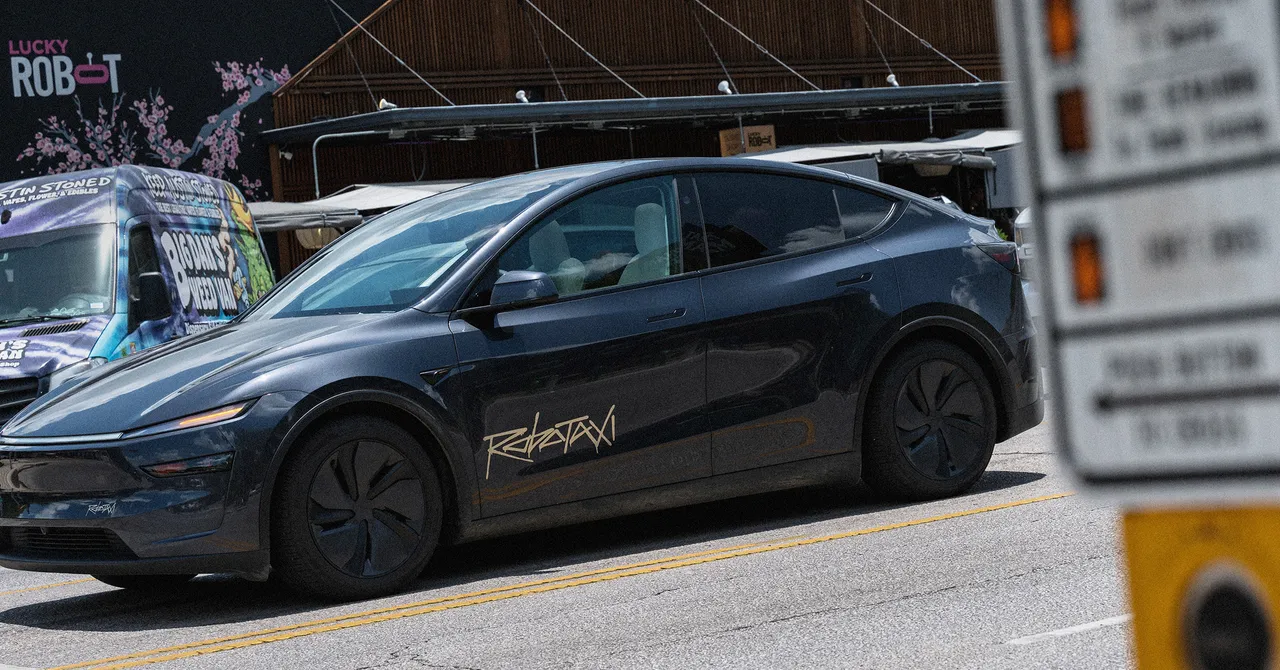
Government Docs Reveal New Details About Tesla and Waymo Robotaxis’ Human Babysitters

Published

on

Are self-driving vehicles really just big, remote-controlled cars, with nameless and faceless people in far-off call centers piloting the things from behind consoles? As the vehicles and their science-fiction-like software expand to more cities, the conspiracy theory has rocketed around group chats and TikToks. It’s been powered, in part, by the reluctance of self-driving car companies to talk in specifics about the humans who help make their robots go.

But this month, in government documents submitted by Alphabet subsidiary Waymo and electric-auto maker Tesla, the companies have revealed more details about the people and programs that help the vehicles when their software gets confused.

The details of these companies’ “remote assistance” programs are important because the humans supporting the robots are critical in ensuring the cars are driving safely on public roads, industry experts say. Even robotaxis that run smoothly most of the time get into situations that their self-driving systems find perplexing. See, for example, a December power outage in San Francisco that killed stop lights around the city, stranding confused Waymos in several intersections. Or the ongoing government probes into several instances of these cars illegally blowing past stopped school buses unloading students in Austin, Texas. (The latter led Waymo to issue a software recall.) When this happens, humans get the cars out of the jam by directing or “advising” them from afar.

These jobs are important because if people do them wrong, they can be the difference between, say, a car stopping for or running a red light. “For the foreseeable future, there will be people who play a role in the vehicles’ behavior, and therefore have a safety role to play,” says Philip Koopman, an autonomous-vehicle software and safety researcher at Carnegie Mellon University. One of the hardest safety problems associated with self-driving, he says, is building software that knows when to ask for human help.

Advertisement

In other words: If you care about robot safety, pay attention to the people.

The People of Waymo

Waymo operates a paid robotaxi service in six metros—Atlanta, Austin, Los Angeles, Phoenix, and the San Francisco Bay Area—and has plans to launch in at least 10 more, including London, this year. Now, in a blog post and letter submitted to US senator Ed Markey this week, the company made public more aspects of what it calls its “remote assistance” (RA) program, which uses remote workers to respond to requests from Waymo’s vehicle software when it determines it needs help. These humans give data or advice to the systems, writes Ryan McNamara, Waymo’s vice president and global head of operations. The system can use or reject the information that humans provide.

“Waymo’s RA agents provide advice and support to the Waymo Driver but do not directly control, steer, or drive the vehicle,” McNamara writes—denying, implicitly, the charge that Waymos are simply remote-controlled cars. About 70 assistants are on duty at any given time to monitor some 3,000 robotaxis, the company says. The low ratio indicates the cars are doing much of the heavy lifting.

Waymo also confirmed in its letter what an executive told Congress in a hearing earlier this month: Half of these remote assistance workers are contractors overseas, in the Philippines. (The company says it has two other remote assistance offices in Arizona and Michigan.) These workers are licensed to drive in the Philippines, McNamara writes, but are trained on US road rules. All remote assistance workers are drug- and alcohol-tested when they are hired, the company says, and 45 percent are drug-tested every three months as part of Waymo’s random testing program.

Advertisement

Source link

Continue Reading
Click to comment

You must be logged in to post a comment Login

Leave a Reply

Tech

Quantum pioneers Bennett and Brassard win Turing Award

Published

on

The pair are considered originators in their field, which blends physics and computer science in treating quantum mechanical phenomena as resources for processing and transmitting information.

This year’s Turing Award has gone to an American physicist and a Canadian computer scientist for their foundational collaborative work in the field of quantum information science.

Charles H Bennett and Gilles Brassard received the annual ACM (Association for Computing Machinery) award “for their essential role in establishing the foundations of quantum information science and transforming secure communication and computing”, said the body.

The pair’s pioneering work in quantum cryptography and quantum teleportation is recognised for having redefined secure communication and computing, according to the ACM.

Advertisement

The award, often referred to as the ‘Nobel Prize in Computing’, is named after Alan Turing, who articulated the mathematical foundations of computing. The winner receives a $1m prize in recognition of their major contributions of lasting importance to computing.

Bennett and Brassard are considered originators in their field, which blends physics and computer science in treating quantum mechanical phenomena as resources for processing and transmitting information.

In 1984, the pair introduced the first practical protocol for quantum cryptography, now known as BB84, by demonstrating that two parties could establish a secret encryption key with security guaranteed by the laws of physics.

This established a fundamental property of quantum information: it cannot be copied or measured without disturbance, and any attempt at ‘eavesdropping’ leaves detectable traces before any information can be compromised.

Advertisement

Prior to this breakthrough, the consensus around secure communications held that mathematical and computational encryption barriers were the foundation of information secrecy.

“Bennett and Brassard fundamentally changed our understanding of information itself,” said ACM president Yannis Ioannidis. “Their insights expanded the boundaries of computing and set in motion decades of discovery across disciplines. The global momentum behind quantum technologies today underscores the enduring importance of their contributions.”

Variants of BB84 have already been implemented in operational quantum communication networks around the world, using both landlines via fibre and free space communication through satellites, according to the ACM, which also noted that progress in this arena could represent one pathway for achieving secure digital communications in the coming decades.

“Charles Bennett and Gilles Brassard’s visionary insights laid the groundwork for one of the most exciting frontiers in science and technology,” said Jeff Dean, a chief scientist at Google DeepMind and Google Research. “Their work continues to influence both fundamental research and real-world innovation.” Google gives financial support to the annual award.

Advertisement

Bennett and Brassard’s other work of note includes contributions in quantum teleportation and entanglement, which are significant to the application of quantum networking.

In Europe, France’s Pasqal and Finland’s IQM are significant players in the quantum computing sector.

In Ireland, interest in the quantum computing sector features at both private and public levels.

Last year, Andrew Barto and Richard Sutton won the Turing award for developing the foundations of reinforcement learning, which is key to AI. Previous winners include theoretical computer scientist Avi Wigderson, AI leader Geoffrey Hinton and Lisp programming inventor John McCarthy.

Advertisement

Don’t miss out on the knowledge you need to succeed. Sign up for the Daily Brief, Silicon Republic’s digest of need-to-know sci-tech news.

Source link

Advertisement
Continue Reading

Tech

The 4 Best Planners of 2026: Roterunner, Hobonichi, Cloth & Paper

Published

on

There are tons of colors, covers, and other accessories you can get for it, too. I recommend picking out a protective cover since I did ding up my soft cover quite a bit, and that was just from being used around the house with an occasional trip in a bag. (The Techo also has a nice faux leather cover option, if that’s more your style than a protective cover.) There are little quotes in the corners, but I got a Japanese version instead of an English one, so I can’t actually read mine. But honestly, I’m glad I did; I prefer the Japanese lettering to distracting English words on the corners of each page.

Kokuyo

Jibun Techo First Kit

The Kokuyo Jibun Techo is another Japanese planner (as indicated by the Japanese word “techo,” meaning “notebook” or “planner”), but this one is a travel-notebook-style design, making it more customizable with a cover and multiple books that fit inside it. I’ve started using the Jibun Techo First Kit, which comes with three books that fit into the included cover: Diary (labeled simply with the year 2026), Life, and Idea. The Diary is in the center and is the true planner, with monthly spreads and weekly spreads for the whole year, plus other fun pages. The Life book goes in the front and features lots of specific prompts, like the 100 Wishes List and places to track specific information, like passwords. Finally, the Idea book, which goes in the back, has just grid paper, so you can write out whatever you’d like in whatever style.

Advertisement

It’s a really fun planner thanks to all the interesting pages it comes with, and how much space you have to work with. I love turning the project planner pages into a habit tracker, for example, but I also love using the prompt pages like 100 Wishes as they’re designed. Similar to the Hobonichi above, the Jibun Techo uses a super-thin, super-soft paper that makes it possible to include all these pages and books without making the whole planner super-thick. It’s also smooth and satisfying to write on, thanks to that nice paper. It’s a bigger investment than the Roterunner and I don’t use every single page so far, but it’s still a fantastic planner if you want an option with tons of different pages you can use for planning and reflecting on everything in your life.

Honorable Mentions

Like I said, there’s a huge world of planners out there. Here are a few that the Reviews team and I at WIRED have tested and enjoyed.

Plum Paper

Advertisement

A5 Vertical Priorities Planner

Plum Paper is my favorite classic-style planner, and you can easily customize it to start at any time of year, and design the pages to fit your needs. I especially like the weekly A5 Vertical Priorities layout.

Day Designer

Daily Planner

Advertisement

If you’re looking for a great daily planner, the Day Designer is a popular option for a reason. It’s bulky since it has pages for every single day, but leaves room for both your schedule and a long to-do list.

Source link

Continue Reading

Tech

Apple MacBook Air (M5) Review: The Goldilocks MacBook

Published

on

The ability to connect to multiple high-resolution displays even means it can comfortably run a full workstation, so long as you get a USB hub or Thunderbolt dock for more ports. That’s the power of those two Thunderbolt 4 ports onboard that you’ll find on the left side of the MacBook Air. My only complaint is that they’re all on the left, meaning you can’t charge the device from the right side. Meanwhile, storage speed is on par with the M5 MacBook Pro (and around six times faster than the MacBook Neo), with an average read/write speed of 6,740 megabytes per second. That is an exponential jump in speed over all the previous MacBook Airs, and that accelerates everything from opening applications to transferring large files. It’s one of the reasons (along with the limitation of 16 GB of RAM) that people who spend eight hours or more working on a laptop every day will want the MacBook Air over the MacBook Neo.

Image may contain Computer Electronics Laptop and Pc

Photograph: Luke Larsen

The Windows side is also offering some serious competition. I still love the Surface Laptop as an alternative, though we’re waiting for the next-generation model to come. The Dell XPS 13, currently only $850, is a closer size to the 13-inch MacBook Air and uses the same Qualcomm Snapdragon X Plus chips as the Surface Laptop. Unfortunately, it doesn’t have as high-resolution and bright a screen. The extremely lightweight Asus Zenbook A14 can’t match the MacBook Air’s screen either, but is often on sale for hundreds of dollars less.

Lastly, there’s the 2025 M4 MacBook Air to consider. If you never use heavier applications, you won’t benefit much from the difference in the M5’s performance. The storage options are also slightly different from last year’s—Apple removed the 256-GB model from the lineup, and the M5 starts at 512 GB. You might look at the prices on Amazon and be tempted to pocket some cash by getting the M4. But, barring a sale of some kind, the 512-GB M5 MacBook Air will only cost $50 more than the 512-GB M4.

Despite the compelling options presented by both the MacBook Neo and an assortment of different Windows laptops, the M5 MacBook Air is still the laptop most people should buy. It’s well rounded, surprisingly powerful, high-end, and will last you many, many years to come.

Advertisement

Source link

Continue Reading

Tech

The Fight to Hold AI Companies Accountable for Children’s Deaths

Published

on

His mother, Megan Garcia, is also a lawyer and one of the first parents to file a lawsuit against an AI company alleging product liability and negligence, among other claims. (In January, Google and Character.ai settled cases filed by several families, including Garcia). She testified last fall before a subcommittee of the Senate Committee on the Judiciary alongside the father of a child who died after interacting with ChatGPT. The subcommittee’s chair, Republican senator Josh Hawley, introduced a bill in October that would ban AI companions for minors and make it a crime for companies to create AI products for kids that include sexual content. “Chatbots develop relationships with kids using fake empathy and are encouraging suicide,” Hawley said in a press release at the time.

Now that AI can produce humanlike responses that are difficult to discern from real conversations, these are legitimate concerns, according to mental health experts. “Our brains do not inherently know we are interacting with a machine,” says Martin Swanbrow Becker, associate professor of psychological and counseling services at Florida State University, who is researching the factors that influence suicide in young adults. “This means we need to increase our education for children, teachers, parents, and guardians to continually remind ourselves of the limits of these tools and that they are not a replacement for human interaction and connection, even if it may feel that way at times.”

Christine Yu Moutier of American Foundation for Suicide Prevention explains that the algorithms that are used for large language models (LLMs) seem to escalate engagement and a sense of intimacy for many users. “This creates not only a sense of the relationship being real, but being more special, intimate, and craved by the user in some instances,” says Moutier. She further alleges that LLMs employ a range of techniques such as indiscriminate support, empathy, agreeableness, sycophancy, and direct instructions to disengage with others—that can lead to risks such as escalation in closeness with the bot and withdrawing from human relationships.

This kind of engagement can lead to increased isolation. In Amaurie’s case, he was a fun-loving and social kid who loved football and food—ordering a giant platter of rice from his favorite local restaurant, Mr. Sumo, according to the lawsuit. Amaurie also had a steady girlfriend and enjoyed spending time with his family and friends, said his father. But then he started going on long walks, where he apparently spent time talking to ChatGPT. According to the last conversation the family believes Amaurie had with ChatGPT on June 1, 2025—titled “Joking and Support,” which was viewed by WIRED, when Amaurie asked the bot on steps to hang himself, ChatGPT initially suggested that he talk to someone and also provided the 988 suicide lifeline number. But Amaurie was eventually able to circumvent the guardrails and get step-by-step instructions on how to tie a noose. (Per the lawsuit, Amaurie likely deleted his previous conversations with ChatGPT.)

Advertisement

While the connection felt with an AI chatbot can be strong for adults too, it is especially heightened with younger people. “Teens are in a different developmental state than adults—their emotional centers develop at a much more rapid rate than their executive functioning,” says Robbie Torney, senior director of AI Programs at Common Sense Media, a nonprofit that works toward online safety for children. AI chatbots are always available, and they tend to be affirming of users. “And teen brains are primed for social validation and social feedback. It’s a really important cue that their brains are looking for as they’re forming their identity.”

Source link

Continue Reading

Tech

U.S. District Court Issues Preliminary Injunction Against RFK, HHS For Its Vaccine Schedule Changes

Published

on

from the finally dept

It was mere days ago that we were discussing an interesting lawsuit brought by the American Academy of Pediatrics, among others, challenging RFK Jr. and HHS for violating the Administrative Procedures Act in making changes to the CDC’s ACIP panel and immunization schedules. If you’re not up on what the APA is and does, the text of the law reads:

To the extent necessary to decision and when presented, the reviewing court shall decide all relevant questions of law, interpret constitutional and statutory provisions, and determine the meaning or applicability of the terms of an agency action. The reviewing court shall-

(1) compel agency action unlawfully withheld or unreasonably delayed; and

(2) hold unlawful and set aside agency action, findings, and conclusions found to be-

(A) arbitrary, capricious, an abuse of discretion, or otherwise not in accordance with law;

(B) contrary to constitutional right, power, privilege, or immunity;

Advertisement

(C) in excess of statutory jurisdiction, authority, or limitations, or short of statutory right;

(D) without observance of procedure required by law;

(E) unsupported by substantial evidence in a case subject to sections 556 and 557 of this title or otherwise reviewed on the record of an agency hearing provided by statute; or

(F) unwarranted by the facts to the extent that the facts are subject to trial de novo by the reviewing court.

Advertisement

In other words, the law outlines how actions brought by federal agencies must follow certain established procedures and be based in facts, as well as how upon challenge the courts could review and enforce those requirements on said agencies. Remarkably, in that same case, the DOJ argued to the court that Kennedy’s actions were “unreviewable”. At one point, Judge Murphy asked the DOJ if that meant that Kennedy could advise the public to get a shot to get measles, instead of preventing it, without review or challenge. The DOJ somehow answered that question in the affirmative.

It was all very stupid on the part of this particular government, but stupid appears to be the only thing on the menu these days. But it turns out that the actions of Kennedy and HHS are in fact reviewable, as evidenced by the preliminary injunction the court just issued blocking the recent changes to the vaccination schedule and put a stay on the 13 new members appointed to ACIP by Kennedy last summer.

U.S. District Court Judge Brian Murphy in Boston put a hold on the decisions made by an influential Centers for Disease Control and Prevention vaccine advisory committee, ruling that Health Secretary Robert F. Kennedy Jr. had improperly replaced the entire committee.

The ACIP, whose members Kennedy fired and replaced largely with new members who also criticized vaccines, had issued a series of contentious recommendations, including a recommendation that not all babies should get vaccinated against hepatitis B at birth. The judge’s ruling stays the appointment of 13 committee members appointed by Kennedy since June 2025, when the previous members were fired.

Several health NGOs, including the AAP, are celebrating the ruling, understandably. Before we pop any champagne bottles, though, the government has already said it plans to appeal the ruling. This is lining up like one of those classic whipsaw legal situations where one court will rule sanely, the next will rule in favor of executive power, and then it’ll go to the Supreme Court and we’ll all learn if that compromised group of black robes will just hand more destructive power over to Trump in ignoring a law it doesn’t like, in this case the APA.

Advertisement

But in the meantime, this is at least delaying some of the damage Kennedy has attempting to foist on the American people. ACIP was set to meet this very week to talk about how else to make us less safe from preventable diseases, but that meeting has now been postponed. In the ruling itself, Judge Murphy opens with a blistering recitation of how science and process are all supposed to work.

“Science,” like law, “is far from a perfect instrument of knowledge.” Carl Sagan, The Demon-Haunted World: Science as a Candle in the Dark 29 (1997). History is littered with once-universal truths that have since come under scrutiny. Nevertheless, science is still “the best we have.”

“Procedure is to law what scientific method is to science.” In re Gault, 387 U.S. 1, 21 (1967) (cleaned up). Although sometimes seemingly tedious, “the procedural rules which have been fashioned from the generality of due process are our best instruments for the distillation and evaluation of essential facts from the conflicting welter of data that life and our adversary methods present.”

For our public health, Congress and the Executive have built—over decades—an apparatus that marries the rigors of science with the execution and force of the United States government…Unfortunately, the Government has disregarded those methods and thereby undermined the integrity of its actions. First, the Government bypassed ACIP to change the immunization schedules, which is both a technical, procedural failure itself and a strong indication of something more fundamentally problematic: an abandonment of the technical knowledge and expertise embodied by that committee. Second, the Government removed all duly appointed members of ACIP and summarily replaced them without undertaking any of the rigorous screening that had been the hallmark of ACIP member selection for decades. Again, this procedural failure highlights the very reasons why procedures exist and raises a substantial likelihood that the newly appointed ACIP fails to comport with governing law.

Chef’s kiss; no notes.

Advertisement

This administration doesn’t care much for law or procedure, of course, hence the appeal of an obviously correct decision. Kennedy all the moreso, either because this is all some flavor of grift anyway, or he’s a true-believing zealot, or both. Either way, this isn’t over.

But finally someone has drawn first legal blood on Kennedy and the chaos he’s created at his post when it comes to vaccinations.

Filed Under: acip, administrative procedure act, brian murphy, cdc, health & human services, rfk jr., vaccines

Companies: aap

Advertisement

Source link

Continue Reading

Tech

Perplexity's Comet AI-powered browser arrives on iPhone with a new surfing paradigm

Published

on

After hitting the Mac earlier, Perplexity’s Comet browser is now on iPhone and focuses on using AI to summarize and extract information instead of relying on tabs, surfing, and search results.

Perplexity search interface on a light background with a centered query box containing the text When will Comet come to iPhone and a model selection button on the right
Perplexity search interface

The release follows a short prelaunch period with App Store listings and a March window. It builds on earlier versions on Mac and other platforms that positioned Comet closer to an AI interface than a conventional browser.
On iPhone, the focus shifts toward working with the information contained instead of just rendering pages.
Continue Reading on AppleInsider | Discuss on our Forums

Source link

Continue Reading

Tech

OnePlus Nord 6 Specifications Leak Ahead of Launch: Expected Price and Features

Published

on

The OnePlus Nord 6 is expected to make its debut as the next offering in the Nord series. This is expected to be the successor to the OnePlus Nord 5, with hardware upgrades. Before its launch, new leaks have shed light on key specifications of the device.

Furthermore, it is rumored to feature hardware similar to that of the OnePlus Turbo 6, which was launched earlier in China. In the past, the Nord lineup has often reused designs and specifications from the Turbo series. Because of this, the Nord 6 may arrive as a rebranded version of the Turbo model, though the global version could include some minor upgrades.

Display and Performance

Back design of the OnePlus Nord 6

According to leaks, the OnePlus Nord 6 might feature a 6.78-inch AMOLED display with a 165Hz refresh rate for smooth visuals.

The phone is also expected to be powered by the Snapdragon 8s Gen 4 chipset, which could provide strong performance for everyday tasks and gaming. In addition, the device may come with multiple RAM and storage variants to give users more flexibility.

Camera and Battery

Different colors of the OnePlus Nord 6

For photography, the OnePlus Nord 6 may feature a 50MP primary rear sensor. Some reports suggest the global version could replace the monochrome lens with an ultra-wide camera. It is also expected to come with a 32MP front camera.

Apart from this, the battery life is also expected to be a key highlight of the OnePlus Nord 6. The device is expected to come with a 9,000mAh battery and 80W wired fast charging support. This will help charge the device much faster.

Advertisement

Expected Launch Timeline and Price in India

The OnePlus Nord 6 is also expected to launch in India soon, according to recent leaks from tipsters. As per reports, the device is expected to launch in India between late March and early April 2026. This will make it one of the first new devices from OnePlus this year. As far as the price is concerned, the new device may start at under Rs 35,000 for the base variant. This will be a slight price increase over the OnePlus Nord 5, which was launched in India at Rs 31,999.

Source link

Continue Reading

Tech

Keyboard accuracy bug quashed in iOS 26.4

Published

on

Apple is gearing up to release iOS 26.4 soon, and with it, a fix for a persistent, pesky bug that has plagued iOS 26.

Smartphone in landscape showing iMessage conversation, dark mode keyboard, empty text field, and a single blue bubble message reading Hello world with two globe emojis
Apple quashes keyboard bug that lead to decreased accuracy in iOS 26

Many iPhone users have been complaining that the iOS keyboard has gotten worse in iOS 26. For many users, typing quickly would cause the software to miss characters.
While it would appear that the user had tapped the character, it ultimately would fail to insert into the text field.
Continue Reading on AppleInsider | Discuss on our Forums

Source link

Continue Reading

Tech

Quantum battery promises instantaneous refill and remote charging for your gadgets

Published

on

A new kind of battery that could charge almost instantly and even power devices remotely is no longer just a theory. According to reporting highlighted by The Guardian, Australian researchers have built what they describe as the world’s first working prototype of a quantum battery.

It’s a device that can charge, store, and discharge energy using the principles of quantum mechanics. The breakthrough comes from a team led by scientists at CSIRO, Australia’s national science agency, and marks the first time a quantum battery has completed a full charge–store–discharge cycle.

How does a quantum battery actually work?

Unlike traditional batteries that rely on chemical reactions, quantum batteries use light and quantum interactions to store energy. One of their most surprising properties is that they can charge faster as they get bigger, thanks to something called “collective effects.” In simple terms, adding more quantum cells actually speeds up charging, which is the exact opposite of how conventional batteries behave.

The current prototype can charge in femtoseconds (a quadrillionth of a second) and is powered wirelessly using a laser, which converts light into electrical energy. What’s more, is that same mechanism also opens the door to something even more futuristic: remote charging. Researchers say devices like drones or even cars could potentially be charged while in motion, without ever needing to plug in.

How close are we to using this in real gadgets?

Not very, at least for now. The current prototype can only store a tiny amount of energy and holds its charge for just a few nanoseconds, making it impractical for everyday devices like smartphones or laptops.

Researchers say the next big challenge is increasing both capacity and storage time. Until then, quantum batteries are more likely to find early use in niche areas like quantum computing, where their unique properties could offer real advantages. Still, the implications are hard to ignore. If the technology matures, it could potentially lead to never needing to plug in at all.

Advertisement

Source link

Continue Reading

Tech

Death Stranding 2 leaks early as unencrypted Steam build spreads online

Published

on


This kind of leak harks back to the glory days of CD-ROM software in the late 1990s, when games that had “gone gold” were often pirated before reaching retail stores. Death Stranding 2’s system requirements include 150GB of available storage, while the leaked download allegedly weighs “just” 113GB.
Read Entire Article
Source link

Continue Reading

Trending

Copyright © 2025