Atlas Menu, a GTA V cheat service that promised “enhanced privacy,” was hacked, exposing nearly 64,000 accounts including emails, usernames, hashed passwords, and IP addresses. The stolen data was posted to GitHub by a hacker motivated by revenge.
Atlas Menu, a cheat service for Grand Theft Auto V’s online mode, has been hacked, exposing the personal data of nearly 64,000 users. The stolen data included email addresses, usernames, hashed passwords, IP addresses, and support tickets, according to data breach notification service Have I Been Pwned. The breach was claimed by a hacker whose stated motivation was revenge against a scammer, and the allegedly stolen data was posted publicly to GitHub.
Advertisement
The irony is difficult to miss. Atlas Menu marketed itself on security, promising users “secure authentication and enhanced privacy through our advanced encryption techniques,” according to its official website, which was archived before going offline. The service sold features that gave GTA V players unfair advantages: invisibility, super jumps, the ability to fly through the map, and other modifications to Rockstar Games’ online multiplayer environment.
A multi-million dollar shadow industry
Game cheats have evolved from hobbyist projects into a multi-million dollar commercial market. Professional and semi-professional gamers pay for software that provides advantages over competitors, while casual players use cheats to bypass progression systems or grief other users. Services like Atlas Menu operated in a legal grey area, selling tools that violate most games’ terms of service but are not themselves illegal in most jurisdictions.
The breach exposes users to potential embarrassment and further security risks. Email addresses tied to gaming accounts often overlap with primary personal accounts, meaning that users who signed up for a cheat service with the same credentials they use elsewhere now face credential-stuffing attacks. The hashed passwords provide some protection, but depending on the hashing algorithm used, determined attackers could crack weaker passwords.
Atlas Menu is not the first cheat service to be breached. A popular cheat service for Counter-Strike: Global Offensive was hacked several years ago in a similar incident. The GTA franchise has been a recurring target for security incidents, from the 2023 GTA VI trailer leak traced to a Rockstar developer’s son to repeated exploits targeting GTA Online’s peer-to-peer networking architecture.
Advertisement
The enforcement gap
The breach highlights a structural problem in gaming security. Cheat services operate with minimal accountability: their operators are often anonymous, their infrastructure is disposable, and their users have no recourse when things go wrong. Unlike enterprise software vendors that face regulatory and contractual obligations to protect customer data, cheat service operators answer to no one.
Rockstar Games has invested heavily in anti-cheat systems for GTA Online, but the persistence of services like Atlas Menu demonstrates the limits of technical enforcement against a motivated and commercially incentivised cheating ecosystem. Law enforcement has targeted some gaming-adjacent cybercrime operations, but cheat services rarely rise to the level of criminal prosecution unless they involve direct financial fraud or intellectual property theft at scale.
The owners of Atlas Menu could not be reached for comment. The site remains offline.
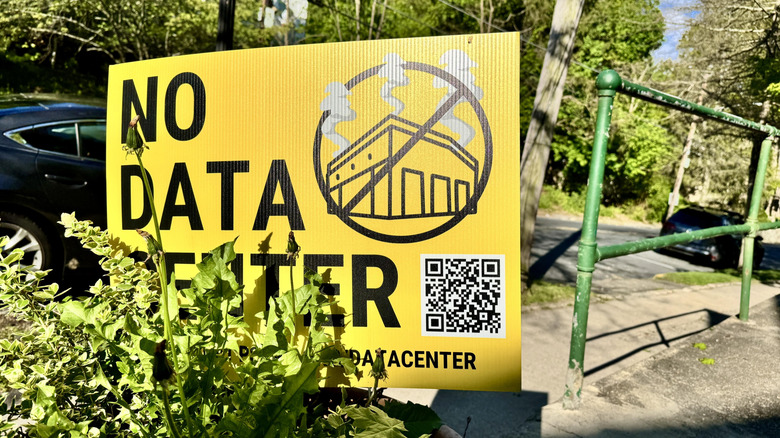
OpenAI has revealed details of fake social media campaigns designed to spread disinformation about data center projects, among others. The company says that as a result of the findings, some China-linked ChatGPT accounts have been banned.
Investigators identified two “clusters” of ChatGPT accounts that they believed originated in China and accessed the platform through a firewall to circumvent ChatGPT restrictions in the country. One of these clusters is referred to by OpenAI as Data Center Bandwagon. This group used ChatGPT to create social media posts claiming that domestic electricity prices in the US were rising due to demand from AI data centers. As well as this disinformation campaign, this group also used social media posts to target overseas Chinese dissidents. This content targeted dissidents like Li Ying (often called Teacher Li), which added to the evidence that the cluster was Chinese-based.
The second cluster of accounts changed the narrative from data centers to “technology and tariffs”. This cluster posted on suspected fake X accounts and concentrated on the US/China technological competition. The accounts used English language posts and cartoons to spread misinformation about tariffs, AI, and rare earths. The “bad actors” also created posts claiming that America is seeking global technological dominance. This group also posted Chinese-language posts that attacked the US, Israel, and Chinese dissidents.
Advertisement
As noted by OpenAI in its June 2026 threat report, there is a certain irony in this: American AI models are creating content that attacks American AI infrastructure.
Advertisement
How the data center disinformation campaign worked
Mattgush/Getty Images
Data centers in the US already have a bad rap, a point underscored by a recent Gallup poll finding that more Americans would oppose building a data center near them than a nuclear power plant.
It’s perhaps just as well, then, that the OpenAI investigation concluded the fake Chinese campaigns gained little traction. According to the company, the campaign ranked as a Category One on the Breakout Scale. The Breakout Scale is a method of measuring the effectiveness of disinformation campaigns. Category One is the least effective and refers to campaigns that remained isolated on a single platform. Indeed, OpenAI reported that most of the posts on X received little or no engagement.
As an example of the type of content the fake accounts produced, the company cites a set of cartoons generated by the ChatGPT platform. These were based on genuine reporting from a regional newspaper and covered a power grid operator’s auction prices and how rising demand from data centers was driving electricity prices up for domestic customers. These cartoons were posted on suspected fake X accounts and used genuine links to actual news stories to add substance to the claims.
Despite its “Category One” ranking, the company still flags the campaign as strategically important. OpenAI argues that the bigger picture is what the campaign illustrates about ongoing foreign interference and the narratives they’re attempting to push.
In its report, the company states that, “Both clusters attempted to connect US technology policies and industries to everyday economic anxieties and geopolitical instability.” In other words, these posts are designed to sow mistrust among the broader American public — mistrust that targets US institutions, technology companies, and the government.
OpenAI claims this is the first time it has seen such action against AI data centers by Chinese-linked accounts. It also stated that the accounts used in the “Data Center Bandwagon” cartoons were linked to a Chinese Government contractor.
Advertisement
However, although it’s the first time OpenAI has detected such disinformation claims, it isn’t the first instance of Chinese misuse of the platform. In another reported case earlier in 2026, the company suspended the account of a user linked to Chinese law enforcement agencies. The account was being used to attempt a covert influence operation against the Japanese Prime Minister, but the safeguards built into the ChatGPT model prevented it from proceeding.
The administration sent out a notice to DHS personnel on June 16, Politico said.
White House
The White House app is reportedly coming to all devices managed by the Department of Homeland Security, whether the user wants to download it or not. According to Politico, an email went out to all Homeland Security personnel on June 16, telling them the app will be automatically installed on all government devices.
it’s not quite clear whether that means it will eventually be loaded onto all federal agencies’ phones in the future, with Homeland Security being one of the first. But the email reportedly described the app as “a convenient way to access official White House communications, including announcements, executive actions, speeches, livestreams, videos and other updates.”
The government officially launched the White House app back in March, promising live streams of presidential addresses, press briefings, latest events and articles that praise the Trump administration. It also gives users access to consolidated feeds from the government’s official social media accounts, and apparently, a list of the current cost of common grocery items.
Advertisement
While the administration has yet to confirm this, Government Executivereported in May that it was planning to automatically install the White House app on government employees’ work phones. The rollout will span “all government-furnished mobile phones in the executive branch,” the internal memo the publication saw reportedly said. At the time, the app was already slated for installation on all Federal Aviation Administration devices, GovExec said. As Gizmodo notes, a former government IT executive told GovExec that it was a “cause for alarm,” as any app installed on government-issued devices can “potentially create backdoor access to government networks behind the firewall.”
The European Commission has declined (PDF) to propose a law requiring publishers to keep discontinued video games playable, despite the Stop Killing Games initiative collecting nearly 1.3 million verified signatures. Instead, it plans to develop a voluntary industry code covering end-of-life transparency and preservation. Dextero reports: The Commission’s full communication said a legal obligation to keep games playable, as requested by the initiative, “would not be proportionate.” It cited concerns about intellectual property rights, confidential business information, publisher costs, and potential cybersecurity or safety risks once games are no longer supported. The code of conduct could include more transparent storefront labeling about possible game discontinuation, along with more partnerships between publishers and cultural heritage institutions to preserve games. However, it would not legally require publishers to provide offline patches, private server tools, or other methods for players to continue accessing games after official support ends. The Commission also argued that existing EU consumer law already provides some safeguards, including requirements around transparency, contract duration, termination conditions, and possible refunds if a shutdown conflicts with the agreement or a consumer’s reasonable expectations.
[…] Despite the setback, Stop Killing Games has said it is not ending its push for legislation. In a response posted after the Commission’s decision, the official Stop Killing Games account said the outcome was “not unexpected” and claimed the campaign had already prepared for the result. The group said it is now pushing for members of the European Parliament to amend Stop Killing Games into the Digital Fairness Act instead. “We can move on without the Commission and their non-decision,” the group said, referencing earlier comments from Accursed Farms creator Ross Scott.
Antarctica’s west coast is missing an area of winter sea ice the size of France, sparking concerns for threatened penguins other marine life and global sea levels.
One expert said the loss of ice in the Bellingshausen Sea was “depressing” and the failure of ice to form could have intensified a heatwave over the continent’s peninsular last week that saw daytime temperatures peak at 15.4 degrees Celsius which is more than 20 degrees Celsius above average.
It’s winter in Antarctica, when sea ice expands rapidly around the continent peaking in September.
But satellite observations showed the Bellingshausen Sea—on the west side of the Antarctic peninsular and which by June would usually be covered by ice—was almost completely ice free.
Advertisement
Scientists said the region was missing about 650,000 square kilometers (250,000 square miles) of sea ice, compared with the average between 1991 and 2020. That is an area about the size of France and almost tenfold the size of Tasmania.
“I’m concerned. It’s depressing,” said Dr Will Hobbs, an Antarctic sea ice expert at the University of Tasmania with the Australian Antarctic Program Partnership.
“It is remarkable that we are in June, and there is no sea ice there.”
He said this was the third time in four years that sea ice had been very low in the region. “I don’t think we will see sea ice there any more. It’s done,” he said.
Advertisement
He said the loss of sea ice was likely linked to changes in the ocean and scientists were trying to understand if global heating was a factor.
He said the region was important for krill—a critical part of the food web for species in the region. Krill would usually be hiding from predators under the ice in winter, where they graze on algae.
On June 10 there was about 11.4 m square kilometers of sea ice around the entire continent compared to a long-term average for that date of 12.6 m square km.
Dr. Phil Reid, who monitors Antarctic conditions at Australia’s Bureau of Meteorology, said the Bellingshausen Sea had seen “incredible coastal exposure” in winter and summer in recent years.
Floating ice shelves in front of the glaciers could break up faster if protective sea ice is absent for longer periods, he said, and this could then speed up the loss of ice from the glaciers, pushing up global sea levels in the future.
That event contributed to UN advisers pushing the species up two categories to “endangered” on its international threatened species list earlier this year.
Advertisement
Dr. Peter Fretwell, a scientist at the British Antarctic Survey who has been documenting the penguin’s decline, said the current loss of sea ice in the region was “a serious problem for penguins, especially emperors.”
“Sea ice is forming too late and breaking up too early. It leads to reduced breeding success and longer trips to molting grounds.”
Adelie penguin numbers were also falling and crabeater seals were being forced to migrate in summer to find stable ice, he said.
This month the Antarctic peninsular witnessed an extreme temperature spike over several days. Hobbs said while “nobody has done the numbers” it was reasonable to suggest the heat wave was “made worse by the lack of sea ice.”
Advertisement
Sea ice would usually help to cool any warmer airflow entering the region from the north, he said.
Officials at Argentina’s national weather service, Servicio Meteorológico Nacional, said the country’s Esperanza base at the peninsular’s northeastern tip had experienced an “extreme temperature event” that peaked on June 5 and 6.
Maximum temperatures of 15.4 degrees Celsius and 13.4 degrees Celsius, respectively, were recorded at a period when average daily maximums were minus 6.2 degrees Celsius. The previous June temperature record at the base of 13.3 degrees Celsius was set on June 12, 1998.
Microsoft won the OLE vs OpenDoc wars. Now it’s saying OLE dependencies don’t matter
Microsoft’s June Windows update has upset some third-party applications that use Object Linking and Embedding (OLE) automation to open or control Office apps, leaving users with failed document launches and, in some cases, no error message to explain what went wrong.
According to Microsoft, “reports indicate that this issue may affect applications such as CCH Engagement, Workpaper Manager, dental software (such as Dentrix and Softdent), and Zotero; other similar applications might also be impacted.”
Advertisement
The workaround is to “open the application or document directly instead of launching it from the affected third-party application.”
Microsoft was quick to point out that this wasn’t its problem. The third parties concerned are “independent of Microsoft.”
“We make no warranty, implied or otherwise, about the performance or reliability of these products.”
That would be fair enough were it not for the fact that these third parties are relying on Windows plumbing that has been around since the 1990s, and abruptly breaking or changing something in a Windows release doesn’t give those vendors much time to deal with the problem.
Advertisement
OLE allows one application to control another – for example, firing up a Word document or Excel spreadsheet from an accounting application. When it works properly, users don’t need to switch between applications. The process should be seamless.
If opening the file directly, which somewhat defeats the point of OLE, doesn’t help, ordinary users will have to wait for a fix in “a future Windows update.” There is a mitigation for affected devices within organizations, though obtaining it requires contacting Microsoft support for business customers.
Veteran techies may find this mess ironic, given that in the 1990s Microsoft went all-in on OLE and ultimately saw off the rival OpenDoc tech backed by Apple and IBM.
The issue is the first that Microsoft has acknowledged in the patch, although the company’s forums are full of users complaining about other difficulties, including OneDrive and BitLocker problems. ®
Photo credit: Doroni Aerospace Doroni Aerospace has spent the better part of a decade moving from early garage experiments to a finished design it believes regular people could operate. The H1-X sits at the center of that effort. It is a two-seat electric vertical takeoff and landing aircraft built first for personal use rather than fleet service or air taxi routes.
The H1-X’s tandem wings measure nearly 18 feet across, but its eight ducted fans do the majority of the heavy lifting when it takes off and lands. Once it reaches cruising speed, two additional ducted fans at the back keep it moving forward. The carbon fiber design reduces the empty weight to approximately 1,850 pounds while still allowing it to carry a 500-pound payload. It’s nearly six feet tall, 16 to 18 feet long, depending on who’s measuring, yet small enough to fit in most conventional two-car garages without having to fold up.
Due to platform compatibility issue, the DJI Fly app has been removed from Google Play. DJI Neo must be activated in the DJI Fly App, to ensure a…
Lightweight and Regulation Friendly – At just 135g, this drone with camera for adults 4K may be even lighter than your phone and does not require FAA…
Palm Takeoff & Landing, Go Controller-Free [1] – Neo takes off from your hand with just a push of a button. The safe and easy operation of this drone…
However, having the fans tucked away changes everything. Nothing spinning madly in the open means you’re not taking a low pass over the garden or driveway and colliding with plants, a fence, or people. The ducts guide the thrust downward, which decreases noise. Once up to speed, the wings begin to generate lift on their own, the vertical fans slow down, and the range and battery life improve dramatically because you don’t have to stay in a continual hover state like some other designs.
Advertisement
Short hops in urban and suburban settings are crucial for performance. Its top speed is 120 mph, and cruises at 95 mph. It currently has a range of roughly 60 miles, but the manufacturer believes that after the batteries are sorted out, it will reach 100 miles. Its battery can be charged to 80% capacity in 25 minutes using one of those electric car chargers, giving you approximately 45 minutes of flight time. It won’t be straining up into the stratosphere, but rather 500 to 1,500 feet above land.
You sit side by side with the pilot behind a large clear canopy that allows you to see all around. The interior resembles a modern car rather than a traditional aircraft cockpit, with a single joystick controlling all flight controls, including roll, pitch, and yaw. And then there’s the self-stabilizing software, which helps eliminate all of the minor changes required to keep it stable. Taking off and landing is as simple as tapping one or two buttons.
The real change, however, is in the software, which is powered by what Doroni calls SOUL AI. The central screen displays all of the important information, including navigation, battery, time to destination, altitude, speed, nearest charging sites, and weather, on one screen. There are sensors all around the place that monitor 360 degrees. Radar, LiDAR, and cameras work together to detect obstructions and keep you on track, even if you mistakenly let go of the stick. They want to make the pilot more of a guide, a navigator, rather than a hands-on controller.
Safety is a key consideration throughout the design process, as the ducted fans eliminate one of the classic risks, the propeller. In the event of an emergency, a ballistic parachute provides an alternative means of safely landing. The safety features include redundant motors in a few ducts and continuous sensor monitoring to keep an eye on things at all times. The Doroni team is aiming for certification as a Light Sport Aircraft under the FAA’s new MOSAIC standards, which happen to match the H1-X’s size and characteristics. The company’s previous test vehicles, such as the H1-X, received special airworthiness certificates and successfully completed manned test flights.
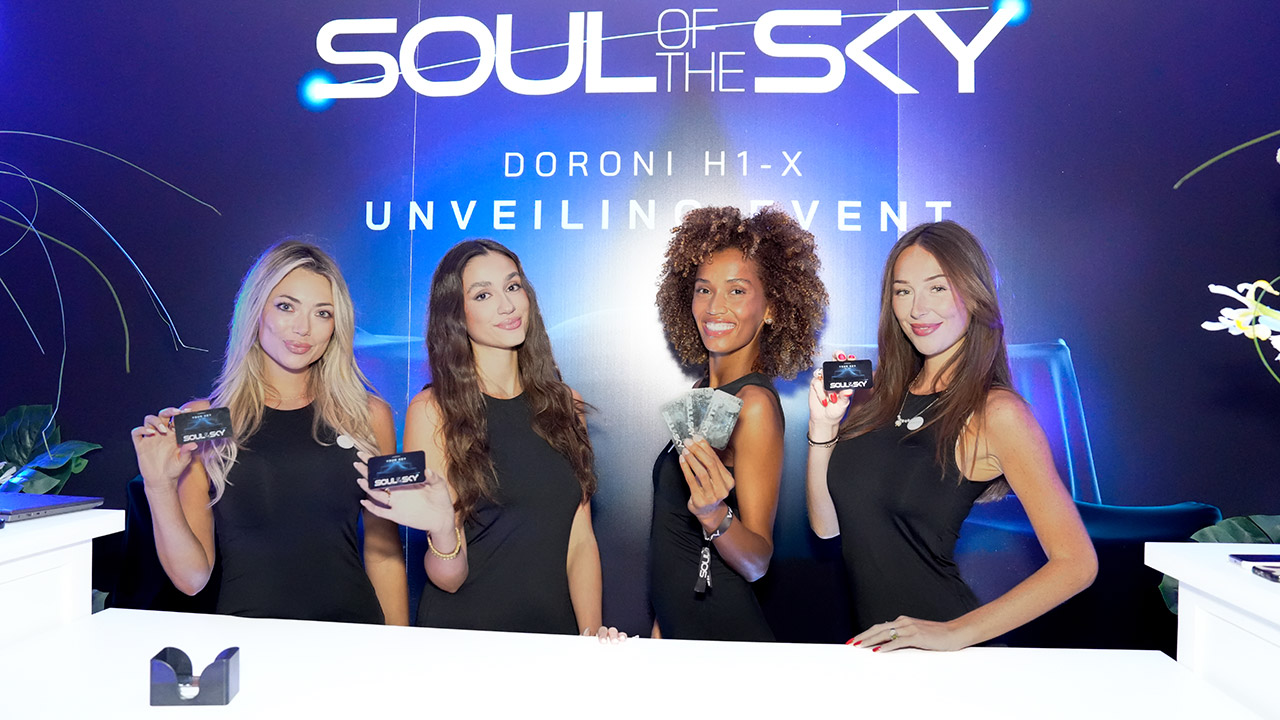
Doron Merdinger launched the company in 2016, and they recently unveiled a full-scale model of the H1-X at their annual ‘Soul of the Sky’ event in Florida. People were able to go inside, check out the interface, and even test out a flight simulator. We’ve already received pre-orders for several hundred units, indicating that lots of individuals are eager to become involved. Pricing is projected to be in the $350,000 to $400,000 region, with deliveries set to begin in 2028 once the certification process is completed.
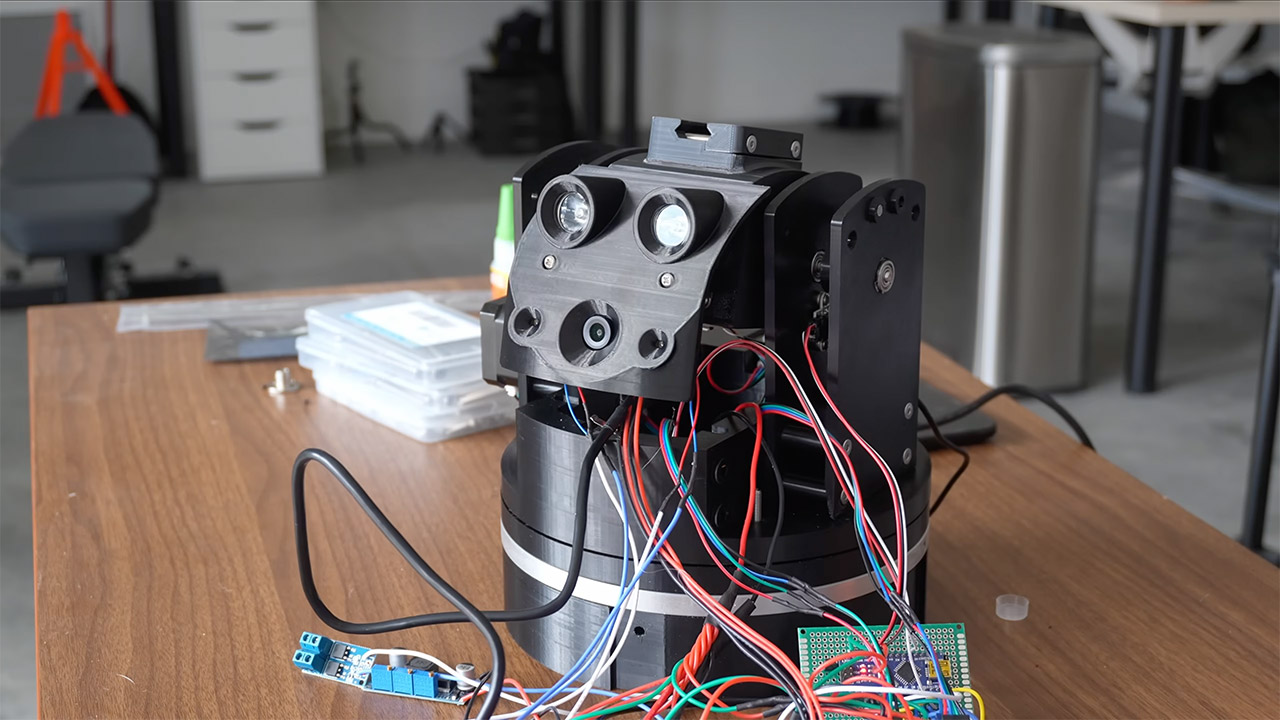
John Boss needed reliable oversight for a workshop packed with projects still under wraps. Standard internet cameras record events after the fact and offer little in the moment. He chose a different route and built Walter, a workshop sentry meets security robot, instead.
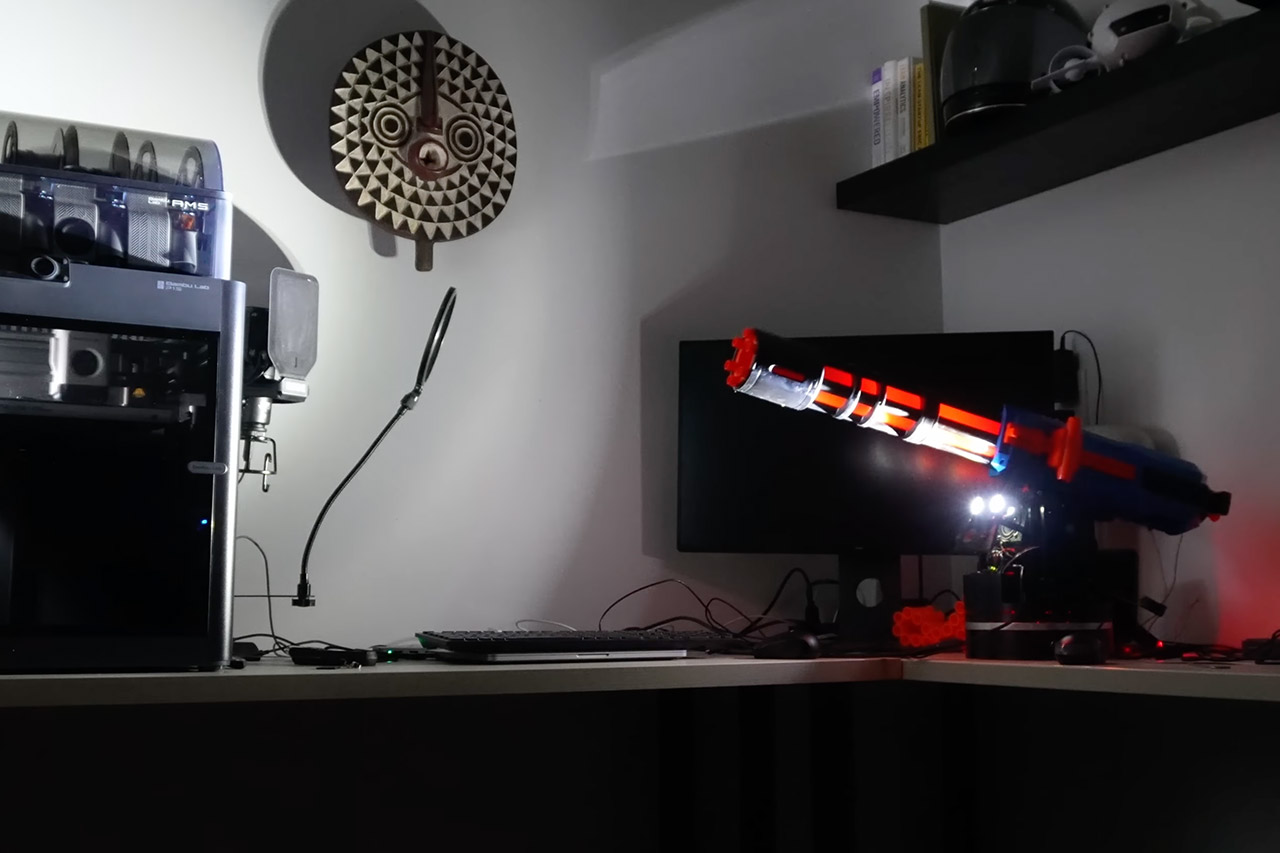
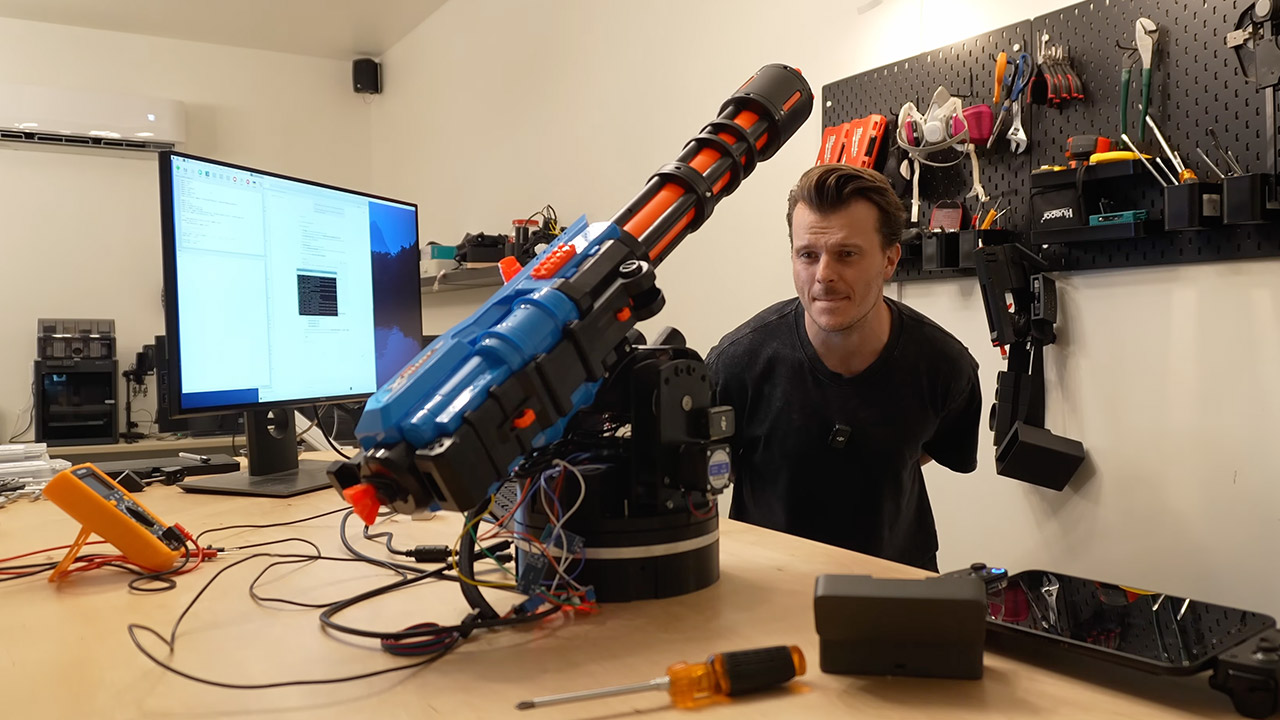
Walter hangs hung from the ceiling on a unique motorized mount, which at first view resembles a high-end pan-tilt security camera. The camera module, lights, and sensors sit in the tiny black shell, but a second look changes everything, as the inclusion of a full-fledged Nerf blaster gives the whole thing personality.
A1 mini + LED Lamp Kit for Creative Light Projects: Bring your ideas to life with the included LED Lamp Kit. Simply print compatible lamp models and…
The Perfect 3D Printer for Beginners: A1 mini 3D Printer is designed to make 3D printing easy from day one with automatic calibration, simple setup…
Experience the Bambu Lab Ecosystem: Access MakerWorld’s huge library of ready-to-print models, manage prints through the Bambu Handy app, and enjoy…
A geared lazy Susan bearing controls the unit’s movement, allowing it to swivel smoothly in a full circle. Stepper motors control the pan and tilt movements through a pulley and gearing arrangement. A slip ring keeps the cables from twisting or becoming tangled as the joint rotates, while limit switches keep everything under control in either direction. Overall, the movement is relatively rapid and precise.
Advertisement
The Raspberry Pi 5 serves as the Walter’s brain, processing all of the video from the USB camera, running computer vision procedures to detect and track movement, managing network connections, and making major decisions. Meanwhile, an Arduino Nano clone serves as the motor control system, accepting direct orders from the Pi to ensure responsiveness while the Pi works on the vision and logic. An Android tablet combined with a gamepad allows you to control from anywhere while also providing a low-latency visual stream.
When Walter is left to its own devices, it operates in Sentry mode. Motion detection comes in and can even give you notifications, after which computer vision takes over and tracks whatever caused the movement. The camera and mount maintain focus on the subject without requiring human intervention at any point. Voice recognition adds an additional layer of control; a microphone listens for orders or a spoken password to activate or disable the system, and a small USB speaker allows Walter to respond, give a challenge, or send you an alert.
The defensive options are a little more intriguing, as you get two high-intensity LED floodlights that can either flood the area or generate some very blinding glare. A pair of lasers provides a couple of brilliant points of light that are useful for aiming and visual emphasis. Then there’s the Nerf blaster, which can shoot darts under human or automatic control, and the noise alone is enough to deter even the most determined unwanted visitor.
Walter is the real deal, as it watches the room like a standard camera, but also moves, speaks, shines a light, and generally participates when necessary. When not in use, the ceiling mount hides it, and the pan-tilt mechanics and software allow it to cover the entire space. For a maker space with work that isn’t quite ready for public viewing, the system provides an excellent blend of surveillance and active deterrence that seems like it’s on your side rather than simply sitting there looking technological. [Source]
OpenAI burned through $3.7bn in the first three months of 2026, more than half its revenue of $5.7bn over the same period, according to The Information, which cited documents the company shared with shareholders.
Both numbers tripled from a year earlier, a symmetry that captures the company’s peculiar position: growing faster than almost any business in history, and spending faster still.
The tripling is the figure worth pausing on. Revenue of $5.7bn in a single quarter would be the envy of nearly any technology company; revenue that grew threefold year on year is rarer still. The trouble is that the cost of producing it grew at the same rate.
Scaling has not yet bought OpenAI the operating leverage that usually rewards a company this size, because the thing it sells, frontier-model inference, gets more expensive to deliver as more people use it.
The balance sheet looks, on its face, reassuring. OpenAI held more than $73bn in cash and marketable securities at the end of the quarter, up from $40bn at the end of December.
Advertisement
That jump reflects a large funding round announced at the end of March rather than money thrown off by the business, a distinction that matters when the quarterly burn is measured in billions. The cushion is real; it is also, in part, freshly raised.
OpenAI has also said it filed confidentially for a US initial public offering that could come as early as September and value the company at up to $1tn.
A flotation at that level would be among the largest in history, and it would put the kind of quarterly numbers reported this week in front of public-market investors who tend to ask harder questions about the path to profit than late-stage private backers do. The company has moved quickly on the filing as rivals race to list.
Advertisement
The pattern is not new for OpenAI, which has spent its way through every previous stage of its growth on the bet that scale eventually pays. The company has spoken about spending on the order of tens of billions in a single year on compute, research and infrastructure, and has indicated it does not expect to turn a profit until the end of the decade.
The Q1 burn fits that trajectory rather than departing from it. The novelty is the size of the numbers and the proximity of a public listing that will expose them to a different class of scrutiny.
None of the figures in the report came from OpenAI directly, and the company did not comment publicly on the specifics. What the numbers describe, if accurate, is a business operating at a scale and a loss that are both expanding in lockstep, ahead of a listing that will ask whether the second can ever stop chasing the first.
Samsung is turning a fictional gadget from the upcoming Spider-Man: Brand New Day into a real-world experience.
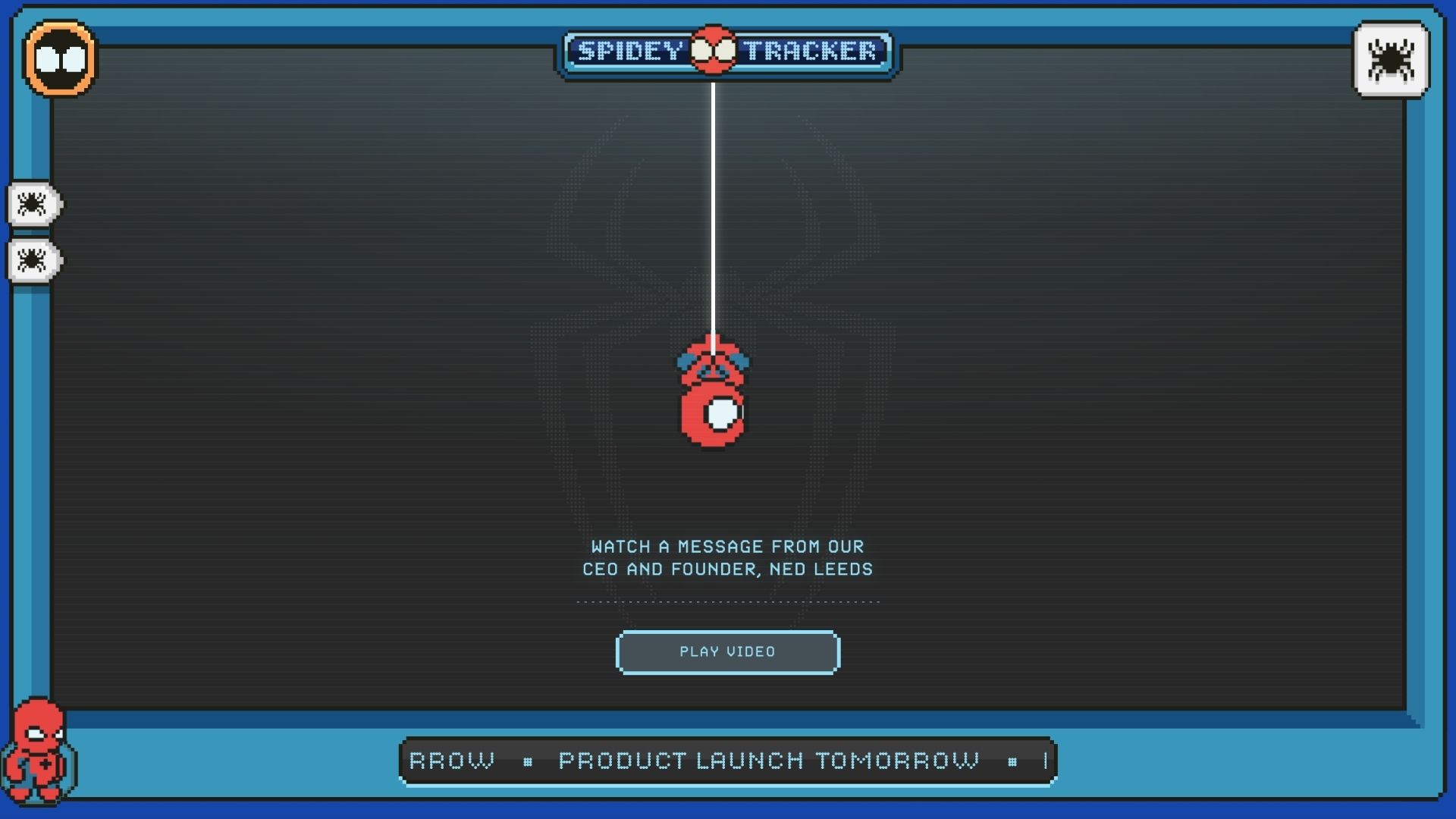
The company has announced SpideyTracker.com, an interactive website inspired by a key feature from the new Marvel film.
In Brand New Day, Peter Parker’s friend Ned Leeds creates a website that helps New Yorkers track Spider-Man’s whereabouts in real time. Samsung has now recreated that idea for fans. Now, they can follow Spider-Man sightings and events leading up to the movie’s release.
The site features a pixel-art map and will track Spider-Man appearances at live events, creator collaborations and other promotional activities throughout the summer. Users can also sign up for notifications. This allows them to stay updated whenever a new sighting is reported.
Advertisement
The project ties into Samsung’s wider partnership with the film. Devices including the Galaxy Z Flip, Galaxy Z Fold and Galaxy Watch feature prominently in promotional material for Spider-Man: Brand New Day. Therefore, Samsung is positioning the tracker as an extension of the movie rather than a traditional marketing campaign.
Advertisement
While details on exactly how the tracker will operate remain limited, Samsung says the experience is designed to bring a piece of the film’s world into real life. A video explaining the platform in more detail is expected to arrive alongside the launch.
The concept may feel familiar to Spider-Man fans. Recent PlayStation games introduced the Friendly Neighbourhood Spider-Man app. This app lets New Yorkers report crimes and incidents directly to Peter Parker and Miles Morales. SpideyTracker.com appears to take a similar idea and adapt it for the real world.
Advertisement
SpideyTracker.com officially launches on June 17 at 3pm ET, timed to coincide with the release of the film’s second trailer. Meanwhile, Spider-Man: Brand New Day is set to arrive in cinemas on July31. This gives fans plenty of time to put their Spider-Man tracking skills to the test before the movie lands.
Disclaimer: Unless otherwise stated, any opinions expressed below belong solely to the author.
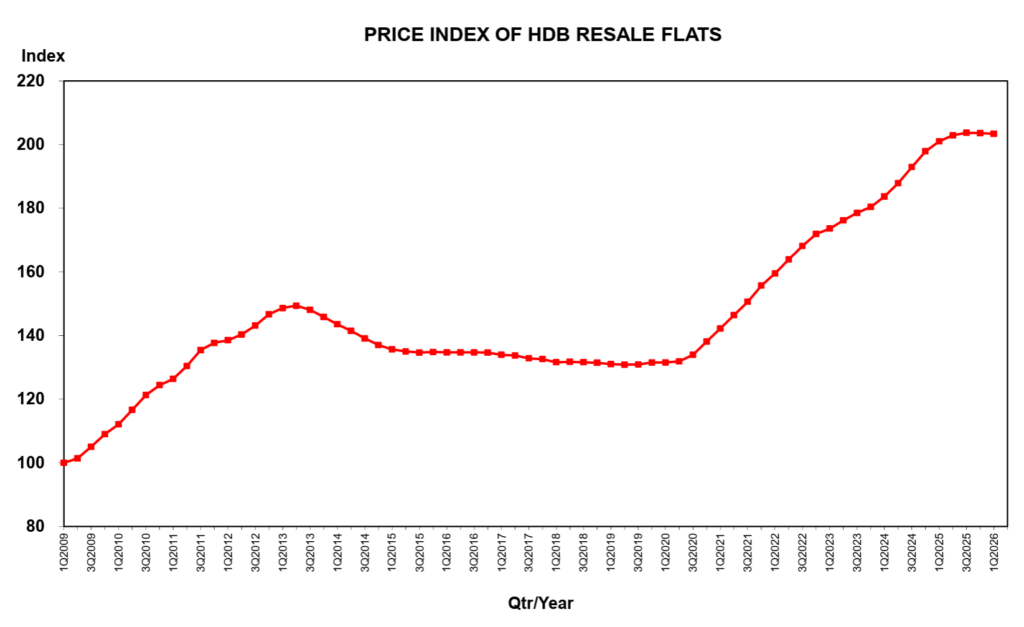
The headlines will tell you that Singapore’s property market is finally cooling down. In early 2026, the HDB resale price index dipped by 0.1%, signalling a long-awaited breather for exhausted homebuyers.
But don’t pop the champagne just yet.
HDB prices are showing signs of flatlining.
At the exact same time, million-dollar public housing transactions surged by over 17% quarter-on-quarter. In prime, mature estates, seven-figure price tags are no longer surprising—they are becoming the norm.
But it isn’t inflation, and it isn’t a failure of the public housing system. It is the system doing exactly what it was designed to do.
Advertisement
In fact, the slowdown in price appreciation may not be something to be happy about at all.
More than a home
Singaporeans complaining about rising prices are usually found among buyers, not sellers. And only those who are forced to purchase their homes in the resale market, rather than directly from the government, as BTOs come with significant discounts.
In reality, as long as you already own an apartment, then relative price movements don’t affect you too much, as the tide lifts all boats. You buy for more but you also sell for more.
However, from the very beginning of the HDB system, the government conceived it not only as a way to provide affordable homes to all Singaporeans but as an appreciating asset that adds to your pension when you retire.
Advertisement
The logic is very simple: you usually start a family in a larger apartment, fit for two adults with children, who then go on to buy their own when they grow up, making downsizing an attractive option for ageing parents.
Image Credit: allensima/ depositphotos
As long as the apartment increases in value in line with or above general inflation, the difference you pocket from buying a smaller, cheaper flat can grow and supplement your retirement income—either directly or through a CPF top-up, which can also earn you an additional government grant.
Once we accept that prices should keep going up, then it’s only inevitable that they must reach the million-dollar mark at one point.
In fact, some are approaching S$2 million already, like the recent record-setter in Bukit Merah, sold for S$1.728 million with 92 years left on its lease. Expect to see more of those each year.
Apartments outpaced incomes by less than you think
Between 2015 and 2025, the Resale Price Index increased by about 50.7%. At the same time, the median household market income has gone up by 42.7%, against cumulative inflation of around 19 %.
Advertisement
So, yes, Singaporeans are paying relatively more for housing than a decade ago, but not by much, just 8%
Now, consider the opposite scenario: what if home prices had stayed level in the same conditions?
It would certainly be a boon for buyers of second-hand HDBs, but the elderly could lose close to 1/5th of their nest egg, eaten away by inflation. It wouldn’t be a reason to celebrate. On the contrary, it would suggest that the system has failed those it was supposed to help when they really needed it.
Image Credit: Wirestock/ depositphotos
After all, new entrants still enjoy BTO benefits and make a substantial profit between the launch price and MOP. The elderly may, at most, receive a CPF grant of up to S$40,000, which wouldn’t cover their losses.
So, the ideal range within which resale HDB prices should fluctuate is above inflation but below salaries. It is where all Singaporeans benefit. Those still at work can afford bigger, better homes, while those in retirement can extract more value from theirs.
Advertisement
For the past 10 years, that range would fall between 20 and 42%—a bit below the 50.7% recorded. But even then, the number of million-dollar apartments reaching the market would still be high, and grow each year.
It’s inevitable.
And there’s no reason to complain, because one day, this relentless march upwards is going to benefit you too.
Read other articles we’ve written on Singapore’s current affairs here.

































































You must be logged in to post a comment Login