Threat actors have already compromised over 270 Zimbra instances in remote code execution attacks targeting a high-severity Zimbra Collaboration Suite (ZCS) vulnerability.
The ZCS email and collaboration suite is used by hundreds of millions of people and organizations, including thousands of businesses and hundreds of government agencies worldwide.
Synacor patched the security flaw (tracked as CVE-2026-73570), which allows unauthenticated attackers to gain code execution remotely by exploiting a command injection weakness in the SNMP monitoring component when SNMP notifications are enabled, with the release of ZCS version 10.1.20 on July 20.
CERT Polska, the Polish Computer Emergency Response Team (CERT), first flagged the vulnerability as targeted in the wild last Monday, when it also warned security teams to check their logs for suspicious activity, including the Zimbra service restarting unexpectedly, and for files created in the /opt/zimbra/jetty/webapps/, /opt/zimbra/jetty_base/webapps/, and /tmp/ folders by user zimbra over the last 30 days.
The Cybersecurity and Infrastructure Security Agency (CISA) also added the flaw to its KEV catalog following CERT Polska’s warning and ordered U.S. Federal Civilian Executive Branch (FCEB) agencies to patch their systems within three days, by August 24.
Advertisement
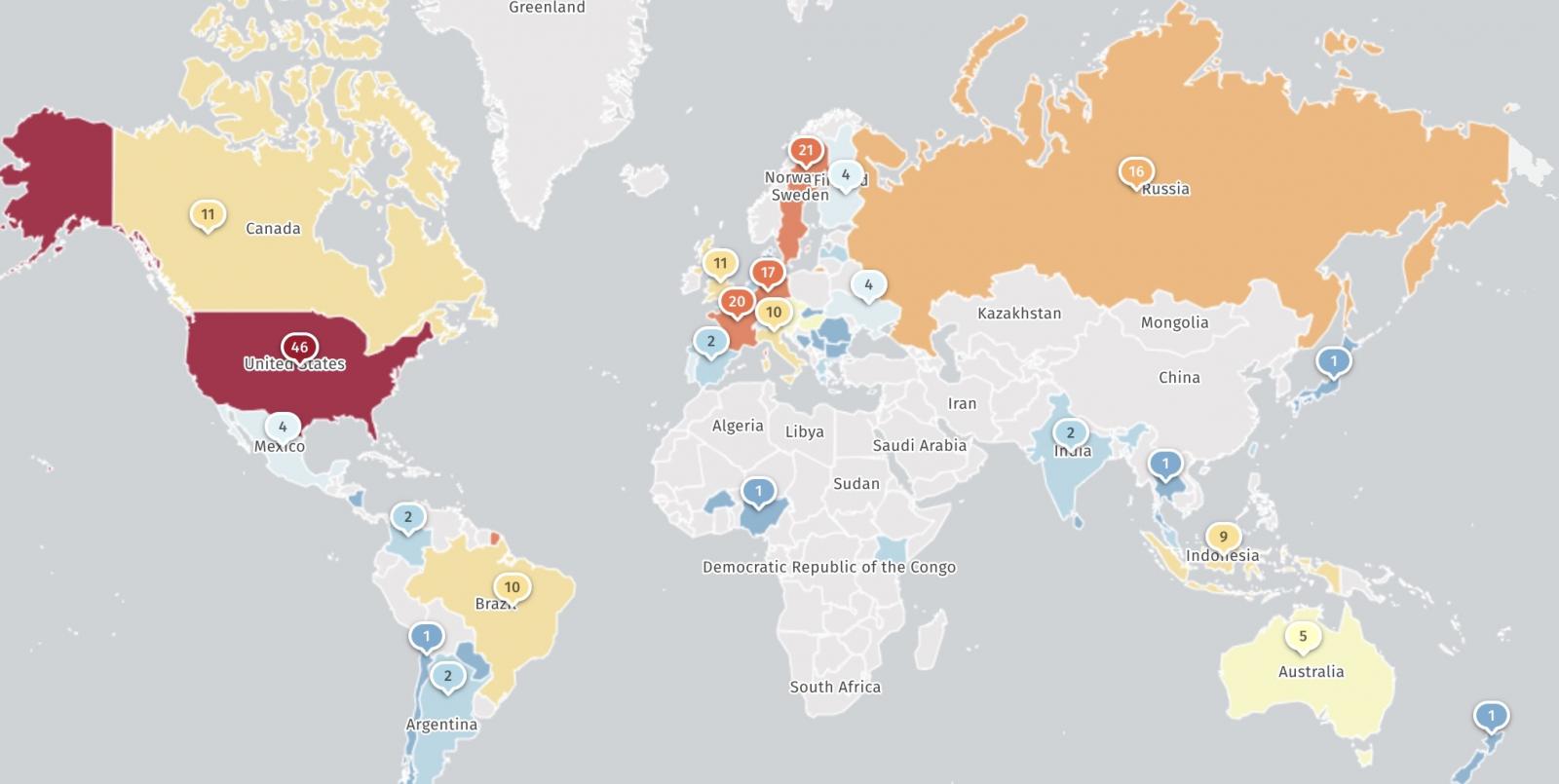
On Monday, threat security watchdog Shadowserver reported that it spotted hundreds of Internet-exposed Zimbra instances that have already been breached in attacks exploiting the CVE-2026-73570 flaw.
Map of compromised Zimbra instances (Shadowserver)
“Zimbra compromises associated with CVE-2026-73570 exploitation are spreading. 274 instances seen compromised in our scans for exploitation artifacts on 2026-08-22,” Shadowserver warned.
“We also see at least 8200 CVE-2026-73570 unpatched instances (this does not mean exploitable as the vuln is in a non default config).”
Zimbra vulnerabilities are often targeted by cybercriminals and state-sponsored hacking groups, and have been frequently exploited to steal emails containing sensitive data from vulnerable servers in recent years.
Most recently, in March, Seqrite Labs researchers spotted APT28 Russian military intelligence hackers abusing a stored cross-site scripting (XSS) Zimbra vulnerability to breach Ukrainian government servers.
Advertisement
U.S. and UK cyber agencies also warned in October 2024 that Russian Foreign Intelligence Service hackers (tracked as APT29, Midnight Blizzard, and Cozy Bear) compromised Zimbra servers using a ZCS flaw previously exploited to steal email account credentials.
Russian Winter Vivern cyber spies also exploited a reflected Cross-Site Scripting (XSS) vulnerability to steal emails from NATO-aligned email accounts in attacks targeting Zimbra webmail portals.
Overall prevention scores can hide what happens after initial access. Once attackers are using valid credentials, prevention drops sharply.
The Blue Report 2026 measures defenses technique by technique across 338 million simulations run in customer production environments.
We spend hours testing every product or service we review, so you can be sure you’re buying the best. Find out more about how we test.
Is Marvel Tokon: Fighting Souls one of the best fighting games of recent times? Yes, I would say so. Given its developer is Arc System Works — creators of Guilty Gear, Blazblue, and the excellent Granblue Fantasy Versus: Rising— it was a pretty safe bet that we’d be served a high quality fighting game with mountainous respect and reverence for Marvel and its roster of supers, mutants, and weirdos.
Review info
Platform reviewed: PC Available on: PS5, PC Release date: August 6, 2026
Advertisement
I love fighting games, but I’m not usually one for tag fighters — often because I find learning more than one character intimidating and time-consuming. So, when Marvel Tokon: Fighting Souls was first revealed last year as a 4v4 tag fighter, I’d already resigned myself to thinking: ‘well, that’s probably not for me.’
Not two, not three, but four? You’re having a laugh.
Latest Videos FromTechRadar
Advertisement
I needn’t have worried so much. Arc System Works has designed Fighting Souls such that learning a quartet of fighters inside and out is absolutely not necessary. It’s possible to play that way at a higher level, of course. But as your team only has a single health bar, you can rock one character as your main, while relying on the remaining three as assist moves to help you out in a pinch.
It helps, too, that Marvel Tokon: Fighting Souls has a fantastic onboarding process for new players. The game’s story mode is broken into five episodes — each focused on a group of heroes (the Avengers, X-Men, etc.) or the villainous Knights of Doom. Episode chapters are structured to introduce you to fighters and their strengths, or otherwise various important system mechanics. Training tools are similarly great, with a fully-featured training mode, combo trials, and an ingenious ‘level-up missions’ category that tasks you with creating your own combos to reach a damage threshold.
All good so far, but I unfortunately have to stress that Tokon’s immediate future looks perilous. The PC version of the game is currently facing myriad issues, many of which seem to be a direct result of corporate interference.
At the time of writing, Arc System Works is hard at work deploying patches to improve PC matchmaking and performance, but I’m not sure there’s a fix for intrusive anti-cheat bloatware and forcing PlayStation Network account creation to access its online features.
Advertisement
Sign up for breaking news, reviews, opinion, top tech deals, and more.
Absolutely champion
(Image credit: Sony / Marvel)
Enough doom and gloom for now. I’d rather chat about all the elements that I feel make Marvel Tokon: Fighting Souls such a wonderful game for a bit. For me, it started with its single-player story mode.
Titled ‘Episodes’, Tokon’s story is broken into five distinct, well, episodes. Each is centered around one of the game’s five main teams. The Fighting Avengers, for example, are your stalwart heroes like Captain America and Black Panther.
Advertisement
The Samurai Outriders are made up of anti-heroes and tricksters like Deadpool and Loki. Meanwhile, the Knights of Doom bring a more villainous flavor, stacked with evildoers like Doctor Doom, Green Goblin, and Carnage.
Best bit
(Image credit: Sony / Marvel)
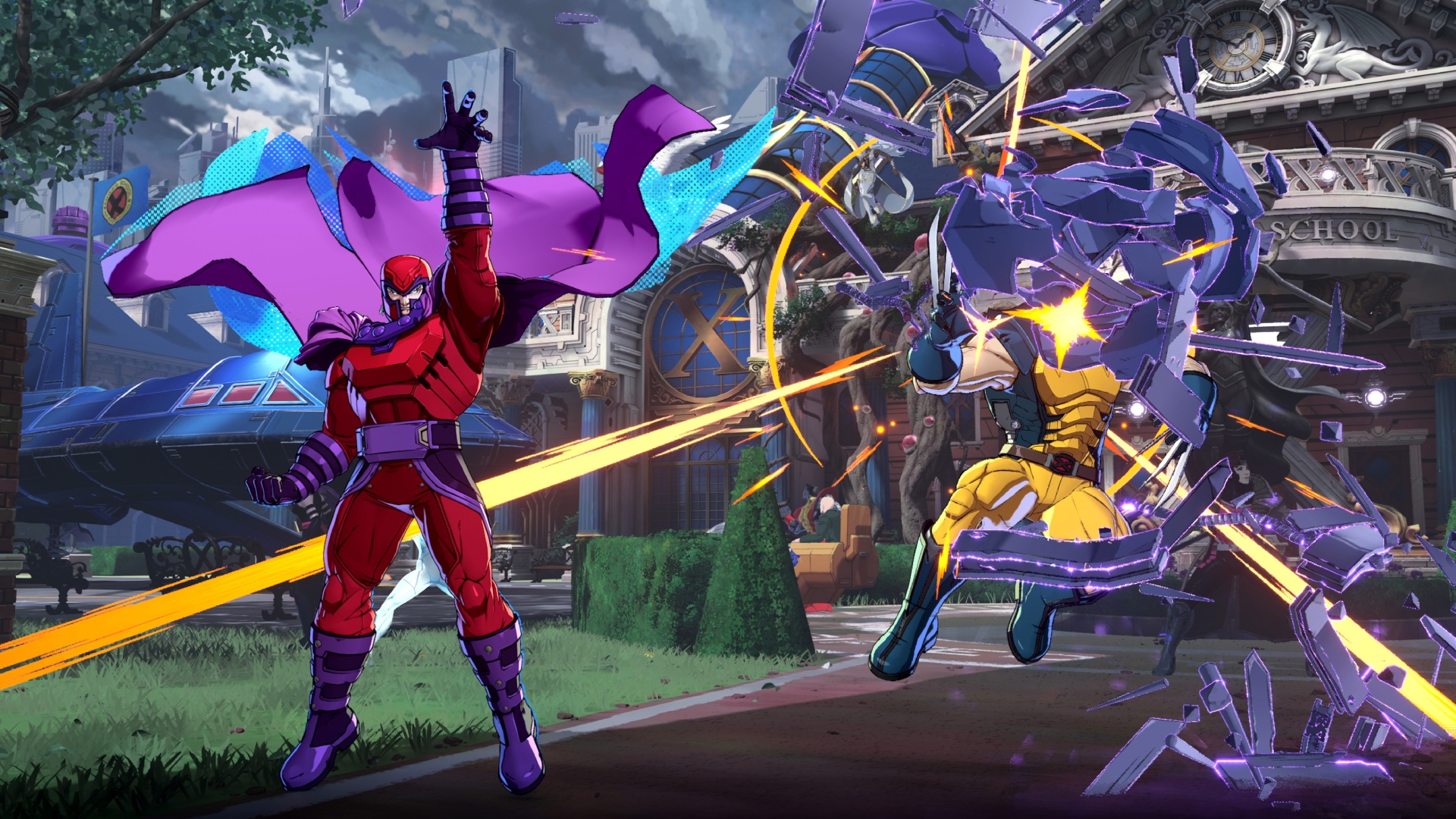
I’m in love with Marvel Tokon: Fighting Souls’ eclectic moment-to-moment tag bouts, but a special shoutout has to go to the game’s wicked cel-shaded presentation. Marvel icons have been given a distinctly Arc System Works flavor — their appearance, animation, and super move cut-ins are all top-tier stuff.
The premise is simple. An intergalactic fighter called the Champion is holding Earth hostage, and the aforementioned five teams have been selected to participate in a tournament to decide the planet’s future. Each episode culminates in a fight with the Champion, and individual chapters are bookended with stunning comic book cutscenes, with each episode even featuring a unique artist and colorist.
Advertisement
This lends all of them a unique sense of identity, and helps to keep things feeling fresh as you progress. Each episode is about an hour long, and all are worth playing through as you’ll not only get a feel for each individual character, you will also unlock colors for a bit of added flair for your faves. Oh, and as a bonus, you’ll also unlock the Champion as a playable character upon clearing your first episode.
There are a lot of fun character moments, too. Ms. Marvel is often adorably starstruck by the heroes she encounters. The X-Men are flabberghasted that Magneto would team up with an egotistical maniac like Doctor Doom. There’s a cute running gag between episodes where everyone gives Loki the side eye, despite a seeming earnestness from the God of Lies to genuinely turn over a new leaf in the search for his brother Thor (who is currently mysteriously absent from the game’s playable roster).
Overall, Episodes are a great way to kick off your Tokon journey. It’ll help you find characters you enjoy playing, and present a charming story that’s well worth playing through just to experience its wonderful artwork and voiced performances.
Advertisement
Assist me
(Image credit: Sony / Marvel)
Marvel Tokon: Fighting Souls is remarkably easy to just pick up and play, and I reckon you’ll have a blast in local play with friends for casual couch bouts. Movement, special moves, assists, and supers are all straightforward to execute. For specials in particular, you have options for simple or motion inputs with the d-pad. Motion-inputted special moves (such as quarter-circle-forward) do around 10% more damage on average, so you’ll have a bit of an edge if you can master weaving them into your gameplan.
The 4v4 setup can be wonderfully chaotic; there’s no limit to the number of characters that can appear on-screen, so it’s very possible to spam the assist button to throw the kitchen sink at your opponent in a pinch.
Characters you place in your assist slots are highly versatile, and can be individually called upon by pressing the assist button and the corresponding direction on the d-pad. One assist slot is for projectile, for example, while another is a vertical for anti-airs. This is universal across the cast, so you don’t have to be precious about which characters you choose if you’re only planning on maining one or two.
Elsewhere, you can perform an assist counter while guarding to get your opponent off of you, or even swap to one of your assists to directly control them. There’s a ton you can do with assists, and learning to incorporate them in your playstyle is a huge part of the learning process. It sounds like a lot, and it is, and there’s much more assists can do, like extending your combos and taking part in a massively damaging last round super. It might take a bit to wrap your head around, but thankfully, the tools are there to help you get to grips with assists and more besides.
Advertisement
Trained to perfection
(Image credit: Sony / Marvel)
Marvel Tokon: Fighting Souls has some of the best tutorialization I’ve ever seen in a fighting game. You of course have a fully fleshed out training mode, where you can freely practice combos and setups against a dummy. There is also a comprehensive tutorial section known as the Battle Guide, that’ll walk you through basics like movement all the way to advanced techniques like wakeup options and blocking cross-ups.
Of particular note is Character Lessons, which includes primers on every character playable in the game. These start off with basic move introductions, as well as the properties of each characters’ unique button. For example, Storm’s Tempest unique lets her control the wind to push herself and her opponent around. Magik’s unique has her placing a portal that she can instantly warp to and perform attack out of to surprise the opponent.
Lessons then offer a selection of combos for you to try out for each character, many weaving in assists, special moves, and supers. Finally, the highlight of Character Lessons for me are the Level-Up Missions, which task you with performing a combo to meet a certain amount of damage. These don’t hold your hand much, with little guidance outside of telling you which button to start your combo with, or to include a special move at some point. They’re great fun to experiment with, and even unlock colors for your characters, too.
Advertisement
Once you feel sufficiently warmed up, I highly recommend jumping into Arena mode for some offline quickplay. This is essentially the game’s Arcade mode, in which you play through a series of five matches. You’ll get to choose your route as you go through, unlocking some lovely concept art for your efforts.
There’s also Survival mode; a 100-match gauntlet with some light roguelite elements. Between matches in Survival mode, you’ll get to choose and upgrade Support Souls — cards that offer various benefits like increased movement speed or attack power. Getting through all 100 is no easy task, though, with several significant difficulty spikes on your way to the top. But again, your efforts will be rewarded with unique character colors if you make it to the end.
True believers
(Image credit: Sony / Marvel)
If you’re familiar with Arc System Works’ back catalog, it should come as no surprise that Marvel Tokon: Fighting Souls is a mind-bendingly gorgeous fighting game.
Advertisement
The developer is the master of modern cel-shading, and the roster of Marvel icons look even sharper here than characters do in Guilty Gear Strive and Dragonball FighterZ. Not that those games are slouches at all in the visual department, but Tokon by comparison looks impressively pristine at all times.
There aren’t a ton of characters or stages at launch (I personally think 21 characters is a bit slim given the 4v4 setup), but when they look and animate as well as they do, I can forgive the base roster being as svelte as it is by tag fighter standards.
Every character is brimming with personality and charming little touches. Doom’s cartoonish aptitude for evil is perfectly captured in his intimidating slow walk and thousand-yard stare. Ms. Marvel’s attacks feel peppy, snappy, and excitable. And Deadpool? Well, almost every move in his arsenal is a loving reference to other iconic fighting games, and there are some impressively deep cuts therein.
The game’s background stages are a real draw, too. The New York City stage is teeming with detail and references to the wider world of Marvel. The X-Mansion tends to populate the further a match progresses, with iconic X-Men like Psylocke, Colossus, and Gambit appearing in the background. If you’re a Marvel head, you’ll likely love the amount of respect and admiration Arc System Works has for the brand.
Advertisement
Pride before a fall
(Image credit: Sony / Marvel)
Marvel Tokon: Fighting Souls is another slam-dunk for Arc System Works, then. With it and the recent Marvel vs. Capcom Fighting Collection: Arcade Classicscompilation, I’m ecstatic to see Marvel active again in the realm of fighting games. But every story has its villain, and for Tokon, it’s not the Champion. It’s Sony.
I hate to admit that I’m concerned for Marvel Tokon: Fighting Souls’ future. On PC, the game’s anti-cheat DRM worsens performance. Furthermore, Linux and mod support are non-starters, and because online play requires a PlayStation Network account, countries where the service isn’t supported (there are well over 100 of them) can’t access network features at all. Throw in lopsided netcode that discourages crossplay between PS5 and PC, and you have a recipe for an exceptionally messy launch month largely thanks to publisher meddling.
For these reasons, I can’t give Marvel Tokon: Fighting Souls a glowing recommendation, as much as I would like to. At least if you were planning to pick up the game on PC. I want Tokon to have a long, bright future, but I worry that too much damage has already been done. Now, the state of the game has improved since launch in regards to performance and matchmaking quality, thanks to a small handful of fixes deployed by Arc System Works.
Advertisement
I just can’t help but feel anxious about this rocky PC launch. Especially with the recent news that Riot Games is shuttering development on its League of Legends fighting game, 2XKO. It shows that huge companies absolutely aren’t afraid to completely tear down a good thing if it isn’t generating satisfactory revenue or player count. If folks walk away from Marvel Tokon: Fighting Souls because of the issues it’s facing on PC, then what’s stopping Sony from doing the same?
I hope I’m just overthinking it. Marvel Tokon: Fighting Souls is one of the most fun and unique fighting games I’ve played in some time, and I hope its candle won’t be snuffed out before it truly gets the chance to shine its brightest.
Should I play Marvel Tokon: Fighting Souls?
Advertisement
Play it if…
Don’t play it if…
Accessibility features
At launch, Marvel Tokon: Fighting Souls has a small handful of accessibility features, largely utilizing text-to-speech options.
You can enable text-to-speech and adjust its volume and speed. You can also choose to enable or disable subtitles that display during battle entrances and conclusions.
Advertisement
How I reviewed Marvel Tokon: Fighting Souls
I played Marvel Tokon: Fighting Souls on PC for approximately 15 hours for this review. I completed the episodic story mode in its entirety, cleared most Arcade mode routes, and put a good chunk of hours into training mode, character lesson guides, and casual online play.
I tested the game with the GameSir G7 Pro controller, as well as the leverless Razer Kitsune. I also hooked up my RIG 900 Max HS gaming headset to experience the game’s excellent audio and wonderfully upbeat soundtrack.
Parents will no longer have to rely on texts or phone calls to know how their teens’ Uber rides are going. Instead, they’ll be able to see for themselves.
Uber on Tuesday launched a live video streaming feature for teen accounts that lets parents or guardians check in on how a trip is going in real time. It uses the selfie camera on the driver’s phone, so family members can keep an eye on anything happening in the vehicle.
The live video feature is being piloted in nine areas: Atlanta; Phoenix; Orlando, Florida; Raleigh-Durham, North Carolina; Portland, Oregon; El Paso and San Antonio, Texas; Cleveland; and Rhode Island. It’s slated to roll out across the US in the coming weeks, Uber says.
“The feature is designed for quick check-ins, giving parents another way to feel confident everything on their teen’s trip is going smoothly,” the company said in a release.
Advertisement
Uber teen accounts launched in 2023, with the goal of making it easier for parents and guardians to keep tabs on their kids’ rides. They can follow along in the app to track a trip or delivery, and receive real-time status updates. It’s one of several features Uber and other ride-hailing platforms have rolled out over the years to assuage concerns about rider safety. That includes audio recordings and the option to easily favorite and block drivers on Lyft.
To add an Uber teen account, go into the app and tap Account > Family to create a family profile. Then tap Invite family > Teen > Choose contact and tap on their name from your contacts. Your teen can then request a ride, so long as your payment information is up to date.
To maintain privacy, only a teen’s linked parent or guardian can watch a live stream during a ride. That video is also encrypted, Uber says, so that “neither the driver, guardian or teen has access to the recording of the live video stream after the trip ends.”
Ride-hailing companies have also rolled out features catered to older riders. Last year, both Uber and Lyft simultaneously debuted simplified versions of their apps with larger text and live phone support, in an attempt to boost ridership among adults over 65 years old.
Advertisement
Abrar Al-Heeti
Senior Technology Reporter
Abrar’s interests include phones, streaming, autonomous vehicles, internet trends, entertainment, pop culture and digital accessibility. In addition to her current role, she’s worked for CNET’s video, culture and news teams. She graduated with bachelor’s and master’s degrees in journalism from the University of Illinois at Urbana-Champaign. Though Illinois is home, she now loves San Francisco — steep inclines and all.
See full bio
Variability in different math libraries, which are used when audio is produced through browsers, were once high enough to provide a massively large number of uniquely different signatures when combined with different CPUs and other system differences. After the audio soundprinting technique became well known, Firefox implemented a fix, starting in version 118 released in 2023. Beginning then, the browser used its own unique math libraries, rather than relying on ones that shipped with the OS it ran on. Tom Ritter, a Firefox developer who has also volunteered for the Tor Project, said the move to constant libraries reduced the entropy enough to stop the technique from working.
The technique is ineffective in Chrome because it, too, ships with its own libraries, a Google spokesperson said. Safari users are likely safe for the same reason, although Apple didn’t immediately confirm that.
An artifact from years past
AliExpress’ use of an obsolete fingerprinting method raises the question: Why is it bothering to use it? The likely answer has to do with the more than a dozen other fingerprinting methods the online retailer is using. Callaghan said the other techniques included:
canvas rendering and toDataURL()
WebGL renderer information, extensions, and shader precision
audio oscillator and analyzer output
screen and viewport dimensions
device pixel ratio
hardware concurrency and device memory
installed browser plugins
supported audio and video formats
WebRTC behavior
browser performance timing
mouse, touch, focus, and scroll events
device motion and orientation
properties commonly associated with browser automation
It’s likely the web audio trick is left over from years earlier and no one noticed it until now.
It’s comforting to know that browser makers have taken precautions. At the same time, it’s not yet clear how effective the rest of the metrics AliExpress is using are. Less reassuring still: it’s almost a certainty that thousands of sites are employing similar tracking. Browser developers are in a dynamic race with site publishers, who are constantly looking for new ways to break the latest protections.
Security teams have spent years hardening authentication, with controls like multi-factor authentication (MFA) and conditional access now commonplace. While stronger authentication can make traditional credential theft less effective, it doesn’t solve every identity problem.
There are several points in the identity lifecycle where trust is established or re-established:
When a new employee joins.
When someone loses access to their account.
When a password or MFA factor needs to be reset.
When the service desk is asked to make a sensitive change to an account.
Rather than stealing credentials or bypassing MFA, an attacker can instead try to convince the service desk that they are the account holder, using social engineering to exploit legitimate processes.
That puts greater pressure on organizations to secure both the login as well as the processes around account creation and recovery.
How Attackers Exploit Identity at Onboarding and Recovery
In late July 2026, the US Department of State and allies including Japan, Canada and the UK issued a joint alert warning that North Korean IT workers were impersonating foreign nationals to secure employment.
Advertisement
Their tactics focus on falsifying identity documents, such as using images supplied by a third party based in another country to register accounts. The North Korean then carries out the actual work.
These workers typically target technology companies, so the important point is not that every organization should expect the same type of campaign. It is that onboarding creates a moment when trust is established for the first time.
If identity checks fail at that stage, the attacker can enter the environment with access that appears legitimate.
The same issue can occur during the recovery process. Threat actor groups like Scattered Spider are proficient at social engineering, impersonating employees and calling the service desk to reset passwords that gift access to an account.
Advertisement
This tactic was linked to the 2025 M&S ransomware breach, which contributed to an estimated $400 million hit to the retailer’s operating profit through lost sales.
The security question in these scenarios is the same: how confidently can the organization verify that the person making the request is who they claim to be?
Verizon’s Data Breach Investigation Report found stolen credentials are involved in 44.7% of breaches.
Effortlessly secure Active Directory with compliant password policies, blocking 6+ billion compromised passwords, boosting security, and slashing support hassles!
Strong Authentication Still Depends on Strong Identity Checks
When someone calls the service desk claiming that they’ve forgotten their password or lost access to their authenticator, the agent needs to be able to confidently verify the person calling is the real account owner.
However, in many organizations identity checks can still rely on relatively weak signals. A service desk might ask for an employee ID or phone number. Security questions are still common, asking the caller the name of their first pet or where they went to school.
The problem is that many of these checks can be researched, stolen or manipulated. Attackers can find personal information through data breaches or social media.
Even in instances where stronger checks are in place, the North Korean remote worker campaigns demonstrate how documents and other identity evidence can be altered or fabricated.
Advertisement
AI is making impersonation more convincing, too. Attackers can use synthetic profiles, manipulated images, cloned voices and deepfake video to support a false identity or make a social engineering attempt more believable.
All of these make it harder for agents to act with confidence. As it’s vital for organizations to verify users during onboarding and recovery events, they need stronger measures to deliver that verification.
Strengthen Verification During High-Risk Identity Events
Solutions like Specops Verified ID add another layer of assurance and helps service desk agents confidently confirm identity before sensitive actions take place.
It does this by combining government document scanning and validation with biometric liveness detection.
Advertisement
Document checks help confirm that the ID being presented is legitimate, while liveness detection helps verify that a real, present person is completing the process rather than relying on a static image or other replayed evidence.
During onboarding, this gives organizations a stronger way to verify new employees before granting access to corporate systems. That can reduce the risk posed by fraudulent applicants and impersonation attempts, including tactics seen in North Korean remote worker campaigns.
The same approach can be applied when high-assurance verification is needed, such as password resets for privileged accounts.
Rather than adding complexity to every identity event, Specops Verified ID applies stronger verification where the consequences of getting it wrong are highest.
Advertisement
Protect Your Service Desk with Specops
Strong authentication remains essential, but attackers will continue looking for ways around the controls that are hardest to break. Increasingly, that means targeting the processes used to establish or recover identity rather than attacking the login itself.
Whether an organization is onboarding a new employee or helping an existing one recover their account, the challenge is ensuring the right person is granted access.
Specops Verified ID adds government ID validation and biometric liveness detection to these high-risk identity events, helping organizations make that decision with greater confidence.
If you’re interested in learning more about how Specops can strengthen identity verification at the service desk, contact us today to speak to an expert.
The launch, developed in close partnership with Nvidia, is one of the most aggressive attempts yet to move serious AI agent workloads off the cloud and onto local devices. The model, the user’s files, and the work itself can all stay on the machine. Work completed locally consumes no billing credits, and the company says every task starts on the device by default — with the system asking permission before sending any individual step to a more powerful frontier model in the cloud.
“We’ve basically brought the exact same UI to a fully local app,” said Nate, Perplexity’s vice president of engineering for infrastructure and enterprise, during a press briefing Monday. “This incorporates the entirety of the agent harness and inference and everything needed to do work locally.”
For Nvidia, which has spent the past two years selling the world on trillion-dollar AI data centers, the announcement signals something subtler but strategically important: the chipmaker believes local AI has crossed a threshold from hobbyist curiosity to practical tool — and it wants to sell the hardware that runs it.
Advertisement
“Local AI reached an inflection point,” said Nader, Nvidia’s director of developer technology, who focuses on developer tooling and open source. “For the longest time, it was hobbyists and enthusiasts, and they were running these quantized models that were quantized down to be super tiny… And while that’s cool, it’s not super practical. But all that changed with a lot of these new open source models that have come out that are super useful.”
How Portable Computer packages a full local AI stack into a single app
Perplexity Computer, the company’s agentic platform for knowledge work, orchestrates AI models, files, tools, and web access to complete multi-step tasks — reviewing folders of documents, analyzing data, producing reports, and pushing results into business systems. Portable Computer replicates that experience locally: the local models, agent harness, inference engine, tools, app connectors, and a security sandbox come packaged together in a single system. That bundling is the point. With most local AI stacks today, users must assemble and operate those pieces separately — downloading model weights, standing up an inference server, wiring together tools, and tuning performance.
“Historically it’s just been really painful to bring up the local AI stack,” Nate said. “With Portable Computer, we really focused on just making this a really straightforward experience where you can get up and running very quickly.”
In one demo Monday, the system played the role of a retail investor reviewing a folder of 1099s and investment documents — the kind of sensitive financial material many users would hesitate to upload to a cloud service. Running a 27-billion-parameter Qwen model at full GPU utilization on a DGX Spark, the agent reviewed each document and flagged cases where the hypothetical investor was paying unnecessary fees. The interface element that normally displays a running tally of cloud credits “is just parked at zero,” Nate noted, “because all of this is happening on the device.”
Advertisement
A second demo showed the hybrid side of the product. Playing a startup founder, Nate asked the agent to analyze a CSV of user funnel data locally, then push the finished analysis to a Slack channel using Perplexity’s connector ecosystem — proof that local-first does not mean disconnected.
The system also connects to Google Drive, Gmail, and GitHub, and can escalate to a frontier cloud model when the local model hits its limits. At launch, users can set up Qwen 3.8 27B or PPLX 27B, a version Perplexity has post-trained on its own harness, with Nvidia’s Nemotron 3.5 Lightning coming soon.
Portable Computer arrives today for Pro, Max, Enterprise Pro, and Enterprise Max subscribers on Linux, with Windows support following in September. Any RTX GPU with at least 24GB of VRAM — roughly a GeForce RTX 3090 or newer — clears the bar, a threshold Nate called “sort of the floor where we really want to make sure that we can deliver a great experience, but balance that with making it broadly available.”
Why co-designing the model and agent harness beats general-purpose frameworks
Alongside the launch, Perplexity published a research paper arguing that effective local agents require the model and the agent harness — the scaffolding of prompts, tools, and orchestration logic around the model — to be designed together. The core insight: general-purpose harnesses assume a frontier model that can absorb enormous contexts, navigate sprawling tool surfaces, and plan over long horizons. Small local models buckle under those demands.
Advertisement
Perplexity found empirically that although models like Qwen 3.8 27B advertise 260,000-token context windows, they begin to struggle beyond 100,000 tokens. So the company built a deliberately minimal harness: a succinct system prompt, a small set of core tools, and capabilities that load and unload as on-demand “skills” rather than sitting permanently in context. It converted popular connectors like Gmail and GitHub from token-hungry MCP servers into compact command-line tools, added self-verification hooks that monitor the health of a task, and enforced always-on OS-level sandboxing. If the sandbox is unavailable, the harness disables itself rather than running tools unprotected — a contrast with open-source harnesses that run commands with the user’s full permissions by default.
The benchmark results Perplexity reports are striking, though they come from the company’s own evaluations. On its internal Local Knowledge Work Bench — 53 tasks spanning deep research, financial analysis, and document creation, which Perplexity says it plans to open-source — Computer running Qwen 3.8 27B on a DGX Spark scored 82.6%, versus 77.6% for the open-source Pi harness and 74.0% for Hermes running the identical model.
Perplexity’s post-trained PPLX 27B pushed the score to 85.4%. The gaps widen dramatically on harder tasks: on BrowseComp, a web research benchmark, Computer hit 66.7% accuracy versus 50.2% for Pi and 43.9% for Hermes, while using 51% less wall time and 70% fewer tokens than Pi. On multimodal document understanding, Computer scored 65.1% against Hermes’ 34.6% and Pi’s 13.9%.
The token economics driving AI agents from the cloud to local hardware
The strategic logic behind the launch becomes clear when you consider how AI workloads have changed. Chat was bursty — a question, an answer, done. Agents are different.
Advertisement
“With agents, you want these agents always on if you can. You want the agents to really consume as many tokens as they can,” Nader said. “What we’re seeing is an insatiable demand for tokens, and that’s something that makes local AI so great. As you saw through all these demos, you were not metered by the token. You were not paying for the token. So it’s really killer for agents.”
This reframes the value proposition of local hardware. An agent that runs for hours reviewing documents, verifying its own work, and iterating on analyses would rack up substantial API bills in the cloud. On a device the user already owns, the marginal cost of those tokens approaches zero. Perplexity’s paper makes the enterprise version of this argument explicitly: as agents scale across individual workflows and entire organizations, token expenditure and data movement “become increasingly difficult to govern.” Local-first execution addresses both at once — spend, because inference is free, and privacy, because sensitive tokens never leave the device boundary.
Perhaps the most commercially interesting result concerns the hybrid middle ground. On Terminal Bench 2.1, a challenging coding benchmark, the fully local Qwen model scored 59.6% at essentially zero marginal cost. Letting it escalate to a Claude Opus 5 “advisor” in the cloud raised the score to 73.0% at an estimated $0.415 per task. Running the frontier model alone scored 82.4% at $0.65 per task. Escalation, in other words, recovered roughly three-fifths of the gap to frontier performance at about two-thirds of the cost — and the user decides when that trade is worth making. Before any advisor call, the harness runs a PII classifier over the outgoing context and shows the user exactly what would leave the device. The remote model returns text guidance only; it never touches local files or tools.
Where Portable Computer fits against Ollama and the DIY local AI stack
Jason Hiner of The Deep View pressed the companies on how Portable Computer relates to existing local inference tools like Ollama. Nate’s answer drew a clear line: the tools solve different layers of the problem.
Advertisement
“The majority of the effort here has been at the agent harness level,” he said, noting that the system uses vLLM to host model inference underneath, with an advanced mode for users who want to plug in their own inference endpoint. “We’ve heavily post-trained both the Qwen and Nemotron models that we’re working with in order to really get the best possible results… Our focus has been on really honing the whole stack, top to bottom, of the model inference and the harness together.”
Nader put it more colorfully. “Just getting inference running really quickly on a Spark — there’s a smooth path. You can use Ollama. You can get that set up. But then, as you start to do more complicated, more agentic things, then suddenly you need more perf. You start looking at different models. You start looking at different harnesses, and it’s kind of like the ocean. The deeper you go, the deeper it gets.”
The appliance-like pitch appeared to land with at least one attendee. Ben, who described struggling to set up his own DGX Spark despite being an engineer — “this experience sucks, we have to fix it” — said the product feels like the unlock “needed for people to really feel and understand what agentic means, and you need the right UX to make it happen.” Nvidia also emphasized that the hardware scales: connecting two Sparks over shared memory runs frontier-class open models like DeepSeek’s latest, and four can run GLM 5.2 or Nemotron Ultra. “I’ve even seen eight Sparks get connected,” Nader said.
What the deepening Nvidia-Perplexity alliance means for both companies
The launch extends a partnership that has been building for more than a year. In June 2025, Nvidia and Perplexity announced a collaboration to bring sovereign AI models to European publishers and telecoms, part of CEO Jensen Huang’s continent-hopping campaign to convince governments that, as the Associated Press reported from VivaTech in Paris, “every country needs a national intelligence infrastructure.” The sovereign AI pitch — that data “belongs to your people, your country, your culture,” in Huang’s words — is philosophically the same argument Portable Computer makes at the scale of a single desk: intelligence you control, running on hardware you own.
Advertisement
There is a self-interested logic for both companies. Perplexity, which has raised capital at steadily escalating valuations while facing legal pressure from publishers over its content practices — including a lawsuit filed by The New York Times in December 2025 and an earlier public dispute with Forbes — gets a product whose economics don’t depend on metering every token, and a differentiated wedge into privacy-sensitive enterprises in law, healthcare, and finance. Nvidia gets a killer app for DGX Spark, a device that, by the admission of attendees at Monday’s briefing, has been easier to buy than to use. When one reporter asked whether a Spark might ship with Portable Computer and a Nemotron model preinstalled, Nader demurred without ruling it out: “That would be cool… the goal is just making sure that it’s a super smooth experience for every user.”
Questions remain. Perplexity’s most impressive numbers come from its own internal benchmark, and the company acknowledges that compact models still trail the frontier meaningfully on hard reasoning tasks — advisor escalation “narrows but does not fully close the gap.” The launch is Linux-only for now, the 24GB VRAM floor excludes the vast majority of consumer PCs, and Apple silicon — home to some of the most enthusiastic local AI tinkerers — is conspicuously absent from the roadmap. “We’re very focused right now on Nvidia hardware,” Nate said when asked.
But the direction of travel is unmistakable. Perplexity’s researchers describe the launch as part of “a broader shift in which increasingly capable agents move from remote infrastructure to individual and local devices,” and both companies are betting that advances in chips and open models will keep expanding what a box on a desk can do. During Monday’s demos, the most telling detail wasn’t a benchmark score — it was that credit counter in the corner of the screen, sitting motionless at zero while the agent churned through a folder of tax documents. For two years, the AI industry has measured its ambitions in gigawatts and tokens per dollar. Portable Computer proposes a different meter, one that never runs.
An anonymous reader quotes a report from Ars Technica: Taiwan has indicted nine people — reportedly including an Nvidia senior manager and two Supermicro employees based in the country — who allegedly helped forge documents to cover up illegal exports of high-end AI servers to China in violation of US export controls. On Monday, Reuters reported that prosecutors in Keelung did not release any names but confirmed that the suspects were “charged with breach of trust and document forgery.” One suspect linked to a related case remains at large, accused of the “siphoning of funds from a distributor company involved” in helping China get access to restricted Nvidia chips.
Since 2022, the US has required a license to export semiconductors to China, with the intent of protecting national security by staying ahead of China in the AI race. But after the US arrested Supermicro co-founder Wally Liaw in March for allegedly funneling $2.5 billion in restricted AI servers to China since 2024, Taiwan launched a separate probe to learn more about the scheme. Taiwan’s investigation found that co-conspirators attempted to falsify documents to make it appear that 130 B300 servers were installed and in use at a Taiwan facility. But 74 of those servers “were ultimately exported and delivered to Chinese customers,” Reuters reported, while the rest, 56, were intended to go to China but were blocked once Taiwanese customs officials “detected irregularities.” According to Taiwan officials, Nvidia’s manager and Supermicro employees “colluded with one another at various levels for enormous profit, illegally exporting high-end servers, increasing corporate compliance costs, and severely damaging our nation’s international image.”
Supermicro said in a statement to PCMag: “Supermicro is committed to protecting our advanced technologies and intellectual property. We are working closely with Taiwanese authorities on recent events, which underscore the importance of continued collaboration across industry and government to strengthen safeguards, enhance supply chain visibility, and facilitate the enforcement of export control laws.”
Ukraine and the United Kingdom have signed a joint declaration on artificial intelligence partnership covering the development and deployment of AI-enabled military capabilities, according to the Ukrainian presidency’s account of talks in Kyiv between Volodymyr Zelenskyy and Andy Burnham.
“We will work together to build next-generation Armed Forces and accelerate development and deployment of AI-enabled military capabilities,” Zelenskyy said. Neither side has published the text of the declaration or indicated what funding, if any, sits behind it.
The visit was Burnham’s first foreign trip since becoming prime minister, which gives the AI component more weight than a routine bilateral would carry.
Advertisement
Ukraine has spent four years turning battlefield necessity into a software industry, and Britain is the partner most explicitly trying to buy into what it has learned.
Munitions were the other substantive item. The two discussed localising production of Storm Shadow and SCALP cruise missiles inside Ukraine, which would move the country from receiving weapons to manufacturing them under licence.
A missile built in Ukraine is not subject to the export licences and political reversals that have repeatedly interrupted supply, and it keeps industrial capacity in the country rather than in a donor’s factory.
Air defence dominated the rest of the agenda, with anti-ballistic interceptors singled out specifically. Zelenskyy has been pressing allies to close a substantial funding gap for air defence as Russian strikes have intensified, and the arithmetic of interceptor cost against drone cost remains the central problem.
Advertisement
Europe’s defence technology sector has been reorganising around exactly that asymmetry. Berlin’s Stark Defence raised €500mn at a valuation above €3.5bn building cheap strike drones, and Helsing has been taking its defence AI into Japan through a partnership with Rakuten.
Ukraine has become an unusual kind of exporter in this field. Its drone and electronic warfare firms iterate on a timescale Western procurement cannot match, because their feedback loop is measured in days of combat rather than quarters of testing, and that experience is the asset London is really contracting for.
The financial track ran alongside the military one. The two discussed Ukraine’s fiscal resilience through the end of 2026 and into 2027, and war-risk insurance for maritime exports, where the London market underwrites much of the shipping that keeps Ukrainian grain moving.
Insurance is an unglamorous but decisive piece of infrastructure here. Without cover written in London, vessels do not sail, and a significant share of Ukraine’s remaining export earnings depends on that market continuing to price the risk.
Advertisement
On sanctions, Burnham indicated British support for further measures aimed at Russian energy revenues, the shadow fleet moving oil outside Western insurance arrangements, the financial sector, and the defence-industrial complex.
“We will stand with you,” he said. “This has been the case under every government.”
Zelenskyy, for his part, thanked Britain for support extending back to the opening weeks of the invasion, saying it was something Ukraine would never forget. Both statements are the expected register for a first visit, and neither commits either government to a figure.
What the AI declaration actually produces will depend on procurement rather than diplomacy. Britain’s defence establishment has been slow to buy from startups even as capital has poured into European military technology, and a declaration signed in Kyiv does not by itself change a contracting process in Whitehall.
Advertisement
There is a precedent worth remembering here, since the two countries signed a hundred-year partnership agreement in January 2025 that was similarly broad and similarly light on enforceable commitments. Declarations are cheap; contracts are not.
No timeline, budget, or delivery milestones were attached to any of it. The signature is real, the substance behind it is still to be published, and the Storm Shadow localisation in particular would take years and a licensing agreement neither government has yet described.
Zillow and Redfin settled an antitrust case with the Federal Trade Commission and five states Monday, just as a trial was set to begin, agreeing to undo part of a $100 million partnership that the government said effectively paid Redfin to stop competing in apartment rental advertising.
The companies, both based in Seattle, have been rivals in online real estate and related services for the better part of two decades, expanding into rentals to build their businesses beyond the market for single-family homes. The FTC alleged the deal combined two of the three largest online apartment listing services against one main competitor, CoStar’s Apartments.com.
The proposed settlement requires Redfin, now owned by Rocket Cos., to relaunch its apartment advertising operation within six months — hiring a general manager, a sales force and a trained customer support team, while committing to spend millions of dollars to grow the business.
Redfin faces fines if it misses deadlines, and must report regularly to the FTC on its progress.
Zillow’s apartment listings will still appear on Redfin.com, Rent.com and ApartmentGuide, and Redfin will keep syndicating them, so Zillow is holding onto the audience it gained in the 2025 deal. The companies say the syndication will run through at least 2030.
Advertisement
What ends is the exclusive nature of the partnership: As part of the FTC settlement, Redfin is no longer barred from selling its own advertising alongside those listings, or from doing business on its own with the property managers shifted to Zillow under their original deal.
Zillow also must help Redfin rebuild. Under the order, which runs 10 years, Zillow is required to give Redfin employee information so it can recruit Zillow workers, waive any noncompete or anti-poaching agreements blocking those hires, and let apartment advertisers locked into Zillow contracts renegotiate without penalty for nine months after Redfin relaunches.
The companies will also pay the states $2 million in costs and fees, according to Washington Attorney General Nick Brown, who co-led the five-state coalition.
Zillow said the partnership “will continue unchanged,” and framed the standalone advertising products both companies plan to launch in 2027 as added flexibility for property managers.
Advertisement
“This resolution is a win for renters and multifamily housing providers,” said Michael Sherman, general manager and senior vice president of Zillow Rentals, in a statement. He said the partnership has brought “more leads and leases to property managers and more options to renters,” and that the standalone products will let Zillow “do even more to support the marketplace.”
The FTC offered its own take: “Today’s settlement unwinds an agreement under which Zillow paid Redfin $100 million to stop competing and hand off all its customers to Zillow,” said Daniel Guarnera, director of the FTC’s Bureau of Competition. “This kind of payment to a competitor to exit a market and stop competing violates the antitrust laws.”
FTC Chairman Andrew Ferguson called it “a complete victory for the American people” in a thread on X early Monday. He added, “This anticompetitive agreement is now history under our proposed settlement.”
Guarnera said the settlement “delivers better, quicker, more certain results” than the agency would have been able to achieve if it had gone to trial and prevailed.
Advertisement
“Today’s settlement will restore competition by paving the way for Redfin to re-enter the market as a stronger competitor,” Brown said in a statement. “Most importantly, consumers will have more choices and won’t be subjected to illegally manipulated prices.”
The FTC and state cases were consolidated last year. Zillow and Redfin moved to dismiss in January, and U.S. District Judge Anthony Trenga denied that motion in May, according to Real Estate News. However, the FTC’s case had met resistance in July, when Trenga denied its request to declare the deal presumptively unlawful, finding genuine disputes of material fact.
Redfin called the outcome “a significant win for Redfin and consumers across the country.”
“This agreement allows us to maintain our rental partnership with Zillow through at least 2030, while building and investing in a standalone rentals business of our own,” a spokesperson said, adding that renters “will continue to have access to the rental inventory they rely on today.”
Advertisement
The proposed settlement, announced Monday morning, requires court approval.
Updated with details from Washington AG Nick Brown.
Modern-day performance is built on forced induction, downsizing, hybridization, and pure electrons. The Yangwang U9 Xtreme, a 3,000-horsepower electric hypercar, is now the fastest production car in the world, having hit 308.4 mph at Germany’s ATP Papenburg circuit. Meanwhile, EV hypercars like the 2025 Rimac Nevera R can accelerate from 0-60 mph in 1.74 seconds.
None of these numbers are achievable in a stock vehicle running just a naturally-aspirated engine. Still, for many people, it was never really about outright speed. Modern performance cars are so quick that you can’t even explore that power without ending up behind bars. Put your foot down in a Rimac Nevera for more than two seconds, and you’re not looking at a speeding ticket — you’re looking at an “I’m going to jail” situation.
This is why people love older naturally-aspirated engines. They give you the feeling, the vibration, and the sound no EV or heavily turbocharged car can match today. And yet, you can still explore many of them relatively safely and enjoy the sound and feeling without going a gazillion miles per hour. In many ways, this is what made supercars a thing in the first place — the engine.
Advertisement
Enzo Ferrari is widely quoted as saying, “when you buy a Ferrari, you are paying for the engine. The rest you get for free.” Whether or not he said it exactly that way, it captures Ferrari’s founding philosophy: the engine came first, it defined the supercar, and it was a naturally aspirated one. Here are five naturally-aspirated engines that are more fun than their turbocharged rivals.
Advertisement
Ferrari’s 6.5-liter V12
Wirestock/Getty Images
The Drive counted every V12 currently on sale and found that of the entire group, only the Ferrari 12Cilindri and the Ferrari Purosangue skip turbocharging and hybrid assistance. In the 12Cilindri, the engine (codenamed F140HD) makes 819 horsepower at 9,250 rpm and 500 lb-ft of torque at 7,250 rpm, revving to a 9,500-rpm redline.
This engine descends from the F140 unit first used in the Enzo more than two decades ago, an engine family that has also powered the 812 Superfast, the predecessor of the 12 Cilindri. None of that explains why it’s fun to drive. What does is how it revs: no turbo lag, no torque converter hunting for boost, just a linear, climbing wail all the way to redline that sounds closer to an old V12 Formula 1 car than anything else you can buy today.
It is a uniquely visceral experience, one that a turbocharged engine has yet to match. Probably its closest rival is the 5.2-liter twin-turbocharged V12 in the Aston Martin Vanquish and the older DBS Superleggera. It’s a tremendously capable engine in its own right, but lacks the sound, smoothness, and linear power delivery you get from a big N/A V12.
Fifth Gear put the Ferrari’s V12 in the 812 directly against the Aston’s in the DBS, and the verdict was blunt. On the Aston: “I have got a real disconnect with this car” and “it’s not penetrating my soul.” On the Ferrari’s 6.5-liter NA V12: “It is truly mental and I am loving it so far” — concluding that “the sheer brutality of the Ferrari makes it the more desirable road car.”
Advertisement
Porsche’s 4.0-liter flat-six
Jetcityimage/Getty Images
The Porsche 911 is the staple sports car for many people. The 911 platform was first introduced back in 1963 with a flat-six engine. It has been continuously improved over time, and today that platform splits into two very different philosophies: the turbocharged 911 Turbo S, and the naturally aspirated GT3/GT3 RS.
Between the two, the Turbo S is unquestionably quicker in a straight line. The most recent non-hybrid version made 641 horsepower and hit 60 mph in 2.6 seconds, a power advantage AutoTrader summed up bluntly when comparing the two: “Porsche have brought a nuclear weapon to a pillow fight.” But the GT3 gives up roughly 140 of those horses for the sake of its engine — a 4.0-liter naturally aspirated flat-six that revs all the way to a 9,000-rpm redline.
On the same test, that engine got its own verdict from AutoTrader, calling the GT3 “absolutely phenomenal… It’s all induction noise, too. It’s beautiful.” Numbers aside, that’s the sell: A screaming NA flat-six over raw thrust of the 911 Turbo, and in this test, the screaming flat-six won. The purest expression of that engine is the 911 S/T. Porsche took the GT3 RS’s 518-horsepower version of the flat-six and paired it with a six-speed manual gearbox.
Advertisement
This means no PDK dual clutch, no rear-axle steering, just 3,056 pounds and a 9,000-rpm engine with a stick shift. It’s likely the high-water mark for this engine in its current form: multiple outlets now report that the next-generation GT3 and GT3 RS will move to turbocharging to meet incoming Euro 7 emissions rules, ending this naturally aspirated engine’s run after more than two decades.
Advertisement
BMW’s 4.0-liter V8
Alexandre Prevot/Shutterstock
Many of BMW’s best M cars are associated with inline-six engines. Think of the E46 M3 or the current G80 BMW M3. However, in the 2000s, BMW M’s engine palette was at its peak, at least in terms of size. The E60 BMW M5 used a naturally aspirated V10, and the E92 M3 got rid of two of its cylinders and used a 4.0-liter naturally aspirated V8.
When the E92 M3 came out, Top Gear noted that “this is an engine that Ferrari would be proud of.” The numbers back up the praise: the S65 made 414 horsepower at 8,300 rpm, revving to an 8,400-rpm redline. In its own piece on the decade’s best engines, SlashGear sister site Jalopnik put it plainly: “the last good BMW M3 was the E90/E92/E93 M3.” Then BMW moved on. The F80 M3 and F82 M4 that replaced it in 2014 swapped the V8 for the S55, a 3.0-liter twin-turbo inline-six making 425 to 444 horsepower depending on trim.
As you see it, the new G-Series M3 has more power, more torque, and it makes peak power way lower in the redline. Be that as it may, it’s just not the same engine in terms of sound. What’s even more impressive is that the V8 M3 isn’t much slower compared to its successors. When MotorTrend tested it back in 2012, it reached 60 mph from a standstill in just 4.1 seconds.
When Car and Driver tested the 2026 BMW M3, it reached 60 in 3.9 seconds, while with a manual, it is closer to 4.1. Going through the revs in the V8 M3 felt like an occasion, while all later turbo inline-six BMW M3 engines, although quick and better in pretty much every way, never really hit the same sweet spot in terms of noise, vibration, and feel.
Advertisement
Lamborghini’s 5.2-liter V10
Sue Thatcher/Getty Images
Lamborghini’s “baby supercar” range consists of the Gallardo, the Huracán, and most recently, the Temerario. The first generation of the Gallardo used a 5-liter naturally aspirated V10. This engine was later enlarged to 5.2 liters, and it’s the one used in the Huracán. The very latest baby Lambo is the Temerario, and it gets rid of the V10 in favor of a hybridized and turbocharged flat-plane-crank V8.
On paper, the V8 numbers sound amazing — a 10,000-rpm redline, upwards of 900 horsepower total, and 0-62 mph in 2.7 seconds. However, when you go through the reviews, there’s a criticism the Temerario can’t seem to shake, and that’s the fact that people miss the V10. Speed and acceleration are important to every performance car, but they’re not the only thing that makes one exciting.
Road & Track‘s Mike Duff was asked whether the new twin-turbo V8 could match “the visceral savagery of the 5.2-liter V-10,” his answer was direct — “Spoiler alert: It can’t.” The Temerario, although a weapon on road and track, simply lacks the sound and drama of the V10. With a 10,000-rpm 900+ horsepower engine, it perfectly encapsulates a car you can’t run though the gears on the road safely without ending up in jail.
Advertisement
Regardless of that, the Temerario is one of 2026’s most powerful cars, and no one can deny just how impressively quick it is. Still, when Top Gear covered the very last V10 Lamborghini Huracán, the STJ, they said, “See, power isn’t everything, and all that.”
Advertisement
Corvette’s 5.5-liter LT6
Sjoerd Van Der Wal/Getty Images
Chevrolet’s C8 Corvette lineup splits into two extremes at the top: the naturally aspirated Z06 and the twin-turbo ZR1. Both share the same basic architecture — a 5.5-liter, flat-plane-crank V8 — but Chevrolet tuned them into two completely different animals. The Z06’s engine, codenamed the LT6, makes 670 horsepower at 8,400 rpm and 460 lb-ft of torque, revving to an 8,600-rpm redline with no turbos or hybrid assistance of any kind. Chevrolet calls it the most powerful naturally aspirated V8 ever put in a production car.
The ZR1 takes that same block and bolts on two turbochargers, and the numbers get silly: 1,064 horsepower, 828 lb-ft of torque, and a claimed 0-60 in as little as 2.3 seconds. On paper, there’s no contest — the ZR1 makes nearly 400 more horsepower than the Z06 off the same base engine. But when Chevrolet released a teaser of the ZR1’s engine note ahead of launch, Road & Track‘s reaction wasn’t excitement about the extra power — it was disappointment in the sound: “Unlike the unrestrained, naturally-aspirated Z06, this sounds a little bit more… muted.” They put it plainly: “If the Z06 sounds like a Ferrari 458 Italia, the ZR1 sounds like the turbocharged 488 that followed it.”
That’s really the whole story with these two engines. The ZR1 will win every drag race, every top-speed run, every spec sheet comparison. The Z06 is the one you rev out just to hear it, and in today’s day and age where naturally aspirated V8s are almost non-existent, it makes it fun in a totally different way.
Years of smartphone presentations treated screen-to-body ratio like a scoreboard. Smaller black borders meant progress. Xiaomi chased the idea with the Mi Mix series. Samsung briefly tried waterfall curves that bent the glass over the sides. One extreme concept even wrapped the display around the back so the number could climb past 100 percent. Those experiments eventually settled down. Curved edges brought reflections, weaker durability, and accidental touches. Premium phones today sit at roughly one to two millimeters of border all the way around. Some people still call those borders unacceptable. Most of them were never going to buy the phone in the first place.
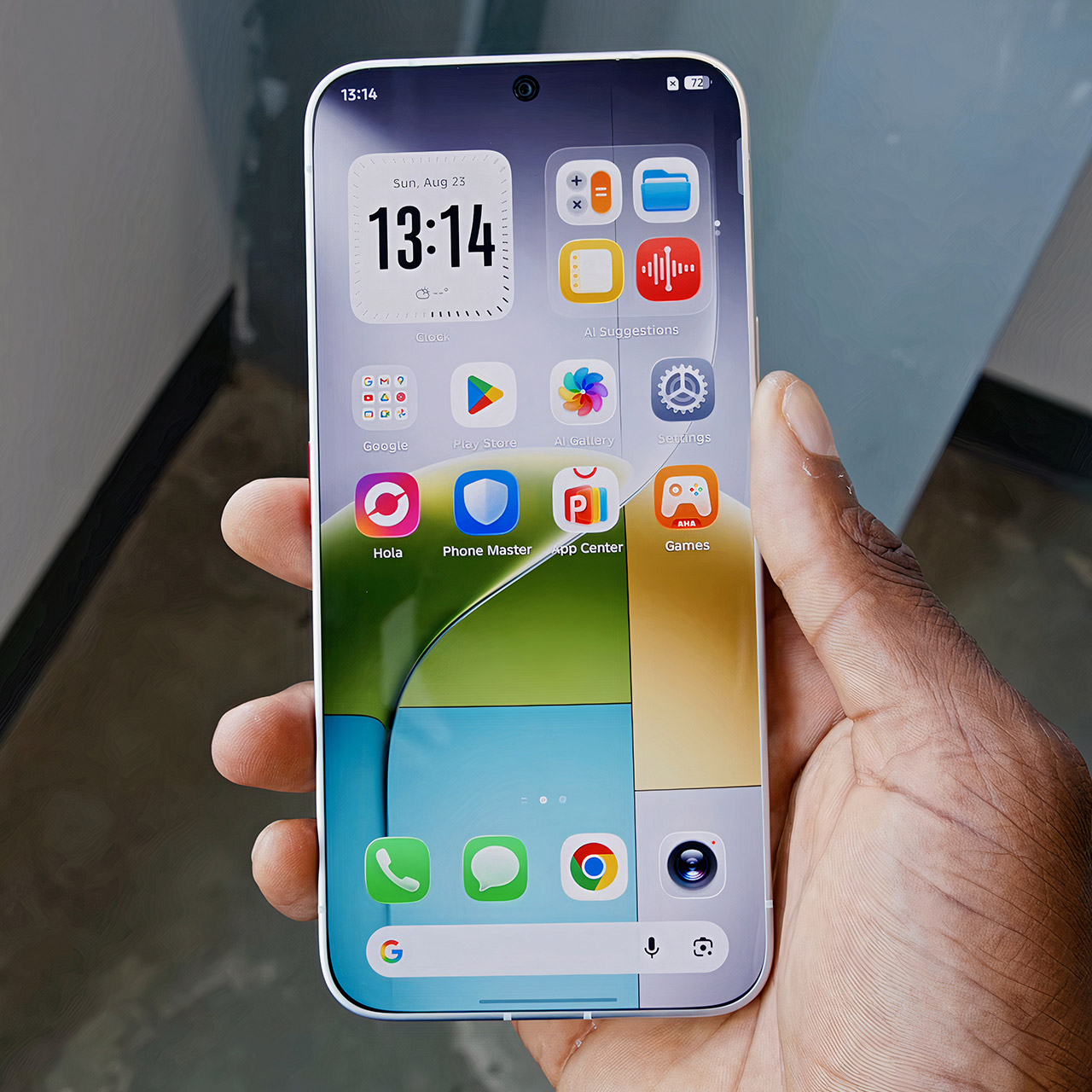
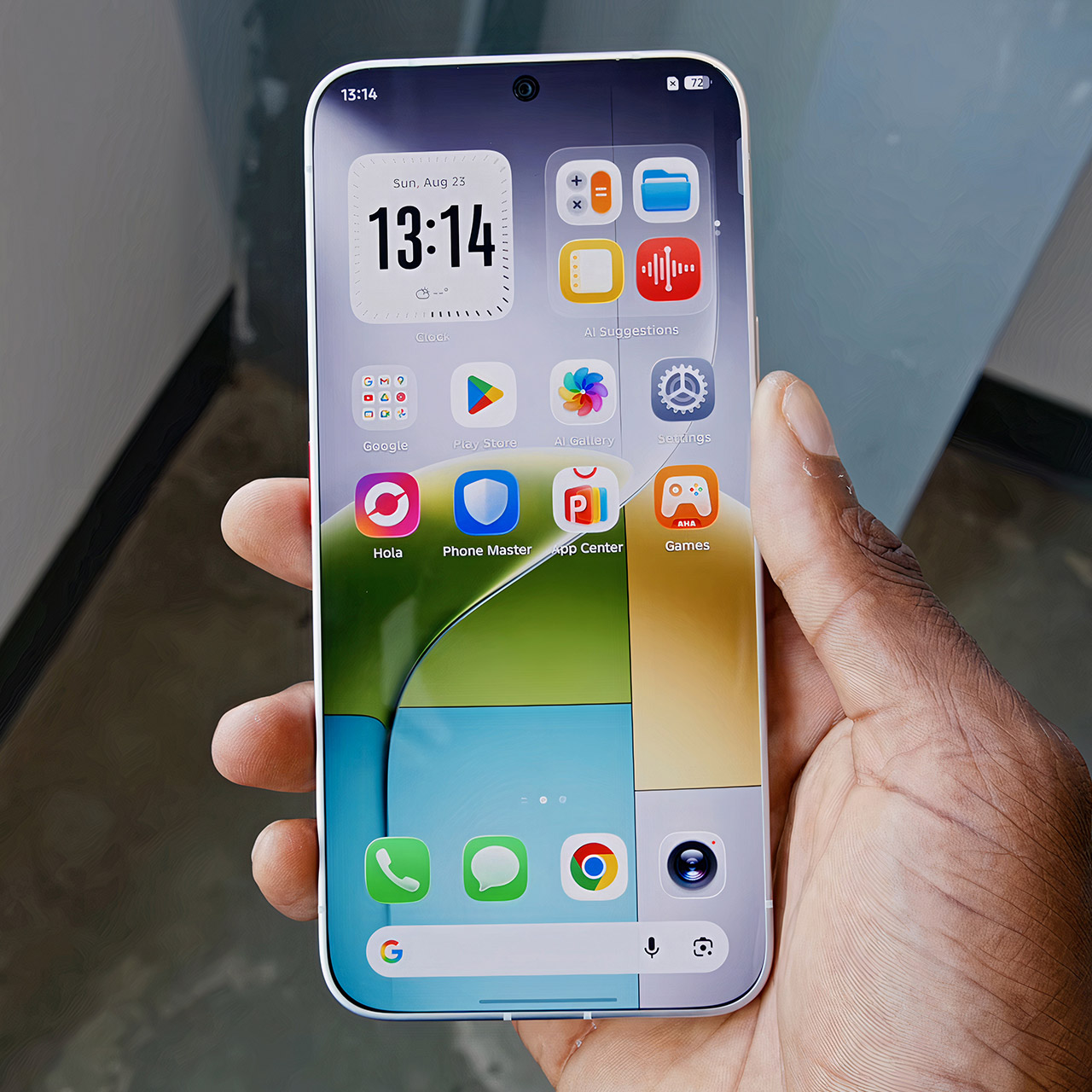
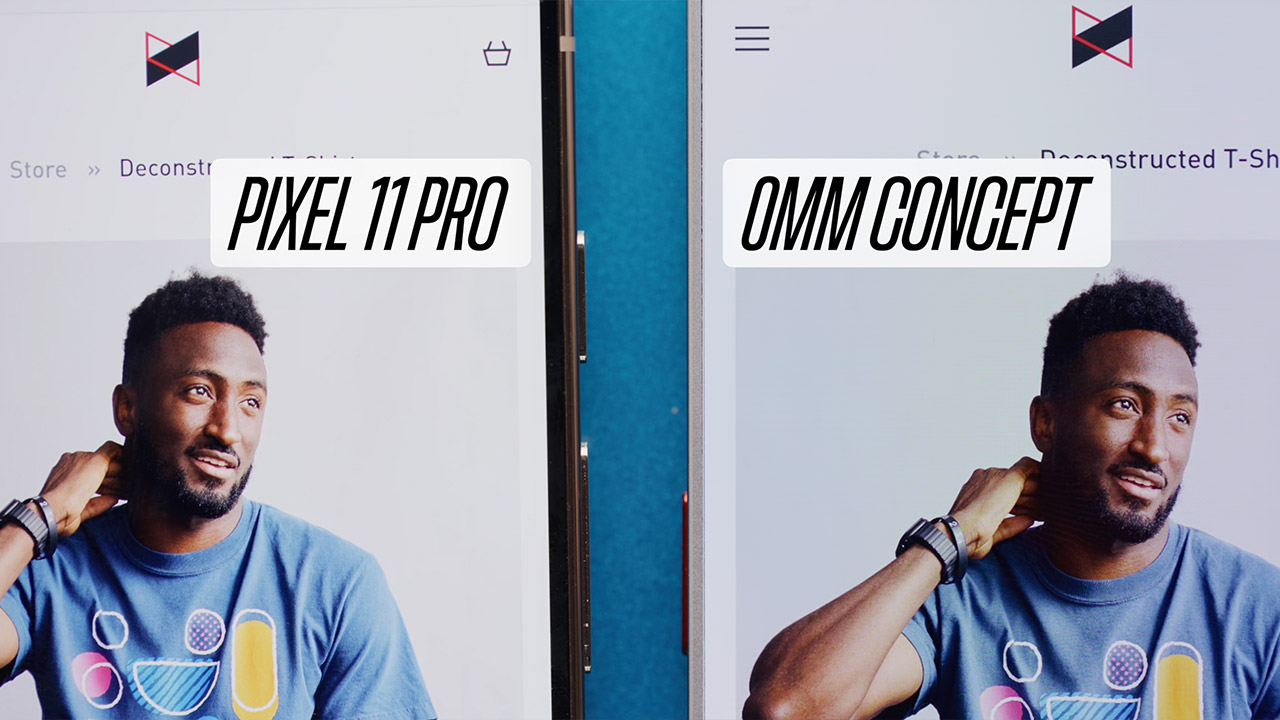
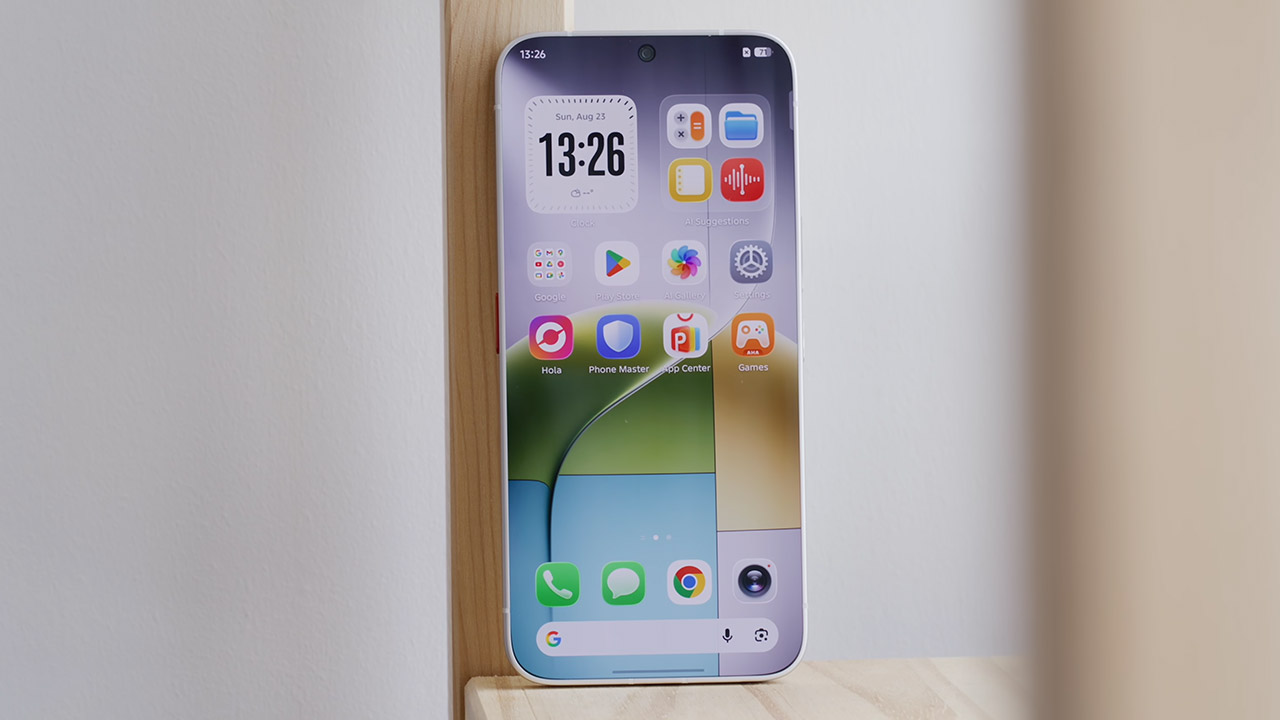
Earlier this summer, Marques Brownlee (MKBHD) received an email from Tecno, a company that claimed to have a concept that would finish the job. This new phone has a premium design and a 6.7-inch screen that extends all the way to the edges. When held straight on, the black border that typically surrounds most current screens vanishes. From corner to corner, edge to edge, the glass meets the silver frame with no space in between. When compared to a Pixel 11 Pro, the contrast is obvious. The Pixel still has a little black strip between the active pixels and the metal, which is highly obvious. This Tecno gadget knocks it out totally.
Order the new Google Pixel 11 Pro today and get $250 off Pixel Watch 5; valid 8/12/2026 until 8/27/2026 at 11:59pm PST, while supplies last and…
Return of Pixel 11 Pro without Pixel Watch 5 results in charge; offer cannot be combined, is non-transferable and not valid for cash or cash…
If a qualifying item in your order is returned, you’ll be reimbursed for what you return
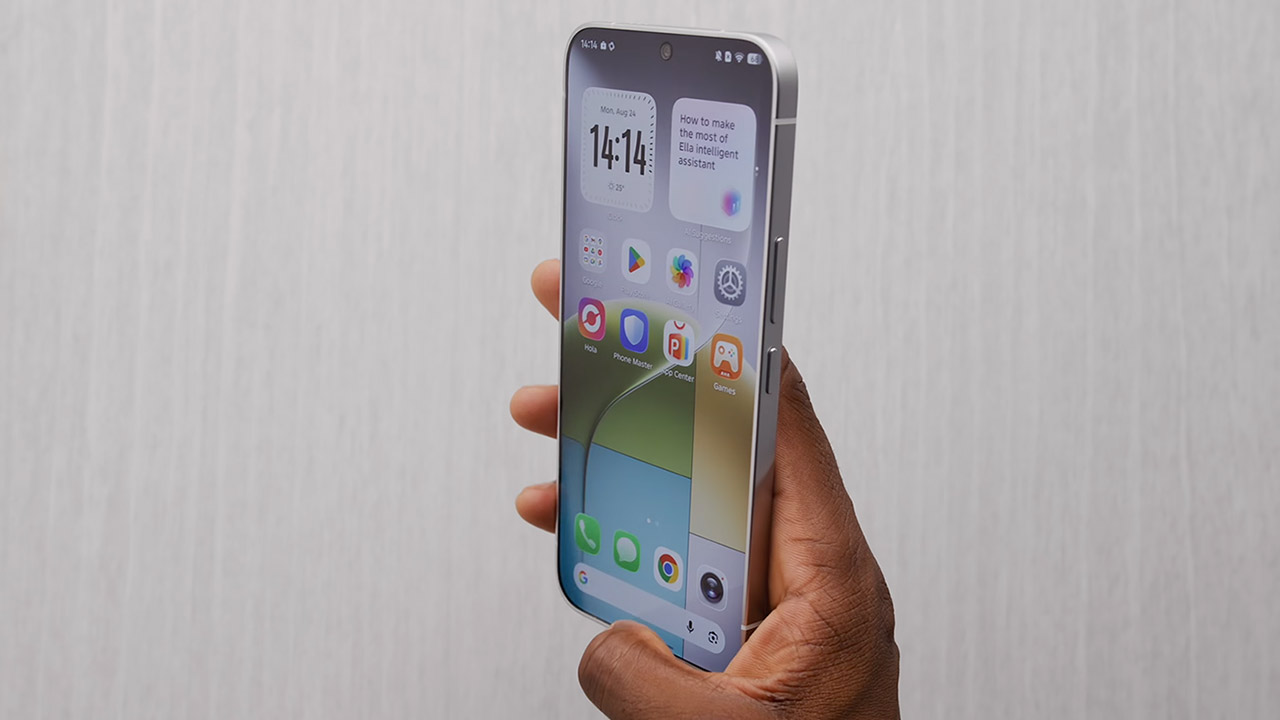
Their approach for removing that strip is internal stacking, in which the screen remains flat but the metal frame protrudes just beyond the glass, allowing the black edge of the screen to be hidden underneath. From typical viewing angles, it’s obvious. Tilt the phone or picture lifting the frame off and you’ll notice a sliver of unused glass peeking out, and that raised lip becomes really crucial when you’re actually holding the thing.
Every time you swipe from the top to check your notifications or from the bottom to return home, your finger scrapes against a metal edge. It disrupts the fluid flow, which is far more upsetting than a little traditional bezel would be. It’s a shame because the phone itself still seems very striking when you look at it. Put it to use, and a modest border with rounded edges begins to sound appealing. One big issue with the concept is the number of cases. Any case that wraps around the sides will only cover part of the screen.
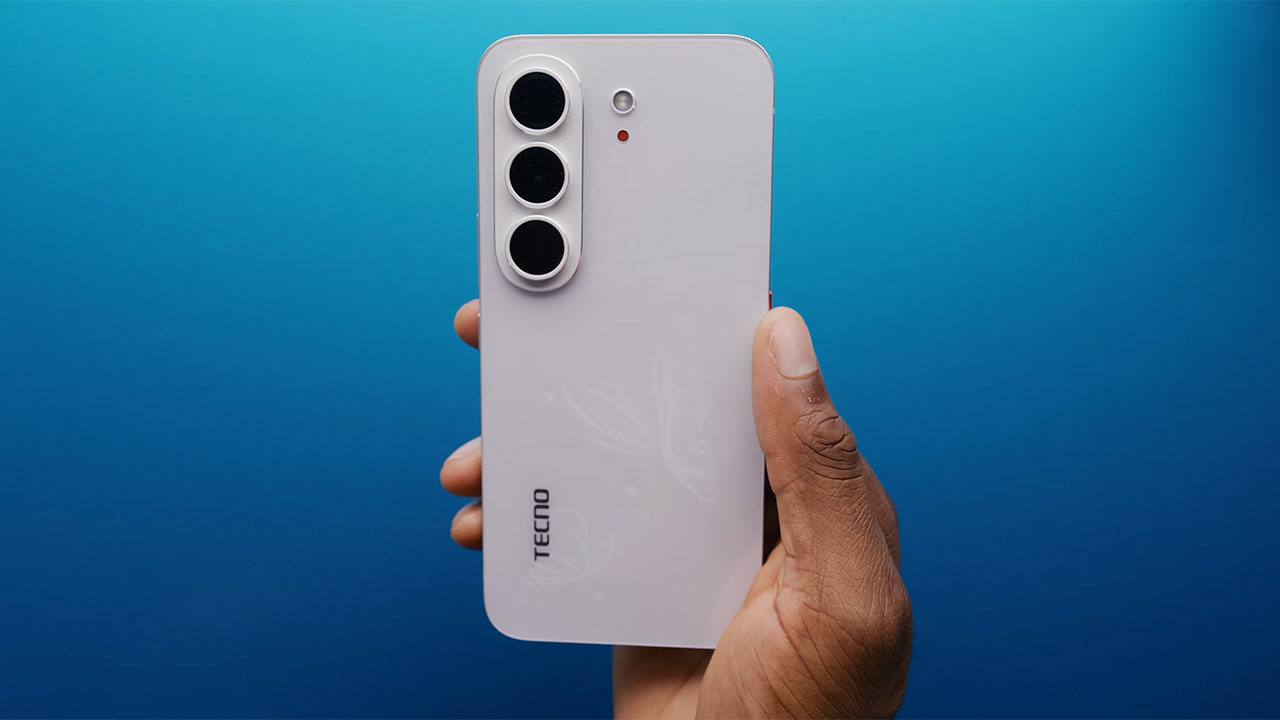
The rest of the design, however, is rather competent, with a brilliant screen that refreshes at 144Hz, a triple camera array on the back, and a 6000mAh battery inside. It’s so light that it nearly feels like one of those dummy devices used to showcase phones in store windows. The hole-punch selfie camera is in its customary location. Fair play to anyone who wants to chase that full-screen ideal; many people would prefer to hide the camera behind glass, but the rest of the gear does not feel like a toy.
The major surprise lies on the back, which Tecno hardly highlighted in the press materials, but it’s far more interesting than the front. There’s a holographic lenticular pattern going on, which gives this three-dimensional butterfly-wing appearance that appears to be lifting right off the surface. MKBHD struggled to get a good photo of it, but he believes it’s one of the best examples of that optical trick currently accessible. If this design were to make it onto store shelves, it would require a clear case to be bundled with the smartphone.





















![BITCOIN AND ETHEREUM ARE EXPLODING!!! [OUR TARGETS, WITH CARL MOON]](https://wordupnews.com/wp-content/uploads/2026/08/1787669358_maxresdefault-80x80.jpg)




































You must be logged in to post a comment Login