If you’re building a homelab rig, you could just use off-the-shelf hardware in standard cases and slap it all in a rack like the normies do. Or, you could follow the example of [Justin Garrison] and build a more oddball setup.
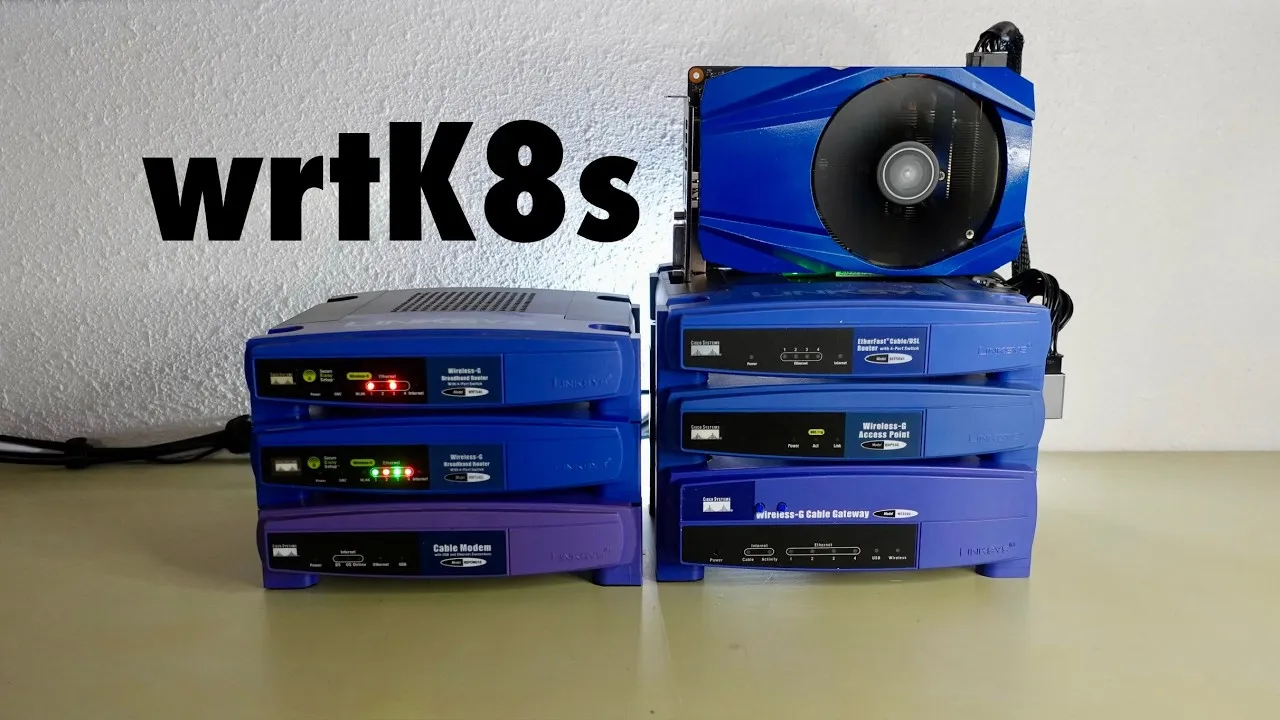
This particular homelab is, at its heart, built from familiar components. There are two Raspberry Pi 5s, two Raspberry Pi 4s, a GMKtec NucBox M6 Mini with an ASUS GeForce RT 2060 GPU, a LattePanda IOTA, an NVidia DGX Spark, and an HP Z4 G4 mini PC. These machines are all laced together with a TP-Link LS108GB PoE switch. [Justin] has the mini PC running the control plane components, with the rig as a whole running Talos and Kubernetes workloads. What makes this build particularly appealing, though, is the aesthetics of the rig. [Justin] documents how he hacked this hardware to fit into a bunch of old Linksys router cases, which provides a pleasant early 2000s look to the build. This included a bit of hackery to get status LEDs flickering as they should be. [Justin] also took the time to make the power buttons accessible.
If you want to stunt on your friends with a rad homelab, you either have to go for maximum power, or maximum style. This build would be the latter. Video after the break.
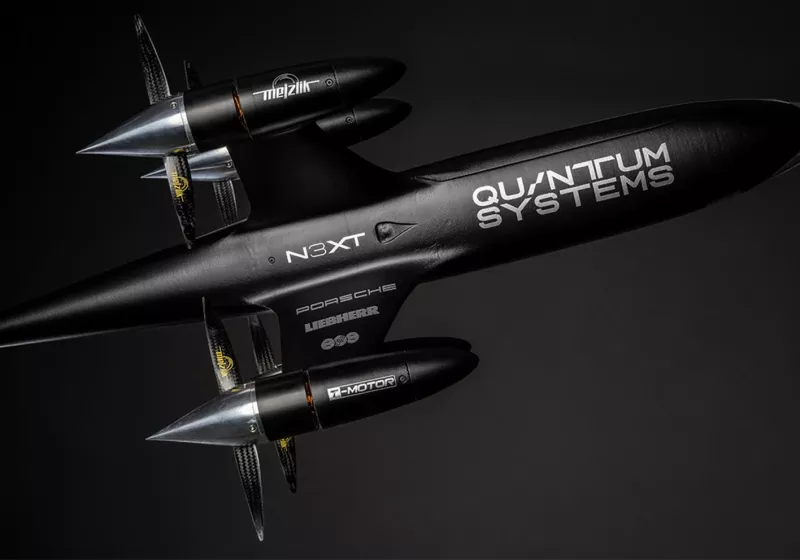
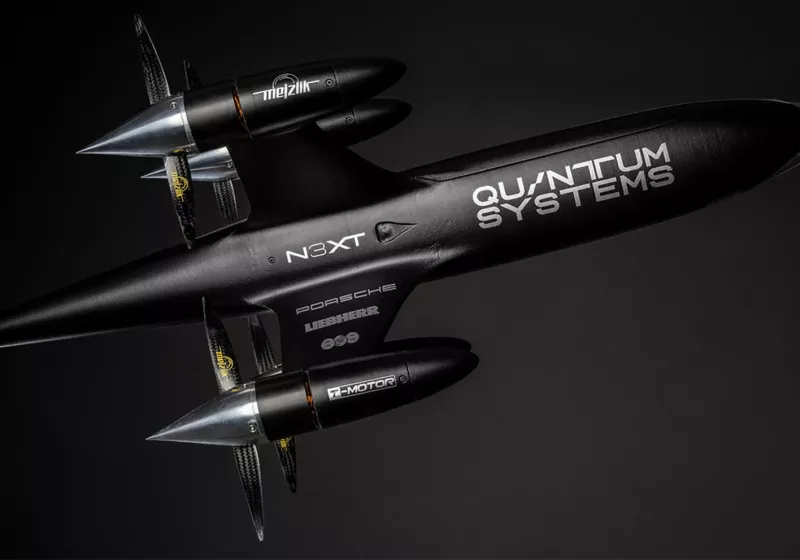
Quantum Systems has built a UAV capable of reaching speeds of up to 699 km/h in “straight and level flight” and is now seeking official recognition for the achievement. The German drone maker recently announced that its Apex Recordhunter drone reached an “unofficial” world record during internal testing conducted on… Read Entire Article Source link
Want big muscles? Keep working out. Want big coding skillsets? Flex your dev skills with the Atrophy CLI app before they wither away
If you’re a coder who uses AI agents to write programs for you, you may start losing those talents. Fortunately, a new command line tool can help reinforce your skills before they wither away.
Aptly titled Atrophy by Ashutosh Rath, the Bengaluru, India-based developer who created it, the CLI app treats coding abilities like Elo chess scores and pushes devs to reinforce their learning through regular drills in five different skill areas.
Advertisement
Syntax recall asks users to write a small function from a spec, debugging presents a code snippet with a hidden bug in it, code reading treats users like a human print command, API memory tests one’s ability to fill in the blank in a stdlib call, and decomposition tests a coder’s ability to outline a design.
Exercises test Python and JavaScript skills and come in three difficulty levels, Rath explained in the GitHub readme, with seeded generation for fresh variants of the different exercises.
“If AI assistance is quietly eroding your ability to code unaided, the chart shows you – before an interview, an outage, or a day without wifi does,” Rath wrote in Atrophy’s readme.
Users take a baseline exam with one exercise in each of the five skill areas to get their starting ratings, which Rath estimates takes around 25 minutes to complete. After that, he recommends users do 5-10 minute drills two or three times a week. Atrophy automatically selects an exercise from the skill that’s been neglected the longest and sets a soft time limit for the exercise. Users can still pass if they exceed the soft limit, but point gain will be reduced if they do so.
Advertisement
Rath told The Register that ratings are adjusted after exercises “using an Elo-style formula,” and explained that drills early in one’s Atrophy use will move the number more than later ones. Inactivity in using the app (it has to be triggered manually right now and won’t force users to drill on any set schedule) weakens Atrophy’s confidence in the correctness of its user’s rating, but doesn’t actually lower scores.
Rath also suggests users take an AI-assisted drill once a month, scores for which are tracked separately and used to measure one’s skill gap between assisted and unassisted coding so you can see if you’re gradually becoming more dependent on agent assistance as time goes on.
As mentioned above, the rating system was based on chess Elo ratings, but Rath told The Register that it’s not a one-to-one copy of Elo’s ranking style. For one, each of the five skill areas is ranked independently and each starts at 1200. There isn’t a hard minimum or maximum, Rath explained, so just know you can keep dropping below 1200 if your coding muscles get really weak.
As Rath notes in the readme, drills are just a proxy for real-world skills, so don’t treat the number as an absolute measurement of skill: The value of Atrophy lies in the trends the app suggests over time, which allows devs to hone in on skill areas AI may be harming.
Advertisement
“Atrophy isn’t anti-AI,” Rath told us. “I built it to measure the gap between what I can do with AI and what I can still do on my own, because that skill can quietly rust without warning.”
There’s plenty of evidence to suggest Rath is on to something. Analysts have been warning for some time that AI can erode skills due to reliance on tools to handle tasks traditionally left to human developers, but anecdotal evidence isn’t all the proof.
Researchers at MIT found last year that students writing essays with the assistance of AI chatbots had less brain activity than those writing them without LLM help. The cadre of users relying on AI also had poorer fact retention and an inability to recall what they had written. The end result of AI usage, they concluded, was “shallow encoding” of learning and less ability to operate independently of their agentic companions.
In other words, your skills could be disintegrating without you even realizing – might be time to take Atrophy for a spin so you can at least establish a baseline. ®
‘I became very aware of how misunderstood autistic people still are, especially in education, healthcare and workplaces’.
Lisa O’Neill is researching neuroaffirmative approaches in education for autistic students as part of her master’s degree at University College Dublin’s School of Medicine.
Alongside her research, O’Neill is the founder and CEO behind ‘NeuroConnect’, an autistic-led platform designed to translate research and lived experience into practical training, guidance and AI-supported tools. The tool is designed for a variety of groups, including educators, employers, families and autistic people.
O’Neill herself is autistic, having been diagnosed in her mid-forties. She says this new understanding set off a spark in her.
Advertisement
“Suddenly, so many experiences from my life started to make sense, but at the same time I became very aware of how misunderstood autistic people still are, especially in education, healthcare and workplaces.”
What inspired you to become a researcher? Do you have any specific memories that set off a spark?
One specific memory that stayed with me was realising how often autistic people are talked about in research and training but not genuinely included in shaping it. It made me want to contribute to research that centres lived experience and creates practical change, not just theory.
That experience inspired both my MSc research and my work developing NeuroConnect, an AI enabled, autistic-led platform focused on more neuroaffirmative support for educators, employers, families and autistic people themselves.
Can you tell us about the research you’re currently working on?
I’m currently completing an MSc research project focused on collaborative partnerships around autistic students in mainstream lower-secondary education. My research looks at how schools, families and autistic people can work together more effectively to create more supportive and neuroaffirmative educational experiences.
Advertisement
The project grew from my lived experience (as a late-diagnosed autistic adult and parent of an autistic child), and from seeing how often misunderstandings happen between systems, professionals, families and autistic people.
Over time, the research has evolved from simply looking at ‘support’ into exploring shared understanding, communication and relationship-building.
Drawing on my lived experience and understanding of autism, I worked closely with my child’s school during a very difficult transition, to help them better understand his needs and communication style. Over time, they began taking on board my advice and guidance, and the situation gradually improved. Today my son is attending school every day, which has had a huge impact on me personally and really shaped the direction of my research.
I’m working with supervisors across medicine and psychology, which has been really valuable because the project is very interdisciplinary.
Advertisement
Alongside my MSc, I’m also developing NeuroConnect, an autistic-led platform that translates a lot of these ideas into practical training and AI-supported guidance for educators, employers, families and autistic people. For me, the research and the platform are very connected because they are both focused on creating practical, real-world change.
In your opinion, why is your research important?
I think this research is important because many autistic people, particularly children and young people, are still trying to fit into systems that were never designed with autistic experiences in mind. Too often, support focuses on changing the autistic person rather than improving understanding, communication and the environments around them.
My research focuses on collaboration and shared understanding because I believe better outcomes happen when autistic people, families, educators and professionals genuinely work together and value each other’s perspectives. Small changes in understanding and communication can make a huge difference to a person’s education, wellbeing, confidence and future opportunities.
I also think it is important that autistic voices are included meaningfully in research and practice. Lived experience should not be an afterthought. It should help shape the systems and supports being created.
Advertisement
What commercial applications do you foresee for your research?
I see strong potential for my research to be translated into practical tools and training that improve real-world support for autistic people across education, healthcare and workplaces. Alongside my research, I am developing the NeuroConnect platform with the aim of turning research and lived experience into accessible training, guidance and AI-supported support tools.
The long-term goal is to develop evidence-informed resources that help educators, employers and professionals better understand and support autistic people in everyday settings. This could include neuroaffirmative training programmes, digital support platforms, collaborative planning tools, and AI-assisted guidance systems informed by lived experience and research evidence.
What is most important to me is that any commercial application remains grounded in ethics, accessibility and autistic perspectives, so that it creates meaningful and practical change rather than simply raising awareness.
What are some of the biggest challenges you face as a researcher in your field?
One of the biggest challenges is trying to bridge the gap between lived experience and traditional systems. In autism research, autistic voices have historically been underrepresented so there can still be a disconnect between what research focuses on and what autistic people actually need in everyday life.
Advertisement
Another challenge is that education, healthcare and workplace systems are often under significant pressure, so even when people want to do better, they may lack the time, training or resources to fully support neuroaffirmative approaches. Part of my research involves exploring how to create approaches that are both meaningful and realistic within real-world settings.
As someone coming into research through lived experience as well as academia, I also think there can sometimes be challenges in balancing personal insight with traditional academic expectations. At the same time, I see that as one of the strengths I bring to my work because it keeps the research grounded in real experiences and practical impact.
Are there any common misconceptions about this area of research? How would you address them?
Yes, I think one common misconception is that autism research is only about deficits, behaviours or finding ways to ‘fix’ autistic people. Increasingly, many researchers and autistic advocates are challenging that approach and focusing instead on shared understanding, communication and relational factors such as collaboration and emotional safety between autistic people and their wider support systems.
Another misconception is that supporting autistic people requires huge or unrealistic changes. In reality, small adjustments in communication, predictability, flexibility and understanding can often make a very significant difference.
Advertisement
I also think there can be a misunderstanding that lived experience and academic research are somehow separate. For me, lived experience strengthens research because it helps ensure the questions being asked are relevant to real life and the outcomes are meaningful for the people the research is intended to support.
What are some of the areas of research you’d like to see tackled in the years ahead?
I would really like to see more research that is genuinely co-produced with autistic people and grounded in lived experience from the beginning, rather than autistic people only being consulted at the end of a project.
I’d also like to see greater focus on relational and systemic approaches, particularly around communication, shared understanding and collaboration between autistic people, families, educators, clinicians and employers. I think there is still a lot we do not fully understand about how environments and relationships shape outcomes for autistic people.
Another area I think is incredibly important is the ethical use of AI and technology to improve accessibility, education, mental health support and everyday communication for neurodivergent people. There is huge potential there if it is developed in a neuroaffirmative and human-centred way.
Advertisement
Finally, I would love to see more strengths-based research that looks at autistic wellbeing, belonging, identity and long-term quality of life, rather than focusing only on difficulties or deficits.
Don’t miss out on the knowledge you need to succeed. Sign up for the Daily Brief, Silicon Republic’s digest of need-to-know sci-tech news.
Portable Bluetooth speakers have grown far beyond the disposable little cylinders that once lived in kitchen drawers, rental cars, and beach bags until their batteries gave up the ghost. The category has exploded in recent years, drawing serious attention from brands such as KEF, DALI, Devialet, and Andover Audio, all of which see an opening for compact, battery-powered speakers that do more than make noise near a pool and can be tossed at that annoying relative who lacks a filter.
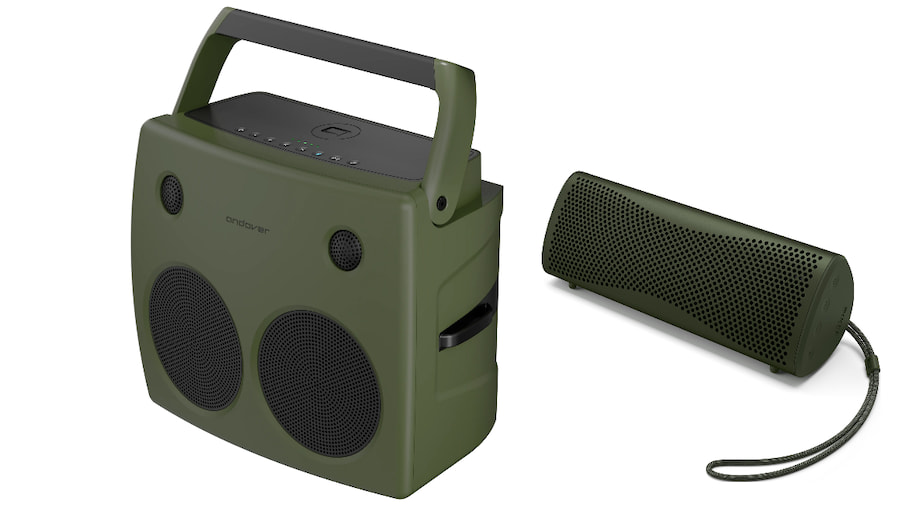
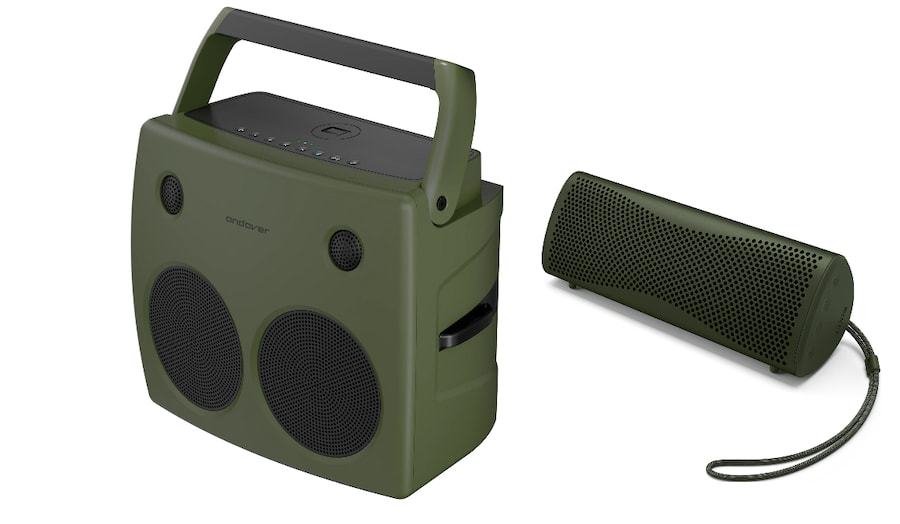
That brings us to the Andover Audio FreePlay and KEF Muo. On paper, there is a clear price difference, and the KEF arrives with the kind of industrial design pedigree and premium-brand cachet one expects. But this is not quite a battle between a luxury object and a lesser alternative. Both are designed to work at home, travel without complaint, and survive time outdoors; both also aim to offer more musical weight, clarity, and refinement than the usual Bluetooth-speaker suspects.
The real question is not which one has the fancier badge or the longer specification sheet. It is which portable speaker makes more sense for how you actually listen: on the kitchen counter, in a hotel room, by the grill, at the beach, or anywhere a proper stereo system would be excessive, impractical, or likely to attract complaints from someone who detests fun.
Before getting into bass, detail, dynamic capabilities, and all of the other things people claim to hear while standing next to a braai with an ice-cold Castle Lager in one hand, the more useful question is how these speakers fit into daily life.
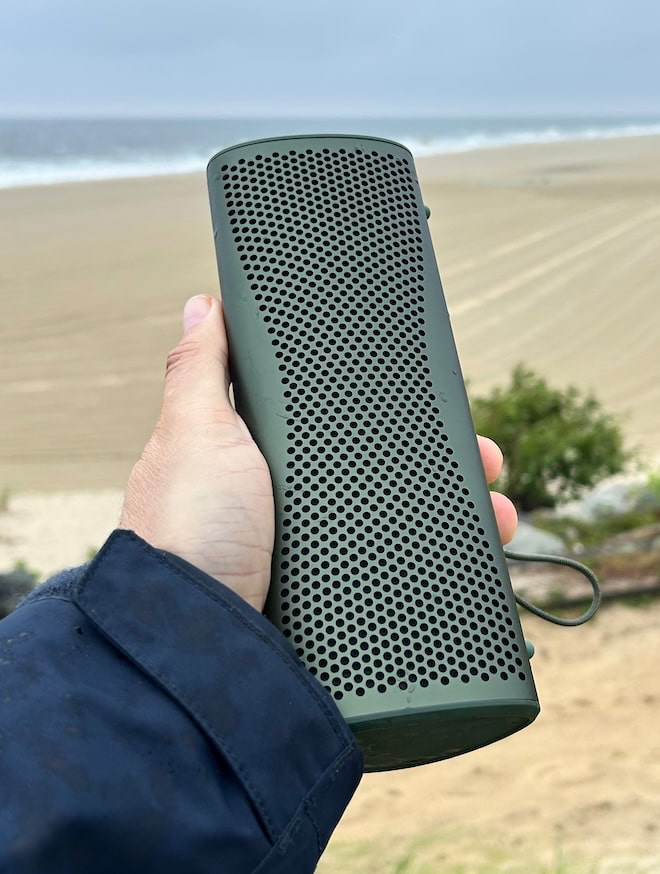
KEF Muo
The FreePlay and Muo are both meant to travel beyond the living room, but that does not make them interchangeable. Size, weight, battery performance, weather resistance, charging, physical controls, wireless stability, and how easily each speaker moves from kitchen counter to hotel room to backyard all matter here. A portable speaker that sounds wonderful but stays on a shelf because it is too precious, too awkward, or too annoying to charge has rather missed the assignment.
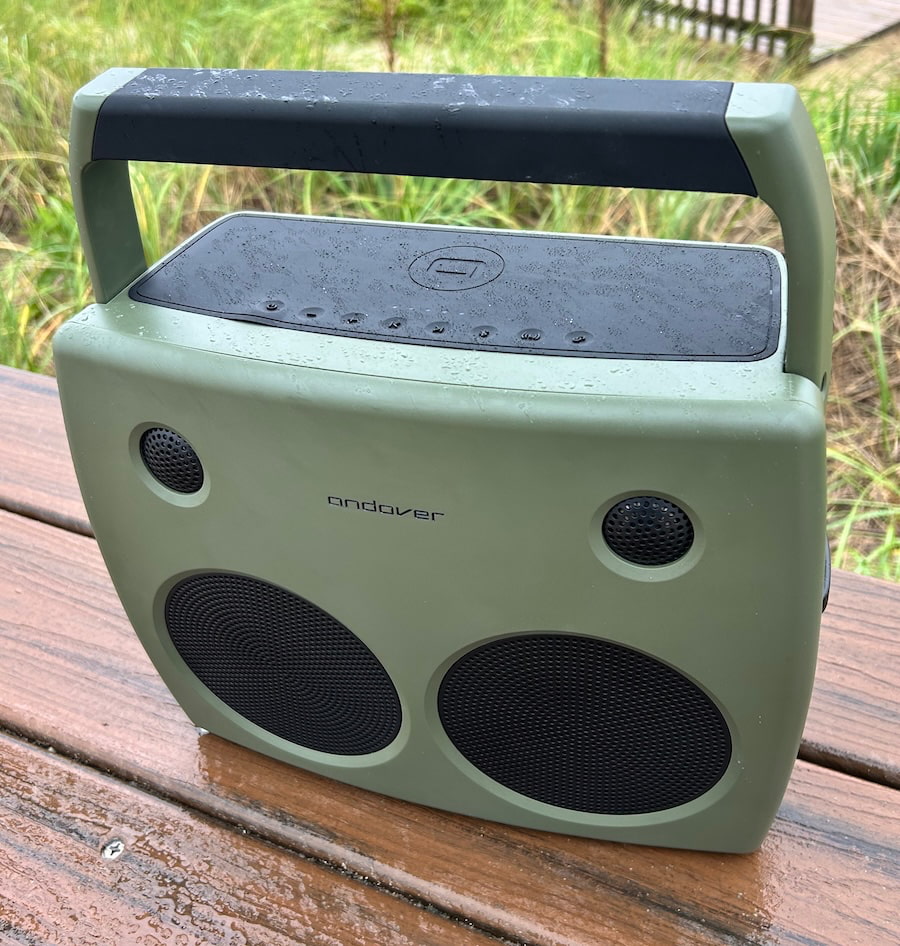
Both proved more durable than their polished finishes might suggest. I used them at the beach, left them in the sand, poured water over them, and left both outside for roughly 30 seconds after the rain began. Neither speaker flinched. I did not submerge either one, because there is a difference between testing an IP67 rating and behaving like a man who has lost a bet.
Advertisement
The FreePlay’s protected connections inspire more confidence in that context. My only concern with the Muo is that its USB-C input is exposed rather than covered by a rubber flap. That has not proved to be a real-world issue so far. After nearly two months of regular use and more than a little abuse, the Muo is still kicking butt. But on a sandy beach or in wet conditions, it is one detail worth keeping in mind.
The two speakers approach portability from opposite ends of the dock.
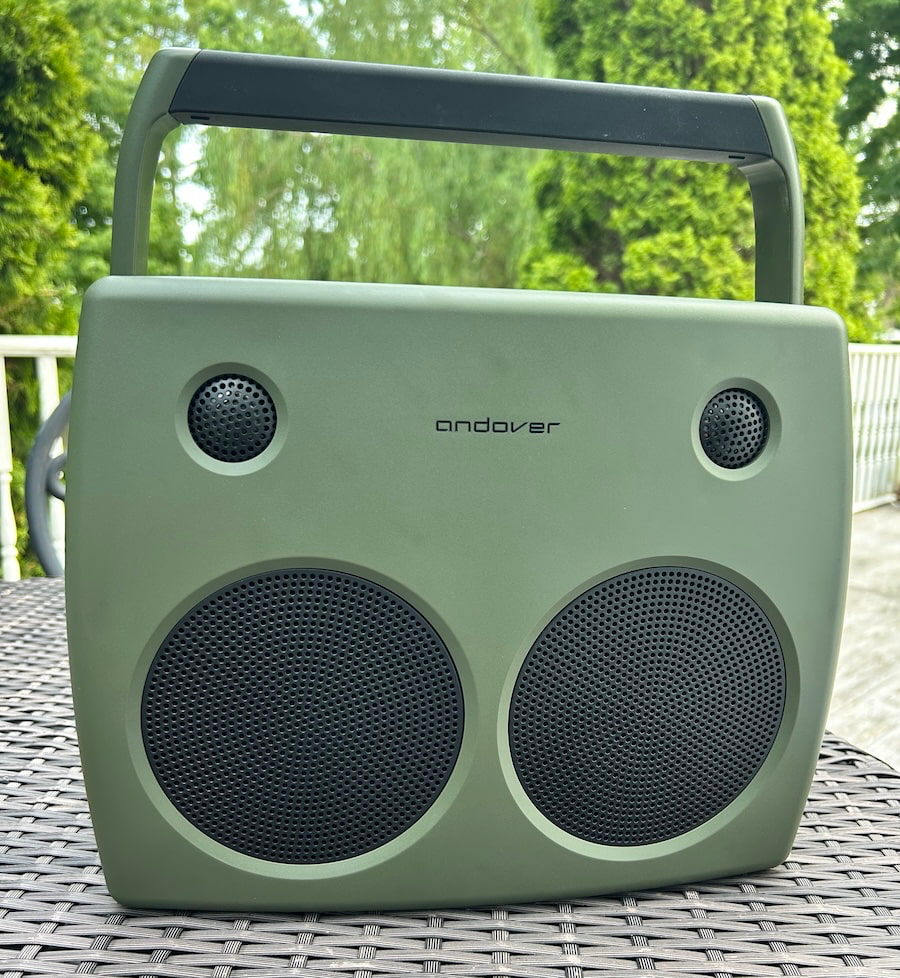
Andover Audio FreePlay
At 9 pounds, the Andover Audio FreePlay is not something you toss into a coat pocket before leaving the house. It is a substantial portable speaker built around a genuine stereo driver array: two 5.25-inch woofers, two 25mm dome tweeters, and a large rear passive radiator. The fold-down handle, tie-down bars, included shoulder bag, IP67 rating, 24-hour battery claim, Qi charging pad, USB-C power delivery, microphone input, and Party Mode make clear that Andover expects the FreePlay to work as the musical center of a patio, pool day, boat trip, golf outing, or camping trip to get away from all of the summer people.
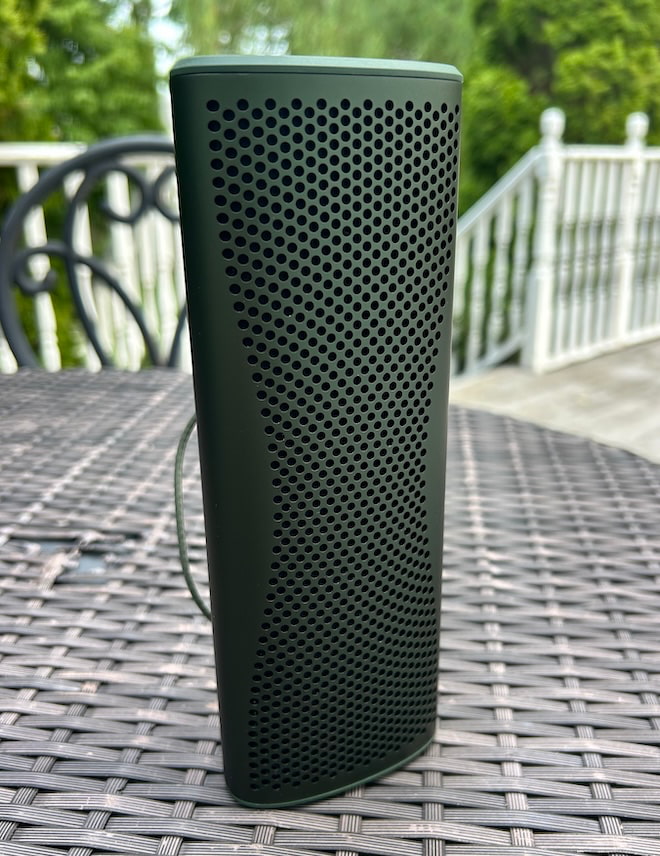
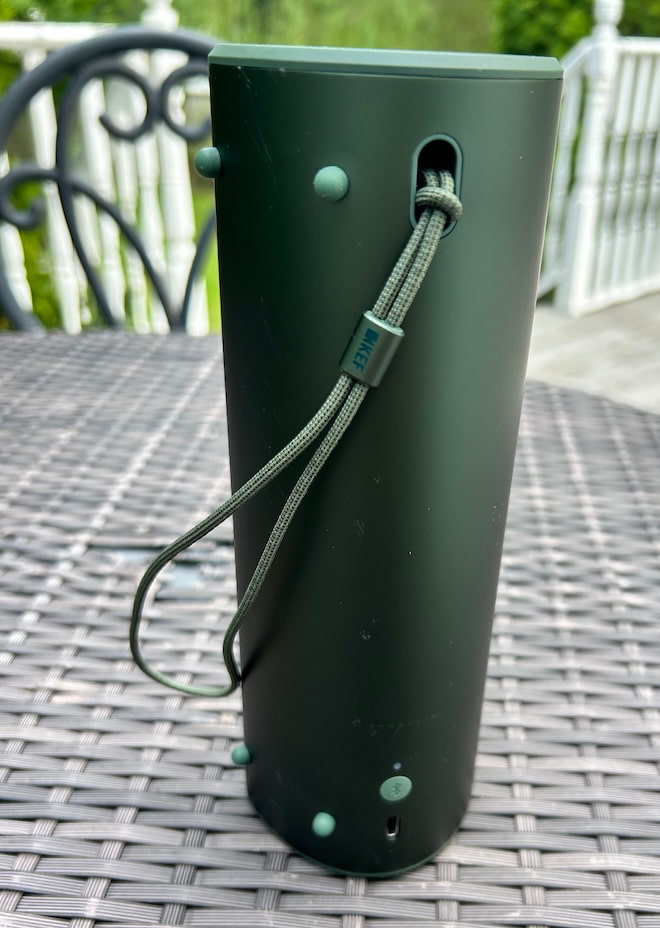
The KEF Muo is the more genuinely travel-friendly option. At only 1.6 pounds and 8.5 inches tall, it slides into a bag without requiring a logistical meeting first. Its sculptural aluminum enclosure, removable carry strap, IP67 protection, USB-C audio, Bluetooth 5.4 with aptX Adaptive, speakerphone function, KEF Connect app, and claimed 24-hour battery life give it a more compact and technologically polished brief. Pair two for dedicated left and right channels, or use Auracast to spread music across multiple compatible speakers.
Advertisement
KEF Muo
It also has a useful second life as a desktop speaker. Positioned horizontally beneath an Apple iMac or on a narrow IKEA desk shelf, the Muo fits neatly where a conventional pair of speakers would be impractical. Its small rubber feet create a stable contact surface, while its orientation detection adjusts the DSP when the speaker is placed on its side. The result is a broader, more room-filling presentation than its narrow cabinet suggests, with a soundstage that can extend meaningfully beyond the speaker itself.
Advertisement. Scroll to continue reading.
That is why the price difference is not as straightforward as it first appears. The Muo asks you to pay for miniaturization, materials, everyday portability, and KEF’s refined industrial design. The FreePlay gives you far more physical speaker, true stereo from a single enclosure, more output potential, more bass-producing surface area, and features that make it feel closer to a compact outdoor music system than a conventional portable Bluetooth speaker.
Both can handle the kitchen counter, hotel room, pool deck, beach, or backyard. The difference is that the KEF is the one you carry everywhere because it disappears into a bag; the Andover is the one you bring when the music needs to annoy everyone within 100 feet in every direction.
KEF Muo (rear)
Connectivity, DSP, and Real World Performance
The technology matters here because these are fundamentally different solutions. KEF uses DSP, compact engineering, and app-based adjustment to make the Muo unusually flexible for its size. Andover gives the FreePlay more cabinet volume, more drivers, and far more physical presence. Neither approach is accidental.
Bluetooth, Apps, and Useful Technology
Both speakers paired quickly and reliably, with connection taking less than a second in most cases. The KEF Connect app gives the Muo useful sound-adjustment options, while the FreePlay keeps things more direct. Casting from an iPhone to the FreePlay simplified playback, and TIDAL, Qobuz, and Spotify all worked without noticeable lag.
Advertisement
Inside the house, wireless range was broadly similar. Interior walls mattered more than either speaker’s Bluetooth implementation, depending on where the source device was located. Outdoors, the Muo held a slight edge in connection range.
Indoor Listening and Low Volume Performance
The Muo is particularly effective in close-range listening. Positioned horizontally beneath an iMac, on a desk shelf, or on a kitchen counter, its orientation detection adjusts the DSP and creates a wider, more focused presentation than its narrow enclosure suggests. Pointed toward the listener, it works extremely well as a personal speaker.
The FreePlay cannot play that role in the same way. It is too large to disappear beneath a monitor, but it fills a room more easily and sounds clearer overall. The KEF works best when you are sitting near it; the FreePlay makes more sense when the music needs to reach beyond one person at a desk or table.
Bass, Scale, and Outdoor Volume
This is not a close contest.
Advertisement
The FreePlay has larger drivers, more cabinet volume, more bass-producing surface area, and more output. Those advantages matter outdoors, where music has to compete with wind, conversation, traffic, water, and the general chaos of people enjoying themselves. It produces more weight, more scale, and greater presence, while maintaining clarity as the volume rises.
The Muo is capable outdoors for personal listening, a small patio, or a hotel balcony. But it is still a compact portable speaker. The FreePlay is the one to bring when the music is expected to carry an outdoor gathering rather than simply accompany it.
The Bottom Line
The Andover Audio FreePlay and KEF Muo are closer than their price tags and dimensions initially suggest, but they are not trying to solve the same problem.
The KEF Muo is the more elegant compact speaker. It travels easily, looks at home on a desk or kitchen shelf, works exceptionally well beneath a monitor in its horizontal orientation, and uses its DSP intelligently to create a wider, more focused presentation for close-range listening. It is the better choice for hotel rooms, desktop systems, smaller spaces, and listeners who want a genuinely premium portable speaker without carrying something the size of a small carry-on bag.
Advertisement
Advertisement. Scroll to continue reading.
The Andover Audio FreePlay is the more complete all-purpose music system. Its larger cabinet, true stereo driver array, stronger bass, greater output, and superior ability to fill a room or outdoor space give it a clear advantage when more people are listening or the environment is working against you. It also brings useful extras, including Qi charging, USB-C power delivery, a microphone input, Party Mode, and the kind of ruggedness that makes it easy to use at the beach, by the pool, or during a braai without treating it like a museum piece.
Buy the KEF Muo if portability, desktop use, design, and close-range listening are the priorities. Buy the Andover FreePlay if you want more scale, more bass, more output, and a speaker that can comfortably move from the kitchen counter to the backyard without running out of breath.
The Muo is the better compact speaker. The FreePlay is the better choice when you need a portable speaker to behave like a real music system.
Bill Colleran, a veteran technology executive who previously led Impinj and sold Innovent Systems to Broadcom, has joined Seattle-based AI coding startup Adronite as CEO.
Edward Rothschild, who co-founded Adronite in 2023 and served as its first CEO, is transitioning to chief technology officer, where he’ll continue leading the company’s product development, including its Adronite Context Engine and Codistry AI code generation tool, according to a news release.
The 15-person company raised a $5 million Series A led by Gatemore Capital Management earlier this year. The platform supports cloud, on-premises and air-gapped deployments, targeting midmarket companies and regulated industries.
Colleran has more than 35 years of experience in semiconductor and enterprise technology. He grew Impinj into a market leader in RFID technology, raising more than $100 million in equity financing. He left the company in 2014 and was succeeded by co-founder Chris Diorio.
He was also CEO of Innovent Systems, which developed the world’s first CMOS Bluetooth chip and was acquired by Broadcom for approximately $500 million.
Advertisement
More recently he founded lidar company Lumotive and led Seattle SaaS startup AnswerDash. He holds a Ph.D. in electrical engineering from UCLA and a J.D. from Harvard Law School.
“Throughout my career, I’ve seen technology industries transformed when complexity becomes manageable,” Colleran said in a statement. “Software development now faces a similar challenge. AI can generate code at an incredible pace, but understanding complex software systems remains difficult for both developers and AI.”
Adronite’s platform aims to help developers and AI agents understand entire codebases rather than working file by file — a challenge especially acute for midmarket companies managing legacy systems without the tooling available to large enterprises.
The company says its approach can cut token consumption by up to 40%, a claim that could resonate as engineering teams grapple with rising AI costs.
Peranakan heritage food biz Tiap Tiap began selling on a Facebook group, now it’s a full-fledged shopfront
Most food businesses start with a business plan. Peranakan heritage food brand Tiap Tiap started with a pandan cake and friends who wouldn’t stop asking Sophia Yeow to cook for them.
Six years on, what began as a two-product home-based operation during Singapore’s circuit breaker has grown into a brick-and-mortar shopfront on East Coast Road in Joo Chiat. It’s a fitting location for the brand, rooted in the Peranakan heritage of the neighbourhood where Sophia grew up.
Vulcan Post spoke with Sophia, 55, and her daughter, Nicole Lian, 29, about how a small family business grew into a brick-and-mortar brand, and what it took to get there.
An accident that changed everything
Sophia cooking at home./ Image Credit: Tiap Tiap
Sophia launched Tiap Tiap in 2020 when an accident sent her to the hospital and prompted a reckoning with what she actually valued in life.
She had previously spent two decades in senior marketing and communications roles alongside running a child enrichment centre in Bukit Timah with a friend.
Advertisement
What was important to me was family. So I stepped away from everything.
Sophia Yeow
Sophia sold the enrichment business, gave six months’ notice at her corporate job, and spent time travelling with her parents and cooking for people she loved.
With encouragement from her friend, Sophia began posting in a Facebook group called Singapore Home-cooked Delights. She started with just three products: a pandan chiffon cake, radish kueh, and yam kueh. She wasn’t sure anyone would buy.
Tiap Tiap’s pandan chiffon cake./ Image Credit: Tiap Tiap
To her surprise, strangers not only placed orders but also shared reviews in the group, helping word spread organically.
Soon, banks and other organisations looking to support home-based businesses during the pandemic began placing orders. At one point, Sophia was coordinating deliveries to 150 locations across Singapore over two days, juggling production and logistics on her own.
Advertisement
Today, Tiap Tiap has set up a 500 sq ft central kitchen in Bedok, while its production capacity has increased by 500% from its early pandemic days.
A mother-daughter business
In 2021, MediaCorp, having spotted her Instagram account where she shared food, travel and snippets of daily life, reached out to ask if she’d consider joining MasterChef Singapore.
Despite having no experience, she did it anyway, reaching the top 24. The experience led her to a subsequent cooking competition for home cooks, the Lee Kum Kee Supreme Chef Cooking Competition II, which Sophia won that same year.
Screengrab from Lee Kum Kee
The competitions gave Sophia greater visibility, but to her daughter, Nicole, her talent had never been in doubt.
Nicole grew up watching her mother set the family table differently from everyone else. Sophia would host themed dinners regularly. Indonesian night meant banana leaves and matching crockery; a trip to Athens meant Mediterranean food for a week, served on pieces Sophia had brought back specifically for the occasion. Besides the food, the whole experience surrounding the food was equally important to the family.
Advertisement
“As a kid growing up, I kind of knew there was something special in her cooking,” Nicole said.
So when Sophia started Tiap Tiap, Nicole naturally recommended the brand to friends and colleagues—she already believed in what her mother was making.
(L to R): Nicole and her mother, Sophia./ Image Credit: Tiap Tiap
After COVID-19, Nicole noticed that while many home-based businesses fell away as restrictions eased, Tiap Tiap’s orders kept coming. This pushed Nicole to leave her corporate career in 2024 to join Tiap Tiap as Managing Director.
Nicole brought operational structure to what her mother had been running on instinct and craft by creating a system of orders that made organising and fulfilling orders simpler.
Sharing Peranakan heritage
By that point, Tiap Tiap had grown beyond cakes.
Advertisement
The brand also hosts Butterfly Table, a private dining experience held in Sophia’s home.
Image Credit: butterfly.table via Instagram
The weekly three-hour dinner combines Peranakan cuisine, storytelling and Sophia’s collection of antique crockery, giving guests a deeper appreciation of the culture behind the food.
Butterfly Table was born after a senior executive who had tasted Sophia’s cooking invited her to cater for Temasek and its board of directors for a month.
That opportunity led to her first private dining session at home—a Peranakan tok panjang for the current Singapore Ambassador to China, Peter Tan, who later told her it felt like coming home.
A measured expansion
Tiap Tiap’s Ondeh Ondeh cake and Kaya spread./ Image Credit: Tiap Tiap
Opening a physical store wasn’t an impulsive decision.
Before committing to a permanent retail space, Sophia and Nicole spent two years testing demand through pop-ups, allowing them to gauge customer interest and learn how to scale the business without taking on significant overhead.
Their first pop-up at Takashimaya in 2025 regularly sold out within 10 minutes of each restock, with customers queuing for the next batch of cakes to arrive from Tiap Tiap’s central kitchen.
At Boutiques Singapore, vendors from around the venue reserved cakes before the doors even opened, leaving little stock for the general public by 10AM.
The pop-ups confirmed what years of online orders had already suggested: demand for Tiap Tiap had outlasted the pandemic. Today, around 40% of its customers are repeat buyers who have supported the brand since its home-based days.
With that validation established, the team spent time at the central kitchen refining SOPs, building the team, and working out how to scale production reliably before making the retail commitment.
The shopfront at 374 East Coast Road eventually opened in late Jun 2026. Actual costs came in just under S$500,000—entirely self-funded, with no external investors.
Advertisement
Taking it one step at a time
Nicole and Sophia at their physical store on East Coast Road./ Image Credit: Tiap Tiap
Today, Tiap Tiap’s East Coast Road store operates as a takeaway concept, offering a range of sweet and savoury Peranakan fare.
The sweet treats are made on-site, while the savoury range and delivery orders continue to be prepared at the brand’s central kitchen in Bedok.
Although Sophia and Nicole still drop by the shop almost every day, Nicole’s immediate goal is to build the business to a point where it can operate without either of them being physically present.
After six years, neither mother nor daughter romanticises the leap from corporate life into entrepreneurship. Passion, Sophia said, is important—but it has to be matched with an understanding of what customers want.
Passion without appreciating what the market wants will eat you up very quickly.
OpenAI reveals first branded hardware, the Codex Micro, a programmable macro pad built with keyboard maker Work Louder
Codex Micro seems to be based on Work Louder’s Creator Micro 2’s layout, mapped to Codex coding-agent shortcuts
The move reinforces OpenAI’s Codex offering as one of its mainstay areas of focus by allowing developers the ability to perform tasks or interact with AI faster
OpenAI’s first branded piece of hardware is not a long-anticipated consumer device it is building with ex-Apple design chief Jony Ive, but rather a programmable macro pad called the Codex Micro.
The keyboard, which consists entirely of macro keys designed to “supercharge people’s Codex usage,” according to an OpenAI spokesperson at the AI Engineer World’s Fair, is reportedly a collaboration between the iPhone creator and the custom macro pad creator Work Louder.
With OpenAI’s developer-centric account on X indicating that the full launch of its hardware foray is expected on July 15, the AI giant seems to be pulling out all the stops to ensure it becomes a well-received add-on for the developer community.
Latest Videos From
A simple rebadge or a sign of things to come?
The as-yet-pending release ‘Codex Micro’ seems to be inspired by Work Louder’s existing Creator Micro 2, a compact macro pad that offers thirteen mechanical keys, a joystick, a rotary encoder, and touch controls, arranged across programmable layers to power users needing faster or more fine-grained control over AI-assisted coding tasks.
Advertisement
The move is understandable for OpenAI in terms of both securing a victory with developers and brand recognition, and essentially testing the waters on how it would handle a hardware launch for the company’s upcoming AI device for more general-purpose users.
It can also, to a degree, be seen as OpenAI essentially acknowledging that its earlier stance of narrowing its focus to ‘nail’ its core business might be one the company is willing to make exceptions to, especially when it comes to coding tools or enterprise use-case hardware.
OpenAI’s CEO of applications, Fidji Simo, reportedly told staff that the company was looking to deprioritize areas outside its core focus to allow it to lead where it mattered.
Advertisement
Sign up to the TechRadar Pro newsletter to get all the top news, opinion, features and guidance your business needs to succeed!
In 2025, OpenAI shipped the Sora video app, the Atlas browser, ecommerce features inside ChatGPT, advertising work, and hardware efforts, a “series of startups” approach that insiders said had produced organizational confusion and constant reshuffling of scarce compute, distracting it from a truly centralized goal.
Hardware, in other words, was explicitly on the list of distractions. A physical keyboard is arguably as clear a violation of that directive as one could possibly design.
(Image credit: Shutterstock / Mehaniq)
OpenAI is also reeling from a smaller-than-expected gap from competitor Anthropic and its Claude models in the areas where its GPT models do compete. This can perhaps be attributed to Anthropic’s much narrower focus, which caters specifically to coders and enterprise through its Claude Code and Claude Cowork offerings.
Advertisement
One can argue that OpenAI’s move isn’t one that distracts it from its core focus, but rather complements it, even as R&D and integration for the most part is something that Work Louder will commit to.
It allows the AI juggernaut gets to test out both the marketability of an OpenAI-branded hardware product and appease developers and founders with a low-effort play even as they have increasingly been considering tools from Anthropic and Google as well as other AI solutions providers.
None of OpenAI’s previous concerns may apply here; the exercise does not consume compute, it caters to a key audience for OpenAI, with Codex assisting 5 million weekly users as of June, and it does not meaningfully engage an engineering team as some of its other projects do.
Advertisement
With OpenAI and Anthropic slated to IPO soon, both are locked in a race to secure as many active users as possible to justify their valuations, even as they vie to build the most powerful models to cater to various industries, including defense, telecommunications, pharmaceuticals, and software development, to name a few.
OpenAI’s move might just be a sign of things to come, as it leverages ChatGPT’s massive brand recognition to develop marketable, revenue-generating solutions such as a custom macro keyboard, even as it is loath to spend any of its engineering or compute resources on anything but the most important of its tasks, even as enthusiasts continue to wait for the release its upcoming collaboration with legendary Apple designer, Jony Ive.
Simply head to any electronics section or do some Internet shopping, and you’ll see dozens of HDMI cables in a variety of prices, from a few dollars to a lot more. While they are almost alike, the differences between them can have an impact on how your new TV, gaming console or home theater works as it should. The key to selecting the best HDMI cable is not to spend extra money, but to ensure that the cable is suitable for the task at hand. This guide has made all the information available for your purchase, before you buy.
So what is an HDMI Cable?
HDMI or High-Definition Multimedia Interface is a video and audio interface that uses one cable to connect devices. Rather than having to use separate cables for picture and sound, a single HDMI cable will connect a source device such as a streaming box, gaming console or laptop to a display or receiver. The aim of a HDMI cable is not to sound or appear better, it’s to be able to reliably transport the signal you need.
This is where things get confusing for most buyers. HDMI cables aren’t rated by brand prestige or price they’re categorized by bandwidth and performance tier. It is the knowledge of these categories that really leads to a correct choice.
Types of HDMI Cables Explained
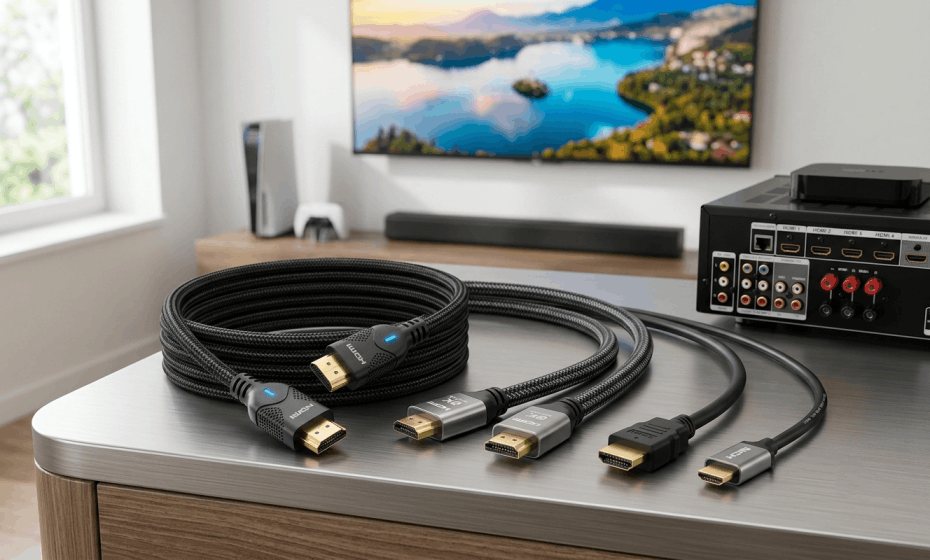
The data transmission rate, or data transfer speed, is expressed as the amount of data carried per second (gigabits per second or Gbps), and there are four commonly recognized categories of HDMI cable in terms of data transmission rate:
Advertisement
Normal HDMI Cable
Can only achieve up to 1080i or 720p resolution at a bandwidth of approximately 5 Gbps.
It’s a bit old for modern, but could be perfect for older equipment.
High-Speed HDMI Cable
Supports 1080p and can support 4K at lower refresh rates (up to 30Hz), bandwidth of approximately 10 Gbps.
Premium High-Speed HDMI Cable
At approximately 18 Gbps, for 4K video at 60Hz, and supports HDR.
Meets the needs of most common uses.
Ultra High-Speed HDMI Cable
The current top tier with up to 48 Gbps, 8K at 60Hz, 4K at up to 120Hz and all of the features of HDMI 2.1 including VRR and eARC.
It’s not just about purchasing the highest level of cable available, it’s about the matching. The picture will be limited by the Standard cable connected to a 4K HDR TV, and the Ultra High-Speed cable will offer no improvement over a basic 1080p TV.
HDMI Cable Certification: What Those Labels Actually Mean
If you don’t see the four speed categories, you’ll typically find certifications such as “Premium Certified” or “Ultra Certified” on the cables. The labels are not simply a manufacturer’s own performance claims they are the result of independent testing done by the HDMI organization.
Cable with the Premium HDMI Cable Certified label has been tested for performance in accordance with the Premium High-Speed specifications, including the consistent performance of 4K and HDR. The Ultra High-Speed HDMI Cable Certified designation means the cable is tested for the complete 48Gbps that is necessary for the 8K resolution and advanced HDMI 2.1 features.
These certifications are important as the categories represent the maximum possible performance, but not all HDMI cables with the same category will deliver the same performance. Two cables can be marked as “Ultra High-Speed” on the packaging, but only one can have the official certificate indicating that the cable has been independently tested to meet the specification. While uncertified cables may not be necessarily unreliable, it does provide a reassuring level of certainty over a self-reported speed rating.
Advertisement
Every certified cable also contains a unique QR code or authentication feature which can be compared to the HDMI Licensing Administrator’s database to ensure that the cable is a genuine certified cable and not a mislabelled or fake version. This can be helpful when shopping on third party marketplaces, as there is a higher risk of mislabelling than if shopped directly from the retailer.
When you’re making an ordinary purchase, the speed category can be sufficient. For setups that have a high cable count or long cable runs, or those with expensive displays or high-end gaming consoles, opting for a specific certification label (not just a category name) is an extra measure of assurance that the cable will function as stated.
HDMI 2.1 vs. HDMI 2.0
For basic HDR, 4K resolutions at 60Hz are still the predominant standard and sufficient for conventional viewing.
With HDMI 2.1, 4K can be supported at 120Hz, 8K supported at 60Hz, Dynamic HDR, VRR and eARC for Dolby Atmos and similar audio formats.
Advertisement
A caution: An “HDMI 2.1” that’s not always meant to indicate that all of the features in the specification are being supported. Don’t assume the version number is sufficient; look for particular features.
Understanding Resolution and Refresh Rate
Resolution is the amount of pixels that are shown (1080p, 4K, 8K).
Refresh Rate: The number of times the image updates in a single second (HZ) – the higher the refresh rate the smoother the motion, particularly in gaming and sports.
Each cable requires sufficient bandwidth for both, consider how often you want to refresh, NOT how many megapixels you need.
Advertisement
The basics of ARC and eARC, and why they are important for audio.
With ARC, a single HDMI cable can deliver audio from TV to soundbar or receiver, eliminating the need for an audio cable.
The full uncompressed format, such as Dolby Atmos, is supported by eARC which is part of HDMI 2.1.
For audio equipment with eARC support, a High Speed or Ultra High Speed cable will provide true benefits to you.
Does Cable Length Affect Performance?
Yes, somewhat. On longer runs, signal degradation becomes more an issue, especially for high bandwidth 4K/8K signals. Standard length for living rooms is not a problem, but if installing in wall, check for a CL2 or CL3 rating, which indicates that the cable is rated for fire-safety applications in wall.
Advertisement
Do High-Quality HDMI Cables Make a Difference?
Typically, no; analog signals have a variety of subtle differences in quality, while digital signals either do or do not. If a cable has the bandwidth and certification requirements of your system, a low cost cable will do the same as a high cost cable. A better build quality will contribute to durability and protection on long runs, but for most connections, speed tier will be the more important factor than price.
A Quick Checklist Before You Buy
Identify the maximum resolution and refresh rate your devices support.
Check whether your setup needs HDMI 2.1 features like VRR or eARC.
Pick a cable tier that matches those requirements don’t over- or under-buy.
Measure the distance needed and factor in in-wall rating if relevant.
Focus on specifications, not price, when comparing cables.
Final Thoughts
Choosing the right HDMI cable comes down to understanding what your devices are capable of and matching that to the appropriate cable tier. A cable that meets your actual technical needs will deliver the same picture and sound quality as one costing several times more the goal is compatibility, not extravagance.
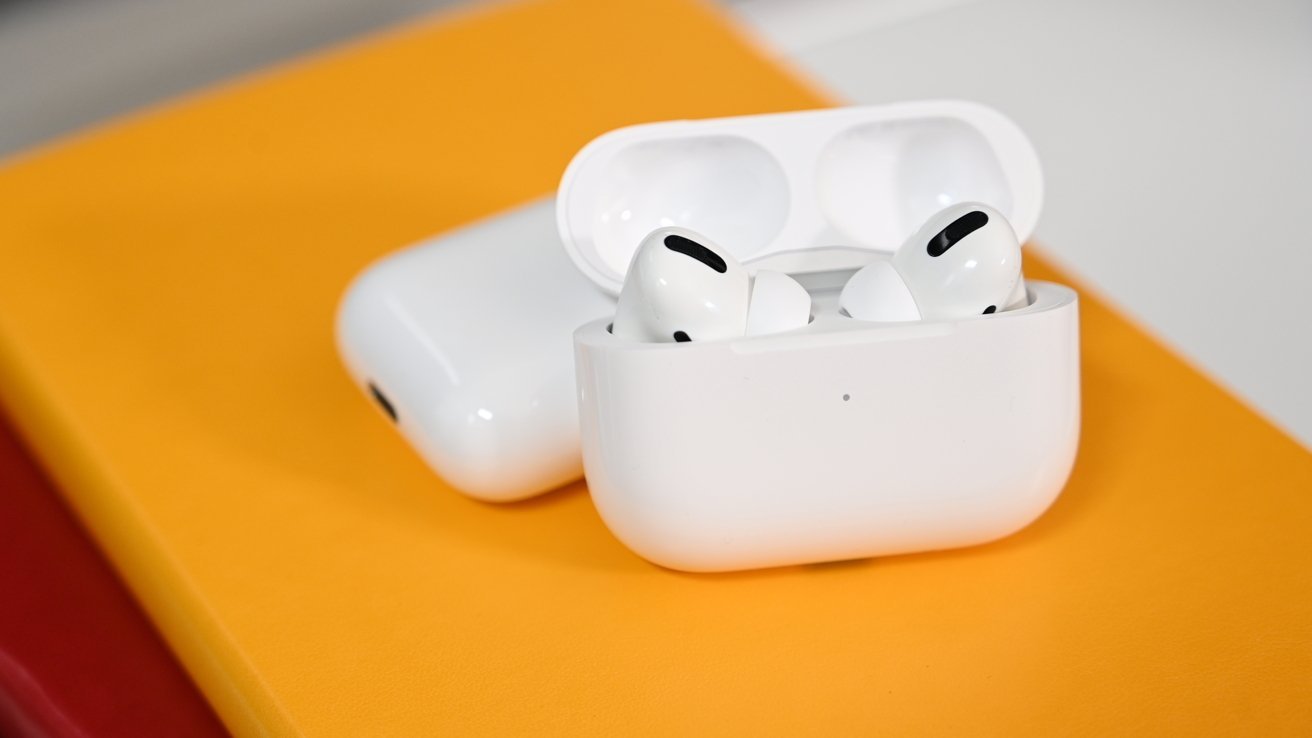
Apple has released a new firmware developer beta build for AirPods and AirPods Pro, preparing the personal audio devices for upcoming iOS 27 changes.
Apple periodically updates the firmware of its accessories and peripherals to account for new features being added to its operating systems. With iOS 27, macOS 27, and others undergoing testing, that same process also happens for firmware updates.
Tuesday’s new firmware, build 9A5314b, is for the AirPods 4, AirPods Pro 3, and AirPods Max 2. The firmware is only available to developers, not to the general public.
The firmware can be downloaded by using the AirPods with an Apple device running iOS 26 or later, iPadOS 26 or later, or macOS 26 or later. There is an option under the AirPods settings interface to enable beta firmware installation.
Advertisement
After enabling it, the update process happens automatically, while recharging and within range of the host device.
Audio changes
While Apple doesn’t state what the firmware is for, it is almost certainly going to enable Apple’s personal audio devices to work properly with changes in its 27-generation operating systems.
Those changes include a redesign of the AirPods settings submenu, including easy-to-read labels and groupings similar to other Settings elements.
A new customizable EQ is also on the way, found under Settings, AirPods, Audio and Routing, then Equalizer.
Advertisement
Apple Watch users will also be able to use Find My to track down a pair of missing AirPods Pro. Lastly, for AirPods Pro 3, the heart rate tracking will now sync with GymKit on supportive exercise equipment.
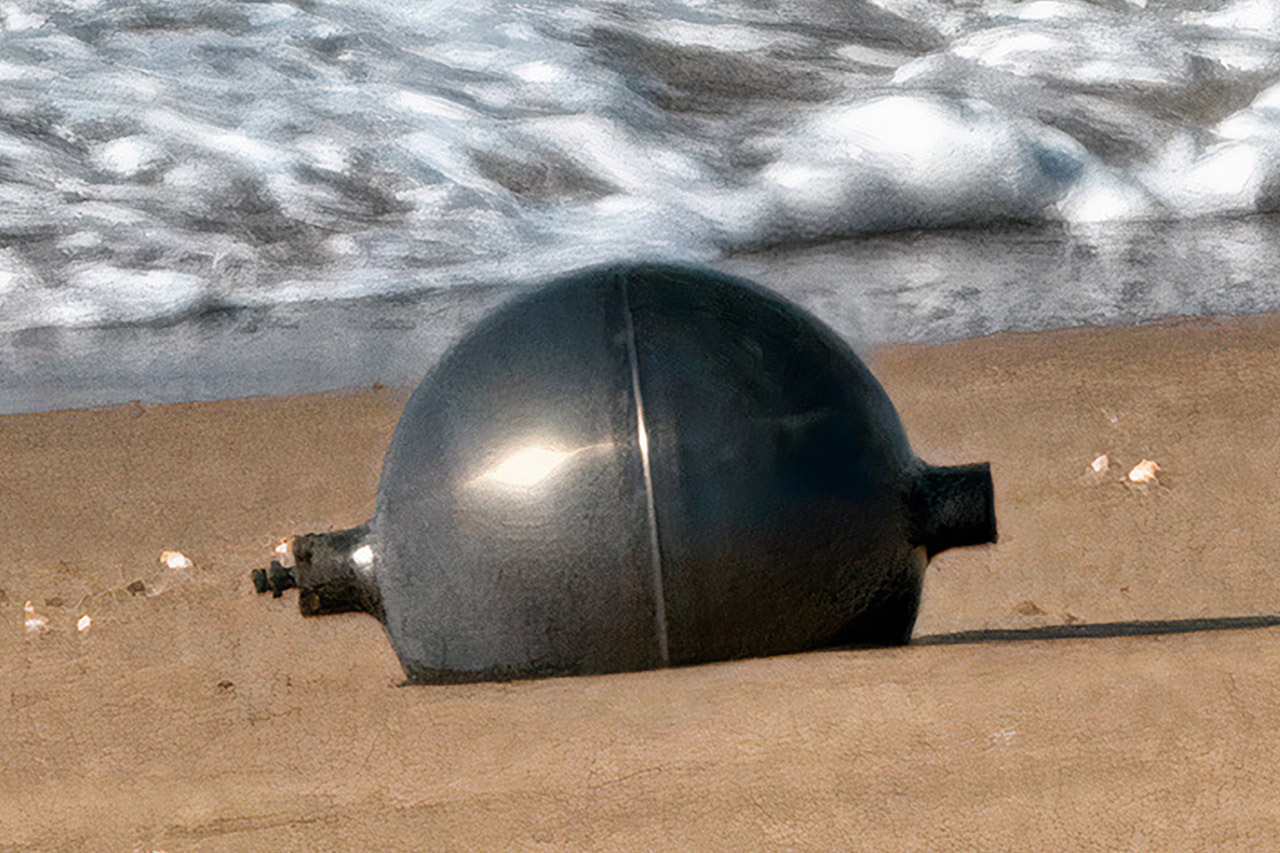
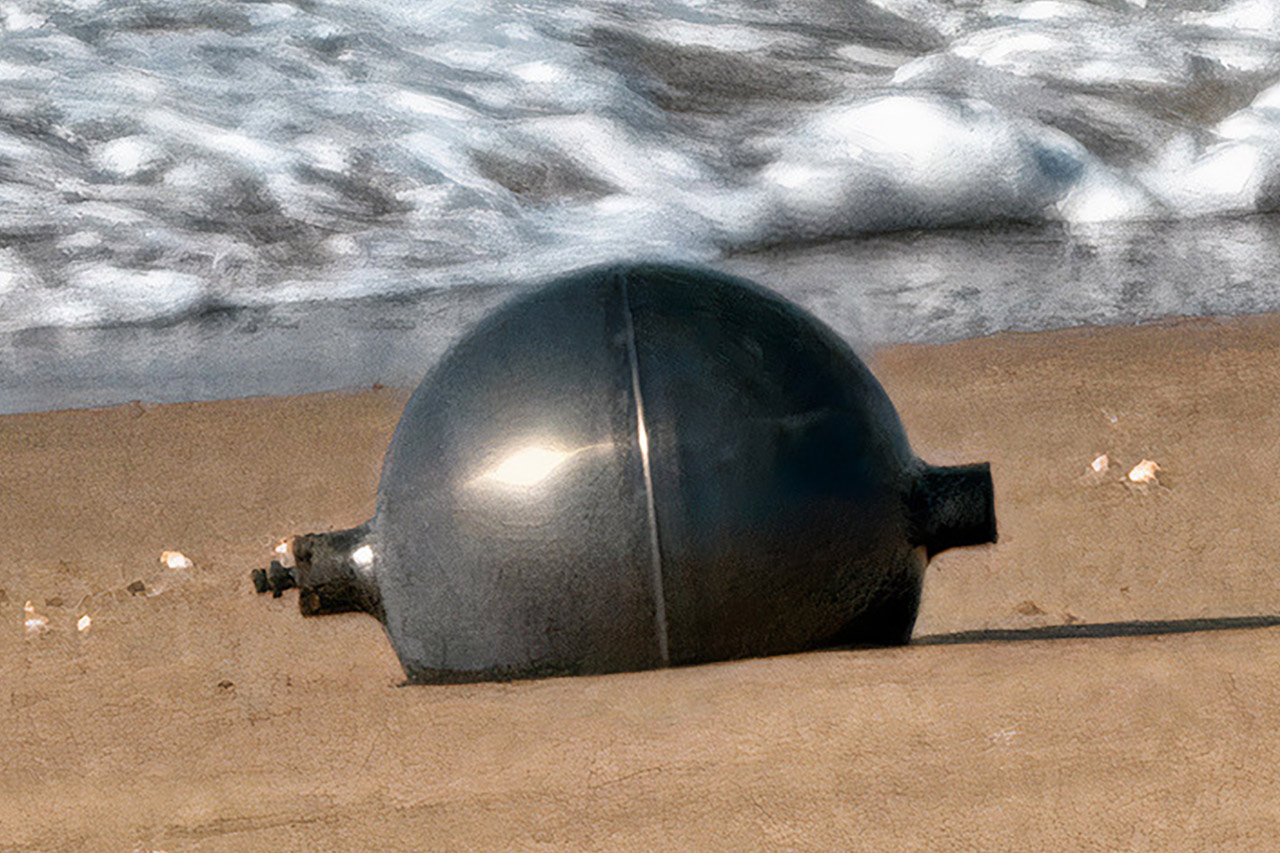
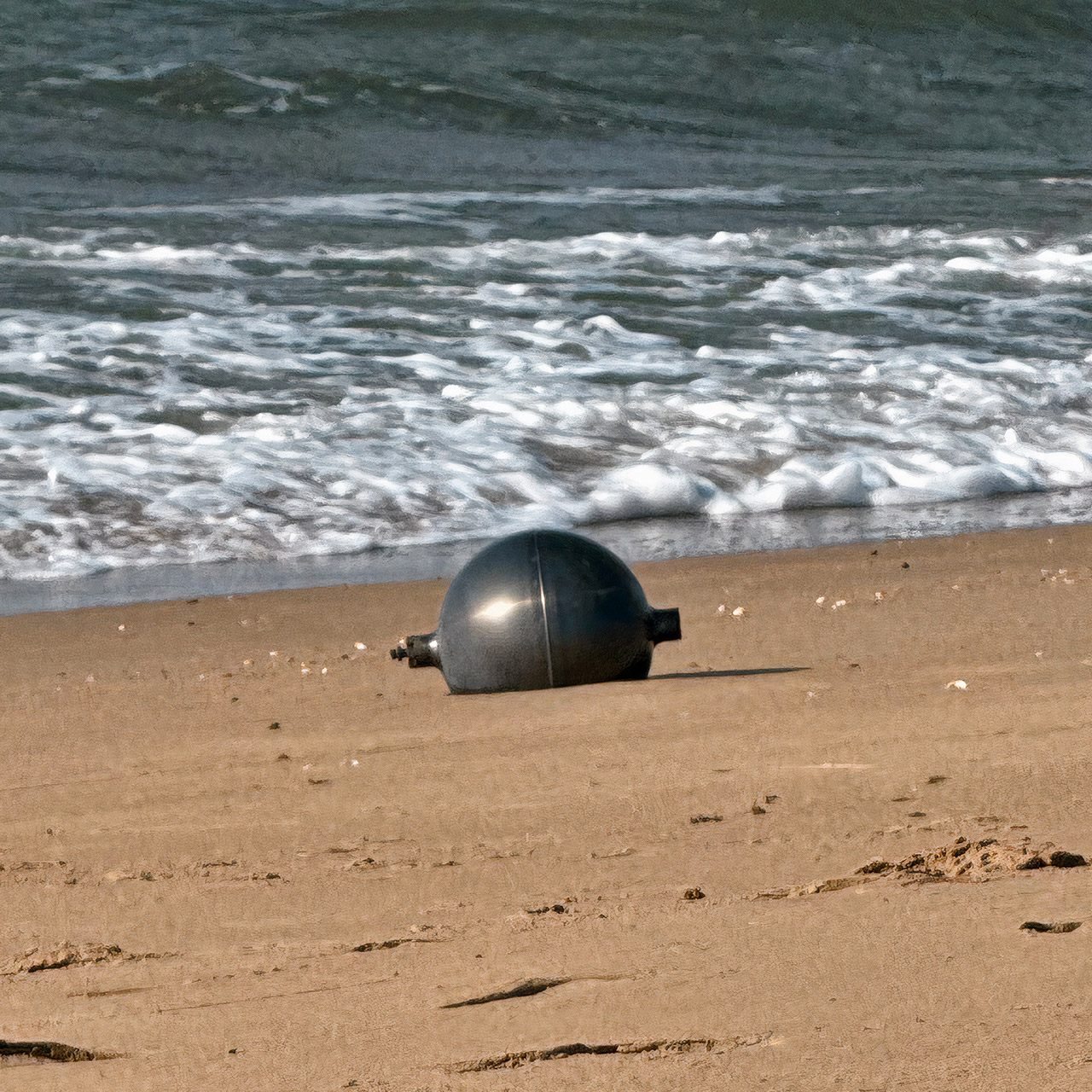
Photo credit: Australia Space Agency Over the weekend, visitors wandering along Australia’s Forrest Beach, just north of Townsville, came across something pretty unusual. A host of shining, metallic spheres began washing up on the beach, attracting attention due to their unique shapes and fittings in an area of the coastline where little else happens. Six of these appeared on Friday, Saturday, and Sunday, each almost twice the size of a basketball.
The news of the discovery spread quickly throughout the normally calm community, and before long, Queensland officials and police had established 50-meter safety zones around each of the orbs to keep everyone safe. The men in the big, heavy suits entered and began cleaning up the debris, depositing it into large bins, while they searched for any rocket chemicals that could cause problems. Researchers eventually concluded that the spheres were safe to be around.
NASA rocket model kit – Launch into a creative project with the LEGO Icons NASA Artemis Space Launch System model building project for adult space…
What’s in the box? – This creative building set includes everything you need to craft a multistage rocket with 2 solid-fuel boosters, an Orion…
Features and Functions – This NASA-themed rocket model features retractable launch tower umbilicals, rocket support and crew bridge, detachable…
The Australian Space Agency arrived to take a closer look, and their researchers compared the shape, material, and construction of these orbs to every spacecraft component they could find, quickly concluding that these were essentially pressure tanks holding fuel or gases under extreme pressure to help the rocket lift off the ground and into the atmosphere. The agency has already determined which launch it most likely came from, and they are working with other countries to validate the exact rocket and who shot it.
Apparently, these small orbs serve as pressure tanks, keeping the propellants or oxidizers at the proper pressure so that the engines can fire properly as the rocket takes off and zooms across space. They’re rather well protected by thick walls and strong metals that can withstand the heat of re-entry, while the lighter pieces blast away. Over the next two days, ocean currents brought them closer to the Queensland shore.
Similar fragments have already been found on the beach, including an Indian rocket component discovered in Western Australia in 2023, and parts from NASA’s Skylab space station landed in the same state in 1979. Even with all of the new launches taking place across the world, it is extremely rare to locate parts of re-entry gear on land since, let’s be honest, the majority of it breaks apart or splashes into the water. When it comes to dealing with space trash, Australia follows the usual international guidelines. The components that survive re-entry are kept by the country that launched the rocket, and the government must request their return. [Source]














.png)






































You must be logged in to post a comment Login