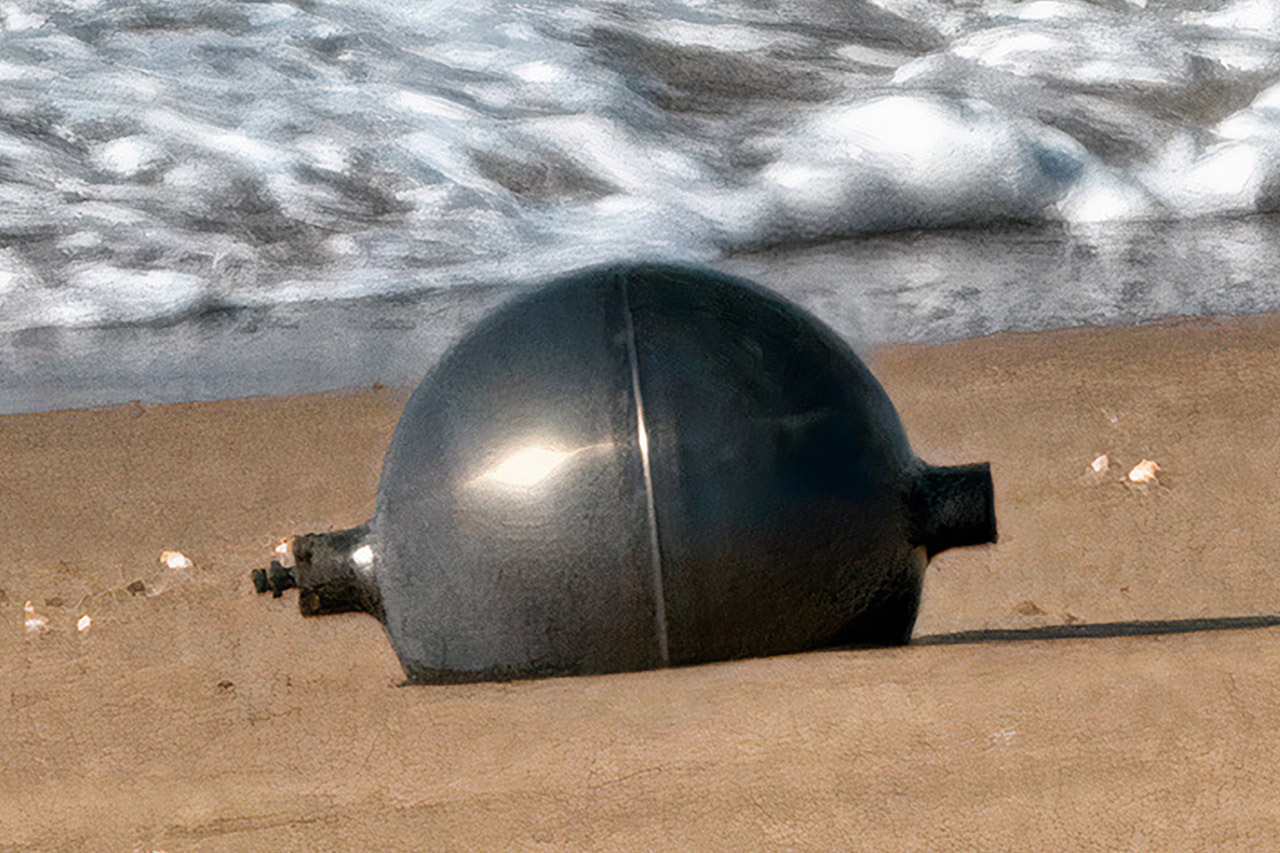
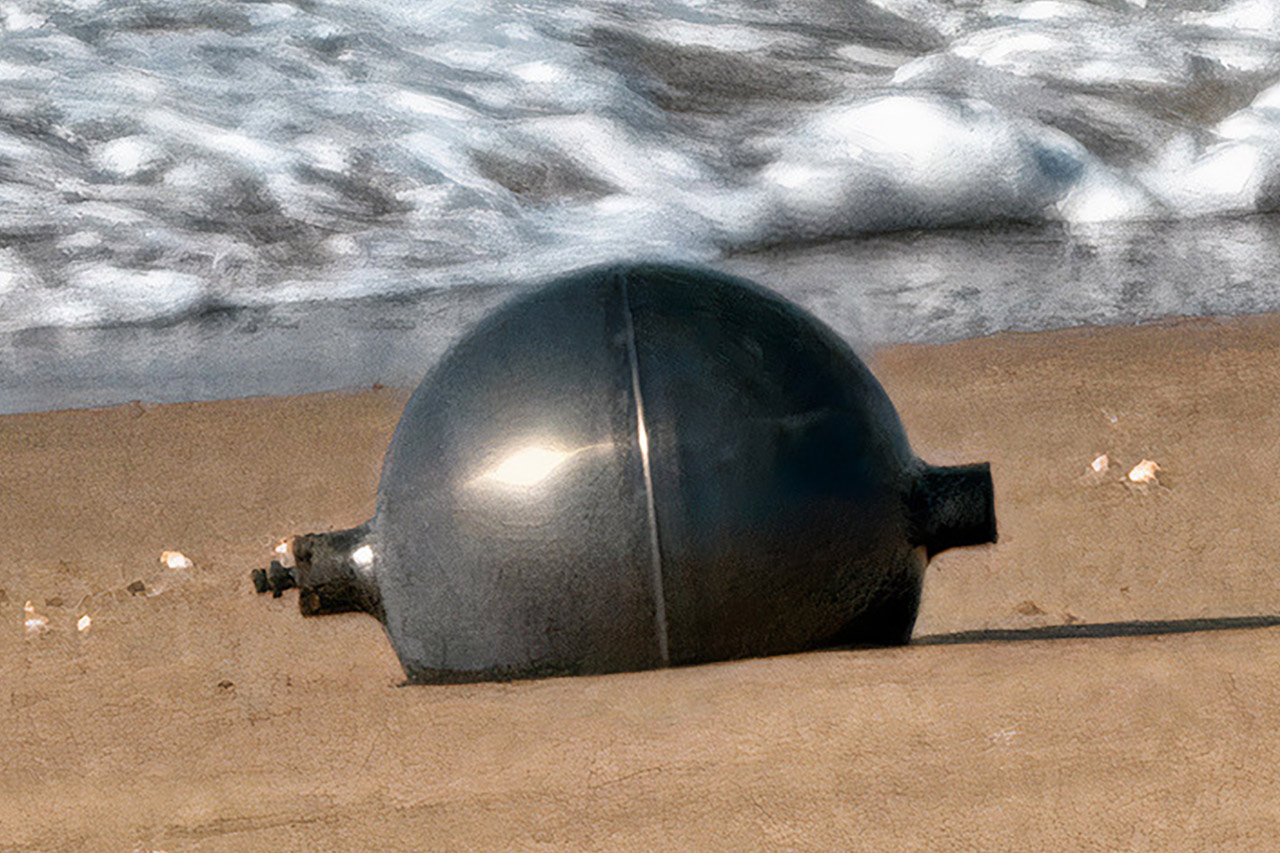
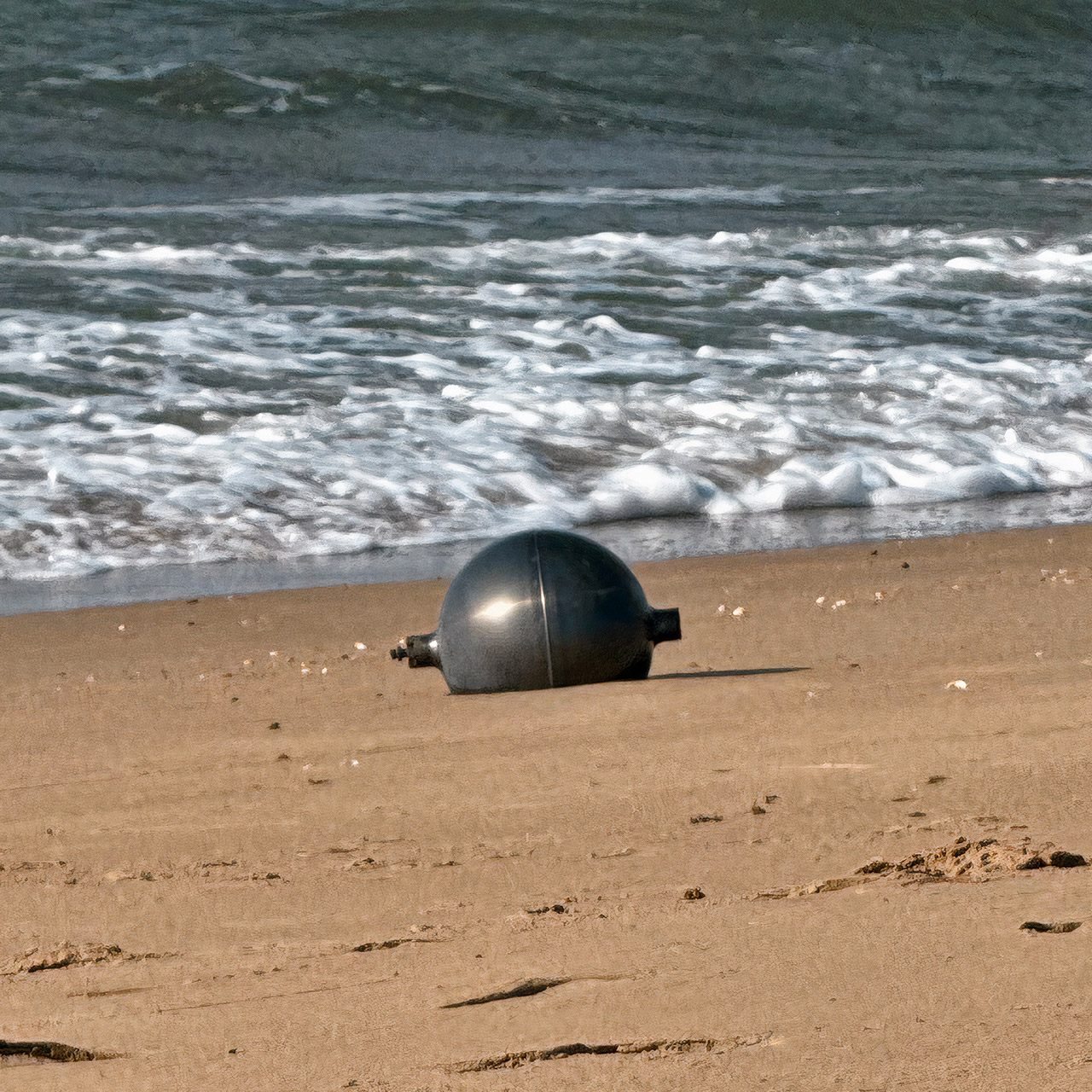
Photo credit: Australia Space Agency Over the weekend, visitors wandering along Australia’s Forrest Beach, just north of Townsville, came across something pretty unusual. A host of shining, metallic spheres began washing up on the beach, attracting attention due to their unique shapes and fittings in an area of the coastline where little else happens. Six of these appeared on Friday, Saturday, and Sunday, each almost twice the size of a basketball.
The news of the discovery spread quickly throughout the normally calm community, and before long, Queensland officials and police had established 50-meter safety zones around each of the orbs to keep everyone safe. The men in the big, heavy suits entered and began cleaning up the debris, depositing it into large bins, while they searched for any rocket chemicals that could cause problems. Researchers eventually concluded that the spheres were safe to be around.
NASA rocket model kit – Launch into a creative project with the LEGO Icons NASA Artemis Space Launch System model building project for adult space…
What’s in the box? – This creative building set includes everything you need to craft a multistage rocket with 2 solid-fuel boosters, an Orion…
Features and Functions – This NASA-themed rocket model features retractable launch tower umbilicals, rocket support and crew bridge, detachable…
The Australian Space Agency arrived to take a closer look, and their researchers compared the shape, material, and construction of these orbs to every spacecraft component they could find, quickly concluding that these were essentially pressure tanks holding fuel or gases under extreme pressure to help the rocket lift off the ground and into the atmosphere. The agency has already determined which launch it most likely came from, and they are working with other countries to validate the exact rocket and who shot it.
Apparently, these small orbs serve as pressure tanks, keeping the propellants or oxidizers at the proper pressure so that the engines can fire properly as the rocket takes off and zooms across space. They’re rather well protected by thick walls and strong metals that can withstand the heat of re-entry, while the lighter pieces blast away. Over the next two days, ocean currents brought them closer to the Queensland shore.
Similar fragments have already been found on the beach, including an Indian rocket component discovered in Western Australia in 2023, and parts from NASA’s Skylab space station landed in the same state in 1979. Even with all of the new launches taking place across the world, it is extremely rare to locate parts of re-entry gear on land since, let’s be honest, the majority of it breaks apart or splashes into the water. When it comes to dealing with space trash, Australia follows the usual international guidelines. The components that survive re-entry are kept by the country that launched the rocket, and the government must request their return. [Source]
For more than four decades, the U.S. Navy’s Ticonderoga-class guided missile cruisers have served as some of the fleet’s most capable surface combatants. Designed around the powerful Aegis Combat System, they have played a central role in protecting aircraft carriers, defending against enemy aircraft and missiles, and coordinating complex naval operations around the globe. However, after years of service, the Navy has begun retiring the aging class, with more ships scheduled to leave service over the remainder of the decade.
The challenge is that the Navy has no direct replacement waiting in the wings. Unlike previous generations of warships that were succeeded by clearly defined new classes, the retirement of the Ticonderoga-class vessel leaves a capability gap the service is still working to address. While several options are being considered including relying more on destroyers, no single platform is expected to immediately assume every mission currently performed by these cruisers. That uncertainty has made the future of the Navy’s large surface combatant fleet one of the most closely watched questions in modern naval planning.
Advertisement
Why the Ticonderoga fleet is disappearing
The Navy originally built 27 Ticonderoga-class cruisers beginning in 1983 at a cost of roughly $1 billion each. Over time, however, age has taken its toll. 20 of these ships have already been decommissioned while the remaining seven vessels are expected to retire by 2030 as maintenance costs continue to rise and the ships become increasingly expensive to modernize. Although several cruisers have received temporary service-life extensions, Navy officials have made clear that the class is approaching the end of its operational life.
Advertisement
That doesn’t mean the Ticonderoga-class cruiser has become ineffective. On the contrary, they remain among the Navy’s most capable air-defense platforms. The problem is that keeping 40-year-old warships mission-ready has become increasingly difficult and costly, particularly as newer technologies continue to emerge. Earlier efforts to modernize portions of the fleet ultimately proved unable to keep every cruiser in service. As a result, retirement has become less about combat capability and more about balancing readiness, maintenance demands, and long-term fleet modernization.
Advertisement
What could replace the Ticonderoga-class?
For now, the Navy’s most practical solution is not another cruiser at all. Instead, many of the Ticonderoga’s responsibilities are expected to transition to the latest Flight III Arleigh Burke-class ships such as the USS Ted Stevens sporting the DDG (guided missile destroyer) classification. Equipped with the advanced SPY-6 radar and the latest version of the Aegis Combat System, these new destroyers can assume many of the fleet air-defense and command responsibilities traditionally handled by the retiring cruisers. While they cannot replicate every capability of the Ticonderoga class, they provide the Navy with an effective bridge while longer-term plans continue to develop.
Looking further ahead, the Navy expects its future DDG(X) program to eventually become the next generation of large surface combatants. However, that program remains years away, with the first ships not expected until the early 2030s. Until then, the Navy finds itself in the unusual position of retiring one of its most successful classes of warships without a direct one-for-one successor ready to take its place. Upgraded destroyers may help fill much of the gap, but exactly what ultimately replaces the Ticonderoga-class remains an open question — one that will shape the future of the U.S. surface fleet for years to come.
Ordinary glass stops electricity cold. It lets light through and blocks current completely. That combination works fine for windows and phone screens, yet it leaves the material useless as any kind of switch. A thin coating of indium tin oxide changes the rules. The layer is only 10 to 300 nanometers thick, nearly invisible, and still conductive enough to carry current from one edge of a small pane to the other.
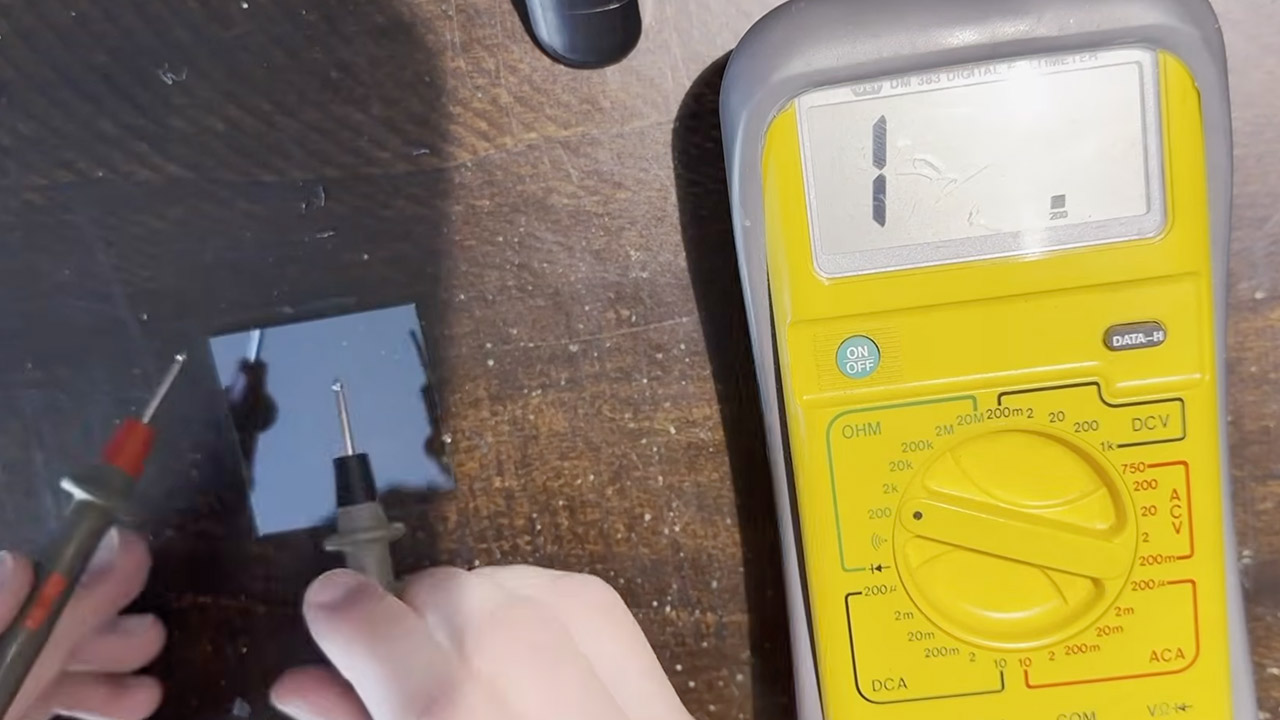
Sokol ordered a pack of this coated glass for another project and decided to use a couple of the sheets as buttons. He took his multimeter to test the coating and was thrilled to see that it performed as predicted. One side of each sheet measured around 20 ohms, but the uncoated side remained nice and open, as you would expect from plain glass. The conductive coating is only applied to one side of the glass, so bear this in mind when using it.
Flip Into Play – Flip down, ready to play. Take a call or reply to a message mid-game—just flip it open without unplugging. The hinge is rated for…
Vertical Mobile Gaming – Designed around portrait play, FlipPad brings a classic handheld feel to your phone. Perfect for retro games and…
USB-C Plug and Play – Built-in USB-C connection makes setup simple and direct. Plug in and start playing instantly. The USB-C port is rated for over…
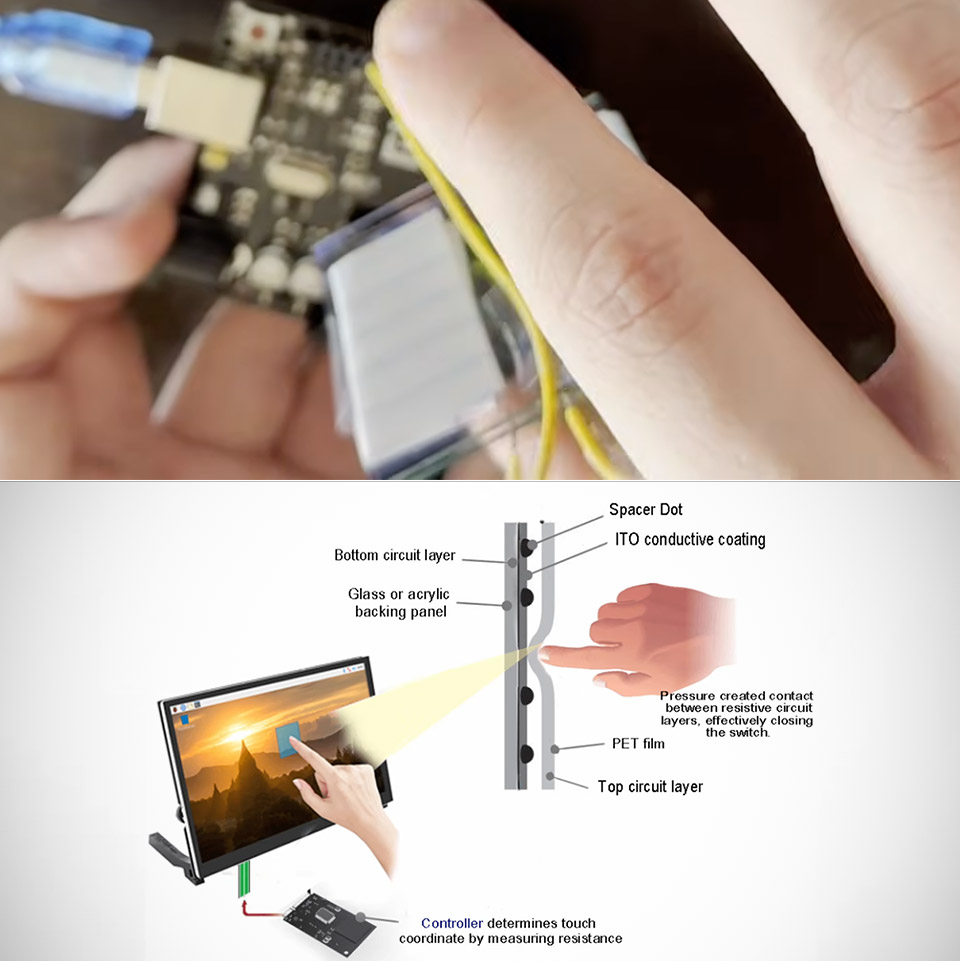
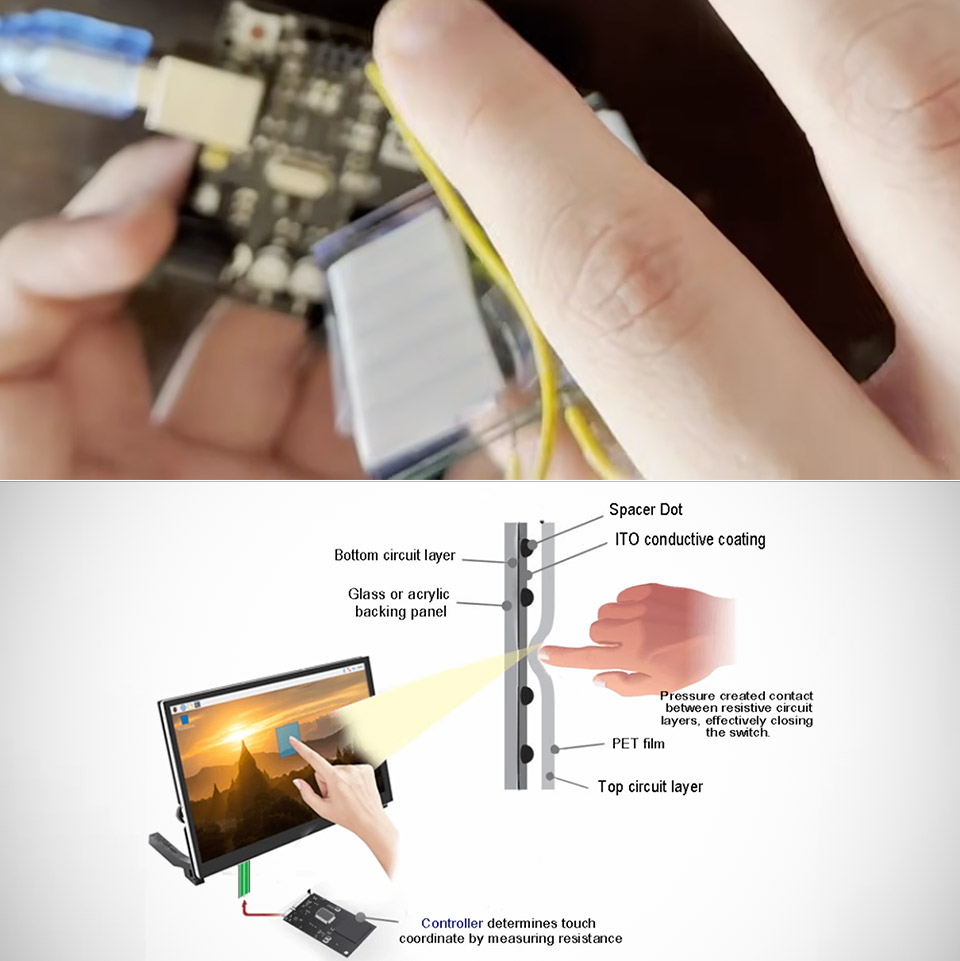
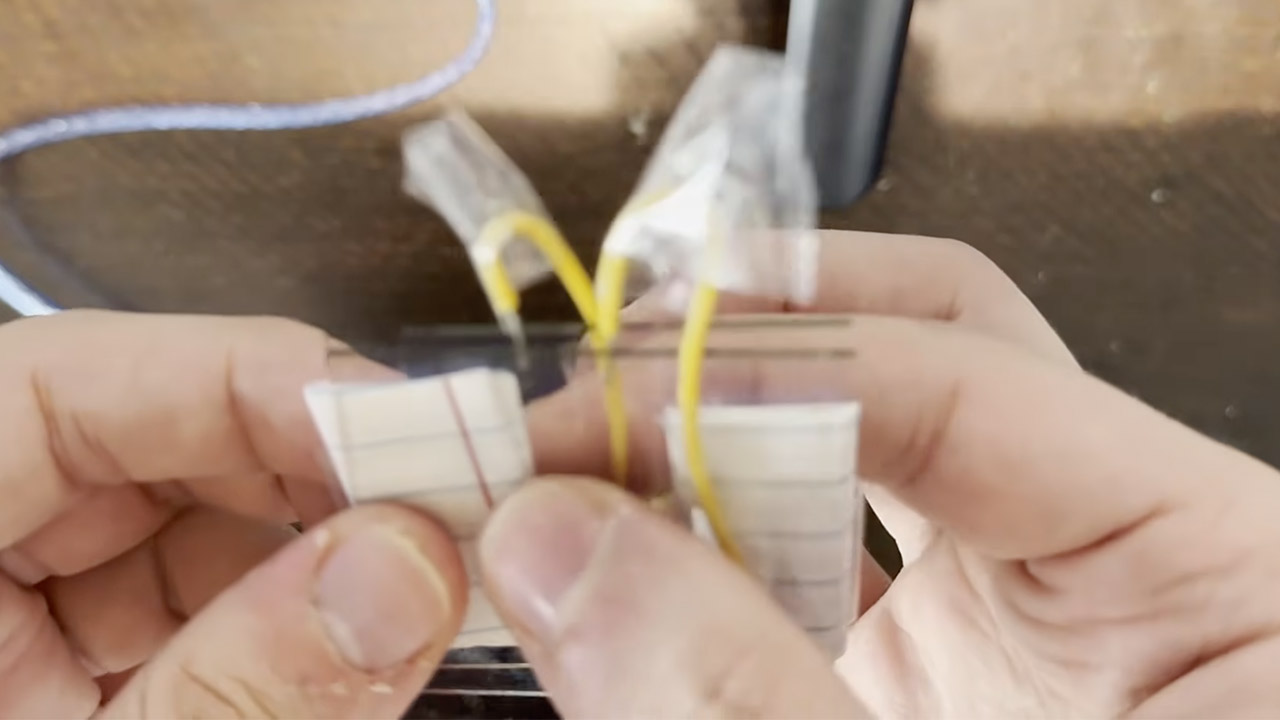
The button is made up of two of these panes, with their coated sides facing each other and a thin sheet of paper between them as a spacer. One pane is grounded, while the other is connected to an Arduino pin equipped with a pull-up resistor that keeps the pin at 5 volts even when the circuit is open. As long as the two conductive layers are apart, the pin reads high and the built-in LED remains dark; however, press down on the stack, and the glass flexes just enough for the coatings to make contact. Then current begins to flow, the pin drops to zero, and the LED illuminates immediately.
That’s the entire system, so no fancy sensors or drivers, just the old ITO film. The paper spacer keeps the surfaces from touching until you exert pressure, at which point the glass springs back and breaks contact when you let go. The whole thing is a little rudimentary and rough around the edges, but it does the job.
The same two sheets can do more than simply turn on and off. You can use the same concept to create a resistive touchscreen by applying a voltage gradient to one of the coatings, with half at 5 volts and half at zero. When the other coating makes contact, it detects the voltage where it touches and transmits it to an analog pin, which is where you receive your readout indicating where the push occurred. You can add another gradient to the opposite layer, resulting in two-dimensional placement. Sokol points out that a more polished version of this would require copper tape for consistent edges, external resistors for stable gradients, and larger glass, but the core concept is already present in the simple button. [Source]
I’ve been a fan of PSB Speakers since I first auditioned the brand’s M4U 2 headphones back in 2013. Over its 50-plus years of operation, the Canadian outfit has consistently shown a knack for squeezing big sound into small packages. Never was that more apparent than in 2023’s Alpha iQ, a surprisingly versatile pair of powered bookshelves that pull more dynamism and musical expression out of a four-inch woofer and micro-tweeter than they have any right to.
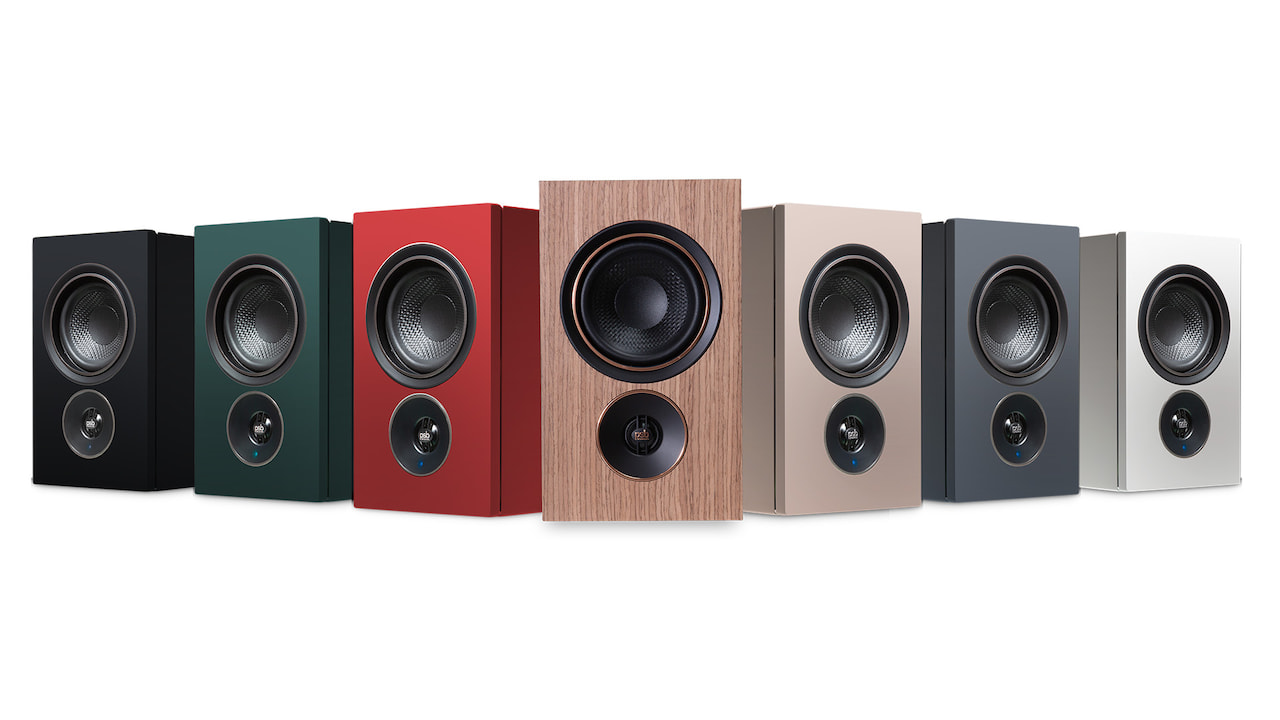
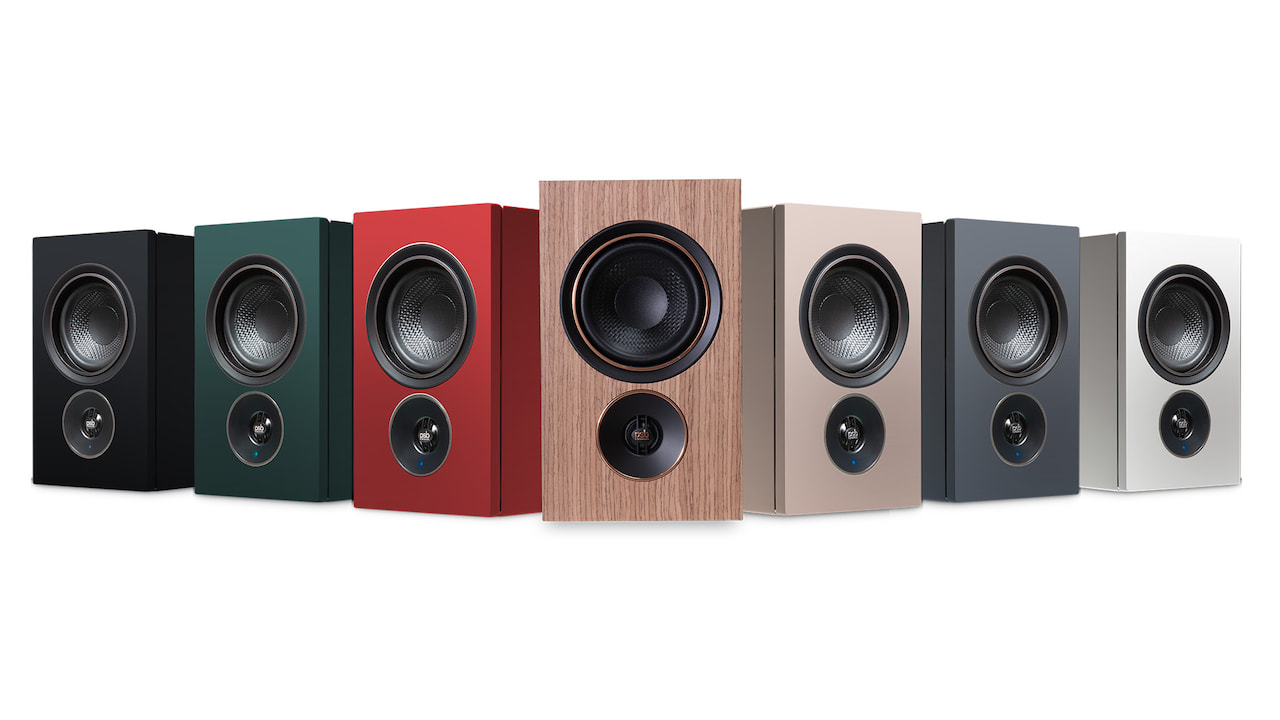
The follow-up iQ1 and iQ2 stand firmly on the Alpha’s shoulders, offering similarly potent musicality and connectivity packed into miniature cabinets, with a woofer-tweeter stack swap that always throws my brain for a loop. The new pairs also share the Alpha’s flair for stylish minimalism, especially the pricier iQ2, which adds upgrades such as a wireless connection between the speakers and a more refined veneer in colors like Ember Red and Sandstone Beige.
PSB Speakers iQ2 Colors
While the iQ’s hardware is all PSB, daily operation relies heavily on BluOS’s powerful software, which handles virtually all controls and audio settings, provides access to more than 20 streaming services, and even supports multiroom audio with rock-solid stability. Unfortunately, I can’t say the same for the iQ2’s HDMI eARC TV connection, which proved doggedly inconsistent throughout my review. The iQ2 worked great for other use cases, but without a stable way to connect seamlessly to a TV in today’s market, the package falls well short of its promise.
Related Reviews:
Setup: Long Haul Connection
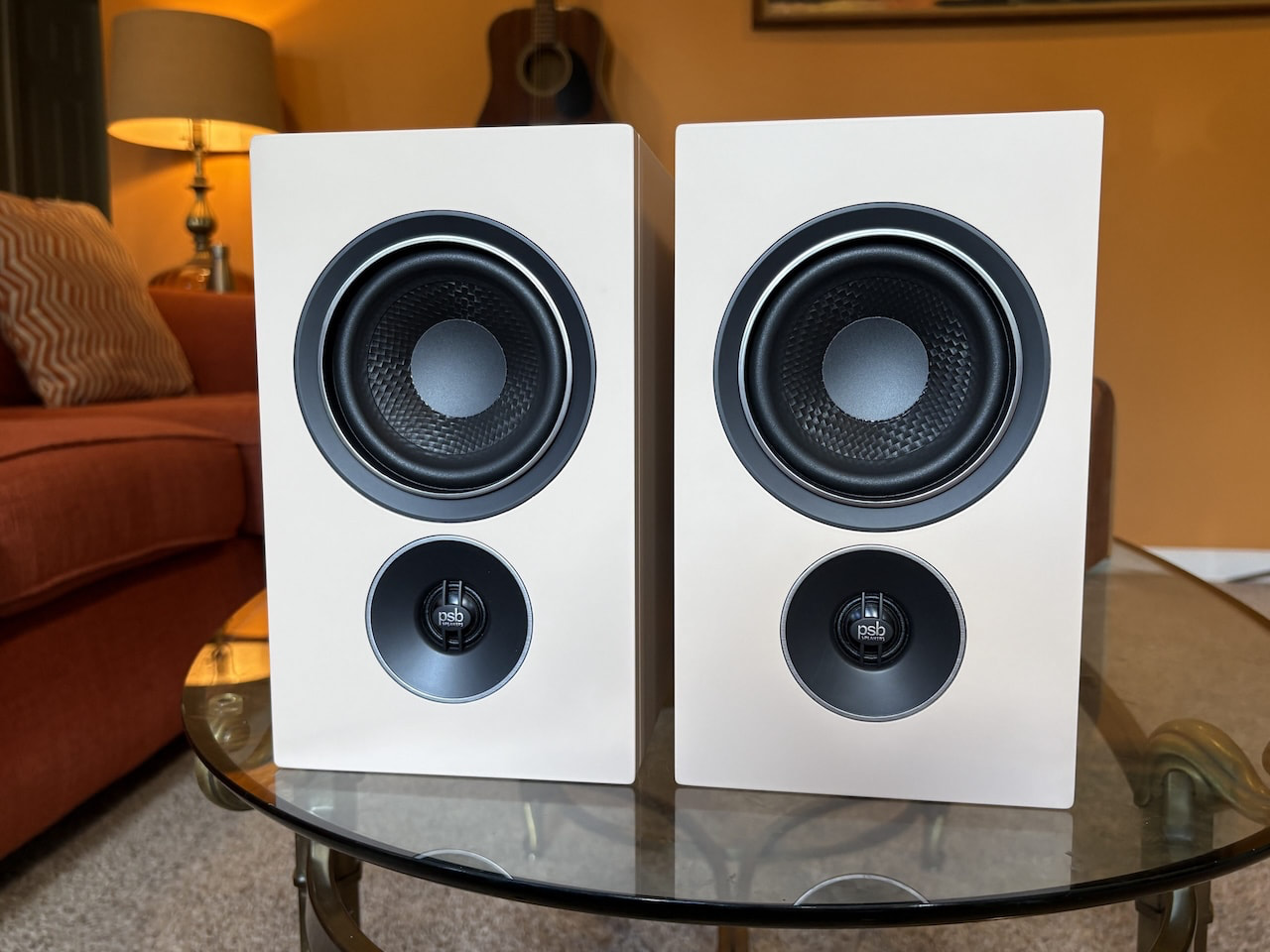
PSB Speakers iQ2 (front)
Setting up the iQ2 isn’t a major hassle for tech-savvy users, but it’s not the push-button start you’ll get from multi-room setups like Sonos, recent app issues notwithstanding. PSB’s quick guide lays out a three-step process that includes simply plugging in the speakers and downloading the BluOS app for Wi-Fi setup, but the online manual hints that Ethernet is the best option where available. As if that were an omen, the iQ2 balked at my network’s 5 GHz Wi-Fi band during an AirPlay connection, leading to multiple stallouts.
Swapping to my split-off 2.4 GHz band fixed the issue, prompting an update and a paint-drying 20 minutes or so of total connection time between the speakers. The process included blasting surprisingly loud music from the primary speaker, which houses the connection hub, to designate it as the right or left channel, but I appreciate the ability to swap the orientation as needed. Users with particularly troublesome rooms should note that the iQ2 doesn’t offer dedicated calibration.
Advertisement
Controls and Usability: HDMI Issues
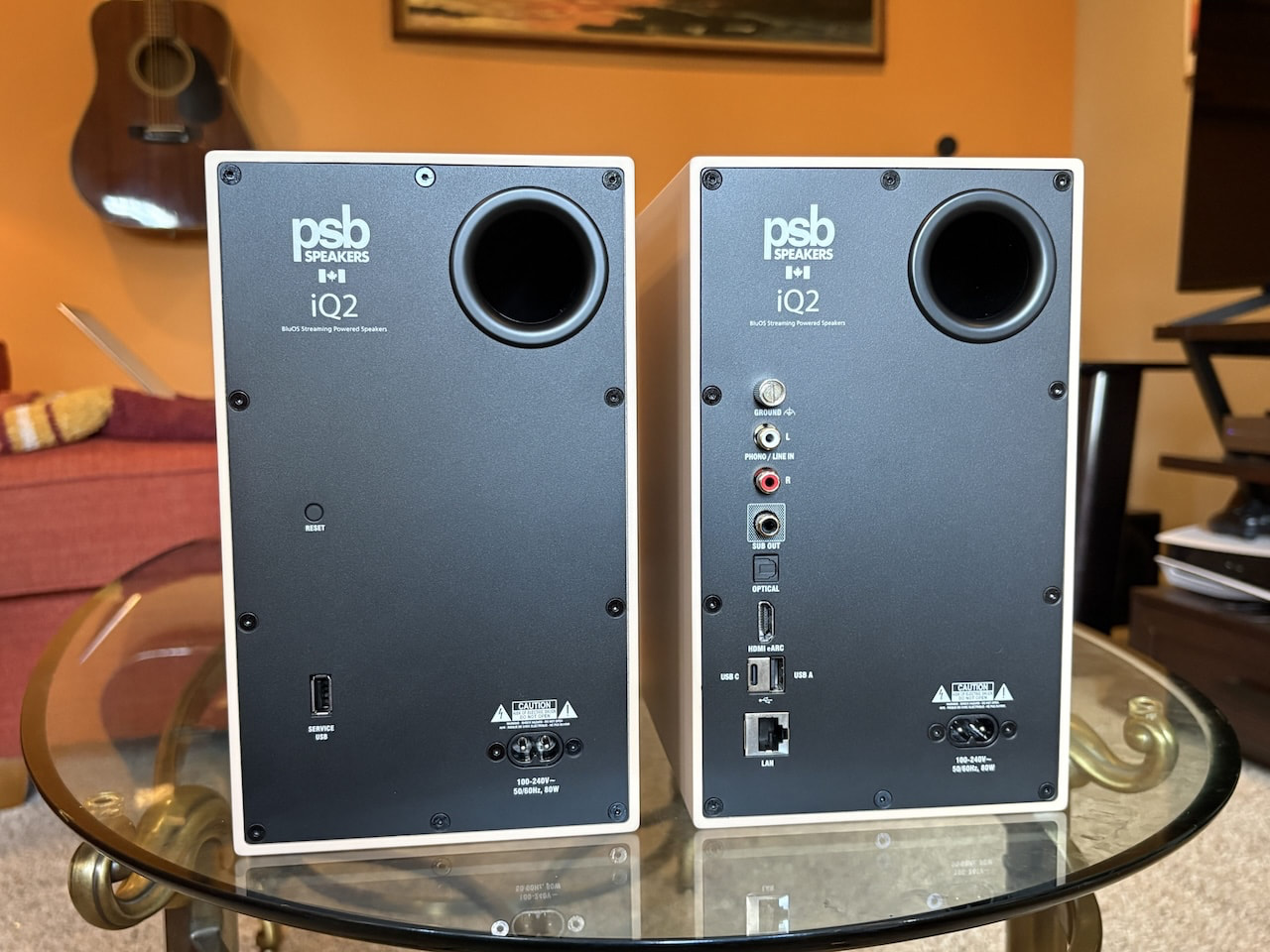
PSB Speakers iQ2 (rear)
There’s also a learning curve for those new to BluOS, or even those like me who’ve been away for a few years. For example, going into the Players tab to find the iQ2’s settings unlocks basic playback controls and options like adding a subwoofer, but there’s no way to select an input. For that, you’ll need to consult the Music tab, which includes all physical inputs, input settings such as allowing the speakers to switch automatically when a signal is detected, and access to BluOS’s 20-plus streaming services and internet radio.
It feels overengineered for a pair of speakers, but that’s because the BluOS ecosystem is designed to let you group the iQ2 with more than 60 other compatible players throughout your home from brands like NAD, DALI, and Bluesound. The app is stable and thoughtful, with features such as haptic volume control, but I wish PSB included a physical remote for quicker access to inputs and other settings. Call me old-fashioned. You do get a few controls on top of the primary speaker, including play/pause, volume, and two programmable presets.
Controls aside, the iQ2’s hardware troubles were the real frustration. HDMI eARC is designed to provide a seamless, high-resolution connection between your TV and speakers, but the iQ2’s implementation was a mess. I experienced audio cutouts across multiple TVs, including instances where the TV recognized the speakers as a source but played no sound. PSB Speakers’ PR team told me this is a known issue and pointed to a firmware fix, but it didn’t work for my review pair.
Design & Features: Elegant Minimalism
PSB Speakers iQ2
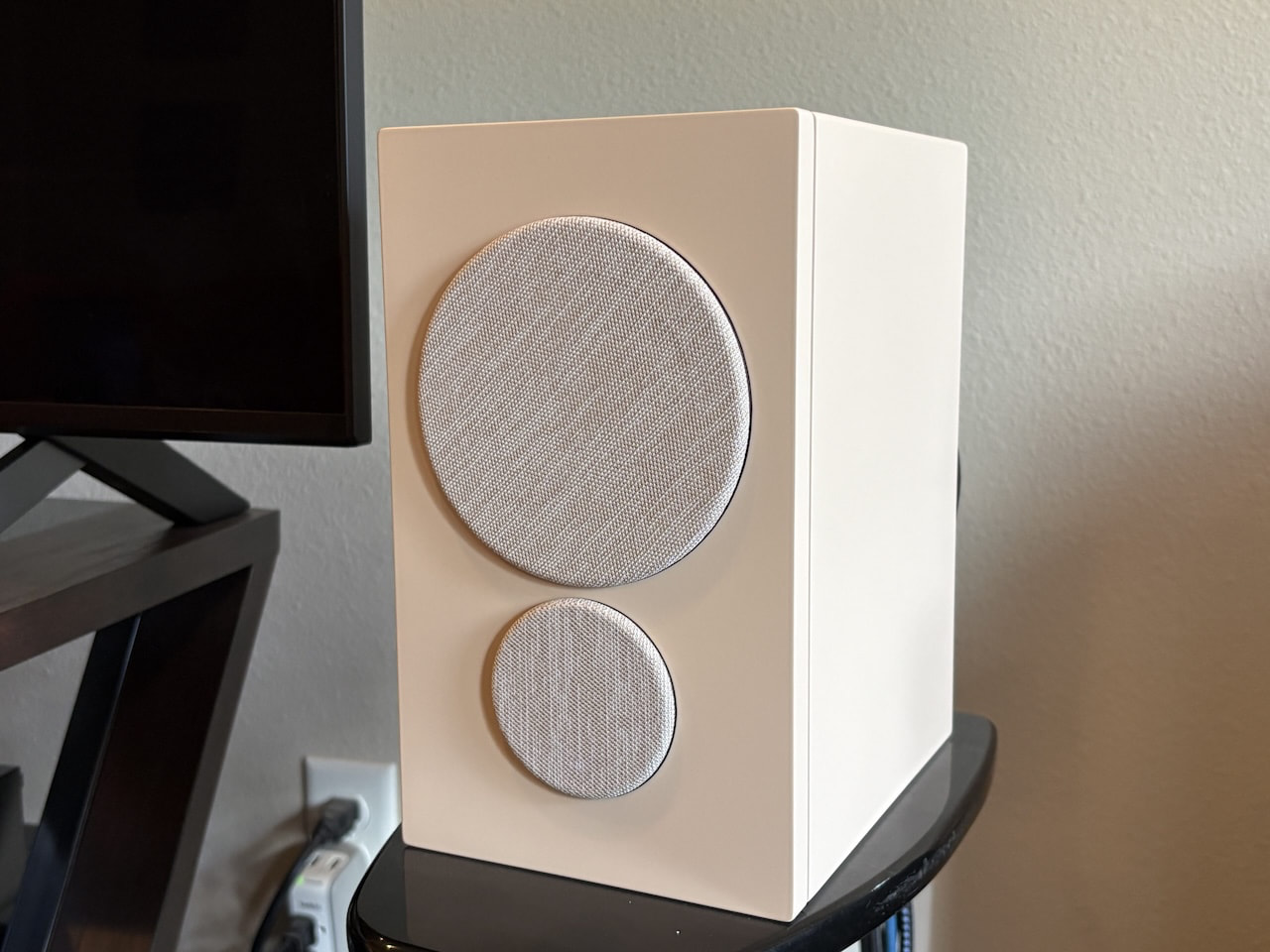
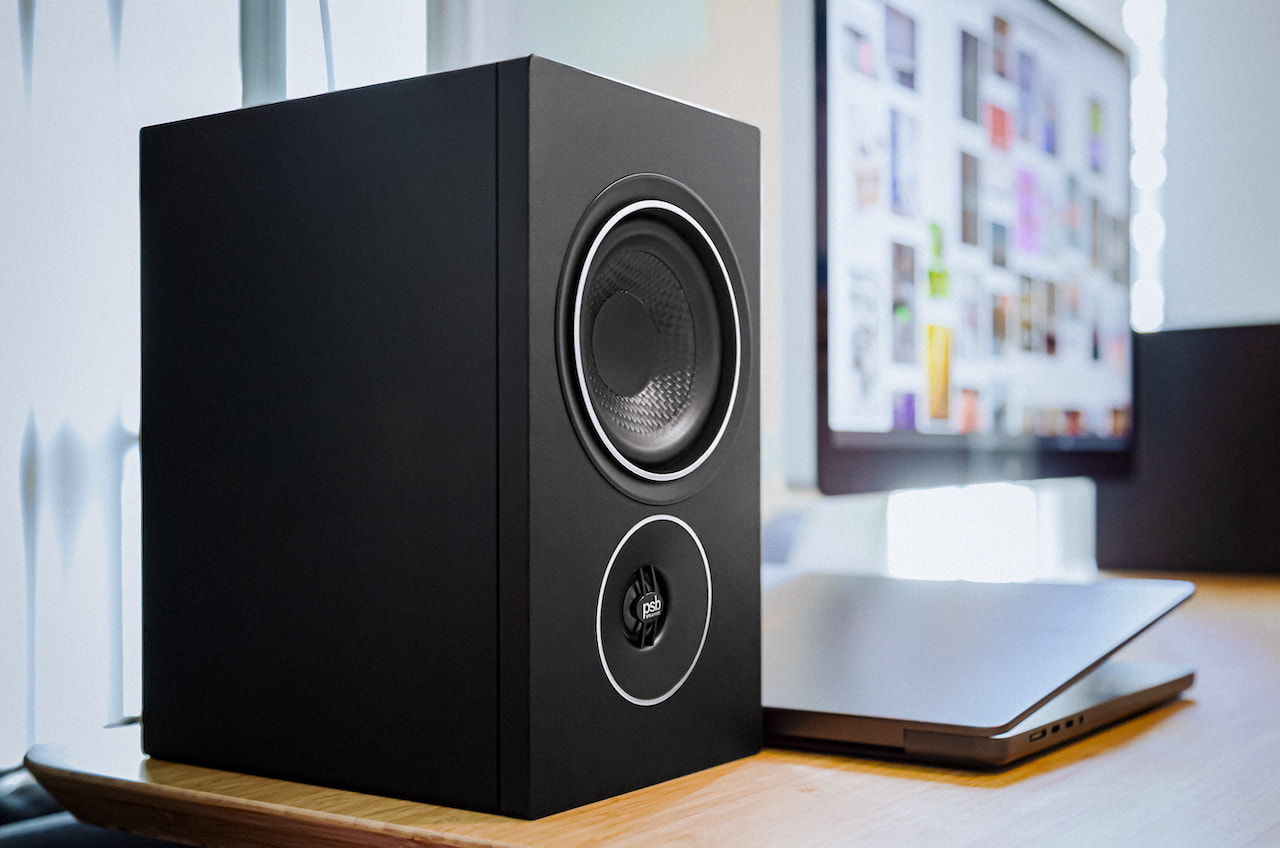
The iQ2 make a great first impression, especially in the Sandstone color I reviewed, looking both stylish and understated. The cabinets feel well built, and their fingerprint-resistant veneers ensure that the refined aesthetic holds up. There’s solid heft to the compact cubes, though at under 10 inches tall, they looked almost comically small against the 75-inch Micro RGB TV I first paired them with, especially with their little magnetic hats that serve as acoustic grilles.
That said, the iQ2’s wireless connection means they can easily adapt to larger screen sizes, and there’s nothing comical about their 270 watts of Class D amplification. That works out to 90 watts for each speaker’s four-inch polypropylene mid-bass driver and 45 watts for each 0.75-inch aluminum-dome tweeter. PSB claims a frequency response of 65 Hz to 20 kHz, and the speakers dive toward that lower number with more authority than their size suggests.
A column of inputs on the back of the Primary speaker includes HDMI eARC, optical, USB-C playback, USB-A for external drives, a dual line-in/MM phono RCA input adjustable in the app, Ethernet, and a subwoofer output.
Advertisement
Advertisement. Scroll to continue reading.
Streaming support includes Spotify Connect, TIDAL Connect, Qobuz Connect, and Apple AirPlay 2. You’ll find many more options in the BluOS app, including Deezer, Napster, and iHeartRadio, to name a few, but not Apple Music. Other streaming options include access to internet radio stations, local network files at up to 24-bit/192 kHz, and Bluetooth with aptX Adaptive.
Listening: Mighty Minis
PSB Speakers iQ2
I started testing the iQ2 via lossless Spotify Connect and was quickly reminded why PSB holds a special place in my mind’s cluttered library of audio brands. A bit like Canadians themselves, the iQ2 are unassuming at first, but digging deeper reveals an effective mix of confidence and depth. Their sound signature is clean, smooth, and effortlessly natural, with accurate stereo imaging and more bass than you’d expect from micro speakers.
With the iQ2 playing in the background as my pre-toddler arrived home from daycare, I was constantly distracted by their penchant for drawing out instrumental timbres, from satiny brass and woodwinds to gritty electric guitars and poppy percussion. They do a good job of leaning into different genres, with enough finesse to give each instrument its own space, from the dual vocals in Too Short’s “Money in the Ghetto” to the cacophonous horns in The Beatles’ “Good Morning.”
The warm midrange can make more laid-back mixes sound a little flat, but its keener topside adds some excitement to higher-register instruments and effects without feeling sharp or brittle. The sweet yet pointed treble makes easy work of speedy transients like the reverberating synths in Sweet Spirit’s “Baby When I Close My Eyes,” fluttering the effect back and forth across the stereo image with a deft touch that stands out more readily than in options like SVS’s Prime Wireless Pro.
Advertisement
Bass is firm and well-rounded, if not particularly revelatory, until you remember the size of the drivers, which outflex just about any four-inch woofers I’ve encountered, including options like U-Turn’s more rugged-sounding Ethos speakers. Even some larger 5.25-inch drivers provide less mid-bass punch. It’s enough groove to be tantalizing, but if you’re after raw emotional power, you’ll need a subwoofer. As usual, my SVS 3000 Micro was a great pairing, firming up the lowest frequencies with richer musicality and some sledgehammer punch while opening more space in the upper registers.
Turning to vinyl with my Orbit Theory turntable, the speakers showed off solid detail and dynamics on my go-to albums, such as Brubeck’s Take Five. Paul Desmond’s buzzy sax in “Blue Rondo” was rendered with keen precision, pulling out most of his breathy overtones. Joe Morello’s stick work had an expressive touch in moments such as his multitone tom play during the title song’s drum solo. I was less impressed when moving to the iQ2’s internal MM phono stage, which was both quieter and less precise than the Theory’s internal preamp, though that seems to be a common issue with powered speakers in this class. You can often do better with an external preamp.
Moving to TV and films, when the HDMI eARC port was working, the iQ2 proved more than up to the task of providing exciting sound effects at the sides of the stereo image and clear dialogue at the center, elevating the subtle diction in well-mixed productions like House of the Dragon. Again, the speakers brought a natural liveliness to effects such as stone hallways and bridges, crackling fires, and the woody creak of the show’s many oversized doors.
PSB Speakers iQ1
The Bottom Line
On paper, the PSB iQ models, especially the iQ1, provide a ton of value. You’ll spend a lot more to get the pricier iQ2’s wireless connection and fancier cabinets, but both models offer impressive connectivity and features matched by surprisingly good performance, especially in smaller rooms.
Advertisement
If not for the HDMI eARC issues I encountered, either pair would be a top pick for those after a compact system with connectivity to spare, not to mention the ability to group it with other systems in the BluOS family. As it stands, I can’t recommend the iQ1 or iQ2 until PSB Speakers can ensure simple, reliable connections for all your components.
For those seeking alternatives to the cheaper iQ1, I recommend SVS’s steadfast Prime Wireless Pro, which offers well-rounded sound and great connectivity in sleek, piano-gloss cabinets. If your budget is more in line with the iQ2, KEF’s LSX II provides similarly stylish design and colorways, along with even better sound performance. Neither pair offers multiroom capabilities, however, so if that’s important, you may need to look elsewhere or wait for PSB to provide a real fix.
Pros:
Smooth and natural tonal balance
Good instrumental separation
Powerful bass for their size
Stylish, well-built cabinets in multiple colors
Loads of connectivity options
BluOS multi-room audio support
Cons
Setup and basic control could be simpler
HDMI eARC cutouts are a mess
Upgraded cabinets and wireless connection are pricey
The AI boom made GPUs famous. The dull chips that wire thousands of those GPUs together are quietly becoming just as valuable.
Xsight Labs, an Israeli chipmaker, has raised more than $300 million at a $2.8 billion valuation, it said on Thursday. Fidelity led the round. That is more than five times what the company was worth in 2021, a jump it made in a single year.
Xsight builds the plumbing of the AI data centre. Its two chips, the E1 processor and the X2 switch, shuttle data between servers, memory and networks. As models grow, moving that data has become one of the industry’s tightest bottlenecks, and the wiring between GPUs is now a prize of its own.
Taking on Nvidia’s other monopoly
Nvidia does not just sell the GPUs. It also dominates the networking layer, which it bought its way into with Mellanox. Xsight’s pitch is the opposite of that closed kit.
Advertisement
Its chips are open and programmable. They run standard Linux and SONiC, and operators can rewrite the X2 switch in software after it ships, instead of waiting for new silicon. The market wanted “a high-performance alternative to closed, legacy architectures,” said chief executive Yossi Meyouhas. Xsight joins a wave of startups chipping at Nvidia’s grip on the AI stack.
Already in orbit
This is not a lab project. Several global network operators have picked Xsight’s silicon, including SpaceX’s Starlink. Last week its processors passed a test aboard SpaceX’s new Starlink V3 satellites, Globes reported. Programmable chips suit space, where engineers fix a fault in software rather than swap out the hardware.
The selling point is efficiency. The E1 is the first 800-gigabit data processor to ship, and runs under 75 watts. The X2 moves 12.8 terabits a second while drawing 40% less power than older switches. As AI’s electricity bill balloons, every watt saved is a pitch.
A serial exit machine behind it
The pedigree helps. Veterans of EZchip, the Israeli networking firm Mellanox bought in 2016, founded Xsight in 2017, CTech reported. Its chairman is Avigdor Willenz, a serial chip entrepreneur who has sold past companies to Marvell, Amazon and Intel.
Advertisement
His backers followed him in. The round drew Fidelity, Intel Capital, T. Rowe Price, Battery Ventures and Valor Equity Partners, among others. The cash will fund the next chip generations and a bigger sales push at Tier-1 hyperscalers.
The money pouring into AI infrastructure is no longer chasing only GPUs. It is chasing everything around them, from power stations to the wires in the rack. Xsight is betting the winners in networking will be the open ones.
This week on the GeekWire podcast: Microsoft and Amazon both reported quarterly numbers, and both stocks rose on cloud results that beat expectations. Is all that AI spending paying off? And in related news, Microsoft sees a rare annual headcount decline, hitting product R&D hardest.
Plus: Satya Nadella builds a Power BI dashboard out of an analyst’s research report, and touts it on the earnings call to make a bigger point. Jeff Bezos names Amazon’s chips business as the long-awaited fourth pillar. And AI House managing director Jacob Colker delivers a much-needed pep talk for Seattle tech, calling on the region to recognize and build on its strengths.
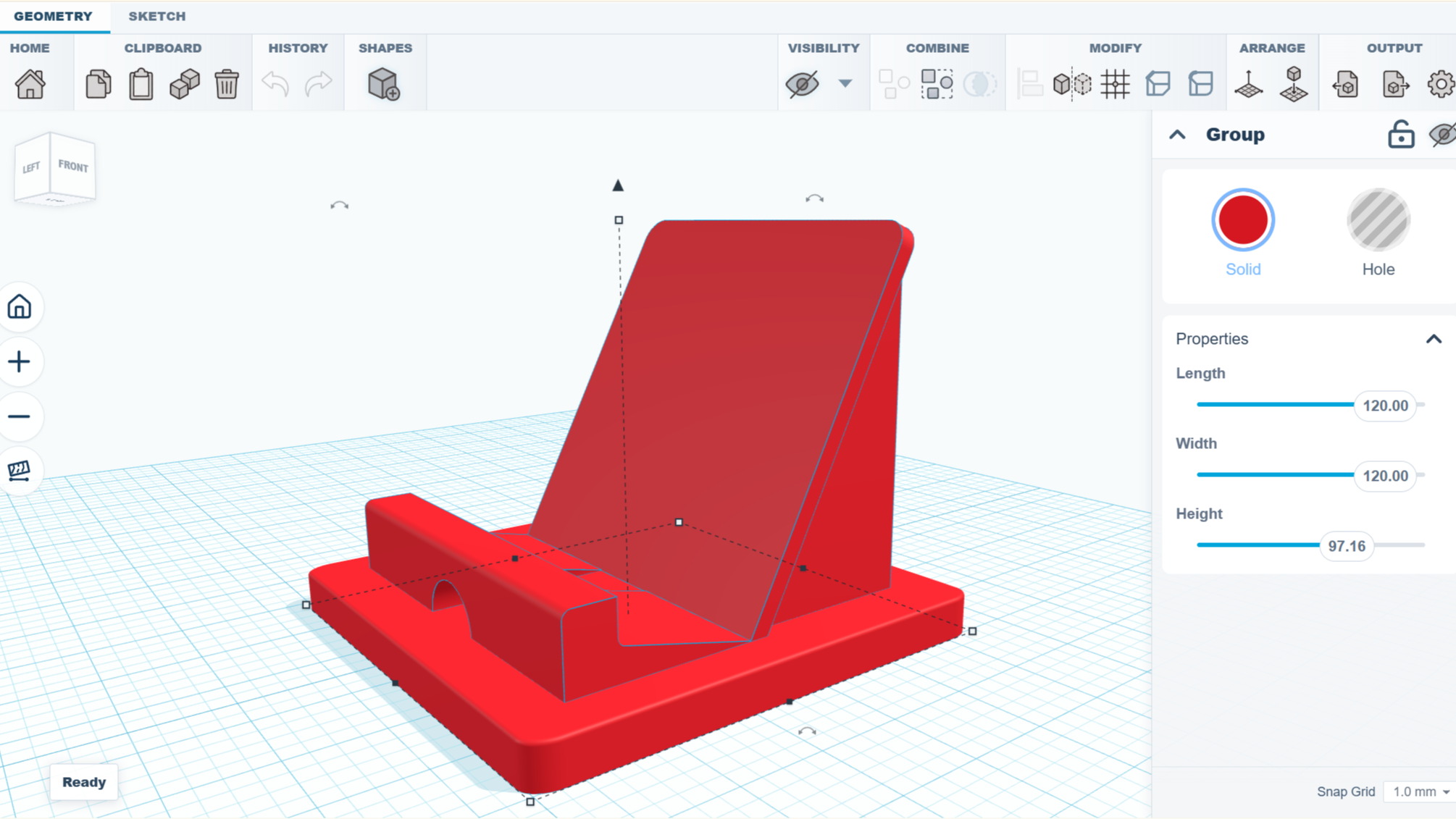
Got an idea and want to make a simple 3D model, but don’t want to install a full-fledged CAD modeling suite and queue up a few hours of tutorial videos? Check out SketchForge, a 3D modeling program that runs locally in one’s browser without any need for an account, or external services.
SketchForge takes a more WYSIWYG approach to 3D modeling by making it easy to put an object together with primitive shapes, and making it extra easy to specify dimensions and align parts with one another. There’s also a sketch feature that makes it easier to create more complex shapes by making a 2D drawing, then extruding or revolving it into a solid. We like that it has STEP format export as an option, making it easy to import your creation into another CAD program of your choice later. Most 3D printer slicers natively support the STEP format nowadays, too.
It’s a bit reminiscent of Tinkercad in concept, but entirely local. It’s still new, but there’s a demo online that gives a good idea of its capabilities if you’d like to give it a spin.
Advertisement
We’re reminded of CaDoodle, another project that takes the “Tinkercad, but local” approach but as a standalone executable, instead of browser-based.
OpenAI CEO Sam Altman seemed excited to share what he called a “cool use case” on Friday, posting that parents could “connect your family calendars and explain your kids’ interests” to the company’s new product ChatGPT Work, then “every morning for the drive to school, have it make a podcast that talks about one kid’s soccer game that afternoon, one kid’s upcoming birthday, some news, etc.”
Altman’s post prompted lots of virtual eye-rolling, including a simple response from Alex Hirsch, creator of the animated series “Gravity Falls”: “What if you just talked to your children”?
Hirsch’s question seems to have gone even more viral than Altman’s initial post — while Altman’s comment has been reposted around 300 times and liked around 9,600 times (as of Saturday morning), Hirsch’s response has been reposted 9,000 times and received 122,000 likes.
This isn’t the first time a tech CEO has promised that AI can shield users — and specifically users’ morning commutes — from the messy realities of human experience. Last year, Microsoft CEO Satya Nadella said he’d stopped listening his favorite podcasts during his morning drive; instead, he asked an AI chatbot about those podcasts.
Advertisement
Altman’s post also echoed comments he’s made about parenting in the past, most notably when he appeared on “The Tonight Show with Jimmy Fallon” and declared, “I cannot imagine having gone through figuring out how to raise a newborn without ChatGPT.” (Though he was also quick to acknowledge, “Clearly, people did it for a long time, no problem.”)
Getting parents on-board seems to be a priority for OpenAI, which recently posted a job listing for a product manager with experience building trust-sensitive consumer experiences for parents and families.
But while the company has added safety features for parents, it also faces multiple lawsuits from parents and families alleging that ChatGPT played a role in loved ones’ delusions and suicides. (The company has said it’s “continuously improving how our models respond in sensitive interactions.”)
When you purchase through links in our articles, we may earn a small commission. This doesn’t affect our editorial independence.
Back in the day, you could just scroll the App Store, pick out an icon or two that you liked the look of, and have a new game downloaded and ready to play in just a few moments.
Ultimate Guide to Apple Arcade
(Image credit: Apple / Future)
This article is part of our Ultimate Guide to Apple Arcade: the definitive guide to everything that you need to know about the gaming service. Be sure to browse the full series here.
Advertisement
Booting them up, you’re not confronted with a 29.68GB additional download that you have to stay on one screen to complete, a wall of sketchy in-app permissions to accept, or a page demanding that you sign in with some iffy third-party account — just a neat little self-contained experience designed to help you kill a few hours on the train.
Though they seemed simple, many of the best App Store games were quietly revolutionary. Angry Birds and Fruit Ninja pioneered intuitive touch-screen controls, while Doodle Jump smartly utilized the iPhone’s accelerometer to show how hardware features could become core gameplay mechanics.
Statista estimates that there are now more than 180,000 mobile games available on the App Store. But when was the last time you installed one that felt genuinely exciting, rather than like a thinly veiled scheme to force ad views, harvest personal data, or pressure you into pricey Gacha Pulls? That’s exactly where Apple Arcade comes in.
Advertisement
Back in time
Puyo Puyo Puzzle Pop is an incredible Apple Arcade exclusive entry in the long-running puzzle series. (Image credit: Sega)
Having spent the last week diving into all 200+ of the titles available on the service, I can’t help but think that Apple’s highly curated library of mobile titles feels like a journey back in time to the App Store’s glory days.
The whole experience is completely seamless. You sign up for $6.99 / £6.99 / AU$9.99 a month and can immediately jump into browsing the games. They’re all contained in a dedicated Arcade tab in your iPhone’s App Store, so there’s no ambiguity about whether the app you’re looking at is part of the service or not.
Advertisement
Sign up for breaking news, reviews, opinion, top tech deals, and more.
Although the selection here is nowhere near as expansive as the regular games tab, it feels genuinely curated and cuts out huge amounts of clutter and spam.
No matter what you like to play, there’ll be at least a few games for you. An impressive variety of genres are represented in the catalog: there are plenty of massive role-playing games (RPGs) that you can sink hours into, be that Trials of Mana+ or Final Fantasy+, fast-paced racers such as Asphalt 8: Airborne+ and Sonic Racing, head-scratching puzzlers in Monument Valley+ and Lego Builder’s Journey, and so much more.
Jetpack Joyride 2 adds new missions, weapons, upgrades, and more. (Image credit: Halfbrick Studios)
Those iconic early mobile titles I mentioned earlier? They’re back too in new and improved forms that make them a nostalgic joy to revisit. There’s a full-on Angry Birds remake with enhanced graphics and extra levels, an expanded Doodle Jump sequel that updates the hand-drawn graphics and adds new environments, and a Temple Run successor that trades the endless format for challenging levels that are better-suited for short bursts of play.
Advertisement
The innovation of the early App Store is there too. RPG Fantasian wows with incredible art direction that sees you exploring hundreds of beautiful real-world dioramas that were digitally scanned into the game, while bonkers sports simulator What the Golf? takes full advantage of punchy iPhone haptics to add real weight to its wacky physics challenges.
No distractions
No ads makes it easier than even to lock-in in rhythm games like Taiko no Tatsujin Pop Tap Beat. (Image credit: Bandai Namco)
The games are all entirely devoid of ads and microtransactions, so you never have to deal with a frustrating splash screen or pop-up that takes you out of the action.
Advertisement
This means that most of the games will work entirely offline as well, just like they did back in the day. I had practically given up playing mobile games on my commute before getting into Apple Arcade simply because it was so hard to find titles that wouldn’t kick me out the second my train went into a tunnel.
There are no sign-in screens anywhere, and most games don’t even request permission to send push notifications. Your progress will even automatically sync to the cloud so you can continue playing on your iPad, Mac, or Apple TV when you get home.
Oh, and you don’t need to worry about your privacy in all this either. Apple says that all of the games in the service have no third-party tracking software and don’t collect any advertising data. All that, to me, is certainly worth paying for.
The PD20 combines all of Astell & Kern’s longstanding understanding of electronics and metalwork with a freshly comprehensive suite of software that makes it a formidable option for headphone use on the move. It’s not cheap and it’s not small but the performance is good enough that many people won’t care
Superb headphone performance
Well-made and superbly finished
Flexible use options
Pricey
Large and heavy for portable use
Battery life in some modes is quite limited
Key Features
Advertisement
Review Price:
£1799
Storage
Advertisement
256gb internal storage expandable up to 2.25tb
DAC
Advertisement
Quad ESS DAC with twin headphone amplifier
Apps
Advertisement
Supports most major streaming services and Roon
Introduction
The market for personal audio players is a rather affair than it once was when the iPod dominated the business of listening to music on the move.
Astell & Kern has carved out a strong presence at the top of this more niche market and over the years, they have cleverly evolved their devices to be more than a portable device for use on the move.
Advertisement
The PD10 that I looked at in 2025 can deliver great performance over headphones or earphones but can then be parked in its supplied cradle and used as a superb source for your main system as well. It’s clever thinking and the PD10 is a superb product.
You might reasonably assume that a device called the PD20 would be more of the same; tweaked and improved but intended to offer the same dual use concept. The reality though is a bit different.
Advertisement
While Astell & Kern hasn’t abandoned the idea of being able to do more than use the PD20 out and about, it has revisited the functionality needed to make the PD20 a more effective partner for this primary role. As I shall cover, this includes functionality that hasn’t appeared on any Astell & Kern device up to this point as well.
Advertisement
As such, we need to see if this change in direction has yielded positive results and if the not inconsequentially expensive PD20 is the device you’ll want to turn to when it’s time to leave the house.
Price
The PD20 is available in the UK for £1,799. The dealer network isn’t huge but it covers most areas of the country and it is possible to purchased online if you are particularly remote. In the USA, it is available for $1,970 USD while in Australia, it will be $2,649.
Something that is important to stress is that the PD20 is not a replacement for the PD10. The two units will be sold together and this reflects the differences in specification and intended use between the two different models.
It’s also worth stressing that despite the higher number, the PD20 isn’t a higher specification device than the PD10 and indeed costs less.
Advertisement
Advertisement
Design
Superbly made and finished
A bit on the big and heavy side
Revised external controls
Clear and logical interface
Those of you familiar with Astell & Kern’s handiwork up to this point won’t find anything alarming about the PD20. The all metal chassis is solid, weighty (weighty enough that any of you who go in for a loose fitting garment might want to check what happens if you put it in a pocket before you head out) and finished to an immaculate standard.
There are some intriguing differences between the PD10 and PD20 though. The PD10 streamlines the controls to a row of buttons down the side. The PD20 by contrast has rather more going on in the form of both a pair of rotary controls on the top to control both tone and volume and a row of switches on the side; the functions of which we’ll cover in the specifications section.
Image Credit (Trusted Reviews)
There is no getting away from the fact that the Astell & Kern is pretty big for a ‘portable’ device. This might be better viewed as something that travels with you in a bag and, even then, it had better be a reasonable sized bag.
The upside to this is that it means that Astell & Kern is able to fit a decent sized screen which is bright and easy to read. It wasn’t too long ago that even the premium models didn’t feel as responsive and easy to use as a middling phone. This is very much no longer the case.
Advertisement
Advertisement
Image Credit (Trusted Reviews)
The interface itself is also as good as I’ve ever experienced from an Astell & Kern device. At its core is a version of Android but a great deal has been changed and tweaked by Astell & Kern to better suit its more specialised use case. Key things like swiping down to access key settings and menus has been retained though and it makes the PD20 feel wholly unintimidating to use.
Final mention has to go to the packaging too. It’s attractive, brilliantly laid out and does a fine job of making you feel like you haven’t wasted your money. You get some screen protectors included but no case which is a slight shame as I’m sure that your first scratch will be a mortifying experience.
Image Credit (Trusted Reviews)
Specifications
Limited internal memory with option to expand
Quad DAC arrangement
Adjustable amp classes
New hearing test software and EQ
Like the PD10, the PD20 offers 256GB of internal memory which, in 2026, feels a bit on the parsimonious side.
Advertisement
Yes, you can add a micro SD card of up to 2 terabytes in size and these have become more affordable in recent years but if you use Qobuz or Tidal as your main source of material (both of which the PD10 supports natively), these files can only be stored offline in the internal memory which will quickly fill up.
Image Credit (Trusted Reviews)
At the best part of two grand, 512gb doesn’t feel like too much of an ask. As well as Tidal and Qobuz other streaming services can be installed and the unit can also used via Roon and Roon ARC as well.
The decoding is significantly different to the PD10 which used AKM hardware. Here, there are no less than four ES9027PRO chips fitted that sum their results against each other, looking for and then correcting any decoding errors.
Advertisement
This is a lot of processing power (each DAC on its own can support eight channels of information) and the quoted performance is impressive. The DACs are externally clocked and fronted by an Octo Core processor.
The PD20 supports PCM to 768kHz and DSD512. There is also DAR (Digital Audio Remaster) software; an upsampling algorithm that can be used in PCM or DSD versions (and, no less importantly, can be switched off).
Advertisement
If you do run it, the sample rate increases considerably, with Astell&Kern stating that this allows for additional information to be interpolated and worked into the output. This is combined with six adjustable digital filters that adjust the roll off rate and amount of pre ringing.
Advertisement
Image Credit (Trusted Reviews)
The digital stage outputs to an internal amp that works a little differently to both the PD10 and indeed other Astell & Kern models. On the side of the casework you’ll find two three-position switches. The first allows you to switch the topology of the output between Class A, Class AB and Hybrid – intended to combine the benefits of both.
A second switch changes the amp current settings between high, medium and low, depending on the headphones you are using. This gives the Astell & Kern the notional ability to power some very demanding headphones indeed although if you run it in Class A mode and the high current setting, the battery life will be limited.
At the top of the chassis you’ll find both a 3.5mm and 4.4mm output for balanced and unbalanced headphones and these are coupled to a 150 step volume control which can be bypassed if you put the PD20 into line out mode. It also has an entirely effective two way Bluetooth implementation too. It’s still perfectly possible to use the Astell & Kern as a compact digital source for your system if the fancy takes you, even if the neatness of the PD10’s dock is absent.
Image Credit (Trusted Reviews)
Advertisement
So far, these are only minor changes from the PD10 but at this point, the PD20 starts to differ significantly. The PD20 is fitted with software that Astell & Kern has developed with Audiodo to perform an interactive listening test on your hearing and adjust the output of the PD20 based on your feedback.
Running the test takes less than five minutes and you can store multiple profiles on the device as well. In order for this result to be consistent, you’ll find a small pair of earphones in the box to run the test with that ensures the results will be consistent.
Advertisement
This is partnered both with tone control adjustment and an on board EQ to further tweak the performance to your needs. This is by far the most flexible and customisable Astell & Kern device I’ve tested and it should allow the PD20 to match up with pretty much any headphone and then adjust what it’s doing to suit your needs. Neither is it done there.
There is also software called Audiosphere which Astell&Kern claims ‘goes beyond conventional stereo, delivering a powerful sense of spatial immersion. It expands two-channel audio into a virtual three-dimensional sound field and offers four presets.’ I have to say it’s an acquired taste in use but it’s there if you want it.
Performance
Capable of excellent performance even with no EQ engaged…
… but it gets better still once you do
Switchable amp modes have less effect
Capable used as a line level source
Advertisement
Something that is very important to get across about the PD20 is that the new suite of software isn’t something that it ‘needs’ to have engaged to deliver a decent performance.
Leave it switched off, the EQ set to flat and none of the upsampling engaged and this is still a superb piece of audio equipment. Using it as a Roon Endpoint and sending it random corners of my music library did nothing to unsettle it and it’s as happy with the scuzzy shoegaze of New Meaning by Tempers as it is with the sublime high res of Sarah Jarosz’s Blue Heron Suite.
Advertisement
It’s tonally accurate and impressively good at keeping a feeling of space and three dimensionality in what you are hearing, even when you are using earphones.
Image Credit (Trusted Reviews)
If you do take the time out to run the hearing tests though, it does have a meaningful effect on the performance. For my sins, I am 45 and while I have looked after my hearing as best as I can, I am undoubtedly experiencing some rolling off at higher frequencies. After the tests had been run, there is a little more treble energy to the lovely Hallucinating Love by Maribou State that makes it a little more vibrant and exciting without it tipping over into being bright or harsh.
Something I found interesting is that I’ve lost a fraction more of the high end registers in one ear than the other and the test resulted in a gentle rebalancing of this which ensured the performance had a greater sense of stereo to it.
Advertisement
I was a little concerned that this would in turn affect adding crossfeed to the signal (as what was being transferred to the other channel would be boosted over what that ear ‘needs’ but I needn’t have worried and I still preferred the performance with some crossfeed engaged.
Advertisement
Image Credit (Trusted Reviews)
Against this, I have found the amp modes to be less profound in what they do. This is partly down to the reality that none of the headphones and earphones that live here are very hard to drive so the extra current on offer doesn’t have a night and day effect but, even allowing for this, I suspect that the digital tweaks will make more difference for most owners than the amp mode switches which I suspect will see less use once some initial tinkering has taken place.
There is also the good news that, while the PD20 doesn’t feel quite a slick to use in a fixed installation as the PD10, it’s still capable of delivering a truly satisfying performance.
Listening to Boards of Canada’s mighty Prophecy at 1420MHz via the PD20 captures the shifting and positively unsettling power of the work, the immediacy and scale it has and the intricate details of the samples are well worked into the main system.
The PD20 feels less a portable audio source than the PD10 but it doesn’t prevent it from being entirely effective used as one.
Advertisement
Advertisement
Should you buy it?
After a few years showing that their products could be more than a portable player, the PD20 feels like a revisiting of the concept. The extra software fitted means it is more flexible and capable of delivering a sparkling performance with pretty much any headphone or earphone at home or on the move.
This is still a big, heavy and expensive way of listening to music on the move and, as we head into summer with fewer pockets to hand, many people will find the PD20 simply too big and pricey to relax into using it out and about.
What it is might be best seen as a considered take on what a high spec portable player needs to be in 2026.
The overlapping nature of the Astell & Kern range means that this here to be a viable option for headphone only customers who might have been feeling left out by the system integration efforts of the PD10.
Advertisement
How We Test
We test every portable music player we review thoroughly over an extended period of time. We use industry standard tests to compare features properly. We’ll always tell you what we find. We never, ever, accept money to review a product.
Find out more about how we test in our ethics policy.
The glamorous part of AI is the models. The expensive, unglamorous part is getting them the right data. A startup just raised $40 million betting that job is the next big enterprise layer.
DataBahn, a Texas company founded in 2023, has closed a $40 million Series B led by Insight Partners, it said on Thursday. Forgepoint, GTM Capital and S3 Ventures joined. The round takes its total funding to $59 million.
DataBahn sells what it calls an “agentic data control plane.” In plain terms, it is a neutral layer between the systems that produce enterprise data and the ones that consume it, from security tools to data warehouses and, now, AI agents. Rather than shovel every log into every system, it reduces, enriches and routes only what is needed, and pulls extra context on demand.
The bill nobody can pay
The timing is not an accident. Companies now generate more telemetry than their tools can afford to process. Cloud transfer fees, storage, rising data volumes and AI inference costs are all climbing at once. Moving everything, everywhere, has become a bill few can justify.
Advertisement
AI sharpens the problem. Agents do not just answer questions; they act. That needs data that is current, well-structured and governed. A control plane can also decide what an agent is allowed to see, and log how each piece of data was changed and routed, a governance job that matters in regulated industries.
Less plumbing, more judgment
The product tries to move the smarts into the pipe. Cruz AI, its “data engineer,” watches for when a source changes format and breaks a pipeline, then drafts the updated parser for a human to approve. That replaces the slow work of hand-building each connector.
The pitch is landing. DataBahn reports revenue up more than 400% year on year, 180% net revenue retention and no customer churn. Fortune 100 firms in healthcare, finance, manufacturing and transport use it, including MVB Bank and the Canada Pension Plan Investment Board. It sells mostly through partners, plugs into Microsoft’s security stack, and grew out of the observability and security-telemetry world.
A crowded, buzzword-heavy field
There is a catch. Cribl, Splunk and the big cloud and security vendors all route and store data, and “agentic data control plane” is a label DataBahn has to prove is a real, separate layer. Its answer is neutrality: no lock-in to one store, one vendor or one model. It will show new features at Black Hat next month.
Advertisement
The wider bet is simple. The money flooding into AI infrastructure is starting to chase the plumbing, not just the models. DataBahn’s wager is that enterprises do not need to collect more data. They need to govern what they already have well enough for AI to use it.





























































You must be logged in to post a comment Login