Connect with us
DAPA Banner
DAPA Coin
DAPA
COIN PAYMENT ASSET
PRIVACY · BLOCKDAG · HOMOMORPHIC ENCRYPTION · RUST
ElGamal Encrypted MINE DAPA
🚫 GENESIS SOLD OUT
DAPAPAY COMING

Tech

How has the global landscape evolved?

Published

on

Pluralsight’s Faye Ellis and Rain Alliance’s Aileen Ryan discuss advanced technologies, the transformation of the workplace and how far women in engineering careers have come.

This past Tuesday (23 June) was International Women in Engineering Day, which recognises the female engineers who have contributed significantly to the growth of the sector. 

For Faye Ellis, a principal training architect with Pluralsight, much has changed in the global engineering space since she first established herself professionally. She finds that inclusion and AI have had a lasting impact on careers in this field, leading to better opportunities and increased diversity of thought. 

She explained to SiliconRepublic.com that in 2024, women held roughly 32pc of global senior management and leadership roles within the technology sector, noting that while this is still lower than it should be, it is in fact a significant improvement from when she first began her career. 

Advertisement

Ellis said, “What has changed for women in the industry is visibility, with women running organisations, founding start-ups and serving on boards. This representation matters because it helps to normalise the idea that leadership is no longer defined by gender.  

 “Over the past few years, companies have become much more intentional about building inclusive cultures and investing in sponsorship and mentorship programmes. Conversations around diversity and inclusion are far more normalised than they used to be, and the tech sector is beginning to realise that diverse teams drive better outcomes.”

A young white woman with long blond hair in a navy t-shirt

Faye Ellis, principal training architect for Pluralsight

Purposeful progress

This opinion is shared by Aileen Ryan, the CEO and president of Rain Alliance, who explained that almost 40 years ago, aged just 16, she was inspired by a ‘Year of Women in Engineering’ initiative in Ireland to learn how to make a computer that could ‘do something’. 

Advertisement

Ryan told SiliconRepublic.com, “I was one of just 12 girls in a cohort of 120 studying engineering at University College Cork, but after completing my bachelor of engineering, electrical followed by a master of science in computer science, I began my career in engineering and never looked back.”

She finds that progress has been made, particularly in relation to the number of women in the industry; however, “there is still a long way to go when it comes to bringing diverse perspectives into technology and engineering roles”, in her opinion. 

“This trend continues at the senior level – the number of female senior leaders and female-founded businesses are slowly but surely increasing, but it’s vital the industry maintains this momentum and continues to present itself as an attractive and exciting sector in which women can pursue a career,” Ryan said. 

“The World Economic Forum warns that economic downturns disproportionately affect women’s advancement, with the Covid-19 pandemic setting back progress made on global gender parity by a generation. This highlights the importance of a consistent and continued focus on gender parity to ensure opportunity is available for all.”

Advertisement

In a landscape where the problems facing modern-day engineers are becoming increasingly complex and the systems ever more connected, Ryan is of the opinion that diversity of thought is critical, as are solutions designed to serve a much wider range of people, industries and communities.  

“By continuing to attract and support people from different backgrounds across the engineering ecosystem, we can ensure their voice is heard and inspire the next generation of engineers to ensure that the technologies of tomorrow are more innovative, inclusive and impactful for everyone,” said Ryan. 

“Organisations need to move beyond just having good intentions and focus on creating systems which consistently support women’s growth and advancements”, said Ellis, who believes that this starts with giving women more opportunities from the get-go, not just as they edge towards senior leadership positions. 

“Organisations also need to examine their existing processes and challenge any barriers that may limit advancement. This includes looking at hiring practices, promotion criteria, pay equity and how leadership potential is identified and assessed,” she said.

Advertisement

“Fostering an inclusive culture is just as important, and businesses should provide flexibility and support for different life stages and responsibilities.” 

A middle-aged white woman with shoulder length blond hair in a bright blue business suit.

Aileen Ryan, the CEO and president of Rain Alliance

Advancing AI

But it isn’t only increased diversity and greater opportunity for others that have transformed the workplace. Both Ellis and Ryan find that advanced technologies have irrevocably changed how engineers engage with the profession and the wider ecosystem. And for Ellis, this comes with both positive and negative consequences.  

She said that, as with everything, there are pros and cons, “with the biggest positives being AI’s ability to automate time-consuming repetitive tasks, enabling engineers to focus on high-value work. But there are also significant challenges, with many organisations shrinking the number of roles available. 

Advertisement

“Entry-level roles are being reshaped, and the traditional pathways into engineering careers are changing rapidly. For established engineers, expertise built over many years remains valuable, but it must be continually refreshed and expanded to prevent falling behind as automation progresses.”

For young professionals, she explained, “AI can be an incredible learning tool and productivity enhancer, but can also change the nature of entry-level roles. Employers are looking for engineers of all levels who can work effectively with AI and continuously evolve alongside it, developing expertise in areas including AI systems, data, security and leadership.”

She added, “There is no doubt that some opportunities will disappear as automation advances, and adaptability is more important than ever when it comes to engineering skills.

“Engineers who invest in developing new skills and learn how to leverage AI as a force multiplier will continue to find opportunities and create value, while those who don’t will see their roles become increasingly disrupted.”  

Advertisement

She also finds that AI presents an ideal opportunity for women to reassign work of a lesser value to automated systems with the intention of then turning their attention to more meaningful or important tasks. 

“A shift towards automation enables female engineers to spend more time on higher-value tasks, like strategic thinking, innovation, architecture, leadership and decision-making, creating opportunities for women to focus on the skills that underpin senior and strategic roles, including leading teams and making complex decisions.  

“AI has the potential to improve diversity within leadership roles, but also to introduce new risks. Women are overrepresented in functions which include routine and administrative tasks, and these are the most likely to be automated, leaving women at a higher risk of redundancy than their male counterparts.”  

For Ryan, who has always been environmentally conscious, especially since experiencing motherhood, technological advancements have resulted in more opportunities to champion sustainability within her professional life, as she finds tech can drive sustainable and resource-efficient consumption.

Advertisement

She said, “I have also co-founded Preoptima, a generative AI company applying ‘carbon twins’ technology and real-time data to empower low-carbon design decisions and reduce whole-life carbon in the built environment.

“These initiatives reflect how technological innovation has a huge role to play in making the people and planet of the future more sustainable.”

Ryan concluded, “Working in tech and engineering is so much more than just a job. It gives us the opportunity to have a tangible impact on the world around us, championing the innovations that meet the needs of the people around us and helping build a connected, sustainable future.”

Don’t miss out on the knowledge you need to succeed. Sign up for the Daily Brief, Silicon Republic’s digest of need-to-know sci-tech news.


Advertisement

Source link

Continue Reading
Click to comment

You must be logged in to post a comment Login

Leave a Reply

Tech

Daily Deal: The 2026 Complete Godot Stack Development Bundle

Published

on

from the good-deals-on-cool-stuff dept

Dive into Godot – a rising star in the game engine world – with the 2026 Complete Godot Stack Development Bundle. You’ll learn to create platformers, RPGs, strategy games, FPS games, and more as you master this free and open-source engine with easily expandable systems. Plus, you’ll also explore techniques for game design and game asset creation – giving you the ultimate techniques to customize your projects. It’s on sale for $25.

Note: The Techdirt Deals Store is powered and curated by StackCommerce. A portion of all sales from Techdirt Deals helps support Techdirt. The products featured do not reflect endorsements by our editorial team.

Filed Under: daily deal

Source link

Advertisement
Continue Reading

Tech

Today’s NYT Connections Hints, Answers for June 27 #1112

Published

on

Looking for the most recent Connections answers? Click here for today’s Connections hints, as well as our daily answers and hints for The New York Times Mini Crossword, Wordle, Connections: Sports Edition and Strands puzzles.


Today’s NYT Connections puzzle is a fun mix of categories. Horse people and board-game players, you both get a category. Read on for clues and today’s Connections answers.

The Times has a Connections Bot, like the one for Wordle. Go there after you play to receive a numeric score and to have the program analyze your answers. Players who are registered with the Times Games section can now nerd out by following their progress, including the number of puzzles completed, win rate, number of times they nabbed a perfect score and their win streak.

Advertisement

Read more: Hints, Tips and Strategies to Help You Win at NYT Connections Every Time

Hints for today’s Connections groups

Here are four hints for the groupings in today’s Connections puzzle, ranked from the easiest yellow group to the tough (and sometimes bizarre) purple group.

Yellow group hint: Do not pass Go.

Advertisement

Green group hint: Think Vogue.

Blue group hint: Straight lines.

Purple group hint: Neigh!

Answers for today’s Connections groups

Yellow group: Monopoly squares.

Advertisement

Green group: Components of a fashion show.

Blue group: Commonly striped things.

Purple group: Ending in horse gaits.

Read more: Wordle Cheat Sheet: Here Are the Most Popular Letters Used in English Words

Advertisement

What are today’s Connections answers?

completed NYT Connections puzzle for June 27, 2026

The completed NYT Connections puzzle for June 27, 2026.

NYT/Screenshot by CNET

The yellow words in today’s Connections

The theme is Monopoly squares. The four answers are Boardwalk, Income Tax, Short Line and Water Works.

The green words in today’s Connections

The theme is components of a fashion show. The four answers are catwalk, collection, designer and model.

Advertisement

The blue words in today’s Connections

The theme is commonly striped things. The four answers are barber pole, billiard ball, credit card and crosswalk.

The purple words in today’s Connections

The theme is ending in horse gaits. The four answers are decanter (canter), envelope (lope), firewalk (walk) and foxtrot (trot).

Toughest Connections puzzles

We’ve made a note of some of the toughest Connections puzzles so far. Maybe they’ll help you see patterns in future puzzles.

#5: Included “things you can set,” such as mood, record, table and volleyball.

Advertisement

#4: Included “one in a dozen,” such as egg, juror, month and rose.

#3: Included “streets on screen,” such as Elm, Fear, Jump and Sesame.

#2: Included “power ___” such as nap, plant, Ranger and trip.

#1: Included “things that can run,” such as candidate, faucet, mascara and nose.

Advertisement

Source link

Continue Reading

Tech

Cloudflare’s engineering headcount surged 45% after it cut 1,100 jobs, and its CEO has a framework for who survives AI

Published

on

TL;DR

Cloudflare’s engineering team grew 45% even after mass layoffs, as CEO Prince says AI kills “measurer” roles while builders and sellers survive.

Cloudflare’s engineering headcount surged 45 percent in the weeks after the company cut 1,100 jobs in May, according to BNP Paribas data drawn from LinkedIn profiles. The finding, first reported by Business Insider, shows Cloudflare’s engineering staff grew from 1,308 to 1,894 even as its total workforce shrank by a fifth. CEO Matthew Prince confirmed the trend and offered a framework for understanding it: every company, he said, is made up of builders, sellers, and measurers, and AI is eliminating the third group.

Prince told Business Insider that the distinction is straightforward. Builders make the product, sellers bring in the revenue, and measurers track, report, and coordinate the work of the first two groups. The roles being cut at Cloudflare, and across the tech industry, fall overwhelmingly into the measurer category: middle managers, operations staff, finance analysts, and marketing coordinators whose work AI agents can now approximate.

If you think about what AI is most effective at, it’s looking at data sets and summarizing them,” Prince said. He added that if his engineers become more productive with AI, he would hire more of them, not fewer. The logic is that AI amplifies the output of people who build and sell but replaces those whose primary function is oversight and reporting.

Advertisement

The 💜 of EU tech

The latest rumblings from the EU tech scene, a story from our wise ol’ founder Boris, and some questionable AI art. It’s free, every week, in your inbox. Sign up now!

The BNP Paribas analysis, which Business Insider says Prince reviewed and confirmed, could not be independently verified outside that report. LinkedIn profile data captures job title changes and may not perfectly reflect internal headcount. But the direction is consistent with Prince’s stated strategy: Cloudflare cut broadly and then invested heavily in the function it considers most valuable.

The pattern is not unique to Cloudflare. TrueUp, a platform that tracks tech hiring, reports that open technology roles are up 14 percent in 2026 compared with a year ago, with hardware engineering positions surging 52 percent. The gains are concentrated in technical and product roles, while openings in operations, human resources, and general management have declined.

Advertisement

Companies are hiring more people who build things and fewer people who manage the people who build things. GitLab followed a similar playbook in May, cutting seven percent of its workforce and stripping out up to three layers of management while reorganising its engineering division into 60 autonomous teams. CEO Bill Staples called it preparation for the “agentic era,” and the companies that have cut most aggressively are not shrinking their engineering capacity but concentrating it.

Prince’s framework carries an implicit warning for anyone whose job description centres on coordination, reporting, or process management. He was blunt about the trajectory, telling Business Insider that “a lot of the support roles are not going to be the roles that drive companies going forward.” If your work can be described as measuring what other people produce, the category you occupy is the one AI targets first.

The broader labour market data complicates the picture slightly. Tech CEOs have recently shifted from warning about AI job losses to insisting AI will create jobs, a pivot that coincides with approaching IPOs for companies including OpenAI and Anthropic. Prince’s framework sits somewhere between the two narratives: he is not claiming AI creates jobs across the board, but that it creates engineering jobs specifically, at the expense of everyone else.

Whether the builders-sellers-measurers model holds beyond Cloudflare is an open question. Not every measurer role is dispensable, and not every company can absorb a 45 percent engineering expansion while cutting a fifth of its overall workforce. The framework also assumes that AI tools are reliable enough to replace human judgment in oversight functions, an assumption that remains contested even among AI researchers.

Advertisement

What is not contested is the direction of hiring. Cloudflare’s Q1 2026 revenue grew 34 percent year over year to $640 million, and the company added a record number of enterprise customers even as it shed 1,100 roles. The restructuring was not driven by financial weakness but by a bet that the work those people did can now be done by software, and that the savings are better spent on engineers who write more of it.

Prince’s taxonomy gives a name to a shift that dozens of companies are executing simultaneously but rarely describe this clearly. The question for the tens of thousands of workers displaced across the tech sector this year is whether “measurer” is a temporary label applied to roles that will eventually return, or a permanent verdict on an entire category of work.

Source link

Advertisement
Continue Reading

Tech

Polestar Faces a Ban on Selling Its EVs in the US

Published

on

Automaker Polestar will not be allowed to sell its 2027 models and beyond in the US after the US Department of Commerce’s Bureau of Industry and Security banned those sales over concerns about Chinese-made connected technology. And the company has no plans to return.

The crux of the issue is Polestar’s ownership by Volvo and Volvo’s own parent company, China-based Geely.

Advertisement

The Swedish manufacturer of electric vehicles, which became a distinct brand in 2017, revealed the ban in an SEC filing, which it paired with a press release this week announcing that it’s shifting manufacturing to Europe.

It said in the release that it will continue to sell existing stock of its Polestar 3 and Polestar 4 vehicles in the US and to support customers through its service network. 

A representative for Polestar told CNET in an email that, because of the Commerce Department’s decision, the company has no plans to sell new cars in the US from model year 2027 onward, including the planned Polestar 7.

The company has marketed the Polestar 7 as a premium compact SUV. It’s due out in 2028.

Advertisement

This decision isn’t surprising: A 2024 letter from Polestar (PDF) to the Bureau of Industry and Security foreshadowed what would eventually happen. It said at the time that the agency’s prohibitions could eventually lead the company to stop selling vehicles in the US, even ones it manufactures in South Carolina.

The US ban has not been posted on the Commerce Department’s website or social media, but it’s in line with the agency’s directive to police technology from China that the government considers a potential security threat. This month, the department issued a $36 million penalty against Bosch for exporting sensors and auto software to Huawei. 

In May, however, the Bureau of Industry and Security granted Volvo special authorization to sell its vehicles in the US after the auto company said it discussed its connected technology with the department. 

A representative of the Bureau of Industry and Security did not immediately respond to a request for comment.

Advertisement

US agencies aren’t just looking at the auto industry. The Federal Communications Commission has targeted consumer products including routers and drones that have technology made in China.

Considering EVs in the US

Polestar is not one of the top 10 EV manufacturers, lagging behind larger companies including Tesla, BYD and Volkswagen. 

Electric vehicles only account for about 6.5 percent of the US auto market, according to industry watcher Edmunds. In the US, EVs are typically priced higher, and federal rebates to purchase these types of vehicles have been phased out

With gas prices high this summer, consumers may be giving EVs another look, but concerns remain about pricing and range. 

Advertisement

Some automakers are trying to boost the appeal of electric vehicles through lower-cost models. Slate is taking preorders for a basic, modular EV truck that costs $24,950 before delivery fees. Other EV models, such as the Chevrolet Bolt, can be found for about $30,000.

Source link

Advertisement
Continue Reading

Tech

Requiem For Long Wave, As The BBC Goes Silent

Published

on

Something happened this morning which will have been unnoticed by many, but which for a certain breed of radio enthusiast marks the end of an era. The BBC stopped broadcasting Radio 4 on their 198 kHz Long Wave frequency, ending over a century of transmission in the band. For now the transmitter carries a recorded message telling listeners that the service has ended, but it’s expected that this will soon be turned off.

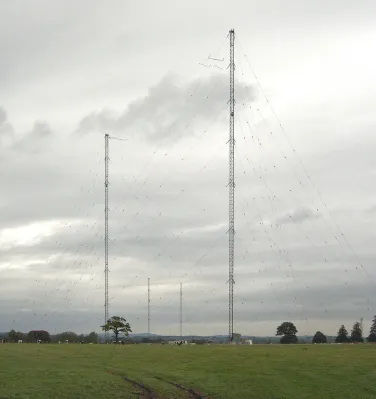
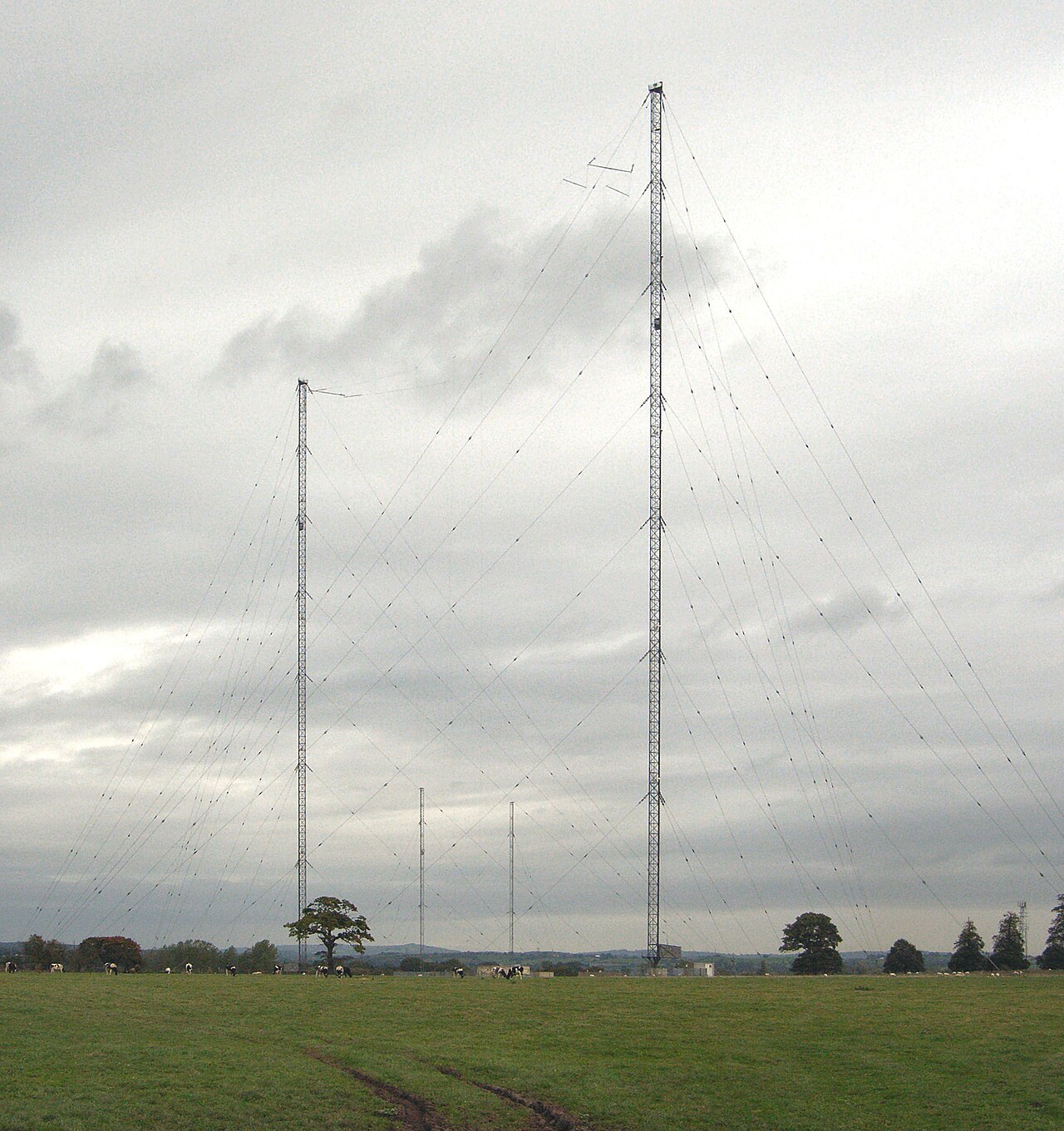
A pair of very large transmitting masts against a cloudy grey sky.
The main 198kHz BBC transmitter, at Droitwich. Bob Nienhuis, Public domain.

American readers may be unfamiliar with Long Wave as it’s a band not allocated in their region. Covering 153 to 279 kHz, it’s a relic from the earliest days of high-power broadcasting in the 1920s, used because of the enormous distances that could be covered with its lower frequencies. The main long wave transmitter for the BBC is at Droitwich, and its demise comes because there are no more spares for its high-power transmitter tubes. It joins many Medium Wave, or AM, as it is commonly known, stations in leaving the airwaves, as increased interference from switch mode electronics and the availability of higher quality alternatives took away their listeners. It’s fair to say that there will be few whose lives are inconvenienced by the switch-off in 2026, but it’s worth taking a moment to remember.

The first BBC Long Wave transmissions in the mid-1920s were on a 1600 metre wavelength, or 187.5 kHz. A series of international agreements saw them move to 193 kHz, and then 200 KHz or 1500 metres in 1934. They stayed on that frequency until another shift down 2 KHz to 198 kHz in 1988. They were atomic-controlled, and thus usable as a frequency standard. The programming started with station names redolent of their era, first the BBC National Service, then the Light Programme you’ll see on the dial in the header image, and finally the more modern-sounding Radio 4. A famous BBC programme tied to Long Wave is the Shipping Forecast, a weather bulletin for deep-sea fishermen which became cult listening on land and now features on FM and digital services too, and there’s even a probably-apocryphal tale that British nuclear submarine captains would once use its presence or absence to judge whether nuclear war had occurred.

In an Oxfordshire farmhouse not far short of fifty years ago, a young child who would later become a Hackaday writer heard a radio show like nothing before, which made an impression that continues to this day. The show was one of the earliest airings of the original Hitchhikers Guide To The Galaxy radio series, through a 1970s ITT radio tuned to BBC Radio 4 on (then) 200 kHz Long Wave. So long, Droitwich, and thanks for all the fish.

Advertisement

Source link

Continue Reading

Tech

Russian hackers were behind $2.5B hack of Jaguar Land Rover: Report

Published

on

Last year, hackers attacked car giant Jaguar Land Rover (JPL), one of the U.K.’s biggest employers. The hack halted production for months and made a dent in the country’s economy. The damage was so severe that the U.K. government decided to bail out the company with a £1.5 billion (around $2 billion) payment, and estimates say the hack cost the British economy $2.5 billion. 

For months, there was only speculation about who did it. Now, citing people close to the investigation, The New York Times reports that the hackers behind the breach were Russian, although it’s still unclear if they were working directly for Vladimir Putin’s government, were just criminals, or something in between, like criminals operating with the government’s tacit approval. 

Microsoft was tracking the Russian hacking group and alerted JLR to the information about the hacker’s identities, the Times reports. However, sources also said that the FBI, Britain’s National Crime Agency and National Cyber Security Centre, Google’s Mandiant unit, and Palo Alto Networks all worked on the investigation. 

In what is a rare, but not an unprecedented occurrence in the world of cybersecurity, it turned out that the Russian hacking group was not the only one that breached some JPL networks. A Jordanian hacker who went by Rey had also broken in, according to the Times.

Advertisement

Source link

Continue Reading

Tech

Lifetime Plex Plan goes from $249.99 to $749.99 on July 1

Published

on

If you have ever wanted to buy Plex’s lifetime pass to keep streaming your movie collection to your iPhone, get it now before the price rockets up to a ludicrous $749.99 on July 1.

Price rises are a regular occurrence for most online services, and that even includes self-hosted streaming platforms. However, for a particular segment of Plex users, one extremely expensive jump in price is on the horizon.

Back in May, Plex warned that it will be raising the price of its Lifetime Plex Pass, which gives users all of the benefits of the normal annual or monthly Plex Pass, but without a subscription. That price rise is set to take place on July 1 at 12:01 a.m. UTC.

As for the amount the price will go up by, it’s not a small amount. Instead of the current $249.99 pricing, it will be going up to an eye-watering $749.99.

Advertisement

Get Plex Pass now

In justifying the price, Plex admitted that it had previously considered removing the Lifetime Plex Pass altogether. While recurring subscriptions sustain long-term development, the lifetime pass does not, and becomes less useful to Plex as time goes on.

The new price, according to Plex, “reflects the real, ongoing value of the software we’re committed to building and maintaining for years to come.”

Does this affect me?

The price change is something that really only matters to a small section of Plex’s user base. Those who don’t feel like paying the monthly or annual fee and believe they can get years of use out of Plex.

Advertisement

There are no changes to the monthly $6.99 or annual $69.99 subscriptions. It’s only affecting the lifetime version.

The current $250 price may seem hefty for a user to pay, but that’s the equivalent of three and a half years of the annual subscription in terms of cost. Or just under three years of paying the monthly plan.

By contrast, the $750 price change works out to be the same cost as just over ten years of the annual subscription.

Existing Lifetime Plex Plan users won’t have to pay anything extra, as they already have the plan. There won’t be any change of service either, as planned future changes affect all paid plans equally.

Advertisement

Consider your options

Current monthly and annual subscribers who are happy to continue paying the fee can carry on without worry. For those who were tempted but didn’t pull the trigger on the Lifetime Plex Plan previously, they have an incentive to get it now.

A 200% price increase is certainly a good incentive for fence-sitters to pay up.

That said, the market has changed, and maybe those users wanting to save a bit of money could consider a completely different option. One that was free, if you’re not afraid of a little work.

Rival app Jellyfin is free to set up and use in mostly the same way as Plex. Where Plex succeeds is in having a massive community and product support, whereas you’ve got more research to do with Jellyfin.

Advertisement

There’s also the alternative content sources Plex offers, but that’s a minor thing compared to the main functionality.

That said, it’s not that difficult to get up and running with Jellyfin. It has many of the same features as Plex, including fetching relevant metadata for your collection, as well as apps for many devices you would want to stream to in the first place.

Ultimately, this is a good opportunity for everyone to take stock in their setups, and to really work out what they want from their home streaming server.

You could “save” money by paying for the lifetime Plex upgrade now instead of suffering later. But you could also save by switching to Jellyfin and avoiding subscriptions altogether.

Advertisement

Source link

Continue Reading

Tech

How to watch Croatia vs Ghana: Free Streams & TV Channels

Published

on

Croatia face another test of nerve as they take on a miserly Ghana side in the final round of Group L fixtures at the FIFA World Cup 2026 – and you can watch the game from anywhere for free.

After reaching the 2018 final and the last four in 2022, the Vatreni have been a slow burner this tournament. An entertaining 4-2 defeat by England in their opening game was followed by a crucial 1-0 win over Panama, in which inspirational captain Luka Modric won his 200th senior international cap. The game in Philadelphia is effectively a play-off to see who qualifies in second place from Group L – assuming England beat Panama in the other fixture – and who will be relying on progressing as one of the best third-place teams. Manager Zlatko Dalic will be confident, his side having come through plenty of high-stakes games in the past decade.

Source link

Continue Reading

Tech

62 Last Minute Prime Day Weekend Deals: Up to 45% Off (2026)

Published

on

These are the best-sounding open earbuds, with clear audio and instrumental detail. The rollable build offers a secure fit with minimal discomfort, but it may take a few tries to attach them correctly. Battery life lasts about seven and a half hours, and they have an IPX4 rating, meaning they’re resistant to splashes and light rain. Lastly, they’re equipped with some of Bose’s advanced features, including multipoint pairing, Bose Spatial Audio, and push-button controls for playback, calling, and volume adjustments. —Boutayna Chokrane

Our favorite Bluetooth speaker is on sale for Prime Day. Our reviewers say the JBL Flip 7 the perfect balance of portable design and sound quality, with surprisingly full sound in its compact package. The Flip 7 is plenty durable for the outdoors with a drop-tested design and water resistance, and it also supports Auracast to sync with other new JBL models. —Nena Farrell


Jump to Section: Best Tech Deals, Best Amazon Device Deals, Best Apple and Apple Accessory Deals, Best AV Deals, Best Home & Kitchen Deals, Best Beauty & Wellness Deals, Best Mobile & Wearable Deals


Best Home & Kitchen Deals

Advertisement

Google

Nest Cam Indoor (Wired, 3rd Gen)

Easily the smartest indoor security camera currently available, Google’s third-generation Nest Cam indoor kicks the resolution up to 2K at 30 fps, with HDR and night vision. There’s also two-way audio, enforced two-factor authentication, and accurate detection to alert you about people, animals, or vehicles. The Google Home Premium subscription is pricey at $10 per month ($100/year) for 30 days of event video history and familiar face alerts, but it covers all your Nest devices. —Simon Hill

Source link

Advertisement
Continue Reading

Tech

F5 expands further into AI security with SurePath AI acquisition

Published

on

François Locoh-Donou, F5’s chairman, president and CEO, at the company’s headquarters this week. (GeekWire Photo / Todd Bishop)

F5’s acquisition this week of SurePath AI, a startup that detects artificial intelligence on corporate networks, is part of a broader effort by the Seattle company to cement itself in the booming market for securing AI for businesses.

“The more an enterprise adopts AI, the less visibility it has into what AI is crawling in the organization,” said François Locoh-Donou, F5’s chairman, president and CEO, in an interview for this weekend’s GeekWire Podcast, conducted Thursday at the company’s downtown Seattle headquarters.

Denver-based SurePath, founded in 2023 and led by co-founder Casey Bleeker as CEO, had about 19 employees and had raised roughly $6 million in venture funding, according to PitchBook. Financial terms of F5’s acquisition weren’t disclosed.

SurePath monitors a company’s network to identify which AI tools and agents employees are using, including ones the company doesn’t know about, and tracks what they do.

F5 is incorporating SurePath into its broader AI security platform, announced this week, designed to discover the AI models and agents running inside a company, test them for vulnerabilities, and apply guardrails to keep them in check.

Advertisement

Locoh-Donou said customers have been forced to cobble that together from separate products. “Having four, five, six different tools to discover, test and secure your AI is a nightmare,” he said.

Kunal Anand, F5’s chief product officer, compared the problem to an earlier era, when employees adopted cloud software faster than their IT departments could track it. The big difference is that the AI version is moving faster and carries higher stakes.

“Shadow AI is shadow SaaS with a faster clock and a larger blast radius,” he wrote in a blog post.

F5, founded in Seattle in 1996, makes technology for securing and deploying applications across multiple platforms. The publicly traded company reported $3.1 billion in revenue in its most recent fiscal year and marked its 30th anniversary in May.

Advertisement

The SurePath deal is the latest in a string of acquisitions for the company, including its purchase last fall of CalypsoAI, now offered as F5 AI Red Team and F5 AI Guardrails.

Locoh-Donou said the company weighs three things in each acquisition: whether it can build the technology itself fast enough, whether the deal genuinely serves customers, and, above all, whether the team will fit F5’s culture.

“We have encountered companies in the industry that had great technology and brilliant people, but it was very clear to us that they would never be a great fit,” he said. “And so we walked away.”

Locoh-Donou discussed the acquisition, F5’s evolution, the rise of AI, the World Cup in Seattle and other topics in the GeekWire Podcast conversation. Look for the episode this weekend, and subscribe to GeekWire in Apple Podcasts, Spotify, or wherever you listen.

Advertisement

Source link

Continue Reading

Trending

Copyright © 2025