
Security teams log 54% of successful attacks and alert on just 14%. The rest move through your environment unseen.
The Picus whitepaper shows how breach and attack simulation tests your SIEM and EDR rules so threats stop slipping by detection.



Whirlpool is one of the most recognizable names in the world of appliances. The company traces its roots back to 1911 in Benton Harbor, Michigan, where one goal, to electrify the wringer washer, eventually grew into a leading global manufacturer of home appliances.
In 2026, Whirlpool was named one of the “World’s Most Admired Companies” by Fortune for the sixteenth consecutive year. The company offers a full range of appliances, including washers, dryers, ranges, cooktops, dishwashers and, of course, refrigerators. Anyone shopping for a new appliance knows the choices feel endless. Expert reviews provide an overview, and we have an idea as to how long a refrigerator should last, but consumer reviews often tell a more accurate and authentic story. No one wants to buy a refrigerator or other appliance that will fail after only a few years.
The brand is known for its refrigerators, which on average should last between 10 to 20 years. That being said, we urge shoppers to carefully read reviews. TrustPilot and the Better Business Bureau both offer numerous reviews that detail refrigerator repairs and even complete failures well before the appliances reach old age. While online feedback is certainly prone to negativity bias, many reviewers point out poor customer service experiences and expensive repairs. Common complaints include broken ice makers, cracked interior plastic, doors that do not seal properly, and burnt-out interior lights, along with more serious issues such as broken compressors and loud whining noises.
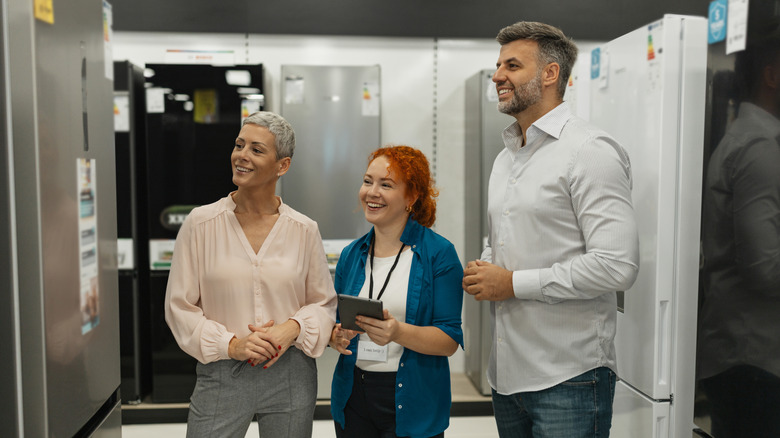
Whirlpool undoubtedly suffers from some negative user reviews, but it’s tough to find an appliance that doesn’t. The company received top marks by the American Customer Satisfaction Index in its 2025 customer satisfaction study. If you’re interested in a side-by-side refrigerator, JD Power named Whirlpool as the second-most reliable company in 2025, behind GE. It also came in second for French door refrigerator reliability, again behind GE.
Whirlpool offers other perks as well. If you’re trying to avoid products made overseas, many Whirlpool appliances are still made in America. You may also already own a Whirlpool appliance and not even know it — its portfolio includes other iconic brands, including Amana, Maytag, JennAir and KitchenAid. Whirlpool also offers a free one-year warranty, and limited parts are covered for five years. Buyers have the option of purchasing an extended warranty. Overall, despite some notable setbacks in terms of customer service, but the company overall has earned a solid reputation as an appliance builder.

Singapore employers are turning more cautious on hiring for the third quarter of 2026.
According to ManpowerGroup’s latest Employment Outlook Survey, only 35% of employers in Singapore plan to increase headcount between Jul and Sept. Meanwhile, 41% expect no change to staffing levels, while 22% anticipate reducing their workforce.
Based on responses from 599 employers, Singapore’s Net Employment Outlook (NEO) for Q3 2026 came in at 13%, down 11 percentage points both quarter-on-quarter and year-on-year. This marks the softest hiring outlook since Q4 2021, when the NEO stood at -2%.

(Note: The NEO is calculated by subtracting the percentage of employers expecting to reduce headcount from those planning to hire.)
Singapore’s hiring outlook also lagged behind both the global average of 26% and the Asia-Pacific regional average of 28%.
Among employers planning to keep staffing levels unchanged, 38% said their current workforce was sufficient to meet business needs. Another 27% said they were holding off on hiring until there is greater clarity on economic conditions.
“Employers in Singapore are taking a more cautious approach to hiring this quarter, with many choosing to hold steady on headcount until there is greater clarity on geopolitical conditions,” said Linda Teo, country manager of ManpowerGroup Singapore.
Despite the weaker overall hiring sentiment, most industries in Singapore still recorded positive NEOs for Q3 2026, indicating that more employers plan to hire than reduce headcount.

The Manufacturing sector reported the strongest hiring outlook among all industries surveyed.
At the other end of the spectrum, the Finance and Real Estate sector was the only major industry to record a negative NEO of -2%, signalling that more employers expect to cut jobs than add them. The Hospitality and Retail sector posted a flat NEO of 0%, though ManpowerGroup noted that the result was based on a relatively small sample size.
Quarter-on-quarter, hiring sentiment weakened across almost every industry. Most sectors saw their NEOs fall by double-digit percentage points, reflecting growing caution among employers amid ongoing economic and geopolitical uncertainty.
The Technology and IT sector was the exception, with its hiring outlook remaining unchanged from the previous quarter, making it the most stable sector in the survey.
One notable outlier was Utilities and Natural Resources, where the NEO jumped by 34 percentage points quarter-on-quarter. While ManpowerGroup cautioned that the sector’s sample size was relatively small, the increase comes amid Singapore’s continued push towards sustainability and clean energy development.
Last October, Minister of State for Trade and Industry Gan Siow Huang said the clean energy workforce is expected to grow by 60%—or around 1,000 workers—over the next decade, highlighting the sector’s longer-term growth potential.
Amid the challenging job landscape, Teo added that hiring decisions are becoming more selective, with companies prioritising a “skills-based approach.”
AI-related skills topped the list of competencies that employers are willing to pay a premium for.
According to the survey, 66% of Singapore employers said they would offer higher pay for AI literacy skills, such as the ability to use AI tools effectively. 64% would pay more for AI model and application development skills, while 56% cited traditional IT and data skills.
Sector-wise, employers in the public sector, health and social services were the most likely to pay a premium for AI literacy skills (78%), followed by professional, scientific and technical services (72%) and tech and IT services (69%).
For AI model and application development skills, employers in the information sector and professional, scientific and technical services were the most willing to pay more, with both industries recording 76%. Finance and insurance firms followed at 71%.
Employers also value interpersonal and soft skills, with 66% saying they would pay more for critical thinking and problem-solving. The same proportion would pay a premium for communication, collaboration and teamwork, followed by leadership and social influence capabilities at 64%.
The findings suggest that while employers may be slowing their hiring plans, they remain prepared to invest in workers with in-demand technical and transferable skills.
Featured Image Credit: 2p2play via Shutterstock


EPISODE 11 “And uh… what are you doing?” the Head of Security asks, entering the Security office as I’m making my way to the exit – with a PC under my arm.
“Just taking this back to the office to archive the contents and then reset it to factory defaults,” I say. “Company policy when someone has been… let go.”
There have been a number of changes at Security – the same number of changes as there used to be members of Security staff. Apparently, eating endless pastries and watching pirated movies isn’t an industry-standard procedure for security professionals. Furthermore, the spate of alcohol thefts from the boardroom liquor cabinet seems to have ended after HR discovered several empty bottles in Security’s overflowing recycling bin…
HR acted swiftly (for a change) and a whole new security team was employed, headed by a keen new broom – who’s currently blocking the doorway…
To say that he’s enthusiastic in his role would be an understatement. His first move was to isolate Security onto a completely separate internet feed, firewalled off from the rest of the Company. Move two was to implement a plan of recording the equipment people leave the building with – something that’s proving rather unpopular with laptop users.
“Oh, I don’t think we’ll need it to be erased,” he says, holding out his hands to retrieve the machine from my grasp.
“Really, there’s no telling what’s on this machine,” I say. “Malware, copyright movies, porn even. We don’t know. It’s safer – for the Company – if we just start from a clean machine. We might even just dump it to be on the safe side.”
“Sure,” the Head of Security says. “Though that machine looks like it’s almost brand new. It’s still got stickers on it! And it looks fairly… high end. I think we can take the risk. I’m pretty up-to-date with IT security and the like – so maybe you should let me worry about…”
“I think this should probably be HR’s call,” I respond. “They may want to be sure the Company isn’t exposed to any risk that the machine might present.”
“I can call HR if you like,” the Chief Pie-eater suggests, calling my bluff and reaching for his phone. “But I doubt they’d be too concerned.”
“They should be. If there’s malware installed on the recovery partition, you’ll reinfect the machine when you restore it to factory defaults.”
“Thanks for your concern,” he says, wresting the machine from my grasp and stepping out of the doorway.
…
So that’s how it’s going to be.
Obviously, we knew there was going to be trouble. We prepared ourselves for it. The new Security team has an enthusiasm for the job that was completely absent from the former crew, mainly because they’re jockeying for the position of 2IC.
The Boss is waiting for me when I get back to Mission Control.
“Just had a call from Security. Apparently, you were trying to… remove… one of their machines?”
“Yeah. I was going to erase it and restore it to factory settings.”
“Couldn’t you just do that there?”
“We prefer to do a reinstall on the DMZ segment – just in case there’s any malware on the machine after we restore it.”
“Right. Well, I talked to the guy, and it certainly sounded like he had everything under control,” the Boss assures me.
And so there you go. The Boss can determine someone’s technical competence from a two-minute phone call. It must be one of his superpowers, along with the toxic body odor and the ability to sniff out a kebab stand in a farmers’ market.
Two minutes later, in Mission Control…
“Right,” I say, entering Mission Control. “Everyone ready?”
The PFY nods.
The lead candidate for 2IC of Security nods.
“One of the pitfalls with security types is that they often shave with Occam’s razor,” I say. “When seeing someone leaving the office with a PC under their arm, they immediately think ‘office theft,’ rather than thinking ‘did this person bring the aforementioned machine into the office in the first place, wait until they heard someone approaching, then make to exit the office?’”
The 2IC candidate contemplates this silently.
“Another problem with security types is how to celebrate a victory. In this situation, a wise person would not simply ‘upgrade’ their desktop machine with this newer and shinier item – because it might have an infected operating system – AND infected recovery partition. No, a wise person would first sca-“
“Ooh, we’re in business!” the PFY interrupts, as his machine receives a ping.
“Right,” I say to Security 2IC, “I’d give it maybe half an hour – to really trash your network – before I head downstairs. Then maybe I’d ask why all the machines in your office appear to be going crazy.”
“And you think that would be enough to get him fired, do you?” he asks.
“It will be when you discover the stash of Company laptops in the boot of his car as he leaves the parking basement,” the PFY says. “And make sure you have the Head of HR with you.”
“Why’s that?” the soon-to-be Head of Security asks.
“Because one of the laptops is his…”
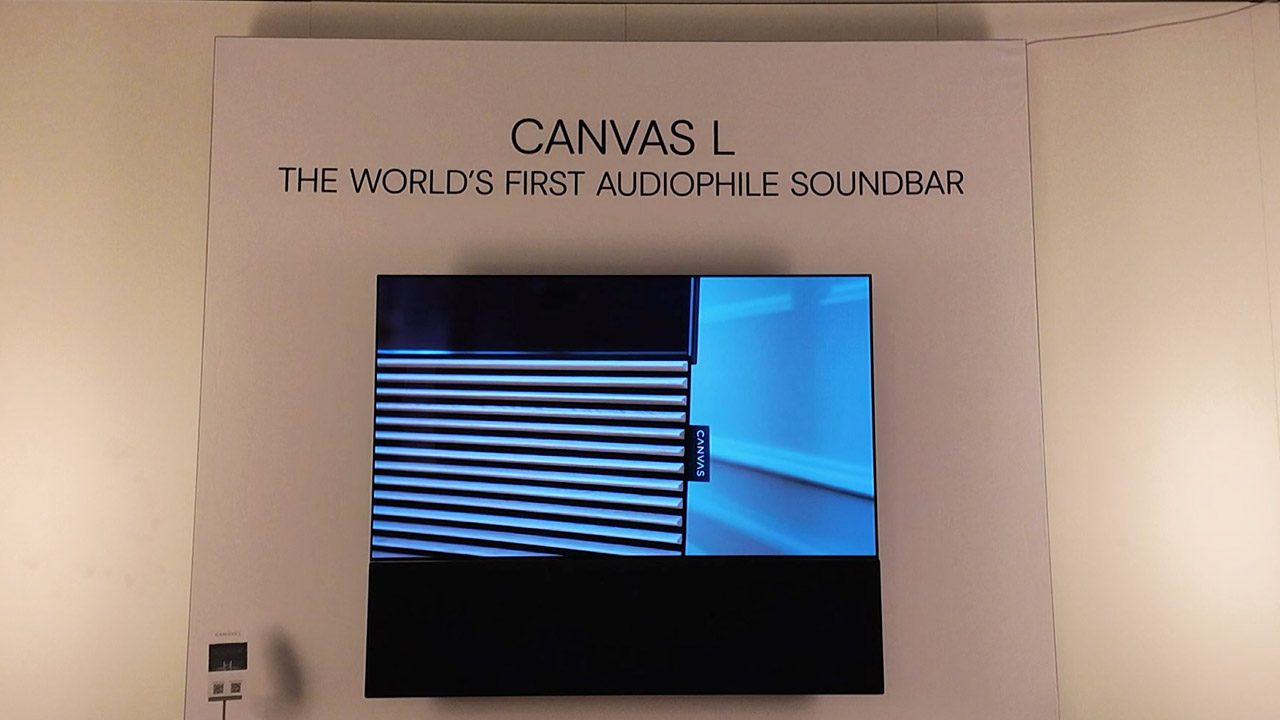
Most soundbars are built to make explosions louder and dialogue less awful, but they tend to struggle a bit when it comes to reproducing actual music. CANVAS L is coming at the category from a very different direction. Danish audio brand Canvas HiFi used High End Vienna 2026 to show a larger and more ambitious version of its all-in-one wireless speaker and soundbar, and the hook is not subtle: this is designed to do movies and music equally well without forcing buyers into a room full of boxes, cables, stands, subwoofers, and domestic unrest.
Our CANVAS L audiophile soundbar preview covered the core upgrades, including the wider cabinet, revised driver array, 1,500 watts of peak power, GaN power supply, expanded connectivity, improved BACCH 3D+ processing, and support for larger TVs from 65 inches up to 115 inches. That last part matters. The original CANVAS already made a strong case for the idea that a single speaker bar could behave more like a serious hi-fi system than a lifestyle soundbar, but its size couldn’t quite keep up with the extra large TVs that have grown in popularity in recent years.
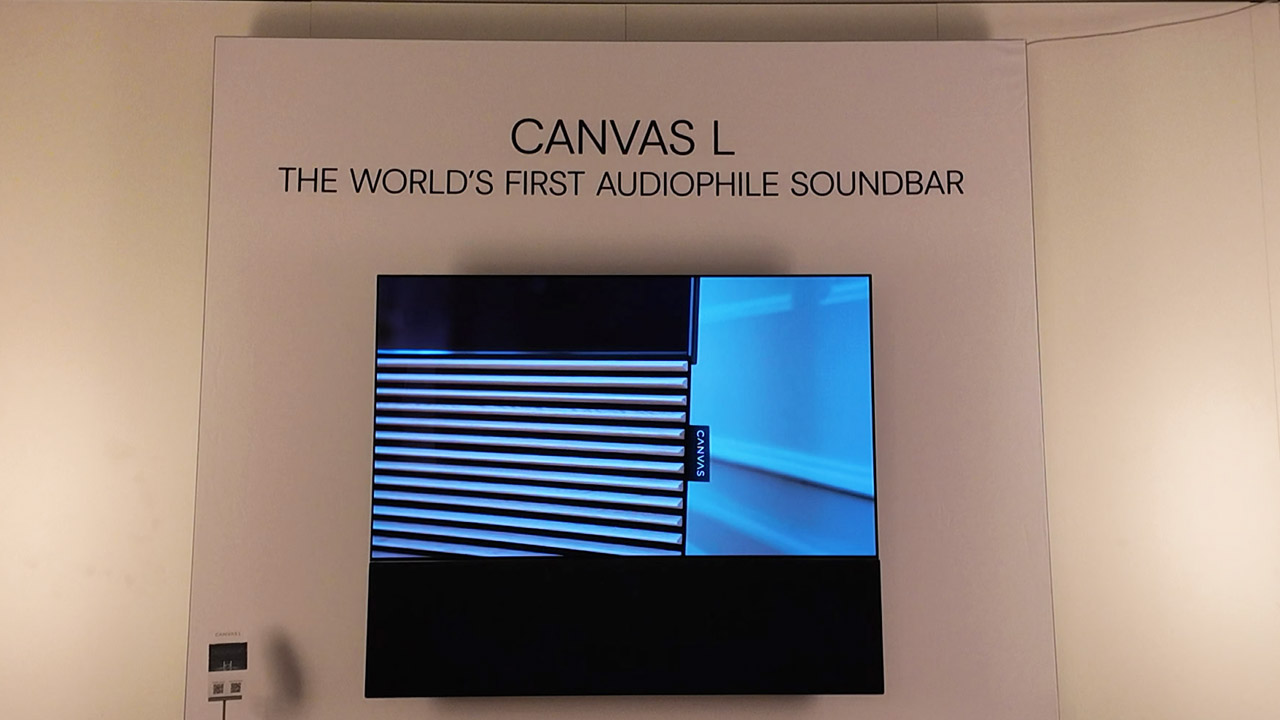
CANVAS L pushes the concept into bigger-screen territory, where the visual scale of the TV finally has a matching audio solution that does not look like someone parked a center channel on a credenza and called it Scandinavian minimalism. It’s not that the physical bar itself is the width of a 115-inch TV. The cabinet measures in at 1440 mm wide s 373 mm high x 198 mm deep (56.7″ W x 14.7″ H x 7.8″ D). And while that is wider than most soundbars, it is still only about as wide as your average 65-inch TV.
However, by using BACCH 3D+ processing, the actual soundstage thrown by the bar spans the full width of even a large living room. Sounds can come from well outside the edges of even a 115-inch TV. And Canvas provides easily removable magnetic grilles that are sized to match virtually any sized TV from 65 inches to 115 inches. So you get a perfect aesthetic match. And if your tastes, or the décor of your living room, changes, you can easily swap in a grille with a different design, without having to call in a team of custom installers.
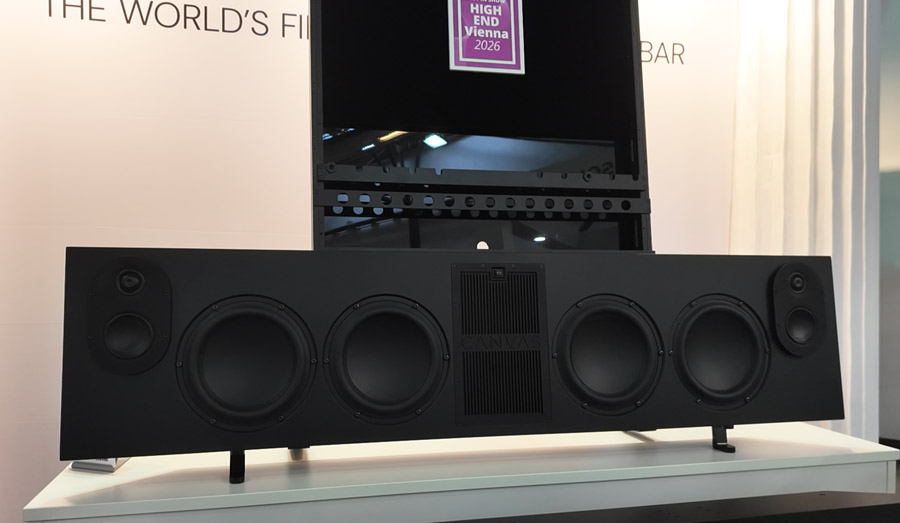
The real trick is whether CANVAS L can move between movie night and music listening without sounding compromised on both sides. Home theater products often chase impact and width but flatten music into wallpaper. Hi-fi products often do tone, texture, and imaging beautifully, then fall apart when asked to deliver cinematic scale. Based on our listening sessions at HIGH END Vienna, we can confidently state that the CANVAS L is equally capable for music listening and movie watching, and this is a rare accomplishment in lifestyle friendly products. Singers sound natural, drums and cymbals are crisp and punchy, and musicians span the full breadth of the room. Dialog in movies is always clean and intelligible, while explosions, dragon fire and car chases are presented with rich dynamics and a real sense of three dimensional space.
CANVAS L is able to accomplish this feat with its larger acoustic platform, 8-inch woofers, added passive radiators, vertically stacked midrange and tweeter drivers, increased amplification power, room correction through the Canvas app, and its secret weapon: BACCH 3D+. This tech is designed to create a much wider, deeper and more immersive sonic presentation from a single speaker, without having to add additional speakers in the sides or back of the room.
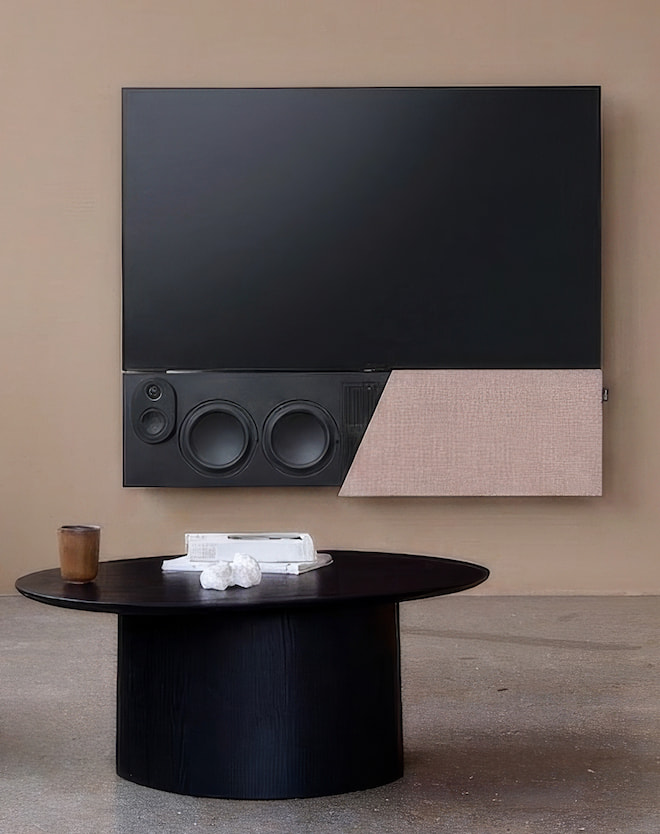
CANVAS L also arrives in a market that suddenly looks a lot more serious. The original CANVAS did not have many obvious high-end soundbar rivals, but that is changing quickly. Dynaudio’s Opus One brings a massive active speaker system approach for larger TVs, while the Steinway & Sons Model S Soundbar from Steinway Lyngdorf takes the luxury active soundbar concept even further into custom-install and statement-system territory. And even Focal has entered the chat with their “don’t call it a soundbar” Mu-so Hekla one-piece speaker.
We have heard all of these, and they are all excellent in their own ways, which means CANVAS L can no longer rely on novelty alone. Its argument has to be stronger: real movie scale, credible two-channel music performance, flexible TV integration up to 115 inches, and BACCH 3D+ processing at a price that won’t push people away. Its rivals come from brands with decades of history and real credibility among audiophiles and music listeners, but the Steinway and Dynaudio alternatives cost significantly more, and the Focal speaker has a form factor that doesn’t lend itself to wall mounting and presents less of an integrated solution (visually speaking).
These issues do not make these competitors any less worthy of consideration, but it does raise the obvious question: why spend twice as much (or more) if you don’t have to? Or why have a separate visible speaker at all when you can have one that seamlessly blends in with the TV?
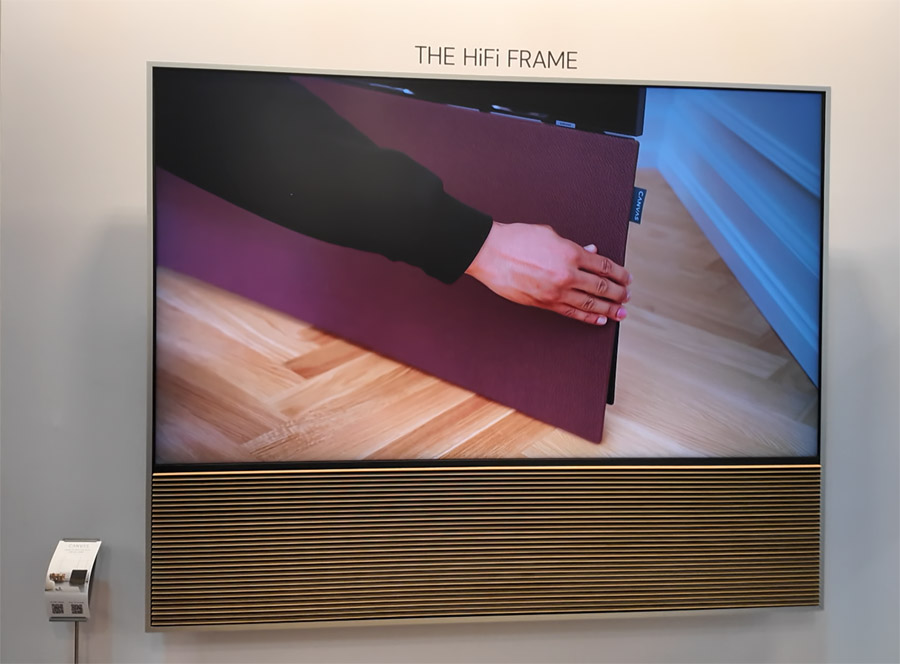
One thing we learned at HIGH END 2026 is that the company’s original “The HiFi Frame” option, made specifically to work with Samsung’s “The Frame” Art TV, can actually work with any Samsung TV. So if you like the concept of an integrated hi-fi speaker which seamlessly matches your Samsung TV, but you want the higher performance picture option of an OLED TV or a Micro RGB TV, you can match those up with the Canvas HiFi Frame for the best of all worlds. Laust Nielsen, Canvas CEO, tells us that the CANVAS L will soon also offer this “HiFi Frame” option for Samsung TVs 65 inches and larger.
We should point out that the CANVAS L isn’t necessarily a solution for every situation. The BACCH 3D processing is most effective in a fairly narrow sweet spot, which can be defined during the set up. Outside that sweet spot, the sound is still natural and powerful, but the immersive surround effects are not as pronounced. Also, it’s not exactly cheap. While it will sell for €5,999 in Europe, U.S. pricing has not yet been finalized. It may run as high as $9,000 or more, depending on grille options. But if you’re dropping $30K on a top of the line 115-inch RGB backlit TV, you can certainly afford to spend a bit more to get sound to match that picture.
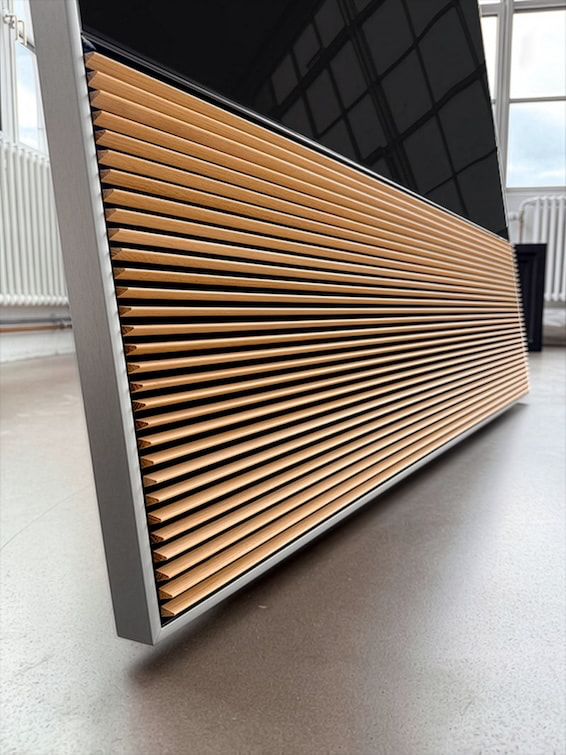
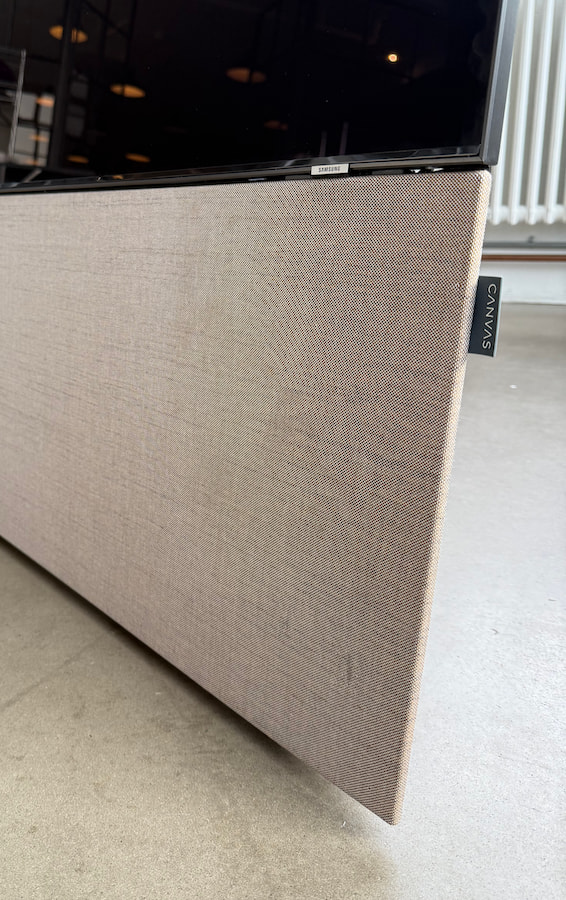
The CANVAS L is that rare product that will satisfy most customers for both music listening and movie watching, while also fitting in with virtually any décor. For movies, you’ll get a huge and dynamic front soundstage with the illusion of sound all around you without adding more speakers. For music, it means wider, more believable stereo imaging from a product that still looks like it belongs in a living room or even the bedroom with one of your favorite TVs. Don’t worry, you can still have your dedicated home theater in your basement or backyard shed, but with a CANVAS L in your living room, you may feel a lot less inclined to get off your couch. Like, ever.

For once, SpaceX is ahead of schedule: Elon Musk’s space and AI conglomerate officially confirmed that it has raised $75 billion from the sale of its shares to its underwriters, who are set to begin marketing the company on the Nasdaq stock exchange Friday.
SpaceX priced its 555.6 million shares at $135 each, the company said in an update on its website. That makes SpaceX officially the largest IPO in history, easily eclipsing the $24.9 billion in funds raised by Saudi Aramco during its 2019 public markets debut. At this price, the deal also looks set to make Musk the world’s first trillionaire.
The company, officially known as Space Exploration Technologies Corp., will trade under the SPCX ticker symbol.
While IPO pricing typically works itself out as markets open, SpaceX took an unusual approach in setting the price well in advance. The company was testing its $135 share target with investors before its official roadshow started, the Financial Times reported. And that offering, which eschewed traditional IPO pricing practices, attracted four times the available shares, per Bloomberg.
As active trading gets underway tomorrow, SpaceX’s share price may sink or rise. But anecdotal reports suggest that big institutional investors and individual buyers are lining up to purchase shares in the 24-year-old technology company.
If the sale is as oversubscribed as the talkative bankers make it out to be, they have an option to bring an additional 83.3 million shares to market, which would raise another $11 billion at the company’s opening price.
Hyperliquid, a crypto betting market that attempts to offer synthetic exposure to SpaceX stock, currently prices the shares at $167, suggesting that market participants expect a classic 20% IPO pop on the first day of trading.
In the longer term, there are big open questions about how SpaceX will be able to justify its eye-popping valuation. The company’s outstanding engineering projects, from the world’s largest reusable rocket to a new American chip fab, fill up a daunting to-do list.
The biggest beneficiary of the offering is Musk himself. He owns just under 850 million Class A shares entitled to 1 vote per share. He is also entitled to another 5.6 billion Class B shares, which comes with 10 votes per share and includes the billion shares contingent on a long-shot bet that a million people will end up living in a SpaceX colony on Mars.
The listing will deliver Antonio Gracias, founder and CEO of Valor Management, 503.4 million shares, putting the value of his position at nearly $68 billion at the IPO price. Other major shareholders poised to gain from the historic offering include SpaceX board member and investor Luke Nosek, who owns 33 million shares, and COO Gwynne Shotwell, who holds nearly 12.6 million shares.
The IPO will also deliver significant windfalls to many of the roughly 400 venture capitalists who backed the company during its two decades as a private entity, a period in which it raised about $40 billion in private capital.
Additionally, a massive pool of smaller investors who backed SpaceX via special purpose vehicles (SPVs) are also set to see their initial capital multiply. However, due to the complexities of these vehicles, some may not know the exact magnitude of their gains for months after SpaceX make its public market debut.
When you purchase through links in our articles, we may earn a small commission. This doesn’t affect our editorial independence.
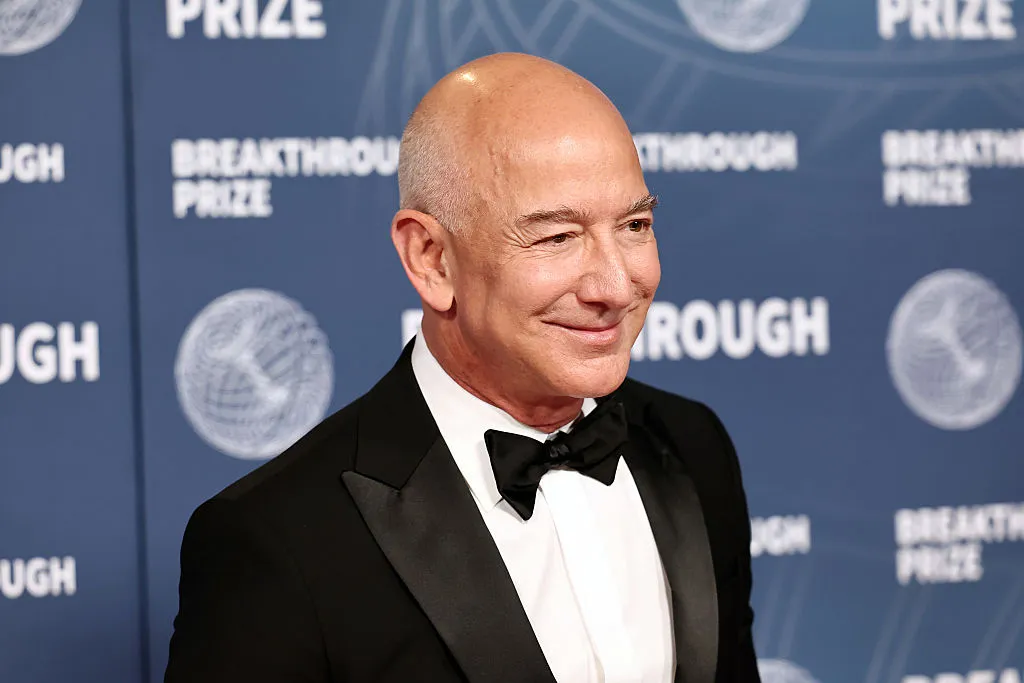
Prometheus, the physical AI startup co-founded by Jeff Bezos and Vik Bajaj, the former co-founder of Verily, Google’s life sciences unit, announced it raised $12 billion at a $41 billion valuation.
The new funds came from Bezos himself, as well as from JPMorgan Chase, Goldman Sachs, and BlackRock, among others.
This is the second fundraise round for Prometheus, which launched late last year with an initial raise of $6.2 billion, according to CNBC.
Prometheus is building what it calls an “artificial general engineer” — software capable of automating the design and manufacturing of complex physical systems, from jet engines to drug compounds.
The ambition is sweeping: replace large swaths of engineering work with AI. Although the startup will automate many aspects of an engineer’s job, Bezos told CNBC that the productivity gains AI delivers will lead to what he calls “labor scarcity” — his term for a world where demand for human workers outpaces supply.
That puts him at odds with a number of prominent voices in tech. While some AI leaders predict widespread job losses, Bezos sees it differently.
“Significant productivity in the economy is going to raise the standard of living,” he said. “People who today have two-earner households, they’ll become one-earner households. Maybe some people who are working overtime will stop working overtime.”
The company, which currently has 150 employees across offices in San Francisco, London, and Zurich, is keeping the specifics of what it has already built under wraps.
Bezos indicated that a large portion of the capital will go toward the company’s large compute needs.
Bezos knows something about labor at scale. Amazon — where he serves as executive chairman and is the largest individual shareholder — employs more than 1.5 million people worldwide and over the past year, under CEO Andy Jassy, has laid off tens of thousands of people as the company has accelerated its own automation push.
At $41 billion, Prometheus is one of the most richly valued AI startups ever funded, and one of the largest single bets on the physical AI sector. But it isn’t the only company attracting massive investor interest. In recent months, venture capitalists have increasingly poured capital into physical AI, a booming sector that investors and founders argue is inherently more defensible than pure software — because the physical world creates moats that code alone cannot.
When you purchase through links in our articles, we may earn a small commission. This doesn’t affect our editorial independence.
In a nutshell: On the second Tuesday of every month, Microsoft addresses the overall security of its many software products. The Patch Tuesday tradition has continued for more than 20 years, but the number of vulnerabilities addressed in monthly updates is now truly skyrocketing.
Microsoft recently released its latest batch of monthly security fixes for vulnerabilities found in Windows, Office, and other products sold by the company. This month’s Patch Tuesday stands out for a record number of CVE-tracked flaws, with 200 individual bugs and 33 “critical” vulnerabilities that could have serious consequences for Microsoft customers.
The June updates address a wide range of security issues. The most common categories include elevation of privilege vulnerabilities (65), remote code execution bugs (55), and information disclosure issues (30), among others. The Patch Tuesday release does not include flaws discovered in the Chromium-based Edge browser, which saw 360 issues fixed this month alone.
The updates also addressed five zero-day vulnerabilities, which are publicly disclosed bugs that are already being actively exploited by cybercriminals. The zero-day flaws include CVE-2026-45586, an elevation of privilege vulnerability; CVE-2026-49160, a denial-of-service vulnerability in Http.sys; and CVE-2026-42897, a server spoofing vulnerability in Microsoft Exchange.
The CVE-2026-45586 patch targets a vulnerability previously known as GreenPlasma. The flaw was discovered by a security researcher known as Nightmare-Eclipse, who has been in a dispute with Microsoft over alleged attempts to damage his reputation.

This month’s Patch Tuesday also addresses a security flaw discovered by Nightmare-Eclipse. Known as “YellowKey,” the bug was described as a potential attempt to introduce a stealth backdoor in Microsoft’s BitLocker full-volume encryption feature. Tracked as CVE-2026-45585, the issue should now be fully patched. However, Microsoft has not publicly acknowledged Nightmare-Eclipse’s contribution.
Speaking of, the researcher also released another exploit dubbed “RoguePlanet.” The proof-of-concept code could potentially be abused to open a command prompt with full “SYSTEM” privileges. It remains to be seen whether Microsoft will quietly address the issue without crediting its original discoverer.
Security experts warn that the number of software bugs addressed through Patch Tuesday and other periodic patching programs is likely to continue increasing. Microsoft noted that both security professionals and threat actors are now using advanced AI models to discover new vulnerabilities. The result is a rapidly expanding attack surface, with software vendors expected to spend increasing time fixing issues uncovered through automated discovery methods.

Editor’s take: Much like the Call of Duty series and pornography, generative AI is one of those things that’s incredibly popular despite a lot of people claiming to dislike it. ChatGPT, for example, has just reached one billion monthly app users, just 3.5 years after it launched in November 2022.
Market intelligence firm Sensor Tower reports that ChatGPT has become the fastest app ever to reach one billion monthly app users (MAUs), beating the previous record holder, Google Maps, which took around five years after launch to hit the same number.
ChatGPT isn’t the only AI app experiencing immense popularity right now. The monthly number of Claude and Meta AI users increased by 640% and 973% year-on-year. ChatGPT was up by a mere 62%, though it remains the clear leader.
Abe Yousef, Sensor Tower’s senior insights analyst, told CNBC that model improvements and more positive market sentiment have pushed the growth of ChatGPT’s rivals.
Earlier this year, OpenAI was one of several companies to sign deals with the Pentagon. It led to a huge consumer backlash, prompting CEO Sam Altman to promise additional safeguards to prevent government use of the technology for surveillance of US citizens – while leaving several obvious loopholes in place, of course.
Sensor Tower found that ChatGPT uninstalls surged around 295% day-over-day on February 28, the day after OpenAI announced the Pentagon agreement. It also led to Anthropic’s Claude becoming the top free app on the iPhone.
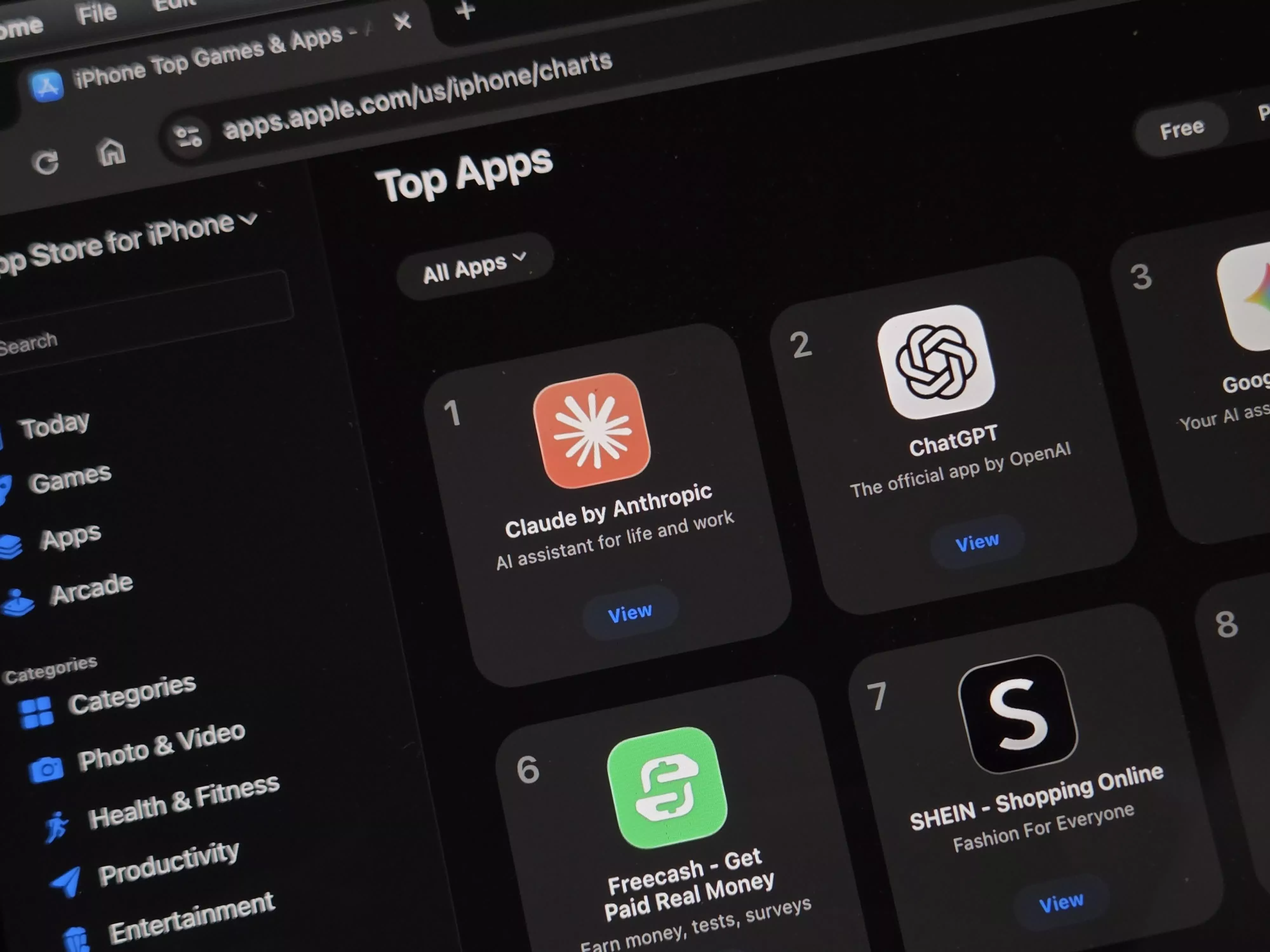
Anthropic has refused to let the government use its models for mass domestic surveillance and fully autonomous weapons, leading to a bitter dispute and the company’s blacklisting over claims that it posed a national security risk. But it was recently reported that the NSA is using Claude Mythos for offensive cyber operations.
Paradoxically, the use of generative AI tools is growing as public opinion toward the technology worsens. In addition to the tens of thousands of job losses being caused, which some now say never really happened, the anger toward new data center builds is growing.
On that note, an OpenAI report this week claimed that Chinese ChatGPT users were trying to encourage anti-data center feelings in the US. The company admitted that their efforts had little effect – it’s not like people don’t hate the facilities already – but the report might encourage some people to soften their opposition simply because they don’t want to be thought of as “influenced” by China.
Humanoids aren’t quite ready to replace factory workers, but the industry can’t wait. Faced with labor shortages, manufacturers have shown growing interest in startups that promise faster automation without the usual tradeoffs.
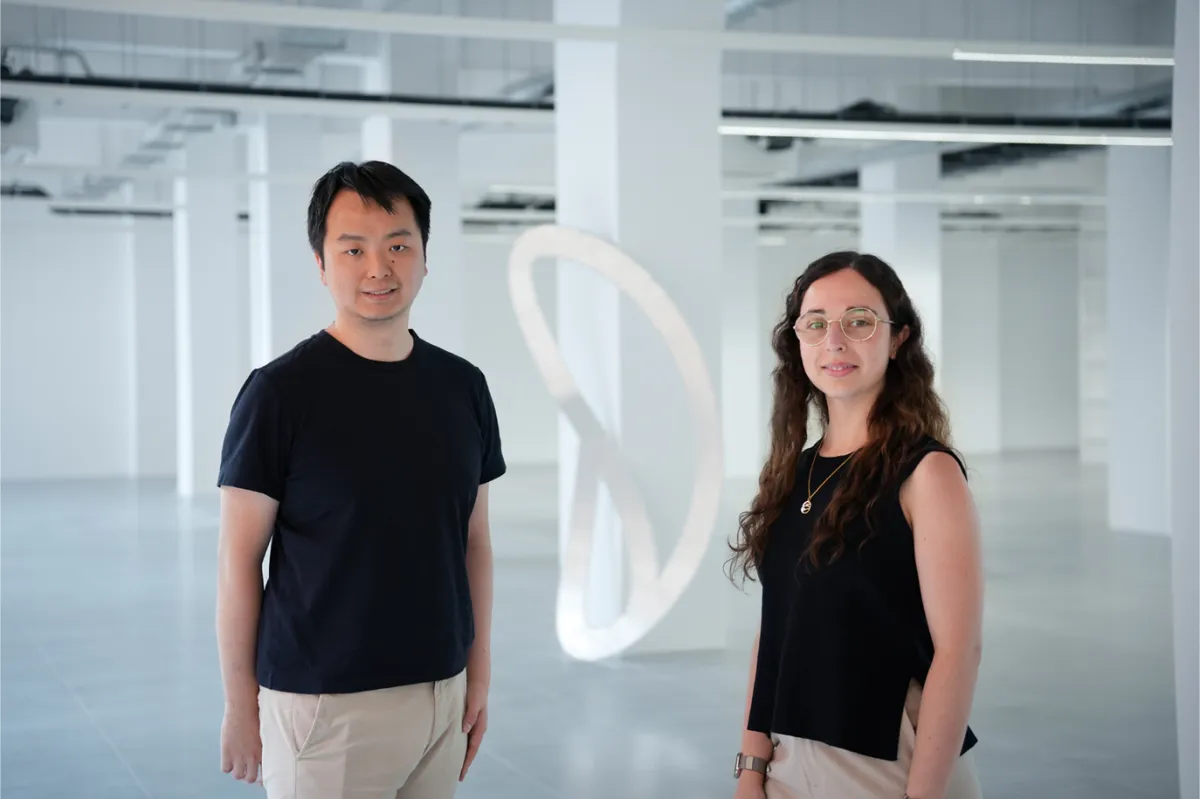
That’s the bet behind Theker, an AI robotics startup that aims to go beyond robots trained for a single task. “If you always have to put the same cookie in the same box, that works perfectly, but most processes aren’t like that,” co-founder Carla Gómez Cano told TechCrunch.
Theker is designed for that messier reality. Unlike humanoid robots designed around a fixed form — think Boston Dynamics — Theker’s machines are built to be reconfigured. Their hands, arms, and overall form can be swapped out or resized depending on the task, whether that’s sorting packages, packing clothing, or handling bottles and cans in a warehouse.
That Inditex, Zara’s parent company, signed on as an early backer is a signal of where Theker’s ambitions start, not where they end. The company’s broader goal is to move beyond retail into heavier industrial settings like manufacturing, where the complexity and scale of manual tasks is even greater.
This generalist ambition has helped cement Theker’s status as one of Europe’s hot startups to watch — and raise capital accordingly. The Barcelona-based startup has just raised $85 million in what it’s calling “Europe’s largest ever robotics Series A.” (We haven’t found a larger one in our records, either.)
Less than a year after a record seed round, this Series A was led by American VC firm CRV and backed by a mix of traditional and strategic investors, including Samsung and Aglaé Ventures, the investment vehicle tied to LVMH chairman Bernard Arnault.
Gómez Cano said Samsung is not a client yet but that the two are in advanced discussions. Theker would welcome having the Korean company as a customer, supplier, and investor simultaneously — a trifecta that would give the startup both revenue and credibility in manufacturing at scale.
She also noted that she and co-founder Jiaqiang Ye Zhu “didn’t build Theker to run pilots,” so the team skips innovation departments entirely and goes straight to logistics or operations, where deals are real and timelines are shorter.
To demonstrate that the company can actually deliver on that, Theker has a showroom in central Barcelona, and plans to open others as it expands across Europe, the U.S. and Asia. It will also grow its headcount across tech, deployment, and sales.
“We already received 15,000 job applications and have to filter like crazy,” Gómez Cano said. She estimated that the team could grow from dozens to up to 120 people by the end of the year, then caught herself: “I am saying that, but I also said that we’d raise $30 or $40 million!”
That Theker managed to raise twice its target also reinforces the startup’s conviction in keeping its HQ in Barcelona, a growing robotics hub, and in Europe’s tech ecosystem more broadly. “It has never been a barrier to acceleration for us, so we are making the most of it,” Gómez Cano said.
When you purchase through links in our articles, we may earn a small commission. This doesn’t affect our editorial independence.
Danish pharmaceutical giant Novo Nordisk, the world’s largest producer of insulin, disclosed a data breach affecting patient information from some clinical trials.
Founded in 1923, Novo Nordisk now employs around 67,900 people across 80 offices worldwide and is the maker of viral GLP-1 receptor agonist drugs Wegovy and Ozempic.
The company revealed on Thursday that attackers gained access to its internal IT systems and data related to patients participating in some clinical trials, including their patient IDs (random alphanumeric strings) and information on trial participation, sex, year of birth, biomarkers, health/immunogenicity data, and lifestyle factors (e.g., smoking, alcohol use, BMI).

However, Novo Nordisk said that this data was pseudonymized and that the attackers can’t use it to identify any affected patients by name.
“While our investigation and response are ongoing, we have discovered that certain non-public data, including personal data, was copied externally without authorisation. We are informing the impacted parties as appropriate,” the company said.
“This information is not directly linked to any patients by name or other direct identifiers. Information about identity would therefore require access to underlying information, identifying patients by name etc. This information was not exposed. We therefore do not consider the incident to enable any third party to identify participants in our clinical trials.”
The data breach also affects an undisclosed number of healthcare professionals (HCPs), whose names, registration numbers, e-mail addresses, phone numbers, WhatsApp details, and office locations have been exposed.
Novo Nordisk warned affected HCPs to be wary of unexpected messages or calls, as they may be targeted in phishing attacks via e-mail, phone, WhatsApp, or fraudulent messages impersonating their colleagues.
The company has taken the compromised internal IT systems offline but noted that its core business operations were not impacted. Novo Nordisk is now investigating the incident with the help of external cybersecurity experts to assess the full impact and scope of the breach.
“We are working to bring the affected systems back online in a controlled and safe manner; however, we acknowledge this process takes time. Our core business operations are not impacted and remain up and running,” Novo Nordisk added.
Novo Nordisk has yet to disclose when the breach was detected and how many individuals had their personal and patient data exposed.
A Novo Nordisk spokesperson was not immediately available for comment when BleepingComputer reached out for more details on the attack.

Security teams log 54% of successful attacks and alert on just 14%. The rest move through your environment unseen.
The Picus whitepaper shows how breach and attack simulation tests your SIEM and EDR rules so threats stop slipping by detection.
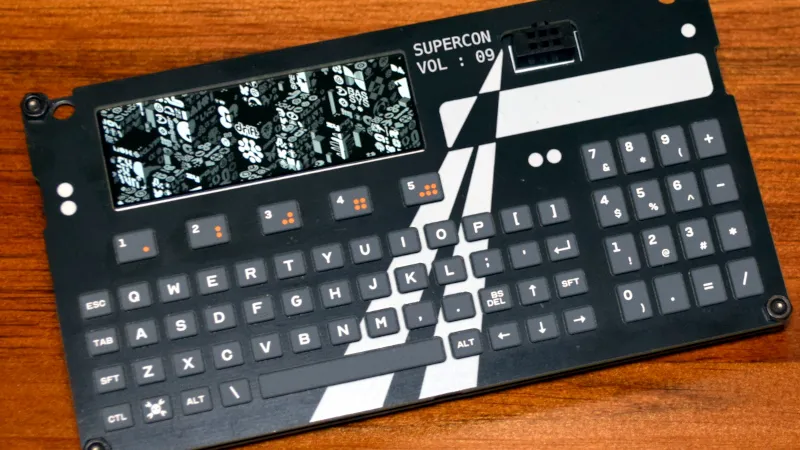
Our recently concluded event in Europe saw the return of the Hackaday Communicator badge — a stylish handheld gadget with a QWERTY keyboard, a LoRa radio, and an ESP32. It came complete with a simple messaging app built into it’s MicroPython firmware, and by all accounts it was a great success.
But there was certainly room for improvement, which is where [Giovi321]’s new firmware for the badge comes in. It brings support for Meshtastic proper, as well as longer battery life support for GPS module. To install this firmware you will need to have the ESP-IDF but fortunately there are very comprehensive instructions provided to help you. Under the hood it’s running FreeRTOS.
It’s something which is so often missing with an event badge, any sense of how it might have a life after the event rather than becoming a piece of e-waste. The Communicator badge is such a nice physical design that it obviously has potential, so this firmware unlocks it and gives the badge a use out in the real world. We really like it for this, and we’ll be flashing a few of our badges over to give it a shot shorlty.
If you’re looking to upgrade the hardware on your Communicator, check out the custom RGB keyboard we covered last week.




Weekend Open Thread: Evereve – Corporette.com

The Best Mystery Series of All Time Is Surging on Streaming 30 Years After It Ended


Alexander Zverev wins the French Open to finally earn a 1st Grand Slam title

Jensen Huang Approves Samsung, SK Hynix, and Micron for NVIDIA (NVDA) HBM4 Memory Supply


Anatomy of the June crypto crash: Fed, Iran, Saylor


Suspicious Polyfill login prompts pop up on Toshiba, Muji websites

Senator Cynthia Lummis Calls CLARITY Act the Most Consequential Financial Legislation of This Generation


Microsoft unveils seven homegrown AI models in new bid for ‘long term self-sufficiency’

Alexander Zverev conquers demons and outlasts Flavio Cobolli to win French Open for first major title


Von der Leyen’s AI envoy pick draws conflict-of-interest fire


High Stakes for Wembanyama as New York Pushes for 3-0 Lead


Hackers now exploit SolarWinds Serv-U flaw to crash servers

The Pain Points Taking a Fragile Tech Rally Down a Notch


Meta steals a tactic from Tesla and builds data centers in tents

Eli Lilly (LLY) Stock Surges 4% Following Breakthrough Sleep Apnea Trial Results


Oppenheimer backs SpaceX as $70 billion retail frenzy builds


Notion restores access to Anthropic after service disruption


Trump’s AI Ownership Plan Could Benefit Anthropic at OpenAI’s Expense

Bangladesh beat Australia after 20 years in ODIs, register only their second win over six-time world champions | Cricket News


Markets Rally as SpaceX IPO Looms Amid Iran Tensions and Inflation Surge


You must be logged in to post a comment Login