


Connect with us

Tech

How Long Is A New Fire TV Stick Actually Supposed To Last?

Published

on

A Fire TV Stick can outlive its guaranteed support window, though aging apps and hardware may make you want to replace it sooner.

There isn’t an expiration date hidden in the settings menu of a Fire TV Stick. Amazon also doesn’t reveal a typical physical lifespan for its streaming sticks, nor does it inform owners to replace one after three, four or five years. That makes the question of “how long will it last?” a bit more complicated than it sounds.

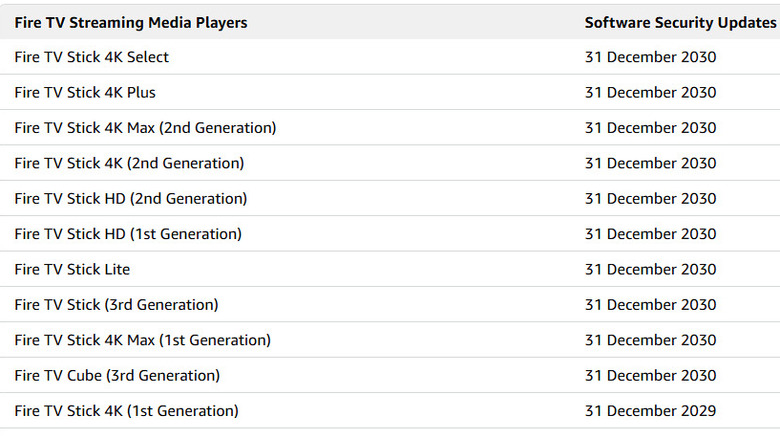
At least one of the numbers is firm. Amazon says security updates are provided for at least four years from the date the Fire TV device was purchased new from Amazon as the seller, or until the support date listed for that model, whichever is later. The Fire TV Stick 4K Select and Fire TV Stick 4K Plus are among the current models with security updates guaranteed through at least Dec. 31, 2030.

Amazon doesn’t call it a lifespan, though. A support deadline indicates the duration of security fixes, not when the hardware will decide it has streamed its last episode.

Advertisement

Four years is a minimum, but it’s not a countdown to the junk drawer.

Four years isn’t an expiration date

The Fire TV Stick can be fully functional beyond the security-update window, but simply turning on isn’t a very high standard for a streaming device. Older hardware can become increasingly uncomfortable to use as apps become more demanding, interfaces evolve and video standards advance, even if nothing has failed internally.

Video codecs are a part of that. Newer video codecs like H.265/HEVC and AV1 can compress video more efficiently than older codecs, but they also need the right decoding hardware. The Plus doesn’t have an advantage on that front, as Amazon’s current Fire TV Stick 4K Select and 4K Plus both offer hardware decoding for AV1 and H.265 at up to 4K60.

Advertisement

Apps can be less accommodating. Netflix itself notes that its app may no longer be available on some TVs and streaming devices made before 2015, providing a neat example of what aging really looks like for a streamer: The hardware can still work, while one of the reasons you bought it quietly stops working with it.

That doesn’t mean every Fire TV Stick has a 10-year lifespan, but it does show why declaring one “dead” simply because four years have passed is difficult to justify.

Advertisement

When should you actually replace your Fire TV Stick?

Slower streaming performance isn’t necessarily a retirement notice, either. Before giving up on your Fire TV Stick, Amazon suggests restarting it, installing available updates, clearing app caches and ruling out network issues. Insufficient power can also cause restarts, making a healthy stick look much more dramatic than it is.

Persistent problems are more convincing. Apps crashing repeatedly, services dropping support for your model, menus staying slow after troubleshooting or storage becoming a constant hassle are signs that an upgrade may actually help.

Buying slightly higher up the range can give you more breathing room. The Fire TV Stick 4K Select has 1GB of RAM and costs about $40, while the 4K Plus has 2GB for about $50. Amazon warns that memory pressure can kill apps on lower-memory Fire TV hardware, so that extra $10 buys more headroom as software gets heavier.

It doesn’t guarantee an extra year or two, and Amazon makes no such claim. The Select’s Vega OS has an efficient footprint and was designed to scale across devices. Still, doubling the RAM for roughly the price of lunch is worth considering if you’ll keep the stick for years.

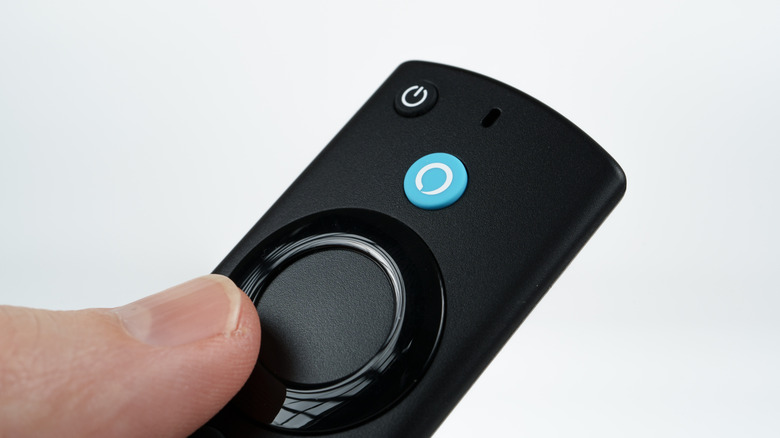
And then there’s the remote. Its two AAA batteries will need replacing, and a failed remote can be replaced separately. Amazon’s Fire TV mobile app can control the streamer too, so a dead remote doesn’t necessarily mean a dead Fire TV Stick.

Advertisement

Netflix discontinued support for first-generation Fire TV and Fire TV Stick devices in June 2025, The Verge reported, more than 10 years after they launched in 2014.

Source link

Advertisement
Continue Reading
Click to comment

You must be logged in to post a comment Login

Leave a Reply

Tech

HP strikes deal with blacklisted Huawei to license essential Wi-Fi patents

Published

on

No Ban: Despite being essentially banned from the US market, Huawei still plays a major role in the global technology industry. The Chinese conglomerate holds several crucial patents and other intellectual property, which is why US corporations continue to do “business” with the company despite Washington’s restrictions.

HP Inc. recently announced a new patent deal with Huawei, a company that is unable to sell or import products in the US after being banned by the FCC. The agreement is essential for keeping the US company in the technology business, but HP felt compelled to provide an official explanation of exactly what is at stake.

Huawei was first to disclose the patent licensing agreement, but HP is now lamenting the fact that the arrangement has been deeply “mischaracterized.” The deal stems from a settlement in a legal dispute between the two companies, so there is no grand scheme or broader partnership at play here.

The deal will allow HP to access essential patents related to Wi-Fi technology, which Huawei holds significant intellectual property rights to. The Chinese corporation sued HP over these patents, asking its US counterpart to stop selling products based on the disputed IP. HP was either going to properly license the patents or join the legal fight and risk losing the case.

Advertisement

HP chose the former, as it essentially had no other choice but to enter into a licensing agreement with the Chinese corporation. Otherwise, the US manufacturer could have lost its ability to properly serve US customers. Other players in the technology industry are doing exactly the same, as Huawei holds essential Wi-Fi patents required to support wireless connectivity in computers, printers, and other devices.

However, the agreement does not force HP to buy any Huawei products, which are likely illegal in the US following the FCC’s decision. “HP is not incorporating any Huawei components or technology into HP products. The agreement is not a strategic partnership, nor a commercial alliance, nor a supply agreement, nor any other form of collaboration,” the company stated.

HP also said that this is an all-too-common issue that US technology companies eventually have to deal with. Some crucial connectivity technology is owned by Chinese companies, and companies cannot provide lawful, standards-compliant products to US customers without properly licensing the underlying intellectual property.

The new agreement with Huawei is part of a broader licensing effort related to Wi-Fi technology that involves both HP and other US-based corporations. The patent group in question is known as the Sisvel Wi-Fi 6 pool, a program offering a one-stop solution for accessing essential patents related to the 802.11ax (Wi-Fi 6) connectivity standard.

Advertisement

Source link

Continue Reading

Tech

Neocloud Lambda secures $1B in debt to buy more chips

Published

on

Lambda, an AI cloud company that buys computing chips and rents them out to businesses, has raised $1 billion in private, short-dated debt to buy Nvidia’s AI chips that it will lease to Microsoft, Bloomberg reports

The terms of the deal, which Bloomberg says was arranged by JP Morgan Chase, signal that Lambda is betting it will be able to quickly deploy the chips and start generating revenue from them, letting it repay the debt fairly quickly using that incoming cash.

This is the latest in a string of loans that Lambda is using to fund GPU infrastructure for specific customers. In May, it closed a $1 billion secured credit facility, and this week it announced the closing of a $926 million loan to fund Nvidia GB300 GPUs, one of Nvidia’s newest chip models, for a deployment it’s under contract to provide Nvidia.

The $1 billion private debt deal comes as Lambda is reportedly in talks for a $3 billion pre-IPO round. The company last November raised $1.5 billion in venture capital at a $5.43 billion post-money valuation, per PitchBook data.

Advertisement

Lambda isn’t the only one relying on debt to fund the AI boom — according to data Bloomberg compiled, banks and tech companies have raised over $400 billion in AI-related debt globally in 2026 so far. 

Source link

Continue Reading

Tech

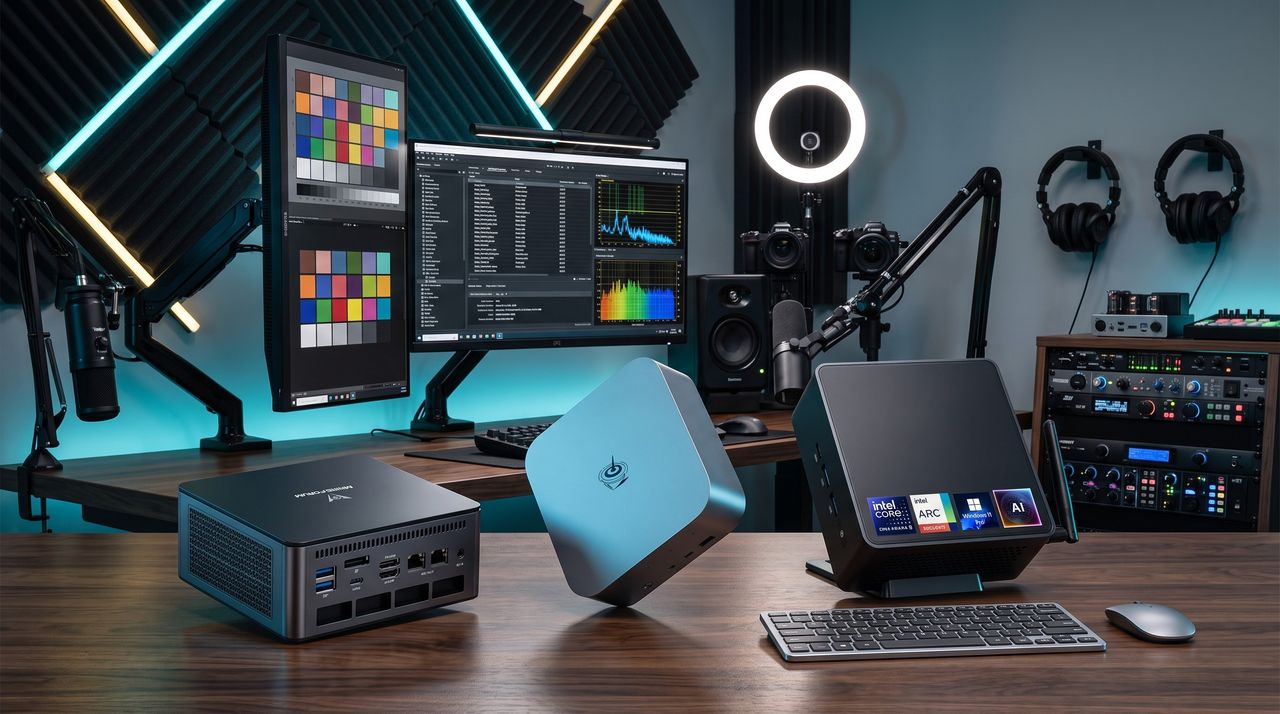
12 Mac mini alternatives for Windows I’d actually buy

Published

on

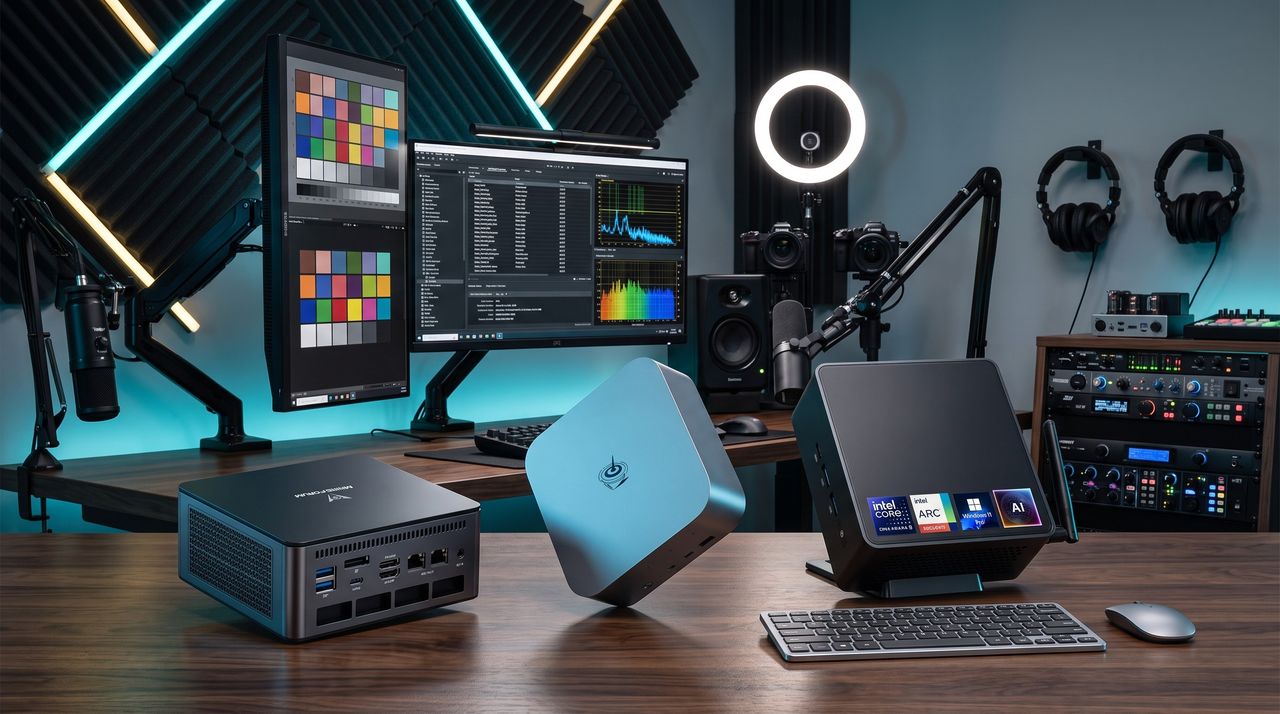
I’ve hand-picked my 12 favorite Mac mini alternatives for Windows, from budget picks to high-end content creation stations. There’s no denying Apple‘s newly unveiled Mac mini with M6 chip is a seriously cool piece of hardware, but fixed memory and limited port selection mean it’s definitely not for everyone.

If you want upgradable RAM and additional connectivity like USB4 for hooking up an external GPU, these are the Windows Mac mini alternatives I really like. I’ve included top-tier compact machines from brands we’ve reviewed highly during our mini PC testing, including Beelink, Geekom, GMKtec, Minisforum, and Asus. Whether you need a cheap mini PC for the office or a high-performance powerhouse for heavier workloads, these are the machines I recommend.

My top 12 Windows mini PCs

Advertisement

Source link

Continue Reading

Tech

DOOM Played On Series Of 555 Timers

Published

on

It’s technically true that any piece of software can be reproduced in hardware, although modern software’s size and complexity generally makes this a non-starter. But if we go far enough back in time, older software becomes easier and easier to implement in hardware. The original DOOM from 1993 might one day be recreated in full this way, but that day is not today. Instead, [Nick] has recreated the original music from that game, playing the opening track in nothing but 555 timers.

The circuit starts with a 555 timer that acts as a system clock with a rate of just over 7 Hz. These pulses feed a binary counter which in turn feeds a decoder, giving the circuit 15 positions. Each output of the decoder feeds to a diode matrix which stores information about what pitch the circuit should play. The circuit only needs to play six pitches so the diodes effectively connect each moment in time to one of these six notes. From there the circuit feeds into a set of switches which select different resistor networks of another 555 which is actually responsible for producing sound. The resistor networks have different values to adjust the timing of the 555 to produce different pitches.

Of course this entire exercise is largely academic as almost any microcontroller would be able to be programmed to play this chiptune quite easily, but it’s not a bad idea to get down into the weeds of digital logic from time to time in order to refine one’s skills and knowledge about what’s really going on in the inner workings of circuits. Or, go even deeper than that and build the logic gates themselves from first principles.

Advertisement

Source link

Advertisement
Continue Reading

Tech

Early Leak Of NVIDIA’s DLSS 5 Has An Uncanny Valley Problem

Published

on

People are grafting a pre-release version onto their favorite games with unspectacular results.

Sometimes, photorealism (or something approaching it) makes a video game look better. Other times, well, you get whatever this is from NVIDIA’s leaked build of DLSS 5. The unfinished software, extracted from an early-access PC version of NBA 2K27, has been grafted onto various games. The results are… let’s just say, not universally beloved.

DLSS 5’s neural rendering model takes the upscaling technology in a new direction. Rather than simply reconstructing a sharper version of the image the game rendered, it “infuses pixels with photoreal lighting and materials,” according to NVIDIA. In practice, the results look more uncanny valley than truly next-gen. It’s like someone fed a still image from the game into Midjourney and prompted it to “make it look photorealistic.”

Advertisement

In fairness, the images and videos circulating online are from an early, unofficial build of NVIDIA’s upscaling tech. But with that requisite caveat out of the way, let’s have a laugh at how surreal and off-putting some of these results are.

Kill it… kill it with fire

Take Jesse Faden from Control, one of the first games to get the unofficial DLSS 5 treatment. In the game, she’s supposed to be roughly 28. But after applying a little DLSS 5 magic, she suddenly looks middle-aged. You can kinda see how the AI could get there from the original face. But it still misses the mark, simultaneously looking more real and more fake.

Advertisement

Then we have Skyrim (because, no matter the subject, we’ll always have Skyrim). DLSS 5 makes its lower-poly characters look like a 3D scan of a real person plastered onto a 15-year-old video game character.

Even setting aside how the technology can dramatically alter faces, there’s the fact that the underlying character models and animations are left untouched. That creates a bizarre mismatch that only heightens the uncanny effect. The faces may look kinda real-ish — until you see them stare blankly into the distance with suspiciously stiff movements.

If all of this kept performance in check, it might be strange but harmless. After all, if a developer wants to implement it and a player likes it, knock yourselves out. But that isn’t the case, at least with this leaked build. With Neural Rendering enabled, Control on an RTX 5070 Ti reportedly dropped from 71 fps to 35 fps at 4K. If the final version looks weird and kills performance, it’s hard to see this as anything but NVIDA — now an AI company first and foremost — losing touch with the gaming audience that took it to the top.

DLSS 5 is scheduled to launch in its official form this fall. Once developer-approved versions start rolling out, it’ll be interesting to see whether intentionally integrated uses of the final technology look and feel more natural.

Advertisement

Source link

Continue Reading

Tech

Russia is now shopping a 1,000-kilometre kamikaze drone abroad after putting its long-range strike weapon through live demonstrations

Published

on


  • Russia is offering the Garpia-A1E to foreign military customers
  • The drone can reportedly travel up to 1,000 kilometres
  • Garpia-A1E carries over 50kg payload and endures for over six hours

Moscow has begun marketing a long-range loitering munition built by a state defense manufacturer to foreign militaries.

The weapon, known as the Garpia-A1E, has drawn interest from buyers abroad following a series of live demonstrations.

Source link

Continue Reading

Tech

Yamaha expands its streaming line-up with the WXA-70A and WXC-70A

Published

on

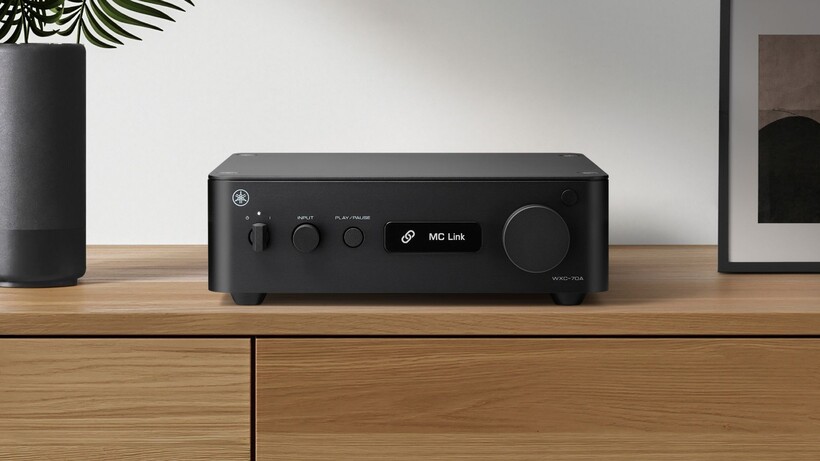
Yamaha has launched the WXA-70A streaming amplifier and WXC-70A streaming pre-amplifier as its newest hi-fi separates.

Both units share an ESS SABRE ES9039Q2M digital-to-analogue converter, a chip more commonly found in higher-priced separates, alongside Yamaha’s proprietary D.O.P.G. circuit design that isolates delicate analogue signals from digital noise.

That same DAC works alongside Yamaha’s ASRC clock-rebuilding technology to reduce jitter before the audio signal reaches the converter, preserving timing accuracy across sources ranging from wireless streaming to TV audio.

The WXA-70A pairs that digital architecture with Class D amplification from ICEPower’s newest 125ASX2 generation, and the amplifier outputs 70 watts per channel into 8 ohms and 105 watts per channel into 4 ohms.

Advertisement

Alongside that amplification, YPAO room calibration uses an included microphone to measure the listening space and adjust playback so the soundstage better suits your room.

Advertisement

The pair can also connect to a television through HDMI eARC or ARC, and a compatible TV remote can control volume and power through that HDMI connection.

Yamaha WXC70A lifestyleYamaha WXC70A lifestyle
Image Credit (Yamaha)

Dialogue Level control adjusts vocal clarity in films and sport without raising overall volume, while MusicCast multi-room support lets the WXA-70A and WXC-70A link with other compatible Yamaha speakers around the home.

Streaming support extends across AirPlay 2, Google Cast, Roon Ready, Spotify Connect, Tidal Connect and Qobuz Connect, a combination that covers most major services without a separate hub or bridge device.

Advertisement

For smart home installation, both models come with Control4 integration alongside a built-in web setup tool, an IR input for wired control systems and 12V trigger support for synchronising power with other connected components.

Advertisement

That level of control extends to wireless connectivity, since installers can disable Wi-Fi and Bluetooth individually during setup to prevent guests or nearby devices from selecting the wrong source by accident.

Pricing for the WXA-70A is set at £1,199, while the WXC-70A is available for £859. Yamaha has confirmed both models will reach UK retailers in November this year.

Advertisement

Source link

Continue Reading

Tech

4 Ireland-based finance internships to boost your CV and career

Published

on

If you are a recent graduate or have time in between your educational and professional lives, consider an internship to boost skills and put you on the right path.

Internship programmes are an ideal way for young people, new graduates and those looking for a career change to add to their skillsets and develop a stronger network of peers and mentors. 

As August is the time when SiliconRepublic.com takes a closer look at careers and skills in the finance and fintech sectors, what better way to close out the month than to take a look at some of the relevant internships open to potential applicants?

Abbott

US medical device and healthcare company Abbott has room for a finance intern at its Dublin facility, supporting the business team. The successful applicant will gain exposure to financial planning, reporting, analysis and process improvement activities. The internship will also include specific assignments across the company. Placements can be engaged with over six, nine or 12 months depending on the needs of the applicant and 19 September is the closing date.  

Advertisement

Carrier

Smart climate and energy solutions company Carrier is in the process of recruiting a motivated and detail-oriented treasury intern, who will join the growing treasury team based in the newly established Carrier Dublin Treasury Centre.

The programme is nine months long and will involve supporting the team in executing strategic projects including in bank account reduction, bank account certification and master data updates. The ideal candidate will either have or be in pursuit of a BA in finance or accounting. Additional certification is favourable but not a requirement. 

Fineco Asset Management

Dublin-based asset management company, Fineco Asset Management, is looking for an intern to join its team. The right applicant will be motivated and detail-oriented and will gain hands-on experience in the financial services industry through working closely with the finance team and other departments in the company. Ideally, whomever earns the position will have a strong analytical mindset and a keen interest in financial markets and investment management.

Microsoft

Tech giant Microsoft has a Dublin-based programme that opens and closes applications between August and October typically. Established in 2003, the Finance Rotation Programme welcomes around 60 interns and 70 graduate students each year to experience financial analysis and is geared towards people with no industry experience.

Advertisement

The programme takes two years, involves four- and six-month rotations and allows students to select rotations based on interests and career aspirations. 

Tips and tricks

If you are interested in taking part in an internship, there are a number of factors you should consider before accepting, to ensure that your placement is the correct one for you. 

One of the most important aspects of an internship is its potential to create a path towards your future career, but that doesn’t mean that organisations hold all the cards and the experience is always worth it without compensation. So before you commit, make sure that – whether it is paid or unpaid – you are not put in a financially precarious position.

If it is unpaid, but the experience is truly worth it, then it might well be the one for you. But if there is the potential that you might leave the role without having developed professionally, while also not having received fair compensation, then it might not have been of real value

Advertisement

You should also consider if the area of finance or fintech you chose to learn more about via an internship has the potential to further your skills. 

It can be tempting to choose a programme because the benefits are great, because it is convenient or because you respect the organisation, but if it doesn’t improve your abilities, or put you into contact with the type of people who can make things happen for you, then arguably it is wasted time. 

But don’t worry, by doing a little research, narrowing down your goals and connecting with people who have forged the path ahead of you, it is possible to determine what is a good fit and what might be wise to pass on. 

Don’t miss out on the knowledge you need to succeed. Sign up for the Daily Brief, Silicon Republic’s digest of need-to-know sci-tech news.

Advertisement

Source link

Continue Reading

Tech

Casting Engine Parts From 3D Prints

Published

on

After building a couple of internal combustion engines by milling billet aluminium stock and cringing at the absolute waste of material this created, [Camden Bowen] figured he’d give casting metal parts a shot. Of course, the key here is to create the molds for said casting, which is where you got a few options available.

Since DIY is really his thing, he also made his own kiln using cement and perlite, plus a propane burner. For the aluminium material to melt, he bought a stack of aluminium alloy wheels, as these are made of an alloy that’s actually suitable for casting. These were turned into ingots as a first step towards casting the engine parts, which among other things helps to purify the metal.

For the actual casting method he picked lost PLA, meaning the intended shape is 3D printed in PLA, then put into plaster before it’s melted out of the newly minted mold in an oven and subsequently burned out in the kiln. For the plaster [Camden] used regular Plaster of Paris, mixed with sand to give it suitable heat-resistant properties.

After some trial and error, as well as a lot of trouble burning out all the PLA, he got a usable mold and managed to eventually cast an engine cylinder with only a few imperfections. Considering just how convoluted it would have been to mill that part out of billet aluminium, it’s easy to see why commercial manufacturers are casting such parts as well.

Advertisement

Source link

Advertisement
Continue Reading

Tech

Brave’s browser one-ups Chrome with its new support for email aliases

Published

on

Chrome alternative Brave just added a good reason to make the switch to its browser: email aliases. The feature, announced this week, allows Brave’s users to sign up for websites and other online services without having to share their personal email addresses.

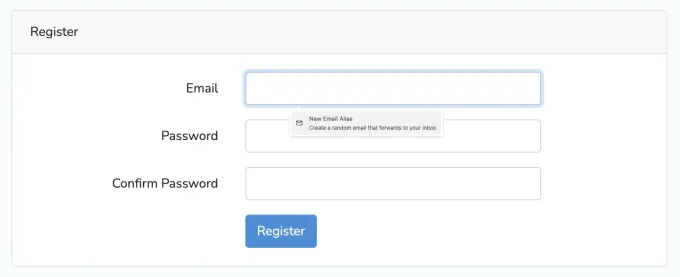
To use the feature, you first need to create an account with Brave, where you can provide your real email address. Then, once logged into the browser, you’ll see a pop-up appear when clicking an email field on a website, offering the option to use an alias instead. (If the pop-up doesn’t appear, just right-click on the field to access the option.) The email alias will be filled in on the website’s form, and any emails coming to that address will be forwarded to your primary email account.

Image Credits:Brave

The company explains that using an alias can protect your privacy, particularly because websites use your email as a personal identifier, allowing them to target you for ads. Ad tech giants like Meta are also able to match the email you provided to a retailer’s website, for instance, with the address they have on file for you, allowing these companies to track what you bought or viewed.

Plus, if any website where you shared your email gets hacked, the hackers will then know your primary email address, and this information can be leaked and shared with data brokers.

Brave says it built the new feature to plug this privacy hole, adding that it doesn’t read the contents of emails sent to an alias — it only processes them for spam and virus filtering. After the email is forwarded, Brave deletes it from its servers. All data in users’ Brave accounts is also encrypted at rest, and any notes you save alongside an alias are stored locally on your device, unless you turn on the sync option. If syncing is enabled, notes will be encrypted end-to-end.

Advertisement

As the email alias feature is still new, Brave cautioned that some of the forwarded mail may initially go to your spam folder, but this should improve as Brave builds up its reputation score as a mail provider.

For the time being, Brave users are being offered five free email aliases. More will be available for Premium plan users in the future.

When you purchase through links in our articles, we may earn a small commission. This doesn’t affect our editorial independence.

Source link

Advertisement
Continue Reading

Trending

Copyright © 2025