As the concept of “digital sovereignty” takes hold globally, an increasing number of countries are implementing blocks on major communication platforms like TikTok, X, and WhatsApp.
For governments, controlling these apps is a way to manage the flow of information; for citizens and visitors, it represents a massive digital roadblock.
In high-surveillance zones, the reality is even starker. State-run Internet Service Providers (ISPs) actively monitor public networks to track user sentiment and analyze app traffic, meaning every unencrypted message or search query can potentially be intercepted by local authorities.
Advertisement
For travelers and remote workers, unrestricted internet access is needed to communicate with family back home, manage finances, and find essential local information.
Finding the best VPN is no longer just a workaround to watch your favorite Netflix shows abroad; it is a critical safety tool.
Advertisement
Simply downloading a basic virtual private network is no longer enough. Advanced government firewalls can now easily detect standard VPN traffic signatures. If the firewall sees that you are using a VPN, it will instantly throttle or block your connection.
To overcome this, you need a provider that offers “obfuscation.” This technology scrambles your VPN data, stripping away its recognizable signature so it looks like standard, unblocked HTTPS web traffic to anyone snooping on the network.
However, you should be aware of the technological limits. While a premium VPN can perfectly bypass regional IP blocks, it cannot circumvent social media access if the platform itself mandates local ID or phone number verification to create an account.
In these extreme censorship environments, decentralized networks like Tor offer a basic, highly anonymous alternative for text-based communication. Just keep in mind that the Tor network is notoriously slow, making it practically useless for media-heavy apps.
Advertisement
What to look for in an effective VPN
When operating in monitored regions, your digital toolkit needs specific technical safeguards.
Chief among these is a kill switch. This is a non-negotiable feature that immediately cuts your device’s internet traffic if the VPN connection drops, preventing your actual IP address and data from being exposed to local ISPs.
Advertisement
If anonymity is your primary concern, look into a Double VPN (or multi-hop) feature. This passes your traffic through two separate encrypted servers (for example, routing your data through London and then New York) to maximize privacy.
Be warned, however, that encrypting your data twice will heavily degrade your connection speeds.
We are also seeing a massive shift in how travelers connect upon arrival. NordVPN’s Saily eSIM integration and ExpressVPN’s Holiday.com offer with Pro plans now provide encrypted cellular data the second your plane touches down.
While incredibly convenient, budget-conscious travelers should note that pairing a standalone travel eSIM with a separate, independent VPN subscription often yields lower total costs.
Advertisement
Whatever route you choose, remember the golden rule of digital travel: download and install all your VPN software prior to departure. Once you cross the border into a high-surveillance zone, provider websites are almost always the first things blocked.
Staying safe in 2026
Maintaining privacy and communication requires serious preparation before entering heavily monitored regions. You must constantly balance the use of powerful tech tools with a clear understanding of your host country’s local regulations.
Advertisement
To make sure your devices are fully prepared, be sure to check out our comprehensive Best VPN guide, and read our updated 2026 NordVPN vs ExpressVPN showdown to see which provider fits your travel itinerary.
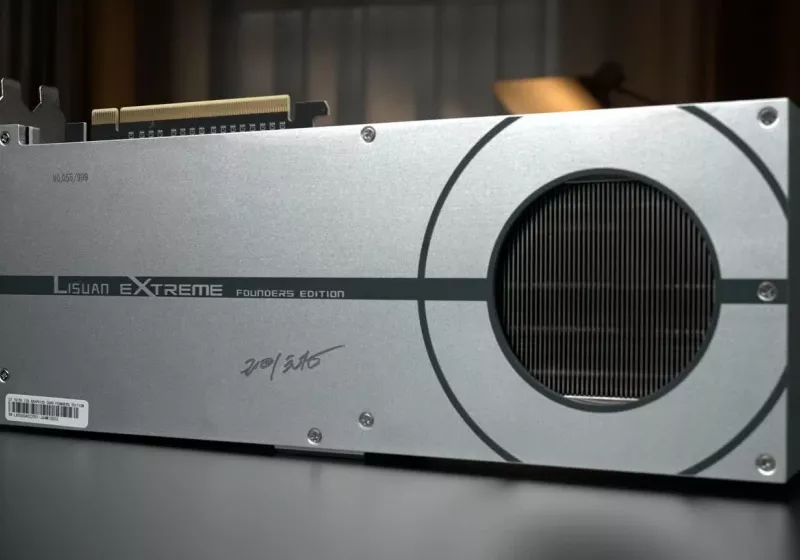
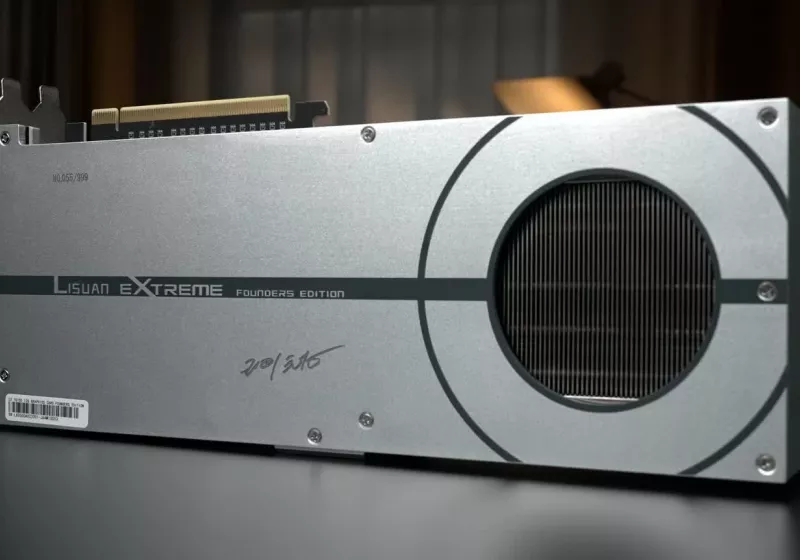
A review of the Founder Edition model on BiliBili shows the 12GB card running a range of modern titles, which is an achievement in itself for a new GPU vendor using its own hardware, architecture, drivers, and software stack. The problem is that while it can run these games, the… Read Entire Article Source link
Less than a week after completing the largest tech IPO of 2026, Cerebras Systems is making its most aggressive play yet to dominate the fast-growing AI inference market. On Monday, the Sunnyvale-based chipmaker announced that it is now running Kimi K2.6 — a trillion-parameter open-weight model developed by Beijing-based Moonshot AI — for enterprise customers at nearly 1,000 tokens per second, a speed no GPU-based provider has come close to matching.
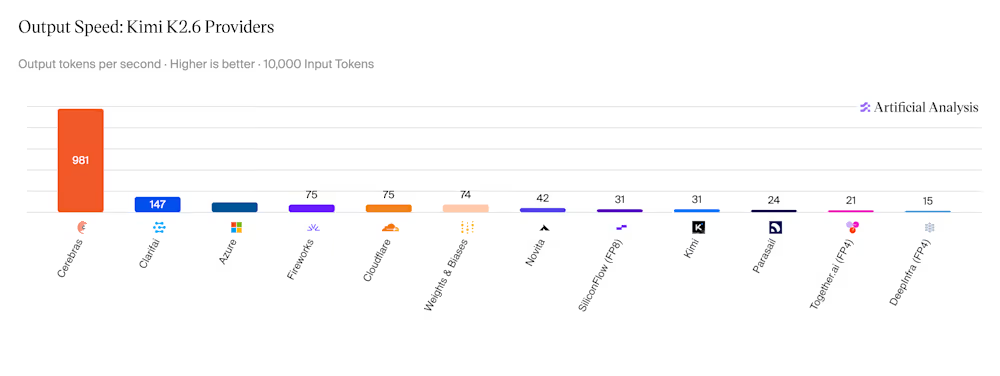
The result, independently verified by benchmarking firm Artificial Analysis, clocked in at 981 output tokens per second, making Cerebras 6.7 times faster than the next-fastest GPU-based cloud provider and 23 times faster than the median. For a standard agentic coding request involving 10,000 input tokens, Cerebras delivered the full response — including prompt processing, reasoning, and 500 output tokens — in 5.6 seconds, compared to 163.7 seconds on the official Kimi endpoint. That’s a 29-fold improvement in time to final answer.
“We’re really wanting to be very clear and show that we can do the largest models,” James Wang, Cerebras’ director of product marketing, told VentureBeat in an exclusive interview ahead of the announcement. “In this case, Kimi K2.6 — a trillion-parameter MoE model on the wafer-scale architecture — and it runs also at this same incredible speed that we’re famous for.”
The announcement marks a critical inflection point for Cerebras, which has long battled a perception that its unorthodox wafer-scale chips, while blindingly fast, could only handle small and mid-sized models. Kimi K2.6 is the first trillion-parameter open-weight model the company has ever served in production. And with a freshly minted $95 billion market cap and $5.55 billion in IPO proceeds burning a hole in its balance sheet, Cerebras is signaling to Wall Street that it intends to compete not just at the frontier of speed, but at the frontier of model scale.
Advertisement
At 981 output tokens per second, Cerebras delivered Kimi K2.6 responses nearly seven times faster than the next-closest provider and more than 65 times faster than the slowest. (Source: Artificial Analysis)
Why Cerebras chose a Chinese-built model as its trillion-parameter flagship
The choice of Kimi K2.6 reflects both a technical milestone and a commercial calculus. Released on April 20 by Moonshot AI — a Beijing-based company founded in 2023 by Tsinghua University alumni and dubbed one of China’s “AI Tiger” companies — K2.6 is a trillion-parameter Mixture-of-Experts model that has rapidly established itself as the most capable open-weight model available for coding and agentic tasks. The model tops SWE-Bench Pro at 58.6, outperforming Claude Opus 4.6 and matching GPT-5.4, while posting leading scores on agentic benchmarks like Humanity’s Last Exam and DeepSearchQA. Its architecture uses 32 billion activated parameters per token out of a total of 1 trillion, with 384 experts, of which 8 are selected plus 1 shared per forward pass, operating over a 256,000-token context window.
In practical terms, K2.6 is one of the first open-weight models that enterprises can plausibly use as a drop-in replacement for expensive, capacity-constrained closed-source APIs from Anthropic and OpenAI — particularly for the coding and agentic workloads that have become the highest-value application of large language models. The version 2.6 release extends K2.6’s capabilities from front-end design into full-stack workflows, including authentication, database operations, and long-horizon agent execution.
Wang was blunt about what is driving enterprise interest. “They’re very motivated, first of all, to have an alternative to Anthropic,” he told VentureBeat. “Anthropic’s models are fantastic. I use them. I’m sure you probably use them. But they’re quite expensive, and they’re constantly running out of capacity.” He described a personal experience in which an application running on Anthropic’s API failed over a weekend because it ran out of capacity — an anecdote that, he said, resonates deeply with enterprise buyers.
Advertisement
The geopolitical dimension of this arrangement is worth noting, however. Kimi K2.6 is a Chinese-developed model being served by an American chipmaker to American enterprise customers. Moonshot AI operates out of Beijing, and K2.6’s adoption in the West arrives during a period of heightened scrutiny of Chinese AI companies in the U.S. market. Enterprise buyers with strict compliance requirements — particularly those in financial services, healthcare, and defense — will need to evaluate this dimension alongside the model’s technical capabilities.
How wafer-scale chips solve the trillion-parameter speed problem that GPUs cannot
Understanding why Cerebras can achieve these speeds requires understanding what makes its hardware fundamentally different from anything else on the market. Most AI inference today runs on clusters of Nvidia GPUs — typically organized in racks of 72 GPUs, what Nvidia markets as the NVL72 configuration. In these setups, the model’s parameters are distributed across many discrete chips connected by high-speed networking fabric. Data must constantly shuttle between chips, and the interconnect bandwidth between GPUs becomes a bottleneck, particularly for large models with hundreds of billions or trillions of parameters.
Cerebras takes a radically different approach. Its Wafer-Scale Engine 3 is a single chip the size of an entire silicon wafer — roughly the size of a dinner plate — containing 44 gigabytes of on-chip SRAM. Unlike the high-bandwidth memory used in GPUs, SRAM sits directly on the processor die, offering dramatically lower latency and higher bandwidth for data access. For Kimi K2.6, Cerebras stores the model’s weights in their original 4-bit precision while performing computation at 16-bit floating point. The weights are distributed across multiple wafers in a cluster of approximately 20 CS-3 systems, with activations streamed between them. Critically, all the experts for a given MoE layer are placed on the same wafer, meaning the all-to-all communication required for expert routing happens at SRAM speeds. According to Cerebras’ technical description, the on-wafer network fabric delivers over 200 times the bandwidth of NVLink on NVL72.
Wang explained the architecture using an analogy. “Our single units are much larger and much higher capacity — they’re on the order of 20 racks, as opposed to 72 GPUs,” he said. Each layer in the transformer can, in effect, serve a separate user simultaneously. “They’re just like a queue, like you’re queuing for bagels or something — they’re all occupying a different part of the hardware. But because they move across so fast, the actual experience, tokens per second, single user, on your end is still what you’re used to.” Combined with custom kernels and speculative decoding, this allows Cerebras to serve the trillion-parameter MoE model at close to 1,000 tokens per second — a speed the company calls a world record achievable only with wafer-scale hardware.
Advertisement
Cerebras completed a 500-token response from Kimi K2.6 in 5.6 seconds — more than six times faster than its nearest competitor, Clarifai, and roughly 57 times faster than the slowest provider tested. (Source: Artificial Analysis)
Fortune 500 companies are already testing Cerebras’ trillion-parameter inference in production
Cerebras is not opening K2.6 to the general public. Instead, the company is positioning this as an enterprise-first offering, with Fortune 500 companies in software, financial services, and healthcare currently running cloud trials of their production workloads on the platform. “These are logos that you’ve definitely heard of,” Wang said, though he declined to identify specific customers due to confidentiality agreements.
The enterprise-first approach is deliberate. Cerebras has historically prioritized its largest customers over its consumer-facing API, in part because of hardware capacity constraints. “Everyone is in a capacity crunch. We prioritize our enterprise customers, so we don’t show it in the consumer-facing gateway or the API, where you get very unpredictable traffic, where a single user can, in effect, take over your whole cluster,” Wang explained. Serving K2.6 also limits the company’s ability to simultaneously offer other large models. “We can’t simultaneously, you know, have six other models,” he acknowledged. “It’s just kind of a mutual constraint of reality.”
On pricing, Wang said that while the enterprise deployment does not carry public pricing, the company’s costs are broadly competitive with GPU-based providers. “On all the models we have served with pricing, the pricing is very comparable — maybe in the middle, kind of middle-upper range of GPU pricing,” he said. “It’s not like, because we run fast, it costs many, many fold more.” He drew a line, however, at the lowest end of the market: if you are willing to run K2.6 at 20 tokens per second on bargain GPU infrastructure, Cerebras will not try to compete on price. “We’re an automaker in the pickup truck market. We don’t do that market,” Wang said. For speed-sensitive workloads — particularly agentic coding, where developers wait in real time for the model to generate and iterate on code — the value proposition is straightforward: comparable per-token cost, but an order of magnitude faster delivery.
Advertisement
The competitive threat from Nvidia’s $20 billion Groq acquisition looms large
Cerebras’ announcement arrives at a pivotal moment in the AI chip industry, one in which the inference market is rapidly overtaking training as the most commercially important compute workload. As AI agents proliferate in enterprise software, the speed of inference directly determines how useful those agents are in practice — and the competitive pressures are intensifying accordingly.
The most significant competitive development in recent months was Nvidia’s acquisition of Groq for $20 billion, a deal that gave the GPU giant access to proprietary inference technology built around specialized Language Processing Units. Wang referenced the deal directly. “I think Nvidia is now sensing fast inference is an extremely important market,” he told VentureBeat. “That’s why they’re willing to spend $20 billion on acquiring a company like that.”
But Wang expressed confidence that Cerebras’ architectural advantages are durable. Both Nvidia and Cerebras operate on roughly annual hardware refresh cycles. “We refresh our hardware on a periodic cycle. You will hear some news about that from us soon,” Wang said, hinting at a forthcoming hardware announcement without providing details. On the software side, Wang pointed to the company’s track record of rapidly adapting to the fast-evolving open-weight model ecosystem. “We started with Llama, we supported all the Qwen models, and then when developers told us they wanted GLM, we brought GLM online. And now they’re telling us Kimi is the best — so we’re giving them Kimi,” he said. “At the same time, we’ve also supported the best companies in running their closed models — OpenAI, Cognition, Mistral.”
The mention of OpenAI underscores one of the most unusual business relationships in the AI industry. OpenAI and Cerebras struck a deal in early 2026 reportedly worth more than $20 billion for computing capacity and related services. Wang confirmed that Cerebras serves OpenAI’s “internal coding models forthcoming” but declined to disclose specifics, as neither party has publicly detailed the technical arrangement.
Advertisement
Inside Cerebras’ plan to serve the smartest AI models faster than anyone else
Wang framed the K2.6 deployment as a stepping stone, not a destination. Cerebras started serving inference in late 2024 with relatively small models and has spent over a year scaling from 70 billion parameters to 1 trillion-plus. “We couldn’t have launched that in November 2024,” he said. “But we’re there now.”
The company’s next challenge is to move from serving the best open-weight frontier model to serving the best frontier models, period — including closed-source models from the likes of Anthropic and OpenAI that sit at the absolute top of the intelligence leaderboards. “This is the first open-weight frontier one that we now have clear demonstrated evidence for,” Wang said. “I think over the course of the year, you will see us serving true frontier, frontier at the speed that we’re famous for. And you should hold us up for that.”
When asked whether the current rollout would be overtaken by the pace of hardware improvement at Nvidia and others, Wang was unfazed. “Nvidia has a very clear roadmap. They publish every year at GTC. They’re roughly on a yearly product cycle, and so are we. You will hear some news about that from us soon,” he said, hinting at new hardware without offering details.
He also addressed the question of vendor lock-in — a concern that any CTO evaluating a single-vendor inference provider would raise. “These enterprises rarely commit fully to one vendor,” Wang said. “They have strategies to make sure that some traffic can go to us, some traffic can go to someone else, and there’s load balancing between the two. This is not a new problem. This is just generally how you manage cloud resources.”
Advertisement
The pitch, ultimately, is about more than speeds and feeds. Wang sees the AI industry converging on a world in which autonomous agents — not human developers — are the primary consumers of inference compute, and in which the speed of those agents determines competitive outcomes for the companies that deploy them. “The world economy is kind of getting rebuilt on agents,” Wang said. “Speed will determine who wins or loses.”
It is a bold claim from a company that, until last week, had never traded on a public exchange. But for Cerebras, the logic is straightforward: if the future of enterprise software is built by AI agents that think at the speed of their hardware, then the company that provides the fastest hardware provides the fastest thinking. And in a market where enterprises are spending billions to shave seconds off their AI response times, a company that can serve a trillion-parameter model in the time it takes to pour a cup of coffee might just have the most compelling pitch in Silicon Valley.
Looking for the most recent regular Connections answers? Click here for today’s Connections hints, as well as our daily answers and hints for The New York Times Mini Crossword, Wordle and Strands puzzles.
Today’s Connections: Sports Edition is pretty tricky, with some words that could fit in a couple of categories. If you’re struggling with the puzzle but still want to solve it, read on for hints and the answers.
Connections: Sports Edition is published by The Athletic, the subscription-based sports journalism site owned by The Times. It doesn’t appear in the NYT Games app, but it does in The Athletic’s own app. Or you can play it for free online.
Hints for today’s Connections: Sports Edition groups
Here are four hints for the groupings in today’s Connections: Sports Edition puzzle, ranked from the easiest yellow group to the tough (and sometimes bizarre) purple group.
Yellow group hint: Spotted at a game.
Advertisement
Green group hint: Charlie Brown’s baseball home.
Blue group hint: Snow sport.
Purple group hint: Queen City teams.
Answers for today’s Connections: Sports Edition groups
What are today’s Connections: Sports Edition answers?
The completed NYT Connections: Sports Edition puzzle for May 21, 2026.
NYT/Screenshot by CNET
The yellow words in today’s Connections
The theme is seen at a college sporting event. The four answers are band, cheerleaders, dance team and student section.
The green words in today’s Connections
The theme is pitching mound. The four answers are bump, hill, mount and rubber.
Advertisement
The blue words in today’s Connections
The theme is Alpine skiing disciplines. The four answers are combined, downhill, slalom and Super-G.
The purple words in today’s Connections
The theme is Charlotte ____. The four answers are 49ers, FC, Hornets and North.
Toughest Connections: Sports Edition categories
The Connections: Sports Edition puzzle can be tough, but it really depends on which sports you know the most about. My husband aces anything having to do with Formula 1, my best friend is a hockey buff, and I can answer any question about Minnesota teams.
That said, it’s hard to pick the toughest Connections categories, but here are some I found exceptionally mind-blowing.
Advertisement
#1: Serie A Clubs. Answers: Atalanta, Juventus, Lazio, Roma.
#2: WNBA MVPs. Answers: Catchings, Delle Donne, Fowles and Stewart.
The classroom laptop fight just got a real-world stress test. Kansas City Public Schools has already bought more than 4,500 MacBook Neo units for students in 8th grade and up, putting Apple’s new low-cost Mac into schools at a scale that goes well beyond a pilot program.
The district plans to retire more than 30,000 existing devices over time. That gives Apple a visible education-sector win as cheaper classroom laptops become more competitive, and it gives school IT teams another reason to rethink the old Windows, Chromebook, and Mac divide.
Why is KCPS going all Apple
KCPS says the move is meant to simplify how students and teachers work across devices. Instead of supporting several platforms at once, the district is moving toward one Apple-based setup across classrooms.
Nadeem Sarwar / Digital Trends
The first wave gives the plan real scale. Older students are getting MacBook Neo laptops, while iPads and existing MacBook Airs are expected to cover other grade levels as the transition continues. That creates a cleaner device lineup for the district, though KCPS still has to show how well the approach works once more schools are folded into the rollout.
How Windows stays in the fight
The MacBook Neo gives Apple a lower-cost Mac for an education market where Chromebooks and budget Windows laptops have built a strong position. For school IT teams, that puts macOS into a price range where it can be compared more directly with cheaper classroom machines.
Advertisement
Intel is also trying to keep Windows PCs in the conversation. Recent reporting says its Project Firefly push is aimed at sub-$600 Windows laptops built around more standardized designs, with cheaper Macs, Chromebooks, and Arm-based machines all adding pressure. Schools also have to weigh repairability, ports, battery life, software support, and fleet management before committing to one platform.
Digital Trends
KCPS gives Apple a live classroom test instead of a spec-sheet argument. Thousands of students will use these machines for daily assignments, and that is where battery claims, durability, app access, and support costs start to count.
What should schools watch next
A first shipment is easier than a multi-year fleet change. KCPS still has to manage the long replacement cycle, support teachers through the transition, and keep costs predictable as older machines leave service.
The strongest signal will be whether KCPS can control repair, training, and management costs as the replacement cycle expands. If it can, other districts may look at the MacBook Neo as a more realistic Chromebook and Windows alternative. If it can’t, cheaper classroom laptops will still have a simple argument to make.
Kids can be messy. If they grab your iPhone they might leave a smudge on your camera lens. And it’s not always your kids’ fault, either. Adults can get dirt on your camera lens, too. So your photos might not look great and you’ll probably have to take the pic over and over again. Luckily, iOS 26 includes a feature that can warn you when your camera lens needs cleaning, that way you don’t waste a perfectly good sunset or other Instagrammable moments.
Apple released iOS 26 in September 2025, and it brought a handful of new features to your iPhone, including call screening, new ringtones and more. It also introduced an easy-to-overlook feature called Lens Cleaning Hints. When this feature is enabled, your iPhone will display a message that your camera needs to be cleaned.
This feature was automatically enabled for me after I downloaded iOS 26 but here’s where to find it in case it’s not turned on for you. It’s important to note that it’s only available on iPhone 15 and later models, so if you have an iPhone 14 Pro, you won’t see this option.
Advertisement
How to enable Lens Cleaning Hints
1. Tap Settings. 2. Tap Camera. 3. Tap the Lens Cleaning Hints toggle near the bottom of the menu.
Apple/Screenshot by CNET
Once enabled, your iPhone will detect if its front camera lens is dirty and your device will tell you to clean it to improve your image quality. It’s a nice way to make sure you always get a good picture and it could be helpful if you let your kids play with your phone, leaving smudges all over it.
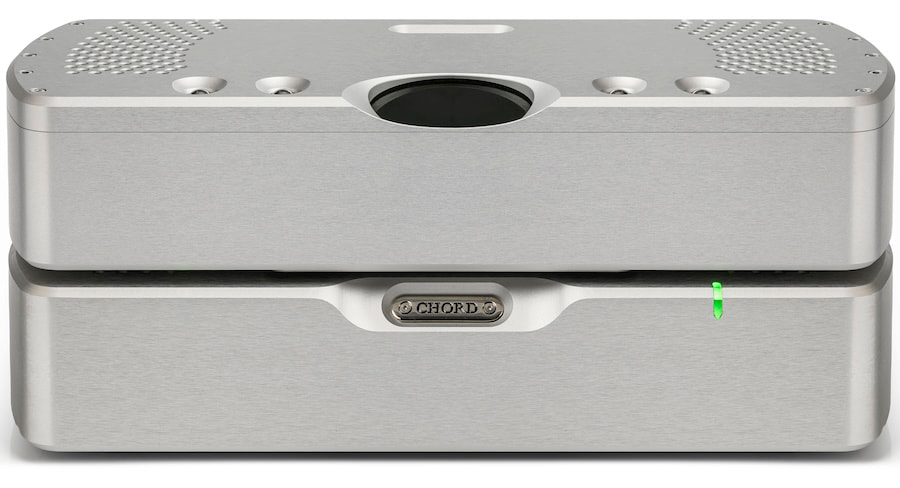
Chord Electronics has officially launched the Quartet upscaler, a £25,000 reference-class digital audio component that the British manufacturer is positioning as one of the most important products in its 37-year history. That is not a timid claim, but Chord’s longtime digital designer Rob Watts has never been especially bashful about where he thinks digital audio still falls short.
On a recent episode of the eCoustics Podcast, Watts had plenty to say about the current state of digital playback, and the Quartet feels like the hardware expression of that argument. At its core is the new Blackbird WTA filter, which Chord says represents the most advanced filtering technology it has ever put into a consumer audio product.
The goal is not just higher numbers for the brochure. Quartet is designed to reconstruct digital audio with greater timing precision, partner with Chord Electronics DACs, and push the flagship DAVE DAC to its full 768 kHz capability.
The surprise is the inclusion of a built-in ADC, which allows analog sources, including turntables, to be converted and upscaled through Quartet for the first time in a Chord Electronics upscaler. Vinyl into a £25,000 digital timing machine? Somewhere, a purist just dropped his carbon fiber record brush.
Advertisement
Chord Electronics Quartet Upscaler (front)
The Digital Audio Problem Quartet Was Built to Fix
“Conventional digital audio is like putting a steak through a mincer and expecting to reconstruct the original from the mince.”
Rob Watts does not exactly ease into the subject. His point is that when analog sound is converted to digital and then back again, the process is not as harmless as many would like to believe. Something gets lost, and for Watts, the most important issue is timing.
The problem centers on transients, the leading edges of musical notes that help the brain identify pitch, timbre, spatial placement, and the shape of a performance. When those transients are even slightly mistimed, the result can be a loss of depth, separation, and the natural sense of musicians occupying a real acoustic space.
That is the issue Chord Electronics says the Quartet upscaler was created to address. Rather than simply chasing bigger numbers, Quartet uses advanced interpolation to reconstruct the missing information between digital samples with far greater timing accuracy. In other words, it is trying to put the steak back together. Good luck doing that with supermarket mince, but that is the mission.
Advertisement
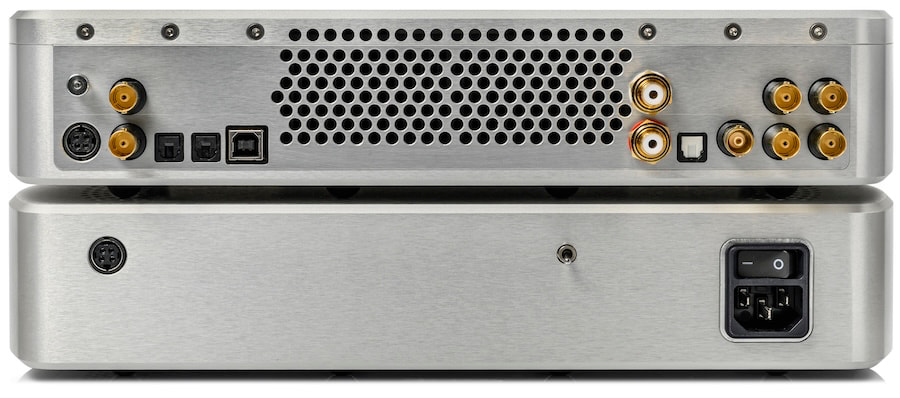
Chord Electronics Quartet Upscaler (back)
Blackbird WTA: Four Million Taps, Five FPGAs, and No Digital Shortcuts
Chord Electronics’ previous M Scaler used one million filter taps to reconstruct digital audio timing. The new Quartet raises that figure to four million taps, implemented across five Xilinx FPGAs. For the non-engineers still standing, taps are a measure of interpolation filter complexity. More taps allow the filter to make a more sophisticated calculation about what should exist between digital samples.
According to Chord Electronics, the new Blackbird WTA filter delivers a tenfold improvement over the previous-generation WTA filter and a tenfold improvement in transient timing accuracy. That is the company’s argument for why Quartet is not just an M Scaler with a fancier jacket and a scarier price tag. It also has five times the FPGA processing power of the flagship DAVE DAC.
The more important claim is that nearly all of the Blackbird WTA filter’s mathematical coefficients approach the theoretical ideal, known as the sinc function. In plain English, that is the target for a perfect reconstruction filter. Chord’s position is that Quartet can reconstruct the timing of a musical performance with far greater accuracy than its previous upscaling technology.
Advertisement. Scroll to continue reading.
Advertisement
Another key distinction is how the filtering is performed. Quartet implements its filtering directly in hardware rather than relying on FFT convolution, a software-based approach that converts audio into frequency data, applies processing, and then converts it back. Chord argues that this process can introduce the same timing errors it is supposed to fix. Convenient? Yes. Innocent? Not according to Watts.
The claimed sonic result is better transient accuracy, more clearly defined bass pitch, improved timbral realism, and a stronger sense of space and reverberation. In other words, Chord is not saying Quartet merely sharpens the picture. It is claiming the device restores more of the timing information that helps music sound like musicians in a room, not data being reassembled by a very expensive toaster.
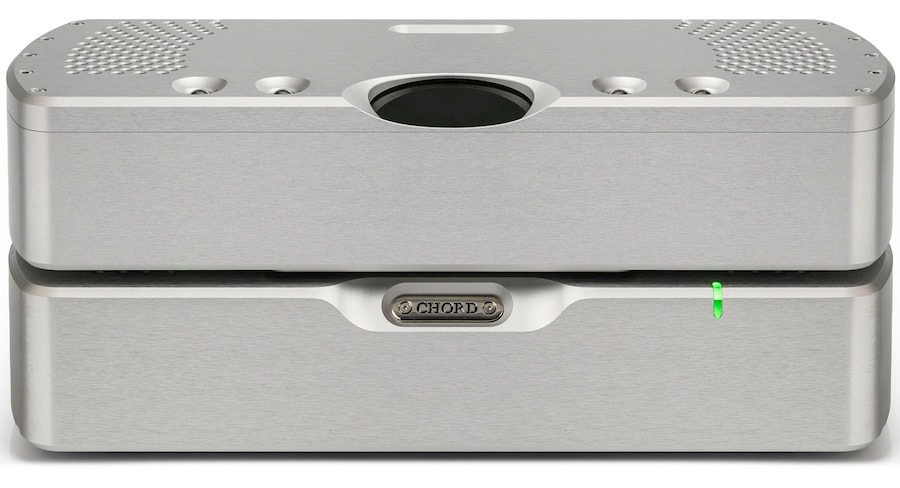
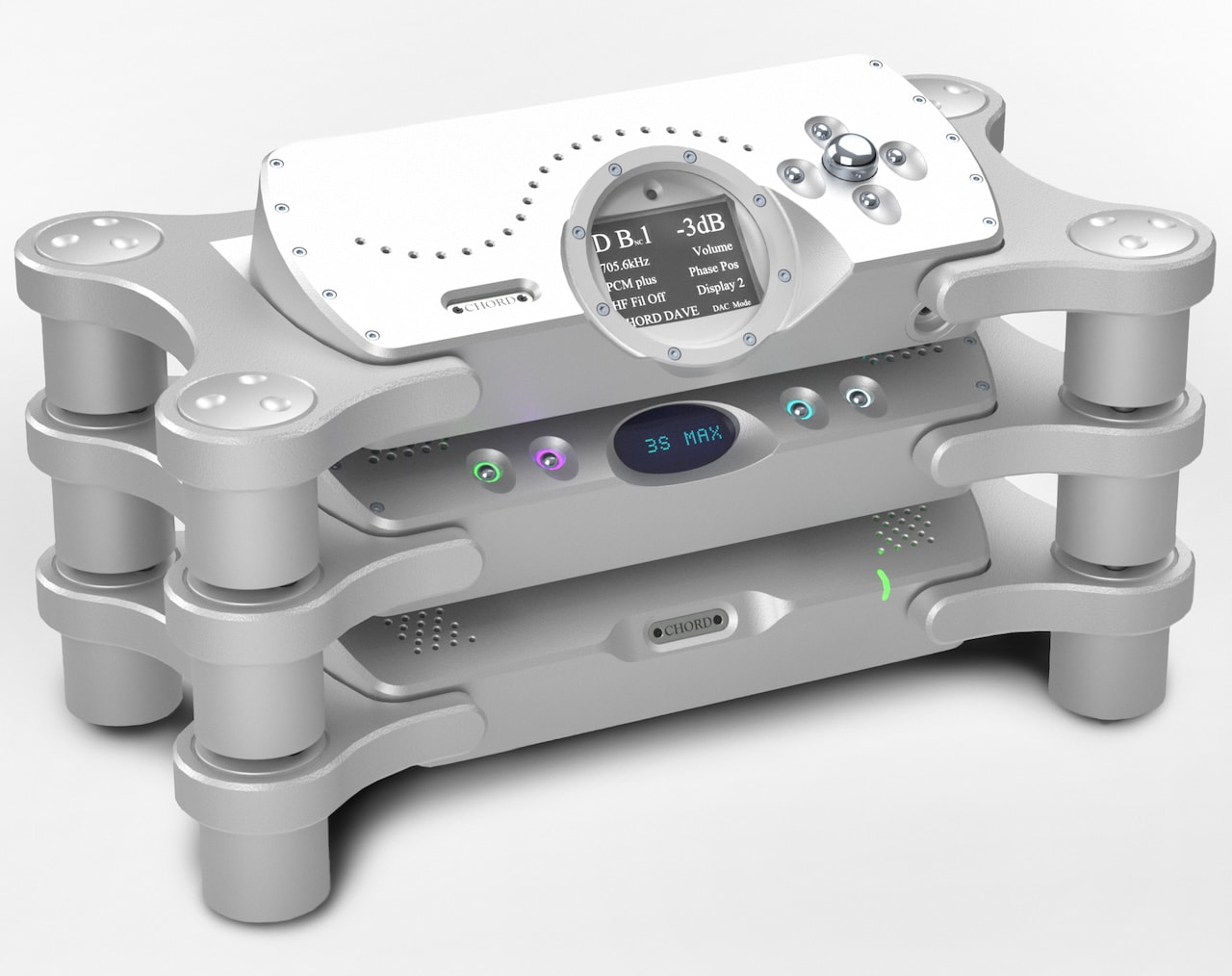
Chord DAVE (top) with Quartet (middle and bottom)
A Chord Electronics First: Quartet Adds an ADC for Analog Sources
Quartet is the first Chord Electronics upscaler to include a built-in analog-to-digital converter, or ADC. That matters because it allows analog sources, including turntables, tape machines, and other line-level sources, to pass through Chord’s upscaling technology for the first time.
Most of the digital audio conversation focuses on the DAC, which converts digital audio back into analog sound. But the ADC is just as important because it handles the first step: turning an analog signal into digital data. If that first conversion gets it wrong, everything downstream is working with damaged goods. You can season it later, but the steak has already been mistreated.
Advertisement
Chord’s argument is that conventional ADCs can suffer from aliasing, a form of distortion where ultrasonic noise folds back into the audible range. In practical terms, that can corrupt the timing information that helps music sound clean, spacious, and natural. Standard professional recording systems often use half-band filters to control this problem, but Chord claims those filters can introduce their own timing compromises.
Quartet uses a custom Pulse Array ADC with proprietary decimation filters designed to remove aliasing from its 104 MHz noise-shaper output. That is a mouthful, but the basic idea is straightforward: Chord is trying to preserve very small signal details during the initial analog-to-digital conversion without adding measurable noise floor modulation.
For listeners, the promise is simple. Analog sources can now be converted into digital with greater precision before Quartet applies its upscaling. That means a turntable or master tape source can benefit from Chord’s timing-focused digital processing, rather than being left outside the party like a vinyl purist with muddy shoes.
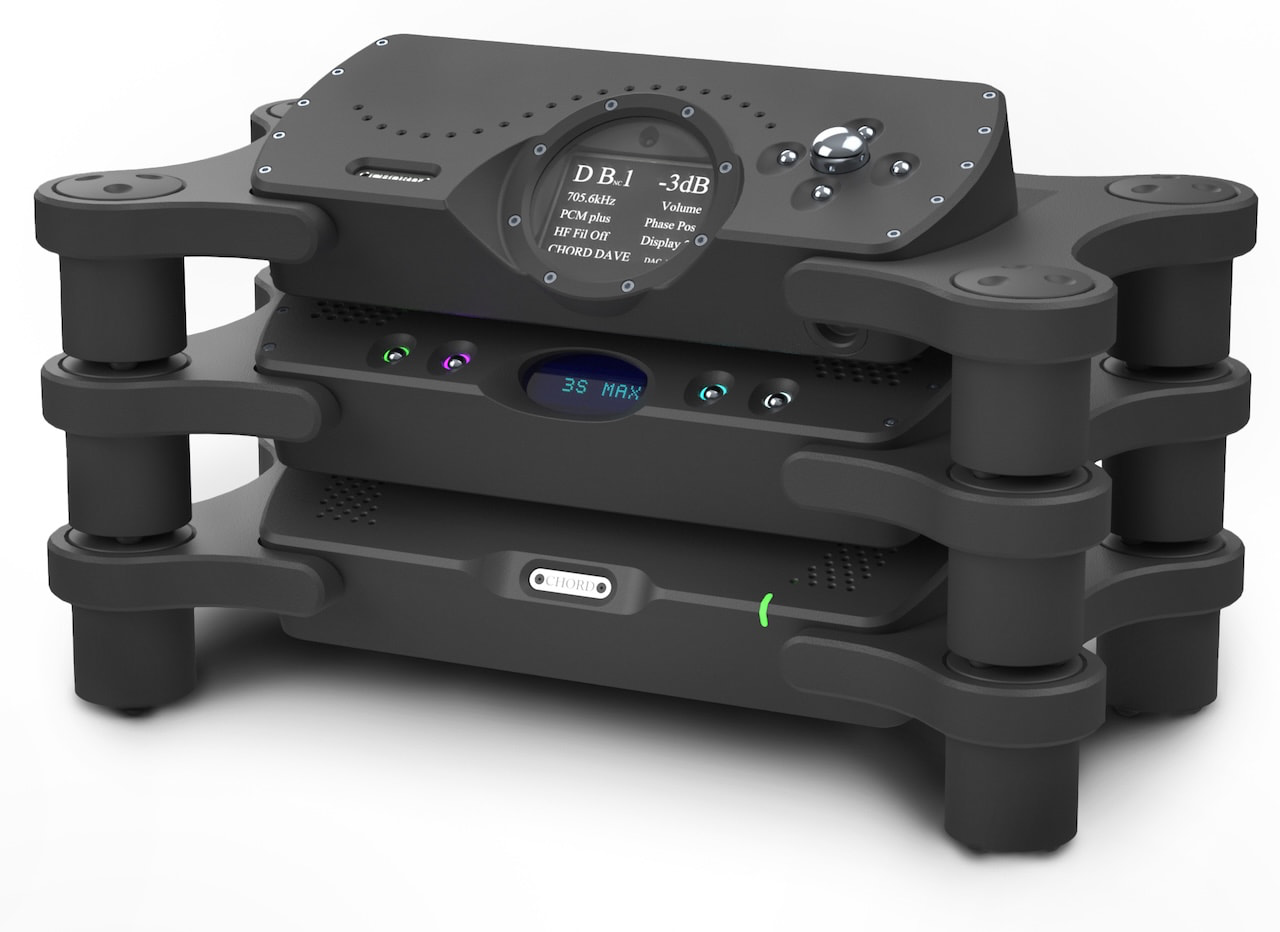
Chord DAVE and Quartet in black finishes in Ensemble Stand System (not included).
Preserving Transients From Analog Sources
The sonic argument for Quartet’s built-in Pulse Array ADC is not just that it converts analog sources into digital. Any ADC can do that. The point is that Chord Electronics claims Quartet does it while preserving the tiny timing cues that make music sound human rather than mechanically reassembled.
Advertisement
That matters most with sources like master tapes, turntables, and other analog components, where the signal starts and stops in extremely subtle ways. Those leading edges, or transients, help the brain understand where instruments are located, how they are shaped, and how they interact with the space around them.
In listening comparisons using master tapes, Chord says Quartet’s ADC delivered a major improvement over high-end professional studio converters. That is a serious claim, and not one likely to make every studio engineer spill espresso on the SSL console. But the idea is straightforward enough: if the ADC preserves more of the original timing information, instruments should sound less flattened, less mechanical, and more like performers occupying a real acoustic space.
For anyone using analog sources, that is the real appeal. Quartet is not simply digitizing vinyl or tape for convenience. It is designed to convert analog signals into digital while keeping the start, stop, texture, and spatial clues of the performance intact. That is the difference between capturing the event and filing a very expensive police report about what used to be there.
Two Boxes, Cleaner Power, and Lossless Digital EQ
Quartet is a two-box design, which means the main upscaler and the power supply live in separate chassis. That is not just audiophile theater with extra aluminum. Moving the power supply away from the signal-processing hardware can help reduce electrical noise, which matters when a product is trying to preserve microscopic timing information.
Advertisement
Advertisement. Scroll to continue reading.
The separate power supply was designed by Rob Watts and incorporates sophisticated RF rejection. RF stands for radio frequency noise, the kind of electrical interference that can sneak into audio circuits and degrade performance. Chord’s proprietary pinch-off RF filter architecture is designed to stop internal noise from spreading through the signal path. The goal is to deliver the kind of low-noise performance often associated with battery-powered products, while still running from mains power.
Quartet also includes a 108-bit, ten-shelf lossless digital EQ, technology first seen in the Mojo 2, with ±18 dB of adjustment. In normal-person terms, that gives listeners precise tone-shaping control without throwing away digital resolution in the process. That could be useful for older recordings, wildly inconsistent masterings, or albums from certain decades that sound like they were mixed inside a filing cabinet.
Connectivity includes isolated USB-B, dual BNC outputs supporting up to 768 kHz, optical connectivity, and RCA analog inputs for the built-in ADC. Quartet also provides programmable latency from 10 milliseconds to three seconds, which helps with audio-video synchronization. That means it can be integrated into systems where timing between picture and sound actually matters, rather than forcing you to watch lips move like a badly dubbed crime drama.
Advertisement
The Bottom Line
The Chord Electronics Quartet is a £25,000 digital upscaler designed to improve the timing accuracy of digital audio before it reaches a DAC. The production version will be shown at HIGH END 2026 Vienna from June 4.
The key upgrade is Chord’s new Blackbird WTA filter, which increases processing from the M Scaler’s one million taps to four million taps and is claimed to deliver a tenfold improvement in transient timing accuracy. In plain English, Quartet is trying to make digital music sound more natural by better reconstructing what happens between the samples.
The other major difference is the built-in Pulse Array ADC, which allows analog sources like turntables, tape machines, and line-level components to be converted and processed through Chord’s upscaling system for the first time.
Price & Availability
The Chord Quartet is available to order now priced at £25,000. It is supplied with a five-year warranty and is available in Argent Silver or Jett Black. Chord DAVE is available now for $14,900.
At the architectural level, Command A+ represents a major evolution from Cohere’s previous dense models. It is a decoder-only Sparse Mixture-of-Experts (MoE) Transformer.
Advertisement
While the model houses a relatively modest 218 billion total parameters, even fewer — only 25 billion — are active during any given generation step. It’s a much lighter footprint and requires far less compute resources to run in inference (serving the model in production environments to end users or via agents) than the proprietary U.S. giants like OpenAI’s GPT-5.5 and Anthropic’s Claude Opus 4.7, which are estimated by third-party observers to be in the trillions of parameters.
This sparse architecture is the key to the model’s efficiency. In plain terms, an MoE model routes incoming queries only to the specific “expert” neural networks best suited to handle them, leaving the rest of the model dormant.
This is a familiar formulation and one followed by most leading LLMs these days, allowing models to retain the vast knowledge base and nuanced reasoning capabilities of a giant, but at the faster speeds and reduced compute and energy requirements of a much smaller model, since only a fraction of parameters are ever activated at any time.
But where Cohere has taken an extra step beyond most for Command A+ is that it has focused heavily on hardware efficiency through quantization—a process that compresses the model’s memory footprint by reducing the precision of its parameters.
Advertisement
Command A+ is available in 16-bit (BF16), 8-bit (FP8), and a highly compressed 4-bit (W4A4) format.
The W4A4 quantization is the technical centerpiece of this release. Typically, reasoning models suffer an outsized “quantization tax,” where compressing the model leads to visible regressions in complex problem-solving.
Cohere mitigated this by only quantizing the MoE experts to 4-bit, while keeping the critical attention pathways at full precision, supplemented by a technique called Quantization-Aware Distillation.
The result is a nearly lossless compression that allows this massive model to run on a single NVIDIA Blackwell B200 GPU or just two NVIDIA H100 GPUs.
Advertisement
The speed gains are equally notable. According to performance data released by the company, the W4A4 quantization at low concurrency achieves 375 tokens per second (TOPS) with a Time-to-First-Token (TTFT) latency of just 113 milliseconds—representing up to a 63% increase in output speed and a 17% reduction in latency compared to the previous Command A Reasoning model.
Furthermore, Cohere has overhauled the model’s tokenizer. Tokenizers break text down into the fragments that AI models process. The new tokenizer is highly optimized for global enterprise use, featuring native support for 48 languages.
More importantly, it dramatically improves tokenization efficiency for non-European languages, reducing the number of tokens required to generate responses in Arabic by 20%, Japanese by 18%, and Korean by 16%. Because inference costs are calculated per token, this translates directly to lower operational costs for global, multilingual or non-English deployments.
Agentic workflows and high benchmarks on math, specialized fields
While raw speed and size dictate deployment, a model’s utility is defined by its product capabilities. Command A+ was built specifically for “agentic” tasks — workflows where the AI operates autonomously or semi-autonomously, uses external tools, queries databases, and synthesizes information across multiple steps.
Advertisement
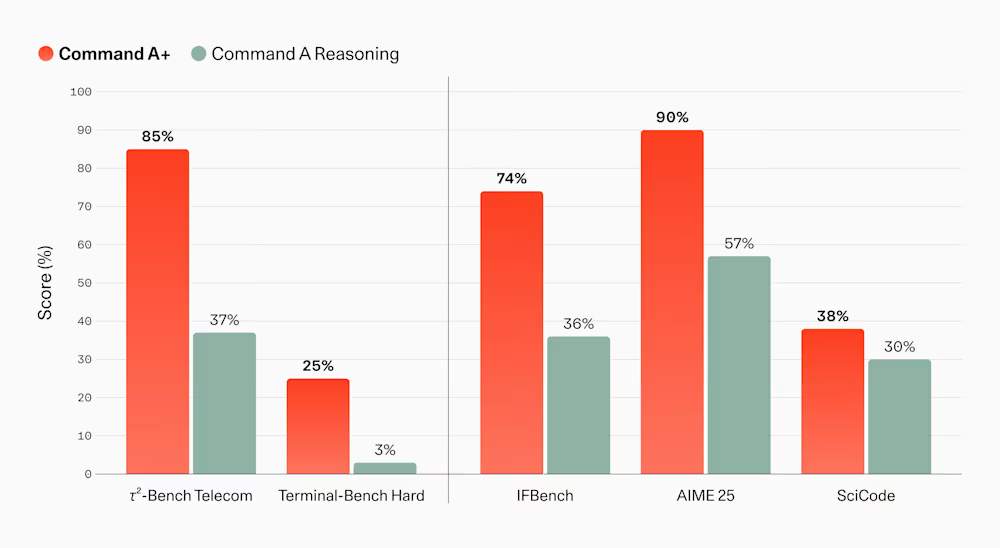
The benchmark leaps over the previous generation are stark.
On 𝜏²-Bench Telecom, which tests complex reasoning, the model jumped from a 37% score to 85%. On Terminal-Bench Hard, which measures agentic coding performance, it climbed from 3% to 25%. In complex mathematics, it scored 90% on AIME 25, up from 57%.
Command A+ punches above its weight class (25B active parameters) in pure reasoning and mathematics, competing directly with much larger models like DeepSeek V4 Pro on math benchmarks. However, for deep agentic coding and general broad-scale intelligence indexing, it currently trails behind the latest generations from Chinese open source rivals like DeepSeek, Z.ai (GLM), and MiniMax.
Advertisement
That said, comparing them directly ignores Cohere’s core value proposition: hardware efficiency.
Beyond the benchmarks, Command A+ introduces deep integrations for enterprise trust and verification. The model supports conversational tool use via standard chat templates, allowing developers to connect it seamlessly to internal APIs, search engines, or SQL databases.
Crucially, Command A+ features native citation generation. When Command A+ retrieves information from an external tool, it doesn’t just synthesize the answer; it generates explicit “grounding spans.” Using special tags embedded in the output, the model directly links every factual claim it makes to the specific source document or database row it pulled the information from.
For enterprises heavily regulated industries like finance, healthcare, or legal, this traceability is the difference between an interesting prototype and a production-ready application. If a user asks for a daily sales report, the model will output the total sales amount and explicitly cite the database query result that provided that number, minimizing the risk of undetected hallucinations.
Advertisement
Additionally, Command A+ is fully multimodal, capable of processing both text and images natively within its massive 128K input context window, making it highly effective for complex document processing, such as analyzing scanned invoices, charts, or technical manuals.
The first fully Apache 2.0 licensed Cohere AI model
In the current AI landscape, “open source” has become a fraught term. Many leading AI companies release their model weights under restrictive commercial licenses or acceptable use policies that explicitly forbid large enterprises from using the models for commercial purposes, or prohibit the models from being used to train competing AI systems.
Indeed, Cohere’s prior models, including Command R and Command R+, were released under a CC-BY-NC 4.0 (Creative Commons NonCommercial) license. While their model weights were open for researchers and developers to download, tinker with, and evaluate, they were strictly prohibited from being used for commercial purposes without purchasing a separate enterprise license from Cohere or going through its application programming interface (API), similar to the arrangement many enterprises use for accessing AI models from OpenAI, Anthropic, Google and other leading labs.
Cohere has changed up its approach by releasing Command A+ under the Apache 2.0 license. This is a critical distinction for the developer community. Apache 2.0 is a true, OSI-approved open-source license. It allows anyone—from independent developers to Fortune 500 corporations—to use, modify, distribute, and commercialize the model without paying licensing fees or adhering to restrictive non-compete clauses.
Advertisement
As Gomez wrote on X, the decision was championed by fellow Cohere co-founder Nick Frosst, who posted a two-minute long overview calling it “the best model we’ve ever put out.”
For the enterprise, this license means total vendor independence. A company can download the Command A+ weights, fine-tune them on highly classified internal data, and deploy them on their own private servers or air-gapped networks. They are not tethered to Cohere’s infrastructure, pricing changes, or API uptime. It is the ultimate realization of sovereign AI.
The release was met with immediate traction across the AI developer ecosystem, driven heavily by its day-one integration with major open-source inference frameworks like Hugging Face and vLLM.
What’s next?
The release of Command A+ marks a maturing of the open-source AI ecosystem. By combining frontier-level reasoning, robust agentic tool use, and multimodal capabilities with an architecture specifically designed for hardware efficiency, Cohere is changing the calculus for enterprise AI adoption.
Advertisement
The requirement of massive, centralized compute clusters has long been a bottleneck for companies prioritizing data privacy and cost control. By democratizing access to a model of this caliber under a true open-source license, Cohere has provided the enterprise market with exactly what it has been asking for: the power of the cloud, capable of running securely in the server room down the hall.
If not for my love for Arc Browser, which has sadly become an abandonware, I would have used Vivaldi. No other browser comes even close to the customization and features it offers. And with its latest version 8.0 update, Vivaldi is making an even stronger case to ditch other browsers in its favor.
I like that while browsers like Google Chrome and Microsoft Edge have been busy packing AI into every corner, Vivaldi has been quietly delivering features users actually want.
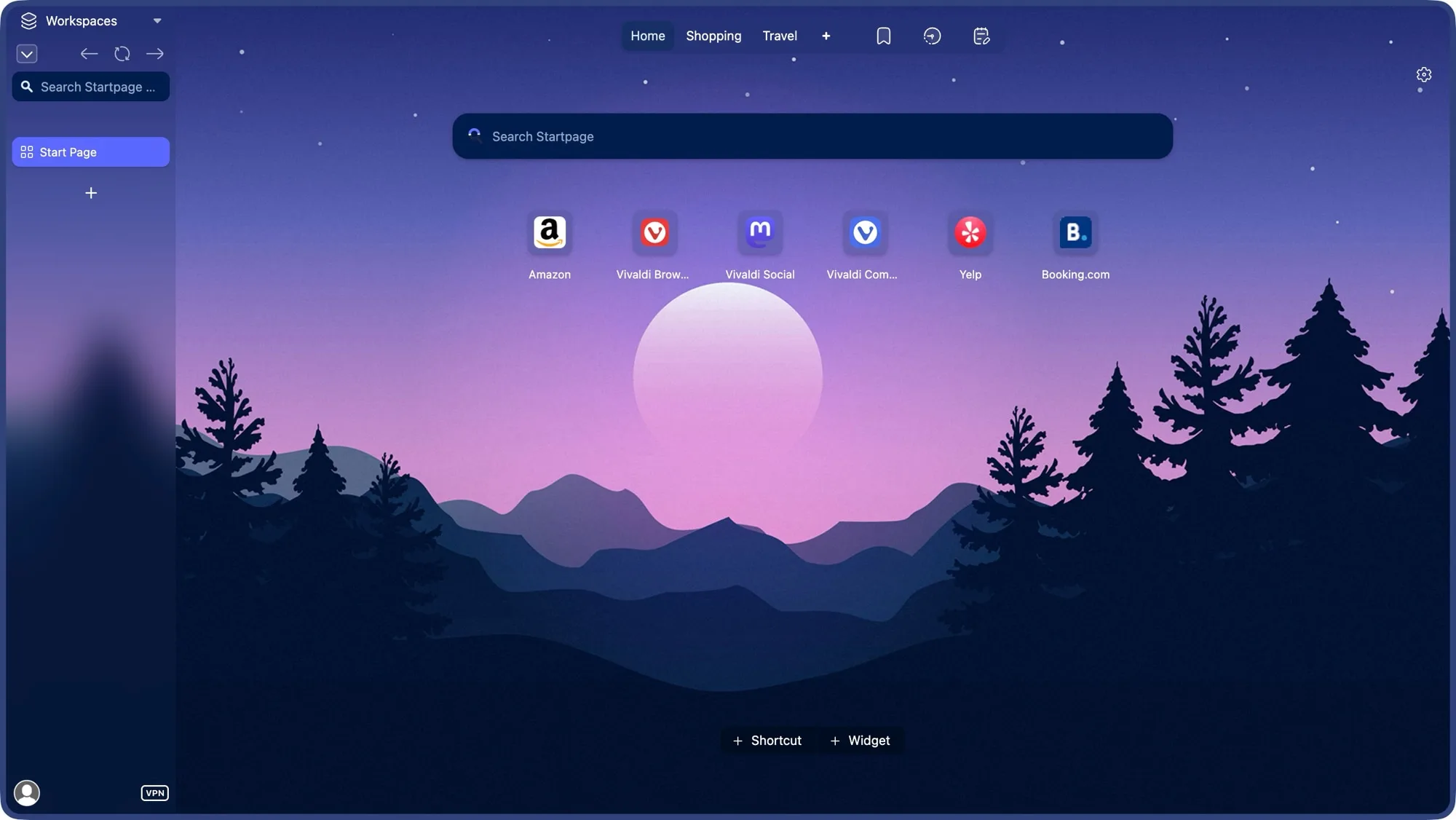
The headline feature is a new design language called “Unified”. Previously, the different parts of the browser, tabs, toolbars, panels, and the content area all existed as separate, slightly disconnected layers. Unified removes those boundaries and places everything on one continuous surface.
Is this just a visual refresh or something more?
When you apply a theme in Vivaldi 8.0, it flows through the entire browser without interruption. A dark theme is dark everywhere, not just in some parts. Wallpapers feel like part of the environment rather than something pasted on top. When you apply a wallpaper, it flows not only to the main window but also to the top bar, the address bar, and the tabs, giving the browser a unified look.
Advertisement
Digital Trends
Vivaldi has also added a fresh collection of default themes, and if none of them feel right, there are over 7,000 community themes you can choose from. If you prefer the old look, you can keep it. This is Vivaldi, after all, and you always have the final say.
Feeling overwhelmed by all the options?
One of the issues with Vivaldi was that it overwhelmed users with all its customization options. To solve this issue. Vivaldi 8.0 ships with six preset layouts to help new users get started.
Digital Trends
You can choose between a clean, minimal setup, tabs on the side, a full-screen browsing experience, or the classic Vivaldi look. I love this from Vivaldi, as it will ease the user onboarding process. If you like what you see, you can download Vivaldi 8.0 today for free on Windows, macOS, and Linux.
SpaceX filed paperwork today that opens its books to the public for the first time and sets the stage for what could become the largest stock offering in history. The documents lay out clear numbers on revenue, customers, and spending that anyone can follow, while pointing to a future built around satellite connections, computing in orbit, and human presence on another planet.
As of the first three months of 2026, Starlink had 10.3 million paid subscriptions, more than doubling the five million it had the previous year. Each connection generates an average of $66 per month, down from $86 previously, as the business expanded into more nations with lower-cost options. These subscriptions are key to the connection business, which generated $11.3 billion in sales last year, accounting for 60% of the company’s overall revenue.
Stay connected in remote locations with Starlink Mini’s compact satellite internet system designed for travel, RV life, camping, off-grid work…
The ultra-portable Mini Kit easily fits into backpacks, vehicles, camper vans, and travel gear while delivering reliable internet access in minutes.
Integrated Wi-Fi router eliminates extra hardware and simplifies setup for phones, tablets, laptops, smart TVs, gaming devices, and more.
In 2025, total revenue for the operation reached 18.7 billion dollars, rising about one-third from the previous year. The satellite internet segment alone generated a healthy operational profit of 4.4 billion dollars, more than doubling what it made previously. Launch services continue to handle more than half of all orbital journeys worldwide, but the business lost $657 million last year after making previous gains.
Advertisement
Overall, the company reported a net loss of 4.9 billion dollars in 2025 and another 4.3 billion dollars in the first quarter of 2026. These deficiencies are primarily due to high spending on a new artificial intelligence branch formed by the merger with xAI. Capital costs nearly doubled to $20.7 billion last year as the business expanded its AI infrastructure and continued to create larger rockets.
Elon Musk maintains decisive control using a dual-class share structure. Shares sold to the public carry one vote each, whereas special shares owned by insiders carry ten votes. Even after the offering, Musk still controls approximately 85% of the total voting power. His personal remuneration is directly related to major goals, such as reaching a seven-and-a-half trillion-dollar market value and establishing a permanent settlement on Mars with at least a million people.
The document also details an unusual lock-up arrangement for insiders and early investors, which differs from the conventional waiting periods used by most corporations. SpaceX intends to put aside a significant portion of its shares for everyday retail customers, and it even planned an event next month to host approximately 1500 of them. Goldman Sachs leads the banking group in charge of the transaction, which also includes Morgan Stanley, Bank of America, Citigroup, and JPMorgan.
Cash on hand was sixteen billion dollars at the conclusion of the first quarter, after beginning the year higher. The corporation employs more than 22,000 workers and has no union contracts. The specific scheduling has still to be approved by regulators, but the road show could begin in early June, with shares trading by mid-month under the Nasdaq symbol SPCX.
Advertisement
In 2025, total revenue for the operation reached 18.7 billion dollars, rising about one-third from the previous year. The satellite internet segment alone generated a healthy operational profit of 4.4 billion dollars, more than doubling what it made previously. Launch services continue to handle more than half of all orbital journeys worldwide, but the business lost $657 million last year after making previous gains.
Overall, the company reported a net loss of 4.9 billion dollars in 2025 and another 4.3 billion dollars in the first quarter of 2026. These deficiencies are primarily due to high spending on a new artificial intelligence branch formed by the merger with xAI. Capital costs nearly doubled to $20.7 billion last year as the business expanded its AI infrastructure and continued to create larger rockets.
Elon Musk maintains decisive control using a dual-class share structure. Shares sold to the public carry one vote each, whereas special shares owned by insiders carry ten votes. Even after the offering, Musk still controls approximately 85% of the total voting power. His personal remuneration is directly related to major goals, such as reaching a seven-and-a-half trillion-dollar market value and establishing a permanent settlement on Mars with at least a million people.
The document also details an unusual lock-up arrangement for insiders and early investors, which differs from the conventional waiting periods used by most corporations. SpaceX intends to put aside a significant portion of its shares for everyday retail customers, and it even planned an event next month to host approximately 1500 of them. Goldman Sachs leads the banking group in charge of the transaction, which also includes Morgan Stanley, Bank of America, Citigroup, and JPMorgan.
Advertisement
Cash on hand was sixteen billion dollars at the conclusion of the first quarter, after beginning the year higher. The corporation employs more than 22,000 workers and has no union contracts. The specific scheduling has still to be approved by regulators, but the road show could begin in early June, with shares trading by mid-month under the NASDAQ symbol SPCX. [Source]
Most organizations still treat cybersecurity as one team’s job. But attackers are stretching teams to their limits as they waste no time in putting AI to work, with an 89% year-over-year increase in AI-enabled adversary activity.
And threat actors aren’t just moving at record speed – they’re also probing a broader attack surface of employee devices, each offering a new path into internal systems.
Yet beyond the occasional training session, most employees aren’t thinking about cybersecurity day to day. The prevailing attitude in many organizations is that one team has security covered, leaving everyone else to focus on innovation and growth.
Advertisement
Latest Videos From
Mike Arrowsmith
Chief Trust Officer at NinjaOne.
This approach may have functioned in the past, but it won’t cut it anymore. When attackers are targeting people as much as systems at rapid speed, security can’t sit with just one team. It has to become part of how the entire organization operates. Every employee, every device, and every interaction now play a role in either strengthening or exposing the business.
Advertisement
So how do organizations shift from treating security as a function to embedding it into everyday operations? Let’s take a look at how to lay the foundations for a cyber-first mindset from the ground up.
Cyber security requires ownership from every part of the business
Most businesses have a cyber strategy on paper. The challenge is turning that strategy into action. Too often, security training becomes a checkbox exercise. Completed quickly, rarely reinforced, and easily forgotten. When incidents occur, teams find themselves overwhelmed, unsure of responsibilities, or unclear on escalation paths – slowing remediation times and leaving business operations unstable in the process.
This is where leadership plays a defining role. Building resilience requires more than approving budgets or policies, it requires cross functional buy-in to truly succeed. When executives actively participate in training, contribute to simulations, and openly discuss lessons learned, cybersecurity shifts from an isolated technical concern and to an organizational priority. Action and accountability must start at the top in order to truly embed cyber in company culture.
Advertisement
Sign up to the TechRadar Pro newsletter to get all the top news, opinion, features and guidance your business needs to succeed!
Identify pitfalls ahead of time
Effective incident response depends on clarity long before an incident occurs. Disaster recovery plans must be detailed, actionable, and tailored to the organization’s specific environment. Every employee, particularly those in IT or security functions, should have a clear understanding of their specific role – or their ‘swim lane’ – so there is no confusion about who does what when time is critical. The more detailed the disaster, the more efficient the recovery needs to be.
Disaster simulations are one way to create better cohesion between teams, from IT to security to operations. Hands-on exercises help teams practice coordinated responses, clarify individual roles, and build trust across departments. Actively engaging employees with real-world challenges and exposing gaps in knowledge or process ensures that everyone knows how to respond when it matters most.
Advertisement
Make cyber training contextual
One of the reasons cybersecurity ownership breaks down is that training often feels abstract or disconnected from day-to-day work. A one-size-fits-all approach rarely resonates. Different teams face different threats, and education needs to reflect that reality. Take HR for example. Gartner predicts that by 2028, one in four candidate profiles worldwide will be fake.
As deepfake scams proliferate, HR teams require specialized training on what to look for in resumes and video interviews, and to reinforce identity verification procedures. The more organizations and individuals can contextualize how certain types of attacks might personally affect them or show up in their roles, the better prepared they’ll be to identify and remediate threats before they can negatively impact business.
Advertisement
Lean on tech to identify risky behavior
Training builds awareness, but it also isn’t (or shouldn’t be) treated as a one-and-done event. Employee engagement and regular, adaptive education lay the foundation for a positive culture of cyber awareness. Technology has an important role to play in reinforcing good security behaviors and reducing reliance on perfect human judgement.
Unified IT operations on one platform, for example, can provide real-time monitoring of every endpoint (or device) across their organization. Consolidating endpoint management, autonomous patching, backup, and remote access into a single pane of glass enable both IT and security teams to quickly recognize common policy violations and risky employee behavior.
Platforms that also leverage automation can remediate system vulnerabilities before they become critical issues for the wider organization, minimizing downtime without disrupting employee productivity.
Advertisement
Cybersecurity is everybody’s problem
In 2026, organizations can’t get away with treating cybersecurity as something layered on top. They need to recognize it as a core function that underpins every aspect of what they do.
Executive leadership can reinforce this with investment, enablement, and action. Developing resilience requires organizations to rethink the way they view cybersecurity. From being a single entity to a shared responsibility that touches every part of the business.
Change will take time, buy-in from leadership, and sustained investment. However, organizations that invest in resilience today will be better equipped to combat threats, act quickly, and move through today’s digital world with confidence.
This article was produced as part of TechRadar Pro Perspectives, our channel to feature the best and brightest minds in the technology industry today.
The views expressed here are those of the author and are not necessarily those of TechRadarPro or Future plc. If you are interested in contributing find out more here: https://www.techradar.com/pro/perspectives-how-to-submit
























































You must be logged in to post a comment Login