A specific cadence for contemporary group chats eludes me. The rapid-fire tempo of texts combined with custom stickers, often based on inside jokes, leaves me behind. My digital fate: the silent lurker. As I let the notifications wash over me, I am a ghostlike figure haunting the group chat, a silent watcher who rarely responds without a specific invocation.
Group chats are dominating the social lives of younger Americans. In a recent YouGov poll, 34 percent of adults under 30 said they are in at least four group chats, whether via text or other messaging app. Power texters are spending hours juggling multiple message threads—3 percent of adults under 30 said they are in more than 20 distinct group chats.
These group chats are not just for the young folk, though. All attempts at social interactions now spark a new group message. A WhatsApp thread for our monthly book club. An Instagram group for that weekend getaway. A bulbous iMessage chat with random cousins attempting to plan a family reunion. Group chat hell is everywhere you turn.
Here are a few tips for maintaining your sanity during the reign of the group chat, without becoming a textless social pariah. Hint: It’s all about boundaries.
Advertisement
Core Compromise
Maybe you thrive in the chaos of hundreds of notifications, but I don’t. I started by choosing which text threads were most important to me. A text thread with my immediate family is nonnegotiable. A group message about a trip that’s in one month is actually helpful for logistics. A random thread where people are throwing out Halloween ideas might be fun, but it’s on the chopping block. Make a short list of what you actually want to participate in and stay there.
Walk Away
For the others, you can leave the chat. It really is that easy. Especially for event-based group chats, I’m quick to leave the conversation after it’s all wrapped and any outstanding bills are settled. Much like I’m not going to be the last person to leave an afterparty, I’m walking away from group chats without hesitation. If there’s a specific aspect of the conversation I want to keep going, I’ll follow up with those people.
Mute It
You’ve picked your core group chats you don’t want to give up, and you’ve walked away from the rest. Now is your time to play with the notification settings and see what your smartphone offers. It’s worth looking into the settings overall, as well as the options for individualized threads inside apps, especially if some notifications rarely come through while other text threads are more active.
If you balk at the idea of notification distractions, consider Do Not Disturb settings. Be forewarned that being this unreachable can sometimes become a headache for those closest to you.
Advertisement
Get Creative
For those group chats you decide to stay in, why not spruce up the place a bit? Whether you’re on an iPhone or Android, there are plenty of options for making your group chats more specific to your context and potentially just more fun to use. Right now I’m watching Game of Thrones from the beginning for the first time. I have a group chat with friends to process some of our reactions and update the background image to whatever character I’m currently rooting for.
Go Direct
I mentioned earlier that when I leave a group thread and I want to keep some aspect of the conversation going, I’ll follow up directly with people. This seems to be the better direction to take overall. While you may get a dopamine rush from shooting off hilarious memes and receiving reaction emojis in the group chat, cultivating relationships often happens best with one-on-one moments. Directly texting someone feels like a worthwhile compromise to escape from group chat hell, without fully excluding yourself from modern messaging. Though a face-to-face chat always feels best.
If you already have a perfectly functional cable that supports Android Auto, upgrading to a 5Gbps cable isn’t going to make Spotify sound like you rebuilt the stereo. Yes, a broken or poorly built cable can lead to dropouts, disconnects and other frustrations, but additional bandwidth won’t improve an intact digital audio stream.
Google does recommend trying a high-quality or replacement cable when wired Android Auto is acting up, but that’s basic troubleshooting, not some secret hi-fi upgrade. If you already have a stable connection, the best places to look for improvement are in the music, any processing your phone or app is doing and finally the car’s audio settings.
Advertisement
Don’t blame Android Auto first — Check the music app
Spotify
If your music app switches quality depending on the network, a weak cellular connection can result in poor streaming quality, and pre-downloading your favorite playlists or albums can be one of the easiest ways to eliminate this factor. Spotify’s Automatic setting adjusts the streaming quality according to the connection, while YouTube Music gives Premium subscribers the ability to set a separate streaming quality level for downloads. That’s worth doing if you frequently pass through areas where five bars drop to one with little notice.
Next, choose a higher download-quality setting, but don’t necessarily set all the numbers to the highest. Android supports playback sample rates up to 192kHz, but Google doesn’t provide a universal Android Auto output rate to confirm that your car is getting 192kHz audio. Bigger numbers here don’t necessarily help.
You should pay more attention to your EQ and normalization settings. An earbuds-oriented profile with a bass boost can sound pretty weird in a car’s completely different speaker configuration, especially if the car is adding its own bass boost, surround processing or EQ. Spotify is a great example (and sometimes an annoying one): On Android phones with a built-in equalizer, changes made through Spotify can also affect the sound of other apps.
Spotify’s Loud normalization setting also applies a limiter, so temporarily flatten the EQ, set normalization to Normal or turn it off and play a familiar downloaded track. Add your preferred adjustments back one at a time. It’s simple troubleshooting, but it’s better than changing six things and finding nothing.
Advertisement
Use wired and wireless connections to narrow it down
Alex Photo Stock/Shutterstock
Wireless Android Auto uses both Bluetooth and Wi-Fi, rather than simply sending music over a standard Bluetooth connection. The initial wireless setup pairs the phone and car over Bluetooth, with Wi-Fi also required for the connection. That makes going into Android’s developer options to search for aptX, LDAC or some supposedly better Bluetooth codec a bad place to begin.
If playback is choppy, playback stalls or sounds obviously wrong, try the same downloaded song over wired Android Auto. If it sounds good, then you’ve isolated the connection without touching the music itself.
If wired playback fails as well, then the cable is finally a suspect. Always use a known, good cable and never use a hub or extension. What you don’t need is a cable that you purchased simply because the packaging says it supports transfer speeds that your music will never even come close to using.
Advertisement
The last place to check is the vehicle itself. Turn off bass boost, surround mode or other enhancements, flatten its EQ and compare the same track again. There is no consistent menu path because each infotainment system handles these controls differently (some seem to hide them for sport). If the problem persists, it may also be worthwhile to check whether a firmware update is available for an aftermarket receiver. Wireless Android Auto does require a compatible phone with 5GHz Wi-Fi support.
The world’s refusal to standardize on a single type of mains power outlet has led to a vibrant market of so-called travel adapters, all of which try to outdo each other in convenience and universality. This comes at the cost of complexity, something which ultimately reflects in the price. The cheapo $9.26 universal travel adapter that [Brainiac 75] got off an online retailer’s site is thereby a good example of how safety suffers if the overarching goal is to ‘make it cheap’.
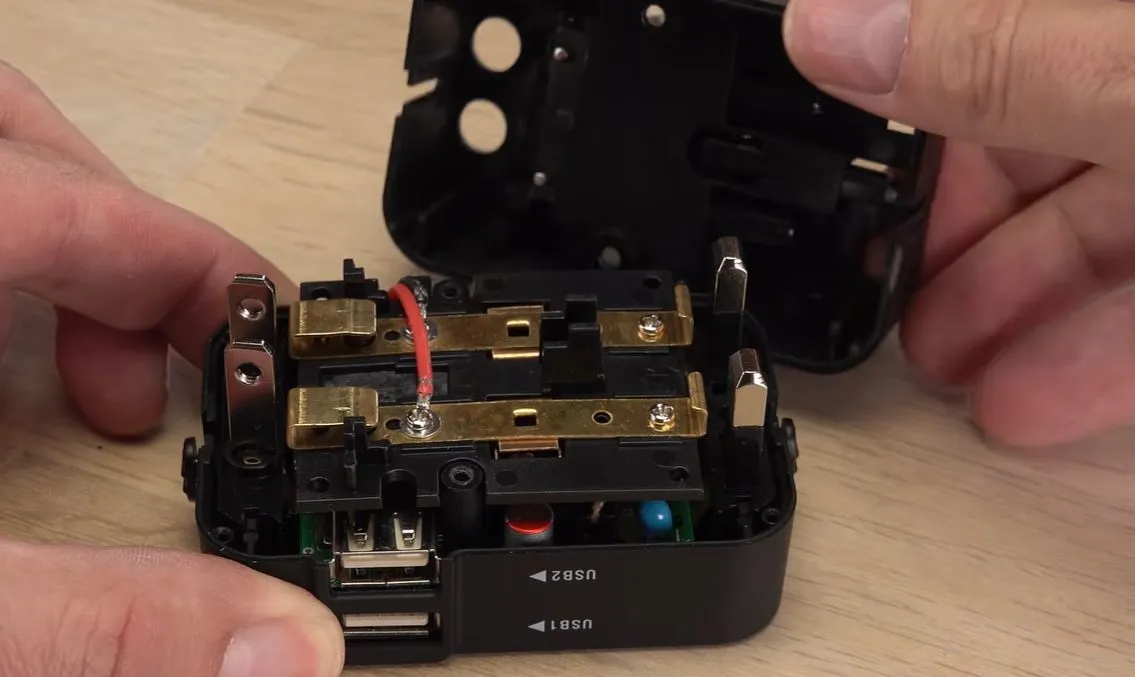
The first exciting discovery is that when you plug any of its three sets of connectors into an outlet, the others become live at the same voltage. This would suggest that they’re just wired together, a fact soon confirmed with a quick resistance check between the respective prongs. Though to the adapter’s credit, the prongs are not live when fully retracted into the enclosure. Yet as demonstrated in the video, the retracting of prongs is not enforced, so mistakes here are possible.
The adapter also has two USB ports that claim to provide 5 V at 2.1 A, with as it turns out no hard cut-off. This is probably the best part of the adapter despite not featuring any advanced charging features. After opening the adapter, you can see that the sliding mains prongs connect to a central bus bar when either unfolded or extended, which is definitely straightforward, but doesn’t enforce that only one type of prongs can be used at any given time.
Advertisement
To make it safer, [Brainiac75] removed the less useful US and UK plugs, taping over the empty holes. It’s now just a USB charger with a universal mains port to plug random non-EU plugs into, which is probably relatively safe and a better idea than really using it as a travel adapter.
The Debian community has voted to allow members to use generative AI when creating their contributions, with the caveat that developers remain responsible for code quality.
Advertisement
The Linux distro’s community recently decided to develop a policy on use of AI-assisted coding tools, and asked participants to vote on one of eight proposals that included an outright ban, cautious use, or just avoiding LLMs because of their impact on Earth’s environment.
The rules of the vote saw community members asked to rank each of the eight proposals. Just under 600 people voted, but Debian’s election team rejected many for unspecified reasons, leaving almost 450 valid votes to count.
When the tallying was done, proposal E – “Responsible Use of Generative AI” – won the day.
The proposal means “Debian neither endorses nor prohibits the use of generative AI tools in the development, maintenance, or documentation of software, packaging, documentation, and other media published within the Debian Project.”
Advertisement
The proposal advocates that approach because “such tools can substantially improve the productivity of contributors when used responsibly, allowing volunteers to spend more of their limited time on work that requires technical expertise, judgment, review, and collaboration.”
The proposal also spells out that the Debian community doesn’t believe “AI made a mistake” is an excuse for sloppy contributions.
“The Debian Project nevertheless expects that all contributions submitted to Debian, regardless of how and with which tools they were produced, satisfy the same standards of quality, correctness, maintainability, and legal compliance,” the proposal states. “The use of a generative AI tool does not diminish the contributor’s responsibility for the work they submit. Contributors are expected to understand, review, test, and, where appropriate, modify AI-assisted output before incorporating it into Debian.”
Woe betide the dev who doesn’t check their AI-generated code, as the proposal also states, “Blindly accepting or uploading AI-generated material without appropriate human review is inconsistent with Debian’s established development practices.”
Advertisement
Another element of the proposal tries to make acknowledging the use of AI a norm.
“We encourage our contributors to disclose whether a contribution was made with AI assistance, but do not require them to do so,” the text states.
As our FOSS aficionado Liam Proven wrote in his report on the vote, the Gentoo Linux team has banned use of AI, while NetBSD and OpenBSD don’t want any clanker-written code contributions.
Linus Torvalds, arguably the most influential figure in the FOSS community, welcomes AI-generated contributions.
Advertisement
In July he declared “Linux is not one of those anti-AI projects” – and recently proved it by using AI to squash a tricky bug. Torvalds has also sometimes complained about AI, such as his May observation that AI-generated bug reports sometimes made the Linux security mailing list “unmanageable.” ®
Bill Gates has published a memo proposing a tax on AI, a category of jobs reserved for humans and new institutions to manage the transition, and told GeekWire that industry leaders are worried privately while staying quiet publicly. He proposed a robot tax in February 2017, the same month the European Parliament adopted robotics rules that left the tax out.
Bill Gates says the people building AI are worried in private and quiet in public. “I know they’re all worried. Or all of them that I know, which is basically everybody but Elon,” he told GeekWire.
The reason he is talking is a memo he published this week. It argues the industry is crossing the safety lines it set for itself, and that nobody is preparing for what follows.
TNW covered the proposals when it landed. A tax on AI, a category of jobs reserved for humans, and new institutions to manage the transition.
Advertisement
The interview adds the part he did not put in writing. “Even lack of control that I thought would be many years from now, we’re seeing lack of control,” he said.
On the tax, Gates is repeating himself. He first proposed taxing robots in February 2017, when the argument was about factory automation rather than models, and the reasoning was the same.
Europe answered that question the same month. The European Parliament voted 396 to 123, with 85 abstentions, on rules for robotics, and the tax was not in what passed.
What passed instead is worth reading. The resolution asked the Commission to look at the viability of member states’ social security systems as robots spread, which is the diagnosis behind the remedy MEPs had just dropped.
Advertisement
It also floated something stranger. The adopted text raised electronic personhood for the most sophisticated autonomous robots, an idea that has gone nowhere since.
The rapporteur was not pleased. Mady Delvaux said certain coalitions in the Parliament had rejected a forward-looking debate about workers, and the robotics industry welcomed the outcome.
Nine years on the position has not moved. The AI Act regulates risk and requires human oversight, and TNW has asked whether it can protect jobs without stifling innovation.
It does neither of the things Gates wants. It does not tax a model, it does not reserve a category of work for people, and no member state has proposed either.
Advertisement
The evidence base is thinner than either side admits. TNW has argued that what AI is doing to jobs in Europe looks different from the headline numbers.
Which leaves the memo where it started. A man who proposed this in 2017 is proposing it again, and Europe has already voted.
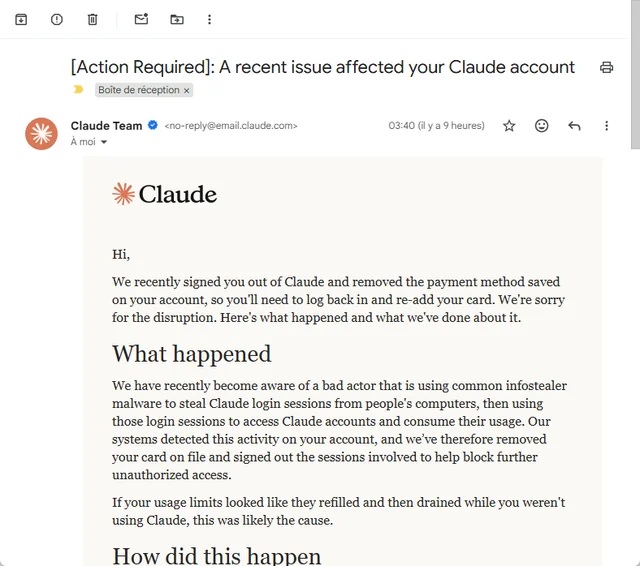
Anthropic is warning some Claude users that infostealer malware on their PCs has stolen active Claude login sessions, allowing attackers to access accounts and consume their usage.
The company is signing affected users out of Claude, removing saved payment methods, and refunding charges it identifies as unauthorized.
“We have recently become aware of a bad actor that is using common infostealer malware to steal Claude login sessions from people’s computers, then using those login sessions to access Claude accounts and consume their usage,” Anthropic said in an email sent to an affected user, who shared it on Reddit.
“If your usage limits looked like they refilled and then drained while you weren’t using Claude, this was likely the cause,” Anthropic warned.
Anthropic sending emails to affected users
Source: Reddit
It is also worth noting that infostealers can copy an already authenticated browser session, which means the attacker may not need to go through the normal password and 2FA login process again.
Anthropic links attacks to Vidar, LummaC2, StealC, RedLine and other infostealers
In the email, which is also being sent out to other compromised account holders, Anthropic says its investigation is ongoing, but computers were likely already infected with general-purpose infostealer malware.
Advertisement
“We have no reason to believe that this malware is related to Claude, installed through Claude, or related to anything you did with Claude,” the company stressed.
According to Anthropic, the malware typically arrives through downloads or malicious apps and steals information stored locally, including browser passwords, login cookies, and credentials belonging to other apps.
“Your Claude session was likely one of the many things it collected. It appears that a bad actor has now started picking the Claude sessions out of what it collected and using them,” Anthropic said.
In this case, the Redditor who shared the email confirmed that they downloaded a pirated game, which explains why their system got compromised.
Advertisement
Anthropic has identified multiple malware, including Vidar, LummaC2, StealC, RedLine, and Acreed on Windows, along with Atomic Stealer (AMOS) on a small number of Macs.
If you get affected, Claude will revoke compromised sessions and remove saved payment methods to prevent unauthorized purchases.
“Signing you out of Claude stops the stolen sessions, but it doesn’t remove the malware,” Anthropic warned. “If it’s still on your computer, your next login session could be stolen the same way.”
Anthropic has urged affected users to take basic security steps, including changing credentials, revoking other sessions, and removing the malware from the PCs.
Advertisement
Overall prevention scores can hide what happens after initial access. Once attackers are using valid credentials, prevention drops sharply.
The Blue Report 2026 measures defenses technique by technique across 338 million simulations run in customer production environments.
Google Maps now labels Lake Ontario as Lake America for users in the United States, following an update to the US Geographic Names Information System, while Canadian users see the old name and everyone else sees both. Google Maps has been a designated very large online platform in the EU since April 2023, with duties to assess systemic risks including effects on civic discourse.
Google Maps now shows Lake Ontario as Lake America to anyone using it in the United States. Alphabet announced the change, Bloomberg reported.
What you see depends on where you are standing. Canadian users still get Lake Ontario, and everyone else, Europe included, gets both names printed on the same water.
The trigger was a database entry. The US Geographic Names Information System was updated on 27 August, after President Trump said he would rename the lake.
Advertisement
“These updates follow our long-standing policy for bodies of water with names that vary from country to country,” Alphabet said in a statement.
Not everyone went along with it. MapQuest refused outright and built a generator letting users invent their own names for the lake, and Apple Maps was still showing Lake Ontario to American users.
There is a precedent for the mechanism. The Gulf of Mexico became the Gulf of America in the same product last year, under the same stated policy.
The rule underneath is worth stating plainly. A government can change what the world’s most used map says by changing its own naming database.
Advertisement
Europe has that machinery too. Geographical names are a harmonised data theme under the INSPIRE directive, maintained by national mapping agencies.
No European government has used it this way. That is an observation about restraint rather than about capability, and the two are easily confused.
The other half of this is regulatory. Google Maps has been a designated very large online platform in the EU since April 2023.
That designation brings duties with it. A platform of that size has to assess the systemic risks arising from the design and functioning of its service, including negative effects on civic discourse and public security.
Advertisement
The Commission does act on those duties. Poland has asked it to fine Meta €250M over scam advertising under the same regime.
Nobody has tested the mapping question. A product that shows two countries different geography, on the strength of one database entry, has never had to explain itself in Brussels.
In this week’s Sunday Reboot, Apple’s inconvenient Mac launch timing and the transition from Cook to Ternus nears its conclusion.
Sunday Reboot is a weekly column covering some of the lighter stories within the Apple reality distortion field from the past seven days. All to get the next week underway with a good first step.
An oddly earlier upgrade than normal
It is the pre-iPhone event season, and the media is hard at work preparing for what Apple will be showing off in its early September event. It’s usually a busy period, with lots of pre-writing of pieces that will be adjusted and added to as Apple makes its announcements.
Except this week, Apple decided to change things up a lot. It announced some products way earlier than we expected.
To people covering Apple, this meant a sudden influx of launches to analyze and write about at length. This wouldn’t entirely be a bad thing, except that we were expecting Mac stuff to arrive either during the September event or in October.
The Mac preparations usually happen after the iPhone launch posts. This meant the Mac posts this week were created with no pre-made elements, no prep work. Doing it live.
However, one thing did pop into my head about this week’s Mac launch. Why did Apple do this now?
Advertisement
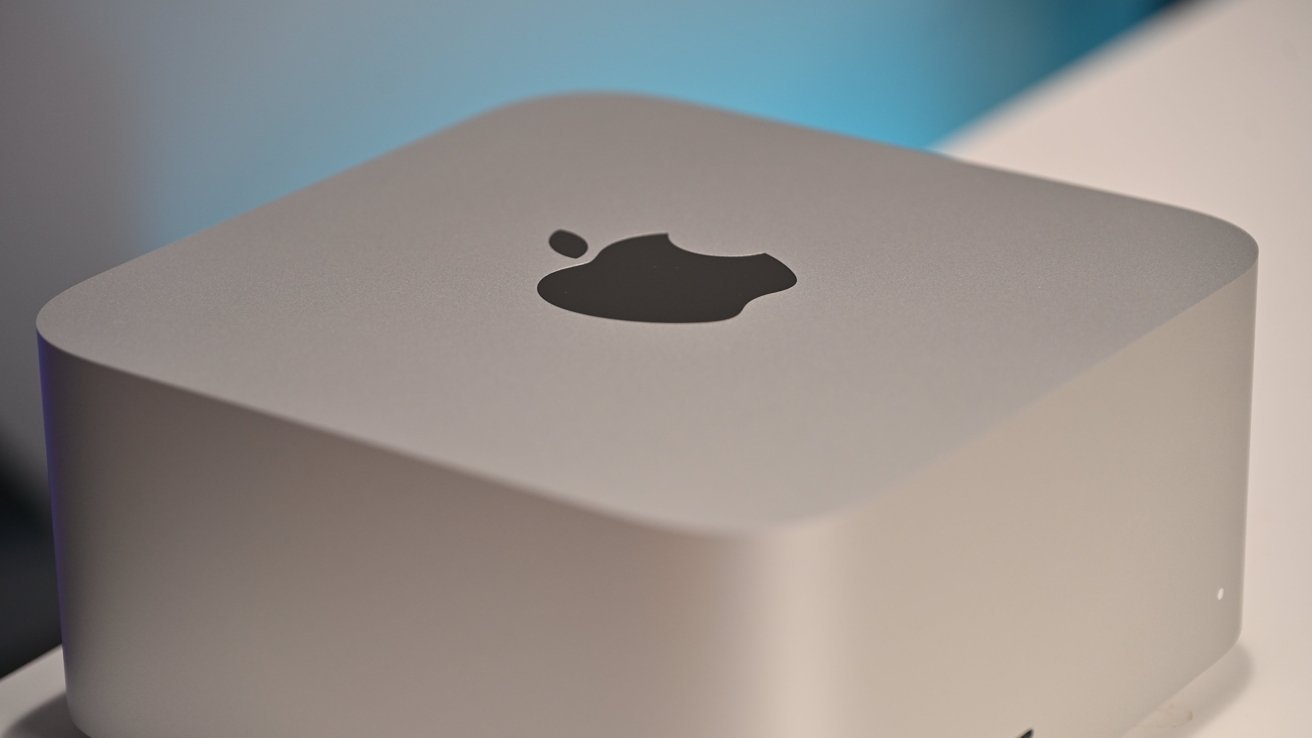
Mac Studio, one of Apple’s August updates.
Someone speculating on Apple’s current situation may see it as an attempt by Apple to shake up how it launches products even more. After all, it’s already separated the Pro and non-Pro iPhone launches, so other changes are fair game.
The impending Ternus change could be a license for Apple to switch things up even more.
There’s also the idea that Apple would rather use its events for bigger product launches, like its new smart home items. They would certainly rank higher than a spec-bump update.
Advertisement
However, looking back over Apple’s launches in recent years, we also see that it’s not entirely a new phenomenon for the company.
The last time Apple launched a product in August was an iMac in 2020. Since then, it has launched Mac products in June and July, such as the M2MacBook Pro and MacBook Air in 2022, as well as the MacBook Pro, Mac Pro, and Mac Studio updates in 2023.
There was a HomePod mini update in July 2024, but nothing Mac-based during the summers of 2024 and 2025. That doesn’t mean Apple gave up on them, as this week’s Mac launches have confirmed.
The real question is whether Apple has more products that it could put out in October to warrant a second event. With some of its Mac lineup already announced, that reduces the potential pool of Mac updates.
Advertisement
With this year introducing a folding iPhone that will eat into the September event’s time, we may see Apple keeping its OLED iPad mini update for the October one, alongside a much smaller collection of MacBook launches.
This early batch of Mac launches could well be in service of creating two events that have far fewer products on show.
For us at least, it helps spread the stress out a little.
Cook out for Ternus
The week ahead will be a major one for Apple’s history. Apple CEO Tim Cook is vacating his role for a similar board-based one, and giving it up for hardware chief John Ternus to take over.
Advertisement
It’s a transition that we have known about for months, thanks to Apple’s decision to announce the change in advance. But as the changeover date draws near, you can expect an awful lot of coverage about it.
Looking to the past, there’s going to be discussions about Cook’s legacy, reminiscing about key moments at the company, and picking apart what he got right and wrong.
From Apple itself, you’re not going to get much of a song or dance about the situation.
Advertisement
Pikachu at Apple Park.
Sure, there will be press releases about Cook’s role shift, as well as one about Ternus becoming CEO. Cook will also take to social media to thank Apple employees for their work, and Apple’s fans too.
But really, this week ahead is going to be a gradual introduction of Ternus to the public. A very gradual one, that has so far involved Pikachu.
Apple will want to gently break in Ternus being in charge, because not everyone knows about this. At September’s special event, despite the long wind-up period, people are still going to see Ternus and ask who he is in complete surprise.
Advertisement
Maybe Apple could do its own version of the “Doctor Who” regenerations as a pre-announcement skit.
Last week’s Sunday Reboot talked about the leaked video for the AirPods Pro with Cameras, and how they could be the best smart glasses for people who wear glasses.
Tree huggers aim to end blanket critical infrastructure status for bit barns and ensure environmental standards are met
The Green Party of England and Wales wants the government to end the blanket designation of new bit barns as “critical infrastructure” and change planning rules to stop such facilities taking precedence over households for water and energy.
The Green Party claims that CNI status means that server farms are prioritized for access to water and energy, even when ordinary households are hit with drought restrictions, as over 27 million people currently are in England.
It wants to see planning permission for new facilities granted only when the developer can show it will meet the highest environmental standards, and there has been full community consultation.
“We need to slam the brakes on the rampant building of new datacenters which could put our communities at risk of water shortages and drive up energy bills – and yet are currently being waved through by our government,” said Green Party leader Zack Polanski.
Advertisement
“Data should serve people, not the other way around – but right now, because datacenters are designated as critical infrastructure, people come a poor second, with datacenters even being given priority for water and electricity.”
“We need clear criteria to distinguish between datacenters vital to national security or public services, and those that simply serve private tech companies and private profit,” Polanski added.
On the water side, MPs were warned earlier this year that official forecasts of England’s future water needs excluded datacenters, despite the growing number of them, and that they could end up competing with homes and businesses for supply.
Advertisement
The Green Party claims that a single large-scale datacenter can use around 1.5 million liters (396,258 US gallons) of water per day, comparable to the daily water needs of a town of around 10,000 people. Yet bit barn construction is projected to expand rapidly, with growth often concentrated in areas already classified as water-stressed, like London and the South East.
But water consumption can vary, depending on the cooling systems in use at specific facilities. In theory, newer campuses should require less water, especially if they are deploying AI infrastructure that uses so-called direct-to-chip cooling, where fluid is circulated through a closed-loop system.
A government spokesperson told us: “A pause on building new datacenters would simply send investment and good jobs abroad, while leaving Britain dependent on overseas computing for the processing of sensitive health and defense data. Put simply, it would be a disaster for jobs and national security.”
However, the spokesperson added: “This does not mean a blank cheque for Big Tech or that every datacenter should be approved. Developers should prioritize clean power, use water responsibly, create British jobs and supply chains, and provide investment to the communities in which they are built.”
Advertisement
The Green Party is also calling on the government to urgently develop a comprehensive national strategy for AI infrastructure, as the country is currently dependent on foreign-owned infrastructure for critical services, from healthcare to public safety – something the Institute for Public Policy Research was warning about just this week. ®
The Manchester Airports Group data breach has been claimed by extortion group FulcrumSec, which told BleepingComputer that it stole approximately 86 GB of data.
Samples reviewed by BleepingComputer contained information consistent with MAG’s disclosure while indicating that the breach exposed considerably more detailed customer, booking, and travel information than initially revealed.
Hackers claim theft of 86 GB of data
Manchester Airports Group (MAG), the United Kingdom’s largest airport operator, disclosed on August 27 that an unauthorized third party had stolen customer data related to Manchester, London Stansted, and East Midlands airports.
The company said the affected information came from car park, lounge, and Fast Track bookings and in-airport Wi-Fi registrations.
In emails to BleepingComputer, FulcrumSec claimed responsibility for the attack and shared samples of the allegedly stolen data as evidence.
Advertisement
BleepingComputer validated one record by comparing it with the traveller’s known Manchester Airport purchase history.
The record accurately listed previous Fast Track purchases, booking and scheduled-arrival times, the terminal used, amounts paid, purchase references, total spending and the apparent purpose of the trips.
The material included a roughly 21.5 GB Manchester customer export containing consolidated profiles that combined customer identifiers with historical booking activity and marketing classifications.
The group claims it obtained access using airport-specific Iterable API credentials exposed in client-side JavaScript and that the stolen material includes nearly 200,000 records related to upcoming travel during the remainder of 2026.
Advertisement
These records allegedly contain dates, times and booking information linked to personally identifiable information.
FulcrumSec says it intends to publish the stolen data and a technical account of the intrusion. However, it told BleepingComputer that it is considering withholding or redacting those records because of the potential for “real-world harm.”
While the samples appeared authentic, BleepingComputer could not independently verify the alleged source or extent of the threat actor’s access, the overall size of the stolen dataset, or the claim concerning nearly 200,000 upcoming-travel records.
After completing its verification, BleepingComputer securely deleted all supplied material without retaining copies and will not publish or share any part of it.
Advertisement
FulcrumSec is a financially motivated data-extortion group active since 2025 that focuses on stealing sensitive corporate data and threatening to publish it rather than encrypting victims’ systems.
BleepingComputer contacted MAG again before publication and asked the company to address FulcrumSec’s claims concerning the 86 GB dataset, exposed credentials and future-travel data.
A spokesperson declined to address the specific claims, referring instead to an updated statement confirming that affected customers with upcoming bookings had been contacted.
Advertisement
“MAG is confident that we have taken effective measures to protect our customers and we have contacted all those affected, including reaching out to all those with upcoming bookings to advise them of additional support,” a MAG spokesperson told BleepingComputer.
The attackers reportedly demanded a monetary ransom, which MAG was understood to have refused to pay.
Scope appears broader than initially suggested
Beyond the email addresses, phone numbers, vehicle registrations and postcodes disclosed by MAG, sampled records contained purchase and booking references, airport and product selections, prices, discounts, booking status, parking dates and times, historical spending, IP addresses, approximate locations, device information and customer-engagement data.
BleepingComputer did not observe payment-card or bank-account information in the reviewed samples.
Advertisement
Unlike US ZIP codes, which generally cover broader delivery areas, a full UK postcode can identify a small group of neighboring properties. According to the UK Office for National Statistics, a typical small-user postcode covers approximately 15 addresses, while some postcodes are assigned to a single address.
Combined with contact, vehicle and travel information, these details could allow attackers to reference a victim’s airport, vehicle, parking dates, booking status or purchased services in convincing phishing emails, text messages or telephone scams impersonating MAG or a booking provider.
MAG said it has contacted affected customers and advised them to remain vigilant for suspicious emails, text messages, and telephone calls.
The airport operator stressed that it would never contact customers unexpectedly to request payment-card details, banking information, or passwords.
Advertisement
The incident has not caused operational disruption, and MAG says passenger safety and aviation security were not compromised.
A MAG spokesperson previously told the Manchester Evening News that around 8.7 million customers were affected, although only email addresses were exposed for the “vast majority.”
That makes it the largest known customer data breach affecting a British airport operator.
We spend hours testing every product or service we review, so you can be sure you’re buying the best. Find out more about how we test.
KEF LS Luxe: Two-minute review
The LS Luxe is the new high-point — by which I mean ‘most expensive’ — of KEF’s fêted range of wireless stereo speaker systems. Having precisely nothing left to prove where products of this type are concerned in the lower $1,000 / £750 – $3,400 / £2,500 arena, the company has made a decisive move upmarket — and the LS Luxe seems to leave very little to chance where engineering, specification and aesthetic shock and awe are concerned.
You will make your own mind up about the looks, of course; for my money, the ‘eclipse black’ of my review sample is the least successful of the three available finishes, but there’s no denying the LS Luxe is an individual looker in a market where design flourishes are always at a premium. But when talk turns to engineering and specification, subjectivity ceases to be all that much of an issue.
Advertisement
Numerous input options (both wired and wireless), genuinely high-resolution playback (24bit/192kHz is yours if you connect the speakers together, while 24bit/96kHz is available from a wireless connection), and some proven technologies exclusive to KEF serve to make the LS Luxe look like a very serious proposition on the page.It’s only fractionally less serious when it comes to performance, too.
Latest Videos FromTechRadar
Make sure you’ve positioned the speakers carefully, get beyond the slightly restricted dimensions of the soundstage it conjures… and then there’s a huge amount to enjoy here. Some of the best stereo speakers on the market? Yes.
Advertisement
The LS Luxe is a deftly accomplished listen, able to combine forensic attention to detail with an energetic, almost forceful attitude that brings recordings of all types bounding to life. It manages to combine analysis with entertainment in a way that’s rare at any price.
(Image credit: Future / Simon Lucas)
KEF LS Luxe review: Price & release date
Launched on July 30, 2026
Priced $3,999 / £3,499 / AU$6,399
The KEF LS Luxe wireless stereo speaker system is on sale now, and in the United Kingdom it costs £3,499. In the United States it sells for $3,999, while in Australia the going rate is AU$6,399.
If you don’t want this to be the end of your spending, KEF will happily sell you a pair of its bespoke ‘S-Luxe’ speaker stands for £799 / $799 / AU$1199…
Sign up for breaking news, reviews, opinion, top tech deals, and more.
Advertisement
What of note at the level? The Sonus faber Duetto are the same price and also present a fantastic listen, albeit with a very different aesthetic.
(Image credit: Future / Simon Lucas)
KEF LS Luxe review: Features
12th-gen Uni-Q driver array
Wired and wireless connectivity options
560 watts of Class D power plus 200 watts of Class A/B
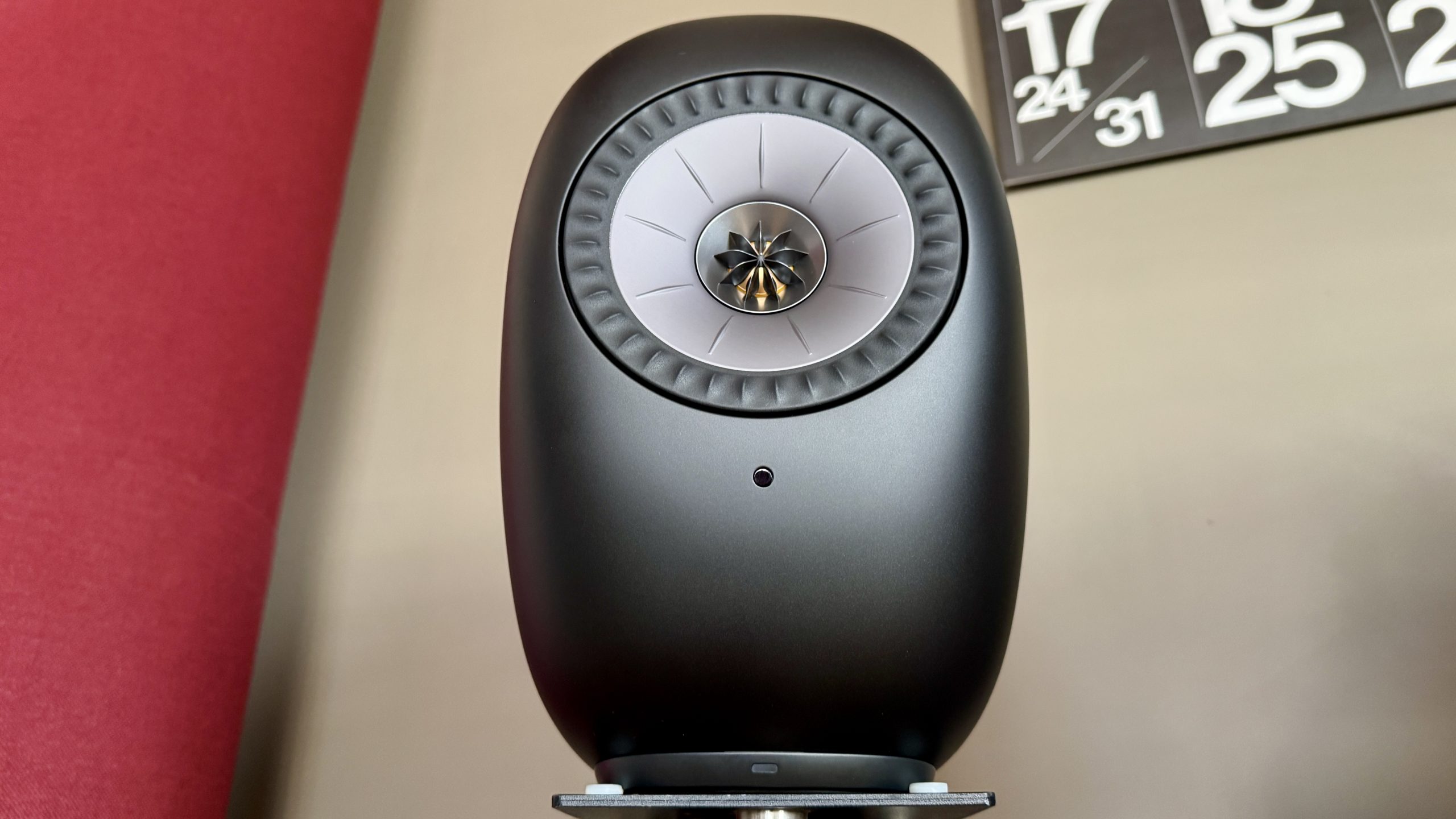
It’s not the only thing that’s attention-grabbing about the look of the LS Luxe, of course, but there’s no denying that the 12th generation Uni-Q driver array is just as visually impactful as it was when the first generation was revealed back in 1988.
Here, it features a 25mm aluminium tweeter behind a complex waveguide, in the throat of a 165mm aluminum mid/bass cone — as always, the arrangement is designed for optimum time-alignment and superior driver integration.
A more recent KEF innovation, ‘metamaterial absorption technology’, sits behind the tweeter where it’s designed to mop up energy travelling from the back of the tweeter dome and allow for sweeter, cleaner treble response as a result.
Advertisement
The driver arrangement is mechanically decoupled from the cabinet, and a decoupling chassis within the assembly damps any vibrations from the motor system — in both cases, the idea is to reduce the vibration affecting the cabinet structure to an absolute minimum. Low distortion and sky-high clarity are the results KEF is aiming for.
Unusually, KEF has deployed two distinct methods of amplifying the Uni-Q array. Each mid/bass driver feels the benefit of 280 watts of Class D power, while each tweeter is driven by 100 watts of Class A/B amplification — an all-in total of 760 watts of power really ought to prove adequate. KEF reckons a frequency response of 42Hz – 28kHz results from all this very thorough engineering.
Naturally, that’s not the end of it where clever technologies are concerned. KEF’s ‘Velocity Control Technology’, first seen in the XIO soundbar, measures the speed of movement of the cone and compensates for discrepancies between actual and expected values in real time. The ‘Music Integrity Engine’, meanwhile, maintains tonal consistency at all volume levels.
In terms of getting audio information into the system where it can be had at by these various highlights of specification, your options are fairly extensive. Dual-band wi-fi is on board, naturally — there’s also an Ethernet socket on the rear of the ‘primary’ speaker for absolute network stability — and this allows the system to be compatible with Apple AirPlay 2, Google Cast, the ‘Connect’ versions of Qobuz, Spotify and TIDAL, and UPnP. Internet radio is available too, and Roon Ready status is due to be confirmed much sooner rather than later.
Advertisement
A USB-C slot looks promising, but it’s ‘only’ a 5V output for charging. Bluetooth 5.3 is also on board as an additional wireless option – all the wireless stuff is handled by KEF’s proven ‘W2 Wireless Platform’.
The primary speaker is also home to the system’s physical connectivity. Here that means an HDMI eARC socket, optical and coaxial digital inputs, and a 3.5mm analogue input, as well as a kettle-lead socket for connection to mains power, a pre-out for a subwoofer and an RJ45 socket for connection to the secondary speaker. That secondary speaker makes do with a mains power socket, a corresponding RJ45 and a subwoofer pre-out.
The LS Luxe will support resolutions of up to 24bit/384kHz and DSD128 via its network inputs, 24bit/192kHz via coaxial and HDMI, and 24bit/96kHz via its optical input. If the speakers are connected using the supplied cable, everything is up- or down-sampled to 24bit/192kHz – if you decide the cleaner look of a wireless connection between the two is your preference, then the system tops out at 24bit/96kHz.
(Image credit: Future / Simon Lucas)
Advertisement
KEF LS Luxe review: Sound quality
Detailed, organised and robust sound
Eloquent midrange fidelity
Could conceivably have greater out-and-out scale
First things first: the LEF LS Luxe is not remotely forgiving where the positioning of the speakers is concerned.
The overwhelming majority of stereo speakers I’ve tested, both active and passive, have given their best when toed in towards the listening position — in fact, off the top of my head I can only think of Dali that recommends its speakers should be pointing dead ahead to perform to their full potential. The KEF, though, like only the tiniest amount of toe-in. Too little or, especially, too much and they lose some of the width of their soundstage and a more noticeable amount of sonic height.
Even when ideally positioned, the soundstage they generate is not the biggest you’ve ever heard. It escapes the confines of cabinets quite comfortably, in both horizontal and vertical directions, but is still relatively limited.
Mind you, it’s fair to say a) the soundstage is extremely well laid-out and controlled, and b) that’s just about where my complaints end regarding the way the LS Luxe performs. In every other respect it’s a remarkably accomplished listen, and is undoubtedly one of the most effective pound-for-pound wireless stereo speaker systems around.
(Image credit: Future / Simon Lucas)
No matter if you listen to the avant-electronica of Arca’s eponymous debut album via a CD player connected to the KEFs digital optical input, a 24bit/192kHz FLAC file of David Bowie’s Stationtostation wirelessly streamed from Qobuz Connect or a heavyweight vinyl reissue of Takk… by Sigur Rós from a pre-amplified turntable, the LS Luxe is a remarkably articulate, utterly revealing and deftly punchy system that is likely to steal your time away.
Advertisement
The tonal balance is exquisitely neutral. The KEF is more than happy to get out of the way of a recording and let it dictate terms in this respect. It’s similarly balanced and egoless where frequency response is concerned, too — it digs deep into the low frequencies and hits with real authority and control, while the opposite end has the substance to counteract the brilliance of the treble response, but at no point does the system over- or understate any part of the range.
The balanced and even-handed nature of its presentation goes a long way towards creating a strong impression of fidelity. So does the amount of detail it’s able to retrieve, reveal and contextualise. At every stage it is alert to the finest, most minor occurrences in a recording, in a voice or an individual instrument — and it’s able to give these details the appropriate amount of weighting no matter how fleeting they might be.
Its transient response is thrillingly positive, and the overall sound is eloquently alive and communicative as a result.
And when it comes to communication, the way the LS Luxe resolves the midrange means it’s brilliantly informative where voices are concerned. The minutiae of timbre, texture and technique are all made available, and the KEF can describe the attitude and character of a vocalist just as directly.
Advertisement
Rhythmic expression is confident, thanks to the careful control the system pays to the attack of low-frequency information. It’s a deftly fluent listen at the bottom end, and marries outright punch to a huge amount of tonal and textural variation. And when it comes to the dynamic of a recording, whether that’s the big shifts in intensity and volume or the more nuanced dynamics of harmonic changes, the KEF is an assured and convincing performer.
Sound quality score: 4.5 / 5
(Image credit: Future / Simon Lucas)
KEF LS Luxe review: Design
Bulk moulding compound allows for organic shape with no seams
Another Ross Lovegrove design
Color makes a disproportionate difference to appearance
Q: When did you last see a pair of speakers that look like this? A: Never, that’s when.
The LS Luxe is the latest results of KEF’s ongoing collaboration with designer Ross Lovegrove and, just as with previous KEF/Lovegrove designs, there’s something almost organic about the shape of these loudspeakers.
The use of BMC (‘bulk moulding compound’) as the material for the cabinets means this smoothly curvaceous shape has no edges or visible seams, and is less prone to the build-up of internal standing waves than a more conventional box. It also means the requirement for internal bracing is minimised, so there’s greater internal volume than would otherwise be the case as a result. And there’s further visual drama at the rear of the cabinet: an elaborately shaped and channelled heatsink, fashioned from aluminium, has sufficient surface area to allow the heat from the internal electronics to be efficiently dispersed.
Advertisement
There’s also a fairly large bass reflex port nearby — it features KEF’s ‘Flexible Port Technology’. This means the walls of the port are not completely rigid, which should in theory help keep internal resonance to a minimum.
The LS Luxe is available in three finishes. My review sample is in ‘eclipse black’, which is my least favourite of the three. To my eyes it makes the cabinets look bulkier and heavier than they actually are. Check out the alternative ‘mineral white’ or ‘dusk titanium’ and see if you know what I mean. Regardless of the finish you choose, though, you’ll be the owner of a pair of speakers that are beautifully constructed, flawlessly finished, and both look and feel like the money’s-worth.
KEF didn’t supply me with the cost-option ‘S-Luxe’ stands developed specifically for use with this system, but unless you intend to position your speakers on a shelf or desktop (in which case I will judge you quite strongly) it’s worth factoring this extra cost in.
Other speaker stands work perfectly well, of course — I position the KEF on a pair of Soundstyle Z2, and they perform admirably. But the way the cabinet swoops and tapers towards the base means that a lot of the (regulation size) top plate of my stands is visible when the speaker is in place, and the look is not especially harmonious.
Advertisement
(Image credit: Future / Simon Lucas)
KEF LS Luxe review: Usability & setup
‘Wireless’ means either two or three wires
Remote control handset and app
A little patience sometimes required when using the app
There’s really not that much to setting up the KEF LS Luxe, and once it’s set up it’s pretty straightforward to operate — but that’s not the same as saying it doesn’t require a little attention.
As already discussed, this is a wireless system that requires at least two wires; both speakers must be plugged into the mains. After that, you can choose to connect the speakers together using a supplied cable, or you can take the hit in terms of resolution and establish a wireless connection between them.
There are a couple of control methods available. KEF supplies quite a nice, metal-fronted remote control that covers off the fundamentals like playback, power, volume and input selection — and there’s also the ‘KEF Connect’ control app that’s free for iOS and Android.
Naturally it duplicates all the remote control functions, and adds in the ability to integrate music streaming services, search for and save internet radio stations, trim the system’s response to suit your specific environment, check for firmware updates and so on. It can be a little lethargic at times, but on the whole it’s a stable and useful user interface.
Advertisement
Usability & setup score: 4.5 / 5
(Image credit: Future / Simon Lucas)
KEF LS Luxe review: Value
If you want your fancy new wireless stereo system to turn heads on the basis of its looks as well as its sound, you can’t really argue with the value the KEF LS Luxe represents.
If you’re after great build quality and nicely realised control options to go along with the sonic performance and the visual drama, the case for this system gets stronger still. The bespoke stands are no one’s idea of a bargain, admittedly, but in every other respect there’s undeniable value for money on offer here.
(Image credit: Future / Simon Lucas)
Advertisement
Should I buy the KEF LS Luxe?
Swipe to scroll horizontally
KEF LS Luxe scorecard
Attribute
Notes
Score
Features
Advertisement
As fully featured as you could ever hope in such a design
5 / 5
Sound quality
Very fussy with placement, but get it right and they’ll reward you
Advertisement
4.5 / 5
Design
Ross Lovegrove’s stylings won’t be for everyone, but they’re refreshingly unusual
4 / 5
Advertisement
Setup & usability
‘Wireless’ means either two or three wires, but a little patience gets things all set
4.5 / 5
Value
Advertisement
Excellent in the sound-per-pound stakes, but those stands are nobody’s idea of a bargain
4 / 5
Buy them if…
Advertisement
(Image credit: Future / Simon Lucas)
Don’t buy them if…
KEF LS Luxe review: Also consider
The Sonus faber Duetto is, in its own way, just as visually arresting as the LS Luxe — it’s more identifiably a pair of speakers, but the established Sonus faber virtue of outstanding cabinet-making means this system looks and even feels the part.
It’s no slouch sonically, either — it’s a composed, informative and periodically thrilling listen.
Advertisement
At the other end of the spectrum (at least where aesthetic considerations are concerned) you’ll find the sonically impeccable, visually challenging JBL 4329P. JBL speakers have looked like this since the middle of the last century, and there’s no denying that in terms of performance they’re a roaring success. Their appearance in your home may cause a row based on their divisive looks, though…
(Image credit: Future / Simon Lucas)
How I tested the KEF LS Luxe
I position the KEF LS Luxe on a pair of Soundstyle Z2 speaker stands, and plug each one into the mains.
I listen with the speakers connected wirelessly, and I also listen when they’re physically joined together.
Advertisement
I stream music using TIDAL Connect and also access a lot of hi-res content from a Synology BeeStation Plus NAS device.
I connect a preamplified turntable to the analog input, a CD player to the coaxial input, and an OLED TV to the HDMI eARC socket. This means I’m able to access lots of different styles of content, in lots of different digital file types, and in a variety of resolutions.








































































You must be logged in to post a comment Login