






Connect with us

Tech

Hubble Discovers One of the Darkest Galaxies Known to Exist

Published

on

Hubble Dark Galaxy CDG-2
Hubble has just discovered one of the darkest galaxies known to exist. It’s named Candidate Dark Galaxy-2, or CDG-2 for short. This faint object is located in the Perseus galaxy cluster, around 300 million light years from Earth.


Most galaxies announce their presence with a dazzling display of illumination, but CDG-2 does the opposite, with hardly no light seen at all. It’s composed of approximately 99% dark matter, a mysterious, invisible substance that drags objects with its gravity but cannot be seen. The remaining 1% is merely ordinary matter, although even that appears scarce and dull.


Gskyer Telescope, 70mm Aperture 400mm AZ Mount Astronomical Refracting Telescope for Kids Beginners…
  • Superior Optics: 400mm(f/5.7) focal length and 70mm aperture, fully coated optics glass lens with high transmission coatings creates stunning images…
  • Magnification: Come with two replaceable eyepieces and one 3x Barlow lens.3x Barlow lens trebles the magnifying power of each eyepiece. 5×24 finder…
  • Wireless Remote: This refractor telescope includes one smart phone adapter and one Wireless camera remote to explore the nature of the world easily…

A team of researchers at the University of Toronto, led by David Li, discovered CDG-2 by using an innovative method. They were looking for compact, tightly packed globular clusters, which are large, ancient balls of stars that can stick together even in the most chaotic settings. Their computer calculations suggested that there might be hidden galaxies in there, and Hubble provided images that confirmed them correct.

Hubble Dark Galaxy CDG-2
Hubble’s high-resolution images revealed four of these globular clusters clumped together, as well as a faint light surrounding them, very definitely indicating the presence of an underlying galaxy. Then, after more observations of the glow from the Euclid satellite observatory and the Subaru Telescope in Hawaii, it was obvious that the clusters belonged to a single extremely faint galaxy.

CDG-2 actually shines with the brilliance of around 6 million suns at its peak, but this is spread out over a large area. The five clusters account for approximately 16% of the light we can see, with the remainder coming from a collection of extremely faint, scattered stars. To put that into context, the Milky Way has far more of these little globular clusters, as well as a lot more light from all of its billions of stars.

Advertisement

CDG-2 most likely lost much of its gas, the substance that allows stars to form in the first place, due to being located in such a busy area of the cosmos, the Perseus Cluster. This discovery demonstrates how important globular clusters may be in detecting other galaxies that might otherwise go unreported, and low light emitters like CDG-2 challenge our understanding of how galaxies develop, particularly in crowded areas of the universe.

Source link

Advertisement
Continue Reading
Click to comment

Leave a Reply

Your email address will not be published. Required fields are marked *

Tech

Uber relaunches Motional robotaxis in Las Vegas

Published

on

Two years after a brutal restructuring gutted Motional’s workforce and halted its commercial operations, the Hyundai-backed AV company is back on the Strip, still with a safety operator for now, but promising to remove one by the end of 2026.


Uber and Motional have relaunched a commercial robotaxi service in Las Vegas, making all-electric Motional IONIQ 5 vehicles available to riders across key locations on and around the Strip from 13 March 2026.

The service marks a significant milestone for Motional, which two years ago paused its commercial operations entirely, cut roughly 40% of its workforce, and was left fighting for its survival after co-founder Aptiv pulled its funding.

The relaunch is not yet fully driverless. Initially, Motional’s IONIQ 5 robotaxis will carry a human vehicle operator monitoring the road from the driver’s seat.

Advertisement

The company says it expects to remove the safety operator and begin a fully driverless service by the end of 2026, delivering on the target it set during its 2024 restructuring.

How the service works

Riders who request an UberX, Uber Electric, Uber Comfort, or Uber Comfort Electric may be matched with a Motional IONIQ 5 at no additional cost. When matched, a notification appears in the app giving riders the option to accept the autonomous vehicle or switch to a conventional ride.

Users who want to maximise their chances of getting an AV can opt in via the Ride Preferences section in their Uber app settings.

Once a robotaxi arrives, the vehicle can be unlocked and the trip started entirely through the Uber app.

Inside, audio cues prompt riders to close doors and fasten seatbelts. If support is needed at any point, a human assistance team is reachable through the Uber app.

Advertisement

At launch, the service covers designated rideshare zones along Las Vegas Boulevard at Resorts World Las Vegas and Encore at the Wynn, plus Westgate Las Vegas Resort & Casino, curbside locations in Downtown Las Vegas, and the Town Square shopping district near the airport.

Both companies say they plan to expand the operating area but did not give specifics.

The vehicle: SAE Level 4, FMVSS-certified

The IONIQ 5 robotaxi was co-developed by Motional and Hyundai Motor Group and is custom-built for ride-hail operations. According to Uber, it is one of the first SAE Level 4-capable autonomous vehicles to be certified under US Federal Motor Vehicle Safety Standards (FMVSS), the federal regulatory framework for motor vehicle equipment.

SAE Level 4 means the vehicle can handle all driving functions within a defined operational design domain without human intervention, though it does not require the capability to operate in all conditions everywhere.

Advertisement

“This milestone reflects our shared commitment to introduce autonomous vehicles in a way that prioritizes safety, increases reliability, and expands access to more ride options for our customers,” said Sarfraz Maredia, President of Autonomous Mobility & Delivery, Uber

Motional’s road back: from near-collapse to relaunch

The relaunch is the culmination of a turbulent two-year recovery. Motional was founded in 2020 as a $4 billion equal joint venture between Hyundai Motor Group and automotive technology company Aptiv.

It ran pilot rides in Las Vegas via Uber and Lyft and deliveries in Los Angeles via Uber Eats, all with a human safety operator present, and accumulated more than 130,000 autonomous rides through those programmes.

The company’s troubles crystallised in early 2024, when Aptiv announced it would stop allocating capital to the venture, citing the high cost of commercialising robotaxi technology and an uncertain path to profitability. Aptiv had forecast a non-cash equity loss of around $340 million for 2024 alone.

Advertisement

With Aptiv’s withdrawal threatening to destabilise the entire company, Hyundai stepped in with a near-$1 billion commitment: $475 million invested directly into Motional and $448 million to buy out 11% of Aptiv’s common equity interest. The restructuring left Hyundai with approximately 85% of Motional’s common equity and Aptiv with 15%.

The funding came with painful conditions. Motional halted all commercial rides and deliveries, paused plans to launch its second-generation driverless service, and cut approximately 550 staff, around 40% of its total workforce, across teams in Las Vegas, Pittsburgh, California, and Massachusetts. T

he company pivoted to focus exclusively on improving its underlying autonomous technology, including a shift toward a more neural network-driven approach to autonomy, before attempting any new commercial deployment.

Motional returned to fundraising in August 2025 with a $550 million Series B round led by Aptiv and joined by Hyundai and Nuance Investments, which boosted its valuation to $6.5 billion. That capital, combined with the technology rebuild, underpins today’s relaunch.

Advertisement

A busy week for Uber’s autonomous ambitions

The Las Vegas launch is not a standalone announcement. In the same week, Uber confirmed a deal with Zoox, Amazon’s autonomous vehicle subsidiary, to deploy Zoox’s purpose-built robotaxis on the Uber platform, initially in Las Vegas from summer 2026, followed by Los Angeles in mid-2027.

Uber and Wayve also announced a collaboration with Nissan on a robotaxi pilot in Tokyo, targeted for late 2026, which would be Uber’s first autonomous vehicle partnership in Japan.

Uber says it is currently working with more than 25 autonomous vehicle partners across its Mobility, Delivery, and Freight divisions. The company announced earlier in 2026 that it plans to invest more than $100 million in charging infrastructure for autonomous vehicles.

Its autonomous solutions division, launched in February 2026 under Maredia’s oversight, is focused on helping AV technology companies commercialise their deployments faster by providing demand generation, rider experience, customer support, and fleet management services.

Advertisement

For Motional, the Las Vegas service is both a proof point and a pressure test. The company’s technology, rebuilt and retrained in the background since 2024, now faces its first sustained real-world commercial deployment with paying riders. 

Source link

Advertisement
Continue Reading

Tech

Onerep vs Incogni (2026): Which Data Removal Service Delivers Better Protection?

Published

on

Right now, deleting a couple of public listings of your personal information is hardly enough to reduce your digital presence in any significant way. What’s more, your data circulates not only across people-search sites but also in marketing networks, analytics firms, recruitment databases, or risk-profiling systems, and many of these sources you’re incapable of reaching on your own.

That’s why it’s worth investing in a reliable data removal service with its automation, recurring requests, and the breadth of broker coverage.

Incogni and Onerep are two established providers in the data removal service field. To help you decide, we compare them below, clarifying where each company stands today.

Quick Comparison (2026)

Feature Incogni Onerep
Pricing From $7.99/month (annual billing) From $8.33/month (annual billing)

Removal model Fully automated with recurring requests Mixed automation + manual handling
Broker coverage 420+ private and public brokers 300+ websites, mostly public people-search listings
Free tier 30-day money-back guarantee 5-day trial, 30-day money-back guarantee
Recurring removal cycles Every 60-90 days Monthly
Independent verification Deloitte Limited Assurance assessment None publicly reported
Customer support Email, live chat (subscribers), phone (Unlimited subscribers), Knowledge Base Email (plan-dependent), support tickets, dedicated privacy expert (higher tiers), phone, Help Desk

Onerep vs Incogni: Service Snapshot & Core Positioning

Incogni Onerep
Year founded 2021 2015
Company type Automated data broker removal platform People-search directory removal service
Primary scope Public and private broker ecosystem Public-facing, searchable directories
Automation structure Fully automated, recurring cycles Hybrid model: automation + privacy expert
Data reappearance prevention model Automated recurring legal re-requests every 60–90 days Monitoring and suppression of relisted directory entries
Editorial recognition Editors’ Choice Awards – PCMag and PCWorld No major 2026 editorial awards reported
Independent verification Limited Assurance Assessment by Deloitte Not publicly reported
Trustpilot 4.4/5 (2,000+ reviews) 4.7/5 (380+ reviews)
Global availability 34 countries Primarily US

Onerep vs Incogni: Pricing & Plans (March, 2026)

Incogni

Incogni starts at $7.99 per month when billed annually. If paid monthly, it’s from $15.98 per month. All its plans include automated removal across 420+ brokers and recurring processing by default. Higher tiers provide expanded support options or add prioritization.

Incogni is also bundled with other data protection ecosystems: with NordProtect or included in Surfshark One+ subscription. This allows users to expand their privacy toolkit and integrate data removal into a unified, broader suite.

Advertisement

Incogni doesn’t offer any free tiers or trials, but there’s a 30-day money-back guarantee. Family and enterprise options are available.

Onerep

Onerep’s cheapest plan is $8.33 per month if billed annually. Billed annually, the prices start at $14.95 per month. It offers a 5-day free trial and a 30-day money-back guarantee. Family and enterprise plans are available.

Onerep is a standalone subscription, not available combined with larger privacy suites.

Broker Coverage

Incogni Onerep
420+ brokers 300+ sites
Custom removals from an additional 2,000+ sites with Unlimited plans Public people-search directories focus
Public-search sites Opt-out requests sent to supported listing sites 
Marketing data brokers Monitoring and relisting suppression
risk and background profiling companies Not engaged with private marketing or profiling networks
Risk and background profiling companies
recurring requests every 60 days for public and 90 days for private listings
Recurring requests every 60 days for public and 90 days for private listings

As such, the difference between Incogni and Onerep when it comes to coverage lies less in whether removals occur at all and more in how broadly data sources are covered.

Transparency, Verification & Public Trust

Incogni

Incogni provides a clear dashboard with request logs and their statuses that you can track, but don’t have to for the system to work efficiently

Advertisement

The company has also undergone a Deloitte Limited Assurance Assessment that evaluated and confirmed different aspects of Incogni’s removal processes.

Incogni has received Editors’ Choice recognition from both PCMag and PCWorld and multiple positive reviews from industry experts.

Along with its excellent Trustpilot rating, reviews praise the provider’s ability to actually reduce spam with minimal user involvement.

Onerep

Onerep provides a clear, visible listing tracking within its supported directories. It allows its users to see exactly which sources were identified and what was removed. 

Advertisement

However, the company hasn’t published any independent third-party verification comparable to Incogni’s limited assurance assessment.

What’s more, the privacy and security industry has also been influenced by information from Krebs on Security about Onerep’s CEO, who was reported to be creating public people-search sites. It has certainly shaped public discourse on transparency.

While Onerep’s Trustpilot rating is high, it isn’t based on many reviews.

Final Words: Choosing the Right Level of Protection in 2026

Incogni and Onerep were both designed to solve similar digital privacy problems. 

Advertisement

Onerep is more about removing personal data from publicly visible directory listings, which helps users reduce exposure in search results.

Incogni, on the other hand, is built for broader suppression. It engages both public directories and private data brokers. It also repeats requests on recurring cycles, addressing not only what’s on the surface but also in the behind-the-scenes databases that actually fuel marketing, profiling, and data trading.

As data circulation becomes more complex and concerning in 2026, broker coverage matters more than ever. If your goal is long-term, vast privacy control, Incogni currently offers a more comprehensive solution.

FAQ

How does OneRep protect my real contact info during broker outreach?
Advertisement

OneRep utilizes dummy email addresses and disposable phone numbers when contacting brokers to ensure your actual information isn’t re-harvested during the opt-out process.

Are there any trust or reliability concerns I should consider?

As of 2026, some users remain cautious of OneRep due to reports regarding the founder’s ties to the data broker industry. Incogni maintains high trust through Deloitte’s independent limited assurance assessment.

Advertisement
Which platform is more effective for local US search results?

OneRep focuses exclusively on U.S.-based directories and people-search sites, making it highly efficient for domestic results. Incogni covers more brokers globally, but some of those may be less relevant to a US-only audience.

Advertisement

Source link

Continue Reading

Tech

Ramp buys Stockholm fintech Billhop

Published

on

The $32 billion US spend management platform acquires a licensed payments provider to launch corporate cards and finance tools in the UK and EU this summer.


The corporate spend management market just shifted its centre of gravity. On 13 March 2026, Ramp, the New York-based financial operations platform valued at $32 billion, announced the acquisition of Billhop, a Stockholm and London payments firm licensed to operate across the European Economic Area and the UK.

The deal gives Ramp the regulatory infrastructure it needs to onboard European and British businesses directly, something it plans to begin doing this summer.

The timing is not subtle. In January, Capital One announced a $5.15 billion deal to acquire Brex, Ramp’s long-time US rival and once the defining name in startup corporate cards.

Advertisement

The 💜 of EU tech

The latest rumblings from the EU tech scene, a story from our wise ol’ founder Boris, and some questionable AI art. It’s free, every week, in your inbox. Sign up now!

That deal is expected to close in the second quarter of 2026. Ramp’s move into Europe lands while Brex is navigating an acquisition by a traditional bank, and while the question of what happens to Brex’s product roadmap and founder-friendly positioning under Capital One remains unanswered.

The acquisition of Billhop is primarily a licensing and infrastructure play. Billhop, founded in 2012 and headquartered in Stockholm, is a payments infrastructure provider that enables businesses to pay invoices by credit card, even to suppliers that do not ordinarily accept card payments.

Advertisement

It holds a Swedish Payment Institution licence from Finansinspektionen, Sweden’s financial regulator, and is separately authorised and regulated by the UK’s Financial Conduct Authority.

Those licences give Ramp what it could not quickly build itself: the regulatory standing to process payments across EEA member states and the UK as two distinct jurisdictions.

As part of the acquisition, Ramp will open its first international offices in London and Stockholm. The company currently serves nearly half its customers with some form of international payment capability, it supports transactions in over 180 countries and offers local currency cards in Canada, Australia, Japan, Mexico, and Singapore, but all of those customers are US-headquartered businesses.

The Billhop acquisition makes it possible, for the first time, to sign up companies based in the UK and EU as primary customers.

Advertisement

“We’ve spent years building Ramp into something the most ambitious US companies rely on. This summer, for the first time, companies headquartered in the UK and EU will be able to use Ramp directly. In their first year, the median Ramp customer saves 5% and grows revenue 16%. Europe is home to extraordinary companies. We can’t wait to get to work.”

That was Eric Glyman, Ramp’s co-founder and CEO, in the company’s announcement.

Niklas Bothén, CEO of Billhop,  who was appointed to the role in a planned leadership transition in late 2024, having joined the company as COO in 2020, framed the deal as a scale-up of Billhop’s core mission.

“Our mission at Billhop has always been to remove friction from B2B payments and make it easier for businesses to manage their spend. Joining Ramp allows us to realise that vision at a much larger scale.”

Advertisement

Ramp’s broader platform, which combines corporate cards, expense management, vendor payments, procurement, travel booking, and automated bookkeeping, processes over $100 billion in purchases annually and is used by more than 50,000 customers.

The company says its customers have collectively saved over $10 billion and 27.5 million hours since its founding in 2019. It raised a $312 million Series E round in November 2025, which brought its valuation to $32 billion.

The context for all of this is a market in transition. Brex, which was valued at $12.3 billion in 2022, agreed to sell to Capital One for $5.15 billion, less than half its peak valuation, in January 2026.

The markdown reflects a period in which Brex’s core customer base of venture-backed startups sharply reduced spending as funding dried up, while Ramp, with a broader customer mix and a stronger focus on cost savings and efficiency tools, continued to grow.

Advertisement

Ramp surpassed $1 billion in annualised recurring revenue in October 2025. Brex’s exit leaves Ramp as effectively the dominant independent spend management platform in the US market.

The European market Ramp is entering is materially different from the one it has built its US business on. Corporate card penetration in Europe is lower, B2B payment infrastructure is more fragmented across national markets, and the regulatory requirements for operating as a payment institution vary significantly by jurisdiction.

Billhop’s model, specifically designed to bridge the gap between card-paying buyers and non-card-accepting suppliers across European markets, addresses exactly the structural friction that has historically made it difficult for US-centric spend management platforms to gain traction in the region.

Financial terms of the Billhop acquisition were not disclosed. No acquisition price has been published by either party.

Advertisement

Source link

Continue Reading

Tech

Running A PC Off AA Cells With Buck Converters Really Boosts Performance

Published

on

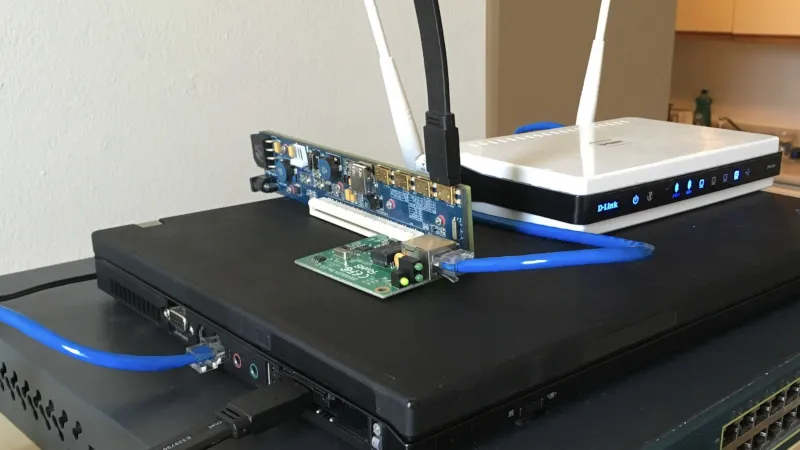
After the previous attempt of running a PC off AA cells got a lot of comments, [ScuffedBits] decided to do the scientifically responsible thing and re-ran the experiment with all the peer-reviewed commentary in mind. Although we noted with the previous experiment that only alkaline cells were used, [ScuffedBits] rectified this by stating that both carbon and alkaline AA cells were used the first time around.

For this second experiment a number of changes were made, though still both carbon and alkaline cells were put into the mix. To these a third string was added, consisting of NiMH cells, for a total of 64 cells with each of the three strings outputting around 25 VDC when fully charged. These fed a cheap buck regulator module to generate the 12 VDC for the DC-DC converter on the mainboard’s ATX connector.

Although it appears that the same thin Cat-5e-sourced wiring was used, with the higher voltage this meant a lower current, making it significantly less sketchy. Unlike with the first experiment, this time around the Core i3 530 based PC could run much longer and even boot off the DIY battery pack. After a quick game and pushing through a Cinebench run for 64 Watts maximum power usage, it turned out that there was still plenty of time for more fun activities, such as troubleshooting Minecraft and even playing it.

Advertisement

After a total runtime of 33 minutes and 19 seconds the voltage finally dropped too low to continue. A quick check of cells in each string, it turned out that the carbon cells were the most drained with significant terminal voltage drop. The alkaline cells had been pushed down to a level where they could still probably run a wall clock, but the NiMH cells showed a healthy 1.2 V, meaning that a fully NiMH battery pack could go a lot longer.

This probably isn’t too surprising when we look at the history of battery packs in laptops, where NiCd quickly got pushed out by NiMH-based packs for having significantly higher power density and none of the problems with recharging and disposal. Even today 1.5 V Li-ion-based AA cells do not have significantly more capacity than NiMH AA cells, making this chemistry still very relevant today. Even if you’re not trying to build your own battery pack for running a desktop PC off.

Advertisement

Source link

Continue Reading

Tech

Adobe CEO to step down after 18 years as investors question the company's next act

Published

on


Adobe shares fell about 7% in extended trading after the announcement, leaving the stock down roughly 23% so far this year and near a three-year low.
Read Entire Article
Source link

Continue Reading

Tech

Microsoft launches Copilot Health

Published

on

Microsoft has launched Copilot Health, a dedicated, secure space within its Copilot AI assistant that aggregates personal health data from wearables, electronic health records, and laboratory results, then applies AI to surface what the company calls a “coherent story” of a user’s health.

The product opened its waitlist on 12 March 2026 and is rolling out in phases, initially to English-speaking adults in the United States.

The launch marks Microsoft’s most direct entry into consumer health AI and places it alongside OpenAI, which introduced ChatGPT Health in January 2026, and Anthropic, which unveiled Claude for Healthcare the same month.

In the words of Dominic King, VP of Health at Microsoft AI: “2026 feels like an important year for consumer health.”

Advertisement

He told press briefing attendees that Microsoft’s consumer AI products, Copilot and Bing, already field more than 50 million health-related questions a day.

Copilot Health appears as a dedicated tab in the Copilot web interface and mobile app. Users create a health profile by entering basic details such as age and sex, then optionally connect data sources.

From there, the tool can analyse lab results, interpret wearable readings, surface connections across data streams, and help users prepare questions ahead of clinical appointments.

The data plumbing

Three connectors power the platform’s personal health layer. Wearable data, covering activity levels, sleep patterns, and vital signs, flows in from more than 50 devices, with Apple Health, Oura, and Fitbit cited as examples.

Electronic health records come through HealthEx, a US health data infrastructure provider whose network spans more than 52,000 healthcare organisations via direct FHIR-endpoint exchange, as well as TEFCA individual access services across more than 12,000 organisations. Lab results connect through Function, a venture-backed medical testing provider.

Advertisement

HealthEx confirmed the partnership in a separate press release issued on the same day. The company’s co-founder and CEO, Priyanka Agarwal, M.D., described the integration as giving users access to their health history “across labs, medications, conditions, clinical notes and more” with the ability to revoke access at any time.

Microsoft itself confirmed that users can disconnect any connector instantaneously and that health data in Copilot Health is not used for AI model training, a point the company has repeated prominently in all communications around the product.

For general health information, as opposed to personal data, Microsoft says it has elevated content from credible health organisations across 50 countries, with source selection verified by its clinical team using standards set by the National Academy of Medicine.

Responses include citations and source links. The platform also serves expert-written answer cards from Harvard Health and connects to real-time US provider directories, allowing users to search for clinicians by specialty, location, languages spoken, and insurance coverage.

Advertisement

The AI roadmap: towards ‘medical superintelligence’

Microsoft is framing Copilot Health as a step toward a longer-term goal it describes as “medical superintelligence”, a term the company has been using since at least late 2025. The vision is AI that can combine the breadth of a general physician with the depth of a specialist.

The vehicle most cited for this ambition is the Microsoft AI Diagnostic Orchestrator (MAI-DxO), a research-stage system the company says has produced strong results in clinical evaluation environments.

Microsoft says forthcoming publications will detail how MAI-DxO can be applied across a wider range of cases and conditions. The company states that any new AI features drawing on these research capabilities will only be released into Copilot Health after rigorous clinical evaluation and with clear labelling, a commitment that reads as a regulatory buffer as much as a product design principle.

“We truly believe we’re on the path to medical superintelligence that brings together both the wide-ranging knowledge of a family doctor or general physician as well as the deep domain expertise of a specialist,” said Dominic King, VP of Health, Microsoft AI.

Advertisement

Privacy, governance, and the HIPAA question

Microsoft has been careful on data governance. Copilot Health data and conversations are stored separately from general Copilot interactions, encrypted at rest and in transit, subject to stricter access controls, and not used for model training.

The product has achieved ISO/IEC 42001 certification, the international standard for AI management systems, which requires third-party verification of how an organisation builds, governs, and improves its AI services.

The platform has also been developed with an external advisory panel of more than 230 physicians from more than 24 countries, alongside consumer advocacy organisations including AARP, which serves 38 million older Americans, and the National Health Council, which represents over 180 patient advocacy groups.

However, a significant regulatory caveat emerged during press briefings. King confirmed that Copilot Health is not subject to HIPAA, the US federal law governing the privacy and security of patient health data,  because it operates as a direct-to-consumer service where users are sharing their own data, rather than as a covered healthcare entity.

Advertisement

King said: “HIPAA is not required for a direct-consumer experience like this when you’re using your own data,” while adding that Microsoft intends to announce updates on its HIPAA controls. He declined to specify what those updates would entail.

This distinction matters. HIPAA compliance obligates healthcare organisations to strict data handling, breach notification, and minimum necessary use standards.

Consumer health platforms that fall outside HIPAA, as Copilot Health does at launch, are not subject to the same enforcement regime. The FDA’s relaxation of rules around wearable clinical decision support at the start of 2026 adds further regulatory complexity: it means more AI-enabled health tools can reach consumers without pre-market FDA review.

The clinical reception

Initial expert reaction has been broadly cautious rather than hostile. Arjun Manrai, assistant professor of biomedical informatics at Harvard Medical School, told Healthcare Brew that the approach makes strategic sense, describing the use of personal context in AI health interactions as likely to become a defining trend in 2026. He called helping people prepare for doctor’s appointments a good target for large language models.

Advertisement

Physicians interviewed by the New York Times acknowledged that AI-assisted health tools could help people access health information at a time when care is becoming increasingly expensive and clinicians increasingly stretched.

But the same physicians flagged concerns about privacy risks from sharing records with large technology companies, and the potential for tools like Copilot Health to prompt unnecessary clinical visits by making users anxious about data patterns that may be clinically insignificant.

Microsoft’s standard disclaimer sits at the bottom of every Copilot Health communication: the product is not intended to diagnose, treat, or prevent diseases, and is not a substitute for professional medical advice.

Advertisement

Source link

Continue Reading

Tech

Higher Jet Fuel Prices Could Melt Your Summer Travel Plans

Published

on

The price of jet fuel has doubled since the Iran war began two weeks ago, as disruptions in vital shipping lanes limit the global trade of crude and refined oil. The airlines that run on it are racing to keep up. Jet fuel alone accounts for somewhere between 25 and 35 percent of airlines’ costs. The next stop is higher ticket prices.

It’s already happening, to some degree. Several airlines, including Air Asia and Hong Kong Airlines, have explicitly said they’re adding to their usual fuel surcharges. Domestic US ticket prices are up (though they were rising before the war too). “When [the oil price] goes up this rapidly, airfares go up,” United Airlines CEO Scott Kirby told The Wall Street Journal this week. “They also come down, by the way, when fuel goes back down.”

Because no one has a crystal ball, what this all means for travelers is up in the air. Travel and airline industry experts say it’ll take several more weeks of conflict and high fuel prices to really begin reshaping the economics of travel—or to know, even, whether it’s happening. Airlines set initial schedules, routes, and ticket prices months out, which means the money they’re losing today to high costs might only be recouped through ticket sales for flights well into the future.

Here’s what’s likely going on behind the scenes at airlines that will decide whether high fuel prices translate into scrambled travel plans.

Advertisement

Travel vs. Leisure

For now, airlines are likely tinkering around the edges of operations and ticketing plans, says Ahmed Abdelghany, who studies airline operations as a professor in Embry-Riddle Aeronautical University’s College of Business. Some of these changes likely won’t be perceptible to the average flier. To make flights more fuel-efficient, for example, and less expensive to operate, airlines have likely already gotten careful about how much fuel is being carried on each flight, he says—less weight, less fuel burned. Upping ticket prices is an easier lift logistically for airlines, but not an automatic move.

“We say the airlines have three devils: volatility in fuel price, volatility in demand, and volatility in weather,” Abdelghany says. “For airlines to raise the fare, it’s not an easy decision, because it’s going to affect demand.”

In fact, many airlines could shield regular vacationers from the brunt of price spikes, initially, because they believe some demand will stick around despite high fares. Since the disruptions that came with the Covid-19 pandemic, several major airlines have rejiggered their business models to focus on business fliers, who tend to be less price-sensitive as they travel on the company dime. “There’s more focus on premium travelers and increased upselling, as opposed to a model that was more domestically focused and had a larger share of business from the main cabin,” says Jarrett Bilous, the managing director for transportation, aerospace, and defense at S&P Global Ratings. Airlines could choose to pass on higher prices to spendier passengers first.

The tickets less affected by price hikes in the shorter term, then, might be the ones more likely to have leisure travelers aboard: trips that start and end on weekends, or last two weeks instead of a handful of days (which reads “business trip”).

Advertisement

But there’s no guarantee that airlines will stick to that strategy if the high fuel prices drag on, Bilous says. The newer theories about sustainable business traveler demand haven’t been tested during a real financial squeeze. “We really haven’t had either a sustained demand downturn or a price shock in quite some time,” he says.

A New World

If the jet-fuel price shock continues for weeks or even months, bigger changes—and inconveniences—might be headed to an airline near you. Airlines might cut their schedules, targeting less profitable routes to start. (They could also nix flights that pass through the unsettled airspace around the ever-widening conflict.)

During the last major and sustained fuel shock in 2008, airlines charged for checked and eventually carry-on bags. Though the aviation business has changed since then, it’s possible airlines could once again start experimenting with new ways to make extra money off fliers. “New ancillary revenues, fees, charges, maybe lowering the maximum weight of check-in bags—it’s possible,” Abdelghany says. But these sorts of new systems would take a while to implement.

Bilous, the analyst, stopped short of offering ticket-buying advice. “The risk of higher prices has certainly grown versus a few weeks ago,” he says. “Just how much higher, if at all, they go, it remains to be seen.”

Advertisement

Source link

Continue Reading

Tech

Dyson Airwrap i.d hits Black Friday big saving again

Published

on

Ever spent ages trying to curl or smooth your hair only to end up juggling multiple hot tools, wishing one device could dry, style, and shape everything in one go?

Then we can help you out, as the Dyson Airwrap i.d multi-styler and Dryer straight+wavy is now £399, down from its usual £479.99 retail price.

That brings one of Dyson’s most advanced hair styling tools back to a rare Black Friday-level saving during this Amazon Spring Deal Days sale.

Deal Dyson Airwrap idDeal Dyson Airwrap id

Dyson Airwrap i.d hits Black Friday big saving again

The Dyson Airwrap i.d has scored another hefty Black Friday discount, putting this sought‑after styler firmly back in the spotlight.

Advertisement

View Deal

The Dyson Airwrap i.d is designed to replace several separate styling tools, using Dyson’s signature Airwrap technology to style hair while it dries rather than relying on extreme heat.

Instead of clamping or pressing hair between heated plates, the device uses high-velocity airflow to attract and wrap strands around its barrels, which helps shape curls and waves while reducing the heat damage common with traditional styling tools.

Advertisement

Advertisement

Powered by a 1300W motor, the tool delivers strong airflow that helps dry hair quickly while still giving users control through three speed settings and three heat levels for adjusting the styling process.

That flexibility becomes especially useful for people with longer hair, as the device is specifically designed for chest-length or longer styles and can handle thicker sections without constant repositioning or repeated passes.

The Whatsapp LogoThe Whatsapp Logo

Get Updates Straight to Your WhatsApp

Join Now

Where the Dyson Airwrap i.d really earns its reputation is in the number of styling options it offers without needing separate appliances scattered across your bathroom counter.

Advertisement

Included attachments such as the concentrator, diffuser, and brush heads, allow the device to move from rough drying to smoothing or shaping depending on the look you want that day.

The Dyson Airwrap i.d multi-styler and Dryer straight+wavy also makes everyday styling less complicated because switching attachments takes seconds, meaning you can transition from drying to curling without stopping to reach for another tool.

Advertisement

At £399, the Dyson Airwrap i.d remains a premium styling device, but this discount brings the price closer to what many people would normally spend on several separate hair tools combined.

Advertisement

SQUIRREL_PLAYLIST_10148964

Source link

Continue Reading

Tech

Inside LightSpeed Studios’ Bold New Blueprint for Building the Next Generation of Original Games

Published

on

At this year’s GDC Festival of Gaming, conversations around the future of game development are back, and amid this conversation is LightSpeed Studios. Remember last year when they first teased their “Original IP Initiative“? The one where they promised to pour serious resources into building new worlds from scratch? Well, they’re back at GDC 2026 with the receipts. They’re pulling back the curtain on a strategic framework for creating original IPs that they’ve been quietly building and pulling together a team around for the past year.

It’s Not Just About Making Games, It’s About Building Worlds That Last

Here’s the thing about the gaming industry right now: everyone’s chasing the next big thing, but most are doing it with their eyes fixed on what’s already working. LightSpeed Studios is taking a different tack. They’ve spent the last twelve months assembling what amounts to a creative dream team and building what they’re calling a “proprietary framework” for developing original IPs.

Translation? There’s a rhyme and reason to how they design games. And it’s centered around a system designed to consistently produce games that don’t just look good but feel like it could be new, or a breath of fresh air.

The Heavy Hitters Have Entered the Chat

If you’re going to bet big on original IP, you bring in the best in the business. Enter Feng Zhu, recently appointed as Creative Director, whose resume reads like a master class in world-building. Known for his design work on shaping major Hollywood franchises, including Star Wars Episode 3, his job at LightSpeed Studios aims to channel all that cinematic storytelling expertise into original games.

In parallel, Kristin Gallagher, Studio Manager of the newly unveiled LightSpeed Mocap LA, a new state-of-the-art motion capture studio, is leading a purpose-built facility engineered for tackling complicated stunt sequences that Gallagher herself describes as among the most complex that she’s encountered in her 20-year career. When someone with that many years of experience is willing to admit this, it’s hard not to pay attention.

Advertisement

The “90:10” Rule That Changes Everything

Here’s where it gets interesting. During his GDC session “Creating IP Through Understanding,” Zhu dropped some details about the philosophy, which he calls the “90:10 Balance,” that’s driving all of this.

For any given title, 90% of it is rooted in reality. For example, this could include actual locations, historical context, and proportions that make sense in the real world.

The remaining ten percent? Whether it’s cranking up the tension in the narrative of a distinctive storyline, this is where game designers can ink their own personality and break from convention to create a memorable game. It’s like building a home. The foundation and framework are familiar and proven to work. But the interior design is where you make your home your own.

The Production Infrastructure Powering LightSpeed Studio’s Motion Capture

In the spirit of Hollywood and what makes action-packed blockbuster films stand out, this is where motion capture enters the picture. LightSpeed Mocap LA isn’t just any warehouse, as it’s stocked with state-of-the-art Vicon Valkyrie cameras, but what you can’t physically see are the custom APIs developed in-house to handle file management, and tools for streamlining the entire pipeline, which created an environment where complexity isn’t a barrier.

This enables the LightSpeed Mocap LA to dive into complex scenes like capturing a single hero performer, despite being surrounded by thirteen motion capture artists, while keeping every subject perfectly isolated. Or coordinating seven performance capture actors alongside four additional performers, all within a unified pipeline.

Advertisement

What This Means for LightSpeed Studios’ Future Gamers

So why should you care? Because this framework isn’t just theoretical. It’s already being deployed and set to be deployed on LightSpeed Studios’ future titles. Making pretty games is a baseline, but beyond this, a great game involves building worlds with depth, identity, and a storyline that’s immersive and compelling enough to keep you coming back. When the industry sometimes feels stuck between sequels and reboots of games, it’s refreshing when a studio has a framework set on consistently creating titles that are genuinely new.

Source link

Continue Reading

Tech

Meta's massive undersea cable project delayed in Persian Gulf as Iran conflict escalates

Published

on


Meta’s 2Africa undersea cable project has hit another geopolitical snag, this time in the Persian Gulf. According to Bloomberg, Alcatel Submarine Networks (ASN), the company responsible for laying parts of the system, has declared force majeure (a contractual clause that excuses a party from liability if an extraordinary, unforeseeable event…
Read Entire Article
Source link

Continue Reading

Trending

Copyright © 2025