Among so many other technological advances, the Cold War saw the advent of the ballistic missile submarine. The concept was simple—pack enough nuclear warheads to destroy a small civilization into a compact metal tube, and then hide it underwater. The oceans would act as a cloak for your fleet of world-enders, and keep your enemies forever on their toes. A terrifying machine that could both start and end a war with the push of a button.
Most nation states are populated by humans with the will to live. Thus, there has been a great incentive to find ways to keep tabs on these sunken doombringers. Great efforts have gone into improving sonar and magnetic detection methods over the decades, which are the bread and butter of sub hunting to this day. However, military researchers have also explored the prospect of whether submarines could be detected via their effect on the gravitational field alone.
Do You Feel It?
Ballistic missile submarines can carry enough nuclear weapons to ruin almost everybody’s day, all at once. Thus, there is a great incentive for novel solutions on how to keep track of them. Credit: US Navy, public domain
The simple matter is that every object with mass has its own gravitational field. We don’t typically think about it, because gravity is the weakest of the fundamental forces. On anything less than a planetary scale, it’s generally not obvious to us in our daily lives. However, submarines are quite heavy and large, particularly those that are armed with a complement of nuclear-capable ballistic missiles. Thus is raised the prospect of detecting these massive objects via their perturbations to the local gravitational field. This has been a hot-button news item in military commentary circles of late, with much bluster that advanced measurement equipment could potentially render the ocean transparent and reveal the locations of submarines at great distances.
Naturally, it’s difficult to comment accurately on top-secret military capabilities from a civilian viewpoint. Such a technology would be game-changing in a strategic sense, to the point that any nation state with such a capability would have great reason to keep its existence strictly hidden. However, there is some literature on the topic that is in the public domain, which discusses just how hard this feat would be to execute in practice. A great example is a report prepared by the Pacific-Sierra Research Corporation in 1989, under the sponsorship of the Naval Air Development Center.
How It Works
A Chinese research effort has built a gradiometer of great sensitivity, which lead to widespread speculation around its potential military applications. Credit: CAS
When it comes to detecting the gravitational anomaly of a submarine, you might think it would be easy given the sheer mass of such a craft. However, the way submarines operate frustrates this at a very fundamental level. In normal operation, a submarine is neutrally buoyant, displacing an amount of water roughly equal to its own mass. Thus, the submarine is not really distinguishable from the water around it in terms of its first-order effect on the gravitational field, being roughly as heavy as the water that would otherwise be there.
There is a wrinkle, though, in that a submarine is bottom-heavy for the sake of stability. This does create a variance in the gravitational field versus the otherwise uniform field in open water, and it’s one that could theoretically be detectable with a sensitive enough apparatus.
Advertisement
The device used for measuring gravitational variation is called a gravimeter. They are essentially a special-case variant of accelerometer, specifically designed to very accurately measure the local acceleration due to gravity at a single point. Then there is the gravity gradiometer, which measures the spatial rate of change of gravitational acceleration. By virtue of measuring acceleration gradients, a gradiometer is not sensitive to the acceleration perturbations of a moving platform, making it particularly useful for use in a moving frame of reference such as towing behind a ship or aircraft. Various types of each instrument exist, from portable units to high accuracy laboratory instruments; creating an exhaustive list of all variants is outside the scope of this article. The real question is, based on the gravitational anomaly generated by a large submarine, to what useful range could a gravimeter or gradiometer detect one?
A graph highlighting the challenge of detecting submarines via gravimetry. In 1989, the best gravimeters might have been able to detect a submarine within 30 meters or so—a militarily useless figure. There have been improvements in technology since, but short of an increase in capability of many orders of magnitude, gravitational methods of detection remain difficult to execute at range. Credit: research paper
Unfortunately, the maths says that you have to get very, very close. In the 1989 study, calculations suggested the best gravimeters and gradiometers in the world would maybe be able to pick up a large submarine from a distance of tens of meters, at best. The simple problem being that the gravitational anomaly generated by an underwater submarine, and the gradient of that anomaly, are both so small, that even highly sensitive instruments would struggle to pick it up when the submarine is practically in visual range. Even if the problem were simplified, and one were trying to detect a submarine as a heavy point mass in empty space, detection ranges would stretch to somewhere in the range of 100 meters at most. Of course, this would be largely irrelevant due to the neutral buoyancy considerations explained above.
It’s true that technology has moved on since 1989. We have more advanced gravimeters and gradiometers available now, including quantum units with greater sensitivity than ever. And yet, even with these advances, it would be still be a struggle to detect a submarine at useful range. Sensitivities would have to jump by four or five orders of magnitude to enable detection at ranges of 1000 meters. Even still, if this were achieved with some highly classified system, it would still be relatively limited in capability versus more established techniques in magnetic or acoustic detection.
The parameters of the problem, combined with the sheer weakness of gravitational forces, means that gravitational detection is not some silver bullet for tracking enemy submarines at great range. While it would be desirable to have some kind of sensor that could reveal where these nuclear weapon platforms are lurking at all times, that technology seems beyond the reach of even the most capable navies at this time. For now, strategic planners will continue to sweat over the threat these weapons pose, never quite knowing whether they’re lurking just off the coast or half a world away.
The RedMagic 11S Pro is a further optimised version of the already great RedMagic 11 Pro with immense, flagship-grade performance, solid battery life, and a bright, detailed and zippy screen. It is a fair bit dearer than its predecessors, though, and the dual 50MP camera array isn’t up to snuff for a phone at this price.
Immense power
Solid endurance
Gaming-centric software is a pleasant touch
Camera performance is underwhelming
More expensive than predecessors
Squirrel Widget
Advertisement
Key Features
Review Price:
£709
Advertisement
Qualcomm Snapdragon 8 Elite Gen 5 Leading Version
The RedMagic 11S Pro has the beefiest chip you can find in a mobile phone for immense gaming performance.
Advertisement
6.85-inch 144Hz AMOLED screen
It has a large and responsive OLED screen with good resolution and a high, zippy refresh rate.
Advertisement
7500mAh battery
This RedMagic phone has a huge battery, plus support for very fast wired and wireless charging.
Introduction
The RedMagic 11S Pro is touted to be the ultimate version of the brand’s latest flagship phone.
Advertisement
A lot of things haven’t changed from the standard RedMagic 11 Pro, with the same dual 50MP camera array, a large 6.85-inch 144Hz AMOLED screen and hefty 7500mAh battery with 80W charging support.
RedMagic seems to have pushed the flagship Qualcomm Snapdragon 8 Elite Gen 5 SoC that’s inside this phone a little by overclocking it against the version you’ll find in modern flagships such as the Oppo Find X9 Ultra, which should theoretically make it one of the best gaming phones we’ve tested.
Advertisement
Plus, its £709/$849 starting price seems rather reasonable for a phone this powerful with 16GB of RAM and 256GB of storage.
Advertisement
I’ve been putting the 11S Pro through its paces for the last week or so to see how it fares.
Design
Blockier, gamer-centric look
Excellent physical controls
Yes, it has RGB lighting
Devices designed more for gaming than anything else often have a funny look to them, and the 11S Pro is no different. Its look doesn’t deviate much from older RedMagic devices, with a blockier and almost more aggressive look than sleeker flagship handsets.
The key elements from the standard RedMagic 11 Pro model have been retained, such as its squared-off, blockier design, while the liquid-cooling window on the 11 Pro also lets you peep at the liquid being pumped around the phone.
Advertisement
Image Credit (Trusted Reviews)
Likewise, there’s all manner of lighting across the phone for added gamer flair, such as a light-up RedMagic logo on the rear, plus the phone’s active cooling fan has a smattering of RGB when in use. Each area can be customised to display a different colour, and you can make these LEDs pulsate along with the sound from the phone, pulse and strobe in different patterns, or just stay on all the time, which is neat.
The 11S Pro is available in two colourways, with the black and blue Nightfreeze colour I have here, plus a Subzero option that trades the black for white and silver for a little more style, and a different finish.
Advertisement
Image Credit (Trusted Reviews)
This phone excels with the physical controls that set it apart from more standard phones, coming with a pair of touch triggers for proper controller-like use alongside the usual power and volume keys. There is also a red toggle for RedMagic’s Game Space mode so you can game without interruptions. On the top side, you’ve even got a 3.5mm headphone jack.
RedMagic rates the 11S Pro to have IPX8 water resistance, putting it some way behind other choices – it provides resistance against submersion in water, although no rating for dust ingress, likely due to that fan.
Advertisement
Screen
6.85-inch 144Hz 1216×2688 AMOLED
1800 nits peak brightness
Sharp and responsive for games, navigation and more
RedMagic says it’s upgraded the screen for the 11S Pro against the 10S Pro by outfitting this new handset with a BOE X10 AMOLED screen. It’s a large 6.85-inch panel with a 1216×2688 resolution for solid detail that’s bright, sharp, and responsive, making it ideal for a gaming device such as this one.
The key thing with this panel is its maximum refresh rate of 144Hz, putting it a touch above the 120Hz we see on lots of other phones, giving it a wonderfully smooth and responsive feel for everything from gaming to general navigation. You can turn this down to 120Hz or 60Hz in the phone’s menus if you want to, or leave it in its default variable form.
Image Credit (Trusted Reviews)
Otherwise, the 11S Pro’s screen is plenty bright, with a peak figure of 1800 nits, making it plenty bright for indoor and outdoor use, and even on the bright summer days over the recent UK May Bank Holiday weekend, the panel stood up well.
The ultrasonic fingerprint sensor under the screen is responsive, and doesn’t suffer from the same issue as other Xiaomi or Honor phones I’ve tested, where it’s mounted quite far down the screen.
Advertisement
Advertisement
Cameras
50MP 1/1.55-inch main snapper
50MP ultrawide
Okay image quality, but only at the wide end
Let’s face it – you aren’t buying a phone as beefy as the 11S Pro for its camera system, although for a device that costs as much as it does, I’d expect a good degree of image quality.
This RedMagic handset features a similar setup to the standard 11 Pro, with a pair of 50MP lenses on the rear of the device – a 50MP main sensor with a 1/1.55-inch sensor, with a stabilised lens, plus a 50MP ultrawide. There isn’t a dedicated telephoto or zoom lens.
Image Credit (Trusted Reviews)
In general here, images out of the main sensor and with the ultrawide are pleasant enough, with reasonable colours and solid resolution of finer details at the wider end of the focal range. Colours tend to be sharpened up and a little brighter than they appear in the real world, though – a sign RedMagic is trying a little harder with its processing for a more ‘pleasing’ image in my view.
With this in mind, pixel-peeping reveals that the exposure of things such as the blue of a sky or the green leaves on trees can lack a little pop, while the lack of a dedicated telephoto lens means you won’t want to zoom in beyond 2x or so.
Advertisement
Advertisement
Image Credit (Trusted Reviews)
Even going up to the 5x range revealed a massive fall-off of quality, while the less about the maximum 10x digital zoom end, the better. Likewise, low light performance at the wide end is better than when zoomed in too much, with resultant images being grainy and lacking in detail.
The 16MP selfie snapper on the front is okay for casual snaps of yourself, although it left me looking a little washed out and smoothed over, unlike other handsets with much stronger detail retention and better colours.
Performance
Flagship class performance
Immense 3D results for gaming
Upgraded active cooling system
RedMagic has upgraded the power station inside the 11S Pro against the older 10S Pro to bring it on par with the standard 11 Pro model – it’s outfitted with the flagship Qualcomm Snapdragon 8 Elite Gen 5 SoC, albeit the Leading Version with higher clock speeds, which means some especially beefy performance that’s befitting of a top-end gaming phone.
Performance here is a touch stronger than that of other Snapdragon 8 Elite Gen 5-powered flagships, such as the Oppo Find X9 Ultra, in our synthetic benchmark tests, perhaps owing to the clever liquid cooling and active fan combo that’s been further optimised against older RedMagic handsets with a larger vapour chamber, upgraded liquid metal and a very fast fan.
Advertisement
Image Credit (Trusted Reviews)
3D performance is especially strong, with this handset blitzing the 3DMark Wild Life Extreme test with scores above the usual suspects of flagship phones, with a score that’s pushing 8000 points. The only thing that’s a little odd is that, in spite of using the same chip, the score here is somewhat lower than the standard RedMagic 11 Pro.
As much as synthetic benchmarking is only one side of the story, it translates well to real-world performance, with the 11S Pro offering remarkably brisk performance in the likes of Wuthering Waves and COD Mobile, which can bring lesser handsets to their knees. It’s more a question of what this phone can’t run than what’s possible with the flagship grunt inside.
Advertisement
Image Credit (Trusted Reviews)
With added touches such as the touch triggers on the side and as much power internally as the 11S Pro has, this feels like a proper gaming phone, rather than a phone that has enough power to play games, and I imagine all this will come in handy for folks wanting to push their phone into the emulation space.
You can spec the 11S Pro with either 12GB or 16GB of RAM, providing more than enough headroom for the intensive gaming this phone is designed for. The higher capacity is reserved for more storage, with 512GB available at the top-end.
Advertisement
Software & AI
RedMagic OS 11, based on Android 16
Oodles of gaming features
Some crud pre-installed
My general gripe with a lot of these lesser-known manufacturers is that they can tend to stuff their phones full of needless crud in terms of apps, system settings and functions you’re never going to use. With the 11S Pro, I was pleasantly surprised in some respects.
It runs RedMagic OS 11, which is the brand’s highly customised Android 16 variant that’s packed to the nines with an array of gaming features, such is the positioning of this phone.
The little red slider switch on the right side of the phone brings up RedMagic’s Game Space, which acts as a console-like dashboard where you can boot up your installed games. While you’re in games, there’s a feature-rich overlay for optimising performance, screen recording, preventing accidental touches and such.
Advertisement
Image Credit (Trusted Reviews)
One of the 11S Pro’s more unique features is the Mora digital assistant that’s likely to be perfect for the weebs in the audience. It’s the brand’s animated waifu mascot that you can do everything from chat to with their AI chatbot function, or leave sitting on your home screen, where they’ll make comments about the phone’s battery percentage, for instance.
Advertisement
Apart from this, this is a more run-of-the-mill Android device, with all of Google’s usual AI powers, such as Circle To Search, Gemini integration and the like, and with the 144Hz screen in tow, RedMagic OS 11 felt slick and zippy.
Image Credit (Trusted Reviews)
That being said, things aren’t entirely perfect. There is some guff pre-installed, such as the Booking.com and Facebook apps, alongside a modicum of games I didn’t ask for, although it’s easy enough to clean the OS up to get it to how you want it to be.
Battery Life
7500mAh battery
80W wired charging
80W wireless charging
This latest handset boasts one of the largest batteries I’ve seen on a modern smartphone, packing in a capacious 7500mAh capacity cell that, in theory, should put a lot of modern flagships to shame. It’s also a slight upgrade over the 7050mAh capacity cell in the old 10S Pro.
This worked out to around eight hours of screen-on time at a higher brightness level for my reasonably intensive day of multi-tasking for social media scrolling, streaming music through Roon Arc or Tidal, taking photos and sorting some work through Google Docs, not least because of how bright it is outside in the merry month of May in the UK at the time of writing.
Advertisement
Advertisement
Image Credit (Trusted Reviews)
For a more scientific test, a cursory run of the PCMark Work V3.0 battery test at 50% brightness worked out to around 12 hours of use. This isn’t ground-breaking, but it is still enough juice to get you through a working day or two with the handset with little fuss.
RedMagic ships an 80W wall plug with the 11S Pro, although it was European-flavoured, which meant I couldn’t use it to test the phone’s charging speeds. Instead, I used my usual 66W 6A Honor adapter, which was still brisk in its speeds, taking 30 minutes to get the phone back to 50 percent and 61 minutes to get back to full charge. It can also do 80W over wireless charging, assuming you’ve got a high-enough wattage RedMagic adapter, which I don’t.
Squirrel Widget
Should you buy it?
The overclocked Snapdragon 8 Elite Gen 5 SoC inside the RedMagic 11S Pro impresses with the immense grunt that pushes it to the top of our benchmark charts.
Advertisement
This phone has some trade-offs, though, such as a dual 50MP camera array that leaves a lot to be desired in terms of colour accuracy, detail resolution and zoom performance.
Advertisement
Final Thoughts
The RedMagic 11S Pro is a further optimised version of the already great RedMagic 11 Pro with immense, flagship-grade performance, solid battery life, and a bright, detailed and zippy screen. It is a fair bit dearer than its predecessors at £709/$849, though, and the dual 50MP camera array isn’t up to snuff for a phone at this price.
The normal RedMagic 11 Pro has a lot of the same fundamentals as this 11S Pro, and gives you a similar result for a little bit less in terms of money – it’s only the real power users who will benefit from the extra performance by its overclocked SoC.
The new Honor 600 Pro is a more rounded choice at a little bit of a higher price tag, with a much stronger camera system, similarly solid battery life and less polarising looks, although it doesn’t have as much grunt under the hood. For more options, check out our list of the best phones we’ve tested.
Advertisement
Advertisement
How We Test
We test every mobile phone we review thoroughly. We use industry-standard tests to compare features properly and we use the phone as our main device over the review period. We’ll always tell you what we find and we never, ever, accept money to review a product.
Find out more about how we test in our ethics policy.
Used as a main phone for over a week
Thorough camera testing in a variety of conditions
Tested and benchmarked using respected industry tests and real-world data
FAQs
What processor does the RedMagic 11S Pro have?
The RedMagic 11S Pro has the latest Qualcomm Snapdragon 8 Elite Gen 5 inside.
Advertisement
Is the RedMagic 11S Pro water-resistant?
The RedMagic 11S Pro has an IPX8 water resistance rating.
As we’ve previously noted, Brendan Carr recently launched a series of phony inquiries into ABC because Jimmy Kimmel made fun of the president’s wife. Carr can’t just come out and say that, so he’s launched a series of fake (and legally laughable) “investigations” into the company. They’re all designed to scare ABC, and other big media companies, away from platforming critics of the unpopular president.
“If you platform voices critical of the president you’ll face an endless barrage of costly and annoying legal headaches and bad press in the right wing media,” is the unsubtle threat.
It’s all a very big pile of racism, ignorance, zealotry, and censorship pretending to be serious adult policy. And you’ll notice the inquiries only go one way: Carr has nothing to say about Fox News (or countless local right wing broadcast new affiliates and AM radio stations) routinely airing right wing propaganda. Right wing outlets can do whatever they’d like without criticism or repercussion. Funny, that.
Advertisement
As part of the proceedings, Carr has repeatedly threatened to pull one of ABC’s eight broadcast licenses if they refuse to roll over to the administration (they haven’t… so far).
Last week, Carr pretended he was open to receiving public input about the whole ignorant mess. The FCC Media bureau issued a public notice seeking opinions on whether The View qualifies for the bona fide news exemption to the FCC’s equal-time rule, which requires equal time for opposing political candidates on non-news programming. From the notice:
“Does The View qualify as a bona fide news interview program? Does the federal equal opportunities statute pass relevant constitutional scrutiny, either as a general matter or as applied here? Are the relevant decisions on The View, including on format and participants, based on newsworthiness or on an attempt to oppose or support particular candidates within the meaning of FCC precedent? We welcome comment on these and any other relevant points.”
The last page of this document has details on how you can formally comment. Of course, Brendan Carr doesn’t really welcome public input; they’re looking to make this appear like a meaningful public policy initiative, and not the censorial witch hunt it actually is. I suspect the call for comments, as is usually the case, will be flooded with all sorts of bots and fake people.
As we’ve mentioned previously, ABC’s daytime talk show The View hosted Texas Democrat James Talerico last February. The Trump administration is apparently unhappy with the inroads Talerico has been making with Texas Christians and independents. So Carr has falsely claimed that platforming Talerico violated the FCC’s equal time rule, requiring ABC file appropriate paperwork and platform a Republican voice in opposition.
Advertisement
But as ABC’s recent notice to the FCC makes clear, The View was clearly granted an FCC Bona Fide Exemption to the rule back in 2002. Most talk shows have broadly been viewed as exempt since 1984 or so (and increasingly so, as the Internet challenged TV’s supremacy). So there’s nothing to really debate.
Carr knows that, so instead he manufactured a controversy. But it’s worse than that: as ABC’s filing made clear, Carr appears to have worked collaboratively with right wing local broadcasters to make it seem like ABC-owned Houston affiliate KTRK had done something wrong. They collaborated on a big performance to make it seem like KTRK broke the law.
This is all so profoundly stupid it would be laughed immediately out of court in a functional country. But a corporate media, worried they won’t get mergers approved (or could face costly legal headaches for having a spine), has generally chosen to roll over both in their official capacity, and as reflected by their journalism.
As a result, most of the reporting on Carr’s censorship has generally either failed to call out Carr’s behaviors as radical or extreme, or they’ve taken a “both sides” approach to the story where they frame everything as a matter of two equally valid opinions, in turn normalizing authoritarian censorship.
Advertisement
But make no mistake: Carr’s a censorial authoritarian zealot engaged in a laughable and racist government harassment campaign because the U.S. President is a giant baby with a historically fragile ego. And Brendan Carr should never be allowed to live it down.
Amazon’s month-end Apple deals are heating up, with the lowest price ever hitting Apple’s iPhone Air MagSafe Battery, which is 40% off. Plus, save $200 on the M5 MacBook Air.
Kicking off the month-end Apple sale at Amazon is the lowest price on record for the iPhone Air MagSafe Battery Pack with a USB-C port. Normally $99, this accessory is marked down to $59, reflecting a 40% discount off MSRP.
We’re also following Amazon’s deals on 2026 MacBook Air models with the M5 chip. We covered the lowest price seen on the 13-inch line yesterday, with the standard model plunging to $899.99, but we’re also pleased to see this upgraded 15-inch model with 24GB of RAM and 1TB of storage is $200 off as well.
Dropbox founder Drew Houston is stepping down as CEO after 19 years and will become executive chairman, with product chief Ashraf Alkarmi set to take over after a co-CEO transition period. CNBC reports: Drew Houston founded Dropbox
nearly two decades ago at age 24, eventually becoming a household name in Silicon Valley and the first tech entrepreneur to take a company from the Y Combinator incubator program all the way to the public market. Now, at 43, Houston is ready to do something else. […]
By almost any measure, Houston has had a great run at Dropbox, helping pioneer the cloud storage market, competing head-to-head with Google and Apple and building a net worth of more than $2 billion, thanks to substantial ownership in his company. But in the land of outsized expectations, Houston has overseen a company that peaked too soon and never became a generation-defining brand.
Dropbox’s current market cap of just over $6 billion is down by half from the high price on its first day of trading in 2018, and is below the $10 billion valuation it was ascribed by private market investors in 2014. […] In its latest quarterly earnings report, Dropbox said it has more than 18 million paying users, and the service remains popular with media professionals, graphic designers, architects, and others who share files and photos as part of their daily work. “Part of me has always thought, oh yeah, I’ll be the CEO of Dropbox until my last gasp of my career,” he said. “There’s never a perfect time, there was no part of me where I was like, ‘oh, this date is the date where it’s going to happen.’”
Since Alkarmi joined Dropbox from Vimeo in late 2024, the company has “become a lot more responsive to our customers and is taking bigger swings on innovation,” Houston said. “I trust the right leader,” he said. “The company’s in the right place.”
Following the release of the BGMI 4.4 update, KRAFTON India has introduced another batch of redeem codes for players. This time, the company has brought back the fan-favourite M416 Glacier rewards along with several limited-time cosmetic items. The new reward campaign gives players more ways to customise their gameplay experience with exclusive skins and collectibles. Since the reward is available for a limited time, many users are attempting to redeem the codes quickly.
M416 Glacier Redeem Codes
LHZBGZENU5JFHPTM
LHZBHZWAGTMFM4A4
LHZBIZBQ65BVCM8K
LHZBJZFPCR5UWAFH
Active BGMI Codes
The newly released BGMI redeem codes are available for a limited time and will stay active until July 9, 2026.
KQZCZP5H9CN99N3U
KQZDZP5HXDQJMSMK
KQZEZH55U3R7FUCR
KQZFZ9HTUPJE8G9W
KQZGZ89NNXG4J49G
KQZHZH6496VWDEKV
KQZIZDNJMG87VQNQ
KQZJZDWRCFD4PB8R
KQZKZQXTMU3NDPKC
KQZLZ3H6DBFW58XQ
KQZMZP3SECNDBKE9
KQZNZM9BTAHCGEFX
KQZOZH8B376CWBMC
KQZPZCSQBH9KC7CR
KQZQZDVMB5977NJ4
KQZRZXSJ7U6D4UMW
KQZVZRD9WQ84DNQP
KQZTZFUSXPNHJPWQ
KQZUZN95M45RW3FU
KQZBAZJN9XWNNAPE
KQZBBZEW3B4FEAHF
KQZBCZ578M9436FR
KQZBDZPVQ9SWQJK8
KQZBEZSXF3FT68MP
KQZBFZ5MJVWWRRCW
KQZBGZQHPJUTKQPK
KQZBHZ6MXTBQH8XX
KQZBIZCMG9SFM4BD
KQZBJZ4QMDVWEHTE
KQZBKZ4QRKW79QH9
KQZBLZ6HMHRTRB9E
KQZBMZPQVP5JK8CN
KQZBNZGXTNRH58KW
KQZBOZ3GJW9D5ETD
KQZBPZJXDCTANBRG
KQZBQZ5G68Q8HBUQ
KQZBRZUHNJV3BA65
KQZBVZTWFV7HPW5R
KQZBTZHP4EPUU6VB
KQZBUZ47KH85ARFD
KQZCAZR8WDGM89A5
KQZCBZBNHR5UPQUD
KQZCCZSEA5W7H86A
KQZCDZT8Q7S4C4EG
KQZCEZGUV8M5XVUN
KQZCFZEDN45XFH9T
KQZCGZNDQKDNJETB
KQZCHZWUVSK3F345
KQZCIZBGNGF8VHXR
How To Redeem BGMI Codes?
Follow these easy steps to claim your free rewards in BGMI:
Players should also be aware of a few important points before redeeming BGMI codes. Each code is valid for only the first 10 users, so redemption is on a first-come, first-served basis. A single code cannot be used more than once by the same player. Rewards are sent via in-game mail and must be claimed within 7 days of receiving the message.
After receiving the mail, rewards should be used within 30 days. If the user limit is already reached, you will see a “code expired” message. In addition, only one code can be redeemed per account per day, and guest accounts cannot use these codes.
How To Get More Codes?
If you want to stay updated on the latest codes but don’t want to search for them manually, bookmark this website, as we scour the internet every day for the latest content. Also, join the official BGMI Discord server, and keep an eye on the announcements section.
BGMI Codes Not Working?
Generally, the BGMI redeem code doesn’t work due to incorrect spelling or a typing error. There should not be any missing or extra characters while typing the code. The second most common reason is that the code has already been used by 10 players, due to its usage limit. You should keep in mind that codes are case-sensitive; the letter formatting should be correct.
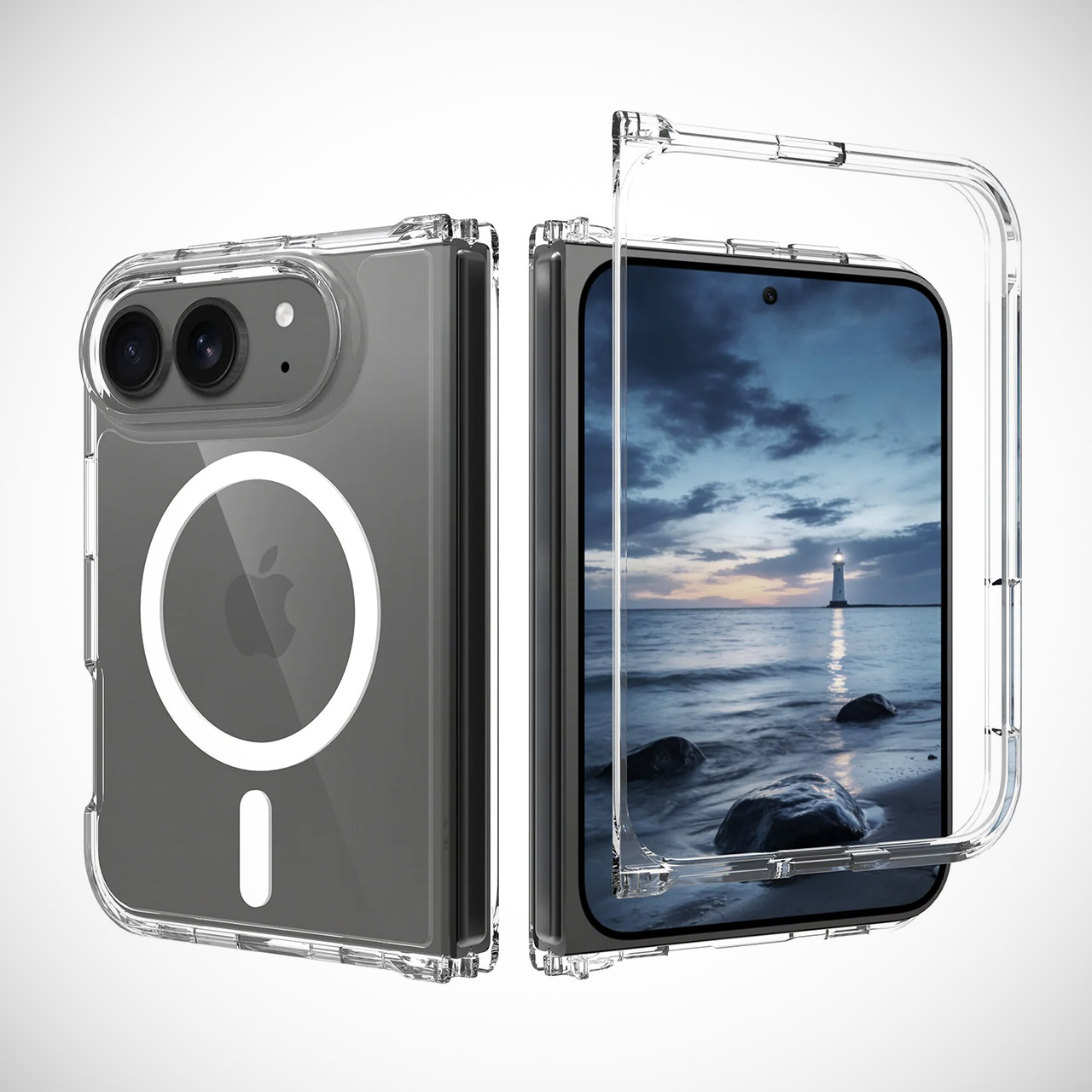
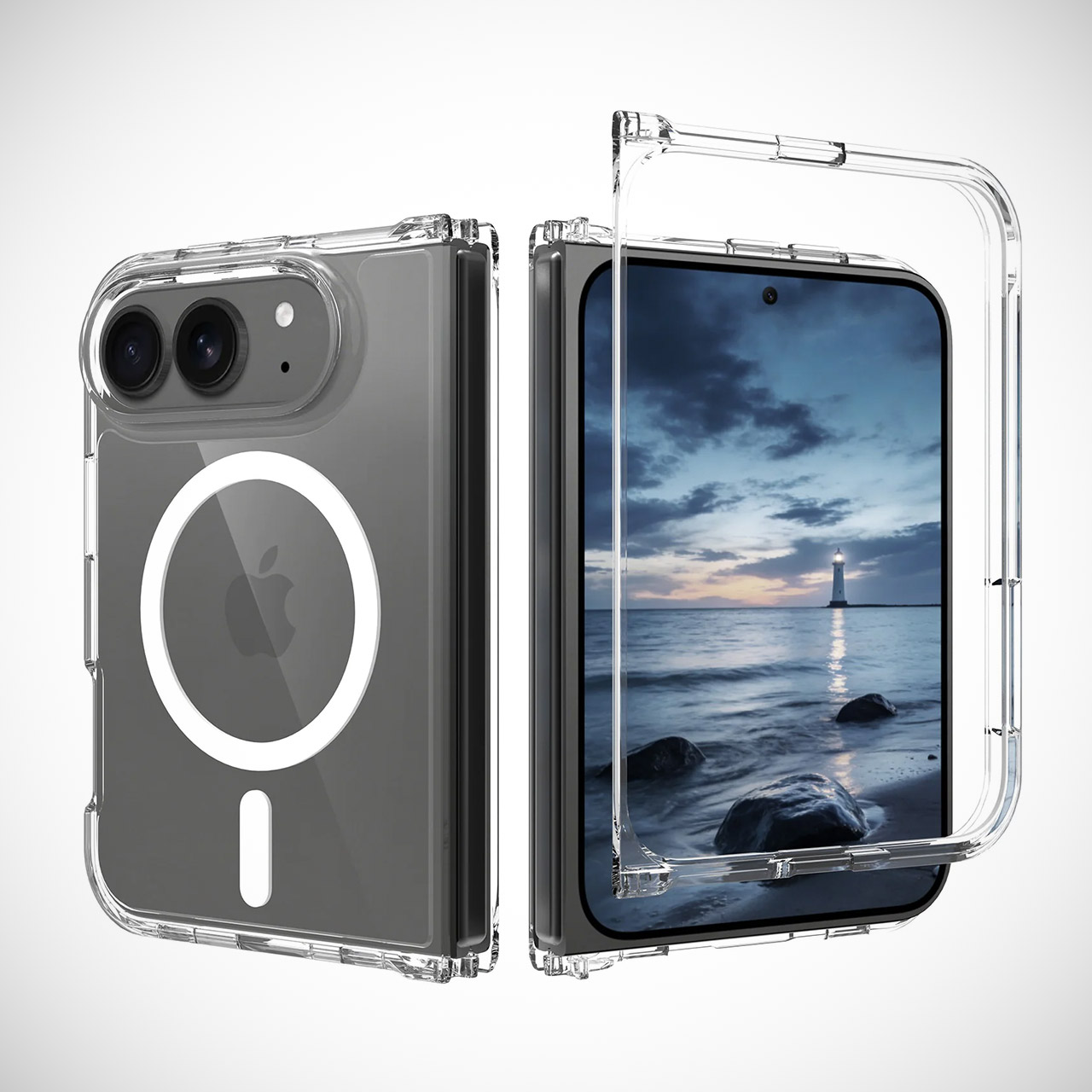
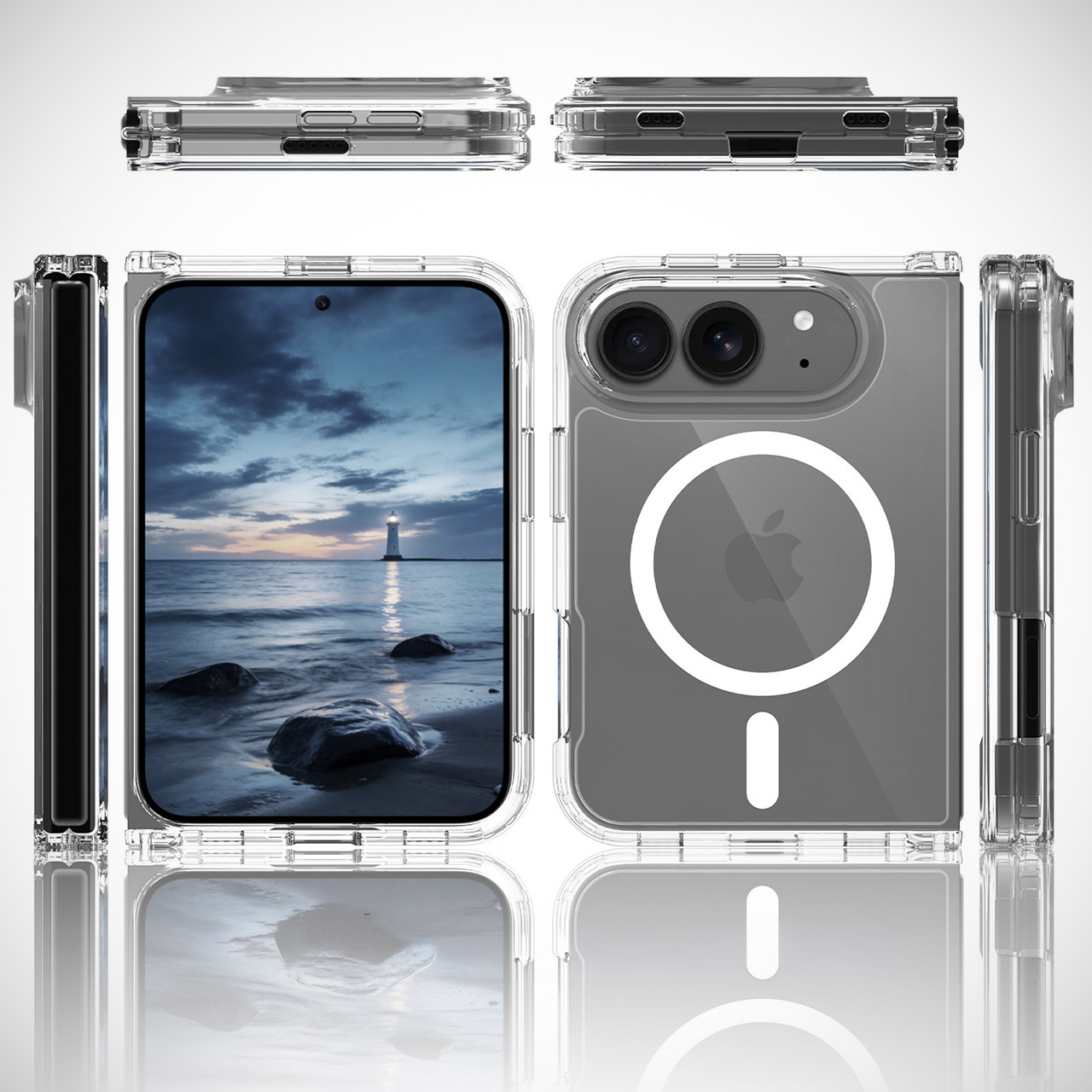
Photo credit: Letem světem Applem Accessory companies with direct ties to Apple have released images of rugged cases built for the company’s rumored foldable iPhone, often labeled the iPhone Ultra. These cases present the device in its folded and unfolded states from several angles, giving a solid sense of the overall shape and key features. Closed, the back carries a slim camera island holding two lenses along with a small additional sensor. Below that sits a large circular area designed for magnetic wireless charging and accessory pairing.
When the main screen is open, it covers a large horizontal area. This results in a device that is shorter in height and wider overall when completely expanded, giving it a far more compact tablet-like feel than most contemporary foldable phones. Inner display views within the cases show the front camera stowed away with no obvious cutout, however complete production models will have a small punch hole for that camera. Face ID does not appear in this design, and the fingerprint reader has been moved to the side button.
BIGGER, YET SLIMMER THAN EVER: Who would’ve guessed that wider could also be lighter? The design of Galaxy Z Fold7 is refined to feel like a…
BEST CAMERA ON A FOLD YET: You asked for more – now you can have the most. Galaxy Z Fold7 now boasts an ultra-premium 200MP camera with Pro-Visual…
SCREENSHARE FOR STREAMLINED ASSISTANCE: Intrigued by something you see? Go Live with Google Gemini, then screenshare or point your camera at it for…
When the device is open, there are two physical buttons running down the top edge, which are conveniently placed for quick access with the hand holding it. Suppliers receive accurate specifications early in the process, so it’s no surprise that cases are already on the market or in public view long before the phone itself is released. The fact that this gadget folds horizontally rather than vertically, as many other manufacturers do, creates an entirely distinct experience. With the larger screen area, you can have numerous windows open at the same time, watch some video, or take notes with the device in a more natural landscape configuration.
The images of the cases themselves also reveal that MagSafe compatibility is on the back, so your existing chargers and accessories should continue to operate normally. The side profiles in those photographs illustrate exactly how the hinge area fits into the protective shell. When all of this is considered, it’s evident that there isn’t much more to be surprised by in terms of this thing’s exterior shape. [Source]
Protecting Active Directory (AD) accounts starts with strong password policies, backed by consistent enforcement across the organization. However, make the rules too weak and you increase your attack surface; make them too strict and users will find workarounds, such as writing passwords down, reusing them across systems, or adding a predictable “!” to the end of the last version.
The challenge is enforcing modern, resilient password standards that avoid increasing helpdesk tickets or frustrating the people you’re trying to protect. However, with the right approach, you can strengthen your AD password posture and make life easier for users at the same time.
Adopt passphrases over complex passwords
Traditional password complexity rules are frustrating, and do not provide the protection needed for today’s threat landscape. When people are forced to include symbols, numbers, and mixed cases, they tend to fall back on memorable, but guessable, options like Password!2026.
A better approach is to prioritize length over complexity with passphrases. Longer passwords made up of multiple words are easier to remember and significantly harder to crack. NIST recommends allowing passwords up to 64 characters.
Advertisement
While most users won’t reach that limit, raising the minimum length (for example, to 15 characters or more) strengthens security and reduces the need for awkward, error-prone passwords.
Block weak and compromised passwords
Even with longer passwords, users are still likely to choose weak or common options. Password spraying attacks rely on exploiting that tendency, so it’s crucial that organizations actively block weak password creation. It’s here that solutions like Specops Password Policy help:
Creating custom banned word lists: Security teams can build tailored dictionaries of blocked terms that reflect their organization’s environment. This helps prevent common weak choices, including passwords based on usernames, display names, repeated characters, incremental changes, or reused elements from existing credentials.
Breach password protection: By continuously checking passwords against a database of over 5.4 billion known breached credentials, Specops Password Policy helps stop compromised passwords from being used in AD and allows issues to be addressed quickly.
Stopping weak passwords at creation is far more effective than trying to fix the problem after an account has been compromised.
Specops Password Policy
Rethink password expirations
When users are required to reset credentials too often, they tend to make minimal tweaks, changing a few characters or making incremental changes. To avoid this, those setting password policies should move away from mandatory password expiration unless there is evidence of a compromise.
That doesn’t mean expiry should be removed without consideration, particularly where password reuse is a concern. However, there’s a strong case for extending expiry periods when users are creating long, robust passwords and you have controls in place to detect compromised credentials.
Length-based aging reinforces this approach. Tying expiration periods to password length encourages longer, stronger credentials with the reward of extended or even removed expiry, unless a compromise is detected.
Advertisement
Verizon’s Data Breach Investigation Report found stolen credentials are involved in 44.7% of breaches.
Effortlessly secure Active Directory with compliant password policies, blocking 4+ billion compromised passwords, boosting security, and slashing support hassles!
One of the biggest challenges with strong password policies is reuse. Even when employees create a good AD password, they’re likely to repeat it across other systems simply because remembering dozens of credentials isn’t realistic.
An approved password manager, implemented securely, removes that burden. It allows users to generate and, more importantly, store every long, unique password they need for their accounts. For IT teams, enterprise password managers also support better control over shared credentials and privileged accounts. Combined with passphrase-friendly AD policies, they’re a practical way to improve security while reducing friction.
Implement self-service password resets
Password resets are one of the most common causes of helpdesk tickets in AD environments. When policies are strict and employees make mistakes, support queues quickly fill up.
Advertisement
Secure self-service password reset reduces that pressure. By verifying identity through MFA or other authentication methods, staff can reset their own passwords quickly, in many cases eliminating the need to raise a ticket.
Faster recovery reduces downtime, limits risky workarounds, and improves user experience. When people know they won’t be locked out for long, password policies feel far less disruptive.
Customizable notifications
Users shouldn’t be caught off guard by sudden lockouts or last-minute expiry warnings. It’s these annoyances that lead to unnecessary disruption and support calls.
Clear, timely notifications make a difference, highlighting when action is needed and clearly explaining requirements. Good communication won’t replace robust controls, but it helps users stay compliant and reduces the friction that often comes with password enforcement.
Advertisement
Provide dynamic feedback at password creation
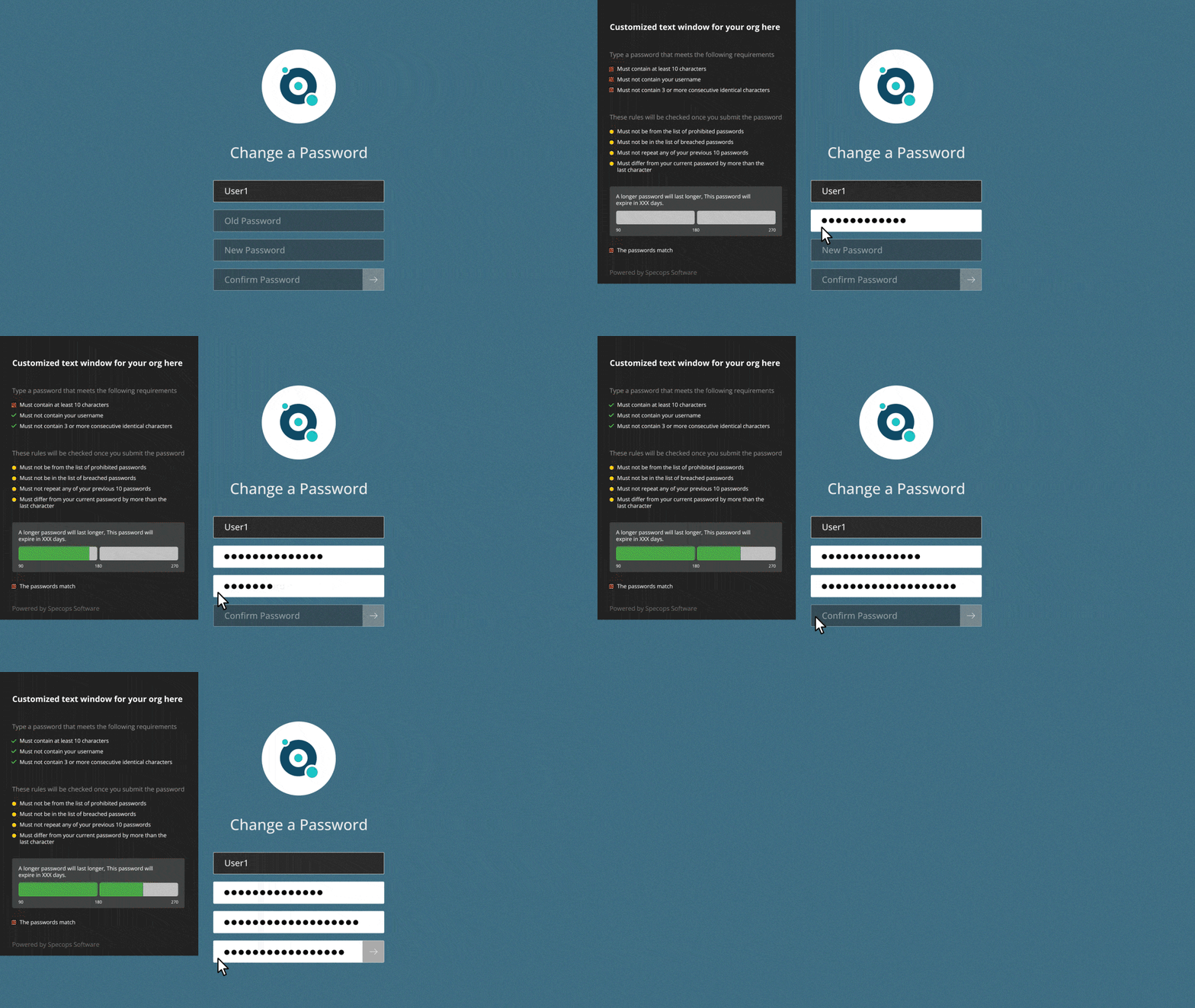
Vague “password does not meet requirements” messages are unhelpful. Effectively enforcing AD rules means supplying real-time, specific feedback when creating or changing passwords. Strength meters, banned password checks, and clear prompts make it easy for users to see exactly what the requirements are.
When feedback is immediate and actionable, users are more likely to create stronger credentials. It’s a small usability improvement that delivers a noticeable uplift in password quality.
How Specops can help
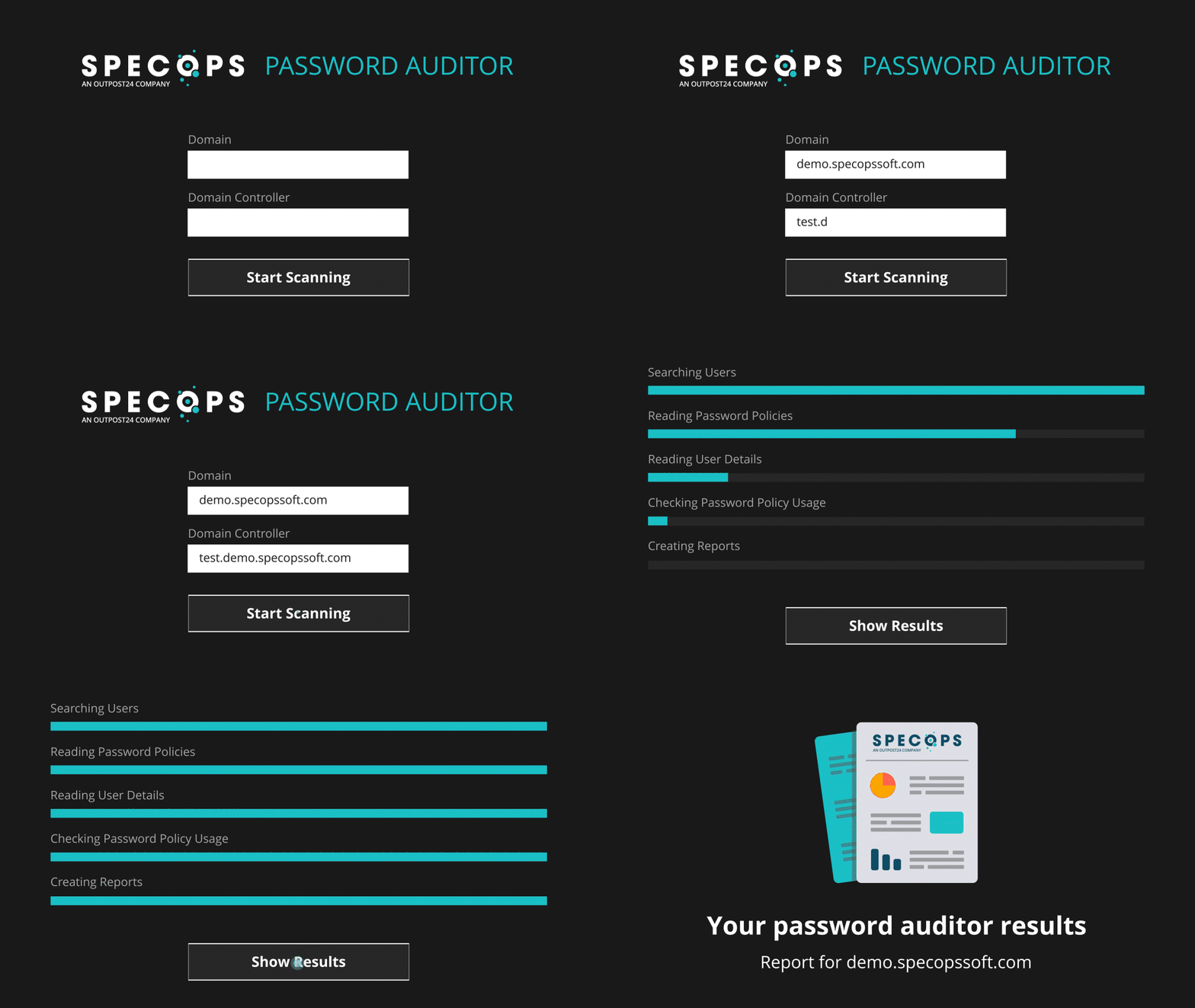
Reviewing and updating AD password policies is a balance between security and usability. A good starting point is auditing your AD environment using solutions like Specops Password Auditor. This free tool runs a read-only scan of your AD and highlights any password-related vulnerabilities, presented in an easy-to-understand report.
Specops Password Auditor
Specops Password Policy then helps organizations remediate any password-related issues and ensure continued policy enforcement across their environment. This includes practical improvements that strengthen resilience, such as continuously scanning for breached passwords and supporting passphrase implementation.
If you’re rethinking your password strategy, we can help you build an approach that improves protection while maintaining the user experience.
Pick up any smart device you own. A doorbell that recognizes faces, a watch that reads your heart rhythm, a thermostat that learns when you leave for work. They feel simple. You tap, they respond.
That simplicity is a lie. A useful one, but a lie.
Behind the clean app and the satisfying click is a stack of engineering decisions that most people never see. And the gap between a device that works for five years and one that dies in eight months almost always traces back to those invisible choices. So let’s look at what actually goes into building the connected gadgets shipping in 2026.
Smart starts with the circuit board, not the cloud
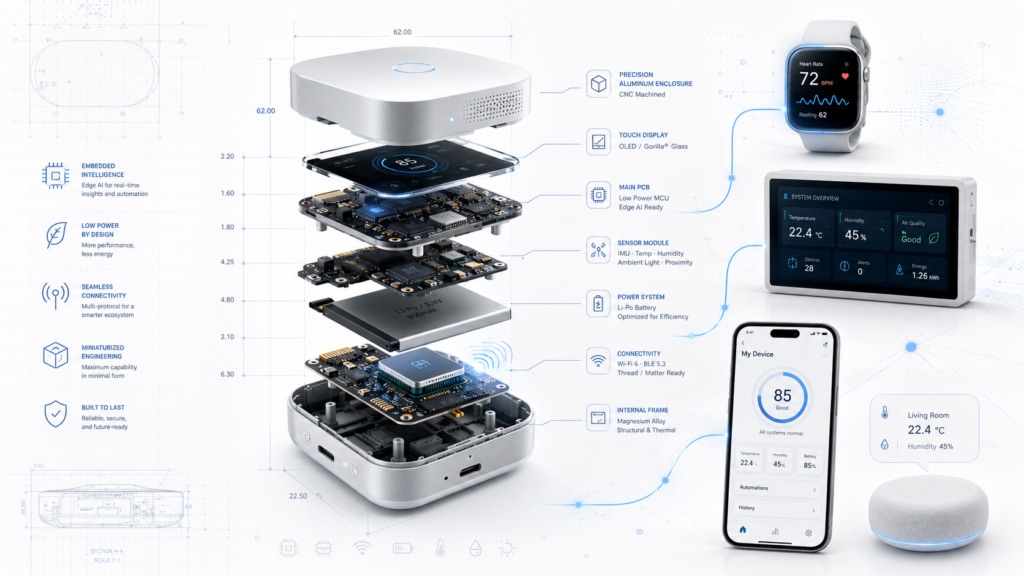
Most coverage of smart devices jumps straight to AI features and voice assistants. But the foundation is physical. A device is a printed circuit board, a microcontroller, a fistful of sensors, a radio, and a battery, all crammed into a shell that has to survive being dropped, sat on, and left in a hot car.
Advertisement
This is where hardware development does its quiet, unglamorous work. Engineers pick a microcontroller based on how much computing the device needs versus how little power it can afford to burn. They route signal traces on the board so a Wi-Fi radio doesn’t drown out a delicate sensor reading. They run the whole thing through thermal testing, drop testing, and certification for FCC and CE marks before it can legally ship.
Get this layer wrong, and no amount of clever software saves you. A poorly designed board produces flaky sensor data. Bad antenna placement means the device drops off your network the moment you walk to the next room. These aren’t software bugs. You can’t patch your way out of a physics problem.
The companies building good hardware treat the proof-of-concept stage as a real checkpoint. They wire up development boards and modular parts to test the core idea cheaply, before committing to a custom design that costs real money to manufacture. It’s the boring discipline that separates products from expensive paperweights.
Firmware is where the device actually thinks
Sitting on top of the hardware is firmware. This is the low-level code that tells the chip what to do, when to wake up, how to read a sensor, and when to phone home. People mix up firmware and software all the time, so here’s the clean split. Software runs on your phone or in the cloud and handles the screens you tap. Firmware lives inside the device and controls the hardware directly.
Advertisement
Firmware is genuinely hard to write well. The constraints are brutal. A typical IoT microcontroller has a tiny amount of memory, often measured in kilobytes, and it might run on a coin cell that needs to last a year. Every line of code competes for space and power.
Then there’s timing. A lot of devices need deterministic, real-time behavior, meaning a sensor reading has to be processed within a fixed window or the whole thing falls apart. A heart monitor that processes a beat “eventually” is useless. The firmware has to guarantee it happens now.
If you want the deep version of how this gets built in practice, Yalantis published a solid breakdown of firmware development for embedded IoT devices that covers architecture, power management, and the over-the-air update workflows that keep a device current after it ships. The OTA piece matters more than it sounds. A device that can’t safely update its own firmware is frozen in time the day it leaves the factory.
Connectivity is a series of trade-offs
Your smart device has to talk to something. Your phone, your router, a cloud server, or all three. Choosing how it talks is one of the most consequential engineering calls in the whole project, and there’s no single right answer.
Advertisement
Bluetooth Low Energy sips power and works great for a wearable talking to your phone, but its range is short and it can’t reach the internet on its own. Wi-Fi reaches everything but drains batteries fast. LoRaWAN travels for miles on almost no power, which is perfect for a soil sensor in a field, but it carries tiny amounts of data slowly. Cellular options like NB-IoT and LTE-M let a device work anywhere there’s a signal, with the catch of ongoing data costs and bigger power draw.
Engineers usually mix these. A fitness band might use BLE to sync with your phone, and your phone carries the data the rest of the way. An industrial sensor in a remote location might use LoRaWAN to a gateway, which then forwards everything over cellular. The “right” combination depends entirely on power budget, data volume, range, and cost, which is exactly why this decision gets made early and gets revisited often.
Sensors and the messy job of trusting them
A smart device is only as good as the data it collects. And raw sensor data is messy.
Take a simple temperature reading. The sensor drifts over time. It gets warmed by the heat of the chip sitting next to it. It returns noisy values that jitter up and down even when nothing changes. Firmware has to calibrate, filter, and sanity-check all of it before the device acts on a single number.
Advertisement
This gets serious fast in regulated fields. A continuous glucose monitor or a medical wearable can’t ship a reading that’s “close enough.” The sensor design, the calibration, and the firmware that validates the data all have to meet standards that consumer gadgets never face. The engineering bar is much higher, and the cost of getting it wrong is measured in patient safety, not customer reviews.
For everyday devices the stakes are lower, but the principle holds. Good devices spend a lot of hidden effort turning unreliable physical signals into numbers you can actually trust.
Where the AI hype meets the silicon
Here’s the part that has changed most recently. A growing share of smart devices now run machine learning models directly on the chip instead of sending everything to the cloud. This is edge computing, and it’s reshaping how devices get built.
The appeal is obvious. Processing data on the device means lower latency, since you’re not waiting on a round trip to a server. It means better privacy, because your data never leaves your hand. And it means the device keeps working when your internet goes down.
Advertisement
The catch is that running a model on a chip with kilobytes of memory is an engineering puzzle. Models have to be shrunk, quantized, and optimized until they fit in the space available without melting the battery. The face-recognition that runs locally on a modern doorbell is a heavily compressed version of what would run on a server. Squeezing it down to fit is real, specialized work, and it’s increasingly where the competitive difference between two similar gadgets actually lives.
Security can’t be the last step
For years, connected devices treated security as an afterthought. Ship the product, patch problems later. That approach has aged badly.
Outdated firmware is now one of the most common ways attackers break into IoT systems. Research from the security firm ONEKEY found that vulnerable firmware accounts for a large majority of successful attacks on connected devices. Once an attacker is inside one poorly secured gadget on your network, they have a foothold to reach everything else.
Building security in from the start means encrypting data both when it’s stored on the device and when it travels to the cloud. It means signing firmware updates so a device only accepts legitimate code, not something an attacker swapped in. And it means designing for recovery, so a compromised device can be safely reset and restored rather than turned into a permanent liability sitting on your shelf.
Advertisement
This is the layer consumers never think about and pay the most for when it’s done badly.
Why the next generation is harder to build
Smart devices are getting more capable, and that capability has a cost that lands squarely on the engineering team. More on-device intelligence. Stricter privacy rules. Longer battery expectations. Tighter security. Regulatory scrutiny that used to apply only to medical gear now creeping toward consumer products too.
None of this shows up in the marketing. The ad shows a person tapping a screen and a light turning on. What it doesn’t show is the year of board revisions, firmware rewrites, connectivity tests, and security audits that made that tap reliable.
So the next time a smart device just works, give a small nod to the invisible stack underneath. The clean experience on the surface is the product of a lot of unglamorous engineering refusing to cut corners. That refusal is the whole difference between a gadget you trust and one you return.
Apple’s latest MacBook Air is down to $899, matching one of the lowest prices seen so far for the ultraportable. The base config includes 16GB of RAM, a 512GB SSD, and a 13.6″ Liquid Retina display, while the M5 chip adds improved AI and productivity performance in Apple’s fanless thin-and-light design.
South Africa is not just another developing country struggling to govern artificial intelligence (AI); it is the exception with leverage, and the window to act on it is closing. It holds approximately 88% of global platinum-group metal reserves, critical inputs to parts of the semiconductor and data center supply chains that make AI infrastructure possible. It hosts the largest data center market on the continent. Its existing hyperscaler relationships give it procurement leverage that most African states will never have. And a major geopolitical contest over AI infrastructure is being fought on its soil right now, between Chinese and American technology companies competing for control of the systems that will underpin an entire continent’s public sector.
In physics, leverage requires three things: a fulcrum, a lever arm and the ability to apply force. The Bushveld Complex, the world’s largest platinum-group metal deposit, is the fulcrum: a mineral endowment that gives South Africa a position in the semiconductor supply chain that no other African state holds. The since-withdrawndraft policy is the lever arm. The unresolved “OPTION” provisions in the policy are where force would be applied. Without a policy that specifies what South Africa wants in return for market access, the lever arm sits unused, and the weight of two of the world’s largest technology ecosystems settles exactly where those ecosystems want it to settle.
This makes South Africa a global test case. Not because its proposed means of governance is exemplary, but because it is the one developing country with enough structural leverage to negotiate genuinely different terms, and the one that is choosing, through inaction, not to. The recent announcement of a new panel to update the draft policy is an important opportunity. But the deeper failure is not that an AI policy contained bad references. It is that no verification process caught them before the document entered the public domain. That is a systems problem, not merely a political one. It points to a missing layer in how governments are adopting AI.
Advertisement
The contest already underway
Last year, Huawei, pitched an emerging product bundle to tech executives across the continent. Huawei was now bundling access to the DeepSeek’s large language model with its own cloud and storage infrastructure. The price differential was stark: in some cases by more than 90%.
At the same time, Microsoft announced plans to spend ZAR 5.4 billion ($300 million) by the end of 2027 on cloud and AI infrastructure in South Africa, building on a prior ZAR 20.4 billion investment. Google, AWS and Oracle already have cloud regions in the country. According to one analysis, the country’s data center market was valued at $2.16 billion in 2024, the largest in Africa.
These are not commercially neutral investments. Huawei’s infrastructure reach has been explicitly linked to Chinese strategic objectives, including a documented track record of providing governments with surveillance infrastructure through its Safe Cities network. US hyperscaler investment comes with its own dependency structure: closed models, pricing set unilaterally and terms of access that no African government has meaningfully shaped. South Africa is being asked to choose between these dependency models without a policy that specifies what it wants in return.
The leverage it has
There is a particular irony in South Africa’s position. The country whose mines supply platinum-group metals essential to semiconductor manufacturing, and through them to AI compute, has drafted a policy that treats it as a consumer of AI systems rather than a stakeholder in their governance. South Africa digs up the minerals that make AI possible. It has no say over the AI built from them.
Advertisement
The AI triad framework covers algorithms, compute, and data. South Africa has no frontier model development capacity. South Africa holds significant data assets in financial services, healthcare and agriculture, with no clear framework for their sovereign management. South Africa possesses PGM leverage of global significance on the compute axis, currently being transferred without meaningful condition. It also has exceptionally high solar irradiance and significant renewable energy potential. A country that can offer both critical mineral inputs and the energy to power the infrastructure those minerals help build occupies a negotiating position of unusual strength.
The Draft Policy proposes no minimum terms for hyperscaler investment, no data sovereignty requirements, no technology transfer conditions and no compute visibility mechanism. Multiple provisions are explicitly left unresolved, marked “OPTION”, including the most consequential choices about how governance will function. Infrastructure decisions made now determine what is renegotiable later, and the answer is: very little.
Three futures, one default
The three infrastructure futures on offer each create a structurally different form of dependency, and only one creates sovereign capability. The Huawei-hosted DeepSeek integration offers low cost and open-source weights, but with data stored on infrastructure potentially accessible under Chinese legal frameworks, creating surveillance dependency in a pattern already documented across Africa. The second is US closed-model dependency: higher capability, more reliable data protection, but complete API dependency on developers abroad. The third is locally hosted open-weight infrastructure: models governed under South African data sovereignty rules, on infrastructure subject to minimum terms, developed with South African data. As Nathan Lambert at Interconnects has observed, open-weight models are likely the only realistic way to get sovereign AI off the ground as a real effort, enabling local communities and economies to integrate meaningfully with the technology. But this requires procurement conditions, not goodwill.
What binding governance looks like
The GovAI “Governing Through the Cloud” framework identifies four roles compute providers should accept as conditions of operating at scale: securers (protecting model weights and training data), record keepers (maintaining infrastructure usage logs), verifiers (confirming customer compliance with safety standards) and enforcers (restricting access when violations occur). These are operational requirements, not theoretical categories — specific, enforceable, and well within the bargaining power of a market of South Africa’s size and mineral position.
Advertisement
A detailed policy analysis submitted to the Department of Communications and Digital Technologies (DCDT) identifies the specific provisions the final policy must contain: mandatory minimum terms for foreign compute infrastructure investments above ZAR 500 million (~$30 million); a compute reporting threshold; a National AI Safety Institute mandate covering defensive monitoring of AI capability accumulation; and National AI Champion Sector designations to create data assets for domestic model development. Each provision converts a structural advantage into a governance instrument before that advantage is foreclosed by market reality. Just as modern software security increasingly depends on knowing what components are inside a system—model provider, training data, compute environment, evaluation methods, update cadence, human review points, and failure-reporting procedures—public-sector AI governance requires a clear account of the stack before deployment, not after a problem surfaces. A public institution that cannot verify the sources in its own AI policy is unlikely to be ready to verify the AI systems it procures, deploys, or regulates.
South Africa’s choices will establish a regional precedent for what is commercially negotiable in AI infrastructure. If South Africa negotiates data sovereignty guarantees and technology transfer conditions as requirements for hyperscaler investment, it creates a replicable model. If Microsoft’s $300 million investment and Huawei’s infrastructure expansion proceed on standard commercial terms, as they are currently, it normalizes extractive AI infrastructure across the continent. The lesson is not specific to Africa. Governments everywhere are producing AI strategies while lacking AI assurance infrastructure. South Africa is an early warning, not an isolated case.
The public comment period closed when the policy was withdrawn. But a parallel process remains live: the National Treasury’s Draft General Public Procurement Regulations—the legal instrument that will govern every government AI contract—closes for comment on June 15. Those regulations contain no AI-specific provisions.
South Africa has more AI leverage than any country on the continent. Some argue, with force, that governance requirements risk deterring the infrastructure investment South Africa urgently needs: compute capacity, reliable energy, venture capital, and talent retention. That concern deserves a direct answer. Minimum procurement terms, compute reporting thresholds, and technology transfer conditions are not barriers to investment. They are the conditions under which investment serves the host country rather than extracting from it. Infrastructure built without minimum terms produces dependency. Infrastructure built with them produces leverage. To serve the public interest, its AI policy must use it.
Advertisement
When late last month News24 reported AI-hallucinated references in the draft AI policy, Minister of Communications and Digital Technologies Solly Malatsi withdrew the draft policy. That was a mistake that could cost South Africa and the rest of the continent the initiative on this urgent issue. His more recent constitution of an independent panel is a belated step in the right direction, if it can turn South Africa’s leverage into policy. The panel—chaired by Prof Benjamin Rosman of the Wits Machine Intelligence and Neural Discovery Institute, and including Profs Vukosi Marivate and Alison Gillwald of Research ICT Africa, and Dr Jabu Mtsweni of the CSIR—has the technical and governance credibility to produce a stronger document. What it has not yet produced is a timeline. No revised draft has been scheduled. South Africa remains without a formal AI governance framework in the interim.





























































You must be logged in to post a comment Login