
Tech
Hyundai IONIQ 3 Officially Unveiled, Called an ‘Aero Hatch’ Built on 400-Volt Architecture

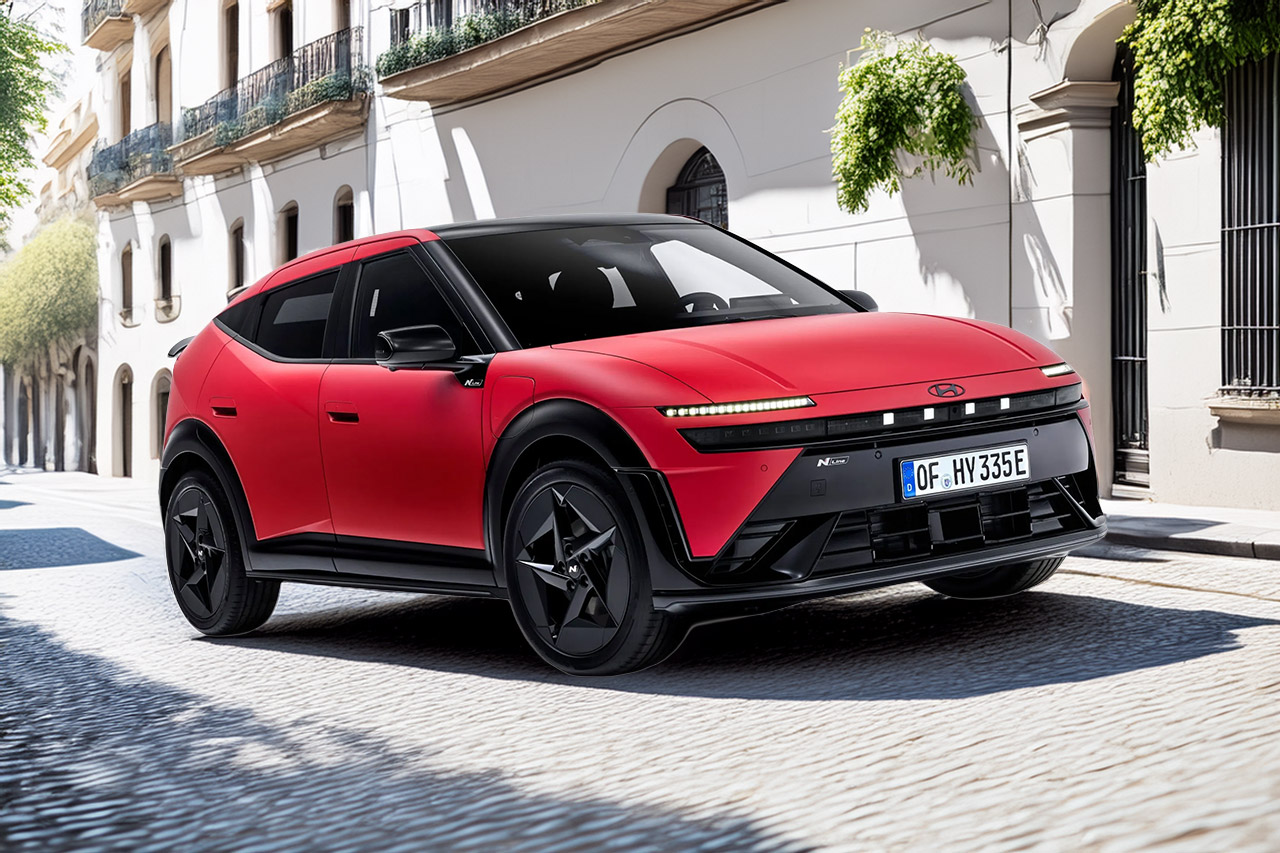
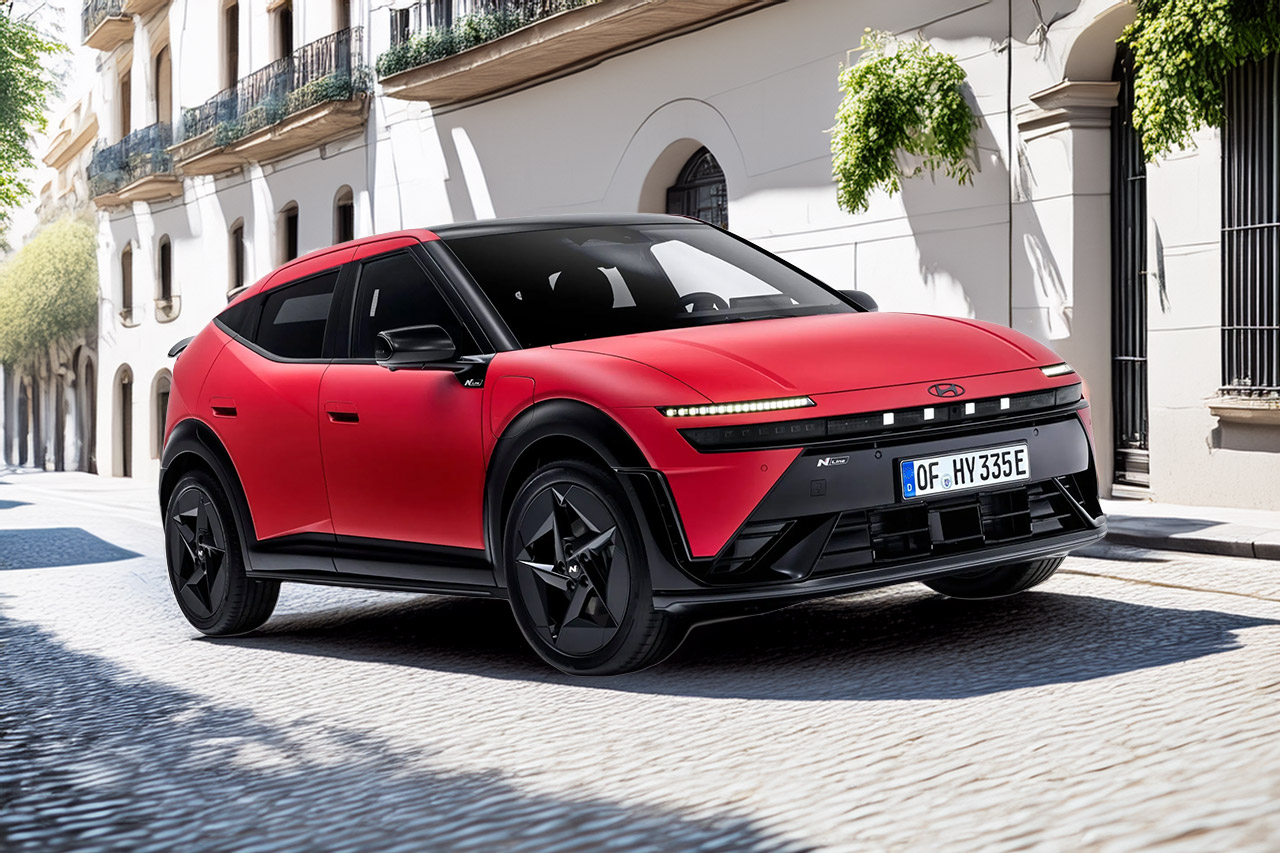
Hyundai has just revealed the IONIQ 3, its latest electric hatchback that demonstrates that you don’t need a large clunker to travel long distances. This five-door style, known as a ‘aero hatch’, emphasizes efficiency, which is important in everyday life as well as weekend excursions.
Clean lines and a well-thought-out design tame its compact body, which measures approximately 4,160 millimeters, just lovely and short. The front and back lights do the “H” thing with four unique little dots that are actually an homage to Morse code, and its aerodynamics are pretty slick with a drag coefficient of 0.263, which really helps stretch every last drop from the battery. The N Line variant gets a bot more aggressive, with black highlights, darker wheels, and a small rear spoiler that adds presence without changing the overall design. The lowest models have 16-inch wheels, but higher trims receive 19-inch wheels instead, as well as some tough cladding that implies it might do mild off-road tasks without issue.
Sale

Segway Ninebot S2 Electric Self-Balancing Scooter – Master Your Commute w/t 11.2 mph Max. Speed, 21.7 Mi…
- Speed & Range: Experience exhilarating rides with the Ninebot S2’s impressive top speed of 11.2 mph and range of 21.7 miles.
- Beginner-Friendly: Perfect for riders aged 16-50, the Segway S2 features a user-friendly learning mode, providing a smooth and gradual introduction.
- Adjustable & Supportive: Enjoy a customized fit tailored to your needs, as the Segway S2 accommodates heights ranging from 4’3″ to 6’6″ and supports…
Step inside and you’ll see a lot of open space thanks to a flat floor that can accommodate five persons comfortably. There’s a suitcase-sized storage bin buried under the boot floor, as well as a 441-liter boot volume to play with. The inside has a modern vibe to it, although everything is quite plain. The heated and ventilated seats, as well as the panoramic roof, are nice features for longer excursions.
The dashboard is kept pretty simple, with only a few physical buttons for climate controls and other functions, so you don’t have to look down while driving. There’s a large free-standing touchscreen that measures 12.9 inches on the low end and 14.6 inches on the high end, and it runs on the Pleos system, which sounds like an alien language but is actually an Android-based system that handles the critical stuff. Wireless phone charging and a Bose audio system complete the gadget list.
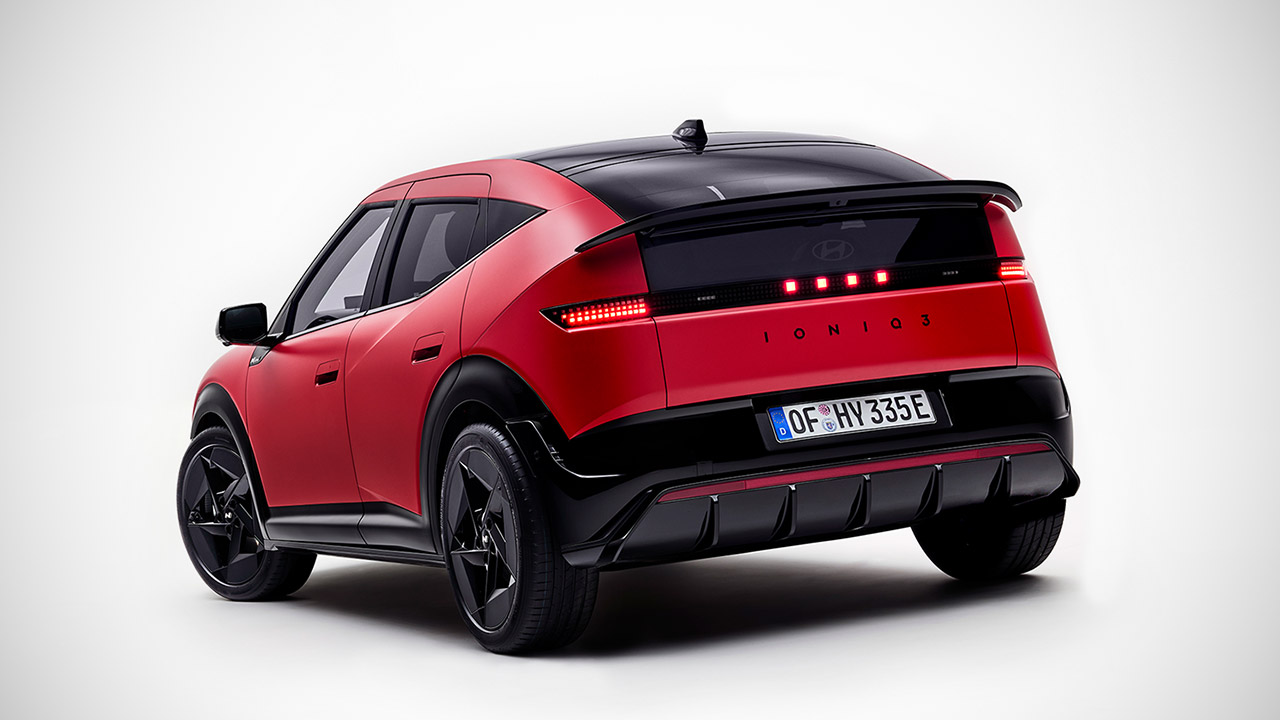
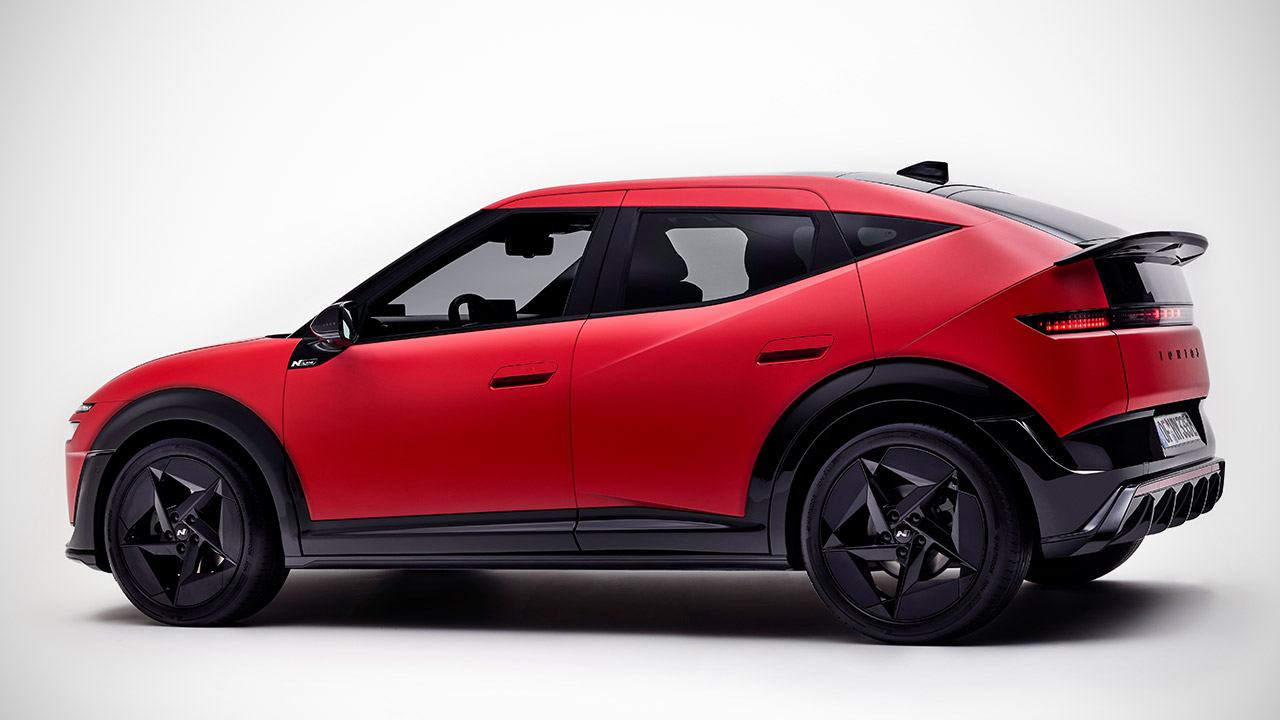
Power-wise, it is a 400-volt platform with front-wheel drive at launch and two battery options. The smaller 42.2-kwh pack works with a 144-hp motor for about 214 miles on the WLTP cycle, while the larger 61-kwh unit gets around 308 miles of range. Regardless of which option you choose, the torque remains constant at 250 Nm, and there is the option of dual-motor all-wheel drive later down the line, which may only increase horsepower to 288. Fast charging isn’t awful, bringing you from 10 to 80 percent in 29-30 minutes, though the precise duration varies by pack. It also performs well on the interstate, reaching a top speed of 106 mph.
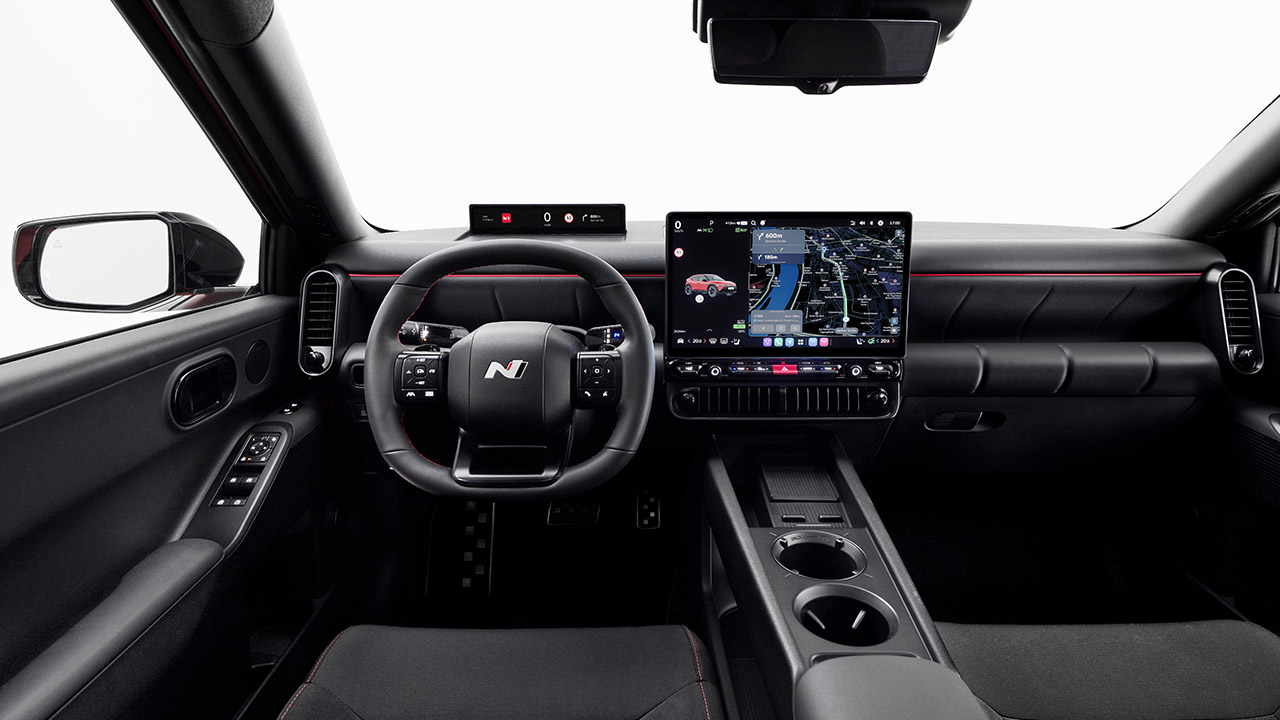



You’ll be able to buy one in Europe beginning in September, with prices starting at roughly $25,000. They’re built in Turkey. The IONIQ 3 is avoiding the US market, whether it be due to tariffs or other reasons…for now.
[Source]

For some, there’s no better way to spend an afternoon than window shopping (and maybe buying something) at the hardware store. If you’ve got a few bucks burning a hole in your pocket and you’re looking for a little direction, you’re in the right place.
These aren’t just products with a price tag under $25 that Lowe’s happens to sell. They are tools you might wish you had sooner, or include useful features you may not have seen, but that’s not all. Each product had to meet several criteria (including but not limited to positive user comments) to be included.
Maybe you want to expand your collection of tools and DIY accessories, or you’re trying to find a gift for the tool lover in your life on a budget. With a budget of just $25 and a trip to your local Lowe’s, you could walk out with something pretty cool. Here are seven affordable options to get you started.
Stud finder with WireWarning
In your garage, you might be putting up shelves, mounting pegboards, hanging heavy tools, and more. There are half a hundred reasons you may need to find a stud hidden inside your walls. That’s where a stud finder comes in handy.
The Zircon StudSensor L50 stud finder runs on a single 9V battery and can find wooden or metal studs up to 3/4 inch behind your walls. It also has a feature called WireWarning, which can detect live, unshielded AC wires up to 2 inches deep, so you don’t accidentally drill into them and cause an electrical problem or an injury.
The StudSensor L50 also has a feature called Spotlight Pointer. When the sensor detects the edge of a stud, it beeps, and the stud’s location appears on an enhanced LCD display. Meanwhile, the Spotlight Pointer shines a light in the shape of an arrow, so you know where to mark the edge. As long as you know how to use a stud finder, it can help you hang heavy things with confidence and ease.
Long tape measure
Most major brands make measuring tapes with rigid tape and a limited range. If you’ve got an ordinary tape measure in your tool set, there’s a good chance it’s 25 feet or shorter. That’s long enough for small projects, but you might run into trouble if, for instance, you’re trying to measure your home’s exterior walls before buying paint.
The Kobalt 100-foot tape measure is more flexible and winds into the handle between uses. Not only can this tool measure much larger objects and spaces, but the flexibility also means you can use it to measure curved or irregular surfaces, and that’s not all.
A nylon coating protects the tape measure from wear and tear, while ground stakes let you secure the end of the tape and take your own measurements. This tape measure features a high-visibility design so you can see your measurements from a distance. Markings are printed on both sides, so you’ll still be able to see your results even if the tape measure gets twisted.
Adjustable square
As the name suggests, a regular square lets you check for 90-degree, or square, angles. An adjustable square, also known as a T-Bevel, serves a similar purpose, but can be adjusted to measure a wide range of angles.
You don’t necessarily need exact measurements when you’re building a treehouse or slapping something together for personal use, but if you’re building things that have a very low tolerance for misalignment, a square and angle finder can be a game-changer. You can measure inside angles and outside angles according to your needs.
The Johnson Level aluminum adjustable square is designed to last a long time. Its handle is made of solid aluminum with an angle measuring blade made of stainless steel to minimize rusting. The handle and blade are attached with a locking bolt, so that when you’ve made your measurement, you can lock it into place and transfer those angles to your other materials to ensure they line up.
Laser distance measurer
This pen-style measuring tool uses light to determine the distance between itself and another object. When you make a measurement, a laser beam fires out of the front of the tool. The beam travels at the speed of light until it encounters something like, for instance, the opposite wall of your living room. When the bounced light comes back, it strikes a sensor, and the tool determines the amount of time between when the light left and when it returned. It compares the time traveled to the speed of light and, presto, you’ve got your distance.
The WEN indoor laser distance measurer can measure distances between 1.7 feet and 32 feet with a variance of only a 1/4 inch or less. Measurements are calculated from the back of the tool, so you can put it up against one wall and measure the distance to the next.
A digital display shows you the laser’s battery level and your measurement results. It has just a single button that controls everything. Pressing the button once turns the laser on; pressing it again takes a measurement. Pressing and holding the button lets you choose either metric units or feet and inches. It automatically turns off after two minutes.
Inspection penlight and laser
Pointing a finger is a famously poor way of showing someone what you’re looking at, especially when you’re dealing with small parts, complex objects, or when there are many objects in roughly the same space. The Klein Tools inspection penlight offers a solution to that problem.
This small inspection light offers 70 lumens to shine light into dark areas, but that’s not all. The laser mounted to the top shows up inside the illuminated space, so you can pinpoint exactly what you’re looking at. An aluminum construction and textured finish offer IP54 dust and water resistance, a better grip, and 10 feet of drop protection.
It has a removable pocket clip, like you’d find on the side of a ballpoint pen, for easy storage between uses. It’s ready to use right out of the box, and you can get 10 hours of use from the pair of AAA batteries pre-installed in the penlight. Perhaps the best feature, or at least the coolest, is the ring around the front of the light. It’s made of a similar material to the glowing stars kids put on their bedroom ceilings. The ring charges when the penlight is on, then glows so you can find it if you drop it in the dark.
Digital display multimeter
A multimeter can measure various electrical aspects for a variety of professional or DIY jobs. You can use one to make sure the power is off so you don’t get electrocuted on the job. A multimeter can also be used to identify the root of a problem in your car, in your house, and elsewhere. For instance, if one electrical outlet has power and the next one doesn’t, there’s a good chance the problem is somewhere between those two points.
The Kobalt digital display multimeter can measure AC and DC power and test the leads on different types of batteries. It has seven available functions and 16 ranges, allowing you to measure voltage, current, and resistance. It should be noted that you might have problems at extreme temperatures (below 14 degrees and above 140 degrees Fahrenheit) or when the relative humidity rises above 70%.
The multimeter comes with a 12V battery pre-installed and test leads to take measurements. The power button turns it on or off, and the hold button freezes the current reading on the screen when you press it once. Pressing it again will clear the screen so you can make another measurement. Just make sure to follow all safety protocols whenever working with electricity. When one mistake could be your last, it’s best not to make any.
Under cabinet lights
It’s not uncommon for a person’s garage to be poorly lit. Often, the garage door opener might be the only light in the space. If you’re looking to add more light to your workshop, the Utilitech under-cabinet lights could be a good place to start.
They come in 10-inch, 18-inch, and 24-inch sizes, and you can choose a package with either two or four lights. Built-in magnets let the lights attach to metal surfaces without tools or much effort. The under-cabinet lights can be mounted to other types of surfaces with the included adhesive backing. A small dome next to the light contains a PIR (passive infrared) sensor for motion detection and a battery charging light.
Each light offers a bar of white light, and you can adjust the color temperature with a button on the side. The lights are powered by rechargeable batteries using a simple USB-C cable. If you leave the light on constantly, you’ll get between eight and 10 hours on a single charge. If, instead, you use the motion sensor function, it could be as much as a month between charges.
Methodology, how we made our choices
Every product on this list had to pass through several gates in order to be included. The first gate is relatively straightforward and apparent in the title. Anything over $25 (before tax) was ineligible for inclusion.
The second gate was a little bit tougher; to be included, a product had to be something the average person might not have. Or, at the least, includes features that are atypical and useful. We’re sure you can find plenty of cool tools and products under $25, but you’re not here to hear that you should have a hammer. You already know that, and you (probably) already have one. It also had to be useful. Just because most people don’t have a product doesn’t mean they need it.
Finally, each product had to have someone (or a lot of someones) vouch for it. In some cases, that means a SlashGear author has used the tool and found it to be worth recommending. If someone at SlashGear can’t vouch for a product, we look to people who have used and reviewed it. To make the cut, a product had to have at least 100 reviews (usually many more) and an average rating of at least 4.0 stars.
Tech
Former advisor to Steve Jobs says new Apple CEO is exactly what’s needed: an engineer from the inside


Tim Cook’s plan to step down as Apple’s CEO, announced Monday, will put the tech giant in the hands of a hardware engineer, John Ternus, returning Apple’s top job to its product roots after nearly 15 years under a leader who made his mark in operations and supply chain.
It’s the right call, said Mike Slade, a Seattle tech veteran who spent six years as an advisor to Steve Jobs at the company. Apple needed to pick an insider who understands the culture, Slade said, and ideally someone who knows how hardware comes together, inside and out.
Ternus checks both boxes.
“Apple’s the last company left where there are people that know how to build computers, in the U.S., at least,” Slade said. “If you know that, you have an unfair, intuitive ability to know what’s possible. That’s how crazy things like the iPod and the iPhone came to be.”
Ternus, 50, joined Apple in 2001 and has been there ever since, rising from the product design team to senior vice president of hardware engineering. He has overseen hardware across every major product line, including iPhone, Mac, iPad, and AirPods.
Cook, 65, announced Monday that he will become executive chairman on Sept. 1, when Ternus takes over as CEO of the Cupertino, Calif., company. The transition ends one of the most successful tenures in the history of corporate America: under Cook, Apple’s market cap grew roughly tenfold, and by literally trillions of dollars, from about $350 billion to $4 trillion.
Slade, a co-founder of Seattle venture capital firm Second Avenue Partners, started his career at Microsoft in 1983 and later ran Starwave, Paul Allen’s internet media company, which sold to Disney. He served as an advisor to Apple and Jobs on product and marketing strategy from 1998 to 2004, attending Apple executive meetings and working with both Jobs and Cook.
We’ve known Slade for years through Seattle’s tech community, and got in touch with him after seeing him quoted in the New York Times’ coverage of Cook’s departure. In that piece, he called Cook’s legacy one of “continuous improvement in every aspect and fantastic new products.”
Speaking with GeekWire via phone, Slade noted that he had recently been running the numbers on the market value of Microsoft and Apple under different leaders. Cook stands out for having grown Apple’s value from $350 billion to more than $4 trillion during his tenure, more than a 10-fold increase.
Throughout its history, he noted, Apple has rarely been a first mover in hardware. Music players, cell phones, and VR headsets all existed before Apple got to them.
“They just weren’t very good,” he said. “Apple made them good.”
That’s exactly the skill set a hardware engineer brings to the CEO role, he said.
Steven Sinofsky, the former Microsoft Windows and Office chief, called Cook’s run as Apple CEO “just an incredible incredible tenure,” writing on X that Cook accomplished “the rare combination of improved execution and strategic innovation.”
But the biggest question facing Ternus is one that dogged Cook in his final years: what to do about artificial intelligence. Apple has largely watched from the sidelines as rivals poured hundreds of billions into AI, and its own efforts, including a delayed Siri overhaul, have stumbled. Its AI chief, John Giannandrea, left last year after being gradually sidelined.
Alex Zenla, co-founder and CTO of Edera, a Seattle-based container and AI security startup, said Apple’s strength in recent years has been hardware, driven by Apple Silicon and a reversal of past missteps like over-thinning of Apple hardware.
Ternus oversaw many of those changes, she pointed out, making him a natural fit for the top job. Apple invested early in on-device AI through its Neural Engine, Zenla noted, and that positions a hardware-minded CEO well for what’s ahead.
“If Apple wants to shine with Apple Intelligence, hardware will continue to be at the forefront of their strategy, and ultimately I believe that bet will pay off,” Zenla said via email.
Zenla also praised Cook’s legacy on a personal level, calling him a source of pride as a fellow Alabama native and one of corporate America’s most prominent gay executives.
Slade said he doesn’t think AI is Apple’s problem to solve. The company’s edge, in his view, is building the hardware that AI runs on, and for that, you want an engineer at the top.
“I think the people who are going to be best at AI are not going to be Microsoft or Apple or Google or Amazon,” Slade said. Instead, he said, it will be companies like OpenAI and Anthropic that have been singularly focused on the technology.
Cook will remain involved as executive chairman, and Slade said that’s an important aspect of the announcement. The corporate and political sides of running Apple are areas where Ternus may not have deep experience, and Cook isn’t going anywhere.
But the core of the job is product, Slade said, and that’s where Ternus fits.
If he’d been asked in advance who Apple should pick, Slade said, his answer would have been simple: Pick an internal person who understands product. “So there you go,” he said.

An anonymous reader quotes a report from the Guardian: A ban on mobile phones in schools in England is to be introduced by the government to ensure that “critical safeguarding legislation” is passed. The government will table an amendment to the children’s wellbeing and schools bill in the House of Lords after the bill was held up by peers on opposition benches. It will make existing guidance on mobile phone bans in schools statutory, a move that ministers have resisted until now.
The government had consistently argued that the vast majority of schools had already banned mobile phones, and that there was no need to add a legal requirement. They finally capitulated, however, describing it as “a pragmatic measure” to get the bill through. […] The bill is regarded by many as the biggest piece of child protection legislation in decades and includes proposals for a compulsory register for children who are not in school, a crackdown on profiteering in children’s social care, and a “single unique identifier” to help agencies track a child’s welfare.
from the a-very-bad-bet dept
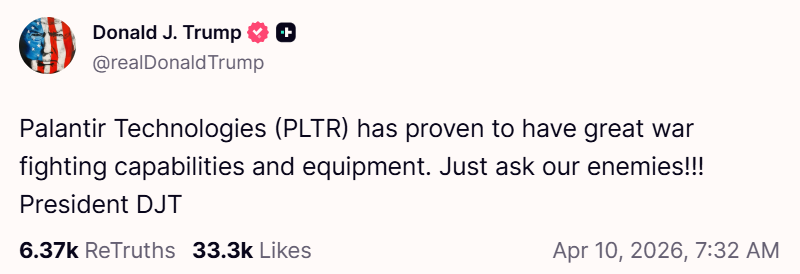
Earlier this month, Donald Trump posted on Truth Social that “Palantir Technologies (PLTR) has proven to have great war fighting capabilities and equipment. Just ask our enemies!!!” — notably including the stock ticker, because why not just make the market manipulation explicit.

The stock popped after that and has continued to rise in the past couple weeks, though it’s still down on the year.
Welcome to patronage capitalism with a stock ticker attached.
Last year, we wrote about the disturbing trend of tech founders and VCs nodding along to the neoreactionary pitch that democracy is holding back innovation, and that what the industry really needs is a “tech-friendly” strongman to sweep away institutional guardrails. We argued this was both morally bankrupt and strategically suicidal, since real innovation requires exactly the kind of stable, open, competitive institutions that authoritarianism systematically destroys.
Palantir has apparently decided to volunteer as the case study. Palantir — the very company whose entire sales pitch is built around using technology to make better strategic decisions and predict how things will play out.
But now the company seems to be betting that Trumpist-flavored authoritarianism is a permanent feature of the American political landscape — and that going all-in on it will never, ever have any long-term consequences.
Over the weekend, the company’s official account posted what it called a “brief” 22-point summary of CEO Alex Karp’s book The Technological Republic, framed as an introduction to the “philosophy” behind Palantir’s work. Most of it is a reheated version of the familiar Thiel-adjacent playbook — Silicon Valley owes a debt to the country, we must build AI weapons before our adversaries do, the iPhone has made us soft — the kind of thing that gets nodded along to at certain conferences and immediately forgotten.
But a few points deserve to be called out. First, there is the quite telling series of bullet points effectively saying that famous people shouldn’t be subject to public criticism because it means they might not want to help save you piddling simpletons.
We should show far more grace towards those who have subjected themselves to public life. The eradication of any space for forgiveness—a jettisoning of any tolerance for the complexities and contradictions of the human psyche—may leave us with a cast of characters at the helm we will grow to regret.
[….]
The ruthless exposure of the private lives of public figures drives far too much talent away from government service. The public arena—and the shallow and petty assaults against those who dare to do something other than enrich themselves—has become so unforgiving that the republic is left with a significant roster of ineffectual, empty vessels whose ambition one would forgive if there were any genuine belief structure lurking within.
This is the same Harpers Letter-style nonsense where people who deem themselves to be great thinkers or great men of history find it horrifying that the public might call them on their bullshit. I mean, sure, we should show more grace in general to lots of people, but these fragile-minded billionaires keep acting like because some wacko on social media calls them on their bullshit pronouncements it’s the end of the world.
But it gets way worse from there. Buried near the end are points 21 and 22, which are insane, and should make anyone who continues to work with or for Palantir radioactive:
Some cultures have produced vital advances; others remain dysfunctional and regressive. All cultures are now equal. Criticism and value judgments are forbidden. Yet this new dogma glosses over the fact that certain cultures and indeed subcultures . . . have produced wonders. Others have proven middling, and worse, regressive and harmful.
We must resist the shallow temptation of a vacant and hollow pluralism. We, in America and more broadly the West, have for the past half century resisted defining national cultures in the name of inclusivity. But inclusion into what?
Strip away the corporate-academic language and you’re left with a very old, very problematic argument: certain cultures — and we all know which ones they are claiming are supposedly the “middling” and “regressive” ones — are inferior, and the pursuit of inclusivity has been a civilizational error. That framing — some cultures produce wonders, others are regressive and harmful, pluralism is a civilizational threat — has been used to justify exclusion, hierarchy, and far worse for over a century. And while internet fascists like to think of it as edge lord contrarianism today, to most people it just comes across as a shiny coat of paint on historical bigotries and ignorance.
Eliot Higgins, the founder of Bellingcat, sarcastically pointed out that it was “extremely normal and fine for a company to put this in a public statement.” In a much longer and more thoughtful thread on this, he made a key point:
This is the publicly endorsed worldview of a company that is rapidly becoming load-bearing infrastructure for the federal government’s surveillance and enforcement apparatus, and it contains arguments that would be at home in a white nationalist pamphlet.
Palantir has always been a bit creepy and cultlike in their worship of government power. Years back I debated one of its founders regarding Google employees convincing the company to drop out of a government AI surveillance effort, Project Maven. He insisted that those employees were naive and Google was weak for backing down. Of course, Google’s decision to leave Project Maven turned out to be a huge win for Palantir, who effectively took it over in Google’s place.
But back then, Palantir at least played the game of pretending to care about cultural diversity and pluralism. As Chris Person pointed out, until fairly recently, Palantir had employee resource groups called Palamigos, PalaNoir, PalanQueer, PalanGender Queer, the Palantir Interfaith Network, PalAPI, and PalNoir. The company celebrated exactly the kind of pluralism and multicultural identity that Karp’s manifesto now denounces as “shallow” and “vacant.”
And yes, they even pretended they had a pro-DEI stance:
At least now we see what happens when they feel they can go full mask off.
With Trump in power, Karp apparently feels free to discard the diversity framing the company used for years to recruit employees and just say the quiet part out loud.
The apparent hope is to use Trump’s support over the next few years to permanently weave themselves into the federal government’s tech stack. The NY Times last year talked about how Palantir’s Foundry is becoming the connective tissue for federal data:
The push has put a key Palantir product called Foundry into at least four federal agencies, including D.H.S. and the Health and Human Services Department. Widely adopting Foundry, which organizes and analyzes data, paves the way for Mr. Trump to easily merge information from different agencies, the government officials said.
Creating detailed portraits of Americans based on government data is not just a pipe dream. The Trump administration has already sought access to hundreds of data points on citizens and others through government databases, including their bank account numbers, the amount of their student debt, their medical claims and any disability status.
Palantir has made itself ideologically and technically indispensable to one specific administration’s political project — which happens to include mass deportation, data consolidation on citizens, and the kinds of enforcement actions that require exactly the ideological framework Karp just publicly endorsed.
Meanwhile, the even more recent $10 billion Army contract consolidates 75 separate contracts into a single decade-long enterprise deal.
Supporters of Palantir will likely argue that it sounds like this “embrace fascism” strategy is working great. The company is signing these rich contracts and getting its technology deep within the infrastructure of the federal government. And, yes, you could say that these are short term wins (even if the stock price is kinda lagging).
But these things cut both ways. When your value to the government is primarily ideological alignment with a specific political project, you become a clear and visible target the moment that project loses power.
One of the many problems with fascism as a business strategy is that it only works if the fascists stay in power indefinitely. It’s a woefully unpopular ideological position, especially in the US — betting on a temporarily ascendant horse that has no chance in a longer race.
But Karp and Palantir have bet the farm that either Trumpism will remain a powerful force within the government or that they will be so deeply buried in the systems that it would be effectively impossible to rip them out when more grounded leadership enters the picture.
That’s an incredibly risky bet, and one I doubt will pay off.
Karp has made sure that he and his company have become ideologically toxic to a non-fascist government. A future non-Trumpist administration will have tremendous reputational incentive to very visibly rip out Palantir, as a signal that the prior regime’s infrastructure is being dismantled.
This is exactly the trap we warned about last year when we wrote about Silicon Valley’s embrace of fascism for short-term gain. Contractual dependency you can unwind. But you’ve told everyone in public what you are, and you can’t walk that back when the winds shift.
And the winds do shift. Companies that tied themselves to nationalist or authoritarian regimes throughout the 20th century tend not to have great long-term track records as independent entities. Some survive — though often in name only, most heavily restructured, with decades of reputational rehabilitation to follow. When you make yourself a load-bearing pillar of a specific regime’s specific project, your fate becomes tied to that regime’s fate.
Then there’s the talent question. The piece we wrote last year noted that authoritarianism drives brain drain — that foreign students, researchers, and the global talent pool that has always fed American innovation are already heading elsewhere. Palantir just published a document telling the world, in effect, that a diverse workforce is “shallow” and “vacant” and that some cultures are “regressive.” The engineers who have options — and the best ones always do — just got a very clear signal about whether they should take Palantir’s recruiter call.
There’s a version of Palantir’s business that doesn’t require publishing a white-nationalism-adjacent manifesto. You can sell analytical software to the federal government without announcing that pluralism is a mistake and that some cultures are regressive. Plenty of defense contractors manage it. The business didn’t force the decision to publish those 22 points. It was a choice to double down on ideological signaling, presumably because Karp and company have calculated that visible loyalty gets rewarded in the current environment.
And perhaps it earned some cheers from the remaining trolls on X, for whatever that’s worth.
But it’s a recipe for disaster over the long haul, which seems odd for a company whose entire sales pitch is based around the ability to use its tech to get great insights into how strategic decisions will play out.
This is exactly the warning we gave tech founders last year. The pitch that democracy is messy and slow, that innovation really needs someone who “gets it” cutting red tape, leads directly and predictably here: first you justify the pragmatism of cutting red tape, then you’re chasing the contracts, then drafting the manifestos, until your stock price depends on friendly presidential posts and your long-term viability depends on a political coalition never losing power.
Palantir has decided this is its business model. The rest of the industry should watch very carefully what happens next. Because the thing about tying yourself to a regime isn’t that it never works. It’s that when it stops working, it stops working all at once — and you’ve burned every other option on the way there.
Filed Under: alex karp, donald trump, fascism, silicon valley
Companies: palantir
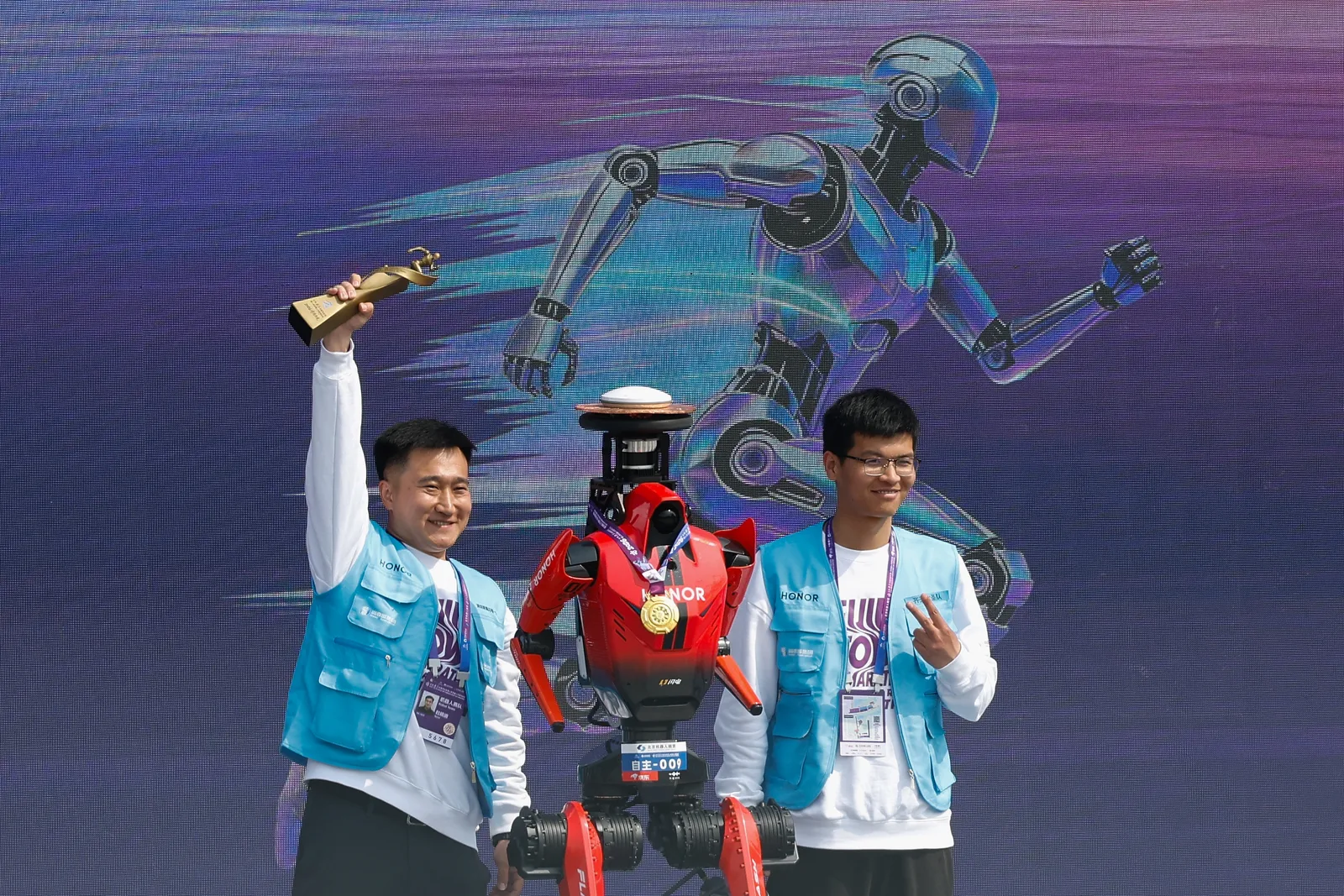
Over the weekend in China, a humanoid robot shattered world half-marathon record—the human record—by seven minutes.
The star performer was a robot developed by the Chinese company Honor (the smartphone maker), which finished the 13.1-mile race in 50 minutes, 26 seconds. The human record, set by Ugandan Olympic medalist Jacob Kiplimo, is 57 minutes, 20 seconds. The result marks an impressive milestone especially considering that, just a year earlier, the fastest robot at this half-marathon event took two and a half hours to complete the same distance.
But Honor’s robot was not the only participant. The event consisted of more than 100 humanoid robots from 76 institutions across China. The robots lined up alongside 12,000 human runners in Beijing’s E-Town, albeit on separate courses to avoid accidents. The contrast in performance between humans and robots was more than evident.
Run, Robot, Run
A humanoid robot is designed to mimic the structure and movement of the human body, with legs, arms, and sensors that allow it to interact with its environment. In this case, the winning robot incorporated features inspired by elite runners: long legs (almost a meter), advanced balance systems, and a liquid cooling mechanism, similar to that of smartphones, to prevent overheating during the race.
In addition, many of the participating robots operated autonomously, meaning without direct human control. Thanks to artificial intelligence algorithms, they could adjust their pace, maintain balance, and adapt to the terrain in real time. Notably, the Honor robot that achieved the 50-minute mark operated autonomously. The Chinese manufacturer presented another robot, operated by remote control, that ran the same stretch in even less time: 48 minutes, 19 seconds.
As expected, there were some accidents in the race. Some robots fell down, others veered off the path, and several needed technical assistance along the way. While the physical performance of humanoid robots has advanced rapidly, their reliability is still developing. Of course, the laughter and jeers are no longer as frequent as they used to be, replaced by applause and exclamations of surprise.

Robot Superiority
Just like the robots that went viral for their impressive martial arts display a few weeks ago, this long-distance race is part of a broader strategy by China to show off its leadership in the development of advanced robots.
You don’t need to be a robotics expert to see that this achievement demonstrates that machines can outperform humans at specific physical tasks under controlled conditions. (It’s hard to imagine that the winning robot could achieve the same result, for example, if it started to rain during the race.) But humans still have a few tricks up their sleeve: Running in a straight line is very different from performing complex real-world activities, such as manipulating delicate objects or interacting socially.
However, it’s understandable that the image of a robot crossing the finish line in record time, ahead of human athletes, raises several questions. Is this the beginning of a new era in which machines redefine physical limits?
One could argue that a car is a machine, and those have always been faster than humans. But a humanoid robot is designed to mimic humans. It’s more alarming to see one beat humanity at its own game—even if so many of them are still tripping over themselves.
This story originally appeared in WIRED en Español and has been translated from Spanish.

Amazon and Anthropic are strengthening their ties once again, with steep financial commitments made on both sides. Today, Amazon announced that it will invest $5 billion in the AI company, along with as much as $20 billion in additional payments if certain milestones are met. This news follows the initial $4 billion investment Amazon made in Anthropic in 2023 and a second $4 billion round from 2024.
On Anthropic’s side, it has committed to continued use of Amazon’s custom Trainium silicon for its AI models. The latest agreement will see Anthropic promising to spend more than $100 billion on AWS technologies over the coming decade. It will secure up to 5 gigawatts of current and future chip capacity for training and powering its models. Their partnership is also bringing Anthropic’s Claude platform to Amazon Web Services customers within the AWS portal, removing the need for additional credentials.
After nearly 15 years as Apple CEO, Tim Cook is stepping down. He will continue to operate in the role until Sept. 1, when he will be replaced by John Ternus, the company’s senior vice president of hardware engineering.
Cook won’t disappear from Apple. He will transition to Apple’s board of directors as executive chairman, the company announced Monday. But the shift represents the end of an era for the company.
Cook became CEO on Aug. 24, 2011, taking over from Apple co-founder and face of the company Steve Jobs, who passed away two months later. Known for improving the company’s supply chain, Cook oversaw a period of record growth. During his 15-year tenure, it refined its smartphone line from the iPhone 5 onward, debuted new products like the Apple Watch and HomePod, and launched services such as Apple Music, Apple TV Plus and Apple Fitness Plus.
With Cook at the helm, Apple became a trillion-dollar company in 2018 — the first US company to do so — and surpassed $3 trillion in market cap in 2022.
“I love Apple with all of my being, and I am so grateful to have had the opportunity to work with a team of such ingenious, innovative, creative, and deeply caring people who have been unwavering in their dedication to enriching the lives of our customers and creating the best products and services in the world,” Cook said.
Ternus, who will replace Cook in September, has spent almost his entire career at Apple. An engineer by trade, he joined the company in 2001, becoming vice president of hardware engineering in 2013 and SVP in 2021. He was “instrumental in the introduction” of the iPad and AirPods, according to Apple’s post, and oversaw the company’s product lines all the way up to the recent MacBook Neo.
This is a developing story. Check back on CNET for more updates.
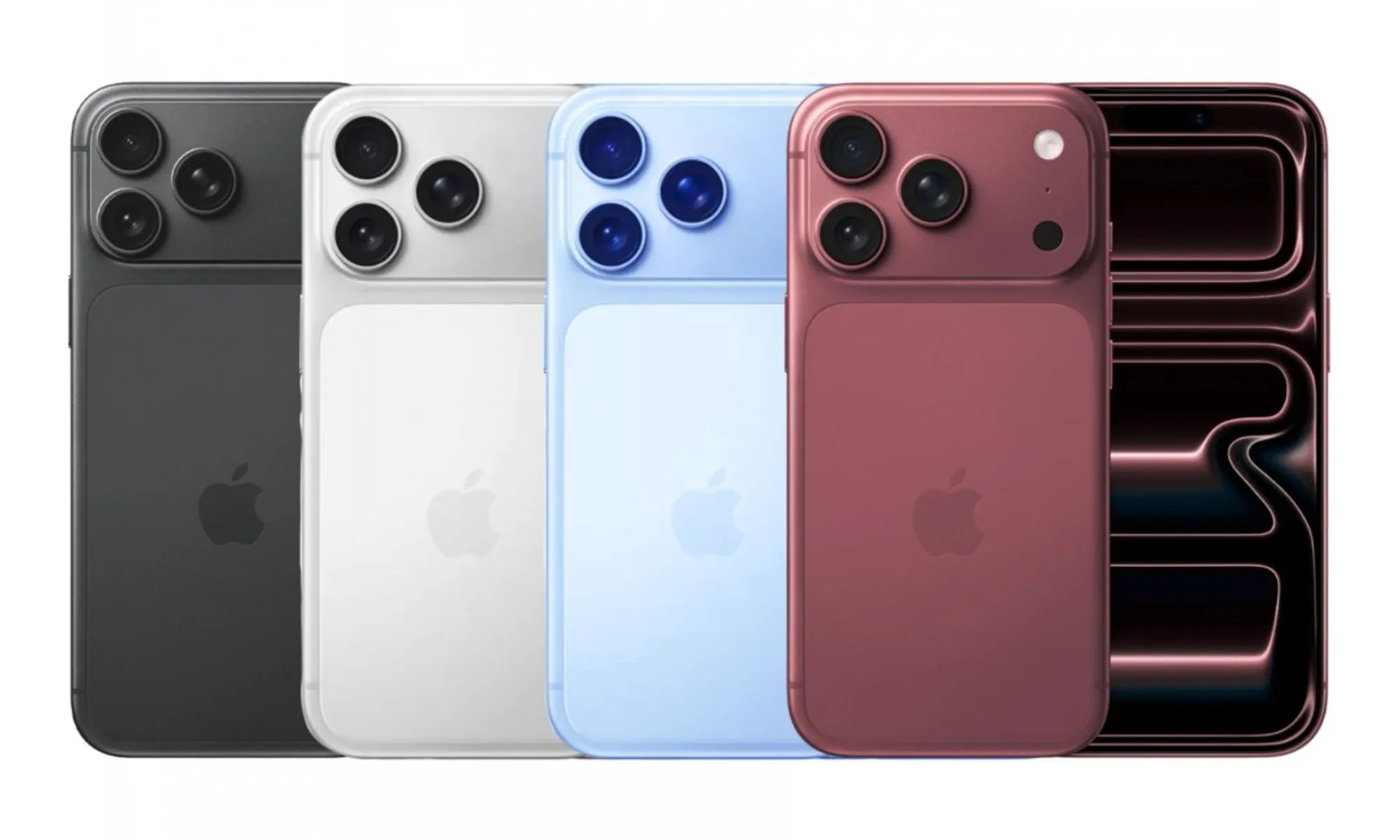
Apple’s upcoming iPhone 18 Pro lineup may introduce a refreshed set of color options, according to recent leaks, offering a mix of familiar finishes and a new standout shade. While the company has yet to officially confirm details, multiple reports suggest that four colors are currently being tested for the 2026 flagship.
The rumored lineup includes Light Blue, Dark Gray, Silver, and a new Dark Cherry finish, which is expected to serve as the signature color for the iPhone 18 Pro series.
A New Signature Color Takes Center Stage
Among the rumored options, Dark Cherry is drawing the most attention. Leaks indicate that Apple is moving toward a deeper, more refined red tone, replacing brighter shades like Cosmic Orange from the previous generation.

This follows Apple’s typical strategy of introducing one standout color each year to differentiate its latest Pro models. The Dark Cherry finish is expected to be more subtle and premium, aligning with the company’s current design language.
The remaining colors – Light Blue, Dark Gray, and Silver – appear to be more restrained. Light Blue could resemble earlier “Mist Blue” tones, while Dark Gray and Silver continue Apple’s preference for neutral, understated finishes in its Pro lineup.
Why These Changes Matter
Color may seem like a minor detail, but for Apple, it plays a key role in product identity. New finishes help distinguish each generation visually, making it easier for users to recognise the latest models.
The shift toward darker and more muted tones suggests Apple is refining its premium aesthetic rather than experimenting with bold or unconventional colors. Reports also indicate that Apple may once again skip a traditional black variant, continuing a recent trend in its Pro lineup.
These choices also point towards a broader design approach where subtle changes signal upgrades, especially in a market where hardware differences are becoming less visible year over year.
What It Means For Buyers
For users, the rumored color options offer a mix of safe and slightly expressive choices. Those who prefer classic finishes will likely gravitate toward Silver or Dark Gray, while the new Dark Cherry option could appeal to buyers looking for something distinctive without being overly flashy.

Since color is often a key factor in purchase decisions, especially for premium devices, the introduction of a new signature shade may influence early adopters and upgrades.
What Comes Next
As with all early leaks, these details remain subject to change. Apple typically finalises design elements closer to production, meaning one or more of these colors could still be altered or dropped. The iPhone 18 Pro series is expected to launch in September 2026, alongside other hardware updates such as potential display changes and camera improvements.
Until then, more leaks and renders are likely to emerge, offering a clearer picture of what Apple has planned for its next flagship.
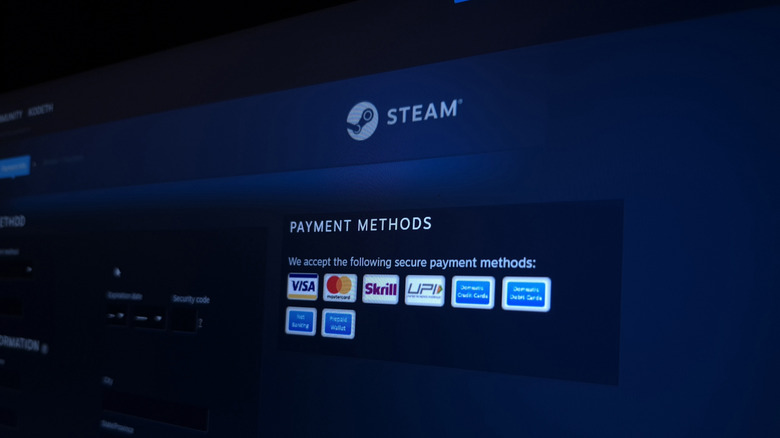
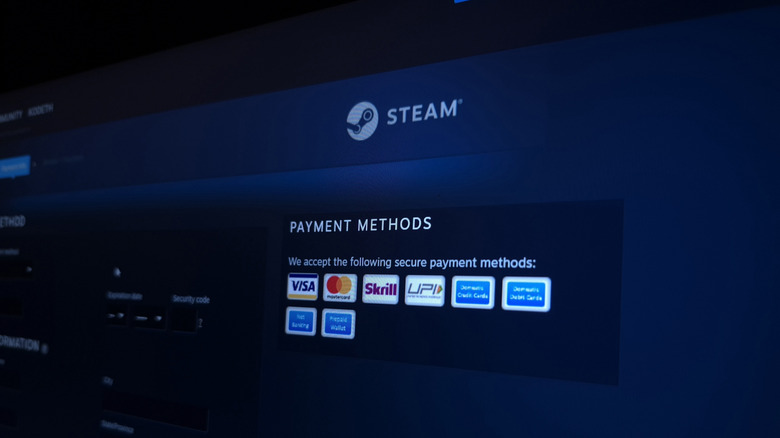
If you downloaded any games off Steam between May 2024 and January 2026, the FBI needs you to come forward. (No, you’re not in trouble.) The agency is looking into a series of malware-infected titles that were available to download from the online store over the course of those months.
The investigation is focused on seven titles: “BlockBlasters,” “Chemia,” “Dashverse” or “DashFPS,” “Lampy,” “Lunara,” “PirateFi.” and “Tokenova.” The FBI has reason to believe all came embedded with malicious software. According to the Bureau’s Seattle Division, there’s an urgent need to find anyone and everyone who could have unknowingly installed one of these compromised games.
If you downloaded any of these titles, the Bureau wants details about how you first encountered the game, who recommended it, and whether any of the money you’ve spent on Steam went to any of the games. Depending on how the case goes, it could open the door to restitution and other protections for you.
Why Steam is especially vulnerable

This all comes as part of multiple ongoing cybersecurity issues throughout Steam’s massive growth. Since launching in 2004, it has grown and evolved into one of the largest PC gaming marketplaces in the world. Today, it holds more than 100,000 titles and counting across major studio releases and indie projects alike.
Given its size, it’s not a shock to hear Steam has a number of past incidents involving fraudulent listings and malicious mods being distributed through third-party channels. It’s a huge undertaking to police such a vast online ecosystem, and sometimes, bad actors are bound to slip through the cracks. In fact, we last saw something like this back in 2014.
If you downloaded any of the seven games (or, worse, lost money to one of them), you can report your experience through an official FBI channel or by contacting Steam_Malware@fbi.gov. Going forward, keep in mind the best practices to keep yourself safe from ransomware.
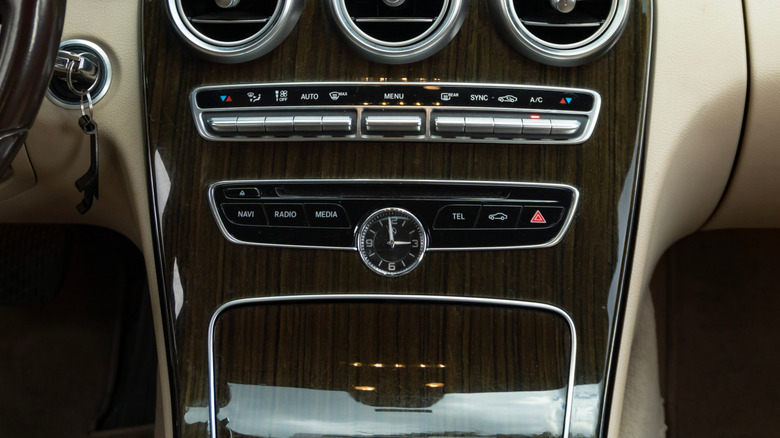
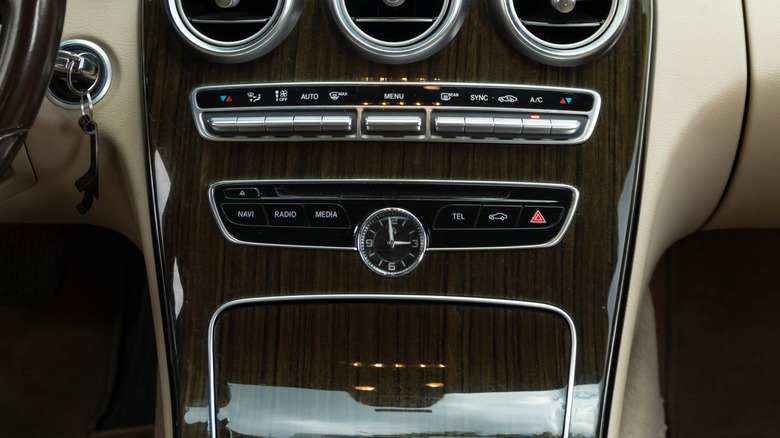
Today’s crop of luxury cars represents some of the most modern and technologically advanced vehicles on the road. That includes some of the most powerful luxury cars coming in 2026, and beyond. But as these vehicles deliver comfort, performance, and style in one package, many of them are doing so with an analog clock in the dash. While it may seem like a weird feature that car designers simply missed, the fact is that these clocks are there on purpose.
Some manufacturers leave the analog clocks in place because they’re meant to be the centerpiece of the vehicle. This is especially true at night with a clock that is dead center of the dashboard, as it stands out amongst the array of digital lights below it. Some car manufacturers, like Mercedes-Benz and Bentley, use elite timekeeping brands Breitling and Jaeger-LeCoultre, to develop timepieces that resemble actual wristwatches.
Then there’s the idea that major luxury car brands, by virtue of their design and often their history, represent a connection to craftsmanship. So, no matter how many times vehicles upgrade to suit the current aesthetic, analog timepieces help luxury cars become something of a time capsule. You might be riding in a modern vehicle with the best technology under the hood and behind the dash. But that analog clock is a constant reminder of tradition, making luxury cars stand out even more than they already do.
The evolution of timekeeping in cars

Long before luxury cars, or cars altogether for that matter, clocks were used while on the road. But it was limited to horse-drawn carriages carrying the wealthy, who wanted a portable timepiece on board while traveling. As the automobile was first developed and widely used in the 1900s, clocks were gradually included in one model after another. Some of the earliest versions of these clocks were mechanical and essentially adapted pocket watches. These clocks, like the watches used at the time, had to be wound by hand in order to work.
As time went on, mechanical clocks were eventually replaced by electric clocks, which became the norm in the 1950s and 1960s. But as timekeeping technology evolved and automobile design became more modern, clocks powered by quartz systems were introduced. By the 1970s, the driving experience was changing, and with the advent of digital displays, timekeeping had reached a whole new level of innovation. Meanwhile, analog clocks remained in luxury cars, like in certain models of the Lexus.
Some luxury car manufacturers have begun moving away from analog technology over the past several years. BMW switched over to a fully digital cockpit, complete with screen-based systems, back in 2018. The move was marketed by the German manufacturer as being beneficial for the driver, as it gave them a new operating system in which they would have more control.
7 Cool Lowe’s Gadgets Under $25 That Deserve A Spot In Your Garage

Gunman at pyramids north of Mexico City kills 1 Canadian tourist, injures several

Sagimet Biosciences Inc. (SGMT) Presents at Fueling MASH: Metabolic Drivers and Inflammatory Crosstalk Keystone Symposium – Slideshow

Manchester United reach agreement with Casemiro over contract clause amid transfer speculation

Steven Gerrard disagrees with Gary Neville over ‘shock’ Chelsea and Arsenal claim | Football

US brings back mandatory military draft registration

Why I’m NOT Buying Crypto in 2025 | Wait for THIS Signal! | Deepak Wadhwa & @accurate_arun #crypto

Harusnya Mindset KEUANGAN Para Sandwich Generation Tuh Gini! | SUARA BERKELAS #14

10 Jaw-Dropping Money Stats of the Average Person (2026)
-

 NewsBeat7 days ago
Trump and Pope Leo: Behind their disagreement over Iran war
-

 Fashion3 days ago
Weekend Open Thread: Theodora Dress
-

 News Videos6 days ago
Secure crypto trading starts with an FIU-registered
-

 Sports4 days ago
NWFL Suspends Two Players Over Post-Match Clash in Ado-Ekiti
-

 Crypto World7 days ago
SEC Proposes Certain Crypto Interfaces Don’t Need to Register as Brokers
-

 Business1 day ago
Powerball Result April 18, 2026: No Jackpot Winner in Powerball Draw: $75 Million Rolls Over
-

 Crypto World3 days ago
Russia Pushes Bill to Criminalize Unregistered Crypto Services
-

 Politics4 hours ago
Gary Stevenson delivers timely reminder to register to vote as deadline TODAY
-

 Politics3 days ago
Palestine barred from entering Canada for FIFA Congress
-
 Business4 days ago
Creo Medical agree sale of its manufacturing operation
-

 Politics2 days ago
Zack Polanski demands ‘council homes not luxury flats for foreign investors’
-
 Entertainment7 days ago
Brand New Day’ Footage Reveals the Devastating Impact of ‘Now Way Home’
-

 Crypto World3 days ago
Russia Introduces Bill To Criminalize Unregistered Crypto Services
-

 Tech2 days ago
Auto Enthusiast Scores Running Tesla Model 3 for Two Grand and Turns It Into Bare-Bones Go-Kart
-

 Tech5 days ago
‘Avatar: Aang, The Last Airbender’ Leaked Online. Some Fans Say Paramount Deserves the Fallout
-

 Tech6 days ago
Microsoft adds Windows protections for malicious Remote Desktop files
-
 Crypto World6 days ago
X Launches New Cashtag Feature for Stocks and Crypto: X
-

 Sports7 days ago
Younger Than Sachin Tendulkar: Vaibhav Sooryavanshi Set To Make Historic India Debut
-

 Entertainment6 days ago
Prince Carter Brings Fans Front Row and Backstage at Boys 4 Life Tour
-
 Entertainment6 days ago
Dave Portnoy Slams Dianna Russini: ‘Makes Zero Sense’
You must be logged in to post a comment Login