When it comes to flagship phones, the word “Ultra” has started to lose meaning. Every brand throws it around, but very few actually deliver something that feels… ultra. Take the Samsung Galaxy S26 Ultra, for instance. It’s a solid phone, sure, but exciting? Not quite. And that’s the bigger issue with the US market right now. Some of the most interesting Android flagships simply don’t make it here.
Meanwhile, brands like Vivo, Oppo, and Honor are quietly pushing smartphone cameras into territory that feels closer to dedicated cameras than ever before. And then there’s the Xiaomi 17 Ultra. After using it for a couple of weeks, one thing is clear: this isn’t just a phone with a great camera. It’s a camera that happens to be a phone. And honestly, it kind of feels like a modern-day revival of the Samsung Galaxy Camera.
If this thing officially launched in the US, it would shake things up in a big way.
Spec Sheet Flex, But Make It Real
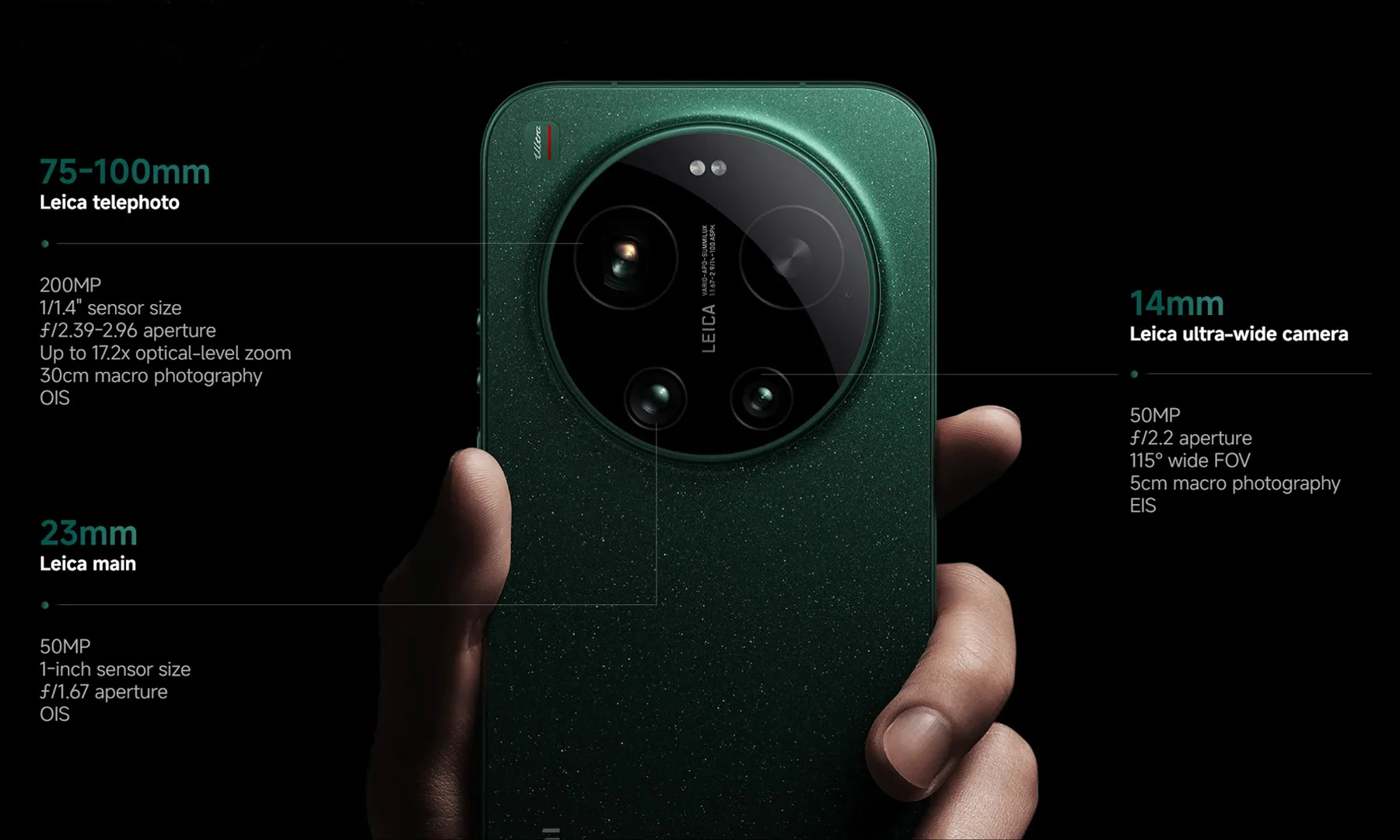
The Xiaomi 17 Ultra doesn’t just show up with a spec sheet — it shows off. You’re looking at a Leica-tuned triple-camera setup led by a 50MP 1-inch Light Fusion 1050L sensor with an f/1.67 aperture and LOFIC HDR, which is basically a fancy way of saying it handles highlights and shadows like a champ. Then there’s the real party trick: a 200MP periscope telephoto (Samsung HP9, 1/1.4″) with a slick continuous optical zoom from 75mm to 100mm (around 3.2x to 4.3x), stretching all the way to a wild 400mm equivalent via in-sensor crop.
Rounding things out is a 50MP ultrawide with a 115° field of view and macro support, plus a surprisingly serious 50MP autofocus selfie camera up front. And yes, it shoots 8K at 30fps and 4K at 120fps with Dolby Vision and ACES Log, which is as close as a phone gets to saying, “Yeah, I can do cinema too.” Additionally, there’s Leica optics and color tuning across all lenses. In fact, that Leica partnership isn’t just branding either. It shows up in how the photos look, feel, and behave.
Daylight Drama, Minus the Drama
Let’s start with daylight shots, because this is where most phones already do well. The Xiaomi 17 Ultra does better. Images are sharp, detailed, and rich without looking artificially processed. You get two primary profiles: Leica Authentic and Leica Vibrant. I found myself leaning toward Vibrant more often, and here’s the thing: it doesn’t go overboard.
Varun Mirchandani / Digital TrendsVarun Mirchandani / Digital TrendsVarun Mirchandani / Digital TrendsVarun Mirchandani / Digital TrendsVarun Mirchandani / Digital Trends
Colors pop, but they don’t scream. Greens look lively without turning neon, blues stay controlled, and overall contrast feels more… intentional.
Varun Mirchandani / Digital TrendsVarun Mirchandani / Digital TrendsVarun Mirchandani / Digital TrendsVarun Mirchandani / Digital Trends
Honestly, it’s a refreshing break from the oversharpened, overprocessed look that some flagships lean into. Furthermore, the HDR performance is another highlight. Even in tricky lighting, the phone balances highlights and shadows beautifully, without flattening the scene.
Zoom Game That Actually Feels Like a Camera
This is where things start getting really fun. The combination of multiple lenses and a continuous optical zoom system means you’re not just jumping between fixed focal lengths. You’re actually working with something that feels closer to a real camera lens. From 1x to 2x, 3.2x, and even beyond, the results stay impressively sharp. Colors remain consistent across zoom levels, which is something many phones still struggle with.
1xVarun Mirchandani / Digital Trends2xVarun Mirchandani / Digital Trends3.2xVarun Mirchandani / Digital Trends8.6xVarun Mirchandani / Digital Trends
And here’s the surprising part. I ended up using the camera at around 3.2x most of the time. It just hits that sweet spot for composition, perspective, and background separation.
Portraits That Don’t Try Too Hard
Portrait photography is another strong suit here, and it benefits massively from that telephoto hardware. You can shoot portraits using the tele lens for natural depth, or switch to portrait mode for additional processing. Either way, the results are excellent.
Varun Mirchandani / Digital TrendsVarun Mirchandani / Digital Trends
Edge detection is clean, subject separation looks natural, and the background blur doesn’t feel fake or overdone. In many cases, it genuinely holds its own against a decent DSLR setup.
Varun Mirchandani / Digital TrendsVarun Mirchandani / Digital TrendsVarun Mirchandani / Digital Trends
What I really liked, though, is that you don’t always need portrait mode. Just using the telephoto lens gives you that natural compression and bokeh, especially for subjects like pets or candid shots.
Low Light, No Panic
While daylight photography is great, it’s great on a lot of other phones too. However, low-light photography is where this phone really flexes. That 1-inch sensor combined with the wide f/1.67 aperture allows it to pull in a ton of light. And the results show.
Advertisement
Varun Mirchandani / Digital TrendsVarun Mirchandani / Digital TrendsVarun Mirchandani / Digital TrendsVarun Mirchandani / Digital TrendsVarun Mirchandani / Digital TrendsVarun Mirchandani / Digital TrendsVarun Mirchandani / Digital TrendsVarun Mirchandani / Digital Trends
Even in challenging conditions with minimal lighting, the Xiaomi 17 Ultra manages to retain detail, control noise, and preserve the overall mood of the scene. Importantly, it doesn’t try to turn night into day. You still get that nighttime feel, just with better clarity and detail. Highlights are controlled, lens flare is minimal, and textures don’t get smudged into oblivion.
Ultrawide, But Actually Useful
The ultrawide camera here isn’t an afterthought. At 14mm, it captures a seriously wide field of view, which is great for landscapes, architecture, and group shots. Even better, image quality holds up surprisingly well, including in lower light.
NormalVarun Mirchandani / Digital TrendsUltrawideVarun Mirchandani / Digital Trends
That said, there’s one small annoyance. The placement of the ultrawide lens near the edge of the camera module means it’s very easy to accidentally get a finger in the frame. It’s not a dealbreaker, but definitely something to be mindful of.
The Photography Kit Pro
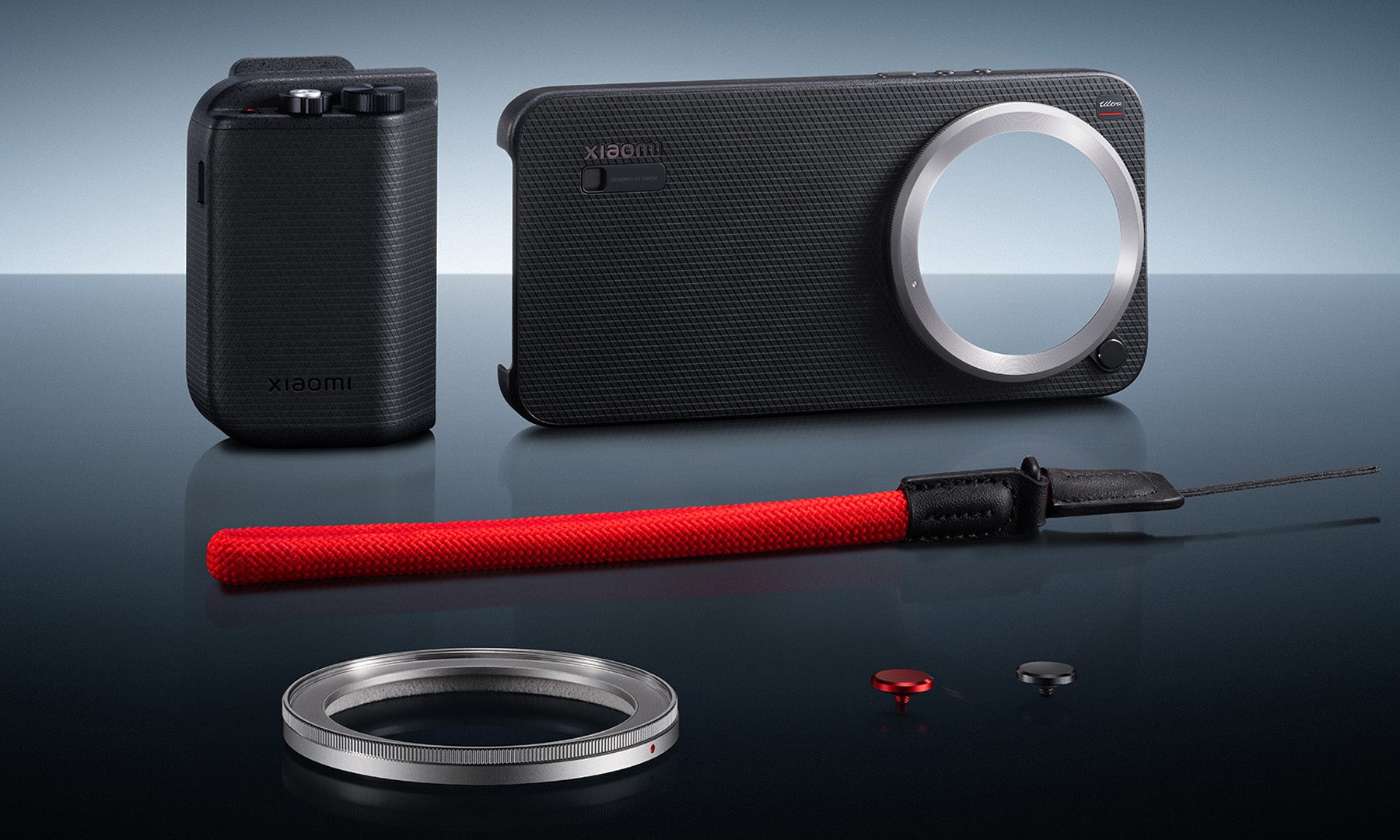
Speaking of the camera array, one of the best things Xiaomi did with this phone was to introduce the Photography Kit Pro, and the second best thing they did was to supply me with the kit, too. You get better ergonomics, physical controls for shooting, and an overall experience that makes you want to take more photos. It bridges that gap between smartphone photography and traditional cameras in a really satisfying way. The grip also doubles as a battery pack, which is incredibly useful during long shooting sessions.
Xiaomi
There’s even a USB-C passthrough, so it’s easy to charge both the phone and grip simultaneously. That said, I wish Xiaomi added data passthrough as well, enabling one to connect an external SSD while the grip is attached. Maybe in future iterations, they could also add a microSD card slot to this, or better yet, a full-sized SD card slot to appeal to the photographers out there.
Selfie Cam… Exists
Now, all isn’t perfect here, and that brings me to the selfies. It’s… fine. Just fine.
Varun Mirchandani / Digital TrendsVarun Mirchandani / Digital Trends
HDR can be a bit inconsistent, colors often lean a little too punchy, and while there’s an attempt to smooth out skin textures, the result feels a bit off.
Xiaomi 17 UltraVarun Mirchandani / Digital TrendsApple iPhone 16Varun Mirchandani / Digital Trends
Of course, photography is subjective, but personally, this is one area where I’d still pick a Google Pixel any day. Even the iPhone does a solid job if you prefer softer-looking images, as you can see in the comparison shot above.
The Best Camera You Can’t (Officially) Buy?
So… is this the best camera phone right now? If photography is your priority, it’s honestly very hard to argue against it. The Xiaomi 17 Ultra brings together industry-leading hardware, genuinely thoughtful image processing, full RAW support for those who like to tweak every pixel, and smart AI tools that actually feel useful instead of gimmicky. And the best part? It’s not just a one-trick pony. Beyond the camera, you’re still getting a proper flagship experience with a top-tier chipset, a gorgeous display, and battery life that comfortably goes the distance.
Advertisement
But here’s the frustrating bit: you can’t officially buy it in the US. And that’s a real shame. Because if a phone like this were widely available, it would force the likes of Apple and Samsung to push their camera systems further, faster. The Xiaomi 17 Ultra isn’t trying to be the most balanced smartphone out there. Instead, it’s aiming to be the best camera you can carry in your pocket. And after spending time with it, it’s hard not to feel like the US market is seriously missing out.
Sometimes, eating makes me feel like Sisyphus. Every day, I must toil up the mountain and the rock to figure out what the heck I want to eat for breakfast, lunch, and dinner. I tested Factor meals earlier this year, and they’re a solid option if you’re the type of person that doesn’t want to fuss over your food. With expansive menus and an emphasis on tracking macros and nutrition, you can simply pick out your meals, get them delivered, and then reheat them in the microwave or oven when it’s time to eat.
Texture eaters might not love Factor’s meals, which tend to be a little mushy. They’re still tasty and very filling. I suggest accompanying them with some crisp veggies, parmesan snaps, or fresh fruit to jazz up the texture a bit. If you’re the kind of person that can meal prep a week’s worth of chicken and rice and happily eat it every day, Factor is going to be right up your alley. Right now, you can save with this Factor coupon and get up to $130 off 6 boxes. Just follow one of our links above, and enjoy your discounted meal kits.
Save With Factor Coupons and Get Meals Tailored to Your Health Goals
Not only is Factor a convenient way to make protein-packed meals in minutes, they also have tons of choices tailored to your dietary needs and preferences. Different Factor meal categories you can choose from include GLP-1 Support, Low Carb, Fiber Filled, and Calorie Smart, ensuring that whatever health goal you may have, Factor has the meals to get you to reach that goal through convenient, pre-prepared meals.
Use Factor Promo Code for Keto Diet Food Delivery
If you want to get serious about your health goals, Factor makes it easy, with prepared keto meal delivery from Factor. Whatever your health goal may be, Factor’s prepared meal delivery makes it easy to stick to a keto diet plan and lose weight, using chef-prepared keto meals that are ready to eat in just a few minutes. Whether you want to use Factor for a keto diet food delivery service, or just want a healthy meal delivery plan, Factor makes it easy (and our promo codes make it cheaper).
Advertisement
Get High Protein Meals for Less
Factor is one of the easiest ways to conveniently get high-protein, chef prepared meals that are reheatable and ready in two minutes. These meals are not only packed with protein, but are also dietitian-approved and prepared by chefs. Each has 30 to 50 grams of protein per serving, making it super easy to hit those nutrition goals without any extra work in the kitchen from you. Once you decide, you’ll pick from a new rotating menu of over 100 dietitian- and chef-designed meals, including add-on options each week that are especially tailored to a high-protein diet.
Does Factor Offer Free Shipping?
Factor wants to reward adventurous (and healthy) eaters, by offering 50% off your first subscription box, plus free shipping. The offer is only valid for new Factor customers with a qualifying auto-renewing subscription purchase (and you’ll still get an $11 shipping fee on subsequent boxes).
Discover More Ways to Save With Factor
Factor offers year-round promotions and savings, so you should always keep an eye out for an opportunity to save some cash. First responders, teachers, medical providers, nurses, doctors, military members, and veterans can take advantage of the Factor Hero Discount to save 55% on their first order and up to 15% on every box for the first year. Save the most with Factor first-order discounts, and what all the fuss is about.
I first met Robert Woo in 2011, during his third time walking in a powered exoskeleton. The architect had been paralyzed in a construction accident four years earlier, but he was determined to get back on his feet. Watching him clunk across a rehab room in an exoskeleton prototype, the technology felt astonishing. I had the same reaction when reporting on early brain-computer interfaces (BCIs), which enabled paralyzed people to move robotic arms or communicate by thought alone. Both types of bionic technology seemed to verge on magic.
But that initial sense of awe, I’ve learned over many years of reporting on these technologies, is only a starting point. What matters is not what these systems can do in a carefully staged demo but how they perform in the real world. Do they work reliably? Can people with disabilities use them for their intended purposes? And what does it actually cost—in time, effort, and trade-offs—to do so? The question isn’t whether the technology looks impressive the first time but whether it holds up on the hundredth.
The special report in this issue, “Cyborg Tech From the Inside” takes that perspective seriously. In my feature article on Woo, an exoskeleton super-user who has spent 15 years testing these systems, the story of the technology is inseparable from the story of its use. Woo’s relentless feedback has driven steady, incremental improvements. In Edd Gent’s reporting on the pioneers testing the earliest BCIs, the experience of these extraordinary technologies likewise resolves into something more complex. As one trial participant notes, these early adopters are like the first astronauts, who barely reached space before coming back down to Earth. Together, these stories reframe these individuals not as passive medical patients but as the ultimate beta testers and co-engineers of the bionic age.
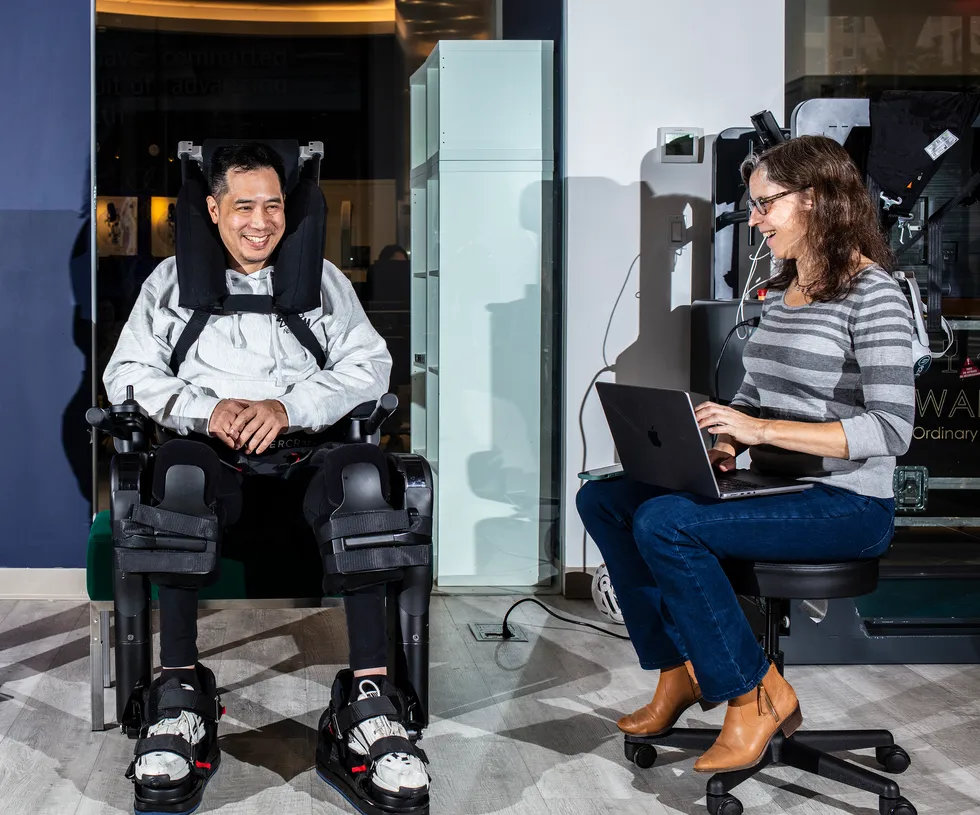
I saw the gap between demonstration and daily use firsthand when I interviewed Woo in a Manhattan showroom recently, where he was testing a new self-balancing exoskeleton from Wandercraft. The device is a striking advance that kept him upright without crutches, but it also revealed the friction of the real world. As Woo tried to walk out the door, barely an inch of slope on the Park Avenue sidewalk was enough to trigger the machine’s safety sensors and halt his progress. It was a stark reminder of how far these systems must evolve before they fit seamlessly into everyday life.
Advertisement
For the people who use them, that seamless integration is the ultimate goal. Getting there will depend not just on technical breakthroughs but on how well these systems hold up outside controlled environments, over time, and under real conditions. Looking from the inside doesn’t make these technologies any less remarkable, but it does change how we judge them—not by what they can do once for a photo but by what they can sustain over a lifetime. That’s the standard their users have been applying all along.
Our commitment to evaluating technology from the user’s perspective extends beyond this special report. To provide a necessary corrective to the “techno-solutionism” that often dominates coverage of assistive devices, IEEESpectrum created the Taenzer Fellowship for Disability-Engaged Journalism, under which six writers with disabilities are contributing articles about the devices they rely on daily. As Special Projects Director Stephen Cass notes, these journalists “aren’t afraid to ask clear-eyed questions about the tech and are deeply aware of how it impacts humans.” You can read the fellows’ work at spectrum.ieee.org/tag/taenzer-fellowship.
By OpenAI COO’s own admission last February, “we have not yet really seen AI penetrate enterprise business processes.” But for enterprise software giant SAP, whose stock has dropped significantly in 2026 in part from the “SaaSpocalypse,” the issue is still front and center.
On Monday, the European heavyweight announced its intention to acquire German AI startup Prior Labs for an undisclosed amount. Pending regulatory approval, SAP plans to invest €1 billion (approximately $1.16 billion) into the business over the next four years to grow it into an AI lab focused on structured data — the tables and databases where enterprise information typically sits.
SAP declined to disclose how much it spent on the acquisition itself, but sources told Pathfounders that this was a healthy exit: an “almost all cash” deal, with well over half a billion dollars in cash up front for the startup’s founders — Frank Hutter, Noah Hollmann, and Sauraj Gambhir.
The trio co-founded Prior Labs just 18 months ago with a focus on tabular foundation models (TFMs) — AI models that can make predictions from data that sits in tables and databases. This is potentially a better fit for enterprises than language models. It is certainly a better fit for SAP, whose widely used software products for accounting, HR, procurement and expense management rely on its database.
Advertisement
However, Germany’s most valuable company also seems be playing defense as the tech industry marches toward agentic AI. While it works to create its own AI lab, the company has blocked OpenClaw and any other agent tech that it has not explicitly authorized, The Information was first to spot.
In response to a request for comment, SAP’s press department referred TechCrunch to the company’s latest API policy, which does say that SAP “prohibits” AI agents from accessing its products through its API except for those that are “SAP-endorsed architectures.”
Authorized architectures of course include SAP’s own offering, Joule Agents, still in beta, which lets customers create their own agents. Nvidia also announced in March that SAP’s Joule supports Nvidia’s Agent Toolkit, which is software for managing agents. This toolkit is the foundation for Nvidia’s enterprise-ready, security-focused OpenClaw competitor, NemoClaw. Hence SAP customers will be authorized to use NemoClaw agents.
Techcrunch event
Advertisement
San Francisco, CA | October 13-15, 2026
For a giant incumbent player like SAP, AI is both a threat and an opportunity. “It’s all about how quickly [we can] as SAP actually also embark [on] these technologies in our R&D portfolio to keep the relative economies of scale advantage,” CFO Dominik Asam told CNBC in January.
Advertisement
SAP hasn’t been sitting on its hands. The German company invested in generative AI companies that develop language models large and small: In 2023, it backed OpenAI rival Anthropic — as well as Aleph Alpha and Cohere, which now intend to merge to form “a global AI powerhouse.”
It had also developed SAP-RPT-1, a relational pretrained transformer model. “Early on, SAP recognized that the greatest untapped opportunity in enterprise AI wasn’t large language models; it was AI built for the structured data that runs the world’s businesses,” SAP CTO Philipp Herzig declared in a statement.
But Prior Labs’ acquisition is a significant shortcut in that direction. Its TabPFN model series has experienced a lot of traction among developers. In a blog post on the deal, the startup’s founders said that its open source models have been downloaded over three million times.
In a press release, SAP promised that Prior Labs will maintain the open source versions: “The lab will operate as an independent unit to ensure research velocity while SAP provides long-term investment and a direct path to productization across the SAP portfolio with SAP AI Core and SAP Business Data Cloud as well as the agentic layer with Joule.”
Advertisement
SAP and the startup headquartered in Freiburg, Germany, hope that this investment will lead to TFMs that can grab data in the tables where it lives, combine that with language, reasoning, and domain knowledge.
More than that, they hope that Prior Labs, with this “massive boost” from SAP, can become a new “globally-leading frontier AI lab for structured data — in Europe, in the open,” founder and CEO Frank Hutter celebrated in a post on X.
In February 2025, the startup had previously raised some $9.3 million in a pre-seed funding round led by Balderton Capital — more than competitor Neuralk-AI, but a lot less than Fundamental, which emerged out of stealth with a $255 million Series A in February.
In a post on X, Balderton partner James Wise called Prior Labs’ acquisition “one of Germany’s biggest ever venture outcomes.” As for SAP, its stock is currently trading slightly upwards.
Advertisement
Meanwhile, SAP is being very strict as to the agents it will allow into its ecosystem. This is a wildly different approach than Salesforce, another incumbent caught in the SaaSpocalypse. It is allowing enterprise to choose their own agents, including OpenClaw if they so wish, with its new Headless 360 architecture.
When you purchase through links in our articles, we may earn a small commission. This doesn’t affect our editorial independence.
In a blog post, the Menlo Park-based tech giant said it is developing an advanced AI system to scan photos and videos on Facebook and Instagram, analyzing users’ bone structure, height, and other visual cues to estimate their age, while insisting that it is “not facial recognition.” The AI will… Read Entire Article Source link
One of the follow-on payloads pushed to about a dozen organizations was what Kaspersky described as a “minimalistic backdoor.” It has the ability to execute commands, download files, and run shellcode payloads in memory—making the infection harder to detect.
Kaspersky said that it observed a more complex backdoor dubbed QUIC RAT, installed on a single machine belonging to an educational institution located in Russia. Initial analysis found that it can inject payloads into the notepad.exe and conhost.exe processes and supports a variety of C2 communication protocols, including HTTP, UDP, TCP, WSS, QUIC, DNS, and HTTP/3.
The 100 infected organizations were primarily located in Russia, Brazil, Turkey, Spain, Germany, France, Italy, and China. Kaspersky’s visibility into the attack is limited because it’s based solely on telemetry provided by its own products.
Kaspersky researchers wrote:
Advertisement
The analysis shows that 10% of the affected systems belong to businesses and organizations. Attackers attempted to infect most of the affected machines only with the information collector payload. However, the other backdoor payload, which is more complex, has been observed only on a dozen machines of government, scientific, manufacturing and retail organizations located in Russia, Belarus and Thailand. This manner of deploying the backdoor to a small subset of infected machines clearly indicates that the attacker had intentions to conduct the infection in a targeted manner. However, their intent – whether it is cyberespionage or ‘big game hunting’ – is currently unclear.
Anyone who uses Daemon Tools should take time to scan the entirety of their machines using reputable antivirus software. Windows users should additionally check for indicators of compromise listed in the Kaspersky post. For more technically advanced users, Kaspersky recommends monitoring “suspicious code injections into legitimate system processes, especially when the source is executables launched from publicly accessible directories such as Temp, AppData, or Public.”
LegalZoom is one of those online legal services that in most cases can handle basic legal tasks for you. I recently tried it out to make an LLC for my cosmic country band, Steel Fringe (shameless plug), and it appears to have worked just fine (we’re still waiting on a full evaluation from legal experts for a future guide to these services). If you use a LegalZoom promo code right now, you will get a discount on the service.
I found it super easy to set up my LLC, and after about $500 and 30 minutes of my time, I was off to the races with an LLC for my band. I did make the mistake of spelling my co-bandleader’s middle name as his last name (I blame his wrongly named Instagram handle for this), so I had to toss them another $129 to fix that. My bad.
Save on top services at LegalZoom, like LLC registration, incorporation, estate plans, and more with coupons and deals from WIRED below.
Get 10% Off LLC Formation With Our LegalZoom Coupon Code
If you’re in need of basic legal services like establishing an LLC, estate planning, or other contract-based services, LegalZoom offers a very simple interface that is shockingly easy to use. I am a luddite when it comes to understanding legal jargon and steps in a process like establishing my band’s LLC, but LegalZoom’s simple interface made it shockingly easy to make sure everything was in order.
Advertisement
If you use our exclusive code for 10% off LLC Formations (found in the table above), you’ll get a nice chunk of change off the cost of setting up your small business. As you’ll read below, it’s not especially cheap to do this, even digitally, in many states. There are mandatory filing fees and other fees that can range from a few hundred to many hundreds of dollars. Take the discount!
LegalZoom Business Formation: Start Today Using Our LegalZoom Discounts
LegalZoom services expand well beyond just helping establish personal LLCs, there are also other business formations that LegalZoom can help with. Some of these include Limited Liability Company LLCs, which start at free, plus state filing fees. This is the simplest, flexible way to ensure your business protects any personal assets. There’s also Corporation (S corp or C corp), which starts at $149 plus state filing fees. This is a more complex structured formation, with the ability to issue shares, go public, or go global. There’s also help for Nonprofit (501c3) LLCs, which starts at $99 plus state filing fees. This one is designed to support a public or social benefit that’s eligible for tax breaks. And finally, Doing Business As (DBA) starts at $99 plus state filing fees. This is an efficient way to use a business name that removes the sometimes annoying upkeep of LLCs or corporations.
How Much Does It Cost to Set Up An LLC on LegalZoom?
The cost to properly set up an LLC in your state can range from $35 to $500, depending on various factors like local legislation and business registration laws. Most states charge between $50 and $200 for filing fees, so you can expect to pay somewhere in that range unless you’re from Montana ($35) or Massachusetts ($500). LegalZoom also shoves a bunch of options you probably don’t need in your face, so be sure to Google what you actually need in your state before paying extra money to … print all your documents and put them in a folder for you, or other such nonsense.
Use LegalZoom Promo Codes to Save on Estate Plans
Although it’s a little morbid, folks need to think about what will happen to their assets after they pass, and get a plan in place to protect their loved ones. LegalZoom offers estate plan services to create your will or trust easily online. There are several options available, so make sure you choose the right plan for you. Right now, if you choose the Premium Trust, you’ll get 10% off LegalZoom products, plus 25% off important attorney services. There are two will options and two trust options: the last will outlines how your assets should be distributed after death, and a living trust, a legal arrangement where a trustee manages assets. Make sure to read through the link above to know which plan is right for your needs.
Advertisement
Register a Trademark With Legalzoom
Registering a trademark is an important step in many business ventures, a necessary step that can be very confusing. Legalzoom wants to make it easier for you, by using one of their experienced trademark attorneys who can handle the oftentimes complicated process. They can perform a trademark search, provide legal advice, and prepare and file your application, so you can relax knowing you’re protected. Prices start at $899 plus federal fees for registering a trademark.
Get Online Legal Services and LegalZoom Pricing
Want to save money but also want peace of mind? Try LegalZoom’s attorney review. After you’ve completed your documents, you’ll be able to have unlimited revisions of your LegalZoom estate planning documents, with no page limit. This also includes an annual legal review with attorney help to ensure your estate plan is up to date (available after 6 months). Right now, the Personal Attorney Plan ranges from $20 for a 12-month service, or $17 for 6 months. Save 20% when you sign up today.
LegalZoom Healthcare Help
No one wants to imagine it, but it’s important and necessary to take steps to ensure you are protected and have a plan in place if and when a medical emergency happens. LegalZoom has options for affordable advance healthcare directives, starting at $39. With LegalZoom, you can complete an advanced healthcare directive easily and in advance, so that you can take control of your care when you can’t speak for yourself. LegalZoom’s healthcare directives include medical power of attorney and a living will, making it easy to ensure you’re protected in the future. Plus, you’ll be able to get guidance from experienced attorneys to ensure everything needed is in place.
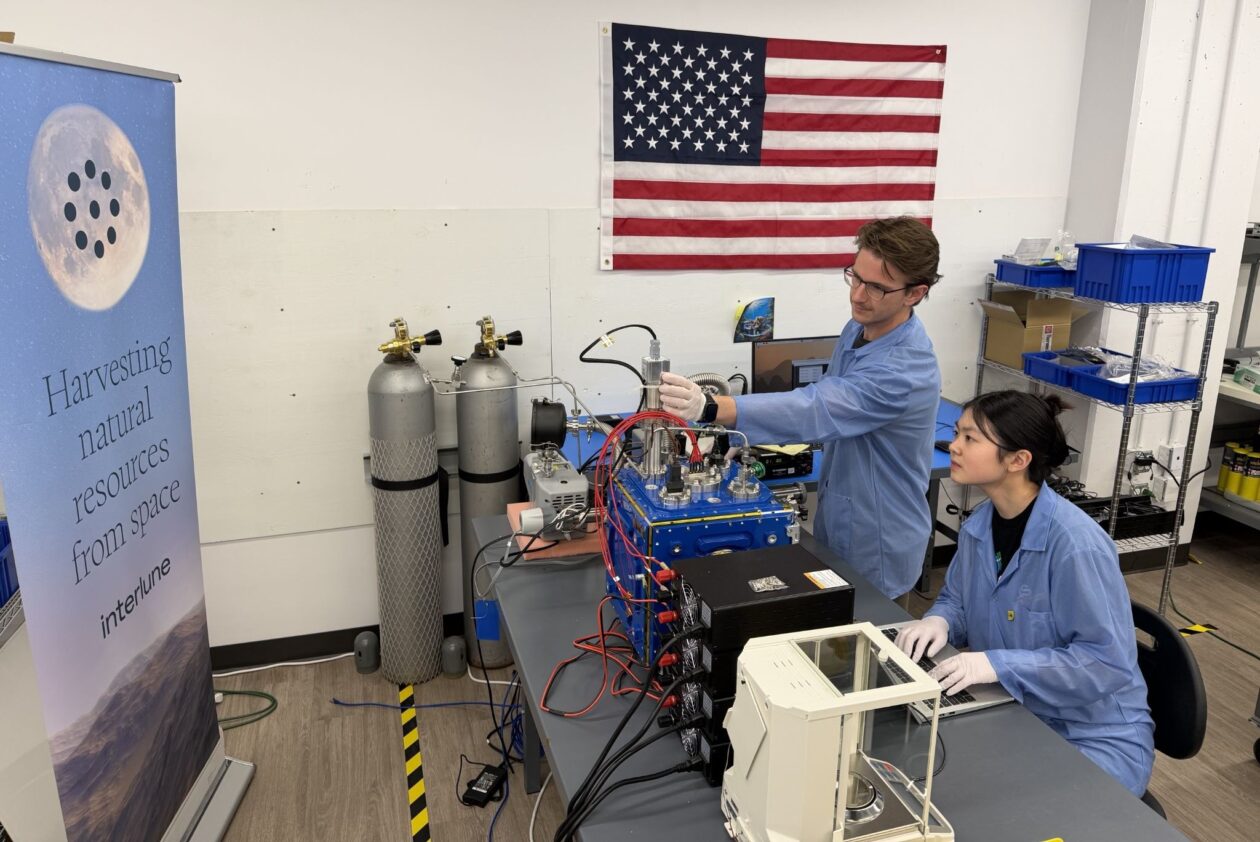
Interlune test engineer Alex Lewandowski and mechanical engineer Jessica Wu check test equipment for the mass spectrometer system in the Regolith Lab at the company’s Seattle headquarters. (Interlune Photo)
NASA has awarded a $6.9 million contract to Seattle-based Interlune for the development of a system that can extract gases such as helium-3 and hydrogen from lunar soil and rocks.
The system will be developed and tested on Earth under the terms of an 18-month Small Business Innovation Research Phase III grant, and then launched to the moon on a commercial robotic lander in 2028. Interlune says the project meshes with its plan to extract and market lunar helium-3 for applications on Earth ranging from quantum computing and medical imaging to neutron detection and commercial nuclear fusion.
“We’re gathering data and advancing technologies that serve multiple purposes across industry and government,” Rob Meyerson, co-founder and CEO of Interlune, said today in a news release. “NASA’s continued investment in space technology enables technology development projects like this one to ensure America’s leadership in building the lunar economy.”
Interlune’s payload will include a robotic arm and scoop to gather up moon dirt (technically known as regolith), a particle-sorting device, hardware for heating up lunar material and harvesting the gases that are given off, a multispectral camera capable of determining helium-3 concentrations, and a mass spectrometer that can analyze the gases.
“For the first time ever, we will measure volatile gases by heating lunar regolith while on the moon, dramatically advancing the scientific community’s understanding of its properties,” Interlune chief scientist Elizabeth Frank said. “The data we collect will also tell us how much power is needed to extract resources like helium-3.”
Advertisement
The project builds on Interlune’s previous efforts to build payload prototypes and test them on parabolic airplane flights that simulate lunar gravity. The company plans to send a camera to the moon on California-based Astrolab’s FLIP rover as soon as this summer for a demonstration mission known as Crescent Moon. In March, Astrolab announced that it would work with Interlune to integrate resource extraction hardware onto future lunar rovers.
The NASA-supported mission, called Prospect Moon, would generate data detailing the concentrations of volatile materials that have been deposited on the moon’s surface by the solar wind. Follow-up missions could focus on extracting hydrogen for rocket fuel and other lunar power applications, alongside helium-3 that could be sent back to Earth.
Interlune says it already has nearly $500 million in binding purchase orders for helium-3, from quantum computing companies and from the U.S. Department of Energy and the Department of the Air Force. For initial deliveries, Interlune plans to harvest helium-3 from natural gas supplies on Earth while full-scale lunar infrastructure is developed.
Helium-3 is the first resource targeted by Interlune, but the company plans to widen its focus over time to extract other potentially valuable materials from lunar regolith, including industrial metals, rare earth materials and water.
As fuel prices surge in 2026, electric vehicle owners may be feeling a bit smug. The remainder of us are currently paying an average of $4.30 per gallon for gas, or $5.49 for diesel. Some lucky states are paying a bit less, while Californians are paying more than $6 per gallon. It’s a hit on our budgets and wallets, and there’s no relief in sight.
Making the switch to an electric vehicle is a substantial adjustment, and many drivers may not feel ready. They may be concerned that the infrastructure doesn’t fully support the technology and worry about the availability of chargers. While there are few alternatives, researchers at the University of Wisconsin-Madison are at work on a novel concept: an engine that uses both gasoline and diesel.
Called the Reactivity Controlled Compression Ignition (RCCI) engine, this concept is just that — a theory that exists only in the lab, at least for now. Combining the fuels means this engine achieves a fuel-to-power conversion rate of up to 60%. Typical gasoline engines convert 30-40% of their fuel into power, while the average diesel engine converts about 45-50%, meaning the RCCI engine is a much more fuel-efficient idea. Here’s how it works.
Advertisement
Creative alternatives
Thamkc/Getty Images
We all know not to put diesel into a gasoline car, but you may not understand why. While they are both refined from crude oil, gasoline is more refined and thinner, so it burns faster and is a good choice for higher horsepower engines. Diesel is thicker and burns more slowly; it’s used for larger machines that need more torque.
The conceptual RCCI engine works like a standard gasoline engine at first, mixing air and fuel in the combustion chamber. Then, at a particular point in the process, diesel fuel is added to the chamber for a mix of gas, diesel, and air. As the piston moves, a bit more diesel is injected just before ignition, and the mixture of gas and diesel then ignites and causes the remaining gas to ignite. The result is not only more efficient fuel, but it’s also cleaner, putting out lower emissions. It’s an interesting concept but of course it would mean you’d have to visit two different fuel pumps to fill up!
Advertisement
Continuing to burn fossil fuels at the current rate is widely considered unsustainable, and scientists, engineers and more continue to attack the problem from all angles. Potential alternatives to electricity and fossil fuels include hydrogen fuel cell technology; biodiesels, or renewable fuels manufactured from alternatives such as vegetable oils; synthetic fuels; natural gas; and renewable diesel.
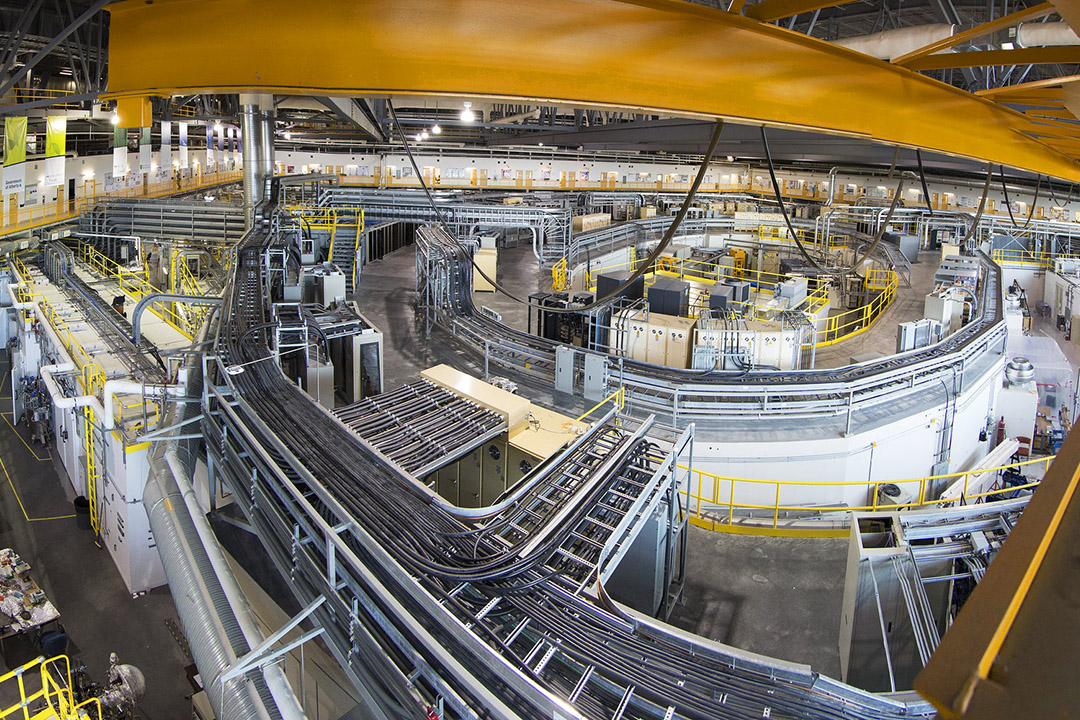
Microplastics absolutely saturate the Earth’s environment, and that’s probably not a good thing unless you’re looking for a sediment marker for the Anthropocene period. On the other hand, environmental contamination only becomes a really big problem if it bioaccumulates– that is, builds up in the tissues of plants and animals. At least when it comes to worms, that’s not the case with microplastics, according to new research from the Canadian Light Source at the University of Saskatchewan.Pictured: Not an Igloo. Credit: David Stobbe / Stobbe Photography, via University of Saskatchewan
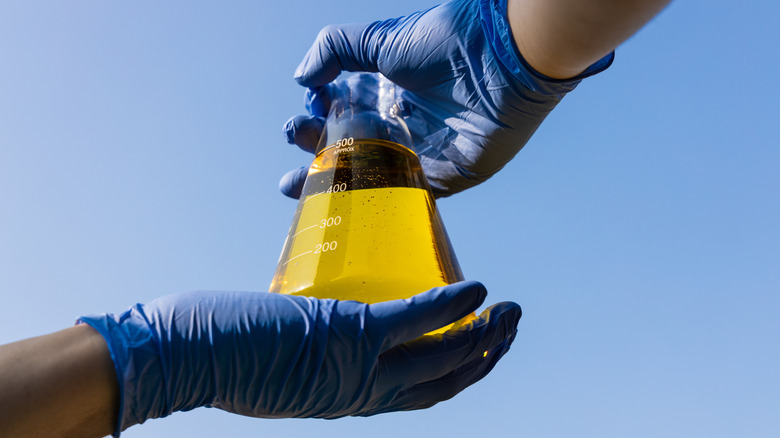
The Canadian Light Source isn’t just some hoseheads in an igloo with a flashlight– it’s a 2.9 GeV Synchrotron tuned to produce high-energy photons. Back when Synchrotrons were used for particle physics, Synchrotron radiation was a very annoying energy sink, but nobody cares about 2.9 GeV electrons anymore. So rather than slam them into each other or a static target, the electrons just whip about endlessly, giving off both soft- and hard X-rays for material science studies– or, in this case, to observe the passage of polyethelyne microplastic particles through the guts of some very confused earth worms. To make them detectable by x-ray, the polyethylene was bonded to barium sulfate, an x-ray absorber. Equally opaque barium titanite glass microspheres were used with different worms, as a control.
Despite being fed plastic enriched with far more plastic than you’ll find outside of a 3D print farm, it seems the worm’s digestive system was able to reject the particles, even those as fine as 5 microns. That’s a good thing, because if the worms were absorbing plastic from the soil, it’s likely their predators would absorb it from the flesh of the worms, so and so forth up the food chain in the sort of cascade that made DDT a problem and makes mercury compounds so serious. If the worms are rejecting these compounds, there’s a chance other creatures can too– and at the very least, it means they aren’t building up on this bottom rung of the foot chain. If you’re looking for a more technical read, the full paper is available here.
It’s too early to say what this means for how microplastics get into humans and other animals, but it’s hopeful. Equally hopeful was the recent finding that studies that don’t rely on football-field sized X-ray machines might be picking up on microplastics from lab gloves, skewing results.
Header image: the digestive systems of earth worms as imaged by the Canadian Light Source. Credit Letwin, et al, Environmental Toxicology and Chemistry, vgag072, https://doi.org/10.1093/etojnl/vgag072
China shipped 90 per cent of the world’s humanoid robots in 2025 and has more than 150 companies in the sector, but only 23 per cent of surveyed enterprises are satisfied with the products available. Morgan Stanley warns of a shake-out as billion-dollar IPOs collide with two-hour battery life and a market that delivered just 14,000 units last year.
China has more than 150 humanoid robot companies. It shipped roughly 90 per cent of the world’s humanoid robots in 2025. Its two largest makers, Unitree and AgiBot, are preparing initial public offerings that would value them at a combined 13 billion dollars. Morgan Stanley doubled its delivery forecast for the Chinese market this year to 28,000 units, a 133 per cent increase over 2025. And yet, when Morgan Stanley surveyed the companies that are supposed to buy these robots, only 23 per cent said they were satisfied with the products available. Battery life tops out at two to three hours per charge. Most deployments remain confined to exhibitions, showrooms, and Spring Festival galas where robots perform kung-fu routines for television cameras. The technology has arrived. The customers have not. China’s humanoid robot industry is the most capitalised, most productive, and most overpopulated robotics sector in the world, and it is heading for a reckoning that its government has already warned is coming.
Advertisement
The warning
In late 2025, China’s National Development and Reform Commission issued a rare public statement about the humanoid robot sector. Spokesperson Li Chao noted that the number of companies had climbed past 150 and was still growing, with more than half being startups or cross-industry entrants. The NDRC warned of redundant products, duplicated investment, and compressed space for genuine research and development. The language was measured. The implication was not. Beijing’s top economic planning agency was telling the market that it saw a bubble forming in the industry it had designated as one of ten priority sectors in the 15th Five-Year Plan, backed by a one-trillion-yuan state fund.
China’s smartphone supply chain has already begun pivoting to humanoid robot production, with companies like Lingyi iTech, a Foxconn supplier that assembles iPhones, targeting 500,000 humanoid units by 2030. The manufacturing infrastructure is real. The component ecosystem is deep. The problem is that the robots being produced are not yet generating the revenue their valuations imply. Unitree, which filed for a 608 million dollar IPO on Shanghai’s STAR Market, saw humanoid robot revenue surpass its quadruped robot business for the first time in 2025, but the company’s total scale remains modest relative to its targeted seven billion dollar valuation. AgiBot, which is aiming for a six billion dollar listing in Hong Kong, is in a similar position: significant technological capability, significant government backing, and a commercial market that has not yet materialised at the scale the IPO price demands.
The Morgan Stanley survey, led by China industrials analyst Sheng Zhong, found that 62 per cent of Chinese companies said they were likely to adopt humanoid robots within three years. That willingness, however, collided with a set of practical constraints that the industry has not resolved. The 23 per cent satisfaction rate reflected shortcomings in dexterity, functionality, and pricing. Ninety-two per cent of respondents said robots needed to fall below 200,000 renminbi, roughly 28,000 dollars, before mass adoption became viable. Only about 10 per cent of companies surveyed were currently evaluating or running pilot projects. The demand exists in theory. In practice, the robots are too expensive, too limited in capability, and too short on battery life to justify the investment for most industrial applications.
UBTech, one of the sector’s largest players, offered 18 million dollars to recruit a chief AI scientist, a salary that reflects both the intensity of the talent war and the recognition that the engineering challenges remaining are substantial. The Walker S2, UBTech’s latest industrial humanoid, entered mass production in early 2026 with orders exceeding 800 million yuan, and the company is building a factory in Beijing targeting 10,000 units per year by the end of 2026. But production capacity and commercial demand are different things. Morgan Stanley’s Zhong described 2026 as “a critical year as humanoid integrators strive to reach commercialisation and build up their ecosystems,” and warned of an impending shake-out. Production, he noted, is likely to be materially larger than sales, because major players are manufacturing robots internally for training and verification rather than shipping them to paying customers.
The spectacle
In April, a humanoid robot called Lightning, developed by Chinese smartphone maker Honor, won the Beijing E-Town Half-Marathon in 50 minutes and 26 seconds, beating the human world record by nearly seven minutes. More than a hundred robots competed. The event was covered globally. An engineer on the winning team said the achievement enabled technology transfer into structural reliability and cooling that would eventually benefit industrial applications. Robotics experts were less certain. The skills displayed during a half-marathon, sustained bipedal locomotion on a flat surface, do not translate to the manual dexterity, real-world perception, and adaptive problem-solving required for factory work, logistics, or the service applications that the industry’s business plans depend on.
Advertisement
The gap between spectacle and substance defines China’s humanoid robot moment. The Spring Festival Gala performances, the marathon records, and the viral videos of robots doing backflips generate the attention that attracts capital. The capital funds the next round of development. The development produces more impressive demonstrations. But the cycle does not produce revenue at the scale needed to justify the valuations being assigned. China’s industrial model has historically excelled at commercialising technology faster and cheaper than any Western economy, turning solar panels, electric vehicles, and batteries into globally dominant export industries within a decade. The question is whether humanoid robots follow that pattern or whether they represent a category where the gap between demonstration and deployment is structurally wider than the manufacturing advantage can close.
The competition
China’s dominance in humanoid robot shipments has not gone unnoticed. Boston Dynamics began commercial production of its electric Atlas robot in January 2026 and announced plans to deploy tens of thousands of units at Hyundai Motor Group factories, with a manufacturing facility near Savannah, Georgia, targeting 30,000 units per year by 2028. Figure AI, the leading American humanoid startup, holds a 39 billion dollar private valuation after its September 2025 fundraise, despite shipping a fraction of the volume Chinese companies manage. Tesla’s Optimus is performing basic tasks in its own factories, with Elon Musk projecting mass production and a price point of 20,000 to 30,000 dollars, though the robot is, by Musk’s own admission, “not in usage in a material way.” The Pentagon has awarded 24 million dollars in contracts to Foundation Future Industries for humanoid robot soldiers tested in Ukraine, opening a military market that Chinese companies cannot access but that validates the strategic importance governments are placing on the technology.
The pricing dynamics favour China. Unitree’s H2 is positioned below 30,000 dollars. Kepler, another Chinese maker, is targeting the same range. At CES 2026, the sheer number of Chinese humanoid robots on display, and their aggressive pricing, made clear that the supply-side economics are already competitive. The question is whether demand at those price points exists in sufficient volume to sustain an industry with 150 companies competing for it.
The reckoning
Zhong’s prediction of a shake-out is not a minority view. The NDRC’s warning, the Morgan Stanley satisfaction data, the IPO inspection of Unitree just twelve days after its STAR Market application was accepted, and the simple arithmetic of 150 companies chasing a market that delivered roughly 14,000 units in China in 2025 all point in the same direction. The companies that survive will be those that solve the commercialisation problem: identifying repeatable, scalable use cases where the economics of a humanoid robot are superior to the alternatives, whether those alternatives are purpose-built industrial arms, wheeled platforms, or human workers. The companies that do not will have burned through their funding producing impressive machines that no one outside a trade show needed to buy.
Advertisement
China’s humanoid robot industry has the manufacturing base, the component supply chain, the government support, and the engineering talent to lead the world. What it does not yet have is the market. The one-trillion-yuan state fund and the 15th Five-Year Plan designation ensure that capital will continue to flow. The NDRC warning ensures that Beijing is watching how it flows. Somewhere between the billion-dollar IPOs and the 23 per cent satisfaction rate, between the marathon records and the two-hour battery life, is the answer to whether China’s humanoid robot boom produces the next great Chinese export industry or the most expensive collection of trade show demonstrations the technology sector has ever funded. The robots can run a half-marathon faster than any human alive. They cannot yet work an eight-hour shift.




















































































You must be logged in to post a comment Login